Re: THE SEVENTEEN TRADITIONS, by Ralph Nader
Posted: Wed Oct 30, 2013 2:46 am
10. The Tradition of Reciprocity
Out of the confluence of these previous traditions grew a subtler, deeper tradition, a second-generation tradition that ensouled our family to the present day. It was more than mutual respect. It was more than mutual aid. I think of it as the tradition of reciprocity.
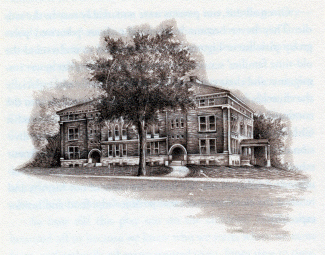
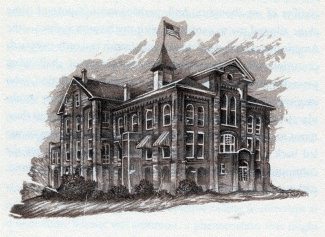
Underlying the help and comfort we extended to each other, as needed, was the fact that we all cared deeply for one another. I felt this caring in a variety of unexpected ways. One day, when I was five years old, my father took me by the hand and walked me down to the Fourth School, the local elementary school. My father knew that I'd already moved beyond the kindergarten level, and he convinced the school that I should skip kindergarten and enroll as the youngest pupil in Miss Root's first-grade class. I overheard the case he made, and when I realized how much he believed in me, I became utterly determined not to let my father down in front of other people. Within days I was Miss Root's assistant, helping some of the students with their lessons. (Decades later, when she was in her eighties, Miss Root recounted this story to a television magazine show.) In class after class, through high school, I would look back at the class following ours and be so grateful that my parents had cared enough to move me forward. Whenever the work grew challenging, that awareness would inspire me to work even harder.
My parents always saw their relationships with their children as mutually rewarding. They raised children who could teach their parents in turn, sharing their own experiences and insights. As young adult immigrants (both came over at the age of nineteen), my mother and father knew that learning shouldn't end with childhood; they spent years absorbing a culture, a host of new technologies, and systems of private businesses and public institutions -- all in a foreign language. This has never been an easy process for newcomers to our land -- even after finding work, they often don't have it easy. So-called generation gaps are especially common among immigrant families; these gaps can produce anxious and unpleasant tensions, and sometimes lead to nasty ruptures or chronic conflicts. Many children of immigrants feel embarrassed at their parents' "old ways," their accents, their native language being spoken in their friends' presence. They have little patience with parents who don't keep up with teenage fads, rejecting the elements of their traditional lifestyle in favor of the easy social bonding of commercial culture. The parents, in turn, sometimes feel rejected, isolated, and worried. Some grow so disconsolate that they return to their home countries.
My parents, on the other hand, were quite practical. They sensed that their children were becoming a part of this new world, and set about following their example. Who better to teach them about America, they reasoned, than their children, who had never known anything else? My older brother, Shaf, was my parents' most conscious interpreter. He always had a bent for anthropology and cross-cultural awareness, even during his teen years, and when it came to American culture the child became the teacher and the parents became the students (until it was time to say "yes" or "no" or "be careful," that is). Sometimes the teaching went both ways, with surprising results for both sides: When my sister Claire tried showing my mother how to dance the Charleston, Mother responded by singing a song about the Charleston in Arabic and English that was popular in Lebanon in the 1920s.
From time to time Shaf ran into resistance, as when he tried to persuade my mother that some new movie at the Strand would be all right for his younger siblings to see. Like many parents today, Mother was wary of Hollywood and its sexy movies embarrassing her early teenage children. (She never for a moment worried that they could actually corrupt us, only that we'd be made uncomfortable.) To her, sexy and violent movies were demeaning and wasteful, and she wanted to spare us from enduring them if she could. Obviously, there were times when we disagreed, thought her too protective of us, but we never did anything that showed disrespect toward her final say on the subject. Some time ago I was pleased to learn that this feeling had moved to the next generation, when her grandson Tarek told me that he'd decided in college never to do anything he would later regret.
My father even extended such reciprocal relations to his customers. The one day Dad's restaurant was supposed to be closed was Christmas Day. But my siblings and I soon noticed that every Christmas morning he would go down there at eleven o'clock and spend three hours serving a few longtime customers -- elderly renters who lived by themselves and relied on him for their daily lunch.
That was the example both our parents set for us, and in their final years their kindnesses were returned in their moments of need. My mother had always been one of the most self-reliant and independent people I'd ever known, but by the time she was nearing her one hundredth birthday, she finally needed help to get around. My sister Claire was there to care for her, and she treated the responsibility as if it were a privilege to extend her hands to embrace our mother's needs. Claire rejected the bureaucratic term "caregiver." To her it was a much simpler matter: "She is my mother," she would say, "and I am her daughter and we respond to each others' needs."
As the weeks passed, and mother needed more assistance, not once did Rose Nader ever suggest that she was a burden on her children. She had cared for us all during our infancy, childhood, and adulthood. Of course, we would be there for her at the very end of her life. She viewed her life as a state of oneness with her children and grandchildren. And oneness cannot be a burden on itself.
Out of the confluence of these previous traditions grew a subtler, deeper tradition, a second-generation tradition that ensouled our family to the present day. It was more than mutual respect. It was more than mutual aid. I think of it as the tradition of reciprocity.
Underlying the help and comfort we extended to each other, as needed, was the fact that we all cared deeply for one another. I felt this caring in a variety of unexpected ways. One day, when I was five years old, my father took me by the hand and walked me down to the Fourth School, the local elementary school. My father knew that I'd already moved beyond the kindergarten level, and he convinced the school that I should skip kindergarten and enroll as the youngest pupil in Miss Root's first-grade class. I overheard the case he made, and when I realized how much he believed in me, I became utterly determined not to let my father down in front of other people. Within days I was Miss Root's assistant, helping some of the students with their lessons. (Decades later, when she was in her eighties, Miss Root recounted this story to a television magazine show.) In class after class, through high school, I would look back at the class following ours and be so grateful that my parents had cared enough to move me forward. Whenever the work grew challenging, that awareness would inspire me to work even harder.
My parents always saw their relationships with their children as mutually rewarding. They raised children who could teach their parents in turn, sharing their own experiences and insights. As young adult immigrants (both came over at the age of nineteen), my mother and father knew that learning shouldn't end with childhood; they spent years absorbing a culture, a host of new technologies, and systems of private businesses and public institutions -- all in a foreign language. This has never been an easy process for newcomers to our land -- even after finding work, they often don't have it easy. So-called generation gaps are especially common among immigrant families; these gaps can produce anxious and unpleasant tensions, and sometimes lead to nasty ruptures or chronic conflicts. Many children of immigrants feel embarrassed at their parents' "old ways," their accents, their native language being spoken in their friends' presence. They have little patience with parents who don't keep up with teenage fads, rejecting the elements of their traditional lifestyle in favor of the easy social bonding of commercial culture. The parents, in turn, sometimes feel rejected, isolated, and worried. Some grow so disconsolate that they return to their home countries.
My parents, on the other hand, were quite practical. They sensed that their children were becoming a part of this new world, and set about following their example. Who better to teach them about America, they reasoned, than their children, who had never known anything else? My older brother, Shaf, was my parents' most conscious interpreter. He always had a bent for anthropology and cross-cultural awareness, even during his teen years, and when it came to American culture the child became the teacher and the parents became the students (until it was time to say "yes" or "no" or "be careful," that is). Sometimes the teaching went both ways, with surprising results for both sides: When my sister Claire tried showing my mother how to dance the Charleston, Mother responded by singing a song about the Charleston in Arabic and English that was popular in Lebanon in the 1920s.
From time to time Shaf ran into resistance, as when he tried to persuade my mother that some new movie at the Strand would be all right for his younger siblings to see. Like many parents today, Mother was wary of Hollywood and its sexy movies embarrassing her early teenage children. (She never for a moment worried that they could actually corrupt us, only that we'd be made uncomfortable.) To her, sexy and violent movies were demeaning and wasteful, and she wanted to spare us from enduring them if she could. Obviously, there were times when we disagreed, thought her too protective of us, but we never did anything that showed disrespect toward her final say on the subject. Some time ago I was pleased to learn that this feeling had moved to the next generation, when her grandson Tarek told me that he'd decided in college never to do anything he would later regret.
My father even extended such reciprocal relations to his customers. The one day Dad's restaurant was supposed to be closed was Christmas Day. But my siblings and I soon noticed that every Christmas morning he would go down there at eleven o'clock and spend three hours serving a few longtime customers -- elderly renters who lived by themselves and relied on him for their daily lunch.
That was the example both our parents set for us, and in their final years their kindnesses were returned in their moments of need. My mother had always been one of the most self-reliant and independent people I'd ever known, but by the time she was nearing her one hundredth birthday, she finally needed help to get around. My sister Claire was there to care for her, and she treated the responsibility as if it were a privilege to extend her hands to embrace our mother's needs. Claire rejected the bureaucratic term "caregiver." To her it was a much simpler matter: "She is my mother," she would say, "and I am her daughter and we respond to each others' needs."
As the weeks passed, and mother needed more assistance, not once did Rose Nader ever suggest that she was a burden on her children. She had cared for us all during our infancy, childhood, and adulthood. Of course, we would be there for her at the very end of her life. She viewed her life as a state of oneness with her children and grandchildren. And oneness cannot be a burden on itself.