Re: THE SEVENTEEN TRADITIONS, by Ralph Nader
Posted: Wed Oct 30, 2013 2:54 am
15. The Tradition of Patriotism
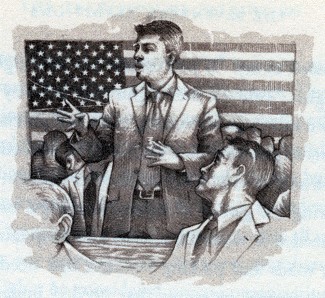
Father was an incessant critic of power -- business and governmental, local and national -- and one who was never afraid to propose a solution. He spoke his mind daily at the restaurant. "Nathra, how do you expect to make a profit if you keep speaking out that way?" his longtime customers and friends sometimes cautioned him.
"When I sailed past the Statue of Liberty, I took it seriously," he replied.
My parents prized the freedoms they found in America, and were always alert to anyone who might try to degrade them. My father used to say, "If you do not use your rights, you will lose your rights." And use their rights they did -- by speaking up at lively town meetings, by visiting town hall officials and newspaper editors to promote their opinions, by exhorting people to be informed and to vote. Their subjects of concern were mostly local, covering the gamut of typical municipal issues: services that were needed or wasteful, schools and hospitals that needed upgrading, roads and parking facilities that needed improvement, flood-control measures that needed updating, factory dumping that needed to be policed -- everything you might expect, from unleashed dogs to unreasonable budgets.
As Americans by choice, my parents never let the haughtier descendants of earlier immigrants make them feel defensive. They treasured the ideals of democracy, but they never felt compelled to accept its imperfections in practice, or to genuflect before anthems or flags. They saw right through politicians who tried to cover their sins with the Star-Spangled Banner. They cared only about how their elected officials fulfilled their duties, whether they actually engaged with the citizens or just shook hands with them in passing. As Dad often reminded the flag-wavers, our flag stands for the principles embodied in the last words of the Pledge of Allegiance -- "with liberty and justice for all."
Instead, our parents found allies in the town's more active older citizens, whose experience they eagerly absorbed. These neighbors helped acquaint them with the steps of small-town governance, explaining how long each step in the process was likely to take. Their common sense of injustice quickly overcame any prevailing ethnic or class differences. These were the people who knew that democracy and its benefits take work.
Father relished having a voice and being heard, especially when he believed that his opinions could be the basis for legal changes. For example, he once filed suit in federal court to change the Connecticut primary system so that all voters could participate in any primary -- not just party members, who were members of what he considered private organizations. So long as these party primaries were being paid for by our tax dollars, he reasoned, all voters should be able to vote in any primary. The judge who heard his case found no constitutional right being violated and decided against him, though other states have such crossover primary laws.
On another occasion, knowing that consumers could buy into group life and auto insurance, my father fought an anticompetitive state law, lobbied by the insurance industry, that prohibited group homeowners insurance. He wrote the Connecticut Insurance Department asking them to urge the legislature to repeal the law, which had been pushed by the insurance companies, and pave the way for neighbors to pool their resources and save on premiums by purchasing as a group. The Insurance Department rejected his request.
Did losing faze him? No, it merely made him more steadfast against any restrictions of rights or corruptions of government. It is as if he was saying, "You are not going to take away what I came to this country to breathe."
On occasion, his nonconformist viewpoints led even his regular lunch-counter customers to question his patriotism. "Love it or leave it," they would say -- but such taunts were his cup of delicious tea. He loved turning the tables on his challengers.
"Do you love your country?" he would ask with a quizzical smile.
"You're damn right I do."
"Well, why don't you spend time improving it?" he would respond.
Mother put us children through a similar drill "Ralph, do you love your country?" she asked me when I was about eight.
"Yes, mother," I said, wondering where she was going with this.
"Well, I hope when you grow up, you'll work hard to make it more lovable."
This, in our eyes, was the real definition of patriotism -- as expressed by the people themselves, not by their manipulative rulers and plutocrats. When you come from an authoritarian country or worse, you tend to be much more sensitive to symbols of la patria being used to repress people and their participation in power. You measure your new country according to its own self-professed high standards.
A nation, our parents believed, should be judged in much the same way as an individual: by deeds, not words. Politicians and the government show their regard for our society, our community, and our fellow human beings by what they do -- by their efforts to stop trouble before it starts, and to restore order or repair damage when it's over. Mother and Dad were aware that songs, symbols, and pledges, however sincerely meant, were often used as shortcuts, as substitutes for the hard work of democracy, the sweat it takes to pursue justice. And they would not be intimidated from pointing this evasion out again and again, in part because they knew that inaction plays into the hands of the barons of power and money. They intuited what Marcus Cicero said over two thousand years ago in ancient Rome: "Freedom is participation in power."
Father was an incessant critic of power -- business and governmental, local and national -- and one who was never afraid to propose a solution. He spoke his mind daily at the restaurant. "Nathra, how do you expect to make a profit if you keep speaking out that way?" his longtime customers and friends sometimes cautioned him.
"When I sailed past the Statue of Liberty, I took it seriously," he replied.
My parents prized the freedoms they found in America, and were always alert to anyone who might try to degrade them. My father used to say, "If you do not use your rights, you will lose your rights." And use their rights they did -- by speaking up at lively town meetings, by visiting town hall officials and newspaper editors to promote their opinions, by exhorting people to be informed and to vote. Their subjects of concern were mostly local, covering the gamut of typical municipal issues: services that were needed or wasteful, schools and hospitals that needed upgrading, roads and parking facilities that needed improvement, flood-control measures that needed updating, factory dumping that needed to be policed -- everything you might expect, from unleashed dogs to unreasonable budgets.
As Americans by choice, my parents never let the haughtier descendants of earlier immigrants make them feel defensive. They treasured the ideals of democracy, but they never felt compelled to accept its imperfections in practice, or to genuflect before anthems or flags. They saw right through politicians who tried to cover their sins with the Star-Spangled Banner. They cared only about how their elected officials fulfilled their duties, whether they actually engaged with the citizens or just shook hands with them in passing. As Dad often reminded the flag-wavers, our flag stands for the principles embodied in the last words of the Pledge of Allegiance -- "with liberty and justice for all."
Instead, our parents found allies in the town's more active older citizens, whose experience they eagerly absorbed. These neighbors helped acquaint them with the steps of small-town governance, explaining how long each step in the process was likely to take. Their common sense of injustice quickly overcame any prevailing ethnic or class differences. These were the people who knew that democracy and its benefits take work.
Father relished having a voice and being heard, especially when he believed that his opinions could be the basis for legal changes. For example, he once filed suit in federal court to change the Connecticut primary system so that all voters could participate in any primary -- not just party members, who were members of what he considered private organizations. So long as these party primaries were being paid for by our tax dollars, he reasoned, all voters should be able to vote in any primary. The judge who heard his case found no constitutional right being violated and decided against him, though other states have such crossover primary laws.
On another occasion, knowing that consumers could buy into group life and auto insurance, my father fought an anticompetitive state law, lobbied by the insurance industry, that prohibited group homeowners insurance. He wrote the Connecticut Insurance Department asking them to urge the legislature to repeal the law, which had been pushed by the insurance companies, and pave the way for neighbors to pool their resources and save on premiums by purchasing as a group. The Insurance Department rejected his request.
Did losing faze him? No, it merely made him more steadfast against any restrictions of rights or corruptions of government. It is as if he was saying, "You are not going to take away what I came to this country to breathe."
On occasion, his nonconformist viewpoints led even his regular lunch-counter customers to question his patriotism. "Love it or leave it," they would say -- but such taunts were his cup of delicious tea. He loved turning the tables on his challengers.
"Do you love your country?" he would ask with a quizzical smile.
"You're damn right I do."
"Well, why don't you spend time improving it?" he would respond.
Mother put us children through a similar drill "Ralph, do you love your country?" she asked me when I was about eight.
"Yes, mother," I said, wondering where she was going with this.
"Well, I hope when you grow up, you'll work hard to make it more lovable."
This, in our eyes, was the real definition of patriotism -- as expressed by the people themselves, not by their manipulative rulers and plutocrats. When you come from an authoritarian country or worse, you tend to be much more sensitive to symbols of la patria being used to repress people and their participation in power. You measure your new country according to its own self-professed high standards.
A nation, our parents believed, should be judged in much the same way as an individual: by deeds, not words. Politicians and the government show their regard for our society, our community, and our fellow human beings by what they do -- by their efforts to stop trouble before it starts, and to restore order or repair damage when it's over. Mother and Dad were aware that songs, symbols, and pledges, however sincerely meant, were often used as shortcuts, as substitutes for the hard work of democracy, the sweat it takes to pursue justice. And they would not be intimidated from pointing this evasion out again and again, in part because they knew that inaction plays into the hands of the barons of power and money. They intuited what Marcus Cicero said over two thousand years ago in ancient Rome: "Freedom is participation in power."