Re: THE SEVENTEEN TRADITIONS, by Ralph Nader
Posted: Wed Oct 30, 2013 2:30 am
3. The Tradition of Health
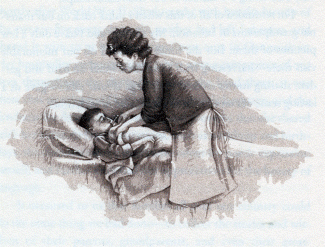
Years after we finished our formal education, we asked Mother how she'd approached the challenge of teaching us about health, which most children don't take too seriously. "There are key moments when raising you," she said, and she knew how to strike when the iron was hot. "When you were sick, I gave you your lessons on health. There was no more receptive time than when you were in the middle of chicken pox, mumps, whooping cough, and measles." As we struggled to fight off our childhood ailments, Mother's gentle admonitions about the importance of eating well and getting enough rest and exercise -- and "not doing anything foolish that would damage your health" -- fell on receptive ears.
Taking care of one's health from an early age was one of my mother's passions. "If you have your health, you have everything," she told us. "Without it, you have nothing." Mother had seen many health-related tragedies during her childhood in Lebanon, and she knew that the effects of neglecting one's health could appear with a vengeance years later, so she didn't believe in taking chances. Besides, we grew up in pre-antibiotic times, and our heightened awareness of the contagion of polio -- then seen widely as more fearsome than cancer -- made her health advice more acute and urgent. We wouldn't think of drinking out of other people's glasses, even within the family.
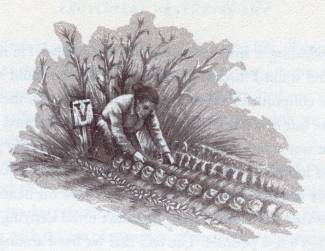
"Better than practicing what you preach," Mother always said, "is preaching what you practice." So she did. She ate what we ate, exercised and played ball with us, and made sure to get her daily rest, preferably in the form of an afternoon nap. But she worked hard to earn those naps: Mother used to clean her house on her hands and knees, and when she was done she would go to work in the yard and garden. We got the idea, all right. We all did our chores alongside her.
Mother had an intuitive sense of when not to rush to the doctor. Our parents always paid attention to which physicians in town were most skillful -- not just the ones who were more friendly or charming, but the ones who kept learning and which ones stopped learning, which ones encouraged questions and which took queries as mistrustful of their doctoring. She had a general practitioner, Dr. Roy Sanderson, who seemed to know which parents had enough common sense to handle their children's well-being on their own and which ones needed his closer attention. You can guess in which category he placed our mother.
Though my father owned a bar as part of his restaurant, alcohol was never a staple in our household. When guests came over my parents might serve wine, and my father liked an occasional taste of arak with his food, but that was about it. I don't recall any beer in the refrigerator until my brother came home from the navy. Smoking, too, was a generic taboo, except for Dad, who often held a cigarette between his lips while managing the restaurant -- although he didn't inhale, much to the amusement of his smoking friends. Nonetheless, he favored heavier taxes on tobacco products, and believed that doctors didn't focus enough on prevention. Society doesn't use doctors wisely, he contended, paying them merely to treat sickness, not to help people improve their health or prevent future illness. Doctors should be urging patients to eat healthier foods and conquer their addictions, he said over and over again. When he retired, he quit smoking, cold turkey.
Dad's most instructive lesson to us was his avoidance of extremes in his daily life. No matter how hungry he was, for example, or how delicious the meal my mother prepared, I can't remember a time when he said he overate. He used to tell us, especially at Thanksgiving, that the difference between a great dinner and a failed dinner was perhaps two or three mouthfuls too many. He didn't sleep too much or too little, didn't walk too much or too little, didn't try to shovel the snow too rapidly, drive too quickly, or spend too rapidly. He was the soul of moderation, and we could not help but notice.
My parents had a thousand little ways of bringing home the importance of nurturing our health. Even in this they made an example of the birds and squirrels around us, pointing out how they took care of their own. Once Pop made us laugh by reminding us that these animals were more careful with their health than the irresponsible teenagers of our area, who swaggered around as if asking one another, "Hi! Here's how I'm damaging my health. How are you damaging yours?"
Mother and Father were rewarded for their lifelong healthy habits by living into their late nineties. We never heard them make the merest complaint about aging. And when they could no longer be completely self-reliant, they received our assistance with ease and grace. For them, as well as for us, it was in the natural course of events.
Years after we finished our formal education, we asked Mother how she'd approached the challenge of teaching us about health, which most children don't take too seriously. "There are key moments when raising you," she said, and she knew how to strike when the iron was hot. "When you were sick, I gave you your lessons on health. There was no more receptive time than when you were in the middle of chicken pox, mumps, whooping cough, and measles." As we struggled to fight off our childhood ailments, Mother's gentle admonitions about the importance of eating well and getting enough rest and exercise -- and "not doing anything foolish that would damage your health" -- fell on receptive ears.
Taking care of one's health from an early age was one of my mother's passions. "If you have your health, you have everything," she told us. "Without it, you have nothing." Mother had seen many health-related tragedies during her childhood in Lebanon, and she knew that the effects of neglecting one's health could appear with a vengeance years later, so she didn't believe in taking chances. Besides, we grew up in pre-antibiotic times, and our heightened awareness of the contagion of polio -- then seen widely as more fearsome than cancer -- made her health advice more acute and urgent. We wouldn't think of drinking out of other people's glasses, even within the family.
"Better than practicing what you preach," Mother always said, "is preaching what you practice." So she did. She ate what we ate, exercised and played ball with us, and made sure to get her daily rest, preferably in the form of an afternoon nap. But she worked hard to earn those naps: Mother used to clean her house on her hands and knees, and when she was done she would go to work in the yard and garden. We got the idea, all right. We all did our chores alongside her.
Mother had an intuitive sense of when not to rush to the doctor. Our parents always paid attention to which physicians in town were most skillful -- not just the ones who were more friendly or charming, but the ones who kept learning and which ones stopped learning, which ones encouraged questions and which took queries as mistrustful of their doctoring. She had a general practitioner, Dr. Roy Sanderson, who seemed to know which parents had enough common sense to handle their children's well-being on their own and which ones needed his closer attention. You can guess in which category he placed our mother.
Though my father owned a bar as part of his restaurant, alcohol was never a staple in our household. When guests came over my parents might serve wine, and my father liked an occasional taste of arak with his food, but that was about it. I don't recall any beer in the refrigerator until my brother came home from the navy. Smoking, too, was a generic taboo, except for Dad, who often held a cigarette between his lips while managing the restaurant -- although he didn't inhale, much to the amusement of his smoking friends. Nonetheless, he favored heavier taxes on tobacco products, and believed that doctors didn't focus enough on prevention. Society doesn't use doctors wisely, he contended, paying them merely to treat sickness, not to help people improve their health or prevent future illness. Doctors should be urging patients to eat healthier foods and conquer their addictions, he said over and over again. When he retired, he quit smoking, cold turkey.
Dad's most instructive lesson to us was his avoidance of extremes in his daily life. No matter how hungry he was, for example, or how delicious the meal my mother prepared, I can't remember a time when he said he overate. He used to tell us, especially at Thanksgiving, that the difference between a great dinner and a failed dinner was perhaps two or three mouthfuls too many. He didn't sleep too much or too little, didn't walk too much or too little, didn't try to shovel the snow too rapidly, drive too quickly, or spend too rapidly. He was the soul of moderation, and we could not help but notice.
My parents had a thousand little ways of bringing home the importance of nurturing our health. Even in this they made an example of the birds and squirrels around us, pointing out how they took care of their own. Once Pop made us laugh by reminding us that these animals were more careful with their health than the irresponsible teenagers of our area, who swaggered around as if asking one another, "Hi! Here's how I'm damaging my health. How are you damaging yours?"
Mother and Father were rewarded for their lifelong healthy habits by living into their late nineties. We never heard them make the merest complaint about aging. And when they could no longer be completely self-reliant, they received our assistance with ease and grace. For them, as well as for us, it was in the natural course of events.