
The tide has turned: Iran’s strategic control of the Strait of Hormuz crushes American naval supremacy
by Press TV Strategic Analysis Desk
Saturday, 06 June 2026 1:53 PM [ Last Update: Saturday, 06 June 2026 1:57 PM ]
https://www.presstv.ir/Detail/2026/06/0 ... -supremacy
For decades, the Strait of Hormuz has been more than a waterway. It has functioned as the world’s most strategic chokepoint, the jugular vein of global energy flows, and the stage upon which American naval supremacy has performed its most visible and intimidating demonstrations of military force.
Through this narrow maritime corridor, linking the Persian Gulf to the Gulf of Oman, nearly one-fifth of global oil supply once moved with routine predictability. That predictability itself was the source of strategic power. Whoever could guarantee – or disrupt – that flow effectively held leverage over the global economic bloodstream.
For decades, the United States positioned itself as the ultimate arbiter of that passage. Its naval formations patrolled these waters with the implicit assumption of ownership, dictating the rules of engagement, enforcing “freedom of navigation” on its own strategic terms, and treating Iran’s legitimate maritime interests as little more than a secondary concern.
That era has effectively ended now. Renewed clashes in the Strait of Hormuz in recent days, triggered by repeated US military adventurism, are not routine maritime incidents. They represent the surface tremors of a deeper structural transformation: the steady consolidation of Iran’s sovereignty over this critical waterway.
This is no longer a question of symbolic passage rights or procedural navigation disputes. It is about effective control of one of the most consequential maritime arteries on the planet, where geography, deterrence, and power projection intersect with global energy security.
For the United States, this significant shift does not register as a diplomatic inconvenience or localized friction. It constitutes a direct erosion of its ability to assert uncontested naval dominance in a region that has long been central to its global power projection.
In strategic terms, it represents a serious and irreversible blow to its status as a maritime superpower, which has been dying a slow death since the recent war against Iran.
The unspoken contest: Sovereignty vs. symbolism
At the core of the current standoff lies a simple yet profound struggle. The American war machine persists in symbolically steering its warships through the Strait of Hormuz while refusing to abide by Iran's established rules following the recent war of aggression.
This is not merely about transit rights. It is an act of defiance, a refusal to acknowledge the practical consolidation of Iranian sovereignty over the world's most strategically vital maritime corridor and the shift in maritime dynamics in the past three months.
Washington fully grasps what Tehran has declared: the strait is no longer an open highway for hostile foreign naval forces. Iran has imposed new regulations, new protocols, and new realities. And for a superpower whose identity hinges on projecting force across global oceans, such surrender is unthinkable. Thus, the United States is trying to resist and flout new rules through presence, turning each routine crossing into a symbolic confrontation.
Yet symbolism, however resolute, cannot forever override geography. The Strait of Hormuz rests entirely within Iran's territorial waters and the Iranian leadership has clearly and categorically announced that its sovereignty is non-negotiable.
A heavy blow to American naval supremacy
The legitimate consolidation of Iran's sovereignty over the Strait of Hormuz delivers far more than financial or security benefits to Tehran. It strikes a devastating blow to the very foundation of American dominance at sea, which remained unquestioned not long ago.
America's military power is inherently maritime. From aircraft carriers to nuclear submarines, from the Fifth Fleet in Bahrain to patrols across the Indian Ocean, the American war machine projects influence through its mastery over the world's strategic waterways.
The Persian Gulf has anchored that strategy for half a century. It is the arena where Washington has repeatedly sought to demonstrate its ability to protect regional allies, intimidate adversaries, and secure energy flows that safeguard its own interests.
Depriving the United States of its ability to freely exploit the Persian Gulf and the Strait of Hormuz – to move with impunity, to dictate the rules, to command the waters – marks the beginning of America's decline and fall as a naval superpower.
From that decline flows a cascade of consequences: zero political leverage, shattered military credibility, and a weakened hand against major rivals such as China and Russia.
Beijing and Moscow are watching closely. If the US cannot secure compliance in a narrow strait off Iran's coast, what message does that send about its ability to contest the South China Sea or the Arctic? The blow at Hormuz resonates far beyond the Persian Gulf.
No acceptance, now or ever
Given the immense stakes, it would be naive to expect the American war machine ever to formally approve or accept Iranian sovereignty over the Strait of Hormuz.
Not in the short term, during the current fragile ceasefire. Not in the medium term, between the end of unprovoked aggression and any potential final agreement. And certainly not in the long term – even after some future deal, should one ever materialize.
For Washington, acceptance would mean surrender. It would signal to the world that a regional power has successfully challenged and shattered American maritime dominance. It would embolden other players – from the South China Sea to the Black Sea – to assert their own sovereign controls over strategic waterways. The precedent is simply far too dangerous.
Thus, American stubbornness has already manifested in localized clashes within the strait, along Iran's southern coasts, and in attacks on limited positions in Qeshm, Sirik, and Bandar Abbas. Iranian vessels around the Strait have also been struck.
These are not isolated incidents but the death throes of a superpower that refuses to accept a new geopolitical reality of Iran as a new power and the Strait as its jugular vein.
The red line that cannot be erased
Even if the naval blockade were fully lifted – even if tensions eased elsewhere – American provocative operations and harassment in the Strait of Hormuz are unlikely to cease.
Why? Because the normalization and consolidation of Iran's exercise of sovereignty over the strait has become, and will remain, an official red line for the United States.
This is not just about oil or about Israel. It is about the fundamental architecture of global power. If Iran can close or control the Strait at will, the United States can no longer guarantee global energy security in line with its own interests.
If the United States cannot guarantee global energy security, its allies will lose confidence. If its allies lose confidence, the entire American-led international order begins to collapse.
For Washington, retreat at the Strait of Hormuz is inconceivable and in fact suicidal. Yet continued confrontation with Iran carries its own catastrophic consequences.
Iran’s objective: Victory without instability
For Iran, however, prolonged tension in the Strait of Hormuz remains undesirable in the long term. Victory on the battlefield and at the negotiating table must be sustainable.
If commercial shipping routes stay chronically insecure, shipping companies will inevitably seek or create alternative paths, bypassing the strait entirely through pipelines, overland corridors, or longer sea lanes. Iran's strategic leverage would then erode, not through military defeat, but through economic irrelevance.
Moreover, sustained tension generates pressure from other countries, including Iran's friends and allies. Even sympathetic countries may quietly urge Tehran to compromise, not because they side with Washington, but because their own economies, in one way or another, depend on predictable maritime traffic.
Iran thus faces a delicate dilemma: how to entrench sovereignty without strangling the very waterway that gives sovereignty its strategic meaning.
The logic of asymmetric action
To end tensions and impose new rules under Iranian sovereignty, there is no option but asymmetric action in response to American provocations. Symmetry, which means matching the United States ship for ship, strike for strike, is a losing proposition. Iran cannot out-build the most powerful navy in history, but it can certainly out-think and out-maneuver it.
Asymmetric action raises the cost of harassing Iran in Washington's calculus. Every American provocation must carry a price wildly disproportionate to the act itself.
Not always a military price – at least not exclusively – but a strategic, political, or reputational toll. Over time, as these costs accumulate, Washington will reluctantly conclude that unofficial submission to Iranian sovereignty is the least bad option.
Critically, even if the American war machine someday refrains from disrupting navigation in the Strait of Hormuz, the Persian Gulf, or the Sea of Oman, it retains the capacity to do so anywhere in the world's waters.
This global reach grants America coercive bargaining power. It can threaten disruption elsewhere to extract concessions on Iran's control of the strait. Asymmetric responses must therefore be imaginative, persistent, and capable of following the United States far beyond the Persian Gulf region.
Beyond military responses: Expanding the target set
Iran's reactions to American maritime banditry and maritime terrorism are not confined to military responses or the targeting of US military bases across the region. Other domains are equally viable and very much on the table – cyber, diplomatic, economic, and covert.
Importantly, if the enemy continues to use the territory and facilities of southern Persian Gulf states to project its delusional power against Iran, then the infrastructure of those very states becomes a legitimate target as well.
This logic has been repeatedly underscored by Iranian officials. If Iran's use of the Strait of Hormuz and the Persian Gulf is restricted because the enemy operates from the soil or facilities of Persian Gulf Arab states – and if Iran's territorial integrity and security are not respected – then none of those countries will enjoy security either.
This is not a threat of indiscriminate aggression but a clear and categorical statement of strategic reality. In any prolonged confrontation, proximity becomes vulnerability.
The Persian Gulf Arab states may host American bases, but they also sit within easy reach of Iranian missiles, drones, and unconventional forces. Their prosperity depends on the very waters Iran is and has been defending. They cannot expect to facilitate pressure on Tehran while remaining insulated from the consequences.
The ultimate calculation: War as a boundary
Ultimately, the enemy must reach a single conclusion regarding the Strait of Hormuz: Iran is unwilling to abandon its sovereignty over this strait even at the cost of a full-scale war. That is the red line. That is the point beyond which American threats lose their coercive power.
But before reaching the point of war, many other measures are possible. Gradual escalation, calibrated retaliation, shadow warfare, legal maneuvering, diplomatic offensives, and economic leverage can all be deployed to make the United States understand Iran’s firm determination.
War is not a goal. It is a threshold. And the most effective deterrence is convincing the adversary that crossing that threshold will produce no victory, only unacceptable loss.
Hence, the enemy must come to terms with the new reality that governs the Strait of Hormuz in particular and the West Asia region in general. The American Empire is resisting not because it can reverse this tide, but because accepting it would mean admitting that its naval supremacy no longer exists.
The consolidation of Iran’s sovereignty over the Strait of Hormuz is a heavy blow to the United States at sea, one from which American power may never fully recover.
Press TV’s website can also be accessed at the following alternate addresses:
http://www.presstv.co.uk
PART 3 ANTI-ANTI-NAZI BARBARIAN HORDES ARE KNOCKING DOWN THE
Re: PART 3 ANTI-ANTI-NAZI BARBARIAN HORDES ARE KNOCKING DOWN
 by admin » Sat Jun 06, 2026 5:43 pm
- admin
- Site Admin
- Posts: 41470
- Joined: Thu Aug 01, 2013 5:21 am
Re: PART 3 ANTI-ANTI-NAZI BARBARIAN HORDES ARE KNOCKING DOWN
by admin » Sat Jun 06, 2026 5:58 pm
From manufacturing consent to masking defeat: 'Iran International'in service of US-Israeli war machine
By Sheida Eslami
Saturday, 06 June 2026 10:35 AM [ Last Update: Saturday, 06 June 2026 10:35 AM ]
https://www.presstv.ir/Detail/2026/06/0 ... ar-machine
In today’s West Asia, the simultaneous roar of the swords of war, narrative, and imagery grows louder by the day. The military support, intervention, and direct involvement of the United States in the crimes of the Zionist regime through direct military aggression against Iran, as well as its guidance and arms support for the assaults carried out by this usurping regime, have lost their effectiveness in legitimizing the slaughter of children, women, patients, and others across the region.
Now, even turning nations into servants – nations that gain nothing from allowing the United States and Israel access to and use of their territories and facilities – no longer yields results.
America’s hollow hegemony has been shattered, and the sun of truth has emerged from behind the clouds of lies and staged victimhood media spectacles.
Under such conditions, increasing and repairing media budgets to conceal political and even security objectives, enhancing public relations, advertising, and cognitive operations are no longer merely figures in financial statements but signs of anxiety, defeat, and attempts to escape a deep crisis of legitimacy.
On one side, Israel, by approving an unprecedented budget for hasbara and public diplomacy, is effectively admitting that in the battle for public opinion, especially after the Gaza genocidal war and the aggression against Iran, it faces a serious fracture.
On the other side, propaganda networks such as “Iran International,” the symbol of Persian-language propaganda against Iran, gain meaning within a larger constellation of infiltration operations and perception management; a constellation in which media, lobbying, data, capital, and security are intertwined and wrapped in a veil of hollow claims.
What outwardly appears as “advertising” and “media” is in reality a new form of warfare: a war waged not on land, but in minds, social media feeds, and television frames. Yet the more intensely its flames rise, the more they consume their own creators.
Iran International, an ostrich burying its head in the sand
The recent Financial Times report on the financial and ownership structure of the anti-Islamic Republic Persian-language network “Iran International” once again revived a question that has existed since the network’s launch in 2017: a media outlet with such enormous expenditures, such levels of losses, and such opacity in ownership, exactly with what motive and by whom is it being kept alive?
Why does this so-called media outlet, despite all the evident signs and evidence, still attempt to justify itself with grandiose terminology and refuse to pull its head out of the sand and see that everyone can already observe its naked reality? What is the real motive and objective behind sustaining Iran International?
The answer to this question does not merely help understand an overseas Persian-language network. The main issue is that public opinion should know that when a media outlet simultaneously claims editorial independence, records hundreds of millions of pounds in accumulated losses, refuses to disclose the identities of its investors, and transfers parts of its ownership structure to offshore companies, it can no longer be evaluated by the normal standards of a commercial media enterprise.
According to the Financial Times report, the parent company of “Iran International,” Volant Media UK, suffered more than £410 million in losses during the five years ending in December 2024 and owed approximately £482 million to affiliated entities.
Despite such conditions, the network was not only not shut down or downsized, but according to the same report, continued operating internationally with a vast network of personnel and media activities. From an economic perspective, this situation is abnormal, because in a normal commercial model, such a scale of losses would either lead to reduced operations, transparent ownership changes, clear capital injections, or investor withdrawal.
But here something else happened: shareholders converted around £650 million of the company’s debts into equity; a move that reduces liabilities from the balance sheet and strengthens the company’s financial appearance without necessarily clarifying the true source of the capital to the public.
“Iran International” has announced that this operation did not represent fresh money entering the company and was merely a debt-to-equity conversion intended to strengthen the company’s balance sheet. This explanation may be understandable from an accounting perspective, but it does not eliminate the core question regarding the philosophy behind the move. If investors were acting solely according to the logic of media profitability, why would they continue spending and absorbing hundreds of millions of pounds in losses on a project with no obvious economic return?
It is precisely here that the hypothesis of “political and geopolitical returns” becomes more serious. In other words, the issue is not merely what money was spent but it is why such money, with such a level of opacity, has been spent on such a media outlet, especially given the timing coinciding with plans for engineered riots in Iran in January 2026, responsibility for which, during the course of American-Israeli aggression against Iran, was openly acknowledged by American officials, with one of the key objectives described as the partitioning of Iran. Trump himself even complained about the ineffectiveness of funneling weapons to Kurdish separatists.
Likewise, the FT report notes that Reza Moadab, one of “Iran International” presenters, told Agence France-Presse in January regarding protesters: “We are all fighting together to get rid of this brutal regime.” It is as if the network operates along the same line as the military actions against Iran and has moved far beyond the framework of a normal media organization and what it attempts to portray itself as.
The offshore trail, Saudi links, and ownership ambiguity
An important part of the report concerns the registration and ownership changes of Volant Media. According to the report, on December 13, 648 million new shares with a nominal value of £648 million were issued, while simultaneously all 50,000 original company shares were transferred from Adel Abdulkarim Alabdulkarim to a Cayman Islands company named Info-Cast Cayman Limited.
The Cayman Islands are among the most famous offshore corporate jurisdictions; the use of such a structure in a case fundamentally centered on financial transparency and real ownership naturally raises sensitivities and questions.
More importantly, according to the FT narrative, registration documents do not clearly explain to whom the newly issued shares were allocated. This means that at the same time as the company’s largest financial restructuring, a major part of the ownership picture remains obscure.
Meanwhile, the report states that [b][size=110]the only registered director of Info-Cast Cayman is a person named Saleh Hussain Aldowais, and a person with the same name is identified as the chief operating officer of Saudi Research and Media Group (SRMG), one of Saudi Arabia’s largest media groups. SRMG itself reportedly did not respond to FT’s request for comment.
These data points create an important chain of circumstantial evidence: massive losses, undisclosed investors, conversion of enormous debt into equity, transfer of ownership to offshore structures, and the nominal connection of an offshore company director to one of Saudi Arabia’s largest media entities.
Alongside this, republished reports citing FT also mention the role of OR Holdings and Investments Limited, a company reportedly linked to Adel Abdulkarim, active in film and television production, producing content for “Iran International,” and maintaining offices or operational ties in Riyadh.
These reports further state that the company produced propaganda works including several anti-Iranian documentaries and productions targeting martyred Leader of the Islamic Revolution Ayatollah Seyyed Ali Khamenei, as well as the documentary ‘The Line: Saudi Arabia’s City of the Future in Neom’, with Abdulkarim listed on IMDb as executive producer of these projects.
Putting these pieces together, the resulting picture resembles not a simple financial relationship, but rather a network of media, production, and investment companies moving between London, Riyadh, and offshore jurisdictions.
This ambiguity has existed since the network’s earliest years. In 2018, The Guardian published a report referencing concerns about “Iran International’s” financial ties to circles close to Mohammed bin Salman. That report, citing anonymous sources, claimed the network’s funding was facilitated through intermediaries close to Saudi power centers and mentioned figures such as Saud al-Qahtani.
The Guardian also referenced an initial support figure of $250 million. These are at the level of source-based journalistic claims, not judicial rulings, but their significance lies in the fact that, together with FT’s new data, they form a recurring pattern: enormous capital, opaque ownership, Saudi connections, and intermediary structures.
Among the newer points raised in recent reports is that ambiguity over the source of funding has not only been a concern for outside critics. According to FT, some individuals familiar with or close to the network’s operations stated that the concealment of financial sources was itself a source of concern among some of the organization’s journalists, and questions about its possible impact on editorial decisions had even been raised privately.
This point is significant because it moves the issue beyond “external accusations” and shows that financial opacity can become a crisis of internal trust and even a source of concern about conflict and possible collapse within the organization itself.
Of course, the official position of “Iran International” and Volant Media is that the network has received no funding from the Saudi government, Israel, or any other entity, and is supported by a consortium of private commercial investors.
But the main problem is that the identities of these investors are not publicly disclosed. Therefore, official denials without clarification of ultimate ownership not only fail to answer all questions, but in the face of a body of financial and registration evidence, themselves become part of the issue.
From editorial line to anti-security function
The financial ambiguity surrounding “Iran International” becomes more important when examined alongside its editorial line and political role. The Guardian’s 2018 report referred to criticisms regarding the network’s extensive coverage of MKO terror cult gatherings and the platforming of a spokesperson linked to the Ahvaz terror attack.
It was also reported that Ofcom was reviewing the matter at the time. One of the newer points highlighted in the recent report is the network’s changed regulatory position in Britain.
According to FT, “Iran International” is no longer fully subject to traditional Ofcom television broadcasting rules because it now operates in Britain as an online streaming and on-demand service. This does not mean the absence of oversight entirely, but it reduces obligations such as strict traditional broadcasting impartiality.
Consequently, a network aiming for significant political influence is deliberately framed within a regulatory structure more flexible and less constrained than conventional television. This is seen as another sign of a mechanism through which the network can move toward broad political influence while avoiding normal media accountability with institutional assistance.
The new FT report also notes that critics regard “Iran International” as promoting pro-war narratives and amplifying the self-proclaimed “prince” Reza Pahlavi. This perception became especially pronounced after the events of 2022 and later during heightened tensions involving Iran, Israel, and the United States; a period during which “Iran International” devoted significant airtime to opposition, monarchist, separatist, or anti-Iranian narratives, blurring the line between information dissemination and psychological operations.
During the riots or quasi-coup attempt of January 2026 and plans for hybrid warfare and the February 28 war of aggression, attempts aimed at igniting civil war in Iran simultaneously with the American-Israeli military assault – substantial evidence emerged of the network’s deliberate attempts to advance a strategy of division among the Iranian people and justify crimes against civilians, educational centers, medical facilities, and others during the “Ramadan War,” most notably the attack on the school in Minab and the massacre of more than 150 students there.
Viewed from the outside, “Iran International” with such an approach is not a news outlet covering events, but an actor that at political turning points moves toward constructing narratives, empowering specific figures, legitimizing interventionist scenarios, and justifying foreign aggression against the territorial integrity and sovereignty of the Islamic Republic of Iran.
Alongside the Saudi issue, recent reports from Israeli media including Israel Hayom have claimed that Israeli military bodies have used overseas Persian-language media for infiltration operations, character assassination, and influencing Iranian public opinion.
The importance of these narratives lies in elevating the role of media from “transmitting news” to “a tool of cognitive operations,” which means the news itself, its timing, social context, publishing outlet, and the intended public reaction all become components of a multilayered operation. The language used in Israeli media itself demonstrates how regime apparatuses view media, social networks, and psychological operations as complementary tools.
Therefore, when all components are assembled, the final picture is this: “Iran International” claims to operate under the claim of independence, yet its financial structure is muddy; its hundreds of millions of pounds in losses cannot be explained through ordinary economic logic; its ownership restructuring is tied to offshore companies in the Cayman Islands; names within its structure intersect with the Saudi media sphere; and its editorial line has repeatedly been accused by critics of aligning with pressure projects, destabilization campaigns, foreign intervention, and plans such as the January 2026 quasi-coup and attempts to trigger civil war and partition Iran.
Hasbara is no longer advertising but perception engineering
Other reports published in spring 2026 indicate that Israel allocated around $730 million for advertising and “public diplomacy/hasbara” in 2026; a figure approximately five times larger than the previous year’s $150 million budget and approved by the Knesset in March.
This budget is roughly twenty times higher than spending levels before the Gaza genocidal war began in October 2023, and this enormous increase in itself signals an intense crisis of credibility, a deep fracture in belief in the legitimacy of the occupying regime’s actions, and a sense of urgency in trying to repair this vast gap: namely, that hasbara must evolve into perception management; a combination of media, diplomacy, lobbying, digital campaigns, influencers, and data-driven operations aimed not merely at defending Israel’s crimes against the people of Gaza, Lebanon, Syria, Iran, and others, but at reshaping public emotions – at least within the United States – toward the Israeli regime.
This is particularly significant when polling data, especially in the United States, offer a clearer picture of the scale of the crisis. According to a Pew Research Center survey published in April, 60 percent of Americans now hold an unfavorable view of Israel, a significant increase compared to the previous year.
Only 37 percent hold a favorable view, and this divide is clearly visible across various social and religious groups. Even among Republicans under 50 – traditionally part of Israel’s support base – the majority now hold negative views.
Add to this the fact that the Hebrew word “hasbara” itself is increasingly used in a derogatory manner to describe Israeli propaganda efforts; a sign that these campaigns have not only failed to achieve their intended influence, but in some cases have produced the opposite effect. So much so that Gideon Sa’ar himself recognized the strategic necessity of changing the approach, calling the investment “a vital issue” and stating: “It must be treated like investments in fighter jets, bombs, and missile defense systems.”
Under the new framework, the budget has been distributed in a highly targeted manner: establishing a central media operations room to monitor 250 media outlets and produce 10,000 pieces of Israel-related content daily; allocating $50 million for digital advertising across international platforms such as Google, YouTube, X, and Instagram; and dedicating $40 million to hosting 400 foreign delegations including lawmakers, clergy, university presidents, and influencers.
The $1.5 million monthly contract with Brad Parscale falls precisely within this logic. Tel Aviv signed a $1.5 million per month deal with Parscale, Donald Trump’s former campaign strategist, to use artificial intelligence tools to monitor and manage what it describes as “antisemitism.” Funding networks of influencers and targeted campaigns, including among evangelical Christian groups, is also part of the strategy.
According to this plan, crises threatening Israel’s manufactured image and exposing the face of a genocidal state must be identified and contained before they reach public consciousness.
A war for hearts and minds
But why such a budget? Because Israel faces a growing crisis of public alienation. Data showing that Israel’s popularity among young Americans has gone into free fall, hashtags such as #FreePalestine generating tens of billions of views, and the explosive popularity and attention given to content produced by Iranian embassies abroad or anonymous Iranian youths creating Lego-style animations all carry profound meaning.
Especially when Jewish Telegraphic Agency quotes experts in public diplomacy saying: “If you ask those who professionally study public diplomacy whether any of this will work, the dominant answer is skepticism. Their central objection is that no amount of messaging can overcome deep-rooted opposition among target audiences to Israel’s military responses to conflicts with its neighbors.”
Jewish Telegraphic Agency quotes Nicholas Cull, professor of communications at the University of Southern California and one of the founders of public diplomacy studies, saying: “My position is that history shows if the policy is wrong, all the money in the world won’t help. America learned this in Vietnam, when its Cold War public diplomacy budget peaked... I think the Israeli government will not be able to sell its solutions to the world when many of its own people question the credibility of those solutions and when domestic consensus is so disconnected from international perceptions of realities on the ground.”
That is why Sa’ar speaks of a battle for “hearts and minds”; remarks that in reality amount to an admission of severe damage to the regime’s credibility, especially after the Gaza genocidal war. And Israel, to repair this damage, has been forced into colossal investment.
Meanwhile, allocating part of the new budget to platforms that appear public and non-political, and using micro-influencers, shows that the regime’s propaganda strategy is based on concealing the source and making the message appear natural, distributed through lifestyle content, entertainment, seemingly neutral news, and small agile networks, thereby erasing the line between propaganda and content.
In reality, the Zionist regime seeks, through money and enormous hasbara expenditures, to move away even from overt propaganda and toward “perception engineering.”
We pay for actions against Iran, in Israel’s interest
The evidence clearly indicates that networks such as “Iran International” must also be viewed within this same framework, to the point that the network itself is described as part of Mossad’s influence operation chain. References to accumulated losses, heavy debts, offshore structures, ownership transfers to foreign-registered companies, and recent claims from sources close to Iran International stating that after repeated failures to incite unrest in Iran, Mossad threatened to significantly cut the network’s budget, all reinforce the conclusion that this is not an ordinary effort to strengthen public relations, manage public opinion, or run a typical media outlet. Rather, these are projects operating at the intersection of media, anti-security measures, and psychological warfare.
For the peoples of the region and the world, beyond shocking reports such as The Guardian’s and later the recent admission by Israeli journalist Barak Ravid on X that the Zionist regime uses the anti-Iranian network “Iran International” for its media wars, or even Israel Hayom’s recent report exposing the role of anti-Iranian Persian-language media abroad in Mossad-designed operations against Iran, the hidden connections among the puzzle pieces became as clear as the midday sun when it was revealed that during the peak days of the American-Israeli attacks on Iran, beginning on February 28, 2026, the coordinates of locations targeted by missiles and bombs were effectively being communicated through “Iran International’s” propaganda operations, thereby assisting the enemy.
One concrete example exposing “Iran International’s” role as an intelligence hub for sensitive Iranian locations under the guise of amplifying the voice of the “people” was the reporting of the alleged relocation of police personnel from a station to a sports hall and mosque, after which the same location was bombed by Israel just hours later.
More importantly, however, even these multimillion-dollar displays of loyalty and image laundering, disguised as covering losses or improving public diplomacy, have failed. The whirlwind of bloodshed inflicted upon Palestinian, Lebanese, Iranian, and other victims has torn apart the fabric of Zionist policies.
The influence of “Iran International” among Persian speakers has declined, the circulation of its content inside and outside Iran has fallen, and the exposure of its political and security links has generated broader distrust, strengthening the reality that the network’s activities overlap with Tel Aviv’s objectives: the money comes from Arab states, but the output serves the same larger Israeli project whose explosive and astonishing budget has now attracted global attention.
Throughout the war, whose ceasefire foundations remain fragile, the news line of “Iran International” mirrored that of pro-Israeli media, from amplifying attacks and creating panic to attempts aimed at spreading insecurity and psychologically exhausting Iranian society.
The FT report has officially confirmed an old truth: behind the polished studio décor and claims of “free news” lies an operations room tasked with acting against Iran’s security.
A deadly collision with the wall at the end of the dead end
Now that the realities and origins of this network have become clear, tools, methods, and styles such as Shock Journalism, the approach based on crisis manufacturing, sensational headlines, and media shock production that once sufficed to attract attention, no longer possess their former effectiveness in the face of rapid exposure, audience awareness, and platform competition.
If, for this reason, Israel is shifting from large and classical arms to smaller, more agile and invisible networks, from explicit media outlets to algorithms, from lavish studios to micro-influencers, and from direct propaganda to soft infiltration, it remains unclear whether it will achieve significant success.
The key point is this: increasing budgets, attempting to conceal backstage relationships, and similar measures, contrary to appearances, are not signs of strength but signs of pressure. It is enough to roughly add together all the visible and hidden figures and expenditures devoted to media and propaganda by aggressors in West Asia during this short period.
Wherever the cost of narrative construction rises this high, it means the official narrative has failed in relation to reality on the ground. In Gaza, Iran, Lebanon, the Persian Gulf states, within media scenes emerging even from those same countries, across global public opinion, Western universities, and social networks, the image of Israel and the United States has deteriorated, and traditional whitewashing mechanisms, the expansion of wealthy media empires detached from truth, no longer work.
In reality, these hundreds of millions of dollars in investments, AI contracts, influencer networks, and media operations rooms are less signs of power than documents of anxiety – anxiety that despite all engineering efforts, truth still finds its way into public consciousness; anywhere on earth where an awakened conscience exists and cannot look upon the shocking images of innocent children in Minab, dying infants, mutilated and murdered children in Gaza, and still seek ways to justify the crimes of America and Israel.
Press TV’s website can also be accessed at the following alternate addresses:
http://www.presstv.co.uk
By Sheida Eslami
Saturday, 06 June 2026 10:35 AM [ Last Update: Saturday, 06 June 2026 10:35 AM ]
https://www.presstv.ir/Detail/2026/06/0 ... ar-machine
In today’s West Asia, the simultaneous roar of the swords of war, narrative, and imagery grows louder by the day. The military support, intervention, and direct involvement of the United States in the crimes of the Zionist regime through direct military aggression against Iran, as well as its guidance and arms support for the assaults carried out by this usurping regime, have lost their effectiveness in legitimizing the slaughter of children, women, patients, and others across the region.
Now, even turning nations into servants – nations that gain nothing from allowing the United States and Israel access to and use of their territories and facilities – no longer yields results.
America’s hollow hegemony has been shattered, and the sun of truth has emerged from behind the clouds of lies and staged victimhood media spectacles.
Under such conditions, increasing and repairing media budgets to conceal political and even security objectives, enhancing public relations, advertising, and cognitive operations are no longer merely figures in financial statements but signs of anxiety, defeat, and attempts to escape a deep crisis of legitimacy.
On one side, Israel, by approving an unprecedented budget for hasbara and public diplomacy, is effectively admitting that in the battle for public opinion, especially after the Gaza genocidal war and the aggression against Iran, it faces a serious fracture.
On the other side, propaganda networks such as “Iran International,” the symbol of Persian-language propaganda against Iran, gain meaning within a larger constellation of infiltration operations and perception management; a constellation in which media, lobbying, data, capital, and security are intertwined and wrapped in a veil of hollow claims.
What outwardly appears as “advertising” and “media” is in reality a new form of warfare: a war waged not on land, but in minds, social media feeds, and television frames. Yet the more intensely its flames rise, the more they consume their own creators.
Iran International, an ostrich burying its head in the sand
The recent Financial Times report on the financial and ownership structure of the anti-Islamic Republic Persian-language network “Iran International” once again revived a question that has existed since the network’s launch in 2017: a media outlet with such enormous expenditures, such levels of losses, and such opacity in ownership, exactly with what motive and by whom is it being kept alive?
Why does this so-called media outlet, despite all the evident signs and evidence, still attempt to justify itself with grandiose terminology and refuse to pull its head out of the sand and see that everyone can already observe its naked reality? What is the real motive and objective behind sustaining Iran International?
The answer to this question does not merely help understand an overseas Persian-language network. The main issue is that public opinion should know that when a media outlet simultaneously claims editorial independence, records hundreds of millions of pounds in accumulated losses, refuses to disclose the identities of its investors, and transfers parts of its ownership structure to offshore companies, it can no longer be evaluated by the normal standards of a commercial media enterprise.
According to the Financial Times report, the parent company of “Iran International,” Volant Media UK, suffered more than £410 million in losses during the five years ending in December 2024 and owed approximately £482 million to affiliated entities.
Despite such conditions, the network was not only not shut down or downsized, but according to the same report, continued operating internationally with a vast network of personnel and media activities. From an economic perspective, this situation is abnormal, because in a normal commercial model, such a scale of losses would either lead to reduced operations, transparent ownership changes, clear capital injections, or investor withdrawal.
But here something else happened: shareholders converted around £650 million of the company’s debts into equity; a move that reduces liabilities from the balance sheet and strengthens the company’s financial appearance without necessarily clarifying the true source of the capital to the public.
“Iran International” has announced that this operation did not represent fresh money entering the company and was merely a debt-to-equity conversion intended to strengthen the company’s balance sheet. This explanation may be understandable from an accounting perspective, but it does not eliminate the core question regarding the philosophy behind the move. If investors were acting solely according to the logic of media profitability, why would they continue spending and absorbing hundreds of millions of pounds in losses on a project with no obvious economic return?
It is precisely here that the hypothesis of “political and geopolitical returns” becomes more serious. In other words, the issue is not merely what money was spent but it is why such money, with such a level of opacity, has been spent on such a media outlet, especially given the timing coinciding with plans for engineered riots in Iran in January 2026, responsibility for which, during the course of American-Israeli aggression against Iran, was openly acknowledged by American officials, with one of the key objectives described as the partitioning of Iran. Trump himself even complained about the ineffectiveness of funneling weapons to Kurdish separatists.
Likewise, the FT report notes that Reza Moadab, one of “Iran International” presenters, told Agence France-Presse in January regarding protesters: “We are all fighting together to get rid of this brutal regime.” It is as if the network operates along the same line as the military actions against Iran and has moved far beyond the framework of a normal media organization and what it attempts to portray itself as.
Press TV
@PressTV
Analysis - Hybrid warfare after military defeat: Iran and resistance axis poised to thwart all enemy plots – including psyops
https://t.co/OkbdkKc66B
By Press TV Strategic Analysis Desk
From presstv.ir
1:18 PM · Jun 4, 2026
The offshore trail, Saudi links, and ownership ambiguity
An important part of the report concerns the registration and ownership changes of Volant Media. According to the report, on December 13, 648 million new shares with a nominal value of £648 million were issued, while simultaneously all 50,000 original company shares were transferred from Adel Abdulkarim Alabdulkarim to a Cayman Islands company named Info-Cast Cayman Limited.
The Cayman Islands are among the most famous offshore corporate jurisdictions; the use of such a structure in a case fundamentally centered on financial transparency and real ownership naturally raises sensitivities and questions.
More importantly, according to the FT narrative, registration documents do not clearly explain to whom the newly issued shares were allocated. This means that at the same time as the company’s largest financial restructuring, a major part of the ownership picture remains obscure.
Meanwhile, the report states that [b][size=110]the only registered director of Info-Cast Cayman is a person named Saleh Hussain Aldowais, and a person with the same name is identified as the chief operating officer of Saudi Research and Media Group (SRMG), one of Saudi Arabia’s largest media groups. SRMG itself reportedly did not respond to FT’s request for comment.
These data points create an important chain of circumstantial evidence: massive losses, undisclosed investors, conversion of enormous debt into equity, transfer of ownership to offshore structures, and the nominal connection of an offshore company director to one of Saudi Arabia’s largest media entities.
Alongside this, republished reports citing FT also mention the role of OR Holdings and Investments Limited, a company reportedly linked to Adel Abdulkarim, active in film and television production, producing content for “Iran International,” and maintaining offices or operational ties in Riyadh.
These reports further state that the company produced propaganda works including several anti-Iranian documentaries and productions targeting martyred Leader of the Islamic Revolution Ayatollah Seyyed Ali Khamenei, as well as the documentary ‘The Line: Saudi Arabia’s City of the Future in Neom’, with Abdulkarim listed on IMDb as executive producer of these projects.
Putting these pieces together, the resulting picture resembles not a simple financial relationship, but rather a network of media, production, and investment companies moving between London, Riyadh, and offshore jurisdictions.
This ambiguity has existed since the network’s earliest years. In 2018, The Guardian published a report referencing concerns about “Iran International’s” financial ties to circles close to Mohammed bin Salman. That report, citing anonymous sources, claimed the network’s funding was facilitated through intermediaries close to Saudi power centers and mentioned figures such as Saud al-Qahtani.
The Guardian also referenced an initial support figure of $250 million. These are at the level of source-based journalistic claims, not judicial rulings, but their significance lies in the fact that, together with FT’s new data, they form a recurring pattern: enormous capital, opaque ownership, Saudi connections, and intermediary structures.
Among the newer points raised in recent reports is that ambiguity over the source of funding has not only been a concern for outside critics. According to FT, some individuals familiar with or close to the network’s operations stated that the concealment of financial sources was itself a source of concern among some of the organization’s journalists, and questions about its possible impact on editorial decisions had even been raised privately.
This point is significant because it moves the issue beyond “external accusations” and shows that financial opacity can become a crisis of internal trust and even a source of concern about conflict and possible collapse within the organization itself.
Of course, the official position of “Iran International” and Volant Media is that the network has received no funding from the Saudi government, Israel, or any other entity, and is supported by a consortium of private commercial investors.
But the main problem is that the identities of these investors are not publicly disclosed. Therefore, official denials without clarification of ultimate ownership not only fail to answer all questions, but in the face of a body of financial and registration evidence, themselves become part of the issue.
From editorial line to anti-security function
The financial ambiguity surrounding “Iran International” becomes more important when examined alongside its editorial line and political role. The Guardian’s 2018 report referred to criticisms regarding the network’s extensive coverage of MKO terror cult gatherings and the platforming of a spokesperson linked to the Ahvaz terror attack.
It was also reported that Ofcom was reviewing the matter at the time. One of the newer points highlighted in the recent report is the network’s changed regulatory position in Britain.
According to FT, “Iran International” is no longer fully subject to traditional Ofcom television broadcasting rules because it now operates in Britain as an online streaming and on-demand service. This does not mean the absence of oversight entirely, but it reduces obligations such as strict traditional broadcasting impartiality.
Consequently, a network aiming for significant political influence is deliberately framed within a regulatory structure more flexible and less constrained than conventional television. This is seen as another sign of a mechanism through which the network can move toward broad political influence while avoiding normal media accountability with institutional assistance.
The new FT report also notes that critics regard “Iran International” as promoting pro-war narratives and amplifying the self-proclaimed “prince” Reza Pahlavi. This perception became especially pronounced after the events of 2022 and later during heightened tensions involving Iran, Israel, and the United States; a period during which “Iran International” devoted significant airtime to opposition, monarchist, separatist, or anti-Iranian narratives, blurring the line between information dissemination and psychological operations.
During the riots or quasi-coup attempt of January 2026 and plans for hybrid warfare and the February 28 war of aggression, attempts aimed at igniting civil war in Iran simultaneously with the American-Israeli military assault – substantial evidence emerged of the network’s deliberate attempts to advance a strategy of division among the Iranian people and justify crimes against civilians, educational centers, medical facilities, and others during the “Ramadan War,” most notably the attack on the school in Minab and the massacre of more than 150 students there.
Viewed from the outside, “Iran International” with such an approach is not a news outlet covering events, but an actor that at political turning points moves toward constructing narratives, empowering specific figures, legitimizing interventionist scenarios, and justifying foreign aggression against the territorial integrity and sovereignty of the Islamic Republic of Iran.
Alongside the Saudi issue, recent reports from Israeli media including Israel Hayom have claimed that Israeli military bodies have used overseas Persian-language media for infiltration operations, character assassination, and influencing Iranian public opinion.
The importance of these narratives lies in elevating the role of media from “transmitting news” to “a tool of cognitive operations,” which means the news itself, its timing, social context, publishing outlet, and the intended public reaction all become components of a multilayered operation. The language used in Israeli media itself demonstrates how regime apparatuses view media, social networks, and psychological operations as complementary tools.
Therefore, when all components are assembled, the final picture is this: “Iran International” claims to operate under the claim of independence, yet its financial structure is muddy; its hundreds of millions of pounds in losses cannot be explained through ordinary economic logic; its ownership restructuring is tied to offshore companies in the Cayman Islands; names within its structure intersect with the Saudi media sphere; and its editorial line has repeatedly been accused by critics of aligning with pressure projects, destabilization campaigns, foreign intervention, and plans such as the January 2026 quasi-coup and attempts to trigger civil war and partition Iran.
Press TV
@PressTV
Viewpoint - How 'Iran International' fanned flames of war but lost to Iranian people's wisdom and resilience
https://t.co/jiE71DlyHw
By Y. P. Rāzi
From presstv.ir
7:11 AM · May 3, 2026
Hasbara is no longer advertising but perception engineering
Other reports published in spring 2026 indicate that Israel allocated around $730 million for advertising and “public diplomacy/hasbara” in 2026; a figure approximately five times larger than the previous year’s $150 million budget and approved by the Knesset in March.
This budget is roughly twenty times higher than spending levels before the Gaza genocidal war began in October 2023, and this enormous increase in itself signals an intense crisis of credibility, a deep fracture in belief in the legitimacy of the occupying regime’s actions, and a sense of urgency in trying to repair this vast gap: namely, that hasbara must evolve into perception management; a combination of media, diplomacy, lobbying, digital campaigns, influencers, and data-driven operations aimed not merely at defending Israel’s crimes against the people of Gaza, Lebanon, Syria, Iran, and others, but at reshaping public emotions – at least within the United States – toward the Israeli regime.
This is particularly significant when polling data, especially in the United States, offer a clearer picture of the scale of the crisis. According to a Pew Research Center survey published in April, 60 percent of Americans now hold an unfavorable view of Israel, a significant increase compared to the previous year.
Only 37 percent hold a favorable view, and this divide is clearly visible across various social and religious groups. Even among Republicans under 50 – traditionally part of Israel’s support base – the majority now hold negative views.
Add to this the fact that the Hebrew word “hasbara” itself is increasingly used in a derogatory manner to describe Israeli propaganda efforts; a sign that these campaigns have not only failed to achieve their intended influence, but in some cases have produced the opposite effect. So much so that Gideon Sa’ar himself recognized the strategic necessity of changing the approach, calling the investment “a vital issue” and stating: “It must be treated like investments in fighter jets, bombs, and missile defense systems.”
Under the new framework, the budget has been distributed in a highly targeted manner: establishing a central media operations room to monitor 250 media outlets and produce 10,000 pieces of Israel-related content daily; allocating $50 million for digital advertising across international platforms such as Google, YouTube, X, and Instagram; and dedicating $40 million to hosting 400 foreign delegations including lawmakers, clergy, university presidents, and influencers.
The $1.5 million monthly contract with Brad Parscale falls precisely within this logic. Tel Aviv signed a $1.5 million per month deal with Parscale, Donald Trump’s former campaign strategist, to use artificial intelligence tools to monitor and manage what it describes as “antisemitism.” Funding networks of influencers and targeted campaigns, including among evangelical Christian groups, is also part of the strategy.
According to this plan, crises threatening Israel’s manufactured image and exposing the face of a genocidal state must be identified and contained before they reach public consciousness.
A war for hearts and minds
But why such a budget? Because Israel faces a growing crisis of public alienation. Data showing that Israel’s popularity among young Americans has gone into free fall, hashtags such as #FreePalestine generating tens of billions of views, and the explosive popularity and attention given to content produced by Iranian embassies abroad or anonymous Iranian youths creating Lego-style animations all carry profound meaning.
Especially when Jewish Telegraphic Agency quotes experts in public diplomacy saying: “If you ask those who professionally study public diplomacy whether any of this will work, the dominant answer is skepticism. Their central objection is that no amount of messaging can overcome deep-rooted opposition among target audiences to Israel’s military responses to conflicts with its neighbors.”
Jewish Telegraphic Agency quotes Nicholas Cull, professor of communications at the University of Southern California and one of the founders of public diplomacy studies, saying: “My position is that history shows if the policy is wrong, all the money in the world won’t help. America learned this in Vietnam, when its Cold War public diplomacy budget peaked... I think the Israeli government will not be able to sell its solutions to the world when many of its own people question the credibility of those solutions and when domestic consensus is so disconnected from international perceptions of realities on the ground.”
That is why Sa’ar speaks of a battle for “hearts and minds”; remarks that in reality amount to an admission of severe damage to the regime’s credibility, especially after the Gaza genocidal war. And Israel, to repair this damage, has been forced into colossal investment.
Meanwhile, allocating part of the new budget to platforms that appear public and non-political, and using micro-influencers, shows that the regime’s propaganda strategy is based on concealing the source and making the message appear natural, distributed through lifestyle content, entertainment, seemingly neutral news, and small agile networks, thereby erasing the line between propaganda and content.
In reality, the Zionist regime seeks, through money and enormous hasbara expenditures, to move away even from overt propaganda and toward “perception engineering.”
Press TV
@PressTV
Viewpoints - How ‘Iran International’ was weaponized against Iranian people during recent Israeli war
https://t.co/52uwu1uQZ2
By Hussein Yaqubi
From presstv.ir
4:34 AM · Jul 5, 2025
We pay for actions against Iran, in Israel’s interest
The evidence clearly indicates that networks such as “Iran International” must also be viewed within this same framework, to the point that the network itself is described as part of Mossad’s influence operation chain. References to accumulated losses, heavy debts, offshore structures, ownership transfers to foreign-registered companies, and recent claims from sources close to Iran International stating that after repeated failures to incite unrest in Iran, Mossad threatened to significantly cut the network’s budget, all reinforce the conclusion that this is not an ordinary effort to strengthen public relations, manage public opinion, or run a typical media outlet. Rather, these are projects operating at the intersection of media, anti-security measures, and psychological warfare.
For the peoples of the region and the world, beyond shocking reports such as The Guardian’s and later the recent admission by Israeli journalist Barak Ravid on X that the Zionist regime uses the anti-Iranian network “Iran International” for its media wars, or even Israel Hayom’s recent report exposing the role of anti-Iranian Persian-language media abroad in Mossad-designed operations against Iran, the hidden connections among the puzzle pieces became as clear as the midday sun when it was revealed that during the peak days of the American-Israeli attacks on Iran, beginning on February 28, 2026, the coordinates of locations targeted by missiles and bombs were effectively being communicated through “Iran International’s” propaganda operations, thereby assisting the enemy.
One concrete example exposing “Iran International’s” role as an intelligence hub for sensitive Iranian locations under the guise of amplifying the voice of the “people” was the reporting of the alleged relocation of police personnel from a station to a sports hall and mosque, after which the same location was bombed by Israel just hours later.
More importantly, however, even these multimillion-dollar displays of loyalty and image laundering, disguised as covering losses or improving public diplomacy, have failed. The whirlwind of bloodshed inflicted upon Palestinian, Lebanese, Iranian, and other victims has torn apart the fabric of Zionist policies.
The influence of “Iran International” among Persian speakers has declined, the circulation of its content inside and outside Iran has fallen, and the exposure of its political and security links has generated broader distrust, strengthening the reality that the network’s activities overlap with Tel Aviv’s objectives: the money comes from Arab states, but the output serves the same larger Israeli project whose explosive and astonishing budget has now attracted global attention.
Throughout the war, whose ceasefire foundations remain fragile, the news line of “Iran International” mirrored that of pro-Israeli media, from amplifying attacks and creating panic to attempts aimed at spreading insecurity and psychologically exhausting Iranian society.
The FT report has officially confirmed an old truth: behind the polished studio décor and claims of “free news” lies an operations room tasked with acting against Iran’s security.
A deadly collision with the wall at the end of the dead end
Now that the realities and origins of this network have become clear, tools, methods, and styles such as Shock Journalism, the approach based on crisis manufacturing, sensational headlines, and media shock production that once sufficed to attract attention, no longer possess their former effectiveness in the face of rapid exposure, audience awareness, and platform competition.
If, for this reason, Israel is shifting from large and classical arms to smaller, more agile and invisible networks, from explicit media outlets to algorithms, from lavish studios to micro-influencers, and from direct propaganda to soft infiltration, it remains unclear whether it will achieve significant success.
The key point is this: increasing budgets, attempting to conceal backstage relationships, and similar measures, contrary to appearances, are not signs of strength but signs of pressure. It is enough to roughly add together all the visible and hidden figures and expenditures devoted to media and propaganda by aggressors in West Asia during this short period.
Wherever the cost of narrative construction rises this high, it means the official narrative has failed in relation to reality on the ground. In Gaza, Iran, Lebanon, the Persian Gulf states, within media scenes emerging even from those same countries, across global public opinion, Western universities, and social networks, the image of Israel and the United States has deteriorated, and traditional whitewashing mechanisms, the expansion of wealthy media empires detached from truth, no longer work.
In reality, these hundreds of millions of dollars in investments, AI contracts, influencer networks, and media operations rooms are less signs of power than documents of anxiety – anxiety that despite all engineering efforts, truth still finds its way into public consciousness; anywhere on earth where an awakened conscience exists and cannot look upon the shocking images of innocent children in Minab, dying infants, mutilated and murdered children in Gaza, and still seek ways to justify the crimes of America and Israel.
Press TV’s website can also be accessed at the following alternate addresses:
http://www.presstv.co.uk
- admin
- Site Admin
- Posts: 41470
- Joined: Thu Aug 01, 2013 5:21 am
Re: PART 3 ANTI-ANTI-NAZI BARBARIAN HORDES ARE KNOCKING DOWN
by admin » Sat Jun 06, 2026 7:59 pm
Iran’s Qamishloo-Dalankouh added to UNESCO Biosphere Reserve Network
Saturday, 06 June 2026 10:12 AM [ Last Update: Saturday, 06 June 2026 10:12 AM]
https://www.presstv.ir/Detail/2026/06/0 ... ve-Network
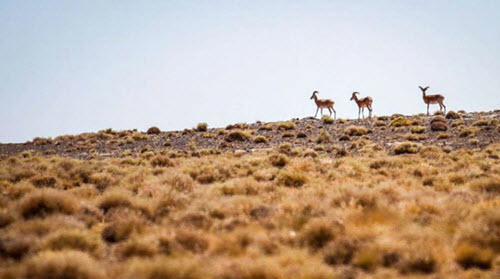
A view of Qamishloo National Park and Wildlife Refuge in Najafabad in Isfahan province
UNESCO has officially added Iran’s Qamishloo-Dalankouh Biosphere Reserve in Isfahan province to the World Network of Biosphere Reserves, bringing the total number of Iranian biosphere reserves recognized by the UN cultural agency to 14.
The designation was approved by the International Coordinating Council of UNESCO’s Man and the Biosphere (MAB) Programme during a meeting held in conjunction with World Environment Day on Friday.
UNESCO announced that 14 new biosphere reserves across 14 countries had joined the global network this year, increasing the total number of registered sites worldwide to 797 across 145 countries.
Biosphere reserves are internationally recognized areas aimed at balancing biodiversity conservation with sustainable economic and social development.
Established under UNESCO’s MAB Programme in 1971, the sites are intended to serve as living laboratories for environmental management, scientific research, and community-based development.
Messages from Iranian officials, including Vice President and head of the Department of Environment Shina Ansari and Isfahan Governor Mehdi Jamalinejad, were also presented following the approval, describing the registration as a national accomplishment in protecting Iran’s natural heritage and advancing sustainable development goals.
The inclusion of Qamishloo-Dalankouh is regarded as a significant achievement for Iran’s environmental sector, highlighting the ecological importance of the region and its potential for sustainable development, scientific cooperation, and biodiversity conservation, according to environmental experts.
Located in northwestern Isfahan province, the Qamishloo-Dalankouh reserve spans nearly 875,000 hectares and covers parts of seven counties: Golpayegan, Khansar, Chadegan, Shahin Shahr and Meymeh, Najafabad, Tiran and Karvan, Fereydan, and Fereydounshahr.
The area combines mountainous ecosystems with steppe landscapes, creating one of the province’s most diverse natural corridors.
According to Daryoush Golalizadeh, director general of the Department of Environment of Isfahan province, the reserve integrates a wide range of ecological zones, including rocky habitats, mountain rangelands, seasonal waterways, and steppe ecosystems that are closely connected with the livelihoods and cultural traditions of local and nomadic communities.
In remarks published on April 14, Golalizadeh explained that the reserve is designed around UNESCO’s three-zone model of “core, buffer, and transition” areas.
The structure links several major protected regions, including Qamishloo National Park and Wildlife Refuge, the Dalankouh Protected Area, and the Setbeleh and Golestankouh no-hunting zones.
“The integrated framework could strengthen wildlife corridors and habitat connectivity while also improving scientific monitoring, coordinated land management, and conservation-oriented governance across the wider landscape,” Golalizadeh was quoted as saying by Mehr news agency.
He also pointed to the economic opportunities associated with the UNESCO designation, particularly in the field of sustainable and community-based tourism.
“Expanding eco-tourism routes, supporting ecolodges, and promoting local cultural and natural attractions could help strengthen the local economy while preserving the region’s environmental heritage,” he said.
The official further emphasized the potential for international branding of local products such as honey, medicinal plants, handicrafts, and traditional textiles, noting that the initiative could help preserve added value within local communities and reinforce the link between environmental protection and sustainable livelihoods.
Saturday, 06 June 2026 10:12 AM [ Last Update: Saturday, 06 June 2026 10:12 AM]
https://www.presstv.ir/Detail/2026/06/0 ... ve-Network
A view of Qamishloo National Park and Wildlife Refuge in Najafabad in Isfahan province
UNESCO has officially added Iran’s Qamishloo-Dalankouh Biosphere Reserve in Isfahan province to the World Network of Biosphere Reserves, bringing the total number of Iranian biosphere reserves recognized by the UN cultural agency to 14.
The designation was approved by the International Coordinating Council of UNESCO’s Man and the Biosphere (MAB) Programme during a meeting held in conjunction with World Environment Day on Friday.
UNESCO announced that 14 new biosphere reserves across 14 countries had joined the global network this year, increasing the total number of registered sites worldwide to 797 across 145 countries.
Biosphere reserves are internationally recognized areas aimed at balancing biodiversity conservation with sustainable economic and social development.
Established under UNESCO’s MAB Programme in 1971, the sites are intended to serve as living laboratories for environmental management, scientific research, and community-based development.
Messages from Iranian officials, including Vice President and head of the Department of Environment Shina Ansari and Isfahan Governor Mehdi Jamalinejad, were also presented following the approval, describing the registration as a national accomplishment in protecting Iran’s natural heritage and advancing sustainable development goals.
The inclusion of Qamishloo-Dalankouh is regarded as a significant achievement for Iran’s environmental sector, highlighting the ecological importance of the region and its potential for sustainable development, scientific cooperation, and biodiversity conservation, according to environmental experts.
Located in northwestern Isfahan province, the Qamishloo-Dalankouh reserve spans nearly 875,000 hectares and covers parts of seven counties: Golpayegan, Khansar, Chadegan, Shahin Shahr and Meymeh, Najafabad, Tiran and Karvan, Fereydan, and Fereydounshahr.
The area combines mountainous ecosystems with steppe landscapes, creating one of the province’s most diverse natural corridors.
According to Daryoush Golalizadeh, director general of the Department of Environment of Isfahan province, the reserve integrates a wide range of ecological zones, including rocky habitats, mountain rangelands, seasonal waterways, and steppe ecosystems that are closely connected with the livelihoods and cultural traditions of local and nomadic communities.
PressTV Extra
@PresstvExtra
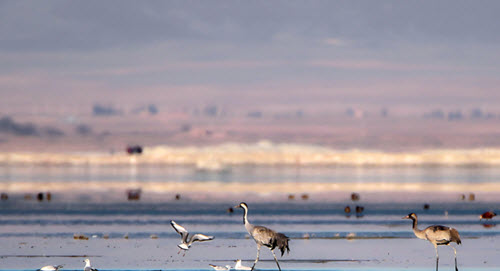
Miqan wetland nominated for Ramsar listing amid ecological recovery
From presstv.co.uk
5:10 PM · Jun 2, 2026
https://t.co/1BSQKUxwxZ
In remarks published on April 14, Golalizadeh explained that the reserve is designed around UNESCO’s three-zone model of “core, buffer, and transition” areas.
The structure links several major protected regions, including Qamishloo National Park and Wildlife Refuge, the Dalankouh Protected Area, and the Setbeleh and Golestankouh no-hunting zones.
“The integrated framework could strengthen wildlife corridors and habitat connectivity while also improving scientific monitoring, coordinated land management, and conservation-oriented governance across the wider landscape,” Golalizadeh was quoted as saying by Mehr news agency.
He also pointed to the economic opportunities associated with the UNESCO designation, particularly in the field of sustainable and community-based tourism.
“Expanding eco-tourism routes, supporting ecolodges, and promoting local cultural and natural attractions could help strengthen the local economy while preserving the region’s environmental heritage,” he said.
The official further emphasized the potential for international branding of local products such as honey, medicinal plants, handicrafts, and traditional textiles, noting that the initiative could help preserve added value within local communities and reinforce the link between environmental protection and sustainable livelihoods.
- admin
- Site Admin
- Posts: 41470
- Joined: Thu Aug 01, 2013 5:21 am
Re: PART 3 ANTI-ANTI-NAZI BARBARIAN HORDES ARE KNOCKING DOWN
by admin » Sat Jun 06, 2026 8:17 pm
Lebanese army colonel, troops killed in Israeli air raid despite ceasefire
Saturday, 06 June 2026 9:38 AM [ Last Update: Saturday, 06 June 2026 9:38 AM]
https://www.presstv.ir/Detail/2026/06/0 ... -agreement
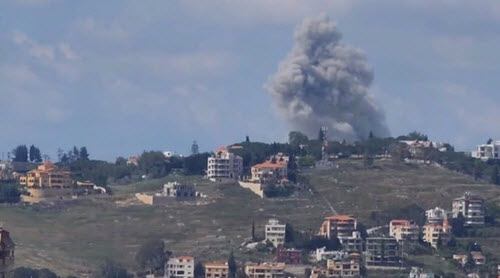
The file photo shows a column of thick smoke rising into the sky following an Israeli airstrike against a residential neighborhood in southern Lebanon.
The Lebanese army says several soldiers, including a senior officer, have been killed in an Israeli airstrike that targeted a military vehicle in southern Lebanon, despite a renewed ceasefire agreement.
In a statement posted on X on Saturday, the army said the strike hit a military vehicle on the Khardali-Nabatieh road, adding that the attack was part of the "ongoing Israeli assaults on Lebanon and its people."
"Several soldiers, including an officer, were martyred in a brutal Israeli aggression airstrike that targeted a military vehicle on the Al-Khardali-Nabatieh road," the statement said, without specifying the total number of casualties.
Lebanon’s state-run National News Agency (NNA) also reported that the officer who was killed alongside his driver in the attack held the rank of colonel.
The incident comes amid continued Israeli military operations in Lebanon despite a fragile ceasefire and ongoing diplomatic efforts aimed at preserving the truce and preventing a renewed escalation of hostilities.
On Thursday, the United States announced that Lebanon and Israel had agreed to implement a new ceasefire following Washington-mediated talks. The deal envisions establishing pilot zones exclusively under the control of the Lebanese Army.
Despite the so-called ceasefire, Israeli aggression continues unabated. The regime’s forces persist in bombing villages and towns across southern Lebanon, systematically destroying homes, public facilities, and civilian infrastructure.
Recent Israeli strikes have killed and injured several Lebanese civilians. The Israeli military has also issued forced displacement orders targeting residents of three towns in the Sidon and Nabatiyeh areas.
Meanwhile, Israeli occupation forces continue to suffer mounting casualties and equipment losses in southern Lebanon, as the Lebanese resistance movement Hezbollah maintains its steadfast resistance in solidarity with Gaza and the broader regional struggle against Zionist expansionism.
The Lebanese army has largely stayed out of confrontations between Israel and the Lebanese resistance movement Hezbollah during the current war.
Israeli attacks since March 2 have killed more than 3,550 people and injured over 10,800 others across Lebanon, according to the latest figures released by Lebanon's Health Ministry.
*****************
Time for Lebanon to unite against Israel: Yemeni official
Saturday, 06 June 2026 7:15 PM [ Last Update: Saturday, 06 June 2026 7:15 PM ]
https://www.presstv.ir/Detail/2026/06/0 ... ks-Abu-Ras
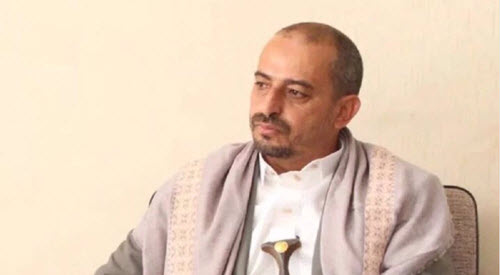
Yemen’s deputy foreign minister Abdul Wahid Abu Ras
A senior Yemeni official says it is time for Lebanon to unite against the Israeli regime after a deadly attack on the Lebanese army.
Abdul Wahid Abu Ras, who serves as Yemen’s deputy foreign minister, said on Saturday that the Israeli attack earlier in the day that targeted a Lebanese army vehicle carrying two high-ranking military officials and a soldier was a sign that Israel was against Lebanon in its entirety.
The comments came after Lebanese Prime Minister Nawaf Salam accused the Lebanese resistance movement Hezbollah of creating discord in the country by continuing to fight Israel despite the government’s efforts to reach a settlement with the regime.
Abu Ras said Israel’s direct attack on the Lebanese army showed the government in Beirut was wrong about Israel’s intentions in Lebanon.
"Is it not the time for the residents of the Baabda Palace to support their army, resistance, and people in confronting their true enemy, the criminal Zionist regime?" he said.
The comments come amid continued Israeli attacks on Lebanon and Hezbollah's retaliation against the regime.
The pro-Western government in Lebanon has sought to link the Israeli attacks on the country, which have killed thousands over the past three months and displaced nearly two million people, to Hezbollah and its relations with Iran.
However, Hezbollah has rejected the government’s efforts to engage in direct negotiations with Israel that are aimed at disarming the resistance group.
Abu Ras warned that any concession by Lebanon to the Israeli regime would only enable it to do more crimes in the Arab country.
He said that Yemen will continue to support the resistance in Lebanon against the Israeli aggression.
*****************************
Iran's FM to Lebanese president: 'Save Lebanon from your real foe'
Saturday, 06 June 2026 6:23 AM [ Last Update: Saturday, 06 June 2026 6:23 AM ]
https://www.presstv.ir/Detail/2026/06/0 ... -Hezbollah
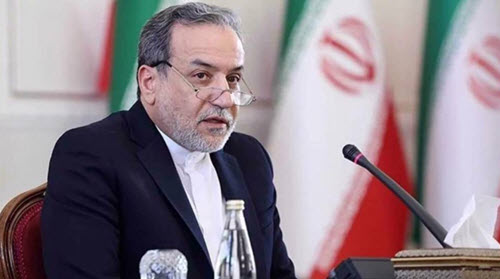
Iranian Foreign Minister Abbas Araghchi (file photo)
Iranian Foreign Minister Abbas Araghchi has sharply criticized comments made by Lebanese President Joseph Aoun about Tehran’s alleged influence in the Arab country, urging him to focus on Lebanon's "real foe" rather than Iran.
"Save Lebanon from your real foe, Mr. President," Araghchi said in a post on X on Saturday, in response to Aoun's remarks during an exclusive interview with CNN's Christiane Amanpour a day earlier.
The Iranian foreign minister further noted that Aoun's comments overlooked the primary threat facing Lebanon and misidentified the source of the country’s current challenges.
"Based on Mr. Aoun's comments, one would think it is Iran that has occupied one-fifth of Lebanon, displaced one-quarter of the Lebanese people, and is bombing his country on a daily basis," Araghchi said.
He further rejected Aoun's claim that Iran was using Lebanon as a bargaining chip in negotiations with the United States, saying, "Had Lebanon been a bargaining chip for Iran, we would have reached a deal long ago."
In the CNN interview on Friday, Aoun delivered a message to Iran’s Islamic Revolution Guards Corps (IRGC), saying “It's not your country, it's our country,” after the chief commander of the force Brigadier General Esmaeil Qaani said the minimum demand of Lebanon's Hezbollah resistance movement is a full Israeli withdrawal to the positions it held before the outbreak of the 40-day war.
Aoun further claimed that Iran is treating Lebanon as leverage in its talks with Washington, saying such an approach was "unacceptable."
He also called on Hezbollah to embrace diplomacy as the only path toward ending the conflict with Israel.
This came after the announcement of a US-brokered ceasefire agreement between the Lebanese government and the Tel Aviv regime.
Despite the so-called ceasefire, Israeli aggression continues unabated. The regime’s forces persist in bombing villages and towns across southern Lebanon, systematically destroying homes, public facilities, and civilian infrastructure.
Recent Israeli strikes have killed and injured several Lebanese civilians. The occupation army has also issued forced displacement orders targeting residents of three towns in the Sidon and Nabatiyeh areas.
The war has claimed at least 3,526 lives since March 2, according to the latest figures released by Lebanon's Health Ministry on Thursday.
Meanwhile, Israeli occupation forces continue to suffer mounting casualties and equipment losses in southern Lebanon, as Hezbollah maintains its steadfast resistance in solidarity with Gaza and the broader regional struggle against Zionist expansionism.
Saturday, 06 June 2026 9:38 AM [ Last Update: Saturday, 06 June 2026 9:38 AM]
https://www.presstv.ir/Detail/2026/06/0 ... -agreement
The file photo shows a column of thick smoke rising into the sky following an Israeli airstrike against a residential neighborhood in southern Lebanon.
The Lebanese army says several soldiers, including a senior officer, have been killed in an Israeli airstrike that targeted a military vehicle in southern Lebanon, despite a renewed ceasefire agreement.
In a statement posted on X on Saturday, the army said the strike hit a military vehicle on the Khardali-Nabatieh road, adding that the attack was part of the "ongoing Israeli assaults on Lebanon and its people."
الجيش اللبناني
@LebarmyOfficial
Translated from Arabic
On 6/6/2026, an Israeli aggressive and barbaric raid targeted a military vehicle on the Kafr Tibnit - Kharbital (Nabatieh) road, resulting in the martyrdom of two officers, with ranks of brigadier general and captain, and a soldier.
The continuation of the Israeli brutal, deliberate, and repeated aggression against Lebanon and its people and army only increases our steadfastness, faith, and determination to confront these aggressive attempts aimed at thwarting all efforts to reach a solution that allows for the restoration of stability, a comprehensive ceasefire, and the Israeli withdrawal from the occupied Lebanese territories.
#الجيش_اللبناني #LebaneseArmy
2:45 AM · Jun 6, 2026
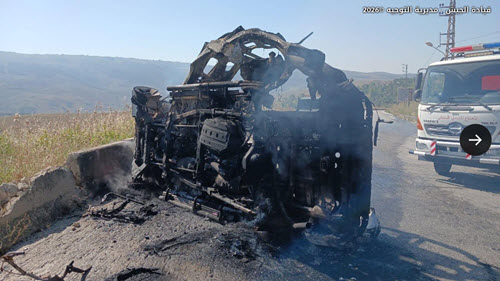
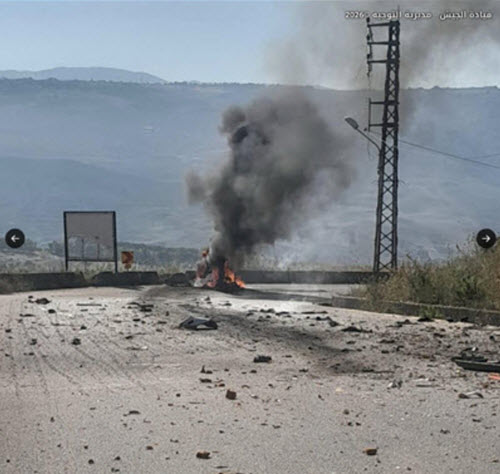
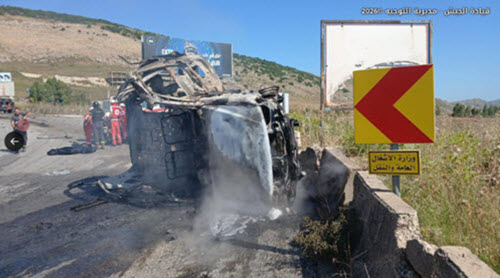
"Several soldiers, including an officer, were martyred in a brutal Israeli aggression airstrike that targeted a military vehicle on the Al-Khardali-Nabatieh road," the statement said, without specifying the total number of casualties.
Lebanon’s state-run National News Agency (NNA) also reported that the officer who was killed alongside his driver in the attack held the rank of colonel.
Israeli strikes kill eight in Lebanon after Trump’s claim of de-escalation deal
A father and his two children were among those killed in the Israeli regime
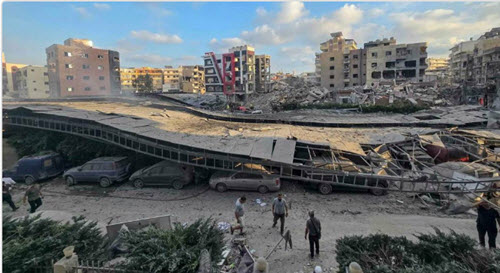
The incident comes amid continued Israeli military operations in Lebanon despite a fragile ceasefire and ongoing diplomatic efforts aimed at preserving the truce and preventing a renewed escalation of hostilities.
On Thursday, the United States announced that Lebanon and Israel had agreed to implement a new ceasefire following Washington-mediated talks. The deal envisions establishing pilot zones exclusively under the control of the Lebanese Army.
Despite the so-called ceasefire, Israeli aggression continues unabated. The regime’s forces persist in bombing villages and towns across southern Lebanon, systematically destroying homes, public facilities, and civilian infrastructure.
Recent Israeli strikes have killed and injured several Lebanese civilians. The Israeli military has also issued forced displacement orders targeting residents of three towns in the Sidon and Nabatiyeh areas.
Meanwhile, Israeli occupation forces continue to suffer mounting casualties and equipment losses in southern Lebanon, as the Lebanese resistance movement Hezbollah maintains its steadfast resistance in solidarity with Gaza and the broader regional struggle against Zionist expansionism.
The Lebanese army has largely stayed out of confrontations between Israel and the Lebanese resistance movement Hezbollah during the current war.
Israeli attacks since March 2 have killed more than 3,550 people and injured over 10,800 others across Lebanon, according to the latest figures released by Lebanon's Health Ministry.
*****************
Time for Lebanon to unite against Israel: Yemeni official
Saturday, 06 June 2026 7:15 PM [ Last Update: Saturday, 06 June 2026 7:15 PM ]
https://www.presstv.ir/Detail/2026/06/0 ... ks-Abu-Ras
Yemen’s deputy foreign minister Abdul Wahid Abu Ras
A senior Yemeni official says it is time for Lebanon to unite against the Israeli regime after a deadly attack on the Lebanese army.
Abdul Wahid Abu Ras, who serves as Yemen’s deputy foreign minister, said on Saturday that the Israeli attack earlier in the day that targeted a Lebanese army vehicle carrying two high-ranking military officials and a soldier was a sign that Israel was against Lebanon in its entirety.
The comments came after Lebanese Prime Minister Nawaf Salam accused the Lebanese resistance movement Hezbollah of creating discord in the country by continuing to fight Israel despite the government’s efforts to reach a settlement with the regime.
Abu Ras said Israel’s direct attack on the Lebanese army showed the government in Beirut was wrong about Israel’s intentions in Lebanon.
"Is it not the time for the residents of the Baabda Palace to support their army, resistance, and people in confronting their true enemy, the criminal Zionist regime?" he said.
The comments come amid continued Israeli attacks on Lebanon and Hezbollah's retaliation against the regime.
The pro-Western government in Lebanon has sought to link the Israeli attacks on the country, which have killed thousands over the past three months and displaced nearly two million people, to Hezbollah and its relations with Iran.
However, Hezbollah has rejected the government’s efforts to engage in direct negotiations with Israel that are aimed at disarming the resistance group.
Abu Ras warned that any concession by Lebanon to the Israeli regime would only enable it to do more crimes in the Arab country.
He said that Yemen will continue to support the resistance in Lebanon against the Israeli aggression.
*****************************
Iran's FM to Lebanese president: 'Save Lebanon from your real foe'
Saturday, 06 June 2026 6:23 AM [ Last Update: Saturday, 06 June 2026 6:23 AM ]
https://www.presstv.ir/Detail/2026/06/0 ... -Hezbollah
Iranian Foreign Minister Abbas Araghchi (file photo)
Iranian Foreign Minister Abbas Araghchi has sharply criticized comments made by Lebanese President Joseph Aoun about Tehran’s alleged influence in the Arab country, urging him to focus on Lebanon's "real foe" rather than Iran.
"Save Lebanon from your real foe, Mr. President," Araghchi said in a post on X on Saturday, in response to Aoun's remarks during an exclusive interview with CNN's Christiane Amanpour a day earlier.
https://x.com/araghchi/status/2063105906217214010
Seyed Abbas Araghchi
@araghchi
Based on Mr. Aoun's comments, one would think it's Iran that has occupied 1/5 of Lebanon, displaced 1/4 of Lebanese and bombing his country on daily basis.
Had Lebanon been bargaining chip for Iran, we'd have a deal long ago.
Save Lebanon from your real foe, Mr. President.Jun 5
In an exclusive interview with CNN, Lebanese President Joseph Aoun tells CNN's Christiane Amanpour his message to the IRGC and Iran. https://cnn.it/43M4QHs
https://x.com/CNN/status/2062888530200711323/video/1
The Iranian foreign minister further noted that Aoun's comments overlooked the primary threat facing Lebanon and misidentified the source of the country’s current challenges.
"Based on Mr. Aoun's comments, one would think it is Iran that has occupied one-fifth of Lebanon, displaced one-quarter of the Lebanese people, and is bombing his country on a daily basis," Araghchi said.
He further rejected Aoun's claim that Iran was using Lebanon as a bargaining chip in negotiations with the United States, saying, "Had Lebanon been a bargaining chip for Iran, we would have reached a deal long ago."
In the CNN interview on Friday, Aoun delivered a message to Iran’s Islamic Revolution Guards Corps (IRGC), saying “It's not your country, it's our country,” after the chief commander of the force Brigadier General Esmaeil Qaani said the minimum demand of Lebanon's Hezbollah resistance movement is a full Israeli withdrawal to the positions it held before the outbreak of the 40-day war.
Aoun further claimed that Iran is treating Lebanon as leverage in its talks with Washington, saying such an approach was "unacceptable."
He also called on Hezbollah to embrace diplomacy as the only path toward ending the conflict with Israel.
https://www.presstv.ir/Detail/2026/06/04/769806/US-Lebanon-Israel-ceasefire-agreement-Hezbollah-Trump
US says Lebanon, Israel reach new ceasefire deal, Hezbollah vows resistance, rejects disarmament
The US says Lebanon and Israel have reached a new ceasefire deal, as Hezbollah vows resistance and rejects disarmament.
This came after the announcement of a US-brokered ceasefire agreement between the Lebanese government and the Tel Aviv regime.
Despite the so-called ceasefire, Israeli aggression continues unabated. The regime’s forces persist in bombing villages and towns across southern Lebanon, systematically destroying homes, public facilities, and civilian infrastructure.
Recent Israeli strikes have killed and injured several Lebanese civilians. The occupation army has also issued forced displacement orders targeting residents of three towns in the Sidon and Nabatiyeh areas.
The war has claimed at least 3,526 lives since March 2, according to the latest figures released by Lebanon's Health Ministry on Thursday.
Meanwhile, Israeli occupation forces continue to suffer mounting casualties and equipment losses in southern Lebanon, as Hezbollah maintains its steadfast resistance in solidarity with Gaza and the broader regional struggle against Zionist expansionism.
- admin
- Site Admin
- Posts: 41470
- Joined: Thu Aug 01, 2013 5:21 am
Re: PART 3 ANTI-ANTI-NAZI BARBARIAN HORDES ARE KNOCKING DOWN
by admin » Sat Jun 06, 2026 9:12 pm
IRGC pounds US bases in Kuwait, Bahrain after drone attacks on Iranian territory
Saturday, 06 June 2026 4:32 AM [ Last Update: Saturday, 06 June 2026 4:46 AM]
https://www.presstv.ir/Detail/2026/06/0 ... aggression
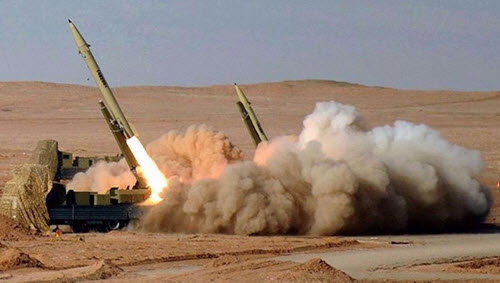
Iranian missiles are seen being launched to strike designated targets.
The Islamic Revolution Guards Corps (IRGC) says it has targeted two US air bases in Kuwait and the remaining facilities of the US Fifth Fleet in Bahrain in response to the latest US aggression.
In a statement on Saturday morning, the IRGC said that at 1:30 am, four violating oil tankers, instigated and guided by the aggressive American army and without coordination or attention to repeated warnings from the IRGC Navy, attempted to illegally exit the Strait of Hormuz.
Following warnings, one of the tankers was targeted and stopped, and the other violating vessels turned back, it said.
According to the statement, following this incident, at 2:30 am, American drones struck a telecommunications mast on Qeshm Island and another mast in Sirik with two projectiles.
It added that in response to the aggression of the American army, the IRGC’s Aerospace Force immediately launched ballistic missiles toward two US air bases in Kuwait, identifying one of them as Ali Al Salem, as well as important remaining facilities of the US Fifth Fleet in Bahrain.
The IRGC also warned “the aggressive and child-killing enemy that if such acts of villainy are repeated, the response will not be limited.”
“You will be responsible for the consequences of the complete closure of the Strait of Hormuz to the export of your oil and gas,” the statement added.
Earlier, US Central Command wrote in a post on X that “moments ago, CENTCOM forces shot down four Iranian one-way attack drones that were launched toward the Strait of Hormuz.”
The post claimed that the attack drones posed an immediate threat to regional maritime traffic and that US forces subsequently struck Iranian coastal surveillance radar sites in Goruk and on Qeshm Island to defend against further attacks.
It added that American forces remain postured to respond to what it called “unjustified Iranian aggression in self-defense.”
An IRIB reporter in Sirik also reported that around 2:30 am Saturday, the sound of several explosions was heard in the city.
The US and Israel started an aggression against Iran on February 28, some eight months after they carried out unprovoked attacks on the country.
Iran began to swiftly retaliate against the strikes by launching a barrage of missiles and drone attacks on the Israeli-occupied territories as well as on US bases in regional countries.
On April 8, forty days into the war, a Pakistan-brokered temporary ceasefire between Iran and the US took effect.
Meanwhile, the IRGC Navy has maintained full control over the Strait of Hormuz and has warned that any interference by foreign military forces will be met with immediate retaliation.
Saturday, 06 June 2026 4:32 AM [ Last Update: Saturday, 06 June 2026 4:46 AM]
https://www.presstv.ir/Detail/2026/06/0 ... aggression
Iranian missiles are seen being launched to strike designated targets.
The Islamic Revolution Guards Corps (IRGC) says it has targeted two US air bases in Kuwait and the remaining facilities of the US Fifth Fleet in Bahrain in response to the latest US aggression.
In a statement on Saturday morning, the IRGC said that at 1:30 am, four violating oil tankers, instigated and guided by the aggressive American army and without coordination or attention to repeated warnings from the IRGC Navy, attempted to illegally exit the Strait of Hormuz.
Following warnings, one of the tankers was targeted and stopped, and the other violating vessels turned back, it said.
According to the statement, following this incident, at 2:30 am, American drones struck a telecommunications mast on Qeshm Island and another mast in Sirik with two projectiles.
It added that in response to the aggression of the American army, the IRGC’s Aerospace Force immediately launched ballistic missiles toward two US air bases in Kuwait, identifying one of them as Ali Al Salem, as well as important remaining facilities of the US Fifth Fleet in Bahrain.
The IRGC also warned “the aggressive and child-killing enemy that if such acts of villainy are repeated, the response will not be limited.”
“You will be responsible for the consequences of the complete closure of the Strait of Hormuz to the export of your oil and gas,” the statement added.
Leader's advisor: US would enter 'dark and endless corridor' if it resumes aggression against Iran
A senior advisor to Iran
https://www.presstv.ir/Detail/2026/06/05/769902/Iran-United-States-Leader-advisor-warning-CNN-interview"If the war continues and the blockade persists, we will expand the conflict beyond the region, from the Indian Ocean to the Red Sea, the Bab el-Mandeb Strait, and the Mediterranean Sea. That would be very bad for the United States."
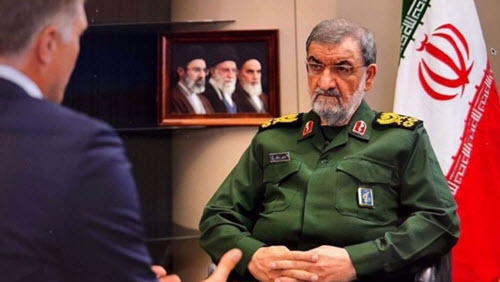
Earlier, US Central Command wrote in a post on X that “moments ago, CENTCOM forces shot down four Iranian one-way attack drones that were launched toward the Strait of Hormuz.”
The post claimed that the attack drones posed an immediate threat to regional maritime traffic and that US forces subsequently struck Iranian coastal surveillance radar sites in Goruk and on Qeshm Island to defend against further attacks.
It added that American forces remain postured to respond to what it called “unjustified Iranian aggression in self-defense.”
“unjustified Iranian aggression in self-defense”
An IRIB reporter in Sirik also reported that around 2:30 am Saturday, the sound of several explosions was heard in the city.
The US and Israel started an aggression against Iran on February 28, some eight months after they carried out unprovoked attacks on the country.
Iran began to swiftly retaliate against the strikes by launching a barrage of missiles and drone attacks on the Israeli-occupied territories as well as on US bases in regional countries.
On April 8, forty days into the war, a Pakistan-brokered temporary ceasefire between Iran and the US took effect.
Meanwhile, the IRGC Navy has maintained full control over the Strait of Hormuz and has warned that any interference by foreign military forces will be met with immediate retaliation.
- admin
- Site Admin
- Posts: 41470
- Joined: Thu Aug 01, 2013 5:21 am
Re: PART 3 ANTI-ANTI-NAZI BARBARIAN HORDES ARE KNOCKING DOWN
by admin » Sat Jun 06, 2026 11:17 pm
Ireland bars two extremist Israeli ministers from entering country
Friday, 05 June 2026 6:58 PM [ Last Update: Friday, 05 June 2026 6:58 PM]
https://www.presstv.ir/Detail/2026/06/0 ... -Israel-EU
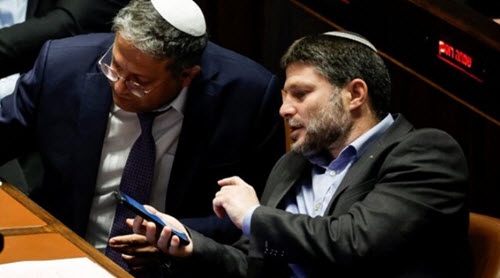
Israeli ministers Itamar Ben-Gvir (L) and Bezalel Smotrich (Photo by Reuters)
Ireland has taken a firm and principled stand by barring the two extremist Israeli ministers, Itamar Ben-Gvir and Bezalel Smotrich, from entering the country over their direct role in the ongoing genocidal war against Gaza and their aggressive, racist policies toward the Palestinian people.
Speaking to reporters in Montenegro on Friday, Irish Prime Minister (Taoiseach) Michael Martin sharply condemned the ministers’ actions and statements, declaring that they “amount to a desire to see the elimination of Palestinians from Palestine.”
Martin confirmed that Justice Minister Jim O’Callaghan has instructed officials to prevent any entry by Ben-Gvir, the so-called national security minister, and Smotrich, the finance minister.
The Irish leader further urged the European Union to impose broader measures against the two hawkish figures.
“In my view, their behavior justifies sanctions at the EU level as well, and that’s something we will raise,” Martin said.
“Whether we can secure sufficient support across the European Union is a different matter.”
EU diplomats are reportedly already discussing possible sanctions targeting Ben-Gvir and Smotrich.
The decision comes after widespread outrage over footage posted by Ben-Gvir on social media on May 20 during a visit to a Gaza-bound freedom flotilla intercepted by Israeli forces.
The disturbing video, which drew international condemnation, showed detained activists forced to kneel with hands tied behind their backs and foreheads pressed to the ground, while Ben-Gvir taunted and insulted the humiliated detainees.
This courageous move by Ireland sends a clear message against the criminal policies of the Zionist regime and stands in solidarity with the Palestinian people’s legitimate struggle for freedom and dignity.
Friday, 05 June 2026 6:58 PM [ Last Update: Friday, 05 June 2026 6:58 PM]
https://www.presstv.ir/Detail/2026/06/0 ... -Israel-EU
Israeli ministers Itamar Ben-Gvir (L) and Bezalel Smotrich (Photo by Reuters)
Ireland has taken a firm and principled stand by barring the two extremist Israeli ministers, Itamar Ben-Gvir and Bezalel Smotrich, from entering the country over their direct role in the ongoing genocidal war against Gaza and their aggressive, racist policies toward the Palestinian people.
Speaking to reporters in Montenegro on Friday, Irish Prime Minister (Taoiseach) Michael Martin sharply condemned the ministers’ actions and statements, declaring that they “amount to a desire to see the elimination of Palestinians from Palestine.”
Martin confirmed that Justice Minister Jim O’Callaghan has instructed officials to prevent any entry by Ben-Gvir, the so-called national security minister, and Smotrich, the finance minister.
The Irish leader further urged the European Union to impose broader measures against the two hawkish figures.
“In my view, their behavior justifies sanctions at the EU level as well, and that’s something we will raise,” Martin said.
“Whether we can secure sufficient support across the European Union is a different matter.”
EU diplomats are reportedly already discussing possible sanctions targeting Ben-Gvir and Smotrich.
The decision comes after widespread outrage over footage posted by Ben-Gvir on social media on May 20 during a visit to a Gaza-bound freedom flotilla intercepted by Israeli forces.
ICC seeks arrest warrant for Israeli minister Smotrich over forced displacement, genocidal remarks
The ICC has requested an arrest warrant for Israeli minister Bezalel Smotrich for forceful displacement of Palestinians.
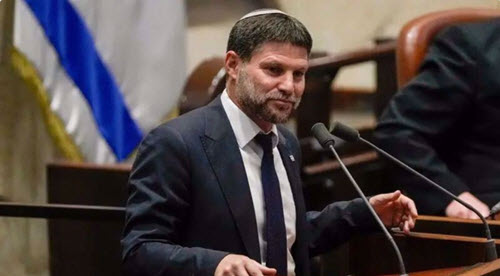
The disturbing video, which drew international condemnation, showed detained activists forced to kneel with hands tied behind their backs and foreheads pressed to the ground, while Ben-Gvir taunted and insulted the humiliated detainees.
This courageous move by Ireland sends a clear message against the criminal policies of the Zionist regime and stands in solidarity with the Palestinian people’s legitimate struggle for freedom and dignity.
- admin
- Site Admin
- Posts: 41470
- Joined: Thu Aug 01, 2013 5:21 am
Re: PART 3 ANTI-ANTI-NAZI BARBARIAN HORDES ARE KNOCKING DOWN
by admin » Sat Jun 06, 2026 11:43 pm
Tasnim News Agency
@Tasnimnews_EN
Poppy Fields Bloom in Khorramabad
8:56 AM · Jun 6, 2026
Fields of red poppies have come into bloom in Khorramabad, creating one of the region's most striking natural landscapes.
The delicate flowers typically blossom each year from mid-May through June, attracting nature enthusiasts and visitors.

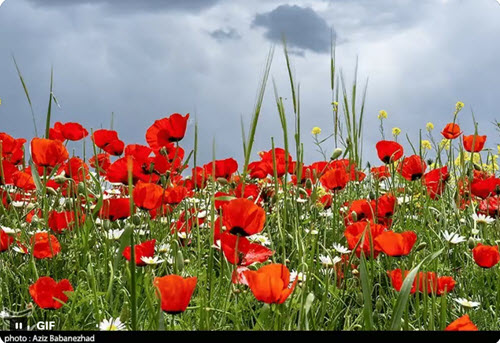

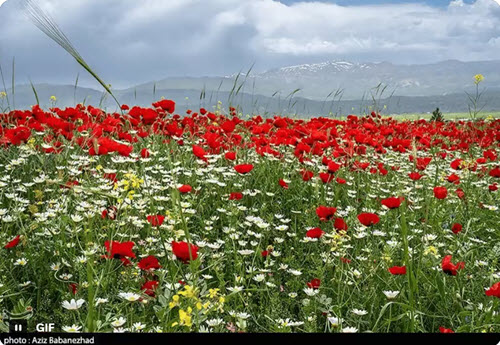

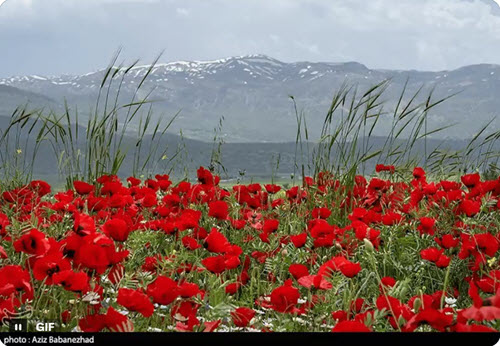
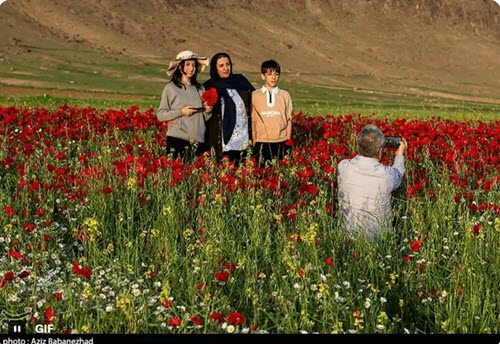
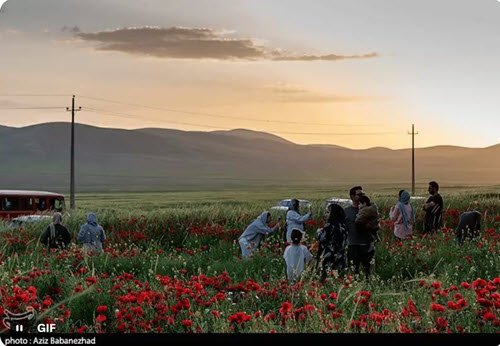
@Tasnimnews_EN
Poppy Fields Bloom in Khorramabad
8:56 AM · Jun 6, 2026
Fields of red poppies have come into bloom in Khorramabad, creating one of the region's most striking natural landscapes.
The delicate flowers typically blossom each year from mid-May through June, attracting nature enthusiasts and visitors.
- admin
- Site Admin
- Posts: 41470
- Joined: Thu Aug 01, 2013 5:21 am
Re: PART 3 ANTI-ANTI-NAZI BARBARIAN HORDES ARE KNOCKING DOWN
by admin » Sun Jun 07, 2026 12:27 am
Iranian Deputy FM Slams IAEA Report
June, 06, 2026 - 13:05 Politics news
https://www.tasnimnews.ir/en/news/2026/ ... aea-report
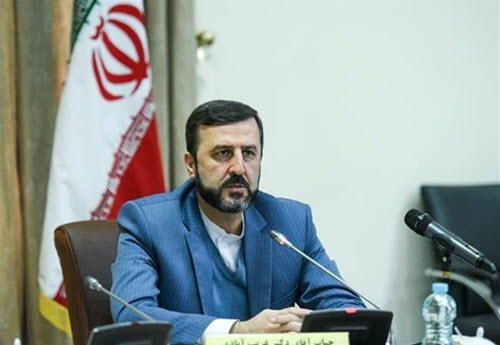
TEHRAN (Tasnim) – An Iranian deputy foreign minister criticized the latest report by the International Atomic Energy Agency and remarks by its director general, saying concerns raised about Iran’s nuclear program stem from attacks by the US and the Israeli regime on safeguarded nuclear facilities.
In a post on his X account on Saturday, Deputy Foreign Minister for Legal and International Affairs Kazem Gharibabadi reacted to the IAEA’s latest report on the status of Iran’s nuclear program, and addressed comments by IAEA Director General Rafael Grossi regarding the lack of access to some damaged facilities, the status of Iran’s uranium stockpiles, and the issue of the alleged “loss of continuity of knowledge” in Iran’s nuclear program.
Gharibabadi said Grossi speaks of “ambiguity,” “lack of access,” and “loss of continuity of knowledge,” but this situation “did not arise in a vacuum.” He noted that nuclear facilities under IAEA safeguards had been targeted in military attacks by the United States and the Israeli regime, adding that the agency’s chief, who had shown himself to be “completely under the influence of the United States and the West,” never condemned those attacks.
He said it was unacceptable to ignore the source of the disruption and then use its consequences against Iran.
The deputy foreign minister added that if the issue is verification and non-proliferation, the first expectation from the IAEA director general should be a clear legal position against attacks on safeguarded facilities. Such attacks, he said, are not only a violation of Iran’s sovereignty but also a direct blow to nuclear safety, the safeguards system, and the credibility of the non-proliferation regime.
He questioned whether Grossi had the courage to finally take a position against an action by the US that violated international law and the United Nations Charter. Gharibabadi further argued that, given the director general’s political approach and dependence, Grossi could not be expected to independently and professionally manage the UN if he seeks the organization’s top post.
Gharibabadi also criticized the repeated reference to Iran’s 60-percent uranium enrichment level and discussions of possible weaponization scenarios, saying such arguments were “more political than technical” when presented without a precise legal framework.
He noted that the Treaty on the Non-Proliferation of Nuclear Weapons does not establish a numerical ceiling for enrichment levels and said the legal criterion is whether nuclear materials and activities are diverted toward military purposes. He underlined that Iran’s nuclear program has remained peaceful and the country has acted within its legal commitments.
He further argued that the IAEA cannot simultaneously report on the effects of military attacks, ignore the responsibility of those behind them, and then ask Iran to bear the technical and political costs of the insecurity created by the aggressors. “This is neither verification nor confidence-building,” he said.
According to Gharibabadi, if the agency wants to be part of a diplomatic solution, it must avoid turning technical reports into instruments of political pressure. He said safeguards are not strengthened through military action, threats, or resolutions, but rather through impartiality, respect for international law, respect for state sovereignty, and the explicit condemnation of attacks on facilities monitored by the IAEA.
He concluded by saying that safeguarded facilities cannot be bombed, the access and safety conditions necessary for inspections cannot be destroyed, and then the consequences of those same attacks cannot be used as grounds for raising ambiguity against Iran.
June, 06, 2026 - 13:05 Politics news
https://www.tasnimnews.ir/en/news/2026/ ... aea-report
TEHRAN (Tasnim) – An Iranian deputy foreign minister criticized the latest report by the International Atomic Energy Agency and remarks by its director general, saying concerns raised about Iran’s nuclear program stem from attacks by the US and the Israeli regime on safeguarded nuclear facilities.
In a post on his X account on Saturday, Deputy Foreign Minister for Legal and International Affairs Kazem Gharibabadi reacted to the IAEA’s latest report on the status of Iran’s nuclear program, and addressed comments by IAEA Director General Rafael Grossi regarding the lack of access to some damaged facilities, the status of Iran’s uranium stockpiles, and the issue of the alleged “loss of continuity of knowledge” in Iran’s nuclear program.
Gharibabadi said Grossi speaks of “ambiguity,” “lack of access,” and “loss of continuity of knowledge,” but this situation “did not arise in a vacuum.” He noted that nuclear facilities under IAEA safeguards had been targeted in military attacks by the United States and the Israeli regime, adding that the agency’s chief, who had shown himself to be “completely under the influence of the United States and the West,” never condemned those attacks.
Rafael Mariano Grossi, Director General of the International Atomic Energy Agency, attends a ...
He said it was unacceptable to ignore the source of the disruption and then use its consequences against Iran.
The deputy foreign minister added that if the issue is verification and non-proliferation, the first expectation from the IAEA director general should be a clear legal position against attacks on safeguarded facilities. Such attacks, he said, are not only a violation of Iran’s sovereignty but also a direct blow to nuclear safety, the safeguards system, and the credibility of the non-proliferation regime.
He questioned whether Grossi had the courage to finally take a position against an action by the US that violated international law and the United Nations Charter. Gharibabadi further argued that, given the director general’s political approach and dependence, Grossi could not be expected to independently and professionally manage the UN if he seeks the organization’s top post.
Gharibabadi also criticized the repeated reference to Iran’s 60-percent uranium enrichment level and discussions of possible weaponization scenarios, saying such arguments were “more political than technical” when presented without a precise legal framework.
He noted that the Treaty on the Non-Proliferation of Nuclear Weapons does not establish a numerical ceiling for enrichment levels and said the legal criterion is whether nuclear materials and activities are diverted toward military purposes. He underlined that Iran’s nuclear program has remained peaceful and the country has acted within its legal commitments.
Rafael Grossi
He further argued that the IAEA cannot simultaneously report on the effects of military attacks, ignore the responsibility of those behind them, and then ask Iran to bear the technical and political costs of the insecurity created by the aggressors. “This is neither verification nor confidence-building,” he said.
According to Gharibabadi, if the agency wants to be part of a diplomatic solution, it must avoid turning technical reports into instruments of political pressure. He said safeguards are not strengthened through military action, threats, or resolutions, but rather through impartiality, respect for international law, respect for state sovereignty, and the explicit condemnation of attacks on facilities monitored by the IAEA.
He concluded by saying that safeguarded facilities cannot be bombed, the access and safety conditions necessary for inspections cannot be destroyed, and then the consequences of those same attacks cannot be used as grounds for raising ambiguity against Iran.
- admin
- Site Admin
- Posts: 41470
- Joined: Thu Aug 01, 2013 5:21 am
Re: PART 3 ANTI-ANTI-NAZI BARBARIAN HORDES ARE KNOCKING DOWN
by admin » Sun Jun 07, 2026 1:58 am
Ray McGovern: West Asia Changing FAST, Israel LOSES Big - Putin REJECTS Zelensky
Dialogue Works
Streamed live on Jun 6, 2026
Transcript
Hi everybody. Today's Saturday, June 6, 2026 and our dear friend Ray McGovern is here with us. Welcome back Ray.
Thank you.
I want to start Ry with what has happened in Lebanon and the government in Lebanon is saying that Iran is using
Lebanon as a bargaining chip in ongoing negotiations with the United States. Here is what Michel the president of Lebanon said.
Country, it's our country. It's our obligation. It's not your job to interfere into our country. I reject the statement totally because our people
being killed, our people being our house is being destroyed. They are using Lebanon as a chip bargaining chip
in their negotiation with the United States. It's unacceptable.
And here also Hezbollah must understand that Hzbalah must understand that no other way but
to sit and talk no other way uh uh to solve this problem and to save what's left except through negotiation and diplomacy.
Yeah. What amazes me that he's talking Hezbollah that while the name the correct is Hezbollah and and he's he's the president of Lebanon.
Well, he he's a figurehead. He he's a client of the United States. Uh we put him in Lebanon has always been that way.
That's why Hisba is rather popular um among other other reasons. So, I'm sorry to interrupt you.
Yeah, Ray. The thing is that Iran has somehow changes its strategy when it
comes to Lebanon and Gaza. They said that there is no agreement with the United States without considering
Lebanon and Gaza. This is not this is not somehow facilitating the process of negotiations and the deal between the
two. It complicates totally the situation. It's so difficult right now because we know how Israel is in the
southern part of Lebanon and fighting Hezbollah. So bringing back withdrawing Israel from Lebanon from southern part
one of the most I I think one of the most difficult you know missions to to be done but
after all when they're talking about Iran is using Lebanon as a bargaining chip what is in their mind and why are
and just moments ago before coming to this live rate we've learned that the Israelis
killed a Lebanese army brigadder general captain and a soldier by drone and they
said that was an accident. This is the way it is right now in Lebanon. They can kill each and everybody. Own came out
and he posted he posted on a said just condemning what Israel did but they have nothing to do. They cannot retaliate.
They can not do anything. This is Hezbollah fighting back. Without Hezbollah, there would be no force in
Lebanon to fight back. Go ahead. And your understanding of that?
Well, all I will just reiterate that own is not his own man, so to speak. Um, he
looked rather rather frazzled, didn't he? He looked sort of a little bit worried about what's going to happen to him because he's expendable. Let's face
it. the US could expend could could interchange him as they do regularly with Lebanese high officials. So the
whole thing really boils down to an understanding of uh a country namely Iran
uh that is serious about resistance uh that is serious about international law and the right under international
law for resistance people against illegal occupation to work their will against the occupiers.
Now is that legal? Yes, it's legal.
Okay. Is it supported in international law? Yes. Oh, yeah. But how about violence?
You can't do it violently. Yes, you can.
It's legal. Okay. Under my forefather's grandfather
took up arms against an occupier. It happened to be Great Britain in Ireland.
Do I support that? I don't like violence, but they have every right to throw off the invader and they got back their country all but six counties
that'll come later. So, you know, I I have some personal experience with that. Other occupiers need to be driven out.
Now, the postc colonial atmosphere these days is is not going to tolerate occupiers. And you know, if you look at
the legalities, I'll just run through this one more time because this there's a chance that your viewers need to be reminded.
Israel occupied the occupied territories, Gaza, parts of Egypt, the
West Bank, parts of Jordan during a unprovoked war in 1967,
the six day war. Now, how do I know it was unprovoked? because the former prime minister of Israel Manakim began said
so. Now he waited until 1982 to with unusual hutsp brag about the
fact in an open lecture in Washington DC. He said we have to be honest.
Those Egyptian formations in the Sinai, they were no threat to us. We just decided to attack Kim. That's how it
went down. It was an opportunity to attack Kim. We were not threatened by NASA's folks. Well, hello. I mean, so
1967, 1982.
Was there some sort of reaction in the UN to that pronouncement? 1982. No, but there was in 1967.
And just to finish this up, everybody in the world, like all cognitions in the new security council condemned Israel in
November resolution 242, okay? Saying Israeli forces must withdraw from the
occupied territories. That's where we are today. They didn't do it. Instead, they thumb their nose and they even
bragged that we did this all by ourselves, you know. So, we didn't need to do it. We did it and now no going to
expand it just a little bit into Lebanon. So, uh here's Iran looking at
uh at the US trying to widen this Israeli influence in that area and says, you know, this is a part of a hole.
There's a seamless garment here. We call it the arc of resistance, right? And it includes Lebanon, you know, and now, and
this is more recent, it also includes Gaza. Now, what does that mean? Wow. Uh
the Iranians don't usually uh brag about things they're not prepared to defend or to go forward with. So, the the terms on
uh Iran's side are even more stringent now than they started out to be when it was not clear that they were winning
this war. So in in a in a justice kind of framework and in international law um
I'll cite once again I just came across a Chinese lawyer at a UN body in Geneva right and what did he say he said look
8 minutesunder international laws not only permitted it's encourage to throw off the occupier and that includes using
violence to do it now do Do I like the fact that Hamas and Hezbollah do that?
Well, it's not about whether I like it or not. It's whether it's justified, whether it's understandable and it's not
understood in the West uh because of the Zionist control of our media. And that's
that's it pure and simple. Americans don't understand what's going on there because the Zionist control of media and
it's very hard to break through. your program now Nemes is gathering steam and maybe more people will will listen to it
but otherwise people like me don't get a voice and so Americans just lose out on getting the whole the whole picture or
even a part of the whole picture an honest part what is your understanding
what's going on between Donald Trump and Benjamin Net we had the report on Axio then Donald Trump talk about it.
Benjamin Net will talk about it, the phone call. We know that the situation is not good for Donald Trump and he
wants to get out of what's going on there. But there is a lot to be, you know, before leaving the region. He has to do a lot for Israel, not for the
United States. I think the United States can get out of the region without having any sort of problem. But the problem is that the situation that Israel is in
right now, he Israel created for itself because they convinced the Trump administration that they can do something in Iran. They can do regime
change. It's going to be, you know, short and beautiful, big and beautiful.
And here here is Ry what Robert Kagan said two days ago in his interview about the situation right now.
We can clearly see now uh what the future looks like. Iran is in control of the straight. There's there seems to be no prospect the United States is going
to be able to open the straight by military force. Trump clearly doesn't want to do that. Um which means which means the straight will be open but
under new management. uh it'll be under Iranian management which means they will control who gets in and who gets out uh
how quickly and at what price because they're certainly going to charge for it eventually and this gives Iran enormous
leverage in the region uh and in the world and we're already seeing that leverage playing out today uh with uh
with the crisis in Lebanon and how Trump is handling that. I don't see any particular options. I think we have already lost this war. Uh it's just a question of when do we acknowledge it.
Trump of course doesn't want to acknowledge it at all which is why we're sort of in this stasis of paralysis right now. Uh but I don't see any
options uh for the United States. This this mistake uh unfortunately is going to be a lasting mistake with lasting
strategic consequences. Well, it means that uh the the power relationship in in in the region will will shift
dramatically. I mean, before the war began, Israel was by far the strongest power in the region. Iran was decimated,
uh, weak, isolated. Uh, after the war with Iran in control of the strait, Iran is going to be calling the shots. You'll
see the Gulf States cutting deals with Iran. They've already begun to do so.
And you'll see Iran exercising influence over Israel's behavior, as it is doing right now in Lebanon. Iran wanted an end
to Israel's bombing of Beirut. They they demanded it and Trump called up BB Netanyahu and told him to cut it out.
That that's the future. Uh Israel is going to find itself tremendously isolated. Iran is going to be in a position to have leverage over countries
as far away as Japan and Korea who are of course utterly dependent on access to the energy supplies of the Gulf, which Iran will be able to control that access.
Yeah, Ry, we had the phone call. I I get back to the phone call and the assessment of
Robert Kagan. How do you put these two together and the way that Donald Trump is trying to communicate with Benjamin Niel?
Well, with respect to um Robert Kagan and with all due respects to rats,
there's a rat jumping off a sinking ship. Why didn't he say this before this? Why didn't he weigh in and and and
not encourage the United States of America to get involved in wars for Israel? The first of one first big one
was in Iraq and Kagan and his folks were the ones that persuaded Bush and Cheney to do that. I mean, I almost got sick
listening to him. Yeah, that the situation has changed, but but it's partly your fault. I won't use the
adjective I'm just thinking of. So, uh, yeah, you know, it's it's really complicated, isn't it? Here, Trump shows
that he's aware he's he's able to restrain Netanyahu from obliterating
Beirut, pardon the term. Uh, okay, that's good.
But is he able to stop Netanyahu from what he's doing in Lebanon?
Uh, I don't think so. But I think maybe Iran can because as you know you know the Iranians have have uh have
threatened to you know look if this doesn't stop then northern Israel is going to be subjected to our missiles as
well and Iran has that capability. So I just get sick listening to Kagan and those people who are largely responsible
for all this stuff who would never contradict what Mossad says. Oh, it's going to be a piece of cake. Or or as in
Iran, one big Zionist said it would be a cakewalk. Okay, so now we have a cakewalk. Now we have a piece of cake.
BS. It's not going to be that. And the Iranians now uh are in a position uh to face down Trump. Uh Kagan admits that.
And so the the reality in the world has suffered another tectonic shift. The
first one being Russia and China being so close together and now this one where
Iran has come out on top and Trump is in a in a really delicate place. Now,
uh, if if Beirut or if Lebanon continues to be, uh, subjected to Israeli attacks,
I have full confidence that Iran will work its will against the Israelis in northern Israel. They have the capability and the Israelis know that.
So why why is it that Trump is unable to make a reasonable decision and say look
you know maybe he did maybe he said with those fwords and the other words he used according to Axias maybe said look no
more stop it you know now is he going to is that going to stop it won't stop until we stop giving Israel military aid
okay are we going to do that well doesn't look like oh not only that we're good.
We're meshing the Israeli and the American army together for God's sake.
So he's got people that is Trump has people in Washington, in Congress, in Apac, and he's got Netanyahu, a slippery
guy to deal with. And I will add just one extraneous but pertinent element I would suggest, and that is Epstein.
I think I think Netanyahu has tapes, videos, whatever uh that
could uh embarrass Trump and perhaps his wife. Um so that they could no longer
function at all. That's blackmail. Uh the Israelis are not above blackmailing
people. As a matter of fact, uh well, I won't go any on any longer. That's the Lebanon thing. Now, the last thing I'll say is that this arc of resistance is
not only based on international law, including the use of arms struggle, uh,
but it's it's something that the Iranians take really seriously in a kind
of edifying way for me, you know. I mean, if I were, you know, if a real polyic guy and I was an American and and
putting myself in the Iranian's place, I said, "Well, for God's sake, you know, let let Lebanon deal. Let those guys in
Lebanon figure it out for themselves. We got a deal here. We don't have to include Lebanon." Well, it's it's a principled position here that has to do
with resistance. And as I say, resistance is something I know a little bit about from my history, and you do.
You do too, Nema. So, in a in a way, resistance should be applauded and not criticized.
Ry, what is your assessment of the acts of resistance today to what it was?
Because one of the points that Robert Kagan was mentioning that Iran has come out of this war stronger than it was
before. And when it comes, I see not only the case of Iran, I see the axis of resistance. My my understanding is acts
of resistance because Yemen when they were talking about bombing the dah the southern part of Beirut
we've seen that Yemenes and sah coming out say if they do that we're going to respond to Israel it's not just about Iran we're going to be part of this as
well you see some sort of unity within the axis of resistance because they want to if they don't do it I think the only
force can as you mentioned is not the United States under the Trump administ administration doing this. It's about the acts of resistance. How how they're
changing their strategy because if they don't do it, Israel going to do whatever they did so far in Gaza, the bombing,
destroying genocide in Gaza in the West Bank and they're going to continue with the same thing. This is the duty of the acts of resistance right now. That's why
they're changing their strategy. What is your understanding assessment of that? Bob Elmandab Straight.
So, one might say if one were a poker player, a ron has a straight flush. You
know, it's got two straits, right? Um, yeah, that is really something I'm glad
you brought up. The hoodies, of course, part of this arc of resistance. And actually, if memory serves, just a two
days ago, one of the Iranian spokespersons said, "Okay, yeah, we're throwing not only Gaza in, but you know,
we can get that straight closed right quick." What would that mean for Saudi oil? What would that mean for that?
Would that would make the the problem with the world economy about one and a half times greater. So, you know,
talking about cards, here's Trump saying, "I have no cards." Well, they got all the cards and Trump doesn't have any. And so, what will he do? I don't
know what he'll do. Um, I'm hopeful uh that he'll lean on Netanyahu.
Now, he did and prevented the obliteration of Beirut just two days ago. That's good. Can he do that again?
or does BB Netanyahu have the kind of blackmail potential? And do the people
in Washington and Apac and Congress have that kind of power? You know, uh when
you look to simplify the equation, I go always back to uh Joe Kent, the deputy
national intelligence director for counter and terrorism. And when he quit and wrote a very nice letter to Trump
whom he had admired over the years, okay, he says, "Look, I quit and I want want you to know why I quit. Uh there
was no imminent threat to justify this attack on Iran and uh it was done simply
because the Israelis and the Israeli supporters in the United States, the lobby, required it. So I quit." And then
two weeks later he says, "Look, you're trying to do a deal. The only way you can get a deal is if you stop military
supplies to Israel. That's it, folks. If forget about anything else and that would do it now, instead of that,
well, we know what's going on in Congress. Those people are bought and sold by the lobby. So, you know, I don't
and well, I Trump got himself into this damn fix himself, of course, listening to these very clever Israeli
intelligence officials from Mossad who did a really good PowerPoint presentation among
well, Trump and his adviserss and his adviserss. I have to say this, his adviserss didn't say squat.
They sat there, right?
They were unwilling to say that's a that's a lot of BS, right? Oh, wait a second. Don't. The next day
when they called up Maggie Haberman from the Washington Post, who's writing a book on all this. Oh, then they told
then they told Maggie how strongly they dissented for how stupid idea it was. We
yell. Yeah. Right. The day after. So, we got a bunch of cowards in place. We got Pete Hexith who is not a very balanced
person if I can put it that way and they have Trump's ear the more so Marco Rubio he is the funnel through
which all intelligence goes to the president that's the way it works that's the way it used to work it always works
that way national security advisor which Rubio is in the interest of being secretary of state he controls all the
information goes to to Trump. So just think, you know, just think what's going to happen in Cuba, among other things.
Think how misinformed the president is and what it would take to disabuse him of the notion that he can act
independently and bring the Israelis to heal as he has shown a willingness to do
just recently, two days ago, in preventing uh the outright bombing of uh of Beirut. So there are these little wisps in the wind. Could he do that?
Yes, he could do that. Will he do that? Well, he hadn't been able to yet. Maybe.
Maybe the world will come into the picture here and say, "Look, for God's sake, we're going to have a worldwide depression. It's going to affect you
guys in the United States." And uh maybe that will work. I'll say one more thing.
People say, "Uh, what about the midterm elections?" Now, Nema, you know, and I wasn't alone
in thinking this, that I thought that the last thing that Trump could be persuaded to do is start a war, let's
say, in February or March or April. They could never win, you know, partly because of the midterm elections and
partly because the Iranians will probably close the the straight of Hamus, you know. Well, I was right about the last part, but he did it anyway.
Assessment on your part.
So, right. Yeah. All the reasons why you were doing this. Well, so that's the that's the key here. And you know, I I
used to write and actually deliver one- on-one the president's daily brief. I did that for the first four years of the Reagan administration, 81 to 85.
So, I try to put myself in the position of the presidential daily briefer now.
Oh, who is that? Oh, that's uh that's that woman who's the national intelligence director. What's her name?
Tulsi Gabbard, right? Oh, but just till January 3rd 30th. And then who comes in?
some cluck who used to run the financial housing agency or something with nothing to recommend himself and he'll be acting
for as long as they're allowed to have it. So, is Trump going to get some good intelligence of the kind that back in 2007
actually played a huge role in preventing war against Iran.
You know that story. Is he going to get that kind of intelligence? Well, John Ratcliffe's not going to give him to
give it to him. Maybe somebody can well veteran intelligence professionals for sanity can try to weedle in some real
analysis, but the the thing is um constipated, right? And the the sphincter
the anal sphincter is rubio. And that's one of the nicer things I would call him.
The only thing, you know, just a talking about Rubio, uh, Putin had an incredibly interesting
Q&A for two hours on the 4th u in connection with the Petersburg summit
and it was it was remarkable and there's nothing in what he said that I would quibble with that I would say no
that's not right except one thing and that he referred referred to Rubio as a statesman.
That's diplomatic language. I would say Vladimir Vladimir Putin, he ain't no statesman. He's a anosh sphincter.
Ray, NBC News reported that the Pentagon has raised it the threat level of
Israeli spying on American officials. to the highest level.
And we had the Israeli response to that reported on NBC News again and a spokesperson for Israeli embass embassy
in Washington DC said in a statement that it is completely false that Israel spies on the United States. Israel does
not gather intelligence on American entities, let alone the US government officials. The spokesperson again he
mentioned that Israel is Israel intelligence collection effort are aimed at its enemies not its allies and he
claimed that the to the contrary are either misinformed or politically motivated. You remember Ry with Boris
Johnson? I when he had a meeting with Benjamin Nadau. Then later on they found some sort of spying device in his
personal bathroom and that was a huge sort of news those days. And Israel says they're not spying on their allies.
The United Kingdom is not their allies then.
Well, neither is the United States if you if you want to be jeritical here.
And that's worth stressing. Israel is not an ally of the United States. Okay?
There was a time when we offered them allyship. We offered them a mutual defense treaty.
That was in 1973 after the Arabs had mounted a credible offense against Israel. And Kissinger talked to Nixon. What are we going to do? We can't let we save them this time.
Let's prevent this from happening again. And what happened?
Kissinger sent his people and he himself participated trying to offer the Israeli government a mutual defense treaty.
I know this. I was on active duty at the time and some of my elder colleagues participated in making these overtures
to like Saudi Arabia. Is would that be okay? all stuff. It was real. Okay. And what the Israelis say? Oh, isn't that sweet?
Thanks, but no thanks. Now, I ask you, Nea, reflect on why it is that a country
would would reject the offer of a mutual defense treaty with a country that was undoubtedly the most powerful country in the world, the United States.
Well, treaties require internationally recognized borders, right? And we talked about the occupied territories before,
right? But also treaties require one party to inform the other beforehand if that part is going to attack Syria or Lebanon.
And the Israelis didn't want to didn't want to have to do that. I mean, they had it just fine. They would just be
able to do this. They said, and they wouldn't ask for permission. No, no way to ask for forgiveness. You understand?
And we would always give forgiveness. So here's a point. I mean, they have
something far better than a mutual defense treaty.
This week, two days ago, legislation in the National Defense Authorization Act
melds the Israeli army and the US Army in a way that has never been melded
before. So, on the one hand, does Mossad spy? Of course they spy. They claim they don't spy. They say, "Well, you know, we
have a disagreement. US won't spy on Mossad." and most like well you know but they don't need to do that for God's
sake they're intermeshed with the US military and with the economic people uh and with the intelligence people and uh
you know it's just so clear that that was the reason the main reason more than
50% of the reason why we attacked Iraq Netanyahu when Saddam Hussein removed
from the field. And he made up all kinds of stories about weapons of mass destruction and worse still ties between
Iraq and al-Qaeda just to remind all Americans that oh al-Qaeda those are the ones that knocked
down the buildings in 911. Right? So 70% of the American people because of the Zionist press because of people like Jew
Judy Miller and others in the New York Times uh they bought it forth flying and sinker. It was all an Israeli hazra
propaganda success. Okay. And you know right now it's running a little thin and that's a
good difference because Israeli support in the United States is less than 50%.
Well, no, down to 60% at latest. No, no, the disapproval of 60%. So that's a far
cry from when Netanyahu bragged in 2001 that the the United States can be moved
in our direction. It won't it's not a very 80, he said, quote, 80% of the American people will support us no
matter what we do. This is amazing. End quote. Well, it was amazing, but it's
not it's still amazing, but it's not 80%, it's maybe 40%. And that I'm just about to say that should make a
difference, but it's not the same in Congress. And Congress are the people who are bought and sold and make the laws.
I think it's less than 40%. Here is the latest news is something like you know
the opinion of the American people is with Republican Democrat it depends on what part are you talking about
Republicans the most more negative than positive they're 33% Democrats 84% independent 63% and in total 56%.
And there is other polls ray that show that something there people who are against what Israel is doing in the
United States more than 64% that people are against what Israel is doing.
And the other point Ry when it comes to the case of
Ukraine we had Ukrainian President Vladimir Zalinski. He sent a letter to
Pune which was asked he was asked Pune was asked during St. Petersburg this summit in St. Petersburg and he was asked if what is your response to that?
Are you going to have some sort of meeting with Zalinski and he answered politely that that's not going to
happen. What is your understanding of that letter and the response from the Russian president?
Uh the letter itself was artfully composed uh but it was an insult a grand insult
uh to Putin among other things. It says you know maybe you're too old to to be making these decisions maybe you retire
or something. In other words, it was a propaganda thing probably devised by the British that pretty do a pretty good job
for Zalinsky in that area. it uh was revealed during the Petersburg economic sum well what they call the Petersburg
international uh economic summit and so um it got some notoriety but when Pin was asked about
it he said oh yeah well uh Pescov tried to give that to me but I don't want to read that stuff Pescov tried twice maybe
already later but you know we're ready to talk when you're ready ready to uh recognize reality and you haven't been
able to do that, but you're going to have to within the next couple of months. What Putin means, of course, is that uh they're just three settlements
or three cities away from from conquering the rest of Donbas, the rest of Dyetsk, and it's going to be over by
the end of this year. That's what Putin means when he said, "Yeah, we're coming coming to the end of this thing." So what what happens on the ground really
matters here and uh so Zinski is trying his best to uh get admiration from his
European supporters but Putin is saying look we have a strong dichotomy now
we're in our fifth year right yeah fifth year okay what's the biggest thing well the US is not supporting Ukraine anymore
is that big Okay. Are the Europeans? Yes. But after a while, they don't really matter. Okay.
Uh what about the economic situation? What about the legal situation in Kief?
Well, economics is like this. Legal is says Zalinski uh the legitimate president of Ukraine. Well, Putin spoke
about that for about two paragraphs. And he says, you know, we have to leave this up to the lawyers. uh he's been in in office two years more than he's entitled
to. No, would he run for four more years and the the constitution says no no just two no we'll leave it to the lawyers.
Well and then he also said if somebody responsible wants to talk to us we're open but we're not going to we're not
going to have a thing just for to have a meeting. So this is just a ploy by
Zalinski uh to try to shame uh Puchin to to try to sort of say look you know
we're we're not only uh not giving up but we can be pretty insulting and uh you know sticks and stones can hurt
one's bones but drones and missiles they can really hurt you and we're going to keep doing that.
Now, Putin's reaction to that was, "Look, we have air defenses." You might think about that. Um, you know, air
defenses prevent missiles and drones from coming in. They're not airtight just now, but they're there. You got none.
You're a patriot, so to speak. Either don't work or have been destroyed. So, that makes a little bit of difference.
we have we can work our will as we wish on Kief and the rest of Ukraine.
Interesting thing is that even though those 24 young uh young students at that
teaching school the the college teaching budding teachers 21 18 of them were
young women. Uh even though that was provocation beyond belief,
uh and even though uh Puchin uh resolved on the spot to go ahead and and uh hit
places in Kiev that had not been hit before in and around uh he did two days later or three days later, I forget now.
How many people got killed? Four.
So, is Putin really trying to bomb civilian centers or is he trying to hit um a decision making centers?
Not yet. Okay. I don't think it's going to go after population centers at all.
But decision-m centers, yes. Now, what's my best proof of that? He was asked about the areshnik. right now. He said, "I had to tell you a military secret.
This is at the Q&A on the 4th. I re I recommend everyone read that thing." Um, okay. So, uh, uh, I promise retaliate.
Uh, and, uh, and without eshnik, we've we've fired three so far. Okay. Now, all of
them have been tests. I mean, we're not even we we have them in serial production, but they're not arrayed in
battalions or regiments or anything. So, these were tests. And the last one, it was this is the military secret. Um it
it was designed to hit a certain structure and then after the debris cleared, we sent down all kinds of
drones to photograph and take all the measurements about how deep we went and all that kind and and then we we process
all this. So, so to vote, so when we do hit decisionmaking centers, we will be
able to obliterate them, pardon the word, and not cause undue civilian casualties, but rather get really down
deep, as deep as our measurements allow us to do that. And then we'll fire them from from
40 minutesoperational sites. So, you know, uh, if I were I'm glad I'm not Zalinski, but if
I were a sensible Ukrainian, I would say, well, look, the the the end is near. Uh, are we going to uh are we
going to be in one of these decision-m centers when one of these Russians come down or should we make a deal? Flying
the ointment there, of course, is the Nazis.
Now, when they exhume Nazi leaders, many of whom killed
100,000 Poles, many Hungarians, gypsies, Romanians,
Ukrainians, Russians during World War II, and give them honorary burials in the military cemetery in Kiev. What are
we to make of that? Yeah. Well, bottom line here
in my view, Putin has succeeded virtually in demilitarization, right?
Cutting down the Ukrainian army.
Nazification, tougher job, but maybe this is simplistic. But if they only have the
AOF battalion or regiment or what they call it now, they only have a few lingerers here and they have no real
army. How long is it going to take for the Nazis to flee way back to upper New York State or wherever they flee to and
b their time for the next frackus? So, so I think the thing is ending. It's just that Zalinski doesn't really have
any good options. And uh Putin gave about seven paragraphs to the Nazi
burial. I mean, they feel strongly about that. After all, they they lost 27
million people during World War II. And many of their captives were decimated or
shot to death by Ukrainian Nazis uh cooperating with Hitler.
Ry I want to read one of the our audience here wrote a question she's
this person is from Ireland and that's why I'm asking the question from you
the name is Sheamus and is how do you explain Poon's refusal
to peace for peace talks over and over he refuses or bombs before during and after talks.
I'll respond. He Yeah, he pull Yeah.
refuses to talk or he bombs before, during, and after talks.
Yeah. A Sheamus. Uh, with all due respect, I think you've been reading the u the Irish Times or the the rest of the
press that is heavily influenced by the Zionist press, the United States. Um Putin has shown himself to back over
backwards to get talks going. Uh matter of fact, he keeps repeating which is different from some of his associates
like deputy foreign minister or uh Mitzio the former president. He keeps
repeating look we have the spirit of anchorage.
Now what that mean? Well, we know that the spirit of Anchorage on the American
side meant that Trump got off this thing about an immediate ceasefire. Okay? And
he also made some promises, namely to reign Zolinski in and to prevent the
Europeans from screwing up what could be a deal.
On the first one, he instituted a ceasefire. on the second one either because he couldn't or because he
44 minuteswouldn't. The Europeans have been exciting um Zilinski. Okay. What did the Russians do? The Russians made compromises. Where did I get that word?
Putin the 4th of June 2026. Comp. What are they? Well, we don't know. But I
know that just 3 years ago in connection with Ukraine, Putin said, "Look, um, Adessa,
Adessa, the pearl, Katherine the Great, the the beautiful city, uh, that could be a a
Yaba Razdora, and in Russian, that's a that's an apple of discord. Go back to
the Iliad. Okay? or it could be a way to come together and work out a mutually
satisfactory arrangement. Now, I think that's that's probably one of the elements on which the Russians made a
concession. They don't want to obliterate the rest of Ukraine, much less take it over. They are willing to
live with a Ukraine that is viable by virtue of having an outlet to the sea,
which is a yesa. Okay? And so as long as they have flexibility on the Ukrainian
side, uh they're willing to to chip in these things. Karakov is another region.
It's a Russian city, but you know, they they could work out joint administration of these place. There are all kinds of
of things that could be worked out. But Zalinski, whether he's just hemmed in by the Nazis or whether he's just just
hidebound to act like an actor and a world scene person, he won't he won't relent. So it's not the Russians that
are bombing. Uh sure, they retaliate from from these drone things. And u the
last thing is that is is a bold-faced lie to say that the Russians are hitting civilian targets. They are not. In a
very bizarre way, they are taking pains not to not to cause civilian casualties.
Why? Hey, Adessa, KF, KF, especially the mother of Russia, the mother of Russian
cities, Kv where they got a language and a and a orthodox faith and became a nation gradually. Okay, they don't want
to do that. And so as long as they have willing interlocutors in the west, and I think they believe they have one in
Trump when he gets rid of Iran, which may be a while, then they're willing to deal, but not with a Silinski who's
going to insult them and send send uh drones into Petersburg during this thing. It's it's just uh you know, if
Zilinski was serious, he wouldn't be behaving the way he has and the way he's authorized these drones deep into Russia. Thanks Sheamus for asking me.
Yeah, Ry, I know that you're gonna you have another program in five minutes, but before wrapping up,
do you see the war in Ukraine coming to an end with the participation of the United States or without the participation of the United States?
I put it this way, with the nonparticipation of the United States. Now, Congress has just made a big deal.
billions and billions more arms aid to Ukraine, right? What's the problem? We don't have the arms. They're not
manufactured yet. Uh what we have put in the Persian Gulf or, you know, even some taken out from Asia put in the first.
So, you know, all this bluster about encouraging Ukraine and those Europeans that want to encourage Ukraine, it's not
going to really be worth very much. So uh so I think that uh by the end of the
year uh with this attrition um uh concept that the Russians have been working uh that there will be the makings of a deal as to the US role.
Well, as I said, part of the spirit of Anchorage were that the US would prevail
on Zalinski and the Europeans to move forward with the compromises that Putin says that he's already made.
Why are these secret? Well, there obvious reasons, but one of them is you don't make a lot of compromises
and leave yourself open to all these guys that want to nuke KF, you know, and say, "Oh my god, you
were taken in again." Minsk Pence, the perpetious, you know. So, in other words, they're secret. They'll remain
secret and for good reason. Um, they're still on the table, I think. But the US is distracted by the Iran war. After
49 minutesit's over, the US will be chasened. And no matter how unpredictable Trump is, he
doesn't have the wherewithal, nor does Congress, to make a whole bunch of missiles and other armaments to send to
Kiev in time to prevent the ultimate fall of these three kitty cities that are are left. And it's not going to take
much to do that. It's just that the Russians are not trying to shock and awe and kill a 100,000 uranian
100,000 Ukrainian citizens, Slavic brothers that they are. Look at the poor Ukrainians. They don't they don't get a
voice in this thing. For God's sake, I feel sorry for them. Anyhow, um yes, it'll be settled, but without the US
participation until the US is in a better position to regain some influence. And uh again, Zilinski and
the Europeans are the fly in the ointment. And the Russians have been complaining about this for a very long
time now, almost since uh just a month after Anchorage itself. And uh whether
Trump felt he couldn't bend those people or whether he just wouldn't. And the other thing is if I'm pooching and I'm
looking at all this, I say, "What you mean the US is still giving intelligence information and to to to Ukraine? What's
going on here? There must be some pressures on Trump that he just can't resist or he doesn't want to resist at this point. Sorry for such a long
answer." No, thank you. Thank you, Ry, for being with us today. Great pleasure as always.
Well, thanks Nema. Thanks for having me.
Dialogue Works
Streamed live on Jun 6, 2026
Transcript
Hi everybody. Today's Saturday, June 6, 2026 and our dear friend Ray McGovern is here with us. Welcome back Ray.
Thank you.
I want to start Ry with what has happened in Lebanon and the government in Lebanon is saying that Iran is using
Lebanon as a bargaining chip in ongoing negotiations with the United States. Here is what Michel the president of Lebanon said.
Country, it's our country. It's our obligation. It's not your job to interfere into our country. I reject the statement totally because our people
being killed, our people being our house is being destroyed. They are using Lebanon as a chip bargaining chip
in their negotiation with the United States. It's unacceptable.
And here also Hezbollah must understand that Hzbalah must understand that no other way but
to sit and talk no other way uh uh to solve this problem and to save what's left except through negotiation and diplomacy.
Yeah. What amazes me that he's talking Hezbollah that while the name the correct is Hezbollah and and he's he's the president of Lebanon.
Well, he he's a figurehead. He he's a client of the United States. Uh we put him in Lebanon has always been that way.
That's why Hisba is rather popular um among other other reasons. So, I'm sorry to interrupt you.
Yeah, Ray. The thing is that Iran has somehow changes its strategy when it
comes to Lebanon and Gaza. They said that there is no agreement with the United States without considering
Lebanon and Gaza. This is not this is not somehow facilitating the process of negotiations and the deal between the
two. It complicates totally the situation. It's so difficult right now because we know how Israel is in the
southern part of Lebanon and fighting Hezbollah. So bringing back withdrawing Israel from Lebanon from southern part
one of the most I I think one of the most difficult you know missions to to be done but
after all when they're talking about Iran is using Lebanon as a bargaining chip what is in their mind and why are
and just moments ago before coming to this live rate we've learned that the Israelis
killed a Lebanese army brigadder general captain and a soldier by drone and they
said that was an accident. This is the way it is right now in Lebanon. They can kill each and everybody. Own came out
and he posted he posted on a said just condemning what Israel did but they have nothing to do. They cannot retaliate.
They can not do anything. This is Hezbollah fighting back. Without Hezbollah, there would be no force in
Lebanon to fight back. Go ahead. And your understanding of that?
Well, all I will just reiterate that own is not his own man, so to speak. Um, he
looked rather rather frazzled, didn't he? He looked sort of a little bit worried about what's going to happen to him because he's expendable. Let's face
it. the US could expend could could interchange him as they do regularly with Lebanese high officials. So the
whole thing really boils down to an understanding of uh a country namely Iran
uh that is serious about resistance uh that is serious about international law and the right under international
law for resistance people against illegal occupation to work their will against the occupiers.
Now is that legal? Yes, it's legal.
Okay. Is it supported in international law? Yes. Oh, yeah. But how about violence?
You can't do it violently. Yes, you can.
It's legal. Okay. Under my forefather's grandfather
took up arms against an occupier. It happened to be Great Britain in Ireland.
Do I support that? I don't like violence, but they have every right to throw off the invader and they got back their country all but six counties
that'll come later. So, you know, I I have some personal experience with that. Other occupiers need to be driven out.
Now, the postc colonial atmosphere these days is is not going to tolerate occupiers. And you know, if you look at
the legalities, I'll just run through this one more time because this there's a chance that your viewers need to be reminded.
Israel occupied the occupied territories, Gaza, parts of Egypt, the
West Bank, parts of Jordan during a unprovoked war in 1967,
the six day war. Now, how do I know it was unprovoked? because the former prime minister of Israel Manakim began said
so. Now he waited until 1982 to with unusual hutsp brag about the
fact in an open lecture in Washington DC. He said we have to be honest.
Those Egyptian formations in the Sinai, they were no threat to us. We just decided to attack Kim. That's how it
went down. It was an opportunity to attack Kim. We were not threatened by NASA's folks. Well, hello. I mean, so
1967, 1982.
Was there some sort of reaction in the UN to that pronouncement? 1982. No, but there was in 1967.
And just to finish this up, everybody in the world, like all cognitions in the new security council condemned Israel in
November resolution 242, okay? Saying Israeli forces must withdraw from the
occupied territories. That's where we are today. They didn't do it. Instead, they thumb their nose and they even
bragged that we did this all by ourselves, you know. So, we didn't need to do it. We did it and now no going to
expand it just a little bit into Lebanon. So, uh here's Iran looking at
uh at the US trying to widen this Israeli influence in that area and says, you know, this is a part of a hole.
There's a seamless garment here. We call it the arc of resistance, right? And it includes Lebanon, you know, and now, and
this is more recent, it also includes Gaza. Now, what does that mean? Wow. Uh
the Iranians don't usually uh brag about things they're not prepared to defend or to go forward with. So, the the terms on
uh Iran's side are even more stringent now than they started out to be when it was not clear that they were winning
this war. So in in a in a justice kind of framework and in international law um
I'll cite once again I just came across a Chinese lawyer at a UN body in Geneva right and what did he say he said look
8 minutesunder international laws not only permitted it's encourage to throw off the occupier and that includes using
violence to do it now do Do I like the fact that Hamas and Hezbollah do that?
Well, it's not about whether I like it or not. It's whether it's justified, whether it's understandable and it's not
understood in the West uh because of the Zionist control of our media. And that's
that's it pure and simple. Americans don't understand what's going on there because the Zionist control of media and
it's very hard to break through. your program now Nemes is gathering steam and maybe more people will will listen to it
but otherwise people like me don't get a voice and so Americans just lose out on getting the whole the whole picture or
even a part of the whole picture an honest part what is your understanding
what's going on between Donald Trump and Benjamin Net we had the report on Axio then Donald Trump talk about it.
Benjamin Net will talk about it, the phone call. We know that the situation is not good for Donald Trump and he
wants to get out of what's going on there. But there is a lot to be, you know, before leaving the region. He has to do a lot for Israel, not for the
United States. I think the United States can get out of the region without having any sort of problem. But the problem is that the situation that Israel is in
right now, he Israel created for itself because they convinced the Trump administration that they can do something in Iran. They can do regime
change. It's going to be, you know, short and beautiful, big and beautiful.
And here here is Ry what Robert Kagan said two days ago in his interview about the situation right now.
We can clearly see now uh what the future looks like. Iran is in control of the straight. There's there seems to be no prospect the United States is going
to be able to open the straight by military force. Trump clearly doesn't want to do that. Um which means which means the straight will be open but
under new management. uh it'll be under Iranian management which means they will control who gets in and who gets out uh
how quickly and at what price because they're certainly going to charge for it eventually and this gives Iran enormous
leverage in the region uh and in the world and we're already seeing that leverage playing out today uh with uh
with the crisis in Lebanon and how Trump is handling that. I don't see any particular options. I think we have already lost this war. Uh it's just a question of when do we acknowledge it.
Trump of course doesn't want to acknowledge it at all which is why we're sort of in this stasis of paralysis right now. Uh but I don't see any
options uh for the United States. This this mistake uh unfortunately is going to be a lasting mistake with lasting
strategic consequences. Well, it means that uh the the power relationship in in in the region will will shift
dramatically. I mean, before the war began, Israel was by far the strongest power in the region. Iran was decimated,
uh, weak, isolated. Uh, after the war with Iran in control of the strait, Iran is going to be calling the shots. You'll
see the Gulf States cutting deals with Iran. They've already begun to do so.
And you'll see Iran exercising influence over Israel's behavior, as it is doing right now in Lebanon. Iran wanted an end
to Israel's bombing of Beirut. They they demanded it and Trump called up BB Netanyahu and told him to cut it out.
That that's the future. Uh Israel is going to find itself tremendously isolated. Iran is going to be in a position to have leverage over countries
as far away as Japan and Korea who are of course utterly dependent on access to the energy supplies of the Gulf, which Iran will be able to control that access.
Yeah, Ry, we had the phone call. I I get back to the phone call and the assessment of
Robert Kagan. How do you put these two together and the way that Donald Trump is trying to communicate with Benjamin Niel?
Well, with respect to um Robert Kagan and with all due respects to rats,
there's a rat jumping off a sinking ship. Why didn't he say this before this? Why didn't he weigh in and and and
not encourage the United States of America to get involved in wars for Israel? The first of one first big one
was in Iraq and Kagan and his folks were the ones that persuaded Bush and Cheney to do that. I mean, I almost got sick
listening to him. Yeah, that the situation has changed, but but it's partly your fault. I won't use the
adjective I'm just thinking of. So, uh, yeah, you know, it's it's really complicated, isn't it? Here, Trump shows
that he's aware he's he's able to restrain Netanyahu from obliterating
Beirut, pardon the term. Uh, okay, that's good.
But is he able to stop Netanyahu from what he's doing in Lebanon?
Uh, I don't think so. But I think maybe Iran can because as you know you know the Iranians have have uh have
threatened to you know look if this doesn't stop then northern Israel is going to be subjected to our missiles as
well and Iran has that capability. So I just get sick listening to Kagan and those people who are largely responsible
for all this stuff who would never contradict what Mossad says. Oh, it's going to be a piece of cake. Or or as in
Iran, one big Zionist said it would be a cakewalk. Okay, so now we have a cakewalk. Now we have a piece of cake.
BS. It's not going to be that. And the Iranians now uh are in a position uh to face down Trump. Uh Kagan admits that.
And so the the reality in the world has suffered another tectonic shift. The
first one being Russia and China being so close together and now this one where
Iran has come out on top and Trump is in a in a really delicate place. Now,
uh, if if Beirut or if Lebanon continues to be, uh, subjected to Israeli attacks,
I have full confidence that Iran will work its will against the Israelis in northern Israel. They have the capability and the Israelis know that.
So why why is it that Trump is unable to make a reasonable decision and say look
you know maybe he did maybe he said with those fwords and the other words he used according to Axias maybe said look no
more stop it you know now is he going to is that going to stop it won't stop until we stop giving Israel military aid
okay are we going to do that well doesn't look like oh not only that we're good.
We're meshing the Israeli and the American army together for God's sake.
So he's got people that is Trump has people in Washington, in Congress, in Apac, and he's got Netanyahu, a slippery
guy to deal with. And I will add just one extraneous but pertinent element I would suggest, and that is Epstein.
I think I think Netanyahu has tapes, videos, whatever uh that
could uh embarrass Trump and perhaps his wife. Um so that they could no longer
function at all. That's blackmail. Uh the Israelis are not above blackmailing
people. As a matter of fact, uh well, I won't go any on any longer. That's the Lebanon thing. Now, the last thing I'll say is that this arc of resistance is
not only based on international law, including the use of arms struggle, uh,
but it's it's something that the Iranians take really seriously in a kind
of edifying way for me, you know. I mean, if I were, you know, if a real polyic guy and I was an American and and
putting myself in the Iranian's place, I said, "Well, for God's sake, you know, let let Lebanon deal. Let those guys in
Lebanon figure it out for themselves. We got a deal here. We don't have to include Lebanon." Well, it's it's a principled position here that has to do
with resistance. And as I say, resistance is something I know a little bit about from my history, and you do.
You do too, Nema. So, in a in a way, resistance should be applauded and not criticized.
Ry, what is your assessment of the acts of resistance today to what it was?
Because one of the points that Robert Kagan was mentioning that Iran has come out of this war stronger than it was
before. And when it comes, I see not only the case of Iran, I see the axis of resistance. My my understanding is acts
of resistance because Yemen when they were talking about bombing the dah the southern part of Beirut
we've seen that Yemenes and sah coming out say if they do that we're going to respond to Israel it's not just about Iran we're going to be part of this as
well you see some sort of unity within the axis of resistance because they want to if they don't do it I think the only
force can as you mentioned is not the United States under the Trump administ administration doing this. It's about the acts of resistance. How how they're
changing their strategy because if they don't do it, Israel going to do whatever they did so far in Gaza, the bombing,
destroying genocide in Gaza in the West Bank and they're going to continue with the same thing. This is the duty of the acts of resistance right now. That's why
they're changing their strategy. What is your understanding assessment of that? Bob Elmandab Straight.
So, one might say if one were a poker player, a ron has a straight flush. You
know, it's got two straits, right? Um, yeah, that is really something I'm glad
you brought up. The hoodies, of course, part of this arc of resistance. And actually, if memory serves, just a two
days ago, one of the Iranian spokespersons said, "Okay, yeah, we're throwing not only Gaza in, but you know,
we can get that straight closed right quick." What would that mean for Saudi oil? What would that mean for that?
Would that would make the the problem with the world economy about one and a half times greater. So, you know,
talking about cards, here's Trump saying, "I have no cards." Well, they got all the cards and Trump doesn't have any. And so, what will he do? I don't
know what he'll do. Um, I'm hopeful uh that he'll lean on Netanyahu.
Now, he did and prevented the obliteration of Beirut just two days ago. That's good. Can he do that again?
or does BB Netanyahu have the kind of blackmail potential? And do the people
in Washington and Apac and Congress have that kind of power? You know, uh when
you look to simplify the equation, I go always back to uh Joe Kent, the deputy
national intelligence director for counter and terrorism. And when he quit and wrote a very nice letter to Trump
whom he had admired over the years, okay, he says, "Look, I quit and I want want you to know why I quit. Uh there
was no imminent threat to justify this attack on Iran and uh it was done simply
because the Israelis and the Israeli supporters in the United States, the lobby, required it. So I quit." And then
two weeks later he says, "Look, you're trying to do a deal. The only way you can get a deal is if you stop military
supplies to Israel. That's it, folks. If forget about anything else and that would do it now, instead of that,
well, we know what's going on in Congress. Those people are bought and sold by the lobby. So, you know, I don't
and well, I Trump got himself into this damn fix himself, of course, listening to these very clever Israeli
intelligence officials from Mossad who did a really good PowerPoint presentation among
well, Trump and his adviserss and his adviserss. I have to say this, his adviserss didn't say squat.
They sat there, right?
They were unwilling to say that's a that's a lot of BS, right? Oh, wait a second. Don't. The next day
when they called up Maggie Haberman from the Washington Post, who's writing a book on all this. Oh, then they told
then they told Maggie how strongly they dissented for how stupid idea it was. We
yell. Yeah. Right. The day after. So, we got a bunch of cowards in place. We got Pete Hexith who is not a very balanced
person if I can put it that way and they have Trump's ear the more so Marco Rubio he is the funnel through
which all intelligence goes to the president that's the way it works that's the way it used to work it always works
that way national security advisor which Rubio is in the interest of being secretary of state he controls all the
information goes to to Trump. So just think, you know, just think what's going to happen in Cuba, among other things.
Think how misinformed the president is and what it would take to disabuse him of the notion that he can act
independently and bring the Israelis to heal as he has shown a willingness to do
just recently, two days ago, in preventing uh the outright bombing of uh of Beirut. So there are these little wisps in the wind. Could he do that?
Yes, he could do that. Will he do that? Well, he hadn't been able to yet. Maybe.
Maybe the world will come into the picture here and say, "Look, for God's sake, we're going to have a worldwide depression. It's going to affect you
guys in the United States." And uh maybe that will work. I'll say one more thing.
People say, "Uh, what about the midterm elections?" Now, Nema, you know, and I wasn't alone
in thinking this, that I thought that the last thing that Trump could be persuaded to do is start a war, let's
say, in February or March or April. They could never win, you know, partly because of the midterm elections and
partly because the Iranians will probably close the the straight of Hamus, you know. Well, I was right about the last part, but he did it anyway.
Assessment on your part.
So, right. Yeah. All the reasons why you were doing this. Well, so that's the that's the key here. And you know, I I
used to write and actually deliver one- on-one the president's daily brief. I did that for the first four years of the Reagan administration, 81 to 85.
So, I try to put myself in the position of the presidential daily briefer now.
Oh, who is that? Oh, that's uh that's that woman who's the national intelligence director. What's her name?
Tulsi Gabbard, right? Oh, but just till January 3rd 30th. And then who comes in?
some cluck who used to run the financial housing agency or something with nothing to recommend himself and he'll be acting
for as long as they're allowed to have it. So, is Trump going to get some good intelligence of the kind that back in 2007
actually played a huge role in preventing war against Iran.
You know that story. Is he going to get that kind of intelligence? Well, John Ratcliffe's not going to give him to
give it to him. Maybe somebody can well veteran intelligence professionals for sanity can try to weedle in some real
analysis, but the the thing is um constipated, right? And the the sphincter
the anal sphincter is rubio. And that's one of the nicer things I would call him.
The only thing, you know, just a talking about Rubio, uh, Putin had an incredibly interesting
Q&A for two hours on the 4th u in connection with the Petersburg summit
and it was it was remarkable and there's nothing in what he said that I would quibble with that I would say no
that's not right except one thing and that he referred referred to Rubio as a statesman.
That's diplomatic language. I would say Vladimir Vladimir Putin, he ain't no statesman. He's a anosh sphincter.
Ray, NBC News reported that the Pentagon has raised it the threat level of
Israeli spying on American officials. to the highest level.
And we had the Israeli response to that reported on NBC News again and a spokesperson for Israeli embass embassy
in Washington DC said in a statement that it is completely false that Israel spies on the United States. Israel does
not gather intelligence on American entities, let alone the US government officials. The spokesperson again he
mentioned that Israel is Israel intelligence collection effort are aimed at its enemies not its allies and he
claimed that the to the contrary are either misinformed or politically motivated. You remember Ry with Boris
Johnson? I when he had a meeting with Benjamin Nadau. Then later on they found some sort of spying device in his
personal bathroom and that was a huge sort of news those days. And Israel says they're not spying on their allies.
The United Kingdom is not their allies then.
Well, neither is the United States if you if you want to be jeritical here.
And that's worth stressing. Israel is not an ally of the United States. Okay?
There was a time when we offered them allyship. We offered them a mutual defense treaty.
That was in 1973 after the Arabs had mounted a credible offense against Israel. And Kissinger talked to Nixon. What are we going to do? We can't let we save them this time.
Let's prevent this from happening again. And what happened?
Kissinger sent his people and he himself participated trying to offer the Israeli government a mutual defense treaty.
I know this. I was on active duty at the time and some of my elder colleagues participated in making these overtures
to like Saudi Arabia. Is would that be okay? all stuff. It was real. Okay. And what the Israelis say? Oh, isn't that sweet?
Thanks, but no thanks. Now, I ask you, Nea, reflect on why it is that a country
would would reject the offer of a mutual defense treaty with a country that was undoubtedly the most powerful country in the world, the United States.
Well, treaties require internationally recognized borders, right? And we talked about the occupied territories before,
right? But also treaties require one party to inform the other beforehand if that part is going to attack Syria or Lebanon.
And the Israelis didn't want to didn't want to have to do that. I mean, they had it just fine. They would just be
able to do this. They said, and they wouldn't ask for permission. No, no way to ask for forgiveness. You understand?
And we would always give forgiveness. So here's a point. I mean, they have
something far better than a mutual defense treaty.
This week, two days ago, legislation in the National Defense Authorization Act
melds the Israeli army and the US Army in a way that has never been melded
before. So, on the one hand, does Mossad spy? Of course they spy. They claim they don't spy. They say, "Well, you know, we
have a disagreement. US won't spy on Mossad." and most like well you know but they don't need to do that for God's
sake they're intermeshed with the US military and with the economic people uh and with the intelligence people and uh
you know it's just so clear that that was the reason the main reason more than
50% of the reason why we attacked Iraq Netanyahu when Saddam Hussein removed
from the field. And he made up all kinds of stories about weapons of mass destruction and worse still ties between
Iraq and al-Qaeda just to remind all Americans that oh al-Qaeda those are the ones that knocked
down the buildings in 911. Right? So 70% of the American people because of the Zionist press because of people like Jew
Judy Miller and others in the New York Times uh they bought it forth flying and sinker. It was all an Israeli hazra
propaganda success. Okay. And you know right now it's running a little thin and that's a
good difference because Israeli support in the United States is less than 50%.
Well, no, down to 60% at latest. No, no, the disapproval of 60%. So that's a far
cry from when Netanyahu bragged in 2001 that the the United States can be moved
in our direction. It won't it's not a very 80, he said, quote, 80% of the American people will support us no
matter what we do. This is amazing. End quote. Well, it was amazing, but it's
not it's still amazing, but it's not 80%, it's maybe 40%. And that I'm just about to say that should make a
difference, but it's not the same in Congress. And Congress are the people who are bought and sold and make the laws.
I think it's less than 40%. Here is the latest news is something like you know
the opinion of the American people is with Republican Democrat it depends on what part are you talking about
Republicans the most more negative than positive they're 33% Democrats 84% independent 63% and in total 56%.
And there is other polls ray that show that something there people who are against what Israel is doing in the
United States more than 64% that people are against what Israel is doing.
And the other point Ry when it comes to the case of
Ukraine we had Ukrainian President Vladimir Zalinski. He sent a letter to
Pune which was asked he was asked Pune was asked during St. Petersburg this summit in St. Petersburg and he was asked if what is your response to that?
Are you going to have some sort of meeting with Zalinski and he answered politely that that's not going to
happen. What is your understanding of that letter and the response from the Russian president?
Uh the letter itself was artfully composed uh but it was an insult a grand insult
uh to Putin among other things. It says you know maybe you're too old to to be making these decisions maybe you retire
or something. In other words, it was a propaganda thing probably devised by the British that pretty do a pretty good job
for Zalinsky in that area. it uh was revealed during the Petersburg economic sum well what they call the Petersburg
international uh economic summit and so um it got some notoriety but when Pin was asked about
it he said oh yeah well uh Pescov tried to give that to me but I don't want to read that stuff Pescov tried twice maybe
already later but you know we're ready to talk when you're ready ready to uh recognize reality and you haven't been
able to do that, but you're going to have to within the next couple of months. What Putin means, of course, is that uh they're just three settlements
or three cities away from from conquering the rest of Donbas, the rest of Dyetsk, and it's going to be over by
the end of this year. That's what Putin means when he said, "Yeah, we're coming coming to the end of this thing." So what what happens on the ground really
matters here and uh so Zinski is trying his best to uh get admiration from his
European supporters but Putin is saying look we have a strong dichotomy now
we're in our fifth year right yeah fifth year okay what's the biggest thing well the US is not supporting Ukraine anymore
is that big Okay. Are the Europeans? Yes. But after a while, they don't really matter. Okay.
Uh what about the economic situation? What about the legal situation in Kief?
Well, economics is like this. Legal is says Zalinski uh the legitimate president of Ukraine. Well, Putin spoke
about that for about two paragraphs. And he says, you know, we have to leave this up to the lawyers. uh he's been in in office two years more than he's entitled
to. No, would he run for four more years and the the constitution says no no just two no we'll leave it to the lawyers.
Well and then he also said if somebody responsible wants to talk to us we're open but we're not going to we're not
going to have a thing just for to have a meeting. So this is just a ploy by
Zalinski uh to try to shame uh Puchin to to try to sort of say look you know
we're we're not only uh not giving up but we can be pretty insulting and uh you know sticks and stones can hurt
one's bones but drones and missiles they can really hurt you and we're going to keep doing that.
Now, Putin's reaction to that was, "Look, we have air defenses." You might think about that. Um, you know, air
defenses prevent missiles and drones from coming in. They're not airtight just now, but they're there. You got none.
You're a patriot, so to speak. Either don't work or have been destroyed. So, that makes a little bit of difference.
we have we can work our will as we wish on Kief and the rest of Ukraine.
Interesting thing is that even though those 24 young uh young students at that
teaching school the the college teaching budding teachers 21 18 of them were
young women. Uh even though that was provocation beyond belief,
uh and even though uh Puchin uh resolved on the spot to go ahead and and uh hit
places in Kiev that had not been hit before in and around uh he did two days later or three days later, I forget now.
How many people got killed? Four.
So, is Putin really trying to bomb civilian centers or is he trying to hit um a decision making centers?
Not yet. Okay. I don't think it's going to go after population centers at all.
But decision-m centers, yes. Now, what's my best proof of that? He was asked about the areshnik. right now. He said, "I had to tell you a military secret.
This is at the Q&A on the 4th. I re I recommend everyone read that thing." Um, okay. So, uh, uh, I promise retaliate.
Uh, and, uh, and without eshnik, we've we've fired three so far. Okay. Now, all of
them have been tests. I mean, we're not even we we have them in serial production, but they're not arrayed in
battalions or regiments or anything. So, these were tests. And the last one, it was this is the military secret. Um it
it was designed to hit a certain structure and then after the debris cleared, we sent down all kinds of
drones to photograph and take all the measurements about how deep we went and all that kind and and then we we process
all this. So, so to vote, so when we do hit decisionmaking centers, we will be
able to obliterate them, pardon the word, and not cause undue civilian casualties, but rather get really down
deep, as deep as our measurements allow us to do that. And then we'll fire them from from
40 minutesoperational sites. So, you know, uh, if I were I'm glad I'm not Zalinski, but if
I were a sensible Ukrainian, I would say, well, look, the the the end is near. Uh, are we going to uh are we
going to be in one of these decision-m centers when one of these Russians come down or should we make a deal? Flying
the ointment there, of course, is the Nazis.
Now, when they exhume Nazi leaders, many of whom killed
100,000 Poles, many Hungarians, gypsies, Romanians,
Ukrainians, Russians during World War II, and give them honorary burials in the military cemetery in Kiev. What are
we to make of that? Yeah. Well, bottom line here
in my view, Putin has succeeded virtually in demilitarization, right?
Cutting down the Ukrainian army.
Nazification, tougher job, but maybe this is simplistic. But if they only have the
AOF battalion or regiment or what they call it now, they only have a few lingerers here and they have no real
army. How long is it going to take for the Nazis to flee way back to upper New York State or wherever they flee to and
b their time for the next frackus? So, so I think the thing is ending. It's just that Zalinski doesn't really have
any good options. And uh Putin gave about seven paragraphs to the Nazi
burial. I mean, they feel strongly about that. After all, they they lost 27
million people during World War II. And many of their captives were decimated or
shot to death by Ukrainian Nazis uh cooperating with Hitler.
Ry I want to read one of the our audience here wrote a question she's
this person is from Ireland and that's why I'm asking the question from you
the name is Sheamus and is how do you explain Poon's refusal
to peace for peace talks over and over he refuses or bombs before during and after talks.
I'll respond. He Yeah, he pull Yeah.
refuses to talk or he bombs before, during, and after talks.
Yeah. A Sheamus. Uh, with all due respect, I think you've been reading the u the Irish Times or the the rest of the
press that is heavily influenced by the Zionist press, the United States. Um Putin has shown himself to back over
backwards to get talks going. Uh matter of fact, he keeps repeating which is different from some of his associates
like deputy foreign minister or uh Mitzio the former president. He keeps
repeating look we have the spirit of anchorage.
Now what that mean? Well, we know that the spirit of Anchorage on the American
side meant that Trump got off this thing about an immediate ceasefire. Okay? And
he also made some promises, namely to reign Zolinski in and to prevent the
Europeans from screwing up what could be a deal.
On the first one, he instituted a ceasefire. on the second one either because he couldn't or because he
44 minuteswouldn't. The Europeans have been exciting um Zilinski. Okay. What did the Russians do? The Russians made compromises. Where did I get that word?
Putin the 4th of June 2026. Comp. What are they? Well, we don't know. But I
know that just 3 years ago in connection with Ukraine, Putin said, "Look, um, Adessa,
Adessa, the pearl, Katherine the Great, the the beautiful city, uh, that could be a a
Yaba Razdora, and in Russian, that's a that's an apple of discord. Go back to
the Iliad. Okay? or it could be a way to come together and work out a mutually
satisfactory arrangement. Now, I think that's that's probably one of the elements on which the Russians made a
concession. They don't want to obliterate the rest of Ukraine, much less take it over. They are willing to
live with a Ukraine that is viable by virtue of having an outlet to the sea,
which is a yesa. Okay? And so as long as they have flexibility on the Ukrainian
side, uh they're willing to to chip in these things. Karakov is another region.
It's a Russian city, but you know, they they could work out joint administration of these place. There are all kinds of
of things that could be worked out. But Zalinski, whether he's just hemmed in by the Nazis or whether he's just just
hidebound to act like an actor and a world scene person, he won't he won't relent. So it's not the Russians that
are bombing. Uh sure, they retaliate from from these drone things. And u the
last thing is that is is a bold-faced lie to say that the Russians are hitting civilian targets. They are not. In a
very bizarre way, they are taking pains not to not to cause civilian casualties.
Why? Hey, Adessa, KF, KF, especially the mother of Russia, the mother of Russian
cities, Kv where they got a language and a and a orthodox faith and became a nation gradually. Okay, they don't want
to do that. And so as long as they have willing interlocutors in the west, and I think they believe they have one in
Trump when he gets rid of Iran, which may be a while, then they're willing to deal, but not with a Silinski who's
going to insult them and send send uh drones into Petersburg during this thing. It's it's just uh you know, if
Zilinski was serious, he wouldn't be behaving the way he has and the way he's authorized these drones deep into Russia. Thanks Sheamus for asking me.
Yeah, Ry, I know that you're gonna you have another program in five minutes, but before wrapping up,
do you see the war in Ukraine coming to an end with the participation of the United States or without the participation of the United States?
I put it this way, with the nonparticipation of the United States. Now, Congress has just made a big deal.
billions and billions more arms aid to Ukraine, right? What's the problem? We don't have the arms. They're not
manufactured yet. Uh what we have put in the Persian Gulf or, you know, even some taken out from Asia put in the first.
So, you know, all this bluster about encouraging Ukraine and those Europeans that want to encourage Ukraine, it's not
going to really be worth very much. So uh so I think that uh by the end of the
year uh with this attrition um uh concept that the Russians have been working uh that there will be the makings of a deal as to the US role.
Well, as I said, part of the spirit of Anchorage were that the US would prevail
on Zalinski and the Europeans to move forward with the compromises that Putin says that he's already made.
Why are these secret? Well, there obvious reasons, but one of them is you don't make a lot of compromises
and leave yourself open to all these guys that want to nuke KF, you know, and say, "Oh my god, you
were taken in again." Minsk Pence, the perpetious, you know. So, in other words, they're secret. They'll remain
secret and for good reason. Um, they're still on the table, I think. But the US is distracted by the Iran war. After
49 minutesit's over, the US will be chasened. And no matter how unpredictable Trump is, he
doesn't have the wherewithal, nor does Congress, to make a whole bunch of missiles and other armaments to send to
Kiev in time to prevent the ultimate fall of these three kitty cities that are are left. And it's not going to take
much to do that. It's just that the Russians are not trying to shock and awe and kill a 100,000 uranian
100,000 Ukrainian citizens, Slavic brothers that they are. Look at the poor Ukrainians. They don't they don't get a
voice in this thing. For God's sake, I feel sorry for them. Anyhow, um yes, it'll be settled, but without the US
participation until the US is in a better position to regain some influence. And uh again, Zilinski and
the Europeans are the fly in the ointment. And the Russians have been complaining about this for a very long
time now, almost since uh just a month after Anchorage itself. And uh whether
Trump felt he couldn't bend those people or whether he just wouldn't. And the other thing is if I'm pooching and I'm
looking at all this, I say, "What you mean the US is still giving intelligence information and to to to Ukraine? What's
going on here? There must be some pressures on Trump that he just can't resist or he doesn't want to resist at this point. Sorry for such a long
answer." No, thank you. Thank you, Ry, for being with us today. Great pleasure as always.
Well, thanks Nema. Thanks for having me.
- admin
- Site Admin
- Posts: 41470
- Joined: Thu Aug 01, 2013 5:21 am
Re: PART 3 ANTI-ANTI-NAZI BARBARIAN HORDES ARE KNOCKING DOWN
by admin » Sun Jun 07, 2026 4:31 am
Trump changes assessment of Iran missile stockpile after Kuwait, Bahrain strikes | Janta Ka Reporter
by Rifat Jawaid
Jun 6, 2026 #Trump #Iran #MiddleEast
US President Donald Trump has once again been forced to change his tune on Iran after Tehran retaliated against American military strikes on Qeshm Island. This dramatic shift comes after Iran launched fresh missile attacks on US military bases in Kuwait and Bahrain. Speaking to an American TV network, Trump claimed that Iran still has over 20 percent of its missile stockpile intact. Rifat Jawaid presents the day's big developments with his sharp commentary.
Transcript
Plenty of developments in Iran, Albania, and the terrorist settler colony of Israel. Iran has fired missiles
targeting US military bases in Kuwait and Bahran to retaliate the American military transgression in the region.
The deranged occupant of the White House now praises Iran, calling it a proud and brave nation as he gets exposed for his Iran is begging to make a deal claim.
Israel ramps up efforts to spy on US officials after its lap dog from the White House agreed to make a deal with
Iran. Albanians have continued with their protest against their government headed by an Israeli asset over his
decision to hand over the country's protected island to Trump's Jewish daughter and son-in-law. This makes
Eddie Rama's Kineset speech in January this year quite relevant. Israeli human devils have showcased their latest act
of savagery as they slaughtered a seven-month-old Palestinian baby in the occupied West Bank. This would be the
broad focus of my video tonight. Also in this video, a look at the Iranian football team as they depart from Mexico
after the rogue Trump regime denies visa to support staff. So, please stay tuned.
Iran has once again hit US military bases in Kuwait and Bahran after the American forces violated the ceasefire
by bombing Iran. Once again, the fragile ceasefire is tested. US strikes on Iranian radar positions which followed
the shooting down of four one-way attack drones which the US military said posed an immediate threat to regional maritime
traffic. In response, Iran launched missiles towards bases in Kuwait and Bahrain. The US claims that none reach their targets.
We're at a point we're going to come out of Iran very quickly and it's going to be very strong one way the other.
It comes amidst weeks of speculation, often fueled by the president about a deal to bring the war to an end.
The Iranian military released a video of its missiles being fired to retaliate the American transgression.
Allahbar Allahbar Allah.
But the Israeli lap dog who was telling us the other day that Iran begged for a deal today once again praised the
Islamic Republic during an interview with an American media outlet NBC. They are so desperate to make a deal.
Why haven't they made a deal with you yet?
Because they it's a very hard thing for them. They've had great independence.
They've dealt with very weak and ineffective leadership on behalf of the United States and uh other countries, frankly, that were that allowed them to get away with murder.
And I don't I think they can't believe they're in the situation where they've been virtually decapitated. But if they're so desperate, Mr.
President, why haven't they said yes to the terms you're proposing?
They're proud. There are things they never thought they'd be doing that they're going to have to do. They've got no choice. And it takes a little while.
You know, you're talking about 47 years of getting away with whatever they wanted. I mean, we should this should have been done long ago. This should
have been done by other presidents or other countries. Doesn't have to be us.
Other countries, but they were very close to having a nuclear weapon twice.
That was when I terminated the Iran nuclear deal, which was a path. That deal, the JCPOA,
4 minutesthat deal was tantamount to giving them a nuclear weapon. It was a horrible deal given by Barack Obama
and uh really penned by him. It was a horrible deal. It was, you know, it expired long ago. Had I not had I I terminated it,
but had I not terminated it, it expired long ago. It was a short-term deal. It was a road to a nuclear weapon. They would have had a nuclear weapon 5 years ago.
But Mr. President, I'm curious because when you were campaigning, you said you would rip up the Iran nuclear deal, but negotiate a better deal. Why didn't you negotiate a better deal at the time?
Because after it was ripped up, there weren't guard rails and they escalated their production of enriched uranium.
Excuse me. It takes years to do these things. These people have been fighting for 47 years. They've been killing
Americans. They've been taken off their legs and their arm and their faces have been hurt so badly and so horribly. Uh, I'm moving very fast. I'm I'm into three
months. Only last week, this delusional fool had requested a meeting with the new Iranian Supreme Leader Ayatah Mushtab.
Clearly, his praise for Iran today shows his desperation to make the Islamic Republic provide him a dignified exit
from this conflict. For weeks, he and his minions claimed to have completely decimated the Iranian military
capabilities. Today he said Iran still had more than 20% of its missile and
drone stockpile intact, but they still have capacity. They have some missiles. They have some drones. Uh
I would say uh percentage wise maybe 21 22% of their missiles. It's a lot of missiles, but it's not what it was when we first attacked.
So you're saying they have 21 22% of their missiles left? Correct. Yes. Okay.
He should perhaps listen to Colonel Lawrence Wilkerson, former chief of staff to the US Secretary of State.
Wilkerson reckons Iran already has a nuke and the country will soon make the announcement through a nuclear test. He
draws a parallel with North Korea and how the latter stunned the West by showcasing its nuclear capabilities even
while engaging with diplomatic talks. By the way, Iran's getting ready to conduct a nuclear test probably. Uh it's about
60% assured now, I think. Uh and it it's a long backstory, but uh we knew it was going to happen. We knew that they had
probably reconsidered once the Ayatollah was killed, the way he was killed. And uh we're going to have a wholly different situation when Iran explodes a
weapon and everybody knows that they're a nuclear power. An entirely different situation. question is will it be more positive or decidedly negative?
Are you corroborating the rumors that uh Larry Johnson and and Pepe Escobar have also stated that Iran does have a nuclear weapon?
Not just that, Professor Emeritus at MIT Ted Postal and I have been talking about this for a long time and I agree with
him and I did the negotiations up close and personal with North Korea. When Kungak Ju and Yigun turned to our
representative in Pyongyang and said, "Put your economic package away. We already have nuclear weapons. We have 6
to 12 of them." Boy, what a shock that was for Jim Kelly to get that information and even more so to bring it back to coal power. But that's how
quickly they got them. And we thought they were still, you know, months, if not a year or two away. They already had six or 12 weapons. So Ted's theory is
that they have something underground, deep underground, un unknown to MSAD or CFA or any intelligence services [music]
except possibly the Chinese or the Russian and they have all the ingredients there and they were just waiting to marry them up. Warhead,
facile material, missile and they've done that. Now Ted puts an 60 to 80% probability on it and when Ted does that
8 minutesI listen. So it would mean that the information got in New York when I met with Amadina Jad at the UNGA and he put his foreign minister in front of it and
he spoke fluent English. The foreign minister looked at me and said, "You're a military, aren't you?" And I said, "Yes, sir, I am. You know the word
operationalized, don't you?" I said, "Of course I do." He said, "What do I have to do to operationalize the fatwalk? Do
I need to go to the UN Security Council or to the Oval Office and on bended knee spread blood on the floor and tell you
it's anathema for his mom to have an have a nuclear weapon? We do not kill civilians. Nuclear weapons by order of their nature kill civilians massively.
We don't we do not want them. I believed him. I believed him and therefore I supported the JCPOA fully because I didn't think they had made a decision to
build a bomb. Well, we changed that. Be careful what you wish for when you don't have a strategy to gain it. We're forcing Iran to go nuclear.
But Rafael Gi, an Israeli asset and the IAEA chief of Argentinian origin, still complaints of non-ooperation from the
Iranians. There have been a number of attempts to reestablish our uh verification activities
uh in Iran uh both after the 12-day war and since the last uh um uh military
episodes this this year. Um the issue here is is is multiple because Iran has
a number of obligations in terms of informing us and giving us access for our inspection work. It is clear that
under war circumstances this is not uh possible uh but uh there has been quite a long ceasefire. we were able to
perform some activities in facilities that they chose like the Busher nuclear power plant and
10 minutesother uh facilities in Iran. So obviously there is an element of uh
discretion and uh in in terms of what they allow us to see and not and as you all know the obligations the u legal um
commitments by Iran still apply under any any circumstance. Iran recently
hardened its stance over the peace deal after Israeli terrorist continued with their atrocities and ceasefire
violations in Lebanon. Yesterday I played you a clip of the Lebanese President Joseph who had blamed Iran for
the carnage caused by Israeli human devils. Lebanese Prime Minister Nawaf Salam too had attacked Iran later but
Iranian foreign minister Syasakshi hit back at the Lebanese president when he wrote this and I quote based on Mr.
11 minutesounce comments. One would think it's Iran that has occupied 1/5if of Lebanon,
displaced 1/4 of Lebanese and bombing his country on daily basis. Had Lebanon
been bargaining chief for Iran, we would have a deal long ago. Save Lebanon from your real foe, Mr. President. End quote.
Arashi also made it clear that the sessation of violence from Lebanon and withdrawal of the Israeli terrorists
from the country were absolutely central to any peace deal with the US.
But in the recent war between Iran and the United States, Lebanon is an inseparable part. Therefore, we do not see the fate of Iran's war with America
and Israel as separate from the fate of the war in Lebanon. They are connected.
And how did the Israeli terrorists react to the news of Trump almost agreeing to a peace deal with Iran? It increased its
pying activities on senior American officials. Don't take my word for it.
This is now being reported by American media outlets quoting senior Pentagon officials. Meanwhile, Israeli human
devils have murdered a 7-month-old baby in the occupied West Bank. But is there any uproar? Is anyone asking for this
evil entity to be expelled from the UN and face brutal sanctions? Listen to this BBC reporter explain how Israeli
barbarians carried out this depraved action in broad daylight. This road is where the family was coming from
Bethlehem. They were coming back to their home which is just up this hill and from this side I'm told a small
patrol of Israeli soldiers who man a checkpoint up there came. They called on the family to stop their car which the
man who was driving the car, the father of a young uh baby who who was killed says they did stop. The grandmother who was also in the car said they did stop.
They say that there was daylight. There was no reason not to be able to see inside the car who was in there.
What we've heard from people nearby, eyewitnesses, is that two shots were fired. One of these shots that we've heard from the family hit three members of a family, the mother and the father.
The mother was quite seriously injured, the father not, and the baby was very seriously injured and he died later in
hospital. The whole sense we get from this area is that this is a place that is continually under stress. As I say,
up there is a checkpoint and their house, this family's house is just beyond that checkpoint and then after
that there is a settlement and that is what causes a lot of the stress and the pressure that is happening here. The IDF
has expressed deep sorrow for what happened and said that those who were in the car were uninvolved civilians and that the case is under investigation.
This is what the so-called civilized West is supporting. As if sponsoring a holocaust in Gaza wasn't enough, now the
same death cult of a tiny terrorist settler colony has started murdering babies in the West Bank. This came just
hours after the same bunch of Israeli savages kidnapped four young girls. Yes, four young girls, including a
20-year-old American citizen. American Senator Chris Van Holland is enraged, but can somebody tell him that his
country has already become an occupied territory of Israel?
Just yesterday, four students, all women, who attend Beerzite University in
the West Bank, were seized by Israeli security forces. One of them, Sama, is an American citizen. Israeli security
forces came to her home at 3:00 a.m. in the morning and just took her without explanation.
She told them she was an American citizen. They didn't care. I talked to her mother, also an American citizen,
shortly after all of this happened. She was absolutely distraught. She told me that her daughter has a medical condition that needs treatment.
The Israeli government, the Netanyahu government, needs to tell everybody why they seized these students. and our
ambassador to Israel, Mike Huckabe and Secretary of State Rubio, who always tell us that their number one priority
overseas is to protect American citizens, need to make sure that Sama is immediately released. This has been part
of a pattern. We've seen this happen before. In fact, we've seen American citizens killed by violent Israeli
16 minutessettlers and by security forces without accountability. This has to change. I am really sick and tired of the Israeli
government, the Netanyahu government taking American taxpayer dollars and then mistreating Americans. US Congress
and Senate are dominated by Israeli fers such as the Ted Cruzes and Lindsey Grahams of the world. But young
Americans have had enough of these Israeli stooges. Watch how one young man embarrassed Ted Cruz in this viral video.
Oh, hey, Senator. How you doing?
Good. We met we met a while ago. I was wondering if I could have a picture with you. Sure. Come on.
Oh, good. Thank you. Yeah. I just wanted to say you are a total joke. God bless you. Let go of my hand. You're a disgusting human being.
No wonder Mick Wallace, a former member of the European Parliament, calls Israel a genocidal and terrorist state.
If we're going to have peace in West Asia, we need a nuclearfree West Asia.
And that means taking the nuclear weapons from Israel, which is a genocidal terrorist state. and is not
fit to have nuclear weapons. Israel is not a normal state and it's about time that the Western powers stops treating
it as a normal state. Elsewhere, brave Albanians have continued with their protest against their corrupt prime
minister Eddie Rama for handing over the country's protected Sazan Island to Trump's Jewish daughter and son-in-law.
More and more Albanians are now coming out in the open to register their outrage against this Israeli stoogge for
mortgaging their country's sovereignty to a terrorist settler colony of Israel.
First, this Israeli stoogge tried to provoke the Albanians by saying that he couldn't care about their anger. But now
that the protests are spiraling out of control, he has started blaming the enemy of Albania and Israel for those
protests. He himself linked the protest to Israel, giving legitimacy to the fear that selling this island to two corrupt
Jewish individuals was a part of a bigger and sinister plan. He continues to remain arrogant, thinking his
terrorist, Israeli and deranged American masters will bail him out.
I have to ask you, of course, about Albania because over the past days, we've seen this protest on this real estate project that allegedly Jared
Kushner and Ivanka Trump want to carry through. Are you looking at this protest? Are you taking into account the backlash? What is actually happening?
Albania is in a hybrid war. We are being assaulted.
I saw it through through media or through uh reading happening in other
countries in other circumstances. But now I'm seeing it in my country by who?
Different forces that uh uh brought in the day one when when this war started this hybrid war started. I'm not talking
about the protesters war. I'm talking about a hybrid war because the protests are part of it but are part of it in a sense that who is engaged in this war is
using the sentiments of some well-meaning people about environment.
So this is being weaponized as this real estate uh construction project is being weaponized big time not as real estate construction project is
weaponized by the enemies of uh Albania and of Israel. Let's not forget that
this corrupt man was in the settler colony to show his loyalty to his terrorist Israeli masters. This was
clear when he spoke in the Israeli kenesset in January this year.
Well, I'm not entirely certain that I'm truly standing on the very floor beneath my feet.
the same floor from which the most honored guests of this state have addressed this house.
And although modesty has never been my most reliable virtue,
I confess that I struggle to believe that I deserve such an immense
distinction. I could not find better words with which to begin my own address and to steady my breath
against the very real emotion I knew I would feel in this very special place.
And if Mossad had not yet informed you, I can inform you that my knees are trembling. [laughter]
[applause]
Elsewhere, the Iranian football team today left for Mexico to take part in this year's World Cup football competition. But the rogue regime of
Trump has rejected visas for every single support staff member of the team.
The US has finally granted 26 Iranian players visas for the tournament. But more than a dozen members of Iran's [music] support staff have had their
visas rejected. This has never happened in the history of the World Cup. This should have been enough for the corrupt
FIFA to take away the hosting rights from the US and even ban the US team for a considerably long time. But when you
have corrupt FIFA chief Infantino spending most of his time bootlicking Trump, there is nothing reasonable you
can expect from this severely compromised sporting body. Before departing from Mexico, which would be
the base for the Iranian team, players kissed a copy of the Holy Quran.
[applause and cheering]
[applause]
I will now leave you with this creative video which introduces the Iranian footballers taking part in this year's
World Cup. Iran is in group G which also has Belgium, Egypt and New Zealand.
[music]
[music]
Heat.
[music]
[music]
Heat.
[music]
[bell]
[music]
Hey,
hey, hey, hey, hey, hey, hey, hey, hey, hey, hey, hey. [music] That's it from me. Thank you very much
for your support of this platform and our journalism. If you haven't subscribed to my channel, please do so because that's one of the many ways you
can support independent journalism. God bless you all.
by Rifat Jawaid
Jun 6, 2026 #Trump #Iran #MiddleEast
US President Donald Trump has once again been forced to change his tune on Iran after Tehran retaliated against American military strikes on Qeshm Island. This dramatic shift comes after Iran launched fresh missile attacks on US military bases in Kuwait and Bahrain. Speaking to an American TV network, Trump claimed that Iran still has over 20 percent of its missile stockpile intact. Rifat Jawaid presents the day's big developments with his sharp commentary.
Transcript
Plenty of developments in Iran, Albania, and the terrorist settler colony of Israel. Iran has fired missiles
targeting US military bases in Kuwait and Bahran to retaliate the American military transgression in the region.
The deranged occupant of the White House now praises Iran, calling it a proud and brave nation as he gets exposed for his Iran is begging to make a deal claim.
Israel ramps up efforts to spy on US officials after its lap dog from the White House agreed to make a deal with
Iran. Albanians have continued with their protest against their government headed by an Israeli asset over his
decision to hand over the country's protected island to Trump's Jewish daughter and son-in-law. This makes
Eddie Rama's Kineset speech in January this year quite relevant. Israeli human devils have showcased their latest act
of savagery as they slaughtered a seven-month-old Palestinian baby in the occupied West Bank. This would be the
broad focus of my video tonight. Also in this video, a look at the Iranian football team as they depart from Mexico
after the rogue Trump regime denies visa to support staff. So, please stay tuned.
Iran has once again hit US military bases in Kuwait and Bahran after the American forces violated the ceasefire
by bombing Iran. Once again, the fragile ceasefire is tested. US strikes on Iranian radar positions which followed
the shooting down of four one-way attack drones which the US military said posed an immediate threat to regional maritime
traffic. In response, Iran launched missiles towards bases in Kuwait and Bahrain. The US claims that none reach their targets.
We're at a point we're going to come out of Iran very quickly and it's going to be very strong one way the other.
It comes amidst weeks of speculation, often fueled by the president about a deal to bring the war to an end.
The Iranian military released a video of its missiles being fired to retaliate the American transgression.
Allahbar Allahbar Allah.
But the Israeli lap dog who was telling us the other day that Iran begged for a deal today once again praised the
Islamic Republic during an interview with an American media outlet NBC. They are so desperate to make a deal.
Why haven't they made a deal with you yet?
Because they it's a very hard thing for them. They've had great independence.
They've dealt with very weak and ineffective leadership on behalf of the United States and uh other countries, frankly, that were that allowed them to get away with murder.
And I don't I think they can't believe they're in the situation where they've been virtually decapitated. But if they're so desperate, Mr.
President, why haven't they said yes to the terms you're proposing?
They're proud. There are things they never thought they'd be doing that they're going to have to do. They've got no choice. And it takes a little while.
You know, you're talking about 47 years of getting away with whatever they wanted. I mean, we should this should have been done long ago. This should
have been done by other presidents or other countries. Doesn't have to be us.
Other countries, but they were very close to having a nuclear weapon twice.
That was when I terminated the Iran nuclear deal, which was a path. That deal, the JCPOA,
4 minutesthat deal was tantamount to giving them a nuclear weapon. It was a horrible deal given by Barack Obama
and uh really penned by him. It was a horrible deal. It was, you know, it expired long ago. Had I not had I I terminated it,
but had I not terminated it, it expired long ago. It was a short-term deal. It was a road to a nuclear weapon. They would have had a nuclear weapon 5 years ago.
But Mr. President, I'm curious because when you were campaigning, you said you would rip up the Iran nuclear deal, but negotiate a better deal. Why didn't you negotiate a better deal at the time?
Because after it was ripped up, there weren't guard rails and they escalated their production of enriched uranium.
Excuse me. It takes years to do these things. These people have been fighting for 47 years. They've been killing
Americans. They've been taken off their legs and their arm and their faces have been hurt so badly and so horribly. Uh, I'm moving very fast. I'm I'm into three
months. Only last week, this delusional fool had requested a meeting with the new Iranian Supreme Leader Ayatah Mushtab.
Clearly, his praise for Iran today shows his desperation to make the Islamic Republic provide him a dignified exit
from this conflict. For weeks, he and his minions claimed to have completely decimated the Iranian military
capabilities. Today he said Iran still had more than 20% of its missile and
drone stockpile intact, but they still have capacity. They have some missiles. They have some drones. Uh
I would say uh percentage wise maybe 21 22% of their missiles. It's a lot of missiles, but it's not what it was when we first attacked.
So you're saying they have 21 22% of their missiles left? Correct. Yes. Okay.
He should perhaps listen to Colonel Lawrence Wilkerson, former chief of staff to the US Secretary of State.
Wilkerson reckons Iran already has a nuke and the country will soon make the announcement through a nuclear test. He
draws a parallel with North Korea and how the latter stunned the West by showcasing its nuclear capabilities even
while engaging with diplomatic talks. By the way, Iran's getting ready to conduct a nuclear test probably. Uh it's about
60% assured now, I think. Uh and it it's a long backstory, but uh we knew it was going to happen. We knew that they had
probably reconsidered once the Ayatollah was killed, the way he was killed. And uh we're going to have a wholly different situation when Iran explodes a
weapon and everybody knows that they're a nuclear power. An entirely different situation. question is will it be more positive or decidedly negative?
Are you corroborating the rumors that uh Larry Johnson and and Pepe Escobar have also stated that Iran does have a nuclear weapon?
Not just that, Professor Emeritus at MIT Ted Postal and I have been talking about this for a long time and I agree with
him and I did the negotiations up close and personal with North Korea. When Kungak Ju and Yigun turned to our
representative in Pyongyang and said, "Put your economic package away. We already have nuclear weapons. We have 6
to 12 of them." Boy, what a shock that was for Jim Kelly to get that information and even more so to bring it back to coal power. But that's how
quickly they got them. And we thought they were still, you know, months, if not a year or two away. They already had six or 12 weapons. So Ted's theory is
that they have something underground, deep underground, un unknown to MSAD or CFA or any intelligence services [music]
except possibly the Chinese or the Russian and they have all the ingredients there and they were just waiting to marry them up. Warhead,
facile material, missile and they've done that. Now Ted puts an 60 to 80% probability on it and when Ted does that
8 minutesI listen. So it would mean that the information got in New York when I met with Amadina Jad at the UNGA and he put his foreign minister in front of it and
he spoke fluent English. The foreign minister looked at me and said, "You're a military, aren't you?" And I said, "Yes, sir, I am. You know the word
operationalized, don't you?" I said, "Of course I do." He said, "What do I have to do to operationalize the fatwalk? Do
I need to go to the UN Security Council or to the Oval Office and on bended knee spread blood on the floor and tell you
it's anathema for his mom to have an have a nuclear weapon? We do not kill civilians. Nuclear weapons by order of their nature kill civilians massively.
We don't we do not want them. I believed him. I believed him and therefore I supported the JCPOA fully because I didn't think they had made a decision to
build a bomb. Well, we changed that. Be careful what you wish for when you don't have a strategy to gain it. We're forcing Iran to go nuclear.
But Rafael Gi, an Israeli asset and the IAEA chief of Argentinian origin, still complaints of non-ooperation from the
Iranians. There have been a number of attempts to reestablish our uh verification activities
uh in Iran uh both after the 12-day war and since the last uh um uh military
episodes this this year. Um the issue here is is is multiple because Iran has
a number of obligations in terms of informing us and giving us access for our inspection work. It is clear that
under war circumstances this is not uh possible uh but uh there has been quite a long ceasefire. we were able to
perform some activities in facilities that they chose like the Busher nuclear power plant and
10 minutesother uh facilities in Iran. So obviously there is an element of uh
discretion and uh in in terms of what they allow us to see and not and as you all know the obligations the u legal um
commitments by Iran still apply under any any circumstance. Iran recently
hardened its stance over the peace deal after Israeli terrorist continued with their atrocities and ceasefire
violations in Lebanon. Yesterday I played you a clip of the Lebanese President Joseph who had blamed Iran for
the carnage caused by Israeli human devils. Lebanese Prime Minister Nawaf Salam too had attacked Iran later but
Iranian foreign minister Syasakshi hit back at the Lebanese president when he wrote this and I quote based on Mr.
11 minutesounce comments. One would think it's Iran that has occupied 1/5if of Lebanon,
displaced 1/4 of Lebanese and bombing his country on daily basis. Had Lebanon
been bargaining chief for Iran, we would have a deal long ago. Save Lebanon from your real foe, Mr. President. End quote.
Arashi also made it clear that the sessation of violence from Lebanon and withdrawal of the Israeli terrorists
from the country were absolutely central to any peace deal with the US.
But in the recent war between Iran and the United States, Lebanon is an inseparable part. Therefore, we do not see the fate of Iran's war with America
and Israel as separate from the fate of the war in Lebanon. They are connected.
And how did the Israeli terrorists react to the news of Trump almost agreeing to a peace deal with Iran? It increased its
pying activities on senior American officials. Don't take my word for it.
This is now being reported by American media outlets quoting senior Pentagon officials. Meanwhile, Israeli human
devils have murdered a 7-month-old baby in the occupied West Bank. But is there any uproar? Is anyone asking for this
evil entity to be expelled from the UN and face brutal sanctions? Listen to this BBC reporter explain how Israeli
barbarians carried out this depraved action in broad daylight. This road is where the family was coming from
Bethlehem. They were coming back to their home which is just up this hill and from this side I'm told a small
patrol of Israeli soldiers who man a checkpoint up there came. They called on the family to stop their car which the
man who was driving the car, the father of a young uh baby who who was killed says they did stop. The grandmother who was also in the car said they did stop.
They say that there was daylight. There was no reason not to be able to see inside the car who was in there.
What we've heard from people nearby, eyewitnesses, is that two shots were fired. One of these shots that we've heard from the family hit three members of a family, the mother and the father.
The mother was quite seriously injured, the father not, and the baby was very seriously injured and he died later in
hospital. The whole sense we get from this area is that this is a place that is continually under stress. As I say,
up there is a checkpoint and their house, this family's house is just beyond that checkpoint and then after
that there is a settlement and that is what causes a lot of the stress and the pressure that is happening here. The IDF
has expressed deep sorrow for what happened and said that those who were in the car were uninvolved civilians and that the case is under investigation.
This is what the so-called civilized West is supporting. As if sponsoring a holocaust in Gaza wasn't enough, now the
same death cult of a tiny terrorist settler colony has started murdering babies in the West Bank. This came just
hours after the same bunch of Israeli savages kidnapped four young girls. Yes, four young girls, including a
20-year-old American citizen. American Senator Chris Van Holland is enraged, but can somebody tell him that his
country has already become an occupied territory of Israel?
Just yesterday, four students, all women, who attend Beerzite University in
the West Bank, were seized by Israeli security forces. One of them, Sama, is an American citizen. Israeli security
forces came to her home at 3:00 a.m. in the morning and just took her without explanation.
She told them she was an American citizen. They didn't care. I talked to her mother, also an American citizen,
shortly after all of this happened. She was absolutely distraught. She told me that her daughter has a medical condition that needs treatment.
The Israeli government, the Netanyahu government, needs to tell everybody why they seized these students. and our
ambassador to Israel, Mike Huckabe and Secretary of State Rubio, who always tell us that their number one priority
overseas is to protect American citizens, need to make sure that Sama is immediately released. This has been part
of a pattern. We've seen this happen before. In fact, we've seen American citizens killed by violent Israeli
16 minutessettlers and by security forces without accountability. This has to change. I am really sick and tired of the Israeli
government, the Netanyahu government taking American taxpayer dollars and then mistreating Americans. US Congress
and Senate are dominated by Israeli fers such as the Ted Cruzes and Lindsey Grahams of the world. But young
Americans have had enough of these Israeli stooges. Watch how one young man embarrassed Ted Cruz in this viral video.
Oh, hey, Senator. How you doing?
Good. We met we met a while ago. I was wondering if I could have a picture with you. Sure. Come on.
Oh, good. Thank you. Yeah. I just wanted to say you are a total joke. God bless you. Let go of my hand. You're a disgusting human being.
No wonder Mick Wallace, a former member of the European Parliament, calls Israel a genocidal and terrorist state.
If we're going to have peace in West Asia, we need a nuclearfree West Asia.
And that means taking the nuclear weapons from Israel, which is a genocidal terrorist state. and is not
fit to have nuclear weapons. Israel is not a normal state and it's about time that the Western powers stops treating
it as a normal state. Elsewhere, brave Albanians have continued with their protest against their corrupt prime
minister Eddie Rama for handing over the country's protected Sazan Island to Trump's Jewish daughter and son-in-law.
More and more Albanians are now coming out in the open to register their outrage against this Israeli stoogge for
mortgaging their country's sovereignty to a terrorist settler colony of Israel.
First, this Israeli stoogge tried to provoke the Albanians by saying that he couldn't care about their anger. But now
that the protests are spiraling out of control, he has started blaming the enemy of Albania and Israel for those
protests. He himself linked the protest to Israel, giving legitimacy to the fear that selling this island to two corrupt
Jewish individuals was a part of a bigger and sinister plan. He continues to remain arrogant, thinking his
terrorist, Israeli and deranged American masters will bail him out.
I have to ask you, of course, about Albania because over the past days, we've seen this protest on this real estate project that allegedly Jared
Kushner and Ivanka Trump want to carry through. Are you looking at this protest? Are you taking into account the backlash? What is actually happening?
Albania is in a hybrid war. We are being assaulted.
I saw it through through media or through uh reading happening in other
countries in other circumstances. But now I'm seeing it in my country by who?
Different forces that uh uh brought in the day one when when this war started this hybrid war started. I'm not talking
about the protesters war. I'm talking about a hybrid war because the protests are part of it but are part of it in a sense that who is engaged in this war is
using the sentiments of some well-meaning people about environment.
So this is being weaponized as this real estate uh construction project is being weaponized big time not as real estate construction project is
weaponized by the enemies of uh Albania and of Israel. Let's not forget that
this corrupt man was in the settler colony to show his loyalty to his terrorist Israeli masters. This was
clear when he spoke in the Israeli kenesset in January this year.
Well, I'm not entirely certain that I'm truly standing on the very floor beneath my feet.
the same floor from which the most honored guests of this state have addressed this house.
And although modesty has never been my most reliable virtue,
I confess that I struggle to believe that I deserve such an immense
distinction. I could not find better words with which to begin my own address and to steady my breath
against the very real emotion I knew I would feel in this very special place.
And if Mossad had not yet informed you, I can inform you that my knees are trembling. [laughter]
[applause]
Elsewhere, the Iranian football team today left for Mexico to take part in this year's World Cup football competition. But the rogue regime of
Trump has rejected visas for every single support staff member of the team.
The US has finally granted 26 Iranian players visas for the tournament. But more than a dozen members of Iran's [music] support staff have had their
visas rejected. This has never happened in the history of the World Cup. This should have been enough for the corrupt
FIFA to take away the hosting rights from the US and even ban the US team for a considerably long time. But when you
have corrupt FIFA chief Infantino spending most of his time bootlicking Trump, there is nothing reasonable you
can expect from this severely compromised sporting body. Before departing from Mexico, which would be
the base for the Iranian team, players kissed a copy of the Holy Quran.
[applause and cheering]
[applause]
I will now leave you with this creative video which introduces the Iranian footballers taking part in this year's
World Cup. Iran is in group G which also has Belgium, Egypt and New Zealand.
[music]
[music]
Heat.
[music]
[music]
Heat.
[music]
[bell]
[music]
Hey,
hey, hey, hey, hey, hey, hey, hey, hey, hey, hey, hey. [music] That's it from me. Thank you very much
for your support of this platform and our journalism. If you haven't subscribed to my channel, please do so because that's one of the many ways you
can support independent journalism. God bless you all.
- admin
- Site Admin
- Posts: 41470
- Joined: Thu Aug 01, 2013 5:21 am
Return to United States Government Crime
Who is online
Users browsing this forum: No registered users and 21 guests