
by Wikipedia
Accessed: 12/13/19
NOTICE: THIS WORK MAY BE PROTECTED BY COPYRIGHT
YOU ARE REQUIRED TO READ THE COPYRIGHT NOTICE AT THIS LINK BEFORE YOU READ THE FOLLOWING WORK, THAT IS AVAILABLE SOLELY FOR PRIVATE STUDY, SCHOLARSHIP OR RESEARCH PURSUANT TO 17 U.S.C. SECTION 107 AND 108. IN THE EVENT THAT THE LIBRARY DETERMINES THAT UNLAWFUL COPYING OF THIS WORK HAS OCCURRED, THE LIBRARY HAS THE RIGHT TO BLOCK THE I.P. ADDRESS AT WHICH THE UNLAWFUL COPYING APPEARED TO HAVE OCCURRED. THANK YOU FOR RESPECTING THE RIGHTS OF COPYRIGHT OWNERS.
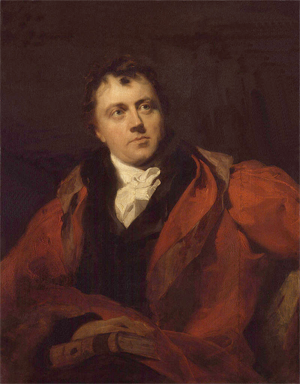
Sir James Mackintosh
—by Sir Thomas Lawrence.
Born 24 October 1765
Aldourie, Inverness-shire
Died 30 May 1832 (aged 66)
Citizenship United Kingdom of Great Britain and Ireland
Education University of Aberdeen
Occupation Political philosopher and politician
Political party:
Whig
Sir James Mackintosh FRS FRSE (24 October 1765 – 30 May 1832) was a Scottish jurist, Whig politician and historian. His studies and sympathies embraced many interests. He was trained as a doctor and barrister, and worked also as a journalist, judge, administrator, professor, philosopher and politician.
Early life
Mackintosh was born at Aldourie, 7 miles from Inverness, the son of Captain John Mackintosh of Kellachie.[1] Both his parents were from old Highland families. His mother died while he was a child, and his father was frequently abroad, so he was brought up by his grandmother, and then schooled at Fortrose Seminary academy. At age thirteen he proclaimed himself a Whig, and during playtime he persuaded his friends to join him in debates modelled on those of the House of Commons.[2]
He went in 1780 to King's College, University of Aberdeen, where he made a lifelong friend of Robert Hall, later a famous preacher. In 1784 he began to study medicine at Edinburgh University. He participated to the full in the intellectual ferment, became friendly with Benjamin Constant, but did not quite neglect his medical studies, and took his degree in 1787.
In 1788 Mackintosh moved to London, then agitated by the trial of Warren Hastings and the first lapse into insanity of George III. He was much more interested in these and other political events than in his professional prospects. He was also a founder member of the Society for the Prevention of Cruelty to Animals (later the RSPCA).[3]
Marriages and children
In 1789 he married Catherine Stuart, whose brother Daniel later edited the Morning Post. His wife's prudence counteracted Mackintosh's own unpractical temperament, and his efforts in journalism became fairly profitable. They had a son, who died in infancy, and three daughters:
• Mary Mackintosh (1789–1876) married Claudius James Rich
• Maitland Mackintosh (1792–1861), married William Erskine
• Catherine Mackintosh (1795-18??) married Sir William Wiseman, 7th Baronet (1794–1845), was the mother of Sir William Wiseman, 8th Baronet.
In 1797 his wife died, and next year he married Catherine Allen (died 6 May 1830), sister-in-law of Josiah II and John Wedgwood, through whom he introduced Coleridge to the Morning Post. They had two sons, one of whom died in infancy, and two daughters:
• Frances Emma Elizabeth Mackintosh (Fanny) (1800–1889), married Hensleigh Wedgwood.
• Robert Mackintosh (1803), died in infancy.
• Bessy Mackintosh (1804–1823)
• Robert James Mackintosh (1806–1864), colonial governor.
French Revolution
Mackintosh was soon absorbed in the question of the time, the French Revolution. In April 1791, after long meditation, he published his Vindiciae Gallicae: A Defence of the French Revolution and its English Admirers, a reply to Edmund Burke's Reflections on the Revolution in France. It placed the author in the front rank of European publicists, and won him the friendship of some of the most distinguished men of the time. The success of the Vindiciae finally decided him to give up the medical for the legal profession. He was called to the bar in 1795 and gained a considerable reputation there as well as a tolerable practice.
Vindiciae Gallicae was the verdict of a philosophic liberal on the development of the French Revolution up to the spring of 1791. The excesses of the revolutionaries compelled him a few years later to oppose them and agree with Burke, but his earlier defence of the rights of man is a valuable statement of the cultured Whig's point of view at the time. Mackintosh was the first to see Burke's Reflections as "the manifesto of a counter revolution".[4]
Of the Origin of the Present Old Governments
It is impossible that such governments as have hitherto existed in the world, could have commenced by any other means than a total violation of every principle sacred and moral. The obscurity in which the origin of all the present old governments is buried, implies the iniquity and disgrace with which they began. The origin of the present government of America and France will ever be remembered, because it is honourable to record it; but with respect to the rest, even Flattery has consigned them to the tomb of time, without an inscription.
It could have been no difficult thing in the early and solitary ages of the world, while the chief employment of men was that of attending flocks and herds, for a banditti of ruffians to overrun a country, and lay it under contributions. Their power being thus established, the chief of the band contrived to lose the name of Robber in that of Monarch; and hence the origin of Monarchy and Kings.
The origin of the Government of England, so far as relates to what is called its line of monarchy, being one of the latest, is perhaps the best recorded. The hatred which the Norman invasion and tyranny begat, must have been deeply rooted in the nation, to have outlived the contrivance to obliterate it. Though not a courtier will talk of the curfew-bell, not a village in England has forgotten it.
Those bands of robbers having parcelled out the world, and divided it into dominions, began, as is naturally the case, to quarrel with each other. What at first was obtained by violence was considered by others as lawful to be taken, and a second plunderer succeeded the first. They alternately invaded the dominions which each had assigned to himself, and the brutality with which they treated each other explains the original character of monarchy. It was ruffian torturing ruffian. The conqueror considered the conquered, not as his prisoner, but his property. He led him in triumph rattling in chains, and doomed him, at pleasure, to slavery or death. As time obliterated the history of their beginning, their successors assumed new appearances, to cut off the entail of their disgrace, but their principles and objects remained the same. What at first was plunder, assumed the softer name of revenue; and the power originally usurped, they affected to inherit.
From such beginning of governments, what could be expected but a continued system of war and extortion? It has established itself into a trade. The vice is not peculiar to one more than to another, but is the common principle of all. There does not exist within such governments sufficient stamina whereon to engraft reformation; and the shortest and most effectual remedy is to begin anew on the ground of the nation.
What scenes of horror, what perfection of iniquity, present themselves in contemplating the character and reviewing the history of such governments! If we would delineate human nature with a baseness of heart and hypocrisy of countenance that reflection would shudder at and humanity disown, it is kings, courts and cabinets that must sit for the portrait. Man, naturally as he is, with all his faults about him, is not up to the character.
Can we possibly suppose that if governments had originated in a right principle, and had not an interest in pursuing a wrong one, the world could have been in the wretched and quarrelsome condition we have seen it? What inducement has the farmer, while following the plough, to lay aside his peaceful pursuit, and go to war with the farmer of another country? or what inducement has the manufacturer? What is dominion to them, or to any class of men in a nation? Does it add an acre to any man's estate, or raise its value? Are not conquest and defeat each of the same price, and taxes the never-failing consequence?- Though this reasoning may be good to a nation, it is not so to a government. War is the Pharo-table of governments, and nations the dupes of the game.
If there is anything to wonder at in this miserable scene of governments more than might be expected, it is the progress which the peaceful arts of agriculture, manufacture and commerce have made beneath such a long accumulating load of discouragement and oppression. It serves to show that instinct in animals does not act with stronger impulse than the principles of society and civilisation operate in man. Under all discouragements, he pursues his object, and yields to nothing but impossibilities.
-- Rights of Man, by Thomas Paine
Charles James Fox singled out Mackintosh's book as that which did most justice to the French Revolution, and he preferred it over Burke and Thomas Paine.[5] After Paine's Rights of Man, Mackintosh's book was the most successful reply to Burke and Burke's biographer F. P. Lock considers it "one of the best of the replies to Burke, in some respects superior to Rights of Man".[6]
The poet Thomas Campbell claimed that had it not been for Mackintosh's book, Burke's anti-revolutionary opinions would have become universal amongst the educated classes and that he ensured that he became "the apostle of liberalism".[7]
Mackintosh wrote to Burke on 22 December 1796, saying that "From the earliest moments of reflexion your writings were my chief study and delight...The enthusiasm with which I then embraced them is now ripened into solid Conviction by the experience and meditation of more mature age. For a time indeed seduced by the love of what I thought liberty I ventured to oppose your Opinions without ever ceasing to venerate your character...I cannot say...that I can even now assent to all your opinions on the present politics of Europe. But I can with truth affirm that I subscribe to your general Principles; that I consider them as the only solid foundation both of political Science and of political prudence".[8] Burke replied that "As it is on all hands allowed that you were the most able advocate for the cause which you supported, your sacrifice to truth and mature reflexion, adds much to your glory".[9] However, in private Burke was sceptical of what he considered Mackintosh's "supposed conversion".[10] Burke invited Mackintosh to spend Christmas with him at his home in Beaconsfield, where he was struck by Burke's "astonishing effusions of his mind in conversation. Perfectly free from all taint of affectation...Minutely and accurately informed, to a wonderful exactness, with respect to every fact relative to the French Revolution".[11]
When Mackintosh visited Paris in 1802 during the Peace of Amiens, he responded to compliments from French admirers of his defence of their revolution by saying: “Messieurs, vous m’avez si bien refuté” [Gentlemen, you refuted me so well ].[12]
Lawyer
As a lawyer his greatest public efforts were his lectures (1799) at Lincoln's Inn on the law of nature and nations, of which the introductory discourse was published and ran to several editions; the resulting fame helped open doors for him later in life. Mackintosh was also famed for his speech in 1803 defending Jean Gabriel Peltier, a French refugee, against a libel suit instigated by Napoleon – then First Consul (military dictator) of France. Peltier had argued that Napoleon should be killed at a time when Britain and France were at peace. In front of an audience of ambassadors, it took only one minute for the jury to convict Jean-Gabriel, but the sentence was never applied, it was decidedly a political trial. J-G Peltier was no more satisfied with the judgment than Napoleon. The newspapers of France received the defense of praising the pleading under pain of suppression ! The speech was widely published in English and also across Europe in a French translation by Madame de Staël, who became a friend of Mackintosh's.
[A]ll the weapons directed against the humanist conception of man can be summed up under one modern concept: the "Conservative Revolution."...
Romanticism was consciously promoted by the European oligarchy as a movement which advocated the total rejection of reason and humanism, upon which Weimar classicism was based. One of the oligarchy's most influential agents, who supported the young Romantics with body and soul, was Madame de Stael, daughter of the Swiss banker Jacques Necker, who as French finance minister had ruined France for the sake of the Swiss banks. Heinrich Heine has pointedly described how Madame de Stael and her circles were angered that the "republican" culture found in the Weimar classics, in musical soirees at home, or in the great theater houses had begun to spread through large portions of the population. In a blue rage, she attempted to regain her own control of culture by luring young artists into her own salon. These recruits threw themselves into action with the same abandon as today's "beautiful people" or the nobility's "Jet set." Not only did this romantic movement produce the organized terrorism of Giuseppe Mazzini's "Young Europe," but it also spawned the tendency stretching from the turn-of-the-century youth movement to today's counterculture "alternative" movement, along with its ideologues Friedrich Nietzsche, Paul de Lagarde, Julius Langbehn, Alfred Rosenberg, and so forth. The Nazis too drank out of this "alternative" trough.
-- The Hitler Book, edited by Helga Zepp-LaRouche
In 1803 he was knighted.
Judge of Bombay
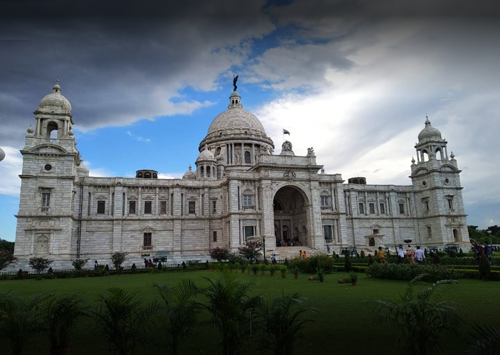
He was appointed Recorder (chief judge) of Bombay, taking up the post in 1804. Within a few months he had established the Bombay Literary Society at his home, where a circle of intellectuals and friends would meet to discuss the history, geography, zoology and botany of the sub-continent as well as its peoples and languages, customs and religions.
The first meeting of the Society was held on the 26th November 1804, at Parell-house, where Sir James Mackintosh then resided; -- the Discourse which he read on that occasion is prefixed to the present volume. At this meeting the following persons were present:
The Honourable Jonathan Duncan, governor of Bombay.
The Honourable Sir James Mackintosh, knight, recorder of Bombay.
The Right Honourable Viscount Valentia.
General Oliver Nicolls, commander-in-chief at Bombay.
Stuart Moncrieff Threiplond, esq. advocate-general.
Helenus Scott, M.D. first member of the medical board.
William Dowdeswell. esq. barrister-at-law.
Henry Salt, esq. (now consul-general in Egypt).
Lieutenant-colonel Brooks (now military accountant-general at Bombay).
Lieutenant-colonel Joseph Boden, quarter-master-general at Bombay.
Lieutenant-colonel Thomas Charlton Harris, deputy quarter-master general at Bombay.
Charles Forbes, esq.
Robert Drummond, M.D.
Colonel Jasper Nicolls (now quarter-master-general in Bengal).
Major Edward Moor.
George Keir, M.D.
William Erskine, esq.
***
List of the Members of the Bombay Literary Society.
The Hon. Jonathan Duncan.
The Rt. Hon. Lord Viscount Valentia.
The Hon. Sir James Mackintosh.
General O. Nicolls.
Helenus Scott, Esq.
George Keir, Esq.
Robert Drummond, M.D.
S.M. Treipland, Esq.
William Dowdeswell, Esq.
Henry Salt, Esq.
Lieut.-colonel William Brookes.
Lieut.-colonel Joseph Boden.
Lieut.-colonel T.C. Harris.
Colonel Jasper Nicolls.
Major Edward Moor.
Charles Forbes, Esq.
William Erskine, Esq.
Robert Steuart, Esq.
Francis Wrede, Esq.
Robert Henshaw, Esq.
Major D. Price.
William Boag, Esq.
Lieut.-colonel A. Hay.
Colonel Alexander Walker.
Lieut.-colonel C.B. Burr.
Lieut. E.S. Fressell.
John Pringle, Esq.
Alexander Mackonochie.
Dom Pedro de Alcantara, bishop of Antiphile, and apostolical vicar in the dominions of the Great Mogul.
Lewis Corkran, Esq.
Thomas Lechmere, Esq.
Benjamin Heyne, M.D.
Captain Thomas Arthur.
James Milne, M.D.
Hugh Bell, Esq.
Edward Nash, Esq.
James Hallett, Esq.
James Morley, Esq.
Joseph Cumberlege, Esq.
T.M. Keate, Esq.
Major-general Charles Reynolds.
Reverend Arnold Burrows.
William Sandwith, Esq.
Captain David Seton.
Reverend N. Wade
William Taylor Money, Esq.
P.C. Baird, Esq.
Dr. James Skene.
Charles C. Mackintosh, Esq.
Samuel Manesty, Esq.
Ollyett Woodhouse, Esq.
Luke Ashburner, Esq.
Sir George Staunton, Bart.
Gideon Colquhoun, Esq.
J.G. Ravenshaw, Esq.
Edward Hawke Locker, Esq.
Jonathan Thorpe, Esq.
David White, M.D.
John Leyden, M.D.
Claudius James Rich, Esq.
John Taylor, M.D.
Captain Thomas Gordon Caulfield, R.N.
George Cumming Osborne, Esq.
William Newnham, Esq.
George Sotheby, Esq.
Hugh George Macklin, Esq.
David Deas Inglis, Esq.
Captain Francis Irvine.
Major William Hamilton.
Captain William Miles.
John Hine, Esq.
C.T. Ellis, Esq.
Captain A. Robertson.
Charles Daw, Esq.
Reverend W. Canning.
James Inverarity, Esq.
William A. Morgan, Esq.
Capital M. Williams.
Captain A. Gregory.
Stephen Babington, Esq.
John Wedderburn, Esq.
James Henderson, Esq.
Captain R.H. Hough.
James Calder, Esq.
Lieut.-general the Hon. Sir John Abercromby, K.C.B.
Dougal Christie, Esq.
Captain Edward Frederick.
Hill Morgan, M.D.
Andrew Jukes, M.D.
Brigadier-general Sir John Malcolm, K.C.B.
Lieutenant James Macmurdo.
David Craw, Esq.
William Mackie, Esq.
Captain C. Tyler, R.N.
Captain John Briggs.
Lieutenant J.W. Graham.
James Farish, Esq.
Hon. M.S. Elphinstone.
Byram Rowles, Esq.
Major Henry Rudland.
Hon. Sir John Newbolt.
Lieut.-colonel William Franklin.
John Copland, Esq.
Charles Norris, Esq.
Captain W. Bruce.
Edward William Hunt, Esq.
Captain B. Hall, R.N.
Lieutenant Samuel Hallifax.
Charles Northcote, Esq.
Captain Sir William Wiseman, Bart. R.N.
William Baillie, Esq.
Lieutenant John Jopp.
Lieutenant William Miller.
Reverend R. Jackson.
Lieut.-colonel John Griffiths.
The Hon. Sir A. Anstruther.
Colonel Urquhart.
Major John Lyall.
Mr. Benjamin Hammer.
Thomas Palmer, Esq.
Lieutenant John Wade.
Captain Heard.
Richard Jenkins, Esq.
Benjamin Noton, Esq.
Lieutenant John Hawkins.
T.G. Gardiner, Esq.
Captain L.C. Russell.
Captain Josiah Stewart.
Captain John Powell.
J.H. Pelly, Esq.
Mr. Archdeacon Barnes.
The Hon. T.S. Raffles.
J. Crawford, Esq.
Richard Woodhouse, Esq.
John Hector Cherry, Esq.
Mr. R. Hereford.
R.G. Morris, Esq.
Captain E.H. Bellassis.
David Malcolm, Esq.
Edward Charles Macnaghton, Esq.
The Lord Bishop of Calcutta.
J.S. Buckingham, Esq.
Theodore Forbes, Esq.
Mr. Asselin de Cherville.
Captain James Revitt Carnac.
James Staveley, Esq.
Sutherland Meek, M.D.
President
William Taylor Money, Esq.
Vice Presidents
Ollyett Woodhouse, Esq.
The Rev. Archdeacon George Barnes.
Secretaries
Stephen Babington, Esq.
John Wedderburn, Esq.
Treasurer.
Messrs. Forbes and Co.
-- Transactions of The Literary Society of Bombay, With Engravings
The group would later evolve into the Asiatic Society of Mumbai.
He was however not at home in India, where he became ill, was disappointed by his literary progress with the mooted History of England, and was glad to leave for England in November 1811.
Member of Parliament
Mackintosh declined the offer of Spencer Perceval to resume political life under the wing of the dominant Tory party, despite prospects of office. He entered Parliament in July 1813 as a Whig. He was the member for Nairn until 1818, and afterwards for Knaresborough, till his death. In London society, and in Paris during his occasional visits, he was a recognized favourite. On Madame de Staël's visit to London he was able to keep up in talk with her. A close friend was Richard Sharp MP, known as "Conversation Sharp".[13] and both men belonged to the Whig social group, the King of Clubs. Mackintosh's parliamentary career was marked by his liberalism: he opposed reactionary measures of the Tory government; he supported and later succeeded Samuel Romilly in his efforts to reform the criminal code; and took a leading part both in Catholic emancipation and in the Reform Bill. He was, however, too diffuse and elaborate to be a telling speaker in parliament.
Professor
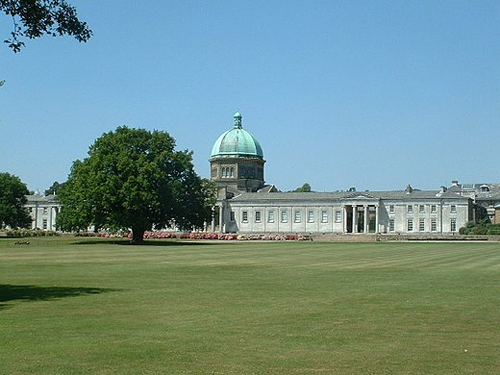
From 1818 to 1824 he was professor of law and general politics in the East India Company's College at Haileybury. While there, on 12 August 1823, Mackintosh wrote a two-sheet letter from Cadogan Place, London to James Savage asking for source material for Savage's edition of The History of Taunton by Joshua Toulmin.[14]
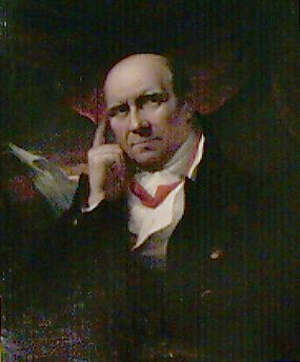
Sir James Mackintosh in later life.
In the midst of the attractions of London society and of his parliamentary avocations Mackintosh felt that the real work of his life was being neglected. His great ambition was to write a history of England; he also cherished the idea of making some worthy contribution to philosophy. It was not till 1828 that he set about the first task of his literary ambition. This was his Dissertation on the Progress of Ethical Philosophy, prefixed to the seventh edition of the Encyclopædia Britannica. The dissertation, written mostly in ill-health and in snatches of time taken from his parliamentary engagements, was published in 1831. It was severely attacked in 1835 by James Mill in his Fragment on Mackintosh. About the same time he wrote for the Cabinet Cyclopaedia a History of England from the Earliest Times to the Final Establishment of the Reformation.
A privy councillor since 1828, Mackintosh was appointed Commissioner for the affairs of India under the Whig administration of 1830.
History of the Revolution in England in 1688
His history of the Glorious Revolution, for which he had done considerable research and collected a large amount of material, was not published till after his death. Mackintosh only completed it to the time of James II's abdication. However his voluminous notes on the Glorious Revolution came into the possession of Thomas Babington Macaulay, who used them for his own History of the Revolution. Mackintosh's notes stopped in the year of 1701, where Macaulay's History also ends.[15]
Mackintosh's work was published in 1834 and in his review of it, Macaulay said that he had "no hesitation" in proclaiming the book as "decidedly the best history now extant of the reign of James the Second" but lamented that "there is perhaps too much disquisition and too little narrative". He went on to praise Mackintosh: "We find in it the diligence, the accuracy, and the judgment of Hallam, united to the vivacity and the colouring of Southey. A history of England, written throughout in this manner, would be the most fascinating book in the language. It would be more in request at the circulating libraries than the last novel".[16]
Freemasonry
He was Initiated into Scottish Freemasonry in Lodge Holyrood House (St. Luke's), No.44, (Edinburgh) on 28 November 1785.[17]
The continuing close association of Freemasonry with politics is illustrated by the fact that senior members of the St. Luke Lodge No. 44 were the leaders of the Scottish Whig party between 1807 and 1860. R.S. Lindsay, A History of the Mason Lodge of Holyrood House (St Luke's) No. 44. (Edinburgh, 1935), p. 299 quoted in M. Wallace, 'Scottish Freemasonry, 1725-1810: Progress, Power, and Politics' (PhD thesis, University of St Andrews, 1007), pp. 234-235.
-- British Freemasonry, 1717-1813, Volume 4, edited by Robert Peter
Death
The premature death of Sir James Mackintosh at the age of sixty-six was attributed to a chicken bone becoming stuck in his throat, causing a traumatic choking episode. Although the bone was eventually removed, his suffering continued until he died a month later on 30 May 1832 and he was buried in Hampstead churchyard, having lived for much of his later life at 15 Langham Place, London.
Legacy
A Life, by his son R. J. Mackintosh, was published in 1836. An edition of his works, in three volumes, (apart from the History of England) was published in 1846, containing his ethical and historical dissertations, a number of essays on political and literary topics, reviews, and other contributions to periodical publications, and speeches on a variety of subjects delivered at the bar and in parliament.
Works
• Arguments Concerning the Constitutional right of Parliament to Appoint a Regent (1788).
• Vindiciæ Gallicæ: A Defence of the French Revolution and its English admirers against the accusations of the Right Hon. Edmund Burke, including some strictures on the late production of Mons de Calonne (1791).
• A Letter to the Right Honourable William Pitt (1792).
• A Letter from Earl Moira to Colonel McMahon (1798).
• A Discourse on the Study of the Law of Nature and Nations; Introductory to a Course of Lectures on That Science Commenced in Lincoln's Inn Hall on Wednesday, February 13, 1799; In Pursuance to An Order of the Honourable Society of Lincoln's Inn (2nd ed.). London: T.Cadell, Jun. and W. Davies in the Strand... 1799. Retrieved 23 February 2019 – via HathiTrust.
• The Trial of Jean Peltier for Libel against Napoleon Buonaparte (1803).
• Proceedings at a General Meeting of the Loyal North Britons (1803).
• Plan of a Comparative Vocabulary of Indian Languages (1806).
• Dissertation on the Progress of Ethical Philosophy (1830).
• The Life of Sir Thomas More (1830).
• The History of England (1830–1832, 3 vols.).
• History of the Revolution in England in 1688, prefaced by a notice of the Life, Writings and Speeches of Sir James Mackintosh (1834).
• Memoirs (edited by Robert James Mackintosh, 1835, 2 vols.).
• Inaugural Address (edited by J. B. Hay, 1839).
• Speeches, 1787–1831 (1840).
Notes
1. Biographical Index of Former Fellows of the Royal Society of Edinburgh 1783–2002 (PDF). The Royal Society of Edinburgh. July 2006. ISBN 0 902 198 84 X.
2. Patrick O'Leary, Sir James Mackintosh: The Whig Cicero (Aberdeen: Aberdeen university Press, 1989), p. 3.
3. Edward G. Fairholme and Wellesley Pain, A Century of Work for Animals: The History of the RSPCA, 1824-1934 (London: John Murray, 1934), p 54-55. Shevawn Lynam, Humanity Dick Martin 'King of Connemara' 1754-1834 (Dublin: Lilliput Press, 1989) p 232
4. J. C. D. Clark (ed.), Reflections on the Revolution in France. A Critical Edition (Stanford: Stanford University Press, 2001), p. 104.
5. L. G. Mitchell, Charles James Fox (London: Penguin, 1997), p. 117, p. 184.
6. F. P. Lock, Edmund Burke. Volume II: 1784–1797 (Oxford: Clarendon Press, 2006), p. 292, p. 347. Cf. Clive Emsley: "Burke's diatribe also brought forth a flood of responses of which Tom Paine's The Rights of Man is unquestionably the raciest and best-known, but, in comparison with, for example, James Mackintosh's Vindiciae Gallicae, it is by no means the most intellectually coherent and cogent". ‘Revolution, war and the nation state: the British and French experiences 1789-1801’, in Mark Philp (ed.), The French Revolution and British Popular Politics (Cambridge: Cambridge University Press, 2002), p. 101.
7. O'Leary, p. 22.
8. R. B. McDowell and John A. Woods (eds.), The Correspondence of Edmund Burke. Volume IX: Part One May 1796-July 1797. Part Two: Additional and Undated Letters (Cambridge: Cambridge University Press, 1970), p. 193.
9. McDowell and Woods, p. 194.
10. Burke wrote to his friend French Laurence on 25 December: "I suspect by his Letter that it does not extend beyond the interior politicks of this Island, but that, with regard to France and many other Countries He remains as franc a Jacobin as ever. This conversion is none at all, but we must nurse up these nothings and think these negative advantages as we can have them". McDowell and Woods, pp. 204-205.
11. Lock, p. 560.
12. O'Leary, p. 23.
13. For an account of Mackintosh's correspondence and relationship with Sharp, see Knapman, D. - Conversation Sharp - The Biography of a London Gentleman, Richard Sharp (1759-1835), in Letters, Prose and Verse. [Private Publication], 2004. British Library
14. Harvard College Library (2005) Hill, George Birkbeck Norman, 1835-1903. Johnsonian Miscellanies, extra-illustrated: Guide Archived 2 September 2006 at the Wayback Machine 21 October 2006.
15. Christopher J. Finlay, ‘Mackintosh, Sir James, of Kyllachy (1765–1832)’, Oxford Dictionary of National Biography, Oxford University Press, Sept 2004; online edn, Jan 2010, accessed 16 Sept 2010.
16. Thomas Babington Macaulay, Critical and Historical Essays: Volume One (London: J. M. Dent & Sons, 1935), pp. 279-280.
17. A History of the Mason Lodge of Holyrood House (St.Luke's), No.44, holding of the Grand Lodge of Scotland with Roll of Members, 1734-1934, by Robert Strathern Lindsay, W.S., Edinburgh, 1935. Vol.II, p.702.
References
• This article incorporates text from a publication now in the public domain: Chisholm, Hugh, ed. (1911). "Mackintosh, Sir James". Encyclopædia Britannica. 17 (11th ed.). Cambridge University Press. p. 259.
• Harrington, Jack (2010), Sir John Malcolm and the Creation of British India, Chs. 1 &3, New York: Palgrave Macmillan., ISBN 978-0-230-10885-1
Further reading
• J. G. A. Pocock, ‘The Varieties of Whiggism from Exclusion to Reform: A History of Ideology and Discourse’, Virtue, Commerce and History (1985).
• R. B. Sher, Church and University in the Scottish Enlightenment: The Moderate Literati of Edinburgh (1985).
• Donald Winch, Riches and Poverty: An Intellectual History of Political Economy in Britain, 1750–1834 (1996).
• Tugdual de Langlais, L'armateur préféré de Beaumarchais Jean Peltier Dudoyer, de Nantes à l'Isle de France, Éd. Coiffard, 2015, 340 p. (ISBN 9782919339280).
• Hélène Maspéro-Clerc, Un journaliste contre-révolutionnairre Jean-Gabriel PELTIER (1760-1825), Paris, Sté des Études Robespierriestes, 1973.
External links
• Works by James Mackintosh at Project Gutenberg
• Works by or about James Mackintosh at Internet Archive
• Grand Lodge of Scotland