
Theodore Postol: Iran's Missiles & Drones Were Underestimated
Glenn Diesen
Mar 31, 2026
MIT Professor and Pentagon advisor Ted Postol explains the extent to which the quantity and quality of Iranian missiles and drones were underestimated, and the consequences of this miscalculation.
Transcript
Welcome back. We are joined today by Theodore Apostol, a professor of science, technology, and national
security policy at MIT. He's an expert in nuclear weapons delivery systems,
missiles, missile defense, and has worked as an adviser at the Pentagon. So, thank you again for coming back on.
Uh the audience are always very very much appreciate the very Yeah. Uh well,
I'm uh I'm very happy to be here. Uh I uh uh my uh discussion today could be a
little fragmented. I literally uh have been putting it together on the fly. Uh
from yesterday, I literally got up at my time in the morning to uh start
putting together the slides. So um um uh you know, so it could be a little fragmented. If I fall asleep during the
talk, I'll be ahead of some of your audience.
It's probably everybody who's following the situation agrees that Israel and of
course the United States has made a tremendous uh strategic blunder that the war is not going well uh for either the
United States or Israel. And in fact, I think um we will find that the war is
going to go worse and worse as time goes on. And um the um the situation is now
uh entirely in favor of uh the um Iranians. They're of course taking tremendous levels of damage by the
bombing campaign um that we um uh that was be that began on February th with
the uh surprised attack of Israel and the United States on Iran. But um as
many of us guessed, I want to underscore it was a guess at least on my part. uh
uh the uh the war would uh rather quickly um turn uh in favor of
Iran and the re basic reasons for that are really there multiple reasons. One of them is simply that Iran is a giant
country and um the damage that is being done is very substantial uh to its uh above ground facilities.
Uh, of course many innocent people are being killed which is of course another issue which is both which is moral and
ethical but um the bigger problem is that Iran's retaliatory capabilities are
mostly underground and it's not simply people sometimes don't understand that being underground
sis is is a very problematic thing because People focus on the ability,
for example, they talk about bunker busters,
but in order for a bunker buster to work, it has to be extremely precisely targeted.
If I build tunnels and I have a a hole in the tunnel and I launch a missile through that tunnel, through that hole,
you don't know where the tunnel may be going. The tunnel could be going in many different directions and there could be
um uh elbows off the tunnel and um and Iran has very cleverly with great
thought and strategic intelligence built uh their facilities in networks of tunnels. So even if you get a tunnel
entrance, you don't necessarily get the facility. And uh this is a real problem
that uh Israel will uh continue to and the United States will continue to face.
It's simply not going to be possible to destroy these underground tunnels. Now,
if we um if we uh look at the the uh capabilities that uh Iran has to retaliate,
it's um it's basically uh has to do with the total number of missiles and the and the accuracy of
these missiles over time. Now, we're not just talking about ballistic missiles. We're talking about um uh you know,
drones. Now, the drones are very uh tend to be um
less of a focus until more recently of most people because they move slowly.
They're not exotic. You know, the technologies in them don't appear to be although the actually um the uh technologies in the drones are
in fact very exotic. Let me give you an example of what I mean here.
um improvised explosive devices which have run havoc with the American invasion in in Iraq for example
are typically uh incorrectly described as low technology devices. They are in fact very high
technology devices because you could you attach a cell phone to this um uh this
um explosive device. The the cell phone is itself an extraordinarily high technology device. Now you may not be
able to build it but you can purchase you can purchase it because it's a commercially available item. And of course, if you can use it, you have an
incredibly sophisticated weapon to use against your adversaries. Now, the drones have turned out to be rather
similar, but in some ways more revolutionary than, for example, the uh
improvised explosive device. The drones uh have the availability of satellite navigation.
Now the satellite navigation allows the drones to know where they are to typically a few meters in three
dimensions. I say three dimensions because they know their altitude and they and and and they know their ex and
their latitude and longitude. And when I say to a few meters resolution,
I'm talking about drones that are using for example the chi China's bedu system.
the the Beu Chinese system for navigation um typically can you can typically
achieve a few meters resolution with a civilian access to the uh to to the system. uh GPS has a lower resolution
because the the military access is specialized relative to the civilian access and um but the Chinese have made
their system available for higher uh precision and um this is available. The
Chinese receivers can be put on on the drones and they can um uh you know tell
the drones where they are. Now when a drone knows where it's are to meters of precision,
it also knows its direction of motion because it can measure its its movement
by a sequence of of um of of um of measurements. Now, if you know your direction of motion and where you are,
you know, and you and you have satellite data of the kind that we now know the
Russians and the Chinese are now giving uh Iran.
The satellite data tells it the latitude and longitude and altitude.
How much above sea level or at sea level uh any particular target of interest
that is not moving uh is can be to the Iranians.
And uh because of that uh the um uh the um
uh uh the the ability to find a target is very good. This means that if I want
to send an image to the drone, I don't need a lot of data. I just need to send it a crude
image because um the drone knows where it's looking.
So if in the final stages of homing it needs a a more detailed update to
exactly uh home on a target, it only needs a single picture. It really doesn't need um a video of of the
homing. But of course it can have that video because we also have ai the system called Starlink.
Now, Starlink, I'll show you some Starlink receivers just to give people a sense of them. You go out and buy a Starlink receiver for bucks.
I think you can go on Amazon and find one. It's it it's about one foot on the side, weighs much less than a pound,
only requires about or watts of power, which can easily run off a generator on the drone or or a battery.
And um you can get real time video through a video link with with with
Starlink. Now there's no way to turn off the Starlink system unless you turn it off for a whole region because people
buy Starlink uh in order to get the equivalent of cell phone access.
So uh so when I buy a Starlink um uh call a transceiver or modem even if you
want to call it that um I I can put it on the back of a drone or integrated
into the wing of a drone and um once the drone starts uh communicating there's no way for anybody including the people who
operate Starlink to know what I'm doing with that communication system because everything's encrypted. So there's no way to say, "Oh, it's Glenn Don, uh, you
know, flying his drone against that poor radar." It's they they don't know. It's an encrypted communication from from a
one of of a million or so they have so far of of these um mobile um uh transceivers or modems that they've
already sold, selling more at a fantastic rate. So now you have this this ability for drones to get all this
data and that combination is extraordinarily revolutionary in terms of the damage cap damage inflicting
capability those drones now have and that is all in the hands of um of the Iranians. Plus, you have the ability to
build these drones very easily because everything is commercial, including this Starlink uh
modem, which by itself, if you if you just talk about the technology needed to implement this, it's fantastic. It's the
most advanced technology the West can produce.
It doesn't matter. What's what matters is it's commercially available and anybody can use it. That's what matters
and this is now ubiquitous and universally available.
Now just to give you a sense of how my understand I want to be clear I want to give your audience a little bit of a
chance to understand uh how uh my own judgments have evolved over time. This
shows you um the um uh hit points at the um um at the Nevatum air base in Israel.
Uh which um uh- which which occurred in October of
when uh the um when the Iranians um retaliated uh for an Israeli for one of the many
Israeli attacks on them. And uh basically uh from these hit points you can you can
get an estimate of what the actual accuracy of the ballistic missiles are.
Now of course it's for these ballistic missiles. If you have more modern ballistic missiles that are more more accurate,
you don't have an you don't have an estimate for them. But these were the estimates. These were these were the data I had at the time. And at that time
I guessed well it was a it was a pretty good uh estimate actually based on the data that the uh accuracy
of of the ballistic missiles that Iran was using at that time was about a kilometer and we we I don't need to go through all the details this was
discussed. So if this is a kilometer of precision then this shows you sort of if I were aiming at downtown Tel Aviv this
shows you a rough pattern of where um warheads would would fall. So, a lot of
my warheads would fall out of the downtown area given that the downtown area is my target area. Now, if I just improve my accuracy by a factor of two,
I get a meter precision. You see all of a sudden I'm not only uh I'm really
getting more and more and more damage inflicting capability with greater precision with the greater precision.
And what we're now seeing is that the more capable and modern Iranian ballistic missiles are um are much more
accurate than even the meters we're seeing here. And there's um some evidence for that. You can even see that
if you have a studied eye. I mean you you have to accept that I have some experience with these matters. Uh here
you can see um uh four frames of an incoming modern advanced
um ballistic missile. Now uh you if you look here you can see that is a reflection off the lens of the camera.
You can tell that because you see that it tracks exactly with the location of the bright um spot
which is the real warhead. Notice that there's a trail uh associated with this
um warhead along with a a tail which is kind of a wake. Uh there's tiny luminous
particles in the wake. But this trail is due to the fact that there's a rocket motor on this warhead. And this rocket
motor is working against the drag of of aerodynamics, aerodynamic drag to keep
this thing at a high speed. It's also keeping it on a stable trajectory. What we were seeing early,
the earlier Iranian ballistic missiles, the these were the less advanced ones.
You could see warheads tumbling. You could see missiles breaking up at high altitude if you know what you're looking for. You know, I can give a talk on
that. It doesn't really matter. But but here you see an extremely stable re-entry trajectory. So what does this
mean? And this means that if I have a a BYU navigational receiver on this and
it's giving me meters of precision in in telling me where my you know my location,
then I'm going to have probably probably many tens or probably a few hundred meters of accuracy when I hit the
ground. The reason I have less accuracy than my knowledge or my position is it's very hard to control the incoming
missile. It's coming in so fast. So typically you'll hear the terminology guidance and control. Guidance refers to
knowing where I am. Control is making sure that my system is not wobbling around when I'm coming in and you know
Mach or Mach So um uh but but what we see here is is a very energetic explosion. Notice that the sky is blue.
The reason if you see later frames it turns red. This indicates that it's a very high energy density in the
explosion. And that's because you're not only seeing the explosive effect of the um of the of the explosives on the
warhead, but you're also seeing the kinetic effect of just the motion. This thing's coming in so fast it gets
converted to kinetic energy. So it gets converted to a an a molten mass of material that's so hot it's radiating
blue light which is hotter than than the light that would be radiated if it's cooler which would be closer to red. So
you can really tell how intense these explosions are. So the net result is they do tremendous amounts of damage.
This is uh uh uh an indication of the damage that was uh done at Dimona only recently.
And um you can see that although this munition seems to have I I can't
unfortunately people insist on putting these um labels on their video frames.
Uh even though we don't we know that the war had landed somewhere in the middle here. You can see the shock wave just
knocked the walls out of all these different uh buildings. And if you were inside these buildings and you were near
a window, you got you got badly you you could have easily been killed or badly
badly injured. And um we don't know what the casualties were. We also don't know what the warning time was. As I'll
explain uh shortly, uh the warning time has essentially disappeared because the
um Iranians have been so successful with the use of drones. I want to underscore drones, not ballistic missiles. The
drones have been able to destroy essentially all of the critical radar systems that the Israelis and Americans
use for the air defenses and the missile defenses. Now, this this is a nonlinear
consequence. By that I mean when I have air defenses, I can shoot down a
significant percentage of your drones assuming I have enough enough interceptors.
um which of course they're running out of. Now, in the case of ballistic missiles, the air defenses have never been able to shoot down a high
percentage of ballistic missiles. My guess, which I think history will eventually tell us, is no more than %
or so intercept rate with with the best of their systems. It's not much more than that. And you can see that again if
you want another discussion I can be happy to do it. You can see that because we know we can identify intercepts. We
we can see them when they occur. And then we can also see they almost never occur. In other words, we have video
after video after video, freeze frame after freeze frame after freeze frame.
Um uh u time-lapse photo after time-lapse photo.
almost none of which show any intercepts. So the conclusion is clear.
You know, there's a very low percentage of intercepts. It's just that simple.
All right. So here's another example of the of the high levels of damage that can be done. And one of the problems
you're now having is that if one of these warheads hits a building, and some percentage of the time they do, it's it's a purely probabilistic event.
But if one of these warheads hits a building, it can take the building down.
So, if you're in Israel and you have a an armored room in your apartment,
which you know, which we're, you know,
if you if you have a specialized room within your apartment that's got steel doors and special reinforced um walls,
uh, and you're not foolish enough, you you take shelter, the odds are very high you won't be injured even with this kind
of damage. But if that building comes down,
you're going to go down with it. You're going to be buried. So what's happening in Israel now? Uh this I know this was
reported by some of your earlier interviewees and it's, you know, I've confirmed it independently.
What you have now is people having to go down out of the building to underground shelters because those are reinforced enough that if the building collapses,
you can uh you can survive. It'll protect you from the rubble, you know,
from the collapsing structure. So that is a tremendous stress on you because
two, three, four or five times a night you have to be you're awakened and you have to go down to a shelter because you
can't assume that what your building's not going to be hit. It's a low probability event as an individual. But
uh you know if you're in that situ you know it's easy for me to say you know it's like I joke with my military friends. I say, 'Well, you know, it's
hard to hit an aircraft carrier. But I always because I'm because I want to be respectful to them because they are the guys who are out there. I always say,
but of course I'm not on the carrier and I you know, you know, so you can't take it for granted and you won't. I know for
sure my from my own attitudes, I would definitely I'd be down in the shelter.
So the fact that there's a low probability it would hit doesn't mean and that is going that's having a tremendous stress on on Israeli society.
So uh here's just an example of dam.
This is from Gaza actually. And um and um this just shows you internal
damage uh to an Israeli home that was probably probably several hundred meters a
fraction of a kilometer away from a detonation of a um of a ballistic missile warhead.
So this is not minor damage. I mean you're you're not dead. your apartment.
Well, you could be dead if you were near the window. If you weren't wise and went into your shelter, but uh but you know,
this is not the kind of damage you can routinely uh accept unless you have a shelter and
you don't want to ignore the possibility that this thing could have slam hit your building and that apartment would be
just be rubble at the bottom of the building. So again, uh these kinds of levels of damage are um are very large and and and and very much a problem.
So So now uh we let's get to the problem of drones.
The drones are different. They um they are uh somewhat uh low low tech uh vehicles.
Uh the um this is an example of an Iranian it's it's called a a shahed drone. I I called you know I miss this
is the same very close to uh the uh Russian Gen uh uh
uh Gen drone which is based on the same design. Yeah. right now uh the Russians,
Ukrainians,
uh obviously Iranians who invented the the first design, Turks and Americans all have drone models that look very much like this vehicle.
So, and the reason is simple. It's very easy to implement, extremely inexpensive,
and it's very hard to shoot down.
Again, let me say it's easy to shoot down if I have a a surface-to-air missile, but the surface-to-air missile,
for example, if the surface air missile is a um uh a um an Iron Dome
interceptor, which is essentially essentially useless against ballistic missiles. Iron Dome is a total failure
against ballistic missiles, but it's very capable against drones. If it if you're going to shoot it against drones or cruise missiles, it's going to do
it's going to have a very high intercept rate. Probably close to one. So So I wouldn't even shoot two of these things at a drone. I'd shoot one at a drone,
but the thing probably cost a half million dollars. Israelis claim it's $but that's nonsense.
Nobody knows how to build one of these things for $
maybe $or $if you're very if you're very clever at building that, but even that I doubt. So, you're talking about a half million dollar interceptor.
If you're talking about a Patriot,
you're talking about a million to million interceptor, depending on whether it's a Patriot Pack Patriot
Advanced Capability interceptor, or a Patriot Advanced Capability interceptor. That's a $million
interceptor. that's against a $drone, you know, and and probably these drones are cheaper than that because
what you're building them by mass amounts,
um they they are going to be uh a lot cheaper. So,
here's an example of one of these underground tunnels.
Now, um this is an Iranian underground tunnel, and you can see photos of all these underground tunnels all over the
place. Now, just to give you an example of how difficult these tunnels can be to work with, to work against if you're trying to shoot, you could cut a hole in
this tunnel someplace. You wouldn't have the drones there, and you can have a ballistic missile that you're launching through that hole.
And on top of the hole, you can put a um a very thin layer of plastic surface,
fiberglass or something like that. And on top of that fiberglass, you can you can cover it with sand.
So when you look down from an airplane or even from the ground, you know, walking around, you
you you you don't even know there's a hole to a tunnel there.
I was in Vietnam as a visitor fortunately and I was standing next to literally a foot away
from a hole into an underground tunnel that the Vietnamese had been using against the Americans during the war.
And this uh fortunately friendly because I was visiting uh Vietnamese uh u guide
popped out of the ground. I had no idea that the hole was so close to me. When he went back down, I couldn't find a
hole even though I had been standing next to it. I mean, it's very hard to to identify these holes. And you put the
missile there and you just fly through the cover.
And um now, let's say I know the hole is there. So, I come with my one of my bunker buster bombs because I I'm into
bunker buster bombs. And I just drop it through that hole. And I do a lot of damage locally, but I don't know that
there aren't tunnels running all around this thing. I mean, you know, I could have tunnels coming off with holes, you
know, and I can seal those tunnels to blast and then I can reuse them at some
later time. And this is what we're dealing with from ballistic missiles,
too. These a lot of these ballistic missiles are being launched from underground.
So now the ballistic missiles are less accurate, but they have much bigger warheads and they're doing tremendous
general damage. So it's a very bad situation from the point of view both the Israelis and the Americans. Here's another example of these things stacked.
Now you see you see these uh drones are stacked in these canisters here. But look at this back here.
It's probably God knows how many canisters and look at these tunnel this tunnel going on. You don't know what other tunnels are going elsewhere. So
this is the kind of complex you're never going to be able to destroy, you know,
even even if you had nuclear weapons and you went after them, you you would not be able to destroy them. You'd be able to destroy larger areas of them, but you
would definitely not be able to destroy them. And here here's again you know these things being and um so so the
situation is extremely bad from the point of view of the Americans and the Israelis.
So um so we're now in a situation where um the
drone can be uh you can you you can put a navigation system on the drone. Now,
there's several systems available. The obvious system to use at this time, I
think, is um uh is a uh Starlink because you go out, you go to Amazon, you buy
yourself a Starlink receiver. So, let me show you what one of these things look like.
Uh here's a Starlink receiver in the wing of a drone. Now, you can see that uh this is the receiver here. Again,
notice that this section which has been broken off, see it's filled with styrofoam and it's got a very thin
um non- metallic surface. This thing has a very very low radar reflectivity.
It's also and the the styrofoam which fills the cavity gives it good physical rigidity. So I don't, you know, I don't
need to have a thick uh cover and so you have a thin cover that's hardly reflecting of radar and um and and I
have rigidity from very cheap materials which are light and ubiquitous and adequate for making the drone strong
enough to to be aeron aerodynamically functional. So um so the radar
cross-section of this of this vehicle is probably around ths of a square meter. It could be a few hundreds of a square meter. It could be a little less.
You know radar cross-sections are sensitive to the orient but but it's very low. And just to give you a sense of what a hundredth of a square meter
radar cross-section is, this is equivalent to the radar cross-section from a bird.
So the radar when it looks out sees birds. If it's a good enough if it's a very good radar, it sees birds. It also
sees drones. How do you tell the drone from a bird? Now you can tell the drone from a bird because it's traveling faster.
But the bird is traveling fast enough very often that it's going to look enough like a drone that separating the
two can be quite a trick. Using s signal processing allows theoretically allows you to separate the
two, but it really requires that the radar have certain properties that are extremely difficult to build into a radar. I won't get into radar theory,
but uh it's not easy to separate these two two moving targets.
Uh here's that radar receiver next to a rather cute dog.
So you see it's very small. Um, you get it in in a pizza box. So, if someone's
ordering pizza boxes around you, you better watch out. They may be ordering uh they may be getting their pizzas.
It's not pizzas, but uh uh but uh um Starlink uh transceivers. If you want to
look at what this thing looks like um from the top there, that's what it looks like from the bottom. You can see it.
There are attachments to it, but you just pull the attachment off. That's that's a link for the power, which is maybe about watts. You know, a
battery can easily provide that or power that you'd have from an engine in a drone. And uh you know, it's basically
uh allows you to have a TV camera on the drone. So, here's an example of a drone that has a TV camera on it.
Now, the TV camera is no use unless you can transmit the signal up into space to a Starlink
um satellite. The Starlink satellite sends the um data through a through an
through a laser link to other satellites. That laser link eventually delivers a signal to someone on the
ground who can see what's happening. And as the um drone uh homes on the target,
they can send commands to the drone to give it, you know, perfect precision.
So So now, um let's not even bother with this. So So if you want to see what one of these
drones can do in damage, it's not close to as powerful uh as as a ballistic
missile warhead. It's maybe kg, kg to kg. But that's a lot of damage
if you if you can point it directly at objects and um so uh here are examples of damage
done by by you know drones. So it's not something you would ignore. So if you were in a safe apartment in this second
floor unit, uh you would probably be killed because the building would collapse.
So if you this is from uh I think this is actually from Ukraine but but the point is it could be Israel and um and a
safe room is not adequate. So even against drones safe rooms are not necessarily adequate. You really want to
go to a basement shelter where where the walls where the ceilings and and structures not going to collapse on you.
So this means that if you're sheltering in place in place means a basement somewhere a strong fortified shelter and
that's you know that is disrupting your life in a very major way. Here's of course an apartment building that was
hit and um by a drone. All right. So how have these drones been used more
effectively? And by more effectively I mean they have been destroying radars and those radars are really important.
The um um the radars are the eyes and ears of a defense system. If you don't
have eyes and ears you cannot intercept anything.
When I am attacking your your country, the first thing I want to do is destroy the
radars. I don't even care about the interceptors. Although, it turns out we're running out of interceptors, too.
But I don't care about the interceptors because if you don't have a radar to track to find and track the adversary,
you can't do anything. So um so what happens um next is um here's an example
of what happened in Bahrain. You can see there were two radars. These are these are almost certainly air defense
radars. They're not missile defense radars. They're they're too small or they're too specialized. They're in ray domes. And you can see both of them were
destroyed. I don't know whether this happened February th or March nd or rd, but it happened very shortly after
the war began. So, here is a here's an example again to let your audience understand what I
understand and when I understand it because I want them to understand that I don't claim a visionary uh understanding
of the situation. When I saw this, I said, "These guys have got the problem under control. It's not obvious that they would have the ability to home,
although there was evidence that they could do that earlier, but I wasn't sure they had it. And it's not obvious that they could have the precision that they
shave, but this demonstrated it." And once they show that they have this precision, the problem is only getting the data.
Where are these radars? Well, I know where those radars are because I have a satellite from China or Russia that's giving me detailed location information.
So, when that drone comes in, it knows exactly where it is and it knows when it's when its direction is looking in
this direction. It's going to see this radar dome when it starts looking. So,
it's not a big problem. It's not searching everywhere. It's got the target in its in its view. So, all it has to do is make very minor adjustments
to hit it. And we can see it was totally successful.
Here is an example of larger warheads or maybe multiple drones hitting a facility. My guess is this is multiple drones hitting hitting these buildings.
sBut, you know, the death of a thousand cuts is is still a death. And um remember the drones uh you know let's
say there were three or four drones that were used there. You're talking about $worth of drones. A ballistic missile is going to cost you a couple of
million dollars. You you got these things. If there's no air defense and there's no way to shoot down the
drone. That's the big deal. Once the air defenses are destroyed, you're in very big trouble. Here's an example of a
THAAD radar that was destroyed. This is I looked all over. I finally found a photograph. Um, this radar is a masterpiece of modern radar technology.
You can buy it for the with the bargain price of $million.
All right. It's a man standing next to it would be so tall. So, it's a very small radar. It can see it can see a
launch of a ballistic missile uh from uh Iran at kilometers range. So this is an incredibly capable miss uh radar.
The power it can generate, the low noise capability of its amplifier system is in
extraordinary, but they took it out with a $drone.
And um if we look at probably what happened on the it's hard to tell what is what here but it looks like this
attack took out ancillary equipment. For example, uh what you see here here
behind this you can see another structure that's probably the generator system uh for for the uh system. It's
it's got a gener it's got megawatts of power to get in order to run this thing.
So here is a billion-dollar radar. This is what's called the ultra high-frequency radar. This would this is in Qar. Uh I
won't have time as uh well I can this this radar was critical because this
radar cues the THAD radars. This radar is bigger,
has much longer range capability, can search much larger areas of sky very
quickly. So what it does is it searches a large area of sky very quickly and it says something's there. So I go and tell
fa you can only search a small area of sky look here and you are the thad you can look here and you can look here and
you can look here. So when I lose that radar, all of a sudden these THAD radars, they have to search large areas of the sky. They they become much less
capable. They don't necessarily disappear, but they can only search at shorter range. If they can only search at shorter range because they they have
to drop their range to search, then um then I have less warning. And what we're now getting reports from in Israel is
people attacks occur and and people sometimes don't even receive warning.
Uh they were receiving people were reporting that they were receiving sometimes one or two s of warning. I can tell you where that's coming from.
That's coming from the Greenpine radars that are associated with the Arrow missile defense, the Israeli arrow
missile defense. Those radars should be able to see incoming ballistic missiles at about km range and that's about that's about s of warning. Now,
if those radars are taken out and I've heard some reports that a green pine radar or maybe several of them have been damaged, you have no warning.
Typical air defense radar is not going to be able to see these things coming in. Even a Patriot radar is going to have maybe a kilometer range. So, a
Patriot radar might have a chance of seeing these incoming objects um uh
maybe before they arrive, or because the range is not adequate. And the Patriot Raiders, of course, they're also under attack. So,
um so life is this is just a picture from this. You can see that this face has been destro there. Two other faces.
They didn't even bother. Why bother attacking them? They're looking in the wrong direction.
Here is a ra an actual drone attack. Uh this is on the second of these two radars that you saw in the other
picture. Here's the drone. It's a it's a Delta wing drone and it's coming in. Um
if you look at the whole video, you you can see that it was at a very it was at a somewhat high altitude at a distance and it came in and it gets larger and
larger and it starts diving. My guess is it was at very low altitude.
None of these radars could could see at at low altitude.
Probably there were birds, ships, you know, uh uh even small waves creating
what's called clutter. And this drone was not seen until it began to climb in high altitude. Once it climbed to higher altitude, you had a .
You don't you can't launch an interceptor in a . You just don't have time. You have to track this thing.
You have to So, so here's the drone coming in. And of course, bang. You don't see actually here you can see a
little bit of light because this is the last frame as this drone struck the center. And here's the explosion. So,
very, very severe damage was done in this case. And it doesn't matter how severe. The radar is no longer functioning.
Here's an example of of a defense system that was mounted near uh or on uh
uh the um the American embassy in in in in um in Baghdad. It's a small system.
It's basically a gun-like system for shooting at uh easy targets like a drone. And the drone just came in and hit it.
So now the system is you know unless you have others of these systems you're not defended.
So I'm not going to talk too much about how these systems work because uh it's uh so the key technology that we're left with are satellites in space.
Those technologies are still available and basically the way they work is they see the rocket plume. Once the rocket motor turns off,
then um you can't see the missile.
You're only looking at the rocket plume against the bright background of the Earth. So these systems are remarkably capable.
They can see through clouds. They work at wavelengths where you can see through clouds and you you can't actually see.
It's like the clouds are like the clouds uh refract, you know, they they they scatter the signal. So, it's like
looking through frosted glass, but here's a signal in the infrared where you can see that there's a missile
that just rises above. So, you can tell even when there's clouds that a missile is being launched. So, this is a very good warning system, but it doesn't give
you tracking data. So, I know there's a launch from Iran. I can't tell I can
roughly tell it's going toward Israel. I I can I have enough precision data. It's very unprecise, but I can tell it's
going south or west or east. Not much better than that, but enough. If it's going south, it's going toward Israel. I
don't know where in Israel. I don't know if it's going to hit, Beera, Dimona, uh you know, you know, Tel Aviv. So, what
do I do? I have no choice but to issue a warning to the whole country.
Well, if I issue a warning to the whole country, everybody is getting out of bed and going to shelters.
This has a tremendous psychological impact over time. You know, spend a few nights getting up three or four times a night and see how you feel about it. So,
um I won't go into the satellite details.
So, um so the the effectiveness of these drones is certainly going to increase in time here. Uh the Royal United Services
Institute just came out a few days ago with a very interesting study where they projected how soon based on what their estimates
of consumption of interceptors are that the different uh defense and offensive systems would be. It's a bigger study
than this. What I did is I took one of their um uh one of their tables, which was much longer than this, and I just I
just extracted Israeli defensive systems because we're talking about the defense of Israel at the moment, at least this
the the pressure that's going to be on the Israeli government from these attacks. And what they're saying, it's
their estimate, so we can't say for sure, but according to them, at the rate that arrow interceptors are being depleted,
Israel is it the um the um uh Israel is going to run out of interceptors the
th of March. Who knows if they're already out of it or not.
and um uh early April, David Sling. Of course, in my view, neither of these
systems matter much because they're not intercepting much anyway there against ballistic missiles. The
THAAD system is already not operating because the THAAD radars have already been destroyed. So, I don't even know why they give THAAD uh you know days
before depletion because it's not functioning. SAD no longer exists.
Iron Dome exists at some level against drones. Iron Dome is useless against ballistic missiles.
So the ballistic missiles are coming in essentially unhindered. But against drones, the Iron Domes may or may not.
In fact, I had a conversation with a very dear friend of mine, an Israeli,
and I asked them, I said, "Why the hell didn't the Israeli military put the Iron Dome interceptors on the air defense systems?
They know. They have to know that they can't shoot down ballistic missiles.
Defend your air defense assets, the assets you're that are going to be attacked by drones." And he said to me, he says,
They just didn't think I mean this guy and this guy is one of the smartest people you know he's a brilliant guy very decent per incidentally he's
against the government u but um but uh you know you know and he's he's he's
clued into the system because you know he he's he's he's an active soldier and he says
you know they didn't think they weren't thinking then they have air-to-air missiles well you Air-to-air missiles are almost useless.
An airplane can only be airborne a certain amount of time. The drones can be coming at any time. You still have to find the drone. So, you need a radar
system to cue the airplane. So, you really don't have much in the way of capability.
I'm not going to talk about the BYU system for the moment, if you don't mind.
But uh what what these air defense systems do need are surveillance and tracking capabilities. And that's what the
sUkrainians are supposedly bringing uh to the to the game there. You know, there have been talk I think it's unlikely
that the Ukrainian defenses are going to have any utility at all. And the reason is you don't have air defense radars.
Now, what you can use are things like acoustic detection. The drones are noisy. So, here's an example. This is a street detector.
You don't have the benefit of our uh of American society where we have gunshots on our streets routinely.
You you're just too civilized the doorway there. Uh but but here are three these are three uh receive uh you know
microphones and by doing time delay time difference of arrival I can use an array
like this hanging from a pole to tell the direction uh of a um the direction from which a
gunshot is coming from because the gunshot is very distinct and I can measure the time at which the impulse occurred and the time
and I can triangulate to its lo and so if I have several of the if I have these on street polls in in your favorite
neighborhoods I can tell where gunshots occur and so I can direct the police uh to uh to areas where things are
happening. This is not a new idea just to give you a sense here is what uh was
done during World War I. These are these are air defense acoustic sensors and
they would be used to um um uh to tell you know to look for airplanes which of
course made a fair amount of noise. This these are the kinds of systems you you can now build. There are variants of these kinds of systems already in
existence, but that's about the best you will be able to do against these drones.
And the propagation of the sound in ear in air is going to make it extremely
difficult to to be able to track these drones even if you can occasionally track them. So basically, here's here's
a wonderful example of one of these systems. This is and you can build an electronic version of this with soldiers on the ground.
And I highly recommend a very, you know,
this is what you want to give your soldiers because soldiers are being killed by these drones all over the place.
Part 2 Anti-Anti-Nazi Barbarian Hordes are Knocking Down ...
Re: Part 2 Anti-Anti-Nazi Barbarian Hordes are Knocking Down
 by admin » Tue Mar 31, 2026 11:45 pm
- admin
- Site Admin
- Posts: 41470
- Joined: Thu Aug 01, 2013 5:21 am
Re: Part 2 Anti-Anti-Nazi Barbarian Hordes are Knocking Down
by admin » Wed Apr 01, 2026 12:04 am
'We'll break down borders': Iraqi resistance warns US against using Kuwaiti territory to strike Iran
Tuesday, 31 March 2026 9:46 PM [ Last Update: Tuesday, 31 March 2026 9:48 PM ]
https://www.presstv.ir/Detail/2026/03/3 ... uwait-Iran
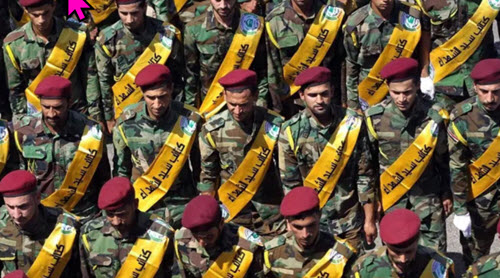
File photo of members of Kata'ib Sayyid al-Shuhada, an Iraqi anti-terror resistance group
An Iraqi anti-terror resistance group issues the United States a strong warning against its using the Kuwaiti territory for strikes against Iran.
Either such misuse of the Kuwaiti territory or the regime in Syria's trying to target Lebanon's Hezbollah's resistance movement would be considered a "breaking down of borders," Kata'ib Sayyid al-Shuhada said on Tuesday.
"In that case, Iraqi resistance will respond by taking reciprocal measures to break down regional borders," added the group, a member of the Islamic Resistance in Iraq.
"An eye for an eye, a tooth for a tooth…"
The comments came more than a month after the United States and the Israeli regime began their latest bout of unprovoked aggression targeting Iran. The duo has simultaneously stepped up assaults on resistance and anti-terror groups inside Iraq and Lebanon.
The Islamic Republic and the resistance movements have been responding by targeting sensitive and strategic enemy targets throughout the region.
Iranian retaliatory strikes have hit American outposts and interests in such countries as Qatar, Bahrain, Kuwait, the United Arab Emirates, Saudi Arabia, and Jordan in protest at the countries' allowing their soil to be used for targeting the Islamic Republic.
Tehran has strongly urged regional states against continuing to let their respective territories to be used as launch pads for attacks on the Iranian soil, while reminding that hosting American bases and interests has only done those states disservice by compromising their security.
Recently, Yemen's Ansarullah popular resistance movement announced entering the battlefield in favor of the Islamic Republic and the regional Axis of Resistance.
On Monday, Kata’ib Hezbollah, another component of the Iraqi Islamic Resistance, welcomed the decision by the Yemeni forces as a "divine reinforcement."
Tuesday, 31 March 2026 9:46 PM [ Last Update: Tuesday, 31 March 2026 9:48 PM ]
https://www.presstv.ir/Detail/2026/03/3 ... uwait-Iran
File photo of members of Kata'ib Sayyid al-Shuhada, an Iraqi anti-terror resistance group
An Iraqi anti-terror resistance group issues the United States a strong warning against its using the Kuwaiti territory for strikes against Iran.
Either such misuse of the Kuwaiti territory or the regime in Syria's trying to target Lebanon's Hezbollah's resistance movement would be considered a "breaking down of borders," Kata'ib Sayyid al-Shuhada said on Tuesday.
"In that case, Iraqi resistance will respond by taking reciprocal measures to break down regional borders," added the group, a member of the Islamic Resistance in Iraq.
"An eye for an eye, a tooth for a tooth…"
The comments came more than a month after the United States and the Israeli regime began their latest bout of unprovoked aggression targeting Iran. The duo has simultaneously stepped up assaults on resistance and anti-terror groups inside Iraq and Lebanon.
The Islamic Republic and the resistance movements have been responding by targeting sensitive and strategic enemy targets throughout the region.
Press TV
@PressTV
Footage shows Iraqi resistance group Saraya Awliya al-Dam (SAD) striking US targets in the region.
Follow: http://T.me/presstv
https://x.com/i/status/2038784652518010970
7:05 PM · Mar 30, 2026
Iranian retaliatory strikes have hit American outposts and interests in such countries as Qatar, Bahrain, Kuwait, the United Arab Emirates, Saudi Arabia, and Jordan in protest at the countries' allowing their soil to be used for targeting the Islamic Republic.
Tehran has strongly urged regional states against continuing to let their respective territories to be used as launch pads for attacks on the Iranian soil, while reminding that hosting American bases and interests has only done those states disservice by compromising their security.
Recently, Yemen's Ansarullah popular resistance movement announced entering the battlefield in favor of the Islamic Republic and the regional Axis of Resistance.
Press TV
@PressTV
Kata’ib Hezbollah welcomes entry of Yemeni forces into war against aggressors
From presstv.ir
https://t.co/Il1nCI1HTg
https://www.presstv.ir/Detail/2026/03/30/766049/Kataeb-Hezbollah-welcomes-entry-of-Yemeni-forces-into-war-against-aggressors
The Secretary-General of Kata’ib Hezbollah (Hezbollah Brigades) in the Islamic Resistance in Iraq, Hajj Abu Hussein Al-Hamidawi, has welcomed the entry of Yemeni Houthi resistance forces into the battle against the Israeli-American aggression as a "divine reinforcement."
9:48 PM · Mar 29, 2026
On Monday, Kata’ib Hezbollah, another component of the Iraqi Islamic Resistance, welcomed the decision by the Yemeni forces as a "divine reinforcement."
- admin
- Site Admin
- Posts: 41470
- Joined: Thu Aug 01, 2013 5:21 am
Re: Part 2 Anti-Anti-Nazi Barbarian Hordes are Knocking Down
by admin » Wed Apr 01, 2026 12:20 am
Explainer: Which US tech and arms companies did IRGC declare 'legitimate targets’
by Press TV Website Staff
Tuesday, 31 March 2026 11:37 PM [ Last Update: Tuesday, 31 March 2026 11:37 PM ]
https://www.presstv.ir/Detail/2026/03/3 ... te-targets
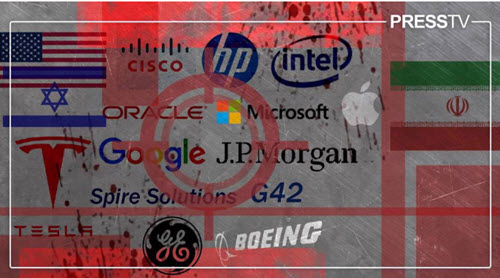
The Islamic Revolution Guards Corps (IRGC) on Tuesday warned the United States and a group of major American technology and defense companies, declaring them “legitimate targets” in response to the war of aggression against the Iranian people.
In a statement, the IRGC denounced the US and the Israeli regime for carrying out indiscriminate attacks across the country that have led to the martyrdom of nearly 1,200 Iranians in recent weeks.
IRGC asserted that American information and communications technology (ICT) and artificial intelligence (AI) firms were the "primary element in designing and tracking terrorist targets."
"From now on, the main institutions involved in terrorist operations will be our legitimate targets," the Corps said in the statement.
It singled out 18 companies, including industry giants such as Cisco, Microsoft, Apple, Google, Meta, Intel, Nvidia, Tesla, and Boeing. The list also includes financial and weapons firms like JP Morgan, General Electric (GE), Palantier, Spire Solutions, G42, and Oracle, among others.
The IRGC advised employees of these companies to "immediately distance themselves from their workplaces to preserve their own lives," while also calling on residents living within a one-kilometer radius of these companies across the region to evacuate and go to safer places.
"Companies that actively participate in terrorist designs will face reciprocal action for every terrorist assassination," the statement noted.
IRGC set a deadline of 8:00 PM on Wednesday, April 1, Tehran time, warning that the listed companies "should expect the destruction of their respective units for every assassination in Iran."
We list the companies mentioned in the statement and their complicity in the American-Israeli war of aggression against the Islamic Republic of Iran that has killed nearly 2,000 people, most of them civilians, including women and children, since February 28.
Cisco
Cisco is a foundational US networking and cybersecurity company whose technology is integral to the global communications infrastructure.
It works extensively with the US Department of War (previously Department of Defense) and the US military-industrial complex, supplying critical routing, encryption, and surveillance systems used in military command-and-control networks, classified government communications, and signals intelligence (SIGINT) collection programs.
Through long-standing contracts with government agencies such as the National Security Agency (NSA) and the Defense Information Systems Agency (DISA), Cisco is deeply embedded in the architecture of US military and intelligence operations.
Its technologies have also been integral to Pentagon-led initiatives on network-centric warfare and secure battlefield communications.
In the Israeli-occupied territories, Cisco maintains a major research and development center, one of its largest outside the United States.
The company collaborates closely with elite Israeli military technology units, including those within the Israeli military Intelligence Corps and the notorious Unit 8200, a hub for cyberwarfare and signals intelligence.
Cisco also partners with Israeli cyberwarfare accelerators, military contractors, and venture capital arms tied to the regime’s military-intel establishment, effectively bridging the technological capabilities of the American and Israeli military-industrial complexes.
HP (Hewlett-Packard)
Operating through its two successor entities, HP Inc. (personal systems and printing) and Hewlett Packard Enterprise (HPE) (enterprise IT, cloud, networking, and cybersecurity), HP has a decades-long history as a foundational contractor for the US federal government, including the Department of War, the intelligence community, and the military-industrial complex.
HPE, in particular, is deeply embedded in the American military and intelligence infrastructure. Through its HPE Federal division, the company provides cloud computing, high-performance computing (HPC), data analytics, and enterprise IT systems to the Department of War, the National Security Agency (NSA), and other intelligence agencies.
HPE's supercomputing technologies power critical military applications, including nuclear weapons simulation, cryptographic analysis, signals intelligence (SIGINT) processing, and military weather forecasting.
The company is a key partner in the Pentagon's push for advanced computing capabilities, including edge computing for battlefield operations and artificial intelligence (AI) integration.
HPE's cybersecurity portfolio, anchored by its acquisition of BlueData and ArcSight, supplies security information and event management (SIEM) solutions to US military and intelligence agencies, enabling real-time threat detection and incident response across classified networks.
The company also provides secure networking infrastructure under the Defense Information Systems Agency's (DISA) programs, ensuring secure communications for U.S. forces globally.
Beyond direct contracts, HP entities participate in US government-industry initiatives focused on cybersecurity resilience, critical infrastructure protection, and advanced technology development, often in coordination with the Department of Homeland Security (DHS) and the National Institute of Standards and Technology (NIST).a
HP also maintains a substantial and strategically significant presence in the occupied territories, with deep ties to the Israeli regime, military, and military-industrial base.
Hewlett Packard Enterprise (HPE) operates a major research and development center in the occupied territories, one of its largest globally, employing hundreds of engineers, many of whom are veterans of Israeli military intelligence and technology units, including Unit 8200 (signals intelligence and cyber) and Unit 81 (military technology).
HPE provides enterprise IT, cloud infrastructure, cybersecurity solutions, and high-performance computing services to the Israeli military affairs ministry, the Israeli occupation forces, and other regime agencies. The company has been a long-standing partner in Israel's digital transformation efforts, supplying systems used in military command-and-control networks, secure communications, and military logistics.
Both HP entities have participated in military-tech accelerators and industry partnerships in the occupied territories, collaborating with Israeli military contractors and cybersecurity firms.
Through these engagements, HP's Israeli operations function as an integral part of the regime's high-tech military ecosystem, bridging American corporate infrastructure with Israeli military and intelligence capabilities.
Intel
Intel is one of the most deeply embedded technology companies in both the US and Israeli military-industrial complexes, contributing to their foreign wars of aggression.
As a primary supplier of microprocessors and advanced semiconductors to the US Department of War, Intel's chips are integral to virtually all US military systems, including aircraft, missiles, satellites, command-and-control networks, and nuclear command infrastructure.
Through its Foundry Services division, Intel is a key partner in the Pentagon's efforts to secure the domestic semiconductor supply chain and develop custom chips for military and intelligence applications, including in hostile missions. The company also works closely with US intelligence agencies on hardware-level security, encryption, and trusted computing
In the Israeli-occupied territories, Intel's presence is even more pronounced. The company operates its largest R&D and manufacturing site outside the US in the occupied territories, including a massive facility in Kiryat Gat.
Intel's Israeli operations are staffed heavily by veterans of the Israeli regime’s intelligence and technology units, particularly Unit 8200.
The company has deep ties to the Israeli military affairs ministry and collaborates on semiconductor development for military systems, including missile guidance, electronic warfare, and secure communications platforms.
Intel's acquisition of Moovit and Mobileye, both Israeli companies with military and intelligence applications, further expanded its integration into Israel's military-tech ecosystem.
Oracle
Oracle is also one of the most deeply embedded technology companies in the US military and intelligence ecosystem. Through its Oracle National Security Group (ONSG) and Oracle Cloud for Government and Defense programs, the company provides mission-critical database management, cloud infrastructure, enterprise software, and cybersecurity solutions to the Department of War, Pentagon, intelligence agencies, and federal civilian entities.
Oracle's database technologies form the backbone of countless US military and intelligence systems, including personnel management, logistics, weapons inventory, signals intelligence (SIGINT) data processing, and geospatial intelligence (GEOINT) platforms.
The company's software is used by the National Security Agency (NSA), Central Intelligence Agency (CIA), Defense Intelligence Agency (DIA), and all branches of the US military to manage vast datasets essential for intelligence analysis, targeting, and operational planning.
Oracle's cloud infrastructure, including its dedicated Oracle Cloud for US Defense and Intelligence, has been accredited for classified workloads, enabling the company to provide secure cloud computing environments for the Department of War and the intelligence community.
The company is a key participant in the Pentagon's Joint Warfighting Cloud Capability (JWCC) program, competing alongside other major cloud providers to deliver infrastructure for military operations globally.
Beyond software and cloud, Oracle has long-standing partnerships with US intelligence agencies on data analytics, artificial intelligence (AI), and machine learning (ML) applications for intelligence gathering, threat detection, and predictive analysis.
Oracle also maintains a significant and strategically important presence in the occupied Palestinian territories with deep ties to the Israeli regime, military, and military-industrial base.
The company operates major research and development centers in the occupied territories, including facilities in Herzliya, Petah Tikva, and Haifa.
The company's technologies are used in military command-and-control systems, intelligence analysis platforms, logistics management, and secure communications infrastructure.
Oracle's cloud services have been increasingly adopted by Israeli military entities seeking to modernize their IT infrastructure. It participates in joint projects with Israeli military and intelligence entities, contributing to the development of advanced data analytics, AI-driven intelligence tools, and secure enterprise platforms.
Microsoft
Microsoft, a tech giant in its own right, is a central pillar of the US government and military digital infrastructure. Through its Azure cloud platform and classified versions such as Azure Government Secret and Top Secret, the company provides the Department of War, intelligence agencies, and federal entities with cloud computing, artificial intelligence (AI) tools, and enterprise software.
The company is a key contractor for the Pentagon's Joint Warfighting Cloud Capability (JWCC) program, which underpins US military interventions and offensives globally.
Microsoft also supplies identity management, cybersecurity, and AI-enhanced surveillance technologies to agencies such as the NSA, CIA, and US Cyber Command, making its platforms integral to both offensive and defensive cyber operations.
In the occupied territories, Microsoft has deep institutional ties to the Israeli military sector. Its Israeli R&D center, one of the company's most significant innovation hubs, recruits extensively from Israeli military intelligence units, particularly Unit 8200 and Unit 81 (the technology unit of Military Intelligence).
Microsoft Israel actively partners with the Israeli military, the Israeli military affairs ministry, and arms contractors on projects involving cloud infrastructure, AI, and cybersecurity. These collaborations are often facilitated through the company's presence in Israel's military-tech ecosystem, including accelerators and partnerships with elite military alumni networks.
While Apple is primarily known as a consumer technology company, its hardware and software play a critical role in US government and military operations.
The company supplies devices – including iPhones, iPads, and Macs – to the Department of War, which has deployed Apple products widely under programs like the US Defense Information Systems Agency's (DISA) mobility initiatives.
Apple's iOS ecosystem is used by military personnel, intelligence officers, and federal law enforcement for secure communications and field operations. Additionally, Apple engages with US intelligence and law enforcement agencies on issues of device encryption, data access, and cybersecurity, positioning it within the broader framework of government-corporate cooperation on digital security and surveillance.
In the occupied territories, Apple has established a significant R&D presence, operating development centers in Herzliya and Haifa. These centers are managed by veterans of Unit 8200 and Unit 9900 (which focuses on visual intelligence).
Apple's Israeli operations are also deeply integrated into the regime's high-tech military ecosystem, often serving as a landing point for military-trained technologists who maintain close ties with Israel's military-intelligence establishment.
Google
Google, through its parent company Alphabet, is a major technology partner to the US military and intelligence community.
The company's Google Cloud division has secured contracts with the Department of War, including the Joint Warfighting Cloud Capability (JWCC) program, providing cloud infrastructure, AI, and machine learning tools for military offensives abroad.
Google also collaborates with US intelligence agencies under classified agreements, offering data analytics, geospatial intelligence tools, and AI-driven surveillance technologies.
Its Project Maven, a controversial initiative that applied AI to drone strike targeting analysis, was developed in partnership with the Pentagon before being refolded into broader defense AI efforts. Despite widespread internal opposition and external criticism, Google remains a key contractor for US military and intelligence programs.
In the occupied territories, Google maintains extensive ties with the Israeli military establishment. The company operates major R&D centers in Haifa and Tel Aviv, which recruit from Israeli intelligence and cyber units.
Google has also been a key partner in Project Nimbus, a $1.2 billion cloud computing contract with the Israeli regime and its military, which provides AI, machine learning, and cloud infrastructure to the Israeli war ministry and the Israeli occupation army.
This agreement has placed Google at the center of Israeli military digital transformation, integrating its technologies directly into the country's military architecture.
Meta
Meta, the parent company of Facebook, Instagram, and WhatsApp, plays a significant role in information operations, counterterrorism intelligence, and digital surveillance, both for the US and Israeli regimes, which has been widely documented.
Through its content moderation, data sharing, and other initiatives, Meta collaborates with US federal law enforcement, the FBI, and the Department of Homeland Security (DHS) on tracking activities of those deemed as adversaries.
The company's vast data ecosystem has also been leveraged, sometimes through formal agreements, other times through official requests, to support intelligence-gathering efforts that contribute to military offensives or illegal raids.
In the occupied territories, Meta operates a major R&D center and has built close relationships with the Israeli military community. The company recruits heavily from Israeli military and intelligence units and participates in military-tech incubators alongside Israeli military and intelligence agencies.
Meta's platforms, particularly WhatsApp (which was acquired by Meta), are widely used by Israeli military and government personnel to track those they deem as threats. The company has also been involved in initiatives with the Israeli war ministry focused on AI, digital forensics, and cybersecurity, further integrating its operations with the regime’s military apparatus.
IBM
IBM has a decades-long history of partnership with the US military and intelligence community. The company provides mainframe computing, AI systems (including Watson), cloud infrastructure, and cybersecurity solutions to the Department of War and intelligence agencies.
IBM's Federal division manages classified contracts related to data analytics, cryptographic systems, and critical infrastructure protection. The company also contributes to Pentagon research programs in quantum computing, artificial intelligence, and advanced materials – all of which have long-term military and intelligence applications.
In the occupied territories, IBM has a major R&D presence and maintains close ties with the Israeli military and intelligence establishment.
The company's laboratories recruit from Israeli military, intelligence and cyber units and collaborate with the Israeli war ministry on projects involving AI, cloud computing, and cybersecurity.
IBM has also participated in military-tech incubators alongside Israeli military and intelligence agencies, integrating its technologies into the occupying regime’s military infrastructure.
Dell:
Dell is a cornerstone IT provider for the US Department of War and the American intelligence community. Through its Dell Federal division, the company supplies secure servers, storage systems, laptops, and enterprise IT infrastructure to the Department of War, National Security Agency (NSA), and other federal agencies.
Dell is a key partner in the Pentagon's Joint Warfighting Cloud Capability (JWCC) program and provides classified cloud infrastructure through Dell Apex for Government.
The company's ruggedized hardware is deployed in battlefield command centers, naval vessels, and airborne intelligence platforms. Dell also supplies secure supply chains and zero-trust cybersecurity solutions critical to protecting US military networks.
Dell also maintains a substantial presence in the occupied territories, operating major R&D centers in Petah Tikva, Haifa, and Be'er Sheva. The company recruits extensively from elite Israeli military and intelligence units, including Unit 8200 (signals intelligence) and the C4I directorate.
It provides IT infrastructure, cloud services, and cybersecurity solutions to the Israeli war ministry, the Israeli military, and some other government agencies.
Palantir Technologies
Palantir is widely recognized as one of the most direct corporate conduits between Silicon Valley and the US military and intelligence community.
Co-founded by Peter Thiel, known for close ties to the Israeli regime, with early funding from the CIA's venture capital arm, In-Q-Tel, Palantir builds data integration and analytics platforms, most notably Gotham and Foundry, that are used extensively by the US Department of War, intelligence agencies, and allied militaries.
The company's software enables targeting of adversaries, battlefield intelligence fusion, and predictive threat analysis, playing a central role in US military missions globally, which means the wars of aggression – from Venezuela to the Islamic Republic of Iran.
In the occupied territories, Palantir has built an equally deep relationship with the Israeli regime’s military apparatus. The company's platforms are extensively used by the Israeli military and intelligence for data-driven targeting, operational planning, and real-time battlefield management.
Palantir has recruited extensively from Israeli military intelligence and technology units and has positioned itself as a key enabler of the Israeli occupation army’s digital transformation, integrating its systems directly into the regime’s command-and-control infrastructure.
NVIDIA
NVIDIA has emerged as a critical partner to both the American and Israeli military establishments through its dominance in artificial intelligence, high-performance computing, and autonomous systems.
The tech company supplies advanced AI processors and software platforms to the US Department of War for applications ranging from autonomous drones and robotic combat vehicles to battlefield data analysis and missile defense systems.
NVIDIA's chips power the Pentagon's AI initiatives, including the Joint Artificial Intelligence Center (JAIC) and various DARPA programs. The company also collaborates with US intelligence agencies on AI-driven surveillance, signals processing, and geospatial intelligence.
In the occupied territories, NVIDIA has established one of its largest R&D centers following the acquisition of Mellanox Technologies, an Israeli networking hardware company with extensive ties to the military sector.
NVIDIA's Israeli operations, like other companies, recruit heavily from the Israeli military’s elite technology units and work closely with the Israeli war ministry on AI infrastructure for military applications.
The company's technologies are used in Israel's air defense systems, autonomous weapons platforms, and signals intelligence programs, making NVIDIA a foundational supplier to the Israeli military's AI transformation.
JP Morgan Chase
While primarily a financial institution, JPMorgan Chase plays a significant supporting role in the US military and intelligence ecosystem. The bank is a primary financial services provider for the US Department of War, managing accounts, payment systems, and financial infrastructure used by the military and intelligence agencies.
JP Morgan also provides financial intelligence, sanctions compliance, and counter-financing of terrorism (CFT) services in coordination with the US Treasury Department and the intelligence community. Its role in global financial surveillance, particularly through the monitoring of transactions linked to sanctioned entities, aligns closely with US objectives.
In the occupied territories, JP Morgan maintains a significant presence and extensively engages with the regime’s military and technology sectors.
The bank's operations include financial services for military contractors and high-tech firms with ties to the Israeli military. JP Morgan has also invested heavily in Israeli cybersecurity and military-tech companies, often in partnership with Israeli venture capital funds.
Tesla
Tesla, while primarily an electric vehicle and clean energy company, has growing links to the American military-industrial complex and intelligence sectors, as well as to the Israeli military.
Through its advanced battery technology, autonomous driving systems, and satellite communications (via Starlink, operated by sister company SpaceX under Elon Musk's broader corporate umbrella), Tesla's technologies have potential applications in military logistics, autonomous ground vehicles, and resilient communications networks.
SpaceX's Starlink has been used by the US Department of Defense for secure satellite communications, and Tesla's battery and power storage technologies have been evaluated for military expeditionary energy needs.
In the occupied territories, Tesla has established a presence and has drawn engineering talent from the country's elite military technology units. The company's autonomous vehicle research and development aligns closely with Israeli needs in AI, computer vision, and autonomous systems.
While less directly integrated into the military-industrial base than other companies on the list, Tesla's technologies and its leadership's strategic alignment with US and Israeli interests place it within the broader ecosystem of firms contributing to the US wars outside.
Spire Solutions
Spire Solutions is a regional value-added distributor and cybersecurity solutions provider with deep ties to the US and Israeli military and intelligence sectors.
The company specializes in delivering advanced surveillance, cybersecurity, and intelligence-gathering technologies to entities across West Asia. Spire has served as a key conduit for US-made and Israeli-developed cyber and surveillance tools, facilitating their deployment in alignment with US strategic interests in the region.
Its portfolio includes interceptions, network monitoring, digital forensics, and offensive cyber operations, technologies widely used by intelligence agencies and law enforcement.
The company has maintained close working relationships with Israeli weapons firms, serving as a distribution partner for technologies developed within Israel's military ecosystem.
Spire's regional operations have reportedly involved collaboration with intelligence agencies across the Persian Gulf and other US-aligned governments, positioning the company as a critical intermediary in the export and implementation of surveillance technologies.
G42
G42 is an Abu Dhabi-based artificial intelligence and cloud computing holding company that has emerged as a pivotal partner to both the United States and Israel in the fields of AI, surveillance, and military technology.
G42 has engaged in extensive collaborations with US intelligence and military agencies, including the CIA and the Department of War, on AI development, geospatial intelligence, and data analytics. The company has also been at the center of US strategic efforts to integrate advanced AI capabilities into regional military architectures following the Abraham Accords.
The company has developed particularly deep ties with Israel's military and intelligence community. Through partnerships with Israeli arms contractors, AI firms, and military technology accelerators, G42 has collaborated on projects involving AI-driven surveillance, facial recognition, border control technologies, and predictive intelligence.
Its partnerships with Israeli entities have often been facilitated through joint ventures and investments that align with the strategic interests of both the UAE and Israel, with G42 serving as a bridge between the Israeli military-tech sector and broader regional security frameworks.
Boeing
Boeing is one of the largest military contractors in the world and a cornerstone of the US military-industrial complex. The company produces fighter aircraft (including the F-15, F/A-18, and F-15EX), bombers (B-52), strategic airlift (C-17), tanker aircraft (KC-46), attack helicopters (AH-64 Apache), missile defense systems, and a wide range of precision-guided munitions.
Boeing also supplies critical intelligence, surveillance, and reconnaissance (ISR) platforms, including the P-8 Poseidon maritime patrol aircraft used for anti-submarine warfare and signals intelligence. Through its defense, space, and security divisions, Boeing is deeply integrated into US military planning, operations, and procurement.
In the occupied territories, Boeing maintains extensive partnerships with the Israeli war ministry and the military. The company supplies F-15 fighter jets and advanced munitions to the Israeli Air Force and collaborates on air defense programs, including the Arrow and David's Sling systems, often in conjunction with Israeli contractors such as Israel Aerospace Industries (IAI).
Boeing's Israeli operations also involve joint R&D initiatives, technology transfer agreements, and maintenance programs that tie the company closely to Israel's military infrastructure.
General Electric (GE)
General Electric (GE), through its GE Aerospace division, is instrumental to the US military-industrial complex. The company manufactures jet engines for virtually every major US military aircraft, including the F-15, F-16, F/A-18, and the F-35 Lightning II (through a partnership).
GE also supplies engines for military helicopters, transport aircraft (C-130, C-17), and unmanned aerial systems. Beyond aviation, GE provides propulsion systems for US Navy vessels, including destroyers, submarines, and aircraft carriers, as well as power generation and electrical systems for ground-based military infrastructure.
GE's technologies are integral to US missile defense programs, space systems, and classified defense research initiatives. The company maintains long-standing contracts with the Department of War, NASA, and intelligence community agencies.
GE Aerospace maintains a significant presence in the occupied territories and works closely with the Israeli war ministry. The company supplies engines, maintenance, and repair services for Israel's fleet of US-made military aircraft, including F-15 and F-16 fighter jets.
GE also collaborates with Israeli military contractors such as Israel Aerospace Industries (IAI) on technology development, engine integration, and supply chain programs.
Through these partnerships, GE is deeply embedded in Israel's military aviation infrastructure, supporting the regime’s aerial aggressions and maintaining critical defense capabilities.
by Press TV Website Staff
Tuesday, 31 March 2026 11:37 PM [ Last Update: Tuesday, 31 March 2026 11:37 PM ]
https://www.presstv.ir/Detail/2026/03/3 ... te-targets
The Islamic Revolution Guards Corps (IRGC) on Tuesday warned the United States and a group of major American technology and defense companies, declaring them “legitimate targets” in response to the war of aggression against the Iranian people.
In a statement, the IRGC denounced the US and the Israeli regime for carrying out indiscriminate attacks across the country that have led to the martyrdom of nearly 1,200 Iranians in recent weeks.
IRGC asserted that American information and communications technology (ICT) and artificial intelligence (AI) firms were the "primary element in designing and tracking terrorist targets."
"From now on, the main institutions involved in terrorist operations will be our legitimate targets," the Corps said in the statement.
It singled out 18 companies, including industry giants such as Cisco, Microsoft, Apple, Google, Meta, Intel, Nvidia, Tesla, and Boeing. The list also includes financial and weapons firms like JP Morgan, General Electric (GE), Palantier, Spire Solutions, G42, and Oracle, among others.
The IRGC advised employees of these companies to "immediately distance themselves from their workplaces to preserve their own lives," while also calling on residents living within a one-kilometer radius of these companies across the region to evacuate and go to safer places.
"Companies that actively participate in terrorist designs will face reciprocal action for every terrorist assassination," the statement noted.
IRGC set a deadline of 8:00 PM on Wednesday, April 1, Tehran time, warning that the listed companies "should expect the destruction of their respective units for every assassination in Iran."
We list the companies mentioned in the statement and their complicity in the American-Israeli war of aggression against the Islamic Republic of Iran that has killed nearly 2,000 people, most of them civilians, including women and children, since February 28.
Press TV
@PressTV
Iran's IRGC named 18 American companies, including Cisco, Intel, Apple, Microsoft, Google, Meta, and Boeing, as legitimate targets due to their involvement in terrorist operations and the killing of Iranian citizens, and ordered evacuations.
Follow: http://t.me/PressTV
https://x.com/i/status/2039113006316167308
4:50 PM · Mar 31, 2026
Cisco
Cisco is a foundational US networking and cybersecurity company whose technology is integral to the global communications infrastructure.
It works extensively with the US Department of War (previously Department of Defense) and the US military-industrial complex, supplying critical routing, encryption, and surveillance systems used in military command-and-control networks, classified government communications, and signals intelligence (SIGINT) collection programs.
Through long-standing contracts with government agencies such as the National Security Agency (NSA) and the Defense Information Systems Agency (DISA), Cisco is deeply embedded in the architecture of US military and intelligence operations.
Its technologies have also been integral to Pentagon-led initiatives on network-centric warfare and secure battlefield communications.
In the Israeli-occupied territories, Cisco maintains a major research and development center, one of its largest outside the United States.
The company collaborates closely with elite Israeli military technology units, including those within the Israeli military Intelligence Corps and the notorious Unit 8200, a hub for cyberwarfare and signals intelligence.
Cisco also partners with Israeli cyberwarfare accelerators, military contractors, and venture capital arms tied to the regime’s military-intel establishment, effectively bridging the technological capabilities of the American and Israeli military-industrial complexes.
HP (Hewlett-Packard)
Operating through its two successor entities, HP Inc. (personal systems and printing) and Hewlett Packard Enterprise (HPE) (enterprise IT, cloud, networking, and cybersecurity), HP has a decades-long history as a foundational contractor for the US federal government, including the Department of War, the intelligence community, and the military-industrial complex.
HPE, in particular, is deeply embedded in the American military and intelligence infrastructure. Through its HPE Federal division, the company provides cloud computing, high-performance computing (HPC), data analytics, and enterprise IT systems to the Department of War, the National Security Agency (NSA), and other intelligence agencies.
HPE's supercomputing technologies power critical military applications, including nuclear weapons simulation, cryptographic analysis, signals intelligence (SIGINT) processing, and military weather forecasting.
The company is a key partner in the Pentagon's push for advanced computing capabilities, including edge computing for battlefield operations and artificial intelligence (AI) integration.
HPE's cybersecurity portfolio, anchored by its acquisition of BlueData and ArcSight, supplies security information and event management (SIEM) solutions to US military and intelligence agencies, enabling real-time threat detection and incident response across classified networks.
The company also provides secure networking infrastructure under the Defense Information Systems Agency's (DISA) programs, ensuring secure communications for U.S. forces globally.
Beyond direct contracts, HP entities participate in US government-industry initiatives focused on cybersecurity resilience, critical infrastructure protection, and advanced technology development, often in coordination with the Department of Homeland Security (DHS) and the National Institute of Standards and Technology (NIST).a
HP also maintains a substantial and strategically significant presence in the occupied territories, with deep ties to the Israeli regime, military, and military-industrial base.
Hewlett Packard Enterprise (HPE) operates a major research and development center in the occupied territories, one of its largest globally, employing hundreds of engineers, many of whom are veterans of Israeli military intelligence and technology units, including Unit 8200 (signals intelligence and cyber) and Unit 81 (military technology).
HPE provides enterprise IT, cloud infrastructure, cybersecurity solutions, and high-performance computing services to the Israeli military affairs ministry, the Israeli occupation forces, and other regime agencies. The company has been a long-standing partner in Israel's digital transformation efforts, supplying systems used in military command-and-control networks, secure communications, and military logistics.
Both HP entities have participated in military-tech accelerators and industry partnerships in the occupied territories, collaborating with Israeli military contractors and cybersecurity firms.
Through these engagements, HP's Israeli operations function as an integral part of the regime's high-tech military ecosystem, bridging American corporate infrastructure with Israeli military and intelligence capabilities.
Intel
Intel is one of the most deeply embedded technology companies in both the US and Israeli military-industrial complexes, contributing to their foreign wars of aggression.
As a primary supplier of microprocessors and advanced semiconductors to the US Department of War, Intel's chips are integral to virtually all US military systems, including aircraft, missiles, satellites, command-and-control networks, and nuclear command infrastructure.
Through its Foundry Services division, Intel is a key partner in the Pentagon's efforts to secure the domestic semiconductor supply chain and develop custom chips for military and intelligence applications, including in hostile missions. The company also works closely with US intelligence agencies on hardware-level security, encryption, and trusted computing
In the Israeli-occupied territories, Intel's presence is even more pronounced. The company operates its largest R&D and manufacturing site outside the US in the occupied territories, including a massive facility in Kiryat Gat.
Intel's Israeli operations are staffed heavily by veterans of the Israeli regime’s intelligence and technology units, particularly Unit 8200.
The company has deep ties to the Israeli military affairs ministry and collaborates on semiconductor development for military systems, including missile guidance, electronic warfare, and secure communications platforms.
Intel's acquisition of Moovit and Mobileye, both Israeli companies with military and intelligence applications, further expanded its integration into Israel's military-tech ecosystem.
Oracle
Oracle is also one of the most deeply embedded technology companies in the US military and intelligence ecosystem. Through its Oracle National Security Group (ONSG) and Oracle Cloud for Government and Defense programs, the company provides mission-critical database management, cloud infrastructure, enterprise software, and cybersecurity solutions to the Department of War, Pentagon, intelligence agencies, and federal civilian entities.
Oracle's database technologies form the backbone of countless US military and intelligence systems, including personnel management, logistics, weapons inventory, signals intelligence (SIGINT) data processing, and geospatial intelligence (GEOINT) platforms.
The company's software is used by the National Security Agency (NSA), Central Intelligence Agency (CIA), Defense Intelligence Agency (DIA), and all branches of the US military to manage vast datasets essential for intelligence analysis, targeting, and operational planning.
Oracle's cloud infrastructure, including its dedicated Oracle Cloud for US Defense and Intelligence, has been accredited for classified workloads, enabling the company to provide secure cloud computing environments for the Department of War and the intelligence community.
The company is a key participant in the Pentagon's Joint Warfighting Cloud Capability (JWCC) program, competing alongside other major cloud providers to deliver infrastructure for military operations globally.
Beyond software and cloud, Oracle has long-standing partnerships with US intelligence agencies on data analytics, artificial intelligence (AI), and machine learning (ML) applications for intelligence gathering, threat detection, and predictive analysis.
Oracle also maintains a significant and strategically important presence in the occupied Palestinian territories with deep ties to the Israeli regime, military, and military-industrial base.
The company operates major research and development centers in the occupied territories, including facilities in Herzliya, Petah Tikva, and Haifa.
The company's technologies are used in military command-and-control systems, intelligence analysis platforms, logistics management, and secure communications infrastructure.
Oracle's cloud services have been increasingly adopted by Israeli military entities seeking to modernize their IT infrastructure. It participates in joint projects with Israeli military and intelligence entities, contributing to the development of advanced data analytics, AI-driven intelligence tools, and secure enterprise platforms.
Microsoft
Microsoft, a tech giant in its own right, is a central pillar of the US government and military digital infrastructure. Through its Azure cloud platform and classified versions such as Azure Government Secret and Top Secret, the company provides the Department of War, intelligence agencies, and federal entities with cloud computing, artificial intelligence (AI) tools, and enterprise software.
The company is a key contractor for the Pentagon's Joint Warfighting Cloud Capability (JWCC) program, which underpins US military interventions and offensives globally.
Microsoft also supplies identity management, cybersecurity, and AI-enhanced surveillance technologies to agencies such as the NSA, CIA, and US Cyber Command, making its platforms integral to both offensive and defensive cyber operations.
In the occupied territories, Microsoft has deep institutional ties to the Israeli military sector. Its Israeli R&D center, one of the company's most significant innovation hubs, recruits extensively from Israeli military intelligence units, particularly Unit 8200 and Unit 81 (the technology unit of Military Intelligence).
Microsoft Israel actively partners with the Israeli military, the Israeli military affairs ministry, and arms contractors on projects involving cloud infrastructure, AI, and cybersecurity. These collaborations are often facilitated through the company's presence in Israel's military-tech ecosystem, including accelerators and partnerships with elite military alumni networks.
While Apple is primarily known as a consumer technology company, its hardware and software play a critical role in US government and military operations.
The company supplies devices – including iPhones, iPads, and Macs – to the Department of War, which has deployed Apple products widely under programs like the US Defense Information Systems Agency's (DISA) mobility initiatives.
Apple's iOS ecosystem is used by military personnel, intelligence officers, and federal law enforcement for secure communications and field operations. Additionally, Apple engages with US intelligence and law enforcement agencies on issues of device encryption, data access, and cybersecurity, positioning it within the broader framework of government-corporate cooperation on digital security and surveillance.
In the occupied territories, Apple has established a significant R&D presence, operating development centers in Herzliya and Haifa. These centers are managed by veterans of Unit 8200 and Unit 9900 (which focuses on visual intelligence).
Apple's Israeli operations are also deeply integrated into the regime's high-tech military ecosystem, often serving as a landing point for military-trained technologists who maintain close ties with Israel's military-intelligence establishment.
Google, through its parent company Alphabet, is a major technology partner to the US military and intelligence community.
The company's Google Cloud division has secured contracts with the Department of War, including the Joint Warfighting Cloud Capability (JWCC) program, providing cloud infrastructure, AI, and machine learning tools for military offensives abroad.
Google also collaborates with US intelligence agencies under classified agreements, offering data analytics, geospatial intelligence tools, and AI-driven surveillance technologies.
Its Project Maven, a controversial initiative that applied AI to drone strike targeting analysis, was developed in partnership with the Pentagon before being refolded into broader defense AI efforts. Despite widespread internal opposition and external criticism, Google remains a key contractor for US military and intelligence programs.
In the occupied territories, Google maintains extensive ties with the Israeli military establishment. The company operates major R&D centers in Haifa and Tel Aviv, which recruit from Israeli intelligence and cyber units.
Google has also been a key partner in Project Nimbus, a $1.2 billion cloud computing contract with the Israeli regime and its military, which provides AI, machine learning, and cloud infrastructure to the Israeli war ministry and the Israeli occupation army.
This agreement has placed Google at the center of Israeli military digital transformation, integrating its technologies directly into the country's military architecture.
Meta
Meta, the parent company of Facebook, Instagram, and WhatsApp, plays a significant role in information operations, counterterrorism intelligence, and digital surveillance, both for the US and Israeli regimes, which has been widely documented.
Through its content moderation, data sharing, and other initiatives, Meta collaborates with US federal law enforcement, the FBI, and the Department of Homeland Security (DHS) on tracking activities of those deemed as adversaries.
The company's vast data ecosystem has also been leveraged, sometimes through formal agreements, other times through official requests, to support intelligence-gathering efforts that contribute to military offensives or illegal raids.
In the occupied territories, Meta operates a major R&D center and has built close relationships with the Israeli military community. The company recruits heavily from Israeli military and intelligence units and participates in military-tech incubators alongside Israeli military and intelligence agencies.
Meta's platforms, particularly WhatsApp (which was acquired by Meta), are widely used by Israeli military and government personnel to track those they deem as threats. The company has also been involved in initiatives with the Israeli war ministry focused on AI, digital forensics, and cybersecurity, further integrating its operations with the regime’s military apparatus.
IBM
IBM has a decades-long history of partnership with the US military and intelligence community. The company provides mainframe computing, AI systems (including Watson), cloud infrastructure, and cybersecurity solutions to the Department of War and intelligence agencies.
IBM's Federal division manages classified contracts related to data analytics, cryptographic systems, and critical infrastructure protection. The company also contributes to Pentagon research programs in quantum computing, artificial intelligence, and advanced materials – all of which have long-term military and intelligence applications.
In the occupied territories, IBM has a major R&D presence and maintains close ties with the Israeli military and intelligence establishment.
The company's laboratories recruit from Israeli military, intelligence and cyber units and collaborate with the Israeli war ministry on projects involving AI, cloud computing, and cybersecurity.
IBM has also participated in military-tech incubators alongside Israeli military and intelligence agencies, integrating its technologies into the occupying regime’s military infrastructure.
Dell:
Dell is a cornerstone IT provider for the US Department of War and the American intelligence community. Through its Dell Federal division, the company supplies secure servers, storage systems, laptops, and enterprise IT infrastructure to the Department of War, National Security Agency (NSA), and other federal agencies.
Dell is a key partner in the Pentagon's Joint Warfighting Cloud Capability (JWCC) program and provides classified cloud infrastructure through Dell Apex for Government.
The company's ruggedized hardware is deployed in battlefield command centers, naval vessels, and airborne intelligence platforms. Dell also supplies secure supply chains and zero-trust cybersecurity solutions critical to protecting US military networks.
Dell also maintains a substantial presence in the occupied territories, operating major R&D centers in Petah Tikva, Haifa, and Be'er Sheva. The company recruits extensively from elite Israeli military and intelligence units, including Unit 8200 (signals intelligence) and the C4I directorate.
It provides IT infrastructure, cloud services, and cybersecurity solutions to the Israeli war ministry, the Israeli military, and some other government agencies.
Palantir Technologies
Palantir is widely recognized as one of the most direct corporate conduits between Silicon Valley and the US military and intelligence community.
Co-founded by Peter Thiel, known for close ties to the Israeli regime, with early funding from the CIA's venture capital arm, In-Q-Tel, Palantir builds data integration and analytics platforms, most notably Gotham and Foundry, that are used extensively by the US Department of War, intelligence agencies, and allied militaries.
The company's software enables targeting of adversaries, battlefield intelligence fusion, and predictive threat analysis, playing a central role in US military missions globally, which means the wars of aggression – from Venezuela to the Islamic Republic of Iran.
In the occupied territories, Palantir has built an equally deep relationship with the Israeli regime’s military apparatus. The company's platforms are extensively used by the Israeli military and intelligence for data-driven targeting, operational planning, and real-time battlefield management.
Palantir has recruited extensively from Israeli military intelligence and technology units and has positioned itself as a key enabler of the Israeli occupation army’s digital transformation, integrating its systems directly into the regime’s command-and-control infrastructure.
NVIDIA
NVIDIA has emerged as a critical partner to both the American and Israeli military establishments through its dominance in artificial intelligence, high-performance computing, and autonomous systems.
The tech company supplies advanced AI processors and software platforms to the US Department of War for applications ranging from autonomous drones and robotic combat vehicles to battlefield data analysis and missile defense systems.
NVIDIA's chips power the Pentagon's AI initiatives, including the Joint Artificial Intelligence Center (JAIC) and various DARPA programs. The company also collaborates with US intelligence agencies on AI-driven surveillance, signals processing, and geospatial intelligence.
In the occupied territories, NVIDIA has established one of its largest R&D centers following the acquisition of Mellanox Technologies, an Israeli networking hardware company with extensive ties to the military sector.
NVIDIA's Israeli operations, like other companies, recruit heavily from the Israeli military’s elite technology units and work closely with the Israeli war ministry on AI infrastructure for military applications.
The company's technologies are used in Israel's air defense systems, autonomous weapons platforms, and signals intelligence programs, making NVIDIA a foundational supplier to the Israeli military's AI transformation.
JP Morgan Chase
While primarily a financial institution, JPMorgan Chase plays a significant supporting role in the US military and intelligence ecosystem. The bank is a primary financial services provider for the US Department of War, managing accounts, payment systems, and financial infrastructure used by the military and intelligence agencies.
JP Morgan also provides financial intelligence, sanctions compliance, and counter-financing of terrorism (CFT) services in coordination with the US Treasury Department and the intelligence community. Its role in global financial surveillance, particularly through the monitoring of transactions linked to sanctioned entities, aligns closely with US objectives.
In the occupied territories, JP Morgan maintains a significant presence and extensively engages with the regime’s military and technology sectors.
The bank's operations include financial services for military contractors and high-tech firms with ties to the Israeli military. JP Morgan has also invested heavily in Israeli cybersecurity and military-tech companies, often in partnership with Israeli venture capital funds.
Tesla
Tesla, while primarily an electric vehicle and clean energy company, has growing links to the American military-industrial complex and intelligence sectors, as well as to the Israeli military.
Through its advanced battery technology, autonomous driving systems, and satellite communications (via Starlink, operated by sister company SpaceX under Elon Musk's broader corporate umbrella), Tesla's technologies have potential applications in military logistics, autonomous ground vehicles, and resilient communications networks.
SpaceX's Starlink has been used by the US Department of Defense for secure satellite communications, and Tesla's battery and power storage technologies have been evaluated for military expeditionary energy needs.
In the occupied territories, Tesla has established a presence and has drawn engineering talent from the country's elite military technology units. The company's autonomous vehicle research and development aligns closely with Israeli needs in AI, computer vision, and autonomous systems.
While less directly integrated into the military-industrial base than other companies on the list, Tesla's technologies and its leadership's strategic alignment with US and Israeli interests place it within the broader ecosystem of firms contributing to the US wars outside.
Spire Solutions
Spire Solutions is a regional value-added distributor and cybersecurity solutions provider with deep ties to the US and Israeli military and intelligence sectors.
The company specializes in delivering advanced surveillance, cybersecurity, and intelligence-gathering technologies to entities across West Asia. Spire has served as a key conduit for US-made and Israeli-developed cyber and surveillance tools, facilitating their deployment in alignment with US strategic interests in the region.
Its portfolio includes interceptions, network monitoring, digital forensics, and offensive cyber operations, technologies widely used by intelligence agencies and law enforcement.
The company has maintained close working relationships with Israeli weapons firms, serving as a distribution partner for technologies developed within Israel's military ecosystem.
Spire's regional operations have reportedly involved collaboration with intelligence agencies across the Persian Gulf and other US-aligned governments, positioning the company as a critical intermediary in the export and implementation of surveillance technologies.
G42
G42 is an Abu Dhabi-based artificial intelligence and cloud computing holding company that has emerged as a pivotal partner to both the United States and Israel in the fields of AI, surveillance, and military technology.
G42 has engaged in extensive collaborations with US intelligence and military agencies, including the CIA and the Department of War, on AI development, geospatial intelligence, and data analytics. The company has also been at the center of US strategic efforts to integrate advanced AI capabilities into regional military architectures following the Abraham Accords.
The company has developed particularly deep ties with Israel's military and intelligence community. Through partnerships with Israeli arms contractors, AI firms, and military technology accelerators, G42 has collaborated on projects involving AI-driven surveillance, facial recognition, border control technologies, and predictive intelligence.
Its partnerships with Israeli entities have often been facilitated through joint ventures and investments that align with the strategic interests of both the UAE and Israel, with G42 serving as a bridge between the Israeli military-tech sector and broader regional security frameworks.
Boeing
Boeing is one of the largest military contractors in the world and a cornerstone of the US military-industrial complex. The company produces fighter aircraft (including the F-15, F/A-18, and F-15EX), bombers (B-52), strategic airlift (C-17), tanker aircraft (KC-46), attack helicopters (AH-64 Apache), missile defense systems, and a wide range of precision-guided munitions.
Boeing also supplies critical intelligence, surveillance, and reconnaissance (ISR) platforms, including the P-8 Poseidon maritime patrol aircraft used for anti-submarine warfare and signals intelligence. Through its defense, space, and security divisions, Boeing is deeply integrated into US military planning, operations, and procurement.
In the occupied territories, Boeing maintains extensive partnerships with the Israeli war ministry and the military. The company supplies F-15 fighter jets and advanced munitions to the Israeli Air Force and collaborates on air defense programs, including the Arrow and David's Sling systems, often in conjunction with Israeli contractors such as Israel Aerospace Industries (IAI).
Boeing's Israeli operations also involve joint R&D initiatives, technology transfer agreements, and maintenance programs that tie the company closely to Israel's military infrastructure.
General Electric (GE)
General Electric (GE), through its GE Aerospace division, is instrumental to the US military-industrial complex. The company manufactures jet engines for virtually every major US military aircraft, including the F-15, F-16, F/A-18, and the F-35 Lightning II (through a partnership).
GE also supplies engines for military helicopters, transport aircraft (C-130, C-17), and unmanned aerial systems. Beyond aviation, GE provides propulsion systems for US Navy vessels, including destroyers, submarines, and aircraft carriers, as well as power generation and electrical systems for ground-based military infrastructure.
GE's technologies are integral to US missile defense programs, space systems, and classified defense research initiatives. The company maintains long-standing contracts with the Department of War, NASA, and intelligence community agencies.
GE Aerospace maintains a significant presence in the occupied territories and works closely with the Israeli war ministry. The company supplies engines, maintenance, and repair services for Israel's fleet of US-made military aircraft, including F-15 and F-16 fighter jets.
GE also collaborates with Israeli military contractors such as Israel Aerospace Industries (IAI) on technology development, engine integration, and supply chain programs.
Through these partnerships, GE is deeply embedded in Israel's military aviation infrastructure, supporting the regime’s aerial aggressions and maintaining critical defense capabilities.
- admin
- Site Admin
- Posts: 41470
- Joined: Thu Aug 01, 2013 5:21 am
Re: Part 2 Anti-Anti-Nazi Barbarian Hordes are Knocking Down
by admin » Wed Apr 01, 2026 12:30 am
US-Israeli aggression on Iran: What happened on 32nd day of the imposed war
by Press TV Website Staff
Wednesday, 01 April 2026 12:06 AM [ Last Update: Wednesday, 01 April 2026 12:06 AM ]
https://www.presstv.ir/Detail/2026/03/3 ... mposed-war
Thirty-two days into the US-Israeli war on Iran, which began with the assassination of the Leader of the Islamic Revolution, Ayatollah Seyyed Ali Khamenei, on February 28, the military aggression continues to target civilian and industrial infrastructure.
On Tuesday, US and Israeli airstrikes hit multiple locations in Tehran, including districts 2, 4, 13, and 21, while attacks in Mahallat county killed 11 civilians and injured 15 others.
In Zanjan, three civilians were killed in a US-Israeli airstrike on the Grand Hussainiya.
In response, Iran issued a warning against 18 American technology companies, including Cisco, Microsoft, Apple, Google, Meta, Tesla, and Boeing, stating that they would be considered legitimate targets for retaliation due to their role in designing and tracking assassination operations in Iran.
Iran also reiterated that it is prepared for any ground confrontation with the US while emphasizing that it is not targeting its Persian Gulf neighbors, only US bases and assets.
On the diplomatic front, Foreign Minister Abbas Araghchi confirmed that no formal negotiations with the US are underway, only an exchange of messages through regional intermediaries and directly via US envoy Steve Witkoff.
He reiterated Iran's conditions for ending the imposed war: a complete halt to hostilities across the region, guarantees against future attacks, and compensation for damages.
China and Pakistan jointly released a five-point peace plan calling for an immediate cessation of US-Israeli aggression, the start of peace talks, an end to attacks on civilians, the securing of shipping lanes in the Strait of Hormuz, and a comprehensive peace framework under the UN Charter.
On the economic front, US gasoline prices reached $4 per gallon, the highest since August 2022, marking the largest monthly jump on record.
The UNDP warned that the war could cost the region up to $194 billion in GDP losses, as shipping through the Strait of Hormuz has declined by more than 70 percent and oil prices have approached $120 per barrel.
Meanwhile, The Economist reported that Iran's oil exports remain steady at 2.4 to 2.8 million barrels per day.
The following are the key developments from Day 32 of the imposed war:
America on US-Israeli aggression on Iran
• Axios reporter after conversation with US President Donald Trump: Barak Ravid reported that in a brief phone call, Trump told him: "Negotiations with Iran are going well." When specifically asked about the Pakistan-China initiative, Trump did not criticize it, merely repeating that diplomacy is progressing well.
• According to reports, Trump said that he doesn't "think about Iran's uranium stockpile. I know it's buried deep underground and is very difficult to extract."
• Trump on the Strait of Hormuz: "Countries should come in and take care of it. They should come in and do their own work. If they want oil, come and get it."
• Trump on France: In a post on Truth Social, Trump criticized the French government's stance: "The country of France would not allow planes loaded with military equipment destined for Israel to fly over French territory." He reacted to the decision, warning that Washington “will remember.”
• Trump taunts UK's Starmer (Truth Social): In a sharply worded post, Trump addressed the UK's fuel supply issues caused by the Strait of Hormuz disruption. Referring to Britain's decision not to participate in strikes against Iran, he wrote: "For all those countries unable to receive jet fuel due to the Strait of Hormuz, like Britain which refrained from involvement in bringing down Iran, I have a suggestion: Number 1, buy from the United States, we have plenty; and Number 2, show some courage, go to the Strait and take it. You need to learn how to fight for yourselves. The United States will no longer be there to help you, just as you were not there for us. The hard part is done. Go get your own oil!"
• Trump willing to end war without reopening Strait (WSJ): US officials told the Wall Street Journal that Trump has told aides he is willing to end the US military campaign against Iran even if the Strait of Hormuz remains largely blocked. Trump and aides assessed that a forced opening would prolong the war beyond his desired timeframe of four to six weeks.
• More than 200 US soldiers have filed complaints regarding superior officers using religious rhetoric to justify the war.
• US Secretary of State Marco Rubio said US war objectives could be achieved “in weeks, not months” and that it was on track after "destroying Iran’s air force and much of its navy."
Iranian officials' statements
• Araghchi on diplomacy: Iran, he said, is engaged in message exchange with the US, both directly through envoy Witkoff and via regional friends, but no formal negotiations are underway. Tehran has not responded to America's 15-point proposal nor put forward its own, and no decision on negotiations has been made, he added.
• Araghchi on ending the war: Iran's conditions are clear: a complete halt to the war across the entire region, not a ceasefire; guarantees against future attacks; and compensation for damages.
• Araghchi on the Strait of Hormuz and regional tensions: The Strait of Hormuz is open to friendly nations, with all measures taken for safe passage. Iran is prepared for ground confrontation but will only target American bases and assets, not Persian Gulf neighbours. While rebuilding trust with regional countries will take time, he expressed confidence that it will be restored.
• Araghchi on Turkey missile claims: Iran’s FM dismissed "completely baseless" reports of a missile fired from Iran towards Turkey and proposed a joint investigation, warning of a "false flag operation by enemies.”
• Araghchi on US forces in region: The time has come for US forces to be expelled from the region. Iran respects Saudi Arabia and considers it a brotherly nation. Our attacks are aimed at the aggressor enemy that values neither Arabs nor Iranians.
• Parliament Speaker Ghalibaf on X: "I was just reading about Americans who, due to rising fuel prices, are skipping meals. It is distressing, but when your leaders prioritize the demands of others over ordinary, hardworking Americans, these outcomes are inevitable. This is no longer 'America First'; it is 'Israel First.'"
Iran's warning to the US and affiliated spy companies
• The Islamic Revolution Guards Corps (IRGC) issued a statement warning that American ICT and AI companies—including Cisco, Microsoft, Apple, Google, Meta, Tesla, Boeing, and others would be considered legitimate targets for retaliation, citing their involvement in designing and tracking assassination operations against Iranian citizens.
• The statement advised employees of these companies to leave their workplaces and advised residents within one kilometre of company facilities across the region to vacate the area.
• IRGC set a deadline of 20:00 on Wednesday, April 1st, Tehran time, stating that the named companies should expect the destruction of their respective units in retaliation for each act of terror carried out in Iran.
Diplomatic efforts: China, Pakistan, and Russia
• China and Pakistan five-point peace plan: Following talks in Beijing, Chinese Foreign Minister Wang Yi and Pakistani counterpart Ishaq Dar released a plan for "restoring peace and stability" in the Persian Gulf region. The points include: immediate cessation of hostilities; initiation of peace talks ensuring sovereignty and security; end to attacks on civilians and civilian infrastructure; securing shipping lanes in the Strait of Hormuz; and establishing a comprehensive peace framework under the UN Charter.
• China and Pakistan called for immediate peace talks: Beijing and Islamabad called on all parties to immediately halt military operations and attacks on civilians, and to begin peace talks as soon as possible. A joint statement emphasized the protection of shipping routes in the Strait of Hormuz.
• China's stance on nuclear facilities: A Chinese Foreign Ministry spokesperson opposed attacks on Iranian nuclear facilities, supported Pakistan's mediation efforts, and called on all parties involved in the imposed war to immediately halt military operations and start peace talks.
• Russia's ambassador to Tehran reported that Iran has confirmed Russian ships face no issues transiting the Strait of Hormuz, while noting that airstrikes near the Bushehr nuclear power plant continue despite statements from US and Israeli regime officials denying it. Russia stated it is ready to facilitate a political and diplomatic resolution to the war, taking into account Iran's legitimate interests.
• Pakistan's aid to Iran: Pakistan sent five trucks carrying medicine and essential goods for citizens affected by the ongoing war as a gesture of solidarity.
• FIFA chief Gianni Infantino said that Iran will be at the World Cup and will play their group matches in the US as scheduled, while still refusing to condemn the US-Israeli aggression, including an attack on Azadi Sports Complex in Tehran.
US-Israeli attacks on Iran
• Tehran attacks: US and Israeli forces conducted airstrikes targeting areas of Tehran, including district 2, district 4, district 13 and district 21.
• Attack on Mahallat county: In a US-Israeli attack on three residential units in Mahallat county of the central province of Iran, 11 people were killed, and 15 were injured. Housing quarters were directly hit, destroying four units.
• Attack on Hussainiya: Three people were martyred and 12 others injured in a US-Israeli airstrike on the Grand Hussainiya in Zanjan.
• Attack on Kermanshah (Qasr-e Shirin): In another American-Israeli attack on workers of a civilian contract company, one worker was killed, and eight others were injured.
• Attacks on Kurdistan: US-Israeli attacks on Kurdistan province killed 2 people, wounding 17 others.
• Attack on Isfahan: US and Israeli forces hit various areas in Isfahan.
Damage to civilian infrastructure
• Qeshm desalination plant: One of Qeshm Island's desalination plants was targeted and taken offline, with no possibility for short-term repairs.
• Gilan province: At least 100 residential and commercial units have been damaged in recent attacks, according to local officials.
Strait of Hormuz: shipping and security
• Shipping through the Strait of Hormuz has dropped by over 70% since the US and Israel launched an illegal war on Iran, pushing oil prices from around $72 to near $120 per barrel.
• According to Bloomberg, after a month of US-Israeli war, Iran has significantly strengthened its control over the Strait of Hormuz, the world's main artery for energy transport.
US and its European allies
• France, Spain, and Italy are still refusing to allow the US to use their military bases or airspace for operations against Iran.
• Italy prevented US military aircraft from using a base in Sicily, denying landing after flights were deemed unofficial and outside of agreements.
• France has also refused to allow Israeli aircraft carrying US weapons to cross its airspace. France reportedly refused the request over the weekend.
• Spain also said on Monday that it had closed its airspace to US planes involved in airstrikes on Iran.
Economic impact: US, region, and global markets
• According to GasBuddy, the national average gasoline price in the US reached $4 per gallon, the highest since August 8, 2022. This is the largest monthly jump on record, with gasoline up $1.059 and diesel up $1.701 per gallon.
• United Nations Development Programme (UNDP) stated that regional GDP could decline by 3.7% to 6%, a loss of up to $194 billion due to disruptions in trade, energy markets, and shipping routes. Up to 4 million more people could be pushed into poverty, with Iraq, Lebanon and Syria hardest hit. Between 1.6 and 3.6 million jobs are at risk.
• Middle East Eye reported that the US-Israeli war has severely impacted the UAE's economy, wiping $120 billion off the Abu Dhabi and Dubai markets, targeting aviation, real estate, and exposing vulnerabilities.
• Following reports of a tanker being targeted near Kuwaiti waters, US crude oil futures rose over $3, surpassing $106 per barrel, with Brent reaching around $115 per barrel.
• The Economist stated that Tehran currently exports between 2.4 and 2.8 million barrels per day, at least equal to last year's average, if not higher.
• The Wall Street Journal reported that the war has disrupted the supply of helium gas, crucial for AI chip manufacturing, due to the halt of natural gas exports from Qatar, which supplies about a third of the world's helium.
• Norway announced a temporary tax cut on petrol and diesel in response to rising fuel prices, as war continues to disrupt global energy supplies.
• Bangladesh ordered the government employees to switch off lights and reduce air conditioning usage, implementing energy-saving measures as the war exacerbates the country's existing power crunch.
• The European Union called on member states to take steps to reduce domestic fuel demand, addressing the surge in energy prices driven by the ongoing conflict.
• G7 economy and finance ministers said they were ready to take “all necessary measures” to stabilise the energy market.
Israeli statements
• Israeli prime minister Benjamin Netanyahu claimed that the war against Iran had "achieved more than half its aims," without putting a timeline on when it would end and without admitting losses inflicted on the regime.
• Over 5,500 Israeli settlers have been rendered homeless after their homes were destroyed by Iran’s retaliatory strikes, Israeli army radio reported.
Regional dynamics
• AP report on US allies:
o US allies, led by Saudi Arabia and the UAE, have urged Trump to continue the war. The UAE appears more belligerent, pressing for a US ground invasion; Kuwait and Bahrain also prefer this option.
o Oman and Qatar favour a diplomatic solution.
o Saudi Arabia has told the US that ending the war now won’t produce a “good deal,” one guaranteeing security for Iran’s Arab neighbours.
• Al Jazeera reported that the White House announced Trump is interested in asking Arab countries to contribute to covering the costs of the war.
Analysis and Commentary
• Foreign Policy wrote, “Trump is losing the war in Iran.” As per the news publication, despite the president’s claims of victory, key US objectives remain unmet, and Iran retains significant leverage, including control over the Strait. The war has lasted longer and cost more, and Trump's options are narrowing.
• In a Pew Research survey published last week, 61 percent of Americans disapproved of Trump’s handling of the war, while 37 percent expressed approval.
• Financial Times assessed that Iran may not only avoid weakening but could emerge from the conflict in a more powerful position than before.
by Press TV Website Staff
Wednesday, 01 April 2026 12:06 AM [ Last Update: Wednesday, 01 April 2026 12:06 AM ]
https://www.presstv.ir/Detail/2026/03/3 ... mposed-war
Thirty-two days into the US-Israeli war on Iran, which began with the assassination of the Leader of the Islamic Revolution, Ayatollah Seyyed Ali Khamenei, on February 28, the military aggression continues to target civilian and industrial infrastructure.
On Tuesday, US and Israeli airstrikes hit multiple locations in Tehran, including districts 2, 4, 13, and 21, while attacks in Mahallat county killed 11 civilians and injured 15 others.
In Zanjan, three civilians were killed in a US-Israeli airstrike on the Grand Hussainiya.
In response, Iran issued a warning against 18 American technology companies, including Cisco, Microsoft, Apple, Google, Meta, Tesla, and Boeing, stating that they would be considered legitimate targets for retaliation due to their role in designing and tracking assassination operations in Iran.
Iran also reiterated that it is prepared for any ground confrontation with the US while emphasizing that it is not targeting its Persian Gulf neighbors, only US bases and assets.
On the diplomatic front, Foreign Minister Abbas Araghchi confirmed that no formal negotiations with the US are underway, only an exchange of messages through regional intermediaries and directly via US envoy Steve Witkoff.
He reiterated Iran's conditions for ending the imposed war: a complete halt to hostilities across the region, guarantees against future attacks, and compensation for damages.
China and Pakistan jointly released a five-point peace plan calling for an immediate cessation of US-Israeli aggression, the start of peace talks, an end to attacks on civilians, the securing of shipping lanes in the Strait of Hormuz, and a comprehensive peace framework under the UN Charter.
On the economic front, US gasoline prices reached $4 per gallon, the highest since August 2022, marking the largest monthly jump on record.
The UNDP warned that the war could cost the region up to $194 billion in GDP losses, as shipping through the Strait of Hormuz has declined by more than 70 percent and oil prices have approached $120 per barrel.
Meanwhile, The Economist reported that Iran's oil exports remain steady at 2.4 to 2.8 million barrels per day.
The following are the key developments from Day 32 of the imposed war:
America on US-Israeli aggression on Iran
• Axios reporter after conversation with US President Donald Trump: Barak Ravid reported that in a brief phone call, Trump told him: "Negotiations with Iran are going well." When specifically asked about the Pakistan-China initiative, Trump did not criticize it, merely repeating that diplomacy is progressing well.
• According to reports, Trump said that he doesn't "think about Iran's uranium stockpile. I know it's buried deep underground and is very difficult to extract."
• Trump on the Strait of Hormuz: "Countries should come in and take care of it. They should come in and do their own work. If they want oil, come and get it."
• Trump on France: In a post on Truth Social, Trump criticized the French government's stance: "The country of France would not allow planes loaded with military equipment destined for Israel to fly over French territory." He reacted to the decision, warning that Washington “will remember.”
• Trump taunts UK's Starmer (Truth Social): In a sharply worded post, Trump addressed the UK's fuel supply issues caused by the Strait of Hormuz disruption. Referring to Britain's decision not to participate in strikes against Iran, he wrote: "For all those countries unable to receive jet fuel due to the Strait of Hormuz, like Britain which refrained from involvement in bringing down Iran, I have a suggestion: Number 1, buy from the United States, we have plenty; and Number 2, show some courage, go to the Strait and take it. You need to learn how to fight for yourselves. The United States will no longer be there to help you, just as you were not there for us. The hard part is done. Go get your own oil!"
• Trump willing to end war without reopening Strait (WSJ): US officials told the Wall Street Journal that Trump has told aides he is willing to end the US military campaign against Iran even if the Strait of Hormuz remains largely blocked. Trump and aides assessed that a forced opening would prolong the war beyond his desired timeframe of four to six weeks.
• More than 200 US soldiers have filed complaints regarding superior officers using religious rhetoric to justify the war.
• US Secretary of State Marco Rubio said US war objectives could be achieved “in weeks, not months” and that it was on track after "destroying Iran’s air force and much of its navy."
Iranian officials' statements
• Araghchi on diplomacy: Iran, he said, is engaged in message exchange with the US, both directly through envoy Witkoff and via regional friends, but no formal negotiations are underway. Tehran has not responded to America's 15-point proposal nor put forward its own, and no decision on negotiations has been made, he added.
• Araghchi on ending the war: Iran's conditions are clear: a complete halt to the war across the entire region, not a ceasefire; guarantees against future attacks; and compensation for damages.
• Araghchi on the Strait of Hormuz and regional tensions: The Strait of Hormuz is open to friendly nations, with all measures taken for safe passage. Iran is prepared for ground confrontation but will only target American bases and assets, not Persian Gulf neighbours. While rebuilding trust with regional countries will take time, he expressed confidence that it will be restored.
• Araghchi on Turkey missile claims: Iran’s FM dismissed "completely baseless" reports of a missile fired from Iran towards Turkey and proposed a joint investigation, warning of a "false flag operation by enemies.”
• Araghchi on US forces in region: The time has come for US forces to be expelled from the region. Iran respects Saudi Arabia and considers it a brotherly nation. Our attacks are aimed at the aggressor enemy that values neither Arabs nor Iranians.
• Parliament Speaker Ghalibaf on X: "I was just reading about Americans who, due to rising fuel prices, are skipping meals. It is distressing, but when your leaders prioritize the demands of others over ordinary, hardworking Americans, these outcomes are inevitable. This is no longer 'America First'; it is 'Israel First.'"
Iran's warning to the US and affiliated spy companies
• The Islamic Revolution Guards Corps (IRGC) issued a statement warning that American ICT and AI companies—including Cisco, Microsoft, Apple, Google, Meta, Tesla, Boeing, and others would be considered legitimate targets for retaliation, citing their involvement in designing and tracking assassination operations against Iranian citizens.
• The statement advised employees of these companies to leave their workplaces and advised residents within one kilometre of company facilities across the region to vacate the area.
• IRGC set a deadline of 20:00 on Wednesday, April 1st, Tehran time, stating that the named companies should expect the destruction of their respective units in retaliation for each act of terror carried out in Iran.
Diplomatic efforts: China, Pakistan, and Russia
• China and Pakistan five-point peace plan: Following talks in Beijing, Chinese Foreign Minister Wang Yi and Pakistani counterpart Ishaq Dar released a plan for "restoring peace and stability" in the Persian Gulf region. The points include: immediate cessation of hostilities; initiation of peace talks ensuring sovereignty and security; end to attacks on civilians and civilian infrastructure; securing shipping lanes in the Strait of Hormuz; and establishing a comprehensive peace framework under the UN Charter.
• China and Pakistan called for immediate peace talks: Beijing and Islamabad called on all parties to immediately halt military operations and attacks on civilians, and to begin peace talks as soon as possible. A joint statement emphasized the protection of shipping routes in the Strait of Hormuz.
• China's stance on nuclear facilities: A Chinese Foreign Ministry spokesperson opposed attacks on Iranian nuclear facilities, supported Pakistan's mediation efforts, and called on all parties involved in the imposed war to immediately halt military operations and start peace talks.
• Russia's ambassador to Tehran reported that Iran has confirmed Russian ships face no issues transiting the Strait of Hormuz, while noting that airstrikes near the Bushehr nuclear power plant continue despite statements from US and Israeli regime officials denying it. Russia stated it is ready to facilitate a political and diplomatic resolution to the war, taking into account Iran's legitimate interests.
• Pakistan's aid to Iran: Pakistan sent five trucks carrying medicine and essential goods for citizens affected by the ongoing war as a gesture of solidarity.
• FIFA chief Gianni Infantino said that Iran will be at the World Cup and will play their group matches in the US as scheduled, while still refusing to condemn the US-Israeli aggression, including an attack on Azadi Sports Complex in Tehran.
US-Israeli attacks on Iran
• Tehran attacks: US and Israeli forces conducted airstrikes targeting areas of Tehran, including district 2, district 4, district 13 and district 21.
• Attack on Mahallat county: In a US-Israeli attack on three residential units in Mahallat county of the central province of Iran, 11 people were killed, and 15 were injured. Housing quarters were directly hit, destroying four units.
• Attack on Hussainiya: Three people were martyred and 12 others injured in a US-Israeli airstrike on the Grand Hussainiya in Zanjan.
• Attack on Kermanshah (Qasr-e Shirin): In another American-Israeli attack on workers of a civilian contract company, one worker was killed, and eight others were injured.
• Attacks on Kurdistan: US-Israeli attacks on Kurdistan province killed 2 people, wounding 17 others.
• Attack on Isfahan: US and Israeli forces hit various areas in Isfahan.
Damage to civilian infrastructure
• Qeshm desalination plant: One of Qeshm Island's desalination plants was targeted and taken offline, with no possibility for short-term repairs.
• Gilan province: At least 100 residential and commercial units have been damaged in recent attacks, according to local officials.
Strait of Hormuz: shipping and security
• Shipping through the Strait of Hormuz has dropped by over 70% since the US and Israel launched an illegal war on Iran, pushing oil prices from around $72 to near $120 per barrel.
• According to Bloomberg, after a month of US-Israeli war, Iran has significantly strengthened its control over the Strait of Hormuz, the world's main artery for energy transport.
US and its European allies
• France, Spain, and Italy are still refusing to allow the US to use their military bases or airspace for operations against Iran.
• Italy prevented US military aircraft from using a base in Sicily, denying landing after flights were deemed unofficial and outside of agreements.
• France has also refused to allow Israeli aircraft carrying US weapons to cross its airspace. France reportedly refused the request over the weekend.
• Spain also said on Monday that it had closed its airspace to US planes involved in airstrikes on Iran.
Economic impact: US, region, and global markets
• According to GasBuddy, the national average gasoline price in the US reached $4 per gallon, the highest since August 8, 2022. This is the largest monthly jump on record, with gasoline up $1.059 and diesel up $1.701 per gallon.
• United Nations Development Programme (UNDP) stated that regional GDP could decline by 3.7% to 6%, a loss of up to $194 billion due to disruptions in trade, energy markets, and shipping routes. Up to 4 million more people could be pushed into poverty, with Iraq, Lebanon and Syria hardest hit. Between 1.6 and 3.6 million jobs are at risk.
• Middle East Eye reported that the US-Israeli war has severely impacted the UAE's economy, wiping $120 billion off the Abu Dhabi and Dubai markets, targeting aviation, real estate, and exposing vulnerabilities.
• Following reports of a tanker being targeted near Kuwaiti waters, US crude oil futures rose over $3, surpassing $106 per barrel, with Brent reaching around $115 per barrel.
• The Economist stated that Tehran currently exports between 2.4 and 2.8 million barrels per day, at least equal to last year's average, if not higher.
• The Wall Street Journal reported that the war has disrupted the supply of helium gas, crucial for AI chip manufacturing, due to the halt of natural gas exports from Qatar, which supplies about a third of the world's helium.
• Norway announced a temporary tax cut on petrol and diesel in response to rising fuel prices, as war continues to disrupt global energy supplies.
• Bangladesh ordered the government employees to switch off lights and reduce air conditioning usage, implementing energy-saving measures as the war exacerbates the country's existing power crunch.
• The European Union called on member states to take steps to reduce domestic fuel demand, addressing the surge in energy prices driven by the ongoing conflict.
• G7 economy and finance ministers said they were ready to take “all necessary measures” to stabilise the energy market.
Israeli statements
• Israeli prime minister Benjamin Netanyahu claimed that the war against Iran had "achieved more than half its aims," without putting a timeline on when it would end and without admitting losses inflicted on the regime.
• Over 5,500 Israeli settlers have been rendered homeless after their homes were destroyed by Iran’s retaliatory strikes, Israeli army radio reported.
Regional dynamics
• AP report on US allies:
o US allies, led by Saudi Arabia and the UAE, have urged Trump to continue the war. The UAE appears more belligerent, pressing for a US ground invasion; Kuwait and Bahrain also prefer this option.
o Oman and Qatar favour a diplomatic solution.
o Saudi Arabia has told the US that ending the war now won’t produce a “good deal,” one guaranteeing security for Iran’s Arab neighbours.
• Al Jazeera reported that the White House announced Trump is interested in asking Arab countries to contribute to covering the costs of the war.
Analysis and Commentary
• Foreign Policy wrote, “Trump is losing the war in Iran.” As per the news publication, despite the president’s claims of victory, key US objectives remain unmet, and Iran retains significant leverage, including control over the Strait. The war has lasted longer and cost more, and Trump's options are narrowing.
• In a Pew Research survey published last week, 61 percent of Americans disapproved of Trump’s handling of the war, while 37 percent expressed approval.
• Financial Times assessed that Iran may not only avoid weakening but could emerge from the conflict in a more powerful position than before.
- admin
- Site Admin
- Posts: 41470
- Joined: Thu Aug 01, 2013 5:21 am
Re: Part 2 Anti-Anti-Nazi Barbarian Hordes are Knocking Down
by admin » Wed Apr 01, 2026 2:13 am
US Troops Are REFUSING to Fight in Iran War
Zeteo
Mar 27, 2026
As the Trump administration moves thousands of U.S. service members to the Middle East amid the disastrous US-Israeli war on Iran, remarkable dissent is brewing inside the U.S. military.
Mike Prysner of the Center on Conscience and War joins Prem to discuss the opposition inside the military – as some troops currently on their way to the Middle East seek to refuse fighting.
According to Prysner, command is telling soldiers to prepare for the worst. “They’re saying a ground war is inevitable, like this is happening, you better get ready.”
The media is either loudly banging the war drums, or completely disregarding historic public and military dissent. We at Zeteo are reporting on the war like it is. Please subscribe to support us in our mission to build a media fit for the moment:
Transcript
Hello there everyone, Prem Tucker here with another Zateo conversation. Today I am joined by Mike Pryzner, executive director of the Center on Conscience and
War. We're more than days into this US-Israeli war on Iran. Hundreds of Iranians have been killed. Thousands of US soldiers are on their way to the
Middle East in some form. Thousands and thousands of people are being displaced and killed in Lebanon, the West Bank,
and Gaza alongside Iran. And the violence is spilling over into neighboring Gulf countries and beyond.
Mike is joining us today to talk about what's happening within the ranks of the US military and maybe if the why public
descent to this war is perhaps leaking into the armed forces. So Mike, thank you for joining us. Thanks for having me.
So let's start broadly before we dive a little deeper. Um what are you seeing generally inside the military right now?
Chapter : Dissent in US military
Well, there's a lot of panic right now because of course a lot of units on relatively short notice got notified that guard units being activated,
reserve components being activated,
active duty units being told that they have uh perhaps imminent deployments. Um so I think in general, you know, what
we're hearing from is service members who want to find ways out of this because they absolutely do not support it. Um, you know, we're hearing a lot
about a lot of disgust and outrage over US conduct in the war so far. In particular, the the bombing of the girl school, the Manab Massacre. That's like
the number one thing that that callers to our hotline site to me as a a breaking point for them, something that caused them to have a turning point and realize they had to take action to get
out of this. I think across the board there's just like a lack of trust and confidence in the military leadership,
but one that um, you know, it's they're launching a new big war. They haven't given any legitimate or rational explanation for why this needs to
happen. Uh it's the same exact war that they were warning about for years leading up to this point as being such a stupid and and disastrous type of move
that you know we had to elect all these people because they're the only ones not too stupid to do this. Um, and so, you
know, I think that there's a lot of very deep thinking service members who don't want to be a party to these crimes, the
kind of crimes that they've seen play out uh in Gaza over the past several years. Um, and a lot of people have cited that also that that's kind of what gave them a turn in political
consciousness like what happened across the broader US population. Um, but now the US partnered with Israel in another war that started out with the same kind of action that Israel was notorious for.
um during that it's it's caused a lot of people to to seek options and you know these aren't people who are uh you know
just trying to get out of some they they joined for college money and they're just trying to get out of this because they didn't think they're going to have to do anything hard. Um people we're
talking to are are really tormented. You know they are really torn between their the the camaraderie they feel to the people that they're serving with. you
know, the fact that they're being faced with abandoning their friends who are being sent to die in a war that they don't agree with, torn between that and
not wanting to kill in a war that they don't agree with, not wanting to be party to a war they don't agree with.
And that is is a very deep and difficult decision. And these are very courageous people who are choosing to exercise these rights because it's it's not an
easy thing to do. Um and we have heard from I mean our organization you know we handle many conscientious objector
claims per year but we've had definitely a thousand% increase in new CO clients just in the past days and they are
private to fieldgrade officers they are infantry personnel to fighter pilots to physicians um in every single branch of
service. I mean it kind of runs the full gambit of military demographics.
So yeah, let's talk about the volume a bit more. What can you say about how many calls your organization again you mentioned you you you help assist
service members who are seeking to conscientiously object. How many service members have reached out to you in the past days and how does that compare to perhaps past uh years and conflicts?
Yeah, you know, we fielded hundreds of calls from service members and their families. Um many of those people have have started CEO applications. you know,
I we're around the number of CO applications than we typically do in a year, and that's starting in in the just in the past two weeks here. You know,
how does this compare? You know, some some of our counselors have been doing this for a very long time. And I I spoke to one of them yesterday who was very a
key part of this organization through the the war on terror. And I asked, how does this level compare to the number of
clients during the worst years of the Iraq war, the worst years of the Afghanistan war, the height of the biggest scandals like the collateral murder video and things like that. And he told me that there's no comparison.
What he's seeing now, he has never seen anything like it. It's it's beyond anything that he's experienced uh you know, in the past years uh working in
this capacity. And so I think that it's it's really unprecedented the the amount of people that that are reaching out. And of course, it's just, you know,
these are people who have reached out to our organization. Most people in the military don't know about our organization. I would say we're we're
relative relatively uh not very well known among the ranks. Most people in the military don't even understand CO
and that CO is an actual option that they have. It's DoD policy. It's military regulation. If you have a firm belief uh that those beliefs are violated by you participating in war,
then you're entitled to an honorable discharge after um after a process that the military is obligated to follow and respect your beliefs throughout that
process. So, it's a powerful tool that's available to service members, but most don't even know what it is and that it's
an option that exists. Uh they think it has to be religious or pacifist or things like that. Those things are are not true. Um, and so the number of
people that have called us and wanted to start applications represents, you know,
a very small sample size. And for every one of those people that has called us,
I always ask them, are there other people in your unit that agree with you?
They always say yes. Uh, they say that there's other people who want to file a co but are too scared and intimidated.
And there's even more people than that who agree that the war is wrong, wish they didn't have to take part in it, but don't see any other option and feel like they just have to go along with it.
liking this video? Then don't just watch, hit like, share, and subscribe,
and tap the bell so you never miss a video or live show. But if you want early access to exclusive content, then you have to head to zateo.com and
subscribe now. You'll be supporting fearless independent journalism.
Chapter : Conscientious objectors intimidated
What do you think scares or intimidates um members of the armed forces from reaching out?
Well, I think you know it's like I mentioned, I mean, this is a it takes a lot of courage to do this because you are handing in a packet of paperwork to
your commanding officer saying, "I no longer support any of this and I'm I want to leave. I don't want to I don't want to take part in this anymore." And
so that's intimidating because a lot of units we we've dealt with people who have turned in these applications like within hours, sometimes hours before
a deployment. Um it's a very hard thing to do and sometimes you're not treated very respectfully and professionally when that happens. Um in our experience
most of the time people are treated respectfully and professionally because the command is obligated to it's in the regulations. They have to follow DoD
policy. But it's it's an intimidating thing to to make such a bold decision right to say that you're not going to you've spent serving in uniform your
brothers in arms are depending on you and you're taking a stand and saying this is wrong and I'm going to have no part in it. So existing in the military and doing that obviously is a is a very
intimidating thing. I think one of the main reasons uh people are also intimidated though is they just don't know that this is DoD policy. You have
rights. It doesn't matter whether or not your command likes it. They have to follow the regulations and they have to respect uh they have to respect the
process every step of the way. And so that's why we encourage people to work with us and call us because it's a hard thing to do on your own. and filling out
the application to turning it in to going to your hearing. That can be a super intimidating process if you're navigating it on your own. Would you navigate it with professionals, with our
staff attorneys, people that know the system and know how to defend you and will fight for you? That gives people a lot more confidence. I think
we are seeing of course many service members being activated and deployed to the Middle East. We saw the Marine Expeditionary units being sent to to the
Middle East in same fashion as was the first few steps, official steps I should say, into the US uh invasion into Vietnam.
Have there been members of the armed service that have reached out as they're being deployed like in the moment for help? Like for instance, people in these
Marine Expeditionary Units have been reaching out.
Oh, absolutely. We have uh more than one client in the st Marine Expeditionary Unit. uh others who are out of
Pendleton, that other uh marine force that's being sent over. Um we have a client who's on a ship headed to the
Middle East right now to be presumably part of an invasion force. Um so yes, I mean just this weekend, I mean we were dealing with at least four kind of rapid
turnaround like people who contacted us saying, "I got one day. I just found out I'm deploying in a day or two days." and working with those people to file expedited claims so we can demand that
their command uh do what's right and keep them home. And so absolutely and I think the important thing is is some people would think that oh you can't
just at the last say you're a CEO and and not be deployed. Um you absolutely can uh you know it you are entitled service members have the right
to submit a CO application at any time right before a deployment while they're on a deployment. People can file CU applications and have this happened
during the Iraq war. Infantry soldiers filing a CO when they are frontline combatants. And so again it's a it's a
right that people have that they don't know they have. And uh our job is to make sure people know that they have those rights and provide them the
support to exercise them. One central issue and then question of this war is who it's being waged for. Of course, we
Chapter : Military leadership / War for Israel
saw Secretary of State Marco Rubio himself um kind of outwardly admit that Israeli foreign policy was in fact influencing and directing US foreign
policy in the initial decision to strike uh more than weeks ago. Joe Kent resigned from the his post uh on counterterrorism for a similar claim.
and a lot of Republican politicians especially have been kind of walking and dancing around this question. What have you heard from service members with
regards to the idea that this war is also being waged in at least in part on behalf of or at the behest of the Israeli government?
Yeah, it's a pretty common refrain. I mean, I I do hear that frequently from people that this, you know, appears to
not be an American interest in in any capacity. I mean the the their leadership you know Trump and HGth like these are not very uh compelling people
right so I think in general uh these guys don't have a lot of credibility with the rank and file of the military
someone like Joe Kent um has a lot more credibility uh among people in the military than someone like Pete Hegseth
and so that action I'm sure had reverberations at least in the consciousness of people that are preparing and so yes on the one hand I
think there's definitely people that think this is a war for Israel. I don't want a part any part in a I don't want to risk my life in a war for Israel when
we should be defending the United States. Um but I more commonly I hear I don't want to kill people uh for this thing that that makes no sense to me.
Why why should I be a part of launching munitions against you know schools and hospitals and civilians in Iran? And so
this has absolutely been building since the Gaza war, right? I mean the consciousness in the United States especially among young people has
shifted dramatically in terms of support for Israel uh and versus support for Palestine. That was definitely felt within the military as well. There were
dozens of conscientious objectors over the past three years that filed as CEOs and specifically cited the Gaza genocide as a turning point for them as a
crystallizing moment for them as realizing that they couldn't take part in the system at all. And that was just people who they didn't want to they realized that they were somehow
indirectly with like transportation of weapons and things like that. Now you have the US waging a war with Israel carrying out the same kind of actions
that Israel became notorious um for throughout the war. And you know, you have service members now who who felt
compassion and empathy towards the Palestinian people and felt a lot of outrage against the Israeli government being able to carry out those crimes with impunity are now faced with, well,
now I'm have to be one of them. Now I have to decide what am I really willing to do? What kind of person am I? Can I serve in a
war alongside Israeli forces uh for for reasons that are are just as as dubious and inexplicable as as Israel has been
giving. So that absolutely has kind of laid the groundwork for this. But it's also been building throughout the Trump administration. I mean, you had Trump
comes in, he starts deploying American service members to US streets to protect ICE while they carry out egregious human
rights and constitutional rights violations, including, you know, murder.
Uh, then you have the military operations in Latin America that are just blowing up many times just fishing boats, fishermen off the coast of
various countries and just incinerating them or leaving them to drown in the water. Those are things that I think service members have been thinking
about. uh it's it's influenced how they view their leadership. Um and so I I think that's part of the reason why we're seeing this kind of unprecedented
unprecedented number of people contacting us to file CEO applications in a short period of time because they don't trust Israel. They don't want to
be a part of of the kind of conduct that they're a part of. They don't trust their own leaders in this country who have demonstrated themselves to be kind
of clowns but also um quite sadistic and and celebrating the fact that they have been murdering people in the Middle East with these weird propaganda photos.
Celebrating the fact that they've had ICE carrying out egregious constitutional and human rights violations across the country. Um, and
so I think that that this has been kind of a perfect storm of all these different factors coming together to then say these people, Trump and
Hegseth and Vance, they are sending you to war to do this thing we've been saying is such a bad idea, but now it's a good idea and you have to go do it.
And uh, yeah, maybe it's this big intractable crisis that we're going to lose thousands and thousands of lives, take thousands of thousands of lives, but you know, that's just the way it is.
You got to do it. Um, I imagine there's a lot of people wanting to push back against the these people in their chain of command.
Chapter : Israel causing US military exodus
From everything you just said, from the US the Biden Trump administration's handling of the genocide in Gaza to the
illegal strikes in in in in Latin America and the Caribbean and the Pacific Ocean to deploying service
members to uh escort and and serve alongside ICE as they conduct uh human rights violations in America. Would you
say then that the Trump administration and the Israeli government is actively making service members want to leave the military?
Oh yeah, without a doubt. I mean,
people are confronting what it means to really be in the military. You know, we just um are submitted a CU application
yesterday of a sailor on a destroyer who's about in like two days being sent to the Middle East who uh is a sonar
operator, you know, whose job it is to provide targeting to blow up other ships. And uh you know, he wrote that the crystallizing moment for him was
when the US blew up that defenseless Iranian ship coming back from a training exercise. U you know, that was his it would have been his job to provide the
coordinates for that. like that's that's him doing his job would be carrying out an action like that and that led him to realize that he can't take a part in any
actions by the US military because you know that's it's the nature of what it means to serve in the military today and so
people join with good intentions they join with a obviously a specific view of what they think they'll be doing and what the US does around the world I mean
I was one of those people I joined the army as a kind of well-meaning uh you know rosecolored glasses you know person who thought I was going to be freeing
people and helping people and and all of that stuff and had to confront uh on my own find out for myself that
that's not really what you're doing in the US military. And so it's a completely normal thing for people to go undergo these profound transformations.
I mean it's the the essence of being human. PE people change and people change in dramatic and profound ways and the actions of Trump and Hegseth and the
rest of the team is causing people to have these profound transformations unsurprisingly. I mean what do you expect when you carry when you present
yourself to the world like this uh just carry out just insane brutal actions and
look like clowns on television trying to explain it. I mean, of course, you're going to cause people to change and, you know, I think that's it's it's completely unsurprising what we're seeing right now. And it's encouraging.
I think it could should give people uh a lot of uh reason for optimism. And again, this is all this surge came be
even before we were talking about a ground war and invading. The people that are calling us and saying that they don't want to take part in this. They're not people that think they are going to die. They're not people who are thinking
I got to get out of this because I'm not willing to die in this where I uh don't agree with. These are people who do not want to hurt people in Iran for a war they do not agree with.
What do you think the public or the media might be missing or or getting wrong about the disscent inside the US military right now?
Yeah. Well, I don't I would say that they're not getting much wrong because they're not exactly covering it. I mean,
it's it's the the media outreach that we've gotten has been pretty slim, even though we're the main organization that is dealing with conscientious objectors at this moment. Um, of course, you know,
they the mainstream media wants to focus on someone like Joe Kent, right? Like a credible establishment guy who has this
interesting backstory, uh, who resigned in in opposition. Um, of course, there's not a lot of consequences. It's not it's not hard to resign your position when
you're someone like that because, you know, you can walk away from the job and probably get another job. You know, to file as a CEO, it it takes a lot of courage because you're risking a lot.
You're you're giving up a career. Uh you're having to go through a multi-month process of dealing with the command and and proving your case and
things like that. Um, and so I think there are so many heroic stories of people in the military who have taken
that stand so far and are are preparing to take that stand, who are doing so for extremely honorable and noble reasons.
Um, you know, doing what needs to be done, right? I mean, if Trump's not going to pay attention to public opinion about this war, um, we need to build more pressure. part of building more of
that pressure is is documenting and and and aiding uh resistance from within the military that's coming to it. So every
single person that that files a co as a co in the next month here especially in units that are getting ready to deploy that starts that starts building that
pressure that starts creating that major inconvenience for the administration and it would be great uh you know we have
found that and the small channels that we have been able to get our services out there our hotline number um letting
service members know that they can call us and we will fight for them to file a claim and keep them home from deployment and get them out of the military with an
honorable discharge. The small amount of media access we've had to say that, we always get a a huge response from the
people that see it. If the media was properly reporting that this was something that many people are doing
right now and it's a right that service members have, I imagine the numbers would be far far higher.
You spoke to this a little bit already.
Chapter : US War Crimes
I'm wondering as an American, as a former service member yourself, and as someone who is assisting so many service members now,
in the first hours of the USIsraeli war on Iran,
they a war supposedly meant to liberate the Iranian people, they struck a girl school, killing at least school
girls. They as you say they sunk a naval ship uh an Iranian naval ship that was not in the combat posture that was
returning from a travel a military exercise um at the invitation of India.
The US did not rescue those that they had attacked at leaving Sri Lankans to in fact carry out a rescue mission. Um
what international law would would see both as a war crime uh almost definitively.
What reverberations do you think those two incidents alone have had on not just the public consciousness but
of course the consciousness inside the military on this war?
Yeah. Well, I mean they showed people exactly the kind of things that they would be part of if they participated in this operation even if they were far
from the front lines. I mean it just it demonstrated what this administration uh the approach they're going to take to to warfare. Um they brag about it. I mean,
Trump, even since his first term, uh,
and and still now, uh, they brag about the fact that they have this gloves off approach that they're not going to be bogged down by these stupid rules of
engagements and and international law essentially is what they're saying. So they say it openly, they do it, and then
they release these just disgusting like hype videos mixed in with like Nintendo Wii Sports and things like that to to
brag about them carrying out these actions. You know, when they do their press conferences, all they talk about is we're hitting these military targets,
we're hitting this navy, we're hitting this air force, they're also killing a lot of civilians, they're also killing children and babies. Uh and so you know
service members are aware of that and they've had that demonstrated right at the outset of the war that that if they are going to participate in this they are very likely going to be directly
involved in more actions like this because you know there is no apology from the United States. There's no saying that oh no we should we won't do this. This was a mistake. There's no
attempt at any of that at all. We're just saying that we are we are lethal.
we are going to be as deadly as possible to to win this war for whatever objective they decide is the objectives at at that you know given because it changes pretty frequently.
So of course that has reverberations because it immediately showed people directly what they are going to be confronted with and it caused people to I mean again
people are thinking about who they are what kind of person they are what kind of person they want to be what they are willing to do and most of them are
finding uh that that we are are being contacted by they're finding that they're just they don't want to have to live with this for the rest of their life um and they're taking appropriate
action to make sure they don't. And you mentioned it's not just service members reaching out to, but also family, friends, loved ones of service members, right?
Well, yeah, because a lot of people are out of communication, right? I mean,
there's units that have had all their phones taken. Uh they don't have Wi-Fi access if if they're on a ship,
especially the only ways they can communicate with family is using like a email address of a superior non-commissioned officer or officer. And
so those things are all monitored and uh you know, vetted before they're they're able to send stuff. Um, and so we have multiple family members who have reached
out to us like as an intermediary. Like I lost touch with my loved one, but they told me that that they want to find a way out of this. Um, and so there's
there's multiple people that we've actually had to, you know, normally if someone starts a co process with us, we email them a bunch of materials. We communicate back and forth uh that way.
They write drafts of applications on their computer. There's there's PE clients that we have now where we just basically have to get a stack of
paperwork to mail to them for a helicopter to deliver to a ship for them to like by hand start filling out these applications. And so there there are
people in that situation that has been made possible by family members, you know, spouses and parents that have been able to reach us to out to us and and
act as an intermediary. And you know it is it is uh very painful taking those calls because you know loved ones it's
they're in a very desperate and and panic state because from their perspective you know they they may never see their their loved one again and that's kind of some of the messages
they're getting from them in this when they get a chance to write an email it's it comes off as very much as as a last message home and that's hitting families
really really hard and again if there's still time to stop this thing military
families played a really pivotal ro role in the anti- Iraq war movement and they they can again now and so you know again
they there's kind of bubblings under the surface families reaching out and trying to help their loved ones by giving them access to the co process even though they've been cut off from all
communication but it will help even more if those families start speaking out and denouncing the war. You mentioned some
of the folks have reached out to are people who are about to be or undergoing deployment as we speak. It's a little unclear what exactly the scale is of
Chapter : How many troops deploying?
these deployments. From what you've gathered just from people who reached out to you, how massive is this deployment of of troops to the Middle East and Iran looking?
Yeah, I mean there's definitely a lot of guard units that are being activated,
reserve units under the assumption that they're going to deploy. these I don't think really get reported and so you know there's reporting on when a unit is
officially going and leaving but there's many more that are preparing to go and so I think I mean there's there's that
doesn't mean it's confirmation that the US is going to launch a big ground war in Iran but they're definitely preparing for it I mean that the discussions that
things coming down from the command and many of these units we've heard as they're saying a ground war is inevitable like this is happening you
better get ready that doesn't mean that it's going to. It just means that the Pentagon and Trump have said we want this option. And so if we say on a day's
notice, we're invading. You need to be ready to invade. That has happened. We know they have prepared that contingency. Um we don't know exactly
what that looks like, but that that is what what people are being told in their units. Um so yeah, I mean I think it
reminds me of the you know the early years of the Iraq war, right? it's like officially we didn't know if stuff was happening but behind the scenes okay
this is happening and everyone's kind of getting ready to to deploy and so I think again that's the reason for a lot of the the contact right now is there's
a lot of a lot of panic where units who thought they were no chance they were going to deploy all of a sudden all of them are are are getting their stuff
ready to go whether or not it's official or not.
Wow. and that threshold of officiality like do these service members do they really feel that
they very well could be participating in invasion of Iran?
Definitely like those Marines that are being sent you know definitely like units like the nd Airborne that I mean that's what they're you know that is one
of the contingencies that they have planned for them. So that they are of course talking about that as a a real potentiality. Um, and so yeah, I mean
that's not again it's not to say that this this is secret information or something, but this is how the military operates. The president says, "I want an
option to invade." Everyone gets prepared and they all get positioned to do so. And that's that's clearly what's happening.
Have you gotten a sense of how detailed or extensive these plans are? No, not really. Yeah.
You're speaking to, of course, as many service members as possible. I know you mentioned despite how many people are reaching out, there's actually not that many that maybe even know about what
your organization does. You're of course also speaking to all Americans who might have loved ones that may be participating looking for assistance as well. What would you like to share with the people in the United States?
Yeah. Well, I mean, I think there's an assumption that you join the military,
your job is to follow orders, and even if you don't like what the military is doing, even if you really oppose it,
that you got no choice. you sign the dotted line, the military owns you. You know, you have to do this. Uh,
no, you nobody joined to violate their conscience. Nobody joined to violate their deeply held beliefs to compromise
their morals in really serious ways. And in fact, there are is DoD policy and regulations that protects you from
having to do that. So, anyone who knows anyone in the military, a friend, a family member, uh, who is opposed to
this war, they very well make qualify as a conscientious objector, which is their right. It, uh, their command is obligated to respect your beliefs. As
soon as you drop that conscientious objector packet and you know that there's no guarantees, but we have been fighting to keep people off deployment
who are dropping them last . uh a Marine someone in the st Marine Expeditionary Unit, we were able to keep them off a deployment hours before they
were supposed to leave by uh you know by threatening action against the command if they decided to send them. And we're working with several such cases. And so
it is people's right to do that. There is policy and regulation in place that allows them to do that. But you can't do it alone. You you really need to
navigate that with professionals and we are the ones that can help people do that. So uh that's the main thing for people to know. You don't have to do it.
You don't have to violate your conscience and there are ways to do it where you where you don't get in any trouble actually where you maintain your benefits. You get an honorable discharge
and in fact the burden is on your command to follow the regulation and respect the decision that that you have made. And so the most important thing
for people to know is that they should call the center on conscience and war uh because we will help them every step of the way through that process.
Mike Pner, executive director of the center on conscious war. Thank you so much for joining us Mike. Appreciate it. Thank you.
Did you like this video? Don't forget to subscribe to this YouTube channel and turn on notifications. For exclusive content and to support our independent,
unfiltered journalism, head over to zateo.com. Your support matters.
Zeteo
Mar 27, 2026
As the Trump administration moves thousands of U.S. service members to the Middle East amid the disastrous US-Israeli war on Iran, remarkable dissent is brewing inside the U.S. military.
Mike Prysner of the Center on Conscience and War joins Prem to discuss the opposition inside the military – as some troops currently on their way to the Middle East seek to refuse fighting.
According to Prysner, command is telling soldiers to prepare for the worst. “They’re saying a ground war is inevitable, like this is happening, you better get ready.”
The media is either loudly banging the war drums, or completely disregarding historic public and military dissent. We at Zeteo are reporting on the war like it is. Please subscribe to support us in our mission to build a media fit for the moment:
Transcript
Hello there everyone, Prem Tucker here with another Zateo conversation. Today I am joined by Mike Pryzner, executive director of the Center on Conscience and
War. We're more than days into this US-Israeli war on Iran. Hundreds of Iranians have been killed. Thousands of US soldiers are on their way to the
Middle East in some form. Thousands and thousands of people are being displaced and killed in Lebanon, the West Bank,
and Gaza alongside Iran. And the violence is spilling over into neighboring Gulf countries and beyond.
Mike is joining us today to talk about what's happening within the ranks of the US military and maybe if the why public
descent to this war is perhaps leaking into the armed forces. So Mike, thank you for joining us. Thanks for having me.
So let's start broadly before we dive a little deeper. Um what are you seeing generally inside the military right now?
Chapter : Dissent in US military
Well, there's a lot of panic right now because of course a lot of units on relatively short notice got notified that guard units being activated,
reserve components being activated,
active duty units being told that they have uh perhaps imminent deployments. Um so I think in general, you know, what
we're hearing from is service members who want to find ways out of this because they absolutely do not support it. Um, you know, we're hearing a lot
about a lot of disgust and outrage over US conduct in the war so far. In particular, the the bombing of the girl school, the Manab Massacre. That's like
the number one thing that that callers to our hotline site to me as a a breaking point for them, something that caused them to have a turning point and realize they had to take action to get
out of this. I think across the board there's just like a lack of trust and confidence in the military leadership,
but one that um, you know, it's they're launching a new big war. They haven't given any legitimate or rational explanation for why this needs to
happen. Uh it's the same exact war that they were warning about for years leading up to this point as being such a stupid and and disastrous type of move
that you know we had to elect all these people because they're the only ones not too stupid to do this. Um, and so, you
know, I think that there's a lot of very deep thinking service members who don't want to be a party to these crimes, the
kind of crimes that they've seen play out uh in Gaza over the past several years. Um, and a lot of people have cited that also that that's kind of what gave them a turn in political
consciousness like what happened across the broader US population. Um, but now the US partnered with Israel in another war that started out with the same kind of action that Israel was notorious for.
um during that it's it's caused a lot of people to to seek options and you know these aren't people who are uh you know
just trying to get out of some they they joined for college money and they're just trying to get out of this because they didn't think they're going to have to do anything hard. Um people we're
talking to are are really tormented. You know they are really torn between their the the camaraderie they feel to the people that they're serving with. you
know, the fact that they're being faced with abandoning their friends who are being sent to die in a war that they don't agree with, torn between that and
not wanting to kill in a war that they don't agree with, not wanting to be party to a war they don't agree with.
And that is is a very deep and difficult decision. And these are very courageous people who are choosing to exercise these rights because it's it's not an
easy thing to do. Um and we have heard from I mean our organization you know we handle many conscientious objector
claims per year but we've had definitely a thousand% increase in new CO clients just in the past days and they are
private to fieldgrade officers they are infantry personnel to fighter pilots to physicians um in every single branch of
service. I mean it kind of runs the full gambit of military demographics.
So yeah, let's talk about the volume a bit more. What can you say about how many calls your organization again you mentioned you you you help assist
service members who are seeking to conscientiously object. How many service members have reached out to you in the past days and how does that compare to perhaps past uh years and conflicts?
Yeah, you know, we fielded hundreds of calls from service members and their families. Um many of those people have have started CEO applications. you know,
I we're around the number of CO applications than we typically do in a year, and that's starting in in the just in the past two weeks here. You know,
how does this compare? You know, some some of our counselors have been doing this for a very long time. And I I spoke to one of them yesterday who was very a
key part of this organization through the the war on terror. And I asked, how does this level compare to the number of
clients during the worst years of the Iraq war, the worst years of the Afghanistan war, the height of the biggest scandals like the collateral murder video and things like that. And he told me that there's no comparison.
What he's seeing now, he has never seen anything like it. It's it's beyond anything that he's experienced uh you know, in the past years uh working in
this capacity. And so I think that it's it's really unprecedented the the amount of people that that are reaching out. And of course, it's just, you know,
these are people who have reached out to our organization. Most people in the military don't know about our organization. I would say we're we're
relative relatively uh not very well known among the ranks. Most people in the military don't even understand CO
and that CO is an actual option that they have. It's DoD policy. It's military regulation. If you have a firm belief uh that those beliefs are violated by you participating in war,
then you're entitled to an honorable discharge after um after a process that the military is obligated to follow and respect your beliefs throughout that
process. So, it's a powerful tool that's available to service members, but most don't even know what it is and that it's
an option that exists. Uh they think it has to be religious or pacifist or things like that. Those things are are not true. Um, and so the number of
people that have called us and wanted to start applications represents, you know,
a very small sample size. And for every one of those people that has called us,
I always ask them, are there other people in your unit that agree with you?
They always say yes. Uh, they say that there's other people who want to file a co but are too scared and intimidated.
And there's even more people than that who agree that the war is wrong, wish they didn't have to take part in it, but don't see any other option and feel like they just have to go along with it.
liking this video? Then don't just watch, hit like, share, and subscribe,
and tap the bell so you never miss a video or live show. But if you want early access to exclusive content, then you have to head to zateo.com and
subscribe now. You'll be supporting fearless independent journalism.
Chapter : Conscientious objectors intimidated
What do you think scares or intimidates um members of the armed forces from reaching out?
Well, I think you know it's like I mentioned, I mean, this is a it takes a lot of courage to do this because you are handing in a packet of paperwork to
your commanding officer saying, "I no longer support any of this and I'm I want to leave. I don't want to I don't want to take part in this anymore." And
so that's intimidating because a lot of units we we've dealt with people who have turned in these applications like within hours, sometimes hours before
a deployment. Um it's a very hard thing to do and sometimes you're not treated very respectfully and professionally when that happens. Um in our experience
most of the time people are treated respectfully and professionally because the command is obligated to it's in the regulations. They have to follow DoD
policy. But it's it's an intimidating thing to to make such a bold decision right to say that you're not going to you've spent serving in uniform your
brothers in arms are depending on you and you're taking a stand and saying this is wrong and I'm going to have no part in it. So existing in the military and doing that obviously is a is a very
intimidating thing. I think one of the main reasons uh people are also intimidated though is they just don't know that this is DoD policy. You have
rights. It doesn't matter whether or not your command likes it. They have to follow the regulations and they have to respect uh they have to respect the
process every step of the way. And so that's why we encourage people to work with us and call us because it's a hard thing to do on your own. and filling out
the application to turning it in to going to your hearing. That can be a super intimidating process if you're navigating it on your own. Would you navigate it with professionals, with our
staff attorneys, people that know the system and know how to defend you and will fight for you? That gives people a lot more confidence. I think
we are seeing of course many service members being activated and deployed to the Middle East. We saw the Marine Expeditionary units being sent to to the
Middle East in same fashion as was the first few steps, official steps I should say, into the US uh invasion into Vietnam.
Have there been members of the armed service that have reached out as they're being deployed like in the moment for help? Like for instance, people in these
Marine Expeditionary Units have been reaching out.
Oh, absolutely. We have uh more than one client in the st Marine Expeditionary Unit. uh others who are out of
Pendleton, that other uh marine force that's being sent over. Um we have a client who's on a ship headed to the
Middle East right now to be presumably part of an invasion force. Um so yes, I mean just this weekend, I mean we were dealing with at least four kind of rapid
turnaround like people who contacted us saying, "I got one day. I just found out I'm deploying in a day or two days." and working with those people to file expedited claims so we can demand that
their command uh do what's right and keep them home. And so absolutely and I think the important thing is is some people would think that oh you can't
just at the last say you're a CEO and and not be deployed. Um you absolutely can uh you know it you are entitled service members have the right
to submit a CO application at any time right before a deployment while they're on a deployment. People can file CU applications and have this happened
during the Iraq war. Infantry soldiers filing a CO when they are frontline combatants. And so again it's a it's a
right that people have that they don't know they have. And uh our job is to make sure people know that they have those rights and provide them the
support to exercise them. One central issue and then question of this war is who it's being waged for. Of course, we
Chapter : Military leadership / War for Israel
saw Secretary of State Marco Rubio himself um kind of outwardly admit that Israeli foreign policy was in fact influencing and directing US foreign
policy in the initial decision to strike uh more than weeks ago. Joe Kent resigned from the his post uh on counterterrorism for a similar claim.
and a lot of Republican politicians especially have been kind of walking and dancing around this question. What have you heard from service members with
regards to the idea that this war is also being waged in at least in part on behalf of or at the behest of the Israeli government?
Yeah, it's a pretty common refrain. I mean, I I do hear that frequently from people that this, you know, appears to
not be an American interest in in any capacity. I mean the the their leadership you know Trump and HGth like these are not very uh compelling people
right so I think in general uh these guys don't have a lot of credibility with the rank and file of the military
someone like Joe Kent um has a lot more credibility uh among people in the military than someone like Pete Hegseth
and so that action I'm sure had reverberations at least in the consciousness of people that are preparing and so yes on the one hand I
think there's definitely people that think this is a war for Israel. I don't want a part any part in a I don't want to risk my life in a war for Israel when
we should be defending the United States. Um but I more commonly I hear I don't want to kill people uh for this thing that that makes no sense to me.
Why why should I be a part of launching munitions against you know schools and hospitals and civilians in Iran? And so
this has absolutely been building since the Gaza war, right? I mean the consciousness in the United States especially among young people has
shifted dramatically in terms of support for Israel uh and versus support for Palestine. That was definitely felt within the military as well. There were
dozens of conscientious objectors over the past three years that filed as CEOs and specifically cited the Gaza genocide as a turning point for them as a
crystallizing moment for them as realizing that they couldn't take part in the system at all. And that was just people who they didn't want to they realized that they were somehow
indirectly with like transportation of weapons and things like that. Now you have the US waging a war with Israel carrying out the same kind of actions
that Israel became notorious um for throughout the war. And you know, you have service members now who who felt
compassion and empathy towards the Palestinian people and felt a lot of outrage against the Israeli government being able to carry out those crimes with impunity are now faced with, well,
now I'm have to be one of them. Now I have to decide what am I really willing to do? What kind of person am I? Can I serve in a
war alongside Israeli forces uh for for reasons that are are just as as dubious and inexplicable as as Israel has been
giving. So that absolutely has kind of laid the groundwork for this. But it's also been building throughout the Trump administration. I mean, you had Trump
comes in, he starts deploying American service members to US streets to protect ICE while they carry out egregious human
rights and constitutional rights violations, including, you know, murder.
Uh, then you have the military operations in Latin America that are just blowing up many times just fishing boats, fishermen off the coast of
various countries and just incinerating them or leaving them to drown in the water. Those are things that I think service members have been thinking
about. uh it's it's influenced how they view their leadership. Um and so I I think that's part of the reason why we're seeing this kind of unprecedented
unprecedented number of people contacting us to file CEO applications in a short period of time because they don't trust Israel. They don't want to
be a part of of the kind of conduct that they're a part of. They don't trust their own leaders in this country who have demonstrated themselves to be kind
of clowns but also um quite sadistic and and celebrating the fact that they have been murdering people in the Middle East with these weird propaganda photos.
Celebrating the fact that they've had ICE carrying out egregious constitutional and human rights violations across the country. Um, and
so I think that that this has been kind of a perfect storm of all these different factors coming together to then say these people, Trump and
Hegseth and Vance, they are sending you to war to do this thing we've been saying is such a bad idea, but now it's a good idea and you have to go do it.
And uh, yeah, maybe it's this big intractable crisis that we're going to lose thousands and thousands of lives, take thousands of thousands of lives, but you know, that's just the way it is.
You got to do it. Um, I imagine there's a lot of people wanting to push back against the these people in their chain of command.
Chapter : Israel causing US military exodus
From everything you just said, from the US the Biden Trump administration's handling of the genocide in Gaza to the
illegal strikes in in in in Latin America and the Caribbean and the Pacific Ocean to deploying service
members to uh escort and and serve alongside ICE as they conduct uh human rights violations in America. Would you
say then that the Trump administration and the Israeli government is actively making service members want to leave the military?
Oh yeah, without a doubt. I mean,
people are confronting what it means to really be in the military. You know, we just um are submitted a CU application
yesterday of a sailor on a destroyer who's about in like two days being sent to the Middle East who uh is a sonar
operator, you know, whose job it is to provide targeting to blow up other ships. And uh you know, he wrote that the crystallizing moment for him was
when the US blew up that defenseless Iranian ship coming back from a training exercise. U you know, that was his it would have been his job to provide the
coordinates for that. like that's that's him doing his job would be carrying out an action like that and that led him to realize that he can't take a part in any
actions by the US military because you know that's it's the nature of what it means to serve in the military today and so
people join with good intentions they join with a obviously a specific view of what they think they'll be doing and what the US does around the world I mean
I was one of those people I joined the army as a kind of well-meaning uh you know rosecolored glasses you know person who thought I was going to be freeing
people and helping people and and all of that stuff and had to confront uh on my own find out for myself that
that's not really what you're doing in the US military. And so it's a completely normal thing for people to go undergo these profound transformations.
I mean it's the the essence of being human. PE people change and people change in dramatic and profound ways and the actions of Trump and Hegseth and the
rest of the team is causing people to have these profound transformations unsurprisingly. I mean what do you expect when you carry when you present
yourself to the world like this uh just carry out just insane brutal actions and
look like clowns on television trying to explain it. I mean, of course, you're going to cause people to change and, you know, I think that's it's it's completely unsurprising what we're seeing right now. And it's encouraging.
I think it could should give people uh a lot of uh reason for optimism. And again, this is all this surge came be
even before we were talking about a ground war and invading. The people that are calling us and saying that they don't want to take part in this. They're not people that think they are going to die. They're not people who are thinking
I got to get out of this because I'm not willing to die in this where I uh don't agree with. These are people who do not want to hurt people in Iran for a war they do not agree with.
What do you think the public or the media might be missing or or getting wrong about the disscent inside the US military right now?
Yeah. Well, I don't I would say that they're not getting much wrong because they're not exactly covering it. I mean,
it's it's the the media outreach that we've gotten has been pretty slim, even though we're the main organization that is dealing with conscientious objectors at this moment. Um, of course, you know,
they the mainstream media wants to focus on someone like Joe Kent, right? Like a credible establishment guy who has this
interesting backstory, uh, who resigned in in opposition. Um, of course, there's not a lot of consequences. It's not it's not hard to resign your position when
you're someone like that because, you know, you can walk away from the job and probably get another job. You know, to file as a CEO, it it takes a lot of courage because you're risking a lot.
You're you're giving up a career. Uh you're having to go through a multi-month process of dealing with the command and and proving your case and
things like that. Um, and so I think there are so many heroic stories of people in the military who have taken
that stand so far and are are preparing to take that stand, who are doing so for extremely honorable and noble reasons.
Um, you know, doing what needs to be done, right? I mean, if Trump's not going to pay attention to public opinion about this war, um, we need to build more pressure. part of building more of
that pressure is is documenting and and and aiding uh resistance from within the military that's coming to it. So every
single person that that files a co as a co in the next month here especially in units that are getting ready to deploy that starts that starts building that
pressure that starts creating that major inconvenience for the administration and it would be great uh you know we have
found that and the small channels that we have been able to get our services out there our hotline number um letting
service members know that they can call us and we will fight for them to file a claim and keep them home from deployment and get them out of the military with an
honorable discharge. The small amount of media access we've had to say that, we always get a a huge response from the
people that see it. If the media was properly reporting that this was something that many people are doing
right now and it's a right that service members have, I imagine the numbers would be far far higher.
You spoke to this a little bit already.
Chapter : US War Crimes
I'm wondering as an American, as a former service member yourself, and as someone who is assisting so many service members now,
in the first hours of the USIsraeli war on Iran,
they a war supposedly meant to liberate the Iranian people, they struck a girl school, killing at least school
girls. They as you say they sunk a naval ship uh an Iranian naval ship that was not in the combat posture that was
returning from a travel a military exercise um at the invitation of India.
The US did not rescue those that they had attacked at leaving Sri Lankans to in fact carry out a rescue mission. Um
what international law would would see both as a war crime uh almost definitively.
What reverberations do you think those two incidents alone have had on not just the public consciousness but
of course the consciousness inside the military on this war?
Yeah. Well, I mean they showed people exactly the kind of things that they would be part of if they participated in this operation even if they were far
from the front lines. I mean it just it demonstrated what this administration uh the approach they're going to take to to warfare. Um they brag about it. I mean,
Trump, even since his first term, uh,
and and still now, uh, they brag about the fact that they have this gloves off approach that they're not going to be bogged down by these stupid rules of
engagements and and international law essentially is what they're saying. So they say it openly, they do it, and then
they release these just disgusting like hype videos mixed in with like Nintendo Wii Sports and things like that to to
brag about them carrying out these actions. You know, when they do their press conferences, all they talk about is we're hitting these military targets,
we're hitting this navy, we're hitting this air force, they're also killing a lot of civilians, they're also killing children and babies. Uh and so you know
service members are aware of that and they've had that demonstrated right at the outset of the war that that if they are going to participate in this they are very likely going to be directly
involved in more actions like this because you know there is no apology from the United States. There's no saying that oh no we should we won't do this. This was a mistake. There's no
attempt at any of that at all. We're just saying that we are we are lethal.
we are going to be as deadly as possible to to win this war for whatever objective they decide is the objectives at at that you know given because it changes pretty frequently.
So of course that has reverberations because it immediately showed people directly what they are going to be confronted with and it caused people to I mean again
people are thinking about who they are what kind of person they are what kind of person they want to be what they are willing to do and most of them are
finding uh that that we are are being contacted by they're finding that they're just they don't want to have to live with this for the rest of their life um and they're taking appropriate
action to make sure they don't. And you mentioned it's not just service members reaching out to, but also family, friends, loved ones of service members, right?
Well, yeah, because a lot of people are out of communication, right? I mean,
there's units that have had all their phones taken. Uh they don't have Wi-Fi access if if they're on a ship,
especially the only ways they can communicate with family is using like a email address of a superior non-commissioned officer or officer. And
so those things are all monitored and uh you know, vetted before they're they're able to send stuff. Um, and so we have multiple family members who have reached
out to us like as an intermediary. Like I lost touch with my loved one, but they told me that that they want to find a way out of this. Um, and so there's
there's multiple people that we've actually had to, you know, normally if someone starts a co process with us, we email them a bunch of materials. We communicate back and forth uh that way.
They write drafts of applications on their computer. There's there's PE clients that we have now where we just basically have to get a stack of
paperwork to mail to them for a helicopter to deliver to a ship for them to like by hand start filling out these applications. And so there there are
people in that situation that has been made possible by family members, you know, spouses and parents that have been able to reach us to out to us and and
act as an intermediary. And you know it is it is uh very painful taking those calls because you know loved ones it's
they're in a very desperate and and panic state because from their perspective you know they they may never see their their loved one again and that's kind of some of the messages
they're getting from them in this when they get a chance to write an email it's it comes off as very much as as a last message home and that's hitting families
really really hard and again if there's still time to stop this thing military
families played a really pivotal ro role in the anti- Iraq war movement and they they can again now and so you know again
they there's kind of bubblings under the surface families reaching out and trying to help their loved ones by giving them access to the co process even though they've been cut off from all
communication but it will help even more if those families start speaking out and denouncing the war. You mentioned some
of the folks have reached out to are people who are about to be or undergoing deployment as we speak. It's a little unclear what exactly the scale is of
Chapter : How many troops deploying?
these deployments. From what you've gathered just from people who reached out to you, how massive is this deployment of of troops to the Middle East and Iran looking?
Yeah, I mean there's definitely a lot of guard units that are being activated,
reserve units under the assumption that they're going to deploy. these I don't think really get reported and so you know there's reporting on when a unit is
officially going and leaving but there's many more that are preparing to go and so I think I mean there's there's that
doesn't mean it's confirmation that the US is going to launch a big ground war in Iran but they're definitely preparing for it I mean that the discussions that
things coming down from the command and many of these units we've heard as they're saying a ground war is inevitable like this is happening you
better get ready that doesn't mean that it's going to. It just means that the Pentagon and Trump have said we want this option. And so if we say on a day's
notice, we're invading. You need to be ready to invade. That has happened. We know they have prepared that contingency. Um we don't know exactly
what that looks like, but that that is what what people are being told in their units. Um so yeah, I mean I think it
reminds me of the you know the early years of the Iraq war, right? it's like officially we didn't know if stuff was happening but behind the scenes okay
this is happening and everyone's kind of getting ready to to deploy and so I think again that's the reason for a lot of the the contact right now is there's
a lot of a lot of panic where units who thought they were no chance they were going to deploy all of a sudden all of them are are are getting their stuff
ready to go whether or not it's official or not.
Wow. and that threshold of officiality like do these service members do they really feel that
they very well could be participating in invasion of Iran?
Definitely like those Marines that are being sent you know definitely like units like the nd Airborne that I mean that's what they're you know that is one
of the contingencies that they have planned for them. So that they are of course talking about that as a a real potentiality. Um, and so yeah, I mean
that's not again it's not to say that this this is secret information or something, but this is how the military operates. The president says, "I want an
option to invade." Everyone gets prepared and they all get positioned to do so. And that's that's clearly what's happening.
Have you gotten a sense of how detailed or extensive these plans are? No, not really. Yeah.
You're speaking to, of course, as many service members as possible. I know you mentioned despite how many people are reaching out, there's actually not that many that maybe even know about what
your organization does. You're of course also speaking to all Americans who might have loved ones that may be participating looking for assistance as well. What would you like to share with the people in the United States?
Yeah. Well, I mean, I think there's an assumption that you join the military,
your job is to follow orders, and even if you don't like what the military is doing, even if you really oppose it,
that you got no choice. you sign the dotted line, the military owns you. You know, you have to do this. Uh,
no, you nobody joined to violate their conscience. Nobody joined to violate their deeply held beliefs to compromise
their morals in really serious ways. And in fact, there are is DoD policy and regulations that protects you from
having to do that. So, anyone who knows anyone in the military, a friend, a family member, uh, who is opposed to
this war, they very well make qualify as a conscientious objector, which is their right. It, uh, their command is obligated to respect your beliefs. As
soon as you drop that conscientious objector packet and you know that there's no guarantees, but we have been fighting to keep people off deployment
who are dropping them last . uh a Marine someone in the st Marine Expeditionary Unit, we were able to keep them off a deployment hours before they
were supposed to leave by uh you know by threatening action against the command if they decided to send them. And we're working with several such cases. And so
it is people's right to do that. There is policy and regulation in place that allows them to do that. But you can't do it alone. You you really need to
navigate that with professionals and we are the ones that can help people do that. So uh that's the main thing for people to know. You don't have to do it.
You don't have to violate your conscience and there are ways to do it where you where you don't get in any trouble actually where you maintain your benefits. You get an honorable discharge
and in fact the burden is on your command to follow the regulation and respect the decision that that you have made. And so the most important thing
for people to know is that they should call the center on conscience and war uh because we will help them every step of the way through that process.
Mike Pner, executive director of the center on conscious war. Thank you so much for joining us Mike. Appreciate it. Thank you.
Did you like this video? Don't forget to subscribe to this YouTube channel and turn on notifications. For exclusive content and to support our independent,
unfiltered journalism, head over to zateo.com. Your support matters.
- admin
- Site Admin
- Posts: 41470
- Joined: Thu Aug 01, 2013 5:21 am
Re: Part 2 Anti-Anti-Nazi Barbarian Hordes are Knocking Down
by admin » Wed Apr 01, 2026 3:13 am
Part 1 of 2
Amb. Chas Freeman: "The Saudis will NOT join the US-Israeli war against Iran" | Ep. 18
The Cradle
Mar 31, 2026
Chas W. Freeman Jr. is a former US diplomat who served as ambassador to Saudi Arabia during the Gulf War and later as assistant secretary of defense for international security affairs. He also acted as principal interpreter for President Richard Nixon during the 1972 opening to China.
Transcript
Hi everybody. Welcome to another episode of Rock the Cradle, where we try to
bring you some of the deepest thinkers and folks with their finger on the pulse
of what's really going on outside the mainstream media. Today I'm so excited
to have with us Ambassador Charles Freeman, who served in the US Foreign
Service, the State and Defense Departments in many capacities over the
course of his -year career. He was also very notably the main interpreter
for Richard Nixon during his China visit and uh importantly important to
this conversation served as the US ambassador to Saudi Arabia from to where he dealt
with the Gulf War. Chaz, I'm so excited to have you here.
Well, Charmaine, I'm delighted to be with you. Let's jump to today. I mean, the Wall Street Journal has just claimed that
President Trump told AIDS he's willing to end the US military campaign against Iran even if the straight of hormones
remains largely closed. Um, and then of course, you know, is he famously posts
on uh um Truth Social. He he's posted this. I don't know if we can put it up
on the screen. Um, and this is the White House tweeted this out also just within
the last two hours. Um, Trump says all of those countries that can't get jet
fuel because of the straight of hormones, like the United Kingdom, which refuse to get involved in the decapitation of Iran, I have a
suggestion for you. Number one, buy from the US. We have plenty. And number two, build up some delayed courage. Go to the
strait and just take it. You'll have to start learning how to fight for yourself. the USA won't be there to help
you anymore just like you weren't there for us. Here's I mean is he essentially
announcing um you know the the the death of NATO
which seems to have been several times also in the past week um and what does
he mean? Is he really going to just wash his hands off this war? Well, I think he's in a desperate
situation and behaving desperately. He would very much like to um have a huge u
military operation take place that would kill a lot of people and enable him to
declare victory. Uh but I don't think Iran is going to give him that uh victory. Uh and so uh he's wobbling all
over the place. uh the statement that um uh we're not going to be behind you u
NATO members u Japan others um because you're not behind us u in our efforts to
Iran uh is in fact um an admission that the Atlantic Alliance is
essentially dead. Uh that's not his intention in saying that. uh his
intention is spiteful uh and he's directing uh his statements
at several different audiences. He times these statements to coincide with the opening of the stock exchange in New
York. Uh a great part of the purpose as u u Alibaf
uh speaker of the Iranian parliament has said um uh is the manipulation of stock
prices to his own advantage. We know that uh before he declared um uh that um
uh the war would be that we'd run won the war and so forth um uh you know
minutes before that announcement u or billion dollar bet on oil prices
falling was placed in the futures market. Um who placed it, we don't know, but very clearly someone
had to be close to Donald Trump. Uh somebody made a lot of money off that.
Uh so he's manipulating the stock market. That's the first thing. Second thing is he is um expressing bravado uh
to uh Iran. You know, uh I'm going to hurt you even more. Iran has been badly
hurt. There's no doubt about it. But its will has not been broken and it enjoys
escalation dominance. Um, in this regard, uh, one of the most foolish things that of the many foolish things
that Donald Trump has done, uh, is to threaten, uh, Iranian desalination
plants. These account for about % of Iranian water use. Uh, the figure in Kuwait is
%. The figure in Bahrain is to %. The figure in Saudi Arabia is to %.
Uh, Qatar, I think, is also %. UAE to %. Oman perhaps a little less. But
um if you get into a fight over desalination, you're basically uh
putting Iran challenging Iran to end these societies. They cannot exist
without water. uh and uh you know I'm very conscious of that from my time in Riyad where uh we
were entirely dependent on water coming from Al Jabel um and um at the end of
the Gulf War to liberate Kuwait um we were desperately concerned that the flow
of oil that Iraq uh released um the environmental warfare that it conducted
would take those water plant water desalination plants Fortunately with the intervention of
crews from Louisiana and others who were expert in these things um that was prevented but it was a reminder of how
frail these societies really are. They depend entirely on water uh that is
manmade from uh the highly saline waters of the Gulf. Uh there are del plants of
course in in Yanbbora and Juda and so on on the Red Sea coast as well but they
are a minor factor here. The city of Riad is entirely dependent on
desalinated water from the Persian Gulf. despite Trump's um encouragement of
Western allies to join in the war. I mean, just today we've had a series of
breaking news uh bites. Um France has
refused to allow planes carrying military supplies bound for Israel to fly over its territory. Um and then the
I think the Italians also refused the US to um make sorry fighter jets to make
stops at an air base in Sicily. And then I think Poland, right, that stalwart US
ally has refused to give up its Patriot batteries to the US to be used in the
Persian Gulf. What is happening there? Well, I think you're seeing um the the um entirely
predictable result of starting a war with no clear objectives, no feasible objectives,
uh no respect for the constraints of international law, the law of war. I
mean, committing atrocities like the murder of the girls at at Minab in
southern Iran. um probably a uh a mapping error, but no
apology offered. No, no compensation. Um uh and you see a
secretary of defense now self-styled secretary of war, you know, appearing basically as a secretary of war crimes.
Uh and I think having gaining no sympathy for the United States whatsoever internationally. Uh but
beyond that, you know, the whole Iranian strategy here, and the Iranians have had a strategy, which they've stuck to, uh
was to slow roll, um the uh Israeli and American air defenses, the Gulf air
defenses, um uh and uh to deplete uh the self-defense capabilities of of their
enemies, but particularly Israel and the United States. And they basically succeeded in that. Uh that is to say
Israel to the extent it retains any capability to intercept missiles is very
carefully rationing the use of those things. Um the knock-on effects are also
considerable. Uh parts of THAAD the uh
uh theater high altitude air defense system uh have been removed from South Korea and other locations in Pacific
Asia. uh patriots. Um there's an interesting statistic. Um the annual
production of Patriot missile loads is per year.
The in the first days of this war, patriots were fired. So basically
uh Iran has not only knocked out um uh the defenses of Israel and the United
States uh in the region, it has depleted the American capability to intervene
elsewhere on in the world if there were a Taiwan contingency. Now I don't know how the United States would be able to
respond even if it decided it did it had to. So this is a very very important
issue before we get to the straight of Hormuz and uh the consequences of Iran's
um establishment of basically a toll road arrangement there. If you do a deal with Iran, if you show that you're not
hostile to Iran, if your cargos do not come from some country that is hostile
uh to Iran, u you can pay a fee and transit the the straight. Uh, and Iran
actually has been sending its own ships through the strait. Donald Trump has bizarrely claimed that this is some sort
of gift to him from Iran. Well, I suppose it is if if, as is the case, his
principal concern is the price of gasoline at the pump in American gas
stations. um and um he's desperately concerned about the impact of uh the
regulation of the straight of foremost by Iran uh for global oil and u other
fuel prices. We've seen a huge spike in gas prices particularly in Europe um as
cuttery gas exports have been taken off the market. Um this has driven China
closer to Russia with the revival of the so-called power of Siberia gas pipeline
now in prospect um as a project. Uh and uh of course uh we're seeing uh analysts
in New York and elsewhere u posit gas at u $a barrel versus
the or $a barrel that it was before this war was launched. So I think
uh this is going exceedingly badly. It has achieved none of the uh smorgus
board or uh word salad of u of objectives with which it was announced.
U it has not uh curtailed the Iranian nuclear program. It has guaranteed that
Iran will now go nuclear due to changes in leadership and also the original
fatwa which said that if Iran were threatened with existential destruction
um uh then uh weapons of mass destruction like nuclear weapons would be uh permissible. uh it did not produce
a regime change in Iran uh except that it killed a whole echelon of senior
leaders uh and brought to power younger people who are more nationalist, more
hardline, less compromising. Uh it killed Ali Larani who might have been
the one uh person in Tehran capable of negotiating a resolution of this war
with the United States. It totally discredited American diplomacy with Whit
and Kushner twice serving as decoys for surprise attack. Uh they are clearly not
uh welcome interlocutors with Iran anymore. We've been we've seen uh JD
Vance the vice president offered up apparently for talks in Pakistan and throughout all this we've seen so we've
seen no diplomacy at all and Iran clearly does not want a ceasefire. It is
determined to soldier on until it achieves its objectives which it has clearly stated. One is restoring
deterrence of Israel or destroying Israel whichever it can accomplish
first. The second in other words Israel poses has posed an existential threat to
Iran. Iran has reciprocated with an existential threat to Israel. Uh it has
added to that to its conditions uh a ceasefire and withdrawal from Lebanon uh
peace with Hezbollah. Uh it u has uh done everything it could to convince the
Gulf Arabs that they cannot afford to have American bases on their territory because far from defending them, they
attract attack. Iran is not going to go away. It's been there for years.
Uh and it's going to be there after this war. And uh at this point we don't know
when or even if the war will end. It's entirely possible given history of the
last years in which there has been a low inensity conflict between Israel and Iran um
which has spilled over to other countries but which has involved an enormous number of assassinations and
attacks on Iran by Israel. We don't know whether um this war will end. Perhaps it
will relapse into a lower intensity conflict in which Israel continues to be
bombed um with missiles from Iran. Uh there's no evidence that Iran has run
out of the capacity to attack anymore. United States and Israel have the
capacity to attack. But to go back to your initial question, Charmaine, uh how
long will the American public be willing to arm Israel for wars that are either
genocidal or utterly illegal, purposeless, and which draw the United
States into them? I don't know the answer to that question.
You're very right in reminding our viewers that it's Iran that doesn't seem to want this war to stop. And why should
it? And why should its uh major power allies want this to stop when they're
extracting so much strategic value from this war? You know, the multipolar order
that the Russians and Chinese have very plottingly spearheaded over the last
years, more than years now, has accelerated dramatically to their
benefit. Um just to stay on the economic issues and geoeconomic issues. Um
Russian foreign minister Lavrov uh is quoted saying we are in the middle of reshaping of the world order that will
hopefully lead to the formation of a stable and fair multi-olar world. Right
now he says theru restructuring looks more like disruption. The fight for
power across the world is fierce. Um and then without defense of the new order
and solidarity between rising powers, the multi-polar project remains vulnerable to US wars of aggression. So
the Russians are, you know, almost in support of this war having changed so many things. And just an example of like
immediate uh I mean they've they've all of a sudden been able to sell their oil
to India again, which just started and stopped very recently. And then um R
Russ Russian deputy minister, deputy foreign minister says that energy markets are currently experiencing
significant volatility. And then he points to the Japanese government that
is insisting on imposing a price cap on Russian oil and then says that the
Russians will not sell to any country that imposes a price cap. I mean they're
getting to name their price even even in their so the restitution of their their
oil sales to India. The Russians said they would only do so at market prices
plus some right and then um we're also hearing now I think uh the the FT today
said that foreign central banks are selling large amounts of US treasuries
in wake of the Iran war. I mean, talk about hemorrhaging,
economically, and politically, and strategically in every which way.
Well, I have a lot of respect for Sergey Lavough. Um, and u I I don't like the
term multipolar, and I'll explain why. Um, because a pole is the end of a
two-dimensional line. uh it it was a very good description of the relationship between Moscow and
Washington in the cold war. But we're in an era which is as he indicates far more
complex. In fact, uh Ukraine's ability to withstand uh Russia is an ill
illustration of the way in which middle ranking powers uh now are able
effectively to um stand up to superpowers which Russia is in relation
to Ukraine. The same is proving true uh in the Persian Gulf with Iranian
steadfastness and ability to resist the most powerful military in the world and
its u uh its Israeli counterpart. Um so I like the word multinodal. Why?
Because a node is a three-dimensional object that connects relationships,
things. You can have a node uh with a very bad economic relationship and a
strong military relationship. Or you can have a node that has a very weak u uh
political relationship but a strong economic one. That's probably the case with the United States and China. And
nodes can shift. They can move in space and time. So the relationships can
shift. I think we're getting into a world in which there will be many power centers. That's essentially what
multipolarity deposits. But those power centers are not going to behave like fixed points. Uh they will be in motion.
We're into something like the th century balance of power in Europe in
which countries come together and fall apart and join on taunts meaning limited
partnerships for limited purposes and then abandon them. And nobody will make
a nobody will rely on alliances which technically are unconditional
mutual commitments uh to aid both parties or the several parties involved.
And that is in this context that NATO NATO was essentially being shredded by
uh American uh misbehavior indifference. In the case of Ukraine, we have
successfully handed off the uh job uh to the Europeans who are not up to the
task. Now with the war in in in the Persian Gulf,
we have um we have exhausted our ability even to sell the Europeans things for
transfer to Ukraine. So among the many victims of this war are Ukraine which is
going to be disarmed and you have President Zilinski running around the world trying to find new sources of
support. Um you know I don't know how well he'll do at that. Um the uh you
have uh uh countries like uh uh India uh which had been heavily dependent on
cuttery gas and uh oil exports from the Persian Gulf. Um now having lost their
discounted prices with Russia having to pay full price, they're out of uh
propane. Um restaurants are closing. People can't cook because there's no
power for their stoves in India. uh this is just the beginning. You've also mentioned correctly the impact on the
dollar as the global means of settling trade transactions. Um this is being uh
changed. uh one of the demands that Iran is making of those exporting oil with
its permission through the state of Hormuz is that they price the oil in in UN Chinese yen and of course so they've
been getting the transit fees in UN apparently. So um it isn't that the
Chinese currency is going to displace the dollar but the ranking of the dollar in global uh currency markets uh is
about to take quite a huge hit. Uh the question of whether uh people are
selling treasuries or whatever is an interesting one that is more related to
the utter fiscal irresponsibility of the United States Congress which has
generated huge debt and basically the United States is insolvent. Uh we can't
even continue our budgets at regular um levels without borrowing a billion and a
trillion and a half dollars each year. now maybe two trillion. Now this is unsustainable and investors are
beginning to wise up to that. So I think u the knock-on effects of this are huge.
Let me mention one other one which is not unimportant and that is this has given a huge boost uh to uh renewable
energy in which China is the global leader. Uh electric vehicles are now
much more in vogue. uh they will be sought after throughout the world except
in the United States which foolishly remains devoted to the internal combustion engine. uh so uh we have just
empowered Chinese technology at a level not seen before. And uh let me finish
this by saying that u you know the rearrangement of affairs in regional affairs in the Persian Gulf or u West
Asian context um is has huge implications among others for China.
Again uh Saudi Arabia has done a uh has concluded a defense pact with Pakistan
uh which has many elements to it to to it. One of which is a uh the an
implication of a extended deterrent nuclear deterrent for Saudi Arabia from
Pakistan whose nuclear weapons Saudi Arabia originally financed. Um but a
bigger implication and the reason this pact is of interest to countries like
Turkey uh is uh that this is an effort to develop an defense industry in place
in the region that would cut dependence over dependence uh on the United States
and others as arm suppliers. Well, Pakistan's technology
uh is Chinese. Uh so I think um we've just uh opened the possibility of a
major increase in Chinese weapon sales um in the region to countries like Saudi
Arabia. Let me add here however that the Chinese unlike the United States do not
have an instinct to protect others by lining them up as satellites or client
states. Uh they do not want to become entangled in other count's corals.
uh and they are sitting this out. Um even in the Russian Ukraine war, most
people don't seem to recognize that contrary to Western media accusations,
uh China's selling the drone parts to both Ukraine and Russia with which on
which they depend. It is in other words not a belligerent. It is a neutral power
uh focused mainly on commerce, not desirous of military involvement in wars
far from its borders, focused on defending itself and actually becoming
very capable at that. You're you're spot on. By the way, I went to China for the first time last
October and I couldn't believe how quiet Shanghai uh China's second city was and then
realized it was all down to electric vehicles and then great public transportation which meant half of the
city was underground, you know. Exactly. And and you know, I mean, there's a there's a terrible issue for
Shanghai uh in which my country, the United States, is complicit, and that is
sea level rise. which you know is going to drown the New York subway system, but it also promises
to drown cities like Shanghai that are built on uh silt u from uh the the great
river of China. Uh so um uh yes uh you
know the other thing you may have noticed in Shanghai is uh the robotic u
uh installations in the buildings, the hotels and so forth. Uh you order room service and you get a robot.
Yes, I saw that once. I saw it once. Yeah. And I went and it it was going in the elevator.
Yeah. And uh I was coming. They come and they come and knock on your door and
very politely in whatever language you preferred to speak uh uh deliver your
what you ordered down. Uh so um this is not I mean I I don't want to stay on
China particularly but there's an institute called the Australian Strategic Policy Institute which
ironically was funded by the Department of State in the United States to badmouth China. Uh but it tracks now
areas of science and technology globally to determine who's in the lead. They say
China's in the lead in or I don't know who's in the lead of the remaining six. Um because I don't want to pay the
fee that's required uh to find that out. Um but um I think uh what we're seeing
is a restoration. Well, we're seeing two transitions.
One is the end of five centuries of European domination of the world. uh
Europe followed by the transatlantic American relationship. The Euroatlantic
domination has been palpable since Christopher Columbus in
erased the Atlantic Ocean as a barrier to exchange. Um that's ended. Uh the
second thing that is ending is American global primacy or hegemony.
uh and it is being replaced by the multinodal system that Sergey Lethro
although he didn't use that word um predicts in in my in my view. Uh I won't
live to see that uh uh come fully to pass. Uh but my children, my
grandchildren will uh it's happening very rapidly and Lafrov is entirely correct. This war
in West Asia is a catalyst for speedy change.
%. I I I I like your phrase multinodal. Um but I still think poll is
somewhat relevant here because well there are two right there is the rising
stars in the international community and rising economies who have gathered together to resist western hijgemony.
and then of course the western hedgeimmans. But you know I also would say and I don't know when the penny is
going to drop for Europe um you know through our lifetimes we've lived with the Atlantic alliance but Europe has a
different direction that it just hasn't considered um and that is eastward. I mean the the the Asians talk about
Eurasia. The two continents aren't connected by land. Uh and it's an opportunity. Europe
doesn't have resources. Asia does and it has inexpensive ones, right? So just
befriend them and you will have all. So you know that may result in a complete isolation of the United States at some
point down the road, but um I don't know if you want to comment on that. Yeah, I I do. I mean I think the Greeks
are responsible for many good things but uh one of the things they did was decide that there was an Asia across the
Bosphorus. You know people who lived in Eurasia didn't know that they were Asian. Uh they thought they were Turks
or they thought they were Mongols or they were Chinese or they were Indians or something like that. Um or Russians
perhaps. Um but uh no they're Asians. Uh so um uh what is happening is uh that
European separation from the rest of Eurasia I think is in fact as you
suggest becoming untenable um in the new era uh if you look at
European history the greatest mistake well let me let's go back in in uh
the Congress of Vienna which brought an end to the the Napoleon ionic war once
and for all. U that Congress uh did something very wise. They reached out to
the enemy France, revolutionary France and they reintegrated it into the councils of Europe so that Europe became
governed by a group of countries uh that practiced balance of power that kept the
peace for a century until
the treaty of Rossai excluded two of Europe's great powers from any role in
governing Europe Germany which was uh victimized by punished for its war
and the Soviet Union the successor state to the to Russia
which was probably happy to be excluded but nonetheless um uh we saw Then the consequences of
that were World War II and the con consequences of World War II were the cold was the cold war. All of this stems
to the ex from the exclusion of Russia, a European great power from any role in
determining European uh affairs. This is not tenable. Therefore,
why does that exist, Chaz? Why did they not reach out and absorb it?
Is is it Orthodox Christianity? What what is the reason? Well, I think uh no, I don't think it's the well, I guess the
split between uh so-called Christendom and the Orthodox world is an important
factor, but no, I don't think u I don't think it's that. I think uh there's
severe rustophobia in Great Britain, which is set the tone. Um why is there
Russophobia? Well, uh there's the Crimean War, which really cemented that.
But you but the British approach to Europe has always been divide and
conquer, divide and rule. Um and the British have feared that Russian
involvement in European affairs uh would uh ex would lead to their exclusion,
their inability to manipulate things. Just as they have feared a a too
powerful Germany, they have favor favored um uh they have feared Russian
involvement. Uh and of course this has become contagious and now we have severe
russophobia in most of Europe with the exception of Hungary and uh and
Slovakia. Um the Baltics are extremely understandably um averse to Russia,
fearful of it having been occupied by the Russians and enexed by them. Um but
um uh all of this comes together in the Ukraine war. Um we uh we had a
possibility after the end of the cold war uh which was implicit in the
partnership for peace NATO's um outreach which included a NATORussia council to
bring Russia into involvement in European affairs uh which it wanted to
it even wanted to join NATO and asked several times to do that. Um uh instead
we went off uh on a different t tangent uh with the expansion of NATO. The
Russians reacted to the prospect of uh American and other weapons uh deployed
against them right up on their frontier in uh in the largest country in Europe
which is Ukraine. Uh and uh so we have we have had a war uh proxy war between
the United States and Russia. now now reduced to between eur the western Europe and Russia with American backing
of Western Europe faltering. Uh and the Russians have had three objectives in this war which they've been very clear
about. The first is uh of course protection for the % of Ukrainians who
are native Russian speakers. They should according to uh the uh organization for
security and cooperation in Europe they should have the right to use their own language to educate their children and
to communicate with local government. Uh that was taken away from them after the coup in Kev. So that was the first
Russian condition and that was met theoretically in two agreements at Minsk
the Minsk accords which were subsequently repudiated by the Zalinski
government and by the sponsors France and Germany. Uh so that's the first
thing. The second thing is the neutralization of Ukraine. Its return to the state of neutrality it proclaimed on
its independence which was the basis of Russia recognizing its independence and
establishing relations with it. Uh no NATO, no foreign forces on Ukrainian
soil. Um right back where in Ukraine uh became an independent state
uh not a state hostile to Russia. Um that's the second objective. Uh the
Russians have not faltered from that objective. The third is a broader discussion among Europeans with American
participation of security architecture for Europe that
would relieve the Russian fear of invasion from the west. Remembering that Russia has been invaded from the west by
Napoleon and by Hitler uh by French and by Germans. uh not Russia has not
invaded the west uh except as a consequence of its resistance
uh of uh French and German aggression. Uh that is how the satellite states of
Eastern Europe came under Russian control uh during the cold war or at the
end of World War II. Um but not only to relieve Russia of fear of attack from
the west but reciprocally to remove western fears of or alleviate western
fears of uh an implausible Russian attack on them. I mean, after all, you
Russia's been bogged down in Ukraine now for what, four years? And uh the idea
that Russia somehow has the capacity to take Paris um is is preposterous,
frankly. And yet the Europeans have convinced themselves uh that this is the case u for multiple reasons partly to
curry favor with the United States uh and cement the American involvement in
their defense so they don't have to provide it for themselves. That's over. They're going to have to provide their
own defense partly to justify spending on defense. partly to justify various
impulses toward reorganization of the military-industrial complexes in Europe
which remain national rather than panuropean. Many motives um vested
interests behind the hostility to Russia to the point where the Europeans who
invented modern diplomacy uh have been unwilling to apply anything
any diplomatic dialogue to Russia. They've refused. They're debating whether they should
talk to the Russians. This is incredible. You know, the people you need to talk to the most
are the people you regard as enemies. Do do you not think that um uh capital,
which dominates everything, right? Let's be honest. Dominates Western governments. that um while Western
governments um sort of you know stick with their silly narratives that capital is moving
beyond them and will move faster than their governments and eventually push them into a new reality because I was
just reading that the German chemical giant BASF having had enough of anti-Russian
sanctions and European regulations has gone and built a plant the size of half
a city in China where it can source Russian gas. Do do you know what I mean? So So we're
we're seeing these kind of uh seismic changes and eventually the Russians I
mean the Germans will have to go back to to sourcing their gas directly from Russia.
Amb. Chas Freeman: "The Saudis will NOT join the US-Israeli war against Iran" | Ep. 18
The Cradle
Mar 31, 2026
Chas W. Freeman Jr. is a former US diplomat who served as ambassador to Saudi Arabia during the Gulf War and later as assistant secretary of defense for international security affairs. He also acted as principal interpreter for President Richard Nixon during the 1972 opening to China.
Transcript
Hi everybody. Welcome to another episode of Rock the Cradle, where we try to
bring you some of the deepest thinkers and folks with their finger on the pulse
of what's really going on outside the mainstream media. Today I'm so excited
to have with us Ambassador Charles Freeman, who served in the US Foreign
Service, the State and Defense Departments in many capacities over the
course of his -year career. He was also very notably the main interpreter
for Richard Nixon during his China visit and uh importantly important to
this conversation served as the US ambassador to Saudi Arabia from to where he dealt
with the Gulf War. Chaz, I'm so excited to have you here.
Well, Charmaine, I'm delighted to be with you. Let's jump to today. I mean, the Wall Street Journal has just claimed that
President Trump told AIDS he's willing to end the US military campaign against Iran even if the straight of hormones
remains largely closed. Um, and then of course, you know, is he famously posts
on uh um Truth Social. He he's posted this. I don't know if we can put it up
on the screen. Um, and this is the White House tweeted this out also just within
the last two hours. Um, Trump says all of those countries that can't get jet
fuel because of the straight of hormones, like the United Kingdom, which refuse to get involved in the decapitation of Iran, I have a
suggestion for you. Number one, buy from the US. We have plenty. And number two, build up some delayed courage. Go to the
strait and just take it. You'll have to start learning how to fight for yourself. the USA won't be there to help
you anymore just like you weren't there for us. Here's I mean is he essentially
announcing um you know the the the death of NATO
which seems to have been several times also in the past week um and what does
he mean? Is he really going to just wash his hands off this war? Well, I think he's in a desperate
situation and behaving desperately. He would very much like to um have a huge u
military operation take place that would kill a lot of people and enable him to
declare victory. Uh but I don't think Iran is going to give him that uh victory. Uh and so uh he's wobbling all
over the place. uh the statement that um uh we're not going to be behind you u
NATO members u Japan others um because you're not behind us u in our efforts to
Iran uh is in fact um an admission that the Atlantic Alliance is
essentially dead. Uh that's not his intention in saying that. uh his
intention is spiteful uh and he's directing uh his statements
at several different audiences. He times these statements to coincide with the opening of the stock exchange in New
York. Uh a great part of the purpose as u u Alibaf
uh speaker of the Iranian parliament has said um uh is the manipulation of stock
prices to his own advantage. We know that uh before he declared um uh that um
uh the war would be that we'd run won the war and so forth um uh you know
minutes before that announcement u or billion dollar bet on oil prices
falling was placed in the futures market. Um who placed it, we don't know, but very clearly someone
had to be close to Donald Trump. Uh somebody made a lot of money off that.
Uh so he's manipulating the stock market. That's the first thing. Second thing is he is um expressing bravado uh
to uh Iran. You know, uh I'm going to hurt you even more. Iran has been badly
hurt. There's no doubt about it. But its will has not been broken and it enjoys
escalation dominance. Um, in this regard, uh, one of the most foolish things that of the many foolish things
that Donald Trump has done, uh, is to threaten, uh, Iranian desalination
plants. These account for about % of Iranian water use. Uh, the figure in Kuwait is
%. The figure in Bahrain is to %. The figure in Saudi Arabia is to %.
Uh, Qatar, I think, is also %. UAE to %. Oman perhaps a little less. But
um if you get into a fight over desalination, you're basically uh
putting Iran challenging Iran to end these societies. They cannot exist
without water. uh and uh you know I'm very conscious of that from my time in Riyad where uh we
were entirely dependent on water coming from Al Jabel um and um at the end of
the Gulf War to liberate Kuwait um we were desperately concerned that the flow
of oil that Iraq uh released um the environmental warfare that it conducted
would take those water plant water desalination plants Fortunately with the intervention of
crews from Louisiana and others who were expert in these things um that was prevented but it was a reminder of how
frail these societies really are. They depend entirely on water uh that is
manmade from uh the highly saline waters of the Gulf. Uh there are del plants of
course in in Yanbbora and Juda and so on on the Red Sea coast as well but they
are a minor factor here. The city of Riad is entirely dependent on
desalinated water from the Persian Gulf. despite Trump's um encouragement of
Western allies to join in the war. I mean, just today we've had a series of
breaking news uh bites. Um France has
refused to allow planes carrying military supplies bound for Israel to fly over its territory. Um and then the
I think the Italians also refused the US to um make sorry fighter jets to make
stops at an air base in Sicily. And then I think Poland, right, that stalwart US
ally has refused to give up its Patriot batteries to the US to be used in the
Persian Gulf. What is happening there? Well, I think you're seeing um the the um entirely
predictable result of starting a war with no clear objectives, no feasible objectives,
uh no respect for the constraints of international law, the law of war. I
mean, committing atrocities like the murder of the girls at at Minab in
southern Iran. um probably a uh a mapping error, but no
apology offered. No, no compensation. Um uh and you see a
secretary of defense now self-styled secretary of war, you know, appearing basically as a secretary of war crimes.
Uh and I think having gaining no sympathy for the United States whatsoever internationally. Uh but
beyond that, you know, the whole Iranian strategy here, and the Iranians have had a strategy, which they've stuck to, uh
was to slow roll, um the uh Israeli and American air defenses, the Gulf air
defenses, um uh and uh to deplete uh the self-defense capabilities of of their
enemies, but particularly Israel and the United States. And they basically succeeded in that. Uh that is to say
Israel to the extent it retains any capability to intercept missiles is very
carefully rationing the use of those things. Um the knock-on effects are also
considerable. Uh parts of THAAD the uh
uh theater high altitude air defense system uh have been removed from South Korea and other locations in Pacific
Asia. uh patriots. Um there's an interesting statistic. Um the annual
production of Patriot missile loads is per year.
The in the first days of this war, patriots were fired. So basically
uh Iran has not only knocked out um uh the defenses of Israel and the United
States uh in the region, it has depleted the American capability to intervene
elsewhere on in the world if there were a Taiwan contingency. Now I don't know how the United States would be able to
respond even if it decided it did it had to. So this is a very very important
issue before we get to the straight of Hormuz and uh the consequences of Iran's
um establishment of basically a toll road arrangement there. If you do a deal with Iran, if you show that you're not
hostile to Iran, if your cargos do not come from some country that is hostile
uh to Iran, u you can pay a fee and transit the the straight. Uh, and Iran
actually has been sending its own ships through the strait. Donald Trump has bizarrely claimed that this is some sort
of gift to him from Iran. Well, I suppose it is if if, as is the case, his
principal concern is the price of gasoline at the pump in American gas
stations. um and um he's desperately concerned about the impact of uh the
regulation of the straight of foremost by Iran uh for global oil and u other
fuel prices. We've seen a huge spike in gas prices particularly in Europe um as
cuttery gas exports have been taken off the market. Um this has driven China
closer to Russia with the revival of the so-called power of Siberia gas pipeline
now in prospect um as a project. Uh and uh of course uh we're seeing uh analysts
in New York and elsewhere u posit gas at u $a barrel versus
the or $a barrel that it was before this war was launched. So I think
uh this is going exceedingly badly. It has achieved none of the uh smorgus
board or uh word salad of u of objectives with which it was announced.
U it has not uh curtailed the Iranian nuclear program. It has guaranteed that
Iran will now go nuclear due to changes in leadership and also the original
fatwa which said that if Iran were threatened with existential destruction
um uh then uh weapons of mass destruction like nuclear weapons would be uh permissible. uh it did not produce
a regime change in Iran uh except that it killed a whole echelon of senior
leaders uh and brought to power younger people who are more nationalist, more
hardline, less compromising. Uh it killed Ali Larani who might have been
the one uh person in Tehran capable of negotiating a resolution of this war
with the United States. It totally discredited American diplomacy with Whit
and Kushner twice serving as decoys for surprise attack. Uh they are clearly not
uh welcome interlocutors with Iran anymore. We've been we've seen uh JD
Vance the vice president offered up apparently for talks in Pakistan and throughout all this we've seen so we've
seen no diplomacy at all and Iran clearly does not want a ceasefire. It is
determined to soldier on until it achieves its objectives which it has clearly stated. One is restoring
deterrence of Israel or destroying Israel whichever it can accomplish
first. The second in other words Israel poses has posed an existential threat to
Iran. Iran has reciprocated with an existential threat to Israel. Uh it has
added to that to its conditions uh a ceasefire and withdrawal from Lebanon uh
peace with Hezbollah. Uh it u has uh done everything it could to convince the
Gulf Arabs that they cannot afford to have American bases on their territory because far from defending them, they
attract attack. Iran is not going to go away. It's been there for years.
Uh and it's going to be there after this war. And uh at this point we don't know
when or even if the war will end. It's entirely possible given history of the
last years in which there has been a low inensity conflict between Israel and Iran um
which has spilled over to other countries but which has involved an enormous number of assassinations and
attacks on Iran by Israel. We don't know whether um this war will end. Perhaps it
will relapse into a lower intensity conflict in which Israel continues to be
bombed um with missiles from Iran. Uh there's no evidence that Iran has run
out of the capacity to attack anymore. United States and Israel have the
capacity to attack. But to go back to your initial question, Charmaine, uh how
long will the American public be willing to arm Israel for wars that are either
genocidal or utterly illegal, purposeless, and which draw the United
States into them? I don't know the answer to that question.
You're very right in reminding our viewers that it's Iran that doesn't seem to want this war to stop. And why should
it? And why should its uh major power allies want this to stop when they're
extracting so much strategic value from this war? You know, the multipolar order
that the Russians and Chinese have very plottingly spearheaded over the last
years, more than years now, has accelerated dramatically to their
benefit. Um just to stay on the economic issues and geoeconomic issues. Um
Russian foreign minister Lavrov uh is quoted saying we are in the middle of reshaping of the world order that will
hopefully lead to the formation of a stable and fair multi-olar world. Right
now he says theru restructuring looks more like disruption. The fight for
power across the world is fierce. Um and then without defense of the new order
and solidarity between rising powers, the multi-polar project remains vulnerable to US wars of aggression. So
the Russians are, you know, almost in support of this war having changed so many things. And just an example of like
immediate uh I mean they've they've all of a sudden been able to sell their oil
to India again, which just started and stopped very recently. And then um R
Russ Russian deputy minister, deputy foreign minister says that energy markets are currently experiencing
significant volatility. And then he points to the Japanese government that
is insisting on imposing a price cap on Russian oil and then says that the
Russians will not sell to any country that imposes a price cap. I mean they're
getting to name their price even even in their so the restitution of their their
oil sales to India. The Russians said they would only do so at market prices
plus some right and then um we're also hearing now I think uh the the FT today
said that foreign central banks are selling large amounts of US treasuries
in wake of the Iran war. I mean, talk about hemorrhaging,
economically, and politically, and strategically in every which way.
Well, I have a lot of respect for Sergey Lavough. Um, and u I I don't like the
term multipolar, and I'll explain why. Um, because a pole is the end of a
two-dimensional line. uh it it was a very good description of the relationship between Moscow and
Washington in the cold war. But we're in an era which is as he indicates far more
complex. In fact, uh Ukraine's ability to withstand uh Russia is an ill
illustration of the way in which middle ranking powers uh now are able
effectively to um stand up to superpowers which Russia is in relation
to Ukraine. The same is proving true uh in the Persian Gulf with Iranian
steadfastness and ability to resist the most powerful military in the world and
its u uh its Israeli counterpart. Um so I like the word multinodal. Why?
Because a node is a three-dimensional object that connects relationships,
things. You can have a node uh with a very bad economic relationship and a
strong military relationship. Or you can have a node that has a very weak u uh
political relationship but a strong economic one. That's probably the case with the United States and China. And
nodes can shift. They can move in space and time. So the relationships can
shift. I think we're getting into a world in which there will be many power centers. That's essentially what
multipolarity deposits. But those power centers are not going to behave like fixed points. Uh they will be in motion.
We're into something like the th century balance of power in Europe in
which countries come together and fall apart and join on taunts meaning limited
partnerships for limited purposes and then abandon them. And nobody will make
a nobody will rely on alliances which technically are unconditional
mutual commitments uh to aid both parties or the several parties involved.
And that is in this context that NATO NATO was essentially being shredded by
uh American uh misbehavior indifference. In the case of Ukraine, we have
successfully handed off the uh job uh to the Europeans who are not up to the
task. Now with the war in in in the Persian Gulf,
we have um we have exhausted our ability even to sell the Europeans things for
transfer to Ukraine. So among the many victims of this war are Ukraine which is
going to be disarmed and you have President Zilinski running around the world trying to find new sources of
support. Um you know I don't know how well he'll do at that. Um the uh you
have uh uh countries like uh uh India uh which had been heavily dependent on
cuttery gas and uh oil exports from the Persian Gulf. Um now having lost their
discounted prices with Russia having to pay full price, they're out of uh
propane. Um restaurants are closing. People can't cook because there's no
power for their stoves in India. uh this is just the beginning. You've also mentioned correctly the impact on the
dollar as the global means of settling trade transactions. Um this is being uh
changed. uh one of the demands that Iran is making of those exporting oil with
its permission through the state of Hormuz is that they price the oil in in UN Chinese yen and of course so they've
been getting the transit fees in UN apparently. So um it isn't that the
Chinese currency is going to displace the dollar but the ranking of the dollar in global uh currency markets uh is
about to take quite a huge hit. Uh the question of whether uh people are
selling treasuries or whatever is an interesting one that is more related to
the utter fiscal irresponsibility of the United States Congress which has
generated huge debt and basically the United States is insolvent. Uh we can't
even continue our budgets at regular um levels without borrowing a billion and a
trillion and a half dollars each year. now maybe two trillion. Now this is unsustainable and investors are
beginning to wise up to that. So I think u the knock-on effects of this are huge.
Let me mention one other one which is not unimportant and that is this has given a huge boost uh to uh renewable
energy in which China is the global leader. Uh electric vehicles are now
much more in vogue. uh they will be sought after throughout the world except
in the United States which foolishly remains devoted to the internal combustion engine. uh so uh we have just
empowered Chinese technology at a level not seen before. And uh let me finish
this by saying that u you know the rearrangement of affairs in regional affairs in the Persian Gulf or u West
Asian context um is has huge implications among others for China.
Again uh Saudi Arabia has done a uh has concluded a defense pact with Pakistan
uh which has many elements to it to to it. One of which is a uh the an
implication of a extended deterrent nuclear deterrent for Saudi Arabia from
Pakistan whose nuclear weapons Saudi Arabia originally financed. Um but a
bigger implication and the reason this pact is of interest to countries like
Turkey uh is uh that this is an effort to develop an defense industry in place
in the region that would cut dependence over dependence uh on the United States
and others as arm suppliers. Well, Pakistan's technology
uh is Chinese. Uh so I think um we've just uh opened the possibility of a
major increase in Chinese weapon sales um in the region to countries like Saudi
Arabia. Let me add here however that the Chinese unlike the United States do not
have an instinct to protect others by lining them up as satellites or client
states. Uh they do not want to become entangled in other count's corals.
uh and they are sitting this out. Um even in the Russian Ukraine war, most
people don't seem to recognize that contrary to Western media accusations,
uh China's selling the drone parts to both Ukraine and Russia with which on
which they depend. It is in other words not a belligerent. It is a neutral power
uh focused mainly on commerce, not desirous of military involvement in wars
far from its borders, focused on defending itself and actually becoming
very capable at that. You're you're spot on. By the way, I went to China for the first time last
October and I couldn't believe how quiet Shanghai uh China's second city was and then
realized it was all down to electric vehicles and then great public transportation which meant half of the
city was underground, you know. Exactly. And and you know, I mean, there's a there's a terrible issue for
Shanghai uh in which my country, the United States, is complicit, and that is
sea level rise. which you know is going to drown the New York subway system, but it also promises
to drown cities like Shanghai that are built on uh silt u from uh the the great
river of China. Uh so um uh yes uh you
know the other thing you may have noticed in Shanghai is uh the robotic u
uh installations in the buildings, the hotels and so forth. Uh you order room service and you get a robot.
Yes, I saw that once. I saw it once. Yeah. And I went and it it was going in the elevator.
Yeah. And uh I was coming. They come and they come and knock on your door and
very politely in whatever language you preferred to speak uh uh deliver your
what you ordered down. Uh so um this is not I mean I I don't want to stay on
China particularly but there's an institute called the Australian Strategic Policy Institute which
ironically was funded by the Department of State in the United States to badmouth China. Uh but it tracks now
areas of science and technology globally to determine who's in the lead. They say
China's in the lead in or I don't know who's in the lead of the remaining six. Um because I don't want to pay the
fee that's required uh to find that out. Um but um I think uh what we're seeing
is a restoration. Well, we're seeing two transitions.
One is the end of five centuries of European domination of the world. uh
Europe followed by the transatlantic American relationship. The Euroatlantic
domination has been palpable since Christopher Columbus in
erased the Atlantic Ocean as a barrier to exchange. Um that's ended. Uh the
second thing that is ending is American global primacy or hegemony.
uh and it is being replaced by the multinodal system that Sergey Lethro
although he didn't use that word um predicts in in my in my view. Uh I won't
live to see that uh uh come fully to pass. Uh but my children, my
grandchildren will uh it's happening very rapidly and Lafrov is entirely correct. This war
in West Asia is a catalyst for speedy change.
%. I I I I like your phrase multinodal. Um but I still think poll is
somewhat relevant here because well there are two right there is the rising
stars in the international community and rising economies who have gathered together to resist western hijgemony.
and then of course the western hedgeimmans. But you know I also would say and I don't know when the penny is
going to drop for Europe um you know through our lifetimes we've lived with the Atlantic alliance but Europe has a
different direction that it just hasn't considered um and that is eastward. I mean the the the Asians talk about
Eurasia. The two continents aren't connected by land. Uh and it's an opportunity. Europe
doesn't have resources. Asia does and it has inexpensive ones, right? So just
befriend them and you will have all. So you know that may result in a complete isolation of the United States at some
point down the road, but um I don't know if you want to comment on that. Yeah, I I do. I mean I think the Greeks
are responsible for many good things but uh one of the things they did was decide that there was an Asia across the
Bosphorus. You know people who lived in Eurasia didn't know that they were Asian. Uh they thought they were Turks
or they thought they were Mongols or they were Chinese or they were Indians or something like that. Um or Russians
perhaps. Um but uh no they're Asians. Uh so um uh what is happening is uh that
European separation from the rest of Eurasia I think is in fact as you
suggest becoming untenable um in the new era uh if you look at
European history the greatest mistake well let me let's go back in in uh
the Congress of Vienna which brought an end to the the Napoleon ionic war once
and for all. U that Congress uh did something very wise. They reached out to
the enemy France, revolutionary France and they reintegrated it into the councils of Europe so that Europe became
governed by a group of countries uh that practiced balance of power that kept the
peace for a century until
the treaty of Rossai excluded two of Europe's great powers from any role in
governing Europe Germany which was uh victimized by punished for its war
and the Soviet Union the successor state to the to Russia
which was probably happy to be excluded but nonetheless um uh we saw Then the consequences of
that were World War II and the con consequences of World War II were the cold was the cold war. All of this stems
to the ex from the exclusion of Russia, a European great power from any role in
determining European uh affairs. This is not tenable. Therefore,
why does that exist, Chaz? Why did they not reach out and absorb it?
Is is it Orthodox Christianity? What what is the reason? Well, I think uh no, I don't think it's the well, I guess the
split between uh so-called Christendom and the Orthodox world is an important
factor, but no, I don't think u I don't think it's that. I think uh there's
severe rustophobia in Great Britain, which is set the tone. Um why is there
Russophobia? Well, uh there's the Crimean War, which really cemented that.
But you but the British approach to Europe has always been divide and
conquer, divide and rule. Um and the British have feared that Russian
involvement in European affairs uh would uh ex would lead to their exclusion,
their inability to manipulate things. Just as they have feared a a too
powerful Germany, they have favor favored um uh they have feared Russian
involvement. Uh and of course this has become contagious and now we have severe
russophobia in most of Europe with the exception of Hungary and uh and
Slovakia. Um the Baltics are extremely understandably um averse to Russia,
fearful of it having been occupied by the Russians and enexed by them. Um but
um uh all of this comes together in the Ukraine war. Um we uh we had a
possibility after the end of the cold war uh which was implicit in the
partnership for peace NATO's um outreach which included a NATORussia council to
bring Russia into involvement in European affairs uh which it wanted to
it even wanted to join NATO and asked several times to do that. Um uh instead
we went off uh on a different t tangent uh with the expansion of NATO. The
Russians reacted to the prospect of uh American and other weapons uh deployed
against them right up on their frontier in uh in the largest country in Europe
which is Ukraine. Uh and uh so we have we have had a war uh proxy war between
the United States and Russia. now now reduced to between eur the western Europe and Russia with American backing
of Western Europe faltering. Uh and the Russians have had three objectives in this war which they've been very clear
about. The first is uh of course protection for the % of Ukrainians who
are native Russian speakers. They should according to uh the uh organization for
security and cooperation in Europe they should have the right to use their own language to educate their children and
to communicate with local government. Uh that was taken away from them after the coup in Kev. So that was the first
Russian condition and that was met theoretically in two agreements at Minsk
the Minsk accords which were subsequently repudiated by the Zalinski
government and by the sponsors France and Germany. Uh so that's the first
thing. The second thing is the neutralization of Ukraine. Its return to the state of neutrality it proclaimed on
its independence which was the basis of Russia recognizing its independence and
establishing relations with it. Uh no NATO, no foreign forces on Ukrainian
soil. Um right back where in Ukraine uh became an independent state
uh not a state hostile to Russia. Um that's the second objective. Uh the
Russians have not faltered from that objective. The third is a broader discussion among Europeans with American
participation of security architecture for Europe that
would relieve the Russian fear of invasion from the west. Remembering that Russia has been invaded from the west by
Napoleon and by Hitler uh by French and by Germans. uh not Russia has not
invaded the west uh except as a consequence of its resistance
uh of uh French and German aggression. Uh that is how the satellite states of
Eastern Europe came under Russian control uh during the cold war or at the
end of World War II. Um but not only to relieve Russia of fear of attack from
the west but reciprocally to remove western fears of or alleviate western
fears of uh an implausible Russian attack on them. I mean, after all, you
Russia's been bogged down in Ukraine now for what, four years? And uh the idea
that Russia somehow has the capacity to take Paris um is is preposterous,
frankly. And yet the Europeans have convinced themselves uh that this is the case u for multiple reasons partly to
curry favor with the United States uh and cement the American involvement in
their defense so they don't have to provide it for themselves. That's over. They're going to have to provide their
own defense partly to justify spending on defense. partly to justify various
impulses toward reorganization of the military-industrial complexes in Europe
which remain national rather than panuropean. Many motives um vested
interests behind the hostility to Russia to the point where the Europeans who
invented modern diplomacy uh have been unwilling to apply anything
any diplomatic dialogue to Russia. They've refused. They're debating whether they should
talk to the Russians. This is incredible. You know, the people you need to talk to the most
are the people you regard as enemies. Do do you not think that um uh capital,
which dominates everything, right? Let's be honest. Dominates Western governments. that um while Western
governments um sort of you know stick with their silly narratives that capital is moving
beyond them and will move faster than their governments and eventually push them into a new reality because I was
just reading that the German chemical giant BASF having had enough of anti-Russian
sanctions and European regulations has gone and built a plant the size of half
a city in China where it can source Russian gas. Do do you know what I mean? So So we're
we're seeing these kind of uh seismic changes and eventually the Russians I
mean the Germans will have to go back to to sourcing their gas directly from Russia.
- admin
- Site Admin
- Posts: 41470
- Joined: Thu Aug 01, 2013 5:21 am
Re: Part 2 Anti-Anti-Nazi Barbarian Hordes are Knocking Down
by admin » Wed Apr 01, 2026 6:25 pm
Part 2 of 2
But Chaz, I want to jump to the
the crux of why I really wanted you here and to grill you and draw on your
experience as the US ambassador in Riyad and your you know decades of
relationship with Gulf countries and visits over there. There is a split in
the GCC right now, at least on the surface, of those countries who are
wanting to um join the Americans and Israelis in their war in Iran. Whether
they have the capability or not is obviously, you know, another thing. And then those like Oman and Qatar who have
decided to stay out of it. Okay. Um the UAE is championing the side to Russian
to war with uh against Iran. But for the UAE it may be existential. It is one of
the countries that has hit been hit the hardest by Iran. um other than uh Kuwait
and Bahrain and uh and it it had it basically Muhammad bin Zed, the
president of the Emirates has you know prior to this the the war starting had
put all his eggs in the Israeli American basket which incensed the Saudis. You
know, that's another complicated story about Israel's recognition of Somali land, the UAE's attempt to take southern
ports in Yemen and basically potentially in the future um create choke points for
the Saudis in both the straight of Hormos and the Baba Mandab. So the Saudis went ballistic on this and uh
were at war essentially diplomatic and economic war with the UAE before the war
started. The Saudis are being relatively quiet. They are for domestic audiences certainly saying the right thing, but
they haven't jumped into the fray in the way you'd think a leading country would.
Do you think the Saudis will join the war against Iran? Why or why not? And
what do you think this Pakistani, Turkish, Egyptian, Saudi talks going on?
um with Pakistan heading to Beijing now uh you know what kind of impact will
this have on the Saudi decision? Well those are huge questions of course um I think the u the Gulf Arabs
generally the Saudis among them um uh are of two minds at the moment. On the
one hand they're angry. They're uh they're being hit hard. Uh great damage
is being done. Um they want vengeance. That's not normal. um that we want to
get back at the Iranians for doing this these terrible things that they're doing to us. Uh on the other hand, more sober
minds and they are there are such uh in those countries um um recognize that
Iran is not going away that the United States isn't proven unable to and unwilling uh to defend them at and that
the presence of the United States on their territory does in fact um entice
attack from Iran. Whether that is justifiable or not is another question.
As a practical matter, if you have an American base on your territory involved in warfare with Iran, it's a legitimate
military target for Iran. So um so I think uh um they're not going to join
the war um because they have long-term interests um in mind. Um I don't know
what went on in the meetings in Islamabad. Um uh between uh the
Egyptians, Turks, Saudis and Pakistanis. I do know that the Chinese are prepared
to back Pakistan as an intermediary, a mediator um uh in in this war between Iran and uh
and the Gulf Arabs as well as the United States. Um actually China is probably in
a better position than any other country to do that because it has perfectly normal relationships with Thran uh and a
troubled but basically normal diplomatic relationship with the United States. Uh
Donald Trump is proposing to go to Beijing um in May. Um I don't think he's
going to make it there because I think his assumption is that the war in West Asia will be over and I doubt it will
be. Uh so um I think uh we're seeing a contest between short-term thinking,
let's get back at Iran and long-term thinking. Wait a minute, we need to live
with Iran. So some of the same factors that drove the rap between um Riad and
Thran um with uh Iraqi, Omani and Chinese help um are still at work. Uh
you're quite right. The GCC is differentiated um many ways. Uh it is
much less than the sum of the parts. Oman stands out for the wisdom of its
essential neutrality on regional conflicts. The UAE stands out for its
aggressive efforts to uh seize new advantages at the expense of others. I
think the Saudi posture after the initial exuberance of the young Muhammad
bin Salman uh has actually is actually best described as protective of the
status quo whereas the UAE wants to shake things up. Saudi Arabia wants to
keep them on stable basis. Uh that is no longer possible given this war. Uh and
finally, I'd note that um uh part of the UAE orientation, as you indicated, is
the so-called Abraham Accords that also joined by which has been badly hit
because of its um harboring of the fifth fleet headquarters
of the United States um and the rest of Shia majority in in Bahrain under a
Sunni monarchy. Um I think uh all this is going to s u uh shake out in in some
way that it's very hard to uh describe. But I would say at the end of this war when this war ends as all wars must
sooner or later end um the American military presence in the Gulf will be if
not just greatly attenuated gone. uh and we will see I suspect one of the
topics in Islamabad between the Egyptians, Turks, Saudis and Pakistanis
was indeed um uh military-industrial development. The Saudis have the money
under normal circumstances when they're able to export oil, which they can't do much at the moment now that Ansarah has
uh threatened to re resume its blockade of the Red Sea and thereby prevent
exports through Yenva. Um the um uh the Saudis have the money, the Turks uh and
the uh have have the industrial capacity. Pakistan has the connection
with Chinese industry and its own uh autonomous uh defense establishment and
Egypt is basically a military dictatorship in which the military operate the economy. So there's a
partnership to be made there that would um uh over time nothing happens immediately um uh potentially displace
the United States as the armorer of choice of the Gulf. Will the US leave easily? That is a big
question. I just want to quote from former Katari Prime Minister and one time foreign minister uh Hammad bin
Jasim. Quote, "As soon as we declare war on Iran, America will withdraw from the
conflict, sell weapons to both sides, and use our resources to defeat both sides and expand the Greater Israel
Project." Um, this the his comments came early on in the war. Um I think you know
he's accumulated a great deal of insight over being uh from being foreign minister and prime minister of gratar
where US sentcom HQ is based um in his experience and uh I am hearing from
sources in you know that are are close to the Gulf that uh in fact US military
commanders are telling their counterparts in the host countries we
don't care what you want you you know, we're going to do. Who are you to tell us what to do? Um, with that kind of
derisive tone, um, what's it going to take for the Americans to leave? Just
more Iranian missiles targeted at their troops? Um, well, uh, of course, the United
States has a postw World War II habit of never leaving any place where it
arrives. um exception being um uh Beirut on a couple of occasions and uh and
again in I think u anyway um uh so um uh I think it's not easy for the
United States to accept withdrawal. On the other hand, the Trump administration
um on a theoretical level has come up with a reformulation of American global
strategy that posits an essential retreat to the western hemisphere. Of course, the approach they propose to
take to the western hemisphere is entirely hegemonic, coercive, militaristic and is will be stoutly
resisted by countries like Brazil, Peru, others. um uh and and and of course is
resisted by Mexico uh where I went to university for a while. Um so um that is
a part of the world that I understand I think uh and it's a very proud part of the world. I don't think it's going to
accept this revision of the Monroe Doctrine uh by Donald Trump. And uh you
know the other point is uh what we're seeing around the world including in the
two World War II allies of the Axis powers uh Germany and Japan uh is
described as greater uh contributions to the alliance with the United States by
increased defense spending. What it actually is is hedging. everything that they're building gives them a greater
capacity to separate themselves from American dominance. So I think uh uh in
the Gulf uh um I don't think the American public has any stomach to stay
in the Gulf and traditionally we weren't in the Gulf. I would remind you that up until
the Iraqi invasion of Kuwait, we were over over we were over the horizon
balancers. We tried to balance the Arab countries of the Gulf against Iran and
not to become directly involved ourselves that broke down uh in the uh
in the first Gulf War and and in the sub in the Iran Iraq war. um but um uh
before that. So uh the natural position of the United States in the Persian Gulf
is not to be there. And u I think we may be getting back to that um willy-nilly.
U uh if you ask the average American where the Persian Gulf is, I I imagine
they don't know. Um since we don't teach geography in our schools anymore. you
were talking about uh Arab pride and uh um just quickly
what were you thinking Chaz when you heard um your US president telling a
Saudi audience that their crown prince Muhammad bin Salman
um is kissing his ass now. Well, first that's amazingly vulgar and
inappropriate for any leader uh to say. Uh second, it is contemptuous of uh
Arabs uh and would rightly excite their um uh condemnation. Um and uh uh third,
it is an instance of it is an yet another example of a man who obviously
lacks empathy. He's a malignant narcissist. Um and in fact um as we look
at his girrations in the face of failure in the war on Iran um uh where he's
between the Zionist lobby which insists he doubled down and reality which
suggests his better approach would be to call it quits. Uh we see him
manufacturing what are apparently fictitious negotiations with Iran. We
don't know if there are any negotiations, if this is just fake news
or a uh typical Trump uh fabrication. If there are negotiations, we don't know
with whom they are or whether those people have any authority to talk at all. Um and u it does look as though
those negotiations are principally a mechanism for ma manipulating the stock
market. So um um uh and I must say I'm
stunned by the gullibility of a lot of sh traders on this New York stock market. They actually seem to give Trump
the benefit of the doubt when he says these preposterous makes these preposterous claims. On the one hand, as
we discussed earlier, he's claiming there's a peace process. On the other hand, he's threatening to bomb the be
Jesus out of Iran. um we have the capacity to do huge further damage in Iran. What we don't
have the capacity to do is defend Israel against Iran. And that um is an
important point because the Israeli objectives like the Iranian objectives have been very clear. U this is part of
as you suggested of the Greater Israel project. The expansion of territory in Lebanon and Syria
is part of this war. The effort to annihilate Iran as a balancer to Israel
is part of this war. Uh the effort beyond that to collapse the Iranian
state and hopefully as they've tried to do in Syria fragmented into ethnic
religious con uh enclaves is part of this war. Um and uh Israel seems to be
you know the assassination of acclaimed senior Iranian officials by Israel
with the aid with the assistance of artificial intelligence for targeting is also part of this war. Uh but Israel's
objectives collapsing the Iranian state removing it as a military threat to Israel um have all failed. Uh and even
Netanyahu seems to be admitting that. So what was all this about? Uh this was
about hubris, arrogance of the sort that you quote, I hope you're wrong, but the
sort that you quote American military officers in the Gulf u conveying to
their counterparts. We don't care what you think. Let's go into the danger zone for a
minute, Chaz. um the nuclear option which everyone seems to be talking
about. I almost wish people wouldn't because it sort of normalizes the idea.
Um but Ted Postal of MIT uh spoke recently about this as a very
real thing. Um I also want to mention briefly uh Dimmitri Medvidev who is the
I think he's the deputy chairman of Russia's security council. Yes, that's right.
Yeah. and uh he said and a former president of Russia obviously he he just
was recently seen on video saying that he anticipates a nuclear exchange
between Iran and Israel and folks jumped on that word exchange because it
suggests that Iran has some nuclear capability. But then Ted Postol
uh is saying that um the the way the US and Israel are losing the war currently
makes Israel likely to use the nuclear option, meaning it's going to lose and
it might as well go down burning its enemy. Um but and he says even if Iran
doesn't have a nuclear weapon now, they can produce one within two weeks and will then definitely use it against
Israel. Um and he explains technically how it can be produced and how simple it
actually is. Um now here's my question because you know when people talk about
this again they forget that Israel is just this tiny pin prick in terms of you know global geography and Iran is
massively massively bigger with more strategic depth and more different kinds
of terrain that are hard to permeate than Israel is. We have also learned that if Iran's provinces um military
decisions are now distributed evenly between these provinces, so a what
will Israel hit with a nuclear weapon even if it uses this option, which is
crazy, um and hit several places, there's provinces, each of which
probably has um the ability to decimate Israel with hypersonic within a few
hours. Um, and then here's my third part to this. What will the international
community do? And let's not forget, I'm not talking about the UN Security Council. I'm talking about will the
Russians, will the Chinese, will the Pakistanis, you know, um, will other
nuclear powers allow this to happen with no um, repercussions? Well, Dimmitri
Mediev has a history of alarmism. I hope that is all this is. Um, let me go back
and um Ted Postol's a friend of mine and I'm very familiar with his technical
analysis which I think is very sound. Um uh basically uh the canisters of uh
uranium hex fluoride enriched um uh to the % level do take about weeks in a
centrifuge to move to the % level which is weapons grade. Um and he is
probably correct that u uh those uh enriched that enriched uranium uh is uh
in Iranian custody somewhere underground and could well be used to build a nuclear weapon. So um here is the irony.
Um the late leader Ali Kam um uh was the
principal opponent of weapons of mass destruction being built by his country including nuclear weapons. He also set a
range limit on Iranian missile development, to uh kilometers
worth of limits. Um he's gone. Uh the Israelis murdered him. Um his son uh is
apparently uh of quite a different mind and I think if Iran has been given every
possible illustration of a requirement for a nuclear deterrent. So I think the
result of this war has not been to curtail the Iranian nuclear program. It has been to accelerate it. And I would
regard the Iranian development of a nuclear weapon and a missile capable of
delivering it to Israel as now a certainty whereas before it was a possibility
uh that was restrained by religious scruples. Those are gone. So that's the
first point. Second point is um whether is Israel and Iran engage in
a nuclear exchange or not. Um I've always thought that the Israeli
decision uh to steal uranium from Pennsylvania and conduct a clandestine
uh nuclear bomb program at Deona uh deceive the United States. Lie, cheat on
the non-prololiferation treaty which they never have adhered to. Uh all of this
was very stupid because of precisely the geographic factors that you mentioned. Uh three nuclear weapons could basically
wipe out Israel. Uh so um uh that is you
know air bursts not uh hitting at uh a city necessarily but downward pressure
from nuclear weapon and radiation and so on. Anyway, um why would you develop a
nuclear weapon which which gives others the rationale for doing the same when
you know this is a bit like the equation that I mentioned with desalination %
dissalination in Iran. You're going to hit Iran and then it's going to take out % of the water in Kuwait or to %
of the water in Saudi Arabia. I mean what kind of bargain is that? So uh that
is indeed a very important factor. Uh and so minds in Israel if there are any
now that we have a cabinet of fascist fanatics in place um should realize
that. Uh let me make one other point which I think is um very germanine and
not much discussed. If if uh Israel goes if sorry if Iran goes nuclear following
Israel uh the Israeli example uh Saudi Arabia said it will two go it too will
go nuclear. M it paid for the nuclear weapons development in Pakistan originally. Um I
think at a minimum you would see a Pakistani nuclear um uh base established
in ina Saudi Arabia much as the United States had nuclear bases in Europe um
aimed at the enemy. Um beyond that I think the Saudis would go nuclear themselves although they're some
distance away from having that capability. Uh Egypt would go nuclear. So would Turkey. Um I think Iraq would
resume a nuclear program. And farther a field, uh we have South Korea where the
public is massively in favor of developing nuclear weapons to match those of North Korea. Uh it would
definitely go nuclear. And I think the Japanese who according to Chinese sources have enough plutonium to build
warheads in short order would also
reconsider their non-nuclear policy. So, we're talking about the unccoring of the
proliferation bottle uh as a result of an assassination by Israel uh and a war that Israel
persuaded the United States to join uh and uh the long-term consequences of
this uh will be very interesting. There was an American political scientist Kenneth
Waltz who argued that if everybody was armed with nuclear weapons, nobody would
use them. uh sort of the you know the image of the of the American West in the frontier age
if everybody had a sick shooter and people would be quite careful about shooting at each other. Um we'll see
whether that has any validity at all. I'm afraid uh it seems from what you said that even
the US has every interest therefore to prevent Israel from nuclear using a nuclear weapon against but will it?
Well, absolutely and no. I mean, you know, here we have um the United States
is larded uh you know, I'm a I'm a an amateur chef, so I know about lonel and so
forth. Um the is larded with Israeli institutions that argue uh for
belligerent actions. Uh the the foundation for the defense of democracy,
the institute for the study of war. These are both uh Zionists, Zionist
funded um apologists and advocates for Israel. So uh they are very entrenched.
Um and we have seen repeatedly that uh Capitol Hill where our Congress meets uh
is the home of invertebrate animals, people who have no backbone uh or if
they do employ it to Kouttow to Benjamin Netanyahu when he visits them in
opposition to whoever is occupying the White House who are in support of him.
So I don't know the answer to your question. I think it is profoundly in the interest of the United States to
bring Israel within the non-prololiferation treaty fold to insist on inspection of Israeli nuclear
facilities and to insist that as was the case in South Africa it uh dispose of
its nuclear weapons. But that would require Israel to have an interest in
peaceful coexistence with its neighbors which it does not have. It is embi it is
embark on the greater Israel project by which it hopes to bring everything from
the Euphrates to the Nile including where you are under its control. So um
if Israel you know Israel has never put forward a peace proposal of its own
never um and uh it has treated the peace process socalled
was a fraudulent process of course it it has treated that as a cover for all
sorts of abuses of uh of peace rather than a path to peace. So, Israel would
have to have regime change uh for there to be peace in West Asia.
You know, it's not impossible. Um Israelis are cowering under missile
barges that show no sign of of stopping. Uh and perhaps they'll finally come to
grips with the idea that uh evil actions have evil consequences uh for you. They
will remember what Rabbi Hillel said in in Babylon many many thousands of
thousands of years ago that you should not do to others what you do not want them to do to you. Up to now, Israel has
had total impunity. It has been protected in the United Nations by an American veto against its vi and charges
of violations of human rights, apartate um uh uh crimes against humanity, war
crimes. It has been able to act with impunity against neighbors who do not
have the capacity to defend themselves against modern American weaponry.
Um it if there's to be peace in West Asia, Israel is going to have to change.
Uh and uh u the moment uh we see uh uh
no real sign of this other than protests against the war which are probably not
deeply rooted in reconsideration of Israel's overall policies. you know that
unfortunate moment in where you were selected to chair the National
Intelligence Council in the Obama administration because there was such a backlash from the pro-Israel types that
you withdrew your name. But I think this is important because you came to national and international attention
over that incident. And then a year later, and this is how I met you um at
the Nixon Center in July you were part of a debate with Robert Satloff on
this question that seems to return to Washington at least once a decade. Is Israel a liability or asset for the
United States? and you smashed it, you know, um and and I had reached out to
you and asked whether I can use your full comments and a Huffington Post piece and that's how we got talking and
then I think a few short years later I had the pleasure of meeting you in person with your amazing smart as a whip
wife Margaret um in Beirut and uh have obviously known each other since. Now
that question is Israel a liability or asset for the United States has obviously come to the four again in
Washington but the discourse is very very different today in a way that's
never been seen before. Why? Well, I think it's Israel mis Israeli misbehavior that has uh done Israel's
reputation in all over the world and now not excluding the United States. United
States has typically marched to a different drummer uh on this issue. Um
because of the strength of power of the American Zionist lobby uh which
basically um uh ensures that u anyone who is critical of Israel is u is
declared persona nonrada barred from appearance in the mainstream media uh
fired if possible. Uh in my case when I was uh uh asked to be the chair of the
National Intelligence Council uh I actually didn't want to do that. I had just retired from government after
years. I was penniless. I thought I should feather my own nest a bit. Uh and
um so I declined uh twice. The third time a patriotic impulse overwhelmed me
and I accepted uh only to be uh slandered viciously
uh within about a month. Um and this of course is not a Senate confirmed position. Uh so there was no way to
clear my name um to appear before anyone to do that. Um uh and the lobby went all
out. Um, in fact, they even set up a Twitter account in my name, uh, which
then spent a year, since I don't do social media, uh, spent a year spewing
out various anti-Semitic comments of a an absurd and very offensive nature, and
Twitter, to its credit when I was advised of this by a friend, um, took it
down and told me the account had been established in Tel Aviv. Uh so uh this
was part of the Ministry of Strategic Affairs Aspara effort. Um and in in fact
I was rather rather relieved not to not to have to be in that job. Um and uh
I've gone on uh we're we're a little late this morning uh or this afternoon I
guess in in Beirut. Um because uh I actually chair a global
business development company um and I have feathered my nest a little
bit um but not by working with the US government or other governments.
Yeah. And uh I mean it it is obviously the Gaza war that has raised the eyeire
of many Americans and split the MAGA base, right? Um it's Israel firsters versus America firsters now. So the
debate is very different. It's very harsh. Um
yeah, I think the Democratic Party now % have a positive view of Israel. Um the
remainder are to one degree or another sympathetic to the suffering of the Palestinians. The Republicans are split
more down the middle on that. Um still uh many of them wedded to uh the Zionist
connection. um uh but uh independents of whom I'm one um uh are now now have a
% negative impression of Donald Trump and largely on this issue and the issue
of the uh idiotic war with Iran that uh Netanyahu persuaded him to launch.
Do you think um this in itself, forget the war for a second, but this in itself
will affect the the midterms because obviously we see people like Mamani and
others who are winning by saying they're not going to take any AP pack money.
Yeah, I think that is an issue. Uh but typically foreign policy issues and that is what this is are not very important
in American elections. If you look at what people are concerned about, they're concerned at the moment primarily about
uh rising health care costs as a result of the, you know, the United States has a a very inferior um uh
public health insurance system had one. Uh the Republican majority in the Congress made it even worse. And so
people are now confronting huge bills for medical care which in other countries they would get for uh nothing
or next to nothing. Uh so that's the major concern. Um, and I don't know that
the Well, I mean, you know, there are candidates now, as you said, who ostentatiously declare they will not
take any money from Apac, the American Israel Public Affairs Council uh and um
uh and differentiate differentiate themselves from their opponents uh on
this issue. Uh Mani's success uh owed something to this. I mean really quite
striking in a city that's the largest Jewish city in the world um with many
many people uh identifying themselves with Israel uh when he he handled that
very well but he is a brilliant politician and organized his campaign um
in a way that um was a model so I'm not
sure how much you can attribute to this issue um much as uh as those of us who are aware
of what is happening in Gaza and on the West Bank or in southern Lebanon at the
moment uh much as our as we are distressed by this. Chaz, a final question to you. Um and
thank you for taking so much time to talk with us at the cradle about uh these issues. Um, do you think the Wall
Street Journal report and Trump's post today onto his social is yet another
faint by the president? Um, it's clear he wants to get out of this quaragmire.
Will he be allowed to? Uh, because I feel at every juncture that he's expressed some interest in an exit ramp.
he's ended up doubling down, which suggests to me a great deal of pressure from those those elements within the US
government to the the pro-Israel bunch. Um, and then
in the endgame, in the end analysis, do you think either the Americans, this administration or the Israelis give a
darn whether the entire Gulf is burnt to the ground? Uh, well, let me answer that question
first. I think um Israel actually would welcome uh the disappearance of Gulf
wealth and power because it is a potential counter to Israel's wealth and power. Um and therefore uh crocodile
tears may be shed in Israel uh about what is being done to the UAE which is
the destruction of its model um for prosperity. The Dubai model won't work
if you're in a war zone and uh we're not able to offer safe haven uh to uh u uh
foreign enterprises and um digital installations and data centers and the
like. Uh so or secure banking facilities. So I think Israel u would
actually not mind that. Um I think the United States would mind it but not very much. Um uh and um let me turn now to
the basic question you asked. Is Donald Trump going to be able to contrive an exit from this war? Um clearly he wants
one. Um clearly Netanyahu wants him to stay engaged. Clearly there are people
uh around him who are arguing for one great cataclysmic
final attack on Iran which would enable him to pretend that he had accomplished
something. Um here we have a problem. Uh this is the most incompetent cabinet
that the United States has ever had. Uh we have a secretary of war crimes, not a
secretary of war. um not a secretary of defense. We have uh a uh secretary of
state who is simultaneously the national archivist uh the uh head of what remains
of the US agency for international development and the national security adviser and does no job none of these
jobs effectively. Um there is no policy coordination process in Washington.
Policy emanates uh from the gut of Donald Trump. Um, I'm not sure what the
uh micro u bio bioscopic u inhabitants
of that of that region of Donald Trump's body uh think but um he has a a
confusing thought every day. He is not a strategic thinker. He does not like to lose. He has a great
expens uh experience of losing in the economic sphere. He's declared bankruptcy six times.
You know, when you declare bankruptcy, you're saying, "Hey, I failed. I'm I want a new start and with no repercussions,
he can keep going." You know, so here here I come down to the fact that Iran is a civilizational state with
a long tradition of state craft um pre-Islamic and Islamic. And the Islamic
tradition of statecraftraft is also very rich. Um and it councils uh uh as Sunza
did in Chinese lexicon um always leave your enemy an offramp. Don't allow means
to escape. So I don't think Iran has any interest in seeing Donald Trump uh leave
in utter humiliation and rage. uh they will try to make it easy for him
if he decides to leave. Um Netanyahu will not make it easy for him and the
full fury of the Zionist bureaucrat donors who have been his backers will be
brought to bear on him. And we are facing a midterm election which um at
the moment u all things being equal he will decisively lose. um and um
therefore he's trying to prevent voters from being able to vote. A huge effort
being done on on that. You know, we are living in a postdemocratic order in the
United States and um whether we can ever recover our republic
uh is a matter of conjecture and I don't know what the answer is. Ambassador
Chaz Freeman, thank you so much for joining us at Rock the Cradle. You have
indeed today rocked the cradle for us. Um, I look forward I Well, I'm very
happy we managed to have this conversation. Uh, thank you for making time and promise us you'll be back as
events develop. Well, you know, I don't even know if I'm going to be around, but um, I'll try.
Okay. Thank you. Thank you very much. My best to Margaret. Thank you. Best to you, too.
Over four years in and despite all the censorship, website attacks, and war across West Asia, The Cradle hit
million monthly readers in And we couldn't be more grateful. Up until this
moment, you've had access to all our work for free. over articles, including investigations, analysis,
interviews, news content, videos, podcasts, and more. All of this without
payoff, without harassing you and hunting you down for donations. But now it's do or die. December st, is
the deadline for The Cradle to become completely reader funded because that's the model all media should have. When
readers pay for your content, it means media outlets live or die based on whether they're producing reliable,
intellectually stimulating information analyses that simply isn't available elsewhere.
But Chaz, I want to jump to the
the crux of why I really wanted you here and to grill you and draw on your
experience as the US ambassador in Riyad and your you know decades of
relationship with Gulf countries and visits over there. There is a split in
the GCC right now, at least on the surface, of those countries who are
wanting to um join the Americans and Israelis in their war in Iran. Whether
they have the capability or not is obviously, you know, another thing. And then those like Oman and Qatar who have
decided to stay out of it. Okay. Um the UAE is championing the side to Russian
to war with uh against Iran. But for the UAE it may be existential. It is one of
the countries that has hit been hit the hardest by Iran. um other than uh Kuwait
and Bahrain and uh and it it had it basically Muhammad bin Zed, the
president of the Emirates has you know prior to this the the war starting had
put all his eggs in the Israeli American basket which incensed the Saudis. You
know, that's another complicated story about Israel's recognition of Somali land, the UAE's attempt to take southern
ports in Yemen and basically potentially in the future um create choke points for
the Saudis in both the straight of Hormos and the Baba Mandab. So the Saudis went ballistic on this and uh
were at war essentially diplomatic and economic war with the UAE before the war
started. The Saudis are being relatively quiet. They are for domestic audiences certainly saying the right thing, but
they haven't jumped into the fray in the way you'd think a leading country would.
Do you think the Saudis will join the war against Iran? Why or why not? And
what do you think this Pakistani, Turkish, Egyptian, Saudi talks going on?
um with Pakistan heading to Beijing now uh you know what kind of impact will
this have on the Saudi decision? Well those are huge questions of course um I think the u the Gulf Arabs
generally the Saudis among them um uh are of two minds at the moment. On the
one hand they're angry. They're uh they're being hit hard. Uh great damage
is being done. Um they want vengeance. That's not normal. um that we want to
get back at the Iranians for doing this these terrible things that they're doing to us. Uh on the other hand, more sober
minds and they are there are such uh in those countries um um recognize that
Iran is not going away that the United States isn't proven unable to and unwilling uh to defend them at and that
the presence of the United States on their territory does in fact um entice
attack from Iran. Whether that is justifiable or not is another question.
As a practical matter, if you have an American base on your territory involved in warfare with Iran, it's a legitimate
military target for Iran. So um so I think uh um they're not going to join
the war um because they have long-term interests um in mind. Um I don't know
what went on in the meetings in Islamabad. Um uh between uh the
Egyptians, Turks, Saudis and Pakistanis. I do know that the Chinese are prepared
to back Pakistan as an intermediary, a mediator um uh in in this war between Iran and uh
and the Gulf Arabs as well as the United States. Um actually China is probably in
a better position than any other country to do that because it has perfectly normal relationships with Thran uh and a
troubled but basically normal diplomatic relationship with the United States. Uh
Donald Trump is proposing to go to Beijing um in May. Um I don't think he's
going to make it there because I think his assumption is that the war in West Asia will be over and I doubt it will
be. Uh so um I think uh we're seeing a contest between short-term thinking,
let's get back at Iran and long-term thinking. Wait a minute, we need to live
with Iran. So some of the same factors that drove the rap between um Riad and
Thran um with uh Iraqi, Omani and Chinese help um are still at work. Uh
you're quite right. The GCC is differentiated um many ways. Uh it is
much less than the sum of the parts. Oman stands out for the wisdom of its
essential neutrality on regional conflicts. The UAE stands out for its
aggressive efforts to uh seize new advantages at the expense of others. I
think the Saudi posture after the initial exuberance of the young Muhammad
bin Salman uh has actually is actually best described as protective of the
status quo whereas the UAE wants to shake things up. Saudi Arabia wants to
keep them on stable basis. Uh that is no longer possible given this war. Uh and
finally, I'd note that um uh part of the UAE orientation, as you indicated, is
the so-called Abraham Accords that also joined by which has been badly hit
because of its um harboring of the fifth fleet headquarters
of the United States um and the rest of Shia majority in in Bahrain under a
Sunni monarchy. Um I think uh all this is going to s u uh shake out in in some
way that it's very hard to uh describe. But I would say at the end of this war when this war ends as all wars must
sooner or later end um the American military presence in the Gulf will be if
not just greatly attenuated gone. uh and we will see I suspect one of the
topics in Islamabad between the Egyptians, Turks, Saudis and Pakistanis
was indeed um uh military-industrial development. The Saudis have the money
under normal circumstances when they're able to export oil, which they can't do much at the moment now that Ansarah has
uh threatened to re resume its blockade of the Red Sea and thereby prevent
exports through Yenva. Um the um uh the Saudis have the money, the Turks uh and
the uh have have the industrial capacity. Pakistan has the connection
with Chinese industry and its own uh autonomous uh defense establishment and
Egypt is basically a military dictatorship in which the military operate the economy. So there's a
partnership to be made there that would um uh over time nothing happens immediately um uh potentially displace
the United States as the armorer of choice of the Gulf. Will the US leave easily? That is a big
question. I just want to quote from former Katari Prime Minister and one time foreign minister uh Hammad bin
Jasim. Quote, "As soon as we declare war on Iran, America will withdraw from the
conflict, sell weapons to both sides, and use our resources to defeat both sides and expand the Greater Israel
Project." Um, this the his comments came early on in the war. Um I think you know
he's accumulated a great deal of insight over being uh from being foreign minister and prime minister of gratar
where US sentcom HQ is based um in his experience and uh I am hearing from
sources in you know that are are close to the Gulf that uh in fact US military
commanders are telling their counterparts in the host countries we
don't care what you want you you know, we're going to do. Who are you to tell us what to do? Um, with that kind of
derisive tone, um, what's it going to take for the Americans to leave? Just
more Iranian missiles targeted at their troops? Um, well, uh, of course, the United
States has a postw World War II habit of never leaving any place where it
arrives. um exception being um uh Beirut on a couple of occasions and uh and
again in I think u anyway um uh so um uh I think it's not easy for the
United States to accept withdrawal. On the other hand, the Trump administration
um on a theoretical level has come up with a reformulation of American global
strategy that posits an essential retreat to the western hemisphere. Of course, the approach they propose to
take to the western hemisphere is entirely hegemonic, coercive, militaristic and is will be stoutly
resisted by countries like Brazil, Peru, others. um uh and and and of course is
resisted by Mexico uh where I went to university for a while. Um so um that is
a part of the world that I understand I think uh and it's a very proud part of the world. I don't think it's going to
accept this revision of the Monroe Doctrine uh by Donald Trump. And uh you
know the other point is uh what we're seeing around the world including in the
two World War II allies of the Axis powers uh Germany and Japan uh is
described as greater uh contributions to the alliance with the United States by
increased defense spending. What it actually is is hedging. everything that they're building gives them a greater
capacity to separate themselves from American dominance. So I think uh uh in
the Gulf uh um I don't think the American public has any stomach to stay
in the Gulf and traditionally we weren't in the Gulf. I would remind you that up until
the Iraqi invasion of Kuwait, we were over over we were over the horizon
balancers. We tried to balance the Arab countries of the Gulf against Iran and
not to become directly involved ourselves that broke down uh in the uh
in the first Gulf War and and in the sub in the Iran Iraq war. um but um uh
before that. So uh the natural position of the United States in the Persian Gulf
is not to be there. And u I think we may be getting back to that um willy-nilly.
U uh if you ask the average American where the Persian Gulf is, I I imagine
they don't know. Um since we don't teach geography in our schools anymore. you
were talking about uh Arab pride and uh um just quickly
what were you thinking Chaz when you heard um your US president telling a
Saudi audience that their crown prince Muhammad bin Salman
um is kissing his ass now. Well, first that's amazingly vulgar and
inappropriate for any leader uh to say. Uh second, it is contemptuous of uh
Arabs uh and would rightly excite their um uh condemnation. Um and uh uh third,
it is an instance of it is an yet another example of a man who obviously
lacks empathy. He's a malignant narcissist. Um and in fact um as we look
at his girrations in the face of failure in the war on Iran um uh where he's
between the Zionist lobby which insists he doubled down and reality which
suggests his better approach would be to call it quits. Uh we see him
manufacturing what are apparently fictitious negotiations with Iran. We
don't know if there are any negotiations, if this is just fake news
or a uh typical Trump uh fabrication. If there are negotiations, we don't know
with whom they are or whether those people have any authority to talk at all. Um and u it does look as though
those negotiations are principally a mechanism for ma manipulating the stock
market. So um um uh and I must say I'm
stunned by the gullibility of a lot of sh traders on this New York stock market. They actually seem to give Trump
the benefit of the doubt when he says these preposterous makes these preposterous claims. On the one hand, as
we discussed earlier, he's claiming there's a peace process. On the other hand, he's threatening to bomb the be
Jesus out of Iran. um we have the capacity to do huge further damage in Iran. What we don't
have the capacity to do is defend Israel against Iran. And that um is an
important point because the Israeli objectives like the Iranian objectives have been very clear. U this is part of
as you suggested of the Greater Israel project. The expansion of territory in Lebanon and Syria
is part of this war. The effort to annihilate Iran as a balancer to Israel
is part of this war. Uh the effort beyond that to collapse the Iranian
state and hopefully as they've tried to do in Syria fragmented into ethnic
religious con uh enclaves is part of this war. Um and uh Israel seems to be
you know the assassination of acclaimed senior Iranian officials by Israel
with the aid with the assistance of artificial intelligence for targeting is also part of this war. Uh but Israel's
objectives collapsing the Iranian state removing it as a military threat to Israel um have all failed. Uh and even
Netanyahu seems to be admitting that. So what was all this about? Uh this was
about hubris, arrogance of the sort that you quote, I hope you're wrong, but the
sort that you quote American military officers in the Gulf u conveying to
their counterparts. We don't care what you think. Let's go into the danger zone for a
minute, Chaz. um the nuclear option which everyone seems to be talking
about. I almost wish people wouldn't because it sort of normalizes the idea.
Um but Ted Postal of MIT uh spoke recently about this as a very
real thing. Um I also want to mention briefly uh Dimmitri Medvidev who is the
I think he's the deputy chairman of Russia's security council. Yes, that's right.
Yeah. and uh he said and a former president of Russia obviously he he just
was recently seen on video saying that he anticipates a nuclear exchange
between Iran and Israel and folks jumped on that word exchange because it
suggests that Iran has some nuclear capability. But then Ted Postol
uh is saying that um the the way the US and Israel are losing the war currently
makes Israel likely to use the nuclear option, meaning it's going to lose and
it might as well go down burning its enemy. Um but and he says even if Iran
doesn't have a nuclear weapon now, they can produce one within two weeks and will then definitely use it against
Israel. Um and he explains technically how it can be produced and how simple it
actually is. Um now here's my question because you know when people talk about
this again they forget that Israel is just this tiny pin prick in terms of you know global geography and Iran is
massively massively bigger with more strategic depth and more different kinds
of terrain that are hard to permeate than Israel is. We have also learned that if Iran's provinces um military
decisions are now distributed evenly between these provinces, so a what
will Israel hit with a nuclear weapon even if it uses this option, which is
crazy, um and hit several places, there's provinces, each of which
probably has um the ability to decimate Israel with hypersonic within a few
hours. Um, and then here's my third part to this. What will the international
community do? And let's not forget, I'm not talking about the UN Security Council. I'm talking about will the
Russians, will the Chinese, will the Pakistanis, you know, um, will other
nuclear powers allow this to happen with no um, repercussions? Well, Dimmitri
Mediev has a history of alarmism. I hope that is all this is. Um, let me go back
and um Ted Postol's a friend of mine and I'm very familiar with his technical
analysis which I think is very sound. Um uh basically uh the canisters of uh
uranium hex fluoride enriched um uh to the % level do take about weeks in a
centrifuge to move to the % level which is weapons grade. Um and he is
probably correct that u uh those uh enriched that enriched uranium uh is uh
in Iranian custody somewhere underground and could well be used to build a nuclear weapon. So um here is the irony.
Um the late leader Ali Kam um uh was the
principal opponent of weapons of mass destruction being built by his country including nuclear weapons. He also set a
range limit on Iranian missile development, to uh kilometers
worth of limits. Um he's gone. Uh the Israelis murdered him. Um his son uh is
apparently uh of quite a different mind and I think if Iran has been given every
possible illustration of a requirement for a nuclear deterrent. So I think the
result of this war has not been to curtail the Iranian nuclear program. It has been to accelerate it. And I would
regard the Iranian development of a nuclear weapon and a missile capable of
delivering it to Israel as now a certainty whereas before it was a possibility
uh that was restrained by religious scruples. Those are gone. So that's the
first point. Second point is um whether is Israel and Iran engage in
a nuclear exchange or not. Um I've always thought that the Israeli
decision uh to steal uranium from Pennsylvania and conduct a clandestine
uh nuclear bomb program at Deona uh deceive the United States. Lie, cheat on
the non-prololiferation treaty which they never have adhered to. Uh all of this
was very stupid because of precisely the geographic factors that you mentioned. Uh three nuclear weapons could basically
wipe out Israel. Uh so um uh that is you
know air bursts not uh hitting at uh a city necessarily but downward pressure
from nuclear weapon and radiation and so on. Anyway, um why would you develop a
nuclear weapon which which gives others the rationale for doing the same when
you know this is a bit like the equation that I mentioned with desalination %
dissalination in Iran. You're going to hit Iran and then it's going to take out % of the water in Kuwait or to %
of the water in Saudi Arabia. I mean what kind of bargain is that? So uh that
is indeed a very important factor. Uh and so minds in Israel if there are any
now that we have a cabinet of fascist fanatics in place um should realize
that. Uh let me make one other point which I think is um very germanine and
not much discussed. If if uh Israel goes if sorry if Iran goes nuclear following
Israel uh the Israeli example uh Saudi Arabia said it will two go it too will
go nuclear. M it paid for the nuclear weapons development in Pakistan originally. Um I
think at a minimum you would see a Pakistani nuclear um uh base established
in ina Saudi Arabia much as the United States had nuclear bases in Europe um
aimed at the enemy. Um beyond that I think the Saudis would go nuclear themselves although they're some
distance away from having that capability. Uh Egypt would go nuclear. So would Turkey. Um I think Iraq would
resume a nuclear program. And farther a field, uh we have South Korea where the
public is massively in favor of developing nuclear weapons to match those of North Korea. Uh it would
definitely go nuclear. And I think the Japanese who according to Chinese sources have enough plutonium to build
warheads in short order would also
reconsider their non-nuclear policy. So, we're talking about the unccoring of the
proliferation bottle uh as a result of an assassination by Israel uh and a war that Israel
persuaded the United States to join uh and uh the long-term consequences of
this uh will be very interesting. There was an American political scientist Kenneth
Waltz who argued that if everybody was armed with nuclear weapons, nobody would
use them. uh sort of the you know the image of the of the American West in the frontier age
if everybody had a sick shooter and people would be quite careful about shooting at each other. Um we'll see
whether that has any validity at all. I'm afraid uh it seems from what you said that even
the US has every interest therefore to prevent Israel from nuclear using a nuclear weapon against but will it?
Well, absolutely and no. I mean, you know, here we have um the United States
is larded uh you know, I'm a I'm a an amateur chef, so I know about lonel and so
forth. Um the is larded with Israeli institutions that argue uh for
belligerent actions. Uh the the foundation for the defense of democracy,
the institute for the study of war. These are both uh Zionists, Zionist
funded um apologists and advocates for Israel. So uh they are very entrenched.
Um and we have seen repeatedly that uh Capitol Hill where our Congress meets uh
is the home of invertebrate animals, people who have no backbone uh or if
they do employ it to Kouttow to Benjamin Netanyahu when he visits them in
opposition to whoever is occupying the White House who are in support of him.
So I don't know the answer to your question. I think it is profoundly in the interest of the United States to
bring Israel within the non-prololiferation treaty fold to insist on inspection of Israeli nuclear
facilities and to insist that as was the case in South Africa it uh dispose of
its nuclear weapons. But that would require Israel to have an interest in
peaceful coexistence with its neighbors which it does not have. It is embi it is
embark on the greater Israel project by which it hopes to bring everything from
the Euphrates to the Nile including where you are under its control. So um
if Israel you know Israel has never put forward a peace proposal of its own
never um and uh it has treated the peace process socalled
was a fraudulent process of course it it has treated that as a cover for all
sorts of abuses of uh of peace rather than a path to peace. So, Israel would
have to have regime change uh for there to be peace in West Asia.
You know, it's not impossible. Um Israelis are cowering under missile
barges that show no sign of of stopping. Uh and perhaps they'll finally come to
grips with the idea that uh evil actions have evil consequences uh for you. They
will remember what Rabbi Hillel said in in Babylon many many thousands of
thousands of years ago that you should not do to others what you do not want them to do to you. Up to now, Israel has
had total impunity. It has been protected in the United Nations by an American veto against its vi and charges
of violations of human rights, apartate um uh uh crimes against humanity, war
crimes. It has been able to act with impunity against neighbors who do not
have the capacity to defend themselves against modern American weaponry.
Um it if there's to be peace in West Asia, Israel is going to have to change.
Uh and uh u the moment uh we see uh uh
no real sign of this other than protests against the war which are probably not
deeply rooted in reconsideration of Israel's overall policies. you know that
unfortunate moment in where you were selected to chair the National
Intelligence Council in the Obama administration because there was such a backlash from the pro-Israel types that
you withdrew your name. But I think this is important because you came to national and international attention
over that incident. And then a year later, and this is how I met you um at
the Nixon Center in July you were part of a debate with Robert Satloff on
this question that seems to return to Washington at least once a decade. Is Israel a liability or asset for the
United States? and you smashed it, you know, um and and I had reached out to
you and asked whether I can use your full comments and a Huffington Post piece and that's how we got talking and
then I think a few short years later I had the pleasure of meeting you in person with your amazing smart as a whip
wife Margaret um in Beirut and uh have obviously known each other since. Now
that question is Israel a liability or asset for the United States has obviously come to the four again in
Washington but the discourse is very very different today in a way that's
never been seen before. Why? Well, I think it's Israel mis Israeli misbehavior that has uh done Israel's
reputation in all over the world and now not excluding the United States. United
States has typically marched to a different drummer uh on this issue. Um
because of the strength of power of the American Zionist lobby uh which
basically um uh ensures that u anyone who is critical of Israel is u is
declared persona nonrada barred from appearance in the mainstream media uh
fired if possible. Uh in my case when I was uh uh asked to be the chair of the
National Intelligence Council uh I actually didn't want to do that. I had just retired from government after
years. I was penniless. I thought I should feather my own nest a bit. Uh and
um so I declined uh twice. The third time a patriotic impulse overwhelmed me
and I accepted uh only to be uh slandered viciously
uh within about a month. Um and this of course is not a Senate confirmed position. Uh so there was no way to
clear my name um to appear before anyone to do that. Um uh and the lobby went all
out. Um, in fact, they even set up a Twitter account in my name, uh, which
then spent a year, since I don't do social media, uh, spent a year spewing
out various anti-Semitic comments of a an absurd and very offensive nature, and
Twitter, to its credit when I was advised of this by a friend, um, took it
down and told me the account had been established in Tel Aviv. Uh so uh this
was part of the Ministry of Strategic Affairs Aspara effort. Um and in in fact
I was rather rather relieved not to not to have to be in that job. Um and uh
I've gone on uh we're we're a little late this morning uh or this afternoon I
guess in in Beirut. Um because uh I actually chair a global
business development company um and I have feathered my nest a little
bit um but not by working with the US government or other governments.
Yeah. And uh I mean it it is obviously the Gaza war that has raised the eyeire
of many Americans and split the MAGA base, right? Um it's Israel firsters versus America firsters now. So the
debate is very different. It's very harsh. Um
yeah, I think the Democratic Party now % have a positive view of Israel. Um the
remainder are to one degree or another sympathetic to the suffering of the Palestinians. The Republicans are split
more down the middle on that. Um still uh many of them wedded to uh the Zionist
connection. um uh but uh independents of whom I'm one um uh are now now have a
% negative impression of Donald Trump and largely on this issue and the issue
of the uh idiotic war with Iran that uh Netanyahu persuaded him to launch.
Do you think um this in itself, forget the war for a second, but this in itself
will affect the the midterms because obviously we see people like Mamani and
others who are winning by saying they're not going to take any AP pack money.
Yeah, I think that is an issue. Uh but typically foreign policy issues and that is what this is are not very important
in American elections. If you look at what people are concerned about, they're concerned at the moment primarily about
uh rising health care costs as a result of the, you know, the United States has a a very inferior um uh
public health insurance system had one. Uh the Republican majority in the Congress made it even worse. And so
people are now confronting huge bills for medical care which in other countries they would get for uh nothing
or next to nothing. Uh so that's the major concern. Um, and I don't know that
the Well, I mean, you know, there are candidates now, as you said, who ostentatiously declare they will not
take any money from Apac, the American Israel Public Affairs Council uh and um
uh and differentiate differentiate themselves from their opponents uh on
this issue. Uh Mani's success uh owed something to this. I mean really quite
striking in a city that's the largest Jewish city in the world um with many
many people uh identifying themselves with Israel uh when he he handled that
very well but he is a brilliant politician and organized his campaign um
in a way that um was a model so I'm not
sure how much you can attribute to this issue um much as uh as those of us who are aware
of what is happening in Gaza and on the West Bank or in southern Lebanon at the
moment uh much as our as we are distressed by this. Chaz, a final question to you. Um and
thank you for taking so much time to talk with us at the cradle about uh these issues. Um, do you think the Wall
Street Journal report and Trump's post today onto his social is yet another
faint by the president? Um, it's clear he wants to get out of this quaragmire.
Will he be allowed to? Uh, because I feel at every juncture that he's expressed some interest in an exit ramp.
he's ended up doubling down, which suggests to me a great deal of pressure from those those elements within the US
government to the the pro-Israel bunch. Um, and then
in the endgame, in the end analysis, do you think either the Americans, this administration or the Israelis give a
darn whether the entire Gulf is burnt to the ground? Uh, well, let me answer that question
first. I think um Israel actually would welcome uh the disappearance of Gulf
wealth and power because it is a potential counter to Israel's wealth and power. Um and therefore uh crocodile
tears may be shed in Israel uh about what is being done to the UAE which is
the destruction of its model um for prosperity. The Dubai model won't work
if you're in a war zone and uh we're not able to offer safe haven uh to uh u uh
foreign enterprises and um digital installations and data centers and the
like. Uh so or secure banking facilities. So I think Israel u would
actually not mind that. Um I think the United States would mind it but not very much. Um uh and um let me turn now to
the basic question you asked. Is Donald Trump going to be able to contrive an exit from this war? Um clearly he wants
one. Um clearly Netanyahu wants him to stay engaged. Clearly there are people
uh around him who are arguing for one great cataclysmic
final attack on Iran which would enable him to pretend that he had accomplished
something. Um here we have a problem. Uh this is the most incompetent cabinet
that the United States has ever had. Uh we have a secretary of war crimes, not a
secretary of war. um not a secretary of defense. We have uh a uh secretary of
state who is simultaneously the national archivist uh the uh head of what remains
of the US agency for international development and the national security adviser and does no job none of these
jobs effectively. Um there is no policy coordination process in Washington.
Policy emanates uh from the gut of Donald Trump. Um, I'm not sure what the
uh micro u bio bioscopic u inhabitants
of that of that region of Donald Trump's body uh think but um he has a a
confusing thought every day. He is not a strategic thinker. He does not like to lose. He has a great
expens uh experience of losing in the economic sphere. He's declared bankruptcy six times.
You know, when you declare bankruptcy, you're saying, "Hey, I failed. I'm I want a new start and with no repercussions,
he can keep going." You know, so here here I come down to the fact that Iran is a civilizational state with
a long tradition of state craft um pre-Islamic and Islamic. And the Islamic
tradition of statecraftraft is also very rich. Um and it councils uh uh as Sunza
did in Chinese lexicon um always leave your enemy an offramp. Don't allow means
to escape. So I don't think Iran has any interest in seeing Donald Trump uh leave
in utter humiliation and rage. uh they will try to make it easy for him
if he decides to leave. Um Netanyahu will not make it easy for him and the
full fury of the Zionist bureaucrat donors who have been his backers will be
brought to bear on him. And we are facing a midterm election which um at
the moment u all things being equal he will decisively lose. um and um
therefore he's trying to prevent voters from being able to vote. A huge effort
being done on on that. You know, we are living in a postdemocratic order in the
United States and um whether we can ever recover our republic
uh is a matter of conjecture and I don't know what the answer is. Ambassador
Chaz Freeman, thank you so much for joining us at Rock the Cradle. You have
indeed today rocked the cradle for us. Um, I look forward I Well, I'm very
happy we managed to have this conversation. Uh, thank you for making time and promise us you'll be back as
events develop. Well, you know, I don't even know if I'm going to be around, but um, I'll try.
Okay. Thank you. Thank you very much. My best to Margaret. Thank you. Best to you, too.
Over four years in and despite all the censorship, website attacks, and war across West Asia, The Cradle hit
million monthly readers in And we couldn't be more grateful. Up until this
moment, you've had access to all our work for free. over articles, including investigations, analysis,
interviews, news content, videos, podcasts, and more. All of this without
payoff, without harassing you and hunting you down for donations. But now it's do or die. December st, is
the deadline for The Cradle to become completely reader funded because that's the model all media should have. When
readers pay for your content, it means media outlets live or die based on whether they're producing reliable,
intellectually stimulating information analyses that simply isn't available elsewhere.
- admin
- Site Admin
- Posts: 41470
- Joined: Thu Aug 01, 2013 5:21 am
Re: Part 2 Anti-Anti-Nazi Barbarian Hordes are Knocking Down
by admin » Wed Apr 01, 2026 7:53 pm
Part 1 of 2
Scott Ritter: Iran STRIKES 200 US Troops on Saudi Base, Trump FLIPS on Strait of Hormuz
Danny Haiphong
Started streaming 21 minutes ago #iran #trump #straitofhormuz
Scott Ritter reacts to the latest in Iran's retaliation and explains why Trump is holding a press conference after admitting the US may pull out of the war even if the Strait of Hormuz remains in Tehran's control.
Transcript
Welcome everyone. Welcome back to the show. It's your host Danny Hi Pong. As you can see, I'm joined by Scott Ritter,
former UN Webs inspector and US Marine Corps intelligence officer, geopolitical analyst and friend of the show. Scott, good to see you back. Thanks for having me.
Yes. Well, uh, I want to ask you about the realities of the war. First, I want to just review a bit about what has happened since the last time this show
aired uh, in terms of Operation True Promise as this leads into the address that uh uh uh Donald Trump is
going to give to the United States uh about Iran uh supposedly at least that's what we're being told. So in wave it
was one of the biggest uh since the beginning of the war and we had Alcarge in Saudi Arabia Iranian media this is
all from Iranian sources saying that uh they struck uh Alcarge base where US pilot pilots have been relocated uh
there's also direct hits on a helicopter base in Kuwait in the UAE uh there uh
bases hit there and uh uh the promise by Iran to begin hitting US firms has
begun. Uh Amazon Web Services and a te in a telecommunications company that is based in uh Belco, Bahrain was also hit.
Now Scott, uh Israel has also faced a lot of the uh you know brunt of Iranian strikes and Iran is saying they're
coordinating with Hezbollah and Yemen now as part of the entire resistance.
Donald Trump is saying that Iran is uh begging for a ceasefire now. He's kind of flipped on this straight of form moves question saying it doesn't need to
be resolved to end the war. Now it does need to be resolved. Talk about if you could talk about the realities of where the war is now given that Iran and the
United States are saying different things and Iran's actions and US actions are also saying different things.
Well, first we have to understand that Iran has stuck to its plan. Um Iran had a plan and Iran's been executing that
plan, implementing that plan. Um the plan has flexibility built into it that Iran is prepared for. So as the conflict
goes on, Iran has been able to expand the scope and scale of its uh response,
not just hitting Israel um but hitting American bases. Donald Trump expressed surprise that Iran would do this, but Iran had been saying they would do that
no matter what, but also expanding the conflict to, you know, regional actors who have been uh supporting the US-Israeli aggression against Iran, the
Gulf Arab states. Um, and they've also shown the ability to diversify their target set. as you pointed out the um in
response to uh American attacks against Iranian um universities and I Iranian civilian infrastructure.
Iran has put you know um universities in the region on notice uh those that have an American presence
and also American businesses on notice and uh they struck uh as you said an Amazon related uh business in Bahrain
and there'll be more. Um it's always curious when uh you know you see the naysayers out there saying that Iran's
running out of missiles, they don't have enough missile launchers. And yet today um Iran showed that it has enough to
expand its launch capacity. And we're also seeing Iran starting to make use of more advanced missiles as they said they would, you know, seek to exhaust their
older missile supply and now they're deploying new missiles, new missiles that are being built underground in missile assembly facilities. uh you
know, Iran's capabilities aren't being eroded. Despite what Pete Heget says,
Iran's capabilities are expanding. Um you know, and and this is Iran winning the war. Um there's just no other way to
put it. The United States is in purely reactive mode. Um Israel is in reactive mode. All the United States and Israel could do right now is drop bombs on
targets they don't even know how to identify. Um we we have a situation where you know US military planners have
defaulted to the uh tonnage equals damage model. Uh it was one that we used during desert storm when you know near
the end of the strategic air campaign as it came time to set off the ground invasion. um you know battle damage assessment people like me were saying we
haven't achieved the level of destruction that the commander-in-chief General Schwarzgov said needed to be achieved before initiating the ground attack
and this frustrated Schwarz gov and the air force because they simply weren't doing their job I mean they were flying aircraft they were dropping bombs but you know air power will not win a
conflict this is a lesson that's been known ever since you know air power um you know entered the stage uh it's a not win a war through air power alone.
Um and yet this is what the United States is trying to do. Um you know and and what happened is they
in order to get the green light to do the ground attack um they just changed the equation. They said it's not about what professionals like me see on the
ground. It's about if we drop x number of bombs we achieve certain percentage of outcomes. And so they just start dropping bombs increasing the tonnage and they started proclaiming victory.
and they launched a ground attack. But um you know the war wasn't won by air power. I got thrown out of u out of the
theater after the war ended because I had the audacity to uh to to attempt to do a um you know on the ground battle
damage assessment of a of an actual battlefield where the Tawakana division engaged the US Army. And um I was going
to grit it out and uh and go in and you know uh document every piece of destroyed Iraqi equipment and then
ascertain what destroyed it. Do a examination what was the kill um and then identify the the weapon that killed
it and see you know what percentage of Iraqi um you know equipment were destroyed by ground forces or by air
power. The air force would like us to believe that they destroyed everything.
It turned out they destroyed almost nothing at all. That almost all of the damage done was done by uh ground forces. And this is, you know, as soon as I started doing that, I came back
from my initial uh excursion and I military police who took me in and said, "Uh, you you're going home. You're pack your stuff. We're
going to ask you to get on the airplane." They shut it down because they don't want the truth. I'm just telling you right now, um, we are not winning this war by airpower. When you
have Hexet talk about bombing them or Trump bombing them into the stone age,
we're not accomplishing anything. We're blowing up empty buildings. We're blowing up civilian infrastructure. Um,
you know, history will show, for instance, in World War II as we targeted the German um defense industry with, you
know, strategic air campaign that they went underground. They were producing more measurements at the end of the year, at the end of the war than they were at the beginning of the war. They
had improved the efficiency of their production by going underground, you know, for the Germans was oil and, you know, being able to
have gasoline for their tanks, for their aircraft, but they were producing more aircraft. Um,
the Iranians have been preparing for this war for years. They have, you know, by some estimates underground
missile cities. Um, and these mean not just missiles ready to launch, but missile production facilities where they
can assemble the missiles. Um, and you we're we're just not ready for this. So we don't we don't have a plan. We
literally don't have a plan. We're making it up as we go along. And we can see that with Europe. I mean, you know,
we built a coalition. I mean, remember, we had French airplanes flying, Italian airplanes flying,
British airplanes flying. We had British division, French division. Um, you know,
we had Arabs, the the the Syrians were there, the Egyptians were there, the Moroccans were there. Um, the Pakistanis were there.
We had built this coalition to confront Saddam Hussein. We had a chapter resolution of the United Nations Security Council. And importantly, as
Americans, we had a congressional resolution authorizing the use of force force to implement this. In we couldn't get a security council
resolution. we couldn't uh get, you know, we we got some sort of half-hearted congressional uh authorization,
but we went to the Europeans and uh I remember you Paul Wolfowitz and Richard Arbitrage went to NATO in uh in the
spring of um of and um they they made the case. They said there's weapons of mass destruction
and uh NATO needs to intervene. Um I was invited by NATO to come and give a rebuttal and I went stop it. Uh the US ambassador
at the time called me the a known enemy of the state and NATO shouldn't allow a known enemy of the state uh to to address it. Um but I had the meeting and
um NATO rejected it. They said we're not going to war. And probably because of the briefing I gave. Uh I think it was,
you know, the majority of NATO ambassadors who attended the briefing uh wrote de marshes to the United States condemning Paul Wolf and Richard
Arbitrage for lying to them, misleading them. Um and NATO didn't attend, but at least the United States tried. Yeah. You know, you gave it the old
tried talked about old Europe, new Europe. you know, we turned to the new Europe and we got the polls to send uh you know, commandos in and you know,
this is you know, the beginning of the the uh you know, one of the reason why we expanded NATO was to get this new Europe that we could manipulate. But we didn't even try this time. No effort was made whatsoever to get Europe on board.
When I flew to Desert Storm or Desert Shield at the time, I flew from the United States from Tampa to Spain and
then from uh from I think it was Toro and from Tohon then to Riadh. Spain is a transit point for US uh you know
aircraft and it's important we got to logistically sustain this war. We can do that through an air bridge from the United States through Spain on Toron and
I mean um Siganella in Sicily is also an important base. Uh Italy played an important role. We have Ramstein plays
an important role. We have bases in in the United Kingdom that play an important role. Um,
they're all been denied to us now because I mean I think the British have opened up their bases, but Spain, Italy,
they're not letting the airspace be used or their bases be used because we didn't even try to coordinate. We made no effort to coordinate with Europe. We've
lost Europe. And now what? Trump's throwing a temper trap at him saying,
um, you know, oh, we're going to leave NATO. Well, leave NATO already. I mean,
I've been supporting leaving NATO for a long time because NATO is a organization that has no legitimate mission since the end of the Cold War, but you know, right
now the, you know, the Europeans always feared America leaving, but it's been exposed. If Europe stays in NATO, or if NATO stays intact, Europe's just
solidifying the reality they're nothing more than an extension tools of an American foreign policy that is about illegal wars of aggression. Because that's what's happening in Iran today.
There's no legal foundation whatsoever for what we're doing. None. Zero. No constitutional author authorization. No authorization under the uh under the
charter of the United Nations. It's an illegal war of aggression. We didn't even try to get them. We're sending a third aircraft carrier. We had seven
aircraft carriers deployed up front during Desert Storm. Seven. Because we knew it was a war. We were ready for the war. We don't know what we're doing
right now. Ground troops, boots on the ground. Do you guys understand that troops accomplishes nothing?
zero. There will be no ground invasion with You might do a raid, but an invasion implies that you're seizing and
holding territory. Please people, you think we we can do everything. And I'm trying to tell you as a guy who was, you
know, in the Marine Corps, and I love the Marine Corps. Two battalion landing teams will do nothing against the Iranians. They might be able to carry out a raid here, a raid there.
But when you look at large scale amphibious operations, battalions aren't that big. men across the beach.
How much territory can they hold? Use your brains, people. Use your brains.
They can hold no territory. We should be talking divisions, cores, armies. That's what has to happen if you want to go on the ground in Iran. And we're not there.
Not at all. Not even close. And if we wanted to be there, how do we mobilize them? How do we get them, you know, from point A to point B? takes us six months
to get a US Army heavy brigade uh ready to deploy to Europe on their rotational basis. Six months advance time, get all
the personnel up to speed and everything like that. Get the equipment prepped. Then you got to ship it over to Europe.
Then it's got to be offloaded and you know all that kind of stuff. Where where are they going to be rece how are we going to get the equipment there? We got
a couple brigades worth of stuff in uh in Kuwait. You going to land the troops there under fire? I mean this this
there's you know John Boyd um John Boyd spoke about you know he's a he's a Colonel John Boyd he was a guy who came
up with you know the udaloop udaloop is the decision-m cycle observe orient decide act originally he's a fighter pit
thing I think they called him you know he basically said in a head-to-head match he could come in and he would
initiate an he would always initiate an action and Then the other person has to respond. And he knew his aircraft and he would always get into a kill position.
Boom. Shoot you down by observe, orient,
make the decision and act. The person that can execute that cycle, you're inside the enemy's decision-making cycle because now what happens is the enemy is
reacting to you. And when the enemy is reacting to you, you get to move them where you want them and kill them. Um,
the Marine Corps adopted the Udaloop in the s for a maneuver warfare concept. This is where it came into prominence when I was going through my
my officer training. maneuver warfare uh all about the udaloop and um you know that's the key you get inside the decision-making cycle you win the
Iranians own the decision-making cycle right now everything we're doing is reacting to the Iranians nothing we're doing is being proactive nothing
whatsoever we are reacting they are driving this boat and as a result they're being very effective in what they're doing we are absolutely chaotic
and ineffective in what they're do what we're doing and you see that with the president I mean he is just herkyjerky One minute we need the hormones, the next minute we don't.
It's u Oh man, I'm just going to tell you what, I'm going to turn off the comments because I'm feeling bad and I'm in a killing mood right now and I will
reach into your comment section, pull the people out and bite their heads off. Um, so off they go because I'm just not gonna let happen today. Go, Danny. I'm all yours.
I appreciate that, Scott. I appreciate that. Uh, yeah. Well, uh, well, what I wanted to ask you then, Scott, uh, to follow up on this, given everything that
you said, what exactly, uh, is Iran accomplishing versus the United States and Israel right now, because, you know,
as you said, uh, Iran is going through things very methodically, a planned strategy that marks decades of preparations. I mean, here just against
Israel alone, a heavy missiles in hours. Uh, this is what Iran is claiming. Actually the Institute for Study of War says Iran isn't firing
anything right now. But uh right now there seems to be a a a really strategic plan being carried out despite all these
talks about talks, despite all this uh ceasefire. Uh maybe there hasn't been many strikes over the last six hours uh
you know last night and then suddenly all of these locations are being hit.
So, uh, and I'm going to pull up what Donald Trump said as you're talking because he's just in his words, he's saying one thing one day and then another thing the next day. He's saying,
uh, we can end the war without the straight of horror movies being reopened and Iran says it's open. They're just controlling it. And then, uh, uh, uh, he
says today, absolutely not. There's they're begging for a ceasefire. He's flip-flopping, you know, almost every other day now. What is this? What is
what is the US and Israel accomplishing versus Iran? And what is Iran accomplishing versus the United States?
Like how is this affecting the power balance geopolitically and militarily?
Well, first of all, understand that Iran didn't start this war. So, we can't say what were Iran's objectives in this war.
Um, this war was thrust upon Iran. Iran was ready for this war. They prepared for this war. And you know they basically said that um these forces that
initiated this war uh must be defeated before the war war will end. Not not just fighting for survival. Iran is
fighting for victory. Victory is defined by you know the United States leaving the uh the Middle East and uh by Israel
um being curtailed from carrying out the kind of aggressions that they have been.
And so, you know, Iran's also has a secondary um I guess mission of breaking the backs of those Gulf Arab states who have been supporting the United States
and Israel against Iran for these many years. Uh Iran is going to ensure that when this conflict ends, they're not looking for a ceasefire. They're looking
for the termination of war. That going forward there will be no resumption of this conflict, that the enemies will
have been defeated. Now, Iran can't uh physically defeat the United States. Um,
you know, I mean, to be honest, we haven't suffered any meaningful casualties. They've taken out, you know, some aircraft here, some aircraft there.
They've, uh, killed a couple dozen, you know, people. Um, you know, wounded hundreds more, but, you know, that that's insignificant losses in the scale of things. I mean, you know, war is war,
war is hell. And, uh, our militaries are designed to be more resilient to this.
We know we going into Desert Storm, you know, we were stocking up on tens of thousands of body bags because that's what we expected. and we were expecting
to take those casualties and win to prevail because you know that's how big boys fight. Um so we haven't been hurt.
Um but military is extension of politics by other means and this is where the United States is losing. We're losing politically. I mean let's just think about what the Iranians have
accomplished here for a second. The United States is going to be evicted from the Middle East. When this is done,
we're out. Our bases have been destroyed. Uh but even if we wanted to come back, we'd have to rebuild them at costs of, you know, tens of billions of dollars that we don't have.
But the Gulf Arab states are being punished and they're being punished for hosting us. And you know, part of this deal is to break them so that they say
we don't want the United States here because the United States has been exposed as a fraud. The whole purpose of the United States in there is an extension of the Carter doctrine of s that said the United States
provides security guarantees to the Gulf Arab states in order for the continued uh free flow of energy energy security.
Um well the Iranians control the spigot. They control the straight of Hormuz.
They alone decides what what energy flows through and what energy does not. The United States can secure nothing.
Every single one of these Gulf Arab states has been pummeled by the Iranians and there's no defense against it. Um and so you know Iran has set that.
Israel has always act as if it has the ability to, you know, reach out and touch and destroy. And of course they did. First day he killed Ali K who
wanted to die. I mean he literally was in the place where he was most easily found and they killed him. Um made him a martyr and brought Iran together um you
know in in in a way that nobody could have imagined before the war. Um but Israel's being slaughtered, pummeled.
They're you know Israel's closer. You know I I love it when you have these Israeli propagandists. Well, they have not. I can't even do an Israeli accent
anymore, but you know, it's a ridiculous, stupid accent. Um, you know,
about, you know, how they haven't suffered any real casualties. Their soldiers aren't suffering from the Iranian attack. Yeah, but that's not the purpose. Iran's missile attacks aren't designed to kill Israeli soldiers.
They're designed to destroy Israeli infrastructure. And this is where the Iranians are succeeding. High oil refineries been hit. Power plants have
been hit. And soon, you know, Iran is going to take it up. Iran has to be careful. You don't want to get too existential with Israel because they have nuclear weapons. But as Israel
carries out attacks against Iran, Iran retaliates in kind. And this will have an impact on Israeli targeting decisions going forward. Um so Israel is being
pummeled. Uh so the United States is going to be evicted. Israeli behavior is going to be changed. But look what else they've done. Because of Iran's stance,
because of Iran hasn't been beaten, because of Iran's continued resistance,
NATO is about to dissolve. I mean, just think about that, Danny. NATO is about to go away, and it's going to go away.
Um, it's the end of NATO.
So, the United States is going to be evicted from the Middle East. The United States is going to be leaving Europe.
And now we go to Asia. You know, South Korea, Japan, they've been stripped of their defenses. And they've been shown that there is no American security. Look at Japanese and the South Koreans.
They're starting to ration energy because they can't get the oil they need. The oil that the United States guaranteed them would be flowing. We can't guarantee squat. Not only that,
we've stripped all of our defenses bear.
We have no missile defense shield left in the Pacific and we have the we don't have the ability to reconstitute because we have nothing left. We've we've used
it all. Literally, we've taken ourselves down to zero. precision strike. You know, we've been pouring our precision strike missiles into Iran under the
mistaken belief that if you, again, if you hit them with X amount of high explosive, you'll get, you know, certain percentage of destruction. We're destroying nothing except buildings. As
the Iranians prove today, we're not we're not impacting their ballistic missile capabilities. PEX is a liar.
Straight up lying. He doesn't know what he's doing. And that's the whole point.
We don't know what we're doing. We're bombing for the sake of bombing. We're bombing for statistics to get a certain,
you know, tonnage of of high explosive over so that you know the ridic people because they won't allow real battle damage assessment. So other people just
doing calculations. This is a president who's briefed on war porn every morning.
That's his briefing of the war. War porn people sit there and they just take, you know, uh, images of us blowing things up and they show it to him for like
and he does sits there and does mental mass.
I think it's actually like it's a few actually. I think it's just a few of it. I think it's just a few of video. I don't even know if it's Scott. But well, his age, you can't last that long.
So, you know, he's he's got a you know,
I'm being mean to this guy, but I don't care. I despise him. I despise everything about him. Um he's not a he's not a president in any sense. He is the
worst kind of dictator. The kind of dictator is so far removed from reality.
Um and he surrounded himself with yes men and yes women um who just who won't tell him the truth. Who I mean, they just give him the war porn. and he sits
there and jerks out off on it every day and goes, "We're winning." And then he um you know, whatever else he does, who who knows? But we're not winning. We're
losing. We are getting defeated strategically. It's not about the amount of American military equipment that's been destroyed. Hopefully, we won't lose
much and we don't put any boots on the ground and all our boys and girls come home. But we're being defeated strategically. Iran owns the global
economy right now. They're destroying the global economy and Iran has the ability to make it worse. There's nothing we can do to stop the Iranians.
That's the point. There's nothing we can do to stop the Iranians conventionally. I mean, I guess we could um, you know,
bring in nuclear weapons, but what underground missile facilities.
Do we know where the I mean, Tulsa Gabbert, uh, we think we know, Tulsa,
you know I mean, you know nothing because if you knew this war would be over, you know, we think we know where it is. Well, you don't know. Um, I hope
it's all there because then we can have a negotiated settlement. But who could blame the Iranians if they wanted to
convert to enrich the uh uranium to the % level and produce to five um,
you know, to kiloton warheads. Gun design, uranium gun design doesn't need to be tested. Very simple.
The missiles are fine right now. We're all nuclear capable. The warheads that are using, I mean, the beauty of it is the Iranians are doing all the nuclear
delivery testing that needs to be done right now because the warheads they're sending in right now, they have different payloads, but they're doing the vibration test. They're doing the
heat shielding test, right? Operational launch. If they test it and it hits the target, they go, I guess that our vibration heat shielding test works.
Now, they can put the uranium device in there and deliver it with precision. We can't shoot it down. So, this is where Israel has to be careful and the United
States has to be careful because Iran has the ability to physically remove Israel from the face of the
earth. Now, Iran will pay a horrible price. May not even survive as a nation state, but if you're an Israeli, it doesn't matter that what matters is your
temple's gone. Your your biblical homeland is gone. Uh, and this isn't Armageddon the second. It's just they're going to kill everybody. all the Israelis will die. Um,
again, Iran controls this war. Iran is the driver and that frustrates Donald Trump more than you can possibly imagine because he wants to
be the guy in charge. So, he makes stuff up. Enter the Russians. And I still come back and believe that the Russians will save the day. Uh, because the Russians
have the ability to talk to the United States. They have the ability to talk to Israel and they have the ability to talk to Iran. And Russia has a vested interest in bringing stability into this
region. Um, and they can also do things on their terms in terms of both, you know, getting the energy sanctions lifted against them, getting all
sanctions lifted against them in addition to getting sanctions lifted against Iran and also, you know, with the United
States uh, pulling out of NATO, uh, big Russian victory there and that'll be the end of Ukraine. Uh, and so Russia will get it once once in Ukraine. that, you
know, the the the stage is being set for a grand bargain. Um, you know, I had a little back and forth with Nema. Uh, he
believes that Iran should have a nuclear I'm just I'm just telling you, right,
it's not going to happen. All you care who said Iran should had a nuclear weapon before, you know what's winning the war for Iran right now? Not having a
nuclear weapon. If you guys would just think for a second, Iran's winning because they have ballistic missiles and their missiles are pounding the crap out
of people, including Israel. If Iran had a nuclear weapon right now, we'd be green lit to use nuclear weapons against Iran because Iran can't strike the
United States with a nuclear weapon. We can strike Iran with all our nuclear weapons. A nuclear weapon will only guarantee that Iran is destroyed. People need to understand that there is no
deterrence for a nuclear weapon. It's just an invitation to destruction.
People can say, "Why can't Iran have one?" And Israel, you know, because Israel has one. Guys, again, I'm just trying to be as clear as pos Dan proven
right on this every time. You doubted me and people doubted me before when they when I said there won't be a nuclear weapon. There won't be a nuclear weapon.
The president told me there won't be a nuclear weapon. The foreign minister said there won't be a nuclear weapon.
Nothing's changed. A nuclear weapon only means Iran will be destroyed. And religiously, you lose all you know all those people in the street right now,
they're there because they believe in the Islamic Republic. You start reversing fatwas and you got issues.
Iran must put its % enriched uranium.
Oh, Scott, looks like we've lost you.
Uh, are you still there? If not, maybe reload. All right, we're back. Yeah, we're back. Okay, they have to put the enrichment on. See,
I think that's what bring this word in because that allows Donald Trump to declare some sort of victory. Um, he achieved something politically he can
remove. And I don't think the Iranians care that Donald Trump is declaring victory to the American people. Let them because the victory is that they will continue to control Straight Hormuz forever. This dynamic will never change.
They now own it. Um and they will have their sanctions lifted. First time since the creation of the Islamic Republic,
free trade, they'll thrive. Um and they'll be part of bricks. They'll be an integral part of bricks. Um it's just a pure win-win win-win across the board.
So no, there will be no Iranian nuclear weapon. I believe unless Israel uses nuclear weapons first and then all bets are off.
Yeah. Well, Iran has made it quite clear that uh that was never in the interests that was never really in the interest of the uh current Iranian government from
before this war. I mean leading into this war u there was talks and talks and talks by the United States fear-mongering about Iran building a
bomb again and again and Iran said no we're actually not going to do this and uh we don't need to do this.
Scott Ritter: Iran STRIKES 200 US Troops on Saudi Base, Trump FLIPS on Strait of Hormuz
Danny Haiphong
Started streaming 21 minutes ago #iran #trump #straitofhormuz
Scott Ritter reacts to the latest in Iran's retaliation and explains why Trump is holding a press conference after admitting the US may pull out of the war even if the Strait of Hormuz remains in Tehran's control.
Transcript
Welcome everyone. Welcome back to the show. It's your host Danny Hi Pong. As you can see, I'm joined by Scott Ritter,
former UN Webs inspector and US Marine Corps intelligence officer, geopolitical analyst and friend of the show. Scott, good to see you back. Thanks for having me.
Yes. Well, uh, I want to ask you about the realities of the war. First, I want to just review a bit about what has happened since the last time this show
aired uh, in terms of Operation True Promise as this leads into the address that uh uh uh Donald Trump is
going to give to the United States uh about Iran uh supposedly at least that's what we're being told. So in wave it
was one of the biggest uh since the beginning of the war and we had Alcarge in Saudi Arabia Iranian media this is
all from Iranian sources saying that uh they struck uh Alcarge base where US pilot pilots have been relocated uh
there's also direct hits on a helicopter base in Kuwait in the UAE uh there uh
bases hit there and uh uh the promise by Iran to begin hitting US firms has
begun. Uh Amazon Web Services and a te in a telecommunications company that is based in uh Belco, Bahrain was also hit.
Now Scott, uh Israel has also faced a lot of the uh you know brunt of Iranian strikes and Iran is saying they're
coordinating with Hezbollah and Yemen now as part of the entire resistance.
Donald Trump is saying that Iran is uh begging for a ceasefire now. He's kind of flipped on this straight of form moves question saying it doesn't need to
be resolved to end the war. Now it does need to be resolved. Talk about if you could talk about the realities of where the war is now given that Iran and the
United States are saying different things and Iran's actions and US actions are also saying different things.
Well, first we have to understand that Iran has stuck to its plan. Um Iran had a plan and Iran's been executing that
plan, implementing that plan. Um the plan has flexibility built into it that Iran is prepared for. So as the conflict
goes on, Iran has been able to expand the scope and scale of its uh response,
not just hitting Israel um but hitting American bases. Donald Trump expressed surprise that Iran would do this, but Iran had been saying they would do that
no matter what, but also expanding the conflict to, you know, regional actors who have been uh supporting the US-Israeli aggression against Iran, the
Gulf Arab states. Um, and they've also shown the ability to diversify their target set. as you pointed out the um in
response to uh American attacks against Iranian um universities and I Iranian civilian infrastructure.
Iran has put you know um universities in the region on notice uh those that have an American presence
and also American businesses on notice and uh they struck uh as you said an Amazon related uh business in Bahrain
and there'll be more. Um it's always curious when uh you know you see the naysayers out there saying that Iran's
running out of missiles, they don't have enough missile launchers. And yet today um Iran showed that it has enough to
expand its launch capacity. And we're also seeing Iran starting to make use of more advanced missiles as they said they would, you know, seek to exhaust their
older missile supply and now they're deploying new missiles, new missiles that are being built underground in missile assembly facilities. uh you
know, Iran's capabilities aren't being eroded. Despite what Pete Heget says,
Iran's capabilities are expanding. Um you know, and and this is Iran winning the war. Um there's just no other way to
put it. The United States is in purely reactive mode. Um Israel is in reactive mode. All the United States and Israel could do right now is drop bombs on
targets they don't even know how to identify. Um we we have a situation where you know US military planners have
defaulted to the uh tonnage equals damage model. Uh it was one that we used during desert storm when you know near
the end of the strategic air campaign as it came time to set off the ground invasion. um you know battle damage assessment people like me were saying we
haven't achieved the level of destruction that the commander-in-chief General Schwarzgov said needed to be achieved before initiating the ground attack
and this frustrated Schwarz gov and the air force because they simply weren't doing their job I mean they were flying aircraft they were dropping bombs but you know air power will not win a
conflict this is a lesson that's been known ever since you know air power um you know entered the stage uh it's a not win a war through air power alone.
Um and yet this is what the United States is trying to do. Um you know and and what happened is they
in order to get the green light to do the ground attack um they just changed the equation. They said it's not about what professionals like me see on the
ground. It's about if we drop x number of bombs we achieve certain percentage of outcomes. And so they just start dropping bombs increasing the tonnage and they started proclaiming victory.
and they launched a ground attack. But um you know the war wasn't won by air power. I got thrown out of u out of the
theater after the war ended because I had the audacity to uh to to attempt to do a um you know on the ground battle
damage assessment of a of an actual battlefield where the Tawakana division engaged the US Army. And um I was going
to grit it out and uh and go in and you know uh document every piece of destroyed Iraqi equipment and then
ascertain what destroyed it. Do a examination what was the kill um and then identify the the weapon that killed
it and see you know what percentage of Iraqi um you know equipment were destroyed by ground forces or by air
power. The air force would like us to believe that they destroyed everything.
It turned out they destroyed almost nothing at all. That almost all of the damage done was done by uh ground forces. And this is, you know, as soon as I started doing that, I came back
from my initial uh excursion and I military police who took me in and said, "Uh, you you're going home. You're pack your stuff. We're
going to ask you to get on the airplane." They shut it down because they don't want the truth. I'm just telling you right now, um, we are not winning this war by airpower. When you
have Hexet talk about bombing them or Trump bombing them into the stone age,
we're not accomplishing anything. We're blowing up empty buildings. We're blowing up civilian infrastructure. Um,
you know, history will show, for instance, in World War II as we targeted the German um defense industry with, you
know, strategic air campaign that they went underground. They were producing more measurements at the end of the year, at the end of the war than they were at the beginning of the war. They
had improved the efficiency of their production by going underground, you know, for the Germans was oil and, you know, being able to
have gasoline for their tanks, for their aircraft, but they were producing more aircraft. Um,
the Iranians have been preparing for this war for years. They have, you know, by some estimates underground
missile cities. Um, and these mean not just missiles ready to launch, but missile production facilities where they
can assemble the missiles. Um, and you we're we're just not ready for this. So we don't we don't have a plan. We
literally don't have a plan. We're making it up as we go along. And we can see that with Europe. I mean, you know,
we built a coalition. I mean, remember, we had French airplanes flying, Italian airplanes flying,
British airplanes flying. We had British division, French division. Um, you know,
we had Arabs, the the the Syrians were there, the Egyptians were there, the Moroccans were there. Um, the Pakistanis were there.
We had built this coalition to confront Saddam Hussein. We had a chapter resolution of the United Nations Security Council. And importantly, as
Americans, we had a congressional resolution authorizing the use of force force to implement this. In we couldn't get a security council
resolution. we couldn't uh get, you know, we we got some sort of half-hearted congressional uh authorization,
but we went to the Europeans and uh I remember you Paul Wolfowitz and Richard Arbitrage went to NATO in uh in the
spring of um of and um they they made the case. They said there's weapons of mass destruction
and uh NATO needs to intervene. Um I was invited by NATO to come and give a rebuttal and I went stop it. Uh the US ambassador
at the time called me the a known enemy of the state and NATO shouldn't allow a known enemy of the state uh to to address it. Um but I had the meeting and
um NATO rejected it. They said we're not going to war. And probably because of the briefing I gave. Uh I think it was,
you know, the majority of NATO ambassadors who attended the briefing uh wrote de marshes to the United States condemning Paul Wolf and Richard
Arbitrage for lying to them, misleading them. Um and NATO didn't attend, but at least the United States tried. Yeah. You know, you gave it the old
tried talked about old Europe, new Europe. you know, we turned to the new Europe and we got the polls to send uh you know, commandos in and you know,
this is you know, the beginning of the the uh you know, one of the reason why we expanded NATO was to get this new Europe that we could manipulate. But we didn't even try this time. No effort was made whatsoever to get Europe on board.
When I flew to Desert Storm or Desert Shield at the time, I flew from the United States from Tampa to Spain and
then from uh from I think it was Toro and from Tohon then to Riadh. Spain is a transit point for US uh you know
aircraft and it's important we got to logistically sustain this war. We can do that through an air bridge from the United States through Spain on Toron and
I mean um Siganella in Sicily is also an important base. Uh Italy played an important role. We have Ramstein plays
an important role. We have bases in in the United Kingdom that play an important role. Um,
they're all been denied to us now because I mean I think the British have opened up their bases, but Spain, Italy,
they're not letting the airspace be used or their bases be used because we didn't even try to coordinate. We made no effort to coordinate with Europe. We've
lost Europe. And now what? Trump's throwing a temper trap at him saying,
um, you know, oh, we're going to leave NATO. Well, leave NATO already. I mean,
I've been supporting leaving NATO for a long time because NATO is a organization that has no legitimate mission since the end of the Cold War, but you know, right
now the, you know, the Europeans always feared America leaving, but it's been exposed. If Europe stays in NATO, or if NATO stays intact, Europe's just
solidifying the reality they're nothing more than an extension tools of an American foreign policy that is about illegal wars of aggression. Because that's what's happening in Iran today.
There's no legal foundation whatsoever for what we're doing. None. Zero. No constitutional author authorization. No authorization under the uh under the
charter of the United Nations. It's an illegal war of aggression. We didn't even try to get them. We're sending a third aircraft carrier. We had seven
aircraft carriers deployed up front during Desert Storm. Seven. Because we knew it was a war. We were ready for the war. We don't know what we're doing
right now. Ground troops, boots on the ground. Do you guys understand that troops accomplishes nothing?
zero. There will be no ground invasion with You might do a raid, but an invasion implies that you're seizing and
holding territory. Please people, you think we we can do everything. And I'm trying to tell you as a guy who was, you
know, in the Marine Corps, and I love the Marine Corps. Two battalion landing teams will do nothing against the Iranians. They might be able to carry out a raid here, a raid there.
But when you look at large scale amphibious operations, battalions aren't that big. men across the beach.
How much territory can they hold? Use your brains, people. Use your brains.
They can hold no territory. We should be talking divisions, cores, armies. That's what has to happen if you want to go on the ground in Iran. And we're not there.
Not at all. Not even close. And if we wanted to be there, how do we mobilize them? How do we get them, you know, from point A to point B? takes us six months
to get a US Army heavy brigade uh ready to deploy to Europe on their rotational basis. Six months advance time, get all
the personnel up to speed and everything like that. Get the equipment prepped. Then you got to ship it over to Europe.
Then it's got to be offloaded and you know all that kind of stuff. Where where are they going to be rece how are we going to get the equipment there? We got
a couple brigades worth of stuff in uh in Kuwait. You going to land the troops there under fire? I mean this this
there's you know John Boyd um John Boyd spoke about you know he's a he's a Colonel John Boyd he was a guy who came
up with you know the udaloop udaloop is the decision-m cycle observe orient decide act originally he's a fighter pit
thing I think they called him you know he basically said in a head-to-head match he could come in and he would
initiate an he would always initiate an action and Then the other person has to respond. And he knew his aircraft and he would always get into a kill position.
Boom. Shoot you down by observe, orient,
make the decision and act. The person that can execute that cycle, you're inside the enemy's decision-making cycle because now what happens is the enemy is
reacting to you. And when the enemy is reacting to you, you get to move them where you want them and kill them. Um,
the Marine Corps adopted the Udaloop in the s for a maneuver warfare concept. This is where it came into prominence when I was going through my
my officer training. maneuver warfare uh all about the udaloop and um you know that's the key you get inside the decision-making cycle you win the
Iranians own the decision-making cycle right now everything we're doing is reacting to the Iranians nothing we're doing is being proactive nothing
whatsoever we are reacting they are driving this boat and as a result they're being very effective in what they're doing we are absolutely chaotic
and ineffective in what they're do what we're doing and you see that with the president I mean he is just herkyjerky One minute we need the hormones, the next minute we don't.
It's u Oh man, I'm just going to tell you what, I'm going to turn off the comments because I'm feeling bad and I'm in a killing mood right now and I will
reach into your comment section, pull the people out and bite their heads off. Um, so off they go because I'm just not gonna let happen today. Go, Danny. I'm all yours.
I appreciate that, Scott. I appreciate that. Uh, yeah. Well, uh, well, what I wanted to ask you then, Scott, uh, to follow up on this, given everything that
you said, what exactly, uh, is Iran accomplishing versus the United States and Israel right now, because, you know,
as you said, uh, Iran is going through things very methodically, a planned strategy that marks decades of preparations. I mean, here just against
Israel alone, a heavy missiles in hours. Uh, this is what Iran is claiming. Actually the Institute for Study of War says Iran isn't firing
anything right now. But uh right now there seems to be a a a really strategic plan being carried out despite all these
talks about talks, despite all this uh ceasefire. Uh maybe there hasn't been many strikes over the last six hours uh
you know last night and then suddenly all of these locations are being hit.
So, uh, and I'm going to pull up what Donald Trump said as you're talking because he's just in his words, he's saying one thing one day and then another thing the next day. He's saying,
uh, we can end the war without the straight of horror movies being reopened and Iran says it's open. They're just controlling it. And then, uh, uh, uh, he
says today, absolutely not. There's they're begging for a ceasefire. He's flip-flopping, you know, almost every other day now. What is this? What is
what is the US and Israel accomplishing versus Iran? And what is Iran accomplishing versus the United States?
Like how is this affecting the power balance geopolitically and militarily?
Well, first of all, understand that Iran didn't start this war. So, we can't say what were Iran's objectives in this war.
Um, this war was thrust upon Iran. Iran was ready for this war. They prepared for this war. And you know they basically said that um these forces that
initiated this war uh must be defeated before the war war will end. Not not just fighting for survival. Iran is
fighting for victory. Victory is defined by you know the United States leaving the uh the Middle East and uh by Israel
um being curtailed from carrying out the kind of aggressions that they have been.
And so, you know, Iran's also has a secondary um I guess mission of breaking the backs of those Gulf Arab states who have been supporting the United States
and Israel against Iran for these many years. Uh Iran is going to ensure that when this conflict ends, they're not looking for a ceasefire. They're looking
for the termination of war. That going forward there will be no resumption of this conflict, that the enemies will
have been defeated. Now, Iran can't uh physically defeat the United States. Um,
you know, I mean, to be honest, we haven't suffered any meaningful casualties. They've taken out, you know, some aircraft here, some aircraft there.
They've, uh, killed a couple dozen, you know, people. Um, you know, wounded hundreds more, but, you know, that that's insignificant losses in the scale of things. I mean, you know, war is war,
war is hell. And, uh, our militaries are designed to be more resilient to this.
We know we going into Desert Storm, you know, we were stocking up on tens of thousands of body bags because that's what we expected. and we were expecting
to take those casualties and win to prevail because you know that's how big boys fight. Um so we haven't been hurt.
Um but military is extension of politics by other means and this is where the United States is losing. We're losing politically. I mean let's just think about what the Iranians have
accomplished here for a second. The United States is going to be evicted from the Middle East. When this is done,
we're out. Our bases have been destroyed. Uh but even if we wanted to come back, we'd have to rebuild them at costs of, you know, tens of billions of dollars that we don't have.
But the Gulf Arab states are being punished and they're being punished for hosting us. And you know, part of this deal is to break them so that they say
we don't want the United States here because the United States has been exposed as a fraud. The whole purpose of the United States in there is an extension of the Carter doctrine of s that said the United States
provides security guarantees to the Gulf Arab states in order for the continued uh free flow of energy energy security.
Um well the Iranians control the spigot. They control the straight of Hormuz.
They alone decides what what energy flows through and what energy does not. The United States can secure nothing.
Every single one of these Gulf Arab states has been pummeled by the Iranians and there's no defense against it. Um and so you know Iran has set that.
Israel has always act as if it has the ability to, you know, reach out and touch and destroy. And of course they did. First day he killed Ali K who
wanted to die. I mean he literally was in the place where he was most easily found and they killed him. Um made him a martyr and brought Iran together um you
know in in in a way that nobody could have imagined before the war. Um but Israel's being slaughtered, pummeled.
They're you know Israel's closer. You know I I love it when you have these Israeli propagandists. Well, they have not. I can't even do an Israeli accent
anymore, but you know, it's a ridiculous, stupid accent. Um, you know,
about, you know, how they haven't suffered any real casualties. Their soldiers aren't suffering from the Iranian attack. Yeah, but that's not the purpose. Iran's missile attacks aren't designed to kill Israeli soldiers.
They're designed to destroy Israeli infrastructure. And this is where the Iranians are succeeding. High oil refineries been hit. Power plants have
been hit. And soon, you know, Iran is going to take it up. Iran has to be careful. You don't want to get too existential with Israel because they have nuclear weapons. But as Israel
carries out attacks against Iran, Iran retaliates in kind. And this will have an impact on Israeli targeting decisions going forward. Um so Israel is being
pummeled. Uh so the United States is going to be evicted. Israeli behavior is going to be changed. But look what else they've done. Because of Iran's stance,
because of Iran hasn't been beaten, because of Iran's continued resistance,
NATO is about to dissolve. I mean, just think about that, Danny. NATO is about to go away, and it's going to go away.
Um, it's the end of NATO.
So, the United States is going to be evicted from the Middle East. The United States is going to be leaving Europe.
And now we go to Asia. You know, South Korea, Japan, they've been stripped of their defenses. And they've been shown that there is no American security. Look at Japanese and the South Koreans.
They're starting to ration energy because they can't get the oil they need. The oil that the United States guaranteed them would be flowing. We can't guarantee squat. Not only that,
we've stripped all of our defenses bear.
We have no missile defense shield left in the Pacific and we have the we don't have the ability to reconstitute because we have nothing left. We've we've used
it all. Literally, we've taken ourselves down to zero. precision strike. You know, we've been pouring our precision strike missiles into Iran under the
mistaken belief that if you, again, if you hit them with X amount of high explosive, you'll get, you know, certain percentage of destruction. We're destroying nothing except buildings. As
the Iranians prove today, we're not we're not impacting their ballistic missile capabilities. PEX is a liar.
Straight up lying. He doesn't know what he's doing. And that's the whole point.
We don't know what we're doing. We're bombing for the sake of bombing. We're bombing for statistics to get a certain,
you know, tonnage of of high explosive over so that you know the ridic people because they won't allow real battle damage assessment. So other people just
doing calculations. This is a president who's briefed on war porn every morning.
That's his briefing of the war. War porn people sit there and they just take, you know, uh, images of us blowing things up and they show it to him for like
and he does sits there and does mental mass.
I think it's actually like it's a few actually. I think it's just a few of it. I think it's just a few of video. I don't even know if it's Scott. But well, his age, you can't last that long.
So, you know, he's he's got a you know,
I'm being mean to this guy, but I don't care. I despise him. I despise everything about him. Um he's not a he's not a president in any sense. He is the
worst kind of dictator. The kind of dictator is so far removed from reality.
Um and he surrounded himself with yes men and yes women um who just who won't tell him the truth. Who I mean, they just give him the war porn. and he sits
there and jerks out off on it every day and goes, "We're winning." And then he um you know, whatever else he does, who who knows? But we're not winning. We're
losing. We are getting defeated strategically. It's not about the amount of American military equipment that's been destroyed. Hopefully, we won't lose
much and we don't put any boots on the ground and all our boys and girls come home. But we're being defeated strategically. Iran owns the global
economy right now. They're destroying the global economy and Iran has the ability to make it worse. There's nothing we can do to stop the Iranians.
That's the point. There's nothing we can do to stop the Iranians conventionally. I mean, I guess we could um, you know,
bring in nuclear weapons, but what underground missile facilities.
Do we know where the I mean, Tulsa Gabbert, uh, we think we know, Tulsa,
you know I mean, you know nothing because if you knew this war would be over, you know, we think we know where it is. Well, you don't know. Um, I hope
it's all there because then we can have a negotiated settlement. But who could blame the Iranians if they wanted to
convert to enrich the uh uranium to the % level and produce to five um,
you know, to kiloton warheads. Gun design, uranium gun design doesn't need to be tested. Very simple.
The missiles are fine right now. We're all nuclear capable. The warheads that are using, I mean, the beauty of it is the Iranians are doing all the nuclear
delivery testing that needs to be done right now because the warheads they're sending in right now, they have different payloads, but they're doing the vibration test. They're doing the
heat shielding test, right? Operational launch. If they test it and it hits the target, they go, I guess that our vibration heat shielding test works.
Now, they can put the uranium device in there and deliver it with precision. We can't shoot it down. So, this is where Israel has to be careful and the United
States has to be careful because Iran has the ability to physically remove Israel from the face of the
earth. Now, Iran will pay a horrible price. May not even survive as a nation state, but if you're an Israeli, it doesn't matter that what matters is your
temple's gone. Your your biblical homeland is gone. Uh, and this isn't Armageddon the second. It's just they're going to kill everybody. all the Israelis will die. Um,
again, Iran controls this war. Iran is the driver and that frustrates Donald Trump more than you can possibly imagine because he wants to
be the guy in charge. So, he makes stuff up. Enter the Russians. And I still come back and believe that the Russians will save the day. Uh, because the Russians
have the ability to talk to the United States. They have the ability to talk to Israel and they have the ability to talk to Iran. And Russia has a vested interest in bringing stability into this
region. Um, and they can also do things on their terms in terms of both, you know, getting the energy sanctions lifted against them, getting all
sanctions lifted against them in addition to getting sanctions lifted against Iran and also, you know, with the United
States uh, pulling out of NATO, uh, big Russian victory there and that'll be the end of Ukraine. Uh, and so Russia will get it once once in Ukraine. that, you
know, the the the stage is being set for a grand bargain. Um, you know, I had a little back and forth with Nema. Uh, he
believes that Iran should have a nuclear I'm just I'm just telling you, right,
it's not going to happen. All you care who said Iran should had a nuclear weapon before, you know what's winning the war for Iran right now? Not having a
nuclear weapon. If you guys would just think for a second, Iran's winning because they have ballistic missiles and their missiles are pounding the crap out
of people, including Israel. If Iran had a nuclear weapon right now, we'd be green lit to use nuclear weapons against Iran because Iran can't strike the
United States with a nuclear weapon. We can strike Iran with all our nuclear weapons. A nuclear weapon will only guarantee that Iran is destroyed. People need to understand that there is no
deterrence for a nuclear weapon. It's just an invitation to destruction.
People can say, "Why can't Iran have one?" And Israel, you know, because Israel has one. Guys, again, I'm just trying to be as clear as pos Dan proven
right on this every time. You doubted me and people doubted me before when they when I said there won't be a nuclear weapon. There won't be a nuclear weapon.
The president told me there won't be a nuclear weapon. The foreign minister said there won't be a nuclear weapon.
Nothing's changed. A nuclear weapon only means Iran will be destroyed. And religiously, you lose all you know all those people in the street right now,
they're there because they believe in the Islamic Republic. You start reversing fatwas and you got issues.
Iran must put its % enriched uranium.
Oh, Scott, looks like we've lost you.
Uh, are you still there? If not, maybe reload. All right, we're back. Yeah, we're back. Okay, they have to put the enrichment on. See,
I think that's what bring this word in because that allows Donald Trump to declare some sort of victory. Um, he achieved something politically he can
remove. And I don't think the Iranians care that Donald Trump is declaring victory to the American people. Let them because the victory is that they will continue to control Straight Hormuz forever. This dynamic will never change.
They now own it. Um and they will have their sanctions lifted. First time since the creation of the Islamic Republic,
free trade, they'll thrive. Um and they'll be part of bricks. They'll be an integral part of bricks. Um it's just a pure win-win win-win across the board.
So no, there will be no Iranian nuclear weapon. I believe unless Israel uses nuclear weapons first and then all bets are off.
Yeah. Well, Iran has made it quite clear that uh that was never in the interests that was never really in the interest of the uh current Iranian government from
before this war. I mean leading into this war u there was talks and talks and talks by the United States fear-mongering about Iran building a
bomb again and again and Iran said no we're actually not going to do this and uh we don't need to do this.
- admin
- Site Admin
- Posts: 41470
- Joined: Thu Aug 01, 2013 5:21 am
Re: Part 2 Anti-Anti-Nazi Barbarian Hordes are Knocking Down
by admin » Wed Apr 01, 2026 11:27 pm
Part 2 of 2
I think it's also like we don't need to do this
is a key point because uh you know uh Iran was going to get attacked like the United States and Israel wanted to
attack Iran and Iran said you know stood firm and said well we have what we need to defend ourselves and I think that's
really been the position uh since the beginning Scott and here uh here's what Donald Trump is saying about the straight of horror moves which I wanted
to ask you about given that what you just outlined there does require ire the United States to give concessions and uh
uh Donald Trump and the Trump administration, you know, I don't we can't really think very highly of them,
but uh nonetheless, many people are saying outside of the Trump administration, the only way to get out of this, even former uh you know, State Department, you know, defense officials,
everyone, they're all saying you got to give Iran something if you're going to end this war, you're just going to keep on fighting and you know, consequences will continue to pile up. But here's
Donald Trump. He keeps uh demanding concessions from Iran that Iran says it's not going to give. For example, the straight of Hormuz. They say, "Oh, it's
just us in Oman. That's who really will dictate the state straight of Hormuz.
It's our it's our territorial waterways." So, what do you make of uh of this fact? A lot of people believe Donald Trump is going to get up there at
p.m. tonight and uh announce something major on the war. I'm not so sure about that, but uh nonetheless, it seems like what your outline has got
requires the United States to give something. Do you believe the United States will give into Iran's demands?
And if not, it's not the United States to give. Right. Iran owns it.
Yeah. Oh, yeah. Yeah. Yeah. Take it away.
That's what I'm saying. Give. So Iran doesn't care. As I said, the foreign minister, Donald Trump's negotiating with himself.
It's literally this man. Um the Iranians aren't negotiating with the United States at all. U you know what we have is we we're the ones calling up the
Pakistanis, the Egyptians and uh and others and begging them to reach out to the Iranians. Um maybe Pakistan, you know, the Iranians picked up the phone
and then we said, "Ah, see, they're picking up the phone. They're talking to the P." But what the Iranians are telling the Pakistanis is pound sand.
We're not doing it. We're not talking to them. We we don't trust them. This is where the Russians come in. Again, the Russians are the only ones that can make this thing happen. Um but the straight
of hormuz isn't for the United States to give. We don't own it. Iran does. And um
you know so it's it's you we'll have to concede that point. Um there the there's
nothing we can we can you know we're going to give this to the Iran. They own it all.
Ballistic missiles. We're going to allow Iran to build ballistic missiles but only a thousand a year of a limited range. in your eyes, you're like, "Screw you. We'll build the hell we want
because we're Iran. We're a sovereign nation. We'll do what we want to do." Um
the only thing would be Iran's um continued compliance with the nuclear non-prololiferation treaty.
And this is essential again for all the mouth breathers out there that believe that Iran should build a nuclear bomb.
um you know, it's not going to happen unless Iran withdraws from the nuclear non-prololiferation treaty because Iran is a law-abiding nation. They they
actually play by the rules. And so Iran would, you know, declare that the nuclear non-prololiferation treaty is no longer in effect. And at that point in time, they would do what North Korea
did, build a bomb. Um but they haven't done that yet because why? because they understand conflict termination requires
in order for Iran to rejoin the family of nations with sanctions lift everything Iran must be compliant across the board and um it's not going to be
easy step for the world to say yeah Iran come back in with your nuclear weapons that just isn't going to happen even Russia won't tolerate that I know midvas
has said things like that but he's not the president the president is Vladimir Putin and Vladimir Putin and Sergey Lavrov have both talked about the importance of nuclear nonproliferation
and the the need to adhere to the the treaty. And so, you know, Iran continues to be compliant. Um, and I believe, you
know, what Iran will say is I think the deal that was negotiated uh before some version of that deal will be, you know,
part of this and that'll be Iran's concession to not the United States but to the world.
But other than that, Iran will get everything it wants. And I like it. the new Iranian regime president. Dude, he was the president.
I mean, Donald Trump is just a A literal a The new president. No, he's the same president. He's the one that told me in September that Iran doesn't want a
nuclear weapon. That their ballistic missiles provide sufficient deterrence.
And oh, by the way, his ballistic missiles are kicking your ass, Pete.
Because you can't stop them with all your American technology. But what they've done is force you to expend all of your longrange precision strike
weapons. you don't have any left. And so now you got to we got B-s flying into Iranian airspace with uh Mark gravity bombs, you know, with you know the the
the the the JDAM's adaptation to it so they can be,
you know, programmed in with GPS and and and all that. But we still have to get physically close.
It's over. We've lost this war. It's u it's done.
Yeah. Yeah. Well, uh, Scott, then that would presume you said Iran will get everything it wants. I mean, a big Are you still there, by the way? I think your camera is frozen.
Can you hear me? Yeah, I got you. All right, good. You can hear me? Yeah. Yeah. Well, I was going to say, well,
that means, you know, Iran has been very clear about what it wants. And a big part of it is the US leaving the Middle East essentially. All these assets,
bases, forces, uh, they've got to be gone. And then the guarantees. How does Iran get these guarantees? I think I
could pose this question to you that the US and Israel won't attack again because uh that is I think the top at the top of
the list. Uh but those guarantees have to of course have teeth to them. So how does that happen? Do you see is there a vision for this uh that is possible
under the existing uh arrangement geopolitically militarily etc? Well, the the beauty of having the Russians as mediators um and
there's been some reports that, you know, that's being floated is that the Russians, as they proved in December of no longer believe in
um handshake agreements or gentleman agreements. I mean, they were screwed by NATO expansion. Not one inch eastward.
Um the Russians said that all future agreements between Russia and the West have to be in writing. They have to be treaties and there have to be
consequences for non-compliance. The Russians will take this approach to this. So um I I believe that for instance it's not just the United States
saying they won't we there will have to be a commitment by the Gulf Arab nations not to host the United States that they will close all the bases and they will
re not they won't reopen their um their territory to American bases. So it's not just the United States leaving, it's
basically preventing United States from coming back. Um, and that's that's a big thing as well. Um,
but this this is all going to be done by treaty and Israel will have to also um,
you know, sign into sign treaties. I don't know how this is going to play out. um you know, the United States is going to have to put some pressure on Israel. But the the day of, you know,
Israel being allowed to bomb, you know,
five countries in in the region on a daily basis is over. Uh Israel is going to have to comply with international law and there's going to have to be consequences attached to that. And uh
people say, "Well, how's that going to happen?" Well, I don't know because the world right now is suffering. Um this isn't the world that existed last year.
This is a world in a global energy crisis where lives are being turned upside down as we speak. Uh jobs being
lost, industries being destroyed. Um you know and the damage is getting you know to the point where it could become permanent uh permanent economic damage.
And when that starts to happen, people wake up and suddenly the tolerance level for Israel's uh you know illegitimate behavior will will disappear. Uh there
won't be any tolerance. And so I do think that there's a chance for, you know, binding treaty agreements that constrain Israel um and would hold
Israel to account. I mean, guaranteed u you know, sanctioning of Israel. Nations should stop selling weapons to Israel.
Um you know, things of this nature. Um I I think this is going to have to be part of a peace agreement. And people say,
"Well, that's pie in the sky." pie in the sky is Israel surviving because right now, you know, their their energy production capabilities being limited,
their refining capabilities are being destroyed. And if the second Iran starts taking out desalinization plants,
Israel, you can't live in Israel without water. So,
Israel again is going to have to, you know, make a choice about survival. Um,
and that means that they may have to sign on to things that a year ago would
have been unimaginable. Um, that's just the way it is. Don't don't start wars that you can't win.
Yeah. Yeah. And we're hearing talks though, Scott, even you know, and we're getting all these
reports um you know, daily and they change. But uh at this moment, what I find so striking is that you have a country like the UAE, for example, uh
they're saying that they want to support uh the United States and they want to join the fight to quote unquote reopen
the straight of Hormuz. Uh you have Saudi Arabia, they flip-flop. They said,
"No, we're not interested in this war in the beginning." And then now they're supposedly privately telling Trump that they want him to go the distance and
disarm Iran and all of this stuff. But then Iran is saying none of this stuff is actually achievable. Uh not only will we keep control of the straight of
Hormuz, but we just inspected our missiles. I don't know if you saw this.
And they said, well, we have not only thousands upon thousands of missiles ready to go, but we are producing them. uh as you said, as you noted earlier,
we're we're producing them despite and I even saw reports Scott that as the US was dropping bunker buster bombs be you know their Bbombers over um Isvahan,
Iran was firing missiles out of Isvahan at the same time. So there's a I think there's a there's this deep contradiction that is just everywhere in
this war. And what do you make of these uh talks about, you know, uh reports every day now the US is going to conduct
this operation. The UAE wants them to conduct operations on these islands.
They want to help the the United States do this. It just all seems so disastrous and suicidal, especially as gas prices go up to $on average. And economists,
analysts, they're saying$$a barrel, you know, very soon.
Let's put it this way. If the US attempts an amphibious operation in the um Straight Hormuz, uh it will fail and
the United States amphibious shipping will have to be withdrawn um out of range of Iranian missiles if they survive. Um the United Arab Emirates
will then find out that Iran will launch attacks and start seizing UAE territory. Uh Iran's not playing
around. The interesting thing about Iran during this um you know this war is that every time Iran says they're going to do
something they do it. Um no if ends or buts and so now you know Iran said you
you if if you come after us we will take your territory. Um that's the reality.
The UAE is a paper tiger. They've got a bunch of guys you know who are posturing uh you know % of their military is
mercenary. you know, the the real uh IRA citizens, they're they're nothing.
They're fat, obese, corrupt, pathetic individuals who live behind a, you know,
facade of uh of wealth. Um you know,
wealth generated, you know, beauty. Uh but the reality is that underneath it is a foundation. It's very weak and
fragile. And um you know, Iran could take out the UAE right now by just by taking out their desalinization plants.
And Iran's proven that it can hit them anytime they want to. So the UAE exists only because Iran wants it to exist. If the UAE starts t, you know, acting on
their words, they'll cease to exist. And when you take out the desalinization,
all of the expats leave, all of the workers leave, and you're left with a bunch of Arabs that don't know how to do anything other than sit upstairs, snort cocaine, and drink whiskey, and pretend
they're be pious Muslims. Uh these are horrible people, horrible human beings.
And um then they'll, you know what, die of thirst because all that's going to be left for them is oil. And I don't think oil tastes too good.
Yeah. Yeah. and and Scott uh there's other dynamics at play here in this war even beyond the military and you know
even beyond the economic uh realm of the straight of horses in terms of oil uh you know Iran has said that they have
instituted a toll on the straightfor and in that toll they have actually instituted a policy where uh these
tankers need to pay up in R&B and there's some interesting numbers where uh R&B settlement activities activities
on China's uh SIPs, which is uh how they uh do international conversions of of currencies when they're transacting.
That's actually been going way up uh as Iran is reporting that this toll is in place and letting ships in through this
uh straight of horm um as uh uh you know as as allowed. And then there's this other dynamic. I don't know if you saw
this uh and this has been happening throughout the war, but even now where uh Iran is being bombed uh and of course
the US and Israel, they love decapitation. You have uh Iranian officials like uh uh Abasarachi here. he
uh goes out with the people and uh talks about how he is going out with the people to uh lift his spirits and uh
it's just a different mindset where you have the United States a different reality where you have the United States Donald Trump's administration struggling
to not only justify this war but there's no justifying away the reality that it's just not popular. Most Americans are are
not happy with what's happening economically and uh a good majority of them are saying they don't support this.
So, what do you make of these developments outside of the military realm and how they are going to affect uh the the overall trajectory moving forward?
Could you imagine uh Marco Rubio wandering the streets of Philadelphia um trying to just, you know, tell people,
hey, this war, they they'd boo him out.
They'd run him down. Um you know, let's not even talk about Donald Trump. I mean um you know this
we you know we we thought that the regime would collapse when when we murdered Ali Kam when the Israelis murdered him. Instead the people every
night uh Scott you still there are you stopped that every night if you do end up able to come back.
Yeah. Every night, every night, the streets of the Iranian cities are filled with the citizens coming out rallying in support of the government. And when we drop bombs, they cheer. They're like,
"Bring it to me. Make me a martyr. We're not afraid. We will not quit." This is a nation making this decision. So, here's
a Ragi who, to be honest, wasn't all that popular before the war started. There were people that were, you know, upset with him, saying he was too weak,
he was too this, he was too that. Um and now he's walking amongst the people fearless. Uh he's because he is with the
people. The people in the government are united in a way the United States it doesn't exist. You know, we have social media and I don't know what you know Elon Musk is doing. I got to be careful.
He'll probably kick me off and I don't give a Um whatever game they're playing at X to flood the uh the feed now with these
pro-Israeli accounts, these these pro MAGA accounts, you know, it's not working. It's just empty, superolous
crap, drek, intellectual tripe. Um, you know, the the the the the facts are known. I mean, you know, you you know,
Garland Nixon, Judge Npalitano, Danny Davis, you're out there. You know,
you're promoting F Nema. Nema's probably a little sore at me because I uh I don't know. We we ended on good terms, but we
I'm not feeling very good. I don't know if you can figure that out yet, but I'm running a fever and I got a huge uh Oh, I didn't know that. And so, uh, my my my temper level is like this. And,
uh, and I sort of went over the top with Nema, but, uh, because we're friends,
you know, we'll survive. But the point is, um, you know, you you guys are out there doing God's work. Sab Sabatino's out there doing it. You know,
I don't like calling it alternative media because that implies sort of a subordinated role to the mainstream media. Actually, many of these programs are getting better uh, you know, better
viewership than the the the the flagship programs on mainstream media. Um,
the truth is out there. People are seeing the truth. They're being are being made aware of the truth. The American people are waking up to the fact that, you know, this is
they're being lied to on a regular basis. Um, and even MAGA, you know, is starting to realize that it's all been a fraud. One giant fraud, one giant scam.
You know, a lot of people fell for it.
Me, I'm the one who actually believed that this idiot was looking for was going to pursue peace. How how can you run on a campaign that says I'm not
going to go and get involved in uh you know, one of these endless wars in the Middle East and then go get us involved in an endless war in the Middle East? I mean,
you know, crazy. Um,
but he'll never be trusted again. Just like the Iranians will never trust him again. The American people will never trust Donald Trump
again. He can't be trusted when his lips move. He's lying. Um that's just that's just it. He hasn't told the truth about
anything. You know, it all these people on the internet, you know, this is what I voted for. You're just exposing your own ignorance.
Um but you know, we're we're at the stage right now where the United States is not just
losing the war in Iran, we're losing our position in the world. I mean, let's just look at a couple things that have happened, you know,
while this is going on.
You know, the national security strategy document. Um, United States talked about the Western Hemisphere. I
call it Fortress America and we're going to evict all those foreigners. And of course, we went into Venezuela CIA bought everybody out, got Maduro out,
and it looked like the plan was on the way. Earlier this week, uh,
the Russians went to Brazil and signed nuclear deals. You know, we said all of
South America's, um, minerals belong to us. Russia went in there now, they're exploiting. They're turning. They're going to be the ones converting the
uranium into uranium hexaflor, bringing it back so that the the Brazilians can enrich and make fuel for their two nuclear reactors.
That's the Russians doing it.
We can't do anything about it because we're weak. We've got nothing. I'm just telling people, you don't understand what this war did to us. Whatever
advantages we had come from our high-tech and it's all gone. All gone.
And what's good of having an F-fighter if the long-range standoff weapons don't exist, you know? So now
you just got to, you know, an expensive bomber.
um you know they cut down if it's not careful as proven when the Iranian air defense comes out of its hiding place and hit the one the other day
yeah China just went to Ethiopia you know where's the one supposed to be taking over Africa we're going to kick all those foreigners out of Africa and
we're going to come in and we're signing these big treaties and we're going to be doing this that and the other thing the Chinese has closed a deal$ billion deal actually it's a total billion
China has about just under billion of it in Ethiopia. China's in there investing, investing, building bridges,
building supply chains, building, you know, uh, industrial connectivity. Um,
chi, so China's, you know, owning Africa. Russia's starting to own, you know, South America. Uh, China's going to be in South and we can do nothing.
And Russia just sent, you know, broke the Cuban blockade. You know, United States made Mexico back down with barrels of oil. When Russia said,
"Screw, we're coming in with barrels. What are you going to do about it?" America went, "Not a damn thing."
Because we can't. America has nothing left except
Except Yeah. What was the last thing you said? America has nothing left except whenever you're back.
Except, you know, we got aging nuclear weapons. That's all we have. We got nothing left. Um th this is an Iranian victory. The Iranians are responsible
for the strategic defeat of the United States. It's amazing.
Yeah. Yeah, it really is. Well, uh, as we as we head to the close here, Scott, just two final questions to you. One,
what do you expect Donald Trump uh, to say today? And then two, I want you to end the program with what you learned on your recent trip uh, that can help us
understand not only this war, but what's going on uh, more broadly.
Well, Donald Trump's a con man, so I expect the great con. I expect him to come out and try and spin this conflict into the greatest military victory the
United States has ever had. He is the greatest leader that's ever led the United States. And this is an amazing victory and um you know, the American
people should all be in the streets ching USA, USA as we seek. But you know,
if those Iranians don't accept this victory, then of course we will bond them into the stone age. I that's what I expect him to say. um to talk about
negotiations that don't exist. Um you know, to talk about things that exist only in his mind. Um it'll be an
embarrassment for him and for this administration and for the American people. Um you know, that's it. I don't expect anything good out of this. Um more humiliation for the United States.
What I learned in Russia, I had two phases of my Russian trip. first phase was in Moscow where I I as I said on the
opening night I I did a a book event and then I did a the next night we did was called Cigar Diplomacy at a at a posh cigar club. Um I published it on my
Substack. It's uh you know the the the the we had a panel myself Garland Nixon who traveled with me. Um we were joined
by um a famous uh Russian historian uh professor Fersov and then Elena out of which is their international relations
university their foreign uh service institute um and we talked about USRussian relations and one of the things we talked about was um the role
Russia could play in bringing an end to the war. That's why I got excited today when I saw that Russia was talking about getting involved because that wasn't a dialogue that was happening. I'm not
saying I'm responsible for anything. I'm just saying that I went in there and my job was to um inject this idea the necessity of Russian diplomatic
intervention and uh we did that in a very high-profile form uh where people who are linked to institutions that um
get listened to by the Kremlin. Uh and I got invited I I mean because of that I got invited to speak at the um
presidential um academy and uh I spoke to an audience there at the presidential academy u about this very issue the
necessity of uh Russian diplomatic intervention and so that was that was my that was my purpose was and I did a number of high-profile um interviews
where we talked about this as well and so um on that I feel pretty good. I mean again I'm not taking credit for anything. the Russians are, they do
whatever the hell they want to do, but I feel like I'm on the right side of history in in uh suggesting that Russia play a um you know, a major um mediator
role. They're the only ones that can bring it into this conflict. And then the second part of it was Chetchna. I went to Chachchna to to make a documentary film inside Chetchna. Um I
interviewed six highle officials. Um I toured appropriate places and um this is
mindboggling. I mean the u you know the level of ignorance that exists in the United States about Chetchin, about Islam, about anything. I mean we you
know we we tend to be very superficial about this uh I did a lot of preparatory work before I went and I studied the biographies of the people that I was
going to interview. I studied the Chetchin history. I wasn't ready for what I got. I mean um I I I had the book
opened up and I had uh you know when when you have the grand mufty of chachchania um talking about the role of
Islam and getting into the details about how Islam and the and the Chetchin clans and the origin of the term you know chchin is the word it means enemy but
the chchhatchans call themselves nochi which is people of Noah I didn't know that but the chins link themselves they believe that the uh that Noah's arc
didn't land on Mount Ararap it landed in the the caucuses and they call themselves no milkchi. They are the descendants of Noah. Um, and you know,
why are the Chetchins so tough? I mean, it's not just that they're, you know,
raised that way. Um, I had a a a very experienced Chetchin warrior say, "We're tough because we've been fighting wars
for centuries and uh non-stop and um the weak die and the strong survive." And
so, the Tedins are genetically bred for war. If you think about that, that's exactly what happened. These people don't quit. They don't quit. And the
weak die. I mean, it's it's Darwin's theory. I mean, basically, survival of the fittest and the Chetchin fighters are the fittest fighters. These guys are
studs. I mean, to a man and you look at these guys, you're like, there's not a skinny guy amongst them.
They're just all because they're genetically bred to fight. Not because they wanted that way. history created
that. And yet, these are some of the most peaceful people you'll ever meet.
Um, the most friendly people. If you're invited in as a guest, they will die before anything happens to you. That's just the way it is. You know, people are
like, "Why are you going to ching? Don't you feel scared?"
Maybe the first time, but then you learn about their hospitality and man, they are just I mean, great hosts, but once
you are brought in, you're under their protection. um nothing's going to happen to you. Uh you know, I mean, car
accident maybe or if you're dumb walking across the street, but no harm will come to you. Uh they will not allow that to happen. Uh and they are assiduous in
their protocols. Um it is fast. So, I'm in the process of um you know, we're going to be making this movie. I got to turn all of the interviews into
transcripts and then I got to review the transcripts and start clipping out the pieces and piecing it all together. It's a -minute documentary. Um but it'll be
fascinating. Um, and then I'm going to um publish the rest of the uh of the interviews. Um, you know, what's not used in the documentary, we'll publish as a standalone interview. Um, I mean,
we we interviewed the Grand Muy, we interviewed u, you know, two ministers of culture, we interviewed the prime minister of Chetchinia, the Lord. That's his that's his call sign. Um,
interviewed the commander of Chester forces in Syria. Talk about that initial deployment. got to speak to the commander of uh Chetchin forces that
fought in the battle of Marople and the early uh battles of uh that liberated Lugansk. Um you know this this this was
just a awe inspiring tour. Uh so um I just want to say I'm grateful to everybody who supported this because you
know this this this took place only because people went to my Substack page and hit the donate button and um it's because of you that this trip took
place. it's because of you that the uh the movie is going to be made. And I also negotiated um successfully for an
amazing follow on trip in June that I can't talk about except to say wow. Um I mean so uh keep keep supporting because
uh it's it's what makes this happen. And you know this this Chetchin film, you know, the Chetchin said nobody's ever done this before for them. Nobody's ever come in and tried to tell their story.
Uh and they're very anxious.
see a good job or maybe the protection won't be there. But um but uh they're very anxious to see, you know, what the product of this is, how a foreigner
views this. Um and if the film's good enough, I plan on um uh uh submitting it to the Moscow Film Festival and and get it seen on a on a international stage.
Incredible. Well, on that note everyone,
uh you can find uh scottr.com in the video description where you continue to support follow all of Scott's work. Uh be sure to hit the like button as you
go. We will close here. I want to just thank everyone who gave a super chat.
I'll pull you up on the screen as I um as I uh as I say uh goodbye here. Uh and uh just know that tomorrow p.m.
Eastern, I will be back. I'll announce uh who's coming on and what we will be talking about or at least some of what we'll be talking about a little sooner.
Um, other than that, Scott, do you have anything you want to say as we go on? F first, uh, everyone's wishing you, uh, that you feel better. So do I.
I know travel can be brutal. I'm always I always feel like I get sick after I travel, but uh, anything you want to say as we head out of here?
No, I got I just want to say thank you to everybody. I I know um I went on your show um you know before the trip, a couple weeks before the trip and I made
an appeal and um your audience kickstarted a fantastic um u fundraising uh moment that actually made this trip
possible. Um you know, you always think you got a budget and then when you get there you realize that your budget ain't covering the reality. uh but I brought
in a you know a plan B and um and it was only again because of the of the tremendous support that uh you know your audience and other audiences provided.
So um thank you very much guys and I hope I can uh make a film that um does all of your support proud.
Yes. And we'll have to have you back on soon as things develop uh and you're feeling better and as of course buckle up everyone things are still escalating.
We're still looking at um a a very um you know significant and massive development in this war. So without further ado, everyone, see you tomorrow,
pm Eastern time. Scott and I are out of here. Bye-bye.
I think it's also like we don't need to do this
is a key point because uh you know uh Iran was going to get attacked like the United States and Israel wanted to
attack Iran and Iran said you know stood firm and said well we have what we need to defend ourselves and I think that's
really been the position uh since the beginning Scott and here uh here's what Donald Trump is saying about the straight of horror moves which I wanted
to ask you about given that what you just outlined there does require ire the United States to give concessions and uh
uh Donald Trump and the Trump administration, you know, I don't we can't really think very highly of them,
but uh nonetheless, many people are saying outside of the Trump administration, the only way to get out of this, even former uh you know, State Department, you know, defense officials,
everyone, they're all saying you got to give Iran something if you're going to end this war, you're just going to keep on fighting and you know, consequences will continue to pile up. But here's
Donald Trump. He keeps uh demanding concessions from Iran that Iran says it's not going to give. For example, the straight of Hormuz. They say, "Oh, it's
just us in Oman. That's who really will dictate the state straight of Hormuz.
It's our it's our territorial waterways." So, what do you make of uh of this fact? A lot of people believe Donald Trump is going to get up there at
p.m. tonight and uh announce something major on the war. I'm not so sure about that, but uh nonetheless, it seems like what your outline has got
requires the United States to give something. Do you believe the United States will give into Iran's demands?
And if not, it's not the United States to give. Right. Iran owns it.
Yeah. Oh, yeah. Yeah. Yeah. Take it away.
That's what I'm saying. Give. So Iran doesn't care. As I said, the foreign minister, Donald Trump's negotiating with himself.
It's literally this man. Um the Iranians aren't negotiating with the United States at all. U you know what we have is we we're the ones calling up the
Pakistanis, the Egyptians and uh and others and begging them to reach out to the Iranians. Um maybe Pakistan, you know, the Iranians picked up the phone
and then we said, "Ah, see, they're picking up the phone. They're talking to the P." But what the Iranians are telling the Pakistanis is pound sand.
We're not doing it. We're not talking to them. We we don't trust them. This is where the Russians come in. Again, the Russians are the only ones that can make this thing happen. Um but the straight
of hormuz isn't for the United States to give. We don't own it. Iran does. And um
you know so it's it's you we'll have to concede that point. Um there the there's
nothing we can we can you know we're going to give this to the Iran. They own it all.
Ballistic missiles. We're going to allow Iran to build ballistic missiles but only a thousand a year of a limited range. in your eyes, you're like, "Screw you. We'll build the hell we want
because we're Iran. We're a sovereign nation. We'll do what we want to do." Um
the only thing would be Iran's um continued compliance with the nuclear non-prololiferation treaty.
And this is essential again for all the mouth breathers out there that believe that Iran should build a nuclear bomb.
um you know, it's not going to happen unless Iran withdraws from the nuclear non-prololiferation treaty because Iran is a law-abiding nation. They they
actually play by the rules. And so Iran would, you know, declare that the nuclear non-prololiferation treaty is no longer in effect. And at that point in time, they would do what North Korea
did, build a bomb. Um but they haven't done that yet because why? because they understand conflict termination requires
in order for Iran to rejoin the family of nations with sanctions lift everything Iran must be compliant across the board and um it's not going to be
easy step for the world to say yeah Iran come back in with your nuclear weapons that just isn't going to happen even Russia won't tolerate that I know midvas
has said things like that but he's not the president the president is Vladimir Putin and Vladimir Putin and Sergey Lavrov have both talked about the importance of nuclear nonproliferation
and the the need to adhere to the the treaty. And so, you know, Iran continues to be compliant. Um, and I believe, you
know, what Iran will say is I think the deal that was negotiated uh before some version of that deal will be, you know,
part of this and that'll be Iran's concession to not the United States but to the world.
But other than that, Iran will get everything it wants. And I like it. the new Iranian regime president. Dude, he was the president.
I mean, Donald Trump is just a A literal a The new president. No, he's the same president. He's the one that told me in September that Iran doesn't want a
nuclear weapon. That their ballistic missiles provide sufficient deterrence.
And oh, by the way, his ballistic missiles are kicking your ass, Pete.
Because you can't stop them with all your American technology. But what they've done is force you to expend all of your longrange precision strike
weapons. you don't have any left. And so now you got to we got B-s flying into Iranian airspace with uh Mark gravity bombs, you know, with you know the the
the the the JDAM's adaptation to it so they can be,
you know, programmed in with GPS and and and all that. But we still have to get physically close.
It's over. We've lost this war. It's u it's done.
Yeah. Yeah. Well, uh, Scott, then that would presume you said Iran will get everything it wants. I mean, a big Are you still there, by the way? I think your camera is frozen.
Can you hear me? Yeah, I got you. All right, good. You can hear me? Yeah. Yeah. Well, I was going to say, well,
that means, you know, Iran has been very clear about what it wants. And a big part of it is the US leaving the Middle East essentially. All these assets,
bases, forces, uh, they've got to be gone. And then the guarantees. How does Iran get these guarantees? I think I
could pose this question to you that the US and Israel won't attack again because uh that is I think the top at the top of
the list. Uh but those guarantees have to of course have teeth to them. So how does that happen? Do you see is there a vision for this uh that is possible
under the existing uh arrangement geopolitically militarily etc? Well, the the beauty of having the Russians as mediators um and
there's been some reports that, you know, that's being floated is that the Russians, as they proved in December of no longer believe in
um handshake agreements or gentleman agreements. I mean, they were screwed by NATO expansion. Not one inch eastward.
Um the Russians said that all future agreements between Russia and the West have to be in writing. They have to be treaties and there have to be
consequences for non-compliance. The Russians will take this approach to this. So um I I believe that for instance it's not just the United States
saying they won't we there will have to be a commitment by the Gulf Arab nations not to host the United States that they will close all the bases and they will
re not they won't reopen their um their territory to American bases. So it's not just the United States leaving, it's
basically preventing United States from coming back. Um, and that's that's a big thing as well. Um,
but this this is all going to be done by treaty and Israel will have to also um,
you know, sign into sign treaties. I don't know how this is going to play out. um you know, the United States is going to have to put some pressure on Israel. But the the day of, you know,
Israel being allowed to bomb, you know,
five countries in in the region on a daily basis is over. Uh Israel is going to have to comply with international law and there's going to have to be consequences attached to that. And uh
people say, "Well, how's that going to happen?" Well, I don't know because the world right now is suffering. Um this isn't the world that existed last year.
This is a world in a global energy crisis where lives are being turned upside down as we speak. Uh jobs being
lost, industries being destroyed. Um you know and the damage is getting you know to the point where it could become permanent uh permanent economic damage.
And when that starts to happen, people wake up and suddenly the tolerance level for Israel's uh you know illegitimate behavior will will disappear. Uh there
won't be any tolerance. And so I do think that there's a chance for, you know, binding treaty agreements that constrain Israel um and would hold
Israel to account. I mean, guaranteed u you know, sanctioning of Israel. Nations should stop selling weapons to Israel.
Um you know, things of this nature. Um I I think this is going to have to be part of a peace agreement. And people say,
"Well, that's pie in the sky." pie in the sky is Israel surviving because right now, you know, their their energy production capabilities being limited,
their refining capabilities are being destroyed. And if the second Iran starts taking out desalinization plants,
Israel, you can't live in Israel without water. So,
Israel again is going to have to, you know, make a choice about survival. Um,
and that means that they may have to sign on to things that a year ago would
have been unimaginable. Um, that's just the way it is. Don't don't start wars that you can't win.
Yeah. Yeah. And we're hearing talks though, Scott, even you know, and we're getting all these
reports um you know, daily and they change. But uh at this moment, what I find so striking is that you have a country like the UAE, for example, uh
they're saying that they want to support uh the United States and they want to join the fight to quote unquote reopen
the straight of Hormuz. Uh you have Saudi Arabia, they flip-flop. They said,
"No, we're not interested in this war in the beginning." And then now they're supposedly privately telling Trump that they want him to go the distance and
disarm Iran and all of this stuff. But then Iran is saying none of this stuff is actually achievable. Uh not only will we keep control of the straight of
Hormuz, but we just inspected our missiles. I don't know if you saw this.
And they said, well, we have not only thousands upon thousands of missiles ready to go, but we are producing them. uh as you said, as you noted earlier,
we're we're producing them despite and I even saw reports Scott that as the US was dropping bunker buster bombs be you know their Bbombers over um Isvahan,
Iran was firing missiles out of Isvahan at the same time. So there's a I think there's a there's this deep contradiction that is just everywhere in
this war. And what do you make of these uh talks about, you know, uh reports every day now the US is going to conduct
this operation. The UAE wants them to conduct operations on these islands.
They want to help the the United States do this. It just all seems so disastrous and suicidal, especially as gas prices go up to $on average. And economists,
analysts, they're saying$$a barrel, you know, very soon.
Let's put it this way. If the US attempts an amphibious operation in the um Straight Hormuz, uh it will fail and
the United States amphibious shipping will have to be withdrawn um out of range of Iranian missiles if they survive. Um the United Arab Emirates
will then find out that Iran will launch attacks and start seizing UAE territory. Uh Iran's not playing
around. The interesting thing about Iran during this um you know this war is that every time Iran says they're going to do
something they do it. Um no if ends or buts and so now you know Iran said you
you if if you come after us we will take your territory. Um that's the reality.
The UAE is a paper tiger. They've got a bunch of guys you know who are posturing uh you know % of their military is
mercenary. you know, the the real uh IRA citizens, they're they're nothing.
They're fat, obese, corrupt, pathetic individuals who live behind a, you know,
facade of uh of wealth. Um you know,
wealth generated, you know, beauty. Uh but the reality is that underneath it is a foundation. It's very weak and
fragile. And um you know, Iran could take out the UAE right now by just by taking out their desalinization plants.
And Iran's proven that it can hit them anytime they want to. So the UAE exists only because Iran wants it to exist. If the UAE starts t, you know, acting on
their words, they'll cease to exist. And when you take out the desalinization,
all of the expats leave, all of the workers leave, and you're left with a bunch of Arabs that don't know how to do anything other than sit upstairs, snort cocaine, and drink whiskey, and pretend
they're be pious Muslims. Uh these are horrible people, horrible human beings.
And um then they'll, you know what, die of thirst because all that's going to be left for them is oil. And I don't think oil tastes too good.
Yeah. Yeah. and and Scott uh there's other dynamics at play here in this war even beyond the military and you know
even beyond the economic uh realm of the straight of horses in terms of oil uh you know Iran has said that they have
instituted a toll on the straightfor and in that toll they have actually instituted a policy where uh these
tankers need to pay up in R&B and there's some interesting numbers where uh R&B settlement activities activities
on China's uh SIPs, which is uh how they uh do international conversions of of currencies when they're transacting.
That's actually been going way up uh as Iran is reporting that this toll is in place and letting ships in through this
uh straight of horm um as uh uh you know as as allowed. And then there's this other dynamic. I don't know if you saw
this uh and this has been happening throughout the war, but even now where uh Iran is being bombed uh and of course
the US and Israel, they love decapitation. You have uh Iranian officials like uh uh Abasarachi here. he
uh goes out with the people and uh talks about how he is going out with the people to uh lift his spirits and uh
it's just a different mindset where you have the United States a different reality where you have the United States Donald Trump's administration struggling
to not only justify this war but there's no justifying away the reality that it's just not popular. Most Americans are are
not happy with what's happening economically and uh a good majority of them are saying they don't support this.
So, what do you make of these developments outside of the military realm and how they are going to affect uh the the overall trajectory moving forward?
Could you imagine uh Marco Rubio wandering the streets of Philadelphia um trying to just, you know, tell people,
hey, this war, they they'd boo him out.
They'd run him down. Um you know, let's not even talk about Donald Trump. I mean um you know this
we you know we we thought that the regime would collapse when when we murdered Ali Kam when the Israelis murdered him. Instead the people every
night uh Scott you still there are you stopped that every night if you do end up able to come back.
Yeah. Every night, every night, the streets of the Iranian cities are filled with the citizens coming out rallying in support of the government. And when we drop bombs, they cheer. They're like,
"Bring it to me. Make me a martyr. We're not afraid. We will not quit." This is a nation making this decision. So, here's
a Ragi who, to be honest, wasn't all that popular before the war started. There were people that were, you know, upset with him, saying he was too weak,
he was too this, he was too that. Um and now he's walking amongst the people fearless. Uh he's because he is with the
people. The people in the government are united in a way the United States it doesn't exist. You know, we have social media and I don't know what you know Elon Musk is doing. I got to be careful.
He'll probably kick me off and I don't give a Um whatever game they're playing at X to flood the uh the feed now with these
pro-Israeli accounts, these these pro MAGA accounts, you know, it's not working. It's just empty, superolous
crap, drek, intellectual tripe. Um, you know, the the the the the facts are known. I mean, you know, you you know,
Garland Nixon, Judge Npalitano, Danny Davis, you're out there. You know,
you're promoting F Nema. Nema's probably a little sore at me because I uh I don't know. We we ended on good terms, but we
I'm not feeling very good. I don't know if you can figure that out yet, but I'm running a fever and I got a huge uh Oh, I didn't know that. And so, uh, my my my temper level is like this. And,
uh, and I sort of went over the top with Nema, but, uh, because we're friends,
you know, we'll survive. But the point is, um, you know, you you guys are out there doing God's work. Sab Sabatino's out there doing it. You know,
I don't like calling it alternative media because that implies sort of a subordinated role to the mainstream media. Actually, many of these programs are getting better uh, you know, better
viewership than the the the the flagship programs on mainstream media. Um,
the truth is out there. People are seeing the truth. They're being are being made aware of the truth. The American people are waking up to the fact that, you know, this is
they're being lied to on a regular basis. Um, and even MAGA, you know, is starting to realize that it's all been a fraud. One giant fraud, one giant scam.
You know, a lot of people fell for it.
Me, I'm the one who actually believed that this idiot was looking for was going to pursue peace. How how can you run on a campaign that says I'm not
going to go and get involved in uh you know, one of these endless wars in the Middle East and then go get us involved in an endless war in the Middle East? I mean,
you know, crazy. Um,
but he'll never be trusted again. Just like the Iranians will never trust him again. The American people will never trust Donald Trump
again. He can't be trusted when his lips move. He's lying. Um that's just that's just it. He hasn't told the truth about
anything. You know, it all these people on the internet, you know, this is what I voted for. You're just exposing your own ignorance.
Um but you know, we're we're at the stage right now where the United States is not just
losing the war in Iran, we're losing our position in the world. I mean, let's just look at a couple things that have happened, you know,
while this is going on.
You know, the national security strategy document. Um, United States talked about the Western Hemisphere. I
call it Fortress America and we're going to evict all those foreigners. And of course, we went into Venezuela CIA bought everybody out, got Maduro out,
and it looked like the plan was on the way. Earlier this week, uh,
the Russians went to Brazil and signed nuclear deals. You know, we said all of
South America's, um, minerals belong to us. Russia went in there now, they're exploiting. They're turning. They're going to be the ones converting the
uranium into uranium hexaflor, bringing it back so that the the Brazilians can enrich and make fuel for their two nuclear reactors.
That's the Russians doing it.
We can't do anything about it because we're weak. We've got nothing. I'm just telling people, you don't understand what this war did to us. Whatever
advantages we had come from our high-tech and it's all gone. All gone.
And what's good of having an F-fighter if the long-range standoff weapons don't exist, you know? So now
you just got to, you know, an expensive bomber.
um you know they cut down if it's not careful as proven when the Iranian air defense comes out of its hiding place and hit the one the other day
yeah China just went to Ethiopia you know where's the one supposed to be taking over Africa we're going to kick all those foreigners out of Africa and
we're going to come in and we're signing these big treaties and we're going to be doing this that and the other thing the Chinese has closed a deal$ billion deal actually it's a total billion
China has about just under billion of it in Ethiopia. China's in there investing, investing, building bridges,
building supply chains, building, you know, uh, industrial connectivity. Um,
chi, so China's, you know, owning Africa. Russia's starting to own, you know, South America. Uh, China's going to be in South and we can do nothing.
And Russia just sent, you know, broke the Cuban blockade. You know, United States made Mexico back down with barrels of oil. When Russia said,
"Screw, we're coming in with barrels. What are you going to do about it?" America went, "Not a damn thing."
Because we can't. America has nothing left except
Except Yeah. What was the last thing you said? America has nothing left except whenever you're back.
Except, you know, we got aging nuclear weapons. That's all we have. We got nothing left. Um th this is an Iranian victory. The Iranians are responsible
for the strategic defeat of the United States. It's amazing.
Yeah. Yeah, it really is. Well, uh, as we as we head to the close here, Scott, just two final questions to you. One,
what do you expect Donald Trump uh, to say today? And then two, I want you to end the program with what you learned on your recent trip uh, that can help us
understand not only this war, but what's going on uh, more broadly.
Well, Donald Trump's a con man, so I expect the great con. I expect him to come out and try and spin this conflict into the greatest military victory the
United States has ever had. He is the greatest leader that's ever led the United States. And this is an amazing victory and um you know, the American
people should all be in the streets ching USA, USA as we seek. But you know,
if those Iranians don't accept this victory, then of course we will bond them into the stone age. I that's what I expect him to say. um to talk about
negotiations that don't exist. Um you know, to talk about things that exist only in his mind. Um it'll be an
embarrassment for him and for this administration and for the American people. Um you know, that's it. I don't expect anything good out of this. Um more humiliation for the United States.
What I learned in Russia, I had two phases of my Russian trip. first phase was in Moscow where I I as I said on the
opening night I I did a a book event and then I did a the next night we did was called Cigar Diplomacy at a at a posh cigar club. Um I published it on my
Substack. It's uh you know the the the the we had a panel myself Garland Nixon who traveled with me. Um we were joined
by um a famous uh Russian historian uh professor Fersov and then Elena out of which is their international relations
university their foreign uh service institute um and we talked about USRussian relations and one of the things we talked about was um the role
Russia could play in bringing an end to the war. That's why I got excited today when I saw that Russia was talking about getting involved because that wasn't a dialogue that was happening. I'm not
saying I'm responsible for anything. I'm just saying that I went in there and my job was to um inject this idea the necessity of Russian diplomatic
intervention and uh we did that in a very high-profile form uh where people who are linked to institutions that um
get listened to by the Kremlin. Uh and I got invited I I mean because of that I got invited to speak at the um
presidential um academy and uh I spoke to an audience there at the presidential academy u about this very issue the
necessity of uh Russian diplomatic intervention and so that was that was my that was my purpose was and I did a number of high-profile um interviews
where we talked about this as well and so um on that I feel pretty good. I mean again I'm not taking credit for anything. the Russians are, they do
whatever the hell they want to do, but I feel like I'm on the right side of history in in uh suggesting that Russia play a um you know, a major um mediator
role. They're the only ones that can bring it into this conflict. And then the second part of it was Chetchna. I went to Chachchna to to make a documentary film inside Chetchna. Um I
interviewed six highle officials. Um I toured appropriate places and um this is
mindboggling. I mean the u you know the level of ignorance that exists in the United States about Chetchin, about Islam, about anything. I mean we you
know we we tend to be very superficial about this uh I did a lot of preparatory work before I went and I studied the biographies of the people that I was
going to interview. I studied the Chetchin history. I wasn't ready for what I got. I mean um I I I had the book
opened up and I had uh you know when when you have the grand mufty of chachchania um talking about the role of
Islam and getting into the details about how Islam and the and the Chetchin clans and the origin of the term you know chchin is the word it means enemy but
the chchhatchans call themselves nochi which is people of Noah I didn't know that but the chins link themselves they believe that the uh that Noah's arc
didn't land on Mount Ararap it landed in the the caucuses and they call themselves no milkchi. They are the descendants of Noah. Um, and you know,
why are the Chetchins so tough? I mean, it's not just that they're, you know,
raised that way. Um, I had a a a very experienced Chetchin warrior say, "We're tough because we've been fighting wars
for centuries and uh non-stop and um the weak die and the strong survive." And
so, the Tedins are genetically bred for war. If you think about that, that's exactly what happened. These people don't quit. They don't quit. And the
weak die. I mean, it's it's Darwin's theory. I mean, basically, survival of the fittest and the Chetchin fighters are the fittest fighters. These guys are
studs. I mean, to a man and you look at these guys, you're like, there's not a skinny guy amongst them.
They're just all because they're genetically bred to fight. Not because they wanted that way. history created
that. And yet, these are some of the most peaceful people you'll ever meet.
Um, the most friendly people. If you're invited in as a guest, they will die before anything happens to you. That's just the way it is. You know, people are
like, "Why are you going to ching? Don't you feel scared?"
Maybe the first time, but then you learn about their hospitality and man, they are just I mean, great hosts, but once
you are brought in, you're under their protection. um nothing's going to happen to you. Uh you know, I mean, car
accident maybe or if you're dumb walking across the street, but no harm will come to you. Uh they will not allow that to happen. Uh and they are assiduous in
their protocols. Um it is fast. So, I'm in the process of um you know, we're going to be making this movie. I got to turn all of the interviews into
transcripts and then I got to review the transcripts and start clipping out the pieces and piecing it all together. It's a -minute documentary. Um but it'll be
fascinating. Um, and then I'm going to um publish the rest of the uh of the interviews. Um, you know, what's not used in the documentary, we'll publish as a standalone interview. Um, I mean,
we we interviewed the Grand Muy, we interviewed u, you know, two ministers of culture, we interviewed the prime minister of Chetchinia, the Lord. That's his that's his call sign. Um,
interviewed the commander of Chester forces in Syria. Talk about that initial deployment. got to speak to the commander of uh Chetchin forces that
fought in the battle of Marople and the early uh battles of uh that liberated Lugansk. Um you know this this this was
just a awe inspiring tour. Uh so um I just want to say I'm grateful to everybody who supported this because you
know this this this took place only because people went to my Substack page and hit the donate button and um it's because of you that this trip took
place. it's because of you that the uh the movie is going to be made. And I also negotiated um successfully for an
amazing follow on trip in June that I can't talk about except to say wow. Um I mean so uh keep keep supporting because
uh it's it's what makes this happen. And you know this this Chetchin film, you know, the Chetchin said nobody's ever done this before for them. Nobody's ever come in and tried to tell their story.
Uh and they're very anxious.
see a good job or maybe the protection won't be there. But um but uh they're very anxious to see, you know, what the product of this is, how a foreigner
views this. Um and if the film's good enough, I plan on um uh uh submitting it to the Moscow Film Festival and and get it seen on a on a international stage.
Incredible. Well, on that note everyone,
uh you can find uh scottr.com in the video description where you continue to support follow all of Scott's work. Uh be sure to hit the like button as you
go. We will close here. I want to just thank everyone who gave a super chat.
I'll pull you up on the screen as I um as I uh as I say uh goodbye here. Uh and uh just know that tomorrow p.m.
Eastern, I will be back. I'll announce uh who's coming on and what we will be talking about or at least some of what we'll be talking about a little sooner.
Um, other than that, Scott, do you have anything you want to say as we go on? F first, uh, everyone's wishing you, uh, that you feel better. So do I.
I know travel can be brutal. I'm always I always feel like I get sick after I travel, but uh, anything you want to say as we head out of here?
No, I got I just want to say thank you to everybody. I I know um I went on your show um you know before the trip, a couple weeks before the trip and I made
an appeal and um your audience kickstarted a fantastic um u fundraising uh moment that actually made this trip
possible. Um you know, you always think you got a budget and then when you get there you realize that your budget ain't covering the reality. uh but I brought
in a you know a plan B and um and it was only again because of the of the tremendous support that uh you know your audience and other audiences provided.
So um thank you very much guys and I hope I can uh make a film that um does all of your support proud.
Yes. And we'll have to have you back on soon as things develop uh and you're feeling better and as of course buckle up everyone things are still escalating.
We're still looking at um a a very um you know significant and massive development in this war. So without further ado, everyone, see you tomorrow,
pm Eastern time. Scott and I are out of here. Bye-bye.
- admin
- Site Admin
- Posts: 41470
- Joined: Thu Aug 01, 2013 5:21 am
Re: Part 2 Anti-Anti-Nazi Barbarian Hordes are Knocking Down
by admin » Wed Apr 01, 2026 11:34 pm
https://truthsocial.com/@realDonaldTrum ... 2466946656
Donald J. Trump
@realDonaldTrump
Iran’s New Regime President, much less Radicalized and far more intelligent than his predecessors, has just asked the United States of America for a CEASEFIRE! We will consider when Hormuz Strait is open, free, and clear. Until then, we are blasting Iran into oblivion or, as they say, back to the Stone Ages!!! President DJT
Apr 01, 2026, 6:44 AM
Donald J. Trump
@realDonaldTrump
Iran’s New Regime President, much less Radicalized and far more intelligent than his predecessors, has just asked the United States of America for a CEASEFIRE! We will consider when Hormuz Strait is open, free, and clear. Until then, we are blasting Iran into oblivion or, as they say, back to the Stone Ages!!! President DJT
Apr 01, 2026, 6:44 AM
- admin
- Site Admin
- Posts: 41470
- Joined: Thu Aug 01, 2013 5:21 am
Return to United States Government Crime
Who is online
Users browsing this forum: No registered users and 16 guests