
Iran’s Hormuz Strategy CRUSHES US Naval Blockade, Trump is TRAPPED | Larry Johnson
Danny Haiphong
Streamed live 87 minutes ago #iran #trump #israel
Former CIA Analyst Larry Johnson joins to discuss the massive trap Iran has laid for the US in the Strait of Hormuz as Trump's desperation brings us to the brink of an even more catastrophic war.
Transcript
It's your host Danny Haiphong. I am joined by former CIA analyst, geopolitical commentator, and analyst Larry Johnson.
Larry, good to see you again.
Hey, I'm here and I'm glad you're up late in China.
Yeah, I am here in China. Uh, and I'm so glad to reconnect with you. You know,
Larry, I guess I wanted to just begin with the flurry of developments over the last day, I guess, or so.
Yeah. in the war in Iran. It's it's becoming very confusing. Maybe you could just begin with outlining where we are
because right now Trump just said he controls the United States controls the straight of Hormuz. They border another ship it appears. But then there's all
this data coming out about Iran and how much oil they're actually able to ship out. It's quite a lot. Um not only
out of the straight of Hormuz, but into the global marketplace. And of course,
uh, we have the whole, well, three to five days ceasefire, we're going to get a deal, and then, oh, this could go on forever and ever. Uh, what's going on,
Larry, with this war? How has it seems like Donald Trump has kind of trapped himself in this, and the United States has, but , I'm curious on what your assessment is of the situation so far.
Yeah. No, I agree. I agree with you. U,
Trump is trapped. Um and he's developing, you know, the taco meme of Trump always chickens out is becoming quite prominent and prevalent.
The um you know, the deadline was Tuesday and the the Iranians had presented the United States with some very, you know,
specific precise points about what they wanted, what they were willing to negotiate on. And um the United States
refused to accept those and introduce new conditions of its own. And Iran sort of
the the the the breaking point was the sanctions were supposed to be lifted
and there was not to be a blockade and Trump insisted that they'd go with a with a blockade.
So, um, , Iran said, "Okay, we're not showing up. We're we're not going to participate." Uh, that then led Trump
to, , , when they was clear they weren't going to show. They weren't responding to us, you know, frantic US
messages talking, you know, they send a message to the Pakistanis and call the Pakistanis, have they, have they answered yet? you know, sort of sort of
reminiscent of some teenager who's got a crush on a girl but can't talk to her directly and always just going through another friend trying to find out did
she say anything about me? Did she talk about me?
So then Trump extended the ceasefire on the pretext that there's great division within the Iranian leadership
and on the premise that um the
Iranians are have not presented a precise plan. You know, both of those are false. They the 10-point plan is the
10-point plan. Doesn't get much more precise than that. And as far as splits within the leadership,
sorry, but whether it's Galibbah who's like the head of the he's the speaker of their legislature, the head
uh legislature the head of IRGC, they're all they're all singing from the same sheet of
music. So this this blockade is in in some many aspects it's more symbolic. is political theater for the United States.
They get to show the Oh, look at our look at our Marines landing on this tanker. We're taking it over. Well,
nobody asks how many tankers have actually left the Gulf. Oh, that's numbers now like 40. Oh, and and we've
stopped how many? Three, maybe four. So,
um, the United States does not have enough ships in the area to actually do a a complete blockade. Number one.
Number two, they have to do it out in the Indian Ocean. They don't do it near the Straight of Hormuz because they could be hit with Iranian missiles.
Um, so you know, the Iran is going to continue to work through this, but yet the policy makers and Trump is being told, they're being told a pack of lies.
And I don't think it's just a matter,
you know, Trump engages in what's called confabulation, where he says something that's an outand-out lie, but he believes it's true. But, , others in
his administration, they appear to be getting the same sort of nonsense. You hear Scott Besson talking about it. Oh,
we're going to we're going to crush the economy of Iran. They're going to run out of money. We're going to take Car Island. All all their oil wells are
going to run dry because they can't pump oil because there's no place to store all this is nothing but nonsense.
And but the US believes it and they're hoping and hoping and hoping that somehow this block so-called
blockade is going to compel Iran to make concessions or surrender or change
leadership or you know some magical thing. It'll be just as effective as the US blockade on Cuba has been for 66
years. Any minute now those Cubans boy they're going to give up.
What? No, you're muted.
Yeah, sorry about that. Yeah, thanks. We I even saw recently, Larry, that Havana is starting to light up again um with
the assistance of Russia. So, that not even that blockade has been foolproof by any means. But um you know, President
Trump has announced that the the US Navy needs to shoot down and kill any boat that's trying to mine the straight
of Hormuz. Uh he's also said that he has total control over it, which is interesting. But this is the the news that I wanted to ask you about there.
There's supposedly, this is Israeli media, of course, we have to take with a grain of salt. Israeli media is saying that the Trump administration has
outlined its next steps for the war if negotiations are not renewed and that after the extended ceasefire expires,
the United States would launch a military operation. This is what I find a a real kicker. Described as more
intense than previous strikes with the campaign expected to last several days before concluding. What do you think of this? I mean, what does this tell you,
Larry, about the the way that the United States, Israel, of course, those aggressors that are party to
this war, how you know, what situation they're in right now? That's a very odd thing to leak out into the public, but your their thoughts on it.
Well, first let me say that this worrying about boats mining the straight of hor they've already mined it. I mean,
I was being told that they did a heavy saturation mining last week. So, you know, that horse has already left the barn.
So, that that's just again, this is Trump pandering to the American public,
trying to create a narrative, create an image. I'm in control. I'm acting. I'm doing important things. Um
the the as far as the plans go,
the United States, they've got they are intact. You know, they're going to hit they're going to hit power, you know, power grids, power generating centers.
Uh they're going to target logistics.
They're going to really try to hurt Iran.
Iran knows that. and Iran by the same token is prepared to retaliate
immediately once that starts. And so that's where this calculation of what the what the West is going to do isn't taking into account necessarily what
Iran is going to do back to it. Uh the US presence I I wrote a piece last night
outlining there at least 15 bases facilities where the US troops have operated. Some are were under US
control. Some are under the control of the host nation particularly in Saudi Arabia.
Um the the majority of those have been hit and significantly damaged to the
point that US forces are not really able to be based there. U this next goround I think will wipe them all out. Uh so
that's Iran's goal is to be sure that the United States is not going to attack it again. Well, one way to do that is
you wipe out all the US bases because then it makes it very difficult for the United States to launch any kind of attack or at least you'd have ample
warning that it was going going to happen. So, you know, they're going to carry on that campaign for days. Then
what they're hoping that Iran's going to plead, oh, stop it. We can't stand the pain. That's you know, look at what the Japanese endured during World War II.
they suffered far more pain and damage and it was only when the Russians entered the or the then Soviet Union
entered the war that they decided okay we surrender we give up. So th this
is you know they're a as they take meaningless albeit harmful military
action harmful in terms of costing lives and wounding human beings.
the global economy, the situation on the global economy is getting worse. Just out of curiosity,
when did you buy your plane tickets to go to China? Oh,
I actually bought them well well before the the February 28th. So, um I did not experience the
massive price increases that are very obvious now trying to fly anywhere.
Yeah, I I the prices my understanding have tripled and quadrupled.
Um so you know those impacts are going to
continue. Uh countries that rely upon import of oil, there's no more oil to be
imported. That's now cut off large in large measure or what is there available is going to be up $150 a barrel, $200 a barrel.
So that it's going to be that economic issue that's going to really force Trump and his team to figure out what
what the hell they're going to do because they recognize if he keeps you know he wants to take credit for keeping the straight of Hormuz closed. Good.
You're you're depriving the world of 20%
of its oil and f and 35% of its fertilizer and 25% of its liquid natural gas and god knows how much of its helium.
Well, Larry, the reports are in that Iran is beginning to, you know,
accumulate and consolidate get together these tolls that they've been
instituting that now they're collecting them for, you know, use. And I want to ask you about you know when it comes to
Iran's overall strategy around the straight of four moves because we get a lot of misconceptions I think from the United States from the western media
about what Iran is actually doing and how Iran has actually done this and I think it's really relevant now given
that the entire war is centered on this waterway it seems like and the Trump
administration is claiming that not only does do the United States now control it, but Iran's leadership is in
complete disarray and they don't know what they're doing and that's why it's going to take a little while for a peace you know any kind of real peace talks
to happen and come into fruition in anything significant. So your thoughts on Iran's actual strategy here given that it hasn't budged and now it's
collecting the tolls in a significant way and that is likely to have an impact I'm guessing but what's your thoughts?
Well, yeah, actually this the straight of hormones is is pretty unique. Um,
when when you put it in the global context, like I' i've heard others, you know, that that professor Jiang and
Gordon Ch is it Gordon Chung um they were on talking about, oh, China could do that to the Malan Straits.
It just shows they they don't understand because Iran doesn't need if it if Iran didn't have a
single boat, didn't have a single underwater drone,
uh didn't have anybody stationed along the shore,
they could still shut down the straight of Hormuz because they've got short range ballistic missiles, they've got
coastal defense cruise missiles, and They have drones and all they have to do is tell people it's closed. If you try
to go through there, we're going to hit you.
And so that's where you say, "Well, we got to solve this militarily." Good luck with that. Because the only way you could really solve that militarily is
you would have to have a ground force land and move inland 100 to 200 miles inland because some of
those missiles have that range and more. So if you're going to actually control it and shut down that kind of threat. Now, um,
20 Oh, good lord. Now, 40 years ago during the Iraq, the US sponsored, USF
funded, US supported war of Iraq on Iran.
Uh, the Iranians tried to mine the Persian Gulf and mine the straight of Hormuz. And at that time, US mine
sweepers could come through, clear up the mines because there was no danger of them getting shot at with a drone or a
cruise missile or a short-range ballistic missile because Iran didn't have that in its arsenal. Didn't have that capability.
Well, they do now. And Trump was just out claiming that, oh, US mind sweepers are working in the straight of Hormuz.
No, they're not. It's just a lie. Uh I mean good lord the the man is can't stop
it and and some attribute it to the you know the preffrontal dementia
um which you know that the preffrontal lobe dementia you know I'm not a
physician but I do see symptoms of very odd strange behavior and how he
talks and what he says etc. So straight of Hormuz is it's it's closed and Iran I I don't think when when they
first closed it I don't think they had actually thought through the full strategy you know they had planned this out. I think it's it's sort of growing
upon him saying, "Hey man, what we got the United we got the world in a chokeold
and so trying to figure out the policy and I think part of the policy is, hey,
if you're on the friends and family program, you know, you're not going to pay as much and your ship gets to come in and out. If you're not on the friends
and family program, you're going to pay a stiff fee and you're going to pay it in Chinese yuan. you're not going to pay it in US dollars.
So this is this has really upended the international financial world as well.
Uh so the the full the full weight and consequences of this act of closing the street of Hormuza. I mean it's you
know we're now on week eight. U let's see we got 23 and 31. That's 50 54
and 5. Yeah. So, we're we're two days shy of eight weeks.
Yeah. Yeah. Yeah. And this war continues to morph and change character to a
degree. But overall, we continue to see Iran remain firm in whatever form it
has to take. Uh in the United States more and more so looking very chaotic,
very desperate in its movements. And I wanted to ask you, Larry, you know,
given what you just said about the mind sweepers, , that they're absolutely they can't be operating there. And in large part, the reason why they can't be
operating room is because they would be attacked. They would they would have to,
I mean, I mean, Iran has already attacked in the last couple days , you know, ships that were trying to break the new regime, the the rules.
And um, and they've docked a few of those. I think two of the three boats they docked. So, , there's a report,
Larry, in the CBS news, I don't know if you saw it, that says Iran's military is more capable than the Trump administration is publicly acknowledging, , the sources that they
use are saying that yet the 60% of the naval arm of the IRGC is still in existence. So, that's this is CBS News talking about this.
Uh, help us understand how like first of all, why is this information coming out now? And what help us understand how
it's actually affecting decision-m because yes we are here in the eighth week and we are now into more than a second week of like ceasefire Kabuki theater kind of thing.
Well, when that kind, you know, that's a that's a leak of government information.
That's a leak of intelligence. And that's a sign that there are people within in the either the policy community who have access to that
intelligence or people within the intelligence community that want but they want that information out and the
information is to help start painting the other narrative. You know, that's that's been a long practice in Washington DC when when you got policy
disagreements, then information that's classified leaks because it's it's been put out to help change the argument,
change the perspective. Um the the amount of lying and selfdeception though that goes on in DC is just it's truly
staggering. Um and the one example with respect to Iran is this notion that oh their leadership
is fractured. The IRGC's running everything. The civilians have no input. No,
that's just not true. But the West pushes that out there, I guess, to make to try to justify, well, this is why we
can't get anything done. not not admitting that the reason we're not making we're not willing to make any concessions that would make sense. No,
no, we're going to blame it on them.
They're disorganized and and chaotic that this is not confined this, you know, this phenomena, this kind of spin
is not confined to Iran. You're s we saw it, good god, yesterday, day before with an article by Seymour Hirs. Now,
Sai Sai Sai has been a friend of mine for good god 50
uh going on 43 years. And he he's he's not real happy with me these days because I've called him out on his
articles. His articles are complete horseshit.
In this latest one, he claims that the Russian army has not is incompetent and hasn't made any advances in two years.
And you're going, what?
They've well, they've gone so slow, you know, they then the Soviets conquered the Germans in in four years and and
then the Russia can't conquer Ukraine in four years.
and say, "Okay, let if if that's going to be our standard, then let's apply it evenly across the board." What the hell happened to the United States in Afghanistan?
20 years and failed to defeat the Taliban. So, you know what? Sai, shut the hell up. At least develop, you know,
he's old. Uh he's lost his critical thinking skills. He's he's just being spoonfed and taking what he's getting.
But but the point was they they portray Russia in a way that is just simply not
true. And the the problem with that is if I keep telling you lies about something and then you act on those
lies, well then I'm actually helping you make a mistake or put yourself at risk or and and that's exactly what's
happening to the United these these lies about Iran, the lies about Russia are leading to decisions that are both
weakening and endangering the United States and its citizens.
Yeah, th those are those are great points, Larry. And you know maybe now you can help us understand what exactly
CBS could be talking about here because it's so interesting to witness a s
a sitting US president administration that continues to claim Iran has been obliterated now claims that the leadership is in disarray and yet
uh is only really at this moment waging a a blockade
in in in its overall posture toward Iran and was the one that stopped hostil
stopped hostilities. They they stopped they it was the United States that called the ceasefires. The United States that's been calling on Iran for
ceasefire for a long time now during this period. So what exactly do you believe the US is hesitating about? It's
obvious that there's a big portion of the administration um that is very much interested in continuing this war or we
wouldn't be in this position. So let me talk a little bit about the intelligence process.
And so like when I was an analyst, I I rarely dealt with public media. Uh you
know, I didn't didn't even read what stories were being published in the Washington Post and New York Times. You know, my task was answering the
question, well, will will the Honduran will the Honduran government that was somewhat civilian controlled but always
under the threat of a military coup? And there was always a lot of jockeying back and forth between these factions and the Honduran military.
Um will they continue to support US policy? That was that was the critical issue. And so how did I how did I
cover that? Well, I had to I had to rely upon cables and you know messages sent from state department from the embassy in to goalpa back to state department.
Uh then we relied upon if there was any human sources that CIA had what they
were saying and those were published in a CIA message they were called TDs.
uh it goes back to the old the original days of CIA when they call it stood for telegraphic distribution TD well it's
now you know digitally released um then you'd have intercepts of
conversations um intercepts of messages you know this was this was in the day this was in the
days before real text messaging and email became prominent you know so I'm a dinosaur in that regard. But you you
know so you have to look at all of that and evaluate okay what's going on you know what are what's what's their motives you know the idea would be to
have somebody who was let's say u part of the president of Honduras chief you know his chief of staff or somebody so
you knew exactly what he was thinking exactly what he was being told but if you don't have that then you have to start doing some reading tea leaves and
always with hanging in the back of your mind the recognition that some of this information you're getting may have been deliberately provided to de deceive you.
You know, we saw that in, you know,
bucketloads prior to the invasion of Iraq in 2003 where there was deliberate information
about quote Saddam's weapons of mass destruction, particularly chemical weapons that were we're being told. What
the American people were not told at the time is that the stockpile of chemical weapons Saddam had acquired came from
us, the United States. We're the ones who purchased and provided the precursor chemicals that were used to construct
those chemical weapons. We were the ones who provided Saddam with intelligence on where to launch those attacks.
So, we knew a lot more about it than what was being led on, but we created this false public narrative.
So, you know, let's jump ahead now to how do we know what's going on with within the Iranian leadership? Well,
ideally, we'd have intelligence assets on the inside. We do not. I'm 100%
convinced we do not. Otherwise, we wouldn't be saying and acting in such a ridiculous way. Um, so we rely upon what's called liaison reporting. Well,
liaison reporting means we're getting information from the Israelis and the Israelis keep, oh, we got this great source. We know exactly what's going on.
They provide us that information. Who are we to argue with the Israelis?
you know, so um it is this is a way that you can manipulate the intelligence process to
create an outcome. You know, someone like Israel can manipulate it. Uh and the United States will go along with it.
So, that's where I come, you know,
come down on what I do is I simply I have to go with public statements. So I look at what what is the the civilian
president? What's Peskian saying? What is the foreign minister of Rashi saying?
What's the head of the IRGC saying? What is the head of the legislature saying?
And you go, "Huh? They're all saying basically the same thing. There's no they're not calling each other, you know, insulting names and questioning each other's mother's sexual history."
No, they're they're saying basically laying out about u they're all on board.
So they're they're singing from the same sheet of music. So that's where when I hear Trump say something like this, this
tells me that either that's what he wants to believe and he's making it up or they've actually been receiving
intelligence from Iran, I mean about Iran, from Israel that's painting this picture and they're buying it.
Larry, why is Trump Can we pause Can we pause just for a second? Yeah. Yeah. Yeah, my boss is calling.
All right. All right. Yeah. Yeah, while Larry's doing that, you know, I I definitely want to
uh discuss now there's this it seems like ceasefire Kabuki theater and all
kinds of messages, mixed messages being sent by Trump himself, his administration, about what kind of deadline is now,
uh being held over Iran's head with regard to settling this conflict,
resuming peace talks. first Larry or at least recently it's three to five days and then Carolyn Levit came out
today and said oh no no no no there's no deadline no timetable which could mean a few things and now with this report that
the US is planning strikes if Iran isn't coming back but it could doesn't come back to the table but it could mean a couple of things it could mean that the
United States it doesn't want to have to act in a certain short period of time
by placing kind of its own ultimatum and and Iran calling its bluff. Or it could mean that truthfully this war seems
to be one that the United States actually wants to to end that that it
wants to get out of it but can't. Um what do you make of this switch from 3 to 5 days and it's been happening ever
since the first the initial ceasefire was set to expire. Uh we had so much theater around, oh his van's gonna go to Islamabad or he he was going, didn't go.
And now we have, oh well, Trump is saying everything's all good. We're gonna go talk to Iran very soon and it's going to be great. And then you have
Carolyn Levit saying, well, no, this isn't this this could go on for a long time, either because we don't want to
act right away or perhaps they want to continue the war for a long time.
It's hard to know which one, but your thoughts on this? Well, again, it's just a simple matter of sitting down and and doing some critical thinking about what what's going on.
Ask yourself a number of questions.
Which country within 10 days of starting the war was um asking for a ceasefire?
Was it Iran or was it u Israel? Well, or the United States. And in this case,
it was the United States.
And it has been the United States throughout. We've we've seen no evidence whatsoever of Iran saying, "Oh my god,
we we can't stand the pain." In fact,
what what we see is the opposite of people coming out into the streets every night in Thran and in other cities
around Iran in support of the government. In fact, um, you know, when the they got to the end of the
ceasefire, the they were jubilant. The Iranians were jubilant. So, you know,
they see that they they correctly understand that they are fighting this global superpower to a standstill. Not only to a
standstill to a to a point that it is actually harming the United States.
So um then you have to step back and say okay who has what military options.
Um Iran is in a defensive position. It's always better to fight from a defensive
position because you can minimize casualties and it forces the other side to expend more resources.
And in this case we have the reality of the limits of US military power. Now people say what are you talking about? We got this 1.5 billion trillion dollar budget for the department of defense. We got the army, the navy, the marine corps, the air force. Nobody can match us in the world. It's not about how expensive your army is, and how much money you spent on it. You have to step back and say, okay, what can it actually do?
Take the Navy. What can the Navy do with respect to getting close to Iranian shores, where we found out, not just here, but we found out eight months ago off the coast of Yemen, that the Navy has limitations. It got driven out of the Red Sea by the Houthis. And now we see that the Abraham Lincoln got like within 200 miles of the Iranian coast, and was getting shellacked with drones and missiles. It took some damage reportedly, according to Trump, and it retreated. It had to back off. That was funny actually the way he did it too. So he had to retreat out to 700 miles off the coast. Well, once you do that, you've immediately limited the effect of your air power off that carrier. And that was the original purpose, was to bring air power closer to shore, without having to actually seize an airfield. So now the Navy is limited in what it can do because the weapon systems that the United States or that Iran has, can actually destroy our ships.
We had that actually happen 40 years ago. In the Persian Gulf, when we were supporting Iraq against Iran, and an Iraqi pilot fired an exocet missile or a couple of exocet missiles, against the USS Stark thinking it was an Iranian ship, and killed about 19 US sailors. The Iraqis apologized profusely. But then after that, Iraq got pissed off at the CIA because the CIA was also providing weapons to Iran during the whole Iran Contra business. And so they insisted that going forward they would only deal with US military personnel for delivering intelligence. And that's where my friend and deceased mentor Pat Lang came in. Pat was the one who hand carried all that intelligence. But our ability back then was we could penetrate the Gulf. Now we can't. So the Navy's limited.
Uh, the army, you know,
how are you going to put a ground force in there? They talk about, oh, US is going to got 50,000 troops.
We invaded Iraq in 2003,
a country that is 1/4th the size of Iran.
Let's understand 1/4. And we had 165,000 troops. We were able to gather them,
place them along the border of of Iraq and both Kuwait and Saudi Arabia.
You can't do that today because Iran has this thing called ballistic missiles,
cruise missiles, and drones which can just devastate devastate any concentration of troops. So the the
point is we're now faced with the limits of US military power that all we can do is drop bombs and
that frankly that that that's not as devastating as we lead ourselves to believe. So instead, Trump is they're
jenning up all these photo ops. Both it's more important to sell it to the American public. Y'all see we're we're really being effective
when when in fact the I'm getting some memes being sent to me by active duty military.
just hilarious. But they're not they're not complimentary. Um, in fact, let me
just the the latest one is two Iraqi soldiers with this that's drawn, but one of
them's got his hand on Donald Trump's shoulder and go saying, "We aren't reopening bro."
Right.
I saw that one. I saw that one. That's a great one. Um, yeah. Well, , where to even continue?
Well, I I wanted your thoughts on this because it's been bothering me a lot. You know, there's been a lot made of the George W. Bush, the next aircraft
carrier. What is it? Is that the last one? I I don't know. But it's another aircraft carrier is heading to the region.
And a lot of the reports have been saying, Larry, that this will mean that now the George W. Bush, Abraham Lincoln,
and the Gerald Ford will all be in the region and active. But last time I checked, the Gerald Ford wasn't active
right now because of its the major repairs it needs. So what what kind of difference does sending the George W. Bush now over to
the region what difference does it make, if anything at all?
Little I mean it's it's it's more symbolic for us. If nothing else, it puts one more grossly over grossly expensive asset at
risk. Again, the it'd be one thing if these aircraft carriers could get in close to, you know, get within a 100
miles of the Iraqi coast, excuse me, the Iranian coast, then, you know, their aircraft they can launch because the
aircraft have a combat radius of about 500, maybe 600 miles. So, , you know, if they fly out a 100,
that means they can fly in inland of another 200 and then they got to turn around and head back in order to get to the ship or to get refueled. But again,
if you you bring air refuelers there within a 100 miles of the coast, they also are vulnerable to being shot down. And then in just the first, you know,
until we so we went to ceasefire two weeks ago. So basically after five weeks of war, we lost like 48 aircraft, a
significant amount. The just the the one the the ones that were lost um on the
recovery of that systems weapons officer from the F-15 that got shot down south of Ishvan.
That was the total cost of all that aircraft was like $480 million. So, you know what we're talking about?
We're talking maybe we've had $3 billion worth of air aircraft losses. That's significant.
Yeah. Yeah. For sure.
And Larry, maybe we can get into some of the global shifts, and consequences, of what we've been talking about. According to recent reports, an estimated 10.7 million barrels of Iranian oil have passed through the strait of Hormuz from the 13th to the 21st. So I want your assessment of the consequences of Iran's lack of capitulation toward this blockade, and how effective this blockade actually is, and what kind of effect this is having on the world situation, and of course the geopolitical shifts that fall within it?
Yeah, it goes back to the original blockade put in place by Iran. Let's use the tsunami as an example for the disruption. You know, the Hollywood version of a tsunami is somebody sitting there on the beach, and all of a sudden you got this rush of water coming at you. But the reality of it, as we saw in Thailand, is it starts with all of the water withdrawing into the sea, and it appears calm. There's no commotion, nothing that would alarm you. Then, all of a sudden, it starts rushing back in. And as it's rushing, all of a sudden it becomes so quick you don't have time to react.
That is I think the proper model for looking at what's happened by blocking the strait of hormuz, and disrupting the supply of oil, liquid natural gas, urea for fertilizer, helium, sulfuric acid, etc., that the result of all this to the supply chain, which was already in motion on the sea, still moving out there, with people receiving these things in ports, on in the case of the oil, unless they had a firm contract to deliver at a certain price, I guess they had to pay like, I know Singapore, where I had to pay like $221 a barrel at one point.
But anyway, once all that starts offloading, there's no full ships behind that in route coming. So then you've got a problem, and that's where shortages start, and
rationing starts. And then it has a cascading effect all down the supply line. And we saw that air travel has already been affected. They're having to ration flights. Lufthansa is talking about cancelling 20,000 flights by October. And with the dramatic cost of airfare going up, people that used to take vacation, are not going to take vacations now. So fewer vacations means the hotel industry, restaurant industry, car rentals are affected. And these effects are superficial compared to people who are not going to be able to harvest enough food. So you're going to have a direct impact on the food supply. And you just can't magically produce food. So there will be starvation, and there will be rioting, and there will be political unrest around the globe. So we haven't even begun to see the full effects of this.
And in your opinion, Larry, a lot of this may already be unavoidable. It seems given that what happened
cannot be taken back. What has happened over the last what happened?
Yeah. I mean you can't just like say let's say that they they get a peace agreement tomorrow and you know say okay
never mind we didn't mean it. We're sorry that you know let's let's all let's all be friends.
It's not all going to get turned back on. the damage the damage to some of the infrastructure in the in the
Persian the the Arab Gulf Arab countries is they're talking months if not years
to repair particularly with with respect to the liquid natural gas and aluminum aluminum production was another one that was severely hurt.
Then we've got the weather effects that are going to come into play. I don't know how many of the people that listen to you, or watch you, have ever had the pleasure of visiting Qatar, or Bahrain, or Saudi Arabia, or United Arab Emirates. But as long as you're in one of those fancy buildings in Dubai, it looks great. But the weather is already starting to turn, and by mid-day, it is like you'd rather go sit inside a pizza oven that's on full blast. I mean, it is blistering hot.
So if this conflict restarts, and the power grids are taken out in those Gulf Arab states, you're going to see a massive population evacuation. They literally can't survive in that kind of heat without air conditioning and potable water.
Iran's not in that situation. Iran has snow covered mountains that Professor Marandi
was commenting on the other day. And you remember we were talking about how the massive water shortage that Iran was facing previously, that they were going to have to evacuate Iran. That's over. Actually, it looks like the US may have been trying to manipulate the weather using cloud seeding, and other things, to try to create arid conditions in Iran. But guess what? You've got lots of rain, lots of water in Tehran right now.
And you know in the last or so maybe a shy under 10 minutes that we have here Larry, maybe we can
talk about who's made out. Do we have the mate who's made out as a winner of all this so far? Because we have many mainstream media reports talk about
China being a big winner of everything that's gone on here. The New York Times even had a a a number by the Iran war by the numbers doesn't look good for the
United States. Uh there's been recent reports of the US's own massive depletion of its air defense
interceptors, the THADs, the Patriots having been depleted 50 plus% just in 8
weeks or so. Um which kind of makes sense. What I was thinking I was like,
okay, well 20% of just Israel's were depleted. And then if you expand that to include the United States, the whole region, you know, the Gulf, and Israel itself, then yeah, 50 plus%
sounds about right.
So who's made out as a winner here? Has Russia and China made out as a winner through out of all this? Or is it more complicated than this?
Well, let's start with the Donald Trump metrics. We've destroyed all their air force; we've destroyed all their navy; we've killed all their top leadership; therefore, we win. Except for all the damage that the United States has inflicted on Iran. And has all that damage caused the Iranians to change their policy? Has it caused them to surrender? Has it caused them to acquiesce to Western demands? No. Has the United States attracted more support in the world from other countries? No. In fact, particularly Spain and Italy are telling the United States to basically screw off. You're not going to use our territory to launch any attacks on Iran. And that is creating, as they said in Star Wars, a disturbance in the force ["I felt a great disturbance in the Force, as if millions of voices suddenly cried out in terror and were suddenly silenced."].
Look at it from Iran's standpoint. They've suffered some significant losses, and you know you can never replace people. I mean, new people can step into positions of leadership, but there's no going back from that loss. They suffered those losses. They've suffered physical damage to key infrastructure. But they have also inflicted massive damage on the United States military which is something that nobody thought possible, including the US military, who assumed that their THAAD and Patriot systems would be sufficient to thwart any Iranian attack. That failed. And then on top of that, Iran has depleted Israel's air defense system. Israel does not have an intact air defense system now, even after a two week pause in fighting. They may have managed to scrape together a couple more Patriot missiles, or THAAD missiles, but nothing in any quantity that could withstand a missile attack of say 200 missiles. Then they'd be completely overwhelmed.
China's position, and Russia's position, both are are now strengthened relative to that of the United States. Previously, people would take all their money and pour it into the United States, because they didn't know what was going to happen in China. And they were nervous. Now, they're putting their money in China, and China is selling bonds through the Deutsch Bank in Germany called Panda Bonds. So they're benefiting financially from this. The West exaggerates China's dependence on oil. Yes, it imports a lot of oil from the Persian Gulf, or did, because it's really the largest economy in the world, but the last number I saw, in terms of its total energy needs, oil only accounts for 15%. I'm not saying that's insignificant, but it's not in the realm of, "Boy, if that's cut off, we're going to die" territory.
Similarly, Russia, who was before a sanctioned regime, and selling oil at a discount to India at $47 a barrel, now everybody needs what it has, and it's selling it at $97 a barrel. The same with liquid natural gas. And it's also the world's largest supplier of fertilizer. So people have to come to Russia on that front. So yeah, in terms of did this strengthen the west, or strengthen the new global south, the new BRICS, yes, it strengthened BRICS in the global south.
Yeah. Well, my final question, Larry, as we head out of here then is, do you foresee the United State restarting the hostilities, the strikes on Iran again, given that after almost five plus weeks of war in Iran, the landscape looks so much different now. Do you see a possibility that the United States tries to re-engage in the way that it had prior to the ceasefire?
I think that despite what Trump's saying in public, there are some desperate moves by the United States behind the scenes to try to re-engage the Pakistanis, and somehow get the Iranians back to the table. And the Iranians have made clear their demands. They've told us what they want. Lift the damn blockade; lift the sanctions; unfreeze the assets, for starters. And I know it's something that the US could do that would not damage US national security interests. But because of Donald Trump's ego, coupled with his own mental deterioration, I don't think he would do that. They should do that. I don't think they would. But if they do that, yes, then we're going to be on the road to getting a negotiated settlement. But still the economic damage has been done, the full impact of which will be going through this year into next. But if they don't do that, and the war gets renewed, then the potential for global economic depression is real. And that's what I think we'll be facing.
Yeah. Yeah. And recently maybe to close on your comments on this
recently I was asked why were there was there anyone in the beginning of before
the war started before the strikes was there anyone who was not wanting this within the military brass within the
Pentagon. Uh and then the question, you know, became, well, wouldn't the these
if there are if there were anyone that opposed this, wouldn't they try their best to stop it from happening again,
from restarting? Well, so your your assessment on that?
I mean, we we know that Trump was warned not to do it by or discouraged from do doing it by JD Vance. even John
Ratcliffe supposedly weighed in on that front, Marco Rubio. But Trump did it anyway. So now it's just a matter of a
question of can can Donald Trump um turn around and admit he was wrong? I
doubt that. Um, again, he's we're dealing with someone he's not only is a pathological narcissist,
but now he's an impaired pathological narcissist. Um, it, you know, it would be helpful if the people around him
could actually rest the control, you know, make the decisions.
But I I, you know, to be realistic, I don't think that'll happen. I hope I'm wrong. I'm hope I'm wrong that you
know pragmatism will finally prevail but that hasn't always been a popular
u thing in um in Washington DC. People people don't get rewarded for being pragmatic.
Yeah. And and quickly just some super chats here as we head out. Uh, someone wanted asked me, Chili Pepper wanted me
to ask ask Larry what neighbor naval sailors are saying. Do you have any insight on that, Larry?
Uh, I don't. Uh, my my sources are in other services.
Trump can't do anything unless he's freed from Zionist control. Thanks,
American AIS court. And then Ibraim Alcansa, hi Danny and Larry. How likely is war restarting? And you just answered
that question Larry has said and I think we all everyone who's watching this may not agree but I think there's a high um
expectation that the way the US is behaving is leading towards some kind of resumption of hostilities in the near
future. Um Larry, any final comments before we say goodbye to the audience?
No, I just will. This is a roller coaster ride and just everybody put your seat belts on. It's going to be a wild ride.
Yeah. Everybody hit the like button before you go. Uh that helps boost the stream and YouTube's algorithm. Thanks for all the super chats. Thanks to all those who watch today, all the
moderators who are in the chat too helping. In the video description, I'm going to be putting Larry Johnson's Sonar 21 blog. So, be sure to follow that. You can do that after the show.
Hit the like button again. All right,
everybody. I'll see you again soon. I think 7:30 a.m. Eastern. 7 a.m. Eastern time because it's 700 p.m. here with
Victor Gao earlier tomorrow. But be sure to have your breakfast with it if you're morning Eastern time or
maybe if you're later you can have your lunch, etc. But all right, say goodbye everybody. See you soon. Thanks Danny.
Later. Later.
Part 2 Anti-Anti-Nazi Barbarian Hordes are Knocking Down ...
Re: Part 2 Anti-Anti-Nazi Barbarian Hordes are Knocking Down
 by admin » Thu Apr 23, 2026 5:49 pm
- admin
- Site Admin
- Posts: 41470
- Joined: Thu Aug 01, 2013 5:21 am
Re: Part 2 Anti-Anti-Nazi Barbarian Hordes are Knocking Down
by admin » Thu Apr 23, 2026 10:11 pm
David Pyne: US Navy Secretary Fired for Refusing to Sail Into Iranian Missiles
Dialogue Works
Apr 23, 2026
Transcript
Hi everybody. Today's Thursday,
April 23rd, 2026 and our dear friend David Pine is here with us. Welcome back, David. Hey Ne, great to be back with you.
And let me start, David. Last time we talked, there was no war in the Middle East. Right now there is a war going on and we have some sort of ceasefire but
the war is going on and I think it's good to just step back and look at what
has happened so far. We had the 12-day war and then this year on February 28th
we had the new the second round of the war. And here is what JD Vance said before the war, the first round of the
war happening in June 2025. And the way that he was selling, you know, he was buying the people in the United here is what he said.
with Americans who are exhausted after 25 years of foreign entanglements in the Middle East. I understand the concern,
but the difference is that back then we had dumb presidents and now we have a president who actually knows how to accomplish America's national security
objectives. So this is not going to be some long drawn out thing. We've got in we've done the job of setting their nuclear program back. We're going to now
work to permanently dismantle that nuclear program over the coming years.
And that is what the president has set out to do. Simple principle. Iran can't have a nuclear weapon. That has animated American policy over the past 130 days.
It's going to continue to be a driving force of our policy in the Middle East for the next three and a half years. Vice.
Yeah. Getting back to today, yesterday we've learned that because of the consequences of the war and it seems
that there is some sort of discussions happening within the military. That's why we had the secretary of navy being
2 minutesfired by Pete Hexet. What is your understanding of the current situation that Donald Trump I think he has trapped
himself in the Middle East somehow. Your understanding of that?
Yeah, you're absolutely right. Um, you know, just as Dr. Robert Pap has stated u that the Iran war is an is an escalation trap uh that was set by uh
Israeli Prime Minister Benjamin Netanyahu essentially to force uh Trump and the United States to fight Israel's war against Iran uh to the detriment of
US national security to the detriment of our economic security. Uh this this uh blockade, you know, the war is not over
yet. The blockade is continuing uh with no end in sight and uh it's going to cause a both a US and a global recession. Unfortunately, that's going
to affect most of the countries in the world uh very negatively. It's going to cause shortages. Uh obviously, gas
prices are going up. Uh jet fuel uh is is in very short supply particularly in in Europe as well as East Asia, South Korea and Japan,
other countries like that. So, it's caused a lot of disruption. Uh President Trump uh you know, he had a plan. and he had a national security strategy which
was to pull us out of the uh of Europe and the Middle East, focus on the western hemisphere uh providing security
uh to our western hemispheric allies as well as as well as consolidating US dominance in the northern or rather
North America region uh perhaps with uh you know greater number of US military forces in Greenland uh trying to uh you
know pressure communist regimes in Cuban and Venezuela. uh which are as yet largely untouched. Um and of course
prioritizing uh you know trade in and the US economy and uh this this war has caused all of his uh you know his great
national security strategy and his America first trade policy to really go down the drain. all the economic progress that he was able to make in his
first uh I don't know 15 16 months I guess 13 months uh in office uh has have
uh you know been reversed and are much worse now gas prices are up I think uh 33 to 40%. uh that can get a lot worse
uh because um it's going to take I mean would we take six months just to clear the mines out of the of the straight of Hormuz obviously there's no military solution
to the US regaining control we never had control of the straight of hormuse but at least uh we had uh you know the US
was kind of able to assure that it remained an a free uh transit international waterway
and that is uh no longer going to be the case because Iran has renamed uh at the straight of Persia. Uh it's now uh you
know it's effectively under IRGC control, under naval control, and there's nothing we can do about it short of some kind of making some grand
concessions to Iran uh in a peace deal uh that they uh they think are sufficient to uh allow free passage.
David, what is the offramp? You you mentioned the situation that Donald Trump is in right now and many people
are arguing the simple solution for that is just leaving the region. Leaving just Iraq, Afghanistan, just leave the region
and the countries who are using the straight of foremost they're going to come and talk with Iranians and they're going to find their solution their sort
of but Donald Trump somehow as you know you remember when this war started it was all about regime change. It wasn't
just because of Donald Trump himself reached that conclusion because of Benjamin Natio as New York Times
reported he provided information to Donald Trump and his administration that it needs just to go there attack the
regime just killing the supreme leader together with the commander and the regime going to collapse and the people going to come out and all of that.
Coming back to this day today, Donald Trump is posting something like this that the leadership there is a fracture in the leadership in Iran. Some people
want to talk with us, make a deal, the other one, they don't want to make a deal. Let's go and kill the bad guys in Iran.
You don't see these sort of conspiracy theories and this sort of delusional thinking. Is is is it going to help the
United States? Is it going to help Donald Trump and his administration?
No, this is it's despicable and dishonorable behavior even to threaten uh those attacks. Obviously, we uh we murdered 50 Iranian leaders along with
members of the first family, the family of the supreme leader, both uh Ali Hmeni as as well as Mushtaba Hi, the current
Supreme Leader and uh you know, women and children. uh the US and I guess it was Israel that did it but fully US
supported uh to murder uh those leaders and uh this was an unprovoked sneak attack. I mean Iran had you know essentially been minding its own
business. Yes. Yes. It had conducted uh its Iranian proxies had uh you know uh
killed and wounded a few um you know killed killed three uh uh US troops. I think it was I don't know 2023.
Um I think that was in response to you know what Israel was doing in Gaza.
Obviously the genocide uh you know initially it was a just war but uh then Israel decided to turn it into a war of
aggression by you know destroying 92% of Gazin homes under the pretext that the 1.7% of uh you know Gazin citizens that
were Hamas uh you know were hiding there. Obviously that was ridiculous but u yeah this has just proven uh
disastrous. It's been disastrous for the US on every level. Militarily, it's weakened us uh militarily, uh
economically, politically, the it's going to be disastrous. We're uh the Republicans are going to lose uh both houses of Congress. Trump's going to get
impeached. There's an outside chance he could be even be removed. But the bottom line is uh you know, Iran is uh you
know, we we keep saying that Iran is a different animal that their Islamist regime is, you know, they're terrorists.
uh they they can't be reasoned with. Uh they only understand the use of force.
In fact, the truth is the opposite. Uh the US and Israel, you know, uh not not that we're terrorist regimes, but we use we use state terrorism against other
countries. Uh uh killing their their leadership for no reason with no provocation was an act of ter state
sponsored terror. And uh you know, a lot of Americans don't understand that. We have uh this idea I think in the United
States that the lives of Muslim uh civilians or certainly you know uh Islamic leaders have no value. So you
know uh we're we're indoctrinated uh as a matter as American citizens uh by our government and our you know education
ystem to uh to cheerlead that. And I think it's I just think it's despicable.
I've abandoned my support for President Trump. I've supported him for almost a decade and uh since he started this war
I no longer support him. Um it's just uh it's really a sad time to be an American to be honest.
Yeah.
You look at the Middle East today. What would you bring? What is the difference you know when it comes to the Persian
Gulf to the you you mentioned the straight of foremost. How do you draw the differences before this war started and right now the situation that we're
in considering Persian Gulf and GCC countries Iran and the region?
Well, the US have been uh viewed as a as a a source of stability and security for the the Gulf nations uh UAE, Oman,
Kuwait, Qatar, uh Bahrain and other countries. Um, and it no longer is because, uh, they found out the hard way
that, you know, uh, we started a, you know, this this unprovoked war of aggression against, uh, against Iran.
And they retaliated by attacking our bases. And they just, they didn't just attack our bases. They also attacked some, you know, government and energy
targets within those countries to essentially teach them a lesson that it's the US is not the regional hashim,
the Persian Gulf, but, uh, the Islamic Republic of Iran is. And so uh and the US reacted uh not by increasing our
missile defense and troop troop levels in those countries but by uh you know I believe moving a lot of our you know missile defenses and troops to Israel or
pulling out our troops uh to prove that our security umbrella was uh was fictitious from the beginning or at
least has become such and uh and so I think that has shown uh shown the world is but certainly our allies in the
region that the US can't be trusted. to defend them and provide security and uh they're wanting this warn you know I think with the exception of maybe Saudi
11 minutessome Saudi leaders uh maybe UAE they want this warn end as soon as possible and then they're like as you said they're going to make a deal with
Iranian leaders uh to ensure you know to uh collaborate uh to ensure that uh assure Iran that they're not enemies
they're not going to side with US militarily obviously there's not a single country in the world that's come to the uh come to US assistance aside
from Israel of course that started this war. Uh all of our NATO allies uh you know they didn't send so much as a mind
sweeper military adviser uh you know ren showing that the the NATO alliance doesn't apply outside of the North
Atlantic region which of course it it doesn't but uh you know Trump has responded uh by threatening to leave NATO which I think would be an awesome
development. But if there was anything good that could come out of this horrible war, I think uh the US leaving NATO would be uh a really great deal.
Obviously, we could pull out of the war in Ukraine. That war could end very quickly. Uh and then the US could go back to being a hemispheric superpower
as I've been advocating for the past uh 23 years.
I remember you said that you know before the election you we were swami then you joined Donald Trump and you were you you
mentioned that various times on this podcast but David we had John Kerry
talking about what has happened with the case of Natio. He said literally said each and every administration had this proposal from Benjamin Netanyahu. He wanted this war for such a long time.
How do do you see just the only guy who [snorts] decided to go to war is Donald
Trump? Why is that? What was the problem? And how did he convince Donald Trump and his administration to go to this war?
Well, that's those reports are absolutely correct. I mean, uh, from the time of the George W. Bush administration. Uh the Netanyahu has has
gone to the White House and tried to do a hard cell of this kind to uh really all he was asking for essentially was the friend vote codes uh so we they
could fly their aircraft over uh Jordan and and Iraq and not get shot down. And all Bush, Obama, and Biden uh all chose
to deny uh permission for Israel essentially to start start a war of aggression against Iran. And it was only
Trump that was foolish enough to approve it. And uh he he did so despite the fact that uh you know the US has had war
games for the last 20 years that have shown that in a war between the US and Iran uh Iran could not be defeated. I would call that a US defeat. So
essentially we knew that victory was that the war such a war would be unwinable. And as the New York Times
article uh stated uh you know there was there were heated and chaotic discussions in in the the cabinet and
the National Security Council that um uh you know where everyone essentially said
that uh you know this is going to be a bad deal. It could could might not be winnable. And the only one that said it
was winnable of course was Hey, Seth and and Trump and uh you know Netanyahu and and their voices prevailed. But JD Vance
you know did a great job trying to dissuade the president from from uh doing this taking this action and going to war with Iran starting an unnecessary
imperial war of uh aggression. Uh that's a regional war first we've seen that the US has been
involved in since the Korean War. uh that had a you know a major uh possibility of escalating World War II.
Uh thankfully you know the ceasefire Trump appears to to have uh tired of this war seeing that it's unwittable. He
can't get Iran to do what he wants him to do. Uh so he's going to you know uh do this the ceasefire. Uh he's extended
it indefinitely as of two days ago. Of course he could change he could change on a dime and was famous for that. But uh based on other you know other
articles there was a Wall Street Journal that article that came out that says he's you know he's he acted fearfully you know as soon as we you know we um
had a an airman that was shot down a Air Force colonel that was uh you know um in in the the weapons officer in the F-15E
that was shot down by um Iranian miss air defenses. He was uh you know he said we need to get him back you know because I'm worried that this could sink by poll
numbers. Well, his poll numbers are already in the tank, but I think he's learned his lesson that uh you know, he shouldn't do a ground invasion of Iraq
of Iran uh because it it would be disastrous for us.
I I think that Benjamin had now finally got, you know, to the place because he,
as we talked about it before, he wanted this war. in your assessment what was the outcome of this war so far for
Israel Israel is different is they think differently they don't see the way even with the war happening in Iran I would
argue the agenda on the part of Israel is was totally different from what was in the mind of the Trump administration but what is considering their agenda
their sort of understanding of the war against Iran what have they achieved so far well for Netanyahu you're right um you
know their interests are very different from those of the United States. They don't care if the straight is uh or formulas is closed. They don't get much if any oil out of the straight out of
the Persian Gulf. So, uh Netanyahu's objective has been very clear the past 20 years uh maybe 25 years. His uh
agenda has been Israeli hijgemony over the entire Middle East uh with the exception of Pakistan essentially. So,
uh, Iran was really, uh, you after he took out, um, he succeeded in getting the US to help him overthrow, uh, the
17 minutesAssad regime in Syria, which I would argue is was much more, uh, favorable than the al-Qaeda, former al-Qaeda
regime we have today in Syria. Um, then in and degraded actually Hamas wasn't
degraded too much. They actually gained a lot more uh, militia men since uh,
Israel started that war. It was a major defeat for Israel. Um and uh pretty much one to one casualties. Uh Hamas went
from I think 25,000 or 32,000 uh to 40,000. So they've actually been strengthened by that war. Uh but Hispa
has been partially degraded. Um so there's been limited successes in Lebanon. Of course that war is uh you know was raging until like a week ago
and it could restart at any moment. But I I do think that Iran uh rather Israel calculates that the Iran war has been
able uh you know US intelligence reports that 50% of Iran's missile launchers have been taken out uh one-third of its
air force and 40% of its of its navy. Uh specifically I think the IRGC navy has
been uh destroyed or disabled. So there has been some success militarily. Uh certainly the Iranian economy has uh has
been massively damaged. Uh you know their financial uh system that the worth of their currency has uh gone down a
lot. Um you know I think that could recover uh you know not too uh within
not too much time after a war ended and a blockade ended. Uh but there there has been substantial you know weakening from
that end. But uh in terms of the strategic level, Iran has been greatly strengthened because they're now the regional hgeimon of the of the Gulf and
people have to recognize that. The US has to recognize that essentially we US Navy has proven powerless to dispute Iranian control of the street of
Hormuse. Um so that that is kind of a revolution in uh regional power dynamics.
You've mentioned the domestic and we know that the Trump administration came a long long way when it comes to the war
with Iran. We had Charlie Kirk before the war. The first round of war happening. He did everything. We remember what he was trying to do. He
said, "No, this war going to be devastating. We don't need this war. The United States doesn't need this war. We know what has happened to Charlie Kirk.
Then we had Till Carlson, Candace Owens,
all the people Megan Kelly, the people who were supporting unconditionally Donald Trump. They they they didn't
receive anything from Donald Trump. I would say they they did everything to help him to be to get elected. But finally, who's the best friend of the of
the president of the United States is Lindsey Graham. It's just unbelievable.
It doesn't matter you have Joe Biden in office or Donald Trump. the best friend continues to be Lindsey Graham. What is that? How is that going to influence the
Republican party and the future of the party considering the the the way that Donald Trump has somehow destroyed it his bases?
Yeah, great question. So, uh, you know,
Trump's election winning me MAGA coalition was wide ranging and included, you know, working class, um, educated,
you know, white people, uh, even blacks and Hispanics and pretty much independents and everyone, uh, youth,
you know, we we he almost won youth, the young young adults during the November ele 2024 election, and that coalition is
pretty much gone. And he's uh you know uh as Pierce Morgan has stated he's absolutely seems to be going after everyone. You know it is it is he's
going after Christians. He's going after Catholics. He's insulted the pope. He pretends he's Jesus. He wants us to worship him as some kind of minor deity.
I mean he's just gone completely completely nuts. and that he's threatening nuclear genocide against 92 million Iranian civilians and, you know,
claiming that he that he has Iran's best, you know, the people's best interests at heart. I mean, it's uh it's ludicrous. And uh this is not the leader
we elected. We elected a leader who gave his inaugural address and said he was going to be the pre a transformational peace president that ended America's
forever wars and didn't start any new ones and saved us from World War II. And you know, with the exception of World War II, he's uh he's pretty much gone,
you know, 180 degrees in the opposite direction. So, um I think uh this is going to severely imperil uh the
Republican party's electoral prospect pro prospects for not just the next two elections, but maybe the next three to four. We could lose power for a
generation. I'm I'm a lifelong Republican. Uh again, I've been a Trump supporter for many years. Uh he totally lost me on this one. um he can get me
back, you know, if he if he makes peace with Iran, drops the blockade, signs a deal acceptable to Iran, uh pulls US
22 minutestroops out of the Middle East, uh you know, cuts off security assistance to Israel, uh ends the war in Ukraine, uh you know, just really the Middle East
part that I'm concerned about. So, I I would I would support him again if he did all those things I just mentioned,
but then as an added bonus, I'd like to see him pull out of NATO or at least the NATO military command structure and sign a bilateral peace deal with Russia and
then pressured uh you know, pressure Zinsky to to sign it. Um but, uh you know, that's a long road. I don't think he's going to do it. He's surrounded
himself by neocons. He's reportedly planning on forcing Tulsi Gabbard out as director of national intelligence by the mid you know by November. uh you know,
President or Vice President JD Vance has uh reportedly been sidelined in in policy discussions. He wasn't in the situ allowed to be in the um with Trump
during both the Venezuela and Iran Iran uh war strikes because he opposed both
uh you know so uh you know he's uh he's put his principles first. I think he's in a good position to you know to win
23 minutesthe the nomination but uh Trump has destroyed his chances to win the general election in 2028.
He sent him as the negotiator, main negotiator to Islamabad because Iranian side was asking the JD Vance if someone
going to negotiate with us. It's going to be JD Vance. We're not going to negotiate with Steve Wov and Jerk Kushner. That's why Donald Trump sent
him. But during the talks, I talked with Professor Mandi who was with the Iranian delegation in Islamabad. He said that JD
Vance every time more than 12 times he called Donald Trump or someone in Washington
and then he called even Benjamin Net to why is that? And where is that sort of
because Donald Trump when you sent the vice president of the United States to this high level negotiations you have to
give some sort of authority some sort of framework to him. it it it didn't seem that he had that sort of agenda being delivered to JD Vance.
Yeah, I I posted uh you know before Vance went went to represent us in the peace talks that if uh Trump simply gave
uh JD Vance Plato pentituary powers to act uh with full authority, he could,
you know, wrap up a deal in . I I'm convinced of that. I think he could have I mean we got fairly close. I think we got pretty close uh before Trump
ordered him to pull out uh over his maximalist demands on no enrichment uh for uh for Iran in terms of uranian
enrichment and also uh to surrender all of uh their highly 60% highly enriched uranium uh stockpile which is about
thousand pounds worth uh to the US. Um other than that I think we were we were pretty close to a deal and Iran was willing to stay. Uh you know and here we
have the next day uh you know we imposed a blockade and the blockade is the reason why the peace talks haven't continued. So, uh, but in terms of,
25 minutesyeah, in terms of Vance, uh, I think I've saw seen reports that he had to call Trump 21 times in , uh, for
authority to, uh, you know, to make certain, you know, uh, certain concessions or, you know, and then of course Netanyahu, uh, as well. So, uh,
Netanyahu boasted that, uh, you know,
he's he's called by high level Trump officials every day. So, uh, it's made clear who who runs US Middle Eastern
foreign policy. It's not it's not President Trump. It's uh Prime Minister Netanyahu. And Netanyao, of course, is a war criminal. So, uh it's a it's a
disgrace that any foreign leader would control our regional foreign policy in the Middle East, let alone a war criminal like Netanyahu.
What's so amazing, David, that Benjamin Net is in is not in a good position in Israel. In Israel, Donald Trump is
helping him drastically. He's helping him in Israel, outside of Israel. And
many people are asking who how can he manage that sort of leverage on Donald Trump because we've seen nobody been
capable of gaining that much of Donald Trump.
Well, I mean this is all speculation of course, but uh President Trump, you know, uh he was America first the first uh three to three and a half months of
his uh second term in office and then you know since about May, it was miday when he started covering up the Epstein
files uh and acting like he was very guilty you know like it wasn't like it seemed very personal to him. He he got very angry. He turned against Marjgery
Taylor Green, Thomas Massie, every Republican that uh you know tried to force him to uh uh to release the files
of of which only I think 10% of the actual content has been released, 90% is being concealed or redacted. Um it just
shows that he it suggests very strongly that he has committed uh sexual uh criminal misconduct with minor girls. Uh
you know, I it took me a long time to to really accept that. I didn't didn't want to believe that of our president. But there have been credible uh allegations
of him uh you know having um criminal sexual abuse of of two uh minor girls uh
young women, teenagers. And so uh I think that we know that the Epstein sex ring scandal was an Israeli MSAD
operation that Jeff Jeffrey Epstein was a MSAD agent. And so uh we also know that Netanyahu, you know, bugs the
phones. He, you know, uh, he's gotten Trump, the whole White House, to use an Israeli signal app that so he can read
every text message that that is sent on a supposedly secure uh, messaging system in the White House. So, he uh, he knows
what uh, you know, what to say, how to push Trump's buttons. I mean, he he had Mike Waltz, this national security adviser, would come to uh, you know,
talk to Netanyahu and uh, you know,
basically tell him what he needed to say. I think Lindsey Graham did the same thing. This is what you need to say to get get President Trump to do your
bidding and go to war with Iran. And uh Waltz got fired. U you know, not he just got demoted to a lower ranking cabinet
position. Uh and uh you know, it seemed that everything was going swimmingly well, you know, in April of last year when that happened. You know, I cheer I
cheered on Trump for doing that. I think it was actually early May. Uh but then it's been all downhill since with the uh the 12-day war and of course the 38-day
war which is is morphing into a two-month war uh with indefinite indefinite duration with this uh this uh
never ending uh US naval blockade considering the war that is happening.
We are hearing from the Israeli officials that the next enemy they're talking this way
basically that Gaza and Palestine and the West Bank was yesterday today is Iran and Lebanon tomorrow is Turkey.
And on the other hand, the US envoy to Turkey,
Tom Barack, he said that whoever thinks in Israel, whoever thinks that they can fight this this way, they're just delusional.
But is there any even with Tom Barack they attacked Tom Barack after you know
this sort of his his stance his comment on Israel and even they don't believe that these
people can just have a little bit of disagreement with the Israelis they they attack but
considering what has happened in the Middle East David I think the United States I don't know if there is such a grand strategy. We have the national
security strategy. By the way, the latest version of the national security strategy says Iran and Russia are not existential threat to the United States.
30 minutesThis is this was written in the latest version of national but we have this war happening and you've mentioned the role
of Israel in this war. What would happen to the grand strategy of the United States in your opinion? I'm not talking about the Trump administration. the way
that you see the the grand strategy of the United States. Is it going to get,
you know, involved in this endless wars of Israel in the Middle East? Is it going to be something bigger than that to see the whole region, not only the
situation in the West Asia, but also the case of Ukraine, see a big picture of the region of the Eurasia?
Well, I think that this uh this is probably as as bad as it it's going to get. I think with Iran, uh, certainly this war could could be restarted on a
dime. You know, President Trump is famously a flip-flopper. You know, has a bipolar foreign policy. So, he can flip from one day to the next or within the
same day, uh, his positions. He could say, uh, you know, Iran has a deadline of Sunday and then he can enforce it and start bombing. I mean, he could invade
Car Island. But, uh, I don't think he's going to do it. I think he's he's really tired of this war. I think he's going to end it. Um I don't uh you know if Israel
were to bomb Turkey I mean Turkey is a NATO member state uh you know NATO uh supposedly applies the North Atlantic region but Turkey is uh within Eur you
know they have part of Europe they have obviously uh Istanbul is located in Europe so they're really a European
continental power not just in in West Asia uh the Middle East. Um so um you it's it's hard for me to see how that would how that would go down. Obviously,
Israel could prevail because they have nuclear weapons. But, uh, I mean, if Turkey wasn't afraid, they could, you know, simply occupy Serbian, Syria, and
Lebanon uh, and fight it out conventionally. I think that's that's certainly a possibility. And maybe NATO countries would stay neutral and
probably Trump would tell Israel to knock it off. But, you know, NATO probably has the goods on Trump, so uh,
32 minutesthat might not work works so well. But,
uh, I don't think Trump would support that. I don't think obviously I don't think Trump's going to bomb Turkey. Uh I and I think Trump is you know he's made
it clear that he wants to refocus on the Western Hemisphere once the his Iran so-called excursion is is over and he
wants it to be over. So he his next target is Cuba. He wants to blockade Cuba. he wants to uh arrest their
president, you know, say madurial style and then try to, you know, work with uh whoever the the vice president is to uh
you know, to try to open up Cuba to US business interests. I I I don't see how that really helps that would help Cuba
obviously helping the Cuban people get out of the oil embargo. They're really suffering. They're one of the poorest countries in in the world because of US
sanctions, but it hasn't ejected their communist regime. I mean they've been communists since uh you know obviously since long before I was born uh around
1960 or 60 you know 59 I guess is when Caster took power. So uh I think I think
that's uh the refocus that Trump's planning on and and I think he really has no interest in fighting a war with China over Taiwan as well. He's in fact
he's um given some some degree of assurances uh to Xi Jinping that uh he wants to make a deal with uh over Taiwan.
He's going to go to China on May 15. And do you think by then he's going to have some sort of
leverage in the Middle East before going to China? And how is that going to be seen by Chinese government? Well, that's
that's the interesting thing is uh you know, reportedly Trump's grand strategy is to try to pressure China, you know,
so he he wants to make a deal with China, but he wants, you know, over Taiwan and and everything else, but he wants it to be more on US terms. So,
he's trying to increase the pressure points. Uh he cut off Venezuelan oil to China, which I think is was 6.67% of
total Chinese imports. Uh and then he's trying to do do the same with Iran. He has he's just starting to with the
blockade before that uh you know for the first six weeks of the war uh the shipment of oil to Iran had actually I'm
sorry Iranian oil to China had actually increased uh by a good margin. So uh you know but Chinese officials have stated
well um it was do Dr. Robert P that stated he went to dinner with Chinese leaders and asked them about the blockade if whether they were concerned
about it and they said well we could lose 1% of our GDP but we think it's you know the advantages of the US getting bogged down in a Middle Eastern war far
outweigh any any costs economic costs we'd have to bear. So uh you know uh Iran's oil I think is about 13.5%
of their total total imports. Um I don't think it's you know this is going to be a long-term thing. I think Trump's going to be forced to lift the blockade very
soon or else, you know, the US is going to go into a recession right before the midterm elections. Um, but uh, you know,
I think that's the mentality of of Trump is he's trying to isolate China economically with regards to oil and then uh, thinking that he he'll have the
adv the advantage or so-called, you know, quote unquote leverage in any negotiations with China moving forward.
I think that when it comes to the blockade of the blockade, Iranian blockade, it's a huge military operation
looking at what is going on because they're in the Arabian Sea and the area is just big and
the operations so far I think if I'm not mistaken, they have seized or they have taken under their control three tankers
if I'm not mistaken. Iran had the same number on their side. You know this is is that helping the way that because the
whole concept of the blockade is just to because he was Donald Trump was so much concerned about the global economy the
cost how the you know the price of oil and gas is rising and then you see he's coming with it some sort of genius idea
that let's blockade the blockade and what is your understanding of that? Well, that's the funny thing, isn't it?
Because, uh, you know, President Trump spent the the first six weeks of the war, eight weeks of the war, um,
threatening Iran if they didn't, uh, you know, lift their blockade of the straight of Hormuz and open up the straight of Hormuz. He was going to nuke them or he was going to bomb all their,
you know, destroy all their power plants and uh, most of their oil refineries.
And now he's boasting on on True Social that uh, he's going to he's he's been able to, you know, to close and blockade the Straight of Hormuz uh, you know,
tight. So there no one no ships can can get out. So uh he's really become uh he's completely flip-flopped on that.
You know uh I posted I think this morning that he's he's either bipolar or mentally unstable. Uh but that's you
37 minutesknow he's turned uh US strategy on on its head because you know we have a vested interest in keeping the straight open because if we don't you know gas
prices will will surge to $6 a gallon within the next couple months and there'll be a global and US recession.
So the only way around that is uh he needs to lift the blockade. He needs to get Iran to open up the straight. uh you
know the the grim reality is that the it's going to be open under IRGC control and they're you know they're they've stated Iran stated today that uh you
know they're going to have these uh transit fees on or tolls on all ships going through the straight. Um they banned Israeli ships. They said US ships
will be able to come uh commercial vessels only will be able to enter the Persian Gulf uh provided they pay a toll
fee that's uh much in excess of the fee being charged to everyone else. all all the countries sanctioning Iran are going to get uh you know higher fees and of
course Trump can easily avoid that by simply lifting all sanctions on Iran and then he'll he'll get to pay the same uh $1 a barrel fee that everyone else pays.
Today we've learned from the Israeli defense minister Israel cats he said that they're prepared they're totally prepared to restart the war and they're
waiting for the green light from the Trump administration.
So I you know before the ceasefire happening we know that basically Israelis were not that much involved in
the war. It was the United States and Iran. Israel was much you know involved in Lebanon and because Hezbollah they said that Hezbollah is destroyed.
Hezbollah doesn't have anything. And we saw that Hezbollah is just hitting not the central, not only the central part of Israel, they're hitting the the
southern part of Israel, which they never did before, you know, and when Israel is saying that they're
prepared to continue the war and considering what was reported on Wall Street Journal on CNN as well, how
they're short of interceptors, the air defense system is not working properly because of the radars being destroyed in
the region and in Israel as well. And so there is no communications and inner they're short of interceptors.
They're short of cruise missiles as was reported by CNN. What is the situation with the continuation of the war?
Well, I think uh Netanyahu wouldn't dare restart the war unless he had assurances that the US would would uh you know conduct the the majority of the strikes.
Uh, you know, I think he he wants to get the US bogged down in a forever war in Iran. He wants uh he's pushing for the US to take Car Island uh to uh you know,
uh take control of a lot of their oil.
Of course, a lot of their oil uh production could be transferred. But uh somehow the mentality is that if we if we capture Car Island which is way in
the western Persian Gulf on the on the edge um that even though it's far away from the straight of Hormuse some somehow that would give us control of
the straight and that that math just doesn't add up. You know obviously we could land four you know a US Army 82nd
Airborne Division brigade on on the island assuming their planes aren't shot out of the sky. Uh we can occupy that territory. They're going to, you know,
our troops are going to get mauled because they're they'd be out in the open with no, you know, natural defenses or fortifications. Obviously, they could dig in and stuff, but um, you know,
essentially they would just be hostage because, uh, you know, the straits, the straits mine, you know, Trump Trump joked about, well, I I think, uh,
Iran's, uh, you know, laid about 1 to 13 mines and, you know, we we could take pick those up and and clear the straight in a single day. Uh, in fact, it's it
could be hundreds or thousands. And you know there's an article that came out today or yesterday that it uh said the US Navy would take 6 months to clear the
mines even if uh you know Iran uh let us do it. So um you know we we just don't have mine sweepers anymore. I think we
41 minuteshad we had three in the region. We withdrew them all because we had two weeks notice before uh the US went to war uh in terms of the military getting
notice that we needed to, you know, do some uh troop withdrawals and readjustments so we didn't get uh you know, a lot of our ships and and uh sunk
and troops killed. So, um yeah, I think that's uh it's not going too well.
We've seen a some sort of different behavior from Europeans since the war started. Then when the war started they tried to help Israel to defend Israel.
When it comes to the Cyprus they sent some of the you know aircraft carriers or military ships to defend Israel and
they use the radars bases to communicate with air defense systems. But after all when it came to the straight of moons
they said no we're not going to be part of that operation. And Donald Trump did everything. He put pressure. I'm going to leave NATO and NATO gonna doesn't
matter NATO anymore. He even yesterday divided NATO in good and bad countries.
And what has happened? What is your understanding of the way that the European countries who are part of NATO
behaved so far in the other point is the report on CNN they said it doesn't matter what Europe if Europe is willing
to join the war because they have not much they don't have much to offer to the conflict your understanding of that
well I think President Trump uh we need to understand that he views himself as kind of a Roman emperor uh every every country in the world aside from Russia
and China. He views as some kind of vassal state except for North Korea. Uh so he he wants this he wants tribute. He talks about how Iran sent tanker, you
know, eight tankers full of fuel, you know, 16 million gallons of oil or I think it was 20. He said 20 tankers that
they they sent as a gift of tribute to to express their gratitude for killing the first family and their supreme leader. I mean, how ridiculous can he
be? I mean, he just makes up the deep fake news. There was a story about the the eight uh um I know I'm veering off a
little bit from your question about Europe, but there was a story about the eight eight women that were supposedly prisoners of Iran. Uh that turned out to
be bogus. The women were real, but in fact uh uh you know, four had been released and and none of them were on death row. You know, uh the other four
were were you know, maybe facing a year in prison so for protesting. So uh you know, Trump just made up that story. But
uh the European leaders uh you know they behaved as as US vassals right up until Trump took office and then when he veered from the you know the pro-war you
know Ukraine war uh anti-Russian line uh they they finally showed independence you know and it was it was interesting
you know Biden set the policy they they were skittish about fighting a proxy war with Russia but then they converted uh
to you know to Biden's uh line of thinking and it's become kind of religious dogma for them that they have to, you know, fight World War II with
Russia or, you know, fight them in Ukraine indefinitely. And, uh, you know,
since then they've become a lot more independent thinking and, uh, opposition oppositional to Donald Trump. They've tried to manipulate him as Zalinsky has
and as Netanyahu has to doing their bidding and they've pretty much succeeded. Uh, but this was uh, you know, this Iran war uh, as it was for me
was a kind of a a bridge too far for them to accept because it was it's an illegal war. It's a war that's uh you know was a sneak attack. It was
unprovoked war of aggression. Uh Iran had not attacked the US. There was no imminent threat of attack against the US or US military bases according to our uh
US intelligence and the department of defense department of war. So um they weren't going to support it. Uh we didn't even tell them ahead of time that it was going to it was going to happen.
And you know, as you as you alluded to,
France, Spain, Italy, and other countries have denied us uh you know,
45 minutesnaval basing rights and and uh rights to their airspace for any any uh war plananes traveling to and from or even
refueling tankers traveling to and from um the Iranian theater, the Middle East theater of war. So, uh I think yeah,
yeah, Trump is, you know, he's he's mad at them and and views them as, you know,
he wants he wants tribute from them. He wants them to to kiss the rain, bend the knee, uh, you know, just like kind of Game of Thrones style.
Yeah. David, before wrapping up this session, how do you see the petro dollar? How do you see? Because Donald
Trump I remember every time before being elected and after being elected he was talking about how we can bring the jobs
back in the United States how we can make dollar stronger and more mighty
mightier and how how do you see the situation with dollar?
I think it's uh you know it's just going to worsen. I mean it starting with when we cut off um Russia from the Swift system, the banking system that was uh
US dollar based um I think we lost about 11% of of the share of our you know the dollarization of the world um world's
currency and trade and uh you know uh Iran just stated this morning that all of their of these transit fees will have
to be paid in Iranian currency uh not US currency. So, so that's going to further erode it and obviously they control uh
you know 20% of the the world's oil reserves uh in terms of traffic going in and out of the Persian Gulf. So uh you
know once again you know President Trump has sacrificed his entire policy agenda. I mean really politically, economically,
you know, the whole message that the Republican party was had decided, they had these big pow-wows, I think in January, uh, you know, they met with
Republican leaders at the White House and and said, "Okay, we we're going to run on this economic agenda. We're going to tat all the all the, you know, lower fuel costs, you know, lower cost of living, all this stuff, you know,
tariffs, how that's helped us out, and now all that is out the window. you know, the ddollarization of the world is gonna uh gonna increase the cost of
living here in the United States and it's going to hurt the the working class. I mean, the working class is now opposing Trump, you know, for the first
time uh that that was really his his core constituency. He ran on, you know,
uh being representing the the the forgotten man and woman and uh you know,
now he's doing the exact opposite. And it all all this just for Israel. Iran didn't, you know, didn't pose us any imminent threat whatsoever. there was no
reason to attack them. Yes, they likely do have a a modest nuclear arsenal. They haven't threatened to use it. They haven't used it. Um, you know, so every
basically this is a war of lies is what I'm trying to say is just like uh David Sachs talked about the Ukraine war,
Biden's war in Ukraine being a war of lies, Trump's war in Iran is a war of lies as well.
Yeah. Thank you so much, David, for being with us today. Great pleasure as always.
Thanks, Neim. Always a pleasure for you as well.
[music]
Dialogue Works
Apr 23, 2026
Transcript
Hi everybody. Today's Thursday,
April 23rd, 2026 and our dear friend David Pine is here with us. Welcome back, David. Hey Ne, great to be back with you.
And let me start, David. Last time we talked, there was no war in the Middle East. Right now there is a war going on and we have some sort of ceasefire but
the war is going on and I think it's good to just step back and look at what
has happened so far. We had the 12-day war and then this year on February 28th
we had the new the second round of the war. And here is what JD Vance said before the war, the first round of the
war happening in June 2025. And the way that he was selling, you know, he was buying the people in the United here is what he said.
with Americans who are exhausted after 25 years of foreign entanglements in the Middle East. I understand the concern,
but the difference is that back then we had dumb presidents and now we have a president who actually knows how to accomplish America's national security
objectives. So this is not going to be some long drawn out thing. We've got in we've done the job of setting their nuclear program back. We're going to now
work to permanently dismantle that nuclear program over the coming years.
And that is what the president has set out to do. Simple principle. Iran can't have a nuclear weapon. That has animated American policy over the past 130 days.
It's going to continue to be a driving force of our policy in the Middle East for the next three and a half years. Vice.
Yeah. Getting back to today, yesterday we've learned that because of the consequences of the war and it seems
that there is some sort of discussions happening within the military. That's why we had the secretary of navy being
2 minutesfired by Pete Hexet. What is your understanding of the current situation that Donald Trump I think he has trapped
himself in the Middle East somehow. Your understanding of that?
Yeah, you're absolutely right. Um, you know, just as Dr. Robert Pap has stated u that the Iran war is an is an escalation trap uh that was set by uh
Israeli Prime Minister Benjamin Netanyahu essentially to force uh Trump and the United States to fight Israel's war against Iran uh to the detriment of
US national security to the detriment of our economic security. Uh this this uh blockade, you know, the war is not over
yet. The blockade is continuing uh with no end in sight and uh it's going to cause a both a US and a global recession. Unfortunately, that's going
to affect most of the countries in the world uh very negatively. It's going to cause shortages. Uh obviously, gas
prices are going up. Uh jet fuel uh is is in very short supply particularly in in Europe as well as East Asia, South Korea and Japan,
other countries like that. So, it's caused a lot of disruption. Uh President Trump uh you know, he had a plan. and he had a national security strategy which
was to pull us out of the uh of Europe and the Middle East, focus on the western hemisphere uh providing security
uh to our western hemispheric allies as well as as well as consolidating US dominance in the northern or rather
North America region uh perhaps with uh you know greater number of US military forces in Greenland uh trying to uh you
know pressure communist regimes in Cuban and Venezuela. uh which are as yet largely untouched. Um and of course
prioritizing uh you know trade in and the US economy and uh this this war has caused all of his uh you know his great
national security strategy and his America first trade policy to really go down the drain. all the economic progress that he was able to make in his
first uh I don't know 15 16 months I guess 13 months uh in office uh has have
uh you know been reversed and are much worse now gas prices are up I think uh 33 to 40%. uh that can get a lot worse
uh because um it's going to take I mean would we take six months just to clear the mines out of the of the straight of Hormuz obviously there's no military solution
to the US regaining control we never had control of the straight of hormuse but at least uh we had uh you know the US
was kind of able to assure that it remained an a free uh transit international waterway
and that is uh no longer going to be the case because Iran has renamed uh at the straight of Persia. Uh it's now uh you
know it's effectively under IRGC control, under naval control, and there's nothing we can do about it short of some kind of making some grand
concessions to Iran uh in a peace deal uh that they uh they think are sufficient to uh allow free passage.
David, what is the offramp? You you mentioned the situation that Donald Trump is in right now and many people
are arguing the simple solution for that is just leaving the region. Leaving just Iraq, Afghanistan, just leave the region
and the countries who are using the straight of foremost they're going to come and talk with Iranians and they're going to find their solution their sort
of but Donald Trump somehow as you know you remember when this war started it was all about regime change. It wasn't
just because of Donald Trump himself reached that conclusion because of Benjamin Natio as New York Times
reported he provided information to Donald Trump and his administration that it needs just to go there attack the
regime just killing the supreme leader together with the commander and the regime going to collapse and the people going to come out and all of that.
Coming back to this day today, Donald Trump is posting something like this that the leadership there is a fracture in the leadership in Iran. Some people
want to talk with us, make a deal, the other one, they don't want to make a deal. Let's go and kill the bad guys in Iran.
You don't see these sort of conspiracy theories and this sort of delusional thinking. Is is is it going to help the
United States? Is it going to help Donald Trump and his administration?
No, this is it's despicable and dishonorable behavior even to threaten uh those attacks. Obviously, we uh we murdered 50 Iranian leaders along with
members of the first family, the family of the supreme leader, both uh Ali Hmeni as as well as Mushtaba Hi, the current
Supreme Leader and uh you know, women and children. uh the US and I guess it was Israel that did it but fully US
supported uh to murder uh those leaders and uh this was an unprovoked sneak attack. I mean Iran had you know essentially been minding its own
business. Yes. Yes. It had conducted uh its Iranian proxies had uh you know uh
killed and wounded a few um you know killed killed three uh uh US troops. I think it was I don't know 2023.
Um I think that was in response to you know what Israel was doing in Gaza.
Obviously the genocide uh you know initially it was a just war but uh then Israel decided to turn it into a war of
aggression by you know destroying 92% of Gazin homes under the pretext that the 1.7% of uh you know Gazin citizens that
were Hamas uh you know were hiding there. Obviously that was ridiculous but u yeah this has just proven uh
disastrous. It's been disastrous for the US on every level. Militarily, it's weakened us uh militarily, uh
economically, politically, the it's going to be disastrous. We're uh the Republicans are going to lose uh both houses of Congress. Trump's going to get
impeached. There's an outside chance he could be even be removed. But the bottom line is uh you know, Iran is uh you
know, we we keep saying that Iran is a different animal that their Islamist regime is, you know, they're terrorists.
uh they they can't be reasoned with. Uh they only understand the use of force.
In fact, the truth is the opposite. Uh the US and Israel, you know, uh not not that we're terrorist regimes, but we use we use state terrorism against other
countries. Uh uh killing their their leadership for no reason with no provocation was an act of ter state
sponsored terror. And uh you know, a lot of Americans don't understand that. We have uh this idea I think in the United
States that the lives of Muslim uh civilians or certainly you know uh Islamic leaders have no value. So you
know uh we're we're indoctrinated uh as a matter as American citizens uh by our government and our you know education
ystem to uh to cheerlead that. And I think it's I just think it's despicable.
I've abandoned my support for President Trump. I've supported him for almost a decade and uh since he started this war
I no longer support him. Um it's just uh it's really a sad time to be an American to be honest.
Yeah.
You look at the Middle East today. What would you bring? What is the difference you know when it comes to the Persian
Gulf to the you you mentioned the straight of foremost. How do you draw the differences before this war started and right now the situation that we're
in considering Persian Gulf and GCC countries Iran and the region?
Well, the US have been uh viewed as a as a a source of stability and security for the the Gulf nations uh UAE, Oman,
Kuwait, Qatar, uh Bahrain and other countries. Um, and it no longer is because, uh, they found out the hard way
that, you know, uh, we started a, you know, this this unprovoked war of aggression against, uh, against Iran.
And they retaliated by attacking our bases. And they just, they didn't just attack our bases. They also attacked some, you know, government and energy
targets within those countries to essentially teach them a lesson that it's the US is not the regional hashim,
the Persian Gulf, but, uh, the Islamic Republic of Iran is. And so uh and the US reacted uh not by increasing our
missile defense and troop troop levels in those countries but by uh you know I believe moving a lot of our you know missile defenses and troops to Israel or
pulling out our troops uh to prove that our security umbrella was uh was fictitious from the beginning or at
least has become such and uh and so I think that has shown uh shown the world is but certainly our allies in the
region that the US can't be trusted. to defend them and provide security and uh they're wanting this warn you know I think with the exception of maybe Saudi
11 minutessome Saudi leaders uh maybe UAE they want this warn end as soon as possible and then they're like as you said they're going to make a deal with
Iranian leaders uh to ensure you know to uh collaborate uh to ensure that uh assure Iran that they're not enemies
they're not going to side with US militarily obviously there's not a single country in the world that's come to the uh come to US assistance aside
from Israel of course that started this war. Uh all of our NATO allies uh you know they didn't send so much as a mind
sweeper military adviser uh you know ren showing that the the NATO alliance doesn't apply outside of the North
Atlantic region which of course it it doesn't but uh you know Trump has responded uh by threatening to leave NATO which I think would be an awesome
development. But if there was anything good that could come out of this horrible war, I think uh the US leaving NATO would be uh a really great deal.
Obviously, we could pull out of the war in Ukraine. That war could end very quickly. Uh and then the US could go back to being a hemispheric superpower
as I've been advocating for the past uh 23 years.
I remember you said that you know before the election you we were swami then you joined Donald Trump and you were you you
mentioned that various times on this podcast but David we had John Kerry
talking about what has happened with the case of Natio. He said literally said each and every administration had this proposal from Benjamin Netanyahu. He wanted this war for such a long time.
How do do you see just the only guy who [snorts] decided to go to war is Donald
Trump? Why is that? What was the problem? And how did he convince Donald Trump and his administration to go to this war?
Well, that's those reports are absolutely correct. I mean, uh, from the time of the George W. Bush administration. Uh the Netanyahu has has
gone to the White House and tried to do a hard cell of this kind to uh really all he was asking for essentially was the friend vote codes uh so we they
could fly their aircraft over uh Jordan and and Iraq and not get shot down. And all Bush, Obama, and Biden uh all chose
to deny uh permission for Israel essentially to start start a war of aggression against Iran. And it was only
Trump that was foolish enough to approve it. And uh he he did so despite the fact that uh you know the US has had war
games for the last 20 years that have shown that in a war between the US and Iran uh Iran could not be defeated. I would call that a US defeat. So
essentially we knew that victory was that the war such a war would be unwinable. And as the New York Times
article uh stated uh you know there was there were heated and chaotic discussions in in the the cabinet and
the National Security Council that um uh you know where everyone essentially said
that uh you know this is going to be a bad deal. It could could might not be winnable. And the only one that said it
was winnable of course was Hey, Seth and and Trump and uh you know Netanyahu and and their voices prevailed. But JD Vance
you know did a great job trying to dissuade the president from from uh doing this taking this action and going to war with Iran starting an unnecessary
imperial war of uh aggression. Uh that's a regional war first we've seen that the US has been
involved in since the Korean War. uh that had a you know a major uh possibility of escalating World War II.
Uh thankfully you know the ceasefire Trump appears to to have uh tired of this war seeing that it's unwittable. He
can't get Iran to do what he wants him to do. Uh so he's going to you know uh do this the ceasefire. Uh he's extended
it indefinitely as of two days ago. Of course he could change he could change on a dime and was famous for that. But uh based on other you know other
articles there was a Wall Street Journal that article that came out that says he's you know he's he acted fearfully you know as soon as we you know we um
had a an airman that was shot down a Air Force colonel that was uh you know um in in the the weapons officer in the F-15E
that was shot down by um Iranian miss air defenses. He was uh you know he said we need to get him back you know because I'm worried that this could sink by poll
numbers. Well, his poll numbers are already in the tank, but I think he's learned his lesson that uh you know, he shouldn't do a ground invasion of Iraq
of Iran uh because it it would be disastrous for us.
I I think that Benjamin had now finally got, you know, to the place because he,
as we talked about it before, he wanted this war. in your assessment what was the outcome of this war so far for
Israel Israel is different is they think differently they don't see the way even with the war happening in Iran I would
argue the agenda on the part of Israel is was totally different from what was in the mind of the Trump administration but what is considering their agenda
their sort of understanding of the war against Iran what have they achieved so far well for Netanyahu you're right um you
know their interests are very different from those of the United States. They don't care if the straight is uh or formulas is closed. They don't get much if any oil out of the straight out of
the Persian Gulf. So, uh Netanyahu's objective has been very clear the past 20 years uh maybe 25 years. His uh
agenda has been Israeli hijgemony over the entire Middle East uh with the exception of Pakistan essentially. So,
uh, Iran was really, uh, you after he took out, um, he succeeded in getting the US to help him overthrow, uh, the
17 minutesAssad regime in Syria, which I would argue is was much more, uh, favorable than the al-Qaeda, former al-Qaeda
regime we have today in Syria. Um, then in and degraded actually Hamas wasn't
degraded too much. They actually gained a lot more uh, militia men since uh,
Israel started that war. It was a major defeat for Israel. Um and uh pretty much one to one casualties. Uh Hamas went
from I think 25,000 or 32,000 uh to 40,000. So they've actually been strengthened by that war. Uh but Hispa
has been partially degraded. Um so there's been limited successes in Lebanon. Of course that war is uh you know was raging until like a week ago
and it could restart at any moment. But I I do think that Iran uh rather Israel calculates that the Iran war has been
able uh you know US intelligence reports that 50% of Iran's missile launchers have been taken out uh one-third of its
air force and 40% of its of its navy. Uh specifically I think the IRGC navy has
been uh destroyed or disabled. So there has been some success militarily. Uh certainly the Iranian economy has uh has
been massively damaged. Uh you know their financial uh system that the worth of their currency has uh gone down a
lot. Um you know I think that could recover uh you know not too uh within
not too much time after a war ended and a blockade ended. Uh but there there has been substantial you know weakening from
that end. But uh in terms of the strategic level, Iran has been greatly strengthened because they're now the regional hgeimon of the of the Gulf and
people have to recognize that. The US has to recognize that essentially we US Navy has proven powerless to dispute Iranian control of the street of
Hormuse. Um so that that is kind of a revolution in uh regional power dynamics.
You've mentioned the domestic and we know that the Trump administration came a long long way when it comes to the war
with Iran. We had Charlie Kirk before the war. The first round of war happening. He did everything. We remember what he was trying to do. He
said, "No, this war going to be devastating. We don't need this war. The United States doesn't need this war. We know what has happened to Charlie Kirk.
Then we had Till Carlson, Candace Owens,
all the people Megan Kelly, the people who were supporting unconditionally Donald Trump. They they they didn't
receive anything from Donald Trump. I would say they they did everything to help him to be to get elected. But finally, who's the best friend of the of
the president of the United States is Lindsey Graham. It's just unbelievable.
It doesn't matter you have Joe Biden in office or Donald Trump. the best friend continues to be Lindsey Graham. What is that? How is that going to influence the
Republican party and the future of the party considering the the the way that Donald Trump has somehow destroyed it his bases?
Yeah, great question. So, uh, you know,
Trump's election winning me MAGA coalition was wide ranging and included, you know, working class, um, educated,
you know, white people, uh, even blacks and Hispanics and pretty much independents and everyone, uh, youth,
you know, we we he almost won youth, the young young adults during the November ele 2024 election, and that coalition is
pretty much gone. And he's uh you know uh as Pierce Morgan has stated he's absolutely seems to be going after everyone. You know it is it is he's
going after Christians. He's going after Catholics. He's insulted the pope. He pretends he's Jesus. He wants us to worship him as some kind of minor deity.
I mean he's just gone completely completely nuts. and that he's threatening nuclear genocide against 92 million Iranian civilians and, you know,
claiming that he that he has Iran's best, you know, the people's best interests at heart. I mean, it's uh it's ludicrous. And uh this is not the leader
we elected. We elected a leader who gave his inaugural address and said he was going to be the pre a transformational peace president that ended America's
forever wars and didn't start any new ones and saved us from World War II. And you know, with the exception of World War II, he's uh he's pretty much gone,
you know, 180 degrees in the opposite direction. So, um I think uh this is going to severely imperil uh the
Republican party's electoral prospect pro prospects for not just the next two elections, but maybe the next three to four. We could lose power for a
generation. I'm I'm a lifelong Republican. Uh again, I've been a Trump supporter for many years. Uh he totally lost me on this one. um he can get me
back, you know, if he if he makes peace with Iran, drops the blockade, signs a deal acceptable to Iran, uh pulls US
22 minutestroops out of the Middle East, uh you know, cuts off security assistance to Israel, uh ends the war in Ukraine, uh you know, just really the Middle East
part that I'm concerned about. So, I I would I would support him again if he did all those things I just mentioned,
but then as an added bonus, I'd like to see him pull out of NATO or at least the NATO military command structure and sign a bilateral peace deal with Russia and
then pressured uh you know, pressure Zinsky to to sign it. Um but, uh you know, that's a long road. I don't think he's going to do it. He's surrounded
himself by neocons. He's reportedly planning on forcing Tulsi Gabbard out as director of national intelligence by the mid you know by November. uh you know,
President or Vice President JD Vance has uh reportedly been sidelined in in policy discussions. He wasn't in the situ allowed to be in the um with Trump
during both the Venezuela and Iran Iran uh war strikes because he opposed both
uh you know so uh you know he's uh he's put his principles first. I think he's in a good position to you know to win
23 minutesthe the nomination but uh Trump has destroyed his chances to win the general election in 2028.
He sent him as the negotiator, main negotiator to Islamabad because Iranian side was asking the JD Vance if someone
going to negotiate with us. It's going to be JD Vance. We're not going to negotiate with Steve Wov and Jerk Kushner. That's why Donald Trump sent
him. But during the talks, I talked with Professor Mandi who was with the Iranian delegation in Islamabad. He said that JD
Vance every time more than 12 times he called Donald Trump or someone in Washington
and then he called even Benjamin Net to why is that? And where is that sort of
because Donald Trump when you sent the vice president of the United States to this high level negotiations you have to
give some sort of authority some sort of framework to him. it it it didn't seem that he had that sort of agenda being delivered to JD Vance.
Yeah, I I posted uh you know before Vance went went to represent us in the peace talks that if uh Trump simply gave
uh JD Vance Plato pentituary powers to act uh with full authority, he could,
you know, wrap up a deal in . I I'm convinced of that. I think he could have I mean we got fairly close. I think we got pretty close uh before Trump
ordered him to pull out uh over his maximalist demands on no enrichment uh for uh for Iran in terms of uranian
enrichment and also uh to surrender all of uh their highly 60% highly enriched uranium uh stockpile which is about
thousand pounds worth uh to the US. Um other than that I think we were we were pretty close to a deal and Iran was willing to stay. Uh you know and here we
have the next day uh you know we imposed a blockade and the blockade is the reason why the peace talks haven't continued. So, uh, but in terms of,
25 minutesyeah, in terms of Vance, uh, I think I've saw seen reports that he had to call Trump 21 times in , uh, for
authority to, uh, you know, to make certain, you know, uh, certain concessions or, you know, and then of course Netanyahu, uh, as well. So, uh,
Netanyahu boasted that, uh, you know,
he's he's called by high level Trump officials every day. So, uh, it's made clear who who runs US Middle Eastern
foreign policy. It's not it's not President Trump. It's uh Prime Minister Netanyahu. And Netanyao, of course, is a war criminal. So, uh it's a it's a
disgrace that any foreign leader would control our regional foreign policy in the Middle East, let alone a war criminal like Netanyahu.
What's so amazing, David, that Benjamin Net is in is not in a good position in Israel. In Israel, Donald Trump is
helping him drastically. He's helping him in Israel, outside of Israel. And
many people are asking who how can he manage that sort of leverage on Donald Trump because we've seen nobody been
capable of gaining that much of Donald Trump.
Well, I mean this is all speculation of course, but uh President Trump, you know, uh he was America first the first uh three to three and a half months of
his uh second term in office and then you know since about May, it was miday when he started covering up the Epstein
files uh and acting like he was very guilty you know like it wasn't like it seemed very personal to him. He he got very angry. He turned against Marjgery
Taylor Green, Thomas Massie, every Republican that uh you know tried to force him to uh uh to release the files
of of which only I think 10% of the actual content has been released, 90% is being concealed or redacted. Um it just
shows that he it suggests very strongly that he has committed uh sexual uh criminal misconduct with minor girls. Uh
you know, I it took me a long time to to really accept that. I didn't didn't want to believe that of our president. But there have been credible uh allegations
of him uh you know having um criminal sexual abuse of of two uh minor girls uh
young women, teenagers. And so uh I think that we know that the Epstein sex ring scandal was an Israeli MSAD
operation that Jeff Jeffrey Epstein was a MSAD agent. And so uh we also know that Netanyahu, you know, bugs the
phones. He, you know, uh, he's gotten Trump, the whole White House, to use an Israeli signal app that so he can read
every text message that that is sent on a supposedly secure uh, messaging system in the White House. So, he uh, he knows
what uh, you know, what to say, how to push Trump's buttons. I mean, he he had Mike Waltz, this national security adviser, would come to uh, you know,
talk to Netanyahu and uh, you know,
basically tell him what he needed to say. I think Lindsey Graham did the same thing. This is what you need to say to get get President Trump to do your
bidding and go to war with Iran. And uh Waltz got fired. U you know, not he just got demoted to a lower ranking cabinet
position. Uh and uh you know, it seemed that everything was going swimmingly well, you know, in April of last year when that happened. You know, I cheer I
cheered on Trump for doing that. I think it was actually early May. Uh but then it's been all downhill since with the uh the 12-day war and of course the 38-day
war which is is morphing into a two-month war uh with indefinite indefinite duration with this uh this uh
never ending uh US naval blockade considering the war that is happening.
We are hearing from the Israeli officials that the next enemy they're talking this way
basically that Gaza and Palestine and the West Bank was yesterday today is Iran and Lebanon tomorrow is Turkey.
And on the other hand, the US envoy to Turkey,
Tom Barack, he said that whoever thinks in Israel, whoever thinks that they can fight this this way, they're just delusional.
But is there any even with Tom Barack they attacked Tom Barack after you know
this sort of his his stance his comment on Israel and even they don't believe that these
people can just have a little bit of disagreement with the Israelis they they attack but
considering what has happened in the Middle East David I think the United States I don't know if there is such a grand strategy. We have the national
security strategy. By the way, the latest version of the national security strategy says Iran and Russia are not existential threat to the United States.
30 minutesThis is this was written in the latest version of national but we have this war happening and you've mentioned the role
of Israel in this war. What would happen to the grand strategy of the United States in your opinion? I'm not talking about the Trump administration. the way
that you see the the grand strategy of the United States. Is it going to get,
you know, involved in this endless wars of Israel in the Middle East? Is it going to be something bigger than that to see the whole region, not only the
situation in the West Asia, but also the case of Ukraine, see a big picture of the region of the Eurasia?
Well, I think that this uh this is probably as as bad as it it's going to get. I think with Iran, uh, certainly this war could could be restarted on a
dime. You know, President Trump is famously a flip-flopper. You know, has a bipolar foreign policy. So, he can flip from one day to the next or within the
same day, uh, his positions. He could say, uh, you know, Iran has a deadline of Sunday and then he can enforce it and start bombing. I mean, he could invade
Car Island. But, uh, I don't think he's going to do it. I think he's he's really tired of this war. I think he's going to end it. Um I don't uh you know if Israel
were to bomb Turkey I mean Turkey is a NATO member state uh you know NATO uh supposedly applies the North Atlantic region but Turkey is uh within Eur you
know they have part of Europe they have obviously uh Istanbul is located in Europe so they're really a European
continental power not just in in West Asia uh the Middle East. Um so um you it's it's hard for me to see how that would how that would go down. Obviously,
Israel could prevail because they have nuclear weapons. But, uh, I mean, if Turkey wasn't afraid, they could, you know, simply occupy Serbian, Syria, and
Lebanon uh, and fight it out conventionally. I think that's that's certainly a possibility. And maybe NATO countries would stay neutral and
probably Trump would tell Israel to knock it off. But, you know, NATO probably has the goods on Trump, so uh,
32 minutesthat might not work works so well. But,
uh, I don't think Trump would support that. I don't think obviously I don't think Trump's going to bomb Turkey. Uh I and I think Trump is you know he's made
it clear that he wants to refocus on the Western Hemisphere once the his Iran so-called excursion is is over and he
wants it to be over. So he his next target is Cuba. He wants to blockade Cuba. he wants to uh arrest their
president, you know, say madurial style and then try to, you know, work with uh whoever the the vice president is to uh
you know, to try to open up Cuba to US business interests. I I I don't see how that really helps that would help Cuba
obviously helping the Cuban people get out of the oil embargo. They're really suffering. They're one of the poorest countries in in the world because of US
sanctions, but it hasn't ejected their communist regime. I mean they've been communists since uh you know obviously since long before I was born uh around
1960 or 60 you know 59 I guess is when Caster took power. So uh I think I think
that's uh the refocus that Trump's planning on and and I think he really has no interest in fighting a war with China over Taiwan as well. He's in fact
he's um given some some degree of assurances uh to Xi Jinping that uh he wants to make a deal with uh over Taiwan.
He's going to go to China on May 15. And do you think by then he's going to have some sort of
leverage in the Middle East before going to China? And how is that going to be seen by Chinese government? Well, that's
that's the interesting thing is uh you know, reportedly Trump's grand strategy is to try to pressure China, you know,
so he he wants to make a deal with China, but he wants, you know, over Taiwan and and everything else, but he wants it to be more on US terms. So,
he's trying to increase the pressure points. Uh he cut off Venezuelan oil to China, which I think is was 6.67% of
total Chinese imports. Uh and then he's trying to do do the same with Iran. He has he's just starting to with the
blockade before that uh you know for the first six weeks of the war uh the shipment of oil to Iran had actually I'm
sorry Iranian oil to China had actually increased uh by a good margin. So uh you know but Chinese officials have stated
well um it was do Dr. Robert P that stated he went to dinner with Chinese leaders and asked them about the blockade if whether they were concerned
about it and they said well we could lose 1% of our GDP but we think it's you know the advantages of the US getting bogged down in a Middle Eastern war far
outweigh any any costs economic costs we'd have to bear. So uh you know uh Iran's oil I think is about 13.5%
of their total total imports. Um I don't think it's you know this is going to be a long-term thing. I think Trump's going to be forced to lift the blockade very
soon or else, you know, the US is going to go into a recession right before the midterm elections. Um, but uh, you know,
I think that's the mentality of of Trump is he's trying to isolate China economically with regards to oil and then uh, thinking that he he'll have the
adv the advantage or so-called, you know, quote unquote leverage in any negotiations with China moving forward.
I think that when it comes to the blockade of the blockade, Iranian blockade, it's a huge military operation
looking at what is going on because they're in the Arabian Sea and the area is just big and
the operations so far I think if I'm not mistaken, they have seized or they have taken under their control three tankers
if I'm not mistaken. Iran had the same number on their side. You know this is is that helping the way that because the
whole concept of the blockade is just to because he was Donald Trump was so much concerned about the global economy the
cost how the you know the price of oil and gas is rising and then you see he's coming with it some sort of genius idea
that let's blockade the blockade and what is your understanding of that? Well, that's the funny thing, isn't it?
Because, uh, you know, President Trump spent the the first six weeks of the war, eight weeks of the war, um,
threatening Iran if they didn't, uh, you know, lift their blockade of the straight of Hormuz and open up the straight of Hormuz. He was going to nuke them or he was going to bomb all their,
you know, destroy all their power plants and uh, most of their oil refineries.
And now he's boasting on on True Social that uh, he's going to he's he's been able to, you know, to close and blockade the Straight of Hormuz uh, you know,
tight. So there no one no ships can can get out. So uh he's really become uh he's completely flip-flopped on that.
You know uh I posted I think this morning that he's he's either bipolar or mentally unstable. Uh but that's you
37 minutesknow he's turned uh US strategy on on its head because you know we have a vested interest in keeping the straight open because if we don't you know gas
prices will will surge to $6 a gallon within the next couple months and there'll be a global and US recession.
So the only way around that is uh he needs to lift the blockade. He needs to get Iran to open up the straight. uh you
know the the grim reality is that the it's going to be open under IRGC control and they're you know they're they've stated Iran stated today that uh you
know they're going to have these uh transit fees on or tolls on all ships going through the straight. Um they banned Israeli ships. They said US ships
will be able to come uh commercial vessels only will be able to enter the Persian Gulf uh provided they pay a toll
fee that's uh much in excess of the fee being charged to everyone else. all all the countries sanctioning Iran are going to get uh you know higher fees and of
course Trump can easily avoid that by simply lifting all sanctions on Iran and then he'll he'll get to pay the same uh $1 a barrel fee that everyone else pays.
Today we've learned from the Israeli defense minister Israel cats he said that they're prepared they're totally prepared to restart the war and they're
waiting for the green light from the Trump administration.
So I you know before the ceasefire happening we know that basically Israelis were not that much involved in
the war. It was the United States and Iran. Israel was much you know involved in Lebanon and because Hezbollah they said that Hezbollah is destroyed.
Hezbollah doesn't have anything. And we saw that Hezbollah is just hitting not the central, not only the central part of Israel, they're hitting the the
southern part of Israel, which they never did before, you know, and when Israel is saying that they're
prepared to continue the war and considering what was reported on Wall Street Journal on CNN as well, how
they're short of interceptors, the air defense system is not working properly because of the radars being destroyed in
the region and in Israel as well. And so there is no communications and inner they're short of interceptors.
They're short of cruise missiles as was reported by CNN. What is the situation with the continuation of the war?
Well, I think uh Netanyahu wouldn't dare restart the war unless he had assurances that the US would would uh you know conduct the the majority of the strikes.
Uh, you know, I think he he wants to get the US bogged down in a forever war in Iran. He wants uh he's pushing for the US to take Car Island uh to uh you know,
uh take control of a lot of their oil.
Of course, a lot of their oil uh production could be transferred. But uh somehow the mentality is that if we if we capture Car Island which is way in
the western Persian Gulf on the on the edge um that even though it's far away from the straight of Hormuse some somehow that would give us control of
the straight and that that math just doesn't add up. You know obviously we could land four you know a US Army 82nd
Airborne Division brigade on on the island assuming their planes aren't shot out of the sky. Uh we can occupy that territory. They're going to, you know,
our troops are going to get mauled because they're they'd be out in the open with no, you know, natural defenses or fortifications. Obviously, they could dig in and stuff, but um, you know,
essentially they would just be hostage because, uh, you know, the straits, the straits mine, you know, Trump Trump joked about, well, I I think, uh,
Iran's, uh, you know, laid about 1 to 13 mines and, you know, we we could take pick those up and and clear the straight in a single day. Uh, in fact, it's it
could be hundreds or thousands. And you know there's an article that came out today or yesterday that it uh said the US Navy would take 6 months to clear the
mines even if uh you know Iran uh let us do it. So um you know we we just don't have mine sweepers anymore. I think we
41 minuteshad we had three in the region. We withdrew them all because we had two weeks notice before uh the US went to war uh in terms of the military getting
notice that we needed to, you know, do some uh troop withdrawals and readjustments so we didn't get uh you know, a lot of our ships and and uh sunk
and troops killed. So, um yeah, I think that's uh it's not going too well.
We've seen a some sort of different behavior from Europeans since the war started. Then when the war started they tried to help Israel to defend Israel.
When it comes to the Cyprus they sent some of the you know aircraft carriers or military ships to defend Israel and
they use the radars bases to communicate with air defense systems. But after all when it came to the straight of moons
they said no we're not going to be part of that operation. And Donald Trump did everything. He put pressure. I'm going to leave NATO and NATO gonna doesn't
matter NATO anymore. He even yesterday divided NATO in good and bad countries.
And what has happened? What is your understanding of the way that the European countries who are part of NATO
behaved so far in the other point is the report on CNN they said it doesn't matter what Europe if Europe is willing
to join the war because they have not much they don't have much to offer to the conflict your understanding of that
well I think President Trump uh we need to understand that he views himself as kind of a Roman emperor uh every every country in the world aside from Russia
and China. He views as some kind of vassal state except for North Korea. Uh so he he wants this he wants tribute. He talks about how Iran sent tanker, you
know, eight tankers full of fuel, you know, 16 million gallons of oil or I think it was 20. He said 20 tankers that
they they sent as a gift of tribute to to express their gratitude for killing the first family and their supreme leader. I mean, how ridiculous can he
be? I mean, he just makes up the deep fake news. There was a story about the the eight uh um I know I'm veering off a
little bit from your question about Europe, but there was a story about the eight eight women that were supposedly prisoners of Iran. Uh that turned out to
be bogus. The women were real, but in fact uh uh you know, four had been released and and none of them were on death row. You know, uh the other four
were were you know, maybe facing a year in prison so for protesting. So uh you know, Trump just made up that story. But
uh the European leaders uh you know they behaved as as US vassals right up until Trump took office and then when he veered from the you know the pro-war you
know Ukraine war uh anti-Russian line uh they they finally showed independence you know and it was it was interesting
you know Biden set the policy they they were skittish about fighting a proxy war with Russia but then they converted uh
to you know to Biden's uh line of thinking and it's become kind of religious dogma for them that they have to, you know, fight World War II with
Russia or, you know, fight them in Ukraine indefinitely. And, uh, you know,
since then they've become a lot more independent thinking and, uh, opposition oppositional to Donald Trump. They've tried to manipulate him as Zalinsky has
and as Netanyahu has to doing their bidding and they've pretty much succeeded. Uh, but this was uh, you know, this Iran war uh, as it was for me
was a kind of a a bridge too far for them to accept because it was it's an illegal war. It's a war that's uh you know was a sneak attack. It was
unprovoked war of aggression. Uh Iran had not attacked the US. There was no imminent threat of attack against the US or US military bases according to our uh
US intelligence and the department of defense department of war. So um they weren't going to support it. Uh we didn't even tell them ahead of time that it was going to it was going to happen.
And you know, as you as you alluded to,
France, Spain, Italy, and other countries have denied us uh you know,
45 minutesnaval basing rights and and uh rights to their airspace for any any uh war plananes traveling to and from or even
refueling tankers traveling to and from um the Iranian theater, the Middle East theater of war. So, uh I think yeah,
yeah, Trump is, you know, he's he's mad at them and and views them as, you know,
he wants he wants tribute from them. He wants them to to kiss the rain, bend the knee, uh, you know, just like kind of Game of Thrones style.
Yeah. David, before wrapping up this session, how do you see the petro dollar? How do you see? Because Donald
Trump I remember every time before being elected and after being elected he was talking about how we can bring the jobs
back in the United States how we can make dollar stronger and more mighty
mightier and how how do you see the situation with dollar?
I think it's uh you know it's just going to worsen. I mean it starting with when we cut off um Russia from the Swift system, the banking system that was uh
US dollar based um I think we lost about 11% of of the share of our you know the dollarization of the world um world's
currency and trade and uh you know uh Iran just stated this morning that all of their of these transit fees will have
to be paid in Iranian currency uh not US currency. So, so that's going to further erode it and obviously they control uh
you know 20% of the the world's oil reserves uh in terms of traffic going in and out of the Persian Gulf. So uh you
know once again you know President Trump has sacrificed his entire policy agenda. I mean really politically, economically,
you know, the whole message that the Republican party was had decided, they had these big pow-wows, I think in January, uh, you know, they met with
Republican leaders at the White House and and said, "Okay, we we're going to run on this economic agenda. We're going to tat all the all the, you know, lower fuel costs, you know, lower cost of living, all this stuff, you know,
tariffs, how that's helped us out, and now all that is out the window. you know, the ddollarization of the world is gonna uh gonna increase the cost of
living here in the United States and it's going to hurt the the working class. I mean, the working class is now opposing Trump, you know, for the first
time uh that that was really his his core constituency. He ran on, you know,
uh being representing the the the forgotten man and woman and uh you know,
now he's doing the exact opposite. And it all all this just for Israel. Iran didn't, you know, didn't pose us any imminent threat whatsoever. there was no
reason to attack them. Yes, they likely do have a a modest nuclear arsenal. They haven't threatened to use it. They haven't used it. Um, you know, so every
basically this is a war of lies is what I'm trying to say is just like uh David Sachs talked about the Ukraine war,
Biden's war in Ukraine being a war of lies, Trump's war in Iran is a war of lies as well.
Yeah. Thank you so much, David, for being with us today. Great pleasure as always.
Thanks, Neim. Always a pleasure for you as well.
[music]
- admin
- Site Admin
- Posts: 41470
- Joined: Thu Aug 01, 2013 5:21 am
Re: Part 2 Anti-Anti-Nazi Barbarian Hordes are Knocking Down
by admin » Fri Apr 24, 2026 9:44 pm
Larry Johnson: Iran JUST Escorted Tankers Past US Blockade – Israel Waiting for Greenlight to ATTACK
by Nima Alkhorshid
Dialogue Works
Transcript
Hi everybody. Today's Friday, April 24th, 2026. And our dear friend, our brother, our dear, dear dear, who's your daddy? You, you.
We need to have theme music, you know. Today it would be the song Blue, my world is blue.
Yeah, it's so nice. Larry, welcome back.
Yes, sir.
It's your podcast. It's not mine. Yeah. And let me start, Larry, with what Pete Hegseth said moments ago about what is going on with the blockade.
Just yesterday, --
[Larry Johnson] He is so completely full of shit. His eyes got to be deep brown. I mean, good lord. He lies. Go ahead. Sorry. Just listening to him, is like listening to fingernails on a blackboard. Oh, God. Irritating. Sorry.
Yesterday, Larry, we've learned that an Iranian bulk carrier carrying rice was escorted by IRGC naval vessel safely crossing the sea of Oman reaching Iran, despite the US Navy's attempt to seize it. What is the reality of the blockade of the Iranian blockade?
Yeah, it looks like the United States is intercepting about 10% of the ships to come out. Because they don't have enough ships, and they're not within 100 miles of the Iranian coast. If they were, they'd be getting shot. So they stay away. And how is it possible that a Iranian naval ship
accompanied a bulk carrier? I thought they hadbeen obliterated, you know, so, Donald Trump tells us. Now, this news conference today is to focus on how good our blockade looks, precipitated by the reports that came out. You know, there's an independent company that follows maritime traffic, and they reported 34 ships had already come out from Iran and sailed away and were not stopped. So this is Pete Hegseth trying to say, "Oh, that's not true. I'm going to show you. We're tough. We are everywhere. We're big. We're bad." You know, one of these days the United States is going to fall flat on its ass. And we'll just enjoy the schaudenfreude at that point.
Larry, the difficulties that the Trump administration is trying to to cause,
it's trying to bring to Iranian economy is not something new. Iran knows how to deal with these sort of difficulties.
You mentioned 10%. Let's assume that.
How is that going to put pressure on Iran in a long run? I think the because you you have something against Iran and
you receive something in response is which is how Iran is capable to respond the United States. How is that going to
influence the put pressure on the Trump administration? I think they're not even comparable because Go ahead. Your understanding of that.
Well, look um Iran has this thing on to the north of it called the Caspian Sea. So it has
maritime access direct to Russia. Uh it can ship through Russia. Um the uh it Armenia I I don't include Armenia.
Armenia it has connection with Armenia as well. But uh the problem with Armenia is they're um they reportedly have
agreed to allow their airfields to be used by the United States if uh hostilities break out again with uh Iran.
Yeah, this is the tweet that Donald Trump put out. And then he removed that.
He said that Armenia Yeah. They're they're Yeah. They know they understand the situation in the Middle East. They're trying to they're
trying to help us and they're going to help us big big time. Huri said Armenia will help big time if we attack Iran.
And Armenia will get its ass kicked for doing if it does that because Iran Iran and and actually probably Russia too uh
will uh take steps against Armenia. So but but the point is uh Iran is not trapped on the north and to the west you
got Turk menistan and Pakistan you know Pakistan they go through and I I guess the the port of Karachi is right there
on the so Iran's not blocked in it's not like the blockade that was erected against uh Cuba during the Cuban missile
war see I seem to the number I heard on that was it was like 77 ships maybe 115
15 that the United States surrounded there. United States right now has maybe
15 to 20 ships, which that sounds like a lot. Well, just go out in the ocean and look as far as you can see either way,
you know, five miles and, you know, we're talking hundreds of miles. So,
trying to track all these different ships. Uh, and you know, it's just a matter of bulk. you you send 30 ships
out, the United States does not have 30 ships to attach to each one to try to board. They simply don't. Uh and then
once they board them, then what? Uh then you have to assign resources to control the ship and the crew.
So this is they haven't thought this thing through. Uh it so yeah they um I think Iran right now is operating uh
like a drug trafficker. You know a drug trafficker in Mexico. They send their product their heroin or their cocaine up
to the United States. 10% of it gets intercepted. All right. Cost of doing business. 90% though goes through and they make the money off that 90%.
I I think that's sort of what's uh happening right now with Iran. Yeah.
Larry, do you think that here is the footage of the Vandorian airport? It
shows that American KC 46, KC 135 or 15 aircraft. Just look at the screen. And
what is your understanding of the current situation? Do you see something big coming up? Because yesterday we've learned Israeli defense minister saying
that they're prepared. They're, you know, they're waiting the United States to send them some sort of green light to attack Iran.
Yeah. Um, they've had the plan there.
There is a plan in place for this massive uh air attack. Um,
you know, Trump is just he he's changing his he's changing his mind or he doesn't he doesn't remember from one moment to
8 minutesthe next what he decided. Uh, he's actually he's he's forgetting things.
Uh so I I you know I can't rule out that they're going to go ahead and decide to launch an attack u you know by Sunday
but u there's another part of Trump that recognizes that he wants to try to deescalate like he said yesterday uh you
know no I'm not going to use nukes nobody should ever use nukes that was good to hear that may have been provoked
in part by that uh you know when I put out the information that I had received that there had been this issue about use
of nuclear, you know, he wanted to use nukes or was talking about using nukes and General Kaine said no, they shut him
down. Uh his uh responses yesterday at that press conference may have been precipitated
in response to those reports. Uh because I heard via Robert Barnes that um Robert actually subsequently picked up
additional confirmation from other sources. So, you know, that did happen.
Uh, I didn't have I didn't really feel like I had solid confirmation until yesterday. I, you know, I reported what I had heard, but that was it. But, you
know, clearly the um once the word got out that Trump was talking that way,
it's it's created some additional pressure there. People questioning his judgment.
So this these KC135s, yeah, they're there for aerial re refueling and
you know, if the United States decides to launch uh new air strikes in in Iran,
Bengurian airport's going to probably get taken out. So this is, you know,
Iran's not sitting back. There's they're they're holding their fire, but they're ready to respond instantly,
you know, and I think because of that there's a ceasefire in place. That's one of the reasons that I I think Iran has
not actually retaliated uh by attacking a ship so far. Um you know that will come down the road but
for right now uh they're just you know protesting but not not doing anything
acting uh uh in with violence against the United States.
Larry, before this operation started in June 2025, before the first round of war, JD Vance came out and said that
this war going to be different. We're not going to do the same as in Iraq and Afghanistan. Donald Trump is not like the previous presidents of the United
States. He's not dumb. They were dumb and he's smart and he's going to go big and beautiful in and get something in a
short period of time. And coming to the moment that you've mentioned that you reported that Donald Trump is talking
about the use of nuclear weapon and how is that going to be you know understandable for the people who he who
11 minutesheard JD Vance in 2025 June 2025 and right now the report that you gave us about the use of nuclear weapon in the
desperation that is happening within the administration. Well, Trump uh is I you know I did an interview last week with
Robert Barnes and it's posted at Countercurrence. People should watch it if they haven't because uh Robert um he
he was in DC in January and even in January he was being approached by different members of the Trump
administration because he's um you know he's been plugged in into that circle
and they were expressing grave concern about Trump's mental state. He was uh he'd become increasingly
uh irritable. He had no control over his temper. Would yell at people. Uh he would forget that he had said something.
He was uh engaging in what's called confabulation where he would say things like yesterday
he said, "Well, you know, we got mind sweepers right now clearing out the mines in the in the straighter horm."
No, they don't. because if the mind sweepers were out there, they'd be attacked. So, you know, but but he's Oh,
yeah. That's what's going on. Uh so this um this whole mental decline from you
know, people think it's showing indications of frontal lobe uh preffrontal lobe uh dementia. So you
know the the basically the the front part of the brain starts to atrophy and that that front part of the brain is important in terms of uh you know your
social filters telling you what what's appropriate to say what's not appropriate to say how to act how to
interact with other people. Um and he he is he's also exhibiting some of the
physical signs. uh he would when he stands he he's got a cast he leans forward.
So um it's alarming that uh Trump he's always been a narcissist
and and part of that narcissism was he's terribly insecure. So you got to tell him he's smart, he's great, he's
wonderful, just, you know, but uh now it's it's it's compounded because uh
there is a serious issue with his mental ability and I'm going to keep talking about it. People need to keep talking
about it. He he should be uh compelled to resign the presidency. He should be,
you know, he should be getting getting some medical assistance, but frankly,
there's not this is this is irreversible. All it is is it's going to continue to accelerate and grow worse and worse. And you know, one of these
days, uh, conceivable he he could try to try to order a nuclear strike just out of anger. And again, he's not thinking
it through. He's the critical thinking skills are out the out the window. Yeah.
Lori,
when it comes to the domestic situation of Donald Trump, is do you think that he
fears what would happen to him if he loses midterm election in the United States or he doesn't care about that anymore?
Uh I I don't really think he's they he should care. Um, you know, it should,
given what they're seeing in the polling, it should be like a, you know,
five alarm fire going off and running to try to shore it up. But he's,
you know, he's involved with, hey, look at this. Well, we're going to build this arc, the triumph. Look, look at this great ark and hey, my ballroom. Let's,
you know, he's talking about stuff that's not relevant at all. It's all about glorifying him. And then he he's
15 minuteshaving a big statue made of him that makes him look like Kim Jong-un, you know, like like the the North Korean leader.
It's just crazy stuff. So, um, and then,
you know, when the November election comes and when the Republicans have been thoroughly defeated,
uh, then he'll be yelling at people and trying to blame somebody. I,
you know, I I seriously wonder if he can at last to the end of the year if this trend continues.
because uh he is there there's no strategy. Some people see keep thinking that he's you know though he's he's got
a strateg strategic goal in mind. He's he's playing five-dimensional chess. No,
he's not. Not at all. Um, and the problem is the people who love Trump,
you try I I've got a crazy sister. Uh,
and she believes this nonsense and oh yeah, no, he's this is a plan. He's he signed an executive order. He's got all this secret power. He, you know,
so you know, he he's he's being followed by crazy people. Yeah.
Larry, I think when it comes to the war,
it's not something that you can change it by the rhetoric. Even putting these sort of, you know, that we're winning,
we are doing this and that. When it comes to the capabilities is something different. You have to be realistic. You don't you cannot make things up. And
here is what was reported on CNN in terms of the stockpile of the United States. how much the US stockpile has
been depleted over the last seven plus weeks of war on Iran. Uh according to this assessment and the sources that we spoke to, the US military has expended
at least 45% of its stockpile of prec precision strike missiles, at least half of its inventory of THAAD missiles,
which are designed to intercept ballistic missiles, and nearly 50% of its stockpile of Patriot air defense interceptor missiles, which are of course very key air defense munitions.
Now, the US military has also expended approximately 30% of its tomahawk missiles stockpile, which are those long
range munitions uh that are really key uh to attacking targets uh further away.
More than 20% of its stockpile of long range joint air-to-surface standoff missiles and approximately 20% uh of its
SM3 and SM6 missiles. Now, this is important because these munitions take a while to be replaced.
Yeah. Larry, usually how long does it take, if you were to assume, how long does it take for the United States to get back to what it was, the stockpile what it was before this war started?
What year is this? 2026. Yep. 2032. you know, six years maybe. That report was wrong. You know, 50%? Sorry it's probably like more like 80%, 90% used up. Patriot missiles, Pac-3s. I bet you it's 90-95% of the stockpile is gone. They''re running on fumes because
the total produced since 2015 up until the end of 2025 = 4,620. Okay. So, when you understand that every time a missile is fired at a point that's being defended by a Patriot battery, that Patriot battery is going to fire two of of those Pac-3s. So, I mean, let's do the math. We gave at least a thousand of those Pac-3s to Ukraine. Ukraine's used up all that it has. It doesn't have anymore. Then we had Pac-3s distributed. They were in Israel, Saudi Arabia, Qatar, United Arab Emirates. They all had some. And the total number of missiles that Israel fired, and we're talking ballistic missiles, the kinds of things that are supposed to be intercepted, that fired since February 28th, is like 4,000. If they've launched 4,000, do the math. That means you'd have to have
8,000 Pac-3 missiles. We don't have 8,000. So I said that's it's virtually drained. And the production problem is the THAADS are being produced at a rate of nine per month, maybe 10. And the PAC-3s are produced at about a rate of 50 per month, maybe up to 60. And one of the big issues is much of the critical supplies, and materials, that are
used to construct those missiles comes from China. And China has now slowed up, and stopped delivering some of the rare earth minerals and other things. So the United
States is not like a a factory that's running at only 20%, and all you got to do is sort of turn up the power, and then it up to 100%. No, they don't have that ability. So it's going to be years before they replenish those stock piles, if at all. And that's why I maintain China is really sort of enjoying this, because Iran is fighting as a proxy for China, and Iran is depleting the weapons inventory of the United States. So the United States is in no shape whatsoever that it could try to challenge China. You know, there are scenarios that China is going to invade Taiwan and take it over. No, China's gonna keep taking their Chinese leaders out to dinner, and you know, wooing and romancing them, so to speak. I think you're going to find maybe within the next year or two that Taiwan, on its own, is going to say this relationship with the United States is crazy. I mean, they've got to sit back and and recognize they don't have US military bases in Taiwan and Saudi Arabia, Qatar, Bahrain, Kuwait, United Arab Emirates, they had US bases, and the US was unable to protect them.
So if you're Taiwanese, you got to say, man, under what planet is the United States going to protect us? They're not.
The problem I think with Taiwan is they're mostly like Cuba and you see they're island and they can they can you
know China can encircle them and just control everything in and out. But the problem the difficulties that is happening right
now in Iran and the way that Donald Trump is trying to put pressure on Iran.
Iran is not a an island to be you know somehow encircled somehow controlled from outside. They can bring suffering
but that suffering is not that much for Iranian people who were under sanctions for more than 46 years years of you know
it's it's just unbelievable the calculation on the part of Donald Trump and the way that he feels that this blockade is bringing some sort of
leverage to American position and yeah well and this you know we can't blame it all on Trump's mental state
because you know what what's the excuse for uh Hegs or Scott Bessant, the secretary of treasury, they they really
believe that they can put such that by blockading the the straight of Hormuz or
preventing any ship from coming out of the Persian Gulf from Iran that that's going to force the collapse of uh the
oil market for Iran as well as the collapse of its economy.
Not going to happen. But but the but man they've convinced themselves this oh this all we got to do and this will um
you know the Iran will be begging for mercy. You're going guys do do some study on the history of
sanctions in terms of its their effect. Yeah they they cause grave economic hardship for countries that are sanctioned in many
cases but rarely do they cause change of government. Um the the sanctions on
Syria contributed to, you know, and the economic decline made, you know, several of their military commanders susceptible
to being bribed. They could be bribed and bought off, but uh you know, Iran's certainly not in that situation.
Um and you know, the Cuba, we've been actively blockading, sanctioning Cuba for 66 years.
And how's that worked out? you know,
Cuba's still there and now we're talking about having to invade it. And you know,
again, this would be a stupid move because if we're going to put actual troops into Cuba, there'll be Cuban gerillas killing Americans.
And then America is going to be faced with killing Cubans. And so this whole thing just spirals out of control.
Larry, since this administration came into power, they have Pete Hex, he has fired more than 35 officials,
commanders, and the latest one was the secretary of the Navy. What is what does that mean for the current situation with
the war against Iran? Well, that doesn't really the fire firing Failen uh doesn't
affect anything in terms of the logistics supply for the the ships that are over there or the because failen's
not in the chain of command uh you know when I'm talking operational chain of command when when orders are issued u
they come out of in this case out of central command they are approved by the uh joint chiefs of staff half uh you
know they'll they'll be put on the line uh you know on the address line but secretary of the Navy they're just
they're informed but that's it. They they really they don't have uh power to
order new forces there to order them to take certain actions. Uh that's why you know the one gentleman that was on your
show yesterday had made the claim that Failen resigned because he refused an order to put ships into the Persian Gulf. No, that's Failen doesn't have
that power. Secretary of the Army Driscoll doesn't have that power for for ground forces. Secretary of the Air
Force doesn't have that power for uh to to deploy airplanes Heather and Yan.
They their job is to sort of make sure that the uh worry about the budgets,
worry about um you know recruitment efforts um but you know sort of the housekeeping but they're they're not
involved with the actual operations at all.
Yeah. But do you see that the some sort of unity under Pete Haxet when it comes
to war or are we hearing anything about how the technical people I'm talking about the people who understand the
operation who know the nature of these operations may have some sort of I don't know disagreement with Pete Hexet or
agreement with him. What do we know about that?
Yeah. No. Well, Hex Seth one is he's he's immature. He's impulsive.
Um he is u he is the ultimate sycopant
uh in terms of you know seeing how far he can shove his nose up Trump's ass. Uh
but uh and and he's thin skinned. Uh so you know he's had personality conflicts with some of these people. Uh and and
28 minutesFailen I understand is one and he's jealous. He's al Hegsath is also insecure. A lot of negative traits on
the part of Hgath and just things you don't want in somebody who's heading up u the in this case the so-called
department of war. Uh again changing changing it from defense to offense is you know it's sending a signal to the
world that the United States is going to be the aggressor the complete violation of everything the
United States was supposed to be at least in the vision of even John Adams. So,
Hegth is he's house cleaning. He's trying to find people who are ideologically going to be supporting
u the Trump agenda no matter how crazy or how dangerous. U and yeah, so that's what's underway.
I think finally he's going to get the hit because Donald Trump once said that Pete Hexit was one of the first, you
know, figures in the administration who get let's go, let's do it. And he was in the booth, not Donald Trump, but New
York Times as well reported that the exit was Yeah. Well, when when the when they reach the point that it's the the
complete failure of this war with Iran becomes apparent and then the blame game begins in earnest. That's when, you
know, that's when Hexath will get dumped. He'll get blamed. You lied to me. You didn't tell, you know, that kind of thing. You know, Trump didn't want to
hear uh the, you know, there were other people that told him not to do it. He ignored them. And and so and as you point out in the New York Times, they've
already made that clear. Uh listing JD Vance, Marco Rubio, uh John Ratcliffe,
uh as u you know, and the voices saying, "Oh, no. We probably shouldn't do this. This is not a good idea." And Heg said,
"Yeah, let's do it." He was the only one. Yeah,
Larry. Here is what Donald Trump tweeted. just two days ago that he says that the leadership is fractured in
Iran. You have two sides. One of them wants to make a deal, the other one doesn't want. So, let's go after, you
know, those ones those ones who are not willing to make a deal and kill all of them.
Who's who's providing him with this sort of false information? I think they they want to destroy him from within. Yep. CIA.
I mean this is this is an example of uh uh the the CIA or the Israelis. So the
the Israelis provide the intelligence to us through what's called liaison channels and then the directorate of
operations the the ones that handle human clandestine sources. uh they put out the report and so it's now it's out
there said oh according to uh this wellplaced source and uh Iran and I mean
Israel insists that it has these wellplaced sources inside Iran and the United States always says well we don't have any so we got to trust them. That's
I think that's where this originated and it's flat out not true. Um the uh the I
I would actually argue today the Iranian government is probably more united than it ever has been in its history uh
because of the kind of threat that it's facing. And on top of that uh when you
realize that Mushava Kami he served in the Iranian Revolutionary
Guard Corps for two years. He fought he fought in at least four major battles in
32 minutes1987 and 1988. Uh the the head of the the legislature is it called Galifa?
Galibbuff. Yeah. Galibah. KaliBuff.
Okay. Galibbuff. Um he too was IRGC. He too was about the same age
uh as uh the Ayatollah. So, I don't know if they they knew each other back then,
but they got a common bond, man. They they were in war with Iraq. A war that was funded and and supported by the
United States. And then you get to the current IRGC commander. Uh so you know
you the IRGC does have uh it's it's got a number of people in key positions and you don't see Arachi or Peskian you know
coming back saying oh they're wrong or pursuing an agenda independent of them.
Absolutely not. They're they're they're quite supportive of it. So yeah this is this is just Israeli propaganda.
Larry, when you look at the situation in the Middle East, do you think that
the blockade is putting pressure on UAE and Saudi Arabia, these countries? How do they feel about this blockade? After
all, we know that Donald Trump, we've learned last, you know, in in just last week that UAE is running out of cash.
Mhm.
And the other point that was happened is that the seizure of these tankers is influencing UAE because Iran is avoiding
some of these tankers that are going to the UAE. Just how is that going to influence them influence them in the
long run in your opinion if we if we see both sides continue with this current situation which seems to be.
Yeah. No, look, the reality is um Iran controls what comes in and out of the straight of Hamuz. The United States
doesn't. The United States has they control from a standoff position, you know, probably 300 miles off the coast
of Iran, maybe farther. Uh, and as you go, as you move away from the straight of Hormuz, as you're moving out into the Indian Ocean, the Arabian Sea,
you know, the distance increases. So,
um, it's just, you know, I try to liken it to, um, it's one thing if you're blocking a doorway, you So, one person,
I can block the doorway. Uh but what do you do if if that doorway is actually,
you know, the size of a football stadium?
Well, one person, you know, one person can't stop every, you know, everybody from getting in. And that's that's the
problem that the United States faces. It is it's it's doing it's a blockade for show. It's a blockade for political
impact here in the United States. The average person thinks, "Oh man, yeah,
we're we're kicking ass. We're taking names. We're stopping. We got the Iranians right where we want them." And it's it's a lie
that yeah, we are we're inflicting some damage on on on Iran. There's no no question about that. Some pressure, but
not enough that's going to compel Iran to change its policy. If anything, it's going to harden Iran and saying, "No,
we're not giving up on this." and and at the same time it it forces the United
States to spend resources that we do not have. The uh you know if you follow the national debt when Donald Trump took
over uh in in January you know a year ago January uh the national debt stood
at $37 trillion uh and just two days ago three days ago it became 39 trillion. He added a
trillion dollars to the debt in just 77 days.
So that is like you know we'll probably see by the end of June 1st of July that
another trillion dollars has gone onto the balance sheet. So that is you know that's going to create some you know
real economic problems for the United States. that that's where Trump doesn't have a military solution here. That's the thing he doesn't
understand. And the the people around him aren't aren't thinking this through logically either in terms of, you know,
what can we actually do militarily.
There there is no military solution with Iran. The only solution is a diplomatic solution. And that's going to have to be
done in accordance with Iran's terms because Iran controls the straight of Hormuz. And uh it's sealed off most of
it with mines right now. And there's the United States doesn't have a capacity to go in there and clear those mines out.
or as the Department of War, the Pentagon told Congress the other day,
yeah, once hostilities cease, it's going to take us six months.
So, you know, you're looking at the reality that there's going to be no meaningful traffic moving in and out of the
straight of Hormuz for at least 6 to 8 months minimum.
Today, Iranian foreign minister has announced and he's on his way to Islamabad, Pakistan, then to Moscow and
finally to Russia. He said that our neighbors are our priority as Iranian
foreign minister posted on his ex account and the Pakistan
it seems that they're getting there to talk about coordinating with them and what is the importance of this trip in
your opinion what are they trying to say to Pakistan to Moscow and then to Russia and how much of this is the new
arrangement new mechanism of this Tra for yeah I'm surprised he doesn't go to Muscat first that's closer and then from
Muscat to Islamabad and then up to Moscow but uh so going to going to
Islamabad first uh is he's he's probably either combination of giving the Pakist
the Pakistanis here's the new message to the United States this is our this is our position we haven't changed. Um, and
maybe receiving communication from the Pakistanis about, okay, the Americans,
here's their deal. Um, then the trip to Muscat is to coordinate uh, you know,
how they're going to split the fees on the money that's coming in and in as a result of ships paying uh, the right to
enter the Gulf or to leave the Gulf. uh and then Moscow to you know further coordinate on the diplomatic front about
you know what what support they can get from r from Russia going forward. So yeah and again Iraq is doing this
without an IRGC minder you know that again that should tell the west something that he's acting with the full confidence of the IRGC.
Yeah. You know what we've learned from the they have a resolution in the parliament and they want to vote on that and it's
going to be I think it's going to be finally voted by the parliament in Iran what they're talking about that
everybody should pay in Iranian real the the toll that is they're going to pay and Russia it seems that Russia
doesn't need to pay anything passing through the state of or China, Russia or China. China. Yeah.
And other countries who were helping the United States in this hostility, in these attacks on Iran, they have to pay extra fee for the repair of, you know,
for the reparation was to Iran and it's a grand plan under.
Yeah. Yeah. No, it's uh I said Iran,
you know, I I I'd love to be able to interview, you know, sit down sometime with like Iraqi uh and with the head of the IRGC to see
had you got how far did you plan had you really thought this through uh before you did it? Did did you really understand
the kind of impact and leverage this would give Iran? Uh, I'm I'm inclined to
believe that um they were surprised about how much power it gave Iran.
And you know, sort of like the the proverbial, you know, the dog that chases a car. Dogs never catch a car,
but in this case, they're the dog that caught the car. The car came to a screeching halt and not going to go until the dog tells it it can go. dogs
looking around going, "Hey, how'd this happen?" Uh, so um, you know, I think Iran recognized,
uh, you know, we've got some unique leverage. They had to think things through. Okay, let's let's have a friend and family program. You know, if you're part of the friend and family program,
you don't have to pay a toll uh to come in and use the Persian Gulf. You get to go for free. But if you're not on the
friends and family program, you're going to pay. And so then that leaves nations to say,
"Hey, can I be your friend?" You know,
the uh they start looking at it very pragmatically, which is like why you've seen some interesting diplomatic moves
by Japan and and South Korea because they need that oil out of the Persian Gulf bad. And uh you know, the the
impact of the shortage is is just you know, it's really started hitting this week. It's going to be worse next week
and worse the week after that. Uh particularly watch the uh uh watch the
airline industry what what happens with it because across the board they're cutting flights and raising fairs dramatically.
Yeah. 20,000 flights of Lufansza in Germany were cancelled at least the you know yesterday we have seen the report
from Germany but it's not just about Germany you see the large scale some sort of cancellation happening with the
flights and how the prices are going out and this is the pressure on Donald Trump this is not the pressure on Iranians I
think after all because he started this war this war war of choice is not.
Yeah, he did that. That you can't blame that on anybody else. Uh you can blame it on BB. BB made me do it. Okay. Uh but
uh you know that that that's entirely on Trump. And and again this it's so contradictory because Trump always said
that you know that getting involved in the war uh in in you know the Middle
East or West Asia depending on what you want to call it was just uh get you
imshed in blood and sand and accomplish nothing bogged down. He knew that yet he went ahead and did it.
Yeah,
Larry, the outcome of the war so far with Iran, I think, is he is a huge win.
Not only for Iran is a for the global south. Yes. The combination of Russia and Iran.
Iran has 20%, Russia has roughly 20%,
the combination of both. How they can dominate the energy market. I think in a long run that is
well it is um for for let's say the short term it's it's pretty damaging to
the global south because you're you're looking at tremendous economic hardship
fuel shortages and the the most dangerous is the shortage of food. This could this would really translate into
uh let's call it a global famine potentially. Um people may think I'm being too uh overly
dramatic on that but I but I think that you know that is a serious uh possibility but as you you correctly note uh this
war has further accelerated the uh development of a bricks economic
uh foundation one that's independent of the you know petro dollar and the US
hegemony on that front. So that now countries, people the countries who are trying to figure out where to put their money, they're putting their money in
China, not in the United States. They're buying Chinese bills, uh, bonds, not US
Treasury bonds. So u, you got that shift. Here's Russia. Yeah, Russia's had
a stagnant economy the first two months because of fiscal constraints imposed by their central banker and you know Putin
apparently you know got pretty upset with Nabulina and so they're that's turning around but
at the same time people are lining up they need Russian gas they need Russian oil they need Russian fertilizer
they need everything that Russia has so Russia's in you know it can it's the sellers market. The seller gets to set the price, gets to set the, you know,
the demand.
I think we somehow underestimated the importance of the straight of foremost before this war started, Larry, because it's everything. It's not just about oil and gas, it's about fertilizers, helium,
it's about internet. You know, Iran can just put an end to the internet of these countries. It's just unbelievable. Well, yeah. No, I listen I I had never,
you know, I had never sat down and thought about it and said analytic,
okay, if if the straight of Hormuz was closed, what would be the economic impact? It was only after it was closed
I started saying, oh, what what's the impact going to be? And then when you looked into it, you're going, "Holy mother of God, you know, this is bad.
This is this is impactful for everybody, even the United States."
um that you know while if if you have to rank the countries that are going to survive the impact uh you know Russia,
China, the United States but still within the United States it's going to create uh some real um uh some real economic challenges some real problems.
Yeah. I remember I was talking with Scott Ritter our mutual friend. He was saying that if something happens this
rate of formos isn't going to impact the United States that much. But just with us look at what has happened. It was long before this war started. You know,
we didn't know about what would happen because we didn't see the full picture of the importance of this rate of formos
and Mandi was keeping he he kept saying that the straight of hormones would be closed and that's going to hit the
global economy and yeah no he's he was exactly right. uh you know when I again when I started
sitting down looking at the numbers I was I was stunned you know who knew that 35% of the world fertilizer originates I
never would have you know if if you'd put me on a game show and that was one of the choices that's the one I would have said that's ridiculous I we're not
going with that no and so when you when you take away 35% of the world's supply of fertilizer and the role that
fertilizer now plays in the production of food. Uh then all of a sudden you're realizing
this is you know this is serious. This has it doesn't have an immediate impact.
You know it's like um I've been using the analogy of the start of a tsunami it you know when when the tsunami first
hits it's not a wall of water rushing over you. It is you're sitting there at the beach and you watch the water go away.
Oh god, this is great. Look at all the bee. Look at all the fish flopping around.
49 minutesYou can run out, you know, but then when the water starts coming at you, it comes fast. And unless you'd already sought
high ground, you're likely going to uh lose your life.
So, um it is that that's what this this whole the whole economic impact. Let's
say the first since February 28th up until April 10th. Let's see. We're at 24
now. So 17. Say to April 17th, that was the period in which the water was flowing out.
Now it's starting to come in. And as it comes in, it's going to accelerate,
accelerate, accelerate. And the the economic consequences are going to become worse with each passing day.
Yeah.
Larry, do you think that Europe is finding its way out of the situation in the straight of formos without the
United States or they're still thinking that they have to do it with the United States?
Uh Europe, you know, Europe couldn't find its ass if you stapled their hands
to their ass. Okay, they don't know what they're doing there. they they've split,
you know, this is uh the let's call it the the secondary fallout from the closure of the straight of Hormuz
because the United States had demanded that hey we want support from NATO and NATO said nah not our issue and now Trump's wanting to punish Spain kick
Spain out of NATO supposedly one of the recommendations of the Pentagon Italy told him hey you're not using our air
bases anymore to uh use your refuel pillars to go out and attack Iran and uh
you know so uh Italy is not on board. So now you're seeing the fissers the the the there was already problems of unity
within NATO despite claims oh more unified than ever nonsense. those those those divisions are growing the the
fissurers and are widening and uh so you know again this from from the Russian
standpoint they're watching with great interest as NATO breaks up that's where it's headed u and then Europe is faced
with this choice of u we're running out of oil uh just uh with Kazakhstan's
announcement that as a May 1st, not sending any more oil to uh Europe as Germany, I believe, was a particular recipient of that. Well, that's a sign,
you know, that's another 20% gone.
So, Europe's got to go find an alternative source. And so, like the,
you know, classic economic theory, when you have a shrinking pool, a shrinking amount of something that everybody
wants, the price for it goes way up. it doesn't go down. So yeah, no, Europe is
uh Europe is still acting at against its own interest up to this point. You know,
the easiest solution for them was say,
you know what, we need to get along with Russia. We need to reestablish our ties with Russia. Russia at least they're they're a reliable supplier.
But uh but they've you know they basically I think they burned that bridge. So, uh, Europe's going to be in trouble.
Just telling you a joke before wrapping up. I know that you're running, but yesterday Michael McFall posted tweeted
on Axe. He said that Ukraine is winning. Oh, he must,
Believe me, he just posted yesterday that Ukraine is winning.
He must have been reading Sai Hirs. Oh god. Sai Sai wrote the most ridiculous piece of nonsense
published the other day. But uh you know um we'll we'll see the this weekend will
be telling. I I'm in I I'm you know while I fear that we could go back on the offensive. There's a part of me that
thinks you know Trump's going to continue his pattern of make these huge threats and then back away. You know take the taco route. Uh, so maybe taco Sunday. We'll find out.
Yeah.
Thank you so much, Larry, for being with us today. Great pleasure. Yeah. Everybody that watched us today,
they go away feeling blue. All the blue shirts. Yeah.
All right, my friend. We'll talk talk to you on Monday. Thank you. Bye-bye. Bye.
by Nima Alkhorshid
Dialogue Works
Transcript
Hi everybody. Today's Friday, April 24th, 2026. And our dear friend, our brother, our dear, dear dear, who's your daddy? You, you.
We need to have theme music, you know. Today it would be the song Blue, my world is blue.
Yeah, it's so nice. Larry, welcome back.
Yes, sir.
It's your podcast. It's not mine. Yeah. And let me start, Larry, with what Pete Hegseth said moments ago about what is going on with the blockade.
[Pete Hegseth] Our military is unmatched, projecting power, denying passage to adversaries, and protecting our interest at the time and place of our choosing. No one sails from the strait of Hormuz to anywhere in the world without the permission of the United States Navy. To the regime in Tehran, the blockade is tightening by the hour. We are in control. Nothing in, nothing out.
Just yesterday, --
[Larry Johnson] He is so completely full of shit. His eyes got to be deep brown. I mean, good lord. He lies. Go ahead. Sorry. Just listening to him, is like listening to fingernails on a blackboard. Oh, God. Irritating. Sorry.
Yesterday, Larry, we've learned that an Iranian bulk carrier carrying rice was escorted by IRGC naval vessel safely crossing the sea of Oman reaching Iran, despite the US Navy's attempt to seize it. What is the reality of the blockade of the Iranian blockade?
Yeah, it looks like the United States is intercepting about 10% of the ships to come out. Because they don't have enough ships, and they're not within 100 miles of the Iranian coast. If they were, they'd be getting shot. So they stay away. And how is it possible that a Iranian naval ship
accompanied a bulk carrier? I thought they hadbeen obliterated, you know, so, Donald Trump tells us. Now, this news conference today is to focus on how good our blockade looks, precipitated by the reports that came out. You know, there's an independent company that follows maritime traffic, and they reported 34 ships had already come out from Iran and sailed away and were not stopped. So this is Pete Hegseth trying to say, "Oh, that's not true. I'm going to show you. We're tough. We are everywhere. We're big. We're bad." You know, one of these days the United States is going to fall flat on its ass. And we'll just enjoy the schaudenfreude at that point.
Larry, the difficulties that the Trump administration is trying to to cause,
it's trying to bring to Iranian economy is not something new. Iran knows how to deal with these sort of difficulties.
You mentioned 10%. Let's assume that.
How is that going to put pressure on Iran in a long run? I think the because you you have something against Iran and
you receive something in response is which is how Iran is capable to respond the United States. How is that going to
influence the put pressure on the Trump administration? I think they're not even comparable because Go ahead. Your understanding of that.
Well, look um Iran has this thing on to the north of it called the Caspian Sea. So it has
maritime access direct to Russia. Uh it can ship through Russia. Um the uh it Armenia I I don't include Armenia.
Armenia it has connection with Armenia as well. But uh the problem with Armenia is they're um they reportedly have
agreed to allow their airfields to be used by the United States if uh hostilities break out again with uh Iran.
Yeah, this is the tweet that Donald Trump put out. And then he removed that.
He said that Armenia Yeah. They're they're Yeah. They know they understand the situation in the Middle East. They're trying to they're
trying to help us and they're going to help us big big time. Huri said Armenia will help big time if we attack Iran.
And Armenia will get its ass kicked for doing if it does that because Iran Iran and and actually probably Russia too uh
will uh take steps against Armenia. So but but the point is uh Iran is not trapped on the north and to the west you
got Turk menistan and Pakistan you know Pakistan they go through and I I guess the the port of Karachi is right there
on the so Iran's not blocked in it's not like the blockade that was erected against uh Cuba during the Cuban missile
war see I seem to the number I heard on that was it was like 77 ships maybe 115
15 that the United States surrounded there. United States right now has maybe
15 to 20 ships, which that sounds like a lot. Well, just go out in the ocean and look as far as you can see either way,
you know, five miles and, you know, we're talking hundreds of miles. So,
trying to track all these different ships. Uh, and you know, it's just a matter of bulk. you you send 30 ships
out, the United States does not have 30 ships to attach to each one to try to board. They simply don't. Uh and then
once they board them, then what? Uh then you have to assign resources to control the ship and the crew.
So this is they haven't thought this thing through. Uh it so yeah they um I think Iran right now is operating uh
like a drug trafficker. You know a drug trafficker in Mexico. They send their product their heroin or their cocaine up
to the United States. 10% of it gets intercepted. All right. Cost of doing business. 90% though goes through and they make the money off that 90%.
I I think that's sort of what's uh happening right now with Iran. Yeah.
Larry, do you think that here is the footage of the Vandorian airport? It
shows that American KC 46, KC 135 or 15 aircraft. Just look at the screen. And
what is your understanding of the current situation? Do you see something big coming up? Because yesterday we've learned Israeli defense minister saying
that they're prepared. They're, you know, they're waiting the United States to send them some sort of green light to attack Iran.
Yeah. Um, they've had the plan there.
There is a plan in place for this massive uh air attack. Um,
you know, Trump is just he he's changing his he's changing his mind or he doesn't he doesn't remember from one moment to
8 minutesthe next what he decided. Uh, he's actually he's he's forgetting things.
Uh so I I you know I can't rule out that they're going to go ahead and decide to launch an attack u you know by Sunday
but u there's another part of Trump that recognizes that he wants to try to deescalate like he said yesterday uh you
know no I'm not going to use nukes nobody should ever use nukes that was good to hear that may have been provoked
in part by that uh you know when I put out the information that I had received that there had been this issue about use
of nuclear, you know, he wanted to use nukes or was talking about using nukes and General Kaine said no, they shut him
down. Uh his uh responses yesterday at that press conference may have been precipitated
in response to those reports. Uh because I heard via Robert Barnes that um Robert actually subsequently picked up
additional confirmation from other sources. So, you know, that did happen.
Uh, I didn't have I didn't really feel like I had solid confirmation until yesterday. I, you know, I reported what I had heard, but that was it. But, you
know, clearly the um once the word got out that Trump was talking that way,
it's it's created some additional pressure there. People questioning his judgment.
So this these KC135s, yeah, they're there for aerial re refueling and
you know, if the United States decides to launch uh new air strikes in in Iran,
Bengurian airport's going to probably get taken out. So this is, you know,
Iran's not sitting back. There's they're they're holding their fire, but they're ready to respond instantly,
you know, and I think because of that there's a ceasefire in place. That's one of the reasons that I I think Iran has
not actually retaliated uh by attacking a ship so far. Um you know that will come down the road but
for right now uh they're just you know protesting but not not doing anything
acting uh uh in with violence against the United States.
Larry, before this operation started in June 2025, before the first round of war, JD Vance came out and said that
this war going to be different. We're not going to do the same as in Iraq and Afghanistan. Donald Trump is not like the previous presidents of the United
States. He's not dumb. They were dumb and he's smart and he's going to go big and beautiful in and get something in a
short period of time. And coming to the moment that you've mentioned that you reported that Donald Trump is talking
about the use of nuclear weapon and how is that going to be you know understandable for the people who he who
11 minutesheard JD Vance in 2025 June 2025 and right now the report that you gave us about the use of nuclear weapon in the
desperation that is happening within the administration. Well, Trump uh is I you know I did an interview last week with
Robert Barnes and it's posted at Countercurrence. People should watch it if they haven't because uh Robert um he
he was in DC in January and even in January he was being approached by different members of the Trump
administration because he's um you know he's been plugged in into that circle
and they were expressing grave concern about Trump's mental state. He was uh he'd become increasingly
uh irritable. He had no control over his temper. Would yell at people. Uh he would forget that he had said something.
He was uh engaging in what's called confabulation where he would say things like yesterday
he said, "Well, you know, we got mind sweepers right now clearing out the mines in the in the straighter horm."
No, they don't. because if the mind sweepers were out there, they'd be attacked. So, you know, but but he's Oh,
yeah. That's what's going on. Uh so this um this whole mental decline from you
know, people think it's showing indications of frontal lobe uh preffrontal lobe uh dementia. So you
know the the basically the the front part of the brain starts to atrophy and that that front part of the brain is important in terms of uh you know your
social filters telling you what what's appropriate to say what's not appropriate to say how to act how to
interact with other people. Um and he he is he's also exhibiting some of the
physical signs. uh he would when he stands he he's got a cast he leans forward.
So um it's alarming that uh Trump he's always been a narcissist
and and part of that narcissism was he's terribly insecure. So you got to tell him he's smart, he's great, he's
wonderful, just, you know, but uh now it's it's it's compounded because uh
there is a serious issue with his mental ability and I'm going to keep talking about it. People need to keep talking
about it. He he should be uh compelled to resign the presidency. He should be,
you know, he should be getting getting some medical assistance, but frankly,
there's not this is this is irreversible. All it is is it's going to continue to accelerate and grow worse and worse. And you know, one of these
days, uh, conceivable he he could try to try to order a nuclear strike just out of anger. And again, he's not thinking
it through. He's the critical thinking skills are out the out the window. Yeah.
Lori,
when it comes to the domestic situation of Donald Trump, is do you think that he
fears what would happen to him if he loses midterm election in the United States or he doesn't care about that anymore?
Uh I I don't really think he's they he should care. Um, you know, it should,
given what they're seeing in the polling, it should be like a, you know,
five alarm fire going off and running to try to shore it up. But he's,
you know, he's involved with, hey, look at this. Well, we're going to build this arc, the triumph. Look, look at this great ark and hey, my ballroom. Let's,
you know, he's talking about stuff that's not relevant at all. It's all about glorifying him. And then he he's
15 minuteshaving a big statue made of him that makes him look like Kim Jong-un, you know, like like the the North Korean leader.
It's just crazy stuff. So, um, and then,
you know, when the November election comes and when the Republicans have been thoroughly defeated,
uh, then he'll be yelling at people and trying to blame somebody. I,
you know, I I seriously wonder if he can at last to the end of the year if this trend continues.
because uh he is there there's no strategy. Some people see keep thinking that he's you know though he's he's got
a strateg strategic goal in mind. He's he's playing five-dimensional chess. No,
he's not. Not at all. Um, and the problem is the people who love Trump,
you try I I've got a crazy sister. Uh,
and she believes this nonsense and oh yeah, no, he's this is a plan. He's he signed an executive order. He's got all this secret power. He, you know,
so you know, he he's he's being followed by crazy people. Yeah.
Larry, I think when it comes to the war,
it's not something that you can change it by the rhetoric. Even putting these sort of, you know, that we're winning,
we are doing this and that. When it comes to the capabilities is something different. You have to be realistic. You don't you cannot make things up. And
here is what was reported on CNN in terms of the stockpile of the United States. how much the US stockpile has
been depleted over the last seven plus weeks of war on Iran. Uh according to this assessment and the sources that we spoke to, the US military has expended
at least 45% of its stockpile of prec precision strike missiles, at least half of its inventory of THAAD missiles,
which are designed to intercept ballistic missiles, and nearly 50% of its stockpile of Patriot air defense interceptor missiles, which are of course very key air defense munitions.
Now, the US military has also expended approximately 30% of its tomahawk missiles stockpile, which are those long
range munitions uh that are really key uh to attacking targets uh further away.
More than 20% of its stockpile of long range joint air-to-surface standoff missiles and approximately 20% uh of its
SM3 and SM6 missiles. Now, this is important because these munitions take a while to be replaced.
Yeah. Larry, usually how long does it take, if you were to assume, how long does it take for the United States to get back to what it was, the stockpile what it was before this war started?
What year is this? 2026. Yep. 2032. you know, six years maybe. That report was wrong. You know, 50%? Sorry it's probably like more like 80%, 90% used up. Patriot missiles, Pac-3s. I bet you it's 90-95% of the stockpile is gone. They''re running on fumes because
the total produced since 2015 up until the end of 2025 = 4,620. Okay. So, when you understand that every time a missile is fired at a point that's being defended by a Patriot battery, that Patriot battery is going to fire two of of those Pac-3s. So, I mean, let's do the math. We gave at least a thousand of those Pac-3s to Ukraine. Ukraine's used up all that it has. It doesn't have anymore. Then we had Pac-3s distributed. They were in Israel, Saudi Arabia, Qatar, United Arab Emirates. They all had some. And the total number of missiles that Israel fired, and we're talking ballistic missiles, the kinds of things that are supposed to be intercepted, that fired since February 28th, is like 4,000. If they've launched 4,000, do the math. That means you'd have to have
8,000 Pac-3 missiles. We don't have 8,000. So I said that's it's virtually drained. And the production problem is the THAADS are being produced at a rate of nine per month, maybe 10. And the PAC-3s are produced at about a rate of 50 per month, maybe up to 60. And one of the big issues is much of the critical supplies, and materials, that are
used to construct those missiles comes from China. And China has now slowed up, and stopped delivering some of the rare earth minerals and other things. So the United
States is not like a a factory that's running at only 20%, and all you got to do is sort of turn up the power, and then it up to 100%. No, they don't have that ability. So it's going to be years before they replenish those stock piles, if at all. And that's why I maintain China is really sort of enjoying this, because Iran is fighting as a proxy for China, and Iran is depleting the weapons inventory of the United States. So the United States is in no shape whatsoever that it could try to challenge China. You know, there are scenarios that China is going to invade Taiwan and take it over. No, China's gonna keep taking their Chinese leaders out to dinner, and you know, wooing and romancing them, so to speak. I think you're going to find maybe within the next year or two that Taiwan, on its own, is going to say this relationship with the United States is crazy. I mean, they've got to sit back and and recognize they don't have US military bases in Taiwan and Saudi Arabia, Qatar, Bahrain, Kuwait, United Arab Emirates, they had US bases, and the US was unable to protect them.
So if you're Taiwanese, you got to say, man, under what planet is the United States going to protect us? They're not.
The problem I think with Taiwan is they're mostly like Cuba and you see they're island and they can they can you
know China can encircle them and just control everything in and out. But the problem the difficulties that is happening right
now in Iran and the way that Donald Trump is trying to put pressure on Iran.
Iran is not a an island to be you know somehow encircled somehow controlled from outside. They can bring suffering
but that suffering is not that much for Iranian people who were under sanctions for more than 46 years years of you know
it's it's just unbelievable the calculation on the part of Donald Trump and the way that he feels that this blockade is bringing some sort of
leverage to American position and yeah well and this you know we can't blame it all on Trump's mental state
because you know what what's the excuse for uh Hegs or Scott Bessant, the secretary of treasury, they they really
believe that they can put such that by blockading the the straight of Hormuz or
preventing any ship from coming out of the Persian Gulf from Iran that that's going to force the collapse of uh the
oil market for Iran as well as the collapse of its economy.
Not going to happen. But but the but man they've convinced themselves this oh this all we got to do and this will um
you know the Iran will be begging for mercy. You're going guys do do some study on the history of
sanctions in terms of its their effect. Yeah they they cause grave economic hardship for countries that are sanctioned in many
cases but rarely do they cause change of government. Um the the sanctions on
Syria contributed to, you know, and the economic decline made, you know, several of their military commanders susceptible
to being bribed. They could be bribed and bought off, but uh you know, Iran's certainly not in that situation.
Um and you know, the Cuba, we've been actively blockading, sanctioning Cuba for 66 years.
And how's that worked out? you know,
Cuba's still there and now we're talking about having to invade it. And you know,
again, this would be a stupid move because if we're going to put actual troops into Cuba, there'll be Cuban gerillas killing Americans.
And then America is going to be faced with killing Cubans. And so this whole thing just spirals out of control.
Larry, since this administration came into power, they have Pete Hex, he has fired more than 35 officials,
commanders, and the latest one was the secretary of the Navy. What is what does that mean for the current situation with
the war against Iran? Well, that doesn't really the fire firing Failen uh doesn't
affect anything in terms of the logistics supply for the the ships that are over there or the because failen's
not in the chain of command uh you know when I'm talking operational chain of command when when orders are issued u
they come out of in this case out of central command they are approved by the uh joint chiefs of staff half uh you
know they'll they'll be put on the line uh you know on the address line but secretary of the Navy they're just
they're informed but that's it. They they really they don't have uh power to
order new forces there to order them to take certain actions. Uh that's why you know the one gentleman that was on your
show yesterday had made the claim that Failen resigned because he refused an order to put ships into the Persian Gulf. No, that's Failen doesn't have
that power. Secretary of the Army Driscoll doesn't have that power for for ground forces. Secretary of the Air
Force doesn't have that power for uh to to deploy airplanes Heather and Yan.
They their job is to sort of make sure that the uh worry about the budgets,
worry about um you know recruitment efforts um but you know sort of the housekeeping but they're they're not
involved with the actual operations at all.
Yeah. But do you see that the some sort of unity under Pete Haxet when it comes
to war or are we hearing anything about how the technical people I'm talking about the people who understand the
operation who know the nature of these operations may have some sort of I don't know disagreement with Pete Hexet or
agreement with him. What do we know about that?
Yeah. No. Well, Hex Seth one is he's he's immature. He's impulsive.
Um he is u he is the ultimate sycopant
uh in terms of you know seeing how far he can shove his nose up Trump's ass. Uh
but uh and and he's thin skinned. Uh so you know he's had personality conflicts with some of these people. Uh and and
28 minutesFailen I understand is one and he's jealous. He's al Hegsath is also insecure. A lot of negative traits on
the part of Hgath and just things you don't want in somebody who's heading up u the in this case the so-called
department of war. Uh again changing changing it from defense to offense is you know it's sending a signal to the
world that the United States is going to be the aggressor the complete violation of everything the
United States was supposed to be at least in the vision of even John Adams. So,
Hegth is he's house cleaning. He's trying to find people who are ideologically going to be supporting
u the Trump agenda no matter how crazy or how dangerous. U and yeah, so that's what's underway.
I think finally he's going to get the hit because Donald Trump once said that Pete Hexit was one of the first, you
know, figures in the administration who get let's go, let's do it. And he was in the booth, not Donald Trump, but New
York Times as well reported that the exit was Yeah. Well, when when the when they reach the point that it's the the
complete failure of this war with Iran becomes apparent and then the blame game begins in earnest. That's when, you
know, that's when Hexath will get dumped. He'll get blamed. You lied to me. You didn't tell, you know, that kind of thing. You know, Trump didn't want to
hear uh the, you know, there were other people that told him not to do it. He ignored them. And and so and as you point out in the New York Times, they've
already made that clear. Uh listing JD Vance, Marco Rubio, uh John Ratcliffe,
uh as u you know, and the voices saying, "Oh, no. We probably shouldn't do this. This is not a good idea." And Heg said,
"Yeah, let's do it." He was the only one. Yeah,
Larry. Here is what Donald Trump tweeted. just two days ago that he says that the leadership is fractured in
Iran. You have two sides. One of them wants to make a deal, the other one doesn't want. So, let's go after, you
know, those ones those ones who are not willing to make a deal and kill all of them.
Who's who's providing him with this sort of false information? I think they they want to destroy him from within. Yep. CIA.
I mean this is this is an example of uh uh the the CIA or the Israelis. So the
the Israelis provide the intelligence to us through what's called liaison channels and then the directorate of
operations the the ones that handle human clandestine sources. uh they put out the report and so it's now it's out
there said oh according to uh this wellplaced source and uh Iran and I mean
Israel insists that it has these wellplaced sources inside Iran and the United States always says well we don't have any so we got to trust them. That's
I think that's where this originated and it's flat out not true. Um the uh the I
I would actually argue today the Iranian government is probably more united than it ever has been in its history uh
because of the kind of threat that it's facing. And on top of that uh when you
realize that Mushava Kami he served in the Iranian Revolutionary
Guard Corps for two years. He fought he fought in at least four major battles in
32 minutes1987 and 1988. Uh the the head of the the legislature is it called Galifa?
Galibbuff. Yeah. Galibah. KaliBuff.
Okay. Galibbuff. Um he too was IRGC. He too was about the same age
uh as uh the Ayatollah. So, I don't know if they they knew each other back then,
but they got a common bond, man. They they were in war with Iraq. A war that was funded and and supported by the
United States. And then you get to the current IRGC commander. Uh so you know
you the IRGC does have uh it's it's got a number of people in key positions and you don't see Arachi or Peskian you know
coming back saying oh they're wrong or pursuing an agenda independent of them.
Absolutely not. They're they're they're quite supportive of it. So yeah this is this is just Israeli propaganda.
Larry, when you look at the situation in the Middle East, do you think that
the blockade is putting pressure on UAE and Saudi Arabia, these countries? How do they feel about this blockade? After
all, we know that Donald Trump, we've learned last, you know, in in just last week that UAE is running out of cash.
Mhm.
And the other point that was happened is that the seizure of these tankers is influencing UAE because Iran is avoiding
some of these tankers that are going to the UAE. Just how is that going to influence them influence them in the
long run in your opinion if we if we see both sides continue with this current situation which seems to be.
Yeah. No, look, the reality is um Iran controls what comes in and out of the straight of Hamuz. The United States
doesn't. The United States has they control from a standoff position, you know, probably 300 miles off the coast
of Iran, maybe farther. Uh, and as you go, as you move away from the straight of Hormuz, as you're moving out into the Indian Ocean, the Arabian Sea,
you know, the distance increases. So,
um, it's just, you know, I try to liken it to, um, it's one thing if you're blocking a doorway, you So, one person,
I can block the doorway. Uh but what do you do if if that doorway is actually,
you know, the size of a football stadium?
Well, one person, you know, one person can't stop every, you know, everybody from getting in. And that's that's the
problem that the United States faces. It is it's it's doing it's a blockade for show. It's a blockade for political
impact here in the United States. The average person thinks, "Oh man, yeah,
we're we're kicking ass. We're taking names. We're stopping. We got the Iranians right where we want them." And it's it's a lie
that yeah, we are we're inflicting some damage on on on Iran. There's no no question about that. Some pressure, but
not enough that's going to compel Iran to change its policy. If anything, it's going to harden Iran and saying, "No,
we're not giving up on this." and and at the same time it it forces the United
States to spend resources that we do not have. The uh you know if you follow the national debt when Donald Trump took
over uh in in January you know a year ago January uh the national debt stood
at $37 trillion uh and just two days ago three days ago it became 39 trillion. He added a
trillion dollars to the debt in just 77 days.
So that is like you know we'll probably see by the end of June 1st of July that
another trillion dollars has gone onto the balance sheet. So that is you know that's going to create some you know
real economic problems for the United States. that that's where Trump doesn't have a military solution here. That's the thing he doesn't
understand. And the the people around him aren't aren't thinking this through logically either in terms of, you know,
what can we actually do militarily.
There there is no military solution with Iran. The only solution is a diplomatic solution. And that's going to have to be
done in accordance with Iran's terms because Iran controls the straight of Hormuz. And uh it's sealed off most of
it with mines right now. And there's the United States doesn't have a capacity to go in there and clear those mines out.
or as the Department of War, the Pentagon told Congress the other day,
yeah, once hostilities cease, it's going to take us six months.
So, you know, you're looking at the reality that there's going to be no meaningful traffic moving in and out of the
straight of Hormuz for at least 6 to 8 months minimum.
Today, Iranian foreign minister has announced and he's on his way to Islamabad, Pakistan, then to Moscow and
finally to Russia. He said that our neighbors are our priority as Iranian
foreign minister posted on his ex account and the Pakistan
it seems that they're getting there to talk about coordinating with them and what is the importance of this trip in
your opinion what are they trying to say to Pakistan to Moscow and then to Russia and how much of this is the new
arrangement new mechanism of this Tra for yeah I'm surprised he doesn't go to Muscat first that's closer and then from
Muscat to Islamabad and then up to Moscow but uh so going to going to
Islamabad first uh is he's he's probably either combination of giving the Pakist
the Pakistanis here's the new message to the United States this is our this is our position we haven't changed. Um, and
maybe receiving communication from the Pakistanis about, okay, the Americans,
here's their deal. Um, then the trip to Muscat is to coordinate uh, you know,
how they're going to split the fees on the money that's coming in and in as a result of ships paying uh, the right to
enter the Gulf or to leave the Gulf. uh and then Moscow to you know further coordinate on the diplomatic front about
you know what what support they can get from r from Russia going forward. So yeah and again Iraq is doing this
without an IRGC minder you know that again that should tell the west something that he's acting with the full confidence of the IRGC.
Yeah. You know what we've learned from the they have a resolution in the parliament and they want to vote on that and it's
going to be I think it's going to be finally voted by the parliament in Iran what they're talking about that
everybody should pay in Iranian real the the toll that is they're going to pay and Russia it seems that Russia
doesn't need to pay anything passing through the state of or China, Russia or China. China. Yeah.
And other countries who were helping the United States in this hostility, in these attacks on Iran, they have to pay extra fee for the repair of, you know,
for the reparation was to Iran and it's a grand plan under.
Yeah. Yeah. No, it's uh I said Iran,
you know, I I I'd love to be able to interview, you know, sit down sometime with like Iraqi uh and with the head of the IRGC to see
had you got how far did you plan had you really thought this through uh before you did it? Did did you really understand
the kind of impact and leverage this would give Iran? Uh, I'm I'm inclined to
believe that um they were surprised about how much power it gave Iran.
And you know, sort of like the the proverbial, you know, the dog that chases a car. Dogs never catch a car,
but in this case, they're the dog that caught the car. The car came to a screeching halt and not going to go until the dog tells it it can go. dogs
looking around going, "Hey, how'd this happen?" Uh, so um, you know, I think Iran recognized,
uh, you know, we've got some unique leverage. They had to think things through. Okay, let's let's have a friend and family program. You know, if you're part of the friend and family program,
you don't have to pay a toll uh to come in and use the Persian Gulf. You get to go for free. But if you're not on the
friends and family program, you're going to pay. And so then that leaves nations to say,
"Hey, can I be your friend?" You know,
the uh they start looking at it very pragmatically, which is like why you've seen some interesting diplomatic moves
by Japan and and South Korea because they need that oil out of the Persian Gulf bad. And uh you know, the the
impact of the shortage is is just you know, it's really started hitting this week. It's going to be worse next week
and worse the week after that. Uh particularly watch the uh uh watch the
airline industry what what happens with it because across the board they're cutting flights and raising fairs dramatically.
Yeah. 20,000 flights of Lufansza in Germany were cancelled at least the you know yesterday we have seen the report
from Germany but it's not just about Germany you see the large scale some sort of cancellation happening with the
flights and how the prices are going out and this is the pressure on Donald Trump this is not the pressure on Iranians I
think after all because he started this war this war war of choice is not.
Yeah, he did that. That you can't blame that on anybody else. Uh you can blame it on BB. BB made me do it. Okay. Uh but
uh you know that that that's entirely on Trump. And and again this it's so contradictory because Trump always said
that you know that getting involved in the war uh in in you know the Middle
East or West Asia depending on what you want to call it was just uh get you
imshed in blood and sand and accomplish nothing bogged down. He knew that yet he went ahead and did it.
Yeah,
Larry, the outcome of the war so far with Iran, I think, is he is a huge win.
Not only for Iran is a for the global south. Yes. The combination of Russia and Iran.
Iran has 20%, Russia has roughly 20%,
the combination of both. How they can dominate the energy market. I think in a long run that is
well it is um for for let's say the short term it's it's pretty damaging to
the global south because you're you're looking at tremendous economic hardship
fuel shortages and the the most dangerous is the shortage of food. This could this would really translate into
uh let's call it a global famine potentially. Um people may think I'm being too uh overly
dramatic on that but I but I think that you know that is a serious uh possibility but as you you correctly note uh this
war has further accelerated the uh development of a bricks economic
uh foundation one that's independent of the you know petro dollar and the US
hegemony on that front. So that now countries, people the countries who are trying to figure out where to put their money, they're putting their money in
China, not in the United States. They're buying Chinese bills, uh, bonds, not US
Treasury bonds. So u, you got that shift. Here's Russia. Yeah, Russia's had
a stagnant economy the first two months because of fiscal constraints imposed by their central banker and you know Putin
apparently you know got pretty upset with Nabulina and so they're that's turning around but
at the same time people are lining up they need Russian gas they need Russian oil they need Russian fertilizer
they need everything that Russia has so Russia's in you know it can it's the sellers market. The seller gets to set the price, gets to set the, you know,
the demand.
I think we somehow underestimated the importance of the straight of foremost before this war started, Larry, because it's everything. It's not just about oil and gas, it's about fertilizers, helium,
it's about internet. You know, Iran can just put an end to the internet of these countries. It's just unbelievable. Well, yeah. No, I listen I I had never,
you know, I had never sat down and thought about it and said analytic,
okay, if if the straight of Hormuz was closed, what would be the economic impact? It was only after it was closed
I started saying, oh, what what's the impact going to be? And then when you looked into it, you're going, "Holy mother of God, you know, this is bad.
This is this is impactful for everybody, even the United States."
um that you know while if if you have to rank the countries that are going to survive the impact uh you know Russia,
China, the United States but still within the United States it's going to create uh some real um uh some real economic challenges some real problems.
Yeah. I remember I was talking with Scott Ritter our mutual friend. He was saying that if something happens this
rate of formos isn't going to impact the United States that much. But just with us look at what has happened. It was long before this war started. You know,
we didn't know about what would happen because we didn't see the full picture of the importance of this rate of formos
and Mandi was keeping he he kept saying that the straight of hormones would be closed and that's going to hit the
global economy and yeah no he's he was exactly right. uh you know when I again when I started
sitting down looking at the numbers I was I was stunned you know who knew that 35% of the world fertilizer originates I
never would have you know if if you'd put me on a game show and that was one of the choices that's the one I would have said that's ridiculous I we're not
going with that no and so when you when you take away 35% of the world's supply of fertilizer and the role that
fertilizer now plays in the production of food. Uh then all of a sudden you're realizing
this is you know this is serious. This has it doesn't have an immediate impact.
You know it's like um I've been using the analogy of the start of a tsunami it you know when when the tsunami first
hits it's not a wall of water rushing over you. It is you're sitting there at the beach and you watch the water go away.
Oh god, this is great. Look at all the bee. Look at all the fish flopping around.
49 minutesYou can run out, you know, but then when the water starts coming at you, it comes fast. And unless you'd already sought
high ground, you're likely going to uh lose your life.
So, um it is that that's what this this whole the whole economic impact. Let's
say the first since February 28th up until April 10th. Let's see. We're at 24
now. So 17. Say to April 17th, that was the period in which the water was flowing out.
Now it's starting to come in. And as it comes in, it's going to accelerate,
accelerate, accelerate. And the the economic consequences are going to become worse with each passing day.
Yeah.
Larry, do you think that Europe is finding its way out of the situation in the straight of formos without the
United States or they're still thinking that they have to do it with the United States?
Uh Europe, you know, Europe couldn't find its ass if you stapled their hands
to their ass. Okay, they don't know what they're doing there. they they've split,
you know, this is uh the let's call it the the secondary fallout from the closure of the straight of Hormuz
because the United States had demanded that hey we want support from NATO and NATO said nah not our issue and now Trump's wanting to punish Spain kick
Spain out of NATO supposedly one of the recommendations of the Pentagon Italy told him hey you're not using our air
bases anymore to uh use your refuel pillars to go out and attack Iran and uh
you know so uh Italy is not on board. So now you're seeing the fissers the the the there was already problems of unity
within NATO despite claims oh more unified than ever nonsense. those those those divisions are growing the the
fissurers and are widening and uh so you know again this from from the Russian
standpoint they're watching with great interest as NATO breaks up that's where it's headed u and then Europe is faced
with this choice of u we're running out of oil uh just uh with Kazakhstan's
announcement that as a May 1st, not sending any more oil to uh Europe as Germany, I believe, was a particular recipient of that. Well, that's a sign,
you know, that's another 20% gone.
So, Europe's got to go find an alternative source. And so, like the,
you know, classic economic theory, when you have a shrinking pool, a shrinking amount of something that everybody
wants, the price for it goes way up. it doesn't go down. So yeah, no, Europe is
uh Europe is still acting at against its own interest up to this point. You know,
the easiest solution for them was say,
you know what, we need to get along with Russia. We need to reestablish our ties with Russia. Russia at least they're they're a reliable supplier.
But uh but they've you know they basically I think they burned that bridge. So, uh, Europe's going to be in trouble.
Just telling you a joke before wrapping up. I know that you're running, but yesterday Michael McFall posted tweeted
on Axe. He said that Ukraine is winning. Oh, he must,
Believe me, he just posted yesterday that Ukraine is winning.
He must have been reading Sai Hirs. Oh god. Sai Sai wrote the most ridiculous piece of nonsense
published the other day. But uh you know um we'll we'll see the this weekend will
be telling. I I'm in I I'm you know while I fear that we could go back on the offensive. There's a part of me that
thinks you know Trump's going to continue his pattern of make these huge threats and then back away. You know take the taco route. Uh, so maybe taco Sunday. We'll find out.
Yeah.
Thank you so much, Larry, for being with us today. Great pleasure. Yeah. Everybody that watched us today,
they go away feeling blue. All the blue shirts. Yeah.
All right, my friend. We'll talk talk to you on Monday. Thank you. Bye-bye. Bye.
- admin
- Site Admin
- Posts: 41470
- Joined: Thu Aug 01, 2013 5:21 am
Re: Part 2 Anti-Anti-Nazi Barbarian Hordes are Knocking Down
by admin » Fri Apr 24, 2026 10:01 pm
Part 1 of 2
Robert Barnes | What the HELL is going on in the White House?
Counter Currents
Premiered Apr 17, 2026 #Trump2026 #USPolitics #TrumpNews
The more Trump's show is running, the more his closest allies seem to be walking on eggshells. 100% narcissism, pure madness and hot temper — is anyone besides JD Vance even trying to bring Trump back to reality? In this episode ex-CIA analyst Larry Johnson and constitutional lawyer Robert Barnes are diving deep into serious issue - will Donald Trump still be president in a year?
Transcript
Hello and welcome to this episode of Countercurrens. I'm Larry Johnson.
Before we get started, please hit that like and subscribe button. Uh we got something new and uh I hope you'll find
very uh both fascinating and informative today talking to Robert Barnes. Uh
Robert is uh a lawyer graduate uh undergraduate from Yale uh Wisconsin law
school. But what is most important is uh he is one of the most insightful commentators on uh politics.
He knows people within the Trump administration very closely connected to them and offer some very unique insights
uh into let's call it the mental breakdown of Donald Trump. The question to ask yourself, will Donald Trump still
be president in a year? That's one of the issues we're going to talk about.
Stay tuned. All right. Live and in person. Robert Barnes. All right, man.
Hey, I've always um always admired your pathy analysis. [laughter]
But most important of all, you you've been right a lot more often than you've ever been wrong. So, um Yeah. Sometimes, [clears throat] unfortunately.
Yeah. Okay. So, what the hell's going on in the White House? Let's let's start
there because um you have to start with you figure out you got to make some basic assumptions about why Trump's
doing what Trump is doing. He's playing 5D chess.
Um they've got him locked up in another room. They feed him McDonald's and Susie Wilds and company are running the show or nobody's in charge, you know. Okay.
three extreme possibilities. Uh which one do you think's operative? Uh Trump is uh running too much of the show at
the moment. Uh the given that his decline declining [clears throat] mental state that started uh in the fall and
the so it's a combination of age and stress. I think we saw it with Biden you know people don't know we saw you know their health issues with or not as many people with Ronald Reagan at the end.
Right. Right. that there was with Woodro Wilson was his wife was running the White House I think the last six months.
So, it's happened to a degree in the past, but there hasn't been as much at risk to a degree like there is now. Uh
the Cold War provided its own restraint on the ability to really go crazy in that direction. And the so the uh
president's definitely running the show uh and he's running the show to a degree that has everybody else nervous around him. So, you know, when I was up there
in January, I heard from a range of people that they were describing somebody that was starting to lose it.
Uh, and like, and this is where a lot of people on the left and the media have missed it because they had that caricature of Trump,
right? That you know, and you know, he's a malignant narcissist, psychopath,
you know, Professor Saxs and some others. And so, they didn't quite appreciate the deviation. They didn't realize that they thought they saw a wolf and they really didn't see a wolf.
Now the wolf is actually there, someone who is losing his mind, someone who is becoming the caricature, then the net effect of that is they don't recognize or appreciate the risk that that poses.
Mhm.
So, and I I describe to people it's like the, you know, like narcissist and other filters don't quite work. It's more like a three-year-old or for those that have
been around loved ones and you see them regress all of a sudden, you've mentioned this, all of a sudden the the filter, you know, Trump's unfiltered,
but not like now, not, hey, maybe I'll knit the world tomorrow. not that kind of unfiltered the uh the the you know not hey I'm going to take a pot shot at
the pope you know the that kind of thing and then like people get you know just think it's bragging there's a part of his brain that really thinks he picked
the pope I mean that's what I keep trying to tell people that's not that's just not that's legitimately what's going through his brain but he he he
thinks oh maybe I'll be president of Venezuela you know I mean it's no longer like all joking and everybody around him in the white house is nervous it's been
ad that basically everybody was told months ago, don't share any negative information with him at all. Uh it'll it'll trigger his rage. And Susie Wilds
reversed that two weeks ago when she realized that, you know, we might have the end of the world on our hand unless they start sharing negative. I mean,
they were literally spoon feeding him two-minute videos of things blowing up.
That's why he'd get mad when he he still reads the New York Times. So, if you want to get negative information to him,
you don't go into the White House because you don't want to deal with the temper. you leak it to the New York Times that this is surreal in so many
levels. The um that's why everybody went off the record on the record if you will how we got into this whole thing. But uh
he's still running the the show to a degree. What happened about a weekend ago or so was that Vance uh just took
5 minutesthe lead without letting Trump control it on getting the ceasefire in place.
And you know, maybe Vance didn't share the 10 points with let's put it that way. It was just, hey, just put this out. It'll be good. We're ready to go.
Got the ceasefire. It's all going to be good. But gets Trump to put it out. Then Trump starts seeing political blowback and decides he didn't agree to any of
the 10 points. Um, so that put Vance in it sort of behind. Vance was going to go with uh people in the State Department
and the Defense Department uh his lifelong friend since law school uh Army Secretary Driscoll and others to do the
negotiations and instead Trump sabotages that says no you're going to take Wickoff and and Kushner instead um who
the only reason the Iranians went along with the deal was they wanted to meet Vance because everybody knows he's opposed to the war and thinks it's a dumb war and wants to get us out of the
war. the um but basically midway through there was actually progress being made.
Trump did Trump did another rug pull right in the middle of it. Said, "Nope,
go back to our original thing." Like what and and keep BB involved. Make sure you keep calling BB. It's like it was a
and the P uh my understanding from various reports that have come out, the Iranians were kind of shocked at the level to which even the vice president of the United States has no decision-making authority.
I I've I've heard that from Morandi. Moratti is a good friend of mine. He's, you know, he's a Virginia, by the way.
Yeah, he is. The fascinating guy, you know, he recommended that book going to to Thyron. That really is a fantastic book written by the the former State
Department people who left during in protest of Iraq War I. It's amazing almost everything they call predict what was going to unfold. um in the sense of
the Iranian mindset, its mentality, how you know all of that very predictive the and that how we were marching towards an
inevitable disastrous war the and from the institutional influence that was a foot in Washington DC. Yeah.
Um but the so effect the problem is Trump's not I mean Trump will forget things from day to day. Uh the I mean so like sometimes when he says he doesn't
remember something being in there, it's actually true these days. Uh he'll remember things that didn't happen.
That's why like some of the posts people, you know, it's kind of braggadocious nonsense. Some of it he actually convinces himself is true. Yeah.
People around him have to explain, no,
that's not true. But they're so scared of his temper and his rage and how he's going after every Riley Gains is I I couldn't believe that. I thought,
man, he has the cheese is off the cracker on that one completely. I mean,
she's just very lightly critical. Just says, you know, maybe don't compare yourself to Jesus on Easter. Maybe, you know. All right, folks. Hold on just a second.
We've got something important to share with [music] you. First off, a big thank you for all your incredible support. Our team's been putting in the hours, really
working hard to bring you insightful guests, new and improved formats, solid highquality analysis every week. Our
next goal, hitting that 100,000 subscriber mark [music] and getting that silver button. Let's make it happen together. Every like, comment, share,
8 minutesand subscription truly helps us grow and keep improving. All right, [music] then.
Let's get back to the video. the uh and uh goes off on it and that be what you're seeing is that's routine and like
there wasn't there was only a little bit of press coverage because they didn't fully absorb it. Almost nobody on the right other than Alex Jones picked up on it that Melania's statement last week
was very unusual. So, you know, there you there's people in that circle that are, you know, she never liked how Trump handled the Epstein files because it was
going to drag her name through the mud and those stories keep percolating up.
But that wasn't the reason for her to do what she did to complete. The White House had no idea she was going to say anything on Epstein. They thought it was just on her child Facebook thing. So,
they she said, "Yeah, get get the press together and make statements." Okay. Uh and so they were completely uh blindsided by it. And for her to go on
the whole half part of it about how terrible Epstein is and how the they need to call in uh all the victims,
allow them to testify on the record. The reason why that's consequential is under American law, if you testify on the record in Congress, you cannot be sued for liel.
Yeah.
So that it gives them the immunity that they've been seeking and the and she knows that it points the fingers at a bunch of people in Trump world, Trump
circle, including in the cabinet, Howard Lutnik, and didn't care. Um, don't be surprised if you know you she's been
like right by his side a lot. Uh, you know, like usually every couple of days you see something with her there. The much more so in the first term. Don't be
surprised if you start not seeing her as often in public with the president. The apparent trigger was the the whole
insane Easter thing where he's up there with the guy dressed up as an Easter bunny and there's all these kids and he starts ranting about war. And she was
like, "Oh my good, he's she's been on the receiving end of a lot of this cuz he's had a bad temper, but now his temper goes off on anything. I mean,
things that don't even make sense." And so everybody around him is walking on eggshells in a constant basis. And you know, the there are a bunch of people in
the military that, you know, we're not going to go along or we're talking about not going along with the order if he did give that order to mass exterminate the
civilization. It goes that kind of right. So, and more of them need to start thinking about their own their own futures because I mean Trump can't
pardon everybody. So, the more war crimes he commands people to commit,
people better be aware they're going to be left holding the bag. Trump will pardon himself, pardon his family,
pardon uh all the different cabinet members that have been dipping in and cashing in. Um he won't be pardoning I don't think every single soldier that
ever took an order from him. Like I mean like these orders, you know, just murdering people on on the seas. Yeah.
Yeah. all of that stuff. He's just Italy key. He that whole conquest stuff and all the rest. He really fancies himself
in this wild way that's not really what Trump was never not what Trump ran on but not in his first term. This is a different also his empathy is gone. So,
it's like all the things you see with early onset dementia, like you start to lose empathy, you start to lose memory,
you start to lose temper control, you start your decision-m ability disappears, your filter vanishes, all that's there. I know people thought he
never had empathy, but I know from people his first term, he was always bothered if any US soldier died that, you know, he was paranoid of, you know,
the things like that. So, that what like remember that whole Syria thing in his first term. Yeah. That we'll call him up and hit an empty airport, right? You know, that was Trump first term. Now
it's I'm maybe I'll end your civilization tomorrow. It's like this is a big shift. This is not the same truck.
Well, say the confabulation is one that again that's another symptom of of the of dementia. And confabulation
for those that don't know the term it is you you say something that's demonstrably false, but you believe it's
true. You genuinely you don't have the understanding that you're lying. You think you're telling the truth, which is what you're talking about.
That's exact. And he's doing that all the time. And it was a part of it and people didn't really appreciate it initially because it was part of his personality that's so braggadocious and all that that they didn't realize, no,
no, what's happening now is different.
But, you know, Vance alternates, don't I talk too close to him. He alternates between crying and laughing because he's like he's like the level of insanity like this isn't what he signed up for.
Number one. Number two, he's not planning on running at all in 2028. He knows that ship has sailed that you know that he went to the turning point event almost nobody showed up and all the
questions were Epstein and Israel and the Iran war and he knew that was coming but he went ahead and did it anyway the
his goal is right now his focal point is is can he even pre I'll give him credit he's starting to persuade this position
which is the Dr. parse position which is uh but I was curious how they were going to pitch this which is you know Iran agrees to what they've often agreed to
uh but we it's to you know pretend Trump won by agreeing to some degree of limitations on enrichment the and in exchange it's always been we've got to
release all sanctions and you know all sanctions have got to be gone all of it and I was wondering how they were going to sell that well down at the turning point event Vance was saying was
pitching it in a Trumpian way he said you know if we can get you know some limitations on nuclear enrichment we're going to make Iran richer than ever before and all that kind of stuff. I was
like, "Wow, that's a good pitch. I'm glad to hear that because that sounds like a pitch of Yeah, that that's actually doable if I know that's what he wants. He keeps taking it back to
nuclear even when he misrepresents what's happening. It's solely because he's hoping to get Trump back to just let's just make this about nuclear,
nothing else. Let's do something that's manageable on nuclear and where we have to give up sanctions if we're going to be part of that and repackage that as
Trump making everybody rich." Um, so I'll give him that's he his focus. He he is still optimistic that he can get this
through. It's it's dealing with Trump's temper uh and Trump's mindset and mentality on a day-to-day basis. The So
I was on with Alex Jones last week after Trump's insanity went peak insanity into the whole civilization. And Alex had
heard from his own people, including Roger Stone and others that that Trump was losing it and had been losing it for a while mentally. And so he's like,
"Well, you know, we got to be uber aggressive because we got to make sure the message gets out no matter what."
And so I did the whole, you know, JD Vance got to practice his old high school football skills, you know, learn to get in the right position, drive through the tackle, drive through the
mid phone, take him down, bring him down to the uh to the bunker, you know,
create like a fake press conference, a whole bunch of fake press conference where Trump can just hear cheers all day long. He can even pretend he's in World War II and he just won World War II.
Whatever it is, just keep him down there away from the nuclear button, away from any decision-making power. And that went viral. It was that video that apparently
ticked off Trump. There was at least a 50/50 shot I was going to be included in the making.
All right. Well, say me the uh uh but luckily I got left out at the last minute. But the it enraased Trump, but you know, we had to do what we had to do
to get his attention. It it's people are underappreciating in Washington outside.
It's like they the way they kept the lid on Biden. I mean, everybody around Biden knew he had really totally lost it about a year before, you know, 2023, but 2023.
Um, and yet they kept the lid on it for a year and then they they realized that they had to make sure the world knew the
problem because he would get probably get crushed in November and probably and if he won they had a bigger problem on their hand. So that's why they scheduled
that very early debate was like now the world will see what we're seeing every single day. Yeah.
Uh there's people in the White House that need to start leaking more, need to start explaining this more. Um, I mean,
basically the way they got their points through to Trump about how they were never on board with the war was to go leak it to the New York Times to Trump
the now to a degree people like Rubio are not that strong in the room. Vance was the only one that was strong in the room. Even Kane and Ratcliffe their
words were strong but their tone was not. And with Trump, if your tone's not strong, it doesn't get through at all.
And they all know he's losing it. and the and rather than do something about it, uh, the Vance is the only one trying to do something about it. The rest are
are scared of getting they don't want to be on the receiving end of those attacks. It's like kids with an abusive parent. Yeah. Yeah. Yeah.
The wife, the mom is trying to pretend,
don't worry, everything's fine. Try to keep everybody else in denial, but you can see the black eyes. You can see the weird injuries. You can see it.
[clears throat] And all the kids are just walking on eggshells. And I've been telling people up there for months now that you you can't let this go on. that
you know the he could do something incredibly disastrous cuz he's living in a more and more of a dark fantasy world of his own delusion. He imagines things
all the time like he really had convinced himself they hadn't hit any of our bases. So it's like our like my Boomer con friends. I'm I mean you've [clears throat] lived through this and seen it,
right?
But I thought with modern so much independent sources of media that the ability to totally propagandize somebody would be a lot less. But the boomers are
complete. You you see these guys go on I get the general spinning their stuff for their military-industrial complex checks like Keen and the rest. But you you'll
see these guys that are sincere that will go on about how this is the greatest military effort ever, how it's the most successful effort ever. Trump
believes all this. Unfortunately, he's in that same bubble. You It's reinforced by It used to It's the bad version of positive thinking. So, as a kid, I love
Trump's Art of the Deal. I remember telling Bobby Kennedy this. My two favorite books after my dad died when I was 12 was Robert Kennedy Senior's to
see a newer world. Carried the little paperback around with me all the time.
And the other one was Donald [clears throat] Donald Trump's art of the deal. And my favorite part of part of the deal was always prepare, always
expect the best, but always prepare for the worst. I was like, that's a great balance. It stays positive thinking, which Trump grew up on.
Uh, you know, that whole Norman Vincent Peel, all that's right. The uh but it tethers it with reality. Um,
the the second is no longer there at all with anything Trump does. Nothing is preparing for the worst. Nothing is tethered to reality. That's why he's
winging it on a daily basis. Uh I and the problem is he's winging it with the e economic future of the whole world.
He's winging it with the the I mean what he's spitting right now that the yeah all the way through there's a lot of confession through projection too. So whenever he says Iran is begging for something it means he's begging for it.
Whenever he says he turned him down, it means Iran turned him down, right?
Um it's all of those things. The Pentagon knows that they can't do a boy.
How in the world are they going to do an effective embargo out in the middle of the ocean because they can't get close enough to the straits, right?
There's people around him that know this. Uh so Vance is trying to orchestrate the deal and the goal is to just try to get Trump to sign off and in such a way that I mean I said, "Hey,
just announce there's a deal done. Make Trump say no." You know what I mean? I mean, at this point, you have to start treating him like the demented older parent where you just go, you know,
you'd make some decisions for them. Yeah. they can't do it for themselves.
And if people don't wake up to how dangerous this is becoming, then uh we might experience the danger firsthand. And that's what I'm worried about. Well,
let me let me read you a buddy of mine still active duty, still involved with all of this. I asked him yesterday, I said, "What's going on with this
blockade?" Cuz I said, "Your point's exactly. We don't have the ships in place to do it." And he goes, "We're not really blockading the straight right
now. We're mostly acting like a mall cop in the Gulf of Oman, you So,
exactly. And I think Trump thought and part of Trump's brain one was I don't think he wants to put he got par he got
totally freaked out about the utter disastrous effort to go seize the uh enriched uranium cuz I mean none of that
was about rescuing a pilot. I mean there was a pilot went down that we had to rescue but that was not what happened at all. What happened is they went in and
that's why he shut things down the whole weekend. and you knew something was coming by certain things he was cancelling. And so the whole goal was he thought he was going to come out and
announce, look, we did this extraordinary raid. We got it, we got it all. We've destroyed it. End of story.
And instead, they were getting their rears whipped cuz Trump had convinced himself that the air superiority stuff because Heg's death lies repeatedly
himself. This is unbelievable. I I will be very surprised if Heg's death is there once this war is officially over.
Um he his his his days are numbered. He was trying to push out Driscoll because Driscoll is a potential replacement.
Driscoll would be a massive upgrade. Oh yeah. No, I I agree with that. In fact, I was you know we're doing criminology,
you know, back during the the Cold War days and you were you were a youngster back then in the heyday of the 70s and
going into the 80s. But uh you always would you know look at the May the May 9th parade and see who was on top of
Linen's mausoleum and so now I looked at I I look at the New York Times article last Monday in the same way. Huh. So,
you know, Van opposed and and then this sort of I call it the me the mealymouthed opposition of Rubio and
Ratcliffe and Kane. And Kane was particularly sort of described as not not having much of a spine. [snorts] And
then Susie Wilds doing her butterfly McQueen. I don't know nothing about birthing no babies. [laughter]
Exactly. And and and then but Trump's the one that made the decision and Hex Seth is the one that cheered him on. I go, "Okay, he's he's toast."
Exactly. Exactly. I mean, he was always kind of, you know, slow to begin with,
though. The he could he tried to convince me years ago that he he was off the neocon train that he recognized the
mistakes of that that we were never going to do that again. And he as part of his weasling his way back into Trump world cuz he was like the weekend Fox
News guy. He wasn't even a main Fox News guy, right?
And that matters for Trump because that's Trump every night talks to Sean Hannity every single night which is unbelievable. So he's literally watching Fox occasionally watches CNN,
occasionally reads responses on his truth post and always reads the New York Times. That's it. He doesn't get anything from podcasters. That's why
when someone asked him a Tucker question, he didn't know the answer because he's not watching anything that Tucker said. He's not reviewing anything that he's doing. So, his sourcing is
worse than ever uh in terms of information. And then people around him were not sharing negative information.
They're starting to now. Um and he can't avoid some of the social media commentary and some of the New York Times stories. So, once it started getting through the New York Times that,
hey, remember president, people actually objected. Uh that's why he's like really? I mean that's how bad things are. Well, uh you knew Vance did, but he
was pretending everybody else was on board.
Well, I let me get your opinion. So his his latest Jesus post, you know,
[snorts]
um which was John John Stewart just did a hilarious takedown of it. Um but who came up with that? Who did that image?
Cuz I I don't see Trump being so he's not on Grock image and saying, "Okay,
create me this." somebody on his staff thought that was a good idea. And what's happening is there's two things there.
There's certain groups uh within it. He gets those he gets them from texts from people that are on board and want convince them that they're really on
board because the what he's done his whole second term is he replaced, you know, last time he had a mixture of establishment people and outside people.
So he's like, I'm not going to do that.
Well, I thought that could be an improvement. But instead, what he did,
well, two things happened. One is anybody that wasn't part of the campaign had to be uh filtered through Howard Lutnik, Ellison, Aden, and the rest. So
the Israel first lobby got to handpick anybody at a senior level.
Uh other than Vance, Gabbard, and Kennedy. Yeah.
Because those four had been part of the campaign. So they had already locked in the uh so like I see some people that were worried about Vance, whether Vance
would is really anti-war. He's absolutely really anti-war. He's taking tons of heat from it inside. That's why you're seeing the leaked stories about the Financial Times as a hit piece today
saying, "Oh, he's really not the successor. He's not really the guy." He knew that was coming. He doesn't care.
He's not planning on running at all in 2028. Many of his key staff members are already jumping ship because they already know this is a disaster. He's just trying to keep us keep the world
from blowing up while he's still vice president. Then he's just going to go home, write books, maybe run for governor down the road and get back involved. But he's watched everything blow up uh in him right in front of him.
and he was very close with Charlie Kirk.
So that still bothers him. The so the uh but basically the Trump's decision-making process is what he's doing on those truths and often those
memes come either from somebody on the truth the app itself sends it to him or he sees it posted. That's the most common source of the memes. But the
second source these days are these people that are sickopantic because all he now wants now he used to he like sick of fans and killers. That was the only way you'd get respect from Trump.
Mhm. No, he doesn't want the killers. He only wants the sick of fans. And so people will find those know that he likes those kind of memes and images and
and they're reinforcing his worst traits. It's like if you had a mentally uh impaired uh loved one and so and let's say they were delusional about,
you know, they think they're the second coming of whomever, the second coming of Alexander the Great, and they're living it as if they are. And somebody was encouraging them all the time. Yeah,
remember you did this and you did this.
That's what these people are, these sickopants are doing. They're the ones feeding. That's where he gets the idea that, oh yeah, the Iranian people are begging us to bomb them. [laughter]
It's these lunatics that are to him.
[clears throat] And usually he used to have a filter that, you know, despite his reputation, he knew what was BS and what wasn't. He no longer knows the
difference. He does not know the difference between what's real and what ain't. What's BS and what what's his BS,
somebody else's BS, what's true. None of it is there. He convinces himself of all kinds of things all the time. He in and he keeps going down the emotional train.
o the the So it was like middle school,
sixth grader, now it's around third grader. It's getting, you know, it's going to be kindergarten pretty soon.
And that's where your ego dominates, not because you're a narcissist, but because you don't know the difference between you and the rest of the world. Uh like a two or threeyear-old doesn't have, you
know, has those gaps. And he's getting into that space. That's why it's they they've got to start systematically cutting him out of decision-m at some
level. Very hard to do a 25th amendment because you got to get a majority of cabinet, two-thirds of the House,
twothirds of the Senate, easier to impeach, frankly. But the easier thing I mean, they did this with Reagan. People don't realize they did it with Reagan.
But at the end, he was being cut out of key decision-making.
Right. Right. But he was but he was not I in fact I knew about that at the time through one of my friends uh who was was
in in briefing him on some issues with Central America and you know he he was he was not in touch but it's it would it
seems to me that the let's call it the political storm clouds are quite visible on the horizon and that the Republicans
I'm assuming they have uh some sense of desire to survive. life. So, at what
point does that desire to survive kick in and they say, "Okay, we got to do something with with Trump or they just do you think they're just going to let
that go until the disaster unfolds in November?" So many of them have no guts and no courage of any kind um that now
the upside is this. Right now, he cannot get his budget, the defense budget through. He can't get any money for Iran war through. uh if when it's supposed to
come up for a vote, I believe you'll see the House vote to say he has no authority going to go further in Iran.
Um and that's because Congress, the four Democrats who foolishly voted that way the first time have gotten all kinds of heat and realize what a screw- up they
made. They're all so accustomed to the Israel lobby having unvetoable power. Yeah.
28 minutesThat they don't understand that has long gone and that ship has sailed politically. Um and then all you needed was one or two House members to go the
other way. Nancy Mason and Lauren Boowbert are already off the train. They see it coming. That Mace is running for governor in South Carolina. Boowbert's in a very contested race in Colorado.
They know that it'll take a mini miracle uh for uh for Boowbert to win re-election. And more and more members of the House realize it because a buddy
of mine, Richard Barers, does a lot of polling data. And the Democrats are now up by 11 to 12 points in the generic ballot. Mhm.
Robert Barnes | What the HELL is going on in the White House?
Counter Currents
Premiered Apr 17, 2026 #Trump2026 #USPolitics #TrumpNews
The more Trump's show is running, the more his closest allies seem to be walking on eggshells. 100% narcissism, pure madness and hot temper — is anyone besides JD Vance even trying to bring Trump back to reality? In this episode ex-CIA analyst Larry Johnson and constitutional lawyer Robert Barnes are diving deep into serious issue - will Donald Trump still be president in a year?
Transcript
Hello and welcome to this episode of Countercurrens. I'm Larry Johnson.
Before we get started, please hit that like and subscribe button. Uh we got something new and uh I hope you'll find
very uh both fascinating and informative today talking to Robert Barnes. Uh
Robert is uh a lawyer graduate uh undergraduate from Yale uh Wisconsin law
school. But what is most important is uh he is one of the most insightful commentators on uh politics.
He knows people within the Trump administration very closely connected to them and offer some very unique insights
uh into let's call it the mental breakdown of Donald Trump. The question to ask yourself, will Donald Trump still
be president in a year? That's one of the issues we're going to talk about.
Stay tuned. All right. Live and in person. Robert Barnes. All right, man.
Hey, I've always um always admired your pathy analysis. [laughter]
But most important of all, you you've been right a lot more often than you've ever been wrong. So, um Yeah. Sometimes, [clears throat] unfortunately.
Yeah. Okay. So, what the hell's going on in the White House? Let's let's start
there because um you have to start with you figure out you got to make some basic assumptions about why Trump's
doing what Trump is doing. He's playing 5D chess.
Um they've got him locked up in another room. They feed him McDonald's and Susie Wilds and company are running the show or nobody's in charge, you know. Okay.
three extreme possibilities. Uh which one do you think's operative? Uh Trump is uh running too much of the show at
the moment. Uh the given that his decline declining [clears throat] mental state that started uh in the fall and
the so it's a combination of age and stress. I think we saw it with Biden you know people don't know we saw you know their health issues with or not as many people with Ronald Reagan at the end.
Right. Right. that there was with Woodro Wilson was his wife was running the White House I think the last six months.
So, it's happened to a degree in the past, but there hasn't been as much at risk to a degree like there is now. Uh
the Cold War provided its own restraint on the ability to really go crazy in that direction. And the so the uh
president's definitely running the show uh and he's running the show to a degree that has everybody else nervous around him. So, you know, when I was up there
in January, I heard from a range of people that they were describing somebody that was starting to lose it.
Uh, and like, and this is where a lot of people on the left and the media have missed it because they had that caricature of Trump,
right? That you know, and you know, he's a malignant narcissist, psychopath,
you know, Professor Saxs and some others. And so, they didn't quite appreciate the deviation. They didn't realize that they thought they saw a wolf and they really didn't see a wolf.
Now the wolf is actually there, someone who is losing his mind, someone who is becoming the caricature, then the net effect of that is they don't recognize or appreciate the risk that that poses.
Mhm.
So, and I I describe to people it's like the, you know, like narcissist and other filters don't quite work. It's more like a three-year-old or for those that have
been around loved ones and you see them regress all of a sudden, you've mentioned this, all of a sudden the the filter, you know, Trump's unfiltered,
but not like now, not, hey, maybe I'll knit the world tomorrow. not that kind of unfiltered the uh the the you know not hey I'm going to take a pot shot at
the pope you know the that kind of thing and then like people get you know just think it's bragging there's a part of his brain that really thinks he picked
the pope I mean that's what I keep trying to tell people that's not that's just not that's legitimately what's going through his brain but he he he
thinks oh maybe I'll be president of Venezuela you know I mean it's no longer like all joking and everybody around him in the white house is nervous it's been
ad that basically everybody was told months ago, don't share any negative information with him at all. Uh it'll it'll trigger his rage. And Susie Wilds
reversed that two weeks ago when she realized that, you know, we might have the end of the world on our hand unless they start sharing negative. I mean,
they were literally spoon feeding him two-minute videos of things blowing up.
That's why he'd get mad when he he still reads the New York Times. So, if you want to get negative information to him,
you don't go into the White House because you don't want to deal with the temper. you leak it to the New York Times that this is surreal in so many
levels. The um that's why everybody went off the record on the record if you will how we got into this whole thing. But uh
he's still running the the show to a degree. What happened about a weekend ago or so was that Vance uh just took
5 minutesthe lead without letting Trump control it on getting the ceasefire in place.
And you know, maybe Vance didn't share the 10 points with let's put it that way. It was just, hey, just put this out. It'll be good. We're ready to go.
Got the ceasefire. It's all going to be good. But gets Trump to put it out. Then Trump starts seeing political blowback and decides he didn't agree to any of
the 10 points. Um, so that put Vance in it sort of behind. Vance was going to go with uh people in the State Department
and the Defense Department uh his lifelong friend since law school uh Army Secretary Driscoll and others to do the
negotiations and instead Trump sabotages that says no you're going to take Wickoff and and Kushner instead um who
the only reason the Iranians went along with the deal was they wanted to meet Vance because everybody knows he's opposed to the war and thinks it's a dumb war and wants to get us out of the
war. the um but basically midway through there was actually progress being made.
Trump did Trump did another rug pull right in the middle of it. Said, "Nope,
go back to our original thing." Like what and and keep BB involved. Make sure you keep calling BB. It's like it was a
and the P uh my understanding from various reports that have come out, the Iranians were kind of shocked at the level to which even the vice president of the United States has no decision-making authority.
I I've I've heard that from Morandi. Moratti is a good friend of mine. He's, you know, he's a Virginia, by the way.
Yeah, he is. The fascinating guy, you know, he recommended that book going to to Thyron. That really is a fantastic book written by the the former State
Department people who left during in protest of Iraq War I. It's amazing almost everything they call predict what was going to unfold. um in the sense of
the Iranian mindset, its mentality, how you know all of that very predictive the and that how we were marching towards an
inevitable disastrous war the and from the institutional influence that was a foot in Washington DC. Yeah.
Um but the so effect the problem is Trump's not I mean Trump will forget things from day to day. Uh the I mean so like sometimes when he says he doesn't
remember something being in there, it's actually true these days. Uh he'll remember things that didn't happen.
That's why like some of the posts people, you know, it's kind of braggadocious nonsense. Some of it he actually convinces himself is true. Yeah.
People around him have to explain, no,
that's not true. But they're so scared of his temper and his rage and how he's going after every Riley Gains is I I couldn't believe that. I thought,
man, he has the cheese is off the cracker on that one completely. I mean,
she's just very lightly critical. Just says, you know, maybe don't compare yourself to Jesus on Easter. Maybe, you know. All right, folks. Hold on just a second.
We've got something important to share with [music] you. First off, a big thank you for all your incredible support. Our team's been putting in the hours, really
working hard to bring you insightful guests, new and improved formats, solid highquality analysis every week. Our
next goal, hitting that 100,000 subscriber mark [music] and getting that silver button. Let's make it happen together. Every like, comment, share,
8 minutesand subscription truly helps us grow and keep improving. All right, [music] then.
Let's get back to the video. the uh and uh goes off on it and that be what you're seeing is that's routine and like
there wasn't there was only a little bit of press coverage because they didn't fully absorb it. Almost nobody on the right other than Alex Jones picked up on it that Melania's statement last week
was very unusual. So, you know, there you there's people in that circle that are, you know, she never liked how Trump handled the Epstein files because it was
going to drag her name through the mud and those stories keep percolating up.
But that wasn't the reason for her to do what she did to complete. The White House had no idea she was going to say anything on Epstein. They thought it was just on her child Facebook thing. So,
they she said, "Yeah, get get the press together and make statements." Okay. Uh and so they were completely uh blindsided by it. And for her to go on
the whole half part of it about how terrible Epstein is and how the they need to call in uh all the victims,
allow them to testify on the record. The reason why that's consequential is under American law, if you testify on the record in Congress, you cannot be sued for liel.
Yeah.
So that it gives them the immunity that they've been seeking and the and she knows that it points the fingers at a bunch of people in Trump world, Trump
circle, including in the cabinet, Howard Lutnik, and didn't care. Um, don't be surprised if you know you she's been
like right by his side a lot. Uh, you know, like usually every couple of days you see something with her there. The much more so in the first term. Don't be
surprised if you start not seeing her as often in public with the president. The apparent trigger was the the whole
insane Easter thing where he's up there with the guy dressed up as an Easter bunny and there's all these kids and he starts ranting about war. And she was
like, "Oh my good, he's she's been on the receiving end of a lot of this cuz he's had a bad temper, but now his temper goes off on anything. I mean,
things that don't even make sense." And so everybody around him is walking on eggshells in a constant basis. And you know, the there are a bunch of people in
the military that, you know, we're not going to go along or we're talking about not going along with the order if he did give that order to mass exterminate the
civilization. It goes that kind of right. So, and more of them need to start thinking about their own their own futures because I mean Trump can't
pardon everybody. So, the more war crimes he commands people to commit,
people better be aware they're going to be left holding the bag. Trump will pardon himself, pardon his family,
pardon uh all the different cabinet members that have been dipping in and cashing in. Um he won't be pardoning I don't think every single soldier that
ever took an order from him. Like I mean like these orders, you know, just murdering people on on the seas. Yeah.
Yeah. all of that stuff. He's just Italy key. He that whole conquest stuff and all the rest. He really fancies himself
in this wild way that's not really what Trump was never not what Trump ran on but not in his first term. This is a different also his empathy is gone. So,
it's like all the things you see with early onset dementia, like you start to lose empathy, you start to lose memory,
you start to lose temper control, you start your decision-m ability disappears, your filter vanishes, all that's there. I know people thought he
never had empathy, but I know from people his first term, he was always bothered if any US soldier died that, you know, he was paranoid of, you know,
the things like that. So, that what like remember that whole Syria thing in his first term. Yeah. That we'll call him up and hit an empty airport, right? You know, that was Trump first term. Now
it's I'm maybe I'll end your civilization tomorrow. It's like this is a big shift. This is not the same truck.
Well, say the confabulation is one that again that's another symptom of of the of dementia. And confabulation
for those that don't know the term it is you you say something that's demonstrably false, but you believe it's
true. You genuinely you don't have the understanding that you're lying. You think you're telling the truth, which is what you're talking about.
That's exact. And he's doing that all the time. And it was a part of it and people didn't really appreciate it initially because it was part of his personality that's so braggadocious and all that that they didn't realize, no,
no, what's happening now is different.
But, you know, Vance alternates, don't I talk too close to him. He alternates between crying and laughing because he's like he's like the level of insanity like this isn't what he signed up for.
Number one. Number two, he's not planning on running at all in 2028. He knows that ship has sailed that you know that he went to the turning point event almost nobody showed up and all the
questions were Epstein and Israel and the Iran war and he knew that was coming but he went ahead and did it anyway the
his goal is right now his focal point is is can he even pre I'll give him credit he's starting to persuade this position
which is the Dr. parse position which is uh but I was curious how they were going to pitch this which is you know Iran agrees to what they've often agreed to
uh but we it's to you know pretend Trump won by agreeing to some degree of limitations on enrichment the and in exchange it's always been we've got to
release all sanctions and you know all sanctions have got to be gone all of it and I was wondering how they were going to sell that well down at the turning point event Vance was saying was
pitching it in a Trumpian way he said you know if we can get you know some limitations on nuclear enrichment we're going to make Iran richer than ever before and all that kind of stuff. I was
like, "Wow, that's a good pitch. I'm glad to hear that because that sounds like a pitch of Yeah, that that's actually doable if I know that's what he wants. He keeps taking it back to
nuclear even when he misrepresents what's happening. It's solely because he's hoping to get Trump back to just let's just make this about nuclear,
nothing else. Let's do something that's manageable on nuclear and where we have to give up sanctions if we're going to be part of that and repackage that as
Trump making everybody rich." Um, so I'll give him that's he his focus. He he is still optimistic that he can get this
through. It's it's dealing with Trump's temper uh and Trump's mindset and mentality on a day-to-day basis. The So
I was on with Alex Jones last week after Trump's insanity went peak insanity into the whole civilization. And Alex had
heard from his own people, including Roger Stone and others that that Trump was losing it and had been losing it for a while mentally. And so he's like,
"Well, you know, we got to be uber aggressive because we got to make sure the message gets out no matter what."
And so I did the whole, you know, JD Vance got to practice his old high school football skills, you know, learn to get in the right position, drive through the tackle, drive through the
mid phone, take him down, bring him down to the uh to the bunker, you know,
create like a fake press conference, a whole bunch of fake press conference where Trump can just hear cheers all day long. He can even pretend he's in World War II and he just won World War II.
Whatever it is, just keep him down there away from the nuclear button, away from any decision-making power. And that went viral. It was that video that apparently
ticked off Trump. There was at least a 50/50 shot I was going to be included in the making.
All right. Well, say me the uh uh but luckily I got left out at the last minute. But the it enraased Trump, but you know, we had to do what we had to do
to get his attention. It it's people are underappreciating in Washington outside.
It's like they the way they kept the lid on Biden. I mean, everybody around Biden knew he had really totally lost it about a year before, you know, 2023, but 2023.
Um, and yet they kept the lid on it for a year and then they they realized that they had to make sure the world knew the
problem because he would get probably get crushed in November and probably and if he won they had a bigger problem on their hand. So that's why they scheduled
that very early debate was like now the world will see what we're seeing every single day. Yeah.
Uh there's people in the White House that need to start leaking more, need to start explaining this more. Um, I mean,
basically the way they got their points through to Trump about how they were never on board with the war was to go leak it to the New York Times to Trump
the now to a degree people like Rubio are not that strong in the room. Vance was the only one that was strong in the room. Even Kane and Ratcliffe their
words were strong but their tone was not. And with Trump, if your tone's not strong, it doesn't get through at all.
And they all know he's losing it. and the and rather than do something about it, uh, the Vance is the only one trying to do something about it. The rest are
are scared of getting they don't want to be on the receiving end of those attacks. It's like kids with an abusive parent. Yeah. Yeah. Yeah.
The wife, the mom is trying to pretend,
don't worry, everything's fine. Try to keep everybody else in denial, but you can see the black eyes. You can see the weird injuries. You can see it.
[clears throat] And all the kids are just walking on eggshells. And I've been telling people up there for months now that you you can't let this go on. that
you know the he could do something incredibly disastrous cuz he's living in a more and more of a dark fantasy world of his own delusion. He imagines things
all the time like he really had convinced himself they hadn't hit any of our bases. So it's like our like my Boomer con friends. I'm I mean you've [clears throat] lived through this and seen it,
right?
But I thought with modern so much independent sources of media that the ability to totally propagandize somebody would be a lot less. But the boomers are
complete. You you see these guys go on I get the general spinning their stuff for their military-industrial complex checks like Keen and the rest. But you you'll
see these guys that are sincere that will go on about how this is the greatest military effort ever, how it's the most successful effort ever. Trump
believes all this. Unfortunately, he's in that same bubble. You It's reinforced by It used to It's the bad version of positive thinking. So, as a kid, I love
Trump's Art of the Deal. I remember telling Bobby Kennedy this. My two favorite books after my dad died when I was 12 was Robert Kennedy Senior's to
see a newer world. Carried the little paperback around with me all the time.
And the other one was Donald [clears throat] Donald Trump's art of the deal. And my favorite part of part of the deal was always prepare, always
expect the best, but always prepare for the worst. I was like, that's a great balance. It stays positive thinking, which Trump grew up on.
Uh, you know, that whole Norman Vincent Peel, all that's right. The uh but it tethers it with reality. Um,
the the second is no longer there at all with anything Trump does. Nothing is preparing for the worst. Nothing is tethered to reality. That's why he's
winging it on a daily basis. Uh I and the problem is he's winging it with the e economic future of the whole world.
He's winging it with the the I mean what he's spitting right now that the yeah all the way through there's a lot of confession through projection too. So whenever he says Iran is begging for something it means he's begging for it.
Whenever he says he turned him down, it means Iran turned him down, right?
Um it's all of those things. The Pentagon knows that they can't do a boy.
How in the world are they going to do an effective embargo out in the middle of the ocean because they can't get close enough to the straits, right?
There's people around him that know this. Uh so Vance is trying to orchestrate the deal and the goal is to just try to get Trump to sign off and in such a way that I mean I said, "Hey,
just announce there's a deal done. Make Trump say no." You know what I mean? I mean, at this point, you have to start treating him like the demented older parent where you just go, you know,
you'd make some decisions for them. Yeah. they can't do it for themselves.
And if people don't wake up to how dangerous this is becoming, then uh we might experience the danger firsthand. And that's what I'm worried about. Well,
let me let me read you a buddy of mine still active duty, still involved with all of this. I asked him yesterday, I said, "What's going on with this
blockade?" Cuz I said, "Your point's exactly. We don't have the ships in place to do it." And he goes, "We're not really blockading the straight right
now. We're mostly acting like a mall cop in the Gulf of Oman, you So,
exactly. And I think Trump thought and part of Trump's brain one was I don't think he wants to put he got par he got
totally freaked out about the utter disastrous effort to go seize the uh enriched uranium cuz I mean none of that
was about rescuing a pilot. I mean there was a pilot went down that we had to rescue but that was not what happened at all. What happened is they went in and
that's why he shut things down the whole weekend. and you knew something was coming by certain things he was cancelling. And so the whole goal was he thought he was going to come out and
announce, look, we did this extraordinary raid. We got it, we got it all. We've destroyed it. End of story.
And instead, they were getting their rears whipped cuz Trump had convinced himself that the air superiority stuff because Heg's death lies repeatedly
himself. This is unbelievable. I I will be very surprised if Heg's death is there once this war is officially over.
Um he his his his days are numbered. He was trying to push out Driscoll because Driscoll is a potential replacement.
Driscoll would be a massive upgrade. Oh yeah. No, I I agree with that. In fact, I was you know we're doing criminology,
you know, back during the the Cold War days and you were you were a youngster back then in the heyday of the 70s and
going into the 80s. But uh you always would you know look at the May the May 9th parade and see who was on top of
Linen's mausoleum and so now I looked at I I look at the New York Times article last Monday in the same way. Huh. So,
you know, Van opposed and and then this sort of I call it the me the mealymouthed opposition of Rubio and
Ratcliffe and Kane. And Kane was particularly sort of described as not not having much of a spine. [snorts] And
then Susie Wilds doing her butterfly McQueen. I don't know nothing about birthing no babies. [laughter]
Exactly. And and and then but Trump's the one that made the decision and Hex Seth is the one that cheered him on. I go, "Okay, he's he's toast."
Exactly. Exactly. I mean, he was always kind of, you know, slow to begin with,
though. The he could he tried to convince me years ago that he he was off the neocon train that he recognized the
mistakes of that that we were never going to do that again. And he as part of his weasling his way back into Trump world cuz he was like the weekend Fox
News guy. He wasn't even a main Fox News guy, right?
And that matters for Trump because that's Trump every night talks to Sean Hannity every single night which is unbelievable. So he's literally watching Fox occasionally watches CNN,
occasionally reads responses on his truth post and always reads the New York Times. That's it. He doesn't get anything from podcasters. That's why
when someone asked him a Tucker question, he didn't know the answer because he's not watching anything that Tucker said. He's not reviewing anything that he's doing. So, his sourcing is
worse than ever uh in terms of information. And then people around him were not sharing negative information.
They're starting to now. Um and he can't avoid some of the social media commentary and some of the New York Times stories. So, once it started getting through the New York Times that,
hey, remember president, people actually objected. Uh that's why he's like really? I mean that's how bad things are. Well, uh you knew Vance did, but he
was pretending everybody else was on board.
Well, I let me get your opinion. So his his latest Jesus post, you know,
[snorts]
um which was John John Stewart just did a hilarious takedown of it. Um but who came up with that? Who did that image?
Cuz I I don't see Trump being so he's not on Grock image and saying, "Okay,
create me this." somebody on his staff thought that was a good idea. And what's happening is there's two things there.
There's certain groups uh within it. He gets those he gets them from texts from people that are on board and want convince them that they're really on
board because the what he's done his whole second term is he replaced, you know, last time he had a mixture of establishment people and outside people.
So he's like, I'm not going to do that.
Well, I thought that could be an improvement. But instead, what he did,
well, two things happened. One is anybody that wasn't part of the campaign had to be uh filtered through Howard Lutnik, Ellison, Aden, and the rest. So
the Israel first lobby got to handpick anybody at a senior level.
Uh other than Vance, Gabbard, and Kennedy. Yeah.
Because those four had been part of the campaign. So they had already locked in the uh so like I see some people that were worried about Vance, whether Vance
would is really anti-war. He's absolutely really anti-war. He's taking tons of heat from it inside. That's why you're seeing the leaked stories about the Financial Times as a hit piece today
saying, "Oh, he's really not the successor. He's not really the guy." He knew that was coming. He doesn't care.
He's not planning on running at all in 2028. Many of his key staff members are already jumping ship because they already know this is a disaster. He's just trying to keep us keep the world
from blowing up while he's still vice president. Then he's just going to go home, write books, maybe run for governor down the road and get back involved. But he's watched everything blow up uh in him right in front of him.
and he was very close with Charlie Kirk.
So that still bothers him. The so the uh but basically the Trump's decision-making process is what he's doing on those truths and often those
memes come either from somebody on the truth the app itself sends it to him or he sees it posted. That's the most common source of the memes. But the
second source these days are these people that are sickopantic because all he now wants now he used to he like sick of fans and killers. That was the only way you'd get respect from Trump.
Mhm. No, he doesn't want the killers. He only wants the sick of fans. And so people will find those know that he likes those kind of memes and images and
and they're reinforcing his worst traits. It's like if you had a mentally uh impaired uh loved one and so and let's say they were delusional about,
you know, they think they're the second coming of whomever, the second coming of Alexander the Great, and they're living it as if they are. And somebody was encouraging them all the time. Yeah,
remember you did this and you did this.
That's what these people are, these sickopants are doing. They're the ones feeding. That's where he gets the idea that, oh yeah, the Iranian people are begging us to bomb them. [laughter]
It's these lunatics that are to him.
[clears throat] And usually he used to have a filter that, you know, despite his reputation, he knew what was BS and what wasn't. He no longer knows the
difference. He does not know the difference between what's real and what ain't. What's BS and what what's his BS,
somebody else's BS, what's true. None of it is there. He convinces himself of all kinds of things all the time. He in and he keeps going down the emotional train.
o the the So it was like middle school,
sixth grader, now it's around third grader. It's getting, you know, it's going to be kindergarten pretty soon.
And that's where your ego dominates, not because you're a narcissist, but because you don't know the difference between you and the rest of the world. Uh like a two or threeyear-old doesn't have, you
know, has those gaps. And he's getting into that space. That's why it's they they've got to start systematically cutting him out of decision-m at some
level. Very hard to do a 25th amendment because you got to get a majority of cabinet, two-thirds of the House,
twothirds of the Senate, easier to impeach, frankly. But the easier thing I mean, they did this with Reagan. People don't realize they did it with Reagan.
But at the end, he was being cut out of key decision-making.
Right. Right. But he was but he was not I in fact I knew about that at the time through one of my friends uh who was was
in in briefing him on some issues with Central America and you know he he was he was not in touch but it's it would it
seems to me that the let's call it the political storm clouds are quite visible on the horizon and that the Republicans
I'm assuming they have uh some sense of desire to survive. life. So, at what
point does that desire to survive kick in and they say, "Okay, we got to do something with with Trump or they just do you think they're just going to let
that go until the disaster unfolds in November?" So many of them have no guts and no courage of any kind um that now
the upside is this. Right now, he cannot get his budget, the defense budget through. He can't get any money for Iran war through. uh if when it's supposed to
come up for a vote, I believe you'll see the House vote to say he has no authority going to go further in Iran.
Um and that's because Congress, the four Democrats who foolishly voted that way the first time have gotten all kinds of heat and realize what a screw- up they
made. They're all so accustomed to the Israel lobby having unvetoable power. Yeah.
28 minutesThat they don't understand that has long gone and that ship has sailed politically. Um and then all you needed was one or two House members to go the
other way. Nancy Mason and Lauren Boowbert are already off the train. They see it coming. That Mace is running for governor in South Carolina. Boowbert's in a very contested race in Colorado.
They know that it'll take a mini miracle uh for uh for Boowbert to win re-election. And more and more members of the House realize it because a buddy
of mine, Richard Barers, does a lot of polling data. And the Democrats are now up by 11 to 12 points in the generic ballot. Mhm.
- admin
- Site Admin
- Posts: 41470
- Joined: Thu Aug 01, 2013 5:21 am
Re: Part 2 Anti-Anti-Nazi Barbarian Hordes are Knocking Down
by admin » Fri Apr 24, 2026 10:01 pm
Part 2 of 2
Yet, even in states like uh Florida and Texas and Iowa, double-digit Trump win states. Right now, they're on pace to lose 53 or so Senate seats, maybe more.
They're going to lose Maine, lose Alaska, lose Iowa, lose Ohio, uh lose North Carolina. Uh they're also likely to lose at least one of Nebraska, Texas,
Florida, South Carolina. uh maybe lose all four if it goes certain ways because if the if Graham gets renominated in
29 minutesSouth Carolina, Graham's going to lose the general election. A third of Republicans in that state say they will not vote for Graham on the general election, right?
Um Florida is at much more risk. I would hate it if that Vinman guy was senator.
That would be like Yeah.
But you know the there's a chance of that. They're going to lose a bunch of governorships. They're going to lose state. The other thing that's happening is usually in American politics the
nationalization of an election is limited. So maybe it'll be to the House,
maybe to the Senate, but you don't usually, it doesn't show up at governorships, state legislative races,
town counselor races, city council races. It has been ever since late 2025,
ever since Trump broke the promise the first time to the anti-war base in the summer and his Epstein promises, they it enraged a certain part of his original
voter constituency that they're just looking to punish Republicans wherever they can. To give an example, little wittier California, Quaker country, uh,
where Richard Nixon was born, right? A long old school Republican going back over a century. Well, a bunch of town council races were up last night. They
voted for de they voted Democrat by 20 plus points.
Uh, you know, it's those it's that's kind of what's happening. So, those people have been screaming to people uh up to the through the hill. We're in
we're in 2006 territory. We're in 1994 territory, 1966 territory, 1974 territory. And for those 1946 territory
for those that don't know, those were massive tsunami elections were massive losses in the House, massive losses in the Senate. But not only there, massive
losses at the state house, the state senate, the governorships, and because this is leading up to 2030, really leading up to redistricting, uh that if
Democrats have control of the, for example, we may no longer have an electoral college for the presidency. If four or five more states, Democrats get uh get the trifecta, the state house,
state senate, and the governorship. If they join it, we'll know then there'll be more than 270 electoral votes that say whoever wins the national popular
vote will be the uh what was who gets our electoral votes. Then all of a sudden, we have national popular vote elections for the presidency for the first time ever.
Yeah. And then the rural areas are screwed. Exactly. Everybody Yeah. Small states,
etc. The uh states there are more competitive. The other factors really lost two groups. New MAGA and OG MAGA.
New MAGA were working-class Hispanics,
working-class black voters, and young voters. Uh, who weren't on board with Trump initially, but did by 2024. That's what gave him that's what took him to to
being four points behind in the popular vote to winning the popular vote by one and a half points, give or take. The which now may be more consequential as
we go forward. that the those new maga has been off since the fall since he did the first Iran bombing and the first screw up of the Epstein files and didn't
deliver on anything else deep state reform etc. Those votes [clears throat]
were already abandoning ship and it's particularly impactful in places like Florida and Texas and Arizona and Nevada because the Mexican-American vote,
CubanAmerican vote, Puerto Rican vote were all that he had brought massively and were all off the train and a lot of young voters. Now the second group is
off the train and that was OG MAGA which had two pillars. the anti-war portion uh and the uh anti-immigration portion. And
the anti-war portion is all off the train. They feel betrayed, sabotaged.
They're enraged on a daily basis cuz I get a lot of those messages. Hey Barnes,
thanks for telling me Trump would be anti-war. You know that [laughter] Yeah. It's all your fault.
Yeah. Exactly. Exactly. And the other pillar, which he's about to blow up, is the anti-immigration pillar. They have been working on an amnesty bill for a
while. They already had the votes in the House and the Senate to pass it. Trump already came out to the New York Times said he's planning on doing it. And you know, about 17 million people they're
going to grant amnesty to. Not citizenship initially, but there'll be a path to citizenship. Um, and when Democrats take over, they'll finish that
last part. And then you've got 17 million potential Democratic voters.
Yeah. So, the it's starting to get to the Republicans. Mike Johnson was in total denial. He was telling people just two months ago that they were going to
add seats in the House. That that's where he was. It turned out he was way ill equipped for this position. He's another one of those guys. They take him
into the little uh skiff and he comes out of there to totally different. He's anywhere before he goes into the skiff.
He's pro war as soon as he comes out of the skiff. I don't know what magic stuff they put in that skip. I don't know.
It's like hypnosis, some little CIA scop or what, but he would still believe in all that stuff, but the ra but the House caucus knows they're in massive trouble.
Um the senators in contested races now though they're in massive trouble because they're down in Iowa, they're down in Ohio, they're down in Maine,
they're down in Alaska, they're way down in North Carolina. And so they realize and now and it's close suddenly in Florida, close in Texas, close in South Carolina, close in Nebraska where you
have an independent running there. And people forget the prairie states here in America uh have a long anti-war tradition. I you remember Bob Dole and
the vice I love that's one of my favorite lines of Bob Dole 1976. if I could count all the debt from all the Democrat wars. The uh you know that's an
old Republican tradition that Trump had reinvigorated until he decided to burn it and light it on fire. Apparently that's what he meant by blowing up all the bridges. Yeah. Blow up all the
bridges to all his allies. Blow I mean he antagonize Maloney, antagonize the Pope, antagonize uh you know go after Lil Riley Gaines, go after Alex Jones,
go after Tucker Carlson, go after Megan Kelly. Like he literally it's like a list of who are some of your more popular supporters and it's like burn
that bridge, burn that bridge. Even a guy like Vance is having to walk on eggshells because he's got you know Trump gets paired. Remember Trump said
maybe Vance isn't going to go cuz it wouldn't be safe.
It was almost like a subtle threat. It was like what in the heck is going on here? The but that's an idea where his mindset is. It is gone. We got a nut. We
got to It's King Lear madness. So people read King Lear uh the you know you're going to see Trump you know the King
Lear's first times madness was obsession with flattery that's where Trump is currently the UAE by so the other problems for the war effort you still
the Israel lobby and BBO still want to go go the other big problem that people hasn't been as much coverage of in in the in the west the UAE is neck deep in
this stuff they are scream they are cheerleading the war on a constant basis those guys grew up watching you know playing the game of duty call you Call of Duty. Yeah, Call of Duty. Yeah. Well,
there I mean um UAE is not going to survive this u because you know the all
of their like 84% of their economy uh is dead because it depended upon movement
in and out of that straight of Hormuz or people flying in. And my understanding is more people are getting on planes to
fly out than fly in. Uh, so let me ask you about two, you know, I wrote about this last night, uh, because we're
hearing conflicting messages. Number one, we're being told, "Oh, man, this blockade, it's working. It's overwhelming. It's bullshit." But, you know, they've convinced themselves that.
But then, uh, Trump comes out and says,
"Oh, we could be back in talks by Thursday."
And, you know, I I follow enough of what's going on in Iran that the Iranians are going, "Huh?" [gasps] [laughter] You know,
So is this part do you think that is is that is that an advanced strategy to get back to the table because there you know
there is a deal there to be had. I mean Trump's got one clear exit ramp if he takes it and and it might actually turn some of this around and that would be
Iran would agree to not build a nuclear weapon. It basically be resurrect JCPOA but without a 10-year uh timeline. It's
permanent. Then Trump gets they've permanently agreed. I've got that. Uh he doesn't have to necessarily agree to
withdraw US forces from the Gulf because they're already out. [laughter] They've been forced out, bombed out,
whatever. So, you know, that's off the table. Um lifting the sanctions like you said with JD Vance. Uh could they
possibly be entertaining or could Vance be pushing that as the this is the solution, this is the offramp?
Essentially, there's three things happening at the same time. So on the one hand, I have no doubt that the Navy is telling him the blockade's going
great because they're all paranoid of where Trump is trying to go.
So, you know, if you're in that position, oh, it's amazing. Those like no ships. They're even reversing course and saying, "God bless Trump on the way through." You know, I mean, tell them whatever to keep them from escalating.
They don't want to go in inside those traits cuz that was one of his plans. Hey, just go right in there. Like, no, no, we can't. We're not doing that. Um,
so you got those written. Do do they really want to board a Chinese ship or a ship head to China with Chinese oil? Do they really want to test out whether
those Chinese subs and Chinese frigots are also hanging out in those waters who have been eager to test out whether they're their the weapons they've
designed to take down an American carrier, whether it could work or not.
Nobody in the US Navy wants to try to test that out at all.
Right. So, you're going to see false information given to the president about this because they're just trying to keep him from their number one priority. They
advance everybody else. Keep keep Trump keep Trump from escalating. Keep keep Trump from doing what he was going to do last week, which was literally try to
bomb their country into oblivion. The I mean was it was he was going to give that order. That was the order he was going to get. Um a mass war crime, a
genocidal war crime. So that's priority one. So they're going to feed him whatever is going to keep him off of that train. The the second aspect is you
do have Vance at the same time trying to get the deal done. And the deal he is even putting out there is we, you know,
they agree to limits on nuclear enrichment that he can sell to Trump.
Well, he's really has an audience of one. There's no doubt that we can get a deal done that's reasonable, meets everybody's needs in church. The advance
is fine is good with that deal. Uh the and many people in the military and the state department elsewhere are also okay with that deal. The uh because all of
them see their reputations going up in flames. is if this conflict continues,
they're going to be known as, "How are you part of the administration that did the dumbest foreign policy thing in history?" None of them want that on their on their resume. Israel lobby or
otherwise. It's like, "Okay, there's certain limits."
Uh, and he knows, but his so his real audience is an audience of one. His audience is an audience of Trump. Keep Trump from escalating. Convince Trump,
yeah, I think we can get something done. I think Yeah, they're asking, you know,
really looking good to it. and then the and then try to start the talking points so that Trump starts regurgitating the
talking points as his own of I made Iran rich with the deal. That's why the they did it. He's trying to get him to back down off of Iran did it because I was
going to nuke them into oblivion because that locks them into that escalatory trap or brings it back as a risk and at
the same time prejustify why we released all the sanctions and gave Iran a huge victory instead. No, you know, it's not a huge victory. you help make him rich because you you you do that uniquely,
Mr. President. Only you could do that.
So that's what Vance Vance is trying to get it done. There is no agreement yet though to have any talks. The Iranians are deeply skeptical uh of what Vance
can even get done. I mean that was the worst part of the meeting in Islamabad was it confirmed to the Iranians that
even the vice president of the United States that like all of our pro like you could tell there was a lot of confession through projection. It's like, "Oh,
these Iranians over there, they didn't really have authority to do a deal." No,
Vance is telling you what happened to him. He didn't have the authority to get the deal done because Trump kept interrupting it and because he's sent
his kids uh Witoff and Kushner to uh to to sit back on it. Now, they're getting separate pressure though, Wickoff and
Kushner, because the family is deeply in more invested than they are with the Israel lobby crowd. They're invested heavily with UAE and these other places.
Now, the UAE being nuts doesn't help,
but they got smacked around by China yesterday. Can you imagine going your little UAE, you're going to go to China,
you're going to lecture China about what they're going to do with foreign policy.
I mean, it's just the area. That's what people forget this is not the tribe tribal generation that literally came out of the desert to build something out
41 minutesof nothing. This is the generation that was completely privileged, completely protected. Just go look up. It's It was one of the E I think it was one of the
UAE officials, the one of the Emiratis who was, "Hey, thanks for that torture video to Jeffrey Epstein." Yeah.
You know, they're part of that whole I mean, Dubai, man, people don't want to know what really goes on in Dubai. It ain't the Instagram photos. All those Instagram models aren't going there
because they can't wait for 120°ree heat. They're going there for things you don't want to know about. So, the uh and I agree with you, I don't see there's
any future there, but they're in a fantasy land. The tie-in is Wickoff and Kushner, a lot of their wealth now is tied up with the royals. A lot of the investments are the Arab Royals, whether
it's the crypto, whether it's the whether it's real estate, whether it's anything else. They can't really afford these these places to go down. And so,
you have that factor still in play. But basically, Advance trying to everybody's really got an audience of one. Keep Trump from escalating in a in a
nightmarish dystopian way. That's number one priority for everybody. That's where false information is coming out. That's where false information about
negotiations coming out. All that then part of it Trump being in his own fantasy world anyway. Uh but behind the scenes, yes, Vance wants to get a deal.
Think he's very optimistic. Talked to somebody close to me yesterday and said he's optimistic we can get they he can get it done. It's because he knows Iran
is very reasonable and rational. He got to see that up front and personal that all the mythology, this sort of fog of mythology is fading from his mind. the
everything he predicted would happen disastrous has. So, he's got authenticity with everybody in the White House, legitimacy, validity. Um, and
he's got a deal that he knows he can sell to Trump. It's just can he sell it to Trump uh every minute cuz maybe he reverses the a minute later. So, that's
what's I think going on behind the scenes. But the everybody knows that the blockade is a complete croc, but the Navy is going to keep lying because they don't want Trump to send them right into
the side of the street. Well, I publicly I I reprinted uh from this uh ex thread um this guy Maliki, I think is his name.
He's a former Air Force officer, young guy, completely completely crazy. Um and but he lays out, you know, he tries to
relay out why all we got to do is shut down,
put a blockade on Iran and it's going to collapse economically in like two months. [snorts] And it's like you know,
God, we should have tried that with Cuba, you know, that would have, you know, we [clears throat] obviously weren't doing it right for 66 years for
God's sake. Um, but the What elements do you understand are in the Trump administration that are still pushing that [ __ ]
Really? Only Heg's death.
Just even Yeah, that's it. And I call him Heg's death. I stole from Max Bloom.
I was like, that's good. I remember that. I got all my other little nicknames that uh make the rounds on the White House. So, I was told which places I could go and which places I I was ill advised. So, Soros, Scotty still there.
You see all the nonsense he's out there spinning. You got Narco, Marco. Yeah.
Uh you got Swampy Susie, the uh all those pay-for-p Pam is now gone. He's cashing in on her checks as we speak.
The former attorney general. But uh like Bessant doesn't have any guts at all.
doesn't I mean you think a billionaire has been you know a hedge fund battler with Soros all those years that but he's scared of Trump's temper more than anyone. So that's why he's spinning
contradictory stuff. My funniest part was when he they sent him out there to spin that undoing the sanctions on Iran was a trap for Iran. That was my I was
like I don't want to hear this. This is going to be good. The uh and even he I mean it was tough him trying to do it but the so he but none of them are
willing to stand up to Trump. Now Wright the energy secretary has said this would be a disaster. That's why he got stuck.
You know who who said no because they got stuck behind the night that the the conflict started the so the they're in the situation room was you know Tulsi
Gabbert JD Vance uh energy secretary right all the ones were playing ball were down with Trump and Mara Lago and
Trump likes to do that kind of thing like not only like Vance was supposed to do a couple of big events the the White House canled the events because Trump
was just mad at him for opposing the war after the war started. Yeah. now backed off a little. Uh but his m he he he's
getting paranoid. He's even getting paranoid of people like Vance. So that's the problem that Vance has. He's got to convince this mad man to do something sane and prevent this mad man from doing
something insane and in a while try to make sure Vance the make sure his head doesn't get cut off while he's not looking. Um so you have all of those
issues and risk present. The but Vance is the only one taking the lead, but Driscoll is being more affirmative.
That's why you saw the Heg's death try to take his take out Driscoll. It was a leak campaign against Dris that was because Heg's death knows Driscoll is
going to replace him. He's death is on the clock. It'll be a mini miracle if he's there in 3 months. Um but he's still uh willing to go down with the
ship. Uh Kane is not willing to go down with the ship. Uh Rubio's definitely not willing to go. Rubio is a president. As much as he's a neocon, he is a
survivalist and me first guy more than anything else. Um you I call him Marco Marco cuz his family made them white
cowboy trade. So that gives the idea of who Marco is, right?
So he's wanting this conflict to end as well. Now I had recommended that Rubio go with Vance because Rubio knows we
need to get out of this and that would weight create more weight on Trump. Um we'll see if that's what happens the second time around. It needs to happen.
I get it. Rubio wants to hide from every single negotiation. He doesn't negotiate with Venezuela. He doesn't negotiate with Russia. He doesn't negotiate with
Iran. Uh because he doesn't want to be near it when when it blows up. Uh he wants credit if it goes good and no accountability if it goes bad cuz he's
just fundamentally a wuss. So he will be the most likely nominee in 2028 cuz Vance ain't running it. The uh and that's another reason why he's back and
forth. But now he's starting to see he's got to get this war over with or he's got no political future because everything's going to turn bad fast.
They have been advised by Wright and others that this that we're already going into a very bad situation for the summer and the fall, but it's
recoverable if we get out of this within the next week or two. If this goes on another month, 6 weeks, we got CO style
supply shock and that took 3 years for the system to filter through.
Well, yeah. Yeah. I mean, I just I don't think that the White House actually fully understands the economic
catastrophe that's out there. I one of uh one of the guys in my neighborhood,
we were we were at a wake yesterday for one of our neighbors and he has a ranch.
Now I live in Manatee County. Manatee County 26 years ago had a 120 cattle
ranches. Today they got 10. Uh Florida used to be the number one beef producer
in the country, not Texas. But anyway, I was asking him, I said, "Hey, how's this how's this all impacting you?" and he goes, "I I'm paying I've got to pay $2 a gallon more for diesel." He said, "Um,
with the fertilizer, it's tripled in price." Then he says, "On top of that,
we've had this, we've had a drought here in Florida." He says, "So last year," he said, "I'd buy a bail of hay for $40,
and I only needed like 40 bales." He says, "To keep my cows alive now, I need like 90 to 100 bales, and instead of $40, it's $90."
So he says, "We're running in the red."
I He said, "I don't know how much longer we can go this way." And I've heard that from other farmers like out in Washington. It's across the country. And
all of a sudden, if we have a like a collapse of our food supply,
h we got some problems. It makes me glad I'm a firearms instructor cuz uh you know, I'm ready for that zombie apocalypse, but most Americans aren't.
Oh, no doubt. And it's going global. So I represent farmers. Uh there's a farm family. It's one of the oldest, longest standing farm families in the country.
49 minutesThe they made the Altadena uh dairy products was Yeah. Up in up in up in Pennsylvania, the the Amish folks, right?
Oh, yeah. And Yeah. Yeah. Amos Miller up in Pennsylvania, the Steuies out in California, uh other farmers across the country, Tennessee, other places. And
they they're getting it. They like take the almond farmers. They got a four set four-level hit. First, there was the CO lockdowns. And the problem for them is
they can't stop growing the almonds. So what it did is it created a huge supply supply glut that completely gutted them
for two two and a half years. Then they get hit with tariffs because the IB was for aspects of the tariffs to re-industrialize America. But one of the
groups you had to be worried about was certain farmers that rely on exports. So they got hit on that. Then they get hit now on fuel and fertilizer prices. So
you combine the the and by the way guess Trump's only solution is I'm going to make sure the illegals can still work for you all. Yeah,
those are big corporate farms that hire all the illegals. Ain't the small farmer relying on the uh that creates all kinds of regulatory nightmares for them. So it
actually disadvantages them because it helps the corporations have a labor edge over them. The so like they're going to be in foreclosure. Bank's going to
foreclose on them. And I talked to Secretary Rollins, Department of Agriculture, and she wants to help out and and and is trying to figure out things. What you have is people like
Kennedy at HHS and other places are trying to figure out what can they do to mitigate some of the harm coming through the system that's about to ripple out
because what they don't well what has misled people is that the way these kind of supply shocks work is you don't feel it initially
that you get maybe a little bit of a tremor and then it gets bigger bigger bigger and bigger and it's like tsunami-ish everything seems fine the water's just rolling out and all of a
sudden boom and that's what's it the and you You know, it's bad when there are mass protests in Ireland that are overfueled,
but a lot of those were started out by farmers because you you'll see the signs that say no no farms, no food. Um it's
51 minutesbecause they were getting crushed. Then you throw in all the crazy EU regulations and all the Russian sanctions and they're double because that's the other big source of
fertilizer. So out of the Gulf certain fertilizers, it's just Russia and Russia is starting to talk about capping it and
not exporting it. You know, Putin can have some fun with this if he wants. Luckily, he's a very humane individual,
contrary to the stereotype in Correct. Correct.
A real ruthless Russian would just put in the knife times 10 right now. Um the cuz they could free they could jack up the fuel market price way higher and
they could drive up and and the other and some of this is lack of supply. Like I you get I mean, God bless them, but some of these Trump devotion syndrome
people, the cultist, I'm I'm starting to call them the deer leader cult. Yeah. I mean, cuz he only saw Trump's 50ft golden statue that he modeled after the North Korean leader for his his library.
Yeah. Again, I thought that was uh Babylon B creation, but no. Oh my god. I do like Babylon BB. That's great.
52 minutesThey're making fun of Babylon, which is just brilliant. The But I mean that that the you know, they were convinced that
oh, now we'll get to sell oil and gas in America. It'll be a huge boost for American industry. And that that dimwlet the I know someone who was going to be
Kevin Basson's role the the guy who's supposed to spin the economy. Yeah.
And he left several months ago. He's like I'm not hanging around for this.
There's no way I can spin this publicly and ever have credibility with anybody ever again other than people being impressed at how good a liar I am. Uh
but he was you know that this is going to be good. There's simply lack of supply. Lack of supply is lack of supply. You don't replace that. You
can't replace that. I mean, not only are we actually a net importer if you count certain forms of energy because not all forms of oil and gas are equal. Um, but
on top of that, the there's only so much and then of course there's this logistics problem. You know, the only way our oil and gas is going to reach those Asian markets is like 3 months
from now. It's it's not something you could do now. And we don't really have a surplus. We're already exporting whatever is a surplus.
Well, yeah, that that's what most people don't understand. A lot of that gas is contracted out 6 months year in advance.
Did you see though that Japan cancelled contracts for receipt of N liquid natural gas because they're going back
to coal creating LNG out of coal and I think two things you'll see here are a
dramatically other than Europe because Europe's still busy committing economic suicide at an extraordinary rate. I mean you've got this huge country right next
to you that has lots of fertilizer, lots of fuel. Uh, why not just accept it from them? Why not, you know, end that stupid proxy war in Ukraine? But oh, no, no,
no. They're going to keep fighting down to the last Ukrainian and the last working-class European and the last farmer and the last industrial worker.
Amazing watching how Germany has imploded after all these years. It's just wild to watch. But the uh I think you're going to see about Southeast Asia. One of the things they put out in
that book going to Tyrron is they said they had talked to Japanese uh ambassadors who said the moment the US
is no longer the guarantor of hydrocarbons to Asia is the moment Asia quits being a critical ally or considers
the US a critical ally and you're already seeing that. Yeah. I mean Japan's talking about reopening its uh embassy uh in uh in Iran uh doing deals
directly with Iran. I think that's where it's going to go. I mean the you have Russia and China looking at doing their own peace deal with the Gulf States.
Just carve out the US and Israel, you know, and and see what they get done.
The most logical thing is for them to shift and to just normalize relations with Iran independent of what the US does? Well, what are we going to do?
Complain about it? The uh at some level and and restructure the entire energy markets and the geopolitical world. Of course, somebody will tell me years from
now when all of our troops are are gone and bases gone from the Middle East and we're no longer in bed with Israel,
we're no longer involved in Middle East wars and there's some sort of day tant at least with Iran that it was all 8D chess all on Barnes. This was Trump had
to bumble and stumble his way like Peter Sers and uh living there whatever it was called being there. Being there being there yeah being there the uh uh to it.
We just needed an utterly idiotic,
incompetent lunatic as president and we could finally get out of the Middle East. Peter Sar's line. I like to watch.
[laughter] Exactly. Exactly.
Oh man. Well, listen, Roberto, this has been great. You know, I've been a longtime admirer, you know, I think I
first caught you on uh the Durant with that with the two with the boys. And then uh uh you know I think you've got
an important voice out there. Uh and I think what you provide because I the Russians watch what I do which is good.
Uh I think it's important that the Russian government understands exactly that Trump's in trouble. I mean he's we
got some serious me this is not partisan. This is not oh god we hate Trump. No. You know I've voted for the guy three times. So, uh, but you know, I I've also when my 84 year old mother,
she's now she would have been 92 if she'd lived, but I saw some of the same changes in her. You know, she was a very kind and warm person in her 30s, 40s,
50s. But man, all of a sudden, like when she got into her 80s, all of a sudden that that front that social filter, it snapped. And we're seeing that with
Trump. And you know, we got to got to stop that. Where do you uh people where do people go to find you to uh get more of your wisdom and insight?
The uh for uh uh invite everybody down to we're going to have a for the 250th anniversary of America. I wish we would have celebrated a little bit differently
this year so far, but uh 1776 law center doing an annual conference and convention. Uh we do it August 1st and
August 2nd in Chattanooga, Tennessee. Uh and uh guest speakers this year will include the one and only uh Larry Johnson. Also Alexander Mccorus is
57 minutescoming. Uh Daniel Davis is coming. Uh the a range of other guests. Chase Hughes. He's going to talk about how to spot a scop uh used to train. Uh Greg
Hartley used to be an interrogator overseas uh because he can speak Arabic.
And the rest he's going to talk about how do you handle an interview? Uh Scott Rouse big part of the behavior language body language panel. He's going to be
there in negotiations. There's going to be people that are part of the maha movement. how they've had success. Uh Richard Barers, the pollster, is going to be there. The future of American
political direction, uh the possibility of independent third party challenges,
what does that look like down the road with the reforms within both parties,
domestic and foreign policy? But people can go and get tickets. That's at 1776 lawcenter.com. We even got uh there's an outside chance we can drag Alex
Christophoru uh as well, but at least Alexander McCor is coming in all the way from the UK. Oh, cool.
So, that'll be fun. But all the legal work we do is at 1776 lawcenter.com.
That's where the food freedom, political freedom, financial freedom, medical freedom, whistleblower representation. I have several of those cases pending
representing the Amish farmers that are under attack. Uh the uh that that's all done through them. So uh that's where everybody can go and then otherwise uh
then go to vivabeslaw.locals.com and that's where we do like hush hush alternative histories and alternative narratives and conspiracy theories. Uh,
but it's also a great robust community talk, law, politics, you name it. A lot of fun folks there, too.
Oh, great stuff. By by the way, I I don't know if you know, but my fifth grade uncle, Charles Thompson, secretary of the Continental Congress. So Oh, wow. Fantastic.
Yeah. He held he he had the Declaration of Independence, the original sign in his possession for 18 years
until until it was turned over and to Washington DC in like n 18 17 you know
96 1798 something like that. So that's cool.
Yeah, I've I I've got some genetic roots in all of this.
Exactly. That's what I tell people when I get the Oh, you're anti-American if you don't want us to win every war. So on and so forth. It's like I got the founders's blood literally through my
veins, bro. So the uh and what they said is we do not go abroad searching for monsters to destroy.
Absolutely. I'm with you. All right,
brother Barnes. Thank you, man. This is great. I think people will really enjoy it. I know I learned something. Fantastic.
All righty. Bye-bye. Take care. Hey,
this has been uh CounterCurrence with Robert Barnes. Appreciate you watching.
Thanks so much. Please hit that like and subscribe button. It helps grow the channel. Thanks a lot. Bye-bye.
Yet, even in states like uh Florida and Texas and Iowa, double-digit Trump win states. Right now, they're on pace to lose 53 or so Senate seats, maybe more.
They're going to lose Maine, lose Alaska, lose Iowa, lose Ohio, uh lose North Carolina. Uh they're also likely to lose at least one of Nebraska, Texas,
Florida, South Carolina. uh maybe lose all four if it goes certain ways because if the if Graham gets renominated in
29 minutesSouth Carolina, Graham's going to lose the general election. A third of Republicans in that state say they will not vote for Graham on the general election, right?
Um Florida is at much more risk. I would hate it if that Vinman guy was senator.
That would be like Yeah.
But you know the there's a chance of that. They're going to lose a bunch of governorships. They're going to lose state. The other thing that's happening is usually in American politics the
nationalization of an election is limited. So maybe it'll be to the House,
maybe to the Senate, but you don't usually, it doesn't show up at governorships, state legislative races,
town counselor races, city council races. It has been ever since late 2025,
ever since Trump broke the promise the first time to the anti-war base in the summer and his Epstein promises, they it enraged a certain part of his original
voter constituency that they're just looking to punish Republicans wherever they can. To give an example, little wittier California, Quaker country, uh,
where Richard Nixon was born, right? A long old school Republican going back over a century. Well, a bunch of town council races were up last night. They
voted for de they voted Democrat by 20 plus points.
Uh, you know, it's those it's that's kind of what's happening. So, those people have been screaming to people uh up to the through the hill. We're in
we're in 2006 territory. We're in 1994 territory, 1966 territory, 1974 territory. And for those 1946 territory
for those that don't know, those were massive tsunami elections were massive losses in the House, massive losses in the Senate. But not only there, massive
losses at the state house, the state senate, the governorships, and because this is leading up to 2030, really leading up to redistricting, uh that if
Democrats have control of the, for example, we may no longer have an electoral college for the presidency. If four or five more states, Democrats get uh get the trifecta, the state house,
state senate, and the governorship. If they join it, we'll know then there'll be more than 270 electoral votes that say whoever wins the national popular
vote will be the uh what was who gets our electoral votes. Then all of a sudden, we have national popular vote elections for the presidency for the first time ever.
Yeah. And then the rural areas are screwed. Exactly. Everybody Yeah. Small states,
etc. The uh states there are more competitive. The other factors really lost two groups. New MAGA and OG MAGA.
New MAGA were working-class Hispanics,
working-class black voters, and young voters. Uh, who weren't on board with Trump initially, but did by 2024. That's what gave him that's what took him to to
being four points behind in the popular vote to winning the popular vote by one and a half points, give or take. The which now may be more consequential as
we go forward. that the those new maga has been off since the fall since he did the first Iran bombing and the first screw up of the Epstein files and didn't
deliver on anything else deep state reform etc. Those votes [clears throat]
were already abandoning ship and it's particularly impactful in places like Florida and Texas and Arizona and Nevada because the Mexican-American vote,
CubanAmerican vote, Puerto Rican vote were all that he had brought massively and were all off the train and a lot of young voters. Now the second group is
off the train and that was OG MAGA which had two pillars. the anti-war portion uh and the uh anti-immigration portion. And
the anti-war portion is all off the train. They feel betrayed, sabotaged.
They're enraged on a daily basis cuz I get a lot of those messages. Hey Barnes,
thanks for telling me Trump would be anti-war. You know that [laughter] Yeah. It's all your fault.
Yeah. Exactly. Exactly. And the other pillar, which he's about to blow up, is the anti-immigration pillar. They have been working on an amnesty bill for a
while. They already had the votes in the House and the Senate to pass it. Trump already came out to the New York Times said he's planning on doing it. And you know, about 17 million people they're
going to grant amnesty to. Not citizenship initially, but there'll be a path to citizenship. Um, and when Democrats take over, they'll finish that
last part. And then you've got 17 million potential Democratic voters.
Yeah. So, the it's starting to get to the Republicans. Mike Johnson was in total denial. He was telling people just two months ago that they were going to
add seats in the House. That that's where he was. It turned out he was way ill equipped for this position. He's another one of those guys. They take him
into the little uh skiff and he comes out of there to totally different. He's anywhere before he goes into the skiff.
He's pro war as soon as he comes out of the skiff. I don't know what magic stuff they put in that skip. I don't know.
It's like hypnosis, some little CIA scop or what, but he would still believe in all that stuff, but the ra but the House caucus knows they're in massive trouble.
Um the senators in contested races now though they're in massive trouble because they're down in Iowa, they're down in Ohio, they're down in Maine,
they're down in Alaska, they're way down in North Carolina. And so they realize and now and it's close suddenly in Florida, close in Texas, close in South Carolina, close in Nebraska where you
have an independent running there. And people forget the prairie states here in America uh have a long anti-war tradition. I you remember Bob Dole and
the vice I love that's one of my favorite lines of Bob Dole 1976. if I could count all the debt from all the Democrat wars. The uh you know that's an
old Republican tradition that Trump had reinvigorated until he decided to burn it and light it on fire. Apparently that's what he meant by blowing up all the bridges. Yeah. Blow up all the
bridges to all his allies. Blow I mean he antagonize Maloney, antagonize the Pope, antagonize uh you know go after Lil Riley Gaines, go after Alex Jones,
go after Tucker Carlson, go after Megan Kelly. Like he literally it's like a list of who are some of your more popular supporters and it's like burn
that bridge, burn that bridge. Even a guy like Vance is having to walk on eggshells because he's got you know Trump gets paired. Remember Trump said
maybe Vance isn't going to go cuz it wouldn't be safe.
It was almost like a subtle threat. It was like what in the heck is going on here? The but that's an idea where his mindset is. It is gone. We got a nut. We
got to It's King Lear madness. So people read King Lear uh the you know you're going to see Trump you know the King
Lear's first times madness was obsession with flattery that's where Trump is currently the UAE by so the other problems for the war effort you still
the Israel lobby and BBO still want to go go the other big problem that people hasn't been as much coverage of in in the in the west the UAE is neck deep in
this stuff they are scream they are cheerleading the war on a constant basis those guys grew up watching you know playing the game of duty call you Call of Duty. Yeah, Call of Duty. Yeah. Well,
there I mean um UAE is not going to survive this u because you know the all
of their like 84% of their economy uh is dead because it depended upon movement
in and out of that straight of Hormuz or people flying in. And my understanding is more people are getting on planes to
fly out than fly in. Uh, so let me ask you about two, you know, I wrote about this last night, uh, because we're
hearing conflicting messages. Number one, we're being told, "Oh, man, this blockade, it's working. It's overwhelming. It's bullshit." But, you know, they've convinced themselves that.
But then, uh, Trump comes out and says,
"Oh, we could be back in talks by Thursday."
And, you know, I I follow enough of what's going on in Iran that the Iranians are going, "Huh?" [gasps] [laughter] You know,
So is this part do you think that is is that is that an advanced strategy to get back to the table because there you know
there is a deal there to be had. I mean Trump's got one clear exit ramp if he takes it and and it might actually turn some of this around and that would be
Iran would agree to not build a nuclear weapon. It basically be resurrect JCPOA but without a 10-year uh timeline. It's
permanent. Then Trump gets they've permanently agreed. I've got that. Uh he doesn't have to necessarily agree to
withdraw US forces from the Gulf because they're already out. [laughter] They've been forced out, bombed out,
whatever. So, you know, that's off the table. Um lifting the sanctions like you said with JD Vance. Uh could they
possibly be entertaining or could Vance be pushing that as the this is the solution, this is the offramp?
Essentially, there's three things happening at the same time. So on the one hand, I have no doubt that the Navy is telling him the blockade's going
great because they're all paranoid of where Trump is trying to go.
So, you know, if you're in that position, oh, it's amazing. Those like no ships. They're even reversing course and saying, "God bless Trump on the way through." You know, I mean, tell them whatever to keep them from escalating.
They don't want to go in inside those traits cuz that was one of his plans. Hey, just go right in there. Like, no, no, we can't. We're not doing that. Um,
so you got those written. Do do they really want to board a Chinese ship or a ship head to China with Chinese oil? Do they really want to test out whether
those Chinese subs and Chinese frigots are also hanging out in those waters who have been eager to test out whether they're their the weapons they've
designed to take down an American carrier, whether it could work or not.
Nobody in the US Navy wants to try to test that out at all.
Right. So, you're going to see false information given to the president about this because they're just trying to keep him from their number one priority. They
advance everybody else. Keep keep Trump keep Trump from escalating. Keep keep Trump from doing what he was going to do last week, which was literally try to
bomb their country into oblivion. The I mean was it was he was going to give that order. That was the order he was going to get. Um a mass war crime, a
genocidal war crime. So that's priority one. So they're going to feed him whatever is going to keep him off of that train. The the second aspect is you
do have Vance at the same time trying to get the deal done. And the deal he is even putting out there is we, you know,
they agree to limits on nuclear enrichment that he can sell to Trump.
Well, he's really has an audience of one. There's no doubt that we can get a deal done that's reasonable, meets everybody's needs in church. The advance
is fine is good with that deal. Uh the and many people in the military and the state department elsewhere are also okay with that deal. The uh because all of
them see their reputations going up in flames. is if this conflict continues,
they're going to be known as, "How are you part of the administration that did the dumbest foreign policy thing in history?" None of them want that on their on their resume. Israel lobby or
otherwise. It's like, "Okay, there's certain limits."
Uh, and he knows, but his so his real audience is an audience of one. His audience is an audience of Trump. Keep Trump from escalating. Convince Trump,
yeah, I think we can get something done. I think Yeah, they're asking, you know,
really looking good to it. and then the and then try to start the talking points so that Trump starts regurgitating the
talking points as his own of I made Iran rich with the deal. That's why the they did it. He's trying to get him to back down off of Iran did it because I was
going to nuke them into oblivion because that locks them into that escalatory trap or brings it back as a risk and at
the same time prejustify why we released all the sanctions and gave Iran a huge victory instead. No, you know, it's not a huge victory. you help make him rich because you you you do that uniquely,
Mr. President. Only you could do that.
So that's what Vance Vance is trying to get it done. There is no agreement yet though to have any talks. The Iranians are deeply skeptical uh of what Vance
can even get done. I mean that was the worst part of the meeting in Islamabad was it confirmed to the Iranians that
even the vice president of the United States that like all of our pro like you could tell there was a lot of confession through projection. It's like, "Oh,
these Iranians over there, they didn't really have authority to do a deal." No,
Vance is telling you what happened to him. He didn't have the authority to get the deal done because Trump kept interrupting it and because he's sent
his kids uh Witoff and Kushner to uh to to sit back on it. Now, they're getting separate pressure though, Wickoff and
Kushner, because the family is deeply in more invested than they are with the Israel lobby crowd. They're invested heavily with UAE and these other places.
Now, the UAE being nuts doesn't help,
but they got smacked around by China yesterday. Can you imagine going your little UAE, you're going to go to China,
you're going to lecture China about what they're going to do with foreign policy.
I mean, it's just the area. That's what people forget this is not the tribe tribal generation that literally came out of the desert to build something out
41 minutesof nothing. This is the generation that was completely privileged, completely protected. Just go look up. It's It was one of the E I think it was one of the
UAE officials, the one of the Emiratis who was, "Hey, thanks for that torture video to Jeffrey Epstein." Yeah.
You know, they're part of that whole I mean, Dubai, man, people don't want to know what really goes on in Dubai. It ain't the Instagram photos. All those Instagram models aren't going there
because they can't wait for 120°ree heat. They're going there for things you don't want to know about. So, the uh and I agree with you, I don't see there's
any future there, but they're in a fantasy land. The tie-in is Wickoff and Kushner, a lot of their wealth now is tied up with the royals. A lot of the investments are the Arab Royals, whether
it's the crypto, whether it's the whether it's real estate, whether it's anything else. They can't really afford these these places to go down. And so,
you have that factor still in play. But basically, Advance trying to everybody's really got an audience of one. Keep Trump from escalating in a in a
nightmarish dystopian way. That's number one priority for everybody. That's where false information is coming out. That's where false information about
negotiations coming out. All that then part of it Trump being in his own fantasy world anyway. Uh but behind the scenes, yes, Vance wants to get a deal.
Think he's very optimistic. Talked to somebody close to me yesterday and said he's optimistic we can get they he can get it done. It's because he knows Iran
is very reasonable and rational. He got to see that up front and personal that all the mythology, this sort of fog of mythology is fading from his mind. the
everything he predicted would happen disastrous has. So, he's got authenticity with everybody in the White House, legitimacy, validity. Um, and
he's got a deal that he knows he can sell to Trump. It's just can he sell it to Trump uh every minute cuz maybe he reverses the a minute later. So, that's
what's I think going on behind the scenes. But the everybody knows that the blockade is a complete croc, but the Navy is going to keep lying because they don't want Trump to send them right into
the side of the street. Well, I publicly I I reprinted uh from this uh ex thread um this guy Maliki, I think is his name.
He's a former Air Force officer, young guy, completely completely crazy. Um and but he lays out, you know, he tries to
relay out why all we got to do is shut down,
put a blockade on Iran and it's going to collapse economically in like two months. [snorts] And it's like you know,
God, we should have tried that with Cuba, you know, that would have, you know, we [clears throat] obviously weren't doing it right for 66 years for
God's sake. Um, but the What elements do you understand are in the Trump administration that are still pushing that [ __ ]
Really? Only Heg's death.
Just even Yeah, that's it. And I call him Heg's death. I stole from Max Bloom.
I was like, that's good. I remember that. I got all my other little nicknames that uh make the rounds on the White House. So, I was told which places I could go and which places I I was ill advised. So, Soros, Scotty still there.
You see all the nonsense he's out there spinning. You got Narco, Marco. Yeah.
Uh you got Swampy Susie, the uh all those pay-for-p Pam is now gone. He's cashing in on her checks as we speak.
The former attorney general. But uh like Bessant doesn't have any guts at all.
doesn't I mean you think a billionaire has been you know a hedge fund battler with Soros all those years that but he's scared of Trump's temper more than anyone. So that's why he's spinning
contradictory stuff. My funniest part was when he they sent him out there to spin that undoing the sanctions on Iran was a trap for Iran. That was my I was
like I don't want to hear this. This is going to be good. The uh and even he I mean it was tough him trying to do it but the so he but none of them are
willing to stand up to Trump. Now Wright the energy secretary has said this would be a disaster. That's why he got stuck.
You know who who said no because they got stuck behind the night that the the conflict started the so the they're in the situation room was you know Tulsi
Gabbert JD Vance uh energy secretary right all the ones were playing ball were down with Trump and Mara Lago and
Trump likes to do that kind of thing like not only like Vance was supposed to do a couple of big events the the White House canled the events because Trump
was just mad at him for opposing the war after the war started. Yeah. now backed off a little. Uh but his m he he he's
getting paranoid. He's even getting paranoid of people like Vance. So that's the problem that Vance has. He's got to convince this mad man to do something sane and prevent this mad man from doing
something insane and in a while try to make sure Vance the make sure his head doesn't get cut off while he's not looking. Um so you have all of those
issues and risk present. The but Vance is the only one taking the lead, but Driscoll is being more affirmative.
That's why you saw the Heg's death try to take his take out Driscoll. It was a leak campaign against Dris that was because Heg's death knows Driscoll is
going to replace him. He's death is on the clock. It'll be a mini miracle if he's there in 3 months. Um but he's still uh willing to go down with the
ship. Uh Kane is not willing to go down with the ship. Uh Rubio's definitely not willing to go. Rubio is a president. As much as he's a neocon, he is a
survivalist and me first guy more than anything else. Um you I call him Marco Marco cuz his family made them white
cowboy trade. So that gives the idea of who Marco is, right?
So he's wanting this conflict to end as well. Now I had recommended that Rubio go with Vance because Rubio knows we
need to get out of this and that would weight create more weight on Trump. Um we'll see if that's what happens the second time around. It needs to happen.
I get it. Rubio wants to hide from every single negotiation. He doesn't negotiate with Venezuela. He doesn't negotiate with Russia. He doesn't negotiate with
Iran. Uh because he doesn't want to be near it when when it blows up. Uh he wants credit if it goes good and no accountability if it goes bad cuz he's
just fundamentally a wuss. So he will be the most likely nominee in 2028 cuz Vance ain't running it. The uh and that's another reason why he's back and
forth. But now he's starting to see he's got to get this war over with or he's got no political future because everything's going to turn bad fast.
They have been advised by Wright and others that this that we're already going into a very bad situation for the summer and the fall, but it's
recoverable if we get out of this within the next week or two. If this goes on another month, 6 weeks, we got CO style
supply shock and that took 3 years for the system to filter through.
Well, yeah. Yeah. I mean, I just I don't think that the White House actually fully understands the economic
catastrophe that's out there. I one of uh one of the guys in my neighborhood,
we were we were at a wake yesterday for one of our neighbors and he has a ranch.
Now I live in Manatee County. Manatee County 26 years ago had a 120 cattle
ranches. Today they got 10. Uh Florida used to be the number one beef producer
in the country, not Texas. But anyway, I was asking him, I said, "Hey, how's this how's this all impacting you?" and he goes, "I I'm paying I've got to pay $2 a gallon more for diesel." He said, "Um,
with the fertilizer, it's tripled in price." Then he says, "On top of that,
we've had this, we've had a drought here in Florida." He says, "So last year," he said, "I'd buy a bail of hay for $40,
and I only needed like 40 bales." He says, "To keep my cows alive now, I need like 90 to 100 bales, and instead of $40, it's $90."
So he says, "We're running in the red."
I He said, "I don't know how much longer we can go this way." And I've heard that from other farmers like out in Washington. It's across the country. And
all of a sudden, if we have a like a collapse of our food supply,
h we got some problems. It makes me glad I'm a firearms instructor cuz uh you know, I'm ready for that zombie apocalypse, but most Americans aren't.
Oh, no doubt. And it's going global. So I represent farmers. Uh there's a farm family. It's one of the oldest, longest standing farm families in the country.
49 minutesThe they made the Altadena uh dairy products was Yeah. Up in up in up in Pennsylvania, the the Amish folks, right?
Oh, yeah. And Yeah. Yeah. Amos Miller up in Pennsylvania, the Steuies out in California, uh other farmers across the country, Tennessee, other places. And
they they're getting it. They like take the almond farmers. They got a four set four-level hit. First, there was the CO lockdowns. And the problem for them is
they can't stop growing the almonds. So what it did is it created a huge supply supply glut that completely gutted them
for two two and a half years. Then they get hit with tariffs because the IB was for aspects of the tariffs to re-industrialize America. But one of the
groups you had to be worried about was certain farmers that rely on exports. So they got hit on that. Then they get hit now on fuel and fertilizer prices. So
you combine the the and by the way guess Trump's only solution is I'm going to make sure the illegals can still work for you all. Yeah,
those are big corporate farms that hire all the illegals. Ain't the small farmer relying on the uh that creates all kinds of regulatory nightmares for them. So it
actually disadvantages them because it helps the corporations have a labor edge over them. The so like they're going to be in foreclosure. Bank's going to
foreclose on them. And I talked to Secretary Rollins, Department of Agriculture, and she wants to help out and and and is trying to figure out things. What you have is people like
Kennedy at HHS and other places are trying to figure out what can they do to mitigate some of the harm coming through the system that's about to ripple out
because what they don't well what has misled people is that the way these kind of supply shocks work is you don't feel it initially
that you get maybe a little bit of a tremor and then it gets bigger bigger bigger and bigger and it's like tsunami-ish everything seems fine the water's just rolling out and all of a
sudden boom and that's what's it the and you You know, it's bad when there are mass protests in Ireland that are overfueled,
but a lot of those were started out by farmers because you you'll see the signs that say no no farms, no food. Um it's
51 minutesbecause they were getting crushed. Then you throw in all the crazy EU regulations and all the Russian sanctions and they're double because that's the other big source of
fertilizer. So out of the Gulf certain fertilizers, it's just Russia and Russia is starting to talk about capping it and
not exporting it. You know, Putin can have some fun with this if he wants. Luckily, he's a very humane individual,
contrary to the stereotype in Correct. Correct.
A real ruthless Russian would just put in the knife times 10 right now. Um the cuz they could free they could jack up the fuel market price way higher and
they could drive up and and the other and some of this is lack of supply. Like I you get I mean, God bless them, but some of these Trump devotion syndrome
people, the cultist, I'm I'm starting to call them the deer leader cult. Yeah. I mean, cuz he only saw Trump's 50ft golden statue that he modeled after the North Korean leader for his his library.
Yeah. Again, I thought that was uh Babylon B creation, but no. Oh my god. I do like Babylon BB. That's great.
52 minutesThey're making fun of Babylon, which is just brilliant. The But I mean that that the you know, they were convinced that
oh, now we'll get to sell oil and gas in America. It'll be a huge boost for American industry. And that that dimwlet the I know someone who was going to be
Kevin Basson's role the the guy who's supposed to spin the economy. Yeah.
And he left several months ago. He's like I'm not hanging around for this.
There's no way I can spin this publicly and ever have credibility with anybody ever again other than people being impressed at how good a liar I am. Uh
but he was you know that this is going to be good. There's simply lack of supply. Lack of supply is lack of supply. You don't replace that. You
can't replace that. I mean, not only are we actually a net importer if you count certain forms of energy because not all forms of oil and gas are equal. Um, but
on top of that, the there's only so much and then of course there's this logistics problem. You know, the only way our oil and gas is going to reach those Asian markets is like 3 months
from now. It's it's not something you could do now. And we don't really have a surplus. We're already exporting whatever is a surplus.
Well, yeah, that that's what most people don't understand. A lot of that gas is contracted out 6 months year in advance.
Did you see though that Japan cancelled contracts for receipt of N liquid natural gas because they're going back
to coal creating LNG out of coal and I think two things you'll see here are a
dramatically other than Europe because Europe's still busy committing economic suicide at an extraordinary rate. I mean you've got this huge country right next
to you that has lots of fertilizer, lots of fuel. Uh, why not just accept it from them? Why not, you know, end that stupid proxy war in Ukraine? But oh, no, no,
no. They're going to keep fighting down to the last Ukrainian and the last working-class European and the last farmer and the last industrial worker.
Amazing watching how Germany has imploded after all these years. It's just wild to watch. But the uh I think you're going to see about Southeast Asia. One of the things they put out in
that book going to Tyrron is they said they had talked to Japanese uh ambassadors who said the moment the US
is no longer the guarantor of hydrocarbons to Asia is the moment Asia quits being a critical ally or considers
the US a critical ally and you're already seeing that. Yeah. I mean Japan's talking about reopening its uh embassy uh in uh in Iran uh doing deals
directly with Iran. I think that's where it's going to go. I mean the you have Russia and China looking at doing their own peace deal with the Gulf States.
Just carve out the US and Israel, you know, and and see what they get done.
The most logical thing is for them to shift and to just normalize relations with Iran independent of what the US does? Well, what are we going to do?
Complain about it? The uh at some level and and restructure the entire energy markets and the geopolitical world. Of course, somebody will tell me years from
now when all of our troops are are gone and bases gone from the Middle East and we're no longer in bed with Israel,
we're no longer involved in Middle East wars and there's some sort of day tant at least with Iran that it was all 8D chess all on Barnes. This was Trump had
to bumble and stumble his way like Peter Sers and uh living there whatever it was called being there. Being there being there yeah being there the uh uh to it.
We just needed an utterly idiotic,
incompetent lunatic as president and we could finally get out of the Middle East. Peter Sar's line. I like to watch.
[laughter] Exactly. Exactly.
Oh man. Well, listen, Roberto, this has been great. You know, I've been a longtime admirer, you know, I think I
first caught you on uh the Durant with that with the two with the boys. And then uh uh you know I think you've got
an important voice out there. Uh and I think what you provide because I the Russians watch what I do which is good.
Uh I think it's important that the Russian government understands exactly that Trump's in trouble. I mean he's we
got some serious me this is not partisan. This is not oh god we hate Trump. No. You know I've voted for the guy three times. So, uh, but you know, I I've also when my 84 year old mother,
she's now she would have been 92 if she'd lived, but I saw some of the same changes in her. You know, she was a very kind and warm person in her 30s, 40s,
50s. But man, all of a sudden, like when she got into her 80s, all of a sudden that that front that social filter, it snapped. And we're seeing that with
Trump. And you know, we got to got to stop that. Where do you uh people where do people go to find you to uh get more of your wisdom and insight?
The uh for uh uh invite everybody down to we're going to have a for the 250th anniversary of America. I wish we would have celebrated a little bit differently
this year so far, but uh 1776 law center doing an annual conference and convention. Uh we do it August 1st and
August 2nd in Chattanooga, Tennessee. Uh and uh guest speakers this year will include the one and only uh Larry Johnson. Also Alexander Mccorus is
57 minutescoming. Uh Daniel Davis is coming. Uh the a range of other guests. Chase Hughes. He's going to talk about how to spot a scop uh used to train. Uh Greg
Hartley used to be an interrogator overseas uh because he can speak Arabic.
And the rest he's going to talk about how do you handle an interview? Uh Scott Rouse big part of the behavior language body language panel. He's going to be
there in negotiations. There's going to be people that are part of the maha movement. how they've had success. Uh Richard Barers, the pollster, is going to be there. The future of American
political direction, uh the possibility of independent third party challenges,
what does that look like down the road with the reforms within both parties,
domestic and foreign policy? But people can go and get tickets. That's at 1776 lawcenter.com. We even got uh there's an outside chance we can drag Alex
Christophoru uh as well, but at least Alexander McCor is coming in all the way from the UK. Oh, cool.
So, that'll be fun. But all the legal work we do is at 1776 lawcenter.com.
That's where the food freedom, political freedom, financial freedom, medical freedom, whistleblower representation. I have several of those cases pending
representing the Amish farmers that are under attack. Uh the uh that that's all done through them. So uh that's where everybody can go and then otherwise uh
then go to vivabeslaw.locals.com and that's where we do like hush hush alternative histories and alternative narratives and conspiracy theories. Uh,
but it's also a great robust community talk, law, politics, you name it. A lot of fun folks there, too.
Oh, great stuff. By by the way, I I don't know if you know, but my fifth grade uncle, Charles Thompson, secretary of the Continental Congress. So Oh, wow. Fantastic.
Yeah. He held he he had the Declaration of Independence, the original sign in his possession for 18 years
until until it was turned over and to Washington DC in like n 18 17 you know
96 1798 something like that. So that's cool.
Yeah, I've I I've got some genetic roots in all of this.
Exactly. That's what I tell people when I get the Oh, you're anti-American if you don't want us to win every war. So on and so forth. It's like I got the founders's blood literally through my
veins, bro. So the uh and what they said is we do not go abroad searching for monsters to destroy.
Absolutely. I'm with you. All right,
brother Barnes. Thank you, man. This is great. I think people will really enjoy it. I know I learned something. Fantastic.
All righty. Bye-bye. Take care. Hey,
this has been uh CounterCurrence with Robert Barnes. Appreciate you watching.
Thanks so much. Please hit that like and subscribe button. It helps grow the channel. Thanks a lot. Bye-bye.
- admin
- Site Admin
- Posts: 41470
- Joined: Thu Aug 01, 2013 5:21 am
Re: Part 2 Anti-Anti-Nazi Barbarian Hordes are Knocking Down
by admin » Sat Apr 25, 2026 1:19 am
- admin
- Site Admin
- Posts: 41470
- Joined: Thu Aug 01, 2013 5:21 am
Re: Part 2 Anti-Anti-Nazi Barbarian Hordes are Knocking Down
by admin » Sat Apr 25, 2026 3:19 am
Desperate Trump sends envoys to Pakistan to hold talks with Iran FM; snubbed? | Janta Ka Reporter
Janta Ka Reporter
Apr 24, 2026
US President Donald Trump has decided to send two of his representatives namely Steve Witkoff and son-in-law Jared Kushner to Pakistan with the hope to make progress in the stalled peace talks with Iran. This was after Iranian Foreign Minister Seyed Abbas Araghchi announced his visit to Pakistan, Oman and Russia in a social media post. Rifat Jawaid explains how this action highlights the US president's desperation to find a dignified exit from the Iran conflict.
Transcript
If you ever needed an example of Donald Trump's desperation to find a dignified exit from the Iran conflict despite his
motormouth nature, you have to see the embarrassing step taken by him today. I mean embarrassing would be an understatement to describe his
desperation. It's cringe and pathetic to say the least. The moment Trump learned from Iranian Foreign Minister Sey Abas
Arachi's social media post that he was leaving for Pakistan, the deranged occupant of the White House announced
that he was also sending his two Jewish property developers to Pakistan to hold diplomatic talks with Arachi for a peace
deal. And this despite Iran making it clear that it has no plans to engage with the American delegation. But racist
thug Pete Hexet would tell you that his country, his military has scored a decisive victory over Iran. His words,
not mine. This would be the broad focus of my video tonight. Also in this video,
the Iranians mocked Trump by broadcasting live from inside the captured ship in the state of Hormuz. So
please stay tuned. So today's developments have caused more humiliation to the Israeli slave in the White House. This guy is behaving worse
than a child from an elementary school or nursery. So here's what happened.
Iranian foreign minister Arachi took to Twitter or X to announce his visit to Pakistan, Oman and Russia for bilateral
talks. He wrote and I quote, "Embarking on timely tour of Islamabad, Muscat and Moscow. Purpose of my visit is to
closely coordinate with our partners on bilateral matters and consult on regional developments. Our neighbors are
our priority. End quote. Arachi made it clear that his trip entailed bilateral talks with these three countries. But it
seems Trump mistook the definition of bilateral in this tweet as talks between Iran and the US. His press secretary
Caroline Leit immediately announced that Trump's two Jewish property developers namely Steve Witkov and Jared Kushner
were leaving for Pakistan for talks with Iran. This is what Leit said on Fox News. Yes, I can confirm special envoy
Whit and Jared Kushner will be off to Pakistan again tomorrow morning to engage in uh talks uh direct talks
intermediated by the Pakistanis who have been incredible friends and mediators throughout this entire process uh with representatives from the Iranian
delegation. Look, the Iranians uh reached out as the president called on them to do uh and asked for this in-person conversation. So, the
president is dispatching Stephen Jared to go hear what they have to say, and we're hopeful that it will be a productive conversation and hopefully
move the ball forward towards a deal. I mean, look, President Trump has made his red lines throughout this entire process very clear. He was flexible in extending
3 minutesthe ceasefire. And so, uh, Stephen Jared will be off to hear what they have to say. I'm also told that Trump got so
excited that he put his deputy JD Vance on standby for a potential Pakistan trip. There was no ambiguity in Iraq's
plans or is social media post. He made it abundantly clear that his trip to these friendly countries was to hold
bilateral talks as his country faces military aggression from the US and the settler colony of Israel. Even this CNN
reporter got it right. So, a bit of a breakthrough here, Nick.
Diplomatic movement, Max. There have been real stagnation over the last few days. In fact, standing on the balcony here, we could watch the Iranian foreign
minister's uh aircraft as it approached the airport here came into touchdown.
Uh, and again, like last time when the delegation came two weeks ago, there was Pakistani fighter aircraft escort. You
could hear the roar of their engines as well. So full diplomatic throttle and the big guns rolled out on the tarmac to
meet the Iranian foreign minister, the defense chief of staff, field marshal Asim Maner, Pakistan's foreign minister there as well uh to greet Abbas Arachi,
the Iranian foreign minister. What will happen? What will be the substance of the meetings here? Look, the way the White House is portraying it at the
moment is uh they're saying that Iran has made some progress. Iran has requested face-to-face meetings with the US delegation because it's not at the
same level as two weeks ago when it was led by the speaker of the Iranian parliament um Galib Bath. Uh that's the
reason as you were mentioning there vice president JD Vance won't be coming. Now some of the sort of sequencing of events
here we know that the Iranian foreign minister is having bilateral meetings with the Pakistani uh mediators while he's here. Um J uh uh Steve Wickoff,
5 minutesJared Kushner leaving Washington on Saturday. Travel time really doesn't get them here to to Pakistan perhaps until
very late Saturday at the best early Sunday morning. Now, um the Iranian foreign minister, he had originally in
in press releases from his office had said that he was going to have his bilateral meetings here in Pakistan, go on to Oman for meetings there, then go
from Oman to Moscow uh for more meetings there. Is he flying back in? Does he pause and reconnect in Thran? The
timings of the meetings with the with the US delegation not clear the exact sequencing of how these meetings work
but absolutely diplomatic movement max but Trump is so desperate to find a dignified offramp to end this conflict
that he decided to embarrass himself further by sending his Jewish property developers to hold talks with Arai. As
the CNN reporter explained, Arachi is already in Pakistan and by the time Trump's pro-Israeli Jewish property
developers arrive in Islamabad, it would be the early hours of Sunday morning. Arashi may have left Pakistan by then,
unless there's a massive change in his schedule. Also the fact that Arachi has arrived in Pakistan by himself shows
that he is not intended to hold any talks with the US directly or indirectly. If and when Iran chooses to hold peace talks with the US, the
Islamic Republic is likely to send a highlevel delegation for this purpose.
This is because Iran knows too well the kind of unreliable human devils is engaging with. If Iran ever needed a
reminder of why it should never trust the US and Israeli soldiers, it needs to
look at Gaza, where these barbarians signed a ceasefire deal last year to secure the release of its hostages. But as soon as those hostages were released,
7 minutesthey embarked on a killing spree of Palestinians. Not only have they not ended their occupation of Gaza as agreed
in the ceasefire deal, but these depraved Israeli human devils have violated the ceasefire more than 2,500 times since last year. Only today,
Israeli terrorists use American bombs to kill more Palestinians near a hospital in Gaza. Israeli attacks killed at least
one Palestinian and wounded three near Kamal Adwan Hospital in northern Gaza. in another breach of the ceasefire deal.
The Palestinian news agency Waffa said a strike hit a house close to the hospital on Friday evening while Israeli
artillery also fired shells and live ammunitions in the surrounding area. In a separate attack, several people were
wounded when Israeli terrorists struck a vehicle in Al-Mawasi west of Khan Yunus in southern Gaza. Earlier, Israeli
terrorists had killed at least three Palestinians in Gaza.
Today's embarrassment aside, US Secretary of War Pete Hexed has just told us that his country had pulled off
a decisive victory against Iran. Watch this uncut and racist clown here.
Operation Epic Fury has delivered a decisive military results in just weeks.
Korea, Vietnam, Iraq, Afghanistan. As the president has pointed out, all took years, decades, vague missions, shifting
sands, little to show for it. Operation Epic Fury has been laser focused from the very start. As I've said to all of
you, the US military is so powerful according to this thug that it is still unable to end the Iranian control of the
state of Hormos. just see how he faces the question on his military's capability in the state of Hormuz when
it comes to taking on the Iranian military in the state of Hormuz. This thug suddenly realizes that this is a
responsibility of the Europeans. How big are these mine laying boats? Can they be achieved from fast boats? And I wanted to follow up my last week question about
um as jet fuel stocks in Europe reportedly are only about six weeks left. They get most of the jet fuel from the Gulf. Have any European countries
reached out to assist in coordinating off the straight and participating in escorts?
I know there's a lot of talks. You saw the I would call it a silly conference uh in in Europe last week where they got
together and talked about talking about maybe doing something eventually when things are done. Uh those are not serious efforts yet. We would welcome
that. We would welcome a serious European effort to do something about this strait and this passage considering it's their energy capabilities that are
most at stake. I think it's a wake-up call. It's a wakeup call for countries around the world. Either you have capabilities or you don't. Otherwise,
you're at the behest of a country like Iran. And the only country that can do something about it uh is the United States military.
Clearly, these criminals and petty thugs are just paper tigers. Nothing more.
Just like the thug they unsuccessfully projected as the future ruler of Iran.
I'm talking about clown Reza Pahlavi who was in Europe yesterday where an angry Iranian expat treated him to tomato ketchup.
Oh That's it.
[Rifat Jawaid] At the end of his orchestrated media tour, this clown [Reza Pahlavi] was angry even with the western media for not amplifying his propaganda on the imaginary killings of protesters in Iran.
[Rifat Jawaid] You don't have to watch a comedy show these days if you have been watching the crazy utterances, or other antics of these blood-sucking charlatans. Yesterday, after one of Reza Pahlavi's supporters learned about an attack on his leader with ketchup, he decided to pour ketchup on his own suit to show his solidarity with the psychotic descendant of the former ruler of Iran.
[Rifat Jawaid] Can you imagine an Iran under these psychos?
Anyway, I leave you with a clip from Iran's Press TV broadcast. This video shows the moment a Press TV reporter decided to report live from the deck of one of the ships captured by Iran in the last few days. This clearly shows the
control that Iran wields across the strait of Hormuz. Trump and his minions can say whatever they wish. The reality is that Iran continues to cause headache to the US military in the region. This explains why the US military has now decided to deploy another aircraft carrier.
So I am reporting from inside the vessel of Vinandas that was seized by the IRGC for violating the new set of rules and regulations set by the Islamic Republic of Iran
governing the strait of hormuz. This is one of the vessels that has been seized by the IRGC Navy. And on the other side, there is also another vessel called MSC Francesca, as you can see behind me uh which is another vessel that has been seized by the Islamic Republic of Iran for the
same reason. Well, uh I am in the middle of the street of Hormuz right now in the
Persian road. Uh the straight is in full and street control of Iran's armed
forces and um there is a new corridor a new motorway that has been u designated
by the IRGC by the armed forces of Islamic Republic of Iran and any vessel trying to cross the straight of Hormos
will now um have to pay a fee and use only the corridor that has been chosen by the Islamic Republic of Iran.
uh to cross the straight and any vessel trying to of of course any commercial vessel trying to cross the straight of
using a different waterway will be dealt with accordingly. That is uh basically the main statement issued by Iran's
armed forces. Um the fact is that uh the straight of all wars uh will no longer
be the same uh after the imposed war by the US and the is the Israeli regime on Iran.
The straight of hormones is now being ruled and governed uh with a new set of uh with a new structure basically uh a
structure designed by the Islamic Babylon. Uh for many years uh vessels uh
were using the straight of hormones for free uh creating a lot of pollution uh reportedly that has been affecting uh
locals here fishermen um and also of course uh resulting in uh NPCs and health problems.
uh but now uh the vessels are going to pay uh for uh using this train and also
they will have to cross this train in accordance to Iran's u uh regulations
and the corridor that has been chosen by Iran uh to cross this train the
so-called blockade of the US um well um it is not it has proven to be futile
side. As far as the Islamic Republic of Iran is concerned, uh a few days ago,
some 10 million barrels of oil for Iran crossed the street of Moros
all the way outside the region. Uh so the blockade is not really affecting Iran for Iran is indeed resisting the
oppression and the military adventure uh by the by the US and its allies and
everybody knows that the US power lies in its uh naval forces
and it has for a very long time been boasting about its maritime power. But
now what we see in the middle of the street of almost is full and strict control of the straight by the IRGC Navy.
Uh the message is loud and clear. Um the fact the most important thing is that the street of Hormos will no longer be
the same after the imposment by the US and the Israeli regime. that straight and foremost will remain in control of Iran in strict and full control of the armed forces of Islam Republic of Iran.
Mo TV the Persian Gulf is straight of Muslim. That's it from me. Thank you very much for your support of this
platform and our journalism. If you haven't subscribed to my channel, please do so because that's one of the many ways you can support independent journalism. God bless you all.
***********************************
WILL SMASH & SHATTER AMERICA': Iran Drops Explosive Warning As U.S. ‘Begs’ For ‘Mercy Talks’
Times Of India
Apr 24, 2026 #Iran #USA #Geopolitics
A senior adviser to Iran’s Supreme Leader issued a strongly worded statement claiming that the United States faces deep strategic failure amid rising global tensions. In remarks shared on social media, the official argued Iran remains unified and resilient, while accusing Washington of repeated miscalculations in its foreign policy. The statement went further, suggesting that the consequences of ongoing US actions in the region could be far-reaching and globally visible. The comments come at a time of heightened geopolitical friction, with diplomacy stalled and both sides trading warnings.
Transcript
A senior adviser to Iran's Supreme Leader has issued one of the strongest warnings yet to Washington, claiming the
world is about to witness what he calls the shattering of American power.
[music]
Mosen Razai, a senior figure in Iran's political and strategic establishment and member [music] of the Expediency Discernment Council, made the remarks in
a post on X, [music] declaring that Iran stands unified, integrated, and of one voice, while the United States is, in
his [music] words, plagued by confusion and persistent strategic blunders.
[music]
Rosai went further, delivering a stark warning about what he described as the consequences of ongoing US pressure on Iran.
[music]
He said, and I quote, "With the strong hand of Iran's valiant sons [music] and the tightlyk knit ranks of the devoted
nation, the sound of America's broken bones will echo from the Persian Gulf and the Sea of Oman to the ears of the world."
[music]
The explosive comments come at a time when US President Donald Trump is facing growing pressure to bring an end to the conflict involving Iran and Israel. A war launched in late February [music]
alongside Tel Aviv.
Despite efforts [music] to push diplomacy forward, Washington's influence over the process remains limited, with any breakthrough
ultimately dependent on Thrron's approval.
Earlier this month, [music] Pakistan stepped in as a mediator, hosting US Iran talks following a short-lived ceasefire agreement. However,
negotiations collapsed without any deal as both sides failed to bridge key differences with Iran [music] rejecting what it called excessive US demands.
Tensions escalated further [music] when Washington extended the ceasefire unilaterally just hours before it was set to expire after Iran refused to
[music] participate in further talks under military pressure and a tightening naval blockade.
Shortly after the US imposed additional restrictions on Iranian maritime activity, further deepening the standoff.
Meanwhile, [music] on Friday, Iran's foreign minister Abbas Iraqi arrived in Islamabad, Pakistan for what he described as bilateral talks. Iranian
media outlets reported that Iraqi would not hold talks with the United States in Pakistan. [music]
On the other hand, US President Donald Trump said he was sending his top envoys Steve Witoff and Jared Kushner to Pakistan to hold another round of peace talks with Iran while Vice President J.
Dance will remain on standby in Washington.
[music]
This has now added confusion to an already muddled situation.
[music]
As the Middle East teeters between ceasefire and fresh escalation, Donald Trump has made a sudden move. The US
president is sending his top envoys to Pakistan to hold second round of peace talks with Iran. Trump's special envoy
Steve Witco and son-in-law Jared Kushner will visit Pakistan for the highstakes talks. the White House confirmed.
And yes, I can confirm Special Envoy WhitF and Jared Kushner will be off to Pakistan again tomorrow morning to
engage in uh talks uh direct talks intermediated by the Pakistanis who have been incredible friends and mediators
throughout this entire process uh with representatives from the Iranian delegation. Look, the Iranians uh reached out as the president called on
them to do uh and asked for this in-person conversation. So the president is dispatching Steven Jared to go hear what they have to say and we're hopeful
that it will be a productive conversation and hopefully move the ball forward towards a deal.
White House press secretary Carolyn Levit said that JD Vance won't be going to Pakistan.
The vice president JD Vance will not be going at least not in this moment. But is there any indication that the Iranians are any more favorably disposed
to accepting the US conditions than they were the first time around? Well, I think we'll see and that's part of the reason that both Jared and Steve will be
on their way. The president always wants to give diplomacy a chance. It's always his first option and he's willing to do that here again. Um the vice president
remains deeply involved in this entire process and he'll be standing by here in the United States along with the president and the secretary of state
Marco Rubio and the entire national security team for updates. And of course, everyone will be on standby to fly to Pakistan if necessary. However,
Iranian state media outlet Taznine news agency claimed that Iraqi would not hold talks with the United States in
Pakistan, further accusing US officials and media of fabricating stories.
Earlier, Iraqi in an expo said, and I quote, "Embarking on timely tour of Islamabad, Muscat, and Moscow. Purpose
of my visits is to closely coordinate with our partners on bilateral matters and consult on regional developments.
Our neighbors are our priority. Earlier,
Donald Trump was asked about negotiations with Iran. He claimed that Washington DC officials were speaking to
Iran who didn't know who was leading their country.
Part of the problem is that uh that's why I can't really answer your question.
They have all new leadership and they're fighting like cats and dogs for who's going to control because we've created a real mess for
them, but they've created a mess for the world over the last 47 years. They've killed a lot of our people. We have been
speaking to them, but they don't even know who's leading the country. They're in turmoil. They're in turmoil. So, we thought we'd give them a little chance to get some of their turmoil resolved.
We'll see what happens. They have a lot of uh we have no pressure. It's only guys like you with a question like that about what's your time. We've been doing it for 5 and a half weeks.
Both Witoff and Kushner had accompanied JD Vance for the first round of talks in Islamabad, but no deal was reached.
The bad news is that we have not reached an agreement. And I think that's bad news for Iran much more than it's bad news for the United States of America.
So we go back to the United States having not come to an agreement. We've made very clear what our red lines are,
what things we're willing to accommodate them on, and what things we're not willing to accommodate them on. And uh we've made that as clear as we possibly
could, and they have chosen not to accept our terms. But the simple fact is that we need to see an affirmative commitment that they will not seek a
nuclear weapon, and they will not seek the tools that would enable him to quickly achieve a nuclear weapon. That is the core goal of the president of the United States and that's what we've
tried to achieve through these negotiations. Again, their nuclear program such as it is the enrichment facilities that they've that they had
before they've been destroyed. But the simple question is, do we see a fundamental commitment of will for the
Iranians not to develop a nuclear weapon? Not just now, not just two years from now, but for the long term. We haven't seen that yet. We hope that we
will. Security measures were tightened in Islamabad on Friday after it was announced that Iranian Foreign Minister
Abbas Arachi was on his way to visit Pakistan. Islamabad has sought to reinject momentum into the negotiations
between Iran and the United States which did not resume this week as had been expected. Pakistan as the mediator
between the two is not showing its disappointment just yet and will point to one diplomatic success. That's the extended ceasefire announced by US
President Donald Trump and it's an indefinite one too. There was no end date mentioned in his social media post.
Now that ceasefire extension was considered primordial for negotiations to happen here again this week in the first place. It's now 10 days after the first round ended without an agreement.
Right now it's difficult to see any other country other than Pakistan acting as the mediator. It's got the trust of the White House and largely of the
Iranian leadership too, though some cracks are starting to appear.
Janta Ka Reporter
Apr 24, 2026
US President Donald Trump has decided to send two of his representatives namely Steve Witkoff and son-in-law Jared Kushner to Pakistan with the hope to make progress in the stalled peace talks with Iran. This was after Iranian Foreign Minister Seyed Abbas Araghchi announced his visit to Pakistan, Oman and Russia in a social media post. Rifat Jawaid explains how this action highlights the US president's desperation to find a dignified exit from the Iran conflict.
Transcript
If you ever needed an example of Donald Trump's desperation to find a dignified exit from the Iran conflict despite his
motormouth nature, you have to see the embarrassing step taken by him today. I mean embarrassing would be an understatement to describe his
desperation. It's cringe and pathetic to say the least. The moment Trump learned from Iranian Foreign Minister Sey Abas
Arachi's social media post that he was leaving for Pakistan, the deranged occupant of the White House announced
that he was also sending his two Jewish property developers to Pakistan to hold diplomatic talks with Arachi for a peace
deal. And this despite Iran making it clear that it has no plans to engage with the American delegation. But racist
thug Pete Hexet would tell you that his country, his military has scored a decisive victory over Iran. His words,
not mine. This would be the broad focus of my video tonight. Also in this video,
the Iranians mocked Trump by broadcasting live from inside the captured ship in the state of Hormuz. So
please stay tuned. So today's developments have caused more humiliation to the Israeli slave in the White House. This guy is behaving worse
than a child from an elementary school or nursery. So here's what happened.
Iranian foreign minister Arachi took to Twitter or X to announce his visit to Pakistan, Oman and Russia for bilateral
talks. He wrote and I quote, "Embarking on timely tour of Islamabad, Muscat and Moscow. Purpose of my visit is to
closely coordinate with our partners on bilateral matters and consult on regional developments. Our neighbors are
our priority. End quote. Arachi made it clear that his trip entailed bilateral talks with these three countries. But it
seems Trump mistook the definition of bilateral in this tweet as talks between Iran and the US. His press secretary
Caroline Leit immediately announced that Trump's two Jewish property developers namely Steve Witkov and Jared Kushner
were leaving for Pakistan for talks with Iran. This is what Leit said on Fox News. Yes, I can confirm special envoy
Whit and Jared Kushner will be off to Pakistan again tomorrow morning to engage in uh talks uh direct talks
intermediated by the Pakistanis who have been incredible friends and mediators throughout this entire process uh with representatives from the Iranian
delegation. Look, the Iranians uh reached out as the president called on them to do uh and asked for this in-person conversation. So, the
president is dispatching Stephen Jared to go hear what they have to say, and we're hopeful that it will be a productive conversation and hopefully
move the ball forward towards a deal. I mean, look, President Trump has made his red lines throughout this entire process very clear. He was flexible in extending
3 minutesthe ceasefire. And so, uh, Stephen Jared will be off to hear what they have to say. I'm also told that Trump got so
excited that he put his deputy JD Vance on standby for a potential Pakistan trip. There was no ambiguity in Iraq's
plans or is social media post. He made it abundantly clear that his trip to these friendly countries was to hold
bilateral talks as his country faces military aggression from the US and the settler colony of Israel. Even this CNN
reporter got it right. So, a bit of a breakthrough here, Nick.
Diplomatic movement, Max. There have been real stagnation over the last few days. In fact, standing on the balcony here, we could watch the Iranian foreign
minister's uh aircraft as it approached the airport here came into touchdown.
Uh, and again, like last time when the delegation came two weeks ago, there was Pakistani fighter aircraft escort. You
could hear the roar of their engines as well. So full diplomatic throttle and the big guns rolled out on the tarmac to
meet the Iranian foreign minister, the defense chief of staff, field marshal Asim Maner, Pakistan's foreign minister there as well uh to greet Abbas Arachi,
the Iranian foreign minister. What will happen? What will be the substance of the meetings here? Look, the way the White House is portraying it at the
moment is uh they're saying that Iran has made some progress. Iran has requested face-to-face meetings with the US delegation because it's not at the
same level as two weeks ago when it was led by the speaker of the Iranian parliament um Galib Bath. Uh that's the
reason as you were mentioning there vice president JD Vance won't be coming. Now some of the sort of sequencing of events
here we know that the Iranian foreign minister is having bilateral meetings with the Pakistani uh mediators while he's here. Um J uh uh Steve Wickoff,
5 minutesJared Kushner leaving Washington on Saturday. Travel time really doesn't get them here to to Pakistan perhaps until
very late Saturday at the best early Sunday morning. Now, um the Iranian foreign minister, he had originally in
in press releases from his office had said that he was going to have his bilateral meetings here in Pakistan, go on to Oman for meetings there, then go
from Oman to Moscow uh for more meetings there. Is he flying back in? Does he pause and reconnect in Thran? The
timings of the meetings with the with the US delegation not clear the exact sequencing of how these meetings work
but absolutely diplomatic movement max but Trump is so desperate to find a dignified offramp to end this conflict
that he decided to embarrass himself further by sending his Jewish property developers to hold talks with Arai. As
the CNN reporter explained, Arachi is already in Pakistan and by the time Trump's pro-Israeli Jewish property
developers arrive in Islamabad, it would be the early hours of Sunday morning. Arashi may have left Pakistan by then,
unless there's a massive change in his schedule. Also the fact that Arachi has arrived in Pakistan by himself shows
that he is not intended to hold any talks with the US directly or indirectly. If and when Iran chooses to hold peace talks with the US, the
Islamic Republic is likely to send a highlevel delegation for this purpose.
This is because Iran knows too well the kind of unreliable human devils is engaging with. If Iran ever needed a
reminder of why it should never trust the US and Israeli soldiers, it needs to
look at Gaza, where these barbarians signed a ceasefire deal last year to secure the release of its hostages. But as soon as those hostages were released,
7 minutesthey embarked on a killing spree of Palestinians. Not only have they not ended their occupation of Gaza as agreed
in the ceasefire deal, but these depraved Israeli human devils have violated the ceasefire more than 2,500 times since last year. Only today,
Israeli terrorists use American bombs to kill more Palestinians near a hospital in Gaza. Israeli attacks killed at least
one Palestinian and wounded three near Kamal Adwan Hospital in northern Gaza. in another breach of the ceasefire deal.
The Palestinian news agency Waffa said a strike hit a house close to the hospital on Friday evening while Israeli
artillery also fired shells and live ammunitions in the surrounding area. In a separate attack, several people were
wounded when Israeli terrorists struck a vehicle in Al-Mawasi west of Khan Yunus in southern Gaza. Earlier, Israeli
terrorists had killed at least three Palestinians in Gaza.
Today's embarrassment aside, US Secretary of War Pete Hexed has just told us that his country had pulled off
a decisive victory against Iran. Watch this uncut and racist clown here.
Operation Epic Fury has delivered a decisive military results in just weeks.
Korea, Vietnam, Iraq, Afghanistan. As the president has pointed out, all took years, decades, vague missions, shifting
sands, little to show for it. Operation Epic Fury has been laser focused from the very start. As I've said to all of
you, the US military is so powerful according to this thug that it is still unable to end the Iranian control of the
state of Hormos. just see how he faces the question on his military's capability in the state of Hormuz when
it comes to taking on the Iranian military in the state of Hormuz. This thug suddenly realizes that this is a
responsibility of the Europeans. How big are these mine laying boats? Can they be achieved from fast boats? And I wanted to follow up my last week question about
um as jet fuel stocks in Europe reportedly are only about six weeks left. They get most of the jet fuel from the Gulf. Have any European countries
reached out to assist in coordinating off the straight and participating in escorts?
I know there's a lot of talks. You saw the I would call it a silly conference uh in in Europe last week where they got
together and talked about talking about maybe doing something eventually when things are done. Uh those are not serious efforts yet. We would welcome
that. We would welcome a serious European effort to do something about this strait and this passage considering it's their energy capabilities that are
most at stake. I think it's a wake-up call. It's a wakeup call for countries around the world. Either you have capabilities or you don't. Otherwise,
you're at the behest of a country like Iran. And the only country that can do something about it uh is the United States military.
Clearly, these criminals and petty thugs are just paper tigers. Nothing more.
Just like the thug they unsuccessfully projected as the future ruler of Iran.
I'm talking about clown Reza Pahlavi who was in Europe yesterday where an angry Iranian expat treated him to tomato ketchup.
Oh That's it.
[Rifat Jawaid] At the end of his orchestrated media tour, this clown [Reza Pahlavi] was angry even with the western media for not amplifying his propaganda on the imaginary killings of protesters in Iran.
[Reza Pahlavi] I have spent the past several weeks traveling across Europe speaking to members of parliaments, governments, and the press. My visit had one objective. To give a voice to the millions of Iranians held hostage by the Islamic Republic, its terror, and its internet blackout. The millions of Iranians who have been silenced. But I can now say with confidence that that silencing, that censorship, is not just happening at the hands of the regime in Iran, but by the international, and particularly the European media.
So I want to speak directly to the people of Europe. In the past two weeks, I have had two press conferences, one in Stockholm and one yesterday in Berlin. Between them, more than 150 journalists attended. We spent more than two hours together. And in those two hours, not a single one of the 150 journalists asked me a question about the 40,000 Iranians slaughtered on the streets of my country on January 8th and 9th.
[Rifat Jawaid] You don't have to watch a comedy show these days if you have been watching the crazy utterances, or other antics of these blood-sucking charlatans. Yesterday, after one of Reza Pahlavi's supporters learned about an attack on his leader with ketchup, he decided to pour ketchup on his own suit to show his solidarity with the psychotic descendant of the former ruler of Iran.
I want to express my sympathy for our Shah today and say that our dear Shah, you are not alone. Certainly any treatment you receive will be considered in the future of a free Iran. [Pours ketchup on his own suit.] Long live the Shah, the end of the ages. We love you very much, dear prince.
[Rifat Jawaid] Can you imagine an Iran under these psychos?
Anyway, I leave you with a clip from Iran's Press TV broadcast. This video shows the moment a Press TV reporter decided to report live from the deck of one of the ships captured by Iran in the last few days. This clearly shows the
control that Iran wields across the strait of Hormuz. Trump and his minions can say whatever they wish. The reality is that Iran continues to cause headache to the US military in the region. This explains why the US military has now decided to deploy another aircraft carrier.
So I am reporting from inside the vessel of Vinandas that was seized by the IRGC for violating the new set of rules and regulations set by the Islamic Republic of Iran
governing the strait of hormuz. This is one of the vessels that has been seized by the IRGC Navy. And on the other side, there is also another vessel called MSC Francesca, as you can see behind me uh which is another vessel that has been seized by the Islamic Republic of Iran for the
same reason. Well, uh I am in the middle of the street of Hormuz right now in the
Persian road. Uh the straight is in full and street control of Iran's armed
forces and um there is a new corridor a new motorway that has been u designated
by the IRGC by the armed forces of Islamic Republic of Iran and any vessel trying to cross the straight of Hormos
will now um have to pay a fee and use only the corridor that has been chosen by the Islamic Republic of Iran.
uh to cross the straight and any vessel trying to of of course any commercial vessel trying to cross the straight of
using a different waterway will be dealt with accordingly. That is uh basically the main statement issued by Iran's
armed forces. Um the fact is that uh the straight of all wars uh will no longer
be the same uh after the imposed war by the US and the is the Israeli regime on Iran.
The straight of hormones is now being ruled and governed uh with a new set of uh with a new structure basically uh a
structure designed by the Islamic Babylon. Uh for many years uh vessels uh
were using the straight of hormones for free uh creating a lot of pollution uh reportedly that has been affecting uh
locals here fishermen um and also of course uh resulting in uh NPCs and health problems.
uh but now uh the vessels are going to pay uh for uh using this train and also
they will have to cross this train in accordance to Iran's u uh regulations
and the corridor that has been chosen by Iran uh to cross this train the
so-called blockade of the US um well um it is not it has proven to be futile
side. As far as the Islamic Republic of Iran is concerned, uh a few days ago,
some 10 million barrels of oil for Iran crossed the street of Moros
all the way outside the region. Uh so the blockade is not really affecting Iran for Iran is indeed resisting the
oppression and the military adventure uh by the by the US and its allies and
everybody knows that the US power lies in its uh naval forces
and it has for a very long time been boasting about its maritime power. But
now what we see in the middle of the street of almost is full and strict control of the straight by the IRGC Navy.
Uh the message is loud and clear. Um the fact the most important thing is that the street of Hormos will no longer be
the same after the imposment by the US and the Israeli regime. that straight and foremost will remain in control of Iran in strict and full control of the armed forces of Islam Republic of Iran.
Mo TV the Persian Gulf is straight of Muslim. That's it from me. Thank you very much for your support of this
platform and our journalism. If you haven't subscribed to my channel, please do so because that's one of the many ways you can support independent journalism. God bless you all.
***********************************
WILL SMASH & SHATTER AMERICA': Iran Drops Explosive Warning As U.S. ‘Begs’ For ‘Mercy Talks’
Times Of India
Apr 24, 2026 #Iran #USA #Geopolitics
A senior adviser to Iran’s Supreme Leader issued a strongly worded statement claiming that the United States faces deep strategic failure amid rising global tensions. In remarks shared on social media, the official argued Iran remains unified and resilient, while accusing Washington of repeated miscalculations in its foreign policy. The statement went further, suggesting that the consequences of ongoing US actions in the region could be far-reaching and globally visible. The comments come at a time of heightened geopolitical friction, with diplomacy stalled and both sides trading warnings.
Transcript
A senior adviser to Iran's Supreme Leader has issued one of the strongest warnings yet to Washington, claiming the
world is about to witness what he calls the shattering of American power.
[music]
Mosen Razai, a senior figure in Iran's political and strategic establishment and member [music] of the Expediency Discernment Council, made the remarks in
a post on X, [music] declaring that Iran stands unified, integrated, and of one voice, while the United States is, in
his [music] words, plagued by confusion and persistent strategic blunders.
[music]
Rosai went further, delivering a stark warning about what he described as the consequences of ongoing US pressure on Iran.
[music]
He said, and I quote, "With the strong hand of Iran's valiant sons [music] and the tightlyk knit ranks of the devoted
nation, the sound of America's broken bones will echo from the Persian Gulf and the Sea of Oman to the ears of the world."
[music]
The explosive comments come at a time when US President Donald Trump is facing growing pressure to bring an end to the conflict involving Iran and Israel. A war launched in late February [music]
alongside Tel Aviv.
Despite efforts [music] to push diplomacy forward, Washington's influence over the process remains limited, with any breakthrough
ultimately dependent on Thrron's approval.
Earlier this month, [music] Pakistan stepped in as a mediator, hosting US Iran talks following a short-lived ceasefire agreement. However,
negotiations collapsed without any deal as both sides failed to bridge key differences with Iran [music] rejecting what it called excessive US demands.
Tensions escalated further [music] when Washington extended the ceasefire unilaterally just hours before it was set to expire after Iran refused to
[music] participate in further talks under military pressure and a tightening naval blockade.
Shortly after the US imposed additional restrictions on Iranian maritime activity, further deepening the standoff.
Meanwhile, [music] on Friday, Iran's foreign minister Abbas Iraqi arrived in Islamabad, Pakistan for what he described as bilateral talks. Iranian
media outlets reported that Iraqi would not hold talks with the United States in Pakistan. [music]
On the other hand, US President Donald Trump said he was sending his top envoys Steve Witoff and Jared Kushner to Pakistan to hold another round of peace talks with Iran while Vice President J.
Dance will remain on standby in Washington.
[music]
This has now added confusion to an already muddled situation.
[music]
As the Middle East teeters between ceasefire and fresh escalation, Donald Trump has made a sudden move. The US
president is sending his top envoys to Pakistan to hold second round of peace talks with Iran. Trump's special envoy
Steve Witco and son-in-law Jared Kushner will visit Pakistan for the highstakes talks. the White House confirmed.
And yes, I can confirm Special Envoy WhitF and Jared Kushner will be off to Pakistan again tomorrow morning to
engage in uh talks uh direct talks intermediated by the Pakistanis who have been incredible friends and mediators
throughout this entire process uh with representatives from the Iranian delegation. Look, the Iranians uh reached out as the president called on
them to do uh and asked for this in-person conversation. So the president is dispatching Steven Jared to go hear what they have to say and we're hopeful
that it will be a productive conversation and hopefully move the ball forward towards a deal.
White House press secretary Carolyn Levit said that JD Vance won't be going to Pakistan.
The vice president JD Vance will not be going at least not in this moment. But is there any indication that the Iranians are any more favorably disposed
to accepting the US conditions than they were the first time around? Well, I think we'll see and that's part of the reason that both Jared and Steve will be
on their way. The president always wants to give diplomacy a chance. It's always his first option and he's willing to do that here again. Um the vice president
remains deeply involved in this entire process and he'll be standing by here in the United States along with the president and the secretary of state
Marco Rubio and the entire national security team for updates. And of course, everyone will be on standby to fly to Pakistan if necessary. However,
Iranian state media outlet Taznine news agency claimed that Iraqi would not hold talks with the United States in
Pakistan, further accusing US officials and media of fabricating stories.
Earlier, Iraqi in an expo said, and I quote, "Embarking on timely tour of Islamabad, Muscat, and Moscow. Purpose
of my visits is to closely coordinate with our partners on bilateral matters and consult on regional developments.
Our neighbors are our priority. Earlier,
Donald Trump was asked about negotiations with Iran. He claimed that Washington DC officials were speaking to
Iran who didn't know who was leading their country.
Part of the problem is that uh that's why I can't really answer your question.
They have all new leadership and they're fighting like cats and dogs for who's going to control because we've created a real mess for
them, but they've created a mess for the world over the last 47 years. They've killed a lot of our people. We have been
speaking to them, but they don't even know who's leading the country. They're in turmoil. They're in turmoil. So, we thought we'd give them a little chance to get some of their turmoil resolved.
We'll see what happens. They have a lot of uh we have no pressure. It's only guys like you with a question like that about what's your time. We've been doing it for 5 and a half weeks.
Both Witoff and Kushner had accompanied JD Vance for the first round of talks in Islamabad, but no deal was reached.
The bad news is that we have not reached an agreement. And I think that's bad news for Iran much more than it's bad news for the United States of America.
So we go back to the United States having not come to an agreement. We've made very clear what our red lines are,
what things we're willing to accommodate them on, and what things we're not willing to accommodate them on. And uh we've made that as clear as we possibly
could, and they have chosen not to accept our terms. But the simple fact is that we need to see an affirmative commitment that they will not seek a
nuclear weapon, and they will not seek the tools that would enable him to quickly achieve a nuclear weapon. That is the core goal of the president of the United States and that's what we've
tried to achieve through these negotiations. Again, their nuclear program such as it is the enrichment facilities that they've that they had
before they've been destroyed. But the simple question is, do we see a fundamental commitment of will for the
Iranians not to develop a nuclear weapon? Not just now, not just two years from now, but for the long term. We haven't seen that yet. We hope that we
will. Security measures were tightened in Islamabad on Friday after it was announced that Iranian Foreign Minister
Abbas Arachi was on his way to visit Pakistan. Islamabad has sought to reinject momentum into the negotiations
between Iran and the United States which did not resume this week as had been expected. Pakistan as the mediator
between the two is not showing its disappointment just yet and will point to one diplomatic success. That's the extended ceasefire announced by US
President Donald Trump and it's an indefinite one too. There was no end date mentioned in his social media post.
Now that ceasefire extension was considered primordial for negotiations to happen here again this week in the first place. It's now 10 days after the first round ended without an agreement.
Right now it's difficult to see any other country other than Pakistan acting as the mediator. It's got the trust of the White House and largely of the
Iranian leadership too, though some cracks are starting to appear.
- admin
- Site Admin
- Posts: 41470
- Joined: Thu Aug 01, 2013 5:21 am
Re: Part 2 Anti-Anti-Nazi Barbarian Hordes are Knocking Down
by admin » Sat Apr 25, 2026 4:43 am
Trump and Netanyahu's Latest Deception
Patrick Henningson
21st Century Wire
Apr 23, 2026
In episode #591 of the SUNDAY WIRE SHOW, which aired on April 19, 2026, host Patrick Henningsen reviews Trump & Netanyahu's latest deception—their bait & switch, beyond the fake ceasefires and pantomime of negotiations, as the signals become clear of their plan to resume their war on Iran. Later in the Overdrive segment, we’re joined by teammates Bryan “Hesher” McClain and Adam “Ruckus” Clark, for deeper comment and analysis on this week’s earth-shaking geopolitical development. All this and more on this week’s show.
Transcript
Welcome, ladies and gentlemen. Welcome to this week's edition of the Sunday Wire. I'm Patrick Henningson, your host.
Uh I want to thank everybody uh who has uh been very active over the last couple of weeks supporting 21st Century Wire.
We've had a flood after the winter fundraising drive. We've had a flood of uh donations, also uh people subscribing uh to 21wire.tv.
There's some new members content up this weekend. Uh if you haven't looked yet,
go to 21wire.tv. If you have a membership, you'll be able to watch it.
Uh very special video which I recorded uh near the top of uh 5,000 plus foot mountain uh in the Superstition Range.
It was tough climb. Anyway, uh had a really good discussion up there on geopolitics. And if you're a member, if you subscribe to 21wire.tv, TV, you
you'll be able to see that right now. Uh so go ahead you guys and if you want to get involved, if you want to join the
the family as it were, uh just go to our website, hit the donate button there at the top, donate now, support us, and you
can subscribe and become a member at 21wire.tv.
That's one way you can support us to the task at hand. The theme of today's show is well, it kind of writes itself,
doesn't it? And I know a lot of you are not surprised at where we are. By way of deception, thou shalt wage war. That is
the motto of MSAD. as we've said previously on a number of interviews recently and I've been saying this for
like the last month and I see other people are kind of catching on to this talking point which is that the United States has adopted Israeli tactics uh in
rhetoric um in negotiation tactics and in warfare and it's a brutal kind of uh
violent uh unforgiving medieval uh sort of style of waging war, uh,
deception,
mounting fake negotiations in order to create cover for a sneak attack. That's that that's basically the Israeli
playbook. Donald Trump has more or less adopted chapter and verse every single aspect of this. and and also the sort of disregard
for human life. Uh engaging in targeting densely populated areas, mass civilian casualties, not apologizing about it,
thumbming your nose at human rights, all all of these sort of things, treating Arabs as their sort of subhuman. The
United States is now engaged uh in this uh more openly. Uh it's not that they haven't been before, of course, but the
US used to wrap it in a veneer of respect for international institutions,
international law. They tried really hard, almost too uh obsessively to appear to be working within the
framework of international law. And even under Bush and Cheney during the neocon era, uh they still managed to try to put
a facade on it. Now, under the Trump administration, they've adopted Israeli tactics. Israeli tactics are, "No, we're just going to go full scorched earth.
We're going to kill who we want. We'll steal what we want and don't apologize,
double down, deny everything, lie, and invert reality." That's that's the Israeli playbook. And the United States under Donald Trump has adopted it. So,
it's hard to tell the difference between these two countries now in their words and in their deeds. And that's where
we're at. So, by way of deception, so this is really the latest deception here, which we're going to uh explain to
you that everything you've seen over the last week is just typical. And I know many of you are already hip to this already, but uh this whole, you know,
this ceasefire It's not serious. And I I said initially when this ceasefire is announced that I said more like on a number of interviews
I said it's more likely that the US is buying time. Israel is buying time here.
They're colluding behind the scenes pretending to be the these two will pretend to be separate entities. Donald
Trump when this ceasefire is announced Israel is going to stop bombing Lebanon.
Enough. You know he he put out some stupid tweet. And of course, what does Israel do? They they just continue blowing stuff up. But because Trump said
Israel stopped, then you know, people who follow Trump and believe Fox,
they'll say, "Look, Trump restrained Israel. Trump stopped Netanyahu from killing slaughtering more Christians uh
in the Holy Land in Lebanon uh and killing Muslims in Lebanon, bombing neighborhoods in Beirut indiscriminately." Look, Donald Trump,
he he's got control over Netanyahu. No,
Trump stopped nothing. That was all theater. That was to make the public believe that these are two separate actors. When in reality, what you're
dealing here with here is a two-headed beast.
A two-headed beast. And that's the reality of the situation with these uh these two rogue actors, these two rogue
states. So the the whole ceasefire thing, the negotiations, it's it's deception. It's deception. They need a
time to reload. They need a time to rearm and to collect and sort of prepare for another round of violence.
And this one is shaping up to be quite severe. We'll see. We'll see. But if we look at how this is progressing, we'll just take a further look here. Well,
this is uh when you see stories like this. Trump says Iran talks will resume threatens power plants and bridges if no deal.
So what he's saying there, and this is the sort of most preposterous, this is the Washington Post here just this morning actually, but this is the most
preposterous part about it is that it it's first of all, it's hard to keep up with the flip-flops and the lies, and
that's intentional. Trump's created a kind of uh media chaos environment uh that he is sort of the maestro of, and he's constantly changing his mind,
constantly moving the goalpost. You can't negotiate with the United States.
You can't. They they they they moved in Islamabad last week. They moved the goalpost multiple times. They they
issued it's not negotiations. They just look at your proposal and say, "We don't like that. You need to do this, this,
and this. If you don't, we're leaving and we're going to kill you and we're going to take out your leadership and destroy your infrastructure." That's
that's negotiations with with the US. I mean, it's easier to negotiate with Hitler, quite frankly. So, and the lying
is so rapid with Trump that it's impossible to keep up. And you've got these propagandists
like uh on Fox that are the these are this is another level. This is another level of sort of Gerblesesque
uh inversion of of reality. every remember with these people, okay, with with the Israelis and with the Trump
administration, with the United States and in its current iteration, we hope it it's not going to last forever. If it if it lasts much longer, there will be no
more United States probably for all intents and purposes. But every accusation that they hurl at their target is actually confession.
So they their their habit their function is to accuse others of the thing that they themselves are doing and they do it
constantly and Fox and US media basically facilitate this because they also repeat this script. So I I I'm
pretty sure this is being churned out by uh you know the Israeli lobby or the PR company that works for them and they
distribute talking points to politicians and media anchors in the United States because pretty much verbatim across the board. They've all got their talking
points. It's not journalism at all. So it makes diplomacy impossible first of all. all the flip-flopping, the
changing, the you know going reigging on your previous commitments. And it's it's amazing how they how they sort of
engineered this one here. And and the United States is saying that, you know, Iran needs to, you know, agree to this.
It's a very simple deal. All they need to do is sign a good they need to show they're willing to engage in a good faith agreement. I mean the this the US
is telling Iran about a good faith agreement the the same United States
that twice just with Iran I'm not talking about all the other negotiations with Hezbollah Hamas
Sulmani uh and Russia Ukraine put that off to the side but just twice already in the last 12 months they've they've
deceived Iran pretending to be conducting high level negotiations and use that to attack them and to to kill
their head of state. And they did it to Venezuela as well. They were negotiating with Venezuela and then they came in and and kidnapped Maduro and stole all their oil. So good faith. I mean seriously,
give us a break uh at this point. So it's it's going to be war. or here's Muhammad Morandi here and US military is
prepping preparing to board ships linked to Iran in the coming days. So the US is going to flood the area with naval
assets. They're going to try to board uh boats who are they believe are quote linked to Iran. This is going to be a
complete mess. Okay. And Mirandi here from from Tran,
Dr. uh Muhammad Morandi saying Iran can seize or destroy all ships in the Persian Gulf and permanently close the straits of Hormoose until the Trump
regime comes to its senses. That might be never in fact meanwhile the global uh economic depression is approaching.
That's true. That's true. So what what Trump did is a classic straw straw man.
He accused the Iranians of breaking the ceasefire. This is a Israeli tactic as well. The United States never had an
agreement because the United States never they never fulfilled their end of the agreement. The United States while the
straits are closed the United States have moved their naval assets uh to the southern to block ports access to
Iranian ports in the southern coast of Iran. This is outside of the straits.
Okay? And they were supposed to stop doing that. That's an act of war to blockade a country like what the US is doing in Cuba, what they did in
Venezuela. That's illegal. Massively illegal under international law. It's an act of war. And and so the Iranians
said, "Well, you know, we're going to we've opened the straits. How come you're still blocking our ports?" And Trump said, "Well, well, we we'll
unblock your ports when we feel that you've uh fulfilled your end of the deal." Well, they're they already did,
but Trump didn't want to lose his leverage. So he moved the goalposts. So he lied and this is just normal. And
then he blamed the Iranians for breaking the ceasefire when they just switched it back and said, "Right, no more shipping through the straits. You're going to
block our ports." He they say to the US and Iran says, "Fine, we're going to close the straits again." And when they close the straits, everyone pretends like Iran ring nigged on a deal. I mean,
it's it's so dishonest and so deceptive,
but that's what you're dealing with. You know, you're dealing with the United States of Israel uh at this point. And here is uh geopolitical scholar uh
Robert Pap here. The US is preparing a major escalation,
engaging US troops directly with ships with Iran's oil for the first time. Uh we are at a fork in the road. either the
US backs down and Iran emerges as the force center of of world power in the near term or escalation or escalation to
prevent that from happening. Trump is heading to escalation. So we're we're we're heading to war. So I was right uh
when the ceasefire was announced that this was just a ruse and the these people are not serious. I'm talking
about the Trump administration. They're not serious. not serious about uh peace or you know coming to some kind of a settlement or anything like that. So
here's here's Trump himself I mean basically admitting you know
that you know he's going to attack basically here here is uh the president United by Wednesday when the ceasefire ends
will you extend the ceasefire or will you start attacks again? Maybe I won't extend it. Okay. But the blockade is going to remain.
But maybe I won't extend it.
So you have a blockade and unfortunately we'll have to start dropping bombs again. Thank you very much everybody. Thank you. I think it's going to happen.
So he he just admitted what I just told you is that the blockade remains the you know so that the US was never serious
about any deal. So he this what you have to understand ladies and gentlemen is this is the
Israeli negotiation tactic which is to insert insist on certain terms in doing things
that are automatically going to be deal breakers for the for the other side for the counterparty. And then when the
other side says, "Look, this is unworkable. We can't negotiate like this." Then you turn around and blame them for rejecting a quote perfectly
good deal. This is an Israeli tried and trueue tactic,
which is always to sabotage any negotiations. And they reserve the right to do this right up to the last minute of any even longunning negotiations.
You know, it it's this is exactly what Trump is doing. So he's learned from,
you know, his his masters uh in in Tel Aviv and uh the Roy Cones of the world, the people who trained
Trump, criminals, you know, mob lawyers and other uh people like that. He's
learned. And so now you've got a US president that acts, talks,
uh, and handles himself, uh, like a mafia,
member of the mafia, cuz that's what Israel is, is basically the hub of a global international organized crime
syndicate. That's effectively what the state of Israel is. Mas, it's masquerading as a country. It has no constitution. It has no declared borders.
So why does it have no constitution? So it doesn't have to uh respect the rights of any of the native inhabitants obviously. Why does it have no declared
borders? Because it reserves the right to constantly expand those borders.
Those just on those two points alone. So it it's a gangster. It's a sort of a rogue gangster state. Not really a real
state in the sense that it doesn't have those two things which other countries have. So, it's kind of it's an entity,
which is why its enemies call it the uh the Zionist entity and they don't name it Israel.
If you notice, the Iranians call it the entity, the Zionist entity. Some some Iranians will will name it as Israel,
but uh so there's Trump. He's doing exactly that. So, it's, you know, he just admitted it. There's there's going to be no deal. He has no intention of,
you know, doing any deal or anything like that. So we look at the statements here and this is the latest sort of incoherent rant posted by the US
president. And you know the other thing is what this isn't even an official channel of the US government. So he's
running the president of United States just understand I'll read this in a second.
The president of the United States is running US policy. We're we're supposed to be a superpower. That's what everybody says. US is a superpower.
So, if we're a superpower, how come we can't issue statements from official channels of government? You've got the president who owns a website,
who owns a website that had a sort of dodgy, I don't know if it was IPO or something, Truth Social, whatever the Trump media thing was. It's a it was a
complete scam. Anyway, he tried to make a competitor to Twitter. sort of flopped and it's just become his own personal
soap box and uh other sicko fants uh on that website. But uh he uses this to run
foreign policy. So it's everything's got this narrow pipeline controlled by the president that all communication. So
nothing's going through the state department or very little. Well, the only thing they do in the State Department or I I think the Treasure US Treasury is probably more of a a state
department of all they're doing is sanctioning everybody,
you know, targeting sanctions against everybody. That's what Scott Bessant is.
The Treasury has become a subsidiary of the War Department in the US. It has been for a long time. But anyway,
so here's here's with one of these ridiculous communicates here and he's saying Iran decided to fire bullets
yesterday in the straits for me. Of course, no context.
A total violation of our ceasefire agreement. Explanation mark. So it's exactly what I said before. He's accusing them of violating it when the US is the one that actually violated it.
Okay. they they didn't fulfill the deal.
And Israel has uh blew up uh Lebanese infrastructure and then said that they weren't violating the ceasefire because
they placed explosives and they weren't firing artillery rounds or dropping bombs. Therefore, it wasn't a violation according to Israel. So, if they wire a
whole village and take down all of the buildings and homes in that village, the the Israelis, then it's not a violation of the ceasefire according to Israel.
You're you're dealing with fundamentally dishonest and evil people here.
And that's who Trump is in bed with and that's who he takes his marching orders for. He continues here or whoever wrote
this. Many of them are aimed at a French ship and a freighter from the United Kingdom. So he's trying to drag France
and the UK into here. probably not successfully, but he he got other countries to basically push boats into
the straits in order to increase the chance of an international incident. You see what what the US is doing here? They
want to pull Europeans in because they want to expand this. They want to they want to create uh a war situation for
Europeans in the Persian Gulf. They need to diffuse the focus away from the United States in Israel and add
Europeans in there. And Europeans can say our ships have been hit. This is an outrage. Uh we need freedom of navigation. yada yada yada. Okay. It's a
ploy. Okay. Okay. They will be there tomorrow evening. He says here my representatives are going to Islamabad
in Pakistan tomorrow evening. What's that? Monday for negotiations.
So who who are these uh representatives?
Who who are they? Is he talking about these guys? These guys? That's your representatives?
These guys? These two clowns? That's who's going to So that's your rep. These guys are representing the United States
in negotiations. That the the the the tall skinny one, Rodney. That's Rodney and Dellboy. Okay. Rodney is the president's son-in-law.
Okay. has no experience in doing anything diplomatic wise other than uh flacking for Israeli settlements under
the fake Abraham Accords uh and then clawing using that to claw money off the Arab states for his uh investment fund. Okay, that's Rodney,
otherwise known as Jared Kushner, the son of a Jewish American Israeli or American Israeli Jewish
American gangster who is a convicted felon. Okay, that's Jared Kushner, right?
And of course, probably pardoned by Trump, I would imagine. Yeah, his dad was probably pardoned by Trump. It's a little bit of a perk if you marry into
the family. So, anyway, married to the mob. And then behind him is is Dellboy,
the Dellboy of diplomacy. That's Steve Whit.
I coined that term uh last year, the Dellboy of diplomacy. Steve Wickoff. So,
who is he? He's just Donald Trump's golfing buddy. But he's not just Donald Trump's golfing buddy. Steve Wickoff is
a shady property developer from Long Island who's dialed right into the Zionist mafia and the Israel lobby.
And he was installed, both of those people were installed into their positions at the orders of the Israeli lobby.
That's what $600 million buys you. Okay.
in campaign contributions to the republic for Republican campaigns. But for for the Trump administration,
quarter of a billion dollars in in in campaign contributions, that's what it buys you. They get to choose who the negotiators are. Can you imagine this?
And this is why the Russia Ukraine negotiations were flopped because of these two clowns. Because
Dellboy and Rodney, they're not sent there to make sure that a deal gets done.
Dellboy and Rodney are deployed. There we go. Independent diplomats. Trotters. New York, Tel Aviv, Islamabad.
Uh, Dellboy and Rodney are sent to make sure that no deal happens that that you get war at the end of
that. That's why they send these two clowns. These two clowns don't even write anything down. They decide what to relay back to the president. They keep
Trump in the dark. It's very convenient how this is done. And of course, the Iranians know these two are scam
artists. They still have to sort of go through the motions.
And again, I no disrespect to only fools and horses. And uh and and Dwayne and
Rodney are lovable characters in that British comedy. And uh yeah, I I I hold them very dear to my heart. And David Jason is a was a wonderful comedian.
But I'm I'm I'm using this as a a type of a metaphor, if you will, satirical
metaphor, just to show you how what a bunch of two charlatans basically two
sants scam artists, especially Wickoff is is like next level. He's a next level
con man. how he was able to wiggle his way in to these important positions and all of these everything that these two participated in has been a disaster.
So, at some point, well, with Trump,
they're they're there to fail. That's why they're they're sent. Trump, it's it
Netanyahu is very happy that these two that these two are doing what they're doing. Let's just be clear on that,
okay? These are two is what effectively Israeli assets that are embedded in the White House and running point on US
Middle East policy. Where is little Marco?
Little Marco. Marco Rubio, Secretary of State, nowhere to be seen. He's kept well away from this. He's the He's the
chief diplomat allegedly. He's supposedly Secretary of State. Marco Rubio is owned and operated by Israel.
Full stop.
But they don't send him because then he would be obligated under his professional capacity as someone who was
actually confirmed by the Senate unlike these two scam artists on screen here.
Unlike these two conmen, okay? Rubio is actually confirmed by the Senate. So he's accountable to the American people.
That's why he's not sent. Do you see how this works? This is the Trump administration is a criminal outfit.
And I'm not saying that in a TDS manner or whatever. Trump the comments will say Patrick's got Trump derangement syndrome. Uh no, Donald Trump is the one
who's deranged. Let's be clear. I think it's beyond debate at this point. So anyway, he's going to send his
representative. So let's just take a look at the rest of this screed uh here.
So again, he's he's already setting up the failure of these fake negotiations.
He's saying Iran recently announced that they are closing the straight, which is strange because our blockade has already closed it. So Donald Trump admits in
this tweet that he violated the ceasefire.
Okay, so they're they're helping us without knowing. Uh and they're the ones that lose with the closed passage $500
million a day. The United States loses nothing. In fact, many ships are headed straight right now to the USA, Texas,
Louisiana, Alaska to load up on oil.
Compliments of the IRGC always wanting to be the tough guy. They're offering a we are offering a very fair fair and
reasonable deal. So on one hand, Trump is saying, "Hey, this is nothing to do with us. We don't need the oil. We don't care. Everyone's coming to us anyway."
But the same then he's also at the same time wanting to control the straits of Hormuse in the Persian Gulf and
threatening Iran with annihilation. So he he's really working on behalf of Israel. That's that's pretty clear.
Otherwise, you know, it it might make sense if that wasn't the case, but that is the case. That's why none of this makes sense in in writing. It makes no
sense. But we understand what's going on behind here. So, we're offering a very fe fair fair and reasonable deal. He's not offering a fair and reasonable deal.
That's why the deal is designed to fail.
That's what this guy does. Okay? And I hope that they take it because if they don't, the United States is going to
knock out every single power plant and every single bridge in Iran.
So, what what happened to all this this concern for the Iranian people and democracy? Oh, and they're Trump claims
that they're killing uh their civilians or killing 45,000. I'll have to find that clip.
And he said, uh they'll come down fast,
the bridges. He's saying they'll come down easy and if they don't take the deal, it will be an honor to do what has
to be done. Sus saying it's going to be an honor to destroy Iranian infrastructure and society and kill
Iranian civilians in honor. This is US president. This guy needs to be like yanked out of office yesterday.
This is a menace to the world.
I'm not even going to get into his attacks on the Pope this week. Uh it's just unbelievable.
It'll be an honor. Wow.
He's saying what should have been done by other president. So other president should have done what Trump is doing which is start an undeclared war of
aggression and threaten civilizational annihilation of a country that never attacked the United States. Iran never
did anything to the US despite all the lies they load up about uh I could
debunk them one by one. And so meanwhile that's that's there that's there's the president you know so he's going to send
Dellboy and Rodney. That's that's that's great news. Thanks, Donald. Um, and so here's here's the Israeli president
telling us well everything we need to know. Quite frankly, listen closely.
Israel is stronger than ever. This is the bottom line of this campaign up until now. Let me say there are still
additional objectives for us to achieve and we will achieve them either by agreement or by resumption of the fighting.
We and we are ready to resume the fighting at any moment. Our finger is on the trigger.
As you know, uh two week ceasefire has been announced between the US and Iran.
No, we were not surprised in the last moment. And I want to emphasize this is not the end of the war. This is
a step in order to achieve all the objectives.
Did you hear that? This is not the end of the war. This is just a a step to achieve all of our objectives.
So that's the boss. The boss just laid it out. Listen to the boss. Okay? That
is Trump's boss. That's who Trump answers to. He said the war will continue and these are just a series of
steps to achieve our objectives. So the the the negotiations folks listen fake
fake sending these to uh Netanyahu just told you right there right from the horse's mouth right from the listen to him.
He's in a in a sick kind of deranged and perverted way. Netanyahu is the is is the honest is the only honest one
because he's telling you exactly what he's going to do. So when you see these guys show up, when you see these two
clowns lurking around negotiations in in the Middle East or anywhere, it's a surefire guarantee that there's going to
be war, okay? or that the war will continue because these guys are there on
behalf of the war machine. Okay, these two con artists, these two Israeli assets, the the these are if not
directly at at the very minimum, they're glorified Israeli agents for Israeli
intelligence. glorified Israeli agents at at the minimum at the worst
and and I think quite probably they are Israeli intelligence assets.
They're not registered as foreign agents. They're embedded in our White House in America. So think about that.
The level of foreign control over the United States government, no one's ever seen this before.
and and the the results are very clear for everybody to see. Look at what's look at what is happening. Look at how deeply we're falling deeper deeper into
the malaise uh of this war. So, and these guys are just basically a symptom of it. I mean, the you could say it's
nepotism, but it's it's much worse than nepotism. It's not just Trump nepotism.
It's it's it's it's Israeli control of the White House. That's what these uh these two clowns are doing and they're
and they're doing side hustles and deals while they're doing all this. So,
they're lining their pockets while all this is going on with uh they're trying to basically siphon as much money out of the Middle East from these Gulf States.
Some of them are stupid enough uh to dump money in these people's real estate deals or uh private equity funds or
whatever scam they're running. Who knows? So, so in just just to reiterate my previous point, here's Trump. Listen
to this guy when he's asked a specific question uh by by the press and we'll see what that what the answer to that
question is. But you it's it's just becoming obvious.
Pope are you worried it's upsetting your No. No. I don't I have to do what's right. The Pope has to understand that. Very simple.
So the pope has to understand says the says Donald Trump. I'm just doing what's right. According to him, this guy's unbelievable.
So what does the pope have to understand? Let's listen.
I have nothing against the pope. His brother's MAGA all the way. I like his brother Lewis. I'm not fighting with him.
So when someone is as dishonest as this this guy says, I have nothing against the Pope. that translate that into he
has everything against the pope. He hates the pope. Donald Trump is not a religious person. He's not.
People like Trump only pretend to be religious in order to get votes, which
he did with the evangelicals and the Christians. Is I love the Bible. He'd sit up there like it was embarrassing.
He's said my favorite book. I love reading it. I love the Bible. It's a great book. It's a wonderful book. It's
my favorite book. He's never read the Bible.
He Donald Trump is either an atheist or worse.
You can be sure of that. Is I mean, Mark Lavine said he's the first Mark Lavine,
who is Israel's sort of mouthpiece at Fox News, said Donald Trump is America's first Jewish president. Now, did has
Trump converted to uh Chabat Lubovich? Uh Rabbi Schmeerson cult uh has it? We
don't know. I don't know the details of that. It's possible, but we don't know for sure. But he is not Christian, I can
tell you that right now. That should be abundantly clear at this point.
Let's listen to what Trump is saying,
That's a lie. So Trump is saying the Pope said that Iran should have a nuclear weapon. He's lying about the Pope. The Pope never said that. It's a ridiculous statement. Why would the Pope ever say that? Seriously.
So that's the level of dishonesty we're dealing with here, that this guy will do this in front of the world, in front of the media, to the world's most prominent religious leader, and impugn him, project on him a completely fabricated claim about something he never said. And something he would never say in this universe.
And just the chutzpah of Trump to do that with a straight face. And he wants to be treated as credible. Every second word out of this guy's mouth is a lie. And this is a provable fact. I mean, you need a whole channel to unpack his lies.
But he's not done here. This is a short clip where he's going to squeeze a few more in for us. Listen.
Let's take a look at that. You mean the protesters that Trump just admitted two weeks ago, that he sent weapons to? So everything that we said two, three months ago, was correct. Trump's got a big mouth, and he can't keep it down. So he admits that the US was trafficking weapons to so-called peaceful protesters in Iran, that they then used to shoot police and innocent bystanders, and to cause chaos. And then he turns around now, after publicly saying that, and says, "Oh, the Pope needs to look at the 42,000 protesters that were killed." So, now it's 42,000 protesters that the regime allegedly slaughtered.
There's no evidence that the Iranian government killed 42,000 protesters, not even 30,000, not even 10,000, not even 5,000, not even 4,000. The total number of casualties from the US and Israeli backed unrest, and probably British intelligence was involved in covert actions to create violence, as they've done in Ukraine and Syria during the Arab Spring, as they've done in Libya, because it's standard procedure, the official number is 3,117 if I'm not mistaken. And that includes hundreds of police who were burned alive. I've seen the evidence with my own eyes when I was in Iran investigating this very story. Many hundreds of innocent bystanders were killed, and also many of these violent agent provocateurs also lost their life.
This was unrest and instability that was directed and fomented from outside of Iran. It was meant to be a color revolution, to destabilize the country, and then the air strikes would come. Shock and awe. Trump even said during these so-called peaceful protests, which were actually violent provocateuring, he said, "Rise up, and take over your institutions." He said that publicly.
So they had a plan and it failed. So what you're seeing now is a result of that failure. And this guy is still harping on with this lie. Where does this number 40,000 come from? These are all US-based fake Iranian NGO's funded by the US State Department, funded by the National Endowment for Democracy, which are openly CIA cutouts based in New York, like Iran Institute of Human Rights -- there's half a dozen of these -- and Iranian international news, which is an international news site that is an Israeli intelligence clearing house for propaganda against Iran. And they're using that as a source. The whole ecosystem is fake.
So the provenance of this claim that all these protesters were slaughtered in Iran is fake. It's as fake as WMDs in Iraq. Period. They lied to us before. They lie to us constantly to go to war. And they've done it again, the US and Israel.
Let me remind you, this is the Trump administration and Netanyahu joining forces to lie to the American people, to lie to the world, to create a fraudulent pretext, some moral argument to justify this vicious and illegal criminal war that they're currently waging.
So, he's even using this lie to attack the Pope. That's how shameless this decrepit old figure truly is. A really unbelievable guy.
But I don't want to get into the Pope thing. I mean, the funny thing about Donald Trump's attack on the Pope. and you saw Sean Hannity and some of these uh his his shameless surrogates come around.
Hannity claims to be a Catholic. He said, "I went to Catholic school and D and I'm no longer a Catholic because of
the way the Pope has mistreated my President Donald Trump." So, I don't think Hannity is very religious. Again,
these people use their religion. They use the the veneer of their faith for political reasons and to get
credibility and then they use it to protect themselves if they're being attacked. These people are shameless.
So JD Vance, the vice president,
he then did the stupidest thing imaginable. He got behind the president and attacked the pope as well. And he JD
Vance is uh he is like JD Vance is the white Obama.
Okay. He is a complete fabricated political construct that has no depth. Believes in nothing.
Has no principles at all. He is the white Obama. He's 41 years old. He has
no experience. He is literally a tool of big tech of pedothelal of the Zionists.
the Israeli lobby own him and they they're they're backing him as well as a few others. They won't back
one horse, they'll back them all, but JD Vance is one of the horses they're backing for 2028.
And he Vance converts to Catholicism during the campaign is exactly the same thing Tony Blair did. And he did that to
kind of create this uh you know aura if you will around him as being a religious
uh pious person with these deeply held beliefs. These people don't if you had any deeply held beliefs you wouldn't as
JD Vance did. That's not his real name by the way. It's another that's another one. But as JD Vance did
he accuses the pope the American pope pope Leo. He accuses him of not understanding theology.
This is a 41-year-old tech bro who has no experience in politics who is
Peter Theel's protege. That's his main qualification. He is Peter Theal's protege.
He certainly doesn't have any of the attributes or qualifications to be president of the United States. Being vice president with no experience,
that's not a qualification.
So anyway, he attacks the pope and lo and behold, JD books JD Vance's book is out. His book about converting to
Catholicism, his faith journey, his book just comes out this week.
I don't know how that book tour is going to go. Probably going to be a little bit rough. But uh the backlash has been severe with these people.
So where does that leave us with with war? Well, you know, it's it's it's going to it's going to be
sad to say, but you know, they're taking the country back. They're taking the world back to war. Here is uh Pete
Hegsth basically and you they're preparing for war. Listen.
Message to Iran's military leadership,
to the KH leadership and IRGC leadership. We're watching you. Our capabilities are not the same. Our
military and yours. Remember, this is not a fair fight. And we know what military assets you are moving and where
you are moving them to. while you are digging out, which is exactly what you're doing, digging out of bombed out
and devastated facilities, we are only getting stronger.
So, this guy, he he's a former Fox News weekend host, again, not qualified to run the Pentagon, clearly uh who uses
more hair gel uh in a week than Gavin Newsome does in a in a year. And that's saying something. So, this guy, how he
graduated from Princeton, it's not clear. Uh, you know, how did Donald Trump graduate from Wharton Business
School? Uh, did he pay somebody to write his dissertation thesis for him? Many of these people do that sort of thing.
These are the types of people that hire ghost writers to write their books because they're too busy to write the book.
Okay? These types of people.
So, this is a psychopath. this is what you're dealing with. And a lot of people have made accusations like that he's
probably coked up half the time. Uh like Zalinski.
Look, I I don't know if there's any truth to that. Uh I'm sure it'll come out, but uh clearly
unhinged, unstable, is in way out of his depth and is completely psychotic.
You are digging out your remaining launchers and missiles with no ability to replace them. You have no defense
industry, no ability to replenish your offensive or defensive capabilities. You only have what you have. You know that
and we know that you can move things around, but you can't actually rebuild. We'll start with a me.
Big tough guy. tough guy Pete Hegth said, "This is not a fair fight. We're going to destroy you, and we're just waiting for the opportune moment to do
that." That's what this uh this sociopath uh is saying. I don't want to get into his record, but it's pretty it's pretty
horrific. His personal resume is a giant train wreck, basically. So, how did he get this job? He was installed in that
job by the Israeli lobby and they made sure that every US senator voted for him during the confirmation when everybody knew that he was the worst candidate,
probably the most unqualified major cabinet position in the history of the United States of America.
Very important position, Department of Defense, which he proceeded when he got in to change it to the Department of War.
So, the US will no longer defend itself.
It's going to be waging war against other countries. Uh, and that's that's his his legacy basically. This uh this guy, I call him Flathead.
Just looks kind of funny looking guy. Um, unhinged.
Anyway, we're we're stuck with these maniacs. So, it's going to be it's it's pretty clear that we're looking at war.
Um, it's as we feared. And just just to round out the uh the discussion on that,
we'll bring back up on screen.
Look, uh we'll show you the uh the final notes on this. Uh
not not not to Trump's not done, by the way. He he did something else this week. He uh he threw Joe Kent under the bus.
Joe Kent is a whistleblower who resigned as counterterrorism chief under the Trump administration uh because he felt that Israel was dragging us into another
war in the Middle East and he wasn't going to have it and so he resigned out of principle. So like the first person in Washington to have any actual balls
to do anything for principle probably the first high level resignation in the US government since the Vietnam War over 50 years ago.
Joe Kent. So what does Donald Trump do? And Joe Kent was very loyal to Trump.
Even after he resigned, he didn't say anything bad about Donald Trump. Joe Kent, he was very respectful, you know,
complimenting him, saying he's a good dealmaker, all these other things. You know, he he wasn't Joe Kent did not
trash Donald Trump when he left. He said he just couldn't support this war, this illegal war, and on behalf of Israel.
And so here here's here's Trump. This is how he treats his supporters.
Who's dumber, Taco Carlson or Joe Kent says the president of United States on his stupid website platform. And again,
it's called Truth Social.
And I have yet to see anything that's actually truthful on this website. The name Truth Social. He's got people saying the president put out a truth.
Donald Trump renamed the tweet to a truth. So it's not a tweet. It's not a post. It's called a truth.
So these people are so shameless that they will co-opt a word like the truth
and use it as the front of house for a platform that all they do is lie.
That all he does on that platform is lie. And he's running US foreign policy on this thing, which should be an impeachable offense
on its own. him using his quote truth social, lie social, uh, as as a platform
to run US policy. That's an impeachable offense. This guy needs to be yanked out of office by hook or crook yesterday.
This is this is this is it's beyond a joke. It's dangerous for America and for the world. But anyway, he's trashing his
former ally, his former cabinet appointee. And look at this. Look at what he says.
He says that uh it's very interesting. I met Joe Kent at Dover Air Force Base along with numerous others who had lost their loved ones in the war. I said
hello to all the families. Kent horribly lost his wife for casket was being brought to do along with the rest.
Although he married again quite quickly in my opinion. What's that what's that mean? He married quite quickly too quickly. Is that any of Trump's business?
He has to he has to like get these digs in. He did the same with Thomas Massie.
This this this guy is is is nasty. He's shameless.
He's just vicious. Just a vicious operator. Her casket was being brought to do. Okay. Joe Kent married too quickly and remarried too quickly.
Anyway, in any event, says Trump. A number of years later, I noticed the same person running for Congress in Washington state. He lost. Then he ran
again and lost. So he's Donald Trump's inferring that Joe Kent is a loser because he didn't win his congressional
uh in a in a hardcore Democrat state of the state of Washington. It's not easy for Republicans to win anything in
Washington quite frankly. Maybe out in Spokane or whatever might be easier possible to be Republican rep there, but it is it's a blue state. So he's saying,
"Well, I didn't know him. Whatever. I I I felt sorry for him. I thought I'd give him a job in the White House. That's what Trump said. So, he's really insulting the the guy here, saying, "Oh,
I felt bad. You only gave you this cabinet position out of pity."
I mean, he's really trying to stick the knife in here. And he's saying,
you know, they did so. While while I rarely saw him, I certainly didn't didn't expect his disloyalty.
Uh, but that's what I got. So Trump saying that Joe Kent is disloyal because he resigned.
So what Donald Trump is saying here,
this this malignant narcissist is saying that if you have principles and you're loyal to those principles, then and you
have to choose you can't choose between your principles and being loyal to me, the dear leader.
Okay. Trump is a is a Mauist. Okay, he's not conservative.
He is an authoritarian. He's like pulp pot. Okay, there's nothing conservative about this guy.
Zero conservative about Trump. His whole political story is a lie. His whole
positioning of his facade is a lie. It's so self-contradictory. So, you can't have principles or conservative
principles. What Joe Kent did here was resign about another sort of illegal war overseas.
That's a very conservative traditionally a very conservative position,
a non-interventionist uh more along actual actual conservative values about American sovereignty coming
first. And Joe Kent said, "No, this this is Israeli sovereignty coming first. I can't take this. I'm resigning." So Donald Trump attacks him because Donald
Trump is pole pot and he then calls him a a sleas bag, a
leaker. He accuses him of being a leaker. There's no evidence that Joe Kent leaked anything.
And I don't know if that was true or not. So he's throwing the accusation out there and saying, "But I don't know if it's true or not." Just what a cowardice
little sort of attack by Trump. He's a he's a bully and actually a coward, the president. He he throws out these sort
of half-ass accusations and then rose them back in the same sentence. That's just a sniveling
coward. Basically, Kent is a loser, says Trump. Just like Tucker, Candace, Megan Kelly, the rest of the losers. They're born that way. Low IQ.
They're not a damn thing they're going to be able to do. And blah blah blah. I mean, he's just This guy's unbelievable.
and he's really trying to stick the knife and he signs his name to it. I don't know who wrote that. Could be Laura Loomer. Could be Mark Lavine. Like
who's running his stupid account, this guy. And you know what? And also, look,
I had a lot of the MAGA bots, which is all that's left for MAGA. There's bots on on X. And some of them had a go at me saying,
"You're being disrespectful to the president of United States. You can't call him stupid, Patrick. you you shouldn't call him an idiot. He's the
president. He's your president. You need to show respect for the office. You know what my response to that is?
This this is a president that had himself has no respect for his own office. If he did even have a little bit
of respect for the office of the presidency, he wouldn't behave and carry on the way that he has been doing.
Donald Trump has destroyed the reputation of his office.
nationally and internationally. That's beyond debate at this point.
So if he's destroyed the reputation of the presidency and the office, it means nothing at the moment because of him,
because of the way that he's conducted himself. Why should anybody else show respect to this person
who is calls himself the president of the United States?
Why should anybody respect him if he doesn't respect Americans if he doesn't respect himself or the office of the presidency?
What are we supposed to do? Say, "Yes,
Mr. President. You know, thank you for making a mockery of the of the office of presidency." Thank you so much, Mr.
President. We respect you. Even though you're a complete psychopath, we respect you. even though you're uh insulting the
Pope and attacking Catholics and uh Christians and you're supporting and uh
two genocides, one in Gaza and the other in South Lebanon, and you're threatening civilizational annihilation of a of a against a country that never attacked
the United States to justify a war that you yourself started. But we need to respect you.
Okay, this this like this Anybody who's saying this, you know, you need to go to that sort of dradicalization program
where they get people out of cults because you are in a cult. You're in what's left of MAGA. What what the
hollowed out shell that is MAGA. MAGA at this point is basically a bunch of bots on X and uh just a load of AI slop.
That's that's MAGA. That's what's left.
It's completely hollowed out. So anybody that's still uh in that habitat, you know, you need to get psych, you need to
go for counseling. You need to get dradicalized out of the cult like when they rescue families go and rescue their
kids from the whatever cult. That's you're in need of inter major interventions uh at this point. So this, you know,
it's it's sad. I knew this was going to happen. I knew he was going to attack Joe Kent.
He's got such a galactic size ego, this guy, that he can't take anybody breaking rank. So, he's surrounded by just sickopans.
And you can't run a government like that. It's not a ser it's not a serious government. It's not a serious country. This is not a serious president.
He's just turned into just an incoherent train wreck, a shyster at this point.
who who's in self-destruct mode constantly. So anyway, let me just point this out, folks. And Russian security
chief issues warning to four NATO states. So Finland and the Baltic states, Latvia, Lithuania, and Estonia
have allowed the Ukraine to use their airspace to launch drone attacks uh destroying Russian refineries and ports,
oil refineries, gas refineries, and and export terminals. Okay,
th this is this is a final warning from Russia. This is war.
So Europe and the UK and the US can't keep playing this charade.
turning Europe into the rear front of Ukraine and using it to to to plow weapons and
money into Ukraine, get it to attack Russia and to prevent it from being able to export oil and gas. That's war.
Imagine if someone did that to the US. What would happen?
The US would not wait. they would attack. Obviously, Russia has to weigh things carefully,
but Europeans, the Americans, this is what they're doing behind the scenes.
And they think they're, well, you going to get away with it? Are they going to drag us into World War II? These are the these politicians, Mark Rut, Kalia,
all these other people,
the uh crazy UK defense minister, these people have got war fever. I don't know where it came from.
But that's this is real. That's what's actually happening. So, you know, we'll talk about that. It is about energy. The
United States is trying to game the global energy. That's why the US is happy the straits of Hormus are actually closed because they they're at the same
time Trump's bragging about sending uh tankers going to to Gulf of of Mexico or the Gulf of America as he's renamed it.
Nutcase. So, this is why they stole Venezuela's oil and kidnapped their president. This is why they started this war in Iran. This is why they don't want the Ukraine Russia war to end. Okay?
And here, just so you know, those three red arrows, that's the United States and its allies intervening to gum up global oil and gas. Period.
And of course, the United States is then going to supply the world or as much as they possibly can to become the dominant
uh oil and gas distributor producer and distributor on the planet and use that as leverage to further bully and
manipulate markets and people and countries and governments along with the tariffs and everything else. That's that's what's that's exactly what you're seeing right now.
That's exactly what's happening right now. So and again if you want receipts there it is US production export volumes
soaring that's the industry American oil and gas reporter that's the industry press
projecting growth into 2030 2030 so a lot of people say America first
America first problem with America first is if it means that everyone else is last then you're going to get you're going to
have some big problems And these old boomers who are making these problems are saddling the next generation with those with the
retribution and the revenge that's coming against America uh in future generations. They're consigning them to
suffer for the sins of these uh boomers who quite frankly aren't going to be around very long, but they're ruining the show on their way out. So anyway,
that's take a look at that. I mean, it's right there in black and white.
That's what that that's the US grand strategy. We'll get into more of that.
Again, uh shout out to uh Richard Medhurst, Brit British journalist, who did a very nice short documentary uh
film mini dock if you will, which is on his social media on this very issue.
This the this is the big play uh in the Nordstream pipeline. The sabotage the NATO the US-led NATO sabotage of the
Nordstream pipeline uh is part of was part of this step-by-step process. So Trump is just the guy they needed the
gangster they needed to kind of you know fasttrack this this agenda basically.
Look, let's take a break right now and we'll go to overdrive uh and and invite our colleagues as well as look at your
comments. Uh, all of that is coming up very soon. So, uh, in the meantime,
uh, big shout out to our, uh, well, the Real Anthem Band, this track. I love this track. Big shout out to Real Anthem Band. Their link is in the description.
Support this artist. Uh, this is a great band. We know, we know this band. And, uh, they've been very kind to, uh,
supply their, uh, incredible new tracks to this show and, uh, we're just blown away by that. So enjoy that. We'll see
you in just a few moments. I'm Patrick Henningsen. This is the Sunday Wire, episode 591.
Stay with us.
and much more. Be with you soon.
Patrick Henningson
21st Century Wire
Apr 23, 2026
Let's listen to what Trump is saying,"The Pope made a statement. He says Iran can have a nuclear weapon."
That's a lie. So Trump is saying the Pope said that Iran should have a nuclear weapon. He's lying about the Pope. The Pope never said that. It's a ridiculous statement. Why would the Pope ever say that? Seriously.
So that's the level of dishonesty we're dealing with here, that this guy will do this in front of the world, in front of the media, to the world's most prominent religious leader, and impugn him, project on him a completely fabricated claim about something he never said. And something he would never say in this universe.
And just the chutzpah of Trump to do that with a straight face. And he wants to be treated as credible. Every second word out of this guy's mouth is a lie. And this is a provable fact. I mean, you need a whole channel to unpack his lies.
But he's not done here. This is a short clip where he's going to squeeze a few more in for us. Listen.Iran cannot have a nuclear weapon. And if the Pope looked at the 42,000 protesters that were killed over the last 2 or 3 months, who had no weapons, no nothing ...
Let's take a look at that. You mean the protesters that Trump just admitted two weeks ago, that he sent weapons to? So everything that we said two, three months ago, was correct. Trump's got a big mouth, and he can't keep it down. So he admits that the US was trafficking weapons to so-called peaceful protesters in Iran, that they then used to shoot police and innocent bystanders, and to cause chaos. And then he turns around now, after publicly saying that, and says, "Oh, the Pope needs to look at the 42,000 protesters that were killed." So, now it's 42,000 protesters that the regime allegedly slaughtered.
There's no evidence that the Iranian government killed 42,000 protesters, not even 30,000, not even 10,000, not even 5,000, not even 4,000. The total number of casualties from the US and Israeli backed unrest, and probably British intelligence was involved in covert actions to create violence, as they've done in Ukraine and Syria during the Arab Spring, as they've done in Libya, because it's standard procedure, the official number is 3,117 if I'm not mistaken. And that includes hundreds of police who were burned alive. I've seen the evidence with my own eyes when I was in Iran investigating this very story. Many hundreds of innocent bystanders were killed, and also many of these violent agent provocateurs also lost their life.
This was unrest and instability that was directed and fomented from outside of Iran. It was meant to be a color revolution, to destabilize the country, and then the air strikes would come. Shock and awe. Trump even said during these so-called peaceful protests, which were actually violent provocateuring, he said, "Rise up, and take over your institutions." He said that publicly.
So they had a plan and it failed. So what you're seeing now is a result of that failure. And this guy is still harping on with this lie. Where does this number 40,000 come from? These are all US-based fake Iranian NGO's funded by the US State Department, funded by the National Endowment for Democracy, which are openly CIA cutouts based in New York, like Iran Institute of Human Rights -- there's half a dozen of these -- and Iranian international news, which is an international news site that is an Israeli intelligence clearing house for propaganda against Iran. And they're using that as a source. The whole ecosystem is fake.
So the provenance of this claim that all these protesters were slaughtered in Iran is fake. It's as fake as WMDs in Iraq. Period. They lied to us before. They lie to us constantly to go to war. And they've done it again, the US and Israel.
Let me remind you, this is the Trump administration and Netanyahu joining forces to lie to the American people, to lie to the world, to create a fraudulent pretext, some moral argument to justify this vicious and illegal criminal war that they're currently waging.
So, he's even using this lie to attack the Pope. That's how shameless this decrepit old figure truly is. A really unbelievable guy.
-- Trump and Netanyahu's Latest Deception, by Patrick Henningson, 21st Century Wire, Apr 23, 2026
In episode #591 of the SUNDAY WIRE SHOW, which aired on April 19, 2026, host Patrick Henningsen reviews Trump & Netanyahu's latest deception—their bait & switch, beyond the fake ceasefires and pantomime of negotiations, as the signals become clear of their plan to resume their war on Iran. Later in the Overdrive segment, we’re joined by teammates Bryan “Hesher” McClain and Adam “Ruckus” Clark, for deeper comment and analysis on this week’s earth-shaking geopolitical development. All this and more on this week’s show.
Transcript
Welcome, ladies and gentlemen. Welcome to this week's edition of the Sunday Wire. I'm Patrick Henningson, your host.
Uh I want to thank everybody uh who has uh been very active over the last couple of weeks supporting 21st Century Wire.
We've had a flood after the winter fundraising drive. We've had a flood of uh donations, also uh people subscribing uh to 21wire.tv.
There's some new members content up this weekend. Uh if you haven't looked yet,
go to 21wire.tv. If you have a membership, you'll be able to watch it.
Uh very special video which I recorded uh near the top of uh 5,000 plus foot mountain uh in the Superstition Range.
It was tough climb. Anyway, uh had a really good discussion up there on geopolitics. And if you're a member, if you subscribe to 21wire.tv, TV, you
you'll be able to see that right now. Uh so go ahead you guys and if you want to get involved, if you want to join the
the family as it were, uh just go to our website, hit the donate button there at the top, donate now, support us, and you
can subscribe and become a member at 21wire.tv.
That's one way you can support us to the task at hand. The theme of today's show is well, it kind of writes itself,
doesn't it? And I know a lot of you are not surprised at where we are. By way of deception, thou shalt wage war. That is
the motto of MSAD. as we've said previously on a number of interviews recently and I've been saying this for
like the last month and I see other people are kind of catching on to this talking point which is that the United States has adopted Israeli tactics uh in
rhetoric um in negotiation tactics and in warfare and it's a brutal kind of uh
violent uh unforgiving medieval uh sort of style of waging war, uh,
deception,
mounting fake negotiations in order to create cover for a sneak attack. That's that that's basically the Israeli
playbook. Donald Trump has more or less adopted chapter and verse every single aspect of this. and and also the sort of disregard
for human life. Uh engaging in targeting densely populated areas, mass civilian casualties, not apologizing about it,
thumbming your nose at human rights, all all of these sort of things, treating Arabs as their sort of subhuman. The
United States is now engaged uh in this uh more openly. Uh it's not that they haven't been before, of course, but the
US used to wrap it in a veneer of respect for international institutions,
international law. They tried really hard, almost too uh obsessively to appear to be working within the
framework of international law. And even under Bush and Cheney during the neocon era, uh they still managed to try to put
a facade on it. Now, under the Trump administration, they've adopted Israeli tactics. Israeli tactics are, "No, we're just going to go full scorched earth.
We're going to kill who we want. We'll steal what we want and don't apologize,
double down, deny everything, lie, and invert reality." That's that's the Israeli playbook. And the United States under Donald Trump has adopted it. So,
it's hard to tell the difference between these two countries now in their words and in their deeds. And that's where
we're at. So, by way of deception, so this is really the latest deception here, which we're going to uh explain to
you that everything you've seen over the last week is just typical. And I know many of you are already hip to this already, but uh this whole, you know,
this ceasefire It's not serious. And I I said initially when this ceasefire is announced that I said more like on a number of interviews
I said it's more likely that the US is buying time. Israel is buying time here.
They're colluding behind the scenes pretending to be the these two will pretend to be separate entities. Donald
Trump when this ceasefire is announced Israel is going to stop bombing Lebanon.
Enough. You know he he put out some stupid tweet. And of course, what does Israel do? They they just continue blowing stuff up. But because Trump said
Israel stopped, then you know, people who follow Trump and believe Fox,
they'll say, "Look, Trump restrained Israel. Trump stopped Netanyahu from killing slaughtering more Christians uh
in the Holy Land in Lebanon uh and killing Muslims in Lebanon, bombing neighborhoods in Beirut indiscriminately." Look, Donald Trump,
he he's got control over Netanyahu. No,
Trump stopped nothing. That was all theater. That was to make the public believe that these are two separate actors. When in reality, what you're
dealing here with here is a two-headed beast.
A two-headed beast. And that's the reality of the situation with these uh these two rogue actors, these two rogue
states. So the the whole ceasefire thing, the negotiations, it's it's deception. It's deception. They need a
time to reload. They need a time to rearm and to collect and sort of prepare for another round of violence.
And this one is shaping up to be quite severe. We'll see. We'll see. But if we look at how this is progressing, we'll just take a further look here. Well,
this is uh when you see stories like this. Trump says Iran talks will resume threatens power plants and bridges if no deal.
So what he's saying there, and this is the sort of most preposterous, this is the Washington Post here just this morning actually, but this is the most
preposterous part about it is that it it's first of all, it's hard to keep up with the flip-flops and the lies, and
that's intentional. Trump's created a kind of uh media chaos environment uh that he is sort of the maestro of, and he's constantly changing his mind,
constantly moving the goalpost. You can't negotiate with the United States.
You can't. They they they they moved in Islamabad last week. They moved the goalpost multiple times. They they
issued it's not negotiations. They just look at your proposal and say, "We don't like that. You need to do this, this,
and this. If you don't, we're leaving and we're going to kill you and we're going to take out your leadership and destroy your infrastructure." That's
that's negotiations with with the US. I mean, it's easier to negotiate with Hitler, quite frankly. So, and the lying
is so rapid with Trump that it's impossible to keep up. And you've got these propagandists
like uh on Fox that are the these are this is another level. This is another level of sort of Gerblesesque
uh inversion of of reality. every remember with these people, okay, with with the Israelis and with the Trump
administration, with the United States and in its current iteration, we hope it it's not going to last forever. If it if it lasts much longer, there will be no
more United States probably for all intents and purposes. But every accusation that they hurl at their target is actually confession.
So they their their habit their function is to accuse others of the thing that they themselves are doing and they do it
constantly and Fox and US media basically facilitate this because they also repeat this script. So I I I'm
pretty sure this is being churned out by uh you know the Israeli lobby or the PR company that works for them and they
distribute talking points to politicians and media anchors in the United States because pretty much verbatim across the board. They've all got their talking
points. It's not journalism at all. So it makes diplomacy impossible first of all. all the flip-flopping, the
changing, the you know going reigging on your previous commitments. And it's it's amazing how they how they sort of
engineered this one here. And and the United States is saying that, you know, Iran needs to, you know, agree to this.
It's a very simple deal. All they need to do is sign a good they need to show they're willing to engage in a good faith agreement. I mean the this the US
is telling Iran about a good faith agreement the the same United States
that twice just with Iran I'm not talking about all the other negotiations with Hezbollah Hamas
Sulmani uh and Russia Ukraine put that off to the side but just twice already in the last 12 months they've they've
deceived Iran pretending to be conducting high level negotiations and use that to attack them and to to kill
their head of state. And they did it to Venezuela as well. They were negotiating with Venezuela and then they came in and and kidnapped Maduro and stole all their oil. So good faith. I mean seriously,
give us a break uh at this point. So it's it's going to be war. or here's Muhammad Morandi here and US military is
prepping preparing to board ships linked to Iran in the coming days. So the US is going to flood the area with naval
assets. They're going to try to board uh boats who are they believe are quote linked to Iran. This is going to be a
complete mess. Okay. And Mirandi here from from Tran,
Dr. uh Muhammad Morandi saying Iran can seize or destroy all ships in the Persian Gulf and permanently close the straits of Hormoose until the Trump
regime comes to its senses. That might be never in fact meanwhile the global uh economic depression is approaching.
That's true. That's true. So what what Trump did is a classic straw straw man.
He accused the Iranians of breaking the ceasefire. This is a Israeli tactic as well. The United States never had an
agreement because the United States never they never fulfilled their end of the agreement. The United States while the
straits are closed the United States have moved their naval assets uh to the southern to block ports access to
Iranian ports in the southern coast of Iran. This is outside of the straits.
Okay? And they were supposed to stop doing that. That's an act of war to blockade a country like what the US is doing in Cuba, what they did in
Venezuela. That's illegal. Massively illegal under international law. It's an act of war. And and so the Iranians
said, "Well, you know, we're going to we've opened the straits. How come you're still blocking our ports?" And Trump said, "Well, well, we we'll
unblock your ports when we feel that you've uh fulfilled your end of the deal." Well, they're they already did,
but Trump didn't want to lose his leverage. So he moved the goalposts. So he lied and this is just normal. And
then he blamed the Iranians for breaking the ceasefire when they just switched it back and said, "Right, no more shipping through the straits. You're going to
block our ports." He they say to the US and Iran says, "Fine, we're going to close the straits again." And when they close the straits, everyone pretends like Iran ring nigged on a deal. I mean,
it's it's so dishonest and so deceptive,
but that's what you're dealing with. You know, you're dealing with the United States of Israel uh at this point. And here is uh geopolitical scholar uh
Robert Pap here. The US is preparing a major escalation,
engaging US troops directly with ships with Iran's oil for the first time. Uh we are at a fork in the road. either the
US backs down and Iran emerges as the force center of of world power in the near term or escalation or escalation to
prevent that from happening. Trump is heading to escalation. So we're we're we're heading to war. So I was right uh
when the ceasefire was announced that this was just a ruse and the these people are not serious. I'm talking
about the Trump administration. They're not serious. not serious about uh peace or you know coming to some kind of a settlement or anything like that. So
here's here's Trump himself I mean basically admitting you know
that you know he's going to attack basically here here is uh the president United by Wednesday when the ceasefire ends
will you extend the ceasefire or will you start attacks again? Maybe I won't extend it. Okay. But the blockade is going to remain.
But maybe I won't extend it.
So you have a blockade and unfortunately we'll have to start dropping bombs again. Thank you very much everybody. Thank you. I think it's going to happen.
So he he just admitted what I just told you is that the blockade remains the you know so that the US was never serious
about any deal. So he this what you have to understand ladies and gentlemen is this is the
Israeli negotiation tactic which is to insert insist on certain terms in doing things
that are automatically going to be deal breakers for the for the other side for the counterparty. And then when the
other side says, "Look, this is unworkable. We can't negotiate like this." Then you turn around and blame them for rejecting a quote perfectly
good deal. This is an Israeli tried and trueue tactic,
which is always to sabotage any negotiations. And they reserve the right to do this right up to the last minute of any even longunning negotiations.
You know, it it's this is exactly what Trump is doing. So he's learned from,
you know, his his masters uh in in Tel Aviv and uh the Roy Cones of the world, the people who trained
Trump, criminals, you know, mob lawyers and other uh people like that. He's
learned. And so now you've got a US president that acts, talks,
uh, and handles himself, uh, like a mafia,
member of the mafia, cuz that's what Israel is, is basically the hub of a global international organized crime
syndicate. That's effectively what the state of Israel is. Mas, it's masquerading as a country. It has no constitution. It has no declared borders.
So why does it have no constitution? So it doesn't have to uh respect the rights of any of the native inhabitants obviously. Why does it have no declared
borders? Because it reserves the right to constantly expand those borders.
Those just on those two points alone. So it it's a gangster. It's a sort of a rogue gangster state. Not really a real
state in the sense that it doesn't have those two things which other countries have. So, it's kind of it's an entity,
which is why its enemies call it the uh the Zionist entity and they don't name it Israel.
If you notice, the Iranians call it the entity, the Zionist entity. Some some Iranians will will name it as Israel,
but uh so there's Trump. He's doing exactly that. So, it's, you know, he just admitted it. There's there's going to be no deal. He has no intention of,
you know, doing any deal or anything like that. So we look at the statements here and this is the latest sort of incoherent rant posted by the US
president. And you know the other thing is what this isn't even an official channel of the US government. So he's
running the president of United States just understand I'll read this in a second.
The president of the United States is running US policy. We're we're supposed to be a superpower. That's what everybody says. US is a superpower.
So, if we're a superpower, how come we can't issue statements from official channels of government? You've got the president who owns a website,
who owns a website that had a sort of dodgy, I don't know if it was IPO or something, Truth Social, whatever the Trump media thing was. It's a it was a
complete scam. Anyway, he tried to make a competitor to Twitter. sort of flopped and it's just become his own personal
soap box and uh other sicko fants uh on that website. But uh he uses this to run
foreign policy. So it's everything's got this narrow pipeline controlled by the president that all communication. So
nothing's going through the state department or very little. Well, the only thing they do in the State Department or I I think the Treasure US Treasury is probably more of a a state
department of all they're doing is sanctioning everybody,
you know, targeting sanctions against everybody. That's what Scott Bessant is.
The Treasury has become a subsidiary of the War Department in the US. It has been for a long time. But anyway,
so here's here's with one of these ridiculous communicates here and he's saying Iran decided to fire bullets
yesterday in the straits for me. Of course, no context.
A total violation of our ceasefire agreement. Explanation mark. So it's exactly what I said before. He's accusing them of violating it when the US is the one that actually violated it.
Okay. they they didn't fulfill the deal.
And Israel has uh blew up uh Lebanese infrastructure and then said that they weren't violating the ceasefire because
they placed explosives and they weren't firing artillery rounds or dropping bombs. Therefore, it wasn't a violation according to Israel. So, if they wire a
whole village and take down all of the buildings and homes in that village, the the Israelis, then it's not a violation of the ceasefire according to Israel.
You're you're dealing with fundamentally dishonest and evil people here.
And that's who Trump is in bed with and that's who he takes his marching orders for. He continues here or whoever wrote
this. Many of them are aimed at a French ship and a freighter from the United Kingdom. So he's trying to drag France
and the UK into here. probably not successfully, but he he got other countries to basically push boats into
the straits in order to increase the chance of an international incident. You see what what the US is doing here? They
want to pull Europeans in because they want to expand this. They want to they want to create uh a war situation for
Europeans in the Persian Gulf. They need to diffuse the focus away from the United States in Israel and add
Europeans in there. And Europeans can say our ships have been hit. This is an outrage. Uh we need freedom of navigation. yada yada yada. Okay. It's a
ploy. Okay. Okay. They will be there tomorrow evening. He says here my representatives are going to Islamabad
in Pakistan tomorrow evening. What's that? Monday for negotiations.
So who who are these uh representatives?
Who who are they? Is he talking about these guys? These guys? That's your representatives?
These guys? These two clowns? That's who's going to So that's your rep. These guys are representing the United States
in negotiations. That the the the the tall skinny one, Rodney. That's Rodney and Dellboy. Okay. Rodney is the president's son-in-law.
Okay. has no experience in doing anything diplomatic wise other than uh flacking for Israeli settlements under
the fake Abraham Accords uh and then clawing using that to claw money off the Arab states for his uh investment fund. Okay, that's Rodney,
otherwise known as Jared Kushner, the son of a Jewish American Israeli or American Israeli Jewish
American gangster who is a convicted felon. Okay, that's Jared Kushner, right?
And of course, probably pardoned by Trump, I would imagine. Yeah, his dad was probably pardoned by Trump. It's a little bit of a perk if you marry into
the family. So, anyway, married to the mob. And then behind him is is Dellboy,
the Dellboy of diplomacy. That's Steve Whit.
I coined that term uh last year, the Dellboy of diplomacy. Steve Wickoff. So,
who is he? He's just Donald Trump's golfing buddy. But he's not just Donald Trump's golfing buddy. Steve Wickoff is
a shady property developer from Long Island who's dialed right into the Zionist mafia and the Israel lobby.
And he was installed, both of those people were installed into their positions at the orders of the Israeli lobby.
That's what $600 million buys you. Okay.
in campaign contributions to the republic for Republican campaigns. But for for the Trump administration,
quarter of a billion dollars in in in campaign contributions, that's what it buys you. They get to choose who the negotiators are. Can you imagine this?
And this is why the Russia Ukraine negotiations were flopped because of these two clowns. Because
Dellboy and Rodney, they're not sent there to make sure that a deal gets done.
Dellboy and Rodney are deployed. There we go. Independent diplomats. Trotters. New York, Tel Aviv, Islamabad.
Uh, Dellboy and Rodney are sent to make sure that no deal happens that that you get war at the end of
that. That's why they send these two clowns. These two clowns don't even write anything down. They decide what to relay back to the president. They keep
Trump in the dark. It's very convenient how this is done. And of course, the Iranians know these two are scam
artists. They still have to sort of go through the motions.
And again, I no disrespect to only fools and horses. And uh and and Dwayne and
Rodney are lovable characters in that British comedy. And uh yeah, I I I hold them very dear to my heart. And David Jason is a was a wonderful comedian.
But I'm I'm I'm using this as a a type of a metaphor, if you will, satirical
metaphor, just to show you how what a bunch of two charlatans basically two
sants scam artists, especially Wickoff is is like next level. He's a next level
con man. how he was able to wiggle his way in to these important positions and all of these everything that these two participated in has been a disaster.
So, at some point, well, with Trump,
they're they're there to fail. That's why they're they're sent. Trump, it's it
Netanyahu is very happy that these two that these two are doing what they're doing. Let's just be clear on that,
okay? These are two is what effectively Israeli assets that are embedded in the White House and running point on US
Middle East policy. Where is little Marco?
Little Marco. Marco Rubio, Secretary of State, nowhere to be seen. He's kept well away from this. He's the He's the
chief diplomat allegedly. He's supposedly Secretary of State. Marco Rubio is owned and operated by Israel.
Full stop.
But they don't send him because then he would be obligated under his professional capacity as someone who was
actually confirmed by the Senate unlike these two scam artists on screen here.
Unlike these two conmen, okay? Rubio is actually confirmed by the Senate. So he's accountable to the American people.
That's why he's not sent. Do you see how this works? This is the Trump administration is a criminal outfit.
And I'm not saying that in a TDS manner or whatever. Trump the comments will say Patrick's got Trump derangement syndrome. Uh no, Donald Trump is the one
who's deranged. Let's be clear. I think it's beyond debate at this point. So anyway, he's going to send his
representative. So let's just take a look at the rest of this screed uh here.
So again, he's he's already setting up the failure of these fake negotiations.
He's saying Iran recently announced that they are closing the straight, which is strange because our blockade has already closed it. So Donald Trump admits in
this tweet that he violated the ceasefire.
Okay, so they're they're helping us without knowing. Uh and they're the ones that lose with the closed passage $500
million a day. The United States loses nothing. In fact, many ships are headed straight right now to the USA, Texas,
Louisiana, Alaska to load up on oil.
Compliments of the IRGC always wanting to be the tough guy. They're offering a we are offering a very fair fair and
reasonable deal. So on one hand, Trump is saying, "Hey, this is nothing to do with us. We don't need the oil. We don't care. Everyone's coming to us anyway."
But the same then he's also at the same time wanting to control the straits of Hormuse in the Persian Gulf and
threatening Iran with annihilation. So he he's really working on behalf of Israel. That's that's pretty clear.
Otherwise, you know, it it might make sense if that wasn't the case, but that is the case. That's why none of this makes sense in in writing. It makes no
sense. But we understand what's going on behind here. So, we're offering a very fe fair fair and reasonable deal. He's not offering a fair and reasonable deal.
That's why the deal is designed to fail.
That's what this guy does. Okay? And I hope that they take it because if they don't, the United States is going to
knock out every single power plant and every single bridge in Iran.
So, what what happened to all this this concern for the Iranian people and democracy? Oh, and they're Trump claims
that they're killing uh their civilians or killing 45,000. I'll have to find that clip.
And he said, uh they'll come down fast,
the bridges. He's saying they'll come down easy and if they don't take the deal, it will be an honor to do what has
to be done. Sus saying it's going to be an honor to destroy Iranian infrastructure and society and kill
Iranian civilians in honor. This is US president. This guy needs to be like yanked out of office yesterday.
This is a menace to the world.
I'm not even going to get into his attacks on the Pope this week. Uh it's just unbelievable.
It'll be an honor. Wow.
He's saying what should have been done by other president. So other president should have done what Trump is doing which is start an undeclared war of
aggression and threaten civilizational annihilation of a country that never attacked the United States. Iran never
did anything to the US despite all the lies they load up about uh I could
debunk them one by one. And so meanwhile that's that's there that's there's the president you know so he's going to send
Dellboy and Rodney. That's that's that's great news. Thanks, Donald. Um, and so here's here's the Israeli president
telling us well everything we need to know. Quite frankly, listen closely.
Israel is stronger than ever. This is the bottom line of this campaign up until now. Let me say there are still
additional objectives for us to achieve and we will achieve them either by agreement or by resumption of the fighting.
We and we are ready to resume the fighting at any moment. Our finger is on the trigger.
As you know, uh two week ceasefire has been announced between the US and Iran.
No, we were not surprised in the last moment. And I want to emphasize this is not the end of the war. This is
a step in order to achieve all the objectives.
Did you hear that? This is not the end of the war. This is just a a step to achieve all of our objectives.
So that's the boss. The boss just laid it out. Listen to the boss. Okay? That
is Trump's boss. That's who Trump answers to. He said the war will continue and these are just a series of
steps to achieve our objectives. So the the the negotiations folks listen fake
fake sending these to uh Netanyahu just told you right there right from the horse's mouth right from the listen to him.
He's in a in a sick kind of deranged and perverted way. Netanyahu is the is is the honest is the only honest one
because he's telling you exactly what he's going to do. So when you see these guys show up, when you see these two
clowns lurking around negotiations in in the Middle East or anywhere, it's a surefire guarantee that there's going to
be war, okay? or that the war will continue because these guys are there on
behalf of the war machine. Okay, these two con artists, these two Israeli assets, the the these are if not
directly at at the very minimum, they're glorified Israeli agents for Israeli
intelligence. glorified Israeli agents at at the minimum at the worst
and and I think quite probably they are Israeli intelligence assets.
They're not registered as foreign agents. They're embedded in our White House in America. So think about that.
The level of foreign control over the United States government, no one's ever seen this before.
and and the the results are very clear for everybody to see. Look at what's look at what is happening. Look at how deeply we're falling deeper deeper into
the malaise uh of this war. So, and these guys are just basically a symptom of it. I mean, the you could say it's
nepotism, but it's it's much worse than nepotism. It's not just Trump nepotism.
It's it's it's it's Israeli control of the White House. That's what these uh these two clowns are doing and they're
and they're doing side hustles and deals while they're doing all this. So,
they're lining their pockets while all this is going on with uh they're trying to basically siphon as much money out of the Middle East from these Gulf States.
Some of them are stupid enough uh to dump money in these people's real estate deals or uh private equity funds or
whatever scam they're running. Who knows? So, so in just just to reiterate my previous point, here's Trump. Listen
to this guy when he's asked a specific question uh by by the press and we'll see what that what the answer to that
question is. But you it's it's just becoming obvious.
Pope are you worried it's upsetting your No. No. I don't I have to do what's right. The Pope has to understand that. Very simple.
So the pope has to understand says the says Donald Trump. I'm just doing what's right. According to him, this guy's unbelievable.
So what does the pope have to understand? Let's listen.
I have nothing against the pope. His brother's MAGA all the way. I like his brother Lewis. I'm not fighting with him.
So when someone is as dishonest as this this guy says, I have nothing against the Pope. that translate that into he
has everything against the pope. He hates the pope. Donald Trump is not a religious person. He's not.
People like Trump only pretend to be religious in order to get votes, which
he did with the evangelicals and the Christians. Is I love the Bible. He'd sit up there like it was embarrassing.
He's said my favorite book. I love reading it. I love the Bible. It's a great book. It's a wonderful book. It's
my favorite book. He's never read the Bible.
He Donald Trump is either an atheist or worse.
You can be sure of that. Is I mean, Mark Lavine said he's the first Mark Lavine,
who is Israel's sort of mouthpiece at Fox News, said Donald Trump is America's first Jewish president. Now, did has
Trump converted to uh Chabat Lubovich? Uh Rabbi Schmeerson cult uh has it? We
don't know. I don't know the details of that. It's possible, but we don't know for sure. But he is not Christian, I can
tell you that right now. That should be abundantly clear at this point.
Let's listen to what Trump is saying,
"The Pope made a statement. He says Iran can have a nuclear weapon."
That's a lie. So Trump is saying the Pope said that Iran should have a nuclear weapon. He's lying about the Pope. The Pope never said that. It's a ridiculous statement. Why would the Pope ever say that? Seriously.
So that's the level of dishonesty we're dealing with here, that this guy will do this in front of the world, in front of the media, to the world's most prominent religious leader, and impugn him, project on him a completely fabricated claim about something he never said. And something he would never say in this universe.
And just the chutzpah of Trump to do that with a straight face. And he wants to be treated as credible. Every second word out of this guy's mouth is a lie. And this is a provable fact. I mean, you need a whole channel to unpack his lies.
But he's not done here. This is a short clip where he's going to squeeze a few more in for us. Listen.
Iran cannot have a nuclear weapon. And if the Pope looked at the 42,000 protesters that were killed over the last 2 or 3 months, who had no weapons, no nothing ...
Let's take a look at that. You mean the protesters that Trump just admitted two weeks ago, that he sent weapons to? So everything that we said two, three months ago, was correct. Trump's got a big mouth, and he can't keep it down. So he admits that the US was trafficking weapons to so-called peaceful protesters in Iran, that they then used to shoot police and innocent bystanders, and to cause chaos. And then he turns around now, after publicly saying that, and says, "Oh, the Pope needs to look at the 42,000 protesters that were killed." So, now it's 42,000 protesters that the regime allegedly slaughtered.
There's no evidence that the Iranian government killed 42,000 protesters, not even 30,000, not even 10,000, not even 5,000, not even 4,000. The total number of casualties from the US and Israeli backed unrest, and probably British intelligence was involved in covert actions to create violence, as they've done in Ukraine and Syria during the Arab Spring, as they've done in Libya, because it's standard procedure, the official number is 3,117 if I'm not mistaken. And that includes hundreds of police who were burned alive. I've seen the evidence with my own eyes when I was in Iran investigating this very story. Many hundreds of innocent bystanders were killed, and also many of these violent agent provocateurs also lost their life.
This was unrest and instability that was directed and fomented from outside of Iran. It was meant to be a color revolution, to destabilize the country, and then the air strikes would come. Shock and awe. Trump even said during these so-called peaceful protests, which were actually violent provocateuring, he said, "Rise up, and take over your institutions." He said that publicly.
So they had a plan and it failed. So what you're seeing now is a result of that failure. And this guy is still harping on with this lie. Where does this number 40,000 come from? These are all US-based fake Iranian NGO's funded by the US State Department, funded by the National Endowment for Democracy, which are openly CIA cutouts based in New York, like Iran Institute of Human Rights -- there's half a dozen of these -- and Iranian international news, which is an international news site that is an Israeli intelligence clearing house for propaganda against Iran. And they're using that as a source. The whole ecosystem is fake.
So the provenance of this claim that all these protesters were slaughtered in Iran is fake. It's as fake as WMDs in Iraq. Period. They lied to us before. They lie to us constantly to go to war. And they've done it again, the US and Israel.
Let me remind you, this is the Trump administration and Netanyahu joining forces to lie to the American people, to lie to the world, to create a fraudulent pretext, some moral argument to justify this vicious and illegal criminal war that they're currently waging.
So, he's even using this lie to attack the Pope. That's how shameless this decrepit old figure truly is. A really unbelievable guy.
But I don't want to get into the Pope thing. I mean, the funny thing about Donald Trump's attack on the Pope. and you saw Sean Hannity and some of these uh his his shameless surrogates come around.
Hannity claims to be a Catholic. He said, "I went to Catholic school and D and I'm no longer a Catholic because of
the way the Pope has mistreated my President Donald Trump." So, I don't think Hannity is very religious. Again,
these people use their religion. They use the the veneer of their faith for political reasons and to get
credibility and then they use it to protect themselves if they're being attacked. These people are shameless.
So JD Vance, the vice president,
he then did the stupidest thing imaginable. He got behind the president and attacked the pope as well. And he JD
Vance is uh he is like JD Vance is the white Obama.
Okay. He is a complete fabricated political construct that has no depth. Believes in nothing.
Has no principles at all. He is the white Obama. He's 41 years old. He has
no experience. He is literally a tool of big tech of pedothelal of the Zionists.
the Israeli lobby own him and they they're they're backing him as well as a few others. They won't back
one horse, they'll back them all, but JD Vance is one of the horses they're backing for 2028.
And he Vance converts to Catholicism during the campaign is exactly the same thing Tony Blair did. And he did that to
kind of create this uh you know aura if you will around him as being a religious
uh pious person with these deeply held beliefs. These people don't if you had any deeply held beliefs you wouldn't as
JD Vance did. That's not his real name by the way. It's another that's another one. But as JD Vance did
he accuses the pope the American pope pope Leo. He accuses him of not understanding theology.
This is a 41-year-old tech bro who has no experience in politics who is
Peter Theel's protege. That's his main qualification. He is Peter Theal's protege.
He certainly doesn't have any of the attributes or qualifications to be president of the United States. Being vice president with no experience,
that's not a qualification.
So anyway, he attacks the pope and lo and behold, JD books JD Vance's book is out. His book about converting to
Catholicism, his faith journey, his book just comes out this week.
I don't know how that book tour is going to go. Probably going to be a little bit rough. But uh the backlash has been severe with these people.
So where does that leave us with with war? Well, you know, it's it's it's going to it's going to be
sad to say, but you know, they're taking the country back. They're taking the world back to war. Here is uh Pete
Hegsth basically and you they're preparing for war. Listen.
Message to Iran's military leadership,
to the KH leadership and IRGC leadership. We're watching you. Our capabilities are not the same. Our
military and yours. Remember, this is not a fair fight. And we know what military assets you are moving and where
you are moving them to. while you are digging out, which is exactly what you're doing, digging out of bombed out
and devastated facilities, we are only getting stronger.
So, this guy, he he's a former Fox News weekend host, again, not qualified to run the Pentagon, clearly uh who uses
more hair gel uh in a week than Gavin Newsome does in a in a year. And that's saying something. So, this guy, how he
graduated from Princeton, it's not clear. Uh, you know, how did Donald Trump graduate from Wharton Business
School? Uh, did he pay somebody to write his dissertation thesis for him? Many of these people do that sort of thing.
These are the types of people that hire ghost writers to write their books because they're too busy to write the book.
Okay? These types of people.
So, this is a psychopath. this is what you're dealing with. And a lot of people have made accusations like that he's
probably coked up half the time. Uh like Zalinski.
Look, I I don't know if there's any truth to that. Uh I'm sure it'll come out, but uh clearly
unhinged, unstable, is in way out of his depth and is completely psychotic.
You are digging out your remaining launchers and missiles with no ability to replace them. You have no defense
industry, no ability to replenish your offensive or defensive capabilities. You only have what you have. You know that
and we know that you can move things around, but you can't actually rebuild. We'll start with a me.
Big tough guy. tough guy Pete Hegth said, "This is not a fair fight. We're going to destroy you, and we're just waiting for the opportune moment to do
that." That's what this uh this sociopath uh is saying. I don't want to get into his record, but it's pretty it's pretty
horrific. His personal resume is a giant train wreck, basically. So, how did he get this job? He was installed in that
job by the Israeli lobby and they made sure that every US senator voted for him during the confirmation when everybody knew that he was the worst candidate,
probably the most unqualified major cabinet position in the history of the United States of America.
Very important position, Department of Defense, which he proceeded when he got in to change it to the Department of War.
So, the US will no longer defend itself.
It's going to be waging war against other countries. Uh, and that's that's his his legacy basically. This uh this guy, I call him Flathead.
Just looks kind of funny looking guy. Um, unhinged.
Anyway, we're we're stuck with these maniacs. So, it's going to be it's it's pretty clear that we're looking at war.
Um, it's as we feared. And just just to round out the uh the discussion on that,
we'll bring back up on screen.
Look, uh we'll show you the uh the final notes on this. Uh
not not not to Trump's not done, by the way. He he did something else this week. He uh he threw Joe Kent under the bus.
Joe Kent is a whistleblower who resigned as counterterrorism chief under the Trump administration uh because he felt that Israel was dragging us into another
war in the Middle East and he wasn't going to have it and so he resigned out of principle. So like the first person in Washington to have any actual balls
to do anything for principle probably the first high level resignation in the US government since the Vietnam War over 50 years ago.
Joe Kent. So what does Donald Trump do? And Joe Kent was very loyal to Trump.
Even after he resigned, he didn't say anything bad about Donald Trump. Joe Kent, he was very respectful, you know,
complimenting him, saying he's a good dealmaker, all these other things. You know, he he wasn't Joe Kent did not
trash Donald Trump when he left. He said he just couldn't support this war, this illegal war, and on behalf of Israel.
And so here here's here's Trump. This is how he treats his supporters.
Who's dumber, Taco Carlson or Joe Kent says the president of United States on his stupid website platform. And again,
it's called Truth Social.
And I have yet to see anything that's actually truthful on this website. The name Truth Social. He's got people saying the president put out a truth.
Donald Trump renamed the tweet to a truth. So it's not a tweet. It's not a post. It's called a truth.
So these people are so shameless that they will co-opt a word like the truth
and use it as the front of house for a platform that all they do is lie.
That all he does on that platform is lie. And he's running US foreign policy on this thing, which should be an impeachable offense
on its own. him using his quote truth social, lie social, uh, as as a platform
to run US policy. That's an impeachable offense. This guy needs to be yanked out of office by hook or crook yesterday.
This is this is this is it's beyond a joke. It's dangerous for America and for the world. But anyway, he's trashing his
former ally, his former cabinet appointee. And look at this. Look at what he says.
He says that uh it's very interesting. I met Joe Kent at Dover Air Force Base along with numerous others who had lost their loved ones in the war. I said
hello to all the families. Kent horribly lost his wife for casket was being brought to do along with the rest.
Although he married again quite quickly in my opinion. What's that what's that mean? He married quite quickly too quickly. Is that any of Trump's business?
He has to he has to like get these digs in. He did the same with Thomas Massie.
This this this guy is is is nasty. He's shameless.
He's just vicious. Just a vicious operator. Her casket was being brought to do. Okay. Joe Kent married too quickly and remarried too quickly.
Anyway, in any event, says Trump. A number of years later, I noticed the same person running for Congress in Washington state. He lost. Then he ran
again and lost. So he's Donald Trump's inferring that Joe Kent is a loser because he didn't win his congressional
uh in a in a hardcore Democrat state of the state of Washington. It's not easy for Republicans to win anything in
Washington quite frankly. Maybe out in Spokane or whatever might be easier possible to be Republican rep there, but it is it's a blue state. So he's saying,
"Well, I didn't know him. Whatever. I I I felt sorry for him. I thought I'd give him a job in the White House. That's what Trump said. So, he's really insulting the the guy here, saying, "Oh,
I felt bad. You only gave you this cabinet position out of pity."
I mean, he's really trying to stick the knife in here. And he's saying,
you know, they did so. While while I rarely saw him, I certainly didn't didn't expect his disloyalty.
Uh, but that's what I got. So Trump saying that Joe Kent is disloyal because he resigned.
So what Donald Trump is saying here,
this this malignant narcissist is saying that if you have principles and you're loyal to those principles, then and you
have to choose you can't choose between your principles and being loyal to me, the dear leader.
Okay. Trump is a is a Mauist. Okay, he's not conservative.
He is an authoritarian. He's like pulp pot. Okay, there's nothing conservative about this guy.
Zero conservative about Trump. His whole political story is a lie. His whole
positioning of his facade is a lie. It's so self-contradictory. So, you can't have principles or conservative
principles. What Joe Kent did here was resign about another sort of illegal war overseas.
That's a very conservative traditionally a very conservative position,
a non-interventionist uh more along actual actual conservative values about American sovereignty coming
first. And Joe Kent said, "No, this this is Israeli sovereignty coming first. I can't take this. I'm resigning." So Donald Trump attacks him because Donald
Trump is pole pot and he then calls him a a sleas bag, a
leaker. He accuses him of being a leaker. There's no evidence that Joe Kent leaked anything.
And I don't know if that was true or not. So he's throwing the accusation out there and saying, "But I don't know if it's true or not." Just what a cowardice
little sort of attack by Trump. He's a he's a bully and actually a coward, the president. He he throws out these sort
of half-ass accusations and then rose them back in the same sentence. That's just a sniveling
coward. Basically, Kent is a loser, says Trump. Just like Tucker, Candace, Megan Kelly, the rest of the losers. They're born that way. Low IQ.
They're not a damn thing they're going to be able to do. And blah blah blah. I mean, he's just This guy's unbelievable.
and he's really trying to stick the knife and he signs his name to it. I don't know who wrote that. Could be Laura Loomer. Could be Mark Lavine. Like
who's running his stupid account, this guy. And you know what? And also, look,
I had a lot of the MAGA bots, which is all that's left for MAGA. There's bots on on X. And some of them had a go at me saying,
"You're being disrespectful to the president of United States. You can't call him stupid, Patrick. you you shouldn't call him an idiot. He's the
president. He's your president. You need to show respect for the office. You know what my response to that is?
This this is a president that had himself has no respect for his own office. If he did even have a little bit
of respect for the office of the presidency, he wouldn't behave and carry on the way that he has been doing.
Donald Trump has destroyed the reputation of his office.
nationally and internationally. That's beyond debate at this point.
So if he's destroyed the reputation of the presidency and the office, it means nothing at the moment because of him,
because of the way that he's conducted himself. Why should anybody else show respect to this person
who is calls himself the president of the United States?
Why should anybody respect him if he doesn't respect Americans if he doesn't respect himself or the office of the presidency?
What are we supposed to do? Say, "Yes,
Mr. President. You know, thank you for making a mockery of the of the office of presidency." Thank you so much, Mr.
President. We respect you. Even though you're a complete psychopath, we respect you. even though you're uh insulting the
Pope and attacking Catholics and uh Christians and you're supporting and uh
two genocides, one in Gaza and the other in South Lebanon, and you're threatening civilizational annihilation of a of a against a country that never attacked
the United States to justify a war that you yourself started. But we need to respect you.
Okay, this this like this Anybody who's saying this, you know, you need to go to that sort of dradicalization program
where they get people out of cults because you are in a cult. You're in what's left of MAGA. What what the
hollowed out shell that is MAGA. MAGA at this point is basically a bunch of bots on X and uh just a load of AI slop.
That's that's MAGA. That's what's left.
It's completely hollowed out. So anybody that's still uh in that habitat, you know, you need to get psych, you need to
go for counseling. You need to get dradicalized out of the cult like when they rescue families go and rescue their
kids from the whatever cult. That's you're in need of inter major interventions uh at this point. So this, you know,
it's it's sad. I knew this was going to happen. I knew he was going to attack Joe Kent.
He's got such a galactic size ego, this guy, that he can't take anybody breaking rank. So, he's surrounded by just sickopans.
And you can't run a government like that. It's not a ser it's not a serious government. It's not a serious country. This is not a serious president.
He's just turned into just an incoherent train wreck, a shyster at this point.
who who's in self-destruct mode constantly. So anyway, let me just point this out, folks. And Russian security
chief issues warning to four NATO states. So Finland and the Baltic states, Latvia, Lithuania, and Estonia
have allowed the Ukraine to use their airspace to launch drone attacks uh destroying Russian refineries and ports,
oil refineries, gas refineries, and and export terminals. Okay,
th this is this is a final warning from Russia. This is war.
So Europe and the UK and the US can't keep playing this charade.
turning Europe into the rear front of Ukraine and using it to to to plow weapons and
money into Ukraine, get it to attack Russia and to prevent it from being able to export oil and gas. That's war.
Imagine if someone did that to the US. What would happen?
The US would not wait. they would attack. Obviously, Russia has to weigh things carefully,
but Europeans, the Americans, this is what they're doing behind the scenes.
And they think they're, well, you going to get away with it? Are they going to drag us into World War II? These are the these politicians, Mark Rut, Kalia,
all these other people,
the uh crazy UK defense minister, these people have got war fever. I don't know where it came from.
But that's this is real. That's what's actually happening. So, you know, we'll talk about that. It is about energy. The
United States is trying to game the global energy. That's why the US is happy the straits of Hormus are actually closed because they they're at the same
time Trump's bragging about sending uh tankers going to to Gulf of of Mexico or the Gulf of America as he's renamed it.
Nutcase. So, this is why they stole Venezuela's oil and kidnapped their president. This is why they started this war in Iran. This is why they don't want the Ukraine Russia war to end. Okay?
And here, just so you know, those three red arrows, that's the United States and its allies intervening to gum up global oil and gas. Period.
And of course, the United States is then going to supply the world or as much as they possibly can to become the dominant
uh oil and gas distributor producer and distributor on the planet and use that as leverage to further bully and
manipulate markets and people and countries and governments along with the tariffs and everything else. That's that's what's that's exactly what you're seeing right now.
That's exactly what's happening right now. So and again if you want receipts there it is US production export volumes
soaring that's the industry American oil and gas reporter that's the industry press
projecting growth into 2030 2030 so a lot of people say America first
America first problem with America first is if it means that everyone else is last then you're going to get you're going to
have some big problems And these old boomers who are making these problems are saddling the next generation with those with the
retribution and the revenge that's coming against America uh in future generations. They're consigning them to
suffer for the sins of these uh boomers who quite frankly aren't going to be around very long, but they're ruining the show on their way out. So anyway,
that's take a look at that. I mean, it's right there in black and white.
That's what that that's the US grand strategy. We'll get into more of that.
Again, uh shout out to uh Richard Medhurst, Brit British journalist, who did a very nice short documentary uh
film mini dock if you will, which is on his social media on this very issue.
This the this is the big play uh in the Nordstream pipeline. The sabotage the NATO the US-led NATO sabotage of the
Nordstream pipeline uh is part of was part of this step-by-step process. So Trump is just the guy they needed the
gangster they needed to kind of you know fasttrack this this agenda basically.
Look, let's take a break right now and we'll go to overdrive uh and and invite our colleagues as well as look at your
comments. Uh, all of that is coming up very soon. So, uh, in the meantime,
uh, big shout out to our, uh, well, the Real Anthem Band, this track. I love this track. Big shout out to Real Anthem Band. Their link is in the description.
Support this artist. Uh, this is a great band. We know, we know this band. And, uh, they've been very kind to, uh,
supply their, uh, incredible new tracks to this show and, uh, we're just blown away by that. So enjoy that. We'll see
you in just a few moments. I'm Patrick Henningsen. This is the Sunday Wire, episode 591.
Stay with us.
and much more. Be with you soon.
- admin
- Site Admin
- Posts: 41470
- Joined: Thu Aug 01, 2013 5:21 am
Re: Part 2 Anti-Anti-Nazi Barbarian Hordes are Knocking Down
by admin » Sat Apr 25, 2026 5:54 am
Victor Gao’s BRUTAL Warning to Trump LIVE: Iran & China Won’t BACK DOWN from War
Danny Haiphong
Apr 24, 2026
Victor Gao is a Chinese expert, prolific commentator and former interpreter for Deng Xiaoping who joins live from Beijing to discuss China’s answer to the Iran war and the geopolitical shifts that have emerged from it.
Transcript
Welcome back everyone. Welcome back to the show. It's your host Danny Haiphong.
I'm in Beijing, China and I'm so glad to welcome to the show Victor Gao. If you don't know Victor Gao, he is the vice
president of CCG. He's the former interpreter to Dang Xiaoping and he is a prolific commentator who frequently
participates in Western mainstream media to help tell the truth about China. Victor, it's great to see you again.
Thank you very much for having me. Glad to see you.
Yes. Well, let's talk about first Iran because that's been going on for eight plus weeks now or the war continues.
There is a ceasefire now. Recently a vessel associated with China was seized
by the United States uh in the region outside of the straighter farmoose and Trump administration the Trump administration western mainstream media
are saying that it was a gift from China that was seized and now this blockade that the US has been waging has been largely associated with China in terms
of why the US is doing this. What's your message to the United States and to the world about this blockade, the
continuation of this war, and China's position in it? Well, first of all,
the war launched by the United States and Israel on February the 28th uh has been a war of aggression and uh Iran is
fighting a war of resistance against foreign aggression which aims to destroy its sovereignty and territorial
integrity. or as President Trump threatened even to blown them back to stone ages. This is truly a very much of
an overstatement and it should never be allowed to be implemented. Secondly, I don't think President Trump or this
government really knows what they are doing. You know why they launched this war? what's the ultimate goal and what is the pathway leading to the execution
of the war achieving their goal if there is any goal and uh President Trump seemed to be very much surprised when
Iran closed off the straight of Homos he should not be surprised if he really
wanted to launch a war against Iran and the fact that the United States is now imposing a naval blockade on the uh at
least a partially closed street of Homos is uh something very unusual in human
history because I don't think President Trump knows what he wants to do whether he really wants to see the petrol price
the price of um gas going through the roof causing tremendous amount of pain to the
American people or not. So I think uh we still need to see what's going on. I'm afraid the greatest certainty now in the
3 minutesworld is the uncertainty of the United States under President Trump and the greatest predictability now is the
unpredictability of President Trump and his government. So I think it is completely irresponsible to kind of hold
the whole world hostage to uh launch this kind of one-term military uh attack
on a sovereign country, a member of the United Nations regardless of the shock
that it is generating in terms of the uh energy crisis as well as the economic crisis which I'm sure is already
happening but the data thereof probably will not be available until probably 1 month or two month or 3 months
afterwards and eventually if this war is not ending soon it will lead to the outbreak of unprecedented financial crisis.
So I hope President Trump and his government really know what they are doing and I hope they will stop before it will be too late.
What has been China's role in this war?
There's been a lot made about China's assistance to Iran even before the war.
There have been reports that are hard to verify about China even military assistance, technological assistance, data like uh satellites and whatnot,
satellite technology. But uh I'm curious on what your assessment of China's actual position in this war is, how it
has handled itself, and how does it contrast with that of the United States?
Well, first of all, from day one when this war was started, China condemned the war. China called for deescalation
and tried to uh put a stop to the war right away. And the Chinese position has been consistent throughout the past two
months or so. Secondly, China's position is also very clear. China does not supply arms to any country which is at
war. and Iran is at war even though it is fighting a war of resistance against foreign aggression. So I think uh the
Chinese position is really carved in stone and it will not uh deviate from this position of not supplying weapon to the waring party. But on the other hand,
I think Iran has already expressed the gratitude for the Chinese help in the sense that they value the moral support
that China has been given not only at the United Nations Security Council but in the world at large. The Chinese
foreign minister Wangi kept calling uh all the other relevant foreign ministers from more than 20 countries to urge the
need to stop the war uh as soon as possible. Now it is also very important to know that President Trump actually
also thanked the Chinese government for its role in bringing Iran to the negotiation table when President Trump
announced the twoe ceasefire. So I think all this indicates that China is very much active behind the scene. China does
not want to grab the limelight, but China is really putting all its weight to urging for peace and urging for an
end to the war. Now, I've also read about the speculations about the Chinese supply of weapons. For example, let me
be very brief talking about this satellite service. China is one of the biggest supplier of satellite data and
uh services to any country which is willing to pay. and China and Iran did have satellite services agreement signed up way before the outbreak of the war.
So if anyone in the world uh believes that the United States should put a stop to the normal and commercial satellite
services between China and Iran which were signed up before the break of war outbreak of the war. I think they are
indulging fantasies. uh these services are very much commercial and normal and it's not militarized for example not
weaponized as to what use Iran can put these satellite data to that's up to
them to decide that's number one number two is that someone is saying that China supplied uh shouldermounted anti- air
missile through Pakistan to Iran my view is very simple China and Pakistan have very close military cooperations, we
jointly produce fighter planes and in terms of other conventional weapons,
China and Pakistan really talk with each other constantly. So it's not surprising if China will supply some kind of
conventional weapons to Pakistan even including the shouldermounted anti-air
missiles. But once these weapons reach Pakistan, whether Pakistan will keep them inside Pakistan or ship it to
another country, that's none of China's business. It's up to Pakistan to decide.
But if anyone believes that because the United States and Israel started the war against Iran on February the 28th, China
should be prohibited from engaging in normal uh militarytoilitary cooperation
with for example Pakistan that's indulging in fantasy.
Victor, should China be worried about what's going on with Iran? because I've been seeing a lot of commentary of late,
especially on social media where a lot of geopolitical analysts and others journalists are talking about the consequences of this war. one of which
is of course in the energ the realm of energy and some have noted that Iran is a key energy partner of China and a lot
of the Trump administration's overall foreign policy appears to be targeting the choke points of uh both trade and of
course the flow of energy. So does China have a reason to be worried about this and uh if so what is China doing about it?
Well, China always cares about its energy security. As a matter of fact,
I've been the chairman of China Energy Security Institute for couple of decades already and uh I personally care about
this tremendously. However, allow me to make the worst case scenario. If for example, you believe that there will be
no single drop of oil to be shipped to China from abroad or no single uh cubic feet of natural gas to be shipped to China, that will be the worst scenario.
I think China's energy security will still survive. Why? Because if you assume the worst, you know, no uh import
of uh crude oil, no import of natural gas, piped or uh liqufied for example,
China has one thing they can dig deep into that is coal. China has the largest coal reserve in the world and right now
many of the coal firing uh generators have been mothballled but they can be put back to use uh immediately and I
think China can really gain a lot uh power electricity if they increase significantly the use of coal uh as a
percentage in the energy mix that will not be good for environment of course it will not be good for everyone in the
world. But if China is forced to the corner, that is I think the pathway China need to go to. Further, if you
notice that while China uses up to about 800 million tons of crude oil every year, China's domestic production
remains at about 200 million ton for many years already. However, I believe if the worst really happens, China can
really significantly increase its domestic production of crude oil by a very large margin. Now, how much they
can increase on top of the 200 million tons of crude oil China produces on a regular basis, I do not know. But
minimum, I think another 100 million tons or so, if not more. That means even
if really the worst hits China, I think China will hold the ground and China
will shift to coal uh increase the domestic production of uh crude oil and
then really go maximum in terms of solar and uh uh hydro power or the wind power.
So I think China is probably better positioned than any other country in terms of not only protecting its energy
security in normal days but also when the whole thing falls apart and China
really need to be completely scrambling to procure the best and most affordable
source of energy for its economic development and that will be coal.
Oh, those are really great points,
Victor. Now, I wanted to center in on the straight of Hormuse because seems that this war has become almost entirely focused on the straight of hormones,
especially from the United States side.
Iran has asserted control over this key waterway that ships 20% of the world's
oil. And I wanted your uh assessment in China's overall view of
this because on the one hand we hear reports that Iran is settling a lot of these tolls in Chinese UN which is a
pretty big move if true and on the other hand China's official position has stated that it wants the waterway completely opened but it hasn't
condemned Iran or assert like directly for asserting control. So how can we clarify if you if you uh could uh
China's position on this and the overall impact that you see the uh war moving toward the straight of war moves as the focal point being
well let's put the facts uh into uh proportion before because before
February the 28th uh before the war started the street of Homos was open for free navigation
no problem no one wanted to close it off and out of their desire to protect its
civilization to prevent being blown back to stone ages as President Trump threatened. They of course want to do
whatever they can to defend itself because the war against Iran is a war of aggression and Iran has full
authorization to do whatever they can for self-defense. Now whether the closure of the street of hormones or the
partial closure uh should be fully justified, let's leave it to historian or the jurists in the future. But I
would say Iran does have a point in doing whatever it can to uh expel the
invading forces. That's the Americans and the Israelis who want to really dig the grave for this great civilization.
And if they believe that by closing off the street of homos, they can really uh put off all the maximum pressure that
they are suffering from. I think uh no one should really pointing point an accusing finger at it. And I think I
completely agree with what the president of Germany said. He said the best way to
lift the closure of the street of Homos is to stop the war right away. The United States and Israel should stop the
war right away rather than dragging their feet to prolong the war which will further complicate the situation
involving the straight of Homos. China called for uh lifting the closure as soon as possible. But on the other hand,
you know, China suffered many wars of aggression uh before
and we fully want to support any country which wants to defend itself against the
foreign aggression and I think uh closure of the street of Homos is causing tremendous amount of pain to
China as well as to many other countries but I think let's put it in real proportion that is This closure is
caused directly by this war of aggression launched by the United States and Israel against Iran. The best way is
to stop the war right now rather than drag it into tomorrow.
How do you see this war changing the world right now? because I'm curious about China's view on this
and if there's been discussions about and what kind of discussions are being had about how the world is changing, how
this war plays a role in it and of course how China sees this and participates in these changes. Well,
first of all, I think as a direct consequence of this war of aggression against Iran launched by the United
States and Israel, mankind now is the closest to the verge of the outbreak of the third world war.
Why do I say this? Because you remember when President Trump and the United States threatened to send ground troops into Iran for whatever purpose.
Fortunately, they have not done so up to today. Uh the Chchan forces declared
that they are ready to send the Chchan forces into Iran to fight against the invading foreign aggressors for the sake
of Iran. Now, I hope this will not happen. First of all, the Americans will not send ground troops to Iran and the
Chachchans will not send their troops into Iran to fight off the Americans.
But assume it does happen that will mean the United States and Russia through Chan forces will be squaring off at each
other directly in the war. Now this will really be unprecedented since the end of
the second world war in 1945 and this will push mankind to the verge of the outbreak of the third world war.
So this is very dangerous. So I hope President Trump will be listening to your uh interview and will have second
thought about doing all these extraordinary things. Now secondly, if Trump really delivers on his threat,
that is to bomb Iran back to stone ages to kill millions of the Iranian people and to destroy the Iranian civilization.
If he dares to put this into practice,
what will be the direct result? The United States or Israel together may force Iran to come up with a bomb. Can
you believe it? They may actually get what they do not want to have. But if they push Iran to the corner, they may
come up with something that the United States or Israel may really regret for their life. What if Iran does come up
with a weapon and throw it at Israel or at the United States or the military bases of the United States in the Middle East? That's one possibility. Now,
secondly, if President Trump is real about destroying this 6,000 year old
civilization and blown Iran, which is a very big country, 1.6 six million square
kilometers plus. How can he do it? Does he really want to use a nuclear weapon?
Whether the US rules or the constitutional arrangements will allow him to do that or whether he will find a
way to go by these restrictions and still use a bomb. Now, if the United States does use the bomb,
I'm pretty sure someone else will use the bomb to counterattack that. That means the use of one single bomb in this
war may trigger the use of the second bomb or the third bomb. So even if you survive by not being killed by this
nuclear explosion, the subsequent nuclear winter may kill everyone in this world. So I would condemn anyone who
wants to use the bomb, the Americans or the Iranians and they tell me they don't have the bomb or the Israelis because
they do have the bomb even they even though they do not tell you. So I think we are at a very dangerous moment where
three countries at war, US and Israel against Iran. Two of them already have
nuclear weapons and Iran doesn't. Israel has been accusing Iran of working on a
bomb for 40 years. So I think uh the longer this war is prolonged, the closer
it will push mankind to the verge of having some kind of nuclear explosion and once it happens
if it is not Armageddon itself, it will lead mankind to Armageddon.
Yeah, I think that's a a very prudent and relevant justified warning. Now, I wanted to ask you though, you know,
given everything that you just said, it seems like the Trump administration is doing the opposite of this. Donald Trump himself lashed out at the media saying,
"Don't rush me." When asked about, "Hey,
when are negotiations going to start again? You know, Iran is not really interested right now. What's your real deadline?" He said, "Don't rush me."
Vietnam was a long war. Iraq was a long war. Not the best examples I think in US history.
But I'm curious of China's view on the Trump administration's approach to this war and what do you feel like is uh
going to be the long-term consequences for the United States and for the world in which it has tried to make in its image? Well, I think based on my
understanding of the Trump psychology and the circumstances President Trump is faced with both domestically as well as abroad, there are several things Trump
can do. One is to escalate. The other one is cut and run away. Or thirdly, he can redefine the outcome of the war as a complete success for the United States,
for himself, etc. or to really find an excuse and a um uh ladder to climb out of this war. Now,
talking about the escalation first, my view is that President Trump and the United States will be damned if it escalates. They will be damned if they
don't escalate. Why? If they don't escalate the United States hijgemony in the Middle East, all the uh images of
the United States as an invisible uh army, for example, will be washed away.
But if it does escalate, it will be damned. Why? Because the midterm election is starting very soon and all
the indications seem to indicate that the Republicans may lose either the House of Representative or even the Senate. If it does happen, President
Trump will be a lame duck president on January the 20th, 2027.
And he will not be in a position to uh deliver whatever he promised to those supporters of his, for example, and he
may be worried about getting impeached or whatever uh possibilities that may happen. And if the United States escalates,
the oil price will go through the roof and the Americans most likely will vote with their foot and the US economy will
be plunging into a recession and it may trigger the financial crisis which way which may be one of the largest in scale
and in terms of the toxicity for example. So I think President Trump will be damned if it does escalate, damned if
he does not escalate and how he would balance off this uh dilemma and get out
of it will be probably the biggest challenge President Donald Trump is facing throughout his 80 years of life in this world.
You know, it's bad when the entirety of the mainstream media and uh even us were
talking about how can he get out of this because it doesn't look like there are many or any good options. But one option
that he has taken and I wanted your comment on this is he has sent another aircraft carrier group over to the region. It'll be all of the aircraft
carrier groups at one point or another having participation in this war. But there's been a curious and I think an
important point being made uh all across the I guess you would call it the military think tank and industrial
complex apparatus. They are talking about how the US has pulled so many resources into the Iran war that they're not going to be ready and I know you're
familiar with this narrative. They're not going to be ready for the war against China over Taiwan. That's what we're hearing more and more now. I'm I'm
wondering what your reaction to that is because even just the US is very secretive in terms of how much many weapons it has, what it actually
produces. But at the same time, there is rising alarms about the US diving so
deep into Iran, this war going on for who knows how long and the US uh some elements in the US wanting war with China over Taiwan. Well, first of all,
there are people in Washington who keep talking about the uh testing for war scenario between China and the United
States. There was even a very distinguished professor out of Harvard who wrote a book called destined for war
coming up with a theory called the two citiz concludes that he is talking about a
destined for war scenario between China and the United States. I completely disagree with that. I think if anyone
tries to apply the toist trap theory to China and the United States, it is a fallacy. Why? Because the great
professor uh Graham Ellison uh analyzed many important cases of war in history
but all the cases of war he analyzed were conventional weapon wars. and he wanted to arrive at his conclusion and
try to imply that the conclusion derived from analyzing conventional wars will be applicable to China and the United States. I think that's a fallacy.
President, Professor Graham Ellison should tell the Americans, tell the Chinese, tell mankind as a whole that he only analyzed the conventional wars and
the conclusion should be applicable to two conventional weapon countries or one conventional weapon country and another
nuclear power, but it will not be applicable to two nuclear power states.
That's number one. Number two is that I come up with my own theory. It's called the inevitability of peace between China and the United States. I'll be very
brief but this is a very important point
war by ground forces by naval forces or by air forces or if the United States wants to impose nuclear war on China.
No, the United States is not in a position to win a war against China
without suffering damages and mortal wounds to itself. Therefore, if you do a
coolheaded calculation, you do not want to engage China in a war. I'm completely disagreeing and uh I'm even condemning
those people agitating for a war between China and the United States with or without Iran. I do believe in my
inevitability of peace between China and the United States. I do believe China and the United States eventually will
get along with each other for their mutual good as well as for the benefit of mankind. A war between China and the
United States first of all will be mutually destructive of China and the United States. Secondly, it will
probably waste all the resources, all the wealth, all the riches the United States has been accumulating since the
end of the civil war or since the end of the American Spanish war of 1898 or since the end of the first world war,
the end of the second world war. So anyone agitating for war launched by the United States against China is really
doing the biggest harm to the fundamental interest of the American people as well as the Chinese people. So
I see this completely different from the way your question is asked. I see that the United States need to come back to
its senses and come back to its sanity of not talking about the war with China and try to engage China in peace,
respecting China as China respects the United States and try to get along with China and never try to impose your god
on the Chinese people and the Chinese people will never impose their god or their Buddha onto the American American
people, let's get along with each other rather than go to each other's jugular.
Do you think Trump is going to come in May? That was that's been all the talk when it comes to he's been saying that he wants to come to China in May. And
I'm curious if you believe that he will and if the war in Iran given that Iran is a key strategic partner of China and
given that just war in general when a country is in active war and part of that war has some
eyes set on China. I'm curious if you believe that uh Trump will be coming
here and welcomed. Well, I I understand that when the Chinese president and the American president met in South Korea
last year, uh they were talking about this upcoming state visit already. And the American side proposed January 2026
for the state visit. The Chinese side probably said, "Well, January will be too cold. It's still in the middle of the winter. Let's wait until spring."
So, it was pushed to sometime March. And as the Americans said, March the 29th it
arrived. it was postponed because of the war and the Chinese side uh is uh uh
restructuring the timing and the venue of the visit uh in close
consultation with the American side and I'm personally been approached by major American TV agencies try to line me up
for interviews scheduled for May the 12th, May the 13th and the May the 14th
because they got the information that for these three days, President Trump will be somewhere in China, most likely in Beijing or maybe in another city. So,
I think we have greater uh likelihood of this uh state visit to take place in the
middle of May. And I believe it will be extremely important for the Chinese president and President Trump to meet.
And some people may say, well, the United States threatens to blow uh Iran back to stone ages. All these bad things
uh playing the role of aggressor. Why should China roll out the red carpet to welcome President Trump? I think China is being very philosophical. On the one
hand, we support Iran. We condemn the war of aggression. However, we also believe China US relations are so
important. they are probably the most important bilateral relations in the world of today that it has many other
important things to talk about and to take care of other than the war involving Iran. So I
think China will be philosophical enough to compartmentalize the state visit on the one hand and
China's position visav this war of aggression against Iran and hopefully the and hopefully the ultimate result
will be a positive one both for China as well as for the United States and also directly or indirectly positive for
Iran. And you may never know, China may actually offer to broker a real deal between the United States and Iran
because I think from the President Trump's perspective, China is the most impactful country in the world. He
recognize China as a peer even though the word they use is a nearpeer country and they also fully understand China's
very close relations with Iran. So maybe China in addition to Pakistan, Wow.
can play the role of real good officers to make both the United States and Iran
more comfortable about talking with each other. And this time it may be in China.
I hope so. I never know. But if China can pull this off, it will be China's great contribution to peace in this world.
Right. And uh the United States, the Trump administration has been and apologies everyone, my voice is going.
I've been uh doing a lot here in China.
But Donald Trump has been talking a very certain kind of way about China recently. And it does seem that
uh there is a shift happening where there is more acknowledgement of China's overall presence and its power and its
real ability to assert itself in the way that China wants to assert itself in the world
given that the the United States is at war with Iran now and we have this time
that you just marked out in the middle of May as possibly him coming. Do you see that this war could be over by then?
Because there are a lot of problems coming to visit a country like China at war, not just China's view on it, but
the fact that that's so soon and you just outlined earlier the consequences of what happens if the US escalates and
uh if the war is going on still, it's likely that the US has escalated. So uh uh what's your view on this?
Well, I personally hope the war will be over last last week or last month or at least yesterday. The fact that it is
still going on is truly a tragedy. And I think uh even though President Trump wants to end the war, maybe President
Prime Minister Netanyahu of Israel may have all the incentives to sabotage this peace effort. So let's be really honest
and very realistic about this. This war need to end as soon as possible and the sooner the
better and it will be absolutely in the fundamental interest of the American people to end the war. It will be the
interest of the Iranian people and I personally believe it will also be in the fundamental interest of the Israeli people. Now whether it will be against
the personal interest of Prime Minister Netanyahu, let's leave it aside for example. So I think the best way is for
someone either a great country of Pakistan or for for example as I wish
China to play very heavy lifting and to pull this off to create all the
conditions that will be necessary to put the United States and the United States need to really recover and restore the
uh trust that it destroyed by launching this war to start with and then Iran on the other hand and these two countries
can really talk with each other about how to end the war reaching mutually acceptable agreement. Now I don't think
the agreement will be a perfect agreement for either the United States or Iran. Both of them probably will need
to make some compromises. But I think a peace with dignity and indecency will be
in the best interest of both the Americans as well as the Iranians and hopefully to lay the foundation of peace and stability in the Middle East.
uh before you came here uh professor Gao you were at a bricks forum
and I'm curious on your thoughts on how this war and how just this this world is changing a lot and this war has changed
the world quite dramatically and of course China is always in the discussions about the world changing because China is changing very rapidly
it's growing rapidly it's getting more and more assertive more and more powerful there's a you know every time I come here, there's a growing confidence
here that you can always feel and you can see. So maybe you can comment on on where you see the world going and
changing and uh what's China's role in this and how has the war contributed to this change for the better or for worse.
Well, my feeling is that when history looks back at the year 2026, most likely
it will mark the year 2026 as the beginning of the end of Pax Americana because the United States is doing so
many things that become very much not only controversial but highly kind of a questionable. For example, President
Trump picks up a fight with his holiness the pope. Why? Why picking up a forgot about
why? I simply cannot understand. And why should President Trump say things as to
blow Iran back to stone ages? How can anyone think about that? How can anyone in this world think about or talk about
destroying a 6,000 year old civilization?
You cannot do that. And how can you really hold a gun pointing the gun at the head of so many other countries? No,
he's picking up a fight with Britain, with Spain, with Germany, with France,
with Italy, with so many other countries. So I think uh based on the Chinese philosophical thinking, if
someone is alienating himself and finding enemies everywhere in all the corners, well, he's in real danger. Is
that right? So I think uh probably the United States is uh suffering a free fall from the top of the mountain to the
39 minutesabyss of the uh rule of the jungle and uh they are destroying trust. Uh any
country would have uh held for the Americans or for the United States and
Pax Americana is coming to an end. Now whatever President Trump is doing may
accelerate the end of Pax uh Americana that's the problem and whether the uh
midterm election will make another watershed moment whether the United States will recollect its sanity and the
rationality uh not to talk about war war all the time and try to really devote
itself to peace and stability. I hope the Americans will have that courage and wisdom because otherwise I really worry
that the year 2026 will be the beginning of the end of Pax America and um if you use this kind of analysis
then everything will come into line because you see the energy crisis you see the economic crisis you see the most
likely the upcoming financial crisis you see the rebel rebellion of the American people against this war. You see
Republicans losing the uh midterm election, for example, and most likely the Republican will lose the general election in 2028.
And this does not bode well because the world now needs stability. The world needs some country, for example, the
United States, which has rationality and sanity and statesmanship and leadership.
You cannot play around like a spoiled kid in a china shop pretending to be a bull
because that probably will be the end of sanity for mankind.
41 minutesYes, great points. And maybe you can talk about how China is building trust
in the world because everything you just outlined underscores exactly the US is sewing incredible distrust in it in the
United States that the US's position in the world has fallen so far even in just that this 8 week or so since February
28th war on Iran. You have mainstream media, the New York Times talking about Iran as being another global power now
and that shifts things dramatically. But China has been considered a powerful country for quite a long time now. Uh
but never the word are the words trust uttered in the western mainstream media when it comes to China. Usually
Americans are taught China's to be distrusted or mistrusted. But how is China sewing seeds of trust around the
world and how does it differ from how the United States right now is behaving?
Well, before I answer your important question, let me just have a very quick word about Iran. I think based on my limited knowledge about war, military
warfare, the way President Trump is fighting this war against Iran demonstrates that he doesn't know himself and he doesn't know the enemy.
Because in Sunni in the art of war the most important thing is you need to know yourself and know the other side before
you do anything in the right. He doesn't know Iran Iranians. He probably thought the Iranians will unconditionally
surrender or will immediately after he bomb Iran. No, the Iranians recollected
uh their wits and uh strengthened their courage and now putting a very heroic fight against the Americans. And
President Trump probably never expected that Iran could have lasted this long and inflicted so much harm to the
Americans. And the number of the American soldiers killed and wounded is actually shocking because you are
talking about so many people dead or so many people wounded, some with mortal wounds. I don't think the American
families will be very happy about it. So I think President Trump really need to understand Iran as it is. Really try to
reach the level of understanding the other side as well as itself. Now for China, allow me to make one point. You may remember a few years ago, China
brokered a deal between Iran and the Kingdom of Saudi Arabia and the two countries shook hands and agreed to
cooperate on many things despite of their hostility against each other for decades if not for centuries. So that
means when China is involved, even the worst hostile parties against each other may shake hands and may embrace each
other and may talk about peace and cooperation. Well, when the United States and Israel get involved, Iran and
Saudi Arabia get to each other's jugular. They bomb each other and they threaten war against each other. So the
point is only one. China advocates for peace and the United States in this
particular case destroys peace. Now, if you believe the Iranians don't have their own eyes and the Arabs don't have
their own eyes, no, when the dust settles, they will know which country really cares about peace and stability
in that region. Which country keeps talking about peace, partnership,
cooperation, giving up their animosity over the decades, for example, if not over the centuries? And which countries are talking about conspiracies,
plundering resources and fighting a war,
using your country as the latch launchpad for war against the other side and eventually you alienate yourself and
you alienate the Arabs against the Iranians for example and then eventually the whole region plunge into chaos. So I
think this is the way China is building up trust. China is always the long-term
uh observer of the situation in the world and China always aims for the long term. We look forward not only in terms
of five years or 10 years. We look forward minimum 50 years, sometimes 100 years. In my case, I'm thinking about
the year 7025 is
5,000 years of reciprocal tariff war in 2025 against China and almost the rest of the
world. I thought from the very beginning this was an illegal tariff war. It's a unconstitutional tariff war based on my
education of law at Y law school. I concluded from day one it could not work and the United States cannot destroy
free trade and become the champion for the freedom of mankind. So I think uh President Trump and his government
should really come to their sanity. They should really think about how they can serve the fundamental interest of the
American people before they try to destroy all the other countries by war after war after war. In this world,
imperialism is already dead. Don't try to revive or reusticate imperialism.
It's not going to work. You really need to embrace free trade, defend market economy, and treat all the countries big
or small as an equal and never threaten to destroy a 6,000y old civilization.
Yeah. And in the last few minutes we have here I believe yeah we about five left. I wanted to maybe ask you if you could elaborate on that last
point you made a five to six thousand year civilization of Iran and China has been talking a lot about in it especially in its recent course of
development its connections to its own civilization its long history 5,000 plus years.
What do you think that kind of history contributes uh to each respective country and their relationship? uh given
that the United States is a much younger country and uh ostensibly also a much darker history in a lot of ways uh maybe
you could help the audience uh understand why this kind of history is important to understand what's happening
right now. Well, I think uh you know in China we keep talking about our 5,000 years of written history for example and
the actual history is much longer than the 5,000 years. But I think one thing which sets China apart from many other
countries is that throughout our history we always believe war should be the last
resort. meaning you need to exhaust all the other evidence before you launch a war because war in China is considered
as something like an evil thing because war once you launch a war well life will be lost you know properties will be
destroyed and eventually the fate of your country may be spoiled is that right so war need
to be waged back and forth up and down inside and outside very very carefully and if you want to launch launch a war,
you need to have full legal and moral justification to launch the war. You need to be on the right side of history.
So you need to really split everything,
leave no stone unturned to do your analysis, to do your preparation and to do your justification before you launch the war. But the United States seems to,
you know, shoot from the hip and very eager to use war as the top priorities or whatever problems they may run into.
This is a major difference. I hope China and the United States can sit down and talk about peace and launching no war
not only against each other but against many other countries in the world.
Further, I think China looks into the future with a long-term view. Allow me
to mention one thing. Uh, this year 2026 is the first year of a 15th five-year plan. Now, back in 1955,
Chairman Maong was talking about maybe by the 15th five-year plan, Chinese
economy may surpass, may catch up, if not surpass the United States. And lo and behold, this is exactly what's
happening. So Maadong back in 1955 was already prophesizing correctly what would happen
in 2026 at the beginning of the 15th 5-year plan. Now this really is something
because I don't think the Americans will be able to think that long term or plan that long term. And in China, we do have
the long-term vision and we do see into the future in terms of 100 year, 200 year if not 500 year. And as I mentioned
probably with a little bit of exaggeration starting from 2025 which I believed was a watershed year I
think about 5,000 years because you may remember when the Americans uh tried to uh push China down with maximum amount
of tariff. I said no we don't care. We don't care. We don't care because China has been surviving for 5,000 years and
much of the time there was no United States and we still survive. If the United States wants to bully China, if
the United States wants to lock itself out from the largest market in the world, that's the Chinese market. We,
the Chinese, are already prepared to live for another 5,000 years without the United States. And we expect to survive.
Now this is not uh blowing something out of proportion. I say this with full confidence that if the United States
wants to be an enemy of China, it will not succeed. Eventually they need to come back to China, talk about peace
with China, inevitability of peace again in this war against Iran. I hope
eventually the American people and the Iranian people will sit down and look at each other and say, "Oh, we are not enemies, you know, we are not devils uh
against each other. We can be just normal human beings. We can recognize each other. We are different of course
but we can get along and this hopefully will happen despite of all the conspiracies
being spilled around by another country or another regime or another prime minister. This is crucially important.
The United States and the American people on the one hand and Iran and the Iranian people need to use their own
brain to come up with their own conclusion that the United States and Iran are not enemies with each other and
they can get along with each other despite of their differences and both of
them should resist the temptation of war as being concocted by someone else.
Yeah. And maybe you're, you know, on that note, your final word uh on this it I think we talked about a lot today. We
covered a whole lot of ground. Maybe your reaction to a final thought that I had about everything that you just said
about China's 5-year plan, its long-term vision, how it approaches the world situation.
A a lot of people in the United States have a hard time with this because they are often told that essentially
China is its own version of the United States. E essentially it's aggressive and it's uh you know causing so many
problems for countries around the world just in its own form. And so I'm curious if you could react to this in light of the fact that, you know, I think we're
seeing with this blockade in this war in Iran that it's really hard to equalize China and the United States in terms of how they behave in the world, their
overall approach to the world because any hopefully people with eyes can see that China is not blockading Cuba, it's not blockading Iran, it's not blockading
Venezuela. Um it's not trying to choke trade routes. So your reaction to the
assumption, right, we even had an economist article recently that said China's ethnic uh uh policy around its
ethnic minorities is squashing all but one, right? Of course, Honchinese. So these are the messages people are getting. Uh and I'm curious if you could
just uh react to that as we close up here.
Well, uh thank you for giving me a minute uh to talk about this. I think uh ever since 1978, China has been
practicing what we call socialism with Chinese characteristics and this is the recipe leading to tremendous amount of
transformation of China both economically speaking as well as politically speaking. But over the decades, over the past one decade or so,
the Americans tried their best to come up with a label and put it on China.
They come up with all kinds of labels like authoritarianism, totalitarianism or even worse labels. None of them apply
to China. And then a few years ago, the Americans thought they found the right label. It's called a state capitalism.
They described China as if China has been practicing state capitalism since 1978.
To such an extent, some Americans say if state capitalism can generate economic miracles for China, we should practice
state capitalism. Now, allow me to mention several things. One is that China never practiced the state capitalism and will never practice state
capitalism. Secondly, China has been practicing socialism with Chinese characteristics.
Now thirdly, I do believe state capitalism will never save the United States. So don't try that. Fourthly, if
I have a chance through your platform to offer free advice to President Trump, I would say President Trump, my proposal
is that the United States should practice capitalism with American characteristics. Really just as the
Chinese are practicing socialism with Chinese characteristics and generate miracles, the Americans should practice
56 minutescapitalism with American characteristics which I believe will generate miracles for the Americans which will really ma
which will make America great again. Now what is capitalism with American characteristics? It has a long list but
let me be very short. First of all, you need to defend free trade. You cannot destroy free trade. Secondly, you need
to protect the market economy. Don't let the state or the government intervene too much in the private practice of
economy. Thirdly, you need to respect universities. Let universities be universities. Let Harvard be Harvard.
let Colombia be Colombia rather than try to force some of the best universities to do what they do not want to do. Now
the other thing is equally important and if President Trump and his advisers can listen to me they probably can really
save America that is despite of all your military might you need to treat all the
countries in the world big or small as equal. You cannot just lecture them. You cannot just impose your version of the
truth on them. You need to let them be whatever they want to be. You do not want to impose your version of the truth
on to anyone else. Don't do onto others what you do not want others do onto you.
That will pave the way for the revitalization of the United States.
That will restore all the dignity and the decency and the morality for the American as a country. And that will re
restore the magnetism of the United States for not only talents from other countries but wealth willingly come to
American shore and I think manufacturing jobs will come back to the United States because otherwise if the United States
tries to do state capitalism it's a dead end. If the United States wants to practice imperialism or superimperialism or hyperimperialism,
it's dead before it started. So think about capitalism with American
characteristics which in my view will ma will make America great again.
I think uh it's a great place to close.
Professor Victor Gal, thank you so much for joining me today. It was wonderful.
I want to make sure everyone knows that this was a live conversation here in China. Uh Victor was so generous to give
us his time today, a whole hour. So do hit the like button. That will really help continue this conversation forward
in the YouTube algorithm. And I will be back again soon. Thank you so much.
Thank you so much. It was great. Thank you. Bye bye everyone. Bye bye.
and much more. Be with you soon.
Danny Haiphong
Apr 24, 2026
Victor Gao is a Chinese expert, prolific commentator and former interpreter for Deng Xiaoping who joins live from Beijing to discuss China’s answer to the Iran war and the geopolitical shifts that have emerged from it.
Transcript
Welcome back everyone. Welcome back to the show. It's your host Danny Haiphong.
I'm in Beijing, China and I'm so glad to welcome to the show Victor Gao. If you don't know Victor Gao, he is the vice
president of CCG. He's the former interpreter to Dang Xiaoping and he is a prolific commentator who frequently
participates in Western mainstream media to help tell the truth about China. Victor, it's great to see you again.
Thank you very much for having me. Glad to see you.
Yes. Well, let's talk about first Iran because that's been going on for eight plus weeks now or the war continues.
There is a ceasefire now. Recently a vessel associated with China was seized
by the United States uh in the region outside of the straighter farmoose and Trump administration the Trump administration western mainstream media
are saying that it was a gift from China that was seized and now this blockade that the US has been waging has been largely associated with China in terms
of why the US is doing this. What's your message to the United States and to the world about this blockade, the
continuation of this war, and China's position in it? Well, first of all,
the war launched by the United States and Israel on February the 28th uh has been a war of aggression and uh Iran is
fighting a war of resistance against foreign aggression which aims to destroy its sovereignty and territorial
integrity. or as President Trump threatened even to blown them back to stone ages. This is truly a very much of
an overstatement and it should never be allowed to be implemented. Secondly, I don't think President Trump or this
government really knows what they are doing. You know why they launched this war? what's the ultimate goal and what is the pathway leading to the execution
of the war achieving their goal if there is any goal and uh President Trump seemed to be very much surprised when
Iran closed off the straight of Homos he should not be surprised if he really
wanted to launch a war against Iran and the fact that the United States is now imposing a naval blockade on the uh at
least a partially closed street of Homos is uh something very unusual in human
history because I don't think President Trump knows what he wants to do whether he really wants to see the petrol price
the price of um gas going through the roof causing tremendous amount of pain to the
American people or not. So I think uh we still need to see what's going on. I'm afraid the greatest certainty now in the
3 minutesworld is the uncertainty of the United States under President Trump and the greatest predictability now is the
unpredictability of President Trump and his government. So I think it is completely irresponsible to kind of hold
the whole world hostage to uh launch this kind of one-term military uh attack
on a sovereign country, a member of the United Nations regardless of the shock
that it is generating in terms of the uh energy crisis as well as the economic crisis which I'm sure is already
happening but the data thereof probably will not be available until probably 1 month or two month or 3 months
afterwards and eventually if this war is not ending soon it will lead to the outbreak of unprecedented financial crisis.
So I hope President Trump and his government really know what they are doing and I hope they will stop before it will be too late.
What has been China's role in this war?
There's been a lot made about China's assistance to Iran even before the war.
There have been reports that are hard to verify about China even military assistance, technological assistance, data like uh satellites and whatnot,
satellite technology. But uh I'm curious on what your assessment of China's actual position in this war is, how it
has handled itself, and how does it contrast with that of the United States?
Well, first of all, from day one when this war was started, China condemned the war. China called for deescalation
and tried to uh put a stop to the war right away. And the Chinese position has been consistent throughout the past two
months or so. Secondly, China's position is also very clear. China does not supply arms to any country which is at
war. and Iran is at war even though it is fighting a war of resistance against foreign aggression. So I think uh the
Chinese position is really carved in stone and it will not uh deviate from this position of not supplying weapon to the waring party. But on the other hand,
I think Iran has already expressed the gratitude for the Chinese help in the sense that they value the moral support
that China has been given not only at the United Nations Security Council but in the world at large. The Chinese
foreign minister Wangi kept calling uh all the other relevant foreign ministers from more than 20 countries to urge the
need to stop the war uh as soon as possible. Now it is also very important to know that President Trump actually
also thanked the Chinese government for its role in bringing Iran to the negotiation table when President Trump
announced the twoe ceasefire. So I think all this indicates that China is very much active behind the scene. China does
not want to grab the limelight, but China is really putting all its weight to urging for peace and urging for an
end to the war. Now, I've also read about the speculations about the Chinese supply of weapons. For example, let me
be very brief talking about this satellite service. China is one of the biggest supplier of satellite data and
uh services to any country which is willing to pay. and China and Iran did have satellite services agreement signed up way before the outbreak of the war.
So if anyone in the world uh believes that the United States should put a stop to the normal and commercial satellite
services between China and Iran which were signed up before the break of war outbreak of the war. I think they are
indulging fantasies. uh these services are very much commercial and normal and it's not militarized for example not
weaponized as to what use Iran can put these satellite data to that's up to
them to decide that's number one number two is that someone is saying that China supplied uh shouldermounted anti- air
missile through Pakistan to Iran my view is very simple China and Pakistan have very close military cooperations, we
jointly produce fighter planes and in terms of other conventional weapons,
China and Pakistan really talk with each other constantly. So it's not surprising if China will supply some kind of
conventional weapons to Pakistan even including the shouldermounted anti-air
missiles. But once these weapons reach Pakistan, whether Pakistan will keep them inside Pakistan or ship it to
another country, that's none of China's business. It's up to Pakistan to decide.
But if anyone believes that because the United States and Israel started the war against Iran on February the 28th, China
should be prohibited from engaging in normal uh militarytoilitary cooperation
with for example Pakistan that's indulging in fantasy.
Victor, should China be worried about what's going on with Iran? because I've been seeing a lot of commentary of late,
especially on social media where a lot of geopolitical analysts and others journalists are talking about the consequences of this war. one of which
is of course in the energ the realm of energy and some have noted that Iran is a key energy partner of China and a lot
of the Trump administration's overall foreign policy appears to be targeting the choke points of uh both trade and of
course the flow of energy. So does China have a reason to be worried about this and uh if so what is China doing about it?
Well, China always cares about its energy security. As a matter of fact,
I've been the chairman of China Energy Security Institute for couple of decades already and uh I personally care about
this tremendously. However, allow me to make the worst case scenario. If for example, you believe that there will be
no single drop of oil to be shipped to China from abroad or no single uh cubic feet of natural gas to be shipped to China, that will be the worst scenario.
I think China's energy security will still survive. Why? Because if you assume the worst, you know, no uh import
of uh crude oil, no import of natural gas, piped or uh liqufied for example,
China has one thing they can dig deep into that is coal. China has the largest coal reserve in the world and right now
many of the coal firing uh generators have been mothballled but they can be put back to use uh immediately and I
think China can really gain a lot uh power electricity if they increase significantly the use of coal uh as a
percentage in the energy mix that will not be good for environment of course it will not be good for everyone in the
world. But if China is forced to the corner, that is I think the pathway China need to go to. Further, if you
notice that while China uses up to about 800 million tons of crude oil every year, China's domestic production
remains at about 200 million ton for many years already. However, I believe if the worst really happens, China can
really significantly increase its domestic production of crude oil by a very large margin. Now, how much they
can increase on top of the 200 million tons of crude oil China produces on a regular basis, I do not know. But
minimum, I think another 100 million tons or so, if not more. That means even
if really the worst hits China, I think China will hold the ground and China
will shift to coal uh increase the domestic production of uh crude oil and
then really go maximum in terms of solar and uh uh hydro power or the wind power.
So I think China is probably better positioned than any other country in terms of not only protecting its energy
security in normal days but also when the whole thing falls apart and China
really need to be completely scrambling to procure the best and most affordable
source of energy for its economic development and that will be coal.
Oh, those are really great points,
Victor. Now, I wanted to center in on the straight of Hormuse because seems that this war has become almost entirely focused on the straight of hormones,
especially from the United States side.
Iran has asserted control over this key waterway that ships 20% of the world's
oil. And I wanted your uh assessment in China's overall view of
this because on the one hand we hear reports that Iran is settling a lot of these tolls in Chinese UN which is a
pretty big move if true and on the other hand China's official position has stated that it wants the waterway completely opened but it hasn't
condemned Iran or assert like directly for asserting control. So how can we clarify if you if you uh could uh
China's position on this and the overall impact that you see the uh war moving toward the straight of war moves as the focal point being
well let's put the facts uh into uh proportion before because before
February the 28th uh before the war started the street of Homos was open for free navigation
no problem no one wanted to close it off and out of their desire to protect its
civilization to prevent being blown back to stone ages as President Trump threatened. They of course want to do
whatever they can to defend itself because the war against Iran is a war of aggression and Iran has full
authorization to do whatever they can for self-defense. Now whether the closure of the street of hormones or the
partial closure uh should be fully justified, let's leave it to historian or the jurists in the future. But I
would say Iran does have a point in doing whatever it can to uh expel the
invading forces. That's the Americans and the Israelis who want to really dig the grave for this great civilization.
And if they believe that by closing off the street of homos, they can really uh put off all the maximum pressure that
they are suffering from. I think uh no one should really pointing point an accusing finger at it. And I think I
completely agree with what the president of Germany said. He said the best way to
lift the closure of the street of Homos is to stop the war right away. The United States and Israel should stop the
war right away rather than dragging their feet to prolong the war which will further complicate the situation
involving the straight of Homos. China called for uh lifting the closure as soon as possible. But on the other hand,
you know, China suffered many wars of aggression uh before
and we fully want to support any country which wants to defend itself against the
foreign aggression and I think uh closure of the street of Homos is causing tremendous amount of pain to
China as well as to many other countries but I think let's put it in real proportion that is This closure is
caused directly by this war of aggression launched by the United States and Israel against Iran. The best way is
to stop the war right now rather than drag it into tomorrow.
How do you see this war changing the world right now? because I'm curious about China's view on this
and if there's been discussions about and what kind of discussions are being had about how the world is changing, how
this war plays a role in it and of course how China sees this and participates in these changes. Well,
first of all, I think as a direct consequence of this war of aggression against Iran launched by the United
States and Israel, mankind now is the closest to the verge of the outbreak of the third world war.
Why do I say this? Because you remember when President Trump and the United States threatened to send ground troops into Iran for whatever purpose.
Fortunately, they have not done so up to today. Uh the Chchan forces declared
that they are ready to send the Chchan forces into Iran to fight against the invading foreign aggressors for the sake
of Iran. Now, I hope this will not happen. First of all, the Americans will not send ground troops to Iran and the
Chachchans will not send their troops into Iran to fight off the Americans.
But assume it does happen that will mean the United States and Russia through Chan forces will be squaring off at each
other directly in the war. Now this will really be unprecedented since the end of
the second world war in 1945 and this will push mankind to the verge of the outbreak of the third world war.
So this is very dangerous. So I hope President Trump will be listening to your uh interview and will have second
thought about doing all these extraordinary things. Now secondly, if Trump really delivers on his threat,
that is to bomb Iran back to stone ages to kill millions of the Iranian people and to destroy the Iranian civilization.
If he dares to put this into practice,
what will be the direct result? The United States or Israel together may force Iran to come up with a bomb. Can
you believe it? They may actually get what they do not want to have. But if they push Iran to the corner, they may
come up with something that the United States or Israel may really regret for their life. What if Iran does come up
with a weapon and throw it at Israel or at the United States or the military bases of the United States in the Middle East? That's one possibility. Now,
secondly, if President Trump is real about destroying this 6,000 year old
civilization and blown Iran, which is a very big country, 1.6 six million square
kilometers plus. How can he do it? Does he really want to use a nuclear weapon?
Whether the US rules or the constitutional arrangements will allow him to do that or whether he will find a
way to go by these restrictions and still use a bomb. Now, if the United States does use the bomb,
I'm pretty sure someone else will use the bomb to counterattack that. That means the use of one single bomb in this
war may trigger the use of the second bomb or the third bomb. So even if you survive by not being killed by this
nuclear explosion, the subsequent nuclear winter may kill everyone in this world. So I would condemn anyone who
wants to use the bomb, the Americans or the Iranians and they tell me they don't have the bomb or the Israelis because
they do have the bomb even they even though they do not tell you. So I think we are at a very dangerous moment where
three countries at war, US and Israel against Iran. Two of them already have
nuclear weapons and Iran doesn't. Israel has been accusing Iran of working on a
bomb for 40 years. So I think uh the longer this war is prolonged, the closer
it will push mankind to the verge of having some kind of nuclear explosion and once it happens
if it is not Armageddon itself, it will lead mankind to Armageddon.
Yeah, I think that's a a very prudent and relevant justified warning. Now, I wanted to ask you though, you know,
given everything that you just said, it seems like the Trump administration is doing the opposite of this. Donald Trump himself lashed out at the media saying,
"Don't rush me." When asked about, "Hey,
when are negotiations going to start again? You know, Iran is not really interested right now. What's your real deadline?" He said, "Don't rush me."
Vietnam was a long war. Iraq was a long war. Not the best examples I think in US history.
But I'm curious of China's view on the Trump administration's approach to this war and what do you feel like is uh
going to be the long-term consequences for the United States and for the world in which it has tried to make in its image? Well, I think based on my
understanding of the Trump psychology and the circumstances President Trump is faced with both domestically as well as abroad, there are several things Trump
can do. One is to escalate. The other one is cut and run away. Or thirdly, he can redefine the outcome of the war as a complete success for the United States,
for himself, etc. or to really find an excuse and a um uh ladder to climb out of this war. Now,
talking about the escalation first, my view is that President Trump and the United States will be damned if it escalates. They will be damned if they
don't escalate. Why? If they don't escalate the United States hijgemony in the Middle East, all the uh images of
the United States as an invisible uh army, for example, will be washed away.
But if it does escalate, it will be damned. Why? Because the midterm election is starting very soon and all
the indications seem to indicate that the Republicans may lose either the House of Representative or even the Senate. If it does happen, President
Trump will be a lame duck president on January the 20th, 2027.
And he will not be in a position to uh deliver whatever he promised to those supporters of his, for example, and he
may be worried about getting impeached or whatever uh possibilities that may happen. And if the United States escalates,
the oil price will go through the roof and the Americans most likely will vote with their foot and the US economy will
be plunging into a recession and it may trigger the financial crisis which way which may be one of the largest in scale
and in terms of the toxicity for example. So I think President Trump will be damned if it does escalate, damned if
he does not escalate and how he would balance off this uh dilemma and get out
of it will be probably the biggest challenge President Donald Trump is facing throughout his 80 years of life in this world.
You know, it's bad when the entirety of the mainstream media and uh even us were
talking about how can he get out of this because it doesn't look like there are many or any good options. But one option
that he has taken and I wanted your comment on this is he has sent another aircraft carrier group over to the region. It'll be all of the aircraft
carrier groups at one point or another having participation in this war. But there's been a curious and I think an
important point being made uh all across the I guess you would call it the military think tank and industrial
complex apparatus. They are talking about how the US has pulled so many resources into the Iran war that they're not going to be ready and I know you're
familiar with this narrative. They're not going to be ready for the war against China over Taiwan. That's what we're hearing more and more now. I'm I'm
wondering what your reaction to that is because even just the US is very secretive in terms of how much many weapons it has, what it actually
produces. But at the same time, there is rising alarms about the US diving so
deep into Iran, this war going on for who knows how long and the US uh some elements in the US wanting war with China over Taiwan. Well, first of all,
there are people in Washington who keep talking about the uh testing for war scenario between China and the United
States. There was even a very distinguished professor out of Harvard who wrote a book called destined for war
coming up with a theory called the two citiz concludes that he is talking about a
destined for war scenario between China and the United States. I completely disagree with that. I think if anyone
tries to apply the toist trap theory to China and the United States, it is a fallacy. Why? Because the great
professor uh Graham Ellison uh analyzed many important cases of war in history
but all the cases of war he analyzed were conventional weapon wars. and he wanted to arrive at his conclusion and
try to imply that the conclusion derived from analyzing conventional wars will be applicable to China and the United States. I think that's a fallacy.
President, Professor Graham Ellison should tell the Americans, tell the Chinese, tell mankind as a whole that he only analyzed the conventional wars and
the conclusion should be applicable to two conventional weapon countries or one conventional weapon country and another
nuclear power, but it will not be applicable to two nuclear power states.
That's number one. Number two is that I come up with my own theory. It's called the inevitability of peace between China and the United States. I'll be very
brief but this is a very important point
war by ground forces by naval forces or by air forces or if the United States wants to impose nuclear war on China.
No, the United States is not in a position to win a war against China
without suffering damages and mortal wounds to itself. Therefore, if you do a
coolheaded calculation, you do not want to engage China in a war. I'm completely disagreeing and uh I'm even condemning
those people agitating for a war between China and the United States with or without Iran. I do believe in my
inevitability of peace between China and the United States. I do believe China and the United States eventually will
get along with each other for their mutual good as well as for the benefit of mankind. A war between China and the
United States first of all will be mutually destructive of China and the United States. Secondly, it will
probably waste all the resources, all the wealth, all the riches the United States has been accumulating since the
end of the civil war or since the end of the American Spanish war of 1898 or since the end of the first world war,
the end of the second world war. So anyone agitating for war launched by the United States against China is really
doing the biggest harm to the fundamental interest of the American people as well as the Chinese people. So
I see this completely different from the way your question is asked. I see that the United States need to come back to
its senses and come back to its sanity of not talking about the war with China and try to engage China in peace,
respecting China as China respects the United States and try to get along with China and never try to impose your god
on the Chinese people and the Chinese people will never impose their god or their Buddha onto the American American
people, let's get along with each other rather than go to each other's jugular.
Do you think Trump is going to come in May? That was that's been all the talk when it comes to he's been saying that he wants to come to China in May. And
I'm curious if you believe that he will and if the war in Iran given that Iran is a key strategic partner of China and
given that just war in general when a country is in active war and part of that war has some
eyes set on China. I'm curious if you believe that uh Trump will be coming
here and welcomed. Well, I I understand that when the Chinese president and the American president met in South Korea
last year, uh they were talking about this upcoming state visit already. And the American side proposed January 2026
for the state visit. The Chinese side probably said, "Well, January will be too cold. It's still in the middle of the winter. Let's wait until spring."
So, it was pushed to sometime March. And as the Americans said, March the 29th it
arrived. it was postponed because of the war and the Chinese side uh is uh uh
restructuring the timing and the venue of the visit uh in close
consultation with the American side and I'm personally been approached by major American TV agencies try to line me up
for interviews scheduled for May the 12th, May the 13th and the May the 14th
because they got the information that for these three days, President Trump will be somewhere in China, most likely in Beijing or maybe in another city. So,
I think we have greater uh likelihood of this uh state visit to take place in the
middle of May. And I believe it will be extremely important for the Chinese president and President Trump to meet.
And some people may say, well, the United States threatens to blow uh Iran back to stone ages. All these bad things
uh playing the role of aggressor. Why should China roll out the red carpet to welcome President Trump? I think China is being very philosophical. On the one
hand, we support Iran. We condemn the war of aggression. However, we also believe China US relations are so
important. they are probably the most important bilateral relations in the world of today that it has many other
important things to talk about and to take care of other than the war involving Iran. So I
think China will be philosophical enough to compartmentalize the state visit on the one hand and
China's position visav this war of aggression against Iran and hopefully the and hopefully the ultimate result
will be a positive one both for China as well as for the United States and also directly or indirectly positive for
Iran. And you may never know, China may actually offer to broker a real deal between the United States and Iran
because I think from the President Trump's perspective, China is the most impactful country in the world. He
recognize China as a peer even though the word they use is a nearpeer country and they also fully understand China's
very close relations with Iran. So maybe China in addition to Pakistan, Wow.
can play the role of real good officers to make both the United States and Iran
more comfortable about talking with each other. And this time it may be in China.
I hope so. I never know. But if China can pull this off, it will be China's great contribution to peace in this world.
Right. And uh the United States, the Trump administration has been and apologies everyone, my voice is going.
I've been uh doing a lot here in China.
But Donald Trump has been talking a very certain kind of way about China recently. And it does seem that
uh there is a shift happening where there is more acknowledgement of China's overall presence and its power and its
real ability to assert itself in the way that China wants to assert itself in the world
given that the the United States is at war with Iran now and we have this time
that you just marked out in the middle of May as possibly him coming. Do you see that this war could be over by then?
Because there are a lot of problems coming to visit a country like China at war, not just China's view on it, but
the fact that that's so soon and you just outlined earlier the consequences of what happens if the US escalates and
uh if the war is going on still, it's likely that the US has escalated. So uh uh what's your view on this?
Well, I personally hope the war will be over last last week or last month or at least yesterday. The fact that it is
still going on is truly a tragedy. And I think uh even though President Trump wants to end the war, maybe President
Prime Minister Netanyahu of Israel may have all the incentives to sabotage this peace effort. So let's be really honest
and very realistic about this. This war need to end as soon as possible and the sooner the
better and it will be absolutely in the fundamental interest of the American people to end the war. It will be the
interest of the Iranian people and I personally believe it will also be in the fundamental interest of the Israeli people. Now whether it will be against
the personal interest of Prime Minister Netanyahu, let's leave it aside for example. So I think the best way is for
someone either a great country of Pakistan or for for example as I wish
China to play very heavy lifting and to pull this off to create all the
conditions that will be necessary to put the United States and the United States need to really recover and restore the
uh trust that it destroyed by launching this war to start with and then Iran on the other hand and these two countries
can really talk with each other about how to end the war reaching mutually acceptable agreement. Now I don't think
the agreement will be a perfect agreement for either the United States or Iran. Both of them probably will need
to make some compromises. But I think a peace with dignity and indecency will be
in the best interest of both the Americans as well as the Iranians and hopefully to lay the foundation of peace and stability in the Middle East.
uh before you came here uh professor Gao you were at a bricks forum
and I'm curious on your thoughts on how this war and how just this this world is changing a lot and this war has changed
the world quite dramatically and of course China is always in the discussions about the world changing because China is changing very rapidly
it's growing rapidly it's getting more and more assertive more and more powerful there's a you know every time I come here, there's a growing confidence
here that you can always feel and you can see. So maybe you can comment on on where you see the world going and
changing and uh what's China's role in this and how has the war contributed to this change for the better or for worse.
Well, my feeling is that when history looks back at the year 2026, most likely
it will mark the year 2026 as the beginning of the end of Pax Americana because the United States is doing so
many things that become very much not only controversial but highly kind of a questionable. For example, President
Trump picks up a fight with his holiness the pope. Why? Why picking up a forgot about
why? I simply cannot understand. And why should President Trump say things as to
blow Iran back to stone ages? How can anyone think about that? How can anyone in this world think about or talk about
destroying a 6,000 year old civilization?
You cannot do that. And how can you really hold a gun pointing the gun at the head of so many other countries? No,
he's picking up a fight with Britain, with Spain, with Germany, with France,
with Italy, with so many other countries. So I think uh based on the Chinese philosophical thinking, if
someone is alienating himself and finding enemies everywhere in all the corners, well, he's in real danger. Is
that right? So I think uh probably the United States is uh suffering a free fall from the top of the mountain to the
39 minutesabyss of the uh rule of the jungle and uh they are destroying trust. Uh any
country would have uh held for the Americans or for the United States and
Pax Americana is coming to an end. Now whatever President Trump is doing may
accelerate the end of Pax uh Americana that's the problem and whether the uh
midterm election will make another watershed moment whether the United States will recollect its sanity and the
rationality uh not to talk about war war all the time and try to really devote
itself to peace and stability. I hope the Americans will have that courage and wisdom because otherwise I really worry
that the year 2026 will be the beginning of the end of Pax America and um if you use this kind of analysis
then everything will come into line because you see the energy crisis you see the economic crisis you see the most
likely the upcoming financial crisis you see the rebel rebellion of the American people against this war. You see
Republicans losing the uh midterm election, for example, and most likely the Republican will lose the general election in 2028.
And this does not bode well because the world now needs stability. The world needs some country, for example, the
United States, which has rationality and sanity and statesmanship and leadership.
You cannot play around like a spoiled kid in a china shop pretending to be a bull
because that probably will be the end of sanity for mankind.
41 minutesYes, great points. And maybe you can talk about how China is building trust
in the world because everything you just outlined underscores exactly the US is sewing incredible distrust in it in the
United States that the US's position in the world has fallen so far even in just that this 8 week or so since February
28th war on Iran. You have mainstream media, the New York Times talking about Iran as being another global power now
and that shifts things dramatically. But China has been considered a powerful country for quite a long time now. Uh
but never the word are the words trust uttered in the western mainstream media when it comes to China. Usually
Americans are taught China's to be distrusted or mistrusted. But how is China sewing seeds of trust around the
world and how does it differ from how the United States right now is behaving?
Well, before I answer your important question, let me just have a very quick word about Iran. I think based on my limited knowledge about war, military
warfare, the way President Trump is fighting this war against Iran demonstrates that he doesn't know himself and he doesn't know the enemy.
Because in Sunni in the art of war the most important thing is you need to know yourself and know the other side before
you do anything in the right. He doesn't know Iran Iranians. He probably thought the Iranians will unconditionally
surrender or will immediately after he bomb Iran. No, the Iranians recollected
uh their wits and uh strengthened their courage and now putting a very heroic fight against the Americans. And
President Trump probably never expected that Iran could have lasted this long and inflicted so much harm to the
Americans. And the number of the American soldiers killed and wounded is actually shocking because you are
talking about so many people dead or so many people wounded, some with mortal wounds. I don't think the American
families will be very happy about it. So I think President Trump really need to understand Iran as it is. Really try to
reach the level of understanding the other side as well as itself. Now for China, allow me to make one point. You may remember a few years ago, China
brokered a deal between Iran and the Kingdom of Saudi Arabia and the two countries shook hands and agreed to
cooperate on many things despite of their hostility against each other for decades if not for centuries. So that
means when China is involved, even the worst hostile parties against each other may shake hands and may embrace each
other and may talk about peace and cooperation. Well, when the United States and Israel get involved, Iran and
Saudi Arabia get to each other's jugular. They bomb each other and they threaten war against each other. So the
point is only one. China advocates for peace and the United States in this
particular case destroys peace. Now, if you believe the Iranians don't have their own eyes and the Arabs don't have
their own eyes, no, when the dust settles, they will know which country really cares about peace and stability
in that region. Which country keeps talking about peace, partnership,
cooperation, giving up their animosity over the decades, for example, if not over the centuries? And which countries are talking about conspiracies,
plundering resources and fighting a war,
using your country as the latch launchpad for war against the other side and eventually you alienate yourself and
you alienate the Arabs against the Iranians for example and then eventually the whole region plunge into chaos. So I
think this is the way China is building up trust. China is always the long-term
uh observer of the situation in the world and China always aims for the long term. We look forward not only in terms
of five years or 10 years. We look forward minimum 50 years, sometimes 100 years. In my case, I'm thinking about
the year 7025 is
5,000 years of reciprocal tariff war in 2025 against China and almost the rest of the
world. I thought from the very beginning this was an illegal tariff war. It's a unconstitutional tariff war based on my
education of law at Y law school. I concluded from day one it could not work and the United States cannot destroy
free trade and become the champion for the freedom of mankind. So I think uh President Trump and his government
should really come to their sanity. They should really think about how they can serve the fundamental interest of the
American people before they try to destroy all the other countries by war after war after war. In this world,
imperialism is already dead. Don't try to revive or reusticate imperialism.
It's not going to work. You really need to embrace free trade, defend market economy, and treat all the countries big
or small as an equal and never threaten to destroy a 6,000y old civilization.
Yeah. And in the last few minutes we have here I believe yeah we about five left. I wanted to maybe ask you if you could elaborate on that last
point you made a five to six thousand year civilization of Iran and China has been talking a lot about in it especially in its recent course of
development its connections to its own civilization its long history 5,000 plus years.
What do you think that kind of history contributes uh to each respective country and their relationship? uh given
that the United States is a much younger country and uh ostensibly also a much darker history in a lot of ways uh maybe
you could help the audience uh understand why this kind of history is important to understand what's happening
right now. Well, I think uh you know in China we keep talking about our 5,000 years of written history for example and
the actual history is much longer than the 5,000 years. But I think one thing which sets China apart from many other
countries is that throughout our history we always believe war should be the last
resort. meaning you need to exhaust all the other evidence before you launch a war because war in China is considered
as something like an evil thing because war once you launch a war well life will be lost you know properties will be
destroyed and eventually the fate of your country may be spoiled is that right so war need
to be waged back and forth up and down inside and outside very very carefully and if you want to launch launch a war,
you need to have full legal and moral justification to launch the war. You need to be on the right side of history.
So you need to really split everything,
leave no stone unturned to do your analysis, to do your preparation and to do your justification before you launch the war. But the United States seems to,
you know, shoot from the hip and very eager to use war as the top priorities or whatever problems they may run into.
This is a major difference. I hope China and the United States can sit down and talk about peace and launching no war
not only against each other but against many other countries in the world.
Further, I think China looks into the future with a long-term view. Allow me
to mention one thing. Uh, this year 2026 is the first year of a 15th five-year plan. Now, back in 1955,
Chairman Maong was talking about maybe by the 15th five-year plan, Chinese
economy may surpass, may catch up, if not surpass the United States. And lo and behold, this is exactly what's
happening. So Maadong back in 1955 was already prophesizing correctly what would happen
in 2026 at the beginning of the 15th 5-year plan. Now this really is something
because I don't think the Americans will be able to think that long term or plan that long term. And in China, we do have
the long-term vision and we do see into the future in terms of 100 year, 200 year if not 500 year. And as I mentioned
probably with a little bit of exaggeration starting from 2025 which I believed was a watershed year I
think about 5,000 years because you may remember when the Americans uh tried to uh push China down with maximum amount
of tariff. I said no we don't care. We don't care. We don't care because China has been surviving for 5,000 years and
much of the time there was no United States and we still survive. If the United States wants to bully China, if
the United States wants to lock itself out from the largest market in the world, that's the Chinese market. We,
the Chinese, are already prepared to live for another 5,000 years without the United States. And we expect to survive.
Now this is not uh blowing something out of proportion. I say this with full confidence that if the United States
wants to be an enemy of China, it will not succeed. Eventually they need to come back to China, talk about peace
with China, inevitability of peace again in this war against Iran. I hope
eventually the American people and the Iranian people will sit down and look at each other and say, "Oh, we are not enemies, you know, we are not devils uh
against each other. We can be just normal human beings. We can recognize each other. We are different of course
but we can get along and this hopefully will happen despite of all the conspiracies
being spilled around by another country or another regime or another prime minister. This is crucially important.
The United States and the American people on the one hand and Iran and the Iranian people need to use their own
brain to come up with their own conclusion that the United States and Iran are not enemies with each other and
they can get along with each other despite of their differences and both of
them should resist the temptation of war as being concocted by someone else.
Yeah. And maybe you're, you know, on that note, your final word uh on this it I think we talked about a lot today. We
covered a whole lot of ground. Maybe your reaction to a final thought that I had about everything that you just said
about China's 5-year plan, its long-term vision, how it approaches the world situation.
A a lot of people in the United States have a hard time with this because they are often told that essentially
China is its own version of the United States. E essentially it's aggressive and it's uh you know causing so many
problems for countries around the world just in its own form. And so I'm curious if you could react to this in light of the fact that, you know, I think we're
seeing with this blockade in this war in Iran that it's really hard to equalize China and the United States in terms of how they behave in the world, their
overall approach to the world because any hopefully people with eyes can see that China is not blockading Cuba, it's not blockading Iran, it's not blockading
Venezuela. Um it's not trying to choke trade routes. So your reaction to the
assumption, right, we even had an economist article recently that said China's ethnic uh uh policy around its
ethnic minorities is squashing all but one, right? Of course, Honchinese. So these are the messages people are getting. Uh and I'm curious if you could
just uh react to that as we close up here.
Well, uh thank you for giving me a minute uh to talk about this. I think uh ever since 1978, China has been
practicing what we call socialism with Chinese characteristics and this is the recipe leading to tremendous amount of
transformation of China both economically speaking as well as politically speaking. But over the decades, over the past one decade or so,
the Americans tried their best to come up with a label and put it on China.
They come up with all kinds of labels like authoritarianism, totalitarianism or even worse labels. None of them apply
to China. And then a few years ago, the Americans thought they found the right label. It's called a state capitalism.
They described China as if China has been practicing state capitalism since 1978.
To such an extent, some Americans say if state capitalism can generate economic miracles for China, we should practice
state capitalism. Now, allow me to mention several things. One is that China never practiced the state capitalism and will never practice state
capitalism. Secondly, China has been practicing socialism with Chinese characteristics.
Now thirdly, I do believe state capitalism will never save the United States. So don't try that. Fourthly, if
I have a chance through your platform to offer free advice to President Trump, I would say President Trump, my proposal
is that the United States should practice capitalism with American characteristics. Really just as the
Chinese are practicing socialism with Chinese characteristics and generate miracles, the Americans should practice
56 minutescapitalism with American characteristics which I believe will generate miracles for the Americans which will really ma
which will make America great again. Now what is capitalism with American characteristics? It has a long list but
let me be very short. First of all, you need to defend free trade. You cannot destroy free trade. Secondly, you need
to protect the market economy. Don't let the state or the government intervene too much in the private practice of
economy. Thirdly, you need to respect universities. Let universities be universities. Let Harvard be Harvard.
let Colombia be Colombia rather than try to force some of the best universities to do what they do not want to do. Now
the other thing is equally important and if President Trump and his advisers can listen to me they probably can really
save America that is despite of all your military might you need to treat all the
countries in the world big or small as equal. You cannot just lecture them. You cannot just impose your version of the
truth on them. You need to let them be whatever they want to be. You do not want to impose your version of the truth
on to anyone else. Don't do onto others what you do not want others do onto you.
That will pave the way for the revitalization of the United States.
That will restore all the dignity and the decency and the morality for the American as a country. And that will re
restore the magnetism of the United States for not only talents from other countries but wealth willingly come to
American shore and I think manufacturing jobs will come back to the United States because otherwise if the United States
tries to do state capitalism it's a dead end. If the United States wants to practice imperialism or superimperialism or hyperimperialism,
it's dead before it started. So think about capitalism with American
characteristics which in my view will ma will make America great again.
I think uh it's a great place to close.
Professor Victor Gal, thank you so much for joining me today. It was wonderful.
I want to make sure everyone knows that this was a live conversation here in China. Uh Victor was so generous to give
us his time today, a whole hour. So do hit the like button. That will really help continue this conversation forward
in the YouTube algorithm. And I will be back again soon. Thank you so much.
Thank you so much. It was great. Thank you. Bye bye everyone. Bye bye.
and much more. Be with you soon.
- admin
- Site Admin
- Posts: 41470
- Joined: Thu Aug 01, 2013 5:21 am
Re: Part 2 Anti-Anti-Nazi Barbarian Hordes are Knocking Down
by admin » Sat Apr 25, 2026 7:00 pm
Araghchi meets Pakistan’s premier as he conveys Iran’s views amid stalled talks with US
Saturday, 25 April 2026 1:29 PM [ Last Update: Saturday, 25 April 2026 3:29 PM ]
https://www.presstv.ir/Detail/2026/04/2 ... ks-with-US
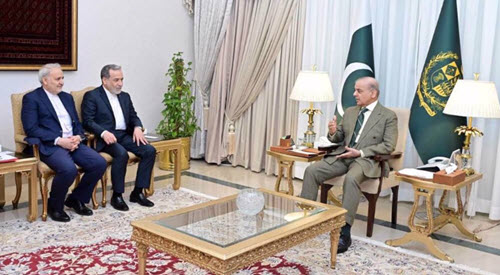
Iran’s Foreign Minister Abbas Araqchi (second from left) meets with Pakistani Prime Minister Shehbaz Sharif in Islamabad, April 25, 2026.
Iran’s Foreign Minister Abbas Araghchi has met with Pakistani Prime Minister Shehbaz Sharif in the Pakistani capital to discuss regional developments, amid efforts by Islamabad to revive stalled talks between Tehran and Washington to end the war.
Senior Pakistani officials Deputy Prime Minister and Foreign Minister Mohammad Ishaq Dar, Army Commander Field Marshal Syed Asim Munir, and National Security Advisor General Asim Malik, were also present at the meeting.
Islamabad hosted a first round of talks between Tehran and Washington earlier this month days after it mediated a two-week ceasefire that would create room for diplomacy aimed permanently ending the war.
One of the meeting's focal points was the ongoing war, which the US and Israel launched against Iran on February 28. Araghchi conveyed Tehran’s perspectives and concerns to the Pakistani mediators.
Prime Minister Sharif hailed the meeting with Iran’s foreign minister as the “most warm, cordial exchange of views on the current regional situation.”
“We also discussed matters of mutual interest, including the further strengthening of Pakistan–Iran bilateral relations,” he posted on X.
Additionally, discussions focused on regional efforts to enhance peace and stability within the West Asian region.
Earlier in the day, Araghchi held separate talks with Field Marshal Asim Munir, who said the trust Iran has placed in Pakistan as a neighboring Islamic nation facilitated diplomatic talks aimed at storing peace.
Munir also reiterated Pakistan's readiness to continue its mediation efforts to bring about a resolution to the war, emphasizing a mutual desire for stability that benefits not only Iran and Pakistan but the wider West Asian region.
Following the meeting, Araghchi commended Pakistan’s mediation efforts.
Meanwhile, Pakistan's Foreign Ministry has confirmed that officials were actively engaged in discussions concerning regional developments.
Ishaq Dar highlighted Pakistan's role in facilitating talks between Iran and the US to promote peace, reiterating the country's intent to play a constructive role.
He also emphasized that official statements regarding the Iran-US facilitation process, including those made during the meeting, are solely issued through formal government channels to avoid misinformation and misrepresentation.
According to Foreign Ministry spokesman Esmaeil Baghaei, no meeting is scheduled between representatives from Tehran and Washington during Araghchi’s trip to Islamabad.
Iranian officials have said that the illegal US naval blockade or Iranian ports and other violations of the ceasefire are hindering progress in talks.
Press TV’s website can also be accessed at the following alternate addresses:
Saturday, 25 April 2026 1:29 PM [ Last Update: Saturday, 25 April 2026 3:29 PM ]
https://www.presstv.ir/Detail/2026/04/2 ... ks-with-US
Iran’s Foreign Minister Abbas Araqchi (second from left) meets with Pakistani Prime Minister Shehbaz Sharif in Islamabad, April 25, 2026.
Iran’s Foreign Minister Abbas Araghchi has met with Pakistani Prime Minister Shehbaz Sharif in the Pakistani capital to discuss regional developments, amid efforts by Islamabad to revive stalled talks between Tehran and Washington to end the war.
Senior Pakistani officials Deputy Prime Minister and Foreign Minister Mohammad Ishaq Dar, Army Commander Field Marshal Syed Asim Munir, and National Security Advisor General Asim Malik, were also present at the meeting.
Islamabad hosted a first round of talks between Tehran and Washington earlier this month days after it mediated a two-week ceasefire that would create room for diplomacy aimed permanently ending the war.
One of the meeting's focal points was the ongoing war, which the US and Israel launched against Iran on February 28. Araghchi conveyed Tehran’s perspectives and concerns to the Pakistani mediators.
Shehbaz Sharif
@CMShehbazPost
Was pleased to meet H.E. Seyed Abbas Araghchi, Foreign Minister of Iran, and his delegation in Islamabad today. Had a most warm, cordial exchange of views on the current regional situation. We also discussed matters of mutual interest, including the further strengthening of Pakistan–Iran bilateral relations.
8:10 AM · Apr 25, 2026
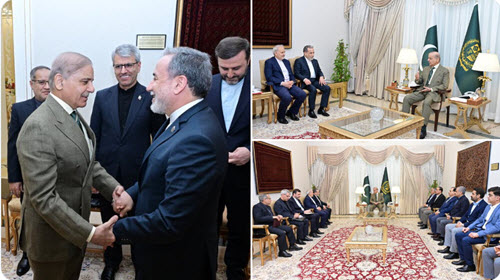
Prime Minister Sharif hailed the meeting with Iran’s foreign minister as the “most warm, cordial exchange of views on the current regional situation.”
“We also discussed matters of mutual interest, including the further strengthening of Pakistan–Iran bilateral relations,” he posted on X.
Additionally, discussions focused on regional efforts to enhance peace and stability within the West Asian region.
Earlier in the day, Araghchi held separate talks with Field Marshal Asim Munir, who said the trust Iran has placed in Pakistan as a neighboring Islamic nation facilitated diplomatic talks aimed at storing peace.
Munir also reiterated Pakistan's readiness to continue its mediation efforts to bring about a resolution to the war, emphasizing a mutual desire for stability that benefits not only Iran and Pakistan but the wider West Asian region.
Press TV
@PressTV
Iran's Foreign Minister Seyyed Abbas Araghchi meets with Pakistani Prime Minister Shehbaz Sharif in Islamabad.
Follow Press TV on Telegram: http://t.me/PressTV
https://x.com/i/status/2048009126429811148
6:00 AM · Apr 25, 2026
Following the meeting, Araghchi commended Pakistan’s mediation efforts.
Meanwhile, Pakistan's Foreign Ministry has confirmed that officials were actively engaged in discussions concerning regional developments.
Ishaq Dar highlighted Pakistan's role in facilitating talks between Iran and the US to promote peace, reiterating the country's intent to play a constructive role.
He also emphasized that official statements regarding the Iran-US facilitation process, including those made during the meeting, are solely issued through formal government channels to avoid misinformation and misrepresentation.
According to Foreign Ministry spokesman Esmaeil Baghaei, no meeting is scheduled between representatives from Tehran and Washington during Araghchi’s trip to Islamabad.
Iranian officials have said that the illegal US naval blockade or Iranian ports and other violations of the ceasefire are hindering progress in talks.
Press TV’s website can also be accessed at the following alternate addresses:
- admin
- Site Admin
- Posts: 41470
- Joined: Thu Aug 01, 2013 5:21 am
Return to United States Government Crime
Who is online
Users browsing this forum: No registered users and 23 guests