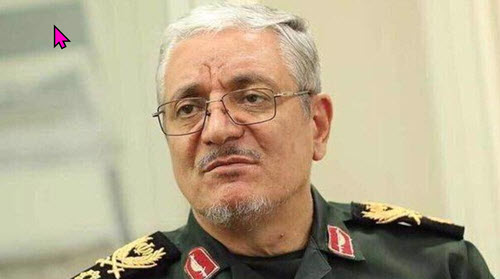
Brigadier General Reza Talaei-nik, the spokesman for Iran's Defense Ministry
Iran’s Defense Ministry says the American-Zionist enemy must accept the legitimate and definitive rights of the Iranian nation, or expect to suffer repeated defeats both on the diplomatic front and on the battlefield.
Defense Ministry Spokesman Brigadier General Reza Talaei-Nik made the remarks on Tuesday in Tehran.
“Without securing these reasonable and definitive rights, the enemy will not be able to extricate itself from the quagmire in which it is trapped,” Talaei-Nik said.
He said Iran, backed by the field presence of its people, has demonstrated high capacity in both combat and diplomacy.
“If the enemy does not yield to Iran’s rightful demands in diplomacy, it should expect a repeat of its past defeats on the military field.”
Talaei-Nik said the repeatability of enemy defeats is predictable given the realities in the region, and that the Iranian nation, considering past trends, will be the ultimate victor of this imposed war.
He also said any new threat, aggression or violation by the enemy will be met with a decisive, final and regretful response
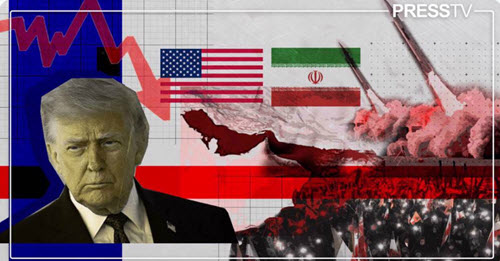
Trump's theatrical rejection of Iranian proposal reeks of desperation as Iran's leverage grows
“The repeated fleeing of US ships and naval vessels from the conflict zone shows the determination and capability of our country’s armed forces, both the IRGC and the Army, and they are fully prepared to give a regretful response to any aggression.”
The United States and Israel launched their illegal, unprovoked war of aggression against Iran on February 28, assassinating Leader of the Islamic Revolution Ayatollah Seyyed Ali Khamenei, and striking nuclear facilities, schools, hospitals and civilian infrastructure.
Iran’s armed forces responded with at least 100 waves of decisive retaliatory strikes under Operation True Promise 4, launching hundreds of ballistic and hypersonic missiles, as well as drones, against American military bases across West Asia and Israeli positions throughout the occupied territories.
A fragile Pakistan‑brokered ceasefire has been in place since early April, but a US naval blockade of Iranian ports remains in effect.
Tehran says it will not reopen the Strait of Hormuz until the blockade is lifted and the war permanently ends.
Iranian officials have warned that any new aggression will be met with a far more devastating response than before.
*******************************
Trump's theatrical rejection of Iranian proposal reeks of desperation as Iran's leverage grows by Press TV Strategic Analysis Desk Tuesday, 12 May 2026 12:56 PM [ Last Update: Tuesday, 12 May 2026 12:56 PM ] https://www.presstv.ir/Detail/2026/05/1 ... rage-grows
The exchange of proposals between Iran and the United States, facilitated through Pakistani mediators in recent days, on ending the third war of aggression has crossed into a moment of strategic reckoning.
Far from constituting a routine diplomatic impasse, the American response – specifically President Donald Trump's theatrical rejection of Iran's latest proposal – confirms an undeniable strategic reality: the White House is not operating from a position of strength.
Trump's subsequent sabre-rattling has once again laid bare the frustration and desperation festering on the American side. Such unhinged behavior is the reflex of a leader trapped at a strategic dead end, something even Western pundits now candidly acknowledge.
His refusal to accept Iran's terms, therefore, signals a simple but telling reality: he has run out of moves. What stands before him is an Iranian stance not defined by obstinacy but by the strategic leverage Tehran has accumulated through significant gains on both the battlefield and the negotiating table. And that leverage is proving unbreakable.
This dynamic places the United States in an increasingly vulnerable position. At the same time, Iran's leverage continues to grow, while its armed forces maintain a state of readiness for any eventuality. The asymmetry in strategic composure is becoming unmistakable.
The chaos of a cornered administration
Following Iran’s formal response to the American plan for ending the war that was imposed amid nuclear talks on February 28 – a response that firmly reiterated Tehran’s uncompromising principles – Trump’s public and private statements have devolved into a turbulent mix of incoherence and delusion.
Over the past forty-eight hours, the tapestry of American positions, as leaked to American, Zionist, and Western media, reveals a ruling establishment in complete disarray.
We have witnessed simultaneous threats to resume the military aggression, outright rejections of Iran’s conditions, frantic internal consultations, and desperate outreach to Zionist allies. Importantly, Trump has been spreading contradictory narratives, even claiming contact with Iranian officials, a claim that reeks of wishful thinking.
This confusion is not a strategic move but the noise of a befuddled man realizing that his “maximum pressure” campaign to get maximum concessions has failed. Trump has not yet accepted the simple truth that he has lost the war against Iran.
Fed a diet of false intelligence and sycophantic reports, he genuinely believes he still holds the upper hand in this war. He imagines he can dictate terms from a higher position, behaving in a domineering and condescending manner. But this is a dangerous self-delusion.
The aggression in his tone is inversely proportional to the options remaining on his desk.
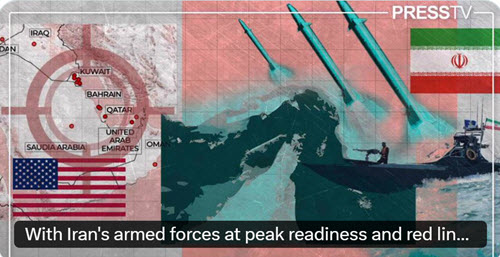
https://www.presstv.ir/Detail/2026/05/11/768433/with-iran-armed-forces-peak-readiness-red-lines-locked-trump-walks-ring-fire Press TV @PressTV Analysis - With Iran's armed forces at peak readiness and red lines locked, Trump walks into a ring of fire By Press TV Strategic Analysis Desk https://www.presstv.ir/Detail/2026/05/1 ... -ring-fire
From presstv.ir 5:34 AM · May 11, 2026
Psychological warfare or confession of failure?
Some analysts might argue that Trump’s belligerent posture is a calculated tactic – a piece of psychological theater designed to frighten Iran into submission.
According to this view, the threats are meant to force Tehran into accepting American conditions: surrendering its stockpile of 60-percent-enriched uranium and, most critically, opening the Strait of Hormuz. If this is indeed a performance, it is a desperate one.
Trump understands – even if he will not say so publicly – that he has failed and exhausted his options. Not a single war objective has been realized. The Islamic Republic of Iran stands tall and unyielding, while the "regime change" plot has been nipped in the bud.
Now, he is resorting to his only remaining and ineffective tool: verbal psychological operations. He specializes in this – bluster, threats, and feigned dominance. But Iran is not intimidated. It sees the man behind the curtain, a frustrated figure trying to impose a surrender document that has no basis in military reality. His rejection of Iran’s proposal stems from the agony of a gambler who cannot accept that the game is over.
Iran’s unshakable stance
Why is Trump so desperate and frustrated? The answer is simple: Iran neither negotiates from fear nor offers concessions to the aggressor. On the contrary, it negotiates from a position of strength and authority. It has laid out its conditions with clinical clarity and refused to retreat a single inch.
These conditions include the absolute, non-negotiable sovereignty of Iran over the Strait of Hormuz. They include demands for full war reparations and compensation, the release of all blocked Iranian assets, the complete lifting of illegal and draconian sanctions, and the annulment of international anti-Iran resolutions.
Also, Iran has made clear that any end to the war must explicitly include the resistance axis, particularly Lebanon, and a definitive end to the American-led naval blockade.
This is the language of a victor outlining terms and conditions. And it has had a discernible effect on Trump and his close circle of hawks who pushed him into this quagmire.
His unhinged outbursts and uncouth language are the last gasp of a bully who has met an immovable object. By rejecting Iran’s fair proposal, Trump is hoping to mask his own failure. But Iran’s insistence on these principles tells the world that it will not enter America’s psychological maze. Tehran will not be intimidated by insults or theatrical threats.
Press TV @PressTV Analysis - Trump's deadly trap: By rejecting Iran's proposal, US enters a strategic nightmare with no escape
It is essential to understand the nature of Iran’s diplomatic engagement. Over several weeks, Tehran has acted in good faith, exchanging modified plans to end the unprovoked war.
Some in the West might misinterpret this as a sign of fear. It is not. Iran’s willingness to talk means there will be no room for any excuses that it did not negotiate. It is a demonstration to the global public that Iran is the party genuinely seeking peace, while Washington remains addicted to war and economic coercion.
Iran has shown remarkable patience. And now, that patience has transformed into decisive clarity. By rejecting the proposal, Trump has proven to the world that he is not interested in a just and fair peace, only in a humiliating surrender that will never come.
This decisiveness forces the American side to confront an uncomfortable truth: the defeated party must behave realistically and pragmatically. America has tried the path of war and pressure, and both failed. The only way forward is for Washington to recognize Iran’s rightful conditions. But Trump, blinded by desperation, seems incapable of that recognition.
Geopolitical earthquake: The China factor
Compounding America's weakness is the timing. As Trump prepares to embark on his high-stakes visit to China, he does so as a supplicant – not a rival.
Washington has proven incapable of altering the war equation or tilting the diplomatic landscape in its favor. Consequently, it finds itself in an abysmal position opposite its most powerful global competitor. The inevitable outcome is the further consolidation of China's superpower status – not despite Iran, but as Iran's great economic partner.
China, like Russia before it, has fully grasped the value of partnering with a powerful, independent Iran that refuses to be bullied by any global hegemon – as proven in the past 72 days. Beijing recognizes Iran as a strategic anchor in West Asia.
When Trump arrives in China, he will be treated not as a triumphant victor, but as a failed actor still pretending to have won. This is the new reality. America's inability to break Iran has directly accelerated the rise of a multipolar order, one in which Washington's veto carries less weight by the day. Iran's growing leverage is now China's gain.
Press TV @PressTV Analysis: Decisive edge: Iran dismantles US levers of coercion, rewrites equation of deterrence By Press TV Strategic Analysis Desk
The armed forces of the Islamic Republic of Iran recently issued a clear warning to the enemy following the new cases of American maritime banditry in the Strait of Hormuz.
The enemy attempted to move its vessels through the strait and failed. More critically, when the US Navy tried to harass Iranian vessels and disrupt Iranian interests, Iran warned that any new act of aggression would be met with direct strikes on American centers.
The result has been remarkable. Instead of escalation, we have witnessed a significant, meaningful calm in the Persian Gulf and the Strait of Hormuz.
In recent days, there have been no reports of American maritime banditry and piracy or harassment of Iranian vessels in international waters. It is the product of Iranian military readiness and American risk aversion.
Trump may threaten war from the safety of the Oval Office, but his commanders know the cost. The calm on the water is a testament to whose navy holds the balance of resolve.
His rejection of Iran’s pragmatic and fair proposal to end the third imposed war is a strategic error born of desperation. He is frustrated by Iran’s growing strength, leverage and steadfastness, and confused by his own failing intelligence.
As Iran’s leverage grows, the United States finds itself in a position of historic weakness.
Alexander the not so Great: History through Persian eyes by Prof Ali Ansari Institute of Iranian Studies, St Andrews University BBC News Published 15 July 2012 https://www.bbc.com/news/magazine-18803290
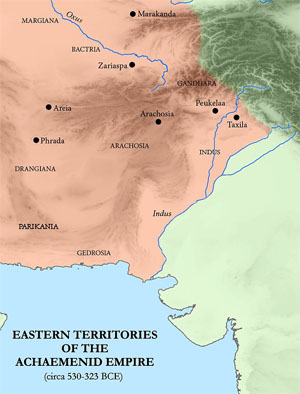
Eastern territories of the Achaemenid Empire, including Arachosia.
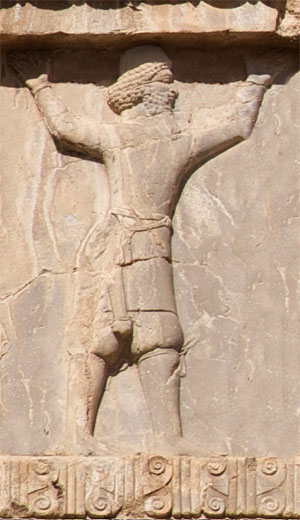
Arachosian soldier of the Achaemenid army, circa 470 BCE, Xerxes I tomb.
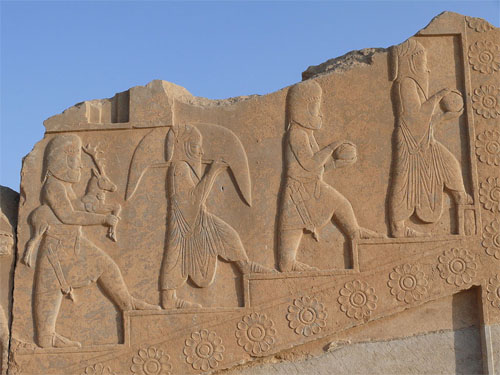
Arachosian priests of Zoroastrianism carrying various gifts and animals for a ritual of sacrifice at Persepolis
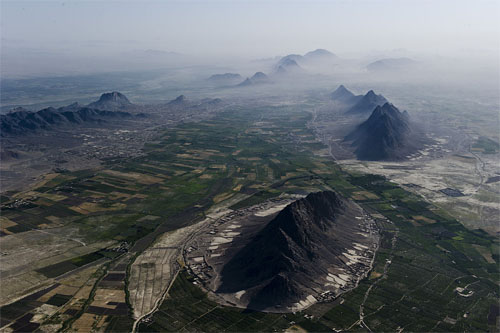
Arghandab River Valley between Kandahar and Lashkargah
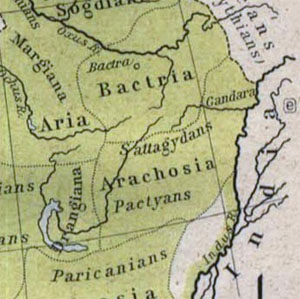
The ancient Arachosia and the Pactyan people during 500 BC.
Arachosia is the Hellenized name of an ancient satrapy in the eastern part of the Achaemenid, Seleucid, Parthian, Greco-Bactrian, and Indo-Scythian empires. Arachosia was centred on the Arghandab valley in modern-day southern Afghanistan, although its influence extended east to as far as the Indus River. The main river of Arachosia was called Arachōtós, now known as the Arghandab River, a tributary of the Helmand River ... Arachosia was a part of the region of ancient Ariana....
In Old Persian inscriptions, the region is referred to as Harauvati. This form is the "etymological equivalent" of Vedic Sanskrit Sarasvati, the name of a river literally meaning "rich in waters/lakes"....
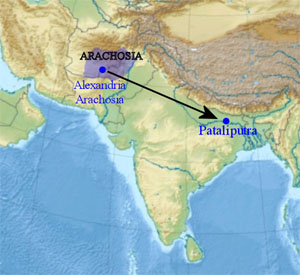
Arachosia bordered Drangiana to the west, Paropamisadae (i.e. Gandahara) to the north (a part of ancient India (present day Pakistan) to the east), and Gedrosia (or Dexendrusi) to the south. Isidore and Ptolemy (6.20.4-5) each provide a list of cities in Arachosia, among them (yet another) Alexandria, which lay on the river Arachotus. This city is frequently mis-identified with present-day Kandahar in Afghanistan....
In his list, Ptolemy also refers to a city named Arachotus, or Arachoti (acc. to Strabo), which was the earlier capital of the land....
The inhabitants of Arachosia were Iranian peoples, referred to as Arachosians or Arachoti. They were called Pactyans by ethnicity, and that name may have been in reference to the present-day ethnic Pashtun tribes.
Isidorus of Charax in his 1st century CE "Parthian stations" itinerary described an "Alexandropolis, the metropolis of Arachosia", which he said was still Greek even at such a late time....
According to Arrian, Megasthenes lived in Arachosia and travelled to Pataliputra, to the court of Chandragupta Maurya.
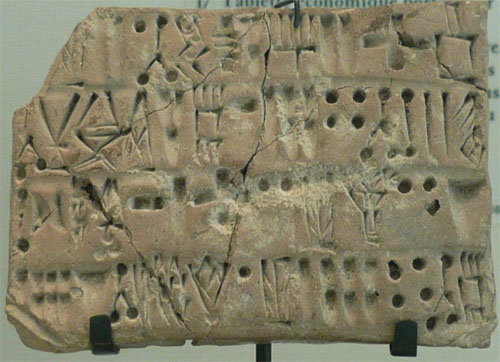
The region is first referred to in the Achaemenid-era Elamite Persepolis fortification tablets.
With over 2100 texts published, the Persepolis Fortification Texts in Elamite, transcribed, interpreted, and edited by the late Richard Hallock, already form the largest coherent body of material on Persian administration available to us; a comparable, but less legible, body of material remains unpublished, as does the smaller group of Aramaic texts from the same archive. Essentially, they deal with the movement and expenditure of food commodities in the region of Persepolis in the fifteen years down to 493. Firstly, they make it absolutely clear that everyone in the state sphere of the Persian economy was on a fixed ration-scale, or rather, since some of the rations are on a scale impossible for an individual to consume, a fixed salary expressed in terms of commodities. The payment of rations is very highly organized. Travelers along the road carried sealed documents issued by the king or officials of satrapal level stating the scale on which they were entitled to be fed. Tablets sealed by supplier and recipient went back to Persepolis as a record of the transaction. Apart from a few places in Babylonia for short periods, Persepolis is now the best-documented area in the Achaemenid empire.
Elamite, also known as Hatamtite, is an extinct language that was spoken by the ancient Elamites. It was used in present-day southwestern Iran from 2600 BC to 330 BC. Elamite works disappear from the archeological record after Alexander the Great entered Iran. Elamite is generally thought to have no demonstrable relatives and is usually considered a language isolate. The lack of established relatives makes its interpretation difficult.
Proto-Elamite is the oldest known writing system from Iran. It was used during a brief period of time (c. 3100–2900 BC); clay tablets with Proto-Elamite writing have been found at different sites across Iran. It is thought to have developed from early cuneiform (proto-cuneiform) and consists of more than 1,000 signs. It is thought to be largely logographic....
The Elamite language may have remained in widespread use after the Achaemenid period. Several rulers of Elymais bore the Elamite name Kamnaskires in the 2nd and 1st centuries BC. The Acts of the Apostles (c. 80–90 AD) mentions the language as if it was still current. There are no later direct references, but Elamite may be the local language in which, according to the Talmud, the Book of Esther was recited annually to the Jews of Susa in the Sasanian period (224–642 AD)....
-- Elamite language, by Wikipedia
It appears again in the Old Persian, Akkadian and Aramaic inscriptions of Darius I [550 B.C.–486 B.C.] and Xerxes I [518 B.C.–August 465 BC] among lists of subject peoples and countries.
The scribes of the Neo-Assyrian bureaucracy had also used Aramaic, and this practice was subsequently inherited by the succeeding Neo-Babylonian Empire (605–539 BC), and later by the Achaemenid Empire (539–330 BC). Mediated by scribes that had been trained in the language, highly standardized written Aramaic (named by scholars as Imperial Aramaic) progressively also become the lingua franca of public life, trade and commerce throughout the Achaemenid territories. Wide use of written Aramaic subsequently led to the adoption of the Aramaic alphabet and (as logograms) some Aramaic vocabulary in the Pahlavi scripts, which were used by several Middle Iranian languages (including Parthian, Middle Persian, Sogdian, and Khwarazmian).
-- Aramaic, by Wikipedia
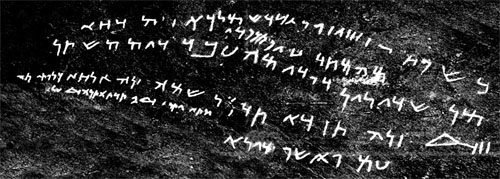
The Aramaic inscription of Laghman, also called the Laghman I inscription to differentiate from the Laghman II inscription discovered later, is an inscription on a slab of natural rock in the area of Laghmân, Afghanistan.... Since Aramaic was an official language of the Achaemenid Empire, and reverted to being just its vernacular tongue in 320 BCE with the conquests of Alexander the Great, it seems that this inscription was addressed directly to the populations of this ancient empire still present in this area, or to border populations for whom Aramaic remained the language used in everyday life....
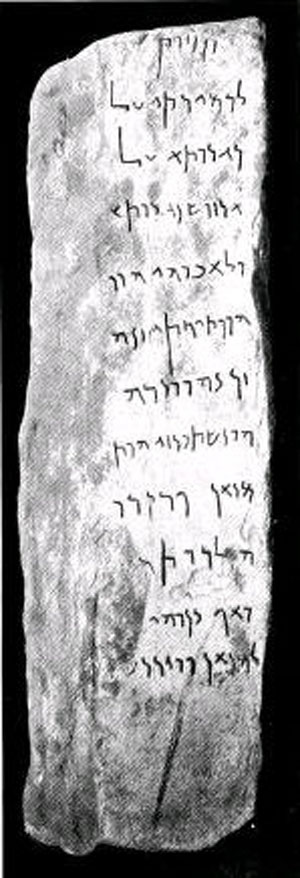
In 1915, Sir John Marshall had discovered the Aramaic Inscription of Taxila,
Aramaic inscription of Taxila.
The Aramaic Inscription of Taxila 'is an inscription on a piece of marble, originally belonging to an octagonal column, discovered by Sir John Marshall in 1915 at Taxila, British India.
-- Aramaic Inscription of Taxila, by Wikipedia
followed in 1932 by the Pul-i-Darunteh Aramaic inscription.
The Pul-i-Darunteh Aramaic inscription, also called Aramaic inscription of Lampaka, is an inscription on a rock in the valley of Laghman ("Lampaka" being the transcription in Sanskrit of "Laghman"), Afghanistan.
-- Pul-i-Darunteh Aramaic inscription, by Wikipedia
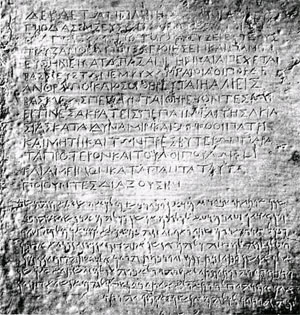
In 1958 the famous Bilingual Kandahar Inscription, written in Greek and Aramaic was discovered,
... This bilingual edict was found on a rock on the mountainside of Chehel Zina (also Chilzina, or Chil Zena, "Forty Steps"), which forms the western natural bastion of ancient Alexandria Arachosia and present Kandahar's Old City.
The Edict is still in place on the mountainside. According to Scerrato, "the block lies at the eastern base of the little saddle between the two craggy hills below the peak on which the celebrated Cehel Zina of Babur are cut". A cast is visible in Kabul Museum. [T]he Edict.. advocates the adoption of "Piety" (using the Greek term Eusebeia for "Dharma") to the Greek community....
According to Sircar, the usage of Greek in the Edict indeed means that the message was intended for the Greeks living in Kandahar, while the usage of Aramaic was intended for the Iranian populations of the Kambojas....
At Alexandria-in-Arachosia (mod. Kandahar) a bilingual Greek-Aramaic text, urging vegetarianism and filial piety, was cut into the cliff face by the side of the main trade road. The inscription demonstrates a keen awareness of the culturally specific traditions and languages of the region's "Yona and Kamboja" (Greek and Persian) populations: the Greek version combines vocabulary appropriate to oracular pronouncement and contemporary philosophy, while the Aramaic version, heavily influenced by Old Persian, assimilates dhamma to Zoroastrian truth.
Ten years (of reign) having been completed, King Piodasses made known (the doctrine of) Piety (εὐσέβεια, Eusebeia) to men; and from this moment he has made men more pious, and everything thrives throughout the whole world. And the king abstains from (killing) living beings, and other men and those who (are) huntsmen and fishermen of the king have desisted from hunting. And if some (were) intemperate, they have ceased from their intemperance as was in their power; and obedient to their father and mother and to the elders, in opposition to the past also in the future, by so acting on every occasion, they will live better and more happily."...
-- Kandahar Bilingual Rock Inscription, by Wikipedia
In the same year 1963 and again in Kandahar, an inscription in "Indo-Aramaic" known as the Kandahar Aramaic inscription or Kandahar II was found, in which the Indian Prakrit language and the Aramaic language alternate, but using only the Aramaic script....
The chronologically next reference to Arachosia comes from the Greeks and Romans, who record that under Darius III the Arachosians and Drangians were under the command of a governor who, together with the army of the Bactrian governor, contrived a plot of the Arachosians against Alexander (Curtius Rufus 8.13.3). Following Alexander's conquest of the Achaemenids, the Macedonian appointed his generals as governors (Arrian 3.28.1, 5.6.2; Curtius Rufus 7.3.5; Plutarch, Eumenes 19.3; Polyaenus 4.6.15; Diodorus 18.3.3; Orosius 3.23.1 3; Justin 13.4.22).
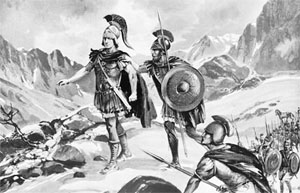
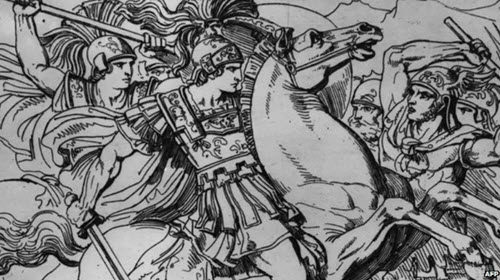
Circa 330 BC, Alexander the Great King of Macedonia, on his horse Boucephalus
Alexander the Great is portrayed as a legendary conqueror and military leader in Greek-influenced Western history books but his legacy looks very different from a Persian perspective.
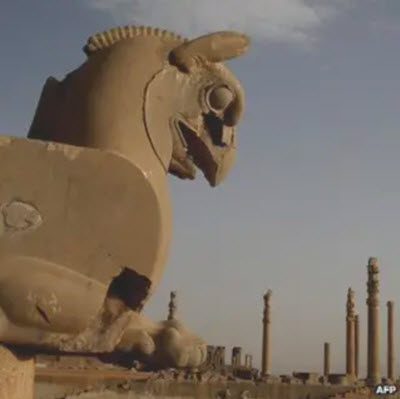
Any visitor to the spectacular ruins of Persepolis - the site of the ceremonial capital of the ancient Persian Achaemenid empire, will be told three facts: it was built by Darius the Great, embellished by his son Xerxes, and destroyed by Alexander.
That man Alexander, would be the Alexander the Great, feted in Western culture as the conqueror of the Persian Empire and one of the great military geniuses of history.
Indeed, reading some Western history books one might be forgiven for thinking that the Persians existed to be conquered by Alexander.
A more inquisitive mind might discover that the Persians had twice before been defeated by the Greeks during two ill-fated invasions of Greece, by Darius the Great in 490BC and then his son, Xerxes, in 480BC - for which Alexander's assault was a justified retaliation.
Alexander the Great razed the ancient city of Persepolis
But seen through Persian eyes, Alexander is far from "Great".
He razed Persepolis to the ground following a night of drunken excess at the goading of a Greek courtesan, ostensibly in revenge for the burning of the Acropolis by the Persian ruler Xerxes.
Persians also condemn him for the widespread destruction he is thought to have encouraged to cultural and religious sites throughout the empire.
The emblems of Zoroastrianism - the ancient religion of the Iranians - were attacked and destroyed. For the Zoroastrian priesthood in particular - the Magi - the destruction of their temples was nothing short of a calamity.
The influence of Greek language and culture has helped establish a narrative in the West that Alexander's invasion was the first of many Western crusades to bring civilisation and culture to the barbaric East.
But in fact the Persian Empire was worth conquering not because it was in need of civilising but because it was the greatest empire the world had yet seen, extending from Central Asia to Libya.
Persia was an enormously rich prize.
Look closely and you will find ample evidence that the Greeks admired the Persian Empire and the emperors who ruled it.
Much like the barbarians who conquered Rome, Alexander came to admire what he found, so much so that he was keen to take on the Persian mantle of the King of Kings.
And Greek admiration for the Persians goes back much earlier than this.
Xenophon, the Athenian general and writer, wrote a paean to Cyrus the Great - the Cyropaedia - showering praise on the ruler who showed that the government of men over a vast territory could be achieved by dint of character and force of personality:
"Cyrus was able to penetrate that vast extent of country by the sheer terror of his personality that the inhabitants were prostrate before him…," wrote Xenophon, "and yet he was able at the same time, to inspire them all with so deep a desire to please him and win his favour that all they asked was to be guided by his judgment and his alone.
"Thus he knit to himself a complex of nationalities so vast that it would have taxed a man's endurance merely to traverse his empire in any one direction."
Later Persian emperors Darius and Xerxes both invaded Greece, and were both ultimately defeated. But, remarkably, Greeks flocked to the Persian court.
The most notable was Themistocles, who fought against Darius's invading army at Marathon and masterminded the Athenian victory against Xerxes at Salamis.
Falling foul of Athenian politics, he fled to the Persian Empire and eventually found employment at the Persian Court and was made a provincial governor, where he lived out the rest of his life.
In time, the Persians found that they could achieve their objectives in Greece by playing the Greek city states against each other, and in the Peloponnesian War, Persian money financed the Spartan victory against Athens.
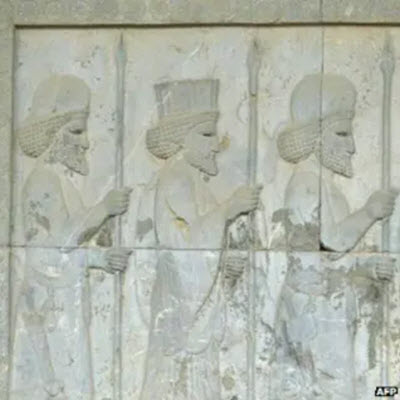
Achaemenid soldiers, seen in wall-carvings in Persepolis
The key figure in this strategy was the Persian prince and governor of Asia Minor, Cyrus the Younger, who over a number of years developed a good relationship with his Greek interlocutors such that when he decided to make his fateful bid for the throne, he was able to easily recruit some 10,000 Greek mercenaries.
Unfortunately for him, he died in the attempt.
Soldier, historian and philosopher Xenophon was among those recruited, and he was full of praise for the prince of whom he said: "Of all the Persians who lived after Cyrus the Great, he was most like a king and the most deserving of an empire."
There is a wonderful account provided by Lysander, a Spartan general, who happened to visit Cyrus the Younger in the provincial capital at Sardis.
Lysander recounts how Cyrus treated him graciously and was particularly keen to show him his walled garden - the origin of our word paradise - where Lysander congratulated the prince on the beautiful design.
When, he added, that he ought to thank the slave who had done the work and laid out the plans, Cyrus smiled and pointed out that he had laid out the design and even planted some of the trees.
On seeing the Spartan's reaction he added: "I swear to you by Mithras that, my health permitting, I never ate without having first worked up a sweat by undertaking some activity relevant either to the art of war or to agriculture, or by stretching myself in some other way."
Astonished, Lysander applauded Cyrus and said: "You deserve your good fortune Cyrus - you have it because you are a good man."
Alexander would have been familiar with stories such as these. The Persian Empire was not something to be conquered as much as an achievement to be acquired.
Although Alexander is characterised by the Persians as a destroyer, a reckless and somewhat feckless youth, the evidence suggests that he retained a healthy respect for the Persians themselves.
Alexander came to regret the destruction his invasion caused. Coming across the plundered tomb of Cyrus the Great in Pasargad, a little north of Persepolis, he was much distressed by what he found and immediately ordered repairs to be made.
Had he lived beyond his 32 years, he may yet have restored and repaired much more. In time, the Persians were to come to terms with their Macedonian conqueror, absorbing him, as other conquerors after him, into the fabric of national history.
Trump’s worst fears come true as Iran threatens to obtain nuclear weapons | Janta Ka Reporter by Rifat Jawaid Janta Ka Reporter May 12, 2026
A prominent Iranian lawmaker on Tuesday said that his country would increase the uranium enrichment to 90% if the US attacks the Islamic Republic again. Iran needs to take enrichment level from the current 60% to the 90% threshold for weapons-grade material. This would cause immense concern in the US administration as this is the first time Iran has publicly stated its ambition to go nuclear. Rifat Jawaid examines the significance of this development
Transcript
Chapter 1: Intro Iran has finally threatened to acquire nuclear weapons. This is the first time anyone from the Iranian establishment has publicly threatened to increase its nuclear enrichment capacity to 90% and beyond in order to acquire atom bomb. Meanwhile, Donald Trump's uncouthed secretary Pete Hex has made a fool of himself during his testimony at the Senate Defense Committee. Also making a fool of himself has been Israeli asset in the US Senate Lindsey Graham. In the UK, genocide loving Labor Prime Minister Kmer is clutching at straws to save his job, but this is increasingly becoming a losing battle for him. The BBC faces further shame for its decision to edit out the criticism of the rogue settler colony by the winners of the Ghaza documentary at this year's BAFTA award. We now have the evidence. 1 minuteThis would be the broad focus of my video tonight. Also in this video, the Barcelona football club celebrates Lamin Yamal for hoisting the Palestinian flag during the open top bus parade. So please stay tuned. Chapter 2: Iran's nuclear ambitions So Iran has made America's worst fears come true. This is a classic case of crying wolf. For 40 plus years, America and the illegal settler colony lied about Iran's intention to build nuclear weapons. Even though the Islamic Republic followed the Supreme Leader's fatwa against acquiring nuclear weapons, the deranged occupant of the White House, Donald Trump, even launched an illegal war on 28th of February against Iran to please his terrorist Israeli master Benjamin Netanyahu. Now a top government official in Iran has finally expressed his country's intention to go nuclear if the US and Israeli terrorist didn't mend their ways. Ibrahim Razai, he's an MP for Dashtan and spokesperson for the Iranian Parliament's National Security and Foreign Policy Committee. He wrote on X today that Iran will not shy away from attaining 90% enrichment of uranium which is required for achieving the weapons grade if the US attacks his country again. He wrote and I quote, "One of Iran's options in the event of another attack could be 90% enrichment. We will review it in the parliament." End quote. Now this is huge given that Iran has already kept a stockpile of 450 kgs of uranium enriched up to 60%. Experts would tell you that it's only a matter of a few weeks to take this to 90% enrichment. This announcement would make plenty of Iranian supporters happy since they have long urged the Islamic Republic to withdraw the fatwa and achieve its nuclear ambitions. Given that the person who issued that fatwa is no more I'm talking about the late supreme leader at Ali Kame many expected the new supreme leader his son to embark on the nuclear journey but credit to the Iranian military that Chapter 3: Power of Iranian military despite several handicaps it has managed to give grief to its enemies by simply maintaining an effective chokeold of the state of almost this single decision has sent shock waves throughout the world. As the global economy faces extremely bleak prospects due to rising fuel prices, even American lawmakers are now acknowledging the power of Iran, visav the US. This is Senator Chris Murphy on CNN today. This is not a stalemate. This is a disaster for the United States. Iran is much more powerful today than they were at the beginning of this conflict. Notwithstanding the damage that we have done to Iran, the intelligence reports suggest, and this has been publicly reported, that they still have the majority of their missiles, the majority of their drones. Uh they still have a nuclear program and anytime they want, they can reopen military operations in the Strait of Formoose. I don't know what the president is going to do. I'm out of the business of trying to predict what he is doing. But I don't think we have ever seen a more incompetent, ham-handed military operation side by side with the most ham-handed, incompetent diplomatic effort in the history of this country. And we've had some pretty miserable military engagements overseas. So, I just think this is a disaster for American national security. I think the best pro prospect is for the president to end the blockade and declare an end to the war right now and hope that some other nations um that are smarter and better than the current leadership of the United States will be able to use effective diplomacy to get the straight reopened. American military veteran Colonel Douglas McGregor calls Iran a heroic state. the rest of the world looks at what's happening and says Iran is an heroic state because it's standing up to the great bully, the United States and Israel. So virtually everyone is sympathetic and everyone who can help the Iranians is doing so. And so the Iranians have prepared themselves brilliantly for this next phase which is now coming. And I think it'll probably start within the next . Wow. And why will it start? Because you cannot keep all these soldiers, sailors, airmen, and marines out there indefinitely. They'll lose their edge. They'll wear out. You can't do that. You've got to send them into action or you have to disengage and withdraw. And I see no evidence that we're prepared to do that. And this whole blockade thing was a farce. It never had any chance of success. We're sitting what, 300 miles, 400 miles, 500 miles south and away from the entrance to the Persian Gulf. We have, comparatively speaking, a handful of ships. We're trying to fly over the area and control it. It can't be done. I mean, you can control some of it, but not all of it. I'm sure Trump and his minions would now call Murphy and McGregor antinations for speaking the truth. But the reality is that even Trump and his fellow thugs in his government would be privately acknowledging the same fact. But they have to keep peddling lies against Iran to justify their reckless military adventurism. Pete Hex appeared Chapter 4: Hegseth faces heat at Senate before the Senate's Defense Budget Committee today. It took just one grilling session by Senator Chris for this thug to lose his mind. In response to one question, Hexath even claimed that Iran had an aircraft carrier. Watch it for yourself. Because Iran retains a robust stockpile of cheap lethal shahed drones and they are getting help from our adversaries in rebuilding them. What is your plan for reopening the straight of Hormuz? Mr. Secretary, I would just note that the majority of your question was highly disingenuous and loaded with suggestions that I very much don't agree with. Uh from the beginning, please feel free sir to pick any one of those. From the beginning, we've been very clear about the military objectives and the underlying strategic objective which is preventing Iran from getting a nuclear weapon. Yes. Take for example the fact that Iranians n conventional navy, they had aircraft carriers with shahed drones on them before this started. They had full-on destroyers and battleship capabilities, none of which they they have anymore. 8 minutesAnd did the Iranian Navy have aircraft carriers? Iranian Navy had three drone aircraft carriers. The Iranian Navy had 11 subatforms for drones. Sure. It had 11 submarines. sunk all of regular navy. Great. Good. They they retain fastboat capabilities which they've always had. We understand that. Which we can control for and will. We've degraded almost completely their defense industrialbased capabilities. The idea that they control anything. You can terrorize something. You can hold it at issue with piracy as I've talked about at the Pentagon podium time and time again. That doesn't mean you control it. We control what goes in and out. And we control whether or not we have to restart conflict. The president does as well. Mr. we're the ones that will manage where this goes in the future with and they have very limited ability to set the tempo or respond to it and that gives the president a lot of options to ensure that Iran never gets a nuclear weapon. Um the connection between their ability to close the straight of Horu Homus using fast boats and shahed drones and our strategic goal shared broadly to prevent them from ever having a usable nuclear weapon is utterly unclear to me. And my question was what's the plan for reopening the straight of Hormuz to commercial traffic given but never executed shared broadly but never executed because previous administration didn't have the willingness to actually do what it would take and when Iran was at its weakest moments following the 12-day war but still wanted the pursuit of a nuclear capability. President Trump made the courageous decision to go at their conventional umbrella and shield which they were using to protect their nuclear program which we knew came with threats and and branches and sequels. My concern, Mr. Secretary, is that you've achieved a series of tactical successes but are on the verge of a strategic loss because we are now negotiating. Just think it's so foolish. Here we are in a committee in the United States Senate 74 days in and you're talking about strategic loss. We have the ability to defeat a 47-year threat of a pursuit of a nuclear weapon. We have more leverage than we've ever had. We've had incredible battlefield successes. And you're talking about a strategic loss disingenuous questions. Mr. Secretary, this is how you undercut that could otherwise and are otherwise not your enemy, sir. I am not your adversary. I share your goal of preventing Iran from ever having a usable nuclear weapon. To finish my sentence, control of the straight of Hormuz, the ability to degrade our partners and allies gas and oil production capabilities through cheap drones, the ability to harass and harry commercial shipping remains in Iran's hands. Chapter 5: Lindsey Graham angry on Iran Today's Senate hearing also witnessed a comedy circus of sorts as Israeli asset Lindsey Graham lost his mind while seeking information from Hexith and the chairman of the joint chiefs of staff General Dan Kin Graham whose sole purpose in the Senate and outside appears to be working for the genocidal settler colony of Israel wanted to know 11 minutesif Iran indeed had quietly parked all its military aircrafts in Pakistan. During the conflict, neither Hexath nor General Kaine had any satisfying answer, which didn't go down well with this supporter of genocide. I'm talking about Lindsey Graham. Pakistan, uh, are you aware of reports that Pakistan are are allowing their bases to be used to park Iranian aircraft? Uh, General Kaine. Sir, I've I've uh I've seen one report on that. Well, is it accurate? Um sir, I think uh based on the variety of classific classification matters. Let me just say do you agree if it is accurate that is sort of inconsistent with it being a peace mediator? Sir, I wouldn't want to comment on that based on the ongoing negotiations in Pakistan. Secretary Secretary Hexus, if if the mediator is allowing reconnaissance aircraft Iran to be parked in Pakistani air bases, do you think that's consistent with being a fair mediator? Um I again I wouldn't want to get in the middle of these negotiations. I want maxacy. I do I want to get in the middle of these negotiations. I don't trust Pakistan as far as I can throw them. If they actually do have Iranian aircraft parked in Pakistan bases to protect Iranian military assets, that tells me we should be looking maybe for somebody else to mediate. No wonder this damn thing is going nowhere. So, you know, I appreciate all you've done. I'm very supportive of it. But when it comes to Pakistan and China, enough already. Thank you. Chapter 6: Dan Bilzerian plans on Israel First Gaza and now the Iran conflict have made Americans realize that their politicians had been lying to them for decades about Palestinians, Iranians, and Muslims at large. Now more and more Americans, particularly from the younger generation, view the settler colony as an entity which loves to commit holocaust and drags the US to fight its illegal wars in West Asia. This has become a matter of concern for Israeli terrorists, but they don't know how to deal with this negative perception. They thought this would change once Zionist Larry Ellison manipulates his way to take over the Chinese social media platform Tik Tok. But even this hasn't changed anything. You only have to watch the latest statement of congressional candidate Dan Bilzerian. Watch what he had to say to Alex Jones. This is a nuclear explosion on its own. If you were the president, what would you do? I would declare war on Israel. I would cut off I mean at a minimum I would cut off all foreign aid. I would let Iran have free will to do what they want with Israel. Um I would kind of let the problem take care of itself to be honest because if we stop defending Israel, I think they would get what they deserve. Um they have been persecuting these Palestinians. They've been operating apartheid. They've attacked all their neighbors. I mean, they bombed seven countries in a year. Um they continue to just um just have unprovoked aggression. I mean, they are a a total terrorist nation. I just don't understand how they're not qualified as terrorist nation. They have nukes. They acquired them illegally. They refuse to sign the nuclear non-prololiferation treaty. And um and they said that they would just kill everybody if they if they feel threatened. So like, please tell me, Alex, how does that not make them the greatest terrorist threat to the world today? Chapter 7: British PM faces massive revolt Such is the frustration of the Trump regime that it continues to seek global support against Iran. After being snubbed by NATO countries, the US has now increased pressure on Gulf allies by asking to choose between Iran and Israel. This is precisely what Israeli slave Mike Hakabe said today. Do you need any more evidence on the growing frustration of Trump and his minions? One of the countries who Trump expected to blindly support him against Iran was the UK. But the pro-Genocide British Prime Minister Kmer is facing the biggest test of his own political career. Now close to 90 yes 90 MPs have revolted against him and several ministers resigned. demanding his ouster. You can't live in peace after supporting the mass murder of unarmed and defenseless Palestinians. Watch this Sky News broadcast to understand what's going on in the corridors of power in the UK over this issue. It took one humiliating defeat in the local body polls for rats to start deserting the ship. I'm going to show you why this revolt is all but impossible for Karmama to come back from. It started on Saturday evening with Katherine West. You might not know who she is, but she opened the floodgates. Initially, Labour rebels were pretty much usual suspects. John McDonald, you've heard of him, Richard Bergenhees of the left, Clive Lewis of the soft left, and you can see even younger members of the soft left, Connor Smith. But I don't think Downing Street would have been particularly worried at that point. But then on Monday morning after the prime minister's speech, it started to change. veteran former ministers like Katherine McKinnel. But then the spread started across the generations and across the different factions. You have Chris Curtis. He is a new integr. You've got the youngest MP for Labour, Sam Carling, the oldest MP for Labour, Clive Bett. He's been in since 1992. You can see that there are some of the freshest faces, the people who are the next generation of the Labour Party. But it was Monday evening that the trouble 17 minutesreally started with members of the government with this guy. Where's streetings? PPS. That's a junior ministerial role. More junior ministerial roles. Tom Rutland, Sally Jameson, Melanie Ward. And then on Tuesday, ministers started to come out. Miata Fambula close to Edmand and to Andy Burnham. She's the most famous face so far to resign. That's Jess Phillips. Alex Davies Jones, another minister, all gone. And this guy, a minister in Wes Streeting's health department. Every single one of the faces that you see are individuals that have said things about Kama they can't walk back from. I think it's almost impossible given the number. But let's look at who they might uh want as possible leaders. Well, you've heard W Streeting's name. He's apparently ready to challenge. He tried to see the prime minister after con uh after cabinet, but was refused. He could go soon because he's worried of the threat from this guy Andy Bernham who's looking for a seat. We are told he is all but ready but we haven't heard where he might become an MP for. And then there's Shabbana Mammud uh who gave it both barrels to the prime minister and maybe dark horses like Iette Cooper and Ed Milliband. How might it work? Well, K star might hang on. Let's look at what could happen then. It would require him to be dragged out by 81 MPs backing a challenger and then that goes to a contest where he's automatically on the ballot. Or if Kander agrees to stand down, then he goes and the cabinet and the national executive appoint an interim leader or he agrees to stay on until the end of the contest and then we see who is leader and they hand over power. But if you just look at the sheer number of Labor MPs, a third of those pretty much who aren't on the government payroll, it's not clear that Kismama can come back from this. Last night, I played you a video clip from this year's BAFTA award ceremony where the Chapter 8: Barcelona FC praises Lamine Yamal documentary Gaza Doctors Under Attack had won an award. Its makers had publicly shamed the BBC for not broadcasting the documentary despite having first commissioned it. Since this portrayed the settler colony and war criminal Benjamin Netanyahu in poor light, I also told you that the BBC was being accused of editing out the criticism for Israel during the BAFTA ceremony which was being broadcast on the BBC. Today, Ramita Nawi, one of the journalists behind the Ghaza documentary, shared the unedited video of her speech which someone had recorded from the audience. This raises serious questions on the functioning of the BBC and how it has now officially mortgaged its editorial independence in favor of those committing genocide. First, watch what the BBC had broadcasted on its channel. This award means so much to us. These are the findings of our investigation that the BBC paid for but refused to show. But we refuse to be silenced and censored. And we thank you. Thank you. And we thank Channel 4 to showing this film. We also want to dedicate this award to Jaba Badwin and Osama Alashi, the two journalists on the ground who made this film for us. So I'd like a round of applause for them, please. Just a question to the BBC. Given that you dropped our film, will you drop us from the BAFTA screening later tonight? Thank you. Bye. Now, watch the unedited version of one speaker speech. Thank you, judges. Thank you, BAFTA. This award means so much to us. Israel has killed over 47,000 children and women in Gaza so far. Israel has bombed and targeted every single one of Gaza's hospitals. It's killed over 1,700 Palestinian doctors and healthcare workers. It has imprisoned over 400 in what the UN now calls a medicide. These are the findings of our investigation that the BBC paid for but refused to show. But we refuse to be silenced and censored and we Right now, there are over 80 Palestinian doctors and healthcare workers being held in detention centers that Israeli human rights groups describe as torture camps. We dedicate this award to them. This rogue organization should be defunded. Period. It must not be allowed to use taxpayers money to work for a genocidal regime. This is the most explicit example yet of BBC's pro-Israeli biases. And the fact that it has not even apologized shows its arrogance. I will now leave you with another video of Lamin Yamal from the Barcelona team's open top bus victory parade yesterday. I had played a small clip yesterday. Today, the official social media handle of the Barcelona football club shared another video of this adorable Spanish football prodigy, asking a fan to hand over his Palestinian flag to him so that he can carry it during the victory parade. The club shared that video capturing that moment from its official handle. This shows the respect Barcelona as a club has for such a gesture of humanity. My heartfelt gratitude to this club for this powerful gesture. That's it for me. Thank you very much for your support of this platform and our journalism. If you haven't subscribed to my channel, please do so because that's one of the many ways you can support independent journalism.
TRUMPI PAPI || LEGO Political Satire Movie by @militarylegoai Explosive media videos #lego #legomovie #bricknews
Transcript
Trumpy drilling water acting crappy. Trumpy [music] [singing] Trump Epstein secrets made him sappy. Trump [music] [music] seek situation room. [music] War plans, missiles, spies. They dragged a congresswoman into crusher under lies. [music] Signed a paper, hide the files. Epstein never flew. Lauren Bober [music] crossed her arms, said, "No way, not for you." Thomas Massie told the world don't tuck this late night show. Trump killed the water bill. [music] Revenge from head to toe. It passed with both sides, Democrats and GOP. [music] Trump vetoed out a spike. That's the Epstein key. No reason, no [music] logic, just a petty little fit. 50,000 caliber bands left to choke and spit Arkansas Valley [music] conduit with 130 m of steel. Trump said let them drink the dust. That's the dirty deal. That's the dirty deal. [music] Marjgery got death threats. Kids scared through the night. Nancy Mace got back threats. They tried to kill a life. Bober held her middle finger high [music] and signed a discharge paper. Trumpy Poppy threw a tantrum. Watch the angry paper. Three women, three mothers, three who wouldn't [music] bend. Trumpy Poppy punished the whole state. That's the loyal friend. You won't have my Epstein files, then your people die your thirst. That's the logic of a [music] Tyler. Welcome to the curse. No military secret, no national defense, just a fragile little [music and singing] ego with no common sense. Water is a human right, not a poker chip. Trumpy Poppy treated it for a pedophile's friendship. Trumpy [music] poppy. Trumpy Poppy killing water acting crappy. [music] Drumpy Bobby Trumpy Bobby Epstein secret. Imagine waking [music] up and there's nothing from the tab because you rap want it truth. That's the epilogue. The rap you call your center. You call the [music] White House line. They say, "Sorry ma'am, your congresswoman crossed the line. 50,000 people [music] now depend on bottle trucks." All because one woman said Epstein spouse won't stay in the ruts. Thomas Massie facing grinder. Trump endorsed the clown, [music] but he's standing on the capital steps. Won't back down. Water is a human right. He said to the mic, "Not [music] a bargaining chip for a pedophiles, the lie. That's the truth that burns the house. That's the fire they can't hide. Trumpy [music] pocky strip the state and did it with full pride." So, what was in the Epstein files? [music] Nothing new, but 50,000 people in Colorado still don't have clean water. That's the math. That's the That's the crime. That's [music] the That's the Trumpy Poppy timeline. That's the [music] math. That's That's the crime. That's the That's the That's the Trumpy Poppy timeline. Next time you flush your toilet, [music] think of Colorado's pain. Trumpy Poppy's older mouth for a pedophile's name. That's the trade. That's the deal. That's the magree. You thirsty children over [music] truth. Plant that evil seed. Jump bey.
***************************
WHO KNOWS BEFORE THE NEWS ! LEGO Oil Scandal Rap Movie by @flowlego Explosive media videos 2 days ago #
Transcript
Who knows before the news? [laughter] Flash news. Iran US deal is imminent again. Yes, for the fifth time in 19 days. Wo wo wo. Axio's dropped another scoop. Wait, check the trades before the group. Someone knew something again. Again. Rack Ravit, [music] the messenger pigeon of the West Wing. Every time he tweets still near the oil market starts sinking. Sources say officials claim progress made in the game. Then crew drops like a rock. Every single [music] time the same. Someone in the White House picks up the red phone. Call Rev. Tell them leaked that we're close to the throne. Like later, [music] oil futures take the dive and a handful of quiet accounts come alive. But the story doesn't end with a tweet or a leak server in London gets slammed. The volumes are peak. Billions of George [music] best place right before the collapse like they write the Mars newspaper. That's the trap. Who knows before the news? Tell me who. Tell me who. Who gets the call when the war is through? Tell me who. Who shorts the oil right before it slides? Who gets [music] rich while the public buys [singing] the lies? Say their name. Say their name. Say their name. Say their name. Say their name. Say their name. Say their name. Say their name. Let's roll back to March [music] 23rd. Remember that day? before they said attacks are postponed. Okay. Half a billion dollars short on crude, clean, and neat. Oil crashed 15%. Somebody got a feast. April 7th, hours [music] before the ceasefire was announced. 950 million more shorts. That's a serious amount. Boom. Boom. Boil down again. Profit stacking high. This ain't a coincidence. [music] Don't even try. April 17, before I ran open the straight. 760 million short. Yep. The same trait. later, the straight is declared [music] open wide. Someone had the script. Who's the inside guy? May 6 Axio scream final deal is near, but 90 [music] 20 million short was already here. 125 million profit in a single day. The ones who knew before the news just walked [music] away. Chances of a deal 90% sell now before the headline hits. So Axios [music] drops the same fake news every single week and someone shorts the oil. Man, that's some unique technique. [music] Barack Rabbid, are you a journalist or a signal for the rich? They're not even hiding it anymore. [music] Cali Baff called it operation. Trust me, bro. US and Israel playing puppet. That's the [music] show. Elizabeth Warren said this is corruption. Stop the game. But money blinds the watchd dogs. Nothing's changed. Same old frame. Congress says [music] it violates the 34 exchange act. It's true. Some suits should be getting the contracts cracked. But no arrests, no [music] probes, just axios. Headlines on repeat and Barack Rabid wins with one phone call. Bitter and sweet. Ding ding. So, who knows before the news? [laughter] The same guy who calls Axios right after he places [music] his shorts. Obviously, 3 minutesloud ironic laugh then beat cuts five times in 19 days. Zero deals, billions in profit right [music] before every news. Do the math, folks. [laughter]
"The ink is red because the history is bored— of your fairy tales and your plastic 'freedom' stand."
"Today, we count the scars on a stolen land."
[Verse 1]
Take it back to '53, Operation Ajax, Bought the coup, crushed the roots, covering the fake tracks! Then the velvet January schemes, ripping at the seams, Burning down the dreams, leaving nothing but the screams!
Sat around the table, brought the olive branch to you, From the early nuclear talks to the pact you tore in two! Even down in Muscat, diplomatic talks were bred, You shook our hands, stabbed our backs, left the treaties dead!
Point the finger at us? Man, check the creator! Built up ISIS, Al-Qaeda, playing the dictator! Fought the terror in the dirt, bled to make it cease, And you assassinate the men who brought the region peace!
Targeting Haj Qasem, aiming straight at Khamenei! Think you are the saviors? You're the villains of the day! War crimes are a habit, just a standard routine, Flight 655—blown right out the screen!
Down to the girls in Minab, innocence is torn apart, While you paint your faces pure with a blackened heart!
[Chorus]
One! Two! Tell us the truth! You stole the peace and you targeted youth! Three! Four! Nothing but war! We don't believe in your lies anymore! Five! Six! The system is bust! They don't really care about us! Hand in hand, we stand our ground, A million voices, a single sound!
[Verse 2]
Listen close to the alphabet of the crimes they planned, The ABC of the sanctions on our holy land:
A is for the Assets, billions stolen from the vault, Starving out the innocent and saying it's our fault!
B is for the Butterfly Kids, suffering in pain, Sanctioning the medicine for political gain!
C is for the Channels, two hundred faking facts, Funding propaganda just to cover up your tracks!
D is for Dehumanize, treating us like dirt, Labeling us "monsters" just to justify the hurt!
These are bullets with no sound, hitting civilians directly! You choked out the science, the banks, bleeding the economy! Funded by dollars to keep us divided and trapped in the dark, You build up a wall so truth-seeking Americans miss the mark!
'Cause it was never about rights, never about care, Only 'bout the oil and the power in the air!
Israel first! Grab the land, hold the crown, Push the rest of the Middle East deep underground!
[Chorus]
One! Two! Tell us the truth! You stole the peace and you targeted youth! Three! Four! Nothing but war! We don't believe in your lies anymore! Five! Six! The system is bust! They don't really care about us! Hand in hand, we stand our ground, A million voices, a single sound!
"You call it foreign policy. We call it a crime scene." "Class dismissed. Now go rewrite your textbooks."
*********************************
DIRTY DEAL EXPOSED Flow Lego and Military Lego ai 5 hours ago
Transcript
Donny's looking for a way to make a dirty deal. Dirty deal [music] with all this trash is his real first, not America first. Dirty deal. Dirty deal. [music] He went to China trying to hustle for a dry deal. Dry deal. [music] But they're too smart to sign up for a dirty deal. Dirty deal. Dirty [music and singing] deal. Yeah, Trump flew to Beijing and thought he the dragon's lair. Suitcase [music] full of promises, but chat just stared. Sorry, Don. We don't do business with a sinking ship. Your empire's leaking oil. Watch the ruble in the UN grip. You traded Taiwan for [music] repair, so Ukraine down the road. Now China's broker in peace and tan. That's the heavy load. You came to make a dirty [music] deal, but they wrote a cleaner one. Now your legacy's a foot. No. Congratulations. You're done. Dies dies. Looking for a way to make a dirty deal. Dirty [music] deal. Where with all this trash is real first, not America first. Dirty deal. Dirty [music] deal. He went to China trying to hustle for a dry deal. A dry deal. But [music] they're too smart to sign up for a dirty deal. Dirty [music] deal. Dirty deal. Uh-huh. Yeah. Iran holds the straight. [music] The keys not in your hand. 10 weeks of blockade didn't go as planned. Hormes [music] is a fortress. Oil at 27 a barrel. Your voters at the pump. Feel the pain in the quarrel. You thought you bing [music] missiles. Now 20% remain. Your generals lie to you. That's the truth. Not a campaign. Every dirty deal you cut with BB in the crew. Just made [music] the resistance stronger. What's a loser to do? Australia walked away. Germany stopped the guns. The only [music] ally left is Israel. Look at what you become. A beggar with a tweet, a puppet, with a phone. You're [music] America first. This just is real first. Now you're all alone. Billions [music] burned in sand. Inflation through the roof. Your own think tanks admit the war has been a goo. You went to Beijing for a dry deal. Came back dry. The dragon doesn't bargain [music] with a loser who can't fly. I'm looking for a way to [music] make a dirty deal. Dirty deal. [music] The world just turned the page. That's the final seal. Donny's looking for a way to make a dirty deal. [music] Dirty deal. But the world just turned the page. That's the final seal.
Iran LOCKED & LOADED on US Navy, Trump UTTERLY HUMILIATED by China | Ben Norton Danny Haiphong Streamed live 2 hours ago #iran #trump #china
Geopolitical analyst and host of Geopolitical Economy Report Ben Norton joins the show to discuss stunning intel revelations on Iran's military capabilities as Iranian officials warn of full locked and loaded targets in the event of a restart to war. Trump has landed in China and has already suffered big humiliation the face of China's rise and Iran's victory on the battlefield.
Transcript
Welcome back to the show everyone. It's your host Danny Hiong. As you can see, I am joined by Ben Norton of Geopolitical Economy Report. Ben, good to see you again. How are you? Good. Thanks for having me, Denny. Of course, everyone, hit the like button as you come on the program. Um, we have a lot to cover. Uh Ben, first I know you cover this on your own channel, but I just wanted to begin on the Iran situation uh before we head into because they're all connected uh Trump's visit to China. I don't know if you saw uh the latest reports uh now that as Trump was getting on the Air Force One to head to Beijing. Uh we had US intelligence uh uh reporting to the New York Times as they often do um uh that Iran is retaining substantial missile capabilities that 30 of its 33 sites and these are conservative estimates always from US intelligence along the straight of Hormuz alone its missile sites are 1 minuteoperational and they reaffirmed that uh at least 70% of all of its launchers missile and drone launchers remain operational. as well. Iran has said, Ben, that if the United States want decides to strike Iran again, that it has all of its targets set on the US Navy and uh this so-called blockade and it is ready to strike with 120% capabilities according to Abas Archi. The New York Times also uh from Arch Neocon uh David Sanger had this to say about uh the visit very much uh uh of course couching it as both sides being bogged down but uh as Donald Trump now is set to meet with Xiinping in Beijing. Uh the war in Iran, he says, is casting a shadow of uncertainty on both superpowers, dimming hopes of a larger uh uh uh uh resolution of ongoing problems. But uh uh what he says is Mr. Trump will arrive on Wednesday today with many in China wondering how he got bogged down by a far lesser power in a war he started. So, uh, Ben, your reactions, your on on developments now and where things stand as this, uh, big meeting or at least as Donald Trump is touting it, this big meeting in China is about to take place. Well, as you mentioned, US intelligence services are leaking a lot of this information to major media outlets. And in the past few weeks, there have been several major reports in all of the major US media outlets. New York Times, Washington Post, Wall Street Journal, CNN, NBC News, all of them have published reports acknowledging that the US has been losing this war. And assuming the war is coming to an end sometime soon, the US lost this war. Period. It is quite clear that Trump is looking for some kind of off-ramp. Even though he's of course the person who started this war, it was a war of his decision, his choice. It was totally unnecessary. This report you just mentioned, of course, is very significant. But there was another report recently in the Washington Post that acknowledged that Iran has more than 70% of its missile capabilities and Iran has the ability to keep making more missiles and drones. It's not just a static number. So in at the same time there are also reports that the US military is actually running out of missiles. Forbes magazine published a report acknowledging that about half of the most important missiles, different kinds of missiles, including the interceptors that are needed for the THAAD air defense system and the interceptors that are used in other air defense systems. The US has run out of half of those that is that it's provided to its allies like Israel and it will take several years for the US to rebuild those stockpiles. This is a point that I've been stressing from the beginning of this war that the US and Israel launched on the 28th of February, which is that the US can flood these military-industrial complex contractors with billions or trillions of dollars in contracts. But there are physical bottlenecks in the supply chain. And by the way, China is one of those major bottlenecks because the US needs critical minerals and especially rare earth elements in order to make this advanced military technology. And China dominates the global supply chain for critical minerals and especially for rare earths. So even if the US gives trillions of dollars to all of these companies, they simply have physical limitations in the supply chains as to how many weapons and systems and ammunition and missiles they can actually create in a finite period of time. So when you look at all of the evidence impassionately, it becomes very clear that the US lost this war. And this is why even now some major war hawks in Washington, you know, arch neoconservatives like for instance Robert Kagan who is the husband of Victoria Nuland, one of the architects of the coup in Ukraine in 2014, a top former State Department official. Robert Kagan is one of the original neocons. He's one of the co-founders of the project for the new American century. and he just published an article in the Atlantic which is you know the voice of Atlanticism you know a pro-NATO mouthpiece and in this article in the Atlantic he acknowledged that the US lost the war against Iran and that this will be a massive historic gamecher not only for West Asia for you know the the Middle East but for the entire world. In that article, he acknowledged that one this means that Iran coming out of this war is going to be significantly more powerful than before. Iran is going to have control over the straight of Hormuz, the most important oil transit choke point on earth. Iran also is going to have significant influence over the Persian Gulf monarchies. And by the way, there have been multiple reports that the UAE was directly in participating in this US-Israeli war. The UAE was directly bombing Iran and Benjamin Netanyahu visited the UAE during this war. So the Gulf regimes have been entirely discredited. I mean, they never really had much credibility, but they had a lot of money, and that can go a long way when you're paying people off. But the Gulf regimes have had their credibility shredded. The illusion that they're a safe haven has been totally destroyed and they already were unpopular among their own populations and especially among you know other people in the region. But now the fact that they're so clearly supporting Israel and the US has only further discredited them in the eyes of you know the the average peoples of this region. you know, the Arab peoples, Persian, uh, you know, other minority, ethnic minority groups, people from all across the region can now see that these Gulf regimes are are totally fraudulent. They never cared about the Palestinian people and they will go along with the US and Israel and whatever they want, which is why, of course, Tehran targeted them. It was why, you know, they're hosting US military bases. And then finally, Robert Kagan getting back to this article in the Atlantic, he acknowledged that this will also accelerate the decline of US global dominance and he argued that it will be beneficial for China and Russia and will increase their influence. I know we're going to talk about that later. So, you know, that's just a brief overview. But if you just look at mainstream media outlets, they're all at this point now acknowledging after more than two months that this war was a total failure, that it actually strengthened Iran. It weakened the US and could potentially usher in an even more multipolar global order. Uh, great points, Ben. And uh here's Donald Trump's reaction to these reports uh uh because there have been a lot of them. And this is what he wrote. This I think I believe he was already on the Air Force One on his way to China when he wrote this or uh about to be on it. He said, "When the fake news says that the Iranian enemy is doing well militarily against us, it's virtual treason in that it is such a false and even preposterous statement. They're aiding and abetting the enemy. All it does is give Iran false hope when no none should exist. These are American cowards who are rooting against our country. Iran had 159 ships in their navy. Every single one is now gone. The navy, the air force is gone. All technology every anyway. They're they're losers. Everyone's a loser and Trump is a winner. That's the that that was the the response. But to your point on the Gulf allies too, like UAE, etc. Uh, Dropside News published this today that a classified CIA, there's the CIA again, uh, uh, analysis circulating this week found that Washington's Gulf allies are now split over how much military support to provide to the Trump administration's war on Iran. And of course we had the whole fiasco of uh project freedom and all the Gulf allies uh the you know the vassels like the UAE and Saudi and Kuwait especially uh they were all supposed to be on board but it ended up being just the UAE and everyone else said maybe not this time and then uh uh there are reports that they came back into it and then they uh both of these countries Kuwait and Saudi Arabia said no not really. So it's a it's a it's a big mess right now. your thoughts on this? Yeah, this is this is big. And we'll start with this so-called project freedom or operation freedom where Trump was going to try to militarily open force open the straight of Hormuz. And it was reported that Saudi Arabia denied the US military access to its airspace and its bases. First of all, those bases are largely in rubble. There have been many reports acknowledging that the US military bases in the region have been reduced to rubble. But why did Saudi Arabia deny the US access to its airspace? Why was Saudi Arabia not interested in getting involved in this operation? I think the answer is quite clear. It's because Iran has demonstrated that it has the ability to cause significant damage to these countries. We already know that billions of dollars of infrastructure have been destroyed or significantly damaged, especially energy infrastructure. We're talking about oil and natural gas. And everyone knows that these Gulf regimes are all prostates. They only exist because they have, you know, they were blessed by the British Empire and then the US Empire after World War II, which protected them. And they have enormous reserves of oil and natural gas. And they use that to fund everything. And they've all pretended that they're going to diversify their economies in recent years. Saudi Arabia wants to become like a tourist attraction and all these things. you know, they've invested in assets all around the world and not only traditional assets like stocks and bonds and real estate, but also, you know, more uh unorthodox assets like sports teams. Saudi Arabia and the UAE have been buying up tons of sports teams and things like that. And at the end of the day, their tourism industry has been destroyed by this war and their alliance with the US and Israel. And now they're being forced to sell to liquidate a lot of those investments because they're running massive deficits because they their oil and export revenue and gas revenue has plummeted. And even if they can produce oil and gas, they can't get it out of the straight of Hormuz. But a lot of them cannot even produce the oil and natural gas because it's been physically destroyed in this war. Because every time the US and Israel bombed an Iranian energy site, including, you know, the largest gas fields in Iran, as well as, you know, energy infrastructure, and they even at one point tried to go after some of the water treatment facilities, the desalination facilities, which would be a massive escalation because then Iran could target the desalination plants in the Persian Gulf of the 13 minutesmonarchies like Saudi Arabia. which get the vast majority of their water from these treatment plants. So at every stage the US and Israel would escalate and then they would hit one of these facilities in Iran and what would tan do? It would hit one of the same facilities in the Persian Gulf regimes. So Saudi Arabia was the one that act that was actually bearing the cost of this war. The US is on the other side of the world. I mean Iran did demonstrate in this war that it has some long range ballistic missiles. Iran was able to hit the Diego Garcia base that the US and the UK run, which is technically part of Mauritius. This is goes back to it's an an old British colony back to the British Empire. But anyway, Diego Garcia, this base is 4,000 kilometers from Iran and Tehran was able to hit it. But of course, the US is on the other side of the world. So Iran cannot directly hit the continental US. But what what Iran can do is hit Saudi 14 minutesArabia, Kuwait, Bahrain, Qatar, the UAE, Jordan, US bases in Iraq, and and that's exactly what Iran did. So again, this is such a massive gamecher because Iran one to use, you know, some international relations rhetoric, Iran has established deterrence. What does that mean? Deterrence is the ability to prevent another actor from carrying out actions that you don't like. So Iran has the ability, it has established deterrence because it has the ability to prevent the US and Israel from launching another attack against it. Because let's not forget in June of last year, the US and Israel launched another war of aggression known as the 12-day war. Before that, the US bombed Iran's consulate in Syria. I mean, the US has been doing this. Israel has assassinated how many Iranian officials and nuclear scientists? Trump did this in his first term in January 2020, right before the pandemic. He assassinated Kasamsmani, the top Iranian general. And in those previous acts of terror by the US and Israel, Iran did not really respond significantly. It did respond in some ways but not at the same level. And now Iran has established that it can respond at the same level. It can exact a massive price upon these countries. And therefore, it has established deterrence. So Trump can say whatever he want. It's all just propaganda. It's to try to throw red meat to his increasingly alienated base. you know, he's alienated a lot of his former supporters who are very angry about this totally unnecessary war. And by the way, the last thing I'll say is that Forbes estimated, they cited a a Harvard lecturer who estimated that this war will cost $1 trillion $1 trillion. And what did the US get out of it? They massively strengthened Iran. Good work. And uh one thing to note too, Ben, is uh when it comes to Operation Freedom and what you were just outlining there, uh not too long ago, I mean, less than a week ago, uh and I and I this might have something to do with the reason why there are a lot of uh now neocons, the CIA, all kind of throwing a water on the uh Trump administration war effort is uh uh you know the United States hid an Iranian tanker uh and in the straight of Hormuz and then Iran chased warships out of the straight of Hormuz. Uh they claimed that they hit the warships. There were some data, satellite data indicating that there were fires uh in the Persian Gulf. But nonetheless, regardless of whether they hit them or not, uh the US hasn't hit another Iranian tanker since. And I think that outlines and underscores your point on uh uh deterrence. Uh the US is still harassing ships coming out of the straight form coming out of the Persian Gulf. Uh but they are not hitting Iranian vessels uh like they were threatening to do and did in that instance. So I think that that really does underscore your point, Ben. But any reactions to that? Yeah, it reminds me of a point I was going to say when you're reading that stupid tweet from Trump claiming that it's all just propaganda. And by the way, he called it treason. So if you don't support his war and you publish information that demonstrates the war is not going well, you're guilty of virtual treason according to the US president, which shows his deep commitment to freedom of the press and freedom of speech. Right. Well, but it reminds me another another point I was going to make where he boasted that the US has destroyed Iran's navy and air force. First of all, Iran barely had an air force. They have not invested much in an air force. And even aside from that, there are some reports in mainstream US media outlets citing US intelligence that Iran, despite the fact that its air force is very basic and undeveloped, Iran still was able to use that air force to hit some of the US bases in the region. But aside from that, okay, the US destroyed the small number of planes that Iran had and the US destroyed Iran's traditional navy, Trump claims. But Iran's whole military strategy is based on asymmetric warfare. It's not based on having these massive aircraft carriers and these battle groups like the US military strategy is. Iran's strategy is similar to that of many, you know, formerly colonized countries in the global south fighting anti-colonial wars like Vietnam. It is more of a kind of guerilla war. Obviously, it's not 19 minutesexactly a guerilla war because they're not US troops on the ground that we know of, but it's asymmetric like what Yemen has done as well, which is based on using lots of drones, very cheap drones. These are the Shahed drones, which cost on average$10,000 to 20,000 US, which are being used against missile interceptors, interceptor missiles that cost millions of dollars for each. So Iran also has been using, you know, tugboats and these small little boats. They sometimes put bombs in these boats or mines or cheap missiles. So Trump's like, "We destroyed their military capabilities." But Iran's whole strategy is to be able to run a very lowcost war for an extended period of time using asymmetric tactics causing significant damage against the US and its is and Israel and its allies and being able to continue to produce these drones and missiles and such in underground facilities in the middle of nowhere at a low cost in large numbers. So this is why the US lost the war. It's another example of this arrogance in Washington. They think that Iran has the same military strategy as them and they bombed Iran's air force, therefore they won the war. Or they eliminated some of the previous Iranian leadership, therefore they won the war. And again, it reflects their ignorance and their arrogance because Trump and top US officials, they drank their own Kool-Aid. They believe that all they had to do was assassinate the top Iranian leadership in so-called decapitation strikes and the government would fall and they would have regime change and they could put the sha's fa son back in power or whatever. But actually what this war has also demonstrated is that the Iranian government has one popular legitimacy. I'm not saying everyone in Iran loves it, but there clearly is a solid base of support and they're having many people out in the street supporting their government, rallying behind the flag. Second of all, this war has demonstrated that there is a deep not only a legitimacy but a a solidity, a firmness to this government because the US assassinated so many top officials and they always found someone else to take their place. And there are reports that for each top position in the government, there were four people designated in a a chain of command to fill that person's role. So this is a government that clearly has longevity. It is not fragile. It clearly has this kind of ideological legitimacy among the people who make up the government, who make up the political service, the religious leadership, and the military leadership. and it was quite easy for Iran to replace them. So once again, Trump thought this would be a quick operation. 22 minutesThey would assassinate the leadership and have regime change. Obviously, all of that completely failed. Yes. And a lot of the uh developments we're talking about now are things that Iran has been saying from the beginning of this war and the beginning of their retaliation to the uh you know aggressive attacks and war crimes committed by the US and Israel u now being admitted. I mean, there was also the story not too long ago of the F5 in keeping with Iran saying they were using older weapons in the beginning of the of the war that they were using those first because they didn't feel like they had to use newer models of anything. Well, they use an F5, which is like a 1950s60s era US fighter jet that they received back during those uh days when they were not sovereign when they were in that in between period between Mosedc and uh the 79 revolution. That's what they received and they used it and they were able to hit Kuwait uh the Camp Busher, the uh US base in Kuwait pretty hard with it. So, and that's from US officials and uh those congressmen who are sitting in on these meetings. So, so yeah, it's and now I wanted to get to the the China visit Ben because you're in Beijing and I wanted to ask you first uh before we you know because the meeting is still yet to happen between uh the two leaders but I want to go back to this article by David Sanger because there's this claim after talking about all the humiliation that Trump is going through when it comes to Iran. There's also this claim that China is going into this with uh uh being unable to come to the aid of Iran and that it has no plan of their own to resume the vital flow of China bound oil and gas. Uh and that this is now a meeting that has both leaders bogged down in an uncertain Iran conflict. And I'm wondering, Ben, is there any truth to this in your assessment? uh uh it seems like there's a narrative floating around that uh both the United States and China are facing a similar kind of difficulties when it comes to this war. It's copium. It's projection. It's absurd. I mean, it's so funny also because many of these same media outlets have been publishing report after report about how Iran is secretly getting all this support from China and how I mean a lot of this is true. China has provided Iran with access to its satellite system which you know GPS people know GPS it's actually a US system it's not GPS is a proprietary tech technology and it was developed by the US military China has its own GPS alternative which is called Bedo and Iran reportedly has been using China's satellite system in this war China has also provided Iran with any of the components it needs to make its missiles and drones. And China has provided Iran with financial support because of US sanctions on Iran. This is why just a few days ago, the Trump administration put sanctions on multiple Chinese institutions, including a major Chinese prochemical company, Hungi, and Chinese banks that were facilitating transactions with Iran and other Chinese companies. And this was of course in the leadup to to Trump's visit to China. So you know this is how the US operates. Before you visit someone's home, you punch them in the face, which is what the US was doing with these sanctions. And the US was explicitly saying, if you read these press releases from the State Department and the Treasury, the US says that they are sanctioning these Chinese institutions because they were doing business with Iran. So, it's so funny because you read the the media coverage and it's so schizophrenic. At one moment they say that China is doing everything it can to support Iran. China is is in fighting a proxy war against the US. And then in the next moment they say China's not doing anything. China has abandoned its friends. Who can trust China? Now, you and I have talked about this a lot, Danny. China does not directly intervene in foreign issues, especially in military conflicts. China has not fought a war since 1979. It does not militarily intervene abroad. And when it comes to, you know, things like Iran, China behind the scenes has been providing a lot of support, but it's not going to do so overtly because China also has good relations with the Gulf monarchies. Because China is the world's largest oil importer, unlike the US, which is the world's largest oil producer and is a net exporter of oil, it still does import a lot, but it's a net exporter. The US is actually in many ways a competitor with the Gulf regimes when it comes to oil and natural gas. The US is also a major producer of liqufied natural gas, whereas China is very dependent on energy from the region. So China doesn't want to completely alienate and anger all of these Gulf regimes and at the same time China has played a consiliatory role trying to broker peace talks and there are reports that China was working with Pakistan which hosted these US Iranian talks in the capital Islamabad. So China has has been you know wearing a lot of hats and playing different roles here but China obviously has been supporting Iran in some crucial ways. Now, getting back to Trump's visit to Beijing and you know the role of Iran in all of this, I think it's true that originally Trump wanted Iran to be part of his strategy to put pressure on China to make concessions. I think Trump's original strategy was that the US would carry out regime change in Iran. It would supposedly be this quick and easy operation like they thought they did in Venezuela, you know, where they kidnapped Venezuela's president, Nikolas Maduro, and they did this in a few hours and then they came back and, you know, they killed more than 100 people in Venezuela, but that part is almost never mentioned. And Trump claims that they carried out regime change. By the way, they did not carry out regime change in Venezuela. The current interim president is Deli Rodriguez who was the vice president and according to the constitution of Venezuela, she is in the presidential chain of command. She continues to govern and it's basically the same government. Now, they have made some concessions in return for sanctions relief, but Malduro desperately wanted sanctions relief and was willing to make concessions, including he made concessions to Chevron. So, it's basically the same government. And this idea that like Trump just carried out regime change and put in a puppet is completely false. But regardless, we 29 minutesneed to keep that in mind because of course the US invaded Venezuela less than two months before it attacked Iran about six, seven weeks before. So this is why Iran, the Iran operation, they the US thought it would be this quick and easy attack and they could overthrow the government and put in power a puppet and then Trump would would come into Beijing and meet with she and he would have this this leverage of Iran and China does buy about 80% of Iran's oil. Iran, China has very much diversified its oil supply. Iran is not, you know, it wouldn't be a a deal breaker. It wouldn't be existential if Iran if China could not get Iranian oil. But of course, it is a major oil supplier to China. Trump wanted to come into China with that and say, "Look, if you don't make these concessions to us economically, then we are going to cut off Iranian oil to you like they're trying to do to Venezuelan oil as well." Obviously, that did not work and the US lost that leverage, which is why Trump was forced to delay his meeting, his visit to to China, and now he's coming to China empty-handed on the Iran issue. The US has leverage in some areas, but certainly when it comes to Iran, that is a strategy that did not work at all. And you could say it backfired. Now, this brings me to another aspect of this China trip, which you know, some people have asked me, and I don't like this question. They asked me, why do you think China wanted Trump to visit? And I said, no, no, no, no, no. You have it backward. It was Trump that wanted to meet with President C. It was Trump that wanted to come to China. It's not China that that was begging for this meeting. It was the US that was asking for this meeting. And I think there are a few very clear reasons for this. One of them I don't know if you can Can I share my screen, Danny? I think so. But if you can't just send me the link uh if you want. Yeah, let me Yeah, I think I can. Perfect. All right. I just want to get up this this uh post from Can you see this? I can add it to the stage right now. Here we go. Yeah. Yeah. Okay. So, this is this is from Trump on his Twitter copy website, Truth Social. This is the main reason why he wanted this China trip. And he boasted in this post that he's visiting China with the following CEOs and and major, you know, billionaire oligarchs. Jensen Huang, the CEO of Nvidia, which is now the most valuable country on company on Earth. It has a market capitalization of more than $4 trillion. Elon Musk, he just calls Tim Apple. That's so funny. Tim Cook, who is the CEO of Apple. Oh, wait. Sorry. I just noticed that. That's really funny. Tim Apple. That's funny. uh Larry Think who is the CEO of of BlackRock, the most the the biggest asset manager on Earth. Steven Schwarzman who is the CEO of Blackstone, the biggest alternative asset manager on Earth along with the CEOs of Boeing, Cargill, City, City Group, G uh GE Aerospace, Goldman Sachs, Micron, and Qualcomm. This is the main reason why Trump wanted this trip. It's because China is one of the biggest countries on earth in terms of population. It's the second biggest 1.4 billion people. China has a massive internal market. It has the biggest economy on earth when you measure GDP at purchasing power parody. And the US previously did a lot of trade with China until Trump started the trade war in his first term. And Biden did continue that trade war and then Trump massively expanded it now in his second term last year and at one point threatened tariffs of 140% against China. Obviously, that all backfired because China demonstrated that it has significant leverage that it could use, especially the issue of critical minerals and rare earth elements because China restricted the export of rare earths to the US and rare earths are needed by big tech corporations for their products and the military-industrial complex for the weapon systems that the US creates. So by restricting these rare earths, China was able to paralyze many parts of the US economy and it forced the US to back off on these sky-high tariffs. China also has many other points of leverage. So you know both sides have some cards they can play. Trump and Scott Bessant would constantly claim we have all the cards, but in reality what China demonstrated last year is it has many more cards than the US. So Trump is now he's the one who wanted this meeting. He's coming to Beijing and he's trying to come to some kind of new trade agreement to try to reverse the devastating impact of the trade war that he started and the tariffs that he imposed which have backfired on the US economy. They've also fueled inflation of course because the US imports so many consumer goods from China. And one of the reasons why there was relatively low consumer price inflation in the past 20 years in the US, of course, there was very high rates of asset price inflation, which has made, you know, real estate unaffordable for most people. But in terms of consumer price inflation, especially things like electronics and furniture and you know household appliances and you know things we use in our daily life, a big reason why those goods became so affordable is because of China. China was producing them at low cost and building this massive supply chain and moving up the value chain and the US benefited from those very lowcost goods which helped to reduce inflation. And now that the US has been tariffing a lot of Chinese exports and waging this trade war, this has caused significant damage to the US economy. So that's the most important factor here. That's why Trump wanted this meeting. Of course, there are some other factors. Another is Trump wants to portray this as a victory to his base at home. Of course, the midterm election is coming up in November and Trump is extremely unpopular. He's alienated a lot of his supporters and he really desperately wants to claim some kind of victory. So he will probably say that China did this and China did that and supposedly China made some concession. We won't be able to trust what he says, but he wants to claim some kind of victory. He wants to say, I'm I went to China and I got this for you all, the American people, and it's going to reduce inflation supposedly and help kickstart the economy supposedly or whatever. He's gonna say some big number about China promising investment of some big number and trade and this is what he's done with Japan and Europe and it never actually comes to fruition. It never actually materializes but you know this is something that he wants to do for his supporters at home. And then another big aspect of this here is that Trump really wants China to try to go along with him with, you know, he has this idea of a G2 and China is completely opposed to this. But basically, he's like, look, the US and China are the most powerful countries. So we should basically just like work together to carve up the world and divide the world. And he says Latin America belongs to us and we'll do whatever we want. This kind of very colonial mentality. This is not how China sees the world at all. China is has publicly said that it is completely against this idea of a G2 and does not want like imperial spheres of influence or whatever. So, I think Trump is going into this China trip with all these things in mind about what he would like to do and what he thinks he can pressure China to do. But I honestly I think that the Chinese will be very polite and very diplomatic as they always are. They're always willing to meet with the US and it's the US that's usually not willing to meet with them. This is a rare exception. This is the first trip by a US president since 2017 in nearly 10 years. They will be very polite and the Chinese will certainly tell Trump some things that he wants to hear. But like I said, I don't expect any alleged deals announced to actually be that significant. I think Trump will probably 38 minutesexaggerate it like he's exaggerated previous deals. And I think this is more kind of a more diplomatic meeting, more kind of political than it is going to actually result in like some major trade agreement, which is what Trump thinks he can do, but they don't have the leverage to do that. And uh I put together a bit of a a highlight reel of what's happened uh so far that underscores uh your point, Ben, about about leverage, I think, actually. So, uh, a lot of people on social media on X in particular have been debating and I'm not going to put the video on volume or anything, but debating like the welcoming for the welcome of Donald Trump, you know, uh, he some people tried to say he wasn't introduc, you know, he wasn't greeted by Cinping, but that's actually against diplomatic protocol. Cinping doesn't go to the airport and meet with leaders getting off of their uh, jets. And others had problems as you said before. or you know why would he go to China? Others had problems with this uh relatively warm reception, right? You had lots of young Chinese people waving the flags of both countries. Uh there is a red carpet there. Uh but nonetheless, you know, uh I think what's more important though, as you underscored in the true social post, the cradle published the list um of all of the various executives really uh you have uh mo most of monopoly capital and finance capital uh coming with Donald Trump on this trip essentially to it seems like to beg China uh and to beg China for for deals for for business for uh opening up as some have said. Um and before Trump even got there though uh the US the Chinese uh embassy in the United States uh published this they published four red lines. This is while he was on the Air Force One. Uh they published this on X they published this on their website that these are the four red lines in US China relations that will not be challenged. Essentially they won't be discussed as matters of negotiation. the Taiwan question, democracy and human rights, the political systems of each country, and China's development rights. And I don't know if you caught this, Ben, just a few more things here. Uh uh Scott Bessant actually met with uh uh uh Huli Fang, the um uh I believe one of the uh the vice premere and uh they held about a couple hours meeting and they didn't do any press conference afterward and then uh that was it. So uh many saw this as a cold reception and you might chuckle at this one. uh China tweaks Rubio's name to bypass the travel ban because Marco Rubio is actually sanctioned uh and is not supposed to actually be coming to China. So according to the Hill uh they altered the transliteration of his name in order to get around that. Um which is pretty hilarious. And then some noted today that in the China Daily uh this person is in China uh in China daily today the English language paper uh the uh that was actually yesterday. Oh okay. Okay. Okay. Okay. Okay. So the meeting was not front page news but nonetheless that's a bit of a highlight story here. Right. Right. Yeah. So your thoughts on all of this? Yeah I mean you raised some really important points. the that newspaper I've seen going around it was actually from the day before it is it is very big news obviously Trump's visit all the Chinese media outlets are talking about it you know certainly we can I'm obviously very very critical of Trump but you know this idea that like China doesn't consider it important is actually not true China does consider this important maybe not as important as Trump considers it but you know with all these CEOs he's visiting with but I'm glad you mentioned mentioned a few points there especially this the the four red lines China has made it very clear that it's willing to have good relations with everyone China is a very diplomatic country and you know President C has met with many foreign leaders he that China strongly disagrees with but you know this is part of Chinese diplomacy this is how diplomacy works ma Mao Zaong met with Richard Nixon the infeterate anti-communist while he was still bombing Vietnam while China was supporting Vietnam. So I mean this is politics. This is diplomacy. But in terms of the four red lines that is very significant. China has made it very clear Taiwan is an inner issue an internal issue in China. It according to international law Taiwan is part of China. The one China policy cannot be violated. And the US when it supports these Taiwanese separatists and sells weapons to them, that is meddling in China's internal affairs, that is a form of of interference. This like democracy and human rights nonsense. I mean, of course, the US has never actually believed in that. It was always propaganda. But Trump especially, he he really doesn't care about that. Now, political systems and China having its own path. This is another thing like the US insistence on regime change and trying to overthrow the Chinese government which never ends. This is another major red line for China. And then finally, China's development, right? I mean, this is crucial as well because what do what do they mean by that? They mean that when the US puts sanctions on China and tries to block China from getting access to advanced technologies like advanced chips, you know, semiconductors, the not only the trade war against China, but the technology war. Biden's commerce secretary Gina Rayundo famously said that they wanted to stop China from innovating technologically. So when they say they have a right to their own development, that means they have a right to develop robotics and AI and advanced chips and all of these industries where the US has tried to prevent China from developing and that's bipartisan. The Trump administration, the first and the second have also tried to do that, have waged this kind of tech war against China. Which is why it's very funny that Jensen Huang has been here in China so many times in the past few years. He's taken like dozens of trips because he really wants to get access to the Chinese market. And this shows how this US tech war against China has actually backfired because during Trump's first term starting in 2018 when the US started this trade war against China and the US famously pressured Canada to basically kidnap Mang Wanjo who was the CFO of Huawei, one of the most important Chinese companies. And even more importantly, Mung is the daughter of the founder of Huawei who's a major figure in China. So the US basically kidnapped indirectly this top Chinese corporate leader which was a an act of humiliation n it caused a national outrage in China and then the US you know put tariffs on China and export restrictions and in particular the US restricted the export of advanced chips to China and the idea was that the US could prevent China from developing AI by preventing China from getting access to the most advanced chips. And the most important company on earth that designs those chips is Nvidia. This is why Nvidia is now the most valuable country company. I keep saying that the most valuable company on earth with a market cap of more than $4 trillion. And that's because it had a relative monopoly on designing the most advanced chips, although it's gradually losing that monopoly. And so the US put this restriction on China. So what did Beijing do? Chinese authorities said, "We are going to pour resources into our own domestic chip industry." And China has a partially state-owned company called SMIC, the Semiconductor Manufacturing International Corporation. And China has been developing its own chips. Not only what are called legacy chips, which are slightly less sophisticated, slightly larger chips, but even some of the very high-tech, very small chips of like seven or even 5 nanometers in size. So, China has not completely caught up to the US and Nvidia, but China has made a lot of progress, and it's likely that in the upcoming years, China will catch up. And this is why Jensen Huang really wanted to come to China because Nvidia used to have a massive market share in China's domestic chip market and it's basically lost all of that and China has replaced that with domestic companies now. So Nvidia really wants to get back into the Chinese market and this is true for many of the other corporate executives who are visiting with Trump. So I want to stress again that the reason that those corporate executives even lost that market share in the first place is because of this trade war that was started by Trump. So will the Trump administration respect these Chinese red lines? Like I said, I think you know no US government actually cares about democracy and human rights. That's why they strongly support Israel and Saudi Arabia and the UAE and all these horrible regimes that the US has always propped up. That's not new. It's bipartisan. and it goes back decades. The US has never really cared about, you know, other countries having like a monarchy like Saudi Arabia when it comes to different political systems. They don't like China's political system because it has a socialist system that does not allow US corporations to totally control China's assets and its economy. So, you know, that's not something unique. And and I think Trump certainly doesn't want to. I mean, he will not support China's political system at all. But the real question I think people have is will Trump lift some of the sanctions and some of the trade war policies and what will happen on Taiwan? Trump in December 2025 approved the largest arm sale to Taiwan ever, which was 11 billion dollars. So, it's not like Trump has been, you know, there are some Democrats who claim that Trump is going to like abandon Taiwan, as they put it, even though again like supporting separatism in Taiwan is a a an act of meddling in China's internal affairs. This is an act of aggression. 49 minutesIt and it violates international law and the one China policy. The United Nations very clearly recognizes the one China policy and that Taiwan is part of China. So it's not like ch it's not like Trump there's this idea that Democrats are spreading that like Trump like he's going to betray Taiwan as they put it but in reality Trump has also been supporting these Taiwanese separatists. So whether or not, you know, Trump will continue to violate those cross those red lines, no one really knows. But at the end of the day, I just want to stress again that if we want to understand this visit, the way Trump sees it and the way the reason that Trump wanted to organize it, it has much more to do with the economic interests of these massive US corporations, Wall Street and Silicon Valley, than it does really with diplomacy or politics. And as we speak uh they just gave uh their opening remarks that they publicly 12 televised um both China and the US um between Xin Ping and Donald Trump before the uh private meeting and I wanted to ask you Ben as we come to toward the end I mean we could watch it's about six minutes we could watch it uh but first I wanted to get your uh question your answer to this how much does the US uh you know we have both you mentioned the tariff situation, you mentioned uh Donald Trump's economic policies, the administration's economic policies being uh very much uh at the center of why there's massive inflation and and further economic woes for the United States. Uh but also the Iran situation has created a massive uh a big problem. Uh we have had inflation jump uh to an incredible degree. We had a report actually uh today that said wholesale prices have jumped 6% and this is after I believe uh what was it something like 3.8% in total inflation u but you know in terms of the monthby-month average. So, uh, your, uh, uh, your thoughts on how much this is playing into why it seems like Donald Trump and these capitalists, they're coming in kind of with their hand out. Not just they obviously want to make money, uh, but there seems there might be uh, also a big political reason for this that if the economy continues to uh, operate like this, well, the their political investments uh, in Trump and the Republicans might go up in smoke. But what's your uh your thoughts about this? Yeah, I mean the midterm elections are coming up in November and the economy is in a horrible state. Most people in the US are living in a recession. Moody's analytics has estimated that 80% of Americans are in recession. 20 are in areas that are in recession. 20% are living in areas that are not in a recession, which tends to be areas where they're building a lot of data centers because, you know, there's this insane AI capital expenditure by these big tech corporations that are spending hundreds of billions of dollars per year, hundreds of billions building out these AI data centers. And when you're spending that much money into the economy, I mean, it's hard to be in recession. But again, that's only really those effects are only really being seen in, you know, California, Texas, some of these areas that have a lot of AI data centers. most of the the American population is in recession and there are you know the unemployment figures are ridiculous because they're grossly underestimated because so many people in the US when they lose their job they go drive for Uber or whatever like Door Dash or whatever they find some kind of gig work so they're not actually applying for unemployment and they're not included in the unemployment statistics so the real unemployment or underemployment rate is way way higher than the official statistics show. If we can even believe the official statistics, because let's not forget that Trump fired the previous head of the BLS, the Bureau of Labor Statistics, and put in a yes man who was a big Trump supporter and very ideological. And then, you know, you have this inflation issue that you've been talking about. I mean, I haven't been in the US in several years, but just looking at the data, it's crazy. And and I know a lot of people in the US tell me that the data is also a gross underestimate and the the actual consumer price inflation in the US is probably much higher than the CPI data shows, especially in food inflation, which has been crazy. And you know, now you have gasoline prices skyrocketing. I mean, it's a catastrophe. Like the only reason that Trump won the election is because the Democrats lost. It's because Biden was extremely unpopular. He was a walking zombie who didn't even know where he was half the time. And then they they tried to the Democrats tried to force in this extremely unpopular candidate who didn't even go through the the primary process. They just anointed Kamla Harrison. She's our candidate. Despite the fact that when she ran in the previous primaries in 2020, 20 Yeah. 2020, she was so unpopular, she had singledigit approval, singledigit support among the Democrats in the primary. So they put in their least popular candidate with no charisma after they had this zombie who everyone hated as president and was a disaster. So obviously the Democrats lost. Trump falsely claimed that he would bring down inflation and stop waging wars and he lied about both of them. Trump has massively violated his two biggest promises. He's going to get crushed in the midterm elections unless he does something significant to try to have a big turnaround and he hopes that this China trip could be part of that. I think he is living in another planet and he's screwed either way because first of all inflation is a lagging indicator. It takes months for a lot of these inflationary pressures to work their way through the economy. And we're going to see much worse inflation in the upcoming months. Even if the war in Iran against Iran ends tomorrow, even if there's a peace deal tomorrow, the worst of the inflation has not yet been seen. Because it's going to take several weeks or even months for all of these supply chain issues to really start being felt. There's going to be a food crisis because fertilizer exports have been paralyzed by the USIsraeli war in Iran because so many of the chemicals used and the compounds used in fertilizers like ura come from the Persian Gulf. And this means that fertilizer prices have skyrocketed as ura prices have skyrocketed. And it's very difficult for many farmers, especially in the global south, to get fertilizer. And we just passed the planting season. So there are going to be food shortages which is going to lead to more food inflation. I mean like at every level the economy is going to get worse in the US and around the world. We're going to see more energy crisis, more inflation crisis, probably a massive food crisis. I and Trump caused all of this. It was totally unnecessary. Furthermore, you already had higher rates of inflation because of the tariffs. Yeah. Because the US doesn't really produce much. It It's so dependent on imports. So, when Trump put very high tariffs on imports, that is a regressive tax. That is a tax that falls disproportionately on poor and working-class Americans who have lower disposable income. They spend much more of their paycheck on very basic goods and services, especially food, especially gasoline, especially medicine, many of these things that are imported and that are very that are very impact very much impacted by these inflationary pressures. So, you know, I think Trump would love to have some kind of great deal that, you know, will lead to all this investment and and increased trade, but like I said, I don't expect that significant of an agreement to be made. I'm sure Trump will announce something, but I think it will be exaggerated and will not be that significant. And you know, Trump, what did they say? You made your bed, now you sleep in it. Like, this is this is what Trump did. Like, he caused all of this. It was totally unnecessary. He caused it and now he's going to suffer the consequences. And China won't be bailing out the United States. Uh doesn't want to nor can it really because as uh you've noted uh this is fundamental to the United States. This is this is this was policy decisions based on uh the as China would call it uh uh different development paths of these two countries that uh uh you know China is not there to reconcile is not there to fix for the United States uh and whatever you know there's friendliness of course China wants this meeting to go very well especially at public relations level. It seems like from Chinese media, from reports, there's no real huge expectations. You just said it's it's likely going to be exaggerated because there's not a huge expectation here. Uh I I think China would be happy with just uh things not getting worse. Uh and it seems like that's where the Trump administration, Donald Trump is because he's going there and he's talking very friendly. And that's an indicator that uh uh the United States, Donald Trump especially, does not want to be rocking the boat with China amid all of these crises you just outlined here, Ben. Uh any final thoughts as we uh end uh get close to the end here? Yeah, I mean, it's so funny this idea that that Trump could force or pressure China to bail him out. It's like after you punch someone in the face multiple times and then you come back to them and say, "Hey, hey, hey, hey, bro. Hey, friend. Can you can you lend me some money, please? I really need some money." It's like you have to ignore everything the US has been doing to China now for the past decade. That again started with Trump in his first term. Now Trump pretends pretends that, you know, this is all different and then he and that he never did that. But Trump is the one who started the trade war against China in the first place. Trump is the one who put the sanctions on Huawei and oversaw the basic kidnapping of the CFO Mwan Joe. Trump is the one who was backing the Hong Kong riots. 1 hourTrump is the one who started all of these sanctions and this propaganda about Sinyang. That was all in Trump's first term. And now in Trump's second term, last year he massively escalated this trade war against China. But this time was very different. China demonstrated this second term that it has massive leverage and it scared the US. That's the big difference between the first Trump term and the second Trump term. That's why Trump is acting much more politely. That's why Trump wanted to come to Beijing. Yes. because the US now recognizes that China has much more leverage over it than it has over China. So I think this has been very humbling for the US empire like the war against Iran. Yeah. I mean I guess you could say it would be humbling if these US imperial strategists were capable of drawing lessons from these issues, but you also don't know if they actually believe their own propaganda. Like Trump believes that Iran lost the war. He believes that he won. That's what he keeps telling everyone. Like I said, that's just obviously just propaganda for his own base. But does he really believe that? If he does, then he's even more delusional than I think than a lot of people realize. But when it comes to China, I mean, it's just so clear that with rare earths, with the Chinese market, with US dependence on Chinese consumer goods, which are needed to keep inflation down, like like China has all of this leverage over the US and the US does not have much leverage over China. And this really explains why Trump is acting so politely in Beijing. Yeah. And this has been a trend uh since the beginning of the administration. There was the initial hawkishness, the tariffs, and then suddenly everything started to blow up and it's only gotten worse and the tone has shifted at least for now. Uh Ben and all of this I think uh all of your analysis is very instructive for the audience. Uh I want to make sure everybody knows that Ben Norton's uh geopolitical economy report YouTube channel. You should all be subscribing to it. You should all follow it and uh watch his uh videos. Uh and so do so. The video description has that link below. Uh all the plays support this channel are also in the video description below. Hit the like button before you go. Uh tomorrow actually in about I will be talking to Victor Gao about uh the meeting what actually happened uh because by the time we wake up or for Ben by the time it starts to be close to his bedtime more will be known about what has happened at this summit. Uh but Ben any final words before we head out of here? No I'm glad you're having on Victor Gao. He's one of the best analysts. And like I said, I mean, I don't think people should have super high expectations for China. This is kind of more of just a diplomatic visit. It's just a symbol of trying to reduce tensions because China doesn't want a new cold war. China doesn't want this massive conflict with another very powerful nuclear country. But, you know, we know that the US government violates every agreement that it signs. As Putin says, the US is agreement incapable. So even if they announce something, whatever it is, don't expect Trump to follow it. Now, all right. Well, on that note, we can close here. Okay. So, hit the like button before you go. Go to the video description and subscribe and follow Ben Norton's channel. And uh you can actually find now not only all the places support this channel in the video description, but you can find on my YouTube page uh that the uh Victor Gal live stream is now public. So you can save the day, you can hit the notification button for that. And in about , 11 a.m. Eastern, we will begin that program. All right, so without further ado, everyone, hit the like button before you go. I will see you tomorrow. I will see you in about . Bye-bye.
Iran versus the jungle - Max live on The Judge The Grayzone Streamed live on May 13, 2026
Max Blumenthal joins Judge Andrew Napolitano's Judging Freedom
Transcript
Undeclared wars are commonplace. Tragically, our government engages in preemptive war, otherwise known as aggression, with no complaints from the American people. Sadly, we have become accustomed to living with the illegitimate use of force by government. To develop a truly free society, the issue of initiating force must be understood and rejected. What if sometimes to love your country you had to alter or abolish the government? What if Jefferson was right? What if that government is best which governs least? What if it is dangerous to be right when the government is wrong? What if it is better to perish fighting for freedom than to live as a slave? What if freedom's greatest hour of danger is now? Hi everyone, Judge Andrew Npalitano here for Judging Freedom. Today is Wednesday, May 13, 2026. Max Blumenthal joins us now. Max, a pleasure, my dear friend. Thank you very much. Uh the New York Times published a piece by a longtime journalist of theirs, Nick Kristoff, uh which uh relates in graphic and stomach churning detail the results of his investigation of former prisoners, former prison guards, former intelligence and military officials in Israel about the horrific sexual abuse of female and male uh Palestinian prisoners. Uh the Israelis uh no surprise have responded with concocted stories of sexual uh abuse of uh females and males on October 7th. I'm sure you have some thoughts on all of this. Yeah, I do. I've been writing about it since uh soon after October 7th. It was really November when Israel introduced what was a mass rape hoax about October 7th in order to manufacture consent for the genocide that it was committing in Gaza after its defense minister announced that they would starve and besiege the in his words human animals or what Benjamin Netanyahu called the Amalachites inside Gaza referring to the tribe that the Old Testament God had committed genocide against in the book of Deuteronomy. Uh, Israel has been all along while it was manufacturing bogus claims about sexual violence on October 7th, absurd claims which we'll talk about in a second was carrying out systematic sexual violence in places like the Stman concentration camp. And I'll read to you something from June 6, 2024, which was buried in the New York Times. that was actually reported at the time referring to uh a prisoner uh Al Hamlawi who is a nurse who uh I believe Nicholas Kristoff wound up interviewing later. This was like in the 15th paragraph on the 16th page of the New York Times. Um, he said a female officer ordered two officers to lift him up and I don't even I don't know even know if I I can't even repeat this uh just because I don't know what'll happen to the YouTube clip of this, but he was essentially sodomized with a metal rod. And this happened again and again. Witnesses coming forward to say this happened in the uh they they delivered these testimonies to Bet Cellum, the Israeli human rights group uh which produced a report called This is Hell about Israel's archipelago of concentration camps, torture camps where um Palestinians were systematically sodomized, violently violated. Then we learned that there was video evidence of this systematic campaign of sexual violence against Palestinians. And we found out um late last year that it was Israel's chief JAG officer, its military prosecutor, who had released footage showing Israeli prison guards violently sodomizing a Palestinian prisoner on camera. She released that because the entire Israeli military prosecutotorial system and political system was determined to bury this and destroy her. After she was exposed as the leaker, she attempted suicide and she was arrested. The soldiers who were eventually put on trial for this uh systematic campaign of prison rape against Palestinian detainees. They became national heroes. Israeli reserveists staged riots invading Israeli military bases and the uh court where they were being held or put on trial in order to compel their release. All of these men were eventually released and completely exonerated even though there was video evidence. And some of them were even hosted on Israeli TV programs on channel 14, for example, the pro- Netanyahu channel. Portrayed as heroes. We know who they are. They're they're unmasked and they're proud of what they did. Some have even gone on Israeli TV programs and bragged about using dogs as a weapon of sexual assault against prisoners. And now the Israeli government is not saying we need to 6 minutesinvestigate this more and get rid of these bad apples as the US did after Abu Grae. These are just bad apples. We're going to investigate. Let us conduct our own investigation. Instead, it is calling Nicholas Kristoff and the New York Times comparing them to Julius Striker, the Nazi publisher of Dar Sturmer who was executed at Nermberg. They're actually calling for literally killing the messenger, their supporters. The Israeli government is totally denying that any of this happened, calling it what else? A blood liel, right? And this really shows you why it's another reason why the apartheid system of Israel must be dismantled because they're presented with the evidence of systematic prison rape. And instead of uh uh declaring that they will address it according to international law, they're declaring that the the enemy is those who have proven it. And I can prove that this has been happening for decades if you would like. Is it is it rational? Is it even conceivable that Israeli leadership, senior political leadership, Netanyahu and his cabinet did not know about this? Of course they knew about it. But who's in charge of the prisons? It's Idomar Bengir. Beng is the security minister who has said that he will make life miserable for Palestinian detainees. At his own birthday party recently, he was presented proudly with a cake emlazed with a frosted noose to symbolize his desire to execute Palestinian prisoners. He has handed out pins, golden pins of nooes symbolizing his campaign to uh mass lynch Palestinian prisoners. He filmed himself humil He's filmed himself humiliating Palestinian prisoners. He's filmed himself with Palestinian prisoners who've been tortured. And Kristoff in the New York Times called his office and asked him to comment for this article and they simply refused to comment. He knows about it. He's proud of it. This is what he wants. Does Israel have a death penalty? Technically, they do not. And so, the Knesset passed legislation authorizing the death penalty for Palestinian prisoners. And Idomar Beng and his lieutenants, brought out champagne for the Knesset. This is this is the Israel that is America's unshakable ally that celebrates mass killing with champagne in the middle of its elected body, the Knesset, whose security minister has a giant noose on his cake for his own birthday and is he's clearly proud of this. As I said, Israeli prison guards and politicians have gone on national TV programs declaring that if someone is a Hamas commando, that they deserve to be raped with a dog. from your personal research and understanding uh of the Israeli penal system. Was the Kristoff article documented and credible? Well, the part that wasn't credible was his acceptance of bogus claims of systematic sexual assault on October 7th against Israelis. H no one has come forward with the same level of evidence such as 14 people who experienced force firthand sexual assault which is what he gathered. He gathered 14 not just eyewitnesses but people who experienced prisoners who experienced sexual assault. I should say uh we also know the names of those who were killed uh by Israeli prison guards in this wave of torture, sexual assault and abuse. Dr. Adnan Bur, who was one of the lead doctors at Ashifa Hospital, was kidnapped in Gaza City at his hospital, a beloved doctor, was reportedly sexually assaulted to death by Israeli prison guards. So, we know the the names. We know what happened. We know who these 14 people are. They've come out the the um from the Israeli side. This article was published in the opinion section by the way of the New York Times. The New York Times in 2024 published a scandalous piece which has been partially who's one of the authors was was actually fired. The article's been totally debunked. It was called Screams Without Words. And no, no one came forward as a survivor of sexual assault on October 7th for this article. It was all hearsay from second and thirdand witnesses who have been discredited. That was on the front page of the New York Times. This was buried in the New York Times opinion section. So, go figure. Wow. Another article uh making the rounds this week was written by Robert Kagan, the husband of Victoria Nuland, the grande of neocons, the former national security advisor uh to Dick Cheney. And the headline of the article is checkmate in Iran. Washington can't reverse or control the consequences of losing this war. Max, I've read the article twice. It could have been written by Scott Ritter or Colonel McGregor. It's an indictment. An indictment of what Trump attempted to do. Now, there are suggestions in there about future bombing, which obviously wouldn't be in McGregor or Ritter's version, but his conclusions are um a slap in the face to the neocons that have influenced Trump. Well, I think everyone watching this knows who Robert Kagan is. as you mentioned, husband of Victoria Nuland, who was Dick Cheneyy's chief of staff and then wound up serving under Obama and Biden as a ma the major state department official and architect of Project Ukraine. So Kagan's more aligned with the Democrats now and the pro-war wing. Actually, he fundraised for Hillary Clinton's 2016 run, and he is a ferociously anti-Trump figure who still obviously believes in the vision he spelled out with William Crystal, another anti-Trump ring leader from the neocon movement. Uh his vision in the project for a new American century document of benevolent hedgeimonyy. uh the his kind of his his foreign uh Council on Foreign Relations Oped with Crystal back in the heady days of unipolar USont controlled world hegemony and he he would like to get back to that and so he's lamenting what Donald Trump has done correctly assessing that the US has been resoundingly defeated in Iran and that this defeat will reverberate for a generation much more than Vietnam or Afghanistan. which as he points out were costly but did not do lasting damage to America's overall position in the world. So he calls Iran possibly the worst defeat the US has suffered militarily in its history. And he's probably correct. The difference between, you know, me and Robert Kagan is that I think that's a good thing. I think that's a great thing. Robert Kagan thinks that's a terrible thing. Why do I think it's a good thing? Do I want America to be like destroyed and turned into a, you know, a shell of its former self? No, that's not what I'm talking about. It means that America will be chasened, that it will actually, it could potentially learn a lesson. Vietnam syndrome was a good thing for America. It meant that there was a period when uh there was of of restraint before the US went into Iraq the first time which was all about overcoming Vietnam syndrome. Who who uh was encouraging the US to go into Iraq both times? Rumsfeld Cheney. Where were Rumsfeld and Cheney in the 70s? They were on the National Security Council of Gerald Ford and back then they oversaw a botched incident where the US attempted to take over a ship called the Mayagu in 1974. Oh boy. Uh where US sailors were taken captive I think by Kamir Rouge and uh it was a failed operation designed to overcome Vietnam syndrome. So now Kagan is worried about an Iran war syndrome. I think Iran war syndrome could be great for America because we'll start focusing on our own problems instead of trying to do what Robert Kagan has wanted us to do, which is to topple other governments, violate international law through these violent regime change projects and destroy entire regions in the name of spreading democracy. Robert Kagan, again, I mean, I think this is an important oped and he's correct that the US has been defeated. He's correct about why. But what Robert Kagan s signifies is the imperial elite witnessing a massive setback for their vision. And in the second year or first year of uh Donald Trump's first term, Robert Kagan published his last book which was called The Jungle Grows Back: America and Our Imperald World. And I'll read the argument from this book. Uh Robert Kagan eluc this is the thesis elucidates the reasons why American withdrawal would be the worst possible response based as it is on a fundamental and dangerous mis misreading of the world like a jungle that keeps growing back after being cut down. The world has always been full of dangerous actors who left unchecked possess the desire and ability to make things worse. So what's he talking about with the jungle? The jungle rep is represented by countries like Iran or Cuba or Venezuela, the so-called rogue states, the axis of evil. And the US is the leader of the garden. As former EU foreign policy director Joseph Burell infamously put it, Europe is a garden. The US is a garden. And we have to keep the jungle. Keep keep mowing the lawn in the jungle. The reality is no, we are the jungle. That's why the Iran war happened. And it's a war that Robert Kagan had favored. That's why the Iraq war happened. That's why the US destroyed Yugoslavia. And what happened when the US destroyed Yugoslavia? The UN, which had been basically um taken over by US power declared that that war was not legal but legitimate in its 1999 report. All right. So the the the jungle is the part of the world that has destroyed international law. That's the US and Israel. What is Iran saying right now? It is saying we must have international law be respected. So that for example, our naval ship, the Dena, is not torpedoed in the Indian Ocean in international waters with over a 100 sailors on an unarmed ship slaughtered. International law must be respected so that 168 school girls and their teachers are not slaughtered in Minab. And the straight of Hormuz is the choke point for Iran actually taking the um beating back the jungle. Iran is standing in the breach against the jungle, against savagery, against the barbarians who have said that they will destroy an entire civilization. So Robert Kagan's entire worldview and the thesis of his last book has been turned on its head by this war and that's what he's upset about. Wow. What a terrific um terrific analysis. While all this has been going on, the the rage over these two 18 minutesarticles, what has the IDF been doing in Lebanon? Well, I would encourage everyone to follow our correspondent Wyatt Reed from the Grey Zone, who's now in Lebanon, has been in and out of southern Lebanon. We'll be publishing reports by him from the field. Uh Wyatt just left Iran where his uh one of his last reports, his dispatches was published on our YouTube channel where he documented the Israeli destruction of Gandhi Hospital, one of the adv most advanced medical facilities in Iran. And most recently, he attended the funeral of a family of nine that was slaughtered in an Israeli air strike in southern Lebanon. the funeral had to be held away from their town of Jibchit uh because of the fear of is Israel bombing the funeral. And if you put this in a wider context, here's what Israel is doing. It's attacking civilians. It's killing first responders. Every day, two first responders are killed. It's bombing hospitals, schools. It's bombing churches, uh including of its long former Christian allies in southern Lebanon. It is decimating an entire population in order to create a Gaza style buffer zone and then establishing a yellow line where no one can return to that area because it sees that entire population, majority Shia population as the support base for Hezbollah and it recognizes that it cannot defeat Hezbollah militarily. So, it must attack its support base and push them out and pretty much all the way up to the Latani River, eliminate Hezbollah's entire realm of control. This is failing uh for various reasons. One being the success of Hezbollah FPV fiber optic drones to hit Israeli targets wherever they want as they attempt to occupy this area. And that's not just hammering Israeli armored personnel carriers or excavators that are destroying civilian homes and making the that place un uninhabitable. It is penetrating the psyche of the Israeli public which was told by Benjamin Netanyahu following the 2024 ceasefire with Hezbollah that Netanyahu had scored this gargantuan victory and weakened Hezbollah to the point where it could no longer threaten Israel. Israel now sees these soldiers coming back to Rambam Hospital in Tel Aviv or coming back in body bags and it realizes they weren't told the truth. And what's more, the northern town of Kiryat Shimona in Israel has to be de facto evacuated. Netanyahu cannot create a safe space for people to return to the north. This is the second time this has happened since October 7th. There's an election coming up in Israel. If Likud were to uh if if there were the election were held today, Likud would lose and Netanyahu's opponents uh in a coalition between the right-wing Naftali Bennett and Ya Laid would probably win. So this war is actually weakening Netanyahu and uh demonstrating also to the Lebanese public that their own leadership which is due to negotiate with Israel and the US um tomorrow and Friday has completely sold them out. They are not only violating the Lebanese constitution by negotiating openly with Israel, they're violating their own mandate because most Lebanese people do not support those negotiations which are a covert which are a a not so clever insidious mechanism for normalization with Israel behind the guise of peace. And they're not getting any peace in Lebanon right now. Wow. While all this is going on, we keep hearing uh rumors uh of uh Trump family members and uh business acquaintances engaged in insider trading. Yeah. Uh fortunes made in a couple of seconds of announcements made by the president. What can you tell us about this? Well, there was a scandal that we discussed last week and it I think is one of the biggest scandals of access journalism of our time. Um, just about uh after Axios reporter Barack Ravid released an article, his fifth in just 19 days by that point, stirring false hope in a US deal with Iran, putting forward uh claims of a 14-point plan that the US and Iran were right about to agree upon. after that report, uh 920 million in crude oil shorts came in. Uh and this enabled $125 million in insider profits. It has been very it has been very obvious that since the beginning of this conflict on February 28th, Barack Ravid, a former officer in Israel's Unit 8200 intelligence unit and a reserveist in the Israeli military in until 2023, has been a dump and a lever for Steve Wickoff, Jared Kushner, and Donald Trump to manipulate markets and try to keep stock markets up while the war drove economic damage all across the world. Look at every report by Barack Ravit. It would say USS officials say three US officials tell me this and they're always stirring false hope and the stories are routinely almost invar invariably shot down by Iranian officials who will not negotiate on these bogus terms. So this in in most cases would be caused for more investigation by the media. One of our colleagues is actually being used by the most corrupt administration in history which is making billions and billions of dollars of insider profits off this war. While Trump's sons are getting drone contracts from Pentagon contractors, including an Israeli company uh that are actually developing technology for the Iran battlefield. This seems very corrupt, but that's not what happened. Instead, the beltway hacks, Dana Bash, Jake Tapper, the two uh Zionist enforcers at CNN, for example, and a who's who of beltway hacks circled the wagons to defend their colleague Barack Ravid and to defend this corruption ring because they also participate in this kind of corrupt access journalism. And in doing so, what they did was they prevented US mainstream media from investigating the worst scandal of access journalism of our time. There's no US media coverage of this at all. Like mainstream media, forget forget about the DOJ investigating. Well, that's going to be a cover up. I mean, they're investigating so they can cover up for the Trump family. That's what the DOJ is Donald Trump's personal law firm. Unfortunately, what you say is correct. The statute of limitations for most of these crimes uh is five years. Who knows who'll be running the DOJ three or four years from now? Some of these crimes have longer statutes of limitations depending on how they treat these gains uh for tax purposes. Does Trump have any cards to play with President Xi? With she certainly not. Uh he's he's he's he's bringing 12 oligarchic quote unquote business leaders to basically beg she for contracts in business. That's Donald Trump's main objective. And there's been very little preparation for this trip at all. While Donald Trump is pledging to offer China something I mean I' I'm seeing reports of like a trillion dollars worth of investments inside the United States. Uh, I I wasn't a supporter of Donald Trump or his fake brand of America First, but I wonder what America First supporters think about that. I would I I would expect that we'll see uh Chinese BYD electric vehicles on US roads within the next 5 years. And uh uh they're cheaper and in many ways superior to US electric vehicles. So maybe that would be a good thing. But US car manufacturers who also some of them may have supported a concept of America first. They're not going to be happy about that. Well, how about all those uh UAW members? Yeah. Goodbye. Goodbye to MAGA Max. As usual, you're a treasure house of uh of information. Thank you very much. Particularly all the recitation on Nicholas Kristoff and uh and Robert Kagan. The great Phil Geraldi agrees with you. was going to be on at 3:00 this afternoon. And he said to me basically half of what he said is true, half of what he said is untrue, but he is one angry man describing Kagan. Wow. Thank you, Max. Thanks a lot, Judge. My regards to your family. We'll see you soon. All the best. Great seeing you. Thank you. uh coming up if you're watching us live in at 2 o'clock on much of this as well as his new research on the use of chemical weapons in Syria who really used them Aaron Mate and at 3:00 the aforementioned the great Phil Geraldi just Paul Tano for judging freedom Heat up Heat.
UNSEEN IRAN: The Hidden Village Life Few Have Ever Seen | 4K Documentary TRUE GLOBE Mar 29, 2026 #traveldocumentary #documentary #travel UNSEEN IRAN: The Hidden Village Life Few Have Ever Seen | 4K Documentary
Can you hear it? The echoes of eleven millennia ago are lurking somewhere within these deep canyons... We've become accustomed to the 'dramatic sounds' whenever the name Iran is mentioned in international media: air raid sirens, breaking news of conflict, or heated political debates on television. But listen again... There is a completely different Iran. Where the dominant sound isn't gunfire, but the rhythmic beat of the Daff drums in ancient festivals, the poetic singing of Huray echoing from cliff to cliff, and the gentle sighs of villages sleeping in the clouds.
Transcript
Can you hear it? The echoes of 11 millennia ago are lurking somewhere within these deep canyons. Whenever the name Iran is mentioned in international media, air raid sirens, breaking news of conflict, or heated political debates on television, but listen again. There is a completely different Iran where the dominant sound isn't gunfire but the rhythmic beat of the daff drums in ancient festivals. The poetic singing of huray echoing from cliff to cliff and the gentle size of villages sleeping in the clouds. Look at this child here. The boundaries between home and road, between private and communal space seem to have long since vanished. These people don't try to fight against time. They transform time into a protective layer of soot on the cave ceiling, into a philosophy of absolute symbiosis with the landscape. Welcome to a journey to discover the true soul of Iran. Here, survival is not a protracted battle against adversity, but a love song of patience and kindness. Located in northwestern Iran, about 40 miles south of the city of Tre, a tiny village has been buzzing with life for over 700 years. The story of this place started when the Sah volcano erupted a long time ago. The ash and lava flowed down and hardened into a soft rock called tough. Over centuries, wind and rain carved these flows into pointy towering cones. Eventually, locals realized they could hollow them out to make homes. Today, it is one of the only places on the planet where this kind of cave living isn't just a museum for tourists. It is a real breathing neighborhood. They call these homes Karan, which translates to hives. Inside these rock towers, the vibe is surprisingly homey. Because the stone walls are sometimes 6 ft thick, the temperature stays perfect. When the Iranian sun is scorching at midday, it feels like the rooms have natural air conditioning. In the freezing mountain winters, those same walls hold on to the heat from a small fire like a warm blanket. Most of these cones are three or four starries high. Usually, the ground floor is used for the family's animals like goats or sheep, while the upper floors serve as the kitchen and living rooms. In the early morning, you hear the village wake up before you see it. The first sound is usually the lopsided footsteps of donkeys clicking against the narrow, steep stone paths. If you need to move a heavy sack of walnuts or a new handwoven rug, a donkey is your taxi. Then comes the smell of wood smoke. Look up and you'll see thin blue trails of smoke rising from the tips of the rock cones. Inside, the women are lighting coal fires to boil water in old copper kettles that have likely been in their families for generations. The kitchen hearth isn't a modern appliance. It is literally a hole cut into the stone floor, worn smooth by the hands of mothers and grandmothers. If a local invites you in, you will experience a ritual that is all about slowing down. They don't just stir sugar into their cups. Instead, they give you a hard yellow rock sugar called nabat. You hold a small piece between your teeth and sip the hot dark tea through it. It is a quiet lesson in patience. The sweetness arrives gradually, bit by bit, as you chat. There are no perfect corners or straight lines. It is just a simple, hardworking life where people fill plastic jugs at the icy mountain springs and hang their laundry against the rugged cliffs. Have you ever walked down a neighborhood street and realized you were actually standing on someone's roof? Perched roughly 3,700 ft. The logic of the world feels flipped upside down here. Because the mountain is so steep, inclined at nearly 60°, there simply wasn't enough flat ground to build traditional roads. So, the people who settled here over 1,000 years ago got creative. They turned the roof of one house into the front yard and sidewalk for the house above it. When you arrive, the first thing you notice isn't the sight, but the quiet. Since cars are physically unable to navigate the narrow interconnected rooftops and stairs, the usual roar of engines is replaced by the soft chatter of neighbors and the distant clink of tea glasses. The houses are painted a distinct yellowish clay color, a choice made by generations of locals to help the building stand out through the thick gray fog that rolls in from the Caspian Sea almost every afternoon. Inside small, warm kitchens, women are busy preparing ash rashe, a thick, hearty soup made with wild mountain herbs, lentils, and handmade noodles. If you stroll along the streets again, literally someone's roof, you'll see grandmothers sitting in wooden doorways, their fingers moving fast as they knit small, colorful wool dolls. These dolls, vibrant with reds and greens, are a symbol of the village. There is no such thing as a private space in the way we think of it. If a kid kicks a ball, it might land in a neighbor's courtyard two levels down. If someone is frying onions, the whole block knows what is for dinner. This physical closeness has baked a deep sense of interdependence into the people. You can't be a stranger when your neighbor is walking over your head to get to the grocery store. The architecture doesn't try to flatten the land. It embraces the slope. Every time a storm passes through, the moisture actually helps the yellowish mud brick walls harden, making the village stronger with every rain. Palangan isn't like the flat suburbs most people know. Tucked deep in the Tangja Canyon of Iranian Kurdistan, the village is split in two by a rushing river. Huge limestone walls rise up on both sides, and the houses are stacked like building blocks against the rock. Because the slope is so steep, there's no room for real streets. Everything moves vertically. If you want to see your friend, you don't drive around the block. You climb 10 flights of stone stairs. By noon, the village is a hive of activity. You'll see men coming up from the canyon floor, their backs bent under heavy crates of fresh trout. It seems impossible to find a massive fish farm in the middle of these dry, jagged mountains. But the locals have used the cold spring water to create something special. They raise the trout in narrow stone channels right by the river. Lunch usually involves the smell of walnut wood burning in open pits. The families split the fish, press them flat against bamboo frames, and grill them right outside their doors. If you're walking by, the smoke follows you up the mountain. You might see a donkey loaded with supplies, carefully picking its way up the narrow paths, its hooves clicking against the dry stone. There are no cars here. The paths are barely wide enough for two people to pass each other. This is Abbyan, often called the red village. The first thing you notice is the color. Every house is built from red mud bricks. The dirt here is packed with iron oxide, and the locals will tell you a secret. The more it rains, the harder these walls get. It is a town built to survive the elements by becoming part of the mountain itself. The women are the heartbeat of the village. Unlike the black chadors seen in much of Iran, the women of Abane have worn their signature floral scarves for centuries. It is their way of saying this is who we are. They spend their afternoons drying fruit in the high altitude sun to make sure the village has enough to eat when the harsh mountain winter rolls in and cuts them off from the rest of the world. If you look closely at the old wooden doors, you will see something clever. There are two different knockers on every entrance. One is long and heavy, making a deep thud. The other is round and light, making a higher ringing sound. This way, the people inside know if a man or a woman is at the door. If it's a deep thud, the man of the house goes to answer. It is a simple two-toned system of privacy that has worked for generations. They aren't worried about the latest news or global politics. They are focused on the harvest, the strength of their red walls. In the rugged hills of southeastern Iran, near the edge of the Lut Desert, there is a place that has been hiding in plain sight for 12,000 years. From a distance, it looks like a pile of dusty rocks. But as you get closer, you start to see small wooden doors and tiny windows carved directly into the mountain face. They are handcarved homes called keych. There are over 400 of these cave apartments stacked at different heights along the canyon. The walls are incredibly thick, sometimes 6 ft or more. This means that while the desert sun is beating down outside, the inside stays as cool as a basement. In the winter, it's the opposite. The stone holds onto the heat, keeping families snug while the mountain winds howl. If you step inside a key today, the first thing you'll notice is the ceiling. It's pitch black. It looks like it's been painted with coal. But that dark layer is actually decades, sometimes centuries of soot from cooking fires. This isn't a sign of a dirty house. It's a stroke of genius. The soot acts as a natural sealant, toughening the soft rock so it doesn't crumble onto your head while you sleep, and it provides an extra layer of insulation. Mayan's cuisine is rooted entirely in what can be foraged from the surrounding deserts and highlands without cultivation. Small Hardshelled wild pistachios with an intense flavor. The kernels are ground by hand into a paste that serves as the foundation for a dense proteinrich soup called abanet. This is simmered slowly half until the raw nuts bitterness transforms into a deep nearly smoky profile. A flatbread known as nan tier is stretched paper thin and baked directly on a hot iron plate over glowing coals. It is produced in large batches intended to last for weeks, then stacked and stored in cool inner chambers where the stone maintains a steady temperature. In these conditions, the bread doesn't so much go stale as it concentrates, growing denser and more flavorful with each passing day. The people are semi-nomadic, moving between these caves and seasonal huts depending on the weather. You won't find many flashy gadgets or the hum of big city traffic here. Instead, you find people who know the mountain like the back of their hand. They speak a dialect that feels like a whisper from the past, and they treat every visitor like a long lost relative. Welcome to Makunik, often called the village of the dwarfs. For hundreds of years, this place remained a total secret. Tucked away in the rugged mountains of eastern Iran. It wasn't just hidden by geography. It was built to disappear. When you walk through the narrow, winding alleys, you feel like a giant in a story book. The houses are tiny, made of sundried mud and stone, and they barely rise 1 meter above the ground. To get inside, you have to bow low, lower than you ever have before. The wooden doors are tiny, some only 80 cm tall. This wasn't about being small. It was about survival. In a land where wood is rare and the winter nights can freeze your blood, a small house with a low ceiling is easier to keep warm and much harder for invaders to spot from a distance. Step inside and the air smells like wood smoke and old dust. In the center of the room is the kandik, a single hearth that is the heart of the home. Here there are no private bedrooms or fancy dining tables. The whole family eats, sleeps, and works within arms reach of that fire. It's a tight squeeze. For centuries, they lived in almost complete isolation because the soil was so dry and they had no way to irrigate the land. They lived on a diet that would seem impossible to us today. They didn't eat meat. They didn't even drink tea. In fact, until about a hundred years ago, drinking tea was considered a sin. Instead, they relied on the wild jajjub. This small datelike fruit was their lifeblood. They dried it, ground it into flour, and mixed it with whatever grain they could find to make a dense, heavy bread. Historically, the residents were significantly shorter than average. Many were under 150 cm tall. Scientists say it was due to a mix of malnutrition and limited genetics in such a remote area. Today, with better food and roads reaching the valley, the younger generation is growing taller. But the tiny houses remain as a shadow of their past. a small pocket of life tucked away in the Horman region of western Iran. If you didn't know it was there, you'd drive right past the entrance to the valley and never guess that a community has been thriving here for over 1,000 years. The first thing you notice in isn't the scenery, but the sheer verticality of everything. Because the mountains are so steep, the villagers had to get creative. There is a saying here that the yard of the upper house is the roof of the lower house. Down at the base of the village, the Swan River rushes by with a heavy constant roar. For the people of Hajj, this river isn't just water. They call it the voice of the mountains. Nearby, the famous Bell Spring pours out thousands of lers of icy water every second. The locals believe this water is a gift, and you'll see men filling old clay jugs to take back up the steep stone stairs. This village is the world capital of the Kalash, a traditional white shoe made entirely by hand. There are no machines here. One pair of shoes can take weeks of patient work. The coolest part, these shoes don't have a left or a right side. They are perfectly symmetrical, designed to fit either foot, symbolizing a life that is simple, balanced, and built to last on rugged mountain paths. Life here moves at the speed of a boiling kettle. You'll be invited for tea before you can even say hello. That is the Kurdish way. They might not have much in terms of modern luxuries, but they will offer you the warmest seat by the fire and a plate of fresh walnuts gathered from the trees in the valley. They've survived for centuries by looking out for one another and making sure their neighbors roof stays clean. Because after all, that roof is their own front yard. Located nearly 5,000 ft up in the Zagros Mountains, the Raman Tuck looks like a giant throne carved directly into the rock. The houses are built like a staircase. The walls are made of dry stacked limestone. This means the villagers did not use any mortar or cement to hold the rocks together. Instead, they carefully fitted each stone like a puzzle piece, anchoring them with heavy walnut wood beams. They built it this way so the houses could move slightly with the earth during an earthquake rather than cracking. Daily life in Uran is a beautiful, loud and communal affair. You cannot be a private person here. You hear the Harami language, an ancient tongue older than modern Persian. It sounds like a rhythmic chant passed down from mothers to daughters over steaming pots of stew. The stars of the kitchen are the wild walnuts grown in the valley below. These walnuts are different. They have a sharp, bitter edge that only turns sweet after being simmered for hours in big clay pots. The most famous time to be here is during the festival of Pier Shalya. Imagine hundreds of men dressed in traditional gray felt vests, standing on those tiny rooftops, holding hands and swaying in huge circles. The daff drums beat so hard you can feel the vibration in your chest. They are celebrating a legendary healer, but really they are celebrating each other. They cook massive amounts of lamb and wheat in communal pots. No one owns the meal. It belongs to the whole village. They do not need much from the outside world because they have each other. in this village. You don't check the weather app. You just look at how the mist is dancing around your boots. Known as the roof of Mazandaran, Filband sits about 2,700 m in northern Iran. Its name carries a funny bit of history. Fulfill means elephant and band means to stop or tie down. Local legend says the climb to this peak was so steep and rugged that even a massive elephant couldn't make it to the top. Today, the road is still a winding, nailbiting path. But once you arrive, the rest of the world just seems to disappear under that thick blanket of clouds. Life is lived at a different pace, one dictated by the needs of the livestock and the mood of the sky. Most families are semi-nomadic, moving their cattle up to these high pastures during the warm months. By 6:00 in the morning, the village is humming. The smell of burning beachwood and boiling goat milk hangs heavy in the air, mixing with the scent of rain soaked grass. You can start your lunch under a blazing sun and finish it in a shivering fog. Locals often joke that you can experience all four seasons in just one day. When the sea of clouds rolls in, the houses look like little wooden islands floating in milk. During these moments, the neighbors gather. There's no such thing as a quick hello here. There are no fancy malls or big theaters here. Entertainment is watching a stray horse gallop through the mist or listening to the old men share stories about the winters when the snow piles up so high it covers the windows. For the people of Filband, the world below might be loud and fast, but up here they are perfectly happy living between the earth and the stars. If you wander deep enough into the emerald green slopes of the Gilan province in northern Iran, the air starts to change. The dry heat of the central plateau disappears, replaced by a cool, damp mist that smells like wet earth and wood smoke. This is where you'll find Milash. The big superstar here is the Milash waterfall. To get to it, you have to hike through a forest that looks like it belongs in a fairy tale. When you finally see it, the water crashes down from about 82 ft in the air. It's loud, it's cold, and it's spectacular. But for the people living here, the waterfall isn't just a photo op for tourists. It's the heartbeat of their land. It feeds the streams that keep their gardens lush and their spirits high. If you visit during the harvest, you'll see the hillsides turn a vibrant shade of purple. This is the famous Goli Gavzaban or Borage. Mash is actually one of the top producers of this medicinal herb in the entire country. You'll see grandmothers and young kids alike out in the fields, their fingers stained purple as they carefully pick the delicate petals. They've been doing this for generations, turning these tiny flowers into a tea that can calm even the most stressed out soul. There aren't many secrets in a village of about 40 households. If someone is building a new roof, 10 neighbors show up with hammers before they're even asked. If someone has an extra basket of hazelnuts from their trees, it's left on a neighbor's doorstep. It's a place where the individual doesn't exist without the community. About 400 years ago, a Persian king named Shah Abbas relocated thousands of people from the country of Georgia to this high alitude corner of central Iran. Today, the village of Chyot sits nearly 2,500 m. Despite being tucked away in the Isvahan province for four centuries, the people here have never forgotten who they are. In the early morning, life in Chyert feels like a choreographed dance with nature. The honey here is famous because the bees feed on 10 different types of wild mountain herbs that you can't find anywhere else. The people here converse in a Georgian dialect that sounds perfectly normal in a village on the outskirts of Telisi. Yet here they are in the heart of the Middle East. Choy is one of the snowiest places in Iran. During the winter, the snow can pile up to 2 m high, turning the village into a white fortress. People here don't complain about the cold. They stock up on 50 lb bags of flour and jars of pickled vegetables. Life moves indoors around small heaters where families tell stories about ancestors who survived the long trek from the Caucusus Mountains 14 generations ago. Imagine driving for straight through the bone dry cavier desert. It's just endless salt flats and shimmering heat until out of nowhere thousands of tall green date palms pop up against the red rocks. That's G. It felt less like a village and more like a secret hideout that time simply forgot to update. Everything in the village is made of mud, clay, and palm trunks. Walking through the quiet alleys, you see walls that have been standing for over 400 years. It's not a museum. It's just how people live. You might see an old man sitting on a wooden bench or a few goats wandering around, but mostly you just hear the wind rustling the palm leaves. When the sun sets, the desert sky totally takes over. Since there are only about 200 residents, there is zero light pollution. You can look up and see millions of stars stretching across the horizon. Sitting by a small fire and sharing dates that taste like pure honey, you realize g isn't about sightseeing. It's about finally catching your breath in the middle of the sand. The mist was rolling down from the mountains, thick and white. hiding everything except the red tiled roofs of the houses peeking through the canopy. It didn't feel like a typical tourist destination. It felt like had accidentally stumbled into someone's private sanctuary. Saralot is tucked away in northern Iran, just a few miles from where the mountains literally crash into the Caspian Sea. What makes this place special isn't just the view, though. Seeing blue water and emerald green peaks at the same time is pretty wild. It's the rhythm of the place. Everything here moves at the speed of a slow deep breath. There's a local legend about a woman named Cavar. About 25 years ago, she started cooking for a few stranded travelers on her tiny balcony. She didn't have a fancy business plan. She just served what she knew. Today her name is known all over the country and people drive for four or 5 hours just to eat her famous kebab torch. Walking through the village, you'll see neighbors leaning over stone walls to chat or tending to small gardens overflowing with herbs. There are no loud sirens or bright city lights here. Instead, you hear the constant rush of the river below and the sound of wind rustling through the orchards. Even though only a few hundred people live here year round, they have a way of making you feel like a long- lost friend. 13 villages, 13 different geographical regions, 13 distinct languages and cultural nuances. Yet behind this unusual appearance, they all meet at a single common point. Absolute symbiosis with the terrain. In Iran, architecture never seeks to conquer nature. At Masula, the 60° slope of the mountains and forests is not an obstacle. It becomes a path. At Kandovan, the volcanic rock towers are not hindrances, they are bedrooms. And at Makunik, mother earth is not just a foundation, but a warm blanket sheltering the houses built underground. This is a construction method that doesn't begin with technical drawings, but with patient observation over hundreds of generations. The people here choose materials not for their appearance, but for how they behave over time. The layer of soot on the ceiling of the Mayan cave is not a sign of backwardness, but a valuable biological insulation layer. The redstone walls of Abbyane are not just for decoration. They become even stronger after each downpour. The greatest philosophy these villages teach us is interdependence. When nature imposes a constant harsh pressure, a single household is not a viable unit for survival. Why is one person's roof another's yard? Why does one house's hearth warm the wall of the neighboring house? because they understand that only a unified interconnected unit has the strength to overcome the long winters on the Zagros mountains or the scorching heat of the Lut Desert. The boundary between mine and ours here is not blurred by scarcity, but by wisdom. Iran is not what you usually see through the lens of conflict. Iran truly lies here. In the warmth emanating from the si cliffs, in the sweetness of the nabat sugar cube held between the lips, and in the warm hospitality that time cannot erode.
Victor Gao's DIRE Warning to Trump LIVE: US Lost to Iran, China War is ARMAGEDDON Danny Haiphong Streamed live 2 hours ago #iran #trump #china
Vice President of Center for China and Globalization and former interpreter to Deng Xiaoping Victor Gao joined the program with a major warning to Donald Turmp as the US-China summit in Beijing exposes the massive geopolitical headwinds plaguing the US empire from Iran and beyond.
Transcript
Welcome everyone. Welcome back to the show. Jost Danny Hi Fong. Uh as you can see I am joined by a special guest uh in front of the show Victor Gao. He is the vice president of the uh uh center for China and globalization. He is also a former interpreter to Dang Xiaoping and an incredibly experienced analyst and one that I do rely on for the Chinese perspective on all matters as we uh enter the end of the Trump summit. Uh uh Professor Gao, good to uh see you again. It's my great pleasure to uh meet you on the uh virtually and also talk directly to your audience. Yes. Uh it is great to have you back again. Well, last time we spoke uh uh Professor Gao, you predicted that this summit would happen. I was in China with you. Uh we spoke in Beijing and you predicted that the summit would happen about at the time that it did and now we are at the end of it. What I would like to ask you though is uh a lot has been made in the United States about the situation in Iran, especially the US war against Iran and a lot was made in the leadup and even into the summit in the Western mainstream media about how the US would confront China about Iran. Trump said he spoke about it, but I want to get your impressions on this. You know, uh, Xiinping said in his remarks that, uh, the US and China should handle the Taiwan question with great care un lest the two parties enter into a conflict. Is there anything China has learned about the US war against Iran? And how did it influence, if anything at all, uh, this summit that has just taken place between Trump and Xinping in Beijing? Well, first of all, the uh ongoing state visit by President Trump to China is a very important uh event in China US relations as well as for global peace and development. Secondly, uh the war launched by the United States and Israel against Iran is a war of aggression. Uh China has been condemning this war and calling for an end to the war immediately from day one. And China has played intermediary role behind the scene. Even President Trump gave compliment to the positive role China played before uh Iran was convinced to come to the negotiation table with the United States for the two week ceasefire. Now, President Trump has been very explicit. He wants to get China's help to uh lobby with Iran as to how to end the war. Everyone knows that for the past 48 years, China Iran relations have been very close, very constructive. China, Iran deal with each other with equality, recognize each other as equals. So, President Trump really believes that China has a lot of uh leverage uh with Iran. However, if President Trump wants to see whether China can use its leverage regarding Iran for misusing Iran taking advantage of Iran. First of all, China will never do that. Secondly, even if China tries, Iran will not listen to that. So, I think China has been doing the right thing ever since Trump arrived in Beijing. That is to call on the United States to stop the war right away. The United States wants to see the opening up of the Street of Homos. China does not want to see the Street of Homos closed. But everyone knows that before February the 28th, the straight of Homos was open for free navigation. And the reason why it was closed is because of the war launched by the United States and Israel against Iran. So the best way to open up the straight of Homos is to stop the war as China has been calling on the United States to do that since day one when the war started. So I hope we will be on the same wavelength as to see what's the root cause of this whole mess. This whole mess was created by the United States together with Israel. Whether it was masterminded by Prime Minister Netanyahu, uh that's another issue historians will need to really split the hair to get to the bottom of it. But as of now, if the United States wants to escalate the war or to blow Iran back to stone ages, for example, there will be no peace in the Middle East. And we will all suffer from the consequences of the combination of three crisis together. Energy crisis, the economic crisis, as well as the upcoming financial crisis. So I truly believe Chinese President Xiinping and the Chinese government have been calling on the United States during the state visit of Trump to China to do the right thing to end the war, get out of the war before it becomes another Vietnam or another Afghanistan. Yeah. And uh uh my my second question to you uh to follow up on this is uh regarding the Taiwan question, you know, the US uh the embassy, the Chinese embassy in the United States uh before Trump landed in Beijing uh published four red lines. The top one uh when it comes to discussions with the United States, the top one was the Taiwan question. and uh uh Donald Trump uh and the US administration, the US delegation uh was very hesitant to make any uh solid comments on this particular question. Uh and I'm curious on uh uh what do you make of Xiinping's words about the potential of a clash, a conflict between the two parties if this question is not handled properly? And uh do you believe China has learned anything from the war in Iran that uh tells them anything about how the US will uh move from here on uh this question in particular? First of all, the Taiwan situation is completely different from the situation involving Iran. Iran is an independent country, sovereign country with a history of up to about 6,000 years. It's a proud member of the United Nations. Taiwan is a province of China. It's a breakaway province. It want separatists want to achieve the so-called independence or separatism of Taiwan which is in violation of the one China policy. China has sovereignty over Taiwan and this China pol one China policy is generally recognized by all the countries in the world including amazingly the United States ever since 1971 since 1972 and especially since 1979 when China US relations were normalized. The basis for the normalization of diplomatic relations between China and the United States is for the United States to recognize and acknowledge the one China policy. Taiwan being part of China and the PRC government being the sole legitimate representative of the totality of the Chinese nation. So I don't think the United States should pretend that they don't know the one China policy. It's a binding policy. If the United States wants to break away from the one China policy, do you know what will happen? The diplomatic relations between China and the United States will be broken off and the United States will be cut off from China. That is the harsh reality. I don't think President Trump or any of his advisers really want to take that risk to really being cut off from China. The United States has been talking about the decoupling of China, but they don't know the real decoupling will be the moment when the United States recognize Taiwan as a separate independent sovereign country. That will be a complete decoupling from the People's Republic of China from the United States. So the risks are real. If any president of the United States want to play with fire, and I don't think President Trump wants to play with fire, they will cause the complete severing off of relations between the People's Republic of China and the United States of America. What will that mean? That will mean China US relations will go back to 01 or pre01. Uh uh why? Because uh back in 1979, China and the United States did not recognize each other. They were dealing with each other more in hostile terms. It took the courage and wisdom and the vision of former President Nixon to send Dr. Eric Kazin on the top secret mission to China to ask China to explore ways to break off from this impass and eventually leading to the normalization of relations. Allow me also to emphasize one thing. Ever since Dr. Eric Kisinger's secret visit to China, China raised three preconditions for the normalization of relations between China and the United States. And for many years, the United States wants to navigate away from fulfilling the three preconditions. The first of precondition uh precondition is for the United States to terminate to terminate its diplomatic recognition of the Republic of China. That is uh the entity in Taiwan. Secondly, to withdraw US troops stationed in Taiwan. The third precondition is for the United States to terminate or to cancel its defense treaty with the Republic of Taiwan, which was at that time a domestic law in the United States. Now, President Nixon didn't have enough time to do this because of the Watergate. President Ford didn't have enough time because he didn't have a fullterm presidency, for example. and they waited until President Carter to come along the scene and he mustered all the political will and the resources to achieve the impossible thing to really normalize relations between China and the United States by fulfilling the three preconditions raised by China. Now the question I want to ask anyone in the United States or any government official in the United States, do you really want to go back to square one? Do you really want to see China and the United States being estranged from each other? Do you not recognize each other and China back in 1971, 1972, 1979 was a shadow of what China today? And you really want to completely strange China and you want to do this for the sake of Taiwan independence supporting the separatists. Now in my view, the United States once was in division because of the separatism by the Confederate. Confederation is that right? It took President Lincoln to demonstrate all the courage and wisdom and resourcefulness it can find to use war to defeat Confederation and the bring the southern states back into the fold of the Union. And ever since then, the United States has been a nation under God indivisible. So why do you want to rank President Rank Lincoln as one of the greatest presidents of the United States? And every American should be grateful for the reunification after the civil war and why should any American stand in the way of China's reunification? Come on, let's really talk about common sense and rationality. The United States will gain nothing if it wants to stand in the way of China's reunification and Taiwan will never be allowed to be a separate country in separation from China. This is the mega trend of the world and I don't think President Trump is not wise enough to see the reality on the ground. Before he left uh Washington for his visit to China in response to our question, President Trump said where is Taiwan? Taiwan is a almost 10,000 miles away from continental America whereas Taiwan is only less than probably 80 miles away from mainland China. This is the reality. So I hope no one will live in parallel universe. We should defend the unification of the United States as a result of the civil war as we in China want to defend the one China policy. There is only one China and Taiwan is being part of China and no one can change that. No president of the United tates, no political power in the world, no military power in the world can ever expect that they can really bring Taiwan away from the sovereign ownership of China. when you uh said uh a bit earlier, Professor Gao, that um you know, the United States does not want to should not want to decouple uh from China because that's what a conflict over Taiwan would do. uh you know uh it made me think about uh something you've said in the past which would be that a a war between the United States and China would be akin to Armageddon uh for the world and that prospect of uh the US uh being completely cut off from China that's an angle that you don't hear very much because uh despite the fact that Trump brought essentially almost the entirety of the US business class the uh major magnates in the in the US economy to uh uh China to make deals. Oftentimes we hear it the other way around that the US uh should seek or should pursue a lesser relationship with China. And in fact, a lot of the policy still on the books still reinforce this. Uh, and I'm wondering if you see that changing at all after this visit and what you uh think about uh uh the effect that the uh potential uh breakup or uh severed relations between China and the US would really bring. Oftentimes it's talked about as China would suffer uh the most from this, but here it seems like you're saying that the United States has a lot to lose if it continues down a path of aggressiveness toward China. Well, first of all, many people in the United States have been talking about this destined for war scenario between China and the United States for years. And there was a very prominent professor out of Harvard wrote writing a book called destined for war coming up with a theory called the two cities trap implying that the United States and China are destined for a war. But that is a fallacy. I want to tell everyone in the United States because that professor very distinguished professor Dr. Edison analyzed the important cases of war but all the cases of war he analyzed were conventional wars and he wanted to apply or imply the theory he derived there from could be applied to China and the United States which are two of the very important nuclear powers. No, that is a fallacy. I come up with my own theory. It's called the inevitability of peace between China and the United States. Yes, you are right. I did say war should not be happening between China and the United States because if a conventional war happens, it may soon get escalated out of control into a nuclear war. And if a nuclear war happens, if a single nuclear warhead is dropped by other country against the opposite side, it may bring about you know dozen if not hundreds of uh uh nuclear bombs or thousands of nuclear bombs and eventually it will be amaged not only for China, not only for the United States but for mankind as a whole. No one should really enjoy the prospect of a war between China and the United States. And China's military buildup has only one purpose to serve. That is to make American love peace rather than agitating for war. So I'm always talking about the inevitability of peace. And I believe the United States eventually will also come to my conclusion that a war with China is not worthwhile. And a war with China will be a complete waste of time and resources and blood and life on the American side as well as on the Chinese side. And all of us need to join hands in promoting peace between China and the United States. Now, if there are people in the United States who believe that they can use the Taiwan separatists as a proxy to stir up trouble between China and Taiwan across the two sides of the Taiwan street, I think they are indulging in fantasy again. Why? Because if China really wants to use military means to achieve reunification, China can do that tonight and no one can stop it. And regardless of how many casualties, how many destruction for example, this goal will be achieved. So you need to ask the right question. Why China for decades never wanted to use force to achieve unification? Why? Because China is confident that no political or military force in this world can take Taiwan away from China. That's number one. Number two is that no separatists in Taiwan will have any audacity to declare that they are not part of China. Well, separatists keep saying we're not Chinese, we're Taiwanese. This is completely illogicality because a person in California can say I'm Californian but I'm not American. No, he doesn't. He's not in the right mind. I would say the right answer is only one. I'm a Californian and I am an American. So by the same logicality, I am a Taiwanese and on top of that I'm a Chinese. So the separatist in Taiwan can talk about all the illogicality, insanity for example. But logic does exist in this universe and it will continue to exist no matter how much distorted they become. So China is confident that Taiwan is part of China and the people in Taiwan are ethnically Chinese and they cannot deny their own ethnicity and no political or military power in the world can take Taiwan away. Now based on all these convictions, why should China worry? Why should China rush to any conclusion? For example, and we have ample time to work with the United States or any other country and work with the 23 million people in Taiwan about the real uh the reality uh involving relations across the Taiwan street. I'm so glad that President Trump before he left Washington for the state visit to China. He kind of offered to discuss the Taiwan issue with China. This was very rare because normally in important meetings like this, it's always China raising this Taiwan issue. But I understand the American side did offer to talk about Taiwan. I'm not sure as to what exactly President Trump wanted to talk about whether to you know reiterate the American commitment to the one China policy or whether you know he wanted to do a deal about Taiwan. I still do not have any details about that. However, President Trump on quite a few occasions talked about the great importance of China as a country versus the almost irrelevance of Taiwan. He compared Taiwan to the tip of a pencil and he compared China as a giant land mass. Now, this comparison, you may or may not agree with Trump's comparison, but I think he does have a point. I don't think the United States will serve the fundamental of interest of the American people to give up China which is the largest economy if we use 21 minutespurchasing power parody the largest political system because the CPC membership numbers more than 100 million and the most effective and united uh country in the world with the largest manufacturing capacities. China now manufactured goods values of which outnumber the combination of the US manufacturing sector, the EU manufacturing sector and the Japanese manufacturing sector. So this is the reality. Do you really want to bump head with China to really create a confrontation with China and to raise up China into the United States before Japan attacked Pearl Harbor? No, this will not be a blessing for the United States. I think peace between China and the United States is a much better way and how to cooperate between China and the United States is a better way. Now, in this overall framework, Taiwan is always important. It's a major semiconductor chip manufacturing place that should be fully recognized. But nothing gives the excuse to the United States to block the China's reunification or to use, for example, the semiconductor manufacturing capacity in Taiwan as an excuse, for example, to defeat China's ultimate uni reunification uh goal. China needs to be reunited as what President Lincoln declared that the United States need to be reunited. The Confederation need to be defeated and the people in the southern states need to be brought back into the Union and the Union should be indivisible ever after a confederation was defeated. Uh, Professor Gao, uh, the, uh, you listed a a whole number of ways in which China is is so critically important um, not just to the United States and the US China relationship, but to the world. And I don't know if you've you've seen the the media commentary in the in the west, especially the United States about this uh summit, but a lot of them have been talking about how China has gained an advantage because of the Iran war and that it appears that there is an acknowledgment that in many ways uh the United States was coming to China for deals that um bus uh were coming to deals. We're coming to China for deals uh and essentially asking China for help for example, let's say with Iran, which uh maybe demonstrates China's rising stature in the world and and perhaps the US is struggling one. But I'm curious on what you believe actually was 24 minutesaccomplished in this summit and why uh what was accomplished is significant if anything at all. Well, first of all, I think it is uh not realistic and not pragmatic pragmatic uh to say that China wings uh from this uh war launched by the United States against Iran. China wants to be on the right side of history. And China wants to be on the right side of history, not only for today or this year, but for the coming 100 years, if not for the coming 1,000 years, if not even longer. Why? Because in China, we always have this tradition of looking forward into the future. And think about how the future generations will judge whether what we do today is the right thing or the wrong thing. Now, in this war launched by the United States against Iran, Iran is being invaded and the United States is an invader, is the aggressor. Therefore, for China to call for this war to end as quickly as possible is China's commitment to be on the right side of history because we not only need to do this thing right today, we also need to look forward into the future generations and they need to conclude yes, China did the right thing. China called on the United States and Israel to stop the war and even if Israel refuses to stop the war, China will urge the United States to stop the war ahead of time. So, China gains when peace prevails and China will lose if war breaks out. If not between China and another country, if the war breaks out between another country and another third country, China loses. China gains nothing philosophically speaking. if a war breaks out anywhere in this world. Now on the other side, President Trump wants to be the salesperson in chief for the United States and he brings about, you know, 17 mega companies. Uh they account for probably more than 50% of the US economy, more than 50% of the US stock market, for example. I think President Trump should be complimented for his eagerness to pedal American products to China. Now, allow me to mention one thing. China has the biggest demand and the largest market for American products of all kind. And I even made a suggestion that China and the United States should really commit to increase the bilateral trade to 1 trillion. trade in goods between China and the United States should really be increased rather than reduced. And then for the additional amount to be added to the China US trade in goods, it is up to the United States to search thoroughly in the United States to come up with goods, commodities, whatever you can find to sell to China to make sure that China US trade in goods eventually will be more balanced. China has no desire to seek imbalance in China US trade. So this should be a better goal for China and the United States to work upon and no one should be surprised that in China the demand for US goods is large and we are in a affordable position. we can afford to pay and then we have a sustainable market still on the upside to further grow. Now to achieve this to sell more goods to China the United States need to do one thing. Don't weaponize trade don't weaponize tariff don't treat China as an enemy or an an adversary. treat China as an equal and level off the playing uh ground while the Americans want to uh increase export to China. The United States should not block China's export to the United States and we should work together to make sure that both the Chinese people and the American people will benefit from increased and expanded enhanced China US trade with each other. I always believe in win-win situation for both China and the United States and I do hope there will be a day when China and the United States will embrace each other, hold each other's hands and we walk in the same direction to make sure that China and the United States will benefit and the rest of the world will also rise up with the rising tide. This will be a better world. And anyone who is opposed to my prediction and my hope probably is not working for the fundamental good of the American people. My belief is simple. If you want to hurt China today, you hurt the fundamental interests of the American people. Because between China and the United States, what we have been doing for the past 48 years has generated huge benefit to the Americans. Allow me to ask a question. Which family in the United States doesn't have toys made in China? and whether that toys have made your kids happier when they grow up. Which American family hasn't saluted to the na American flag? And many of the American flags are made in China by saluting to the American national flag made in China. Does it make you more patriotic or less patriotic? I think Americans become more patriotic by saluting to national flags and they don't care whether that flag is made in Wisconsin 30 minutesor in EU in China. The fact that they salute to the flag is more important than where that flag was manufactured. Allow me to ask you another question. whether Americans have read Bibles at home and do you know many of the Bibles sold in the United States in circulation in the United States are made and printed in China. Now my question is a simple dear American have you become more religious? Have your commitment to your God becomes more reinforced when you read Bible at home and whether you really care about whether the Bible is made and printed in China or not. Now I don't think the person will be a good Christian or good Catholic if he says if I read the Bible printed in China it makes me less Christian and less godly. No, that's not a logical conclusion. So I hope we need to expunge the evils being preached by those people with vicious minds in the United States who want to you know uh decouple China from the United States. I want to see that more and more American will agree with me as I do that they have benefited from working with China and the toys in their home, the Bibles they read, the national flag they salute to many of which are made in China by my countrymen. We use the best quality fabric, best material, we use the best skills. We spend hours after hours to make the best product with the lowest price. We want to make the American people happier. And why we all of a sudden become the curse. Why we become the enemy of the United States? We deserve to be fully recognized as partners of the United States. And I hope President Trump is doing the right thing to bring the mega companies to China and ask them to explore the market size in China to sell more American goods to China. And hopefully on the precondition that America is also leveling off its playground to allow more and more Chinese goods to be sold into the United States. Especially allow me to tell your audience in the United States. China made Electric cars, EV cars or sustainable cars are the best in the world. And the American people deserve to use the best EV cars produced in China to be enjoyed by the American people. That's a great point. Um, you know, I because I've been to China several times and uh not only are the EVs incredibly um uh in terms of quality, just topof the line in the world, but they're also uh uh more they're inexpensive. They're less expensive than uh the current market in the United States. So, it would make it way more accessible for Americans to access electric vehicles if the Chinese market was available to them. right now uh there is this massive tariff and of course a lot of so-called national security considerations that the US uh constantly puts barriers up uh for that. But uh Professor G, I wanted to read to you uh what the White House uh said about the results of the uh uh Trump she uh summit and I'll just read it and then I I'll get your reaction to it. Uh they said it's a very brief statement. President Trump had a good meeting with President Xi of China. The two sides discussed ways to enhance economic cooperation between our two countries, including expanding market 34 minutesaccess for American businesses into China in increasing Chinese investment into our industries. Leaders from many of the United States's largest companies joined a portion of the meeting. The president's also highlighted the need to build on progress in ending the flow of fentanyl precursors in the US as well as increasing Chinese purchases of American agricultural products. The two sides agreed that the straight of Hormuz must remain or open to support the free flow of energy. President Xi also made clear China's opposition to the militarization of the strait in any effort to charge a toll for its use and he expressed interest in purchasing more American oil to reduce China's dependence on the strait in the future. Both countries agreed that Iran can never have a nuclear weapon. What's your reaction to this statement? Um uh and uh uh maybe if you uh have more information on China's position because I don't think a Chinese readout has necessarily come out just yet, but what's your thoughts? 35 minutesUh I don't know if we've lost you. Uh Professor Ga, can you hear me? Yeah, I can hear you. Can you see me? Can you hear me now? Your your picture has been frozen for a bit, but I can hear you. Can you hear me? Yes, I can hear you. Can you hear me? And can you see me now? I can hear you. But should I? Yes, you should continue. Did you hear my uh question to you? Yes. Yes, I I heard your question. Let me answer your question. Okay. I think that is the American version of what uh was discussed. The Chinese version eventually coming out may be significantly and materially different from the American version. And it's understandable because each side may focus on what really matters for it most. Now I personally would not agree with some of the assessment or analysis contained in this uh announcement by the US government of what China uh discussed with the United States. However, on the other side, I think it's absolutely true that China and the United States need to talk about how to uh normalize relations and how to reduce if not eliminate all the animosity or hostility in China US relations. Now, talking about trade is the most elegant thing because it really can touch upon the lives of the Chinese people as well as the American people. I have been calling for uh reciprocal zero tariff between China and the United States. How does it work? The United States is having uh trade deficit in goods. China has uh trade surplus in goods with the United States. So we can use the US export to China as the base. All US export to China has zero tariff entry to China. So the Americans will have an incentive to find goods to be sold to China. Zero tariffs makes everything easier. Now the equal amount, the equivalent amount of Chinese export to the United States should also have zero tariff entering the United States. Now on the Chinese side, uh there is a surplus amount in addition to the base amount. for that additional amount it could be subject to discretionary uh tariff uh imposed by the United States. But that structure what I call reciprocal zero tariff will really open up the China market for zero tariff entry of American goods. That will be truly a blessing for the American producers. And this will actually ironically help America to really achieve MAGA make America great again. So if any American people want to you know join me in promoting the reciprocal zero tariff uh scheme for China and the United States, I'll be very happy to work with you to make sure that we have a new trade structure which is hassle-free. Secondly, it's efficient. Thirdly, it encourages more trade rather than less trade. And then it incentivizes the American exporters to find more goods to be sold to China for the benefit of creating more jobs in the United States. Now, there will be many other things China and the United States can think about and can promote. And I believe that if we have enough wisdom and resourcefulness and vision and courage between China and the United States, there will be no obstacle we cannot overcome and there will be no brighter future we cannot build up for our prosperities in China and the United States. This is the better version for China US relations. But I want to thank President Trump for making this long trip to China on a state visit. And I do hope both China and the United States can benefit from this close encounter and make use of this very important state visit as an occasion for us to recommmit ourselves to better relations between China and the United States. I dream of a day when the American people and the Chinese people will look at each other into each other's eye and say, "You are not my enemy. You're not not my devil. You are very much like me. Your Chinese dream are very much like our American dream. We can get along and we can really create more wealth for both the Chinese people as well as the American people." I'm pretty sure that day will be coming along. Maybe it's not too far away around the corner and that will be truly making America great again and that will also make China great again. Yeah. And Professor Ga, as we ahead, I know that you have an appointment in a few minutes. So, I I just wanted your uh final reaction uh to this. uh you know a lot was made outside of this meeting of the global implications of the summit and uh one of the big calls for a lot of those who surround Donald Trump including someone like Lindsey Graham was for the United States to essentially pressure uh China to reopen the straight of Hormuz and too of the United States's push to get China to buy more oil from the US, which Trump in the White House statement, you know, uh, insinuated is going to happen. What do you make of, uh, this call? You know, Lindsey Graham called China's allies dirt bags, Iran and Russia. this mentality and this kind of approach from the maybe the broader uh US political class uh seems to be counterproductive or counterintuitive to the very basis of this meeting. Um, do you see any uh uh potential hiccups and issues that might come along the way as the as uh the US and China attempt to uh as uh uh China I think put it the foreign ministry uh they put it uh try to build some kind of constructive strategic stability. uh do you find that the US uh has the capacity for this at the current time or or do you think more work is is needed down the road? Yeah, before I need to sign out two very brief points. First of all, our Senator uh Graham, with due respect to the senator, if you listen to every piece of things he's offering, the United States will go bankrupt. Because I don't think Senator Grant really cares about the fundamental interest of the American people. is probably more serving the vest of the interests which may be many and plenty rather than serving the fundamental interest of the American people. Listen very carefully as to what he says and what he advises President Trump is doing. My bottom line is that he's not serving the fundamental interests of the American people. Why did I say this? Because I truly believe the Chinese people and the American people are not enemies. We should engage with each other. We should get along with each other. And for anyone, especially a person in high position, try to talk about decoupling China, put maximum pressure upon China, he simply doesn't know what he's talking about. Does he want to be General MacArthur II? General MacArthur wanted to apply maximum pressure to China. And what happened to General MacArthur? He was fired by President Truman and he became a complete failure forfeiting all the military glories he accumulated over the decades. I hope Senator Brown will pay a visit to the graveyard and the tomb of General MacArthur and that will make him better understanding what is China he's talking about. China is a mega trend is a reality in this world. of the United States to engage fully on equal terms. If Senator Graham wants to manhandle China, he will be failing the expectation of the American people and he will serve miserably and he will let down whoever who voted him into office. So, Senator Graham, please serve the fundamental interest of the American people rather than the vested interest which may push you to the forefront. That's number one. Number two is that for China and the United States, I do believe in the inevitability of peace. I always call for peace between China and the United States and I will fight against any force between China and the United States which wants to agitate for war between our two great nations. War breaking out between China and the United States will be a complete disaster for both the Chinese people and the American people. And China's purpose is what? defending peace for China and prevent the United States from agitating for war and making sure that the Chinese people and the American people will live in perpetuity and in eternity in harmony with each other rather than you know being dragged down into the sinkhole of war and confrontation and uh calamities or even Armageddon. Thank you very much. Yeah, Professor Gao, uh, please be in touch. Uh, let's stay connected and it was a great uh, show with you today. Uh, take care. Have a good night. I know it's about to be morning out in Beijing. I appreciate it. Thank you very much. Best wishes to you as well as your global audience. Thank you. Thank you. All right, Professor Ga. Thanks so much. Bye-bye. That was a great uh, show um, everybody. And I'm going to stick around actually for um a uh a little bit longer. I'm going to probably be here for 15 or so more minutes because I want to I'll give my thoughts on what just happened. Um and we will uh then end the program and I'll end with some announcements. So yeah, uh Donald Trump, what is it? It's about to be Friday morning in China and he is going to leave uh from China soon uh on Friday. I believe he's supposed to tour the temple of heaven and then he is going to depart back to the United States. Now, what has happened in this meeting? Well, in my estimation, not much uh not much happened in this meeting. It was a standard uh diplomatic visit. uh China treated Donald Trump as they would treat uh uh almost all other leaders that they actually allow to uh uh visit uh China because there are still a few countries that recognize uh the ROC, the Republic of China or uh the so-called government in Taiwan uh represented by the ROC as the legitimate government of China. And so those countries don't get diplomatic visits. They're very small countries, the Marshall Islands, these kind of uh countries. But nonetheless, uh those who do, China followed standard diplomatic protocol. It was a standard diplomatic visit uh just with the higher stakes given that it is the US in China. China is the second biggest economy in GDP. The US is the first in purchasing power parody. China is the first. uh so uh major uh uh two major countries the biggest and maybe the most important countries to the world in terms of the path of development that the world take takes uh they met and some had problems with this and I just want to address that in particular uh there are many who believe that China should not be hosting the United States uh in China especially after all that has happened with regard to Iran and then of course broadly in West Asia in the US war of aggression on Iran extending back to October 7, 2023. And uh so my assessment of the meeting actually is that uh all that has happened is a reaffirmation I believe of China's own position and status in the world. So while there are those who believe China should not have done this from what appears to be China's perspective and what I see as China's perspective is they see uh any talks with the United States that happen on a mutual basis and that occur with respect to red lines and that ultimately bring the USChina relationship uh to a less tense uh place are positive for China but also positive for the world and this is objectively true. Um if the United States does not feel it has the capacity and the ability to target China in the same way even for a moment even if it is a moment which we are in that moment actually and I'll tell you exactly why uh then that is positive and China should glean any kind of concessions and is willing to actually give quote unquote concessions to the United States on that regard as well. But framing them as concessions is wrongheaded. uh China benefits from any expanding trade relationship with the United States uh on either side imports exports uh whatever you have it investments on either direction. So uh all in all this is was a very low pressure visit for China. China and the US had postponed this visit uh you know uh earlier in the spring because of the US aggressiveness and aggressive and genocidal war on Iran. And now that the United States, let's be honest about where that war is, now that the United States has indeed found itself in a position of defeat uh to Iran now that we see all of the reports coming out from the neocons, from uh the US intelligence sector so-called community, all of them are saying the same thing. And it's not a scop. It's not a it's not a trying to, you know, pull the wool over your eyes or anything like this. No, they're all saying that the United States is in a very bad position with regard to Iran because it is and because we have all seen it before they were willing to admit it. Uh we see what's happening in the global economy. It's overheating. uh the United States cannot afford to plunge into a self-made global recession uh before the midterms and also in a period where any recession any major crisis which is due and that's that's that's capitalism and capitalism is built on crisis in many ways and it is cyclical for the system but uh any major recession and there are some economists that are saying that the next one coming because of the fallout of the war on Iran will be far bigger than 2008. If that are is to happen, the US's global position falls even further, including its share of the overall economy. And this is where I differ from those who talk about the gobbling up that the United States is trying to do with the energy markets and has found some success with regard to its blockades, let's say, against Venezuela, Cuba, um, and, uh, some are saying Iran, but I don't actually think the blockade has been very successful in in many respects there. But even just the targeting of Iran, of Russia, of Cuba and Venezuela and Latin America, of trying to uh corner these trade routes to strangle the energy markets and make the US or make the world more dependent on the United States is all demonstrative of a strengthening position. But I actually don't see that objectively being uh the overall result with the overheating economy, with the major inflation, with the uh possibility of a major recession. Any moment regardless of the markets sleepwalking through the contradictions that have emerged from the Iran war, it doesn't matter. Eventually, it will happen. And when it happens the um uh the US will lose not just prestige in the world, not just global standing in the sense of leadership, but it will objectively lose market share in the overall global economy. And that's bad news for everybody on that plane that went to China with Donald Trump. all of those executives from Black Rockck to um you know uh Tesla, Elon Musk, Tesla and SpaceX or whatever Elon Musk whatever he represents X um for all of them right because the smaller the US economy gets as a whole capitalist economy gets uh the worse off it's going to be in visav China so that's what a lot of the visit actually was about and China will take actually expanded trade in large part because It knows that that does not have any bearing. It's not bailing out the United States to any significant degree. Uh especially in large part because of all of the contradictions we just spoke about in this interview, which is that the US is feigning and talking about more economic ties with China. But at the same time, policy-wise, uh there must be a significant shift in the way the US approaches China if any of this is really to come into fruition to any significant degree. So, China was willing to have an actual engagement with the United States on terms that were far more favorable for China than it was for the US. Uh, if you noticed, the United States came into this saying that they were going to pressure Iran around the straight of Hormuz and all of this around um the war in general. And ultimately, what you had was very little of that. Uh uh you had statements like the one I read out from the White House that said, "Oh, China opposes the militarization of the Straight of Hormuz like us." Well, that's a very vague statement. In many respects, China opposes the militarization of the straight of Hormuz because it opposes the war of aggression on Iran in general and understands and this is why it hasn't condemned Iran for the tolls and for its measures around uh uh what it's doing there mining and all of this and you know uh tracking and boarding. They just boarded a a ship uh linked to the UAE and are taking that ship back to Iran. uh seizing it in large part because they've had vessels seized. Um so China hasn't condemn China doesn't condemn this uh directly because it has made clear that the the root cause of the problem is the war and the war must cease and stop and the only way the war stops is if the US stops the war. So again this is how diplomacy at a high level is done. This is how war politics and geopolitics at a high level is done in China plays in participates in uh these matters at the highest level. While the United States brings clowns like Steven Miller and Pete Hegath and all these I mean all all these really just like freaks uh brings them to China. They are totally ineffective. They don't really have any say or basis for anything going on. who had a say here was the business class, the ruling elite, the actual ruling elite. Those pe the Goldman Sachs CEO, all of these forces, they are really who dictate terms um of what the United States ultimately does with China. And they came in with their hands out. They came in uh with their uh best begging um uh you know mode ready to be turned on because ultimately that's what they need. They need the USChina relationship to be more stable at this moment if they are to escape the economic headwinds and crisis that's about to slap them right in the face uh in the coming weeks and months as the long as the hot summer comes and as the oil crisis turns into a general economic crisis. We're already seeing the reports about what's happening in the United States. uh people in the United States have seen an increase in their grocery prices far larger than at any point in a very long time. So uh this is uh this is a major crisis for the Trump administration. So the Trump administration wanted this meeting. They got it. Um they came to agreements that were already essentially in place, right? The United States and China had already when the US overplayed its hand on tariffs had already come to a place of um agreement that they will uh reciprocally reduce tariffs to a degree that both all sides can agree upon essentially a concession to China in large part. So uh ultimately that's all we're really going to get out of this. Uh China isn't helping the US with Iran. uh China will do more trade with the United States if they allow it and if they don't, China will keep going on its path that it's going on and it's not betraying anybody. It's not going to reduce its relations with Russia or Iran or anyone else. Uh China doesn't play politics on those matters. It doesn't allow anyone to dictate to it who it trades with and um uh what kind of benefits it's trying to uh uh garner from its economic relationships. In fact, we saw at the same time that this meeting happened was happening. Uh, Iran allowed 30 plus vessels, I believe, out of the straight of Hormuz and many of those, the vast majority of those were Chinese vessels and Iran and China both said that they had come to an agreement to allow the remaining uh Chinese linked vessels in the straight of Formos to pass of course with coordination with Iran's navy. So uh ultimately you know China is not phased is not going to be pushed around and wasn't and actually found itself with an interesting dynamic where um for the first time really arguably for the first time in how many years since the pivot to Asia was declared uh 15 or so years ago. uh uh China found itself with the United States not just willing to maybe cool it on aggressiveness toward China but was willing to actually come hat and say please uh please can you help us can you give us uh something and we'll give you something but unfortunately the reality of all of this is that uh there are major forces in the United States that view China, Russia, and Iran in the same light, including those who were on the plane with Donald Trump and met with Chinese officials um around the business side of things. uh we have to note that despite there's a major contradiction here despite the major economic interests that these forces uh have with maintaining a relatively stable economic relationship with China they also and this has to be said they also uh want to see they when they say China opened up they want to see China completely opened up and they want to eventually see a China and a Russia and an Iran and any country that has a sovereign and stable and uh alternative path of development. They want to see them gone. So that has not changed and that will not change based on any meeting. But the circumstances, the timing and how the US moves right now is really indicative of how the United States has been defeated by Iran. how the United States empire is in a very critical condition like life support as Trump called a ceasefire and uh the United States needs any kind of especially for Trump any kind of optics that makes it appear more stable, makes it appear more powerful. You saw how Trump was brandishing about images of him in she and how uh this was such a magnificent event, how he was praised and all of this. Um, imagine we are now in a moment where the United States has to go to China to brandish its image as a powerful and stable country. That, my friends and viewers, is the new world here, right? It's a new world that has arrived. And so, uh, we should be very aware that this was not about the US posturing and trying to gain an advantage over China. This is not about China selling out or China not understanding the dangers of the US empire. No, this is a very particular moment where this kind of engagement was made possible by the fact that China has risen to a point where it is now the one that the US has to go to in order to brandish its image and to improve its own stature. while uh uh China uh while the United States is in a position that is far less favorable than really maybe it has been in the history at least uh the history of the US empire uh becoming the hedgeimon uh in 1945 after World War II. I I believe we're in the moment where the US empire is in the worst position it has been despite the fact that it has left a world of chaos and destruction and suffering which essentially allows it to at least breathe another day. But none of that can last and the Iran war has been I think a real big wakeup call of that fact. So that's what I had to say about this. All right. And I want to say everyone should hit the like button before you go cuz that will keep the show boosted in YouTube's algorithm. Seriously, you want if you want Victor Gal to be heard, then everyone here should hit the like button before you go. I am going to be on RT live actually 2 minutesin to talk about this meeting even further at 1 p.m. Eastern time and then I'm going to be on DDGO Politics at 1:30 for a half hour um on YouTube. So, you should check out their YouTube show. Um, that will air at I believe it starts at 1 PM Eastern and I'm going to come on in the second half. Uh, tomorrow I'll be on with Greg Stoker in Alina Cinotos, good friends of the show, 2:00 p.m. Eastern time. Saturday, I'll be on with Pepe Escobar, 11 a.m. Eastern time. And I and I'm trying to set up the next few days after that. So, uh, I'll see you all again live tomorrow, 2 pm Eastern time. Hit the like button before you go. The places you can support this show are in the video description below. Patreon, Substack, and much more. And I will see you then. Take care.
Xi Makes Trump Climb Stairs, Learn Ancient Greek History & Tremble Over Taiwan Talk The Daily Show and Ronny Chieng May 14, 2026 #DailyShow #JordanKlepper #China
Jordan Klepper digs into Trump’s media-frenzied visit to China, from Fox News anchor Bret Baier wanting a Chinese robot’s sausage, to President Xi making Trump confront history and stairs, to the closed-door conversations about Taiwan that left Trump shaken. Plus, Ronny Chieng helps Josh Johnson get his Asian references straight. #DailyShow #JordanKlepper #China #Trump
Transcript
President Trump is in China right now, and the whole US news media has gone along with him, which means we at home are getting a rare look at some of China's cultural wonders. BRET BAIER: This is the FamilyMart convenience store in Beijing. Inside is a Galbot robot. The dominance of AI, Beijing is trying to lead the way in AI and also in humanoid robots. Let's go inside. This is the first of its kind for this kind of interaction. If you want to order something, hello, can I get a sausage, please? A sausage? You went to China, home of one of the most famed cuisines in the world, and ordered a convenience store sausage? Bret, you're making us look weird in front of our future overlords. Although it could be worse. Usually, when someone at Fox News asks asked someone to grab their sausage, it comes with a $10 million lawsuit, so. By the way, look at that robot just standing there in the back. I love that even in our tech future, there's still one guy at work that does absolutely nothing. But as for the summit itself, Trump's welcome got off to a nice start when he was greeted by children upon children upon children. But then things took a turn for the worse when Trump was confronted by stairs upon stairs upon even more stairs. But after all the greeting and the stair climbing, it was time for the actual summit, a chance for President Xi to explain his position in simple, clear terms Donald Trump could understand. REPORTER 1: President Xi said that he hoped the two countries could avoid the so-called Thucydides trap. It's a historic reference about a great power being threatened by the rise of another. Damn it, Xi. 2 minutesYou're going to hit President Trump with a Thucydides trap? Now you're making his brain go up a flight of stairs. Come on. All right, President Trump, don't let this guy history mug you. Show him you can communicate in equally sophisticated terms. Chinese restaurants in America today outnumber the five largest fast food chains in the United States, all combined. That's a pretty big statement. Yeah, that's my president, putting his understanding of geopolitics into fast food terms. He gives a summit speech like a third grader who got assigned China for his geography project. In conclusion, China is a land of contrasts, and I brought Panda Express for everyone. I got to say, it appears to be a good sign to see all this bridge building, because I was under the impression that our relationship with China was growing increasingly tense and bitter, especially over Taiwan, which China wants to take back and we want to keep independent. But I'm sure all the goodwill between Xi and Trump carried over into their closed door meeting about Taiwan. REPORTER 2: During a two-hour closed door meeting, Xi reportedly delivering a stark warning to Trump on the issue of Taiwan, which China sees as its territory, Xi telling Trump if the issue is handled poorly, the two countries will collide or even clash. Ho-ho-ho, tough talk, President Xi. Perhaps you've forgotten that you're talking to America, the country that's just about to start kicking Iran's ass any day now. And if you want to step up to us with all this Thucydides crap, then why don't you do sit on deez nuts? No, I know Donald Trump's not going to take a tongue lashing like that. Our president's definitely not going to walk out of those talks looking like he's in a hostage video. Holy shit. What happened in there? That was like asking Tiger Woods how the drive home went. All right, DT, do you want to expand on that, maybe defend Taiwan? Oh, shit. What happened in the meeting that made him really not want to talk about Taiwan? He's out there like, don't you guys want to talk about anything else, like Jeffrey Epstein? I got a lot of redactions. I got time. Let's chat. So after day one of this trip, I definitely have way more questions than answers. What did Xi say to Trump behind closed doors? Can our two nations avoid the famous two centipedes trap? How many Chinese restaurants are there in the US? Hell, I don't even know if Bret Baier ever got his sausage. BRET BAIER: This is the first of its kind here, and they say they're going to be many different iterations. So there's a real big back and forth. He got his sausage. Yeah! Yes! And look, it's just a loose sausage on a plate. Yum. The robots are like, I know you are going to eat this with your hands, you American pig. For more help understanding the summit and the complexities of China, let's go live to Ronny Chieng. Ronny. Ronny, Ronny, Ronny, Ronny, of course, we have to check in with you for this. Yeah, what do you mean, of course? Checking in with me, why of course? Well, I mean, you've got your-- you-- you-- you have your expertise. Yeah, what, what? Yeah? You mean what? What? You are-- when I'm-- when I'm thinking of you-- - Say it. - When I'm thinking of you-- No, say. Say it. I think you are-- your expertise-- - Just say it. - You have-- In what? In what? - You are-- - In? In? You are-- you're-- you're-- you're-- you're-- you're-- Yes? Yes? You're Chinese. You're Chinese, right? Yes. But-- well, no, that doesn't mean I'm the China guy, OK? I don't assume you're the expert on Slenderman just because of how you look. OK. OK, mean but accurate. But as long as you are here, why don't you help with this? I need information. No, no, no, I'm putting my foot down, all right? I'm not your China expert. I'm not even from China. SPEAKER: Hey, Jordan, I think I can help. Wait, who-- who is that? Who is that? Wait. Josh Johnson. It's Josh Johnson. Hello from Beijing. Or should I say konnichiwa, Jordan. OK, great. Fantastic. 7 minutesJosh, you can be our China expert. What can you tell us about the US summit with China? Jordan to fully understand the China summit, you must first understand China. It's a proud but suspicious culture, driven by the fear that at any moment, Godzilla might show up and tap dance on everybody, all right? I'm talking stumping out buses like cigarette butts. SPEAKER: Wow. I mean, that is truly fascinating. RONNY: Wait, whoa, whoa, whoa, whoa, whoa, whoa, whoa. Wait, wait. Hang on. The [BLEEP]? Godzilla is Japanese, you dipshits. That's not Chinese. OK, yeah. I'm-- I'm sorry, Ronny. I thought you said you didn't want to be the China expert. Yeah, I didn't want to be. But I mean-- No, no, no, no, no, no, no, no, no, no, no, no, no, no, no. Then let our China expert file his report. Josh, continue. Thank you, Jordan. Yesterday Trump and Xi sat down for a dinner of a traditional Chinese dish, pad Thai noodles. These-- Hold on, hold on. Those are Thai, pad Thai, pad Thai, Thai, like Thailand. I mean, I'm so sick of Americans making no effort to differentiate the countries in Asia. JORDAN: Oh, I'm sorry, Ronny, that sounds like something a China expert would say. But I was under the impression you weren't one. Yeah, why don't you leave China to the Chinese experts? Or, as Mr. Miyagi said in the Art of War, hadouken! That is-- don't applaud that. That is so-- that is so [BLEEP] ignorant. I don't even know how to reply to that. All right, you know what? Fine, forget it. I don't give a shit. Thank you. This summit comes at a tense time for President Trump, who wants China to help with the Iran war, while China wants America to help HUNTR/X fight all the demons. RONNY: OK, that's-- That's KPop Demon Hunters. Yes, indeed. It seems that Ronny-san has learned much from me. He's Chinese sensei. Interesting fact, Jordan, the K in KPop is actually an ancient Chinese symbol, which translates to K-Chinese. OK. This is very helpful. This is very helpful. I'm learning so much. Thank you, Josh. No. No, you're not. Everyone is getting dumber. The K in KPop stands for Korean. Josh, you don't know shit about China. It's not my fault I'm the second most Chinese guy in the office, OK? What the [BLEEP] does that even mean? I don't know. But if I wasn't a Chinese expert, how would I know every member of the Wu-Tang Clan, all right? Watch, watch. The RZA, the Gza, Ghostface Killah, Method Man, Raekwon. How many can you name? OK, OK, well, you took all of them. And knowing Wu-Tang doesn't mean you know more about China. Cappadonna, Masta Killa, Inspectah Deck, U-God, Ol' Dirty Bastard. Holy shit! Yes! I know more about China than I thought. Suck it, Ronny. - Yeah, suck it, Ronny. - Yeah. Shut up. Shut the [BLEEP] up, all of you. God damn it. All right, fine. [BLEEP] I'll be the China expert. OK, OK, yeah. All right. If you want to. Awesome. If you want to. So as the China expert, how do you think America should navigate the Taiwanese independence and the threat of war with China? OK, you know what? I'll pass. I'll pass on this one. And how about you-- let-- Josh, you fix Taiwan, all right? Happy to. Now, is Taiwan one of the Demon Hunters? JORDAN: Ronny Chieng and Josh Johnson, everybody.