Part 2 Anti-Anti-Nazi Barbarian Hordes are Knocking Down ...

Re: Part 2 Anti-Anti-Nazi Barbarian Hordes are Knocking Down

Postby admin » Thu May 21, 2026 8:57 pm

IRGC Navy coordinates safe passage of 31 commercial vessels through Strait of Hormuz
Thursday, 21 May 2026 4:15 PM [ Last Update: Thursday, 21 May 2026 8:28 PM ]
https://www.presstv.ir/Detail/2026/05/2 ... Israel-war
Image
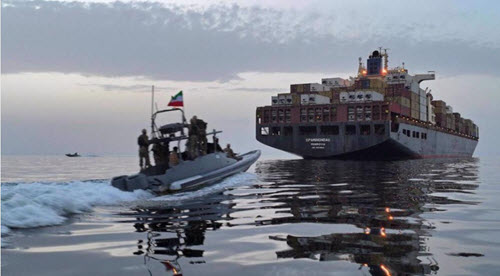
This photo shows an Islamic Revolution Guards Corps (IRGC) boat taking part in an operation in the Strait of Hormuz, April 21, 2026.

The Islamic Revolution Guards Corps (IRGC) says 31 commercial vessels, including oil tankers and container ships, have safely passed through the Strait of Hormuz over the past 24 hours under the coordination and protection of its Navy despite unprecedented insecurity caused by the “terrorist US military” in the Persian Gulf region.

In a statement on Thursday, the Public Relations Office of the Navy of IRGC announced that during the previous 24 hours, 31 vessels, including oil tankers, container ships, and other commercial ships, passed through the Strait of Hormuz with the coordination and security protection of the IRGC Navy.

“Despite the aggression of the terrorist US military and the creation of unprecedented insecurity in the Persian Gulf, particularly in the Strait of Hormuz, the IRGC Navy sought to establish a clear and secure route for the passage and continuation of global trade,” read the statement.

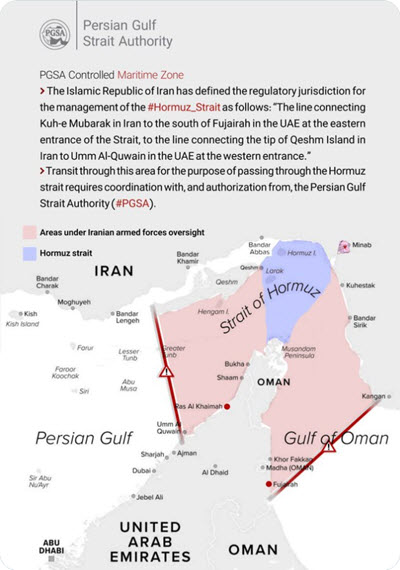
The Iranian authority controlling the Strait of Hormuz in the Persian Gulf has defined the supervisory management zone of the waterway, announcing on Wednesday that movement through the strategic corridor requires coordination and a permit.
Image
Iran's Strait of Hormuz management authority defines supervisory zone
The Iranian authority controlling the Strait of Hormuz in the Persian Gulf defines the supervisory management zone of the waterway.


The Persian Gulf Strait Authority (PGSA) said the zone is "the line connecting Mount Mubarak in Iran and southern Fujairah in the United Arab Emirates, on the eastern side of the strait, extending to the line connecting the end of Qeshm Island in Iran and Umm Al Quwain in the United Arab Emirates, on the western side of the strait."

Iran has consolidated de facto control over the Strait of Hormuz through military checkpoints, ship vetting, diplomatic arrangements and in some cases security fees for safe passage, Reuters reported, citing Asian and European shipping officials as well as Iranian and Iraqi officials.

The report said the IRGC plays a central role in a new multi-layered transit system that gives preference to ships linked to allies such as China and Russia, while other vessels may require government-to-government arrangements or payments to pass.

The IRGC reviews an affiliation document supplied by a ship owner or operator and during the process they may want to physically inspect the ship.

"The affiliation check is to identify if the vessel has any connection to the US or Israel," a European shipping source told Reuters.

The IRGC requires ship owners to disclose details including the value of the ship's cargo, the flag, its origin and destination, the registered owner and manager, and nationalities of the crew, according to documents sent to shipping industry sources by Iran's Persian Gulf Strait Authority.

The vetting is carried out by Iranian state institutions including the Ports and Maritime Organization, the Ministry of Industry, Mine and Trade, the national shipping organization, and the security overseer of the Supreme National Security Council, according to the report.


Ship owners' willingness to deal directly with Iran shows the degree to which the strait is under the Islamic Republic's control, Danny Citrinowicz, a former Israeli intelligence officer who specializes in Iran research and analysis, told Reuters.

"The straits will be blocked or opened up only by the approval of the Iranian government," said Citrinowicz. "Some will get through because of political alliances, others will have to pay, others will be turned back. This is the new norm."

Bilateral arrangements for passage include an additional step: Countries contact Iran's foreign minister to request permission. The minister forwards these to the Supreme National Security Council.

A decision is then made and communicated to the relevant bodies, including the IRGC which then provides the coordinates and instructions needed for safe passage.

Other countries have worked out different arrangements. Among them is India, which imports about 90% of its oil needs and about 50% of its gas, much of which passes through Hormuz.

New Delhi uses its embassy in Tehran to liaise with Iranian authorities, including the IRGC and the Iranian navy, which vets ships India wants to sail out of the Persian Gulf, according to an Indian shipping ministry official cited by Reuters.

"The Indian navy also told us that if the Iranians ask you to stop, then you should stop. If they ask you to move, you should move," the report said, "And we've been following those instructions."
admin
Site Admin
 
Posts: 40950
Joined: Thu Aug 01, 2013 5:21 am

Re: Part 2 Anti-Anti-Nazi Barbarian Hordes are Knocking Down

Postby admin » Thu May 21, 2026 9:07 pm

Intl. scientists call for restoration of Iran’s Pasteur Institute after US-Israeli aggression
Thursday, 21 May 2026 7:41 PM [ Last Update: Thursday, 21 May 2026 7:52 PM ]
https://www.presstv.ir/Detail/2026/05/2 ... he-Lancet-

Image
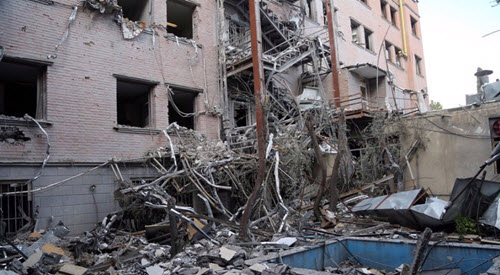
A view of the heavy damage at the Pasteur Institute of Iran in Tehran, Iran on April 13, 2026, following military strikes launched by the United States and Israel on February 28. (Photo: Anadolu agency)

A group of international researchers has called on the global health community to take effective action to repair the Pasteur Institute of Iran, which sustained considerable damage from a series of US-Israeli airstrikes in late March 2026.

A paper published in The Lancet, a leading medical journal, warned that “the current destruction poses a fundamentally new threat: not simply disruption, but the possible loss of a cornerstone public health institution.”

The paper, co-authored by researchers from Iran, Europe, New Zealand and other Western countries, underscored that “the Pasteur Institute of Iran has been a pillar of the country's public health system for more than a century.”

“The loss of the institute is not merely symbolic; it represents a real, immediate, and dangerous threat to public health,” the authors wrote.


The researchers noted that, according to their Iranian collaborators, fortunately no one was physically harmed. However, they added: “crucial reference laboratories, including those for genomic surveillance, rabies, HIV/AIDS, viral hepatitis, and vector-borne diseases, were completely lost.”


Daughter of a former Pasteur Institute of Iran director recounts her family
“Consequently, without these crucial facilities, seasonal and regional outbreaks might not receive timely and effective public health responses.”

The authors stressed that the damage is not solely a national issue; regional health security is also at risk.

“We urgently call on the international health communities to deploy their full capacity to protect health-care infrastructures and to foster the full restoration of the Pasteur Institute of Iran's essential laboratory and its diagnostic, surveillance, and vaccine capabilities.”

A century-old institution crippled

The paper noted that the historically important medical institution, founded 106 years ago, has played a key role in combating various human pathogens in the region and has responded to numerous epidemics and pandemics.

The institute houses reference laboratories, departments of vaccine research and production, pathogen surveillance, and outbreak response teams.

The World Health Organization (WHO) has already confirmed that, “following the damage caused by the airstrikes, the institute was no longer functional and could no longer deliver health services.”


The authors pointed out that the attacks occurred after years of sanctions had already left Iran’s public health system in a precarious condition.

“In 2018, we raised concerns in The Lancet that US sanctions were jeopardising Iran's viral hepatitis elimination programme,” they recalled. That programme depends on locally developed and produced vaccines and essential imported medicines.

During the SARS‑CoV‑2 pandemic, Iran suffered multiple epidemic waves while sanctions constrained access to genomic surveillance facilities and other resources crucial to the Pasteur Institute’s preparedness and response.


Press TV
@PressTV
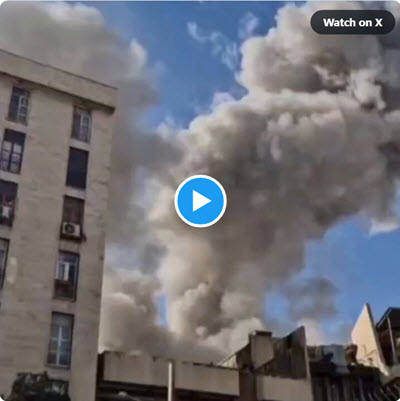
Smoke seen in the sky above Tehran's Jomhouri street

11:48 PM · Feb 27, 2026
https://x.com/i/status/2027636908923199874

Image
https://twitter.com/i/status/2027638127452430757


The institute has provided key public health infrastructure on multiple fronts, including vaccine development and production, national reference laboratory services, diagnostics, and genomic surveillance for infectious diseases such as cholera, rabies, measles, tuberculosis, HIV/AIDS and viral hepatitis.

The unprovoked US-Israeli aggression on Iran began on February 28 with airstrikes that assassinated the Leader of the Islamic Revolution, Ayatollah Seyyed Ali Khamenei, along with senior officials, commanders and civilians.

The strikes also targeted dozens of cultural and heritage sites, educational institutions, universities, hospitals and medical facilities, as well as civilian infrastructure.

Iranian officials and global health experts have strongly condemned the US-Israeli airstrikes on the country’s medical and pharmaceutical infrastructure.
admin
Site Admin
 
Posts: 40950
Joined: Thu Aug 01, 2013 5:21 am

Re: Part 2 Anti-Anti-Nazi Barbarian Hordes are Knocking Down

Postby admin » Thu May 21, 2026 9:20 pm

Days After UAE Nuclear Plant Attack, Iran Extends Hormuz Boundaries To UAE Territory, Arabs Panic?
Hindustan Times
May 21, 2026 #Iran #Hormuz #UAE

Days after the UAE nuclear plant attack, Iran’s new Persian Gulf Strait Authority has declared a control zone stretching deep across the Strait of Hormuz and up toward UAE waters, demanding ships seek permits to pass. With a dual U.S.–Iran blockade already choking a route that once carried a fifth of global oil, even analysts are half‑jokingly weighing wild “bypass Hormuz” ideas like carving a mini‑Suez through Oman’s Musandam Peninsula.

Image


Transcript

Days after the attack on the UAE's nuclear plant, Iran is now signaling a bold new move by appearing to extend its claimed maritime border in the straight
of Hormuz closer to UAE waters, raising fears of a fresh flash point in an already volatile Gulf. Iran's newlyannounced Hormu Straight Authority
has laid out how much of the crucial waterway it intends to bring under its jurisdiction, revealing detailed plans for tighter control over shipping lanes that carry a significant share of the
world's energy supplies. This development comes as a major shock for the United States and key Arab states as Iran moves to expand its boundaries in
the straight of Hormuz at a time of ongoing war and regional instability potentially giving tan unprecedented leverage over global oil flows. Iran on
May 20th revealed the exact extent of its controlled maritime zone in the straight of Hormuz publicly indicating how far its authority and enforcement
will stretch across one of the world's most critical energy choke points.
Tran's new Persian Gulf Strait Authority announced this move on X using the social media platform to formally introduce its mandate and signal to the
international community that it will play a central role in overseeing navigation through the waterway. The Persian Gulf Straight Authority said and I quote zone is the line connecting
Mount Mabarak in Iran and southern Fujera in the United Arab Emirates on the eastern side of the straight extending to the line connecting the end of Keshum Island in Iran and Amal Quain
in the United Arab Emirates on the western side of the straight. movement within this area for passage through the Straight of Hormuz requires coordination
and obtaining a permit from this body." Iran had effectively closed the Straight of Hormuz following USIsrael strikes on
February 28th, disrupting normal shipping patterns and demonstrating its ability to choke off vital oil and gas routes in response to military pressure.
Beyond Iran's closure of parts of the strait, the United States imposed its own naval blockade in the area. A step that tan has condemned as illegal and as
a blatant violation of its sovereignty and established maritime norms. Iran created the Persian Gulf Strait Authority to formally regulate and
oversee traffic in the Straight of Hormuz, centralizing control in a new body designed to manage shipping security and compliance with Iranian
directives. The PGSA said its account would provide real-time updates on operations in the waterway, turning it into an official channel for alerts,
instructions, and situational reports aimed at both domestic and international maritime audiences. Ships intending to cross the Straight of Hormuz will
receive electronic notifications outlining applicable rules, procedures, and safety requirements, ensuring that all vessels are clearly informed of
Iran's regulations before they enter its declared control zone.
May 17th, multiple reports said that massive explosions were heard in the United Arab Emirates capital, Abu Dhabi.
According to initial information, no casualties were reported, and the exact cause of the explosions has not yet been determined. Al Jazera reported that a
drone attack near the Baraka nuclear power plant ignited a fire in its vicinity, raising immediate security concerns. The drones reportedly targeted
the electrical generator at the Baraka nuclear power plant in the Alafa region of Abu Dhabi. Despite the incident, reports stated that the plant continues
to operate normally and that radiological safety levels have not been affected. A Dubai based journalist has explained why the Baraka nuclear power
plant is seen as strategically and symbolically vital for the UAE.
Aljazer spoke to journalist Natasha Churak after the reported drone attack on the Baraka nuclear power plant.
Turk described the facility as a crowning achievement for the UAE underscoring its national importance.
According to Alazer, Natasha Turak said, and I quote, "It is the first and only nuclear power plant
in the Arab world. Built in partnership with South Korea for $20 billion, the plant began full commercial operation in
2021 and supplies about 25% of the UAE's electricity. The Baraka plant also plays a key role in the UAE's climate and net
zero goals by 2050. The UAE operates the plant with help from the US with which it has an agreement to import nuclear fuel rather than developing its own ability to enrich and reprocess uranium.
It's really been upheld as an example for the world on how to develop a safe and peaceful nuclear energy program.
No group has claimed responsibility for the attack, which reportedly caused a fire at an electric generator.
Emirati officials said there was no danger to the public and no radioactive leak following the incident.
Hormuz is currently seeing a dual blockade by both US and Iranian naval forces, adding to concerns over shipping security in the region. The straight of
Hormuz, located off the coast of Iran, is a vital waterway in the Middle East and one of the most closely watched sea lanes in the world. The Hormuz Strait is
considered a critical choke point and is approximately 33 km wide at its narrowest point, making it both strategically important and highly
vulnerable. At around 20 million barrels per day, Hormuz handled about 1/5if of global oil consumption before the war, underscoring its huge importance to
energy flows. The strait also handled roughly 20% to 25% of the world's LNG, much of which originated from Qatar and
moved through the passage to global markets. More than 80% of the oil passing through the Hormu straight was destined for Asian markets, showing how
heavily the region depends on this route. Amid a global energy shock and a sharp increase in oil prices, the question now is whether President Trump
will seek to open or champion another major maritime waterway, potentially redrawing sea routes to secure supplies and project American power even more aggressively.
Shipping monitor Tanker Trackers has posted a proposal suggesting there could be an alternative route to the straight of Hormuz, offering a possible bypass if the main passage becomes disrupted.
Tanker trackers said that Oman could in theory create an alternative maritime passage that would allow ships to avoid the straight of Hormuz altogether. On
May 11th, tanker trackers shared maps showing a very narrow section of Oman's Mandam Peninsula, highlighting the geography that makes the idea
technically interesting. The shipping monitor said a channel could potentially be opened through the Rocky Land Bridge at Maxa, creating a new route for
vessels to move through. Tanker Trackers added that the channel could be made deep enough for large vessels to pass through, making the concept more
significant for commercial shipping. On X, Tanker Trackers said, quote, "Please don't take this seriously because Oman
won't, but there's a narrow passage in museum, which in theory could be opened up to allow up to 25 m draft depth for vessels to navigate through. The Rocky Land Bridge at Maxa is only 228mm wide.
Suez Canal is 193 km long." unquote.
Tanker trackers compared the hypothetical project to the Suez Canal, drawing a parallel with one of the world's most famous and strategically important shipping routes. The Suez
Canal is considered one of the most important waterways in the world because of the central role it plays in global trade and maritime movement. According
to Wyatt, the original cost of building the Suez Canal was $100 million, which would be around $1.5 billion in today's
money. The Suez Canal provides the shortest sea route between Europe and Asia, making it a vital shortcut for international shipping. The canal links
the Mediterranean Sea with the Red Sea through Egypt, forming a crucial passage between two major bodies of water. The Suez Canal helps reduce sailing
distance, time, and fuel costs for ships, which is why it remains so important to global commerce.
admin
Site Admin
 
Posts: 40950
Joined: Thu Aug 01, 2013 5:21 am

Previous

Return to United States Government Crime

Who is online

Users browsing this forum: Google [Bot] and 20 guests