IRGC Navy coordinates safe passage of 31 commercial vessels through Strait of Hormuz Thursday, 21 May 2026 4:15 PM [ Last Update: Thursday, 21 May 2026 8:28 PM ] https://www.presstv.ir/Detail/2026/05/2 ... Israel-war
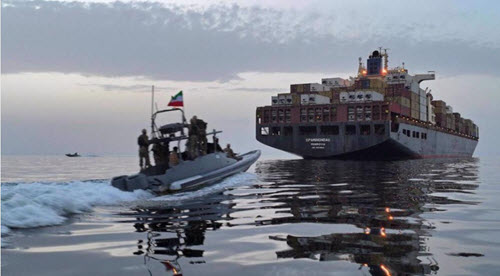
This photo shows an Islamic Revolution Guards Corps (IRGC) boat taking part in an operation in the Strait of Hormuz, April 21, 2026.
The Islamic Revolution Guards Corps (IRGC) says 31 commercial vessels, including oil tankers and container ships, have safely passed through the Strait of Hormuz over the past 24 hours under the coordination and protection of its Navy despite unprecedented insecurity caused by the “terrorist US military” in the Persian Gulf region.
In a statement on Thursday, the Public Relations Office of the Navy of IRGC announced that during the previous 24 hours, 31 vessels, including oil tankers, container ships, and other commercial ships, passed through the Strait of Hormuz with the coordination and security protection of the IRGC Navy.
“Despite the aggression of the terrorist US military and the creation of unprecedented insecurity in the Persian Gulf, particularly in the Strait of Hormuz, the IRGC Navy sought to establish a clear and secure route for the passage and continuation of global trade,” read the statement.
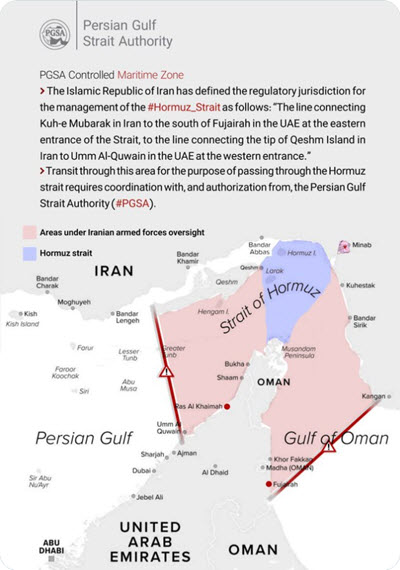
The Iranian authority controlling the Strait of Hormuz in the Persian Gulf has defined the supervisory management zone of the waterway, announcing on Wednesday that movement through the strategic corridor requires coordination and a permit.
Iran's Strait of Hormuz management authority defines supervisory zone The Iranian authority controlling the Strait of Hormuz in the Persian Gulf defines the supervisory management zone of the waterway.
The Persian Gulf Strait Authority (PGSA) said the zone is "the line connecting Mount Mubarak in Iran and southern Fujairah in the United Arab Emirates, on the eastern side of the strait, extending to the line connecting the end of Qeshm Island in Iran and Umm Al Quwain in the United Arab Emirates, on the western side of the strait."
Iran has consolidated de facto control over the Strait of Hormuz through military checkpoints, ship vetting, diplomatic arrangements and in some cases security fees for safe passage, Reuters reported, citing Asian and European shipping officials as well as Iranian and Iraqi officials.
The report said the IRGC plays a central role in a new multi-layered transit system that gives preference to ships linked to allies such as China and Russia, while other vessels may require government-to-government arrangements or payments to pass.
The IRGC reviews an affiliation document supplied by a ship owner or operator and during the process they may want to physically inspect the ship.
"The affiliation check is to identify if the vessel has any connection to the US or Israel," a European shipping source told Reuters.
The IRGC requires ship owners to disclose details including the value of the ship's cargo, the flag, its origin and destination, the registered owner and manager, and nationalities of the crew, according to documents sent to shipping industry sources by Iran's Persian Gulf Strait Authority.
The vetting is carried out by Iranian state institutions including the Ports and Maritime Organization, the Ministry of Industry, Mine and Trade, the national shipping organization, and the security overseer of the Supreme National Security Council, according to the report.
Ship owners' willingness to deal directly with Iran shows the degree to which the strait is under the Islamic Republic's control, Danny Citrinowicz, a former Israeli intelligence officer who specializes in Iran research and analysis, told Reuters.
"The straits will be blocked or opened up only by the approval of the Iranian government," said Citrinowicz. "Some will get through because of political alliances, others will have to pay, others will be turned back. This is the new norm."
Bilateral arrangements for passage include an additional step: Countries contact Iran's foreign minister to request permission. The minister forwards these to the Supreme National Security Council.
A decision is then made and communicated to the relevant bodies, including the IRGC which then provides the coordinates and instructions needed for safe passage.
Other countries have worked out different arrangements. Among them is India, which imports about 90% of its oil needs and about 50% of its gas, much of which passes through Hormuz.
New Delhi uses its embassy in Tehran to liaise with Iranian authorities, including the IRGC and the Iranian navy, which vets ships India wants to sail out of the Persian Gulf, according to an Indian shipping ministry official cited by Reuters.
"The Indian navy also told us that if the Iranians ask you to stop, then you should stop. If they ask you to move, you should move," the report said, "And we've been following those instructions."
Intl. scientists call for restoration of Iran’s Pasteur Institute after US-Israeli aggression Thursday, 21 May 2026 7:41 PM [ Last Update: Thursday, 21 May 2026 7:52 PM ] https://www.presstv.ir/Detail/2026/05/2 ... he-Lancet-
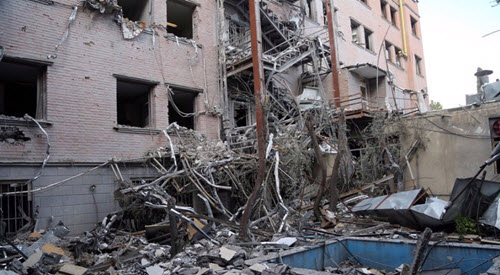
A view of the heavy damage at the Pasteur Institute of Iran in Tehran, Iran on April 13, 2026, following military strikes launched by the United States and Israel on February 28. (Photo: Anadolu agency)
A group of international researchers has called on the global health community to take effective action to repair the Pasteur Institute of Iran, which sustained considerable damage from a series of US-Israeli airstrikes in late March 2026.
A paper published in The Lancet, a leading medical journal, warned that “the current destruction poses a fundamentally new threat: not simply disruption, but the possible loss of a cornerstone public health institution.”
The paper, co-authored by researchers from Iran, Europe, New Zealand and other Western countries, underscored that “the Pasteur Institute of Iran has been a pillar of the country's public health system for more than a century.”
“The loss of the institute is not merely symbolic; it represents a real, immediate, and dangerous threat to public health,” the authors wrote.
The researchers noted that, according to their Iranian collaborators, fortunately no one was physically harmed. However, they added: “crucial reference laboratories, including those for genomic surveillance, rabies, HIV/AIDS, viral hepatitis, and vector-borne diseases, were completely lost.”
Daughter of a former Pasteur Institute of Iran director recounts her family “Consequently, without these crucial facilities, seasonal and regional outbreaks might not receive timely and effective public health responses.”
The authors stressed that the damage is not solely a national issue; regional health security is also at risk.
“We urgently call on the international health communities to deploy their full capacity to protect health-care infrastructures and to foster the full restoration of the Pasteur Institute of Iran's essential laboratory and its diagnostic, surveillance, and vaccine capabilities.”
A century-old institution crippled
The paper noted that the historically important medical institution, founded 106 years ago, has played a key role in combating various human pathogens in the region and has responded to numerous epidemics and pandemics.
The institute houses reference laboratories, departments of vaccine research and production, pathogen surveillance, and outbreak response teams.
The World Health Organization (WHO) has already confirmed that, “following the damage caused by the airstrikes, the institute was no longer functional and could no longer deliver health services.”
The authors pointed out that the attacks occurred after years of sanctions had already left Iran’s public health system in a precarious condition.
“In 2018, we raised concerns in The Lancet that US sanctions were jeopardising Iran's viral hepatitis elimination programme,” they recalled. That programme depends on locally developed and produced vaccines and essential imported medicines.
During the SARS‑CoV‑2 pandemic, Iran suffered multiple epidemic waves while sanctions constrained access to genomic surveillance facilities and other resources crucial to the Pasteur Institute’s preparedness and response.
Press TV @PressTV Smoke seen in the sky above Tehran's Jomhouri street
The institute has provided key public health infrastructure on multiple fronts, including vaccine development and production, national reference laboratory services, diagnostics, and genomic surveillance for infectious diseases such as cholera, rabies, measles, tuberculosis, HIV/AIDS and viral hepatitis.
The unprovoked US-Israeli aggression on Iran began on February 28 with airstrikes that assassinated the Leader of the Islamic Revolution, Ayatollah Seyyed Ali Khamenei, along with senior officials, commanders and civilians.
The strikes also targeted dozens of cultural and heritage sites, educational institutions, universities, hospitals and medical facilities, as well as civilian infrastructure.
Iranian officials and global health experts have strongly condemned the US-Israeli airstrikes on the country’s medical and pharmaceutical infrastructure.
Days After UAE Nuclear Plant Attack, Iran Extends Hormuz Boundaries To UAE Territory, Arabs Panic? Hindustan Times May 21, 2026 #Iran #Hormuz #UAE
Days after the UAE nuclear plant attack, Iran’s new Persian Gulf Strait Authority has declared a control zone stretching deep across the Strait of Hormuz and up toward UAE waters, demanding ships seek permits to pass. With a dual U.S.–Iran blockade already choking a route that once carried a fifth of global oil, even analysts are half‑jokingly weighing wild “bypass Hormuz” ideas like carving a mini‑Suez through Oman’s Musandam Peninsula.
Transcript
Days after the attack on the UAE's nuclear plant, Iran is now signaling a bold new move by appearing to extend its claimed maritime border in the straight of Hormuz closer to UAE waters, raising fears of a fresh flash point in an already volatile Gulf. Iran's newlyannounced Hormu Straight Authority has laid out how much of the crucial waterway it intends to bring under its jurisdiction, revealing detailed plans for tighter control over shipping lanes that carry a significant share of the world's energy supplies. This development comes as a major shock for the United States and key Arab states as Iran moves to expand its boundaries in the straight of Hormuz at a time of ongoing war and regional instability potentially giving tan unprecedented leverage over global oil flows. Iran on May 20th revealed the exact extent of its controlled maritime zone in the straight of Hormuz publicly indicating how far its authority and enforcement will stretch across one of the world's most critical energy choke points. Tran's new Persian Gulf Strait Authority announced this move on X using the social media platform to formally introduce its mandate and signal to the international community that it will play a central role in overseeing navigation through the waterway. The Persian Gulf Straight Authority said and I quote zone is the line connecting Mount Mabarak in Iran and southern Fujera in the United Arab Emirates on the eastern side of the straight extending to the line connecting the end of Keshum Island in Iran and Amal Quain in the United Arab Emirates on the western side of the straight. movement within this area for passage through the Straight of Hormuz requires coordination and obtaining a permit from this body." Iran had effectively closed the Straight of Hormuz following USIsrael strikes on February 28th, disrupting normal shipping patterns and demonstrating its ability to choke off vital oil and gas routes in response to military pressure. Beyond Iran's closure of parts of the strait, the United States imposed its own naval blockade in the area. A step that tan has condemned as illegal and as a blatant violation of its sovereignty and established maritime norms. Iran created the Persian Gulf Strait Authority to formally regulate and oversee traffic in the Straight of Hormuz, centralizing control in a new body designed to manage shipping security and compliance with Iranian directives. The PGSA said its account would provide real-time updates on operations in the waterway, turning it into an official channel for alerts, instructions, and situational reports aimed at both domestic and international maritime audiences. Ships intending to cross the Straight of Hormuz will receive electronic notifications outlining applicable rules, procedures, and safety requirements, ensuring that all vessels are clearly informed of Iran's regulations before they enter its declared control zone. May 17th, multiple reports said that massive explosions were heard in the United Arab Emirates capital, Abu Dhabi. According to initial information, no casualties were reported, and the exact cause of the explosions has not yet been determined. Al Jazera reported that a drone attack near the Baraka nuclear power plant ignited a fire in its vicinity, raising immediate security concerns. The drones reportedly targeted the electrical generator at the Baraka nuclear power plant in the Alafa region of Abu Dhabi. Despite the incident, reports stated that the plant continues to operate normally and that radiological safety levels have not been affected. A Dubai based journalist has explained why the Baraka nuclear power plant is seen as strategically and symbolically vital for the UAE. Aljazer spoke to journalist Natasha Churak after the reported drone attack on the Baraka nuclear power plant. Turk described the facility as a crowning achievement for the UAE underscoring its national importance. According to Alazer, Natasha Turak said, and I quote, "It is the first and only nuclear power plant in the Arab world. Built in partnership with South Korea for $20 billion, the plant began full commercial operation in 2021 and supplies about 25% of the UAE's electricity. The Baraka plant also plays a key role in the UAE's climate and net zero goals by 2050. The UAE operates the plant with help from the US with which it has an agreement to import nuclear fuel rather than developing its own ability to enrich and reprocess uranium. It's really been upheld as an example for the world on how to develop a safe and peaceful nuclear energy program. No group has claimed responsibility for the attack, which reportedly caused a fire at an electric generator. Emirati officials said there was no danger to the public and no radioactive leak following the incident. Hormuz is currently seeing a dual blockade by both US and Iranian naval forces, adding to concerns over shipping security in the region. The straight of Hormuz, located off the coast of Iran, is a vital waterway in the Middle East and one of the most closely watched sea lanes in the world. The Hormuz Strait is considered a critical choke point and is approximately 33 km wide at its narrowest point, making it both strategically important and highly vulnerable. At around 20 million barrels per day, Hormuz handled about 1/5if of global oil consumption before the war, underscoring its huge importance to energy flows. The strait also handled roughly 20% to 25% of the world's LNG, much of which originated from Qatar and moved through the passage to global markets. More than 80% of the oil passing through the Hormu straight was destined for Asian markets, showing how heavily the region depends on this route. Amid a global energy shock and a sharp increase in oil prices, the question now is whether President Trump will seek to open or champion another major maritime waterway, potentially redrawing sea routes to secure supplies and project American power even more aggressively. Shipping monitor Tanker Trackers has posted a proposal suggesting there could be an alternative route to the straight of Hormuz, offering a possible bypass if the main passage becomes disrupted. Tanker trackers said that Oman could in theory create an alternative maritime passage that would allow ships to avoid the straight of Hormuz altogether. On May 11th, tanker trackers shared maps showing a very narrow section of Oman's Mandam Peninsula, highlighting the geography that makes the idea technically interesting. The shipping monitor said a channel could potentially be opened through the Rocky Land Bridge at Maxa, creating a new route for vessels to move through. Tanker Trackers added that the channel could be made deep enough for large vessels to pass through, making the concept more significant for commercial shipping. On X, Tanker Trackers said, quote, "Please don't take this seriously because Oman won't, but there's a narrow passage in museum, which in theory could be opened up to allow up to 25 m draft depth for vessels to navigate through. The Rocky Land Bridge at Maxa is only 228mm wide. Suez Canal is 193 km long." unquote. Tanker trackers compared the hypothetical project to the Suez Canal, drawing a parallel with one of the world's most famous and strategically important shipping routes. The Suez Canal is considered one of the most important waterways in the world because of the central role it plays in global trade and maritime movement. According to Wyatt, the original cost of building the Suez Canal was $100 million, which would be around $1.5 billion in today's money. The Suez Canal provides the shortest sea route between Europe and Asia, making it a vital shortcut for international shipping. The canal links the Mediterranean Sea with the Red Sea through Egypt, forming a crucial passage between two major bodies of water. The Suez Canal helps reduce sailing distance, time, and fuel costs for ships, which is why it remains so important to global commerce.
H4ND4L4 @HPRRed 18h Statement from the Handala Cyber Command regarding suspicious movements by the American-Zionist enemy
Following an investigation into certain covert accesses obtained by the Handala Cyber Command to the military and security systems of the American-Zionist enemy, suspicious enemy activities indicating preparations for the renewed outbreak of military conflict in the coming days have become apparent. Therefore, as previously declared by the Islamic Revolutionary Guard Corps (IRGC), should the enemy commit another act of aggression or recklessness, the Handala Cyber Command, in full coordination with the IRGC, will launch devastating transregional strikes against the energy and digital infrastructure of hostile states.
The joint operations command of the Handala Cyber Command and the Islamic Revolutionary Guard Corps has identified dozens of legitimate targets deep within enemy territory across multiple countries. At the very opening moments of any conflict, through combined cyber, missile, and drone operations, they will deliver devastating blows to Great Satan.
We hereby inform the heroic Muslim Ummah that your anonymous sons in Handala and the Islamic Revolutionary Guard Corps are more prepared than ever to avenge and seek retribution for our martyred leader, and they will bring a burning hell upon the enemy.
We will extinguish the rage burning in the hearts of the oppressed and downtrodden people of the world , enraged by child abuse and exploitation associated with Epstein, and by the killing of infants and patients on the island of the Kahanist sect , with the cold water of missiles.
If the world and the leaders of nations remained silent in the face of the killing of twenty thousand children in Gaza, then they must also remain silent before what they will witness in the future.
Israel Genocide Tracker @trackingisrael An Israeli unit's "homecoming" party featured a display of their well-documented annihilation of southern Lebanon's villages, met with cheers and laughter from crowds of soldiers, their relatives, and family members.
It is a scene impossible to see anywhere but Israel. 1:47 PM · May 21, 2026
The Cradle @TheCradleMedia 10h Covert UN mission successfully rescues millions of historical Palestinian refugee documents from Gaza —— A highly sensitive, ten-month clandestine operation by the United Nations Relief and Works Agency (UNRWA) successfully evacuated millions of historical archival documents from the Gaza Strip and East Jerusalem, safeguarding generations of Palestinian records. The Guardian reported on 14 May that the complex mission involved dozens of UN staff members across four countries racing against intense bombardment, cyberattacks, and shifting frontlines to prevent the permanent destruction of the files.
The rescued documents, many dating back to 1948, include original refugee registration cards, birth certificates, and land records that provide the sole legal and historical evidence of displacement for hundreds of thousands of stateless Palestinians.
The first phase of the 10-month operation began under heavy fire after Israeli forces ordered the evacuation of UNRWA's Gaza City headquarters in 2024. Turning down appeals to leave the files behind, a small team utilized rented pickup trucks to smuggle the paper archives south to Rafah over three dangerous trips, eventually moving them into Egypt using international staff who hand-carried the records past border checkpoints.
Concurrently, as hostile protests and arson attacks targeted UNRWA’s East Jerusalem compound ahead of new Israeli legislation banning the agency, staff members secretly moved a parallel set of historic archives across the border into Jordan.
The entire collection has since been compiled in Amman, where an extensive digitization project funded by Luxembourg is currently underway in a secure facility. More than 50 personnel are working to scan roughly 30 million individual documents by hand, a meticulous process that experts estimate will take another two years to fully complete.
According to historians cited by The Guardian, the preservation of this national archive is critical for any future legal resolutions to the conflict, ensuring that Palestinians retain access to their verified family lineages and documented histories despite the total destruction of physical infrastructure inside the Palestinian territories.
Stop the War Coalition reposted Heidi Matthews @Heidi__Matthews Flotilla participants are arriving at Istanbul airport. This is what Israel military and prison personnel did to them. Freedom Flotilla Coalition and 2 others
Glenn Diesen @Glenn_Diesen The UK is outraged that Russia intercepted its spy plane that was flying along Russia’s Black Sea coast to pick targets.
https://www.theguardian.com/uk-news/2026/may/20/russia-jet-near-collision-flying-near-raf-spy-plane Russian jet causes ‘dangerous’ near miss after flying close to RAF spy plane. UK calls incident ‘unacceptable’ after Su-27 jet comes within six metres of unarmed RAF plane over Black Sea Dan Sabbagh Defence and security editor The Guardian Wed 20 May 2026 13.00 EDT
A Russian jet flew within six metres of an RAF spy plane flying at 500mph over the Black Sea, one of two mid-air incidents last month described as “dangerous and unacceptable” by the defence secretary, John Healey.
An Su-27 jet conducted six passes in front of an unarmed RAF Rivet Joint flying close to its nose in mid April, risking a collision that could have caused a diplomatic crisis between the two countries.
On a second occasion, also in mid April, a Russian Su-35 jet flew sufficiently close to the British spy plane that it set off its emergency systems, including disabling the autopilot, as the plane conducted a surveillance mission over international airspace.
A Rivet Joint is a spy plane, with a crew of up to 30, capable of a wide range of electronic surveillance at a ranges of about 150 miles, and would have been monitoring Russian activity as part of a Nato patrol.
“This incident is another example of dangerous and unacceptable behaviour by Russian pilots, towards an unarmed aircraft operating in international airspace,” Healey said. “These actions create a serious risk of accidents and potential escalation.”
It is the most dangerous Russian action against a British Rivet Joint aircraft since a plane fired a missile over the Black Sea in 2022, the MoD said on Wednesday.
Russia has been increasing its military activity in Europe. Lithuanian politicians sheltered underground on Wednesday and air traffic at Vilnius airport was temporarily suspended after a drone violated the country’s airspace.
A day earlier, Russia’s ambassador to the UN claimed Moscow had information that Ukraine planned to launch military drones from Latvia and other Baltic states. Latvia dismissed the comments as “pure fiction”.
Two Russian frigates escorted oil tankers and a suspected arms shipment through the North Sea and Dover strait last month, their activities requiring a month-long surveillance patrol by the Royal Navy.
Last month, Healey revealed the UK had tracked three Russian submarines that loitered over critical undersea infrastructure in the North Atlantic for a month before they sailed away.
“I would like to pay tribute to the outstanding professionalism and bravery of the RAF crew who continued with their mission despite these dangerous actions,” Healey said. “Let me be very clear: This incident will not deter the UK’s commitment to defend Nato, our allies and our interests from Russian aggression.”
Taiwan Invasion Trigger: China Prepares to Use North Korea’s Nukes to Cripple US Pacific Command? Hindustan Times May 22, 2026 #NorthKorea #KimJongUn #Trump
North Korea’s expanding nuclear arsenal is raising fresh fears across Washington and Asia, with analysts warning Pyongyang could soon overwhelm U.S. missile defenses and threaten the American homeland. As Trump faces growing pressure over Iran, Taiwan and China, concerns are mounting that Kim Jong Un’s rapidly advancing ICBM program may reshape the global nuclear balance. Reports suggest North Korea could dramatically expand its warhead stockpile over the next decade, while U.S. officials privately fear a worsening Taiwan crisis amid rising China tensions. Is America prepared for simultaneous threats from Pyongyang, Beijing and Tehran?
Transcript
Could the United States face a shortfall of precision missiles and munitions in a prolonged regional war? And if so, might that shortage occur before Iran's most dangerous ally exhausts its nuclear capabilities? What would the strategic balance look like if the next dominant nuclear power turned out not to be China, but instead the close ally of figures like Machaba, reshaping regional deterrence and global alliances? Is North Korea on the verge of developing a credible, reliable intercontinental strike capability that could threaten the US homeland with a nuclear weapon for the first time in history? Could a buildup of roughly 50 North Korean nuclear warheads be leveraged overtly or covertly as a strategic asset that gives China a hidden coercive edge in any confrontation over Taiwan? Could Beijing exploit the nuclear threat posed by North Korea to create ambiguity, constrain US operational responses, and effectively paralyze US-Pacific command's freedom of action during a crisis? According to reporting by Bloomberg, analysts now warn that North Korea may possess enough nuclear warheads and delivery options to saturate and potentially overwhelm US missile defense systems, creating scenarios in which American interceptors and layer defenses could be strained beyond their design capacity. [music] Intelligence estimates suggest Pyongyang currently holds roughly 50 nuclear warheads and officials say that additional devices and file material actively under development in order to expand and diversify that arsenal over the coming years. Bloomberg reports that if North Korea sustains its current production tempo of file material and warhead assembly, Kim's forces could feasibly approach or match the size of Israel's nuclear stockpile by around 2035 with significant implications for regional and global deterrence calculations. South Korean officials have warned that North Korea's industrial capacity and facilities could allow Pyongyang to build as many as 20 new nuclear weapons per year. A rate of expansion that would quickly change strategic balances on the peninsula and beyond. Projections based on current production trends indicate North Korea could within the next decade amass a nuclear arsenal that rivals the size of France's stockpile, raising questions about proliferation, deterrence, and the threshold for international responses. atellite imagery and open- source reporting show Pyongyang is expanding and modernizing multiple facilities associated with the production of weaponsgrade file material, increasing its ability to manufacture additional warheads at greater scale and pace. Beyond stockpile growth, North Korea is actively testing and refining new delivery technologies ranging from long-range ballistic missiles to potentially mobile and submarine launch systems that would make its nuclear weapons harder to detect, track, and defend against. If current expansion continues, analysts warn Kim's nuclear arsenal could soon surpass the inventories held by the United Kingdom, Israel, and Pakistan, altering regional threat perceptions and complicating traditional calculations of strategic par. Bloomberg reporting warns that North Korea's Wasong series of intercontinental ballistic missiles may now pose a credible threat to US homeland defense systems, raising fresh concerns about whether current US interceptors and sensors can reliably detect and defeat an incoming salvo. Analysts say specific Wasong variants, including the 15, 17, 18, and 19, could be designed and tested in ways that allow them to penetrate US groundbased midcourse defenses, challenging the layered missile shield that American planners have relied upon for decades. The United States has invested roughly $65 billion in its groundbased midcourse defense network, a multi-layered system of interceptors, radars, and command nodes intended to protect the homeland from limited ballistic missile attacks. Beyond ICBMs aimed at distant targets, North Korea's dense inventory of short and medium-range missiles remains capable of striking US allies across Asia, threatening bases, cities, and critical infrastructure in South Korea, Japan, and other regional partners. Decades of sanctions, diplomacy, and pressure intended to halt Kim's nuclear program have so far failed to stop its expansion. As Pyongyang continues to develop both file material production and delivery systems with growing speed and sophistication, Guam continues to be singled out as a principal target because of its strategic location and the large stockpile of US munitions and military assets stationed there, making it a high-V value objective in Pyongchang's contingency planning. Guam continues to be singled out as a principal target because of its strategic location and the large stockpile of US munitions and military assets stationed there, making it a high-v value objective in Pyongyangs contingency planning. Some assessments suggest North Korea may be approaching the threshold where it could wage an actual limited nuclear campaign, possessing enough weapons and delivery systems to threaten sustained nuclear operations against adversaries. [music] Importantly, Pyongyang has never demonstrated a full-scale mass nuclear missile attack in live tests, leaving key questions about logistics, command, and control, and the practical reliability of such an operation unanswered. Ultimately, uncertainty remains. While estimates and tests raise concern, no definitive public evidence proves that Kim's nuclear capable missiles can reliably reach and strike North American targets under operational conditions. Last year, US defense intelligence publicly assessed that North Korea possessed roughly 10 operational intercontinental ballistic missiles, a baseline estimate that shaped allied planning and threat assessments at the time. More recent analyses suggest that Pyongyangs program has accelerated, and some intelligence and open- source experts now estimate North Korea could field as many as 24 active ICBMs, substantially increasing its strike options. Other reports go further, claiming North Korea may already have as many as 48 transporter erector launcher vehicles configured and ready, giving the regime the mobility to disperse and rapidly launch multiple ICBMs. In recent years, dozens of ICBM-sized missiles have been displayed in carefully staged military parades, signaling both a public projection of capability and a potential inventory far larger than earlier estimates. However, analysts caution that many parade displayed missiles could be mock-ups or inert replicas intended for strategic signaling, meaning visual appearances do not necessarily confirm full operational status. By contrast, the US groundbased midcourse defense network currently fields 44 deployed interceptors located in Alaska and California, forming the primary homeland layer against long-range ballistic missile threats. To respond to evolving threats, Washington plans to expand the shield by adding 20 additional interceptor silos in Alaska, a move intended to improve engagement capacity and redundancy against larger salvos. Defensive planners also work with conservative engagement doctrines that often assume the potential requirement of two interceptors per incoming warhead, one to increase the kill probability and a second as a hedge against interceptor failure. Chinese state and regional reports say Xi Jinping is reportedly preparing a visit to North Korea, his first trip there in seven years, a diplomatic gesture that would carry heavy symbolic weight for Beijing, Pyongyang, and regional security planners. A South Korean media report indicates the Chinese president could arrive in Pyongyang as early as next week, a rapidly scheduled visit that would likely be intended to reset ties and send strategic signals across Northeast Asia. At the same time, Washington has reportedly paused a planned 14 billion dollar arms sale to Taiwan, a decision officials say is aimed at preserving munitions and equipment needed for potential operations related to the escalating conflict involving Iran. The proposed arms transfer has long provoked Beijing's since China views the self-governed island of Taiwan as part of its sovereign territory and consistently opposes foreign weapon sales that strengthen Taipe's defenses. According to accounts from the Trump visit, she reportedly told the US president that Taiwan remains the single most sensitive and potentially explosive issue in Cenino US relations underlining how easily the topic can escalate diplomatic tensions. Yet behind closed doors, some of Trump's advisers have reportedly expressed growing concern that the situation around Taiwan is deteriorating and could spark a crisis if deterrence and diplomacy fail to hold. Axios reported that US officials speaking privately worry Beijing might attempt coercive or military action against Taiwan within the next 5 years. A timeline that has heightened urgency across defense and policy circles. As a result, many US officials now describe Taiwan as confronting its most serious security threat in decades. A perception driven by Beijing's military modernization and shifting regional power dynamics. A rare sighting near Hainan has thrust China's undersea military power back into [music] the spotlight. Footage appears to show a Type093B nuclear attack submarine surfacing near popular tourist beaches. The submarine was reportedly seen not far from the strategically critical Ulin naval complex on Hainan Island. Defense Security Asia reported on the sighting, citing a video said to have been recorded by a tourist on [music] May 14th. Open- source intelligence linked accounts said the submarine was moving unusually close to a public recreation area. China's Type093B is currently seen as its most advanced nuclearpowered attack submarine. The Type 093B appears to be China's top operational attack submarine until the next generation Type095 fully emerges. Displacement is reportedly around 6,200 to 7,000 tons. Length is approximately 413 ft or about 126 m. Speed is said to reach around 30 knots. Crew are estimated at roughly 100 officers and sailors. The submarine is reported to feature a vertical launch system along with improved propulsion, stealth, and hydrodnamic performance. Open- source reporting also suggests the boat carries advanced sensors and torpedo armament, boosting its combat capability. [music] Earlier, a satellite image had reportedly captured a Type093 submarine near an underground bunker back in 2020. Notably, Hainan is not just a tourist island. It is also home to the strategically important Yulan Naval Base. Open source reporting says the Yulan naval base is located near Sonia along Heynan's southern coastline. The highly secretive facility is believed to support major Chinese surface fleet and submarine operations in contested regional waters. For China, Hainan appears to serve as both a postcard perfect coastline and a crucial military launch point. The latest sighting underscores how the undersea contest in the South China Sea is becoming harder to ignore.
Iran Just BLINDSIDED Trump in Strait of Hormuz, War IMMINENT | Alexander Mercouris Danny Haiphong Streamed live 92 minutes ago #iran #usnavy #trump
Alexander Mercouris of The Duran joins the show to discuss Iran's game changing move on the Strait of Hormuz that casts high suspicion on reported efforts of a "peace" deal on the part of the Trump administration. War is imminent, and Alexander breaks down the massive geopolitical dimensions of the rapidly evolving situation.