
Larry Johnson: Iran Abandons Talks & Threatens to Retaliate Against Israel
Glenn Diesen
Jun 1, 2026
Larry Johnson is a former CIA intelligence analyst who also worked at the U.S. State Department's Office of Counterterrorism. Johnson discusses Israel's attacks on Lebanon, Iran walking away from the talks, and the rapid escalation as Iran threatens to retaliate against Israel.
Transcript
Welcome back to the program. We are joined again by Larry Johnson, a former CI analyst who also worked at the US State Department's Office of
Counterterrorism and who's also a prolific writer on the website Soner 21 and I will leave a link in the
description. So, thank you for coming back on, Larry. There's a lot of things to go through here. their parents that
the Iran war is escalating quickly now and well it seems very likely we're going to go back to large scale warfare
that is uh well over the past few days we already seen that the US have struck Iran and um and Iran has retaliated
so we see that the Israel's bombing of Lebanon has intensified and u uh this
now yeah they will start bombing Beirut it seems or then it seems and uh the US
apparently have given given a green light to do so. Iran then has responded
by um by arguing that all fronts are linked to the ceasefire. In other words, you can't attack Lebanon then will
attack you. uh Iran has then withdrawn from the talks with the US and you know the media there's rumors anything such
as uh well a lot of things that could be done for example Iran could shut down the Red Sea uh it's hard to follow this
is all happening very very fast so I was hoping if you could give a nice overview over what we're looking at here yeah so it started off about 10:00 this
morning uh Eastern East Coast time so I guess that's like 3:00 p.m. your time. You're different from me.
6. Okay. So, that's 4:00 your time. Uh, which means you're up past your bedtime. Thanks for doing this.
Um, and Iran said, "Okay." U, we're not we're done talking to the United States. Because the initial
ceasefire, the agreement was that Israel would not attack Lebanon, not just Beirut, not attack Lebanon. It
would stop its attacks. of the Palestinians and instead they're continuing. So we're out. We're not we're not going to we're not going to
have any more talks. We're closing the straight of Hormuz. Now up to this point Iran has allowed a number of ships to go
through and they said we're going to shut it down completely again. Complete shut down and we're going to close the
straight of Babel Mandab. That's going to be shut down. They haven't shut it down yet. Um, I think they were giving
the United States basically to see if they would go back to the original agreement that was signed.
Um, this got Trump's attention because within an hour of that
announcement, Trump's on the phone with BB Netanyahu. Now, here's where it gets confusing.
Uh Trump's version is he had a great call and BB's going to no they're not going to bomb Beirut, but that's not that's not what Iran's
asking for. This is not just don't bomb Beirut. Stop bombing Lebanon and stop killing Palestinians. Stop.
Well, Israel's not willing to stop. And since that phone call, Trump's given one version and BB Netanyahu is given a completely different version.
And then you've got the people like Smootric weighing in and Israel Catz the defense minister weighing in and Bendy
Gavir weighing in. So and it looks like Israel has not stopped and and so then here's concerning point.
uh one of the spokesman for the IRGC in Iran, the Iranian Revolutionary Guard
Corps said issued the warning, if you live in northern Israel, they refer to it as the occupi northern occupied
territories. If you're in northern Israel, you want to get out because we're going to hit you.
So they made unambiguous.
So, I I think within within the next , you're going to see Iran re-engage Israel with ballistic missiles
and drones that will be targeting northern Israel.
So, this this looks like it's heating up. Now, what's the United States doing so far with on the military side of the
house? Um, they're not spinning up. They And what what do I mean by spinning up?
where you know basically the air tasking orders go out where you tell this squadron, okay, these are your targets.
This is where you're going to hit. This is when you're going to launch. Now, a lot of that's pre-programmed, but before
you don't just because these were planned maybe six weeks ago, eight weeks ago. So, you don't just grab it and say, "Okay, yeah, it was good eight weeks
ago. Let's launch." No, you got to go through and check them. You know, that's how they got into trouble with killing
those girls at the school at al-manab uh in in on February 28th. They used some existing plans that had been planned
before with dated information. They hadn't updated it. They hadn't checked it. So now, you know, I think one of the
consequences of that for new air tasking orders, they go in and have to verify and double check.
So, um, it was instructive that Trump didn't waste any time getting on the phone with Netanyahu.
Now, Netanyahu's was telling the exact opposite that he's not listening to Trump. Trump claiming that BB Netanyahu
listened to him. So, we'll we'll see. Uh the only we'll know whether or not the if the attacks continue in Beirut and in southern Lebanon
then uh I think we're going to see Iran strike Israel within the next .
Well, this should have been the key lesson from the war though that Iranians are able to deter by going up the
escalation ladder with the United States. So this whole idea that the US and Israel can simply say, well, let's
do a limited ceasefire. we won't strike Beirut if you don't hit Israel. Uh but again, it's open season on the southern parts of Lebanon. The idea that they
would be able to u well decide how the war should be fought. Uh there's no indications that
Iran would go along with this. So again, this seems very very predictable. But what do you think is the calculation now
in Tel Aviv? I mean, are the Israelis their their bombing of Lebanon? Is it uh
deliberately to prevent Trump from making any extended ceasefire or peace deal with the Iranians or is this just
um you know well they're just going along with their usual business?
Yeah. No. Well, I think it's a combination of the two. I don't think it's an eitheror. Um they've uh they're
convinced that they can beat Hezbollah or they think they can and that's why they want to bomb blow up that destroy
that suburb. You know, as cats or Bir was saying, flatten it, flatten it, flatten it, you know, do give it the
Gaza treatment. But you know the thing we're seeing now with the tactics that Hezbollah have employed with the first
you know the first person point of view uh drones that that are fiber optic. Number one
they are uh they are immune to electronic warfare countermeasures.
Number two the drone operators they don't have to expose themselves.
you know, it's not it's not like in 2006 when they were shooting an RPG, you know, shoulder fired. You had to get out
and sort of, you know, be visible. If you could see the tank, the tank could see you. Um, and so they lost some
personnel that way. This this reduces Hezbollah's casualties and they usually get to do it from underground bunkers.
So um that and then the volume I don't know what percentage
of uh you know actual casualties you know killed in action by wounded. Uh some of the public sources suggest show
it's well over a thousand wounded. Um uh the official death toll was like 24. I I think that's I think that's not true.
That's entirely too low. Um, but an estimated 400 Marava tanks have been
destroyed. That's a lot of tanks. I mean, Israel's got thousands, you know, I think a couple of thousand, but this
is still a significant loss of tanks. And if you're hit losing tanks, that means you're losing personnel.
Now, whether they're being killed or wounded, you know, that's a whole another thing. So, um, Hezbollah is not
going to stop this until Israel withdraws from southern Lebanon, goes back into northern, uh, Israel now. And
that brings back Iran's threat, telling them, "Get the hell out of northern Israel because we're going we're going to hit you." That was the message.
Um you because you don't tell people to vacate that area just because you know you're trying to uh you know create business for a moving company.
They're they're going to hit it.
Yeah. Well, I saw that uh the Israeli National Security Minister Ben was um
making the point that uh they should uh well at any opportunity they should say yes when it's possible to the United States and no when necessary. And the
his his argument was when it comes to attacking Lebanon, it's time to say no to the Americans that or the American
president that this is something that Israel will do irrespective of what Trump says. uh which which kind
of can be seen as another way now of pulling the United States back into the war because uh if they begin now to
intensify the attacks on Lebanon, Iran will then retaliate, do you think it's any chance that the Americans will sit
on the sideline or is that or Yeah, I think I I think initially yes.
Um because America doesn't have any good military options. These are all um Trump
uh according to uh Robert Barnes and I I think Barnes has good enough contact still despite him being seen as a critic
now of Trump. He was Trump's lawyer, but he he he said that, you know, Trump was terrified of getting back into a Jimmy
Carter situation where you got American hostages being held in Iran because, you know, day one, day two, day three, you
know, the news media starts keeping track of how long they're being held hostage, which becomes a measure of your
own incompetence. So, um, this is, um, Trump's not eager to get back into that.
And, uh, you know, when you look at the Iran has become pretty adept at shooting down drones.
So, if you can shoot down a drone, you can potentially also take down a an F-16 or an F-18 or an F-35
or an F-22 or an A-10. Those are like the four major categories. five major categories of aircraft that are in theater.
Well, Trump, you know, he took to social media as well. He was making the point that because of uh you know, his call,
as you said, to Netanyahu that they're not going to march on Beirut. So, essentially, he took care of business.
But, uh uh yeah, I mean, where did that come from? Who was talking about marching on Beirut? Yeah, that was I mean, is Israel did it?
What? Last time they did that was like 1982, I believe. 44 years ago or 34 years ago.
That'd be 44 years ago. So, yeah, they've done it before. And then they they go up and then they get picked off
and killed and wounded and then they retreat and go back to Israel. So, but what is the negotiation tactic here though? because it looks like Trump is
sabotaging himself at times because, you know, they're trying to move along the negotiations with the Iranians and then
uh suddenly Trump decides to as elevate the the demands of the United States when the initial demands weren't
acceptable anyways to the Iranians. So, um you know, it's it's it's not as if the Israelis are alone in sabotaging
these talks. He he seems to be doing this quite well on his own. Well, in fact, it the the the eerie parallels
with the negotiations with the Russians over Ukraine because the Iranian position has been unchanged since the
outset of the war when they laid out, you know, the 10point then the 14-point plan and it was always sanctioned
immediate sanction relief, return the frozen assets, recognize we control the straight of horm news uh delay comments
on the nuclear program. You know, they haven't very they haven't deviated from that. It's the United States that
keeps, you know, trying to change what what we're going to talk about or what the position is. And Iran keeps, you know, they thought that they actually
had some agreement on that. So, um and then the United States, Trump backed away again. So that's why that that was
I think it the frustration with Trump coupled with the actions of Israel in Lebanon that are just you know become
untenable. They've killed close to 4,000 people now just in the last uh two weeks or last let's see last four weeks. So
this this cease fire started really went into effect like April 15th
and uh so it's lasted from April 15th through all you know 45 days
so you know close to 7 weeks uh a little over seven weeks now or coming on seven
weeks but uh you know now Iran's been with the United States trying to get
slip ships through the straight of Hormuz that has led to these new confrontations and then led to Iran
hitting the base in Kuwait. Now notice it doesn't appear that any of these flights are originating out of Saudi
Arabia in particular. Qatar uh is um to the as well. Um if they were then it
Iran would be targeting those bases in those countries. So far, the only country it's targeting is Kuwait.
So, um, and this has been, uh, I'm told, uh, one of the issues that's been worked
behind the scenes with the Pakistanis and, uh, the, um, uh, and the Saudis
and and the Qataris that they're negotiating to get the US out. The US is going to be out of the
Persian Gulf. If you get this new security architecture, you get sort of a a new ruling uh let's call it NATO light
sort of NATO for West Asia which will include Turkey, Saudi Arabia, Iran and Pakistan,
you know, sort of the big four which uh you know could could be and
then you know Iraq could join in as well but but the goal would be to bring in Iraq. Bring in Kuwait, Bahrain,
Qatar, as well as United Arab Emirate and Oman. Make them all a joint responsibility for security with no US presence.
Well, then the NATO analogy might not be ideal because in uh you know in in security arrangement one usually divides
because NATO is a military block where you know country A and C A sorry A and B seek security against
country C which was Russia here right but like in this other security arrangements they might well they might be discussing now in the Middle East
it's not security against the non-member but security with the other members because I don't think anyone would suspect that Iran and Saudi Arabia would
somehow allay up against the United States so you know that's not going to happen so it is but but no but I I agree I think this is this very significant
and I think it's in the interest of Iran as well not to make it um well or to reduce the zero or some aspect of this whole thing. Um, so what do you think is
the significance of Iran walking away from this talks? Because I sometimes think think about the way Trump was negotiating with the tariffs that is
first he'll come say, "Oh, I'll put 50% tariff on you and then he'll scale it back to 15 and then the counterpart should be walking away being happy even
though there was nothing there before." Uh, and it seems a little bit like that's what it tried to do with Lebanon as well, saying, "Okay, we're not gonna
bomb the southern suburbs of Beirut. So now Iran should be happy, but you know, at least, you know, this is what we'll
give you." And, you know, you should meet us halfway. You should let us bomb the hell out of southern Lebanon at least. Uh, but the Iranians walking
away. They, you know, this is interesting because they've so far for a variety of reasons probably
uh kept talks open all the time. They were willing to to talk to the Americans. Why do you think this is just um a a pressure tactic or have they
given up on the ability to make, you know, have any diplomacy?
No, I think I I think they've reached sort of a a moment
of a clear break. uh the you know if the United States is not going to be serious, they're not going to stay tied
to this. So Pepe Escobar and I we received some information the other day, but we have it and Pepe's in the process
of confirming it. We'll find out. Uh I'm supposed to hook up with him in about an hour at .
U we're going to be on a channel hosted by Zulfikar Ali. It's called powers shift.
But what we heard was last Friday now and and we we're we're
confident in the reliability of the information, but uh you'll understand why I'm a little hesitant with some of the final
details. the foreign minister of Pakistan spoke to Marco Rubio and uh told him in in no uncertain terms
he said here is this is where Iran is right now if this uh if if if this does not get
resolved um Iran is going to withdraw from the talks which has now happened
it's going to withdraw all from the NPT, the non-prololiferation treaty,
and it's going to set a date for a detonation of a nuclear device. Yeah.
Now, so when I when I went to, okay, are you saying, and this is what Pepe's busy
trying to confirm, are you saying that Iran has its own nuclear device now,
or have they been given it by another country like Pakistan or like North Korea?
And our source says I asked I asked my source that he's going to get back to me.
So I know that's that's one thing we're trying to verify, but so far what we were told Friday about they're going to
withdraw, they've now withdrawn. So that turned out to be true. We'll see if this NPT thing is true.
And if those two things have being true, then I'm going to say they may not be bullshitting about the other. I don't, you know, like I said, I can't confirm
that yet. We're trying to get it confirmed, but it shows that the the the the frustration level with Iran is real.
and they are acting not on their own because they've had the full backing up to this point of China,
Russia and the the uh the Chinese are working primarily through Pakistan and
so Pakistan has played a lead role. Now this this has got you know this has created some of the confusion in the west because people say well Pakistan is
so closely aligned with the United States.
Yeah, but um it is um
that has been true and and the history of it goes way back to you know the 50s with CIA. Um
the uh and then the role that Pakistan played in supporting CIA operations against uh the Soviets when they were in
Afghanistan in the 1980s. And then the all the Pakistani contractors who made
millions of dollars off of the United States government who was needing to get supplies trucked in from ports, you
know, Karachi into Afghanistan to support the 20-year presence of the United States in Afghanistan.
But that said, there's also been a close relationship between Pakistan and Iran as they fought against the Beluchis.
So the the Beluchcci population, you know, the Baluchaan movement has been a thorn in the side of both
Pakistan and Iran. And so they've actually cooperated on that. uh than um Pakistan's relationships with the Saudi
with the Saudis where they've actually signed in the last you know two or three weeks a a security deal with the Saudis.
Oh. Um, this is what what's happening is the United States, the ineffectiveness of
the US military uh attack on Iran, I think has awakened a lot of doubts about
the reliability of the United States anymore. And then so that's that's having a rippling effect as it affects a
variety of these different relationships. Um this other this source also told us though or was in writing to
us that uh the Saudis and Qataris have made
a decision as as well as Oman to uh get the you know distance themselves from the United States and uh Qatar is
talking about closing aloud air force base that would be huge if that takes place because that is the largest US
face uh and has been for good lord 30 years uh in in that region. So this this
thing's in flux. But the fact that Iran, you know, I said we were told in that document on Friday they were going to
withdraw from the process. They did that today.
So I've got to, you know, so that source got that information right. I don't know. I can't tell you about the other two.
Well, I truly hope they're not going to use a nuclear device. That would be very disruptive and well, it would
alienate their partners, you know. Also, they've been scoring a lot of points in the in the way in the terms of how people view Iran. Like, I've never seen
this kind of support for Iran. This was unthinkable. Uh I remember 20 23 years ago during the invasion of Iraq, if anyone would have said that there would
be this much sympathy for Iran, it would be hard to right uh to to believe. But uh um but again I can understand why the Iranians
are at least walking away now because you know saying enough is enough on these talks because it's worth remembering that if we go back the the
US agreed to use the 10-point plan of Iran as a point of departure and then walked it all back and and now slowly
introducing more and more violence a little bit like in Gaza that is yeah here's a ceasefire but we'll still kill Palestinians every day and now
essentially it's the same thing this attacks on Lebanon. Uh they continued also hostility against Iran. I mean
there is no real ceasefire. So what what they're demanding from the Iranians is you know you live by your commitments, we'll walk away.
It just but how I I think and let me emphasize they weren't talking about using it
against somebody but it was to demonstrate we got it so leave us alone
as a way to do it as a deterrent for a future attack. I think that was that was how I understood was the intent again uh
but we don't know is it their own is it is it been they've been provided you know we know that North Korea for
example has been providing some missiles as well and I got into the discussion I forget with who but initially I said
well well you know Iran Iran can't hit the United States I said well if the
latest missile that North Korea has, if they provided that to Iran from Thrron,
that missile covers the distance to San Francisco.
So, they absolutely could hit New York or Washington DC. So yeah, this and I
mean and we're getting into some, you know, uh it sounds like crazy territory, but uh again, put yourself in well, we
know how America reacts when we get attacked on 911 and how we you know, we perceive that we've been attacked by this by this
foreign threat. We man, we go around the world to track down and kill the people responsible ostensibly. Um, so why do we
why do we think that they won't that Iran won't do the same thing? Sorry, my dog. Hey, quiet down.
Sorry, Dan. Norris. Uh, but what do you think is likely to happen now? Because again, just you
know, Ron has said they're going to they walking away from the talks and more or less warned that they are prepared now to retaliate against Israel. So, what
expect to see now? Because uh I I don't see any way to get back on the
diplomatic track now. Again, I hope I'm wrong, but uh uh but it's the most likely scenario now that Iran begins to launch missiles towards Israel.
Yeah.
The US will then have to decide whether or not it gets pulled back into this and uh then we're back into full allout war.
Yeah. Yeah. we may that may be very well where we're headed. Um and uh only only
this time the growing economic pressures on the global economy will become more
and more important. Let's note that, you know, Trump is uh he's been playing
games with the um oil insert asserting that oh, you know, we're America, we're energy independent.
Well, we're not. Yeah. Yes. with light crude.
Yeah, we we're energy independent with that crude, but that's that's used to make gasoline and maybe aviation fuel,
but you know that price is going up because there are shortage of there's a 20% shortage around the world. But
diesel comes from heavy crude and the United States is a net importer of that. It imports it. It doesn't
produce enough. It has to import it from Mexico, from Canada. Canada's been the number one source. Now, Venezuela used
to get it from uh the Saudis. Uh it could have got it from the Russians, but we stopped trading with the Russians on that account. And Russia's, you know,
sending more of it to uh China. So, that's one of the reasons here in the States. I don't know what the situation is for you in Norway, the discrepancy
between your, if you will, your gasoline, your petrol price, and your diesel price, but here in the United
States, it's about a $2 difference, buck 50 to $2 difference because the diesel has to be processed in a different way
and it comes from a different source. So as those that price is going to continue to go up and so this this is where we
get into the the impact of the global economy if uh because you you've got price of computer chips going through
the through the roof now why because the helium 44% of it came out of Qatar it's not coming out and that helium is used
to make computer chips and so without the helium you don't make computer chips so that I think this whole economic
cloud that's hanging over the world will be another factor in here. I mean, we're we're in unprecedented territory. We
don't have any historical example to point to. I you know, I don't think any there's never at least in modern history can you point to a period. Yeah, this is
where we lost uh 25% of uh the liquid natural gas supply and 20% of the oil
and 35% of the ura and sulfur used to make fertilizer and 44% of the helium
that and these go to different sectors of the economy. Never have we had that kind of shock that I can that I can
recall and I'll leave the the history judgments to you. you're you're far more qualified on that. But then how does
that impact against the backdrop of this war that now Iran is basically uh it
looks like they're they're prepared now to re-engage is if Israel if for no other reason to stop Israel from attacking uh Hezbollah and stop it from attacking the Lebanese.
Yeah. Now after all these years of making more efficient economies, decades of good globalization to have it all unraveled in such a rapid pace, it's
very destabilizing. But uh but often, you know, you hear about Iran in the context of these other energy wars, for
example, going after Venezuela. I I keep hearing the argument though that the United States as an energy exporter will
make a lot of money from this uh energy shortages. Uh it will I guess uh
restore some of the strength of the petro dollar given that people will have to pay the US and US dollars. uh they
they um they refer to u the ability to cut off uh China of course from Iran in
energy. So it will be energy wise will be good for America bad for uh China as its peer competitor. Do you see do you
see any credibility to this or is this just oversimplification?
Yeah, it's a western fantasy. Um because you know, look at what both Russia and China have done in the last week.
They've continued to increase their purchase of gold, increase their purchase of silver, and
uh just the two days ago uh China sold off $41 billion worth of US Treasury bonds.
So a significant number and this comes against time when you're having to the
Japanese are going to actually have to sell because they're their their debt situation's going so much worse. So the they're going have to raise some cash.
They sell those bonds. So the the and the purchases of oil are increasingly being made with yuan not with the petro
dollar but with the yuan. So the ons almost almost becoming the pro yuan and um
the what supply that Iran is getting out of the Persian Gulf is going it's it's going into the yuan. Russia as well is
selling they're selling yuan not dollars. So the dollar is starting to come under real pressure and you're not
looking at a global economic situation that's stable and healthy. uh the you know the Trump people uh you know I
think I've mentioned it on some other uh broadcasts but Danny Davis did an interview with a with a geologist who's
an oil expert named Art Burman and he did that last Friday and that is an
outstanding I mean Burman really knows the stuff and he he's he's not political
and he's not emotional he's uh just the facts guy, but when he lays these facts
out, it makes you sit there and go, "Oh, I didn't know that." And uh so it's uh you know, he thinks
we're in for some real trouble. And it's been uh you know, he was he was commenting on like Kevin Hlett who's a a
White House adviser on the economy and he made some claim about oh you know the oil is going to be back down. we're going to be back to normal prices in
four weeks or five weeks. And and Bourbon said he's lying. This is just
not true. So, um this now this this added factor of instead of, you know,
we're on the cusp of peace, we're going back to war. That that is what the signal saying unless we get a complete
reversal in position. But we got the IRGC spokesman saying and he's, you know, no, he wasn't being vague at all.
He's just telling, "Hey, you people in northern Israel, get out for your own safety." I I I would take that seriously.
Yeah. Now, it doesn't seem like a bluff when it could be, you know, it would make any sense. Uh but my my last
question is just about Israel that is why why this enthusiasm to restart the war with Iran though because as I understand it from you know even
statements from the IDF they are very overextended and they also know that the United States um irrespective of any
will to support Israel um they don't actually have the capabilities that is uh right the 40-year war drained the US to a
large extent if if the US can't achieve chieve its objectives in terms of defeating Iran. The Israelis are already
overextended. Why why go into this? I mean, there's a lot to lose here at what appears to be quite predictably, you
know, a losing bet. Okay. So, your problem is you are a rational, logical person. Uh you don't think with emotion.
I'm not saying you're unemotional, but you know, you know the difference between your brain and your heart.
Israel doesn't. Um, and I just from my own personal experience with having worked with them, done some training. I
did some training, you know, 20 years ago for Israeli police.
Um, there is an arrogant factor where they they just assume that they
know more than you, that they're smarter than you, and that they know what they're doing. And even though you could
objectively sit down and show them that they're wrong, they won't listen to that. They and they don't necess they
don't think it through two or three steps ahead.
And I mean it's something as simple and let me just illustrate with a semi-automatic pistol. Anybody that's familiar with that knows it has a a
magazine that holds ammunition. You put that into the magazine well. You grab the back of the slide. You pull it back
and then release it like a slingshot and it chambers around. The Israeli army
trains its off trains everybody not to do that. They walk around with an unloaded gun and they wait until they
say wait until you've got a threat where you pull it out and then quickly cycle it to chamber around.
Well, the reason they do that is their training is so lousy that in the past people would still shoot themselves
because they'd put their finger on the trigger when they weren't supposed to.
So instead of properly training them, they came up with this as a method. And so even though I can go show them with a stopwatch that doing that adds at least
a half second to the time from when you draw to have to engage a target. And plus, if that target is close, you know,
with an arms length of you, when you're up there trying to cycle your gun, they can grab it. That's just an illustration. But that is what that same
mentality is what transfers over here that, oh yeah, we can we're going to go in and we're going to kill Hezbollah.
We'll stop them. And then you go, but yeah, now they're they've for they've they've got more fortifications
underground after the experience of 2006.
And now they're using FPV drones with with fiber optic cable.
You're going to you're going to face a tougher a tougher fight. No, no, no, we're not. They're they're no good. You know, they underestimate the enemy
always. So, I don't know if that helps explain it, but that's that's been my experience with them. Yeah.
Well, I see up on my screen here that Iran's IRGC announced it targeted USIsraeli
uh uh MSE Sarisa ship with a cruise missile. So, yeah, the Here we go. Here we go.
Here we go. So, um, well, it seems at least more likely than not that, uh, this escalation cannot be stopped now.
Uh, again, I hope I'm wrong, but, uh, thanks again. I know you have a lot of commitments today, so I'll let you go.
Thanks again for your time.
Hey, my friend. I always appreciate the invitation, Glenn. Thank you so much.
PART 3 ANTI-ANTI-NAZI BARBARIAN HORDES ARE KNOCKING DOWN THE
Re: PART 3 ANTI-ANTI-NAZI BARBARIAN HORDES ARE KNOCKING DOWN
 by admin » Mon Jun 01, 2026 10:04 pm
- admin
- Site Admin
- Posts: 41470
- Joined: Thu Aug 01, 2013 5:21 am
Re: PART 3 ANTI-ANTI-NAZI BARBARIAN HORDES ARE KNOCKING DOWN
by admin » Tue Jun 02, 2026 1:00 am
IRGC Navy strikes US-Israeli cargo ship MSC Sariska in retaliation for attack on Iranian vessel
Tuesday, 02 June 2026 12:15 AM [ Last Update: Tuesday, 02 June 2026 12:15 AM ]
https://www.presstv.ir/Detail/2026/06/0 ... ian-vessel
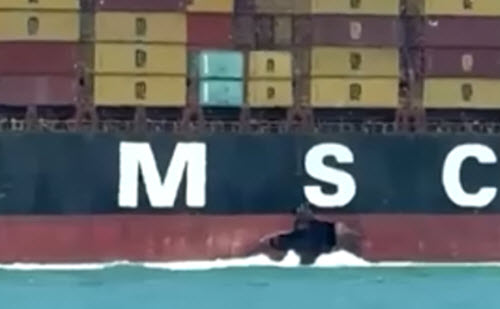
This screengrab reportedly shows a hole in the MSC Sariska caused by the Iranian retaliatory strike.
Iran’s Islamic Revolution Guards Corps (IRGC) Navy has struck the giant cargo ship MSC Sariska, affiliated with the American‑Zionist enemy, with a cruise missile in a reciprocal operation after a US attack on an Iranian commercial vessel in the Sea of Oman.
The IRGC Navy’s public relations department announced on Tuesday that the strike was a direct response to the “aggressive and treacherous attack” by the US military on the Iranian bulk carrier Lian Star.
“In response to the aggressive attack by the terrorist and child‑killing US army on the Iranian vessel Lian Star in the Sea of Oman, the IRGC Navy conducted a reciprocal operation and struck the MSC Sariska with a cruise missile,” the statement said, as carried by Sepah News.
The MSC Sariska, a Panamanian‑flagged vessel, was targeted near Iraqi waters and sustained a major explosion.
The IRGC Navy warned that any further aggression by the US army in the region will be met with a decisive response.
On Friday, a US aircraft fired an AGM‑114 Hellfire missile at the engine room of the bulk carrier Lian Star, disabling the vessel.
The Lian Star is a commercial vessel that was operating in international waters when it was targeted.
Iran has accused the United States of an act of state‑sponsored maritime terrorism.
The exchange comes amid heightened tensions in the strategic waters of the Sea of Oman and the Persian Gulf.
The United States and Israel launched a war of aggression against Iran on February 28, assassinating the Leader of the Islamic Revolution and striking civilian and military infrastructure.
A Pakistan‑brokered ceasefire has been in place since early April, but Washington has continued to enforce a naval blockade of Iranian ports.
Iran has repeatedly stated that it will not tolerate any violation of its sovereignty and that any act of aggression will be met with a proportionate and forceful response.
The IRGC Navy has maintained full control over the Strait of Hormuz and has warned that any interference by foreign military forces will be met with immediate retaliation.
Tuesday, 02 June 2026 12:15 AM [ Last Update: Tuesday, 02 June 2026 12:15 AM ]
https://www.presstv.ir/Detail/2026/06/0 ... ian-vessel
This screengrab reportedly shows a hole in the MSC Sariska caused by the Iranian retaliatory strike.
Iran’s Islamic Revolution Guards Corps (IRGC) Navy has struck the giant cargo ship MSC Sariska, affiliated with the American‑Zionist enemy, with a cruise missile in a reciprocal operation after a US attack on an Iranian commercial vessel in the Sea of Oman.
The IRGC Navy’s public relations department announced on Tuesday that the strike was a direct response to the “aggressive and treacherous attack” by the US military on the Iranian bulk carrier Lian Star.
“In response to the aggressive attack by the terrorist and child‑killing US army on the Iranian vessel Lian Star in the Sea of Oman, the IRGC Navy conducted a reciprocal operation and struck the MSC Sariska with a cruise missile,” the statement said, as carried by Sepah News.
The MSC Sariska, a Panamanian‑flagged vessel, was targeted near Iraqi waters and sustained a major explosion.
The IRGC Navy warned that any further aggression by the US army in the region will be met with a decisive response.
On Friday, a US aircraft fired an AGM‑114 Hellfire missile at the engine room of the bulk carrier Lian Star, disabling the vessel.
The Lian Star is a commercial vessel that was operating in international waters when it was targeted.
https://www.presstv.ir/Detail/2026/06/01/769679/Persian-Gulf-Strait-Authority-says-processed-300-transit-requests-since-May
Persian Gulf Strait Authority says it processed 300+ transit requests since May
The majority of these requests came from outbound ships, which accounted for 77 percent of the total applications. Inbound ships made up the remaining 23 percent.
Iran has accused the United States of an act of state‑sponsored maritime terrorism.
The exchange comes amid heightened tensions in the strategic waters of the Sea of Oman and the Persian Gulf.
The United States and Israel launched a war of aggression against Iran on February 28, assassinating the Leader of the Islamic Revolution and striking civilian and military infrastructure.
A Pakistan‑brokered ceasefire has been in place since early April, but Washington has continued to enforce a naval blockade of Iranian ports.
Iran has repeatedly stated that it will not tolerate any violation of its sovereignty and that any act of aggression will be met with a proportionate and forceful response.
The IRGC Navy has maintained full control over the Strait of Hormuz and has warned that any interference by foreign military forces will be met with immediate retaliation.
- admin
- Site Admin
- Posts: 41470
- Joined: Thu Aug 01, 2013 5:21 am
Re: PART 3 ANTI-ANTI-NAZI BARBARIAN HORDES ARE KNOCKING DOWN
by admin » Tue Jun 02, 2026 1:20 am
Iran parl. speaker tells Lebanese counterpart: Our lives are one, Iran-Lebanon bond unbreakable
Monday, 01 June 2026 10:02 PM [ Last Update: Monday, 01 June 2026 10:02 PM ]
https://www.presstv.ir/Detail/2026/06/0 ... ells-Berri
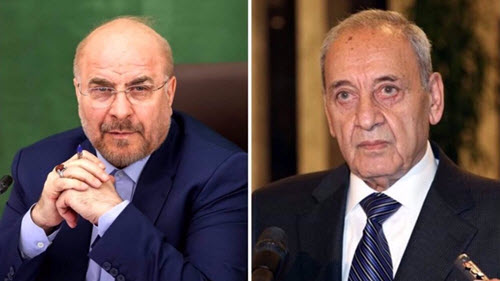
This combination photo shows Iran’s Parliament Speaker Mohammad Bagher Ghalibaf (L) alongside Lebanese counterpart Nabih Berri.
Iranian Parliament Speaker Mohammad Bagher Ghalibaf has described the bond between Iran and Lebanon as unbreakable, stressing that any ceasefire agreement between Tehran and Washington must include a halt to Israeli attacks on all fronts, particularly Lebanon.
In a phone conversation with Lebanese Parliament Speaker Nabih Berri on Tuesday, Qalibaf said that “our lives are one, and the bond between Iran and Lebanon is unbreakable.”
He praised Hezbollah and the Amal movement for defending both their homeland and the Islamic Ummah.
Ghalibaf, who also heads Iran’s negotiating team, made clear that if a deal to end the war between Iran and the United States is reached, it will include the cessation of hostilities on all fronts, with special emphasis on Lebanon.
“Over the past 48 hours, we have seriously pursued a halt to Israeli attacks. If the crimes continue, we will not only suspend the talks but also stand against the Zionist regime,” he warned.
“We are determined to establish a ceasefire across all of Lebanon, especially in the south.”
Berri, for his part, thanked the Islamic Republic for its efforts to stop Israeli atrocities.
“Lebanon will never forget Iran’s positive stances during this critical stage,” he said.
On Monday, Israeli Prime Minister Benjamin Netanyahu said that he ordered the military to strike the Dahiyeh area, a Shia-majority area in Beirut’s southern suburbs, and issued sweeping evacuation orders covering the entire district.
In response, Iran’s central military command issued a warning that if Israel carried out its threat to bomb southern Beirut, Iranian forces would retaliate against northern occupied territories.
Iran’s Foreign Ministry also declared that Tehran stands ready to help Lebanon resist “illegal aggression” and that a Lebanon ceasefire is “an integral part of any ceasefire and any final agreement” with the US.
Shortly after Iran’s warning, Trump announced on social media that he had intervened.
“I had a very productive conversation, and there will be no soldiers arriving in Beirut, and any soldier who was on the way has already turned back,” Trump wrote following a call with Netanyahu.
He also claimed to have brokered a parallel understanding with Hezbollah through senior representatives, saying the Lebanese resistance group had agreed to stop all attacks in return for Israel not attacking them.
A Pakistan brokered ceasefire between Tehran and Washington has been in place since early April, but Israel has carried out daily attacks on Lebanon in violation of the truce.
Iran has consistently insisted that any ceasefire must be comprehensive, covering all fronts including Lebanon, and has repeatedly warned that it will not tolerate Israeli aggression against the Arab country.
Monday, 01 June 2026 10:02 PM [ Last Update: Monday, 01 June 2026 10:02 PM ]
https://www.presstv.ir/Detail/2026/06/0 ... ells-Berri
This combination photo shows Iran’s Parliament Speaker Mohammad Bagher Ghalibaf (L) alongside Lebanese counterpart Nabih Berri.
Iranian Parliament Speaker Mohammad Bagher Ghalibaf has described the bond between Iran and Lebanon as unbreakable, stressing that any ceasefire agreement between Tehran and Washington must include a halt to Israeli attacks on all fronts, particularly Lebanon.
In a phone conversation with Lebanese Parliament Speaker Nabih Berri on Tuesday, Qalibaf said that “our lives are one, and the bond between Iran and Lebanon is unbreakable.”
He praised Hezbollah and the Amal movement for defending both their homeland and the Islamic Ummah.
Ghalibaf, who also heads Iran’s negotiating team, made clear that if a deal to end the war between Iran and the United States is reached, it will include the cessation of hostilities on all fronts, with special emphasis on Lebanon.
“Over the past 48 hours, we have seriously pursued a halt to Israeli attacks. If the crimes continue, we will not only suspend the talks but also stand against the Zionist regime,” he warned.
“We are determined to establish a ceasefire across all of Lebanon, especially in the south.”
Berri, for his part, thanked the Islamic Republic for its efforts to stop Israeli atrocities.
“Lebanon will never forget Iran’s positive stances during this critical stage,” he said.
On Monday, Israeli Prime Minister Benjamin Netanyahu said that he ordered the military to strike the Dahiyeh area, a Shia-majority area in Beirut’s southern suburbs, and issued sweeping evacuation orders covering the entire district.
https://www.presstv.ir/Detail/2026/06/01/769650/Iran-US-Israel-Lebanon-Araghchi
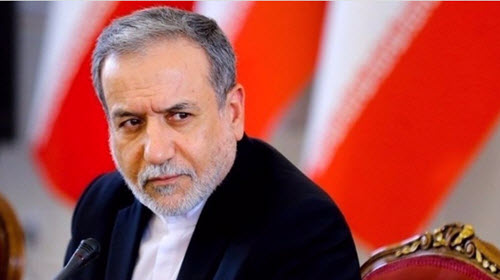
Araghchi: Israeli attacks on Lebanon violate Iran-US ceasefire
Foreign Minister Araghchi says the ceasefire agreement between Iran and the United States applies across “all fronts, including Lebanon.”
In response, Iran’s central military command issued a warning that if Israel carried out its threat to bomb southern Beirut, Iranian forces would retaliate against northern occupied territories.
Iran’s Foreign Ministry also declared that Tehran stands ready to help Lebanon resist “illegal aggression” and that a Lebanon ceasefire is “an integral part of any ceasefire and any final agreement” with the US.
Shortly after Iran’s warning, Trump announced on social media that he had intervened.
“I had a very productive conversation, and there will be no soldiers arriving in Beirut, and any soldier who was on the way has already turned back,” Trump wrote following a call with Netanyahu.
He also claimed to have brokered a parallel understanding with Hezbollah through senior representatives, saying the Lebanese resistance group had agreed to stop all attacks in return for Israel not attacking them.
A Pakistan brokered ceasefire between Tehran and Washington has been in place since early April, but Israel has carried out daily attacks on Lebanon in violation of the truce.
Iran has consistently insisted that any ceasefire must be comprehensive, covering all fronts including Lebanon, and has repeatedly warned that it will not tolerate Israeli aggression against the Arab country.
- admin
- Site Admin
- Posts: 41470
- Joined: Thu Aug 01, 2013 5:21 am
Re: PART 3 ANTI-ANTI-NAZI BARBARIAN HORDES ARE KNOCKING DOWN
by admin » Tue Jun 02, 2026 1:26 am
Hezbollah rejects partial ceasefire, insists on comprehensive halt to Israeli aggression: Lebanese MP
Monday, 01 June 2026 9:41 PM [ Last Update: Monday, 01 June 2026 9:41 PM ]
https://www.presstv.ir/Detail/2026/06/0 ... ebanese-MP
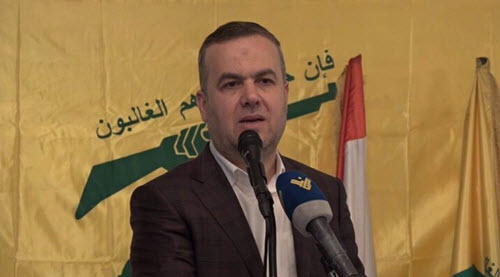
Hassan Fadlallah, a member of Hezbollah’s Loyalty to the Resistance bloc in parliament.
Hezbollah has refused any partial ceasefire proposal and is demanding a comprehensive halt to hostilities across all Lebanese territory as a prelude to the withdrawal of Israeli occupation forces and the return of displaced civilians, a senior Lebanese parliamentarian has said.
Hassan Fadlallah, a member of Hezbollah’s Loyalty to the Resistance bloc in parliament, told the Lebanese‑based Al Mayadeen channel on Monday that the party’s position is that any ceasefire must be total and cover all of Lebanon.
Fadlallah revealed that the movement has rejected a US ceasefire proposal that tried to create a security arrangement demanding Hezbollah refrain from attacking northern parts of the Israeli‑occupied territories in exchange for Israel committing not to attack Beirut’s Shia‑populated southern suburbs, without the comprehensive halt to Israel’s military attacks on Lebanon that Hezbollah demands.
Iran’s offer of support
Fadlallah said new developments emerged on Monday following Iran’s intervention.
He was referring to Iran’s official announcement warning the Israeli regime against carrying out its threat to bomb the southern suburbs of Beirut, and urging residents of northern occupied territories to leave the area ahead of retaliatory operations in the region.
He explained that Hezbollah was informed by Lebanon’s President Joseph Aoun that US President Donald Trump had called the Lebanese ambassador, requesting a mutual cessation of attacks as a step toward a comprehensive ceasefire.
“This issue is being followed up, and communication is ongoing with the president,” Fadlallah said, stressing that Hezbollah is coordinating with Parliament Speaker Nabih Berri to achieve a full ceasefire.
He added that the real test remains implementation, given the enemy’s treacherous nature.
“What matters is that we all reach what serves our country’s interests and protects its sovereignty. We will not accept a return to the pre‑March 2 situation,” he said.
Earlier on Monday, shortly after Iran’s pledge to support the Lebanese in the case of broad Israeli attacks, Trump told reporters he had a “very productive” call with Israeli Prime Minister Benjamin Netanyahu and also, through senior representatives, a “very good” conversation with Hezbollah.
Trump claimed that Hezbollah had agreed to halt all fire, on condition that neither side attacks the other.
Israeli officials have not commented on any such agreement.
Over 3,300 people have been killed and around 10,400 wounded in Lebanon since early March, with over 1.6 million displaced.
A Pakistan‑brokered ceasefire between Iran and the US has been in place since early April.
Tehran has since insisted that any ceasefire must also cover Lebanon.
Monday, 01 June 2026 9:41 PM [ Last Update: Monday, 01 June 2026 9:41 PM ]
https://www.presstv.ir/Detail/2026/06/0 ... ebanese-MP
Hassan Fadlallah, a member of Hezbollah’s Loyalty to the Resistance bloc in parliament.
Hezbollah has refused any partial ceasefire proposal and is demanding a comprehensive halt to hostilities across all Lebanese territory as a prelude to the withdrawal of Israeli occupation forces and the return of displaced civilians, a senior Lebanese parliamentarian has said.
Hassan Fadlallah, a member of Hezbollah’s Loyalty to the Resistance bloc in parliament, told the Lebanese‑based Al Mayadeen channel on Monday that the party’s position is that any ceasefire must be total and cover all of Lebanon.
Fadlallah revealed that the movement has rejected a US ceasefire proposal that tried to create a security arrangement demanding Hezbollah refrain from attacking northern parts of the Israeli‑occupied territories in exchange for Israel committing not to attack Beirut’s Shia‑populated southern suburbs, without the comprehensive halt to Israel’s military attacks on Lebanon that Hezbollah demands.
Iran’s offer of support
Fadlallah said new developments emerged on Monday following Iran’s intervention.
He was referring to Iran’s official announcement warning the Israeli regime against carrying out its threat to bomb the southern suburbs of Beirut, and urging residents of northern occupied territories to leave the area ahead of retaliatory operations in the region.
He explained that Hezbollah was informed by Lebanon’s President Joseph Aoun that US President Donald Trump had called the Lebanese ambassador, requesting a mutual cessation of attacks as a step toward a comprehensive ceasefire.
“This issue is being followed up, and communication is ongoing with the president,” Fadlallah said, stressing that Hezbollah is coordinating with Parliament Speaker Nabih Berri to achieve a full ceasefire.
He added that the real test remains implementation, given the enemy’s treacherous nature.
“What matters is that we all reach what serves our country’s interests and protects its sovereignty. We will not accept a return to the pre‑March 2 situation,” he said.
https://www.presstv.ir/Detail/2026/06/01/769677/Iran-Foreign-Ministry-statement-Israeli-truce-violations-Lebanon
Iran says US directly responsible for Israeli truce violations in Lebanon
Iran’s Foreign Ministry says the US is responsible for Israel’s continued violations of the Iran-US truce terms in Lebanon.
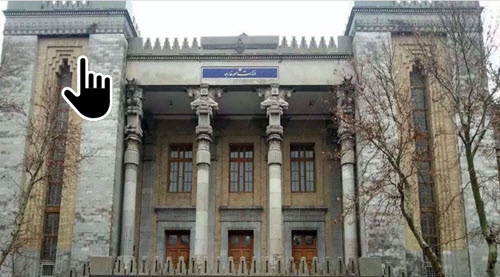
Earlier on Monday, shortly after Iran’s pledge to support the Lebanese in the case of broad Israeli attacks, Trump told reporters he had a “very productive” call with Israeli Prime Minister Benjamin Netanyahu and also, through senior representatives, a “very good” conversation with Hezbollah.
Trump claimed that Hezbollah had agreed to halt all fire, on condition that neither side attacks the other.
Israeli officials have not commented on any such agreement.
Over 3,300 people have been killed and around 10,400 wounded in Lebanon since early March, with over 1.6 million displaced.
A Pakistan‑brokered ceasefire between Iran and the US has been in place since early April.
Tehran has since insisted that any ceasefire must also cover Lebanon.
- admin
- Site Admin
- Posts: 41470
- Joined: Thu Aug 01, 2013 5:21 am
Re: PART 3 ANTI-ANTI-NAZI BARBARIAN HORDES ARE KNOCKING DOWN
by admin » Tue Jun 02, 2026 6:43 am
Iran's Deadly Warning To Israelis To Flee North As Trump-Bibi Feud Erupts Over Beirut | Lebanon
Hindustan Times
Jun 1, 2026
Israel, Iran, Lebanon and the United States are once again at the center of a major Middle East showdown after reports emerged of a heated phone call between U.S. President Donald Trump and Israeli Prime Minister Benjamin Netanyahu. According to multiple reports, Trump urged Netanyahu to avoid a major strike on Beirut as fears grew that the conflict could spiral into a wider regional war. The diplomatic intervention came as Iran issued a direct warning to Israel, threatening consequences if Beirut or its southern suburbs were targeted
Transcript
A furious Donald Trump reportedly clashed with Benjamin Netanyahu as Iran warned Israel against any attack on Beirut.
According to reports, Trump blasted Netanyahu during a heated call. While Iran warned that Beirut was a red line,
Tran urged residents of northern Israel to evacuate as tensions between Trump and Netanyahu escalated over Lebanon.
Trump reportedly [music] warned Netanyahu that Israel's actions in Lebanon were deepening international anger and isolation.
As Trump pushed for restraint, Netanyahu vowed more action in Lebanon while Iran threatened broader consequences.
Even as Trump called for restraint, Iran raised the stakes with a direct warning aimed at Israel. The warning was addressed to residents of northern
Israel as concerns grew over possible regional escalation. Iran's Katamalania headquarters warned Israelis to leave
northern areas if Beirut is targeted by Israeli strikes.
Ali Abdullahi said, and I quote, [music] "Given Israel's repeated violations of the ceasefire, if this threat is carried out, [music] we warn residents of
northern areas and military settlements in Israel to leave the area if they do not want to be harmed." The warning came after Israeli officials
threatened military action against Beirut and its southern suburbs. Iran cautioned that any expansion of Israeli operations in Lebanon could lead to a much wider conflict.
[music]
Reports suggest Trump and Netanyahu held a tense phone conversation as the Lebanon crisis continued to worsen.
Trump reportedly urged restraint, warning that a strike on Beirut could undermine ongoing diplomatic efforts.
Donald Trump said, and I quote, "I had a conversation with BB Netanyahu today, asking him not to go into a major raid of Beirut, [music] Lebanon. He turned his troops around.
Thank you, BB. I also had a conversation with representatives of the leaders of Hezbollah, and they agreed to stop shooting at Israel and its soldiers.
Likewise, Israel agreed to stop shooting at them. Let's see how long that lasts.
Hopefully, it will be for eternity." According to Axios, the discussion became heated as the two leaders clashed
over Israel's approach to Lebanon. Axios reported that [music] Trump sharply criticized Netanyahu and accused him of acting recklessly during the call.
According to Axios, Donald Trump said, and I quote, "You're crazy. You'd be in prison if it weren't for me. I'm saving your everybody [music] hates you now.
Everybody hates Israel because of this." Reports further claimed that Trump stepped in to prevent a planned Israeli
strike on Beirut. Trump later said both Israel and Hezbollah had agreed to stop firing and deescalate tensions, but
renewed exchanges of fire soon cast doubt on how long any ceasefire arrangement might [music] last.
[music]
Netanyahu said he made it clear to Trump that Israel would target Beirut if Hezbollah continued its attacks. The Israeli [music] prime minister added
that military operations in southern Lebanon would proceed as planned.
Benjamin Netanyahu said, and I quote, "I spoke this evening with President Trump and told him that if Hezbollah does not stop firing at our cities and citizens,
Israel will strike terrorist targets in Beirut. This position of ours remain unchanged." Concurrently, the IDF will
continue to operate as planned in southern Lebanon." Israel had earlier ordered strikes on targets in Beirut's southern suburbs in response to Hezbollah attacks.
[music]
The IRGC warned that any Israeli move crossing what tan considers its red lines in Lebanon would be treated as a direct war against Iran and its allies.
Iran also warned that further Israeli escalation in Lebanon could trigger the opening of new fronts across the region, significantly widening the conflict.
Thran signaled that developments in Lebanon are closely tied to its wider regional security strategy and the interests of the so-called resistance axis.
[music]
Siren alarms rang out across multiple northern border towns after the IDF detected a suspected hostile aerial target approaching Israeli airspace,
prompting residents to seek shelter and emergency services to mobilize.
Following the reported drone strike, IDF troops were deployed to [music] the impact site to carry out a thorough scan and assessment of the scene for any unexloded ordinance or other threats.
Military officials say the suspected Hezbollah drone crashed [music] in an open border area without causing injuries, and local authorities are continuing inspections to confirm the
extent of damage. In a related episode, the IDF intercepted two rockets launched by Hezbollah toward the Zerat area along the Israel Lebanon border, preventing
what could have been a far more serious escalation. Officials report that the rocket attack on the Zerat border region caused no casualties, though it
intensified fears among nearby residents [music] and spurred additional military readiness. In response to these incidents, the IDF said it launched a
new wave of strikes targeting Hezbollah
[music]
infrastructure in Ty and other locations in southern Lebanon, aiming to degrade the group's operational capabilities.
The latest exchanges follow a May 30th attack in which Iranbacked Hezbollah fired [music] multiple rockets from Lebanon into Israeli territory, marking
a continued pattern of crossber hostilities.
The rockets were reportedly fired toward western Galilee, triggering fresh panic across northern Israeli communities.
Safed, Kiricha, and Carmeiel were among the areas targeted by Hezbollah's latest deadly barrage. Times of Israel reported
videos circulating online appeared to show a barrage of missiles and drones [music] launched toward Israel by Hezbollah fighters. The Israel Defense
6 minutesForces claimed several [music] incoming rockets were intercepted while others landed in open areas. Hezbollah also reportedly [music] launched multiple
drones with one striking a military zone near Chimera. The IDF said Israeli forces are now preparing for the possibility of more incoming fire from
Hezbollah. Hezbollah's latest attacks come as Israeli forces have widened military operations deeper into southern Lebanon. On May 28th, Israel carried out
an air strike in Beirut for the first time in nearly 3 weeks. Israeli warplanes struck the Lebanese capital, reportedly targeting a commander linked
to an Iranian-backed militia network. On May 29th, Benjamin Netanyahu said Israeli troops had crossed Lebanon's Litani River amid escalating Hezbollah attacks.
I came here today with the minister of defense, the deputy chief of staff, the commander of the northern command, the division commander networking with the
commanders you see here with the soldiers in the field. I spoke with the brigade commanders who are currently in the field and I hear them and I also
7 minuteshear the soldiers some of whom are right here behind me. There is a tremendous fighting spirit here. From here we are
managing the battle against Hezbollah in the north and I must tell you that there are very impressive results here. Our forces have crossed the litany. They have ascended to the commanding heights.
We are also operating in Beirut, operating in the Bikar across the entire front and they are striking Hezbollah. A
crushing defeat. When I say this, it's not just a passing remark to a brigade commander. The soldiers also tell me
this in every encounter with them. In every engagement, we are both eliminating Hezbollah and sending them fleeing. And this spirit is what gives
us these achievements. I salute you guys. You are lions and you have lion commanders and you are proving the strength of the spirit of the Israel
Defense Forces. Continue with great success all the way to the end. Thank you. Thank you.
Hindustan Times
Jun 1, 2026
Israel, Iran, Lebanon and the United States are once again at the center of a major Middle East showdown after reports emerged of a heated phone call between U.S. President Donald Trump and Israeli Prime Minister Benjamin Netanyahu. According to multiple reports, Trump urged Netanyahu to avoid a major strike on Beirut as fears grew that the conflict could spiral into a wider regional war. The diplomatic intervention came as Iran issued a direct warning to Israel, threatening consequences if Beirut or its southern suburbs were targeted
Transcript
A furious Donald Trump reportedly clashed with Benjamin Netanyahu as Iran warned Israel against any attack on Beirut.
According to reports, Trump blasted Netanyahu during a heated call. While Iran warned that Beirut was a red line,
Tran urged residents of northern Israel to evacuate as tensions between Trump and Netanyahu escalated over Lebanon.
Trump reportedly [music] warned Netanyahu that Israel's actions in Lebanon were deepening international anger and isolation.
As Trump pushed for restraint, Netanyahu vowed more action in Lebanon while Iran threatened broader consequences.
Even as Trump called for restraint, Iran raised the stakes with a direct warning aimed at Israel. The warning was addressed to residents of northern
Israel as concerns grew over possible regional escalation. Iran's Katamalania headquarters warned Israelis to leave
northern areas if Beirut is targeted by Israeli strikes.
Ali Abdullahi said, and I quote, [music] "Given Israel's repeated violations of the ceasefire, if this threat is carried out, [music] we warn residents of
northern areas and military settlements in Israel to leave the area if they do not want to be harmed." The warning came after Israeli officials
threatened military action against Beirut and its southern suburbs. Iran cautioned that any expansion of Israeli operations in Lebanon could lead to a much wider conflict.
[music]
Reports suggest Trump and Netanyahu held a tense phone conversation as the Lebanon crisis continued to worsen.
Trump reportedly urged restraint, warning that a strike on Beirut could undermine ongoing diplomatic efforts.
Donald Trump said, and I quote, "I had a conversation with BB Netanyahu today, asking him not to go into a major raid of Beirut, [music] Lebanon. He turned his troops around.
Thank you, BB. I also had a conversation with representatives of the leaders of Hezbollah, and they agreed to stop shooting at Israel and its soldiers.
Likewise, Israel agreed to stop shooting at them. Let's see how long that lasts.
Hopefully, it will be for eternity." According to Axios, the discussion became heated as the two leaders clashed
over Israel's approach to Lebanon. Axios reported that [music] Trump sharply criticized Netanyahu and accused him of acting recklessly during the call.
According to Axios, Donald Trump said, and I quote, "You're crazy. You'd be in prison if it weren't for me. I'm saving your everybody [music] hates you now.
Everybody hates Israel because of this." Reports further claimed that Trump stepped in to prevent a planned Israeli
strike on Beirut. Trump later said both Israel and Hezbollah had agreed to stop firing and deescalate tensions, but
renewed exchanges of fire soon cast doubt on how long any ceasefire arrangement might [music] last.
[music]
Netanyahu said he made it clear to Trump that Israel would target Beirut if Hezbollah continued its attacks. The Israeli [music] prime minister added
that military operations in southern Lebanon would proceed as planned.
Benjamin Netanyahu said, and I quote, "I spoke this evening with President Trump and told him that if Hezbollah does not stop firing at our cities and citizens,
Israel will strike terrorist targets in Beirut. This position of ours remain unchanged." Concurrently, the IDF will
continue to operate as planned in southern Lebanon." Israel had earlier ordered strikes on targets in Beirut's southern suburbs in response to Hezbollah attacks.
[music]
The IRGC warned that any Israeli move crossing what tan considers its red lines in Lebanon would be treated as a direct war against Iran and its allies.
Iran also warned that further Israeli escalation in Lebanon could trigger the opening of new fronts across the region, significantly widening the conflict.
Thran signaled that developments in Lebanon are closely tied to its wider regional security strategy and the interests of the so-called resistance axis.
[music]
Siren alarms rang out across multiple northern border towns after the IDF detected a suspected hostile aerial target approaching Israeli airspace,
prompting residents to seek shelter and emergency services to mobilize.
Following the reported drone strike, IDF troops were deployed to [music] the impact site to carry out a thorough scan and assessment of the scene for any unexloded ordinance or other threats.
Military officials say the suspected Hezbollah drone crashed [music] in an open border area without causing injuries, and local authorities are continuing inspections to confirm the
extent of damage. In a related episode, the IDF intercepted two rockets launched by Hezbollah toward the Zerat area along the Israel Lebanon border, preventing
what could have been a far more serious escalation. Officials report that the rocket attack on the Zerat border region caused no casualties, though it
intensified fears among nearby residents [music] and spurred additional military readiness. In response to these incidents, the IDF said it launched a
new wave of strikes targeting Hezbollah
[music]
infrastructure in Ty and other locations in southern Lebanon, aiming to degrade the group's operational capabilities.
The latest exchanges follow a May 30th attack in which Iranbacked Hezbollah fired [music] multiple rockets from Lebanon into Israeli territory, marking
a continued pattern of crossber hostilities.
The rockets were reportedly fired toward western Galilee, triggering fresh panic across northern Israeli communities.
Safed, Kiricha, and Carmeiel were among the areas targeted by Hezbollah's latest deadly barrage. Times of Israel reported
videos circulating online appeared to show a barrage of missiles and drones [music] launched toward Israel by Hezbollah fighters. The Israel Defense
6 minutesForces claimed several [music] incoming rockets were intercepted while others landed in open areas. Hezbollah also reportedly [music] launched multiple
drones with one striking a military zone near Chimera. The IDF said Israeli forces are now preparing for the possibility of more incoming fire from
Hezbollah. Hezbollah's latest attacks come as Israeli forces have widened military operations deeper into southern Lebanon. On May 28th, Israel carried out
an air strike in Beirut for the first time in nearly 3 weeks. Israeli warplanes struck the Lebanese capital, reportedly targeting a commander linked
to an Iranian-backed militia network. On May 29th, Benjamin Netanyahu said Israeli troops had crossed Lebanon's Litani River amid escalating Hezbollah attacks.
I came here today with the minister of defense, the deputy chief of staff, the commander of the northern command, the division commander networking with the
commanders you see here with the soldiers in the field. I spoke with the brigade commanders who are currently in the field and I hear them and I also
7 minuteshear the soldiers some of whom are right here behind me. There is a tremendous fighting spirit here. From here we are
managing the battle against Hezbollah in the north and I must tell you that there are very impressive results here. Our forces have crossed the litany. They have ascended to the commanding heights.
We are also operating in Beirut, operating in the Bikar across the entire front and they are striking Hezbollah. A
crushing defeat. When I say this, it's not just a passing remark to a brigade commander. The soldiers also tell me
this in every encounter with them. In every engagement, we are both eliminating Hezbollah and sending them fleeing. And this spirit is what gives
us these achievements. I salute you guys. You are lions and you have lion commanders and you are proving the strength of the spirit of the Israel
Defense Forces. Continue with great success all the way to the end. Thank you. Thank you.
- admin
- Site Admin
- Posts: 41470
- Joined: Thu Aug 01, 2013 5:21 am
Re: PART 3 ANTI-ANTI-NAZI BARBARIAN HORDES ARE KNOCKING DOWN
by admin » Tue Jun 02, 2026 6:58 am
Tyrant Will Soon Learn His Lessons’: Erdogan Unleashes Fresh Attack On Netanyahu After Eid Prayers
Times Of India
May 27, 2026
Turkish President Recep Tayyip Erdogan delivered a fiery speech after Eid prayers at Istanbul’s Çamlıca Mosque, branding Israeli Prime Minister Benjamin Netanyahu a “tyrant” and linking the Muslim holiday to the suffering in Gaza. The remarks deepen already tense Turkiye-Israel relations after Ankara halted trade and intensified criticism over the conflict. Erdogan had also accused Israel of a “fascist mentality” days earlier following the Gaza flotilla interception. With emotions running high, the latest comments are fuelling fresh diplomatic and political controversy.
Transcript
A powerful Eid message, a blistering attack on Israel's leadership, and another dramatic escalation in the war of words between Anchora and Tel Aviv.
After Eid prayers in Istanbul, Turkish President Reep Taib Erdogan called Benjamin Netanyahu a tyrant, linking the
sacred holiday directly to the suffering in Gaza. [music] Speaking after Eid prayers at Istanbul's Chamla mosque, Turkish President Reep Ta
Berdogan launched a fierce new verbal attack against Israeli Prime Minister Benjamin [music] Netanyahu, calling him
a tyrant and warning that he would ultimately [music] face the judgment of Muslims around the world. Erdogan said
the feast of sacrifice, one of Islam's holiest celebrations, was once again overshadowed by the crisis in Gaza,
where the ongoing [music] conflict continues to dominate emotions, politics, and public debate across the
region. The Turkish leader used the religious occasion to draw [music] attention to Gaza's humanitarian plight,
framing the conflict as a [music] moral and political issue extending far beyond the battlefield. The remarks mark another sharp escalation in Erdogan's
[music] rhetoric toward Israel as tensions between Ankura and Tel Aviv remain [music] deeply strained following the war that erupted in October 2023.
Erdogan's latest comments did not emerge in isolation. Just a week earlier, the Turkish president accused Israel of
being governed by what he described as a fascist [music] mentality after the Israeli Navy intercepted an activist
flotillaa attempting [music] to reach Gaza. Today we have witnessed once more
how Israel is governed by a fascist mentality.
A global freedom flutella humanitarian aid to Gaza was attacked by
Israeli forces and in international waters at that.
I condemn in the strongest terms this piracy and banditry against the hope travelers of the Sumud Flotilla which
consists of citizens from 40 different countries. [snorts] I state once again today that Turkey
stands with the people of Gaza and those who extend a helping hand to Gaza.
Turkey has positioned itself as one of Israel's most vocal critics during the conflict, taking a [music] series of confrontational political and diplomatic
steps. Ankura has halted direct trade with Israel and has also pursued legal measures against Netanyahu following
[music] controversy surrounding a Gazabound aid flotillaa incident.
As tensions continue building around the Strait of Hormuz, an Iranian analyst closely following the negotiations has
argued that the United States has no legal or geographic basis to control or police one of the world's most critical maritime choke points.
Speaking to RT, analyst and Iranian academician Fouad Izadi said Washington is nearly 11,000 km away from the Gulf
region and therefore has no responsibility to intervene in Hormu's security or maritime management. The US
is a coastal state to the Gulf of Mexico. Izani said it is almost 11,000 km away. According to the Iranian
professor, responsibility for maintaining order and [music] maritime security in Hormuz belongs primarily to regional states, especially Iran and
Oman, whose territorial waters make up the narrow shipping corridor.
He argued that there were technically no international waters inside large portions of the strait because the channel is divided between Iranian and
Omani maritime zones under the United Nations Convention on the Law of the Sea framework.
His comments come at a highly sensitive moment as Hormuz increasingly become central to the broader confrontation between Tyrron and Washington. The
waterway carries roughly a quarter of the world's seaborn crude oil trade, making any disruption there capable of sending immediate shock waves through global energy markets.
Iranian officials increasingly portray their position not as a blockade, but as an assertion of sovereign maritime rights, similar to those exercised by other countries around the world.
[music]
Izadi specifically pointed to states including Australia, Canada, Denmark, and Turkey. All of which charge various
navigation or pilotage fees for vessels moving through strategic waterways under their jurisdiction. There is no legal
prohibition preventing Iran from doing the same. He argued the remarks reflect a broader Iranian
effort to reframe the Hormuz issue away from military confrontation and toward legal sovereignty and maritime regulation. At the same time, however,
the strategic reality remains extremely tense.
The US maintains a major naval presence in the Gulf through the United States fifth fleet while Iran continues expanding patrols, drone monitoring,
coastal missile deployments, and asymmetric naval capabilities around the strait.
That means the legal [music] debate over who controls Hormuz is unfolding alongside a much more dangerous military reality. one where both sides
increasingly view the waterway not just as a shipping route but as one of the central pressure points in the wider geopolitical struggle reshaping the Middle East.
Confusion is now deepening across one of the world's most strategically sensitive waterways, [music] the Strait of Hormuz,
as conflicting reports emerge over US naval activity in the region. At the center of the uncertainty are claims
suggesting [music] a possible restart of American commercial escort missions through the vital shipping corridor, a
route responsible for a significant [music] share of global energy transport. But those reports have now
been firmly denied by the United States Central [music] Command. In a public clarification, Sentcom rejected the
assertions [music] outright, stating that no such escort operations have been resumed by the US Navy, [music] despite
growing speculation and heightened regional tensions. The contradiction between [music] circulating reports and
official denials has only added to the ambiguity surrounding [music] security conditions in the strait, where even small shifts in military posture
can trigger major geopolitical reactions.
In a blunt [music] statement posted on X, Sentcom directly rejected a report published by the Wall Street Journal,
[music] claiming that a naval initiative known as Project Freedom had resumed operations [music] to help guide vessels
through Hormuz amid rising regional tensions. False. Sentcom [music] wrote, "Project Freedom has not resumed and US
forces are not currently escorting [music] commercial vessels through the straight.
The unusually direct denial immediately drew attention [music] because the straight of Hormuz remains one of the world's most sensitive
maritime choke points, carrying roughly a [music] quarter of global crude oil trade.
Any suggestion that [music] the US military had resumed active escort operations would have signaled a major escalation in regional security
conditions [music] and heightened fears of direct confrontation involving Iran.
The issue is particularly [music] sensitive because maritime traffic through Hormuz remains under extraordinary scrutiny amid ongoing
regional instability. tanker insurance [music] concerns, drone threats, and fears of disruptions to oil flows. Iran
has repeatedly warned [music] that foreign military activity in the Gulf could destabilize maritime security
further while simultaneously [music] demonstrating its ability to pressure shipping lanes through naval deployments, [music]
drone surveillance, missile positioning, and asymmetric maritime tactics for global markets. Even [music]
conflicting reports about Hormuz's security operations are enough to trigger concern [music] because the waterway remains one of the
most economically critical choke points on Earth. And the fact that Sentcom [music] felt compelled to issue such a
rapid and emphatic denial itself [music] shows just how sensitive and potentially explosive the situation surrounding Gulf shipping has become.
Times Of India
May 27, 2026
Turkish President Recep Tayyip Erdogan delivered a fiery speech after Eid prayers at Istanbul’s Çamlıca Mosque, branding Israeli Prime Minister Benjamin Netanyahu a “tyrant” and linking the Muslim holiday to the suffering in Gaza. The remarks deepen already tense Turkiye-Israel relations after Ankara halted trade and intensified criticism over the conflict. Erdogan had also accused Israel of a “fascist mentality” days earlier following the Gaza flotilla interception. With emotions running high, the latest comments are fuelling fresh diplomatic and political controversy.
Transcript
A powerful Eid message, a blistering attack on Israel's leadership, and another dramatic escalation in the war of words between Anchora and Tel Aviv.
After Eid prayers in Istanbul, Turkish President Reep Taib Erdogan called Benjamin Netanyahu a tyrant, linking the
sacred holiday directly to the suffering in Gaza. [music] Speaking after Eid prayers at Istanbul's Chamla mosque, Turkish President Reep Ta
Berdogan launched a fierce new verbal attack against Israeli Prime Minister Benjamin [music] Netanyahu, calling him
a tyrant and warning that he would ultimately [music] face the judgment of Muslims around the world. Erdogan said
the feast of sacrifice, one of Islam's holiest celebrations, was once again overshadowed by the crisis in Gaza,
where the ongoing [music] conflict continues to dominate emotions, politics, and public debate across the
region. The Turkish leader used the religious occasion to draw [music] attention to Gaza's humanitarian plight,
framing the conflict as a [music] moral and political issue extending far beyond the battlefield. The remarks mark another sharp escalation in Erdogan's
[music] rhetoric toward Israel as tensions between Ankura and Tel Aviv remain [music] deeply strained following the war that erupted in October 2023.
Erdogan's latest comments did not emerge in isolation. Just a week earlier, the Turkish president accused Israel of
being governed by what he described as a fascist [music] mentality after the Israeli Navy intercepted an activist
flotillaa attempting [music] to reach Gaza. Today we have witnessed once more
how Israel is governed by a fascist mentality.
A global freedom flutella humanitarian aid to Gaza was attacked by
Israeli forces and in international waters at that.
I condemn in the strongest terms this piracy and banditry against the hope travelers of the Sumud Flotilla which
consists of citizens from 40 different countries. [snorts] I state once again today that Turkey
stands with the people of Gaza and those who extend a helping hand to Gaza.
Turkey has positioned itself as one of Israel's most vocal critics during the conflict, taking a [music] series of confrontational political and diplomatic
steps. Ankura has halted direct trade with Israel and has also pursued legal measures against Netanyahu following
[music] controversy surrounding a Gazabound aid flotillaa incident.
As tensions continue building around the Strait of Hormuz, an Iranian analyst closely following the negotiations has
argued that the United States has no legal or geographic basis to control or police one of the world's most critical maritime choke points.
Speaking to RT, analyst and Iranian academician Fouad Izadi said Washington is nearly 11,000 km away from the Gulf
region and therefore has no responsibility to intervene in Hormu's security or maritime management. The US
is a coastal state to the Gulf of Mexico. Izani said it is almost 11,000 km away. According to the Iranian
professor, responsibility for maintaining order and [music] maritime security in Hormuz belongs primarily to regional states, especially Iran and
Oman, whose territorial waters make up the narrow shipping corridor.
He argued that there were technically no international waters inside large portions of the strait because the channel is divided between Iranian and
Omani maritime zones under the United Nations Convention on the Law of the Sea framework.
His comments come at a highly sensitive moment as Hormuz increasingly become central to the broader confrontation between Tyrron and Washington. The
waterway carries roughly a quarter of the world's seaborn crude oil trade, making any disruption there capable of sending immediate shock waves through global energy markets.
Iranian officials increasingly portray their position not as a blockade, but as an assertion of sovereign maritime rights, similar to those exercised by other countries around the world.
[music]
Izadi specifically pointed to states including Australia, Canada, Denmark, and Turkey. All of which charge various
navigation or pilotage fees for vessels moving through strategic waterways under their jurisdiction. There is no legal
prohibition preventing Iran from doing the same. He argued the remarks reflect a broader Iranian
effort to reframe the Hormuz issue away from military confrontation and toward legal sovereignty and maritime regulation. At the same time, however,
the strategic reality remains extremely tense.
The US maintains a major naval presence in the Gulf through the United States fifth fleet while Iran continues expanding patrols, drone monitoring,
coastal missile deployments, and asymmetric naval capabilities around the strait.
That means the legal [music] debate over who controls Hormuz is unfolding alongside a much more dangerous military reality. one where both sides
increasingly view the waterway not just as a shipping route but as one of the central pressure points in the wider geopolitical struggle reshaping the Middle East.
Confusion is now deepening across one of the world's most strategically sensitive waterways, [music] the Strait of Hormuz,
as conflicting reports emerge over US naval activity in the region. At the center of the uncertainty are claims
suggesting [music] a possible restart of American commercial escort missions through the vital shipping corridor, a
route responsible for a significant [music] share of global energy transport. But those reports have now
been firmly denied by the United States Central [music] Command. In a public clarification, Sentcom rejected the
assertions [music] outright, stating that no such escort operations have been resumed by the US Navy, [music] despite
growing speculation and heightened regional tensions. The contradiction between [music] circulating reports and
official denials has only added to the ambiguity surrounding [music] security conditions in the strait, where even small shifts in military posture
can trigger major geopolitical reactions.
In a blunt [music] statement posted on X, Sentcom directly rejected a report published by the Wall Street Journal,
[music] claiming that a naval initiative known as Project Freedom had resumed operations [music] to help guide vessels
through Hormuz amid rising regional tensions. False. Sentcom [music] wrote, "Project Freedom has not resumed and US
forces are not currently escorting [music] commercial vessels through the straight.
The unusually direct denial immediately drew attention [music] because the straight of Hormuz remains one of the world's most sensitive
maritime choke points, carrying roughly a [music] quarter of global crude oil trade.
Any suggestion that [music] the US military had resumed active escort operations would have signaled a major escalation in regional security
conditions [music] and heightened fears of direct confrontation involving Iran.
The issue is particularly [music] sensitive because maritime traffic through Hormuz remains under extraordinary scrutiny amid ongoing
regional instability. tanker insurance [music] concerns, drone threats, and fears of disruptions to oil flows. Iran
has repeatedly warned [music] that foreign military activity in the Gulf could destabilize maritime security
further while simultaneously [music] demonstrating its ability to pressure shipping lanes through naval deployments, [music]
drone surveillance, missile positioning, and asymmetric maritime tactics for global markets. Even [music]
conflicting reports about Hormuz's security operations are enough to trigger concern [music] because the waterway remains one of the
most economically critical choke points on Earth. And the fact that Sentcom [music] felt compelled to issue such a
rapid and emphatic denial itself [music] shows just how sensitive and potentially explosive the situation surrounding Gulf shipping has become.
- admin
- Site Admin
- Posts: 41470
- Joined: Thu Aug 01, 2013 5:21 am
Re: PART 3 ANTI-ANTI-NAZI BARBARIAN HORDES ARE KNOCKING DOWN
by admin » Tue Jun 02, 2026 5:07 pm
https://storage.courtlistener.com/recap ... 1.20.0.pdf
UNITED STATES DISTRICT COURT
FOR THE DISTRICT OF COLUMBIA
ACCOUNTABILITY NOW USA,
Plaintiff,
v.
KEVIN GRIESS, Superintendent of the
National Mall and Memorial Parks, et al.,
Defendants.
Civil Action No. 26-1385 (RDM)
MEMORANDUM OPINION
Plaintiff, an unincorporated association that maintains a 24/7 demonstration calling for
the impeachment and removal of President Donald Trump on National Park Service (“NPS”)
land, moves for an emergency order temporarily restraining the Superintendent of the National
Mall and Memorial Parks Kevin Griess and the Secretary of the Interior Doug Burgum or their
delegees “from taking enforcement action against them because of their display of a flag with the
legend ‘8647.’” Dkt. 10 at 1. For the reasons that follow, the Court will grant Plaintiff’s motion.
I. BACKGROUND
At least at this early stage of the litigation, many of the relevant facts are uncontroverted.
Plaintiff Accountability NOW USA (“Accountability Now”) is an unincorporated association
that holds a permit from the NPS to conduct “a demonstration near the George Meade Statue on
Constitution Avenue in Washington, D.C.” Dkt. 8-1 at 1 (Carey Decl. ¶¶ 1–2). “Volunteers
maintain the demonstration twenty-four hours a day, seven days a week” at which they “engage
in face-to-face conversations with members of the public[] to call attention to the rise of fascism
in the United States and [to] demand the impeachment of President Trump.” Id. (Carey Decl.
Case 1:26-cv-01385-RDM Document 20 Filed 06/01/26 Page 1 of 21
2
¶ 2). Plaintiff’s “current permit was issued on April 13, 2026, and is valid through August 12,
2026[,]” and Plaintiff “intends to obtain another permit when the current permit expires, at the
same or another location on NPS-managed land in the District of Columbia.” Id. at 2 (Carey
Decl. ¶ 3).
On February 24, 2026, in response to reporting “that the Justice Department was
withholding more than 50 pages of FBI interviews with a woman who had accused Donald
Trump of sexually abusing her when she was a minor[,]” Plaintiff began to display two new
signs at the demonstration. Id. (Carey Decl. ¶ 4). One sign read: “TRUMP RAPED LITTLE
GIRLS.” Id. The other read: “KIDS, IF YOUR PARENTS ARE MAGA, THEY LOVE CHILD
RAPISTS.” Id. According to Plaintiff, “[t]he display of those signs has engendered numerous
conversations between volunteers and passersby regarding President Trump’s behavior, morality,
and fitness to continue in office.” Id.
On April 14, 2026, an NPS agent emailed Anita Carey, an organizer with Accountability
Now who is listed as the “Person in Charge” on Plaintiff’s permit, Dkt. 17 at 1 (Pl.’s Ex. 1 at 1),
relaying the following message from Defendant Superintendent Griess: “Based on the
photographic evidence from earlier today, the [Plaintiff’s] first amendment permit is displaying
unprotected obscenity in signs or media. This is not protected by the first amendment and is
therefore prohibited and a violation of law.” Dkt. 8-1 at 2–3 (Carey Decl. ¶ 5). That same day,
Carey responded to Superintendent Griess directly, “seeking clarification of NPS’s position and
asking, in particular, why NPS believes the signs meet the legal definition of obscenity and what
would happen if the signs remain on display.” Id. at 3 (Carey Decl. ¶ 6). Griess responded as
follows on April 15, 2026:
Case 1:26-cv-01385-RDM Document 20 Filed 06/01/26 Page 2 of 21
3
Thank you for your message. We appreciate your cooperation as we work to
ensure that all permitted activities remain in compliance with federal
requirements.
To clarify, the material displayed under your permit has been evaluated under
all appropriate standards and tests and is deemed unprotected obscenity, which
the Court has established is not protected by the First Amendment. This
determination is supported by federal law which prohibits obscene material on
federal property.
Because obscenity is unlawful on federal land, we must ask that the material be
removed.
The National Park Service may impose and enforce permit conditions to prevent
unlawful conduct, including the display of obscene materials prohibited under
federal law. All activities conducted under an NPS permit must remain lawful
and in compliance with permit conditions. If a permittee chooses not to comply
with a lawful direction to cease prohibited conduct, the National Park Service
may take further steps as appropriate to ensure compliance.
Id. (Carey Decl. ¶ 7).
“Based on these communications and the recent experiences of other NPS permit holders
whose demonstrations were critical of President Trump,” Accountability Now concluded that it
faced “a realistic and imminent threat that its demonstration permit [would] be summarily
revoked or its signs removed, with minimal or zero notice” and that “[r]evocation [might] result
in the destruction of its valuable property, including its tents, tables, chairs, sound equipment,
and literature.” Id. (Carey Decl. ¶ 8). In particular, Plaintiff concluded “Defendant Greiss’s
message that the signs were ‘unlawful’ and that NPS would ‘take further steps as appropriate to
ensure compliance’” meant that the NPS would either “summarily revoke its permit and
dismantle its demonstration or [would] remove the signs with little or no notice.” Id. at 4 (Carey
Decl. ¶ 10). “[I]n order to forestall” such an “enforcement action,” Plaintiff “temporarily
removed the signs” at issue, filed this lawsuit, and unsuccessfully attempted to negotiate a
resolution of the dispute with the NPS. Id. (Carey Decl. ¶ 11). Plaintiff filed a motion for a
preliminary injunction on May 26, 2026, Dkt. 8, seeking an order barring Defendants from
Case 1:26-cv-01385-RDM Document 20 Filed 06/01/26 Page 3 of 21
4
“taking any action” against Plaintiff “in retaliation” for displaying the two signs, “including
revocation of Plaintiff’s demonstration permit or seizure of [the] signs.” Dkt. 8-2 at 1.
In addition to the two signs discussed above, Plaintiff began displaying a red, white, and
blue flag, which Plaintiff purchased from Amazon, that read “8647.” Dkt. 10-2 at 1–2 (2d Carey
Decl. ¶¶ 3–5). Although the record is unclear about precisely when the flag first appeared, the
record shows that it was on display by the morning of May 12, when two Secret Service officers
approached a volunteer at the demonstration and engaged in the following brief conversation:
Officer: How are you?
Volunteer: I’m good. I’m recording this ‘cause they told me to.
Officer: That’s fine.
Volunteer: How’s it going?
Officer: Not a problem. Just so you’re aware, this is all consensual[.]
Volunteer: Yeah[.]
. . .
Officer: . . . we received a phone call because of the flag, in fact the 86
47 and what it can stand for.
Volunteer: Uh-huh. I never heard of it standing for anything other than
Trump shouldn’t be in office.
Officer: OK. Alright. So you have no ill-will towards . . .
Volunteer: I want Trump to live forever and rot in jail where he belongs.
Officer: OK. That’s it. That’s all, all I needed to know[.]
Volunteer: OK[.]
Officer: We just, we got a call so we just wanted to come down here . . .
Volunteer: I’m sorry someone wasted your time[.]
Case 1:26-cv-01385-RDM Document 20 Filed 06/01/26 Page 4 of 21
5
Officer. Oh, you’re good. You’re good. It’s part of our job[.]
Volunteer: Yup[.]
Officer: We just want to make sure that your First Amendment rights are
protected. They were concerned, so we just want to make sure
there’s no ill-will.
Volunteer: OK. Haha. Thank you so much.
Officer: Alright. Yes, ma’am.
Volunteer: OK.
Dkt. 15 at 2–3 (https://photos.app.goo.gl/MyS5T7g7b4JXRYmY6).
Things took a turn for the more confrontational when two different officers approached
the same volunteer about 25 minutes later and read her the Miranda warnings. Id. at 3. The
volunteer was not in custody at the time, and, despite the officer’s representation, her right to
court-appointed counsel had not attached. Although politely delivered, the message was a
worrisome one—that is, she was at risk of criminal prosecution for displaying the flag.
Understandably, the volunteer declined to speak with the officers. Id. The Secret Service
opened an investigation into the volunteer as a “potential threat.” Dkt. 13-1 at 4 (Quinn Decl.
¶ 10). “[The] investigation remains ongoing.” Id.
Nothing happened, however, for another two weeks. But then, “[o]n Tuesday, May
26, . . . the Secret Service shared information with the U.S. Department of the Interior about its
ongoing investigation relating to the individual holding a flag displaying the statement ‘8647’ on
May 12 in the 300 block of Constitution Avenue, N.W.” Dkt. 16 at 1–2 (citation modified). The
following day—and less than 24 hours after Plaintiff moved for a preliminary injunction
regarding the two signs—“four cars of U.S Park Police officers pulled up to Plaintiff’s
Case 1:26-cv-01385-RDM Document 20 Filed 06/01/26 Page 5 of 21
6
demonstration site” at around 5 a.m. on May 27, and an officer read “the volunteer on duty” the
following “from a clipboard:”
18 U.S. Code 8741[.] Threats against the President. Right now, we’re looking
at the 8647 as a threat against the President. Can I ask you to take it down
please? The sign here?
Dkt. 10-2 at 1 (2d Carey Decl. ¶ 2). All agree that no such provision of the U.S. Code exists and
that the officer presumably intended to refer to 18 U.S.C. § 871, Dkt. 10 at 2; May 28, 2026 Hrg.
Tr. (Rough at 28), which makes it a felony to “knowingly and willfully” threaten “to take the life
of . . . or to inflict bodily harm upon the President of the United States.” In any event,
Defendants do not dispute that “on May 27, the government ordered that the flag be taken
down[,]” Dkt. 16 at 2; that the volunteer on duty did so, Dkt. 10-2 at 1 (2d Carey Decl ¶ 2); or
that the officer told the volunteer to “please refrain from putting it back up” and warned that,
“[i]f it comes back up[,] we’ll be by here again, OK, and then it will be a violation of the
permit,” id.; see also Dkt. 10 at 1 (https://photos.app.goo.gl/jtM8Tj7sCnkS4Smg9).
Later that day, Plaintiff filed an amended complaint adding the flag incident as part of its
First Amendment challenge to the threatened revocation of Plaintiff’s permit and required
removal of Plaintiff’s two signs. See Dkt. 9 at 6–7 (Am. Compl. ¶¶ 22–26). Plaintiff
simultaneously moved for a temporary restraining order (“TRO”) to “prevent Defendants from
taking enforcement action against [it] because of [its] display of” the flag. Dkt. 10 at 1. The
following day, the Court heard argument on the motion. See Min. Entry (May 28, 2026).
Because Defendants’ counsel was unable to offer any description of the agency’s actual reasons
for concluding that Plaintiff’s specific display of the flag posed a true threat—as opposed to
conveying a political message urging President Trump’s removal from office—the Court
provided the parties with an opportunity to supplement the record, see id., and specifically
requested that Defendants submit evidence or records addressing their decision-making process
Case 1:26-cv-01385-RDM Document 20 Filed 06/01/26 Page 6 of 21
7
regarding the direction that Plaintiff remove the flag. May 28, 2026 Hrg. Tr. (Rough at 38, 43,
46). Both parties made additional submissions. Dkts. 15, 16, 18, & 19.
II. ANALYSIS
“A [TRO] is “an extraordinary form of relief,” Banks v. Booth, 459 F. Supp. 3d 143, 149
(D.D.C. 2020), which is evaluated using the same “factors applicable to preliminary injunctive
relief” and which, accordingly, “may only be awarded upon a clear showing that the plaintiff is
entitled to such relief,” id. (second quoting Sherley v. Sebelius, 644 F.3d 388, 392 (D.C. Cir.
2011)). To obtain a TRO, a movant “must show that (1) it is likely to succeed on the merits;
(2) it is likely to suffer irreparable harm in the absence of preliminary relief; (3) the balance of
equities tips in its favor; and (4) the issuance of a preliminary injunction is in the public interest.”
Alpine Sec. Corp. v. Fin. Indus. Regul. Auth., 121 F.4th 1314, 1324 (D.C. Cir. 2024) (citation
modified).
Although “the movant has the burden to show that all four factors, taken together, weigh in
favor of the injunction,” Abdullah v. Obama, 753 F.3d 193, 197 (D.C. Cir. 2014) (citation
modified), likelihood of success on the merits and irreparable harm “are of particular
importance.” Corp. for Pub. Broad. v. Trump, 786 F. Supp. 3d 142, 149 (D.D.C. 2025).
Plaintiff’s likelihood of success on the merits is a “key issue [and] often the dispositive one” at
the TRO stage, Greater New Orleans Fair Hous. Action Ctr. v. U.S. Dep’t of Hous. & Urb. Dev.,
639 F.3d 1078, 1083 (D.C. Cir. 2011), and “[w]hen a plaintiff has not shown a likelihood of
success on the merits, there is no need to consider the remaining factors” for a TRO, id. at 1088.
Similarly, “[a] movant’s failure to show any irreparable harm is . . . grounds for refusing to issue
a [TRO]” regardless of the other three factors. Chaplaincy of Full Gospel Churches v. England,
454 F.3d 290, 297 (D.C. Cir. 2006).
Case 1:26-cv-01385-RDM Document 20 Filed 06/01/26 Page 7 of 21
8
The Court, accordingly, starts with the merits, then turns to irreparable harm, and, finally,
addresses the remaining factors. Because the present motion seeks only a temporary restraining
order, the parties will be free to develop a more complete record at the preliminary injunction
and summary judgment stages of the proceeding.
A. Likelihood of Success on the Merits
This case implicates two fundamental principles essential to a free country. First,
content-based restrictions on political speech in a public forum—particularly restrictions that are
premised on the ad-hoc impressions or views of government officials—are inherently suspect.1
In the words of the Supreme Court, “content-based laws—those that target speech based on its
communicative content—are presumptively unconstitutional and may be justified only if the
government proves that they are narrowly tailored to serve compelling state interests.” Reed v.
Town of Gilbert, 576 U.S. 155, 163 (2015) (citations omitted); Archdiocese of Washington v.
Washington Metro. Area Transit Auth., 897 F.3d 314, 322 (D.C. Cir. 2018) (“To enforce a
content-based exclusion in a public forum, the regulation must satisfy strict scrutiny.” (citation
omitted)). Second, true threats to the life or safety of government officials are intolerable. Full
and open debate is necessary for democracy to work. But there is nothing democratic about
seeking political change or influence through threats of violence. “True threats of violence,” like
1
Plaintiff contends, and Defendants do not dispute, that the NPS-managed property by the
General Meade statue on Constitution Avenue constitutes a traditional public forum, see Dkt. 9
at 1—that is, a “place[] which by long tradition or by government fiat ha[s] been devoted to
assembly and debate,” such as streets and parks, where “the rights of the state to limit expressive
activity are sharply circumscribed.” Perry Educ. Ass’n v. Perry Loc. Educators’ Ass’n, 460 U.S.
37, 45 (1983). Indeed, the NPS issued Plaintiff a permit for “[a] 24/7 Vigil to Exercise [its] First
Amendment Rights” at the George Meade Statue, Dkt. 17 at 1 (Pl.’s Ex. 1 at 1), and expressly
authorized the participants “to exercise their first amendment rights” at the site, id. at 2 (Pl.’s Ex.
1 at 2). The site is in front of the courthouse, open to the public, within sight of the Capitol, and
just steps away from the National Mall.
Case 1:26-cv-01385-RDM Document 20 Filed 06/01/26 Page 8 of 21
9
criminal incitement, are not protected by the First Amendment, Counterman v. Colorado, 600
U.S. 66, 72 (2023), and “may [be] prohibit[ed] . . . without raising any Constitutional problem,”
Free Speech Coal., Inc. v. Paxton, 606 U.S. 461, 471 (2025) (citation modified). Here, neither
party disagrees with either of these principles.
The parties’ disagreement, instead, turns on whether Plaintiff’s display of the “8647” flag
constitutes protected speech, as Plaintiff asserts, or a “true threat” to the life or safety of the
President (or an incitement to violence), as Defendants maintain. At oral argument, both sides
agreed that context is dispositive. Not every use of the slang phrase “86” constitutes a threat of
violence; to the contrary, it is most often used to mean that an item is no longer available or that
someone or something should be removed, ejected, or thrown out. But it can, in some contexts,
mean “to kill.”
Because the NPS cited to (or attempted to cite to) the statute making it a crime to threaten
the President with physical violence, Dkt. 10-2 at 1 (2d Carey Decl. ¶ 2), the Court starts with
true threats. The Court will also consider incitement, however, which counsel for the
government has raised in this litigation.
1. True Threats
“True threats of violence, everyone agrees, lie outside the bounds of the First
Amendment’s protection.” Counterman, 600 U.S. at 72. “‘True threats’ encompass those
statements where the speaker means to communicate a serious expression of an intent to commit
an act of unlawful violence to a particular individual or group of individuals.” Virginia v. Black,
538 U.S. 343, 359 (2003). “The ‘true’ in that term distinguishes what is at issue from jests,
‘hyperbole,’ or other statements that when taken in context do not convey a real possibility that
violence will follow.” Counterman, 600 U.S. at 74 (citing Watts v. United States, 394 U.S. 705,
708 (1969) (per curiam)). “The existence of a threat depends not on ‘the mental state of the
Case 1:26-cv-01385-RDM Document 20 Filed 06/01/26 Page 9 of 21
10
author,’ but on ‘what the statement conveys’ to the person on the other end.” Id. (quoting Elonis
v. United States, 575 U.S. 723, 733 (2015)); United States v. Syring, 522 F. Supp. 2d 125, 129
(D.D.C. 2007) (“[c]ourts determining whether communications constitute true threats have
generally applied an objective standard . . . [assessing] “whether a reasonable person would
consider the statement a serious expression of an intent to inflict harm[.]” (citing Planned
Parenthood of Columbia/Willamette, Inc. v. Am. Coal. of Life Activists, 290 F.3d 1058, 1075 n.7
(9th Cir. 2002)). Alleged threats “must be analyzed ‘in light of their entire factual
context,’ . . . including: the reaction of the recipient of the threat and of other listeners; whether
the threat was conditional; whether the threat was communicated directly to its victim; whether
the maker of the threat had made similar statements to the victim in the past; and whether the
victim had reason to believe the maker of the threat had a propensity to engage in violence.” Id.
at 130 (citation modified) (quoting United States v. Dinwiddie, 76 F.3d 913, 925 (8th Cir. 1996)).
The Supreme Court has clarified, however, that this objective standard does not end the
inquiry, at least in a criminal case; “the First Amendment may still demand a subjective mentalstate requirement shielding some true threats from liability.” Counterman, 600 U.S.at 75. In
other words, at least in the context of “true-threats cases,” id. at 73, unless a speaker intends to
convey a threat or “consciously disregards a substantial and unjustifiable risk that the conduct
will cause harm to another,” id. at 79 (citation modified), the First Amendment precludes
punishing such otherwise unprotected speech, id. at 82. Although Counterman arose in the
context of, and speaks in terms of, criminal prosecutions and criminal punishment, the case has
been read by at least some members of the Court to implicate civil enforcement and regulatory
action as well. See id. at 118–19 (Barrett, J., dissenting) (emphasis in original) (because “this
case is about the scope of the First Amendment, not the interpretation of a criminal
Case 1:26-cv-01385-RDM Document 20 Filed 06/01/26 Page 10 of 21
11
statute . . . the Court’s holding affects the civil consequences for true threats just as much as it
restricts criminal liability”).
Here, although the Secret Service officer read the volunteer her Miranda rights, Dkt. 15
at 3, and the Park Police officer subsequently invoked the federal statute criminalizing threats
against the President in directing Plaintiff to remove the flag, Dkt. 10-2 at 1 (2d Carey Decl. ¶ 2),
Plaintiff does not seek to enjoin an ongoing criminal prosecution or proceeding. Instead,
Plaintiff challenges the NPS’s direction to remove the flag and the NPS’s threatened revocation
of Plaintiff’s demonstration permit, should the flag reappear. Dkt. 10-3 at 1. Plaintiff, in other
words, challenges an administrative action taken by the NPS requiring that Plaintiff remove the
flag as a condition of maintaining its NPS-issued demonstration permit, although the basis for
the administrative action (as conveyed to Plaintiff by the NPS) was that a federal statute—18
U.S.C. § 871—makes it a crime to “knowingly and willfully . . . make [a] threat against the
President.” Framed in this manner, it seems likely that the NPS’s action can be sustain only if
the speech at issue satisfies both the objective and subjective criteria for a true threat. But see
Leroy v. Livingston Manor Cent. Sch. Dist., 158 F.4th 414, 423 (2d Cir. 2025) (applying only an
objective standard of true threats to student speech that resulted in suspension and ban from
school activities). But because the parties have not briefed the issue, and because the NPS, in
any event, offers no plausible basis to conclude that a reasonable person, aware of the relevant
circumstances, would regard the flag to represent “a serious expression of an intent to commit an
act of unlawful violence to” the President, Black, 538 U.S. at 559, the Court need not consider
whether and how the subjective standard applies to civil proceedings.
The Court starts with the premise that the word “86” is a slang term with no single
meaning. According to Merriam-Webster, “Eighty-six is slang meaning ‘to throw out,’ ‘to get
Case 1:26-cv-01385-RDM Document 20 Filed 06/01/26 Page 11 of 21
12
rid of,’ or ‘to refuse service to.’” What does “eighty-six” mean?, Merriam-Webster,
https://perma.cc/3KZD-9LXL. The phrase “comes from 1930s soda-counter slang meaning that
an item was sold out[,]” and may have been used because it rhymes with “nix.” Id. It was first
used as a noun to refer “to an item . . . that had been sold out,” but by the 1950s, the term was
used as a verb, at first meaning “‘to refuse to serve a customer,’ . . . later meaning “‘to get rid of;
to throw out,’” and still later coming to mean “‘shut out’ or ‘rejected.’” Id. Merriam-Webster
further notes that a recent extension of these meanings has included “‘to kill,’” although the
dictionary declines to endorse that meaning “due to its relative recency and sparseness of use.”
Id. According to Merriam-Webster, “[t]he most common meaning of eighty-six encountered
today is the one that is closer to its service industry roots.” Id.
Plaintiff represents that its display of the flag was “not in any way a threat against the
President” but, rather, was part of months-long demonstrations demanding “the impeachment
and removal of President Trump.” Dkt. 10-2 at 2 (2d Carey Decl. ¶ 6). Although Defendants
offer no evidence or explanation regarding how (and why) the NPS understood Plaintiff’s actual
use of the term, the Deputy Director of the Secret Service attests that he generally “regard[s] the
statement ‘86-47’ as a potential call for acts of violence directed at the President of the United
States” and that he “understand[s] ‘86’ to represent a euphemism for acts of physical violence.”
Dkt. 13-1 at 3 (Quinn Decl. ¶ 8). As explained below, the parties’ characterizations of the
speech are less far apart than they might at first seem: Plaintiff represents that it did not intend to
convey a threat of violence and that no reasonable observer would conclude otherwise, while
Defendants posit that “86” can at times mean “to kill,” although they concede that that is not the
only meaning of the term. Although the Court recognizes the importance and difficulty of the
mission of the Secret Service, the First Amendment does not permit the government to censor
Case 1:26-cv-01385-RDM Document 20 Filed 06/01/26 Page 12 of 21
13
political speech, which no reasonable observer would view, in context, as actually conveying a
threat of violence, merely because the speaker uses a phrase that, in addition to other more
common meanings, has been used to refer to an act of violence.
The question whether “8647” constitutes a true threat cannot be resolved in the abstract,
without consideration of context, and, here, the relevant context makes clear that no reasonable
observer could have viewed Plaintiff’s display of the flag as a threat to the President’s life or
physical safety. To start, the flag itself contains no symbols of violence; it is red, white, and
blue, and is simply adorned with white stars. It contains no knives, skulls, nooses, or other
threatening symbols. Even more to the point, the flag was displayed outside the courthouse, as
part of an ongoing demonstration seeking President Trump’s impeachment and removal from
office. Dkt. 10-2 at 2 (2d Carey Decl. ¶ 6). In a video submitted by Plaintiff, the flag can be
seen hanging from one side of Plaintiff’s tent, surrounded by not one, but four signs that read
“IMPEACH. CONVICT. REMOVE.” Dkt. 19. Yet another sign merely reads: “IMPEACH.”
Id. In short, the surrounding signage urged Congress “to throw out” the President.
Nor is there any evidence that Plaintiff or the volunteers who staffed the demonstration
engaged in any threatening speech or conduct. To the contrary, when approach by the Secret
Service on May 12, the volunteer was cooperative and friendly. Even more importantly, when
the officer informed the volunteer that the Secret Service had “received a phone call because of
the flag . . . and what it can stand for,” the volunteer seemed genuinely stunned and responded: “I
never heard of it standing for anything other than Trump shouldn’t be in office.” Dkt. 15 at 2.
When the officer continued, “[s]o you have no ill-will towards” the President, the volunteer said,
“I want Trump to live forever,” adding that she also wanted him to “rot in jail.” Id. Given this
response, the officer left without taking any further action and, instead, reassured the volunteer
Case 1:26-cv-01385-RDM Document 20 Filed 06/01/26 Page 13 of 21
14
that he wanted “to make sure that [her] First Amendment rights are protected” and that “there’s
no ill-will.” Id.
Under these circumstances, it is difficult to fathom how the NPS (or the Secret Service)
could have concluded that a reasonable observer would view the flag as a true threat. The term
“86” is used far more often to mean “throw out” than “kill,” and it appeared at a demonstration
that was focused, of all things, on the constitutional impeachment and “removal” of the
President. Dkt. 10-2 at 2 (2d Carey Decl. ¶ 6); see also Dkt. 19. And, for safe measure, the
volunteer informed the Secret Service that the flag merely sought President Trump’s removal
from office. Dkt. 15 at 2.
At oral argument, Defendants’ counsel conceded that (1) the inquiry of whether particular
speech is a true threat is context-dependent; (2) there are circumstances in which the term “8647”
does not represent a true threat to the President, May 28, 2026 Hrg. Tr. (Rough at 15–16); and
(3) the Defendants are “not going to prosecute or go after everybody with an 8647 flag,” id.
(Rough at 19). But when asked, how, then, did Defendants conclude that Plaintiff’s specific
invocation of “8647” constituted a true threat, id. (Rough at 16–18, 20, 21–22, 29), Defendants’
counsel retreated, repeatedly asserting that the use of the term in the context of unprecedented
and recent assassination attempts against the President constitutes a true threat, id. (Rough at 16–
17, 22, 27, 29, 40). When asked whether the agency engaged in any case-specific fact-finding or
undertook any analysis of whether Plaintiff’s usage of 8647 in the context of its ongoing
demonstration violated 18 U.S.C. § 871, Defendants’ counsel demurred, noting that he either did
not know or that there was nothing in the record before the Court. Id. (Rough at 29–30, 34, 36,
38).
Case 1:26-cv-01385-RDM Document 20 Filed 06/01/26 Page 14 of 21
15
Given the centrality of this type of context-specific inquiry, and the absence of any
evidence that the NPS ever considered the context in which the flag was displayed, the Court
invited Defendants to supplement the record with any evidence or material explaining the NPS’s
thinking. Id. (Rough at 38, 43). Defendants failed to offer any analysis or consideration of
specific context surrounding Plaintiff’s display of the flag. Instead, Defendants simply repeated
Deputy Director of the Secret Service Matthew Quinn’s averment that he regards “the statement
‘86-47’ as a potential call for acts of violence directed at the President,” Dkt. 16 at 1 (citation
modified) (quoting Dkt. 13-1 at 3 (Quinn Decl. ¶ 8)), and noted that “a shooting occurred in the
vicinity of the White House” on May 24, 2026, and that this “potential assassination attempt”
was a “significant intervening event from when [the Secret Service] first encountered the
individual holding [the] flag,” id. (citation modified); that “the Secret Service shared information
with the U.S. Department of the Interior about its ongoing investigation relating to the individual
holding [the] flag,” id. at 1–2 (citation modified); that the Secret Service has investigated or is
currently investigating “over 1,300 instances of individuals using ‘86-47’” as a threat, id. at 2;
that “[m]ost ‘86-47’ investigations by the Secret Service involve online threats” and that the use
of the “flag near the White House is a novel event[,]” id.; and, finally, that “[t]he Secret Service
does not construe ‘86-47’ to mean impeachment[,]” id.
Strikingly, only two or three of these assertions have any plausible nexus to the specific
context of Plaintiff’s display of the flag, and none of those assertions amounts to anything. The
first relevant assertion merely notes that the Secret Service is conducting an ongoing
investigation of the volunteer who spoke with the officers on May 12. Dkt. 16 at 1–2. But the
government says nothing about whether that investigation has revealed any evidence to support a
true threat claim, and an investigation is just an investigation. The second and third assertions
Case 1:26-cv-01385-RDM Document 20 Filed 06/01/26 Page 15 of 21
16
merely note that Plaintiff was displaying the flag in the same city in which the White House is
located—albeit almost two miles away—and that a shooting occurred on the street near the
White House on May 24. Id. It sweeps far too broadly, however, to suggest that anyone
displaying an “8647” flag in Washington, D.C. after the May 24 shooting has made a true threat
to the President’s life or safety. The Court does not doubt that political violence is on the rise
and that it poses a grave threat not just to the targets of the threats but to the country as a whole.
But the enormity of that problem does not change the meaning of Plaintiff’s speech, which by
any reasonable measure merely advocated for the President’s impeachment and removal from
office—that is, “to throw [him] out.” What does “eighty-six” mean?, Merriam-Webster,
https://perma.cc/3KZD-9LXL.
Finally, the Court notes that Defendants have yet to ascribe any conclusions to the NPS,
which is the agency that directed Plaintiff to remove (that is, to 86) the flag and that admonished
the association that the flag’s reappearance would constitute a violation of Plaintiff’s
demonstration permit. Dkt. 10-2 at 1 (2d Carey Decl. ¶ 2). It is possible that the NPS decided to
defer to the views of the Secret Service, Dkt. 16 at 1–2, that it conducted its own inquiry, or that
it was simply told to see to it that the flag was removed. The record, however, offers no
explanation for why the agency acted, other than its mis-citation to 18 U.S.C. § 871, Dkt. 10-2 at
1 (2d Carey Decl. ¶ 2). Absent some explanation of the NPS’s actual reasoning—including an
assessment of the context surrounding Plaintiff’s display of the flag—the Court can only guess as
to why the agency decided to censor Plaintiff’s speech.
In short, the record contains compelling evidence supporting Plaintiff’s contention that it
displayed the flag merely to urge President Trump’s removal from office but contains no
Case 1:26-cv-01385-RDM Document 20 Filed 06/01/26 Page 16 of 21
17
evidence supporting Defendants’ contention that the flag represented a true threat on the life or
physical well-being of the President of the United States.
2. Incitement
In a single paragraph in their brief in response to Plaintiff’s TRO motion, Defendants
contend that displaying the “8647” flag constitutes incitement and, as a result, is unprotected by
the First Amendment. Dkt. 13 at 2. Notably, the NPS’s direction that Plaintiff remove the flag
was premised on 18 U.S.C. § 871 alone, and not on a theory of criminal incitement, and
Defendants offer no reason to believe that the NPS premised its decision on a theory of
incitement. As Defendants’ counsel conceded at oral argument, May 28, 2026 Hrg. Tr. (Rough
at 28–29), there is reason to doubt that the agency can defend its action based on a theory that
appeared first in litigation. Cf. Grace v. Barr, 965 F.3d 883, 903 (D.C. Cir. 2020) (“assessing the
reasonableness of an agency’s action, we look only to what the agency said at the time of the
action—not to its lawyers’ post-hoc rationalizations.” (citation modified)).
But, even if the Court were to reach this alternative theory, it would fare no better (and, if
anything, worse) than Defendants’ true-threat theory. Although words of “incitement” are
unprotected by the First Amendment, this category of speech is narrowly defined to include
words that are “directed [at] producing imminent lawless action and [that are] likely to incite or
produce such action.” Brandenburg v. Ohio, 395 U.S. 444, 447 (1969) (per curiam) (emphasis
added). Like true threats, “incitement inheres in particular words used in particular contexts[.]”
Counterman, 600 U.S. at 76. But incitement “demand[s] more” than even true threats: it requires
the speaker to have “specific intent, presumably equivalent to purpose or knowledge.” Id. at 81.
For many of the reasons already discussed, the evidence shows that Plaintiff displayed
the 8647 flag to urge that Congress impeach and remove President Trump from office. Dkt. 15
at 2; Dkt. 10-2 at 2 (2d Carey Decl. ¶ 6). The record contains no evidence that a reasonable
Case 1:26-cv-01385-RDM Document 20 Filed 06/01/26 Page 17 of 21
18
observer would have viewed the flag as an incitement to imminent violence or that Plaintiff
intended to incite political violence. Dkt. 15 at 2. Although Deputy Director Quinn attests that
he believes that the term 8647 “as it is understood today, can incite violence by others,” Dkt. 13-
1 at 3 (Quinn Decl. ¶ 8) (emphasis added), Brandenburg does not refer to words that “can incite”
imminent lawlessness—it refers to words that are “likely to incite,” 395 U.S. at 447—and
Defendants do not even suggest that Plaintiff’s flag comes close to satisfying that demanding
standard. Indeed, the Secret Service knew about Plaintiff’s flag, see generally Dkt. 15, yet
permitted Plaintiff to continue to display it for more than two weeks, Dkt. 10-2 at 1–2 (2d Carey
Decl. ¶¶ 2, 4), which the agency undoubtedly would never have allowed if it believed that the
flag was “likely” to incite an imminent attack on the President or any imminent violence at all.
The Court, accordingly, concludes that Plaintiff is likely to succeed on the merits of its
challenge to the NPS’s direction that it remove the flag or face revocation of the existing permit.
B. Irreparable Injury
Perhaps for good reason, Defendants do not even address this factor. The law is well-settled that “[t]he loss of First Amendment freedoms, for even minimal periods of time,
unquestionably constitutes irreparable injury.” Pursuing Am.’s Greatness v. Fed. Election
Comm’n, 831 F.3d 500, 511 (D.C. Cir. 2016) (citation modified). The NPS directed Plaintiff to
remove its flag—that is, to refrain from engaging in protected expression—and informed
Plaintiff that if the flag reappears, the agency would view such conduct as a violation of
Plaintiff’s demonstration permit. Dkt. 10-2 at 1 (2d Carey Decl. ¶ 2). The government has
appeared at Plaintiff’s demonstration on multiple occasions, id.; Dkt. 15, and has made clear on
at least one of those occasions that, in the government’s view, displaying the flag constitutes a
criminal offense, Dkt. 10-2 at 1 (2d Carey Decl. ¶ 2). Without preliminary relief, Plaintiff cannot
Case 1:26-cv-01385-RDM Document 20 Filed 06/01/26 Page 18 of 21
19
display the flag without fear of retribution, and will likely suffer an ongoing and irreparable
deprivation of its First Amendment rights.2
C. Balance of Equities and Public Interest
The balance-of-equities and public-interest factors merge if “the [g]overnment is the
opposing party[.]” Karem v. Trump, 960 F.3d 656, 668 (D.C. Cir. 2020) (quoting Nken v.
Holder, 556 U.S. 418, 435 (2009)). That is, “the [Defendants’] harm and the public interest are
one and the same, because the government’s interest is the public interest.” Pursuing Am.’s
Greatness, 831 F.3d at 511 (emphasis in original). Here, these factors also favor Plaintiff.
As the D.C. Circuit has frequently observed, there is “generally no public interest in the
perpetuation of unlawful agency action,” League of Women Voters of United States v. Newby,
838 F.3d 1, 12 (D.C. Cir. 2016) (collecting cases), and that principle applies with particular force
when the government engages in content-based censorship of political speech. To be sure, a true
threat to the life or safety of the President would undoubtedly outweigh the interest of the public
or the speaker in continuing to urge that unlawful conduct. But, for the reasons explained above,
that is not this case. The government seeks to squelch core political speech without any
articulable—much less evidentiary—basis for concluding that the speech actually threatens the
life or safety of the President. On the current record, Defendants have offered no basis to doubt
that Plaintiff is engaged in fully protected First Amendment activity, and it is a bridge too far to
suggest that the “important issue of safety for the President of the United States,” Dkt. 13 at 4,
2
It is no answer, moreover, to posit that Plaintiff could always re-display the flag and then
challenge the NPS’s revocation of its permit. A plaintiff should not be required to endure a
violation of its First Amendment rights—that is, revocation of an otherwise valid permit to
demonstrate—to obtain judicial review of another violation of its First Amendment rights—that
is, a restriction on what the plaintiff may say at that demonstration.
Case 1:26-cv-01385-RDM Document 20 Filed 06/01/26 Page 19 of 21
20
provides a permissible basis even briefly to suppress political speech based on nothing more than
the unsubstantiated possibility that it might unreasonably be misunderstood as a call to violence.
Notably, by granting Plaintiff’s motion for a TRO, the Court is not precluding the
government from responding to other speech that constitutes a true threat or an incitement to
lawlessness. Those are demanding doctrines, however, and for good reason—they protect core
First Amendment values that are essential to liberty and democracy. An agency’s mere say so—
a conclusory assertion that it “regards” that flag “as a potential call for acts of violence,” Dkt. 16
at 1 (citation modified), without consideration of specific context and without sound reason to
conclude that a reasonable person would, in fact, understand that message as a true threat—is not
close to enough. Under these circumstances, “the public’s interest in protecting First
Amendment rights and [Plaintiff’s] ability to exercise those rights outweigh any interest in the
continued enforcement.” Pursuing Am.’s Greatness, 831 F.3d at 512.
* * *
Because all four factors weigh decisively in Plaintiff’s favor, the Court will grant
Plaintiff’s motion for a temporary restraining order.
CONCLUSION
For the foregoing reasons, Plaintiff’s application for a temporary restraining order, Dkt.
10, is hereby GRANTED. It is further ORDERED that:
Defendants, their agents and employees, and all persons acting in concert with them, are
hereby RESTRAINED, for 14 days from the date of this Order, from revoking Plaintiff’s
demonstration permit as a result of Plaintiff’s display of its “8647” flag, or otherwise ordering
the removal of or seizing Plaintiff’s “8647” flag.
Case 1:26-cv-01385-RDM Document 20 Filed 06/01/26 Page 20 of 21
21
It is further ORDERED that this order shall be effective upon the posting of a bond in
the amount of $1.00 with the Clerk of the Court.
A separate order will follow.
/s/ Randolph D. Moss
RANDOLPH D. MOSS
United States District Judge
Date: June 1, 2026
UNITED STATES DISTRICT COURT
FOR THE DISTRICT OF COLUMBIA
ACCOUNTABILITY NOW USA,
Plaintiff,
v.
KEVIN GRIESS, Superintendent of the
National Mall and Memorial Parks, et al.,
Defendants.
Civil Action No. 26-1385 (RDM)
MEMORANDUM OPINION
Plaintiff, an unincorporated association that maintains a 24/7 demonstration calling for
the impeachment and removal of President Donald Trump on National Park Service (“NPS”)
land, moves for an emergency order temporarily restraining the Superintendent of the National
Mall and Memorial Parks Kevin Griess and the Secretary of the Interior Doug Burgum or their
delegees “from taking enforcement action against them because of their display of a flag with the
legend ‘8647.’” Dkt. 10 at 1. For the reasons that follow, the Court will grant Plaintiff’s motion.
I. BACKGROUND
At least at this early stage of the litigation, many of the relevant facts are uncontroverted.
Plaintiff Accountability NOW USA (“Accountability Now”) is an unincorporated association
that holds a permit from the NPS to conduct “a demonstration near the George Meade Statue on
Constitution Avenue in Washington, D.C.” Dkt. 8-1 at 1 (Carey Decl. ¶¶ 1–2). “Volunteers
maintain the demonstration twenty-four hours a day, seven days a week” at which they “engage
in face-to-face conversations with members of the public[] to call attention to the rise of fascism
in the United States and [to] demand the impeachment of President Trump.” Id. (Carey Decl.
Case 1:26-cv-01385-RDM Document 20 Filed 06/01/26 Page 1 of 21
2
¶ 2). Plaintiff’s “current permit was issued on April 13, 2026, and is valid through August 12,
2026[,]” and Plaintiff “intends to obtain another permit when the current permit expires, at the
same or another location on NPS-managed land in the District of Columbia.” Id. at 2 (Carey
Decl. ¶ 3).
On February 24, 2026, in response to reporting “that the Justice Department was
withholding more than 50 pages of FBI interviews with a woman who had accused Donald
Trump of sexually abusing her when she was a minor[,]” Plaintiff began to display two new
signs at the demonstration. Id. (Carey Decl. ¶ 4). One sign read: “TRUMP RAPED LITTLE
GIRLS.” Id. The other read: “KIDS, IF YOUR PARENTS ARE MAGA, THEY LOVE CHILD
RAPISTS.” Id. According to Plaintiff, “[t]he display of those signs has engendered numerous
conversations between volunteers and passersby regarding President Trump’s behavior, morality,
and fitness to continue in office.” Id.
On April 14, 2026, an NPS agent emailed Anita Carey, an organizer with Accountability
Now who is listed as the “Person in Charge” on Plaintiff’s permit, Dkt. 17 at 1 (Pl.’s Ex. 1 at 1),
relaying the following message from Defendant Superintendent Griess: “Based on the
photographic evidence from earlier today, the [Plaintiff’s] first amendment permit is displaying
unprotected obscenity in signs or media. This is not protected by the first amendment and is
therefore prohibited and a violation of law.” Dkt. 8-1 at 2–3 (Carey Decl. ¶ 5). That same day,
Carey responded to Superintendent Griess directly, “seeking clarification of NPS’s position and
asking, in particular, why NPS believes the signs meet the legal definition of obscenity and what
would happen if the signs remain on display.” Id. at 3 (Carey Decl. ¶ 6). Griess responded as
follows on April 15, 2026:
Case 1:26-cv-01385-RDM Document 20 Filed 06/01/26 Page 2 of 21
3
Thank you for your message. We appreciate your cooperation as we work to
ensure that all permitted activities remain in compliance with federal
requirements.
To clarify, the material displayed under your permit has been evaluated under
all appropriate standards and tests and is deemed unprotected obscenity, which
the Court has established is not protected by the First Amendment. This
determination is supported by federal law which prohibits obscene material on
federal property.
Because obscenity is unlawful on federal land, we must ask that the material be
removed.
The National Park Service may impose and enforce permit conditions to prevent
unlawful conduct, including the display of obscene materials prohibited under
federal law. All activities conducted under an NPS permit must remain lawful
and in compliance with permit conditions. If a permittee chooses not to comply
with a lawful direction to cease prohibited conduct, the National Park Service
may take further steps as appropriate to ensure compliance.
Id. (Carey Decl. ¶ 7).
“Based on these communications and the recent experiences of other NPS permit holders
whose demonstrations were critical of President Trump,” Accountability Now concluded that it
faced “a realistic and imminent threat that its demonstration permit [would] be summarily
revoked or its signs removed, with minimal or zero notice” and that “[r]evocation [might] result
in the destruction of its valuable property, including its tents, tables, chairs, sound equipment,
and literature.” Id. (Carey Decl. ¶ 8). In particular, Plaintiff concluded “Defendant Greiss’s
message that the signs were ‘unlawful’ and that NPS would ‘take further steps as appropriate to
ensure compliance’” meant that the NPS would either “summarily revoke its permit and
dismantle its demonstration or [would] remove the signs with little or no notice.” Id. at 4 (Carey
Decl. ¶ 10). “[I]n order to forestall” such an “enforcement action,” Plaintiff “temporarily
removed the signs” at issue, filed this lawsuit, and unsuccessfully attempted to negotiate a
resolution of the dispute with the NPS. Id. (Carey Decl. ¶ 11). Plaintiff filed a motion for a
preliminary injunction on May 26, 2026, Dkt. 8, seeking an order barring Defendants from
Case 1:26-cv-01385-RDM Document 20 Filed 06/01/26 Page 3 of 21
4
“taking any action” against Plaintiff “in retaliation” for displaying the two signs, “including
revocation of Plaintiff’s demonstration permit or seizure of [the] signs.” Dkt. 8-2 at 1.
In addition to the two signs discussed above, Plaintiff began displaying a red, white, and
blue flag, which Plaintiff purchased from Amazon, that read “8647.” Dkt. 10-2 at 1–2 (2d Carey
Decl. ¶¶ 3–5). Although the record is unclear about precisely when the flag first appeared, the
record shows that it was on display by the morning of May 12, when two Secret Service officers
approached a volunteer at the demonstration and engaged in the following brief conversation:
Officer: How are you?
Volunteer: I’m good. I’m recording this ‘cause they told me to.
Officer: That’s fine.
Volunteer: How’s it going?
Officer: Not a problem. Just so you’re aware, this is all consensual[.]
Volunteer: Yeah[.]
. . .
Officer: . . . we received a phone call because of the flag, in fact the 86
47 and what it can stand for.
Volunteer: Uh-huh. I never heard of it standing for anything other than
Trump shouldn’t be in office.
Officer: OK. Alright. So you have no ill-will towards . . .
Volunteer: I want Trump to live forever and rot in jail where he belongs.
Officer: OK. That’s it. That’s all, all I needed to know[.]
Volunteer: OK[.]
Officer: We just, we got a call so we just wanted to come down here . . .
Volunteer: I’m sorry someone wasted your time[.]
Case 1:26-cv-01385-RDM Document 20 Filed 06/01/26 Page 4 of 21
5
Officer. Oh, you’re good. You’re good. It’s part of our job[.]
Volunteer: Yup[.]
Officer: We just want to make sure that your First Amendment rights are
protected. They were concerned, so we just want to make sure
there’s no ill-will.
Volunteer: OK. Haha. Thank you so much.
Officer: Alright. Yes, ma’am.
Volunteer: OK.
Dkt. 15 at 2–3 (https://photos.app.goo.gl/MyS5T7g7b4JXRYmY6).
Things took a turn for the more confrontational when two different officers approached
the same volunteer about 25 minutes later and read her the Miranda warnings. Id. at 3. The
volunteer was not in custody at the time, and, despite the officer’s representation, her right to
court-appointed counsel had not attached. Although politely delivered, the message was a
worrisome one—that is, she was at risk of criminal prosecution for displaying the flag.
Understandably, the volunteer declined to speak with the officers. Id. The Secret Service
opened an investigation into the volunteer as a “potential threat.” Dkt. 13-1 at 4 (Quinn Decl.
¶ 10). “[The] investigation remains ongoing.” Id.
Nothing happened, however, for another two weeks. But then, “[o]n Tuesday, May
26, . . . the Secret Service shared information with the U.S. Department of the Interior about its
ongoing investigation relating to the individual holding a flag displaying the statement ‘8647’ on
May 12 in the 300 block of Constitution Avenue, N.W.” Dkt. 16 at 1–2 (citation modified). The
following day—and less than 24 hours after Plaintiff moved for a preliminary injunction
regarding the two signs—“four cars of U.S Park Police officers pulled up to Plaintiff’s
Case 1:26-cv-01385-RDM Document 20 Filed 06/01/26 Page 5 of 21
6
demonstration site” at around 5 a.m. on May 27, and an officer read “the volunteer on duty” the
following “from a clipboard:”
18 U.S. Code 8741[.] Threats against the President. Right now, we’re looking
at the 8647 as a threat against the President. Can I ask you to take it down
please? The sign here?
Dkt. 10-2 at 1 (2d Carey Decl. ¶ 2). All agree that no such provision of the U.S. Code exists and
that the officer presumably intended to refer to 18 U.S.C. § 871, Dkt. 10 at 2; May 28, 2026 Hrg.
Tr. (Rough at 28), which makes it a felony to “knowingly and willfully” threaten “to take the life
of . . . or to inflict bodily harm upon the President of the United States.” In any event,
Defendants do not dispute that “on May 27, the government ordered that the flag be taken
down[,]” Dkt. 16 at 2; that the volunteer on duty did so, Dkt. 10-2 at 1 (2d Carey Decl ¶ 2); or
that the officer told the volunteer to “please refrain from putting it back up” and warned that,
“[i]f it comes back up[,] we’ll be by here again, OK, and then it will be a violation of the
permit,” id.; see also Dkt. 10 at 1 (https://photos.app.goo.gl/jtM8Tj7sCnkS4Smg9).
Later that day, Plaintiff filed an amended complaint adding the flag incident as part of its
First Amendment challenge to the threatened revocation of Plaintiff’s permit and required
removal of Plaintiff’s two signs. See Dkt. 9 at 6–7 (Am. Compl. ¶¶ 22–26). Plaintiff
simultaneously moved for a temporary restraining order (“TRO”) to “prevent Defendants from
taking enforcement action against [it] because of [its] display of” the flag. Dkt. 10 at 1. The
following day, the Court heard argument on the motion. See Min. Entry (May 28, 2026).
Because Defendants’ counsel was unable to offer any description of the agency’s actual reasons
for concluding that Plaintiff’s specific display of the flag posed a true threat—as opposed to
conveying a political message urging President Trump’s removal from office—the Court
provided the parties with an opportunity to supplement the record, see id., and specifically
requested that Defendants submit evidence or records addressing their decision-making process
Case 1:26-cv-01385-RDM Document 20 Filed 06/01/26 Page 6 of 21
7
regarding the direction that Plaintiff remove the flag. May 28, 2026 Hrg. Tr. (Rough at 38, 43,
46). Both parties made additional submissions. Dkts. 15, 16, 18, & 19.
II. ANALYSIS
“A [TRO] is “an extraordinary form of relief,” Banks v. Booth, 459 F. Supp. 3d 143, 149
(D.D.C. 2020), which is evaluated using the same “factors applicable to preliminary injunctive
relief” and which, accordingly, “may only be awarded upon a clear showing that the plaintiff is
entitled to such relief,” id. (second quoting Sherley v. Sebelius, 644 F.3d 388, 392 (D.C. Cir.
2011)). To obtain a TRO, a movant “must show that (1) it is likely to succeed on the merits;
(2) it is likely to suffer irreparable harm in the absence of preliminary relief; (3) the balance of
equities tips in its favor; and (4) the issuance of a preliminary injunction is in the public interest.”
Alpine Sec. Corp. v. Fin. Indus. Regul. Auth., 121 F.4th 1314, 1324 (D.C. Cir. 2024) (citation
modified).
Although “the movant has the burden to show that all four factors, taken together, weigh in
favor of the injunction,” Abdullah v. Obama, 753 F.3d 193, 197 (D.C. Cir. 2014) (citation
modified), likelihood of success on the merits and irreparable harm “are of particular
importance.” Corp. for Pub. Broad. v. Trump, 786 F. Supp. 3d 142, 149 (D.D.C. 2025).
Plaintiff’s likelihood of success on the merits is a “key issue [and] often the dispositive one” at
the TRO stage, Greater New Orleans Fair Hous. Action Ctr. v. U.S. Dep’t of Hous. & Urb. Dev.,
639 F.3d 1078, 1083 (D.C. Cir. 2011), and “[w]hen a plaintiff has not shown a likelihood of
success on the merits, there is no need to consider the remaining factors” for a TRO, id. at 1088.
Similarly, “[a] movant’s failure to show any irreparable harm is . . . grounds for refusing to issue
a [TRO]” regardless of the other three factors. Chaplaincy of Full Gospel Churches v. England,
454 F.3d 290, 297 (D.C. Cir. 2006).
Case 1:26-cv-01385-RDM Document 20 Filed 06/01/26 Page 7 of 21
8
The Court, accordingly, starts with the merits, then turns to irreparable harm, and, finally,
addresses the remaining factors. Because the present motion seeks only a temporary restraining
order, the parties will be free to develop a more complete record at the preliminary injunction
and summary judgment stages of the proceeding.
A. Likelihood of Success on the Merits
This case implicates two fundamental principles essential to a free country. First,
content-based restrictions on political speech in a public forum—particularly restrictions that are
premised on the ad-hoc impressions or views of government officials—are inherently suspect.1
In the words of the Supreme Court, “content-based laws—those that target speech based on its
communicative content—are presumptively unconstitutional and may be justified only if the
government proves that they are narrowly tailored to serve compelling state interests.” Reed v.
Town of Gilbert, 576 U.S. 155, 163 (2015) (citations omitted); Archdiocese of Washington v.
Washington Metro. Area Transit Auth., 897 F.3d 314, 322 (D.C. Cir. 2018) (“To enforce a
content-based exclusion in a public forum, the regulation must satisfy strict scrutiny.” (citation
omitted)). Second, true threats to the life or safety of government officials are intolerable. Full
and open debate is necessary for democracy to work. But there is nothing democratic about
seeking political change or influence through threats of violence. “True threats of violence,” like
1
Plaintiff contends, and Defendants do not dispute, that the NPS-managed property by the
General Meade statue on Constitution Avenue constitutes a traditional public forum, see Dkt. 9
at 1—that is, a “place[] which by long tradition or by government fiat ha[s] been devoted to
assembly and debate,” such as streets and parks, where “the rights of the state to limit expressive
activity are sharply circumscribed.” Perry Educ. Ass’n v. Perry Loc. Educators’ Ass’n, 460 U.S.
37, 45 (1983). Indeed, the NPS issued Plaintiff a permit for “[a] 24/7 Vigil to Exercise [its] First
Amendment Rights” at the George Meade Statue, Dkt. 17 at 1 (Pl.’s Ex. 1 at 1), and expressly
authorized the participants “to exercise their first amendment rights” at the site, id. at 2 (Pl.’s Ex.
1 at 2). The site is in front of the courthouse, open to the public, within sight of the Capitol, and
just steps away from the National Mall.
Case 1:26-cv-01385-RDM Document 20 Filed 06/01/26 Page 8 of 21
9
criminal incitement, are not protected by the First Amendment, Counterman v. Colorado, 600
U.S. 66, 72 (2023), and “may [be] prohibit[ed] . . . without raising any Constitutional problem,”
Free Speech Coal., Inc. v. Paxton, 606 U.S. 461, 471 (2025) (citation modified). Here, neither
party disagrees with either of these principles.
The parties’ disagreement, instead, turns on whether Plaintiff’s display of the “8647” flag
constitutes protected speech, as Plaintiff asserts, or a “true threat” to the life or safety of the
President (or an incitement to violence), as Defendants maintain. At oral argument, both sides
agreed that context is dispositive. Not every use of the slang phrase “86” constitutes a threat of
violence; to the contrary, it is most often used to mean that an item is no longer available or that
someone or something should be removed, ejected, or thrown out. But it can, in some contexts,
mean “to kill.”
Because the NPS cited to (or attempted to cite to) the statute making it a crime to threaten
the President with physical violence, Dkt. 10-2 at 1 (2d Carey Decl. ¶ 2), the Court starts with
true threats. The Court will also consider incitement, however, which counsel for the
government has raised in this litigation.
1. True Threats
“True threats of violence, everyone agrees, lie outside the bounds of the First
Amendment’s protection.” Counterman, 600 U.S. at 72. “‘True threats’ encompass those
statements where the speaker means to communicate a serious expression of an intent to commit
an act of unlawful violence to a particular individual or group of individuals.” Virginia v. Black,
538 U.S. 343, 359 (2003). “The ‘true’ in that term distinguishes what is at issue from jests,
‘hyperbole,’ or other statements that when taken in context do not convey a real possibility that
violence will follow.” Counterman, 600 U.S. at 74 (citing Watts v. United States, 394 U.S. 705,
708 (1969) (per curiam)). “The existence of a threat depends not on ‘the mental state of the
Case 1:26-cv-01385-RDM Document 20 Filed 06/01/26 Page 9 of 21
10
author,’ but on ‘what the statement conveys’ to the person on the other end.” Id. (quoting Elonis
v. United States, 575 U.S. 723, 733 (2015)); United States v. Syring, 522 F. Supp. 2d 125, 129
(D.D.C. 2007) (“[c]ourts determining whether communications constitute true threats have
generally applied an objective standard . . . [assessing] “whether a reasonable person would
consider the statement a serious expression of an intent to inflict harm[.]” (citing Planned
Parenthood of Columbia/Willamette, Inc. v. Am. Coal. of Life Activists, 290 F.3d 1058, 1075 n.7
(9th Cir. 2002)). Alleged threats “must be analyzed ‘in light of their entire factual
context,’ . . . including: the reaction of the recipient of the threat and of other listeners; whether
the threat was conditional; whether the threat was communicated directly to its victim; whether
the maker of the threat had made similar statements to the victim in the past; and whether the
victim had reason to believe the maker of the threat had a propensity to engage in violence.” Id.
at 130 (citation modified) (quoting United States v. Dinwiddie, 76 F.3d 913, 925 (8th Cir. 1996)).
The Supreme Court has clarified, however, that this objective standard does not end the
inquiry, at least in a criminal case; “the First Amendment may still demand a subjective mentalstate requirement shielding some true threats from liability.” Counterman, 600 U.S.at 75. In
other words, at least in the context of “true-threats cases,” id. at 73, unless a speaker intends to
convey a threat or “consciously disregards a substantial and unjustifiable risk that the conduct
will cause harm to another,” id. at 79 (citation modified), the First Amendment precludes
punishing such otherwise unprotected speech, id. at 82. Although Counterman arose in the
context of, and speaks in terms of, criminal prosecutions and criminal punishment, the case has
been read by at least some members of the Court to implicate civil enforcement and regulatory
action as well. See id. at 118–19 (Barrett, J., dissenting) (emphasis in original) (because “this
case is about the scope of the First Amendment, not the interpretation of a criminal
Case 1:26-cv-01385-RDM Document 20 Filed 06/01/26 Page 10 of 21
11
statute . . . the Court’s holding affects the civil consequences for true threats just as much as it
restricts criminal liability”).
Here, although the Secret Service officer read the volunteer her Miranda rights, Dkt. 15
at 3, and the Park Police officer subsequently invoked the federal statute criminalizing threats
against the President in directing Plaintiff to remove the flag, Dkt. 10-2 at 1 (2d Carey Decl. ¶ 2),
Plaintiff does not seek to enjoin an ongoing criminal prosecution or proceeding. Instead,
Plaintiff challenges the NPS’s direction to remove the flag and the NPS’s threatened revocation
of Plaintiff’s demonstration permit, should the flag reappear. Dkt. 10-3 at 1. Plaintiff, in other
words, challenges an administrative action taken by the NPS requiring that Plaintiff remove the
flag as a condition of maintaining its NPS-issued demonstration permit, although the basis for
the administrative action (as conveyed to Plaintiff by the NPS) was that a federal statute—18
U.S.C. § 871—makes it a crime to “knowingly and willfully . . . make [a] threat against the
President.” Framed in this manner, it seems likely that the NPS’s action can be sustain only if
the speech at issue satisfies both the objective and subjective criteria for a true threat. But see
Leroy v. Livingston Manor Cent. Sch. Dist., 158 F.4th 414, 423 (2d Cir. 2025) (applying only an
objective standard of true threats to student speech that resulted in suspension and ban from
school activities). But because the parties have not briefed the issue, and because the NPS, in
any event, offers no plausible basis to conclude that a reasonable person, aware of the relevant
circumstances, would regard the flag to represent “a serious expression of an intent to commit an
act of unlawful violence to” the President, Black, 538 U.S. at 559, the Court need not consider
whether and how the subjective standard applies to civil proceedings.
The Court starts with the premise that the word “86” is a slang term with no single
meaning. According to Merriam-Webster, “Eighty-six is slang meaning ‘to throw out,’ ‘to get
Case 1:26-cv-01385-RDM Document 20 Filed 06/01/26 Page 11 of 21
12
rid of,’ or ‘to refuse service to.’” What does “eighty-six” mean?, Merriam-Webster,
https://perma.cc/3KZD-9LXL. The phrase “comes from 1930s soda-counter slang meaning that
an item was sold out[,]” and may have been used because it rhymes with “nix.” Id. It was first
used as a noun to refer “to an item . . . that had been sold out,” but by the 1950s, the term was
used as a verb, at first meaning “‘to refuse to serve a customer,’ . . . later meaning “‘to get rid of;
to throw out,’” and still later coming to mean “‘shut out’ or ‘rejected.’” Id. Merriam-Webster
further notes that a recent extension of these meanings has included “‘to kill,’” although the
dictionary declines to endorse that meaning “due to its relative recency and sparseness of use.”
Id. According to Merriam-Webster, “[t]he most common meaning of eighty-six encountered
today is the one that is closer to its service industry roots.” Id.
Plaintiff represents that its display of the flag was “not in any way a threat against the
President” but, rather, was part of months-long demonstrations demanding “the impeachment
and removal of President Trump.” Dkt. 10-2 at 2 (2d Carey Decl. ¶ 6). Although Defendants
offer no evidence or explanation regarding how (and why) the NPS understood Plaintiff’s actual
use of the term, the Deputy Director of the Secret Service attests that he generally “regard[s] the
statement ‘86-47’ as a potential call for acts of violence directed at the President of the United
States” and that he “understand[s] ‘86’ to represent a euphemism for acts of physical violence.”
Dkt. 13-1 at 3 (Quinn Decl. ¶ 8). As explained below, the parties’ characterizations of the
speech are less far apart than they might at first seem: Plaintiff represents that it did not intend to
convey a threat of violence and that no reasonable observer would conclude otherwise, while
Defendants posit that “86” can at times mean “to kill,” although they concede that that is not the
only meaning of the term. Although the Court recognizes the importance and difficulty of the
mission of the Secret Service, the First Amendment does not permit the government to censor
Case 1:26-cv-01385-RDM Document 20 Filed 06/01/26 Page 12 of 21
13
political speech, which no reasonable observer would view, in context, as actually conveying a
threat of violence, merely because the speaker uses a phrase that, in addition to other more
common meanings, has been used to refer to an act of violence.
The question whether “8647” constitutes a true threat cannot be resolved in the abstract,
without consideration of context, and, here, the relevant context makes clear that no reasonable
observer could have viewed Plaintiff’s display of the flag as a threat to the President’s life or
physical safety. To start, the flag itself contains no symbols of violence; it is red, white, and
blue, and is simply adorned with white stars. It contains no knives, skulls, nooses, or other
threatening symbols. Even more to the point, the flag was displayed outside the courthouse, as
part of an ongoing demonstration seeking President Trump’s impeachment and removal from
office. Dkt. 10-2 at 2 (2d Carey Decl. ¶ 6). In a video submitted by Plaintiff, the flag can be
seen hanging from one side of Plaintiff’s tent, surrounded by not one, but four signs that read
“IMPEACH. CONVICT. REMOVE.” Dkt. 19. Yet another sign merely reads: “IMPEACH.”
Id. In short, the surrounding signage urged Congress “to throw out” the President.
Nor is there any evidence that Plaintiff or the volunteers who staffed the demonstration
engaged in any threatening speech or conduct. To the contrary, when approach by the Secret
Service on May 12, the volunteer was cooperative and friendly. Even more importantly, when
the officer informed the volunteer that the Secret Service had “received a phone call because of
the flag . . . and what it can stand for,” the volunteer seemed genuinely stunned and responded: “I
never heard of it standing for anything other than Trump shouldn’t be in office.” Dkt. 15 at 2.
When the officer continued, “[s]o you have no ill-will towards” the President, the volunteer said,
“I want Trump to live forever,” adding that she also wanted him to “rot in jail.” Id. Given this
response, the officer left without taking any further action and, instead, reassured the volunteer
Case 1:26-cv-01385-RDM Document 20 Filed 06/01/26 Page 13 of 21
14
that he wanted “to make sure that [her] First Amendment rights are protected” and that “there’s
no ill-will.” Id.
Under these circumstances, it is difficult to fathom how the NPS (or the Secret Service)
could have concluded that a reasonable observer would view the flag as a true threat. The term
“86” is used far more often to mean “throw out” than “kill,” and it appeared at a demonstration
that was focused, of all things, on the constitutional impeachment and “removal” of the
President. Dkt. 10-2 at 2 (2d Carey Decl. ¶ 6); see also Dkt. 19. And, for safe measure, the
volunteer informed the Secret Service that the flag merely sought President Trump’s removal
from office. Dkt. 15 at 2.
At oral argument, Defendants’ counsel conceded that (1) the inquiry of whether particular
speech is a true threat is context-dependent; (2) there are circumstances in which the term “8647”
does not represent a true threat to the President, May 28, 2026 Hrg. Tr. (Rough at 15–16); and
(3) the Defendants are “not going to prosecute or go after everybody with an 8647 flag,” id.
(Rough at 19). But when asked, how, then, did Defendants conclude that Plaintiff’s specific
invocation of “8647” constituted a true threat, id. (Rough at 16–18, 20, 21–22, 29), Defendants’
counsel retreated, repeatedly asserting that the use of the term in the context of unprecedented
and recent assassination attempts against the President constitutes a true threat, id. (Rough at 16–
17, 22, 27, 29, 40). When asked whether the agency engaged in any case-specific fact-finding or
undertook any analysis of whether Plaintiff’s usage of 8647 in the context of its ongoing
demonstration violated 18 U.S.C. § 871, Defendants’ counsel demurred, noting that he either did
not know or that there was nothing in the record before the Court. Id. (Rough at 29–30, 34, 36,
38).
Case 1:26-cv-01385-RDM Document 20 Filed 06/01/26 Page 14 of 21
15
Given the centrality of this type of context-specific inquiry, and the absence of any
evidence that the NPS ever considered the context in which the flag was displayed, the Court
invited Defendants to supplement the record with any evidence or material explaining the NPS’s
thinking. Id. (Rough at 38, 43). Defendants failed to offer any analysis or consideration of
specific context surrounding Plaintiff’s display of the flag. Instead, Defendants simply repeated
Deputy Director of the Secret Service Matthew Quinn’s averment that he regards “the statement
‘86-47’ as a potential call for acts of violence directed at the President,” Dkt. 16 at 1 (citation
modified) (quoting Dkt. 13-1 at 3 (Quinn Decl. ¶ 8)), and noted that “a shooting occurred in the
vicinity of the White House” on May 24, 2026, and that this “potential assassination attempt”
was a “significant intervening event from when [the Secret Service] first encountered the
individual holding [the] flag,” id. (citation modified); that “the Secret Service shared information
with the U.S. Department of the Interior about its ongoing investigation relating to the individual
holding [the] flag,” id. at 1–2 (citation modified); that the Secret Service has investigated or is
currently investigating “over 1,300 instances of individuals using ‘86-47’” as a threat, id. at 2;
that “[m]ost ‘86-47’ investigations by the Secret Service involve online threats” and that the use
of the “flag near the White House is a novel event[,]” id.; and, finally, that “[t]he Secret Service
does not construe ‘86-47’ to mean impeachment[,]” id.
Strikingly, only two or three of these assertions have any plausible nexus to the specific
context of Plaintiff’s display of the flag, and none of those assertions amounts to anything. The
first relevant assertion merely notes that the Secret Service is conducting an ongoing
investigation of the volunteer who spoke with the officers on May 12. Dkt. 16 at 1–2. But the
government says nothing about whether that investigation has revealed any evidence to support a
true threat claim, and an investigation is just an investigation. The second and third assertions
Case 1:26-cv-01385-RDM Document 20 Filed 06/01/26 Page 15 of 21
16
merely note that Plaintiff was displaying the flag in the same city in which the White House is
located—albeit almost two miles away—and that a shooting occurred on the street near the
White House on May 24. Id. It sweeps far too broadly, however, to suggest that anyone
displaying an “8647” flag in Washington, D.C. after the May 24 shooting has made a true threat
to the President’s life or safety. The Court does not doubt that political violence is on the rise
and that it poses a grave threat not just to the targets of the threats but to the country as a whole.
But the enormity of that problem does not change the meaning of Plaintiff’s speech, which by
any reasonable measure merely advocated for the President’s impeachment and removal from
office—that is, “to throw [him] out.” What does “eighty-six” mean?, Merriam-Webster,
https://perma.cc/3KZD-9LXL.
Finally, the Court notes that Defendants have yet to ascribe any conclusions to the NPS,
which is the agency that directed Plaintiff to remove (that is, to 86) the flag and that admonished
the association that the flag’s reappearance would constitute a violation of Plaintiff’s
demonstration permit. Dkt. 10-2 at 1 (2d Carey Decl. ¶ 2). It is possible that the NPS decided to
defer to the views of the Secret Service, Dkt. 16 at 1–2, that it conducted its own inquiry, or that
it was simply told to see to it that the flag was removed. The record, however, offers no
explanation for why the agency acted, other than its mis-citation to 18 U.S.C. § 871, Dkt. 10-2 at
1 (2d Carey Decl. ¶ 2). Absent some explanation of the NPS’s actual reasoning—including an
assessment of the context surrounding Plaintiff’s display of the flag—the Court can only guess as
to why the agency decided to censor Plaintiff’s speech.
In short, the record contains compelling evidence supporting Plaintiff’s contention that it
displayed the flag merely to urge President Trump’s removal from office but contains no
Case 1:26-cv-01385-RDM Document 20 Filed 06/01/26 Page 16 of 21
17
evidence supporting Defendants’ contention that the flag represented a true threat on the life or
physical well-being of the President of the United States.
2. Incitement
In a single paragraph in their brief in response to Plaintiff’s TRO motion, Defendants
contend that displaying the “8647” flag constitutes incitement and, as a result, is unprotected by
the First Amendment. Dkt. 13 at 2. Notably, the NPS’s direction that Plaintiff remove the flag
was premised on 18 U.S.C. § 871 alone, and not on a theory of criminal incitement, and
Defendants offer no reason to believe that the NPS premised its decision on a theory of
incitement. As Defendants’ counsel conceded at oral argument, May 28, 2026 Hrg. Tr. (Rough
at 28–29), there is reason to doubt that the agency can defend its action based on a theory that
appeared first in litigation. Cf. Grace v. Barr, 965 F.3d 883, 903 (D.C. Cir. 2020) (“assessing the
reasonableness of an agency’s action, we look only to what the agency said at the time of the
action—not to its lawyers’ post-hoc rationalizations.” (citation modified)).
But, even if the Court were to reach this alternative theory, it would fare no better (and, if
anything, worse) than Defendants’ true-threat theory. Although words of “incitement” are
unprotected by the First Amendment, this category of speech is narrowly defined to include
words that are “directed [at] producing imminent lawless action and [that are] likely to incite or
produce such action.” Brandenburg v. Ohio, 395 U.S. 444, 447 (1969) (per curiam) (emphasis
added). Like true threats, “incitement inheres in particular words used in particular contexts[.]”
Counterman, 600 U.S. at 76. But incitement “demand[s] more” than even true threats: it requires
the speaker to have “specific intent, presumably equivalent to purpose or knowledge.” Id. at 81.
For many of the reasons already discussed, the evidence shows that Plaintiff displayed
the 8647 flag to urge that Congress impeach and remove President Trump from office. Dkt. 15
at 2; Dkt. 10-2 at 2 (2d Carey Decl. ¶ 6). The record contains no evidence that a reasonable
Case 1:26-cv-01385-RDM Document 20 Filed 06/01/26 Page 17 of 21
18
observer would have viewed the flag as an incitement to imminent violence or that Plaintiff
intended to incite political violence. Dkt. 15 at 2. Although Deputy Director Quinn attests that
he believes that the term 8647 “as it is understood today, can incite violence by others,” Dkt. 13-
1 at 3 (Quinn Decl. ¶ 8) (emphasis added), Brandenburg does not refer to words that “can incite”
imminent lawlessness—it refers to words that are “likely to incite,” 395 U.S. at 447—and
Defendants do not even suggest that Plaintiff’s flag comes close to satisfying that demanding
standard. Indeed, the Secret Service knew about Plaintiff’s flag, see generally Dkt. 15, yet
permitted Plaintiff to continue to display it for more than two weeks, Dkt. 10-2 at 1–2 (2d Carey
Decl. ¶¶ 2, 4), which the agency undoubtedly would never have allowed if it believed that the
flag was “likely” to incite an imminent attack on the President or any imminent violence at all.
The Court, accordingly, concludes that Plaintiff is likely to succeed on the merits of its
challenge to the NPS’s direction that it remove the flag or face revocation of the existing permit.
B. Irreparable Injury
Perhaps for good reason, Defendants do not even address this factor. The law is well-settled that “[t]he loss of First Amendment freedoms, for even minimal periods of time,
unquestionably constitutes irreparable injury.” Pursuing Am.’s Greatness v. Fed. Election
Comm’n, 831 F.3d 500, 511 (D.C. Cir. 2016) (citation modified). The NPS directed Plaintiff to
remove its flag—that is, to refrain from engaging in protected expression—and informed
Plaintiff that if the flag reappears, the agency would view such conduct as a violation of
Plaintiff’s demonstration permit. Dkt. 10-2 at 1 (2d Carey Decl. ¶ 2). The government has
appeared at Plaintiff’s demonstration on multiple occasions, id.; Dkt. 15, and has made clear on
at least one of those occasions that, in the government’s view, displaying the flag constitutes a
criminal offense, Dkt. 10-2 at 1 (2d Carey Decl. ¶ 2). Without preliminary relief, Plaintiff cannot
Case 1:26-cv-01385-RDM Document 20 Filed 06/01/26 Page 18 of 21
19
display the flag without fear of retribution, and will likely suffer an ongoing and irreparable
deprivation of its First Amendment rights.2
C. Balance of Equities and Public Interest
The balance-of-equities and public-interest factors merge if “the [g]overnment is the
opposing party[.]” Karem v. Trump, 960 F.3d 656, 668 (D.C. Cir. 2020) (quoting Nken v.
Holder, 556 U.S. 418, 435 (2009)). That is, “the [Defendants’] harm and the public interest are
one and the same, because the government’s interest is the public interest.” Pursuing Am.’s
Greatness, 831 F.3d at 511 (emphasis in original). Here, these factors also favor Plaintiff.
As the D.C. Circuit has frequently observed, there is “generally no public interest in the
perpetuation of unlawful agency action,” League of Women Voters of United States v. Newby,
838 F.3d 1, 12 (D.C. Cir. 2016) (collecting cases), and that principle applies with particular force
when the government engages in content-based censorship of political speech. To be sure, a true
threat to the life or safety of the President would undoubtedly outweigh the interest of the public
or the speaker in continuing to urge that unlawful conduct. But, for the reasons explained above,
that is not this case. The government seeks to squelch core political speech without any
articulable—much less evidentiary—basis for concluding that the speech actually threatens the
life or safety of the President. On the current record, Defendants have offered no basis to doubt
that Plaintiff is engaged in fully protected First Amendment activity, and it is a bridge too far to
suggest that the “important issue of safety for the President of the United States,” Dkt. 13 at 4,
2
It is no answer, moreover, to posit that Plaintiff could always re-display the flag and then
challenge the NPS’s revocation of its permit. A plaintiff should not be required to endure a
violation of its First Amendment rights—that is, revocation of an otherwise valid permit to
demonstrate—to obtain judicial review of another violation of its First Amendment rights—that
is, a restriction on what the plaintiff may say at that demonstration.
Case 1:26-cv-01385-RDM Document 20 Filed 06/01/26 Page 19 of 21
20
provides a permissible basis even briefly to suppress political speech based on nothing more than
the unsubstantiated possibility that it might unreasonably be misunderstood as a call to violence.
Notably, by granting Plaintiff’s motion for a TRO, the Court is not precluding the
government from responding to other speech that constitutes a true threat or an incitement to
lawlessness. Those are demanding doctrines, however, and for good reason—they protect core
First Amendment values that are essential to liberty and democracy. An agency’s mere say so—
a conclusory assertion that it “regards” that flag “as a potential call for acts of violence,” Dkt. 16
at 1 (citation modified), without consideration of specific context and without sound reason to
conclude that a reasonable person would, in fact, understand that message as a true threat—is not
close to enough. Under these circumstances, “the public’s interest in protecting First
Amendment rights and [Plaintiff’s] ability to exercise those rights outweigh any interest in the
continued enforcement.” Pursuing Am.’s Greatness, 831 F.3d at 512.
* * *
Because all four factors weigh decisively in Plaintiff’s favor, the Court will grant
Plaintiff’s motion for a temporary restraining order.
CONCLUSION
For the foregoing reasons, Plaintiff’s application for a temporary restraining order, Dkt.
10, is hereby GRANTED. It is further ORDERED that:
Defendants, their agents and employees, and all persons acting in concert with them, are
hereby RESTRAINED, for 14 days from the date of this Order, from revoking Plaintiff’s
demonstration permit as a result of Plaintiff’s display of its “8647” flag, or otherwise ordering
the removal of or seizing Plaintiff’s “8647” flag.
Case 1:26-cv-01385-RDM Document 20 Filed 06/01/26 Page 20 of 21
21
It is further ORDERED that this order shall be effective upon the posting of a bond in
the amount of $1.00 with the Clerk of the Court.
A separate order will follow.
/s/ Randolph D. Moss
RANDOLPH D. MOSS
United States District Judge
Date: June 1, 2026
- admin
- Site Admin
- Posts: 41470
- Joined: Thu Aug 01, 2013 5:21 am
Re: PART 3 ANTI-ANTI-NAZI BARBARIAN HORDES ARE KNOCKING DOWN
by admin » Tue Jun 02, 2026 5:48 pm
IRAN CHANGES EVERYTHING — TRUMP AND THE U.S. SCRAMBLE TO RESPOND!!
by Larry C. Johnson
Larry War
Jun 2, 2026
IRAN CHANGES EVERYTHING — TRUMP AND THE U.S. SCRAMBLE TO RESPOND!! | Larry C. Johnson
Transcript
Oh, no. I think it I think it's very significant. You've got So, Trump's telling one story. Uh BB's telling
another story. Uh but uh in this case, I'd say I believe Trump. So, let me tell you why I think this is true. And this is where I'll break the news.
Um, Pepe Escobar and I were approached by a person with access to an intelligence, not Somebody who's smart, but an actual source, intelligence source, and I'll call it West Asia. And we were given this information last Friday.
The first point of the information was Iran is going to withdraw from the negotiations.
You hinted, you hinted about this yesterday. You tell told me there's something you're going to tell me.
No, I know. So, this is it.
So, number two, Iran is going to withdraw from the nonproliferation treaty, the NPT.
Number three, and we have confirmed that this is from this intelligence source, and he's not giving opinion, that Iran will then be prepared to do a demonstration of a nuclear weapon that they have acquired with the assistance of a third country, and I will not mention the country, but it will be not for use. It will be to demonstrate that leave us alone like North Korea, we got a weapon now.
So, uh, again, we heard got this information on Friday and but the first point that they were going to withdraw
from the negotiations and what did we get this morning at 10:00 a.m. Well, 10:00 a.m. Eastern
time, my time, you know, probably 5 5:30 your time, um, they're withdrawing from they're
withdrawing from the negotiations and they come back to, you know, the blockade. It's got to be lifted. No more
attacks in Lebanon. No more attacks in Gaza. Hence, now what we were told is that this information was given last
Friday to Mario uh to Marco Rubio. Got to Mario. I got worried. Don't drag me into this.
Mario, I'm not the source. I'm not the source of I got it from Mario. No.
Give me a heart of that. got to remember sharing anything Marco Rubio and it was the Pakistani foreign minister told him
this. So that's why I say that I think Marco after getting that information may have needed to have had a change of underwear.
But I believe that this is why I think that this is true cuz it's within an
3 minuteshour of that announcement that Trump's on the phone immediately with BBNet
Yahoo saying what Axios has reported which I think is an accurate rendition.
So that that this helps paint this helps paint a broader picture of what's going on behind the scenes.
All right. There's a lot to digest.
So, let's let's begin with the Axios piece and the Netanyahu Trump uh dynamic here. There were reports yesterday, we
actually talked about it briefly yesterday where Israel requested permission to strike Beirut and according to Channel 12, they had a
positive response from the US. Do you think that was true or not? Yeah, I think I think that may have been true
yesterday and then when you know because I could see when when uh Marco comes
back and says hey this is this is what the Pakistanis are telling me that they might have said ah
that's just talk and then today boom the Iran we're out we're done and unless
these these things have to be done and then remember they doubled down on because it was within with then another
hour or two after they announced their withdrawing that a senior IRGC officer
um announced that he he said people that live basically he said people that live in the occupied territories northern
territories meaning northern Israel if you're mil you know get out if you're civilians get out
because they're going to hit it Iran I I think Within the next , Iran is going to Unless, let's put a caveat.
Unless Iran, Israel stops bombing Lebanon, including southern Lebanon, and stops its ground attack against
5 minutesHezbollah, and pulls back across the border. Unless they're seeing signs that Israel is doing that, I think Iran is
going to hit northern Israel and targeted at military installations,
military personnel. And so this war, this war will be heated back up.
So that's more than what they threatened because they threatened if Beirut gets struck, they'll retaliate militarily, close men straight. You're saying that
that threat could now expand to beyond Beirut. Yes.
So the red line they've drawn because there was a similar statement made not similar but there was a statement made by I think the adviser to the supreme leader
or something along those lines someone high up where he said that we've kind of reaching our patients when it comes to Lebanon. Yeah. Um
remember this this entire ceasefire process, one of the upfront key demands
from Iran was a ceasefire in Lebanon and a ceasefire in Palestine or with Gaza.
And now Israel has just basically been throwing that away.
And um I I think that I think Axio's account sounds accurate to me.
I think so as well. And even again, even if it's not accurate, let's say it wasn't accurate. Just the fact that
Trump um Trump or someone from the administration leaked it is a warning is already damaging to Netanyahu. That will be used domestically, politically against Netanyahu.
And it's a warning to Netanyahu. And it reminds me of one of my guests told me once um not long ago. They said to me, I can't remember the guest, but they said
to me, Mari, do you remember when Trump said he has 99% approval rating in Israel and he should run as prime minister of Israel? We all saw it as a
troll. But what the guest told me is like, Mario, this is Trump sending a warning to Netanyahu saying, "Hey, you got to be careful because I can bury you
in Israel." So they said that as a as a ve warning to Netanyahu that Trump politically has the power to, you know, Netanyahu needs him politically. But
this goes a whole other level now saying like saying in the quote, "You're [ __ ] crazy. You'd be in jail if it wasn't for me." That is wild.
You'd be in jail if it wasn't for me.
Yeah, but that's true because, you know, he would be facing prosecution.
He still faces prosecution but you know Trump was lobbying for them to hey get you know get the guy a pardon let him off to put you know so lump Trump had
been lobbying for him now a whole different ball game because the
Iran you know Iran's now playing hard ball well go ahead sorry
no don't please you go ahead I was going to I'll add a question would would they appreciate Trump's movie, but go ahead, finish your first point before I ask that.
So, one of one of the other revelations from this source.
8 minutesSo, again, I think if somebody tells you something's going to happen and it happens, that makes, you know, the at least on that, you know, the first issue
that was on his list, he told us on Friday, it happened on Monday.
So the other thing in there is that Qatar
and Saudi Arabia have made the decision to distance themselves from the United States. Qatar is going to notify the US
they want al udeid air force base closed at 9 months/
far out.
So this is Saudi criticized Israel and Lebanon just in the last couple of days.
Yeah. And this is part of um the the Saudis have been provided a security umbrella by Pakistan. But let's recall
everything that Pakistan is doing is being done really under sort of the direction supervision of China. So the Saudis know that they're not just dealing with Pakistan. They're dealing with China. They're dealing with Russia.
So this is this is being packaged as part of a big much broader uh if you will integration into a new global economic system global economic political military security system.
In Trump's post he said "I had a conversation with Netanyahu today asking him not to go into major raid or Beirut Lebanon. He turned his troops around. Thank you, BB. But I also had a conversation with representatives of the leaders of Hezbollah, and they agreed to stop shooting at Israel and his soldiers. And likewise, Israel has agreed to stop shooting at them at Hezbollah. Let's see how long this lasts. Hopefully, it'll be for eternity."
But I don't believe that for one second.
Exactly. Me neither. But why would he say that? It's Trump being Trump, trying to paint his own reality. I guess control the narrative.
Yeah. get some political ones because the there's right now they're striking each other and Hisbala is striking northern Israel and Israel is striking southern Lebanon. So nothing has changed on the battlefront there.
That's right.
All right. So the question I was asking earlier is um do you think Iran would appreciate the developments today?
Because they made a threat and Trump acted on it. That must be seen as a goodwill move by Trump. He did reign in Israel. Not completely. They're still striking. They saw war in Lebanon.
That I mean yeah they're going to be black. I Iran's going to be black and white on this. Uh
in fact uh again one of the other revelations from this source is that
Maktava Hami had basically communicated uh to the IRGC
and to the appropriate scientists that uh in that basically
uh in the event of a life you know an extinction risk of extinction
uh for uh Iran that they should use the nuke.
So let's dig into this. So So on that nuke part, can you just give me more context uh if there is any? So will Iran is
there conditions where Iran would use it? Because I worry use it in the demonstration, but I worry it could lead to escalation
where Trump will has no way of walking away.
Yeah. actually that this it now puts once Iraq demon once Iran demonstrates it has a nuke it's in North Korean
territory because just the same way that once North Korea did that the rest of the
world stayed away we're not going to touch them um but what the alternative what if like cuz you you're asking Trump to accept a
massive loss you're accepting Iran with a nuke when he said they should have have a nuclear weapon and you asking Israel to accept Iran that talks about
wiping out Israel to have a nuke. If Iran does demonstrate it, especially in a public way, doesn't that force Trump to have to retaliate and maybe even
force Israel to do the what we consider unthinkable and nuke Iran?
And how they so they nuke Iran, then they get nuked. That's the message Iran's sending.
Unless they manage to get the first maybe because it's a risk they're worth taking, but maybe they So, so let's say that they're going to
launch um you know, if if if I'm Iran, what do I do? I put two nuclear missiles in two
separate areas of the country that are in isolated areas. So, what is uh what
is the strategy? you you're going to want launch and take out Thrron. Okay, then those two missiles get launched and
boom, uh your uh Israel's done. Or if Israel tries to take out those launchers, it's in a it's in a remote
area, but they're never going to be sure if they get them all. So, I mean, there's there's too many unknowns here all of a sudden.
And it now now it forces it back into where Iran's always been. Let's talk.
let's negotiate.
And they're going to tell Israel, you got to stop killing Palestinians. You got to stop. You stop that, there can be recognition.
But there's not going to be any recognition of Israel until they stop killing Palestinians.
You think they're going to add the Palestinian cause into the current negotiations? Or maybe they they already they already had they just did that. That's that's what happened today.
You're talking Yeah. So the statement one of the statements came out today. I think that's one you're referring to where there's two statements on the
Iranian side. Um, so not one of them is a senior Iranian official spoke to Far News and said the that's before Trump's
call, etc. He said the blood of a Palestinian equals the blood of an Iranian. The blood of a Lebanese equals the blood of an Iranian. The Muslim
community is one joint column side by side. And then we had um Iran's IRGC affiliated Tasnim news agency said the
following. Iran emphasizes the need for the following. The necessity of the immediate sessation of attacks by the Zionist regime in Gaza and Lebanon. So
they added Gaza in Gaza and Lebanon. The necessity of a complete Israeli withdrawal from the areas it occupies in Lebanon. And the resistance access and
Iran together have determined to completely block Hormuz and the Babel Mendde Strait, activate the front in the Babel Mendib Strait. So that was before
the Trump call and that's not an official position that was um a report by Tasnim.
on this report. So, it's kind of like Axos reporting something. But like to add because that would be that would be they're struggling to get
Lebanon. Isn't it too early to add Gaza to the mix and risk the entire negotiations?
No. But I said he they added it. That statement, the blood of the Palestinians is the same as the blood of Iranians.
15 minutesThey're in. That's part of this. That's part of the deal. So, what happens now?
Um, well, we'll we'll see in if Iran meant what it said today that it was the warning the folks in northern Israel. Get the hell out.
But that warning But that warning, Larry, that warning was for Beirut. They linked the warning to Beirut.
No. No. No. No. No. Incorrect. I'll let me read it to you. Uh, stand by. I have to find my uh find my thing here.
I'll try to find it as well.
I'm I'm not trying to be contrary, but you know you know me. I'm I'm just a grumpy old man.
You're not being grumpy at all. I think it's what people enjoy. This Where are you here?
Uh before that. Before that. I copied it and saved it.
Uh is that it? No, that's the Israeli announcement. It it it has Okay, here it is.
So, if what you're saying is they're they're referring that they will launch those attacks in
northern Israel to if if Daha and Beirut are bombed, well, okay, that may be that may be true. They didn't necessarily say
that uh that they do it in southern Lebanon, but you know, if if I'm an is if I'm an Israeli if I'm
an Israeli settler, I ain't taking my chances. I'm getting out.
But now, so just now that you read it, do you think they do link it to Beirut or No, they weren't very explicit about it. But it seemed it was a response to Beirut.
Yeah, it see it. So, if if Israel continues the bombing, now let's say uh if they don't bomb Beirut, but they just do southern Lebanon, then I don't know.
Well, we'll leave. But in light of that other statement that you read with Lebanese blood of
and the blood, so they're treating the Lebanese and the Palestinians as one. So um but you know the key here is that
well there's another one this one sorry I'll give you this one as well. So this is Galib said this in my conversation with my brother Mr. Nabir Biri. So for
the audience, Nabir Biri is the head of Amal in Lebanon which is allied with Hisbalah and he's been the de facto spokesperson of Hisbala because he's not
sanctioned that might change but he's not sanctioned. So you know he diplomats can speak to him um without saying they spoke to his I emphasized as Galibbuff I
emphasized after the call with Bur that if the crimes of the Zionist regime in Lebanon continue we will not only halt the dialogue process but also stand firmly against them.
So that kind of hints to what you were saying earlier that maybe this time there is potentially they're going to be new threats if Iran does not Israel does
not stop in Lebanon because he's saying not only will they stop dialogue if the attacks continue. He didn't doesn't mention Beirut. We will not only help dialogue process but we'll also stand
firmly against them. Long live the resistance as in Hezbollah. Long live the defense of the motherland. I think he talks about Lebanon. Long live long
live the brotherhood of the Iranian and Lebanese people. So Galibbath after that statement you read did make a statement
saying um if the crimes of the Zist regime Lebanon continues or it's more broad. So that one could be interpreted
as maybe Iran does escalate if things don't stop in Lebanon.
Now did you did you see the statement from the Lebanese member of parliament Hassan Fadla?
I might have. Yeah. where he said Hezbollah rejected a US proposal that would have halted Israeli attacks on
Beirut in exchange for ending strikes on northern Israeli settlements stressing that the resistance is seeking a ceasefire covering all of Lebanon rather than a limited arrangement.
Yeah. So what happened there? This is true. So we got multiple reports going to give the context for the audience throughout the day. got multiple reports
that obviously initially the the Israel was about to strike Beirut and then Trump scrambles talks to NBC surprised
about it says oh it's nothing and then calls Netanyahu and now we know what happened on Axios allegedly and then Netanyahu announces normal strikes on Beirut now there were reports there that
there was an American offer to Hzbalah saying hey Netanyahu won't act Israel won't attack Beirut if youah promised not to attack northern Israel because
what is doing doing has been doing recently is striking northern Israel and Israeli troops in Lebanon and Israel has been striking southern Lebanon without
striking Beirut. So what was seen how that was seen is that Israel threatened to strike Beirut in return for concessions from Hezbollah not to strike
northern Israel. So that was the offer from the Americans. Then we got reports that Hezbala did accept that offer unconfirmed reports. So then I did a
post saying, "Okay, either um Trump called Netanyahu, told them to stop and Natan just walked back as
threats and everything stays the same or the reports are true that actually conceded and Israel's threats against Beirut worked and led to Hzbalah
conceding against striking Israel." And then the comment you mentioned by Hassan Fala from Hzbalah, the MP, I'm actually going to want to interview him. I'll
message my team. So based on his statement um and based on the situation on the ground, what you're saying, what
he's saying is true. Nothing's changed on the ground because literally as Trump's talking about a fake ceasefire, Hzbalah is still striking northern
Israel and Israel still striking southern Lebanon is not striking Beirut.
So it seems the report that the the halt of a strike on Beirut was conditional on on not striking northern Israel is the unconfirmed report is not
true. Um and Hezbollah is saying no we will not we don't want a conditional ceasefire where you keep striking us in southern Lebanon we will stop striking
you completely if you stop striking us and we can discuss the withdrawal later and that's a conditional uncondition that eventually has Israel would
withdraw but that could be discussed later but that hasn't progressed u that hasn't progressed
ut um just give the audience some context there.
Yeah. So we're we're in new territory today.
Yeah, Iran has made it clear they're not going to follow with the ceasefire. In fact, I heard earlier today, I didn't see confirmation of it, that one of the Iranian gunboats fired an anti-ship missile at a US ship.
I didn't hear about that one. I know that there was a ship struck on the Iraqi coast, a big vessel that was trying to avoid the blockade somehow was struck by the Iranians. Do you want to hear what the UN ambassador to Israel is saying? I've had him on the show before a couple of times.
Sure.
So, I didn't read it. It's It's an ambassador, so expect a lot of nothing, but I'll read it anyway.
Ambassador from which country?
From Lebanon.
Israeli ambassador. Danny Danon. Danny Dan.
Oh, Danny Dan. Oh, yes.
Yeah. Yeah. while he's speaking. Um, I can show quickly here now with the producer. So, he's speaking there and then you'll see the Lebanese uh
ambassador just goes on his phone. You can see it now. So, the Danny D is speaking here. That's his rally ambassador and then you'll see now the Lebanese ambassador uh where is it? I'll find it. Hold on.
He goes on his Oh, it's a long video. And then where is I want to show that.
There it is. So, that's the Lebanese ambassador here and just goes on his phone. Is it picks up his phone on his phone?
So yeah, the statement. So go ahead.
I was going to say see Danny sitting in the same seat I sat in. Oh, really?
But I testified before uh the UN Security Council. Oh, wow.
It's not a nice place to sit. Sounds very intimidating.
Well, he says the following. Hezbollah continues to get instructions from Iran while the Iranian regime delays the negotiations, stalls diplomatic progress, and buys time for its proxies. Hezbollah is doing on the ground what Iran wants it to do. It is keeping the fire alive. It is keeping Lebanon hostage. Just to be clear, has already
offered to stop attacks if Israel stops attacks. Just to be clear, but read out what he's saying. It is keeping northern Israel under attack. That is why Israel
had to act. Over the past weekend, Hisbala's attacks on our northern communities have intensified. We have seen the heaviest level of fire since the April ceasefire. That says a lot
that despite everything Iran's been through um and the fact that the Assad regime has fallen that the attacks by
Hisbala has intensified even though HSBA has been getting pummeled for years now.
So, let's ask one question.
How many Israelis have been killed by Hezbollah's terrorist attacks in the last two weeks?
Yeah.
And then ask the question, how many Lebanese civilians have been killed by Isra Israel's terrorist attacks in the last two weeks?
And you know what? I'm not really aware of any Israeli civilian that's been killed. There have been Israeli military personnel killed.
But Hezbollah is not targeting civilians. Israel's targeting civilians.
I mean, that's the fact. And they want to say, "Oh, it's being anti-semitic." No, it's just called having two two wide open eyes and I can read.
Yeah. I mean it would be Dannon's arguments would have credibility if you were seeing
apartment buildings leveled like they have done in Beirut and Tire and Siden.
You know if if you had families dead, six, you know, mother, father, four children dead. If you ever seen that in
Israel, then would have an absolute he'd have a slam dunk case. But you don't.
That's the thing. It's Israel that's murdering civilians, not Hezbollah. No, Hezbollah is a terrorist organization.
No, they are basically a paramilitary organization and they focus on trying to kill Israeli soldiers and and destroy
Israeli military infrastructure. Fair game. May not like it, but that's a fair that is an appropriate target. Not
killing civilians is what they what they've engaged in.
What do you make of the argument on the Israeli side is that is a threat and they need to get rid of it because right
now we are not seeing buildings leveled as we did before. Now obviously civilians are getting killed and it's hard to know who's not. But we're seeing
back the same warfare we saw in the last couple years different to Gaza, different to a few months ago when they were leveling villages. It seems that
has stopped and now we're seeing less casualties and more targeted strikes.
When the strike on Beirut happened a few days ago, it was literally one apartment building, one apartment. No, no, that's not that's just not true.
Look, look at the attacks that have taken place in the last two weeks in southern Lebanon. They they flattened that one city, that one build, that one they flattened it.
Yeah.
And so, like I said, Hezbollah, if if Hezbollah, as Dannon is claiming, is killing all these Israelis, what are their names?
was going to give us their names. Very simple. It's just like that bogus claim that Hamas had killed 40 babies and
beheaded them. And I said, I was the first one out, I think. And when that happened said, oh, really? What are their names? Now, you're too you're too
young to you don't have well, you don't have children. You don't have grandchildren. But I guarantee you, every grandparent in the world knows the
name of their grandson or granddaughter, best, especially if they're a newborn baby. And you I bet you're you would not
keep those grandparents silent if they were grieving. They'd be out holding the pictures of the kid. You didn't see a single one of those from Israel because
it didn't happen. It was a lie. And so, but we come back to this. They got to portray Ham Hezbollah like Hamas as this
terrorist organization that's killing civilians. Yet, the one that's actually killing civilians is Israel, not Hezbollah.
especially when you add Gaza to the mix. Um, so I want to read out Trump's post statement to ABC. Again, Trump's
statements are pretty useless. We know that, but I think it's always interesting to hear what he says. He calls, he said calls it something funny.
He says, "There was a little glitch today." Not sure if you saw that one. He said to ABC, "There was a little glitch today. The Iranians were upset about Israel's attacks on Lebanon. So I spoke
with Hezbala and said no shooting. And I talked to BB and said no shooting. And they both stopped shooting at each other. They're still striking each other. A peace agreement with Iran could be even better than a military victory.
I haven't agreed to the deal yet and I still need to get a few more points. But um is it fair to say like he's everything is pointing in the direction
that he wants this to end? He's saying calling it a glitch, dismissing it as nothing. Does not want to escalate. Says he a peace deal is better than a
military victory. So he's he's just it's to me at least and I don't know if you agree but every day that passes it
honestly shows Trump more driven to just get the hell out of this and not escalate.
Well that's good. He doesn't have any they have no viable military op option.
But the problem is Israel's Iran's positions couldn't be clearer.
They haven't they haven't backed away from those one inch and those are
immediate sanctioned relief not some point down the future unfreeze our assets return our frozen money we're
going to control who gets in and out of the Persian Gulf through the straight of Hormuz so you lift the blockade and
we're going to run that with Oman uh those are sort of the four uh the four you know key the the key demands
and stop stop killing people in Lebanon and in in Israel.
That's what those are the essential demands.
Uh uh so Trump keeps coming out and saying, "Well, no, we're not going to pay him a
dime. They got to do X, Y, and Z before we even consider paying." That's negotiations. something you're just trying to get cuz like when you say unfreezing of assets is it 10 billion 20
30 minutesbillion 30 billion so there's like details when Iran says they're going to control the trade on will they charge a fee not charge a fee how big will the fee be be will they share it with the
Gulf so I think yeah but that's what the Iran's made it clear they're going to they're going to
charge a fee some want to call it a toll some will call it an environmental fee you know but they're going to and and
the purpose to rebuild parts of Iran that were destroyed by the illegal attacks by the United States and
Israel. Um, so I said they're they're not going to make they're not going to make concessions. They you're correct.
They could probably make concessions on the amount of assets unfrozen because some of those assets may actually be frozen by acts of Congress and Trump has
no power to release those. So I think uh the sanctions the sanctions I think I don't know about the assets but the sanctions like there's secondary primary
sanctions some of them can be done via executive order some of them via congress which I think is going to be very difficult
so then uh but the the uh the you know getting the sanctions released or are
again those all that are executive action sanctions that's what they're asking for.
Yeah. Um and then uh you know ending the war. Remember they they held up there was a week delay because the initial
ceasefire agreement was like April 5th, April 7th and then it was 7 8 days later that they finally got Israel to stop
bombing Beirut. Stop. And then then it's been in the last two weeks that Israel's ramped up its new offensive going into
southern Lebanon and claiming oh we've crossed the Latani River. And so the then Hezbollah is going, "Okay, it's
it's a full-on fight." Yeah.
Let's go through what Netanyahu posted.
Tonight I spoke with Trump and told him that if Hezbollah does not cease attacking our cities and citizens, Israel will attack terror targets in Beirut. The stance of ours remains
unchanged. In parallel, the IDF will continue to operate as planned in southern Lebanon. So he literally just said that's why he's just so effing
annoying. Tonight I spoke with Trump and told him that if does not seize Oh, wait a second. You're you're you're anti-Semitic. You're calling Netanyahu annoying.
Sorry.
Well, I I don't Maybe Netanyahu doesn't count because he's not from what I heard, he's not religious. He's not Jewish. Maybe he's secular.
I think you're being polite calling him annoying. I I got some other more derogatory terms to use, but we'll we'll go with annoying. I like that.
No, it's not just annoying. So, I was referring annoying how the whole situation because like you have their actions report where Trump is, you know, [ __ ] slapping him. Then you've got the
report that Trump saying there's a full ceasefire and then the post tonight.
I spoke with Trump and told him that if Hezbollah does not cease attacking our cities, Israel will attack terror targets in Beirut, and southern Lebanon is going to stay the same.
It's literally the opposite of what Trump posted.
Yeah. Yeah.
So, I said, let's let's not listen to what they say. Let's watch behind the scenes. What happens? What happens behind the scenes? Are they both just like it's like both they're talking to their voters, Larry?
They're saying whatever their voters want to hear.
And it's like their voters are in an echo chamber. Do the voters not have access to to Netanyahu's tweets? Do Trump's voters not see what Netanyahu says? And do Netanyahu voters not say what Trump says? It's just so bizarre.
Well, you've you've you've interviewed Alaister Cooke before, correct? Yeah, I think so. Yeah. So, what Alistair and his wife Alene and you ought to try to convince Alistar to have Alen on sometime as well because she's very smart lady. uh she's the one she's the one that reads the Hebrew language press and then translates it and where you find out that what BB will say in English to English ears can be quite different what he says in Hebrew for Hebrew language ears.
That's what I've been told. Yeah.
Yeah. And so it's you can see it. It's on Stark to place. She she publishes that about once a week.
I you don't understand how frustrated I am, but I understand people can't dig through everything and see what's fact,
what's not. I understand that. They're too busy. But like it's like do people not see like if I interview someone now from MAGA or from Israel and someone
from MAGA says hey Trump stopped cause led to the ceasefire in in Israel and give them credit for that or someone in
Israel giving credit for Netanyahu for not attacking Beirut or for threatening to attack Beirut if his attack is attacking them and he's not striking
Beirut. It's just so annoying of the world we live in. Yeah.
And how twisted it is. Like people are completely blinded by facts and fiction.
I was naive once. Thought, hey, all you got to do is just prevent present facts to people and they go, "Oh, thank you very much." So, I'm going
to suggest you get a prop that you can start wearing like when you get into these issues, get a neck brace. You know why? you know the neck brace you put on when you've had whiplash.
So you've had the equivalent of political diplomatic whiplash reading all these conflicting contrary accounts.
That happens. But that happens. I understand that happens. But to that extent? A call happens. They both get off the call and post opposite things. Like to the audacity of it is just I don't think it's ever been to that level.
Obviously you've been covering this for decades so you know more than I but I've never seen it get to that level. What's funny is what you know this is this is
the funny part. Hebrew media earlier, Israeli media said earlier, you said listen to Hebrew media. So what it said a couple hours ago after the call, you
know how Trump said um I had a very the first tweet, I had a very productive call with B Netanyahu of Israel and
there will be this is another crazy part and there will be no troops going to Beirut. Yeah.
Well, what uh I may I may be bad on my history, but I think the last time
Israeli troops made it to Beirut was 1982.
Long decades ago. Yeah, they they've been there. You know, they've been there, done that, got the t-shirt and learned that's probably not a good idea to go to go to Beirut. We're not not really that welcome.
We know what we know the Iranians should do now. Just quote tweeted him says, "We had a very good call with the
by Larry C. Johnson
Larry War
Jun 2, 2026
https://x.com/TheCradleMedia/status/2061543914524291079
The Cradle
@TheCradleMedia
Lebanese MP Hassan Fadlallah says Hezbollah rejected a US proposal that would have halted Israeli attacks on Beirut in exchange for ending strikes on northern Israeli settlements, stressing that the resistance is seeking a ceasefire covering all of Lebanon rather than a limited arrangement.Hezbollah MP Hassan Fadlallah:
We reject the US proposal for Hezbollah to halt operations in exchange for “israel” not striking Southern Suburbs of Beirut. Our position remains that any solution must include a total ceasefire and “israeli” withdrawal from our all land.
2:22 PM · Jun 1, 2026
Hezbollah MP Hassan Fadlallah:
"Hezbollah and Nabih Berri, the Speaker of the Lebanese Parliament, hold a unified position on the issue o1 a ceasefire.
The American side, in its recent contacts, put forward a proposal according to which Hezbollah would cease its attacks, and in return, Israel would refrain from strikes on Beirut and its southern suburbs (Dahiyeh). Hezbollah found this proposal unacceptable.
Nabih Berri informed the mediators that he still insists on the demand for a "comprehensive ceasefire" and stressed that the position voiced today is the common position of Hezbollah and the parliament leadership, and there are no disagreements on this issue.
Any complete ceasefire should be a prelude to the enemy's withdrawal from our land.
We have firmly rejected the principle of "the Israeli regime's freedom of action to launch aggressive strikes on Lebanon". Never and under no circumstances can such a thing be part of any agreement."
https://x.com/araghchi/status/2061412756125831623
Seyed Abbas Araghchi
@araghchi
Jun 1
Translated from Arabic
For Urgent Attention:
A ceasefire between Iran and the United States constitutes, without any ambiguity, a comprehensive ceasefire across all fronts, including Lebanon.
Any violation of this ceasefire on one front shall be considered a violation of it across all fronts.
The United States and Israel bear responsibility for the consequences of any breach of the truce.
https://x.com/mb_ghalibaf/status/2061557934723649735
محمدباقر قالیباف | MB Ghalibaf
@mb_ghalibaf
Translated from Persian
In my conversation with my brother, Mr. Nabih Berri, the Speaker of the Lebanese Parliament, I emphasized that if the crimes of the Zionist regime in Lebanon continue, we will not only halt the dialogue process but also stand firmly against them.
Long live the resistance!
Long live the defense of the motherland!
Long live the brotherhood of the Iranian and Lebanese peoples!
3:18 PM · Jun 1, 2026
https://x.com/netanyahu/status/2061531248573460655
Benjamin Netanyahu - בנימין נתניהו
@netanyahu
23h
Translated from Hebrew
Tonight, I spoke with President Trump and told him that if Hezbollah does not cease attacking our cities and citizens—Israel will attack terror targets in Beirut.
This stance of ours remains unchanged.
In parallel, the IDF will continue to operate as planned in southern Lebanon.
IRAN CHANGES EVERYTHING — TRUMP AND THE U.S. SCRAMBLE TO RESPOND!! | Larry C. Johnson
Transcript
Oh, no. I think it I think it's very significant. You've got So, Trump's telling one story. Uh BB's telling
another story. Uh but uh in this case, I'd say I believe Trump. So, let me tell you why I think this is true. And this is where I'll break the news.
Um, Pepe Escobar and I were approached by a person with access to an intelligence, not Somebody who's smart, but an actual source, intelligence source, and I'll call it West Asia. And we were given this information last Friday.
The first point of the information was Iran is going to withdraw from the negotiations.
You hinted, you hinted about this yesterday. You tell told me there's something you're going to tell me.
No, I know. So, this is it.
So, number two, Iran is going to withdraw from the nonproliferation treaty, the NPT.
Number three, and we have confirmed that this is from this intelligence source, and he's not giving opinion, that Iran will then be prepared to do a demonstration of a nuclear weapon that they have acquired with the assistance of a third country, and I will not mention the country, but it will be not for use. It will be to demonstrate that leave us alone like North Korea, we got a weapon now.
So, uh, again, we heard got this information on Friday and but the first point that they were going to withdraw
from the negotiations and what did we get this morning at 10:00 a.m. Well, 10:00 a.m. Eastern
time, my time, you know, probably 5 5:30 your time, um, they're withdrawing from they're
withdrawing from the negotiations and they come back to, you know, the blockade. It's got to be lifted. No more
attacks in Lebanon. No more attacks in Gaza. Hence, now what we were told is that this information was given last
Friday to Mario uh to Marco Rubio. Got to Mario. I got worried. Don't drag me into this.
Mario, I'm not the source. I'm not the source of I got it from Mario. No.
Give me a heart of that. got to remember sharing anything Marco Rubio and it was the Pakistani foreign minister told him
this. So that's why I say that I think Marco after getting that information may have needed to have had a change of underwear.
But I believe that this is why I think that this is true cuz it's within an
3 minuteshour of that announcement that Trump's on the phone immediately with BBNet
Yahoo saying what Axios has reported which I think is an accurate rendition.
So that that this helps paint this helps paint a broader picture of what's going on behind the scenes.
All right. There's a lot to digest.
So, let's let's begin with the Axios piece and the Netanyahu Trump uh dynamic here. There were reports yesterday, we
actually talked about it briefly yesterday where Israel requested permission to strike Beirut and according to Channel 12, they had a
positive response from the US. Do you think that was true or not? Yeah, I think I think that may have been true
yesterday and then when you know because I could see when when uh Marco comes
back and says hey this is this is what the Pakistanis are telling me that they might have said ah
that's just talk and then today boom the Iran we're out we're done and unless
these these things have to be done and then remember they doubled down on because it was within with then another
hour or two after they announced their withdrawing that a senior IRGC officer
um announced that he he said people that live basically he said people that live in the occupied territories northern
territories meaning northern Israel if you're mil you know get out if you're civilians get out
because they're going to hit it Iran I I think Within the next , Iran is going to Unless, let's put a caveat.
Unless Iran, Israel stops bombing Lebanon, including southern Lebanon, and stops its ground attack against
5 minutesHezbollah, and pulls back across the border. Unless they're seeing signs that Israel is doing that, I think Iran is
going to hit northern Israel and targeted at military installations,
military personnel. And so this war, this war will be heated back up.
So that's more than what they threatened because they threatened if Beirut gets struck, they'll retaliate militarily, close men straight. You're saying that
that threat could now expand to beyond Beirut. Yes.
So the red line they've drawn because there was a similar statement made not similar but there was a statement made by I think the adviser to the supreme leader
or something along those lines someone high up where he said that we've kind of reaching our patients when it comes to Lebanon. Yeah. Um
remember this this entire ceasefire process, one of the upfront key demands
from Iran was a ceasefire in Lebanon and a ceasefire in Palestine or with Gaza.
And now Israel has just basically been throwing that away.
And um I I think that I think Axio's account sounds accurate to me.
I think so as well. And even again, even if it's not accurate, let's say it wasn't accurate. Just the fact that
Trump um Trump or someone from the administration leaked it is a warning is already damaging to Netanyahu. That will be used domestically, politically against Netanyahu.
And it's a warning to Netanyahu. And it reminds me of one of my guests told me once um not long ago. They said to me, I can't remember the guest, but they said
to me, Mari, do you remember when Trump said he has 99% approval rating in Israel and he should run as prime minister of Israel? We all saw it as a
troll. But what the guest told me is like, Mario, this is Trump sending a warning to Netanyahu saying, "Hey, you got to be careful because I can bury you
in Israel." So they said that as a as a ve warning to Netanyahu that Trump politically has the power to, you know, Netanyahu needs him politically. But
this goes a whole other level now saying like saying in the quote, "You're [ __ ] crazy. You'd be in jail if it wasn't for me." That is wild.
You'd be in jail if it wasn't for me.
Yeah, but that's true because, you know, he would be facing prosecution.
He still faces prosecution but you know Trump was lobbying for them to hey get you know get the guy a pardon let him off to put you know so lump Trump had
been lobbying for him now a whole different ball game because the
Iran you know Iran's now playing hard ball well go ahead sorry
no don't please you go ahead I was going to I'll add a question would would they appreciate Trump's movie, but go ahead, finish your first point before I ask that.
So, one of one of the other revelations from this source.
8 minutesSo, again, I think if somebody tells you something's going to happen and it happens, that makes, you know, the at least on that, you know, the first issue
that was on his list, he told us on Friday, it happened on Monday.
So the other thing in there is that Qatar
and Saudi Arabia have made the decision to distance themselves from the United States. Qatar is going to notify the US
they want al udeid air force base closed at 9 months/
far out.
So this is Saudi criticized Israel and Lebanon just in the last couple of days.
Yeah. And this is part of um the the Saudis have been provided a security umbrella by Pakistan. But let's recall
everything that Pakistan is doing is being done really under sort of the direction supervision of China. So the Saudis know that they're not just dealing with Pakistan. They're dealing with China. They're dealing with Russia.
So this is this is being packaged as part of a big much broader uh if you will integration into a new global economic system global economic political military security system.
In Trump's post he said "I had a conversation with Netanyahu today asking him not to go into major raid or Beirut Lebanon. He turned his troops around. Thank you, BB. But I also had a conversation with representatives of the leaders of Hezbollah, and they agreed to stop shooting at Israel and his soldiers. And likewise, Israel has agreed to stop shooting at them at Hezbollah. Let's see how long this lasts. Hopefully, it'll be for eternity."
But I don't believe that for one second.
Exactly. Me neither. But why would he say that? It's Trump being Trump, trying to paint his own reality. I guess control the narrative.
Yeah. get some political ones because the there's right now they're striking each other and Hisbala is striking northern Israel and Israel is striking southern Lebanon. So nothing has changed on the battlefront there.
That's right.
All right. So the question I was asking earlier is um do you think Iran would appreciate the developments today?
Because they made a threat and Trump acted on it. That must be seen as a goodwill move by Trump. He did reign in Israel. Not completely. They're still striking. They saw war in Lebanon.
That I mean yeah they're going to be black. I Iran's going to be black and white on this. Uh
in fact uh again one of the other revelations from this source is that
Maktava Hami had basically communicated uh to the IRGC
and to the appropriate scientists that uh in that basically
uh in the event of a life you know an extinction risk of extinction
uh for uh Iran that they should use the nuke.
So let's dig into this. So So on that nuke part, can you just give me more context uh if there is any? So will Iran is
there conditions where Iran would use it? Because I worry use it in the demonstration, but I worry it could lead to escalation
where Trump will has no way of walking away.
Yeah. actually that this it now puts once Iraq demon once Iran demonstrates it has a nuke it's in North Korean
territory because just the same way that once North Korea did that the rest of the
world stayed away we're not going to touch them um but what the alternative what if like cuz you you're asking Trump to accept a
massive loss you're accepting Iran with a nuke when he said they should have have a nuclear weapon and you asking Israel to accept Iran that talks about
wiping out Israel to have a nuke. If Iran does demonstrate it, especially in a public way, doesn't that force Trump to have to retaliate and maybe even
force Israel to do the what we consider unthinkable and nuke Iran?
And how they so they nuke Iran, then they get nuked. That's the message Iran's sending.
Unless they manage to get the first maybe because it's a risk they're worth taking, but maybe they So, so let's say that they're going to
launch um you know, if if if I'm Iran, what do I do? I put two nuclear missiles in two
separate areas of the country that are in isolated areas. So, what is uh what
is the strategy? you you're going to want launch and take out Thrron. Okay, then those two missiles get launched and
boom, uh your uh Israel's done. Or if Israel tries to take out those launchers, it's in a it's in a remote
area, but they're never going to be sure if they get them all. So, I mean, there's there's too many unknowns here all of a sudden.
And it now now it forces it back into where Iran's always been. Let's talk.
let's negotiate.
And they're going to tell Israel, you got to stop killing Palestinians. You got to stop. You stop that, there can be recognition.
But there's not going to be any recognition of Israel until they stop killing Palestinians.
You think they're going to add the Palestinian cause into the current negotiations? Or maybe they they already they already had they just did that. That's that's what happened today.
You're talking Yeah. So the statement one of the statements came out today. I think that's one you're referring to where there's two statements on the
Iranian side. Um, so not one of them is a senior Iranian official spoke to Far News and said the that's before Trump's
call, etc. He said the blood of a Palestinian equals the blood of an Iranian. The blood of a Lebanese equals the blood of an Iranian. The Muslim
community is one joint column side by side. And then we had um Iran's IRGC affiliated Tasnim news agency said the
following. Iran emphasizes the need for the following. The necessity of the immediate sessation of attacks by the Zionist regime in Gaza and Lebanon. So
they added Gaza in Gaza and Lebanon. The necessity of a complete Israeli withdrawal from the areas it occupies in Lebanon. And the resistance access and
Iran together have determined to completely block Hormuz and the Babel Mendde Strait, activate the front in the Babel Mendib Strait. So that was before
the Trump call and that's not an official position that was um a report by Tasnim.
on this report. So, it's kind of like Axos reporting something. But like to add because that would be that would be they're struggling to get
Lebanon. Isn't it too early to add Gaza to the mix and risk the entire negotiations?
No. But I said he they added it. That statement, the blood of the Palestinians is the same as the blood of Iranians.
15 minutesThey're in. That's part of this. That's part of the deal. So, what happens now?
Um, well, we'll we'll see in if Iran meant what it said today that it was the warning the folks in northern Israel. Get the hell out.
But that warning But that warning, Larry, that warning was for Beirut. They linked the warning to Beirut.
No. No. No. No. No. Incorrect. I'll let me read it to you. Uh, stand by. I have to find my uh find my thing here.
I'll try to find it as well.
I'm I'm not trying to be contrary, but you know you know me. I'm I'm just a grumpy old man.
You're not being grumpy at all. I think it's what people enjoy. This Where are you here?
Uh before that. Before that. I copied it and saved it.
Uh is that it? No, that's the Israeli announcement. It it it has Okay, here it is.
IRGC's Katam alia
headquarter warned settlers in occupied territories.
Netanyahu's threatened to bomb Daha and Beirut, issuing evacuation warnings to residents.
In response, Katam al- Anibia Anibia warned settlers in northern occupied
territories and military settlements to evacuate if they do not want to be harmed, citing repeated Israeli
ceasefire violations.
So, if what you're saying is they're they're referring that they will launch those attacks in
northern Israel to if if Daha and Beirut are bombed, well, okay, that may be that may be true. They didn't necessarily say
that uh that they do it in southern Lebanon, but you know, if if I'm an is if I'm an Israeli if I'm
an Israeli settler, I ain't taking my chances. I'm getting out.
But now, so just now that you read it, do you think they do link it to Beirut or No, they weren't very explicit about it. But it seemed it was a response to Beirut.
Yeah, it see it. So, if if Israel continues the bombing, now let's say uh if they don't bomb Beirut, but they just do southern Lebanon, then I don't know.
Well, we'll leave. But in light of that other statement that you read with Lebanese blood of
and the blood, so they're treating the Lebanese and the Palestinians as one. So um but you know the key here is that
well there's another one this one sorry I'll give you this one as well. So this is Galib said this in my conversation with my brother Mr. Nabir Biri. So for
the audience, Nabir Biri is the head of Amal in Lebanon which is allied with Hisbalah and he's been the de facto spokesperson of Hisbala because he's not
sanctioned that might change but he's not sanctioned. So you know he diplomats can speak to him um without saying they spoke to his I emphasized as Galibbuff I
emphasized after the call with Bur that if the crimes of the Zionist regime in Lebanon continue we will not only halt the dialogue process but also stand firmly against them.
So that kind of hints to what you were saying earlier that maybe this time there is potentially they're going to be new threats if Iran does not Israel does
not stop in Lebanon because he's saying not only will they stop dialogue if the attacks continue. He didn't doesn't mention Beirut. We will not only help dialogue process but we'll also stand
firmly against them. Long live the resistance as in Hezbollah. Long live the defense of the motherland. I think he talks about Lebanon. Long live long
live the brotherhood of the Iranian and Lebanese people. So Galibbath after that statement you read did make a statement
saying um if the crimes of the Zist regime Lebanon continues or it's more broad. So that one could be interpreted
as maybe Iran does escalate if things don't stop in Lebanon.
Now did you did you see the statement from the Lebanese member of parliament Hassan Fadla?
I might have. Yeah. where he said Hezbollah rejected a US proposal that would have halted Israeli attacks on
Beirut in exchange for ending strikes on northern Israeli settlements stressing that the resistance is seeking a ceasefire covering all of Lebanon rather than a limited arrangement.
Yeah. So what happened there? This is true. So we got multiple reports going to give the context for the audience throughout the day. got multiple reports
that obviously initially the the Israel was about to strike Beirut and then Trump scrambles talks to NBC surprised
about it says oh it's nothing and then calls Netanyahu and now we know what happened on Axios allegedly and then Netanyahu announces normal strikes on Beirut now there were reports there that
there was an American offer to Hzbalah saying hey Netanyahu won't act Israel won't attack Beirut if youah promised not to attack northern Israel because
what is doing doing has been doing recently is striking northern Israel and Israeli troops in Lebanon and Israel has been striking southern Lebanon without
striking Beirut. So what was seen how that was seen is that Israel threatened to strike Beirut in return for concessions from Hezbollah not to strike
northern Israel. So that was the offer from the Americans. Then we got reports that Hezbala did accept that offer unconfirmed reports. So then I did a
post saying, "Okay, either um Trump called Netanyahu, told them to stop and Natan just walked back as
threats and everything stays the same or the reports are true that actually conceded and Israel's threats against Beirut worked and led to Hzbalah
conceding against striking Israel." And then the comment you mentioned by Hassan Fala from Hzbalah, the MP, I'm actually going to want to interview him. I'll
message my team. So based on his statement um and based on the situation on the ground, what you're saying, what
he's saying is true. Nothing's changed on the ground because literally as Trump's talking about a fake ceasefire, Hzbalah is still striking northern
Israel and Israel still striking southern Lebanon is not striking Beirut.
So it seems the report that the the halt of a strike on Beirut was conditional on on not striking northern Israel is the unconfirmed report is not
true. Um and Hezbollah is saying no we will not we don't want a conditional ceasefire where you keep striking us in southern Lebanon we will stop striking
you completely if you stop striking us and we can discuss the withdrawal later and that's a conditional uncondition that eventually has Israel would
withdraw but that could be discussed later but that hasn't progressed u that hasn't progressed
ut um just give the audience some context there.
Yeah. So we're we're in new territory today.
Yeah, Iran has made it clear they're not going to follow with the ceasefire. In fact, I heard earlier today, I didn't see confirmation of it, that one of the Iranian gunboats fired an anti-ship missile at a US ship.
I didn't hear about that one. I know that there was a ship struck on the Iraqi coast, a big vessel that was trying to avoid the blockade somehow was struck by the Iranians. Do you want to hear what the UN ambassador to Israel is saying? I've had him on the show before a couple of times.
Sure.
So, I didn't read it. It's It's an ambassador, so expect a lot of nothing, but I'll read it anyway.
Ambassador from which country?
From Lebanon.
Israeli ambassador. Danny Danon. Danny Dan.
Oh, Danny Dan. Oh, yes.
Yeah. Yeah. while he's speaking. Um, I can show quickly here now with the producer. So, he's speaking there and then you'll see the Lebanese uh
ambassador just goes on his phone. You can see it now. So, the Danny D is speaking here. That's his rally ambassador and then you'll see now the Lebanese ambassador uh where is it? I'll find it. Hold on.
He goes on his Oh, it's a long video. And then where is I want to show that.
There it is. So, that's the Lebanese ambassador here and just goes on his phone. Is it picks up his phone on his phone?
So yeah, the statement. So go ahead.
I was going to say see Danny sitting in the same seat I sat in. Oh, really?
But I testified before uh the UN Security Council. Oh, wow.
It's not a nice place to sit. Sounds very intimidating.
Well, he says the following. Hezbollah continues to get instructions from Iran while the Iranian regime delays the negotiations, stalls diplomatic progress, and buys time for its proxies. Hezbollah is doing on the ground what Iran wants it to do. It is keeping the fire alive. It is keeping Lebanon hostage. Just to be clear, has already
offered to stop attacks if Israel stops attacks. Just to be clear, but read out what he's saying. It is keeping northern Israel under attack. That is why Israel
had to act. Over the past weekend, Hisbala's attacks on our northern communities have intensified. We have seen the heaviest level of fire since the April ceasefire. That says a lot
that despite everything Iran's been through um and the fact that the Assad regime has fallen that the attacks by
Hisbala has intensified even though HSBA has been getting pummeled for years now.
So, let's ask one question.
How many Israelis have been killed by Hezbollah's terrorist attacks in the last two weeks?
Yeah.
And then ask the question, how many Lebanese civilians have been killed by Isra Israel's terrorist attacks in the last two weeks?
And you know what? I'm not really aware of any Israeli civilian that's been killed. There have been Israeli military personnel killed.
But Hezbollah is not targeting civilians. Israel's targeting civilians.
I mean, that's the fact. And they want to say, "Oh, it's being anti-semitic." No, it's just called having two two wide open eyes and I can read.
Yeah. I mean it would be Dannon's arguments would have credibility if you were seeing
apartment buildings leveled like they have done in Beirut and Tire and Siden.
You know if if you had families dead, six, you know, mother, father, four children dead. If you ever seen that in
Israel, then would have an absolute he'd have a slam dunk case. But you don't.
That's the thing. It's Israel that's murdering civilians, not Hezbollah. No, Hezbollah is a terrorist organization.
No, they are basically a paramilitary organization and they focus on trying to kill Israeli soldiers and and destroy
Israeli military infrastructure. Fair game. May not like it, but that's a fair that is an appropriate target. Not
killing civilians is what they what they've engaged in.
What do you make of the argument on the Israeli side is that is a threat and they need to get rid of it because right
now we are not seeing buildings leveled as we did before. Now obviously civilians are getting killed and it's hard to know who's not. But we're seeing
back the same warfare we saw in the last couple years different to Gaza, different to a few months ago when they were leveling villages. It seems that
has stopped and now we're seeing less casualties and more targeted strikes.
When the strike on Beirut happened a few days ago, it was literally one apartment building, one apartment. No, no, that's not that's just not true.
Look, look at the attacks that have taken place in the last two weeks in southern Lebanon. They they flattened that one city, that one build, that one they flattened it.
Yeah.
And so, like I said, Hezbollah, if if Hezbollah, as Dannon is claiming, is killing all these Israelis, what are their names?
was going to give us their names. Very simple. It's just like that bogus claim that Hamas had killed 40 babies and
beheaded them. And I said, I was the first one out, I think. And when that happened said, oh, really? What are their names? Now, you're too you're too
young to you don't have well, you don't have children. You don't have grandchildren. But I guarantee you, every grandparent in the world knows the
name of their grandson or granddaughter, best, especially if they're a newborn baby. And you I bet you're you would not
keep those grandparents silent if they were grieving. They'd be out holding the pictures of the kid. You didn't see a single one of those from Israel because
it didn't happen. It was a lie. And so, but we come back to this. They got to portray Ham Hezbollah like Hamas as this
terrorist organization that's killing civilians. Yet, the one that's actually killing civilians is Israel, not Hezbollah.
especially when you add Gaza to the mix. Um, so I want to read out Trump's post statement to ABC. Again, Trump's
statements are pretty useless. We know that, but I think it's always interesting to hear what he says. He calls, he said calls it something funny.
He says, "There was a little glitch today." Not sure if you saw that one. He said to ABC, "There was a little glitch today. The Iranians were upset about Israel's attacks on Lebanon. So I spoke
with Hezbala and said no shooting. And I talked to BB and said no shooting. And they both stopped shooting at each other. They're still striking each other. A peace agreement with Iran could be even better than a military victory.
I haven't agreed to the deal yet and I still need to get a few more points. But um is it fair to say like he's everything is pointing in the direction
that he wants this to end? He's saying calling it a glitch, dismissing it as nothing. Does not want to escalate. Says he a peace deal is better than a
military victory. So he's he's just it's to me at least and I don't know if you agree but every day that passes it
honestly shows Trump more driven to just get the hell out of this and not escalate.
Well that's good. He doesn't have any they have no viable military op option.
But the problem is Israel's Iran's positions couldn't be clearer.
They haven't they haven't backed away from those one inch and those are
immediate sanctioned relief not some point down the future unfreeze our assets return our frozen money we're
going to control who gets in and out of the Persian Gulf through the straight of Hormuz so you lift the blockade and
we're going to run that with Oman uh those are sort of the four uh the four you know key the the key demands
and stop stop killing people in Lebanon and in in Israel.
That's what those are the essential demands.
Uh uh so Trump keeps coming out and saying, "Well, no, we're not going to pay him a
dime. They got to do X, Y, and Z before we even consider paying." That's negotiations. something you're just trying to get cuz like when you say unfreezing of assets is it 10 billion 20
30 minutesbillion 30 billion so there's like details when Iran says they're going to control the trade on will they charge a fee not charge a fee how big will the fee be be will they share it with the
Gulf so I think yeah but that's what the Iran's made it clear they're going to they're going to
charge a fee some want to call it a toll some will call it an environmental fee you know but they're going to and and
the purpose to rebuild parts of Iran that were destroyed by the illegal attacks by the United States and
Israel. Um, so I said they're they're not going to make they're not going to make concessions. They you're correct.
They could probably make concessions on the amount of assets unfrozen because some of those assets may actually be frozen by acts of Congress and Trump has
no power to release those. So I think uh the sanctions the sanctions I think I don't know about the assets but the sanctions like there's secondary primary
sanctions some of them can be done via executive order some of them via congress which I think is going to be very difficult
so then uh but the the uh the you know getting the sanctions released or are
again those all that are executive action sanctions that's what they're asking for.
Yeah. Um and then uh you know ending the war. Remember they they held up there was a week delay because the initial
ceasefire agreement was like April 5th, April 7th and then it was 7 8 days later that they finally got Israel to stop
bombing Beirut. Stop. And then then it's been in the last two weeks that Israel's ramped up its new offensive going into
southern Lebanon and claiming oh we've crossed the Latani River. And so the then Hezbollah is going, "Okay, it's
it's a full-on fight." Yeah.
Let's go through what Netanyahu posted.
https://x.com/netanyahu/status/2061531248573460655
Benjamin Netanyahu - בנימין נתניהו
@netanyahu
Translated from Hebrew
Tonight, I spoke with President Trump and told him that if Hezbollah does not cease attacking our cities and citizens—Israel will attack terror targets in Beirut.
This stance of ours remains unchanged.
In parallel, the IDF will continue to operate as planned in southern Lebanon.
Rate this translation:
1:32 PM · Jun 1, 2026
Tonight I spoke with Trump and told him that if Hezbollah does not cease attacking our cities and citizens, Israel will attack terror targets in Beirut. The stance of ours remains
unchanged. In parallel, the IDF will continue to operate as planned in southern Lebanon. So he literally just said that's why he's just so effing
annoying. Tonight I spoke with Trump and told him that if does not seize Oh, wait a second. You're you're you're anti-Semitic. You're calling Netanyahu annoying.
Sorry.
Well, I I don't Maybe Netanyahu doesn't count because he's not from what I heard, he's not religious. He's not Jewish. Maybe he's secular.
I think you're being polite calling him annoying. I I got some other more derogatory terms to use, but we'll we'll go with annoying. I like that.
No, it's not just annoying. So, I was referring annoying how the whole situation because like you have their actions report where Trump is, you know, [ __ ] slapping him. Then you've got the
report that Trump saying there's a full ceasefire and then the post tonight.
I spoke with Trump and told him that if Hezbollah does not cease attacking our cities, Israel will attack terror targets in Beirut, and southern Lebanon is going to stay the same.
It's literally the opposite of what Trump posted.
Yeah. Yeah.
So, I said, let's let's not listen to what they say. Let's watch behind the scenes. What happens? What happens behind the scenes? Are they both just like it's like both they're talking to their voters, Larry?
They're saying whatever their voters want to hear.
And it's like their voters are in an echo chamber. Do the voters not have access to to Netanyahu's tweets? Do Trump's voters not see what Netanyahu says? And do Netanyahu voters not say what Trump says? It's just so bizarre.
Well, you've you've you've interviewed Alaister Cooke before, correct? Yeah, I think so. Yeah. So, what Alistair and his wife Alene and you ought to try to convince Alistar to have Alen on sometime as well because she's very smart lady. uh she's the one she's the one that reads the Hebrew language press and then translates it and where you find out that what BB will say in English to English ears can be quite different what he says in Hebrew for Hebrew language ears.
That's what I've been told. Yeah.
Yeah. And so it's you can see it. It's on Stark to place. She she publishes that about once a week.
I you don't understand how frustrated I am, but I understand people can't dig through everything and see what's fact,
what's not. I understand that. They're too busy. But like it's like do people not see like if I interview someone now from MAGA or from Israel and someone
from MAGA says hey Trump stopped cause led to the ceasefire in in Israel and give them credit for that or someone in
Israel giving credit for Netanyahu for not attacking Beirut or for threatening to attack Beirut if his attack is attacking them and he's not striking
Beirut. It's just so annoying of the world we live in. Yeah.
And how twisted it is. Like people are completely blinded by facts and fiction.
I was naive once. Thought, hey, all you got to do is just prevent present facts to people and they go, "Oh, thank you very much." So, I'm going
to suggest you get a prop that you can start wearing like when you get into these issues, get a neck brace. You know why? you know the neck brace you put on when you've had whiplash.
So you've had the equivalent of political diplomatic whiplash reading all these conflicting contrary accounts.
That happens. But that happens. I understand that happens. But to that extent? A call happens. They both get off the call and post opposite things. Like to the audacity of it is just I don't think it's ever been to that level.
Obviously you've been covering this for decades so you know more than I but I've never seen it get to that level. What's funny is what you know this is this is
the funny part. Hebrew media earlier, Israeli media said earlier, you said listen to Hebrew media. So what it said a couple hours ago after the call, you
know how Trump said um I had a very the first tweet, I had a very productive call with B Netanyahu of Israel and
there will be this is another crazy part and there will be no troops going to Beirut. Yeah.
Well, what uh I may I may be bad on my history, but I think the last time
Israeli troops made it to Beirut was 1982.
Long decades ago. Yeah, they they've been there. You know, they've been there, done that, got the t-shirt and learned that's probably not a good idea to go to go to Beirut. We're not not really that welcome.
We know what we know the Iranians should do now. Just quote tweeted him says, "We had a very good call with the
- admin
- Site Admin
- Posts: 41470
- Joined: Thu Aug 01, 2013 5:21 am
Re: PART 3 ANTI-ANTI-NAZI BARBARIAN HORDES ARE KNOCKING DOWN
by admin » Tue Jun 02, 2026 8:07 pm
Col. Larry Wilkerson: Iran’s Quds Force chief: Red Sea Chokepoint next Hormuz
by Nima Alkhorshid
Dialogue Works
Streamed live 4 hours ago
Transcript
Hi everybody. Today is Tuesday, June 2nd, 2026 and our dear friend Col. Wilkerson is here with us. Welcome back there.
Good to be with you, Ne. Although it's not a good time. Things things are really falling apart.
I I mean I mean that.
Yeah, Larry. Yesterday there was a storm between Israel and Lebanon. Israel announced that they're going to attack
Lebanon in Dahi in southern part of Beirut and the city is gigantic. Dahi is
a populated very populated area and they wanted everybody to evacuate their homes
all of their homes and everything there and get out of the city. And quite a few quite a few people are there who've
already evacuated further south to Beirut.
Yeah. Exactly. Exactly. And here is before getting to what has happened
yesterday which I would focus later on between Iran and Donald Trump and between Israel and Donald Trump. Here is
the main problem that Israel is facing which was mentioned but by by Israeli UN
ambassador Dan Danny Dannon. Here is what he said
of a drone used by this is what we are dealing with. Now are using different kind of drones.
Few of them with fiber optic. These drones weigh less than two kilograms. It
flies low. It is very difficult to detect. And by the time you hear it above your head, it's too late.
It can fly undetected for tens of miles and all of a sudden you you see it above
your head. A thin cable is what makes this drone different. It does not rely on a radio signal. It cannot be easily
jammed. Unfortunately, it gives the operator a live video feed and direct
control until impact. This is a modern warfare. Cheap, precise, deadly,
which you have seen operational in Ukraine for what 28 months, 30 months,
whatever, maybe longer. Uh, so why are you just now?
Big question. Why are you just now, you vaunted Israeli military and intelligence complex? Why are you just
now coming up with this?
And first of all, he said, the pronunciation is which means the means the party. And the
second world is Allah means the party of God. Yeah.
And this is he says many of our audience the other day they asked this isah orbah
it's probably because they're trying to make it a porative. They're trying to corrupt it. I would guess.
Yeah. Yeah.
They miss nothing in terms of propaganda. Nothing. They miss drones and the damage they do to tanks but but they don't miss a point on propaganda.
especially not and this is the reality Larry they're facing right now against Hezah they
cannot they have no solution for these FPV drones and the solution is to go as fast as they can to the north and kill everything
inside exactly that's what they wanted to do yesterday
they wanted just to destroy everything in dah in Beirut the way they did by the way in the West Bank in Gaza. We've seen
that. How is that going to play out for Israelis? And then we had Iranian government coming out saying no direct talks, indirect talks, no messages,
nothing. We're not going to have any sort of negotiation with the United States. And Israelis have to evacuate
the northern part of Israel. We're going to attack the northern part of as soon as they attack D. That's why the Donald
Trump called Benjamin Net. I I'm sure that you know what Axio reported on that. Nobody would believe what Axio says, but at least we know that Donald
there was some sort of call between the two, the prime minister of Israel and Donald Trump. What is your understanding of what has happened yesterday?
Well, my understanding is that Trump told him to knock it off and my understanding is that Netanyahu said temporarily yes and then went right back
to what he was doing and has no intention of knocking it off. and that Iran has picked up on that and we can
await the strikes because I don't think Iran is getting around when they say they're going to now help Hezbollah hit the north and they're going to make the
pain Israel feels even deeper and greater. Um, and I don't see I still go
back Nean to the fact that we have I made a a check yesterday to make sure
I'm I'm pretty accurate on this. we have neither done in the past nor are we
doing now nor do we have plans to do direct talks with the Iranians nor apparently now do they have plans to
do direct talks with us so all we've been doing as I've said many times is talking through intermediaries
Pakistanis Omanis and so forth no one's met no one's talking to one another so we are talking past each other over each other's heads under each other's feet.
There's nothing meaningful going on in the way of diplomacy. All we have from the United States is delaying tactics.
Delaying tactics that involve breaking the ceasefire periodically to exhibit the fact that we still can do
this or that with regard to the Iranian Navy or whatever.
And almost nothing else happening. I don't know about the clandestine world, but I can't detect anything happening of consequence.
And an administration that apparently from Kaine to Hegsth to the central command commander Bradley Cooper to
anybody else involved in the chain of command can figure out what to do.
They're lost. They have no idea what to do. Not only are they lost, they are coming to the comprehension. I don't see
how they could not that they are losing that this is a conflict they're losing and the longer they stay at it not only
the more people they're going to kill or get killed but the deeper is going to be the profoundity of their loss and all I
had to do is take out as I was telling you before we went on the air I have about a 20 by 30 um space where I
can put down a fairly large map But even then, I can't encompass the distances we're talking about with precision. But
some of these maps are pretty good. So I took a look at the Chinese railroad that comes in through the mountains and Mashad and directly into Tran and then
goes elsewhere. And by the way, it finally apparently is destined for London. Um, and then I looked at the
Caspian Sea and the routes and the ports on the Caspian Sea, both in the South and the North. And if you're talking
about logistics, wins most wars and certainly wars that are this far away for the United States, which is why we
did Desert Storm in Desert Storm or Desert Shield in Desert Storm. Desert Shield. Desert Shield was uh putting
600,000 troops and all the supplies and such that was necessary. Pal's characteristic remark about it was when
he was asked, "Why did you send five carrier battle groups?" And he said, "Cuz I didn't have six." In other words, we put the kitchen sink on the ground in
Kuwait and elsewhere. That's the only way you deal with this kind of disparity in depth, strategic depth, logistics,
and so forth. Now, Iraq wasn't quite the same situation because it's on the other side of the Persian Gulf. And so, you
had at your back Saudi Arabia, you had the Gulf Cooperation Council in general and so forth. You had Kuwait as your forward movement center.
We have none of that now with respect to Iran. We have great depth on the other
side, strategic and otherwise, even tactical depth. And with the railroad and the Caspian, you have inexhaustible
supplies coming in from Russia and China. We need to stop. We need to stop before this defeat is incredibly deep
and profound and before it starts something globally that looks a lot like a recession followed by a depression.
And that's got this administration, I think, in tatters. It can't seem to figure out where it is or what it needs
to do. mainly because what it needs to do is back down.
Larry, we have two scenarios. One on the part of the United States, the other one on the part of Israelis. Benjamin
doesn't want the United States to get out of the region. No, they want they want the United States to stay there, I would say, forever
because this is this is this going to facilitate what he has in his mind which we know is just to destroy and capture
more land from Lebanon, from Syria, from Gaza, from the West Bank, maybe all all the West Bank while the United States is
somehow getting involved in some sort of conflict or some sort of war with Iran.
and they're going to do their job on the other hand on the other side of the region. And how do you see the way that Donald Trump and his administration see what's going on?
Well, it's an interesting phrase you used after my map reconnaissance, the other side of the region. What is the
other side of the region? Where does it stop? Does it stop at Iran's border?
Does it stop with Usbakistan? Kazak Kazakhstan, Tajikiststan, all of whom are involved in this and all of whom are providing conduits for Russia and China.
We are up against not just Iran, but we're up against Central Asia recognizing where it's bread is buttered
and its bread is buttered not in the West. It's buttered in China and buttered in Russia. Russia from the
point of view of it sitting at top them and able to do things that they would not like. and China in terms of it's
developing them majorly. This railroad stops in almost all of the points of the previous empires in history that were
dynamic, productive, and are so again big time. So that's what we're up against. More and more I read this, if
there's anyone in the Pentagon with a strategic mindset, any colonel, lieutenant colonel, whatever, really
thinking about this and doing what I just did sort of cursorally, but nonetheless, I think indicatively
understands we're fighting China. We're not fighting Iran. We're only fighting Iran as a proxy of China. We're fighting China and this is not a fight we're
going to win. And it doesn't portend well for the real fight with China if that's what we're planning on sometime in the not too distant future because we're losing the preliminary skirmishes.
Oh, by the way, we're losing the preliminary skirmish in Ukraine, too.
And it looks like very much that Putin has decided not only is he going to send archniks into Keefe and into where was
the other place? On the Neper River, um he sent some into uh yeah, Nepro.
It's looking like we're going much wider there, much more profoundly there. Putin is talking about eliminating the title
of special military operation and calling it a war and declaring war on Ukraine. Um that would be the first
step, I think, to a much wider war with strikes on NATO targets in NATO countries other than those that abut
Ukraine, for example, like Poland. Um, so this is a recipe for marching to a
global conflict the likes of which the world has never seen and I include World War II in that and the likes of which
have for example driven Peter Teal even to go to Argentina.
I mean this is this is more or less beginning to fulfill what his comments have indicated. He believes that the
welfare states of the world, the democratic liberal democratic states of the world are all collapsing, falling apart, and you need to have if you're
one of these sovereign individuals like he is, you need to have multiple places to go and you need to have things that
can work for you in those multiple places. while the principal origin, if you will, is falling apart,
disintegrating, dismembering itself. Um, and that's what we're I I think that's the serious nature of this conflict that
we don't grasp right now. We go up to Congress and we talk about $1.5 trillion from military that's losing.
We talk about actually the national security budget being somewhere around two trillion plus. We talk about DNIs.
We talk about secretaries of defense or war. And this is all cosmetic. We're being destroyed by our own mistakes. And
we don't seem to know how to rectify them. I have to believe that there are
some people in Beijing, Moscow, and Thrron who understand the nature of this
conflict and its strategic proportions that I've just sort of sketched. And they're not going to back off of that
because every day that goes by, they get deeper into this strategic defeat of the empire. And although China would not
like to see it be precipitous and harming them, they're fully willing, I think, if is no other choice to go ahead
and back those proxies, allies I'll call them, upfront in doing what they're doing to the US empire. and
Katie bar the door. That's what's happening. I think we're up against real power in the world. Power that surpasses
our own and we're going to lose. And we have no, this is it boil down. We have no one other than maybe a lieutenant
colonel or colonel or whatever in the Pentagon who dare not speak up who conceives this or understands this.
So, we're in deep trouble and all this we're talking about is just noise. BB Netanyahu's noise. The Knesset's vote
that to dissolve the Knesset, the first step in having early elections just happened. And I don't think Netanyahu is going to win. And the president is
leaking words, leaking words that since Netanyahu won't admit his guilt, which
apparently is a requirement for a pardon from the president of Israel, he's not going to pardon him. So what does that
mean for Netanyahu? increasing desperation because he knows he's going to jail. He knows his career is going to
end in ignamy. It's going to end in his being in jail just like Aruk Chiron was and probably end in his death in jail.
Um and that is anathema to him. He's not only not accomplished his major goal,
which was to do all that he's done, including Gaza, the West Bank, East Jerusalem, and wow, Syria fell into his
hands, too. I'm not sure he was planning on that, but Iran was the pest that
raises stones. Iran had to go and he had the United States in his clutches and the war was on. And now it's not looking
good for him. and I would be surprised if he survives through this election.
So, what are we looking at? We're looking at the final solution. I understand he actually used that term, that phrase.
Again, we're we're playing with dynamite, nuclear dynamite.
Actually, I don't see Larry the situation even with with Syria improving
for him or somehow getting better. It's getting worse as time goes.
I'd be willing to bet you that a lot of Hezbollah supplies are flow flowing across the north of Syria.
Maybe with Erdogan's permission or overwatch.
Maybe with Iraq's permission or overwatch, you know. Yeah, go ahead and do it. Just like my son said, that border's teeming. Every hour of darkness
is people selling gasoline, selling drugs, selling food. I mean, down there on the border, couldn't find any terrorists. They were all contraband traders. That's how they do business.
And the idea that you can stop that so that Hezbollah doesn't get any more munitions is just pure nonsense. And
it's the same thing, I think, with Iran because you've got the Caspian and you got the railroad and you've got lots of people with lots of stuff pouring it in.
There we somehow when I compare the United States and these 800 bases all around the world, it reminds me the
strategy of Israel is going to a noose a noose around our neck right now. That's what they are.
It seems to me Israel is doing the same in a you know in in a in a reduced scale. What does what do I mean by that?
Yeah.
Because they're going to Syria, they're going to Lebanon, to the West Bank, to the Gaza, and we know their their ego is
writing a check that their body cannot cash. This is the problem with Israel today. But they're going to Latania
River in Lebanon. They're talking about Beirut. They're talking about Damascus.
Going to Damascus. This is a country that doesn't understand its physic.
That's why they're overstretched. If I can use that this way. Well, it's what
happens to you when you start losing at something you think is profoundly important not to lose that. Instead of
backing up and taking a check and maybe cutting back on your wishes and your desires, maybe readjusting what you're
doing, you double down and triple down, particularly if you happen to be the leader and you are in increasing
political trouble, and I think he is not just this Knesset first Knesset round to dissolve and uh have the elections
early, but also the talk in Israel right now is not necessarily as pro- Netanyahu
as it was say two or three months ago or at the point where we started what 28 February that we started this was a real
tick in euphoria. We finally got the target we want. We finally got Iran in our crosshairs. We finally have got the
empire behind us. This is going to be over quick. It wasn't. It isn't. And now they're beginning to realize that. And
so I think they're going to turn on Netanyahu viciously before this is over with and maybe even before the elections.
Larry, when it comes to the phone call between Benjamin Net and Donald Trump, do you think that the Axis is reporting the reality of what has happened?
Because we know that they have reported the same thing during the Biden administration. They said Biden called
Benjamin Nadna who said you're not going to you're son of something like that fword and but when it comes to Donald
Trump how how do you see the the way that the war is putting a lot of pressure by the way
on Donald Trump the war in the Middle East because of the reality of the straight over on one side. On the other side, we see how Benjamin Net and
Israelis and these Zionists are they have a lot of leverage on the Trump administration. No president in the
United States I have ever seen in my lifetime to be that much in favor of Israel or do whatever Benjamin Netnau is
asking for. Who's Donald Trump today after seeing the reality of what has happened in this trade of which not just Donald Trump? Look at
what Johnson's doing in the House right now with section 224, I think it is, of the House version of the National
Defense Authorization Act. They're trying actually to eliminate the need for a renewed 10-year memorandum of understanding.
That's the way we've essentially every decade guaranteed 3.8, 8 3.9 whatever
22 minutesbillion dollars going to Israel every year and more when it's needed as was the case with October 7th and the days
afterwards. Now we're going to eliminate and and everyone was trying to figure out why is Netanyahu talking about this?
Why is he talking about he doesn't need the United States anymore? Why is he talking about that there won't be a renewal of theou? Well, we now know this
224 of the House NDAA under Johnson's supervision right now is essentially
creating a mechanism whereby the United States and Israel will go to a marriage and we will be married in the security
complex and the people in this marriage it's not going to be a man wife marriage it's going to be a marriage of the US
defense industry that is to say Loheed Martin Grumman Boeing RTX and others like that and their technological
development laboratories and everything else about them and Israel's counterpart and there's going to be no oversight or
23 minutesany oversight there is is going to be in the defense department and we know how sorry that oversight is so there won't
be any lehy law there won't be any uh reach out and oversight when Israel kills people with our weapon systems
that it isn't supposed to be killing like civilians and women and children like Josh Paul resigned over. There
won't be any need to expose this sort of absolute ignimonyy in terms of killing civilians all the time because there won't be any oversight. None whatsoever.
This is going to bury Israel into the United States security complex irretrievably
and almost as if we were the same country. In other words, their wildest dream to be the 51st state of the United
States and be the most powerful state will be brought to bear and to being by this legislation, at least for security
purposes. And dare I say, they don't give a about any other purposes.
That's what they're working on. And the American people are utterly ignorant of this. that they will have no say anymore
over how much of their tax money, how much of their weapons, how much of their technology, how much of their lab work
goes directly to Israel. Oh, and how much of Loheed Martins and RTX and Grummans and everything goes directly to
Israel and Israel to us. And that's as bad as the other way around because we know that ICE and ISIS's brown shirt
status is partly because they've been trained by Israeli police.
So this is we're growing closer, not further apart when the American people are in high percentages now. The lower
the age group, the higher the percentage, saying break this connection. We do not want this pernitious connection with this state
called Israel. Yet Johnson is over there over there doing this, creating this new
law. And if the Senate doesn't stand up and be counted and do something about this, then we're stuck with this. We're
we're going to have this even when the American people are saying we don't want it. So, at a time when we're losing to Iran,
Israel is losing to Lebanon, Israel has not defeated Hamas, Israel has not totally obliterated the
settlers in the in the or the Palestinians in the West Bank. Israel has not done what it wants to do in
Damascus and elsewhere in Syria. Israel has not completed its war against Iran.
It's, you know, got to do war at this moment. We're losing, too. And we're
their big daddy. You can't make a worse scene for this president to be confronting. And you can't have a worse leader to be confronting it.
He doesn't know what to do, Nema. He's He's lost. He's lost. And he's twoing and froing. and attacking and coming
back. He doesn't know what to do. And you know, I almost want to say I feel sorry for him, but I don't because I know what kind of a grifter and a jerk
he is. Cuz even as he's doing this, he's still making money. Big money.
His personal life is just booming. It's just Oh, it's incredible. You I I guess you saw the the uh what's her name? the uh
ambassador uh who was a a part of the oh I've lost the names now Zoli
uh the exposure that she gave to the business of Epstein and and what they were saying about who introduced Melania
to whom. This is another story that's growing and I I don't doubt she's probably telling the truth. What's her
name? Uh I've got it somewhere. Oh, it's Amanda. You probably know her. Yeah.
Yeah. She's an ambassador, I think, now, but she's on she's in that photo with Melania and Trump and Zoli. They're all there together grinning at the camera.
Uh I you you can't Paulo Paulo Zampoli.
You can't make this stuff up. I I still think I think that maybe the blackmail, if
there is blackmail, is in MSAD's hands rather than Netanyahu's. And they were allowing Netanyahu to use it as he would
to blackmail whomever he needed to blackmail whether it was a US congressman, senator, representative, or whether it was the president of the
United States. And now that he's falling out rapidly with the leadership structure in Israel, such as it is,
maybe they've pulled it back and maybe Trump knows that. Were I the leader of MSAD, I think I'd get that word to
Trump. We've got it. We might use it on you, but we're not planning to right now. And he can't. Wouldn't that be
something? I mean, he'd be caught between a rock and a hard place. Par Exalon. I don't know that for a minute.
I'm just surmising. But I do think this Epstein business has a lot more to come out.
We don't know anything about the Epstein.
No, I we it's all been obiscated. Pam Bondi, I think, is, you know, kind of letting everybody know that she really
didn't have anything to do with it. It was it was lawyers. It was other people.
I couldn't I couldn't really do anything. You know, I was paralyzed by all these lawyers. Uh-huh. You were supposed to be the nation's number one lawyer.
A lot of this is going to come out afterwards, but afterwards it's too late. Um, I read an analysis this
morning that someone sent me. I didn't want to read it because I've read so many things like this, I'm getting tired
of it, but this was so well written and so good that I read the whole damn thing. And it's it's a very historically
based analysis of how major empires dismember themselves after the moment of
demise. that is to say, when they realize finally and their people began to lose confidence, whether it's a Roman
centurion or or whatever. Um, and then it just goes so fast you can't even and and then I picked up the piece and read
about Peter Teal going to Argentina and what he had said about why he was going to Argentina. I mean, you could say this guy's an esoteric South African who
writes and reads silly stuff, but it ain't totally true.
Some of this stuff makes sense. The disintegration of liberal democracy, the disintegration of the welfare state in
particular, and I don't use that in a porative sense. I mean a state where a lot of the revenues of the state go to
taking care of people who are not Peter Teal's class. You know what I mean? In other words, they take care of the poor or or make a reasonable attempt to.
That's gone. He says that that that's gone. You can't maintain that. We've proven you can't maintain it. It's
physically impossible. You destroy yourself economically. I'm going somewhere else. What did I tell you about these guys jumping ship?
They jump ship when the time comes and they go off to other places and watch the empire disintegrate and pick up the
pieces as they can and reestablish themselves as they can.
I don't know if you if you've seen this new look. It's it's a brilliantly done uh Apple TV. I think it's about Koko
Chanel and Christian Dior and World War II in Paris and just before the war
during the Nazi occupation, the Nazis retreating and then the post-war situation and how Koko Chanel was a
collaborator and did this and did that and had real problems reestablishing herself after the war and Christian Dior
was thought to be. but wasn't he he was pretty much a patriot um more interested in his sister and her fate in the
resistance and she was captured and treated horribly sent to Ravensbrook concentration camp he thought she was
dead but anyway it's a brilliant look into the mentality of things like the Gestapo
the SS the Nazi hierarchy in general and into how the French just caved basically
except for a few, many of whom were communists. The British, for example, quit funding the communists in 44
because they realized they were the most fierce fighters in France. And by God, the war was going to be over and they
were going to have to fight them for Joe Stalin. So, so they quit funding them and they they kept on though. They were
the fiercest members of the res of the resistance. Um, so we're we're looking at a a world that's falling apart, Nema.
It's falling apart and it's principal power for the last 70 plus years is leading the collapse.
Larry, what do you make of this new attitude of the Congress about merging the two military, the US military to the
Israeli military? Because for those people who are arguing that Israel is a strategic liability for the United
tates, but at the same time, it's going to be a strategic trap for the United States in my opinion because the United
States has to fight all of these wars that Israel is just at the beginning of those wars. They're talking about the
war against Turkey, Egypt, Iran is going on and on and on. In my opinion, it's not going to end anytime soon. And it's
going to be against the whole West Asia basically.
Well, this is the neoconservative pathway that was constructed by people like Kagan and others who drafted the
clean break strategy and managed to get everything they needed to put it into action, however imperfectly, and Iran
was the last target on the list. And in that strategy is where I saw the most
opportunistic and the most definitive look at how we used Israel rather than the other way around.
34 minutesThey probably thought they were using us. I don't dispute that. But I think we in a strategic sense were using them.
But for that strategy, that strategy which from the very beginning was flawed majorly. But we went ahead and conducted
it anyway. The biggest mistake, the Council on Foreign Relations, I think, put out a report not too long ago saying
that the most tragic strategic mistake the United States had made in its history
was the 2003 invasion of Iraq. Someone was talking about it the other day, Mir Shimemer, maybe someone like that. Maybe
it was Walt. um and said, "Wait until they get a hold of this war with Iran."
So the clean break strategy, it did all of this and it was using Israel as its
tool while at the same time many of them Jewish Americans and others were in fact
35 minutesin symbiosis with Israel if you will, you know, working for both. If you I I remember one person telling me I
remember Doug Fe saying this under secretary of defense for policy. You can't tell me this is against America's interest if it's for Israel. Israel's interest is America's interest.
Richard Pearl said that also. So these neocons developed this whole thing and pushed presidents into it. Whether it
was Bill Clinton, whether it was Barack Obama, George W. Bush, they pushed them into it. Now we're paying the piper for that. We're paying the piper because it
was a flawed strategy from the beginning. It was a misinterpretation of both the Arab and the Persian world. It
was a misinterpretation of Israel's place in that world. It was a misinterpretation that was 1948 forward and who really owned Palestine.
It was all flawed. And yet we pursued it to the maximum with the maximum power and money we could put up against it.
Now it's all falling apart. It's all falling apart. Now you can't tell who's leading whom and what's happening to
this or that aspect of it. But you can tell one thing. The triumphal parties in this are China, Russia,
Central Asia in general, and increasingly Iran.
That's the reality. What do you do about that? If you're president of this mess now, what do you do about it? You know what embarrasses me, Nema? What
embarrasses me is the only person that I know has come out and said that killing
200 people on the high seas without due process and having zero impact on the drug flow
into the United States of America and yet continuing to do it. That is the black mark on the American military as
deep and as profound as the black mark put on it when it machine gunned those Filipinos in the trench in Manila back in the days.
It's a hell of a black mark. And the only person apparently, and I can't find it anywhere, but someone told me yesterday he had done it, the new s
Southern Command commander said to Congress in testimony. Must have been closed testimony. I don't know. But he
said that the drug supply is the same or greater.
We have not impacted it in the Pacific or the Caribbean and we're doing this. And he left it at
that. But th this is a huge black mark on the military to have no one standing up and saying, "I'm not doing it, Petey.
You go do it. You get in that plane or that ship and you go do it. I'm not doing it anymore because it's unconstitutional.
It's against international law and it's heinous to murder people when you really don't know conclusively what they're
doing on that water. And even if you know you're having zero impact on the drug flow into the United States of
America, which the military has told you for 30 years is the case. I've been there in the briefings. I've been there
and heard the admirals and the generals say, "We haven't decremented the flow of drugs. We haven't increased the cost of
drugs on the street in New York or Chicago. We haven't done a thing about American drug intake at all with all of
these efforts, all of these bombs, all of these things we've done, even when we were doing it roughly legally, no impact. Zero impact.
What do you have to do to tell someone they're failing and to stop it? Especially when it's illegal like this.
Larry, when I look deeper on what Robert Kagan wrote on the Atlantic, he basically says that what has happened in the Middle
East is a checkmate for the United States. But look at the content of the article.
Yes. It reminds me of someone who he was advocating for this war for such a long time. He's not against the war against Iran.
It's like it's like someone saying the gas you used in the concentration camps in the showers wasn't good enough. Yeah.
Exactly. And his main concern when you read the article, his main concern is not the United States is about the more,
you know, the United States stay there in the Middle East, the, you know, the bigger Israel loses in the Middle East.
He sees how Israel is losing everything.
That's why he's asking there is no other solution for what Donald Trump is trying to do in the Middle East. The only solution would be putting troops on the
ground which is impossible which looking at the reality is impossible. So the only solution for Donald Trump is to get
out of the Middle East, get out of the West Asia what he's suggesting. But you feel that his main concern is about Israel.
You better believe it is. You know, yes, I get these emails from uh I don't think he'll mind my saying it. In fact, he'd
probably like it. A guy by the name of Eddie Hasbro. I don't know if you've ever heard of him, but he's very much into the anti-draft movement and
believes that draft is absolutely unconstitutional and, you know, shouldn't have a draft at all. Well, he just sent me a an email
based on surveys and polling data for young people in America who would be subject to this new way of doing uh
computation for the selective service systems. it's all going to be automatic, you know. And I'm reading it. I'm reading through it and I'm reading the
percentage of young people he's interviewed and what they say. Okay.
Implement a draft, country fall apart.
America would fall apart. There would be no 1939, 1940. And even there with the
legislature and the people, it was a close-run thing because we weren't, you know, attacked yet. Pearl Harbor hadn't
happened. Um, very close run thing to get the draft installed and then even closer run thing to get it extended when
Roosevelt wanted extended and Pearl Harbor hadn't happened yet. I don't even think if you had something like a M
because this is an all volunteer force has been for years for a generation.
So if you were to put ground troops in Iran and they were swallowed up and every one of them killed or captured,
paraded on television cameras in Tehran, you would not get a real movement in America to react.
That's what these polls showed. There would be no young people who would be positive about coming in and getting themselves killed in Southwest Asia in
some kind of follow-up action. So we're in trouble, Nema. I mean, deep, deep trouble. Trump's just the symptom of it
in many respects. He's a nauseious, contemptable symptom. No question about it. It's like we got Nero at the end.
Um, by the way, one person was talking to me about that the other day and I said, "You do realize that the Roman Empire lasted well beyond Nero?
It wasn't exactly the same, but it did last for quite a while. Um, it's a different situation today. It's a
different situation. All I I take this guy who wrote the article about dismemberment seriously because I could
see where we would fall apart, literally fall apart before our eyes. Texas would go one way, New York would go another way, California would go another way.
Not geographically, but certainly politically and ultimately in terms of the Union. It wouldn't be 1860
1861 and somebody leaving because they had an issue with slavery or an issue with whatever caused the Civil War,
states rights, whatever. It would be because they were sick and tired of Washington and other things.
Better better fade as Texas than as a part of an empire that's disintegrating before your eyes. And we haven't even
reached that point yet. The big piece in this article was about the economic disaster that's coming and what it's
going to do. What it's going to do the average American, what it's going to do to well ver virtually everyone, but particularly what it's going to do in
combination with some of the other things that are going on like AI and so forth.
um really a disheartening article but very well written and very well sourced in
terms of history. You can see it happening. I mean my friends tell me America will never fall apart. Not like
some of these other places did. It's not going to fall apart. Uh okay. What guarantees you that? Because as this
author points out, some of the most important state or what
you might call national characteristics adhere to America today. We have so many
disparit groups amongst us with their own agendas with their own feelings about the American dream and either not
being able to achieve it or having achieved it and having it taken away suddenly. We've been buying things on
the world's pocketbook. Really, we've been living on the world's pocketbook because our dollar allowed us to. We've
been living not on our product productivity, not on our incredible manufacturing base, not on anything like
what we were living on say at the end of 1890.
We were we're living on other people's willingness to buy our debt.
And that's not a good adhesive. When it begins to unravel, it's a very
splintering adhesive. It goes and all of a sudden people are looking around and realizing, my god, there's nothing here.
Then you got problems. You got significant problems. Even if you're still surviving with a pretty decent superructure,
warehouses all around, AI going up everywhere, highways teameming with cars and so forth. All of this is on someone else's dime and has been for some time.
46 minutesPeople loaning us money.
I don't know if you heard Rubio today talking and about the summit in China.
what will he said it's just it doesn't show any positive any outcome out of that summit in China and he says because
he said that we are dependent on China something like 90% of rare earth minerals coming from China and how
important is that for the chips for for the production of chips for the military-industrial complex with these
weapons being depleted by this war of choice of Donald Trump in the Middle East. And
that's why you see Marco Rubio in Armenia signing a deal with the government in Armenia about rare earth min
can come from Armenia. This is amazing what's going on with the Trump administration.
There's actually, as I've said many times before, there's actually a lot of this in the United States, but we won't
go after it because it requires imminent domain be implemented in a massive sort of way. You have to go into places where
people live with palatial homes and so forth and say get out. Um, China has had not a lot of problem with doing that.
Look at the Yellow Dam when they built Yellow Rover Dam when they built that.
What was it? two and a half million people or something. Oh, move over here.
We're going to build a damn. Can't do that in this country. You you create all kinds of politics and people standing up
to stop you and, you know, environmental interests and so forth. I'm not saying those things are bad, but it does give
you a certain sclerosis when you have plenty of natural resources left in a particular category, but you can't mine
them. You can't get to them because people live there. Um, so you know, do we at a moment of
desperation change all of that and just rape, pillage, and plunder our own country and in an attempt to save ourselves? It might happen. It might
happen, but I think it's going to be too late. I think it's going to be too late.
Australia, same way, with a little bit less problem. Canada, same way, with a little bit less problem, too. But you do
have to be extremely environmentally degrading and extremely uninterested in the environment if you're going to go
after this stuff locktock and barrel you and get it whether it's lithium or some other uh ingredient you need
desperately. We do have a lot of it but we just aren't mining it.
I suspect Brazil is in I I would guess Brazil probably has tons of things that it just doesn't know about yet. You will
find out once you finish raping the rainforest.
Yeah. And I understand gold is a real problem again all across the face of the earth because the price has gone up so
high now that people are wilding gold mines and things everywhere. Doesn't matter where you are. If there's gold,
they're doing it and they're tearing up the environment majorly in a lot of places.
By the way, Rubio mentioned Brazil today.
He said that Colombia Brazil there's somehow there's some sort of problem for us.
Right-winger going to win in Colombia.
I don't see that. What what do you think that would would that mean a different Colombia in terms of its relationships
with the United States or would it mean No. No.
No country in the Latin America going to be something like going to be such you know what we have in Argentina.
Argentina is just different. No one you you get the right wing left wing here in Brazil. It's not going to be anything like Argentina. Yeah, it's totally different.
Argentina has always been La Republica Argentina has always been very different because it's immigration patterns back
in the uh 18th 19th century were kind of like ours. Germans, Scots and others
coming to Argentina. I remember reading texts that kind of lamented what had happened in
Argentina Argentina with the Kado tradition. That's what they attributed it to. Per P per P per P per P per P per P per P per P per P per P peron and
people like that. Um, and saying it could have been the United States of the South. No, no problem. Several times
people made that prediction that it was going to be the United States of the South. It would be so successful that it would rival the United States in terms
of economic and political power. And the Buenosaris never could get out of the Cordelio tradition. And so that ruined
it. Um, I don't know. But I do know Argentina seems to me, and I've not widely
traveled in South America, but I've traveled in a lot of the countries. Argentina seems different.
Very different from Chile, for example. Very different.
Even the president of Argentina is the guy is so much He's a nut.
He's a nut. I mean, I Exactly.
He He's kind of like Trump only in a different different mode of operation, but it's cousin of Benjamin Net.
Yeah. Yeah. It's funny these people that are kind of conoc with the same gang for
different reasons. But u Buenosaris has always had a problem with budgets too.
Always had a problem with budgets. And that's given us inroads. It's given us inroads. I remember during the little war, you know, the Falcons war, the
Malvvenas war, um we were working both sides of the street, uh and as we usually do, we were trying
to keep our relations with the Huta warm at the same time. We were not going to piss Maggie Thatcher off, you know, but
we were we were doing some things like we did with Iran and Iraq in the Iran Iraq war, you know. Oh, we better keep
things warm here with Buenosares. Oh, we got to do things right with London.
It it was even Sandy Woodward, the admiral who was in charge basically for the British down there. When he came up to Newport to brief us on the war, he
said, "One more ship and I would have called London and told him, "It's over.
Bring us home. It's over. We can't fight this war. We can't fight this war." the submarines were what were getting him
and he said it didn't happen. So I got I got the victory, you know, but he said it was a close run thing. Very honest
guy. Very honest Navy guy, which British admirals tend to be if they have a brain. Now there's a lot of them don't have a brain, but if if they do have a
brain, they're usually pretty straightforward about how things go. Um, were it to happen again, I don't think
England could even get down there, let alone win the war.
What would they They'd sail the carrier down there and it would probably break halfway there.
The carrier. The carrier. And what would the Argentine do? They would put a boycoming torpedo into the carrier probably.
Look for that one to break out again sometime soon. Yeah.
Larry, don't you don't you think that one of the way one of the ways out for Donald Trump or some sort of in his eye
is a disaster in my opinion, but in his eye could in his eyes could be some sort of offramp that he calls these aircraft
carriers to come close to Cuba instead of being in the West Asia because of the Cuba come here and then getting out of
the Middle East and starting something with Cuba which is a disaster in my opinion and I am really surprised Nema that he
hasn't done that already and I don't necessarily mean Donald Trump coming up with the idea but Steve Miller or someone like that we need a distraction
we can have a distraction Allah of Maduro in Venezuela we can have the same kind of thing it's easy to do we'll
snatch Rul Castro bring him to the United States it'll be a victory for Pete Hexath in the Pentagon again it'll look really good and it'll take people's
minds off Iran for a while. But even that's temporary. It's temporary. And I'm not sure now with the leverage that
Russia and China in particular have gained over the United States they'd let that happen. I'm not sure. It's a long
way away. And China doesn't yet, except with its deep sea fishing fleet, which is four times, six times the size of our
navy, um seem to be comfortable operating militarily at a distance like
that. So, it would take a a real uh change in Chinese doctrine and tactics
for them to do that. But I wouldn't be noticeably surprised were they to do that. And I certainly wouldn't be
surprised were Russia to do that because it wouldn't take much. It would just take relief coming at the time that they
anticipated action and the relief being caught in the action and they're responding to that. That's all it would
take. Um, and I'm watching these submarine fleets really closely. No one else is. I don't
even think the Pentagon is doing its duty with regard to watching these submarine fleets. and I have a hard time because I don't have enough contacts
anymore to do it. But I'm watching the diesel submarines in particular. I'm fairly confident that my uh intelligence
that the Chinese have several in the North Arabian Sea that are more or less tracking things. Um, I even I've even
heard rumors that one actually had a problem and had to surface within the sea screen
of one of our carriers in the North Arabian Sea and it almost resulted in a a shoot.
I don't know what they would have done.
I and I don't know what the problem was if they did have a problem. Um, but I would be very surprised if there aren't
a number of probably diesel electric submarines and maybe even others in that region tracking our our ships.
Unbeknownsted except maybe occasionally a active sonar, a passive sonar hit. And you know what was that? Oh, where was that?
400 meters off the starboard bow. Oh, okay.
It's uh it's very difficult water to work in. It's probably the best submarine environment in the world in terms of convergence zones,
temperatures, salenity, uh those sorts of things that make acoustic and passive and active sonar
difficult to do and therefore difficult to detect submarines. But I'd be very surprised if they weren't uh surveilling us.
And if you can be surveiled, you can be killed. It's that simple. It's that simple. Have I told you the story about
our exercises in the Pacific where a Los Angeles attack submarine would uh be in the exercise and it would
be playing the orange force or the red force, the enemy in other words, and the exercise would be ongoing and the
submarine playing the enemy submarine would surface 4 500 meters off the uh port or starboard
bow of the carrier or at the stern and say, "Bang, you're dead." Over the guard channel, 2430, I think it is. They just
come up on guard and say, "Bang, you're dead." The embarked admiral and the captain commanding the carrier would be sorely embarrassed. But the American
submarine playing the enemy would have surfaced and sent a radio transmission saying, "Bang, you're dead." They would
have killed it because it got through all of their surface, subsurface, and air screen. and got within torpedo firing range.
Every time Donald Trump is talking about this rate of form, he said we don't need this rate because we are independent. We are producing everything here in the
United States. But the reality is that the oil this light oil that the United States produces is not good for
producing diesel, right?
And that's why the United States is dependent on this radar for most one way or another. And that and many people understand that those
people who are involved in this market, they know what they're dealing with. But Donald Trump is trying to sell that to us to this ordinary people who don't know, who don't know.
You've got fertilizer, ura, you've got helium. I'm sure there are other things too, but those are the ones that have been mentioned as being uh substantial.
And now the supply is completely cut off. And it's not cut off just because the ships can't transit the straight. It's cut off because we killed it.
Iran killed it. Kill the facilities that manufacture it.
Here is Larry what Marco Rubio said today about what's going on between Iran and the United States
that they are losing and lost revenue that they're not generating as a result of that. Now we are in talks and I say talks because talks with Iran are not like talks with Switzerland. Okay?
They're very different. They require the use of intermediaries unfortunately. But there is the prospect before us which could happen today. It could happen
tomorrow. could happen next week that for the first time certainly in in my memory they have agreed to negotiate
aspects of their nuclear program that just a month ago or just a a year ago they were refusing to even mention much less enter into discussions about that
is not a guarantee that ultimately will lead to a deal that's acceptable to the Senate or acceptable to the American people but we'll be able to engage them in a process to truly test the
proposition of how far they're willing to go.
Why would they even worry about it essentially if Pakistan has guaranteed them whatever they need whenever they
need it? I mean, okay, we'll negotiate.
By the way, we're going to negotiate behind a missile that says Pakistan on it.
And here we had a report, Larry, on the trade of formos. this new organization they call it Persian Gulf Trade
Authority PGSA. It says since the establishment of the PGSA more than 300
nonIranian ships have crossed the straight of formos in coordination with Iran and after paying tolls income has been substantial.
Yeah, Iran's income has been substantial. cold.
I'm I'm I'm assuming Oman is getting a piece of it, too. That may be the reason that people have said that they don't talk about it.
They're too smart.
Yeah. here in this report says that out of these ships 42% were oil tankers 27%
bulk carriers 11% container ships 8 8% LG ships and 13%
other types of vessels and this is the you know the mostly the countries who
were doing passing through the state of most were They were these tankers were to UAE,
Qatar, Iraq and Kuwait. And this is Larry the reality of this rate of
Hermos. I don't think that the Donald Trump under any conditions can do anything about what's going on in this
radio for months because you can call it toll, you can call it fee, but after all
it doesn't seem that the Iranian position going to change on the strait together with Omani. Omani government may say nothing. They say we're not part of this. We're not going to do anything.
But after all, as you mentioned, they're going to take their part, their share and not talking about it, right? And I I really don't think Iran
wants to and has demonstrated by the withholding of its ballistic missiles from targets
that would destroy the world economy. I really don't think they want to. And I don't think China and Russia want to
either. And they're advising um so and Pakistan probably too. So this goes
along with that. Um I think the straight would be open to commerce if we just go
away and Iran would make its toll fee and we could go to the United Nations and you know have a conversation about
how we were going to either bless that or change it in some way that the United
Nations might arbitrate and Iran would accept and Oman would accept. I mean, there are peaceful ways to deal with
this and we could get the world back on a nonrecessionary
future. Um, and Iran would probably go along with that without any problems, my guess, as
would our partners. Um, but we're the ones presenting the obstacle to doing it because Trump has to look in some ways
like he's been effective. The problem with that, to me, the challenge there is that increasingly he is doing the exact
opposite. He's making himself look feckless and he's making the American military establishment look feckless.
And that to him is harmful and politically it is. So I I don't know
where he's going. Like I said, at any moment he could lash out and we'd be in a different uh situation, which the
Iranians would take care of quite adequately, I think, to our defeat, but which would lead to a lot worse global situation.
Yeah. Thank you so much.
Best thing to do, Nima, would be to declare victory and leave. Exactly. Yep. And tell Netanyahu he's on his own.
And if he keeps doing what he's doing in Lebanon, no more arms. And tell Zalinsky the same thing. No more arms.
Got to get out of Lebanon, Larry. I think. Yep.
He has to get completely out just like he did in 82.
Completely out. And don't destroy any refugee camps on the way out. Yeah, exactly.
Thank you so much, Larry, for being with us today.
Great pleasure as always. and see you on Friday.
Friday. Yeah. Was Larry going to be there? Did he say yes?
We're gonna all we're going to do it together. Yeah. Good. Good. Take care. See you soon. Take care. Bye bye. Bye bye.
by Nima Alkhorshid
Dialogue Works
Streamed live 4 hours ago
https://x.com/RealPepeEscobar/status/2061579549083865409
Pepe Escobar
@RealPepeEscobar
21h
Bumbling, over-pampered toddler on the end of negotiations with Iran:[Trump] “I don’t care if they’re over, honestly. I really don’t care. I couldn’t care less. If they’re over, they’re over. If they’re not, you know, I think they took too much time. Frankly, I thought they started to get very boring.”
HE started this war. And now he's bored.
Pathetic.
Transcript
Hi everybody. Today is Tuesday, June 2nd, 2026 and our dear friend Col. Wilkerson is here with us. Welcome back there.
Good to be with you, Ne. Although it's not a good time. Things things are really falling apart.
I I mean I mean that.
Yeah, Larry. Yesterday there was a storm between Israel and Lebanon. Israel announced that they're going to attack
Lebanon in Dahi in southern part of Beirut and the city is gigantic. Dahi is
a populated very populated area and they wanted everybody to evacuate their homes
all of their homes and everything there and get out of the city. And quite a few quite a few people are there who've
already evacuated further south to Beirut.
Yeah. Exactly. Exactly. And here is before getting to what has happened
yesterday which I would focus later on between Iran and Donald Trump and between Israel and Donald Trump. Here is
the main problem that Israel is facing which was mentioned but by by Israeli UN
ambassador Dan Danny Dannon. Here is what he said
of a drone used by this is what we are dealing with. Now are using different kind of drones.
Few of them with fiber optic. These drones weigh less than two kilograms. It
flies low. It is very difficult to detect. And by the time you hear it above your head, it's too late.
It can fly undetected for tens of miles and all of a sudden you you see it above
your head. A thin cable is what makes this drone different. It does not rely on a radio signal. It cannot be easily
jammed. Unfortunately, it gives the operator a live video feed and direct
control until impact. This is a modern warfare. Cheap, precise, deadly,
which you have seen operational in Ukraine for what 28 months, 30 months,
whatever, maybe longer. Uh, so why are you just now?
Big question. Why are you just now, you vaunted Israeli military and intelligence complex? Why are you just
now coming up with this?
And first of all, he said, the pronunciation is which means the means the party. And the
second world is Allah means the party of God. Yeah.
And this is he says many of our audience the other day they asked this isah orbah
it's probably because they're trying to make it a porative. They're trying to corrupt it. I would guess.
Yeah. Yeah.
They miss nothing in terms of propaganda. Nothing. They miss drones and the damage they do to tanks but but they don't miss a point on propaganda.
especially not and this is the reality Larry they're facing right now against Hezah they
cannot they have no solution for these FPV drones and the solution is to go as fast as they can to the north and kill everything
inside exactly that's what they wanted to do yesterday
they wanted just to destroy everything in dah in Beirut the way they did by the way in the West Bank in Gaza. We've seen
that. How is that going to play out for Israelis? And then we had Iranian government coming out saying no direct talks, indirect talks, no messages,
nothing. We're not going to have any sort of negotiation with the United States. And Israelis have to evacuate
the northern part of Israel. We're going to attack the northern part of as soon as they attack D. That's why the Donald
Trump called Benjamin Net. I I'm sure that you know what Axio reported on that. Nobody would believe what Axio says, but at least we know that Donald
there was some sort of call between the two, the prime minister of Israel and Donald Trump. What is your understanding of what has happened yesterday?
Well, my understanding is that Trump told him to knock it off and my understanding is that Netanyahu said temporarily yes and then went right back
to what he was doing and has no intention of knocking it off. and that Iran has picked up on that and we can
await the strikes because I don't think Iran is getting around when they say they're going to now help Hezbollah hit the north and they're going to make the
pain Israel feels even deeper and greater. Um, and I don't see I still go
back Nean to the fact that we have I made a a check yesterday to make sure
I'm I'm pretty accurate on this. we have neither done in the past nor are we
doing now nor do we have plans to do direct talks with the Iranians nor apparently now do they have plans to
do direct talks with us so all we've been doing as I've said many times is talking through intermediaries
Pakistanis Omanis and so forth no one's met no one's talking to one another so we are talking past each other over each other's heads under each other's feet.
There's nothing meaningful going on in the way of diplomacy. All we have from the United States is delaying tactics.
Delaying tactics that involve breaking the ceasefire periodically to exhibit the fact that we still can do
this or that with regard to the Iranian Navy or whatever.
And almost nothing else happening. I don't know about the clandestine world, but I can't detect anything happening of consequence.
And an administration that apparently from Kaine to Hegsth to the central command commander Bradley Cooper to
anybody else involved in the chain of command can figure out what to do.
They're lost. They have no idea what to do. Not only are they lost, they are coming to the comprehension. I don't see
how they could not that they are losing that this is a conflict they're losing and the longer they stay at it not only
the more people they're going to kill or get killed but the deeper is going to be the profoundity of their loss and all I
had to do is take out as I was telling you before we went on the air I have about a 20 by 30 um space where I
can put down a fairly large map But even then, I can't encompass the distances we're talking about with precision. But
some of these maps are pretty good. So I took a look at the Chinese railroad that comes in through the mountains and Mashad and directly into Tran and then
goes elsewhere. And by the way, it finally apparently is destined for London. Um, and then I looked at the
Caspian Sea and the routes and the ports on the Caspian Sea, both in the South and the North. And if you're talking
about logistics, wins most wars and certainly wars that are this far away for the United States, which is why we
did Desert Storm in Desert Storm or Desert Shield in Desert Storm. Desert Shield. Desert Shield was uh putting
600,000 troops and all the supplies and such that was necessary. Pal's characteristic remark about it was when
he was asked, "Why did you send five carrier battle groups?" And he said, "Cuz I didn't have six." In other words, we put the kitchen sink on the ground in
Kuwait and elsewhere. That's the only way you deal with this kind of disparity in depth, strategic depth, logistics,
and so forth. Now, Iraq wasn't quite the same situation because it's on the other side of the Persian Gulf. And so, you
had at your back Saudi Arabia, you had the Gulf Cooperation Council in general and so forth. You had Kuwait as your forward movement center.
We have none of that now with respect to Iran. We have great depth on the other
side, strategic and otherwise, even tactical depth. And with the railroad and the Caspian, you have inexhaustible
supplies coming in from Russia and China. We need to stop. We need to stop before this defeat is incredibly deep
and profound and before it starts something globally that looks a lot like a recession followed by a depression.
And that's got this administration, I think, in tatters. It can't seem to figure out where it is or what it needs
to do. mainly because what it needs to do is back down.
Larry, we have two scenarios. One on the part of the United States, the other one on the part of Israelis. Benjamin
doesn't want the United States to get out of the region. No, they want they want the United States to stay there, I would say, forever
because this is this is this going to facilitate what he has in his mind which we know is just to destroy and capture
more land from Lebanon, from Syria, from Gaza, from the West Bank, maybe all all the West Bank while the United States is
somehow getting involved in some sort of conflict or some sort of war with Iran.
and they're going to do their job on the other hand on the other side of the region. And how do you see the way that Donald Trump and his administration see what's going on?
Well, it's an interesting phrase you used after my map reconnaissance, the other side of the region. What is the
other side of the region? Where does it stop? Does it stop at Iran's border?
Does it stop with Usbakistan? Kazak Kazakhstan, Tajikiststan, all of whom are involved in this and all of whom are providing conduits for Russia and China.
We are up against not just Iran, but we're up against Central Asia recognizing where it's bread is buttered
and its bread is buttered not in the West. It's buttered in China and buttered in Russia. Russia from the
point of view of it sitting at top them and able to do things that they would not like. and China in terms of it's
developing them majorly. This railroad stops in almost all of the points of the previous empires in history that were
dynamic, productive, and are so again big time. So that's what we're up against. More and more I read this, if
there's anyone in the Pentagon with a strategic mindset, any colonel, lieutenant colonel, whatever, really
thinking about this and doing what I just did sort of cursorally, but nonetheless, I think indicatively
understands we're fighting China. We're not fighting Iran. We're only fighting Iran as a proxy of China. We're fighting China and this is not a fight we're
going to win. And it doesn't portend well for the real fight with China if that's what we're planning on sometime in the not too distant future because we're losing the preliminary skirmishes.
Oh, by the way, we're losing the preliminary skirmish in Ukraine, too.
And it looks like very much that Putin has decided not only is he going to send archniks into Keefe and into where was
the other place? On the Neper River, um he sent some into uh yeah, Nepro.
It's looking like we're going much wider there, much more profoundly there. Putin is talking about eliminating the title
of special military operation and calling it a war and declaring war on Ukraine. Um that would be the first
step, I think, to a much wider war with strikes on NATO targets in NATO countries other than those that abut
Ukraine, for example, like Poland. Um, so this is a recipe for marching to a
global conflict the likes of which the world has never seen and I include World War II in that and the likes of which
have for example driven Peter Teal even to go to Argentina.
I mean this is this is more or less beginning to fulfill what his comments have indicated. He believes that the
welfare states of the world, the democratic liberal democratic states of the world are all collapsing, falling apart, and you need to have if you're
one of these sovereign individuals like he is, you need to have multiple places to go and you need to have things that
can work for you in those multiple places. while the principal origin, if you will, is falling apart,
disintegrating, dismembering itself. Um, and that's what we're I I think that's the serious nature of this conflict that
we don't grasp right now. We go up to Congress and we talk about $1.5 trillion from military that's losing.
We talk about actually the national security budget being somewhere around two trillion plus. We talk about DNIs.
We talk about secretaries of defense or war. And this is all cosmetic. We're being destroyed by our own mistakes. And
we don't seem to know how to rectify them. I have to believe that there are
some people in Beijing, Moscow, and Thrron who understand the nature of this
conflict and its strategic proportions that I've just sort of sketched. And they're not going to back off of that
because every day that goes by, they get deeper into this strategic defeat of the empire. And although China would not
like to see it be precipitous and harming them, they're fully willing, I think, if is no other choice to go ahead
and back those proxies, allies I'll call them, upfront in doing what they're doing to the US empire. and
Katie bar the door. That's what's happening. I think we're up against real power in the world. Power that surpasses
our own and we're going to lose. And we have no, this is it boil down. We have no one other than maybe a lieutenant
colonel or colonel or whatever in the Pentagon who dare not speak up who conceives this or understands this.
So, we're in deep trouble and all this we're talking about is just noise. BB Netanyahu's noise. The Knesset's vote
that to dissolve the Knesset, the first step in having early elections just happened. And I don't think Netanyahu is going to win. And the president is
leaking words, leaking words that since Netanyahu won't admit his guilt, which
apparently is a requirement for a pardon from the president of Israel, he's not going to pardon him. So what does that
mean for Netanyahu? increasing desperation because he knows he's going to jail. He knows his career is going to
end in ignamy. It's going to end in his being in jail just like Aruk Chiron was and probably end in his death in jail.
Um and that is anathema to him. He's not only not accomplished his major goal,
which was to do all that he's done, including Gaza, the West Bank, East Jerusalem, and wow, Syria fell into his
hands, too. I'm not sure he was planning on that, but Iran was the pest that
raises stones. Iran had to go and he had the United States in his clutches and the war was on. And now it's not looking
good for him. and I would be surprised if he survives through this election.
So, what are we looking at? We're looking at the final solution. I understand he actually used that term, that phrase.
Again, we're we're playing with dynamite, nuclear dynamite.
Actually, I don't see Larry the situation even with with Syria improving
for him or somehow getting better. It's getting worse as time goes.
I'd be willing to bet you that a lot of Hezbollah supplies are flow flowing across the north of Syria.
Maybe with Erdogan's permission or overwatch.
Maybe with Iraq's permission or overwatch, you know. Yeah, go ahead and do it. Just like my son said, that border's teeming. Every hour of darkness
is people selling gasoline, selling drugs, selling food. I mean, down there on the border, couldn't find any terrorists. They were all contraband traders. That's how they do business.
And the idea that you can stop that so that Hezbollah doesn't get any more munitions is just pure nonsense. And
it's the same thing, I think, with Iran because you've got the Caspian and you got the railroad and you've got lots of people with lots of stuff pouring it in.
There we somehow when I compare the United States and these 800 bases all around the world, it reminds me the
strategy of Israel is going to a noose a noose around our neck right now. That's what they are.
It seems to me Israel is doing the same in a you know in in a in a reduced scale. What does what do I mean by that?
Yeah.
Because they're going to Syria, they're going to Lebanon, to the West Bank, to the Gaza, and we know their their ego is
writing a check that their body cannot cash. This is the problem with Israel today. But they're going to Latania
River in Lebanon. They're talking about Beirut. They're talking about Damascus.
Going to Damascus. This is a country that doesn't understand its physic.
That's why they're overstretched. If I can use that this way. Well, it's what
happens to you when you start losing at something you think is profoundly important not to lose that. Instead of
backing up and taking a check and maybe cutting back on your wishes and your desires, maybe readjusting what you're
doing, you double down and triple down, particularly if you happen to be the leader and you are in increasing
political trouble, and I think he is not just this Knesset first Knesset round to dissolve and uh have the elections
early, but also the talk in Israel right now is not necessarily as pro- Netanyahu
as it was say two or three months ago or at the point where we started what 28 February that we started this was a real
tick in euphoria. We finally got the target we want. We finally got Iran in our crosshairs. We finally have got the
empire behind us. This is going to be over quick. It wasn't. It isn't. And now they're beginning to realize that. And
so I think they're going to turn on Netanyahu viciously before this is over with and maybe even before the elections.
Larry, when it comes to the phone call between Benjamin Net and Donald Trump, do you think that the Axis is reporting the reality of what has happened?
Because we know that they have reported the same thing during the Biden administration. They said Biden called
Benjamin Nadna who said you're not going to you're son of something like that fword and but when it comes to Donald
Trump how how do you see the the way that the war is putting a lot of pressure by the way
on Donald Trump the war in the Middle East because of the reality of the straight over on one side. On the other side, we see how Benjamin Net and
Israelis and these Zionists are they have a lot of leverage on the Trump administration. No president in the
United States I have ever seen in my lifetime to be that much in favor of Israel or do whatever Benjamin Netnau is
asking for. Who's Donald Trump today after seeing the reality of what has happened in this trade of which not just Donald Trump? Look at
what Johnson's doing in the House right now with section 224, I think it is, of the House version of the National
Defense Authorization Act. They're trying actually to eliminate the need for a renewed 10-year memorandum of understanding.
That's the way we've essentially every decade guaranteed 3.8, 8 3.9 whatever
22 minutesbillion dollars going to Israel every year and more when it's needed as was the case with October 7th and the days
afterwards. Now we're going to eliminate and and everyone was trying to figure out why is Netanyahu talking about this?
Why is he talking about he doesn't need the United States anymore? Why is he talking about that there won't be a renewal of theou? Well, we now know this
224 of the House NDAA under Johnson's supervision right now is essentially
creating a mechanism whereby the United States and Israel will go to a marriage and we will be married in the security
complex and the people in this marriage it's not going to be a man wife marriage it's going to be a marriage of the US
defense industry that is to say Loheed Martin Grumman Boeing RTX and others like that and their technological
development laboratories and everything else about them and Israel's counterpart and there's going to be no oversight or
23 minutesany oversight there is is going to be in the defense department and we know how sorry that oversight is so there won't
be any lehy law there won't be any uh reach out and oversight when Israel kills people with our weapon systems
that it isn't supposed to be killing like civilians and women and children like Josh Paul resigned over. There
won't be any need to expose this sort of absolute ignimonyy in terms of killing civilians all the time because there won't be any oversight. None whatsoever.
This is going to bury Israel into the United States security complex irretrievably
and almost as if we were the same country. In other words, their wildest dream to be the 51st state of the United
States and be the most powerful state will be brought to bear and to being by this legislation, at least for security
purposes. And dare I say, they don't give a about any other purposes.
That's what they're working on. And the American people are utterly ignorant of this. that they will have no say anymore
over how much of their tax money, how much of their weapons, how much of their technology, how much of their lab work
goes directly to Israel. Oh, and how much of Loheed Martins and RTX and Grummans and everything goes directly to
Israel and Israel to us. And that's as bad as the other way around because we know that ICE and ISIS's brown shirt
status is partly because they've been trained by Israeli police.
So this is we're growing closer, not further apart when the American people are in high percentages now. The lower
the age group, the higher the percentage, saying break this connection. We do not want this pernitious connection with this state
called Israel. Yet Johnson is over there over there doing this, creating this new
law. And if the Senate doesn't stand up and be counted and do something about this, then we're stuck with this. We're
we're going to have this even when the American people are saying we don't want it. So, at a time when we're losing to Iran,
Israel is losing to Lebanon, Israel has not defeated Hamas, Israel has not totally obliterated the
settlers in the in the or the Palestinians in the West Bank. Israel has not done what it wants to do in
Damascus and elsewhere in Syria. Israel has not completed its war against Iran.
It's, you know, got to do war at this moment. We're losing, too. And we're
their big daddy. You can't make a worse scene for this president to be confronting. And you can't have a worse leader to be confronting it.
He doesn't know what to do, Nema. He's He's lost. He's lost. And he's twoing and froing. and attacking and coming
back. He doesn't know what to do. And you know, I almost want to say I feel sorry for him, but I don't because I know what kind of a grifter and a jerk
he is. Cuz even as he's doing this, he's still making money. Big money.
His personal life is just booming. It's just Oh, it's incredible. You I I guess you saw the the uh what's her name? the uh
ambassador uh who was a a part of the oh I've lost the names now Zoli
uh the exposure that she gave to the business of Epstein and and what they were saying about who introduced Melania
to whom. This is another story that's growing and I I don't doubt she's probably telling the truth. What's her
name? Uh I've got it somewhere. Oh, it's Amanda. You probably know her. Yeah.
Yeah. She's an ambassador, I think, now, but she's on she's in that photo with Melania and Trump and Zoli. They're all there together grinning at the camera.
Uh I you you can't Paulo Paulo Zampoli.
You can't make this stuff up. I I still think I think that maybe the blackmail, if
there is blackmail, is in MSAD's hands rather than Netanyahu's. And they were allowing Netanyahu to use it as he would
to blackmail whomever he needed to blackmail whether it was a US congressman, senator, representative, or whether it was the president of the
United States. And now that he's falling out rapidly with the leadership structure in Israel, such as it is,
maybe they've pulled it back and maybe Trump knows that. Were I the leader of MSAD, I think I'd get that word to
Trump. We've got it. We might use it on you, but we're not planning to right now. And he can't. Wouldn't that be
something? I mean, he'd be caught between a rock and a hard place. Par Exalon. I don't know that for a minute.
I'm just surmising. But I do think this Epstein business has a lot more to come out.
We don't know anything about the Epstein.
No, I we it's all been obiscated. Pam Bondi, I think, is, you know, kind of letting everybody know that she really
didn't have anything to do with it. It was it was lawyers. It was other people.
I couldn't I couldn't really do anything. You know, I was paralyzed by all these lawyers. Uh-huh. You were supposed to be the nation's number one lawyer.
A lot of this is going to come out afterwards, but afterwards it's too late. Um, I read an analysis this
morning that someone sent me. I didn't want to read it because I've read so many things like this, I'm getting tired
of it, but this was so well written and so good that I read the whole damn thing. And it's it's a very historically
based analysis of how major empires dismember themselves after the moment of
demise. that is to say, when they realize finally and their people began to lose confidence, whether it's a Roman
centurion or or whatever. Um, and then it just goes so fast you can't even and and then I picked up the piece and read
about Peter Teal going to Argentina and what he had said about why he was going to Argentina. I mean, you could say this guy's an esoteric South African who
writes and reads silly stuff, but it ain't totally true.
Some of this stuff makes sense. The disintegration of liberal democracy, the disintegration of the welfare state in
particular, and I don't use that in a porative sense. I mean a state where a lot of the revenues of the state go to
taking care of people who are not Peter Teal's class. You know what I mean? In other words, they take care of the poor or or make a reasonable attempt to.
That's gone. He says that that that's gone. You can't maintain that. We've proven you can't maintain it. It's
physically impossible. You destroy yourself economically. I'm going somewhere else. What did I tell you about these guys jumping ship?
They jump ship when the time comes and they go off to other places and watch the empire disintegrate and pick up the
pieces as they can and reestablish themselves as they can.
I don't know if you if you've seen this new look. It's it's a brilliantly done uh Apple TV. I think it's about Koko
Chanel and Christian Dior and World War II in Paris and just before the war
during the Nazi occupation, the Nazis retreating and then the post-war situation and how Koko Chanel was a
collaborator and did this and did that and had real problems reestablishing herself after the war and Christian Dior
was thought to be. but wasn't he he was pretty much a patriot um more interested in his sister and her fate in the
resistance and she was captured and treated horribly sent to Ravensbrook concentration camp he thought she was
dead but anyway it's a brilliant look into the mentality of things like the Gestapo
the SS the Nazi hierarchy in general and into how the French just caved basically
except for a few, many of whom were communists. The British, for example, quit funding the communists in 44
because they realized they were the most fierce fighters in France. And by God, the war was going to be over and they
were going to have to fight them for Joe Stalin. So, so they quit funding them and they they kept on though. They were
the fiercest members of the res of the resistance. Um, so we're we're looking at a a world that's falling apart, Nema.
It's falling apart and it's principal power for the last 70 plus years is leading the collapse.
Larry, what do you make of this new attitude of the Congress about merging the two military, the US military to the
Israeli military? Because for those people who are arguing that Israel is a strategic liability for the United
tates, but at the same time, it's going to be a strategic trap for the United States in my opinion because the United
States has to fight all of these wars that Israel is just at the beginning of those wars. They're talking about the
war against Turkey, Egypt, Iran is going on and on and on. In my opinion, it's not going to end anytime soon. And it's
going to be against the whole West Asia basically.
Well, this is the neoconservative pathway that was constructed by people like Kagan and others who drafted the
clean break strategy and managed to get everything they needed to put it into action, however imperfectly, and Iran
was the last target on the list. And in that strategy is where I saw the most
opportunistic and the most definitive look at how we used Israel rather than the other way around.
34 minutesThey probably thought they were using us. I don't dispute that. But I think we in a strategic sense were using them.
But for that strategy, that strategy which from the very beginning was flawed majorly. But we went ahead and conducted
it anyway. The biggest mistake, the Council on Foreign Relations, I think, put out a report not too long ago saying
that the most tragic strategic mistake the United States had made in its history
was the 2003 invasion of Iraq. Someone was talking about it the other day, Mir Shimemer, maybe someone like that. Maybe
it was Walt. um and said, "Wait until they get a hold of this war with Iran."
So the clean break strategy, it did all of this and it was using Israel as its
tool while at the same time many of them Jewish Americans and others were in fact
35 minutesin symbiosis with Israel if you will, you know, working for both. If you I I remember one person telling me I
remember Doug Fe saying this under secretary of defense for policy. You can't tell me this is against America's interest if it's for Israel. Israel's interest is America's interest.
Richard Pearl said that also. So these neocons developed this whole thing and pushed presidents into it. Whether it
was Bill Clinton, whether it was Barack Obama, George W. Bush, they pushed them into it. Now we're paying the piper for that. We're paying the piper because it
was a flawed strategy from the beginning. It was a misinterpretation of both the Arab and the Persian world. It
was a misinterpretation of Israel's place in that world. It was a misinterpretation that was 1948 forward and who really owned Palestine.
It was all flawed. And yet we pursued it to the maximum with the maximum power and money we could put up against it.
Now it's all falling apart. It's all falling apart. Now you can't tell who's leading whom and what's happening to
this or that aspect of it. But you can tell one thing. The triumphal parties in this are China, Russia,
Central Asia in general, and increasingly Iran.
That's the reality. What do you do about that? If you're president of this mess now, what do you do about it? You know what embarrasses me, Nema? What
embarrasses me is the only person that I know has come out and said that killing
200 people on the high seas without due process and having zero impact on the drug flow
into the United States of America and yet continuing to do it. That is the black mark on the American military as
deep and as profound as the black mark put on it when it machine gunned those Filipinos in the trench in Manila back in the days.
It's a hell of a black mark. And the only person apparently, and I can't find it anywhere, but someone told me yesterday he had done it, the new s
Southern Command commander said to Congress in testimony. Must have been closed testimony. I don't know. But he
said that the drug supply is the same or greater.
We have not impacted it in the Pacific or the Caribbean and we're doing this. And he left it at
that. But th this is a huge black mark on the military to have no one standing up and saying, "I'm not doing it, Petey.
You go do it. You get in that plane or that ship and you go do it. I'm not doing it anymore because it's unconstitutional.
It's against international law and it's heinous to murder people when you really don't know conclusively what they're
doing on that water. And even if you know you're having zero impact on the drug flow into the United States of
America, which the military has told you for 30 years is the case. I've been there in the briefings. I've been there
and heard the admirals and the generals say, "We haven't decremented the flow of drugs. We haven't increased the cost of
drugs on the street in New York or Chicago. We haven't done a thing about American drug intake at all with all of
these efforts, all of these bombs, all of these things we've done, even when we were doing it roughly legally, no impact. Zero impact.
What do you have to do to tell someone they're failing and to stop it? Especially when it's illegal like this.
Larry, when I look deeper on what Robert Kagan wrote on the Atlantic, he basically says that what has happened in the Middle
East is a checkmate for the United States. But look at the content of the article.
Yes. It reminds me of someone who he was advocating for this war for such a long time. He's not against the war against Iran.
It's like it's like someone saying the gas you used in the concentration camps in the showers wasn't good enough. Yeah.
Exactly. And his main concern when you read the article, his main concern is not the United States is about the more,
you know, the United States stay there in the Middle East, the, you know, the bigger Israel loses in the Middle East.
He sees how Israel is losing everything.
That's why he's asking there is no other solution for what Donald Trump is trying to do in the Middle East. The only solution would be putting troops on the
ground which is impossible which looking at the reality is impossible. So the only solution for Donald Trump is to get
out of the Middle East, get out of the West Asia what he's suggesting. But you feel that his main concern is about Israel.
You better believe it is. You know, yes, I get these emails from uh I don't think he'll mind my saying it. In fact, he'd
probably like it. A guy by the name of Eddie Hasbro. I don't know if you've ever heard of him, but he's very much into the anti-draft movement and
believes that draft is absolutely unconstitutional and, you know, shouldn't have a draft at all. Well, he just sent me a an email
based on surveys and polling data for young people in America who would be subject to this new way of doing uh
computation for the selective service systems. it's all going to be automatic, you know. And I'm reading it. I'm reading through it and I'm reading the
percentage of young people he's interviewed and what they say. Okay.
Implement a draft, country fall apart.
America would fall apart. There would be no 1939, 1940. And even there with the
legislature and the people, it was a close-run thing because we weren't, you know, attacked yet. Pearl Harbor hadn't
happened. Um, very close run thing to get the draft installed and then even closer run thing to get it extended when
Roosevelt wanted extended and Pearl Harbor hadn't happened yet. I don't even think if you had something like a M
because this is an all volunteer force has been for years for a generation.
So if you were to put ground troops in Iran and they were swallowed up and every one of them killed or captured,
paraded on television cameras in Tehran, you would not get a real movement in America to react.
That's what these polls showed. There would be no young people who would be positive about coming in and getting themselves killed in Southwest Asia in
some kind of follow-up action. So we're in trouble, Nema. I mean, deep, deep trouble. Trump's just the symptom of it
in many respects. He's a nauseious, contemptable symptom. No question about it. It's like we got Nero at the end.
Um, by the way, one person was talking to me about that the other day and I said, "You do realize that the Roman Empire lasted well beyond Nero?
It wasn't exactly the same, but it did last for quite a while. Um, it's a different situation today. It's a
different situation. All I I take this guy who wrote the article about dismemberment seriously because I could
see where we would fall apart, literally fall apart before our eyes. Texas would go one way, New York would go another way, California would go another way.
Not geographically, but certainly politically and ultimately in terms of the Union. It wouldn't be 1860
1861 and somebody leaving because they had an issue with slavery or an issue with whatever caused the Civil War,
states rights, whatever. It would be because they were sick and tired of Washington and other things.
Better better fade as Texas than as a part of an empire that's disintegrating before your eyes. And we haven't even
reached that point yet. The big piece in this article was about the economic disaster that's coming and what it's
going to do. What it's going to do the average American, what it's going to do to well ver virtually everyone, but particularly what it's going to do in
combination with some of the other things that are going on like AI and so forth.
um really a disheartening article but very well written and very well sourced in
terms of history. You can see it happening. I mean my friends tell me America will never fall apart. Not like
some of these other places did. It's not going to fall apart. Uh okay. What guarantees you that? Because as this
author points out, some of the most important state or what
you might call national characteristics adhere to America today. We have so many
disparit groups amongst us with their own agendas with their own feelings about the American dream and either not
being able to achieve it or having achieved it and having it taken away suddenly. We've been buying things on
the world's pocketbook. Really, we've been living on the world's pocketbook because our dollar allowed us to. We've
been living not on our product productivity, not on our incredible manufacturing base, not on anything like
what we were living on say at the end of 1890.
We were we're living on other people's willingness to buy our debt.
And that's not a good adhesive. When it begins to unravel, it's a very
splintering adhesive. It goes and all of a sudden people are looking around and realizing, my god, there's nothing here.
Then you got problems. You got significant problems. Even if you're still surviving with a pretty decent superructure,
warehouses all around, AI going up everywhere, highways teameming with cars and so forth. All of this is on someone else's dime and has been for some time.
46 minutesPeople loaning us money.
I don't know if you heard Rubio today talking and about the summit in China.
what will he said it's just it doesn't show any positive any outcome out of that summit in China and he says because
he said that we are dependent on China something like 90% of rare earth minerals coming from China and how
important is that for the chips for for the production of chips for the military-industrial complex with these
weapons being depleted by this war of choice of Donald Trump in the Middle East. And
that's why you see Marco Rubio in Armenia signing a deal with the government in Armenia about rare earth min
can come from Armenia. This is amazing what's going on with the Trump administration.
There's actually, as I've said many times before, there's actually a lot of this in the United States, but we won't
go after it because it requires imminent domain be implemented in a massive sort of way. You have to go into places where
people live with palatial homes and so forth and say get out. Um, China has had not a lot of problem with doing that.
Look at the Yellow Dam when they built Yellow Rover Dam when they built that.
What was it? two and a half million people or something. Oh, move over here.
We're going to build a damn. Can't do that in this country. You you create all kinds of politics and people standing up
to stop you and, you know, environmental interests and so forth. I'm not saying those things are bad, but it does give
you a certain sclerosis when you have plenty of natural resources left in a particular category, but you can't mine
them. You can't get to them because people live there. Um, so you know, do we at a moment of
desperation change all of that and just rape, pillage, and plunder our own country and in an attempt to save ourselves? It might happen. It might
happen, but I think it's going to be too late. I think it's going to be too late.
Australia, same way, with a little bit less problem. Canada, same way, with a little bit less problem, too. But you do
have to be extremely environmentally degrading and extremely uninterested in the environment if you're going to go
after this stuff locktock and barrel you and get it whether it's lithium or some other uh ingredient you need
desperately. We do have a lot of it but we just aren't mining it.
I suspect Brazil is in I I would guess Brazil probably has tons of things that it just doesn't know about yet. You will
find out once you finish raping the rainforest.
Yeah. And I understand gold is a real problem again all across the face of the earth because the price has gone up so
high now that people are wilding gold mines and things everywhere. Doesn't matter where you are. If there's gold,
they're doing it and they're tearing up the environment majorly in a lot of places.
By the way, Rubio mentioned Brazil today.
He said that Colombia Brazil there's somehow there's some sort of problem for us.
Right-winger going to win in Colombia.
I don't see that. What what do you think that would would that mean a different Colombia in terms of its relationships
with the United States or would it mean No. No.
No country in the Latin America going to be something like going to be such you know what we have in Argentina.
Argentina is just different. No one you you get the right wing left wing here in Brazil. It's not going to be anything like Argentina. Yeah, it's totally different.
Argentina has always been La Republica Argentina has always been very different because it's immigration patterns back
in the uh 18th 19th century were kind of like ours. Germans, Scots and others
coming to Argentina. I remember reading texts that kind of lamented what had happened in
Argentina Argentina with the Kado tradition. That's what they attributed it to. Per P per P per P per P per P per P per P per P per P per P peron and
people like that. Um, and saying it could have been the United States of the South. No, no problem. Several times
people made that prediction that it was going to be the United States of the South. It would be so successful that it would rival the United States in terms
of economic and political power. And the Buenosaris never could get out of the Cordelio tradition. And so that ruined
it. Um, I don't know. But I do know Argentina seems to me, and I've not widely
traveled in South America, but I've traveled in a lot of the countries. Argentina seems different.
Very different from Chile, for example. Very different.
Even the president of Argentina is the guy is so much He's a nut.
He's a nut. I mean, I Exactly.
He He's kind of like Trump only in a different different mode of operation, but it's cousin of Benjamin Net.
Yeah. Yeah. It's funny these people that are kind of conoc with the same gang for
different reasons. But u Buenosaris has always had a problem with budgets too.
Always had a problem with budgets. And that's given us inroads. It's given us inroads. I remember during the little war, you know, the Falcons war, the
Malvvenas war, um we were working both sides of the street, uh and as we usually do, we were trying
to keep our relations with the Huta warm at the same time. We were not going to piss Maggie Thatcher off, you know, but
we were we were doing some things like we did with Iran and Iraq in the Iran Iraq war, you know. Oh, we better keep
things warm here with Buenosares. Oh, we got to do things right with London.
It it was even Sandy Woodward, the admiral who was in charge basically for the British down there. When he came up to Newport to brief us on the war, he
said, "One more ship and I would have called London and told him, "It's over.
Bring us home. It's over. We can't fight this war. We can't fight this war." the submarines were what were getting him
and he said it didn't happen. So I got I got the victory, you know, but he said it was a close run thing. Very honest
guy. Very honest Navy guy, which British admirals tend to be if they have a brain. Now there's a lot of them don't have a brain, but if if they do have a
brain, they're usually pretty straightforward about how things go. Um, were it to happen again, I don't think
England could even get down there, let alone win the war.
What would they They'd sail the carrier down there and it would probably break halfway there.
The carrier. The carrier. And what would the Argentine do? They would put a boycoming torpedo into the carrier probably.
Look for that one to break out again sometime soon. Yeah.
Larry, don't you don't you think that one of the way one of the ways out for Donald Trump or some sort of in his eye
is a disaster in my opinion, but in his eye could in his eyes could be some sort of offramp that he calls these aircraft
carriers to come close to Cuba instead of being in the West Asia because of the Cuba come here and then getting out of
the Middle East and starting something with Cuba which is a disaster in my opinion and I am really surprised Nema that he
hasn't done that already and I don't necessarily mean Donald Trump coming up with the idea but Steve Miller or someone like that we need a distraction
we can have a distraction Allah of Maduro in Venezuela we can have the same kind of thing it's easy to do we'll
snatch Rul Castro bring him to the United States it'll be a victory for Pete Hexath in the Pentagon again it'll look really good and it'll take people's
minds off Iran for a while. But even that's temporary. It's temporary. And I'm not sure now with the leverage that
Russia and China in particular have gained over the United States they'd let that happen. I'm not sure. It's a long
way away. And China doesn't yet, except with its deep sea fishing fleet, which is four times, six times the size of our
navy, um seem to be comfortable operating militarily at a distance like
that. So, it would take a a real uh change in Chinese doctrine and tactics
for them to do that. But I wouldn't be noticeably surprised were they to do that. And I certainly wouldn't be
surprised were Russia to do that because it wouldn't take much. It would just take relief coming at the time that they
anticipated action and the relief being caught in the action and they're responding to that. That's all it would
take. Um, and I'm watching these submarine fleets really closely. No one else is. I don't
even think the Pentagon is doing its duty with regard to watching these submarine fleets. and I have a hard time because I don't have enough contacts
anymore to do it. But I'm watching the diesel submarines in particular. I'm fairly confident that my uh intelligence
that the Chinese have several in the North Arabian Sea that are more or less tracking things. Um, I even I've even
heard rumors that one actually had a problem and had to surface within the sea screen
of one of our carriers in the North Arabian Sea and it almost resulted in a a shoot.
I don't know what they would have done.
I and I don't know what the problem was if they did have a problem. Um, but I would be very surprised if there aren't
a number of probably diesel electric submarines and maybe even others in that region tracking our our ships.
Unbeknownsted except maybe occasionally a active sonar, a passive sonar hit. And you know what was that? Oh, where was that?
400 meters off the starboard bow. Oh, okay.
It's uh it's very difficult water to work in. It's probably the best submarine environment in the world in terms of convergence zones,
temperatures, salenity, uh those sorts of things that make acoustic and passive and active sonar
difficult to do and therefore difficult to detect submarines. But I'd be very surprised if they weren't uh surveilling us.
And if you can be surveiled, you can be killed. It's that simple. It's that simple. Have I told you the story about
our exercises in the Pacific where a Los Angeles attack submarine would uh be in the exercise and it would
be playing the orange force or the red force, the enemy in other words, and the exercise would be ongoing and the
submarine playing the enemy submarine would surface 4 500 meters off the uh port or starboard
bow of the carrier or at the stern and say, "Bang, you're dead." Over the guard channel, 2430, I think it is. They just
come up on guard and say, "Bang, you're dead." The embarked admiral and the captain commanding the carrier would be sorely embarrassed. But the American
submarine playing the enemy would have surfaced and sent a radio transmission saying, "Bang, you're dead." They would
have killed it because it got through all of their surface, subsurface, and air screen. and got within torpedo firing range.
Every time Donald Trump is talking about this rate of form, he said we don't need this rate because we are independent. We are producing everything here in the
United States. But the reality is that the oil this light oil that the United States produces is not good for
producing diesel, right?
And that's why the United States is dependent on this radar for most one way or another. And that and many people understand that those
people who are involved in this market, they know what they're dealing with. But Donald Trump is trying to sell that to us to this ordinary people who don't know, who don't know.
You've got fertilizer, ura, you've got helium. I'm sure there are other things too, but those are the ones that have been mentioned as being uh substantial.
And now the supply is completely cut off. And it's not cut off just because the ships can't transit the straight. It's cut off because we killed it.
Iran killed it. Kill the facilities that manufacture it.
Here is Larry what Marco Rubio said today about what's going on between Iran and the United States
that they are losing and lost revenue that they're not generating as a result of that. Now we are in talks and I say talks because talks with Iran are not like talks with Switzerland. Okay?
They're very different. They require the use of intermediaries unfortunately. But there is the prospect before us which could happen today. It could happen
tomorrow. could happen next week that for the first time certainly in in my memory they have agreed to negotiate
aspects of their nuclear program that just a month ago or just a a year ago they were refusing to even mention much less enter into discussions about that
is not a guarantee that ultimately will lead to a deal that's acceptable to the Senate or acceptable to the American people but we'll be able to engage them in a process to truly test the
proposition of how far they're willing to go.
Why would they even worry about it essentially if Pakistan has guaranteed them whatever they need whenever they
need it? I mean, okay, we'll negotiate.
By the way, we're going to negotiate behind a missile that says Pakistan on it.
And here we had a report, Larry, on the trade of formos. this new organization they call it Persian Gulf Trade
Authority PGSA. It says since the establishment of the PGSA more than 300
nonIranian ships have crossed the straight of formos in coordination with Iran and after paying tolls income has been substantial.
Yeah, Iran's income has been substantial. cold.
I'm I'm I'm assuming Oman is getting a piece of it, too. That may be the reason that people have said that they don't talk about it.
They're too smart.
Yeah. here in this report says that out of these ships 42% were oil tankers 27%
bulk carriers 11% container ships 8 8% LG ships and 13%
other types of vessels and this is the you know the mostly the countries who
were doing passing through the state of most were They were these tankers were to UAE,
Qatar, Iraq and Kuwait. And this is Larry the reality of this rate of
Hermos. I don't think that the Donald Trump under any conditions can do anything about what's going on in this
radio for months because you can call it toll, you can call it fee, but after all
it doesn't seem that the Iranian position going to change on the strait together with Omani. Omani government may say nothing. They say we're not part of this. We're not going to do anything.
But after all, as you mentioned, they're going to take their part, their share and not talking about it, right? And I I really don't think Iran
wants to and has demonstrated by the withholding of its ballistic missiles from targets
that would destroy the world economy. I really don't think they want to. And I don't think China and Russia want to
either. And they're advising um so and Pakistan probably too. So this goes
along with that. Um I think the straight would be open to commerce if we just go
away and Iran would make its toll fee and we could go to the United Nations and you know have a conversation about
how we were going to either bless that or change it in some way that the United
Nations might arbitrate and Iran would accept and Oman would accept. I mean, there are peaceful ways to deal with
this and we could get the world back on a nonrecessionary
future. Um, and Iran would probably go along with that without any problems, my guess, as
would our partners. Um, but we're the ones presenting the obstacle to doing it because Trump has to look in some ways
like he's been effective. The problem with that, to me, the challenge there is that increasingly he is doing the exact
opposite. He's making himself look feckless and he's making the American military establishment look feckless.
And that to him is harmful and politically it is. So I I don't know
where he's going. Like I said, at any moment he could lash out and we'd be in a different uh situation, which the
Iranians would take care of quite adequately, I think, to our defeat, but which would lead to a lot worse global situation.
Yeah. Thank you so much.
Best thing to do, Nima, would be to declare victory and leave. Exactly. Yep. And tell Netanyahu he's on his own.
And if he keeps doing what he's doing in Lebanon, no more arms. And tell Zalinsky the same thing. No more arms.
Got to get out of Lebanon, Larry. I think. Yep.
He has to get completely out just like he did in 82.
Completely out. And don't destroy any refugee camps on the way out. Yeah, exactly.
Thank you so much, Larry, for being with us today.
Great pleasure as always. and see you on Friday.
Friday. Yeah. Was Larry going to be there? Did he say yes?
We're gonna all we're going to do it together. Yeah. Good. Good. Take care. See you soon. Take care. Bye bye. Bye bye.
- admin
- Site Admin
- Posts: 41470
- Joined: Thu Aug 01, 2013 5:21 am
Re: PART 3 ANTI-ANTI-NAZI BARBARIAN HORDES ARE KNOCKING DOWN
by admin » Wed Jun 03, 2026 12:08 am
Panicked Trump Reverses Course on Beirut Bombardment
Reason2Resist with Dimitri Lascaris
Jun 2, 2026
On June 1, after Israel's Prime Minister announced that he had ordered his genocide forces to bomb Beirut, the Iranian government halted negotiations with the Trump regime and warned that it would attack northern Israel if Israel bombed Beirut.
A panicked Trump immediately called Netanyahu in an apparent attempt to prevent a resumption of a hot war between Iran and the United States/Israel.
Dimitri Lascaris takes a closer look at what might really be going on behind the scenes. He also examines battlefield developments, including recent casualties sustained by Israel, the United States and Britain.
Transcript
Good day. This is Demetri Lceros coming to you from Athens, Greece on June 2nd, 2026 for Reason to Resist. Today I'm
going to talk to you about the most recent mind-boggling developments in the criminal USIsraeli war of aggression on
Iran. Yesterday was quite a [ __ ] show, even by the standards of the unhinged
Trump White House. In the second half of this report, I'll give you a brief update also on battlefield developments
in Lebanon and the Persian Gulf uh which uh are uh perhaps not quite as telling but nevertheless significant and
connected to uh the events that we're witnessing in the political sphere. Uh before I begin, I'd like to remind you to please like and share this video if
you find it to be informative. And if you're not already a subscriber to Reason to Resist, please do become one and help us to expand the reach of our
unapologetic resistance journalism. You can al also help us to do more on the ground reporting, something that we
think you don't see enough of in the alternative media by purchasing uh reason to resist merchandise. And uh there's a link uh in the description of
this video informing you of how to do that if you might be interested. Now, with that, let's get into the ceasefire
shiit show from yesterday. Uh and I'm going to begin uh with this post from uh
the war criminal Benjamin Netanyahu, which I think really uh ignited a
firestorm. He uh stated at 2:47 a.m. on June 1st, 2026,
uh that in response to the repeated and ongoing violations of the ceasefire in Lebanon by the terrorist organization Hezbollah,
that's quite rich. Uh no one is less respectful of ceasefires or more terroristic than Israel. Uh he says, uh
and also the attacks against our cities and citizens. So I've instructed the IDF together with defense minister Israel Cass to strike terror terrorist targets
in the Daha district of Beirut. Uh and this is the southern uh segment of Beirut which is uh frequently described
by the uh corporate media in the west and western governments as a Hezbollah stronghold although not everybody who
lives there is necessarily a supporter of Hezbollah in any case. and being a supporter of Hezbollah, there's no reason to uh you know impose a death
sentence on a person, especially because most of the world doesn't actually consider Hezbollah to be a terrorist organization. In any event, uh there had
been uh it was widely reported an understanding reached between Trump and Netanyahu when uh Netanyahu immediately
violated the ceasefire that was entered into in uh the first half of April that Netanyahu would at least refrain from attacking uh Beirut. Well, he did attack
Beirut a couple of times recently and then with this announcement uh coupled with another announcement which I'm not going to show you in the interest of time uh that uh you know a warning to
the residents of DA that they should evacuate which did precipitate a huge outflux of persons from uh who residents
from the area. Um that coupled together uh with Netanyahu's statement uh I think uh pushed uh the Iranian side too far.
Uh and it began the re the the response of the Iranian uh government began uh with a statement by the uh foreign
minister say Abbas Arashi of the Islamic Republic. He said for immediate attention the ceasefire between Iran and the US is unequivocally a ceasefire on
all fronts including in Lebanon. its violation on one front is a violation of the ceasefire on all fronts. The US and Israel are responsible for the
consequences of any violation and then uh it uh became more uh heated
from there. Uh there was a report in Taznim news an Iranian media outlet which I understand is connected with uh
has some relationship with the IRGC the Islam the Islamic Revolutionary Guard Corps. um that uh Iran had halted
negotiations with the US over in protest over Israel's violation of Lebanon ceasefire. And just remember how many times we've been told during the last 10
days that the Americans and the Iranians were told by the Western corporate media citing unnamed Western sources sources and unnamed uh sources from Gulf
autotocracies that they were on the verge of a deal. Well, here you have here we are a week later approximately and Iran is actually halting the
negotiations in response to this criminal declaration by uh Netanyahu.
And uh the Taznim report goes on and says Hezbollah and Iran also eye a full blockade of the strait of Hermuz and intensification of operations on other
strategic choke points including the Babal Mandeb strait in retaliation.
Uh so this would be a major escalation and would uh preclude the true halt to all negotiations preclude Trump from
making any claim however implausible that uh there is progress being made towards uh a resolution of this uh catastrophic war. Uh now there's more.
The uh spokesperson of the IRGC then uh came out this was basically escalatory statements from the Iranian side. I
think that's a fair characterization. He came out and said, "Netahu continuing his acts of aggression, the region has threatened to bomb Daha in Beirut and
has issued an evacuation warning to the residents given the regime's repeated violations of the ceasefire. If this threat is carried out, we warn residents
of the northern areas and military settlements in the occupied territories." So he's threatening to hit uh that he's threatening that the
Iranian military will respond to strikes on Beirut uh with attacks on northern occupied Palestine.
And uh he concludes his statement by saying if they do not want to be harmed and that is the northern Israeli colonists, they should leave the area.
Well, this uh precipitated uh uh I think it's fair to say a panic attack in the
White House. Um let me start by uh showing you the tone that Donald Trump was adopting before all of this uh brewhaha broke out. Uh at 10:2 a.m.
yesterday, uh he uh he was pounding his chest and he said Iran really wants to make a deal and it will be good for one for the USA and those that are with us.
Just bear in mind that only hours later, Iran said that was halting negotiations.
But he's saying here that they really want to make a deal. And Trump continues, "But don't the Democrats and various seemingly unpatriotic
Republicans understand that it is much tougher for me to properly do my job and negotiate when political hacks keep negatively chirping at levels never seen
before, over and over again, that I should move faster or move slower or go to war or not go to war, whatever. Just sit back and relax. It will all work out
well in the end. It always does. If only that were true. Then after uh the
Iranians reacted quite negatively uh to the declaration by the war criminal Netanyahu that he was going to bomb
Beirut yet again. Uh Trump uh in a uh hissyfitit we're told, and I'll get back
to that in just a moment, called Netanyahu and uh promptly after that call put out this statement. Uh this was
yesterday. I had a very productive call with Prime Minister DB Netanyahu of Israel and there will be no troops going to Beirut and any troops that are on their way have already been turned back.
And just pausing there, uh Israel has absolutely no plan to actually occupy Beirut with ground forces. If it does,
it's completely insane. It would be a total bloodbath for the Israeli military, not simply for the civilian population of Beirut. Uh they don't
simply have the army at this stage. uh that could occupy Beirut. They did once.
Now that's no longer the case. Their army is on the verge of collapse and it's far too small to achieve uh such a
task with uh uh the capable fighters of the Lebanese resistance defending the capital. Uh so there weren't any troops
on the way to Beirut. Uh and uh so this claim that he got BB to do something uh like that uh is complete poppyccock.
Trump goes on and says, "Likewise, uh, through highly placed representatives, I had a very good call with Ezilah and they agreed that all shooting will stop.
Uh, that is a flagrant lie. The shooting has continued throughout the day today." And, uh, there are no there's no uh
confirmation from Hezbollah, either official or unofficial, that any such conversation took place. And then he says, "Israel will not attack them and
they will not attack Israel." That's the deal that Hezbollah has supposedly agreed to. Uh now uh even if Hezbollah
did agree to that, it is inconceivable that uh Netanyahu is going to stop attacking Lebanon and he's given no
indication that he's willing to stop attacking Lebanon. In fact, he said the opposite and there's no indication that Trump is ne is willing to do what's
necessary to stop Israel from attacking Lebanon. Again, I'm going to come back to that. Uh and in fact it's now so
obscene to suggest that Netanyahu has entered into any kind of a truce or ceasefire that you know it should be a criminal offense just to put those words
in the same sentence with Israel. You know the words ceasefire or truce. Uh this is not something that is in the DNA of the genocidal entity. They don't do
ceasefires or truses. Other sides do them and Israel violates them relentlessly. Uh there is no prospect of
Israel ever respecting a truce or a ceasefire until its leadership is held accountable seriously accountable for
its crimes in some manner. And uh there's no indication that that is uh about to happen anytime soon. Now uh
then we get this uh promptly after this uh post went out about ago. So this would have been yesterday
afternoon. Uh Trump puts out heatedly another one uh rapidly another one and he says in this one at around the same time talks are continuing at a rapid pace with the Islamic Republic of Iran.
Thank you for your attention to this matter. What talks? Uh Iran had just halted the talks and there's no indication that they were willing to resume them at least not at this point.
And then he hurriedly put out yet a third post Trump did and he said I had a conversation with BB Netanyahu today. He just wants to drive this point home.
asking him not to go into a major raid of Beirut. There was no raid of Beirut being planned on the ground. Now, if
he's talking about a vicious criminal satanic bombardment, uh yeah, that that probably was actually being planned by
Israel. And again, he repeats, I also had a conversation with the representatives of the leaders of Hezbollah, and they agreed to stop shooting is Israelis and its soldiers.
No proof, no evidence that that is true.
Likewise, Israel agreed to stop shooting at them. On the contrary, Netanyahu uh has said quite the opposite. Let's see
how long that lasts. Hopefully, it will be for eternity. Uh hopefully indeed.
Now, um, in response to this further, uh, post by,
uh, Trump on Truth Social, the war criminal himself spoke out last
night and, uh, he stated, "Tonight, I spoke with President Trump and told him that if Hezbollah does not cease attacking our cities and citizens,
Israel will attack terror targets in Beirut. This stance of ours remains unchanged.
So the offer on the table which Israel would not respect even if it were accepted by Hezbollah. Let's be very clear about that. But that's the the
ostensibly the offer is if they don't attack Israel at all we won't attack Beirut which would leave them under
those terms the Israelis free to attack the rest of Lebanon. But Hezbollah would be barred from attacking any part of
Israel. Uh personally, I think there's zero prospect of Hezbollah agreeing to this. I would be shocked if Hezbollah
would agree to this. It would be a grotesqually one-sided arrangement. Uh you know, saying that Israel can attack any part of the country other than the
capital, but that Hezbollah can't attack any part of the country that is attacking Lebanon. And you know, he
concludes this statement Netanyahu by saying in parallel, the IDF will continue to operate his plan in southern Lebanon. So it's very clear um that uh
from all the prior statements what the plan in southern Lebanon is. It is to occupy as much of southern Lebanon as possible and destroy as much of the
civilian infrastructure as possible and uh implement a reign of terror against the civilian population so that they can ethnic ethnically cleanse the south of
Lebanon. That's the plan they've been carrying out for weeks. So, this notion Netanyahu is just flatly contradicting Trump's claim, which I just showed you a
moment ago, uh that uh that Israel had agreed to stop shooting at Hezbollah. It uh it did no such thing. And even if it
did, its agreement wouldn't be worth toilet paper. And finally, uh, Trump,
uh, concludes his, uh, series of, uh, dishonest posts yesterday with a shot at
the, uh, the corporate media, who, which frankly have been extremely kind to Trump. Let's be very clear about that.
Uh, and I mean, they they have been to some degree critical, but they have not been nearly as critical as they should be. Uh, for example, you're not going to
see any of these media outlets that he refers to here. uh the failing New York Times, the China Street Journal, which
obly obviously a reference to the Wall Street Journal, the corrupt and now irrelevant CNN. I've seen no reports on any of these media outlets acknowledging
that the war on Iran was based on a pack of lies and was a violation of international law. to the extent they've
been critical, they've been critical because uh the Trump regime and uh has failed in its uh stated objectives, whatever they may be, not because uh the
war uh was uh an extreme violation of the United Nations charter and inhumane
and as I said based on deceptions. Uh so he goes on and on uh at with another
shot at the uh the governmentfriendly corporate media.
Now, there's an unspoken assumption in all of this back and forth uh between Trump and Netanyahu and the reporting of
the corporate media. And the unspoken assumption is that Netanyahu made the decision to attack Beirut without the
prior approval of Donald Trump. Uh Donald Trump is casting himself here as somebody who is trying to fix a situation that he himself did not
authorize uh but that the Israeli government decided to pursue or course of action that it decided to pursue on
its own. Uh that unspoken assumption like everything else associated with Donald Trump is uh a falsehood. And uh
here is a post today from uh Dave Damp who does fine work at anti-war.com and he said as everyone is sharing the
latest Axio report and by the way I'm going to talk to you about that Axio report in just a second. It's worth noting that an Israeli official told wet
earlier today that Israel's threat to attack Beirut was done in coordinate coordination with the US.
And uh here you see a a post he's sharing the IDF issued a rare evacuation warning Monday for residents of Beirut southern Dahed. district district saying
it would carry out targeted strikes there if Hzbollah continued firing rockets at Israeli cities as an Israeli official said the move was coordinated
with Washington after Hezbollah failed to cooperate with US-led ceasefire
efforts. Uh so uh no we have uh basically uh contradictory accounts. Uh
you have this official telling wet that Washington uh approved of it uh coordinated the action or the planned
strikes on Beirut with Israel and Trump uh casting himself at least implicitly as somebody who was caught off guard and
had to fix a mess that Benjamin Netanyahu created all on his own. Uh pre personally I find the former scenario
that this was coordinated with the US uh to be far more persuasive for a variety of reasons including the fact that uh
Trump understood perfectly well that uh if uh Israel began bombing Beirut uh that might end up uh exacerbating the
ituation with Iran. uh and I doubt very much that Israel would be willing to alienate Donald Trump to that degree if
uh when uh it depends upon the goodwill of the United States government and the support of the United States government and military for its very existence. Uh
and this is a theme that I've been you know uh focused on in my reporting on this conflict uh and uh the genocide in
Gaza. Uh Israel is a pipsqueak in every conceivable sense relative to the United States. It is an insult to our
intelligence, frankly, and I'm sorry for people who have a different view. I I don't mean mean to offend you, but the idea that this tiny little country, so
little territory, such a small population, uh so little natural resources controls not only the government of the United States, but the
governments of other Western countries as well is uh preposterous. Uh and when we make that claim uh that Israel
controls western governments, what we're really doing to a degree is we're giving western western governments a free pass.
Uh we're transferring the majority of the responsibility for Israel's crimes on Israel when in fact they're equal partners in these crimes. Uh Israel does
what the United States and the other western powers wanted to do. Israel is an arm of the West. It is a western
military garrison in the richest oil producing region in the world. It is a giant US/NATO military base masquerading as a country.
That's what it is. And so when Israel embarks on courses of action like this, you know, destroying DA, especially when the United States is involved in
so-called negotiations with Iran and the uh global economy is on the precipice of a catastrophe. Uh it is almost
inconceivable that Israel would do something this provocative without the private approval of the United States, at least the tacit approval of the United States. Now, I mentioned a moment
ago and and Dave Damp talks about in his post here, an Axio article from the everpresent
is former or is he really former Israeli intelligence agent uh Barak Ravid? Uh
his latest article claims published yesterday that Trump told Netanyahu
during this call about the bombing of DHA uh that he is [ __ ] crazy. Uh now let's get into this article a little
bit. Um uh and I'm going to quote from excerpts of the uh Ravid article. Uh one US
official, all of this is based by the way as you'll see on unnamed officials.
Not a single one of them wants to go on the record. You know I don't know that Barak Ravid has ever done an article that wasn't based at least in part on
unnamed officials. And he always gives us minimal information about these people. Well, he won't even tell us what department of the government they come
from. Uh, and he never explains why they don't want to go on the record. He just says they're not authorized to speak or he doesn't say anything at all. And he
never expresses any skepticism about what they're telling him ever. Uh, so he says in his article, one US official
said Trump told Netanyahu that following through on his threats to bomb Lebanese capital would further isolate Israel around the world. Uh, two Israel, United
States at this stage is every bit as isolated as Israel. Uh, two of the sources said Trump claimed he'd helped keep Netanyahu out and Netanyahu out of
jail. Uh, a reference to his sport during Netanyahu's corruption trial. Uh, summarizing Trump's remarks to Netanyahu, the US official said, quote,
"You're [ __ ] crazy. You'd be in prison if it weren't for me. I'm saving your ass. Everybody hates you now.
Everybody hates Israel because of this." close quote. A second source briefed on the call said Trump was pissed and at
one point yelled at Netanyahu, "What the [ __ ] are you doing?" An Israeli official told Axios the plan strikes on Beirut
would not be happening. Uh, I would not take that to the bank. Trump's decision to reign in Netanyahu writes Ravid was a
clear signal that he doesn't want his key ally to get in the way of a deal with Iran. Okay. So what we're being
told here is that Trump is prioritizing a deal with Iran. He really wants a deal with Iran and Netanyahu is jeopardizing this deal.
And uh it goes on the article and says the deal which was proposed by Rubio would involve Israel suspending his planned attacks on Beirut in exchange
for Hezbollah halting its attacks on Israel. As I said, I find it impossible to believe. I could be wrong. Hey man,
I'm not perfect. But uh why would Hezbollah agree not to attack any part of Israel if uh Israel has free reign to
attack all of Lebanon except for the capital Beirut? That would be in my opinion and with all due respect to the
resistance an insane uh bargain, especially when Israel occupies uh a significant part of uh the area south of the Latani River.
And the article continues, "The US has urged Isra Is Israel against striking Beirut for several weeks as part of a broader deescalation push, but a US official hinted on Sunday that position
could soften." So, uh, this is not a definitive rejection by Trump according to this
article of the bombing of Beirut. He may give Netanyahu in the days ahead uh the
uh the green light to do that. The US does not expect Israel to absorb ongoing attacks on its civilians by a terrorist organization. The official told Axios,
"Israel is the ultimate terrorist organization." Of course, the intrigue.
This is Ravid writing. Trump also claimed he'd had a very good call with highly placed representatives of Hezbollah who agreed that all all
shooting will stop, that Israel will not attack them, and they will not attack Israel. It is not clear which representatives he was referring to.
This is what Ravid writes. This is as close as Ravid gets to expressing skepticism rather than say uh you know
it it's difficult to believe that Hezbollah would accept this because it's such a lopsided arrangement and because Israel has repeatedly violated the
ceasefire. He just says it's not clear which representatives of Hezbollah Trump was referring to. And then uh finally,
Ravid writes, "The speaker of the Lebanese parliament, Nabi Beri, told the Trump administration on Sunday that Hezbollah was ready for a full and immediate ceasefire with Israel and
pledged to guarantee its implementation." Now, that's a very different thing from what Trump and Netanyahu are talking
about. A full and immediate ceasefire, that means there's no shooting in Israel or Lebanon anywhere. They stop firing in
all parts of both countries. Uh that's what Nabi uh said. He said a full
ceasefire. He said nothing about Israel retaining the liberty to strike all parts of Lebanon except Beirut. And
finally, uh Ravid writes, "US officials didn't believe Netanyahu would accept a full ceasefire and they had made an unsuccessful push for a partial truce.
If the US wants Israel to stop firing, it has the ability to impose that outcome on Israel in a heartbeat because
Israel uh you know to say it again is existentially dependent upon the goodwill of the United States
government. With that, I'd like to turn now to uh briefly the battlefield developments.
Let's begin uh with events around the uh strategically important Bowfort Castle in the south of Lebanon. This, by the
way, is uh an ancient uh crusader fortress from which I've reported previously on two occasions. Uh
accompanied by uh Lebanese war correspondent Hadi Hotate and our comrade and friend Le Maru from Free Palestine TV. uh we did uh a report
there uh about the uh importance of this uh particular site both historically and militarily. And while we were there on
one occasion we actually witnessed a uh a Hezbollah attack on an Israeli military base which was visible uh from
the fortress. Uh and I'll leave a link uh to those reports uh from Bowfort Castle if you're interested in seeing
them. you get a better sense of uh the meaning of this place uh and the significance of this site uh to both
sides in uh this conflict. In any case, uh the Israelis claim that they just captured Bowford Castle. They have
raised a flag there, but it's very unclear uh as to whether or not they have secured control of it. And uh in
fact uh and having been there I can tell you uh I think it would be very very difficult for them to maintain control
uh because the soldiers on Bowfort Castle are going to be sitting ducks for the FPV drones and other uh uh
projectiles of uh the resistance but particularly the FPV fiber optic drones.
And if you needed any proof of that, here it is. Uh near the site of Bo for Castle, a commando was killed within the
last uh uh uh 24 uh to . Uh he was uh struck by an FPV drone and three others were wounded in that attack.
Three other Israeli terrorist terrorists. Uh one critically uh and uh the news just goes downhill
from there. Uh but uh before we go on to the other casualties Israel has suffered, let me just show you the video, which I think I'm not I can't
confirm this, but I believe that this is the video published by Hezbollah of the attack that killed this soldier and wounded uh three other Israeli terrorists.
And just stopping there, that is the summit of Bofort Castle. Uh, and as you can see, it dominates the surrounding hills and plains.
Now, I just want to pause there. If you look down below uh at the summit, you can't see any soldiers or military
equipment there. Uh so, it's not like the Israelis have succeeded in uh you know uh forming any kind of a military
base on top of Bowfort Castle. Uh there are uh as appears from this video a
smattering of soldiers who are hiding uh and uh uh this drone happened to uh spot a few of them.
Yeah, you can just see in the upper right hand uh corner of this or quadrant of this photograph or this image uh
there is what appears to be a soldier in combat gear uh running behind these bushes in the tree uh trying to escape
the incoming drone which he appears to have spotted.
So judging from that uh video, at least at the time that the video was taken, uh
there seems really little indication if any that uh the Israelis are f firmly in control of Bo for Castle. Now there was
another officer who was killed in the Israeli military. Uh I believe this also
happened uh in the vicinity of Bowfort Castle. This is a post by the war criminal Netanyahu in the last .
He says Captain Dr. Yuri Ysef Sylvester, the doctor of the Scorpion Battalion in the Gavadi Brigade, fell in battle in southern Lebanon and uh blah blah blah.
Uh, you know, I wonder about the medical ethics of a doctor who chooses to serve in a military that tortures and murders
medical professional professionals and destroys hospitals just for sport. In any event, that's one less Israeli terrorist that the world has to deal
with. Now, let's move on. There is another video published by the uh Lebanese resistance of yet another
successful drone strike on an Iron Dome uh missile launcher.
So, uh that was as you can see uh an effective strike on uh I think this must
be the 20th or 30th Iron Dome uh missile uh launcher that the uh resistance has
managed to uh take out of action. the Lebanese resistance uh just within the last couple of months uh it has been uh
and not to mention uh dozens and dozens and perhaps hundreds of Marava tanks and uh other military vehicles have been
damaged or destroyed with these extremely effective uh FPV fiber optic drone strikes. Um now moving on, let's
look at what has been taking place uh in the Persian Gulf in the last 24 to 48
hours. Uh the US side again uh precipitated a uh ceasefire violation,
committed a ceasefire violation and provoked a retaliatory response from Iran. Uh the uh IRGC said on Monday that
US forces targeted a communications tower in Siddik in Iran's Hurmosan province. So this would be the province
bordering the straight of Hormuz. In response, the IRGC said its aerospace force struck the air base from which the attack was launched, claiming that its
designated targets were destroyed. The IRGC warned that any repeat of US aggression would be met with a completely different response, adding that responsibility would lie with the aggressor and child killing US regime.
Uh this is I think a clear signal uh that uh tit fortat responses uh may be a
thing of the past and that uh Iran's military is fed up and will uh uh
respond disproportionately to any further ceasefire violations. Now according to the statement and this is the cradle by the way reporting on uh
the statements of the IRGC the strike was carried out in retaliation for the attack on the communications tower. The statement came after US Central Command said it had carried out what it
described as self-defense strikes against Iranian radar and drone strikes in Guruk and on Keshum Island, claiming it was responding to aggressive Iranian
actions, including the downing of a US drone. Well, what other aggressive actions are they talking about? Um uh it
is not uh an aggressive action for the uh the Iranian military to take down an
unmanned US drone, a drone from the aggressor uh that is in its uh airspace or approaching its airspace. That is a
defensive measure uh taken against a state that has launched a criminal war of aggression against it. Uh now Kuwait's military according to the
Gradel announced that its air defenses had intercepted hostile missile and drone attacks while air raid sirens sounded across the country despite the
ongoing US Iran ceasefire. The Kuwaiti army said explosions heard by residents were the result of interception operations indicating that the US attack
may have originated from facilities facilities in Kuwait. Let's recall that a couple of days ago when this happened
when Iran was struck by the US military uh land-based targets were hit and uh it
uh believed the Iranian military that the strikes came from Kuwait and they launched one or more missiles at Kuwait.
We were told the same thing. We were told that the missiles were successfully intercepted. But then Bloomberg reported, hardly a pro-Iranian media
outlet, uh that in fact uh two M one MQ9 Deep Reaper drone on the ground at the US air base had been destroyed, another
one had been severely damaged, and that several US military personnel had been injured by falling debris uh from an
incoming Iranian missile that had been uh struck by uh a Kuwaiti air defense system. Uh, and by the way, I don't
assume that it was actually struck by the Kuwaiti air defense system. That might be just a uh a spin that was put on what actually happened. It's entirely
possible that uh the Iranian missile was not struck by anything. It simply hit its target. Uh it does seem uh rather
fortuitous that debris uh would take out two MQ9 Reaper drones on the ground. Uh I would suggest you what's more likely
is that the Iranian military was actually aiming at those MQ9 Reaper drones.
Now uh moving on, here is a video of the missile launch uh at the US air base in Kuwait published by the Iranian military.
Heat.
Heat.
Now, it's not clear if that was uh one launch uh shot by video from two different angles or if that were two missiles launched, but in any case uh
that we are told was uh the retaliatory response against the US air uh air base in Kuwait. Uh and uh the hostilities
continued from there. Um the IRGC public relations said following the aggressive attack of an American terrorist and
child killing army on an Iranian ship called the Lean Star in the Oman Sea, the IRGC Navy during a retaliatory
operation targeted the ship MSC Sadisca owned by the American Zionist enemy with a cruise missile. The IRGC Navy
announced that any aggression by the American child killing Army in this area will be met with a decisive response.
IRGC published another video of uh what I understand is a missile launched at the MSC Marisa.
Now, uh here is uh some satellite footage afterwards of a ship on fire in
the straight of Huruz. Uh now this ship uh appears to be uh uh it's being
approached it appears from fast attack boats from the Iranian Navy. It's not clear to me whether this is the ship the
Marisa uh at which the uh the Iranians launched a missile land-based missile um or whether this is another ship uh that
was struck by missiles uh launched from uh Iran's fast attack boats. Uh in any case, uh there were more uh hostilities
in the Persian Gulf. Uh you uh just heard a moment ago that the uh Sentcom, US Sentcom, accused the Iranian military
of taking down one of its drones. Well, the Iranians published uh a video of the destruction of this drone.
Now, just pausing there. I'm going to show you again uh the missile taking out this drone. Uh notice the trajectory of
the missile. It appears to be coming down uh towards the drone rather than coming up from the ground. Uh this is
consistent with reports that the Iranians have developed uh uh an unusual air defense system. They launch drones
up into the sky that carry air defense missiles and uh they wait in areas uh
where they expect or anticipate uh that US war plananes or drones uh may enter
and uh then uh they destroy them with air launched uh interceptor missiles. Uh so judging from the trajectory of this
uh interceptor which is coming down towards the drone, it may well be that it was fired itself from a drone, an
Iranian drone uh that was hovering uh in the skies waiting for enemy aircraft to come near. So here's here's the rest of this video.
So again watch the trajectory of the intercept.
Now um finally I'd like to talk to you about something that happened outside of the Persian
Gulf. uh and that is uh the death of a US and a British soldier in Edabil in northern Iraq.
Uh a report uh summarized here uh from uh US Army central and third army. Uh
this is drop site news summarizing that report and uh providing some important background information. breaking uh US
and British soldier killed in a non-combat training accident at Airbill air base as Iran targets Kurdish opposition groups in the same province.
A US Army soldier and a British soldier died in a non-combat military training accident at Airbill air base in Iraq's Kurdistan region on May 31st. According
to official to according to official military statements, they said the cause of death was unrelated to combat operations. But Iran's IRGC launched
ballistic missile strikes against Iranian Kurdish opposition groups uh based in Arabil province on the same day. Uh what are the chances that they
were they were killed in a non-combat operation on the same day? Uh at 5:54 a.m. a missile struck the Kurdistan
Freedom Party headquarters in Chamshar near Darash Akran northeast west of Erbil and at 10:40 p.m. two missile
struck a Kurdistan toilers party Kamala base in the Atlanta Valley. The Institute for the Study of War said the IRGC launched the strikes in retaliation
for a Kurdish opposition attack on an Iranian border guard unit in Chaldron County on May 29th. It's not clear whether the training acts and Iranian
strikes have any connection. And let's recall here that the Americans and the Israelis have openly talked about using
uh Kurds uh in particular in Iraq uh to launch strikes against Iran uh as part
of a a plan or uh a hope of destabilizing the uh the Iranian
government. In any case, that is uh my report for today. As you can see, the Iranians continue to demonstrate that
they can respond quickly and effectively uh to any ceasefire violations by the United States. And I might add uh they
appear to have gained considerable power as uh uh the University of Chicago uh
professor tape uh noted uh in the last on X uh because uh although
it's not by any means clear that Trump is ultimately going to stop Netanyahu from attacking Beirut, the swiftness
with which Trump picked up the phone and called Netanyahu when the Iranians said that they were going to halt the negotiations
uh shows uh I think uh a bit of a desperation on the part of the White House. Uh we'll continue to follow this
uh extraordinarily important war uh closely. For now, I'm signing off from Athens, Greece on June 2nd, 2026.
Reason2Resist with Dimitri Lascaris
Jun 2, 2026
On June 1, after Israel's Prime Minister announced that he had ordered his genocide forces to bomb Beirut, the Iranian government halted negotiations with the Trump regime and warned that it would attack northern Israel if Israel bombed Beirut.
A panicked Trump immediately called Netanyahu in an apparent attempt to prevent a resumption of a hot war between Iran and the United States/Israel.
Dimitri Lascaris takes a closer look at what might really be going on behind the scenes. He also examines battlefield developments, including recent casualties sustained by Israel, the United States and Britain.
Transcript
Good day. This is Demetri Lceros coming to you from Athens, Greece on June 2nd, 2026 for Reason to Resist. Today I'm
going to talk to you about the most recent mind-boggling developments in the criminal USIsraeli war of aggression on
Iran. Yesterday was quite a [ __ ] show, even by the standards of the unhinged
Trump White House. In the second half of this report, I'll give you a brief update also on battlefield developments
in Lebanon and the Persian Gulf uh which uh are uh perhaps not quite as telling but nevertheless significant and
connected to uh the events that we're witnessing in the political sphere. Uh before I begin, I'd like to remind you to please like and share this video if
you find it to be informative. And if you're not already a subscriber to Reason to Resist, please do become one and help us to expand the reach of our
unapologetic resistance journalism. You can al also help us to do more on the ground reporting, something that we
think you don't see enough of in the alternative media by purchasing uh reason to resist merchandise. And uh there's a link uh in the description of
this video informing you of how to do that if you might be interested. Now, with that, let's get into the ceasefire
shiit show from yesterday. Uh and I'm going to begin uh with this post from uh
the war criminal Benjamin Netanyahu, which I think really uh ignited a
firestorm. He uh stated at 2:47 a.m. on June 1st, 2026,
uh that in response to the repeated and ongoing violations of the ceasefire in Lebanon by the terrorist organization Hezbollah,
that's quite rich. Uh no one is less respectful of ceasefires or more terroristic than Israel. Uh he says, uh
and also the attacks against our cities and citizens. So I've instructed the IDF together with defense minister Israel Cass to strike terror terrorist targets
in the Daha district of Beirut. Uh and this is the southern uh segment of Beirut which is uh frequently described
by the uh corporate media in the west and western governments as a Hezbollah stronghold although not everybody who
lives there is necessarily a supporter of Hezbollah in any case. and being a supporter of Hezbollah, there's no reason to uh you know impose a death
sentence on a person, especially because most of the world doesn't actually consider Hezbollah to be a terrorist organization. In any event, uh there had
been uh it was widely reported an understanding reached between Trump and Netanyahu when uh Netanyahu immediately
violated the ceasefire that was entered into in uh the first half of April that Netanyahu would at least refrain from attacking uh Beirut. Well, he did attack
Beirut a couple of times recently and then with this announcement uh coupled with another announcement which I'm not going to show you in the interest of time uh that uh you know a warning to
the residents of DA that they should evacuate which did precipitate a huge outflux of persons from uh who residents
from the area. Um that coupled together uh with Netanyahu's statement uh I think uh pushed uh the Iranian side too far.
Uh and it began the re the the response of the Iranian uh government began uh with a statement by the uh foreign
minister say Abbas Arashi of the Islamic Republic. He said for immediate attention the ceasefire between Iran and the US is unequivocally a ceasefire on
all fronts including in Lebanon. its violation on one front is a violation of the ceasefire on all fronts. The US and Israel are responsible for the
consequences of any violation and then uh it uh became more uh heated
from there. Uh there was a report in Taznim news an Iranian media outlet which I understand is connected with uh
has some relationship with the IRGC the Islam the Islamic Revolutionary Guard Corps. um that uh Iran had halted
negotiations with the US over in protest over Israel's violation of Lebanon ceasefire. And just remember how many times we've been told during the last 10
days that the Americans and the Iranians were told by the Western corporate media citing unnamed Western sources sources and unnamed uh sources from Gulf
autotocracies that they were on the verge of a deal. Well, here you have here we are a week later approximately and Iran is actually halting the
negotiations in response to this criminal declaration by uh Netanyahu.
And uh the Taznim report goes on and says Hezbollah and Iran also eye a full blockade of the strait of Hermuz and intensification of operations on other
strategic choke points including the Babal Mandeb strait in retaliation.
Uh so this would be a major escalation and would uh preclude the true halt to all negotiations preclude Trump from
making any claim however implausible that uh there is progress being made towards uh a resolution of this uh catastrophic war. Uh now there's more.
The uh spokesperson of the IRGC then uh came out this was basically escalatory statements from the Iranian side. I
think that's a fair characterization. He came out and said, "Netahu continuing his acts of aggression, the region has threatened to bomb Daha in Beirut and
has issued an evacuation warning to the residents given the regime's repeated violations of the ceasefire. If this threat is carried out, we warn residents
of the northern areas and military settlements in the occupied territories." So he's threatening to hit uh that he's threatening that the
Iranian military will respond to strikes on Beirut uh with attacks on northern occupied Palestine.
And uh he concludes his statement by saying if they do not want to be harmed and that is the northern Israeli colonists, they should leave the area.
Well, this uh precipitated uh uh I think it's fair to say a panic attack in the
White House. Um let me start by uh showing you the tone that Donald Trump was adopting before all of this uh brewhaha broke out. Uh at 10:2 a.m.
yesterday, uh he uh he was pounding his chest and he said Iran really wants to make a deal and it will be good for one for the USA and those that are with us.
Just bear in mind that only hours later, Iran said that was halting negotiations.
But he's saying here that they really want to make a deal. And Trump continues, "But don't the Democrats and various seemingly unpatriotic
Republicans understand that it is much tougher for me to properly do my job and negotiate when political hacks keep negatively chirping at levels never seen
before, over and over again, that I should move faster or move slower or go to war or not go to war, whatever. Just sit back and relax. It will all work out
well in the end. It always does. If only that were true. Then after uh the
Iranians reacted quite negatively uh to the declaration by the war criminal Netanyahu that he was going to bomb
Beirut yet again. Uh Trump uh in a uh hissyfitit we're told, and I'll get back
to that in just a moment, called Netanyahu and uh promptly after that call put out this statement. Uh this was
yesterday. I had a very productive call with Prime Minister DB Netanyahu of Israel and there will be no troops going to Beirut and any troops that are on their way have already been turned back.
And just pausing there, uh Israel has absolutely no plan to actually occupy Beirut with ground forces. If it does,
it's completely insane. It would be a total bloodbath for the Israeli military, not simply for the civilian population of Beirut. Uh they don't
simply have the army at this stage. uh that could occupy Beirut. They did once.
Now that's no longer the case. Their army is on the verge of collapse and it's far too small to achieve uh such a
task with uh uh the capable fighters of the Lebanese resistance defending the capital. Uh so there weren't any troops
on the way to Beirut. Uh and uh so this claim that he got BB to do something uh like that uh is complete poppyccock.
Trump goes on and says, "Likewise, uh, through highly placed representatives, I had a very good call with Ezilah and they agreed that all shooting will stop.
Uh, that is a flagrant lie. The shooting has continued throughout the day today." And, uh, there are no there's no uh
confirmation from Hezbollah, either official or unofficial, that any such conversation took place. And then he says, "Israel will not attack them and
they will not attack Israel." That's the deal that Hezbollah has supposedly agreed to. Uh now uh even if Hezbollah
did agree to that, it is inconceivable that uh Netanyahu is going to stop attacking Lebanon and he's given no
indication that he's willing to stop attacking Lebanon. In fact, he said the opposite and there's no indication that Trump is ne is willing to do what's
necessary to stop Israel from attacking Lebanon. Again, I'm going to come back to that. Uh and in fact it's now so
obscene to suggest that Netanyahu has entered into any kind of a truce or ceasefire that you know it should be a criminal offense just to put those words
in the same sentence with Israel. You know the words ceasefire or truce. Uh this is not something that is in the DNA of the genocidal entity. They don't do
ceasefires or truses. Other sides do them and Israel violates them relentlessly. Uh there is no prospect of
Israel ever respecting a truce or a ceasefire until its leadership is held accountable seriously accountable for
its crimes in some manner. And uh there's no indication that that is uh about to happen anytime soon. Now uh
then we get this uh promptly after this uh post went out about ago. So this would have been yesterday
afternoon. Uh Trump puts out heatedly another one uh rapidly another one and he says in this one at around the same time talks are continuing at a rapid pace with the Islamic Republic of Iran.
Thank you for your attention to this matter. What talks? Uh Iran had just halted the talks and there's no indication that they were willing to resume them at least not at this point.
And then he hurriedly put out yet a third post Trump did and he said I had a conversation with BB Netanyahu today. He just wants to drive this point home.
asking him not to go into a major raid of Beirut. There was no raid of Beirut being planned on the ground. Now, if
he's talking about a vicious criminal satanic bombardment, uh yeah, that that probably was actually being planned by
Israel. And again, he repeats, I also had a conversation with the representatives of the leaders of Hezbollah, and they agreed to stop shooting is Israelis and its soldiers.
No proof, no evidence that that is true.
Likewise, Israel agreed to stop shooting at them. On the contrary, Netanyahu uh has said quite the opposite. Let's see
how long that lasts. Hopefully, it will be for eternity. Uh hopefully indeed.
Now, um, in response to this further, uh, post by,
uh, Trump on Truth Social, the war criminal himself spoke out last
night and, uh, he stated, "Tonight, I spoke with President Trump and told him that if Hezbollah does not cease attacking our cities and citizens,
Israel will attack terror targets in Beirut. This stance of ours remains unchanged.
So the offer on the table which Israel would not respect even if it were accepted by Hezbollah. Let's be very clear about that. But that's the the
ostensibly the offer is if they don't attack Israel at all we won't attack Beirut which would leave them under
those terms the Israelis free to attack the rest of Lebanon. But Hezbollah would be barred from attacking any part of
Israel. Uh personally, I think there's zero prospect of Hezbollah agreeing to this. I would be shocked if Hezbollah
would agree to this. It would be a grotesqually one-sided arrangement. Uh you know, saying that Israel can attack any part of the country other than the
capital, but that Hezbollah can't attack any part of the country that is attacking Lebanon. And you know, he
concludes this statement Netanyahu by saying in parallel, the IDF will continue to operate his plan in southern Lebanon. So it's very clear um that uh
from all the prior statements what the plan in southern Lebanon is. It is to occupy as much of southern Lebanon as possible and destroy as much of the
civilian infrastructure as possible and uh implement a reign of terror against the civilian population so that they can ethnic ethnically cleanse the south of
Lebanon. That's the plan they've been carrying out for weeks. So, this notion Netanyahu is just flatly contradicting Trump's claim, which I just showed you a
moment ago, uh that uh that Israel had agreed to stop shooting at Hezbollah. It uh it did no such thing. And even if it
did, its agreement wouldn't be worth toilet paper. And finally, uh, Trump,
uh, concludes his, uh, series of, uh, dishonest posts yesterday with a shot at
the, uh, the corporate media, who, which frankly have been extremely kind to Trump. Let's be very clear about that.
Uh, and I mean, they they have been to some degree critical, but they have not been nearly as critical as they should be. Uh, for example, you're not going to
see any of these media outlets that he refers to here. uh the failing New York Times, the China Street Journal, which
obly obviously a reference to the Wall Street Journal, the corrupt and now irrelevant CNN. I've seen no reports on any of these media outlets acknowledging
that the war on Iran was based on a pack of lies and was a violation of international law. to the extent they've
been critical, they've been critical because uh the Trump regime and uh has failed in its uh stated objectives, whatever they may be, not because uh the
war uh was uh an extreme violation of the United Nations charter and inhumane
and as I said based on deceptions. Uh so he goes on and on uh at with another
shot at the uh the governmentfriendly corporate media.
Now, there's an unspoken assumption in all of this back and forth uh between Trump and Netanyahu and the reporting of
the corporate media. And the unspoken assumption is that Netanyahu made the decision to attack Beirut without the
prior approval of Donald Trump. Uh Donald Trump is casting himself here as somebody who is trying to fix a situation that he himself did not
authorize uh but that the Israeli government decided to pursue or course of action that it decided to pursue on
its own. Uh that unspoken assumption like everything else associated with Donald Trump is uh a falsehood. And uh
here is a post today from uh Dave Damp who does fine work at anti-war.com and he said as everyone is sharing the
latest Axio report and by the way I'm going to talk to you about that Axio report in just a second. It's worth noting that an Israeli official told wet
earlier today that Israel's threat to attack Beirut was done in coordinate coordination with the US.
And uh here you see a a post he's sharing the IDF issued a rare evacuation warning Monday for residents of Beirut southern Dahed. district district saying
it would carry out targeted strikes there if Hzbollah continued firing rockets at Israeli cities as an Israeli official said the move was coordinated
with Washington after Hezbollah failed to cooperate with US-led ceasefire
efforts. Uh so uh no we have uh basically uh contradictory accounts. Uh
you have this official telling wet that Washington uh approved of it uh coordinated the action or the planned
strikes on Beirut with Israel and Trump uh casting himself at least implicitly as somebody who was caught off guard and
had to fix a mess that Benjamin Netanyahu created all on his own. Uh pre personally I find the former scenario
that this was coordinated with the US uh to be far more persuasive for a variety of reasons including the fact that uh
Trump understood perfectly well that uh if uh Israel began bombing Beirut uh that might end up uh exacerbating the
ituation with Iran. uh and I doubt very much that Israel would be willing to alienate Donald Trump to that degree if
uh when uh it depends upon the goodwill of the United States government and the support of the United States government and military for its very existence. Uh
and this is a theme that I've been you know uh focused on in my reporting on this conflict uh and uh the genocide in
Gaza. Uh Israel is a pipsqueak in every conceivable sense relative to the United States. It is an insult to our
intelligence, frankly, and I'm sorry for people who have a different view. I I don't mean mean to offend you, but the idea that this tiny little country, so
little territory, such a small population, uh so little natural resources controls not only the government of the United States, but the
governments of other Western countries as well is uh preposterous. Uh and when we make that claim uh that Israel
controls western governments, what we're really doing to a degree is we're giving western western governments a free pass.
Uh we're transferring the majority of the responsibility for Israel's crimes on Israel when in fact they're equal partners in these crimes. Uh Israel does
what the United States and the other western powers wanted to do. Israel is an arm of the West. It is a western
military garrison in the richest oil producing region in the world. It is a giant US/NATO military base masquerading as a country.
That's what it is. And so when Israel embarks on courses of action like this, you know, destroying DA, especially when the United States is involved in
so-called negotiations with Iran and the uh global economy is on the precipice of a catastrophe. Uh it is almost
inconceivable that Israel would do something this provocative without the private approval of the United States, at least the tacit approval of the United States. Now, I mentioned a moment
ago and and Dave Damp talks about in his post here, an Axio article from the everpresent
is former or is he really former Israeli intelligence agent uh Barak Ravid? Uh
his latest article claims published yesterday that Trump told Netanyahu
during this call about the bombing of DHA uh that he is [ __ ] crazy. Uh now let's get into this article a little
bit. Um uh and I'm going to quote from excerpts of the uh Ravid article. Uh one US
official, all of this is based by the way as you'll see on unnamed officials.
Not a single one of them wants to go on the record. You know I don't know that Barak Ravid has ever done an article that wasn't based at least in part on
unnamed officials. And he always gives us minimal information about these people. Well, he won't even tell us what department of the government they come
from. Uh, and he never explains why they don't want to go on the record. He just says they're not authorized to speak or he doesn't say anything at all. And he
never expresses any skepticism about what they're telling him ever. Uh, so he says in his article, one US official
said Trump told Netanyahu that following through on his threats to bomb Lebanese capital would further isolate Israel around the world. Uh, two Israel, United
States at this stage is every bit as isolated as Israel. Uh, two of the sources said Trump claimed he'd helped keep Netanyahu out and Netanyahu out of
jail. Uh, a reference to his sport during Netanyahu's corruption trial. Uh, summarizing Trump's remarks to Netanyahu, the US official said, quote,
"You're [ __ ] crazy. You'd be in prison if it weren't for me. I'm saving your ass. Everybody hates you now.
Everybody hates Israel because of this." close quote. A second source briefed on the call said Trump was pissed and at
one point yelled at Netanyahu, "What the [ __ ] are you doing?" An Israeli official told Axios the plan strikes on Beirut
would not be happening. Uh, I would not take that to the bank. Trump's decision to reign in Netanyahu writes Ravid was a
clear signal that he doesn't want his key ally to get in the way of a deal with Iran. Okay. So what we're being
told here is that Trump is prioritizing a deal with Iran. He really wants a deal with Iran and Netanyahu is jeopardizing this deal.
And uh it goes on the article and says the deal which was proposed by Rubio would involve Israel suspending his planned attacks on Beirut in exchange
for Hezbollah halting its attacks on Israel. As I said, I find it impossible to believe. I could be wrong. Hey man,
I'm not perfect. But uh why would Hezbollah agree not to attack any part of Israel if uh Israel has free reign to
attack all of Lebanon except for the capital Beirut? That would be in my opinion and with all due respect to the
resistance an insane uh bargain, especially when Israel occupies uh a significant part of uh the area south of the Latani River.
And the article continues, "The US has urged Isra Is Israel against striking Beirut for several weeks as part of a broader deescalation push, but a US official hinted on Sunday that position
could soften." So, uh, this is not a definitive rejection by Trump according to this
article of the bombing of Beirut. He may give Netanyahu in the days ahead uh the
uh the green light to do that. The US does not expect Israel to absorb ongoing attacks on its civilians by a terrorist organization. The official told Axios,
"Israel is the ultimate terrorist organization." Of course, the intrigue.
This is Ravid writing. Trump also claimed he'd had a very good call with highly placed representatives of Hezbollah who agreed that all all
shooting will stop, that Israel will not attack them, and they will not attack Israel. It is not clear which representatives he was referring to.
This is what Ravid writes. This is as close as Ravid gets to expressing skepticism rather than say uh you know
it it's difficult to believe that Hezbollah would accept this because it's such a lopsided arrangement and because Israel has repeatedly violated the
ceasefire. He just says it's not clear which representatives of Hezbollah Trump was referring to. And then uh finally,
Ravid writes, "The speaker of the Lebanese parliament, Nabi Beri, told the Trump administration on Sunday that Hezbollah was ready for a full and immediate ceasefire with Israel and
pledged to guarantee its implementation." Now, that's a very different thing from what Trump and Netanyahu are talking
about. A full and immediate ceasefire, that means there's no shooting in Israel or Lebanon anywhere. They stop firing in
all parts of both countries. Uh that's what Nabi uh said. He said a full
ceasefire. He said nothing about Israel retaining the liberty to strike all parts of Lebanon except Beirut. And
finally, uh Ravid writes, "US officials didn't believe Netanyahu would accept a full ceasefire and they had made an unsuccessful push for a partial truce.
If the US wants Israel to stop firing, it has the ability to impose that outcome on Israel in a heartbeat because
Israel uh you know to say it again is existentially dependent upon the goodwill of the United States
government. With that, I'd like to turn now to uh briefly the battlefield developments.
Let's begin uh with events around the uh strategically important Bowfort Castle in the south of Lebanon. This, by the
way, is uh an ancient uh crusader fortress from which I've reported previously on two occasions. Uh
accompanied by uh Lebanese war correspondent Hadi Hotate and our comrade and friend Le Maru from Free Palestine TV. uh we did uh a report
there uh about the uh importance of this uh particular site both historically and militarily. And while we were there on
one occasion we actually witnessed a uh a Hezbollah attack on an Israeli military base which was visible uh from
the fortress. Uh and I'll leave a link uh to those reports uh from Bowfort Castle if you're interested in seeing
them. you get a better sense of uh the meaning of this place uh and the significance of this site uh to both
sides in uh this conflict. In any case, uh the Israelis claim that they just captured Bowford Castle. They have
raised a flag there, but it's very unclear uh as to whether or not they have secured control of it. And uh in
fact uh and having been there I can tell you uh I think it would be very very difficult for them to maintain control
uh because the soldiers on Bowfort Castle are going to be sitting ducks for the FPV drones and other uh uh
projectiles of uh the resistance but particularly the FPV fiber optic drones.
And if you needed any proof of that, here it is. Uh near the site of Bo for Castle, a commando was killed within the
last uh uh uh 24 uh to . Uh he was uh struck by an FPV drone and three others were wounded in that attack.
Three other Israeli terrorist terrorists. Uh one critically uh and uh the news just goes downhill
from there. Uh but uh before we go on to the other casualties Israel has suffered, let me just show you the video, which I think I'm not I can't
confirm this, but I believe that this is the video published by Hezbollah of the attack that killed this soldier and wounded uh three other Israeli terrorists.
And just stopping there, that is the summit of Bofort Castle. Uh, and as you can see, it dominates the surrounding hills and plains.
Now, I just want to pause there. If you look down below uh at the summit, you can't see any soldiers or military
equipment there. Uh so, it's not like the Israelis have succeeded in uh you know uh forming any kind of a military
base on top of Bowfort Castle. Uh there are uh as appears from this video a
smattering of soldiers who are hiding uh and uh uh this drone happened to uh spot a few of them.
Yeah, you can just see in the upper right hand uh corner of this or quadrant of this photograph or this image uh
there is what appears to be a soldier in combat gear uh running behind these bushes in the tree uh trying to escape
the incoming drone which he appears to have spotted.
So judging from that uh video, at least at the time that the video was taken, uh
there seems really little indication if any that uh the Israelis are f firmly in control of Bo for Castle. Now there was
another officer who was killed in the Israeli military. Uh I believe this also
happened uh in the vicinity of Bowfort Castle. This is a post by the war criminal Netanyahu in the last .
He says Captain Dr. Yuri Ysef Sylvester, the doctor of the Scorpion Battalion in the Gavadi Brigade, fell in battle in southern Lebanon and uh blah blah blah.
Uh, you know, I wonder about the medical ethics of a doctor who chooses to serve in a military that tortures and murders
medical professional professionals and destroys hospitals just for sport. In any event, that's one less Israeli terrorist that the world has to deal
with. Now, let's move on. There is another video published by the uh Lebanese resistance of yet another
successful drone strike on an Iron Dome uh missile launcher.
So, uh that was as you can see uh an effective strike on uh I think this must
be the 20th or 30th Iron Dome uh missile uh launcher that the uh resistance has
managed to uh take out of action. the Lebanese resistance uh just within the last couple of months uh it has been uh
and not to mention uh dozens and dozens and perhaps hundreds of Marava tanks and uh other military vehicles have been
damaged or destroyed with these extremely effective uh FPV fiber optic drone strikes. Um now moving on, let's
look at what has been taking place uh in the Persian Gulf in the last 24 to 48
hours. Uh the US side again uh precipitated a uh ceasefire violation,
committed a ceasefire violation and provoked a retaliatory response from Iran. Uh the uh IRGC said on Monday that
US forces targeted a communications tower in Siddik in Iran's Hurmosan province. So this would be the province
bordering the straight of Hormuz. In response, the IRGC said its aerospace force struck the air base from which the attack was launched, claiming that its
designated targets were destroyed. The IRGC warned that any repeat of US aggression would be met with a completely different response, adding that responsibility would lie with the aggressor and child killing US regime.
Uh this is I think a clear signal uh that uh tit fortat responses uh may be a
thing of the past and that uh Iran's military is fed up and will uh uh
respond disproportionately to any further ceasefire violations. Now according to the statement and this is the cradle by the way reporting on uh
the statements of the IRGC the strike was carried out in retaliation for the attack on the communications tower. The statement came after US Central Command said it had carried out what it
described as self-defense strikes against Iranian radar and drone strikes in Guruk and on Keshum Island, claiming it was responding to aggressive Iranian
actions, including the downing of a US drone. Well, what other aggressive actions are they talking about? Um uh it
is not uh an aggressive action for the uh the Iranian military to take down an
unmanned US drone, a drone from the aggressor uh that is in its uh airspace or approaching its airspace. That is a
defensive measure uh taken against a state that has launched a criminal war of aggression against it. Uh now Kuwait's military according to the
Gradel announced that its air defenses had intercepted hostile missile and drone attacks while air raid sirens sounded across the country despite the
ongoing US Iran ceasefire. The Kuwaiti army said explosions heard by residents were the result of interception operations indicating that the US attack
may have originated from facilities facilities in Kuwait. Let's recall that a couple of days ago when this happened
when Iran was struck by the US military uh land-based targets were hit and uh it
uh believed the Iranian military that the strikes came from Kuwait and they launched one or more missiles at Kuwait.
We were told the same thing. We were told that the missiles were successfully intercepted. But then Bloomberg reported, hardly a pro-Iranian media
outlet, uh that in fact uh two M one MQ9 Deep Reaper drone on the ground at the US air base had been destroyed, another
one had been severely damaged, and that several US military personnel had been injured by falling debris uh from an
incoming Iranian missile that had been uh struck by uh a Kuwaiti air defense system. Uh, and by the way, I don't
assume that it was actually struck by the Kuwaiti air defense system. That might be just a uh a spin that was put on what actually happened. It's entirely
possible that uh the Iranian missile was not struck by anything. It simply hit its target. Uh it does seem uh rather
fortuitous that debris uh would take out two MQ9 Reaper drones on the ground. Uh I would suggest you what's more likely
is that the Iranian military was actually aiming at those MQ9 Reaper drones.
Now uh moving on, here is a video of the missile launch uh at the US air base in Kuwait published by the Iranian military.
Heat.
Heat.
Now, it's not clear if that was uh one launch uh shot by video from two different angles or if that were two missiles launched, but in any case uh
that we are told was uh the retaliatory response against the US air uh air base in Kuwait. Uh and uh the hostilities
continued from there. Um the IRGC public relations said following the aggressive attack of an American terrorist and
child killing army on an Iranian ship called the Lean Star in the Oman Sea, the IRGC Navy during a retaliatory
operation targeted the ship MSC Sadisca owned by the American Zionist enemy with a cruise missile. The IRGC Navy
announced that any aggression by the American child killing Army in this area will be met with a decisive response.
IRGC published another video of uh what I understand is a missile launched at the MSC Marisa.
Now, uh here is uh some satellite footage afterwards of a ship on fire in
the straight of Huruz. Uh now this ship uh appears to be uh uh it's being
approached it appears from fast attack boats from the Iranian Navy. It's not clear to me whether this is the ship the
Marisa uh at which the uh the Iranians launched a missile land-based missile um or whether this is another ship uh that
was struck by missiles uh launched from uh Iran's fast attack boats. Uh in any case, uh there were more uh hostilities
in the Persian Gulf. Uh you uh just heard a moment ago that the uh Sentcom, US Sentcom, accused the Iranian military
of taking down one of its drones. Well, the Iranians published uh a video of the destruction of this drone.
Now, just pausing there. I'm going to show you again uh the missile taking out this drone. Uh notice the trajectory of
the missile. It appears to be coming down uh towards the drone rather than coming up from the ground. Uh this is
consistent with reports that the Iranians have developed uh uh an unusual air defense system. They launch drones
up into the sky that carry air defense missiles and uh they wait in areas uh
where they expect or anticipate uh that US war plananes or drones uh may enter
and uh then uh they destroy them with air launched uh interceptor missiles. Uh so judging from the trajectory of this
uh interceptor which is coming down towards the drone, it may well be that it was fired itself from a drone, an
Iranian drone uh that was hovering uh in the skies waiting for enemy aircraft to come near. So here's here's the rest of this video.
So again watch the trajectory of the intercept.
Now um finally I'd like to talk to you about something that happened outside of the Persian
Gulf. uh and that is uh the death of a US and a British soldier in Edabil in northern Iraq.
Uh a report uh summarized here uh from uh US Army central and third army. Uh
this is drop site news summarizing that report and uh providing some important background information. breaking uh US
and British soldier killed in a non-combat training accident at Airbill air base as Iran targets Kurdish opposition groups in the same province.
A US Army soldier and a British soldier died in a non-combat military training accident at Airbill air base in Iraq's Kurdistan region on May 31st. According
to official to according to official military statements, they said the cause of death was unrelated to combat operations. But Iran's IRGC launched
ballistic missile strikes against Iranian Kurdish opposition groups uh based in Arabil province on the same day. Uh what are the chances that they
were they were killed in a non-combat operation on the same day? Uh at 5:54 a.m. a missile struck the Kurdistan
Freedom Party headquarters in Chamshar near Darash Akran northeast west of Erbil and at 10:40 p.m. two missile
struck a Kurdistan toilers party Kamala base in the Atlanta Valley. The Institute for the Study of War said the IRGC launched the strikes in retaliation
for a Kurdish opposition attack on an Iranian border guard unit in Chaldron County on May 29th. It's not clear whether the training acts and Iranian
strikes have any connection. And let's recall here that the Americans and the Israelis have openly talked about using
uh Kurds uh in particular in Iraq uh to launch strikes against Iran uh as part
of a a plan or uh a hope of destabilizing the uh the Iranian
government. In any case, that is uh my report for today. As you can see, the Iranians continue to demonstrate that
they can respond quickly and effectively uh to any ceasefire violations by the United States. And I might add uh they
appear to have gained considerable power as uh uh the University of Chicago uh
professor tape uh noted uh in the last on X uh because uh although
it's not by any means clear that Trump is ultimately going to stop Netanyahu from attacking Beirut, the swiftness
with which Trump picked up the phone and called Netanyahu when the Iranians said that they were going to halt the negotiations
uh shows uh I think uh a bit of a desperation on the part of the White House. Uh we'll continue to follow this
uh extraordinarily important war uh closely. For now, I'm signing off from Athens, Greece on June 2nd, 2026.
- admin
- Site Admin
- Posts: 41470
- Joined: Thu Aug 01, 2013 5:21 am
Return to United States Government Crime
Who is online
Users browsing this forum: No registered users and 14 guests