Major parts of agreement to end war finalized despite US contradictions, aggression: FM spox Thursday, 11 June 2026 10:43 PM [ Last Update: Thursday, 11 June 2026 11:02 PM ] https://www.presstv.ir/Detail/2026/06/1 ... text-ready
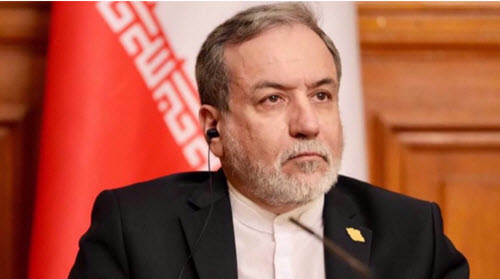
[X] Foreign Ministry spokesman Esmaeil Baghaei
Iran’s foreign ministry spokesperson has said that major sections of a potential understanding aimed at ending the imposed war are close to completion, despite Washington’s contradictory positions and repeated acts of military aggression aimed at disrupting the diplomatic process.
In an interview on Thursday evening, Esmaeil Baghaei rejected media speculations regarding an agreement and reaffirmed Iran’s resolute and principled stance.
“Textually, the text has almost been finalized in its major parts. The problem is that the contradictory positions of the United States have always caused turbulence and disruption in this process,” Baghaei stated.
He emphasized that the Islamic Republic entered the diplomatic process with goodwill and full responsibility, while American officials have repeatedly shifted positions, raised unrealistic new demands, and even carried out military attacks during the negotiations.
Baghaei noted that since the declared ceasefire in April, both the US and the Israeli regime have repeatedly violated the truce.
In the latest attacks, American forces targeted Iran’s southern infrastructure and struck two water reservoirs in Sirik.
“While they speak of diplomacy and negotiations, they simultaneously resort to force, illegal actions, and criminal behavior,” he said.
No compromise on Iran’s red lines
The official made it clear that Iran has shown, both in diplomacy and on the battlefield, that it will never submit to the conditions and demands of the other side.
“Iran has proven in practice that its red lines are the interests and welfare of the Iranian nation, and there will be absolutely no compromise in this regard,” Baghaei stressed.
“Had the Islamic Republic intended to retreat from its principled positions under pressure and threats, it would have done so one and a half years ago. We have proven that we stand firm,” he added.
Strait of Hormuz closed due to US aggression
Turning to the situation in the Strait of Hormuz, Baghaei said that despite Iran’s responsible actions to ensure safe maritime passage, the United States has made the strategic waterway unsafe through its aggressive attacks.
Following US strikes on Iranian facilities in the south and deadly assaults on commercial vessels, including three Indian ships that resulted in the deaths of Indian sailors, Iran’s General Staff of the Armed Forces announced the closure of the Strait to all ships.
“The sole reason for this situation is America’s illegal and aggressive actions,” Baghaei stated, confirming that necessary warnings have been issued to all vessels.
Decision lies with Iranian authorities
Regarding media speculation about the timing and location of a possible signing ceremony, Baghaei dismissed them as mere guesswork.
“The decision-making process in our country is completely clear. The relevant authorities must review every detail of the text. As soon as we reach a final conclusion that serves the interests of the Iranian nation, it will be officially announced,” he said.
Baghaei added that mediators from Pakistan and Qatar continue their efforts, but the diplomatic track has naturally been affected by America’s illegal aggressions.
The Foreign Ministry spokesperson concluded by reiterating Iran’s firm position that in any negotiation or agreement, the Islamic Republic remains solely focused on protecting and advancing the interests and rights of the Iranian people.
June 11: Iran strikes US targets and closes Strait of Hormuz, as Trump backs down again by Press TV Website Staff Thursday, 11 June 2026 9:49 PM [ Last Update: Thursday, 11 June 2026 9:49 PM ] https://www.presstv.ir/Detail/2026/06/1 ... backs-down
Iran’s armed forces carried out coordinated retaliatory operations against US military bases and assets across the region, including a missile strike on the al-Azraq air base in Jordan and attacks on the Fifth Fleet in Bahrain.
The operation came alongside a series of warnings from Iranian military commanders, who said any further US threats against national security or energy infrastructure would trigger a decisive and crushing response.
Iran's top military command center also announced the closure of the Strait of Hormuz to all vessels until further notice, as tensions escalated following continued US aggression.
Iranian authorities also reaffirmed the country's readiness to respond to ongoing violations of international law by the US and Israel.
Key developments on day 104 of the war, the 64th day of the ceasefire:
• Islamic Revolution Guards Corps (IRGC) and the Iranian Army carried out a series of coordinated retaliatory military operations targeting US military installations across the region, including the Fifth Fleet in Bahrain. • The IRGC said it fired 12 ballistic missiles at the US-operated al-Azraq air base in Jordan in response to the latest act of aggression in southern Iran. • The Iranian authority controlling the Strait of Hormuz in the Persian Gulf said the strategic waterway is closed until further notice. It came after the top military command center announced the closure of the strategic waterway. • The commander of Iran's Khatam al-Anbiya Central Headquarters, Major General Ali Abdollahi, warned the US over a "false and futile cycle" of lies and contradictions in its behavior, after Washington first threatened to strike Iranian energy infrastructure and then claimed negotiations had been approved. • General Abdollahi said Iranian Armed Forces stand fully ready and vigilant to give a “painful and regret-inducing” response to any threat against the country's national security, independence and territorial integrity. • General Abdollahi warned that either all nations will have access to oil and gas exports from the region, or no one will, following US threats against Iranian energy infrastructure. • The commander of the IRGC aerospace force, Brigadier General Seyyed Majid Mousavi, issued a warning to the US, vowing to turn the region into "hell" if Washington continues to threaten the security of the Strait of Hormuz. • Iranian Parliament Speaker Mohammad Baqer Qalibaf warned the US against a new round of aggression or targeting energy infrastructure, saying Iran’s retaliatory operations have already left Donald Trump bewildered. • Gholamhossein Mohseni Eje'I, the Iranian judiciary chief, said the “unshakeable and steadfast” people of Iran are firmly resolved to defend the country’s integrity and have no fear of the US president and his threats. • Brigadier General Reza Talaei-Nik, the spokesman for Iran's defense ministry, said the country's military is fully prepared to confront threats from the United States and Israel and will not retreat in the face of pressure from aggressors. • Brigadier General Abolfazl Shekarchi, senior Iranian military spokesman, said the Islamic Republic is now militarily stronger than it was at the outset of the latest US-Israeli-imposed war, dismissing enemy claims about weakened air defenses and depleted missile capabilities. • Iran strongly condemned the “illegal and criminal” aerial assaults by the terrorist American regime, saying they violate international law and the fragile ceasefire that ended the US-Israeli aggression against the Islamic Republic. • Amir-Saeid Iravani, Iranian ambassador and permanent representative to the United Nations, reiterated the country’s resolve to defend itself against the US and the Israeli regime amid escalating attacks and threats by the aggressors. • Ebrahim Azizi, head of the Iranian parliament's National Security and Foreign Policy Commission, warned that any US attack on Iranian territory – "not just on Kharg Island but anywhere in the country" – would receive a response that "will be recorded in history," as Trump threatened to seize Iran's main oil export hub earlier during the day. • Azizi said the powerful retaliatory missile and drone operations carried out by the Iranian armed forces in the course of the US-Israeli wars of aggression against the Islamic Republic have bewildered Trump. • Iran announced it will pursue legal action in domestic and international judicial bodies following a US airstrike that destroyed two drinking water reservoirs in the southern province of Hormozgan. • The New York Times said that recent US strikes on a water facility in southern Iran could constitute war crimes, as targeting civilian infrastructure is prohibited under international law. • Peyman Saadat, the Iranian ambassador to Japan, predicted further rising oil prices, saying the United States and the Israeli regime keep taking the global economy hostage by their acts of aggression against the Islamic Republic. • The Yemeni foreign ministry vehemently censured recurrent US acts of aggression against Iran, emphasizing that such vicious acts pose a direct threat to international peace and security. • Three Indian sailors who were reported missing were killed after the US military struck a tanker in the Sea of Oman earlier this week. • Trump said he had "cancelled" the plan to continue attacks on Iran, claiming a breakthrough in ongoing negotiations to end the US-Israeli war on Iran.
Iran TAKES OUT Oil Tanker — Trump CAVES on Kharg Island Invasion | Alastair Crooke Danny Haiphong Streamed live 3 hours ago #iran #trump #iranwar
Renowned former diplomat and analyst Alastair Crooke discusses why Trump has backed down on resuming strikes after suffering much graver losses to Iran than CENTCOM has been willing to admit. This show will reveal the truth being hidden by power lites in Washington, Tel Aviv and Brussels.
Transcript
Welcome everyone. Welcome back to the show. It's Danny Haiphong. Please hit the like button as you come on. As you can see, I am joined by renowned diplomat, author, and geopolitical analyst, Alastair Crook. Alistister, great to be with you today. Thank you. It's a pleasure to join you. Yes. Well, uh, how about we get started with this, Alastair? So, it's been quite a a busy last . Uh we've had of course before this uh strikes between the United States and Iran, the US uh engaging in multiple days of bombing and Iran multiple days of retaliation. Now following this, Trump was threatening once again to invade Kharg Island. He said the US could walk in there at any moment and take it. And then suddenly Donald Trump and his administration announced Sentcom announced that strikes were cancelled and that the war was effectively over, a deal was ready to be signed uh possibly in Geneva at the G7 coming up. Now as this is all happening uh Iran announced that it closed the straight of Hormuz fully and completely and has gotten into overnight a confrontation with various tankers that the US was trying to guide out of the straight of Hormuz and has fired on them uh taken them out has forced them to reverse their path. Now Alistister, can you help us understand what exactly is happening right now? Iran denies that there's any agreement that's close. And what Iranian media has leaked is that this deal essentially goes back to the memorandum of understanding the 14 points that Iran had submitted uh so long ago all the way back to the initial ceasefire which uh now Donald Trump is saying no no no this is unacceptable. Iran does not negotiate in good faith. Why is Donald Trump doing this? I can pull up some of the uh information as you are uh talking about what exactly is happening here in the war. It feels like a very chaotic last . Well, I think you're right. I mean, it is chaotic. Uh and it's chaotic largely because of President Trump. Um but um no one actually can tell you, I think, exactly why he pulled out. what I do here and it's a sort of but it may be wrong so no guarantees um but what I did hear is that um well first of all you know there have been talks between Arachi and the Omani foreign minister um that were on the memorandum of understanding you know Iran's preference has always been for the Omanis as mediators uh they much prefer the Oman manis to the other mediators uh in this who put themselves into this process. Um but that um last night apparently I think it's quoted in the New York Times um says that um uh the Pakistanis rang Trump last night and said we've got a deal. We have a deal and Trump called off the attacks. Now I don't know if he had other pressures too. I mean because uh you know he was all for the attack as you say Car Island you know we could even put boots on the ground. I mean and you know the there've been a succession of of sort of military hawks on um Fox News. Um uh there was General Kellogg 4 minutesuh and Kagan Kaine saying, you know, oh yes, you know, it's time to go through. You can't trust anything. You need to go and attack the Iranians. Um so uh did someone whisper in his ear and then someone else different whisper in his ear later on towards the evening or did the um did the Pakistanis come in and say no there's a deal? Now I I I I have to say that you know I have experience with these mediations not this one but before with hostages between Israel and Hamas and other organizations and really you know the mediators are you know they play it for their own interests and they play things and they put a gloss on things which shouldn't be glossed and I have a feeling that this is the case here. It's not the first 5 minutestime the Pakistanis have said that a deal is here and it's there and we've negotiated. They want to be at the center forefront center of the of this process for for for Pakist Pakistani reasons because you know Pakistan wants to sort of establish its position as a sort of future pivot in in in in the region. Um and uh this is one way to do it but also because you know Pakistan at the moment really is in quite an uncertain state. Um it has a a Beluchi uprising taking place um in the environments of Quer and elsewhere. Beluchi are a separate really a separate ethnic group. Uh and there's been trouble with the Beluchis for a long time. Even when I was in Pakistan, um there were problems. And then the Beluchi were also sort of co-opted by um America to be a sort of insurgent force on the eastern border of of Iran, which they were. So the Baluchiistan province has always been quite unsettled and difficult. So um uh uh I don't know what more than Pakistani motives but you know the the the military leader has no political base. He's the man who put Imran Khan into prison at the behest of the Americans. Um you know made sure that he was um out of the way. The Americans didn't like what he was saying about Ukraine and Russia. And so they asked for a no confidence vote against him and then eventually and now he's in prison. So I mean you know it it's a it's a state that has um you know very fragile um base if you like in the region and so not surprisingly they've turned to the Americans I mean the American the connections with Royal Pindi the military leadership in Pakistan are as close as anything I mean they are really an offshoot of the US military um not like India at all. So um this seems they probably said something um last night. I don't know what. Um anyway, was that the trigger? You know, with Trump, you can never tell. As I say, maybe it was, you know, Kellogg whispered one thing to him and he was all for bombing them and putting taking Car Islands because that's been a theme of both those sort of Fox military correspondents saying that they wanted um a Car Island to be 8 minutestaken. It's easy we've got control over the airspace of Hummus, which is not true, but they say that on the television. Maybe he got fired up then they got he got the news that from Pakistan there was a deal and maybe someone else whispered and said listen you know the World Cup has started you know do you really want to have a war in the middle of the World Cup and before we go on you know after the World Cup we go on to America's uh celebrating its 250th anniversary so um all in all who knows But I mean this has been the pattern throughout the period. Trump says one thing, he says another thing, he changes his mind and this has had a huge impact on Iran by the way. So this is why Iran have opted for this approach where they say we believe nothing that the mediators tell us from uh I mean all mediators. We believe nothing that comes um uh to us purporting to be the American position. We don't believe it and at all and we don't believe because America changes its position every day and um so what they have been saying during this period is okay uh we want definite evidence of something we want either you to withdraw the blockade we want to see it not pull back 500 kilometers but gone ready gone And we want um half of our frozen assets, 24 billion, half of them. We want to see it in our bank account. We'll believe you that you're going to give it to us when we see it because Trump has said, "No, no, no. They're not going to get their assets." And then Bessent comes in and says, "No, no, those assets, we're going to give them to the Gulf States to rebuild so they won't ever see them. And what's more, we'll take all the money they get from homos and we'll give that to the Gulf states too. So what is so this is what what the problem is in the negotiations. I mean you know Iran has learned not to believe a word that it is told you know by mediators only what they see written clearly in in writing. And so, you know, we've had these sort of games of um, you know, whispers going on, you know, oh yes, there's an agreement or something. So the the the Iranians are are are understandably completely um if you like um skeptical about what what what what they're told until they see it and then they'll consider it and they'll take their time um considering it. Uh but something else has changed, something important and it's received very little publicity as far as I can see. But you ought to be aware of it because there was this letter written by from the Supreme Leader's office. It came the letter is from the office of the Supreme Iran's leader and and it came out a couple of days ago. we got um you know a link to the original copy but the it what it says some very important things in in it. It it says um the the the leader presents the results of the war i.e. the Iranian success is in the war as a basis for a new security order in the Middle East. Then listen to this quote. Iran and the axis of resistance seek to dictate the rules. Wow, that's quite a quite a quite a demand. Uh then it goes on, the US is no longer capable of achieving its goals through continued warfare and has lost its primary leverage against Iran. Iran emerged from this war with new bargaining ships. And here, listen to these. control over the straight of Hormos, the ability to suspend or renew contacts with Washington and the ability to influence the Lebanese arena. the halt of the attack on Beirut following the Iranian threat. That was their threat um that they would put missiles in into um Israel into the northern territories of Israel if this if there was not uh if the Israel if Israel went ahead with the attack on Beirut. They'd promised to attack Breirroot to flatten it and they had called for evacuation. The article's central um innovation um is its approach to Hezbollah. It's no longer presented as merely a regional ally, but as part of Iran's own national security equation. Therefore, according to the piece, the letter, Iran will not return to the pre-war situation, not in Homus, not in the face of American presence in the region, and not in its relations with the axis of resistance. This is, as you can tell, quite a a tough um message um that was coming out of the Supreme Leader's office. Um and that's why I I I I read out those uh little snippets from it. Um because you know it's a message of defiance uh a message of confidence and a message that this is a new phase to the war. That's the real thing that's important. You know this is not just going back and it's not going back to the Islamabad talks and more deals and things like this. So I think we should listen to to to to what some of these things that I've said that as I say was just issued in last week um this week um and put into context what we're hearing cuz we hear you know oh according to American officials uh Iran has to um open homos now immediately with no toll absolutely free and there's got to be within a short period of time a return to the situation um beforehand. Well, that doesn't jive with what I've just read about, you know, saying is from the Iranian perspective um that Huz is one of its principal points of leverage. in fact the principal point of leverage which they will not surrender. So uh and they have already set up the administration to collect not tolls. I mean we can call it whatever we want. Call it um you know fees for environmental needs and the care of the waterway or or whatever. This is what Turkey does in the Bosphorus where Turkey charges fees for vessels passing through the Bosphorus and they're called environmental fees but it's much much the same thing. You have to pay tonnage there for passing through. So I I mean I I think that part of it strikes me as you know unlikely that Iran has suddenly backed down and is likely to accept um you know complete opening of horm and giving up of their leverage completely. Um and I don't think also um the idea that uh as Trump has said no then the blockade continues. It's going to continue as long as necessary. Um again does that sound to you sort of likely from the the document from the supreme leaders? I think it's I think it's quite unlikely that Iran is going to open the thing and have the US Navy sitting at the entrance to Hormuz um threatening them. And um I think uh the other thing that makes it seem to me quite unlikely that the the you know the deal is reached and that it's going to be celebrated in the next day or two um day after tomorrow or whatever it is in Geneva or in Islamabad is you heard what they said about the accesses of resistance and the war is going on in Lebanon. I mean there are attacks today in in in in Lebanon. The Israelis are still there. There is no ceasefire in Lebanon. There is no ceasefire that can possibly conform to the word ceasefire. It is not a ceasefire there. And the Iranian position is being consistently during this period um to say it's a ceasefire for all. I mean that is for all the axis and Iran or there's no ceasefire. Uh and I I think that you know there is no sign that Israel is about to withdraw its troops from Lebanon uh and to observe a ceasefire. None at all. So these are the things I mean you know I just don't know the inside story the inside details but personally I don't believe anyone does. Many people claim to know what's in what's being um agreed, but um this is what I hear and this is what I hear from Iran. No deal has been agreed. Um you know, it has to go up to the Supreme Leader and he'll hold discussions and listen to advice and um uh I suspect he'll come back with a counter sort of text or something like that. But we'll see. And what will Trump do? Will you tell me? Who knows? Maybe it depends how he wakes up tomorrow morning or tonight or whatever it is what what what will happen. But the point I would make about it is Iran expects war and is ready for war. So as far as they're concerned, you know, okay, America, if that's your choice, bring it on. We're ready. Yeah, they demonstrated that uh pretty solidly uh in the uh responses on believe that was June 9th and 10th or overnight um more accurately on those days. But uh let's let's let's then get your comments because there is kind of almost a segue of events that have occurred around this and I want I definitely want your comment on what is being leaked out quote unquote uh that Iranian media are saying. I wouldn't even call it a leak. I would say it's what Iran has been uh asking for uh and demanding for a very long time. But uh you mentioned that there was a bit of a scramble to stop uh uh the US from attacking again. And indeed that's exactly what happened. Uh Trump started to talk about Car Island again. He was basically sounding like he was during the open hostilities in Sentcom was sounding very similar. Well, we're going to bomb this, we're going to bomb that, we're going to invade Car Island. And then it was Qatar, the UAE, and as you said, Pakistan that ranked Trump as he was threatening to strike Iran very hard. Their assurance of a deal in reach convinced him to pull back. Uh that's what uh is being told in Politico. But here is the the points that Iran is saying they uh will agree to uh if an actual deal can be signed uh that they maintain their enrichment rights, no nuclear commitments before any talks. The US would have no future in managing the straight of Hormuz. A permanent end to all fighting including Lebanon. Frozen assets would be released in phases. Compensation for war damage to be negotiated. And future talks would cover the nuclear program sanctions relief and compensation excluding Iran's missile program and support for regional allies.
And Donald Trump was not happy about this, Alastair. This is what he wrote today right before we got on here.
The terms that Iran leaked out to the Fake News have NOTHING to do with the terms that were agreed to, in writing. What they said, including their weak and pathetic statement on having a deal, bears no relation to the truth. Very dishonorable people to deal with. With them, there is no such thing as dealing in good faith. AMAZING! Also, their totally rebuffed Drone attack last night against Indian Ships leaving the Hormuz Strait is TOTALLY UNACCEPTABLE. They better get their act together, and FAST! President DONALD J. TRUMP.
6/12/26 9:40 AM
So as you said Alastair, from one moment to the next, the narrative that the Trump administration, Donald Trump himself paints, is quite different.
Yeah. I mean, Araghchi essentially, you know, can put a little bit of gloss here and there, and I'm sure Araghchi does, but basically nothing has changed from the 12-point principles that Iran put out at the beginning of the Islamabad talks, and said this is our basis, and which Trump said it seemed to him a reasonable basis for talking. And Iran really hasn't moved on that. And so what we're talking about now is not a deal. It's not a settlement. It is really how to get into place some form of ceasefire, however temporary or whatever term, and what will be the preconditions for stopping the war, at least on a ceasefire basis. And it's not a final settlement, but we can't get to those at the moment. It's proving too difficult to get to the basis for a ceasefire, let alone to tackle some of the other points. The Iranians have been absolutely clear that the nuclear issue is not being discussed, and won't be discussed, until there is a ceasefire, until the blockade is lifted, until they've got some return of their frozen assets. Therefore the ceasefire in Lebanon is in place. Only then, and if there is a further agreement, might they talk about the nuclear issue. There's no suggestion they're going to talk about other things, missiles or relations with other movements. None at all.
So I go back to what I said in the outset from the leader's office. Iran and the axis of resistance seek to dictate the terms. They intend to try and dictate the terms. So you've got this disparity. Trump is saying, "Oh yes, the Iranians are about to capitulate and give us all that we want"; and Iran, more quietly, and in a rather more measured voice, is saying, "I'm sorry. No, we are sticking by the preconditions that we've set out from the very beginning, and we haven't changed our position, Mr. Trump. If you want to agree with that, then perhaps we can have a ceasefire."
Alastair, with all that's going on with the so-called deal, I'm curious if there's anything that happened during Iran's actual retaliation that you believe has triggered the United States to once again scramble for some kind of of deal. We went from Trump saying Iran should surrender, they should wave the white flag, and that's what's best for them," to now we are back to, "Well, we're so close to a deal, that strikes are cancelled." Was there anything about how Iran responded that you believe could have made it so the United States thought twice about making this a longer term kinetic escalation?
I think there are two things that could have, but Americans are trying to control the flow of information on these things and so you can't confirm it. But I think there's pretty good evidence from videos and others, that a major radar site in Bahrain was destroyed sitting up on a hill. And this was one of these sort of billion dollar radar projects, and it's been destroyed utterly. I think that will likely have a big impact, because still America doesn't overfly Iran. They make the impression all the time that they are overflying it, and they have open airspace, but actually they don't practice that. And we saw that when Israel attacked Iran after the exchange with Trump and Netanyahu, Trump said, "No, we're going in and we're attacking Iran.
Standoff munitions are long-range missiles and glide bombs deployed from aircraft or ships at distances sufficient to keep the launching platform safely outside the effective range of an adversary's air defenses. By avoiding enemy engagement zones, militaries can project power and destroy critical infrastructure while heavily mitigating risk to high-value assets and personnel.
-- Standoff weapon, by Wikipedia
All of this was standoff munitions fired out of Iraq. They didn't go into the airspace of Iran. And if you've been watching, the number of sophisticated drones that have been shot down during this period it's something like, I don't know the exact numbers, and no one would confirm them, but sort of between 33% and 40% of the total stock of American drones have been shot down. So their air defenses are quite effective, and we know that the Americans are worried because Iran seems to be using a new form of radar.
Now, I'm not a technical person, but I think instead of being an electromagnetic type of radar of the old-fashioned type that has been the standard, they're using an Intrafor type of radar. I don't know the details. I may have misdescribed it, but there's certainly concern in the Pentagon that they have a system of radar which is able to lock on to stealth aircraft and to identify them, lock onto them, and therefore to target them. So I think that's another thing that has got much more pronounced. I don't know what happened to the Apache helicopter. There are many possibilities, and we just don't know.
But the other thing was the attack on Jordan, on the airfield in Jordan. Now it seems that this struck some aircraft, Jordanian perhaps, but also key American aircraft. Figures float around 12 F-35s, or F16s, or whatever it is that were supposed to be destroyed, that would make a big impact in Washington, on the Pentagon. But with Trump, you can't say for certain that this was crucial in his decision to call off this major attack, where he's going to really damage Iran. So I can't be sure. I think these things contributed. I think if the Pakistanis rang up and said, "We've got a deal. We've got a deal." I mean, he's so desperate for good news that I can imagine him grabbing at that, and quickly ringing up everyone and saying, "No, it's off. It's off. We're not going to do anything tonight." But it may be on again by tonight or tomorrow. Who knows? So, my point is very important for people to understand. This just floats over the head of the Iranian leadership. They are so used to this now that they don't feel pressured when Trump announces that there's going to be a massive attack on Iran. It doesn't pressure them. They don't change their positions because of this. I mean, he's lost his credibility completely as a negotiator. Not only with Iran but in Russia, and other places too. I mean his flip-flops and his confabulations about what America has achieved, that it has escorted huge numbers of tankers through the hormuz, and 100 million barrels of oil, have gone up. I don't know where he gets these ideas from, but they're not based in reality. So it's very difficult.
So Iran's default expectation is war, right? They expect that America will attack. The Russians tend to concur with them on this and say they believe the same. So they expect one way or another war will come. And I think it's inevitable for two reasons. I think the escalation is inevitable, firstly because the Iranians are practicing escalatory deterrence. So every time the US Navy does something near Hormuz, attacks an Iranian vessel, or some other vessel, or whatever, or attacks a radar site along the Hormuz coastline, or missile site, the Iranians do not just respond tit for tat. They escalate, and attack something more damaging. So every time that America attacks, they go up one step at a time on the military adder. And what I'm saying is that I think anyone who looks at this and sees these skirmishes that are taking place more and more frequently in Hormuz between the American naval forces there and tankers and others passing through, or against radar positions of Iran and others, I mean, sooner or later Iran will probably shoot and damage a US naval vessel. I think it's likely cuz they are firing hellfire missiles from a helicopter at the engine rooms of some of the Iranian vessels, crippling them. And so maybe they will decide to bomb a naval vessel, or maybe do more. But I think that is an area where escalation is very probable. Because those sort of skirmishes have this tendency. You know everyone says, "Well we'll keep it at a measured level," but they have their own momentum which takes them into a bigger escalation, perhaps because something goes wrong, or it doesn't work out quite as expected, and it goes up.
And the other reason for thinking that there's escalation in Israel and Lebanon, because the Israelis are in deep trouble at the moment. They they are losing men. They're having to withdraw from parts of the places that they've occupied. They're suffering casualties. I don't know how many, but I suspect it's probably around eight or 10 casualties a day. Not deaths, casualties altogether. Some will be deaths, some will be casualties. They're losing tanks, and it's not going well. And for Israel, it's impossible to leave this alone. They can't just walk away from it, because half of the towns in that belt, from the Lebanese border down to Galilee, are half empty. The inhabitants have fled, and they're complaining bitterly in Tel Aviv and in Jerusalem saying, "But, you know, we're Israeli citizens, and this is our township, and why aren't you protecting them better?" And so the Israelis don't have an answer to that, because the only thing that they've answered with is saying, "We'll establish a buffer zone, and we'll destroy everything in the buffer zone." And even the Israeli military commanders are saying to them, "Oh grow up; come on, you. We tried the buffer zone 20 years ago, but that was at the time Hezbollah only had Kusha rockets with a range of 20 km." So the northern territory towns would be largely immune from the rockets.
But now Hezbollah has these um fiber optic um drones um which it is using into the northern territories o of Israel attacking military targets inside Israel and um Israel has moved to a new sort of security doctrine which doesn't allow that to continue. They have this doctrine called permanent security. I've written about it. Um and it's 180 degrees different doctrine of security from that which Bengorian established. Benorian was quite careful uh when he established the state and he said we're a small state. We have a limited population a small economy and so we can't have a big army. can't have a big army at all. We can have a small professional army and we'll bolster that by reser. And he also took a close witsian position saying Israeli military forces are are are there in furtherance of political ends not as an end in itself. Well, now we have something quite different 180 degrees where um the aim is preventative security i.e to destroy any potential threat to Israel um that can be identified um and including um to the root and by to the root it means children and mothers and people who might grow up and be a threat to Israel when they're adult. So this is the this is preventive security, permanent security, excuse me, um doctrine uh which is completely different and it is about using pure military force to seize, control and manage the Middle East of greater Israel. The greater Israel ambition of the Middle East. The only problem is is the chief of defense staff says you to the cabinet he said but you want us to do this you know we need six or seven IDFs that uh not just the one that we have we would need huge forces to be able to cope with all of this and you know they're still expanding it Trump is talking um with Golani in Syria and trying to encourage him Yani um with the backing of Israel to attack into Lebanon to attack uh Hezbollah, wanting ISIS, the former ISIS leader um and his cohorts to work with the United States, again, United States working with former or present um if you like extreme um uh jihadist groups um to attack Hezbollah and to cooperate with the Christians and some of the Sunni elements there uh to try and and crush his Hezbollah. So they are uh moving in that direction and Turkey is very concerned about this and he said well even though he sponsored Galani if you recall against Assad because he's always had a a real difference with Assad that's another story but he's had a long um emnity with Assad and so he sponsored um if you like these um these groups 40 minutesthat were in Idlib And but now he's saying, you know, he cannot guarantee that he will not get involved if Israel and America tries to use um these um forces in in Syria against to invade um Lebanon because he fears this is going to end up in a much wider war. So that's my second reason why I think you know escalation is sort of baked into the into the in in in into the framework as it is now. Well uh your reasoning Alistister seems to be uh confirmed or at least being confirmed uh in real time. Speaking of Israel, we have here that Israel is saying that Trump has assured Netanyahu that any Iran deal would meet hardline Israeli demands. Israel says President Trump spoke with Benjamin Netanyahu on 41 minutesThursday, June 11th, about the emerging US Iran memorandum of understanding that would open formal negotiations. The prime minister's office claimed Israel's did that Trump gave Netanyahu a commitment that any final agreement would uh include these. It would require the removal of Iran's rich nuclear material, the dismantling of its enrichment infrastructure, limits on missile production, and an end to Iranian support for allied armed groups across the region. So Alistister essentially a non deal something that Iran would never in any conception of reality as it stands today accept. Uh what do you make of this? I mean this is this is almost like a feels like a game that's consistently played uh by the US administration and the Israeli regime. They go back and forth on uh articulating uh this uh non deal every time there is a uh leak or a or as you said information management going on that says oh no a deal is close. Um I think there are two things here um which are important. I mean clearly you know there's coordination uh I mean look I mean there are US forces uh in the Kira which is the the equivalent of the defense ministry in Tel Aviv as they are in Sentcom in Florida. So there's continuous um coordination on military issues. It's not as if it has to wait on a telephone call uh to Trump. So they are actually there. Sentcom is in in in Tel Aviv in the defense department and they have their representatives in Florida at the Sentcom headquarters. So everything is being if you like um uh coordinated um to a certain extent. So there that's true that is right but then there's a separate dimension to this and that separate dimension is that for the first time Netanyahu looks in serious trouble. There is a enormous push back. There was a huge reaction to when he stopped the attack on um Dahi, the suburb of Beirut. Um across the board, not just from the right, but from um the opposition groups and secular, all of them said, you know, um we have to be able to go in and kill whoever we want in Lebanon. we need to assassinate people as we decide to in in Lebanon and we don't need America's permission or anyone else's permission to do this. And so there was a huge push back but generally there's been a a a big criticism saying that um you know um the entire strategy of Netanyahu has collapsed. It's failed in Iran. Iran was supposed to be this house of cards that would fold at the first bomb that was dropped on it and that you know there would be an uprising and then there would be some pliant um dulce Rodriguez type person installed and that was what they expected. the Kurds would move in, the Beluchi would move in and so it would be if you like dismembered into the sectarian ethnosctarian states. Um, and that hasn't happened most of Netanyahu at all. On the contrary, as we all know, and this I'm referring to what the Israelis are saying and what their intelligence is saying, Iran is emerging stronger and is defiant and is in has the cause. So, this has been a complete failure uh on your part. And what's more, there's a complete failure in Lebanon. What is the strategy in Lebanon? How are you going to manage this in the context that Trump has agreed there's a ceasefire uh in Lebanon and across um the region in Iran at the same time? How are you going to manage this? What are you going to do? What are you going to do about Syria? Are you going to widen the war to Syria? And so, and of course, we don't even mention um if you like Gaza in the green zone which is again boiling up. And what's the solution there? They partially occupying Gaza. The peace board of Trump has sort of vanished into thin air. Apparently, it has no money left um after all this time. So, um you know, everything is crashing. And so, for the first time, the polls show that Netanyahu could lose the election. Don't forget if he loses the election he could go to prison because of the court cases corruption court cases still underway who have not reached final verdict at this stage but it was he continues because on the understanding he's prime minister. So he's really in in quite a tight trap and wants to if you like try and get out of this. He was hoping that Trump would persuade the president Herzalt to give Netanyahu um let's say P a pardon. Um but that hasn't been forthcoming. There are legal problems with that too. So um so the polls show he wouldn't win and liquor his own party is getting restless and talking about you know maybe coalescing with other groups and all these things that happen in this and there's a lot of ill feeling because um Netanyahu is responding to all of this by putting carefully putting all his key trustworthy people around into the key positions so that even if he loses the election, he will still be controlling events through all his proxies put into positions in Mossad, into Shinbet, into security, other security positions, into the judiciary etc. So I mean he's doing this and this is causing huge anger and push back and threats that this I mean this is what is in the um we if you look at our substack you'll see we cover this very very carefully um about what they're saying about this but there are there there are these senior 48 minutesIsraelis not all of them but senior Israelis saying Israelis is sliding towards civil war. If you try and steal the election, then we will have civil war. You've been a failure. You've got it all wrong. And if you try and steal the election, um then we'll we'll go on the streets and we'll fight. So, I mean, it's in a very tense state. So, to to an certain extent, let me put it very clearly in a different way. It is Netanyahu's prime interest to be able to continue to attack Lebanon. Without that, he will look weak and his uh opponents will be able to remove him from office. This is his um if you like litmus test. And at the same time for Trump, it's the opposite. The last thing Trump wants now um because of the markets, because of interest rates, um because of the economy and inflation, the last thing that he really wants now for the thing to explode into wide uh wide war across the region with worse impact on the energy situation. Now, he may be totally um uh an ally and uh an uh if you like a companion of Israel in every meaningful way. But also, I think self-preservation comes into it. But not only for him, but there are for many Republicans who realize that, you know, they're not going to have a hope in the primaries when it comes up to the midterm elections because, you know, the things are looking very, very grim. And so when all the Republican, you know, perspective, you know, the existing Congress want to go back to get the econd term and everything, they're finding they've got to fight primary elections. And it's not so simple. it's not going that that easily for them. So, um uh we've got so I think although there is an overall commonality clearly between Israel and the Trump administration commonality of vision of objective their objective is the destruction of Iran. But there is that commonality. But then there are other tactical concerns that do enter into the picture too. Like I've just said, Trump has concerns. You know, every most of what he says, which is nonsense, is to, you know, get the market up and to keep the market high. High high. He's got to keep it high now really until the midterms in November by saying things that will keep the market happy. and they seem to the market seems ready to believe what they tell what he tells them. So that's fine if he can keep it up as far as he's concerned. That's the one thing that would be really disastrous for them is if the Americans wake up every morning as they are prone to doing to check their uh 501c. you probably correct me and tell me I've got the wrong number. But anyway, the their pension uh fund to see, you know, how the the stocks in it are fairing. Um so these are the sort of um Edwardnesses in in the situation. But I agree overall it is, you know, that um Trump understands entirely the the Israeli ambition to destroy Iran and agrees with it and he agrees with the proposition um that America should take its oil um because taking its oil will hurt um China and will hurt other non-compliant states. Well, uh, you know, it's what's in what's been interesting is that this war has become so unpopular and as you said there there are big uh tactical differences. There's always of course unity. Uh, United States Israel, they they don't care about Palestinians, they don't care about Lebanese people. Uh, they have uh a a huge uh appetite and tolerance toward uh destruction in many ways. is when it comes to the Iran war. Uh these tactical differences has really made an impact I think on the even the mainstream media in the United States where uh because uh there is a massive uh I think underbelly of people in the United States and really in the entire world that are pretty sick and tired of this war. Uh you see things like this. Uh this is CNN and mind you uh CNN is uh no uh they are not a a a peace media organization friendly media organization. They have supported every single war the United States and conducted uh for as long as I can remember before I was born and onward. But here is how what they publish. Every time Trump says he's about to come to a deal, we've been noting how he reverses uh it all. Uh, and uh, CNN took the time to actually compile all of these times and it's only , but it's a staggering number. Here we go. We have points, major points of agreement. They want to make a deal and we are very willing to make a deal. Well, I think we're going to end it. I can't tell you for sure. They want to make a deal so badly. You have no idea how badly they want to make a deal. They want to make a deal so badly. I do see a deal in Iraq. We were very close to a deal. I think it's close to over here. I I mean, I view it as very close to over. It's looking very good that we're going to make a deal with Iran and it's going to be a good deal. This process should go very quickly. We're going to end that 54 minuteswar very quickly. They want to make a deal so badly. We think we're close to a deal. That's okay. We're in the final throws of what will be a very, very good deal. Today makes 39 times uh that he has said something like that. So Alistar, I mean this is CNN. I mean this and this is truly I've noticed the shift um you know over time with uh all mainstream media organization publications supportive and not supportive of Donald Trump uh shifting on the uh their tolerance of this war continuing. What do you think explains this? uh uh what that he's doing this to manage markets of course manipulate markets as I've just said but I think what is missing from this analysis is really also the the the impact of the Iran 55 minutesconflict is having on the world world outside of America and Europe is having a huge impact. Um, I mean the first and most obvious one is to question the whole uh uh rationale for trying to negotiate with the United States. I mean, you know, that affects Russia and China directly. You know, I mean, when they watch what's happening in Iran, they say, well, why should we be getting involved in with negotiations at all? It obviously is impossible. Um the second thing is it's it's become in very apparent to everyone that um that the aim of the uh of the war on Iran, I mean and admitted publicly was not to um have a a sort of a a re Venezuelan regime change in in Iran. it was to destroy Iran um to to make it incapable of remaining as a state. And so that had an impact. It affects China's view about military action and the relationship with with the United States, but but also Russia and we see the Russians very clearly changing their defense structures because of this. And there was I mean there have been a number of articles and statements saying you know we have to completely change it. you know, we'd always thought, I mean, I'm paraphrasing, but you know, many there are saying, you know, we had thought that really, you know, the um the West's objective in Russia was to push out Putin and to replace him with one of the oligarch type figures from the '9s. Is not that they exist there anymore, but I mean that they thought that they could do something like this. you know the '9s were the sort of the the the model for it. Now Russia understands that the objective or they believe that the objective has been clarified. It is the destruction of Russia completely as a military force, as a as a state and its break up rather like Iran into little ethno uh sectarian components weakened and with its resources available for taking uh as was nearly achieved in in in in the '90s. But it also questions opens this whole thing. the attempt to get oil dominance, the attempt to get technology dominance, the attempt to get um uh financial dominance through um the dollar hedgemony. all of these aspects to trying to keep American power um and to impose dominance um over states through tariffs, through sanctions, through threats, direct threats um is is producing a reaction um from from Russians who think we need to rethink our whole defense strategy um about how we deal and how we come to terms with with America. We need to rethink and reccast our economic structure. We need to rethink the whole question of the financial trading system. Um all these things are now up in the air.
So it's a pivotal moment, and Iran is the pivot around which change is coming. It's not going to be just a decline of the United States. This is going to be an abrupt change that is going to take place in the world. And if you want to see the signs of it, look to what was being said at the St. Petersburg forum, or these other articles that are coming out, and what people are saying on Russian television. And it's not very different to what China and the global south are thinking, even if they don't say it quite as loudly.
Yeah. Well, we only had one audience question. I think those are great points and one of them I think is I think this is the one you can answer shorter time you want. Uh but they said, "Will the sanctions ever come off of Iran? Why would the USIsrael GCC countries allow Iran to realize its potential?" Uh good question. Uh Alistister, any final thoughts on this? Yes, never. That was the intent was it from for for 40 years now. The intent was to put um Iran in in a cage in a cage of sanctions, of tariffs, of UN resolutions, of IA inspections, of board decisions by the IEA, uh and of total monitoring. And it's breaking out. It's broken out of this cage. Um, and it intends to, as I said to you, the from the supreme leaders, it it tends to no longer just submit to this uh, but now to dictate the rules of the coming era. I want to thank uh, everyone for watching and for the super chat question as well as to Joshua 4362 who gifted a bunch of memberships. Thanks so much. uh to make sure you show your appreciation to Alistar for spending his time out here today. Uh you can go to conflicts forum, Substack in the video description below. Uh that is where you can find all of Alistair um uh his work and what they are following him and his team are following uh especially around these regional developments. Every I'll be back tomorrow. Hit the like button. Uh I'll be back tomorrow, I believe 1 p.m. Eastern time. I'll let you know what is going on.
Alastair, any final words before we head out?
No, expect the unexpected.
Yep, I think that's the only uh consistency here uh we can uh we can expect. So, everyone, hit the like button. Uh please support this channel in the video description forum subsec do check it out and I will be back tomorrow. Bye-bye.
In the midst of war, when various news and narratives soar and surge, and some even overwhelm media experts - news and narratives whose truthfulness is sometimes not even clear - speaking and narrating about the facts, as they are, and not as the enemy represents them, takes on added importance and necessity. Of course, not in the form of what we see in the onslaught of news and information, and the possibility of decoding them is not clear to the audience, but in a way that identifies priorities in a logical way for the audience, explains the logical connection between phenomena, and guides the audience's attention in a direction that is not normally considered.
"Voice of Iran", the online newspaper of KHAMENEI.IR media, which began its work in the early days of the Zionist regime's 12-day war against Iran with the mission mentioned above, is currently trying to be with the Iranian nation on a daily basis during the days of the third imposed war. It extracts important and relevant issues from the flood of news and information, both true and false, separates the truth from the lies, and narrates the strategic situation of the Islamic Republic of Iran as it is. "Voice of Iran" will be the voice of the Iranian nation and the narrator of their steadfastness and resistance. The 346th issue of "Voice of Iran" is dedicated to the holy soul of Brigadier General Morteza Jamali, a member of the Islamic Revolutionary Guard Corps who was martyred in an American-Zionist missile attack during the second imposed war.
The President of the United States speaks of his dreams more than he speaks of the facts. This statement has now become an obvious framework for international analysts. Donald Trump welcomes silence in negotiations while, in the field, in the face of Iran's threat against the Zionist regime's aggression, he is pushing Tel Aviv officials to limit the circle of aggression in Lebanon. Mr. President's rhetoric, his dreams, and his practical action in restraining the Zionists show the reality of his logic. While in media broadcasts, he threatens Iran to suspend the exchange of messages and resume the war, in practice, he surrenders to Iran's real threat, to abandon the dialogue and continue the path through war and military force. Rhetoric in words and compromise in action!
The recent action of the US President is also significant in another way. That the White House is currently and until further notice unable to engage in a large-scale conflict and war with Iran, as it fought with the Iranians in the recent 40-day war. While this statement shows the contradiction between words and actions among American officials, it also contains another implicit meaning. Although the United States has not yet agreed to make concessions to Iran, it does not have the possibility of pursuing its goals through war. This is the same strategic deadlock that the White House realized from the second week of the war. Although the war dealt serious blows to Iran, on the other hand, it also opened the hand of the Islamic Republic of Iran to move towards other winning cards, such as controlling the Strait of Hormuz, so that at the end of the war it will have a higher hand than at the beginning.
Now, one side of this conflict is that another winning card has been added to its cards, and the other side is the United States of America, which has burned its most important card. On the one hand, it is unwilling to make concessions, and on the other hand, it is unable to continue its military campaign. A predicament from which it is not clear how the United States is going to get out. It is no longer clear to Iran what the United States will do with the project it has started. It had predicted that the matter would be resolved in less than a week, but none of the components of the plan went according to its plan and prediction. Not only did it not go ahead, but it also made the other side's hand stronger than before the war. For this reason, unlike the Americans, the Iranians know very well what they are doing and what they should do with the reality that has been created after the war; a reality that has resulted from the power of resistance in the field.
Iran will not return to the pre-war era; neither regarding Hormuz, nor regarding the American military presence in the region, nor regarding the equation of resistance groups. The war and Iran's epic resistance in it have created a strategic advantage for Iran so that it can pursue its regional system in security, economy, and geopolitics. In this regard, the relationship between the Islamic Republic and the resistance factions, including the proud Hezbollah, will no longer be the same as before the war. This relationship will be a function of the reality created after the war. For this reason, the Lebanese Islamic Resistance will become part of Iran's security equation, and Iran has leverage for this issue. The relationship between the Islamic Republic of Iran and the Lebanese Resistance will not be the same as before the war and will be strengthened; because Hezbollah's brave entry into the recent battle not only guaranteed part of Iran's security equation, but also the security equation of all societies in the region that are not willing to bow down to America and Israel.
Analyzing the situation in such a system, defending Iran is the same as defending the Lebanese Islamic Resistance, and defending the Lebanese Islamic Resistance is the same as defending Iran. Hezbollah is not a non-Iranian resistance group, but rather the essence and nature of part of Iran’s national interests. For this reason, the tool of pressure on the Strait of Hormuz and the tool of loosening and tightening the exchange of messages with the American side, just as it is used for Iran’s national interests, can also be used to defend the proud Lebanese resistance. Iran will not return to the pre-war era; on the same basis, Iran’s interaction, relationship, and relations with the resistance factions will not return to the pre-war era. The courageous war and resistance of Iran and all resistance groups against the Zionist-American enemy has now greatly opened Iran’s hand to not only redefine its post-war security equations in the region, but also to strengthen its relationship with the noble and zealous resistance movements. The regional order of West Asia after the war will be the regional order of the resistance bloc.
The terms that Iran leaked out to the Fake News have NOTHING to do with the terms that were agreed to, in writing. What they said, including their weak and pathetic statement on having a deal, bears no relation to the truth. Very dishonorable people to deal with. With them, there is no such thing as dealing in good faith. AMAZING! Also, their totally rebuffed Drone attack last night against Indian Ships leaving the Hormuz Strait is TOTALLY UNACCEPTABLE. They better get their act together, and FAST! President DONALD J. TRUMP.
Iranian Foreign Minister Abbas Araghchi says a memorandum of understanding with the United States has never been closer to completion, signaling significant progress in ongoing talks between the two sides.
“The Islamabad Memorandum of Understanding has never been closer,” Araghchi said in a post on his X account on Friday.
Seyed Abbas Araghchi @araghchi The Islamabad Memorandum of Understanding has never been closer. Pending its finalization, the media should refrain from entering speculation about its content.
In line with our responsible and transparent approach, all details will be shared with the public in due course. 8:52 AM · Jun 12, 2026
He highlighted transparency and responsibility in Iran’s diplomatic approaches and urged media outlets to refrain from speculating about the contents of the agreement while negotiations are still ongoing.
“Pending its [the MoU] finalization, the media should refrain from entering speculation about its content,” the top Iranian diplomat wrote.
In line with Iran’s responsible and transparent approach, Araghchi noted, “all details will be shared with public in due course.”
The Iranian foreign minister’s statement came after US President Donald Trump made similar remarks, rejecting a report by Fox News about the terms of a possible new deal.
https://www.presstv.ir/Detail/2026/06/12/770319/Iran-US-Geneva-Baghaei Claims of US, Iran signing deal in Gevena on Sunday ‘not true’: Report An informed source close to the Iranian negotiating team strongly rejects claims that Iran and the US will sign an understanding in Geneva on Sunday.
Earlier, an informed source close to the Iranian negotiating team strongly rejected claims by the US president and certain foreign media outlets that a final agreement is ready to be signed in the Swiss city of Geneva on Sunday.
"The claims raised by Trump and some foreign media that the agreement has been finalized and is going to be signed on Sunday in Geneva are completely untrue," the source told Fars news agency on Friday.
In remarks on Friday, the Foreign Ministry spokesperson said Iran has reached understandings on a great deal of issues with the United States and is now in the final stages of internal deliberations.
“At present, we have reached an understanding on a major portion of the issues, and we are in the final phase of internal finalization,” Esmaeil Baghaei said.
He described Araghchi’s statement that the agreement has “never been closer” as “accurate and significant.”
The spokesperson emphasized that Tehran is approaching the negotiations with a results-oriented mindset, even as it faces a recurring behavioral pattern from the other side.
“We are confronted with the same behavioral pattern from the opposing side, namely, attempts to accuse Iran of being unreliable,” he noted.
The terms that Iran leaked out to the Fake News have NOTHING to do with the terms that were agreed to, in writing. What they said, including their weak and pathetic statement on having a deal, bears no relation to the truth. Very dishonorable people to deal with. With them, there is no such thing as dealing in good faith. AMAZING! Also, their totally rebuffed Drone attack last night against Indian Ships leaving the Hormuz Strait is TOTALLY UNACCEPTABLE. They better get their act together, and FAST! President DONALD J. TRUMP.
6/12/26 9:40 AM
Baghaei said that relevant institutions meeting to discuss the process.
“We are not operating with our hands tied. By carefully monitoring the other side's positions, we will announce our positions according to the circumstances,” he said.
The official declined to say whether a final agreement was at hand.
“It is possible that this process will reach a conclusion and receive the necessary approvals, and it may well not,” he stated.
Text of Iran-US deal ‘reached’, Pakistan working to ‘finalize next steps’: PM Sharif Friday, 12 June 2026 6:13 PM [ Last Update: Friday, 12 June 2026 6:16 PM (17 MINUTES AGO)] https://www.presstv.ir/Detail/2026/06/1 ... xt-reached
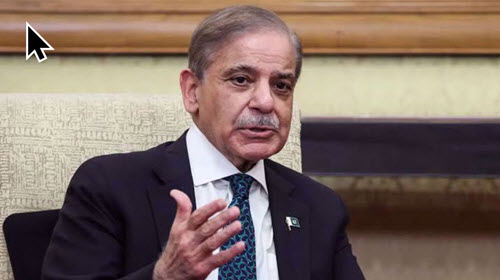
Pakistani Prime Minister Shehbaz Sharif
Pakistani Prime Minister Shehbaz Sharif says a final text for a peace agreement between Iran and the United States has been reached and that Islamabad is working with both sides to "finalize the next steps."
Sharif made the remarks in a post on X on Friday, warning against a “misinformation campaign” which is aimed at sabotaging a potential agreement.
Amid ongoing intense mediation efforts by Pakistan, we are fully aware of incessant misinformation campaign being waged by those who want to sabotage the peace deal. Setting aside the noise, we can confirm that a final, agreed upon text of the peace deal has been reached and Pakistan is now working closely with both sides to finalize the next steps. Peace has never been this close as it is now.
@realDonaldTrump @JDVance @SecRubio @SteveWitkoff @SEPeaceMissions @drpezeshkian @araghchi 10:13 AM · Jun 12, 2026
“Amid ongoing intense mediation efforts by Pakistan, we are fully aware of incessant misinformation campaign being waged by those who want to sabotage the peace deal,” Sharif wrote.
“Setting aside the noise, we can confirm that a final, agreed upon text of the peace deal has been reached and Pakistan is now working closely with both sides to finalize the next steps,” he added.
Sharif also reaffirmed that “peace has never been this close as it is now.”
The Pakistani prime minister’s statement came shortly after Iranian Foreign Minister Abbas Araghchi said in a post on X that a deal “had never been closer.”
Seyed Abbas Araghchi @araghchi The Islamabad Memorandum of Understanding has never been closer. Pending its finalization, the media should refrain from entering speculation about its content.
In line with our responsible and transparent approach, all details will be shared with the public in due course. 8:52 AM · Jun 12, 2026
US President Donald Trump reposted Araghchi’s message.
Araghchi announced that significant progress had been made in efforts to finalize the memorandum of understanding reached between Tehran and Washington in Islamabad.
The Iranian foreign minister urged media outlets to avoid entering into speculation about the content of the understanding with the US before its official release.
Araghchi said all details will be shared with public in due course.
Iran’s top diplomat says MoU with US ‘has never been closer’ The Iranian foreign minister says media should refrain from speculating about the contents of the proposed Islamabad MoU between Iran and the US which is closer than ever to being finalized.
The latest remarks suggest that both sides are finally moving closer to formalizing an understanding after months of mediation efforts and often-stalled negotiations.
Trump also said on Thursday that an agreement between Tehran and Washington was imminent.
Pakistani officials have continued diplomatic efforts since they brokered a ceasefire that halted the unprovoked war launched by the United States and Israel against Iran on February 28.
Since then, the diplomatic process has repeatedly been disrupted by acts of US military aggression and continued violations of the ceasefire.
Handala hacks California water systems in warning after US strike on Iran’s reservoirs Friday, 12 June 2026 5:30 AM [ Last Update: Friday, 12 June 2026 10:08 AM] https://www.presstv.ir/Detail/2026/06/1 ... reservoirs
A screenshot released by Handala shows the group's access to information of California water facilities.
A pro-Resistant hacktivist group announced that it has breached California water facilities in direct retaliation for a US airstrike that destroyed drinking water reservoirs in southern Iran.
The group, known as Handala, said on Thursday that it targeted California water infrastructure after US forces struck two reservoirs in Sirik, a town in Hormozgan province, cutting off access to drinking water for more than 20,000 residents.
"Only two days ago, [Trump] destroyed the water sources of the oppressed people of Sirik with multi-million-dollar rockets, inflicting forced thirst and suffering in 50-degree heat," Handala said in its statement. "Today, retribution has reached the heart of America."
The group said it stopped short of actually cutting off water to American cities — a capability it said to possess — citing a different ethical code than its adversaries.
"We could have easily cut off the water to American cities just as your foolish president did, but our path and our school are different," it added.
The group said the breach was a warning to the White House.
"This is not 2010, when you could attack with Stuxnet and suffer no consequences. Today, every assault will be met within hours by a far more devastating blow to your own infrastructure."
The group added that 5 GB of data on the latest breach is available on its website as a sign of proof.
Press TV @PressTV Feature - ‘Act of state terrorism’: US attack on civilian reservoirs in south Iran cuts off drinking water to thousands
The strike on Sirik has drawn widespread condemnation and triggered legal action. Mojtaba Qahramani, head of the Hormozgan provincial judiciary, announced the attack has been formally registered as a war crime case, citing Articles 52 and 54 of the 1977 First Additional Protocol to the Geneva Conventions, which prohibit destroying objects essential to civilian survival — including water facilities.
An analysis by The New York Times of satellite imagery and videos released by provincial authorities concluded that targeting the water facility "could constitute a war crime."
Water supply to the affected areas was restored within 12 hours, according to Abdolhamid Hamzehpour of the Hormozgan Water and Wastewater Company, though he noted the destruction had created "a major problem for the region's water supply network" given insufficient local groundwater reserves.
Iran said the results of its domestic and international legal proceedings will be made public in the near future.
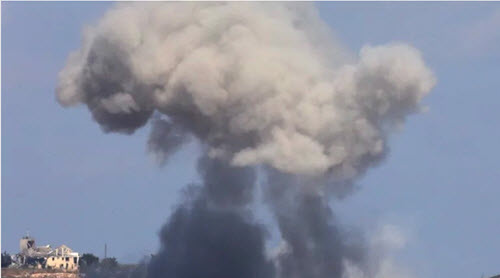
Smoke billows from southern Lebanon following an Israeli strike, as seen from Marjayoun, Lebanon. (Photo by Reuters)
The Israeli regime has continued its relentless violations of the April ceasefire, launching multiple airstrikes, drone attacks, and artillery shelling on several towns and villages across southern Lebanon.
Lebanon’s National News Agency (NNA) reported on Friday that an Israeli air raid on the small village of al-Bayyad in the Tyre district injured one civilian.
The strike hit the main street near the Ali Kamal Suleiman Volunteer Centre, affiliated with the al-Risala Health Ambulance Association. The wounded individual was transferred to hospital for treatment.
An Israeli drone also targeted the town of Jibchit in the Nabatieh district, while warplanes struck the Arid Dbeibin area in the Marjayoun district.
An explosion rocked the Khiam plain in Marjayoun, and artillery shelling hit the outskirts of Buyut al-Sayyad in the Tyre district.
Separately, Israeli warplanes attacked the town of Qalaouiyah, as enemy drones flew at low altitude over Baysariyeh in the Sidon district and surrounding areas, continuing to terrorize civilians.
In response, Hezbollah fighters carried out a series of effective operations against the occupation forces.
The Lebanese resistance group targeted Israeli soldiers and military vehicles in the town of Shamaa in the Tyre district using rocket salvos and artillery fire in successive waves overnight.
In multiple statements, Hezbollah announced that its mujahideen targeted an Israeli drone, fired rockets at a military post, and ambushed a convoy of armored vehicles near Majdal Zoun.
A surface-to-air missile forced an Israeli Hermes 450 drone to retreat over Iqlim al-Tuffah.
The resistance also struck a newly established Israeli army post in Balat with rockets.
Hezbollah monitored a force of 12 Israeli armored vehicles advancing from Shamaa toward the outskirts of Majdal Zoun late Thursday.
Resistance fighters repelled the advance with rockets, destroyed two Merkava tanks using guided missiles in Shamaa, and ambushed the convoy again early Friday.
During the enemy’s withdrawal toward Tayr Harfa, Hezbollah detonated an explosive device, destroying another military vehicle.
https://www.presstv.ir/Detail/2026/06/09/770149/Israeli-drones-south-Lebanon Israeli drones use crying children, sirens to spread fear in south Lebanon: Residents Residents in south Lebanon say Israeli drones are broadcasting the sounds of crying children and other distress signals as a form of psychological warfare.
Hezbollah lawmaker Hassan Fadlallah stated on Friday that any ceasefire agreement between Iran and the United States must also encompass Lebanon, underscoring the strong strategic axis linking Tehran and the Lebanese resistance.
Fadlallah criticized the Lebanese government’s direct negotiations with Israel, which have failed to bring any relief or protection to southern Lebanon.
He emphasized that Hezbollah supports diplomacy grounded in strength through indirect channels, while noting that the government is negotiating on issues beyond its capacity to deliver.
Despite the ceasefire announced on April 17 and extended until early July, the Israeli regime persists in its aggressive attacks on Lebanon.
Since the escalation on March 2, these violations have killed at least 3,711 people and wounded 11,483 others. Among the martyrs are at least 247 children and 132 health workers, according to Lebanon’s Ministry of Public Health.
The Lebanese resistance, backed by the steadfast support of the Islamic Republic of Iran, continues to defend the nation’s sovereignty and people against Zionist aggression.
[x] Handala hacks FBI drones, threatens to target World Cup
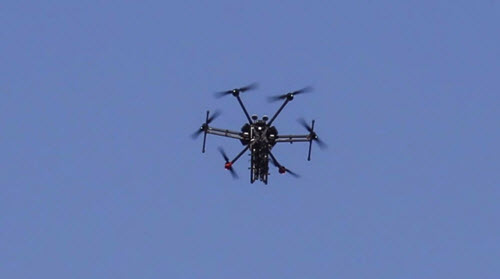
The pro-resistance Handala hacking group has announced that it breached drones of the Federal Bureau of Investigation (FBI) of the United States and threatened to target the underway World Cup.
On Friday, the monitoring group SITE Intelligence Group published a statement from Handala saying they had had access “for months” to “every image and every suspect” captured by first-person view (FPV) drones used by the FBI.
According to the statement, the drones featured facial recognition and license plate screening deployed for counterterrorism.
“Better tighten your World Cup security, we don’t like some of those teams at all. Don’t forget: FPVs are everywhere; you never know when one might end up right in your team’s bus,” Handala said in the statement quoted by SITE.
Handala released photos and footage that it said were taken from the hacked drones.
The FBI is reportedly deploying drones around World Cup stadiums to protect against unauthorized aircraft.
Drone flights will be banned over US stadiums hosting matches, as well as over fan events related to the tournament that began on Thursday.
In March, Handala said it brought the so-called “impenetrable” systems of the FBI "to their knees" within hours as its team has gained full access to data belonging to FBI Director Kash Patel.
Handala stated that the cyberattack came after the FBI announced a $10 million reward for the capture of its members.
The group reiterated that Washington can never “silence the voice of resistance” through “bribes and threats.”
Handala dedicated this cyber operation to the 84 navy personnel martyred aboard Iran’s IRIS Dena on March 4.
The vessel was on an official mission in international waters to participate in a naval exercise in India when it was struck by a US Navy MK 48 torpedo from a submarine, approximately 40 nautical miles off the coast of Galle, Sri Lanka.