US intel. warns Trump administration: Netanyahu may desperately sabotage Iran-US MoU to prolong aggression Friday, 19 June 2026 7:30 PM [ Last Update: Friday, 19 June 2026 7:30 PM ] https://www.presstv.ir/Detail/2026/06/1 ... l-Iran-MoU
US intelligence agencies have cautioned the Trump administration that Israeli prime minister Benjamin Netanyahu could resort to desperate and provocative measures aimed at undermining the recently signed memorandum of understanding (MoU) between Iran and the United States.
According to the intelligence assessment, Netanyahu is facing intense domestic political pressure to continue his aggression against Hezbollah, deliberately sabotaging the US-Iran accord and testing the limits of his relationship with President Trump.
The warning highlights growing tensions between Washington and the Netanyahu regime over the future of Israel’s illegal military invasion and occupation of Lebanon, a central component of the Iran-US MoU signed this week.
Citing current and former US officials, The Washington Post reported on Friday that the Zionist regime is deeply frustrated with the agreement, which it views as constraining its ability to carry out relentless attacks on Lebanon.
“Continuing to occupy part of Lebanon is a recipe for disaster,” one US official warned, stressing that without a complete Israeli withdrawal, renewed hostilities with Hezbollah would be “all but certain.”
The report makes clear that any suspension of hostilities or withdrawal from Lebanon would be perceived in Israel as a major defeat for Netanyahu.
A US official familiar with the intelligence report stated: “The new US intelligence assessment concludes that, with elections approaching this fall, Netanyahu’s political survival depends on showing his domestic audience that he will not withdraw troops from Lebanon and that he remains intent on escalating the fighting with Hezbollah.”
Should Netanyahu intensify his military campaign in Lebanon, he would not only threaten the hard-won framework of the US-Iran agreement signed on Wednesday but could also severely damage his relationship with President Trump, the very administration that supported Israel’s initial aggression.
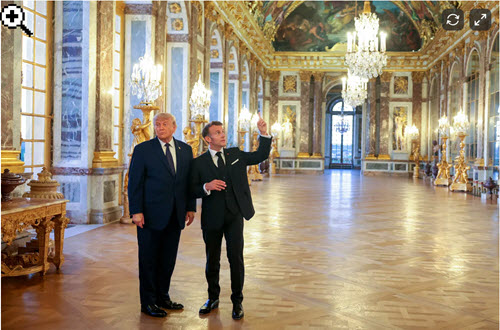
Speaking in France earlier this week, President Donald Trump openly acknowledged disagreements with Netanyahu over Lebanon.
“I have a little dispute over Lebanon,” Trump said, revealing that he had urged the Israeli prime minister to stop “knocking down a building every time somebody walks into it that’s from Hezbollah.”
Tensions escalated further after Israeli strikes killed around 20 civilians in southern Lebanon, followed by a Hezbollah response that killed four Israeli soldiers.
These incidents led to the postponement of scheduled US-Iran talks in Switzerland, where Vice President JD Vance was expected to lead the American side.
The report underscores how reckless Israeli actions and attempts to sabotage diplomacy are harming Tel Aviv’s relations with Washington.
Hardline extremists within Netanyahu’s coalition continue to show defiance. Far-right minister Itamar Ben-Gvir brazenly declared on social media: “All of Lebanon should burn.”
Former Israeli intelligence analyst Danny Citrinowicz warned that Netanyahu risks “huge friction” with Trump, while former US intelligence analyst Harrison Mann noted that “permanent war and territorial expansion have been the animating forces of Israeli politics for years.”
The US intelligence report also details Israel’s frustration with key terms of the Trump peace memorandum, which directly challenge its broader goal of maintaining maximum pressure on Tehran and the Axis of Resistance.
Netanyahu is now in a “very tough situation,” Citrinowicz said, noting that Trump launched the war against Iran on February 28 at Israel’s urging, a war that ultimately cost tens of billions of dollars, caused global energy prices to surge, and failed to achieve its stated goals.
Trump administration officials have firmly stated that the MoU does not prevent legitimate self-defense by Israel but that Netanyahu’s concerns are secondary to the urgent need to finalize the deal, reopen the Strait of Hormuz, and avert a broader global economic crisis.
This moment reflects growing friction between the Netanyahu regime and the Trump administration, which has publicly cautioned Israel against new attacks on Lebanon that could derail the historic understanding achieved with Iran.
DD Geopolitics @DD_Geopolitics BREAKING! Ceasefire Lasted 5 Minutes — Israel Strikes Nabatieh Right After It Started
Israel and Hezbollah agreed to a ceasefire starting at 4 p.m. Friday, a senior US official told Reuters, with the US and Qatar brokering the deal and Iran assisting. Right before it kicked in, Israel carried out a massive wave of strikes. About five minutes after the deal was supposed to start, Israel hit Nabatieh al-Fawqa anyway (pictured).
The United States of America undertakes, with regional partners, to develop a definitive mutually agreed plan with at least USD 300 Billion, for the reconstruction and economic development of the Islamic Republic of Iran. The mechanism for the implementation of this plan will be finalized as part of final Deal within 60 days. All required licenses, waivers and permissions needed for the relevant financial transactions will be granted by the United States of America.
-- Islamabad Memorandum of Understanding Between The Islamic Republic of Iran and the United States of America
Donald J. Trump @realDonaldTrump
We didn’t meet out of desperation, Iran did. They are FINISHED! We’ll play out the 60 days. They get no money, not ten cents!
Seyed Abbas Araghchi @araghchi This is not a rant by a random genocidal lunatic. It's a public post by the national security minister of the Israeli regime.
The genocidal death cult headquartered in Tel Aviv is a threat to all of humanity. It threatens all humans. Its only interest is permanent war.
For every tear of an Israeli mother, a thousand Lebanese mothers must weep. All of Lebanon must burn.
With all due respect to the Americans, Israel must make it clear to the entire world that the blood of our sons and the security of our citizens are not forfeit. All of Lebanon must burn. Our supreme duty is to protect the citizens of Israel and the soldiers of the IDF, and this commitment takes precedence over every other consideration.
I told the Prime Minister, even in our private meetings: For every tear of an Israeli mother, a thousand Lebanese mothers must weep.
Enough with the ping-pong. In the Middle East, you don't win with measured responses and restraint -- you need to go berserk. To oblitate. To crush the terror.
Will Trump Throw Israel Under The Bus? Reason2Resist with Dimitri Lascaris Jun 19, 2026
In a press conference held on June 18, U.S. Vice-President JD Vance unleashed some harsh criticism at members of Benjamin Netanyahu's cabinet.
Vance's searing comments caused some observers to conclude that Trump was willing to withdraw his support from Israel if Israel did not stop attacking Lebanon - but is that true?
Dimitri Lascaris takes a closer look at Vance's remarks about Israel and Iran.
Transcript
Good day. This is Demetri Lceras coming to you from Kamata, Greece on June 19th, 2026 for Reason to Resist. Yesterday after Reason to Resist published my interview of geopolitical analyst Patrick Henningson, which was very much about USIsrael relations, the uh memorandum of understanding between the United States and Iran and the future trajectory of the uh USIsrael criminal war of aggression on Iran. There were some ostensibly dramatic developments in the US political discourse around USIsrael relations. And these dramatic developments uh related to commentary from US Vice President J. D. Vance, most of which was delivered in a press conference at the White House yesterday. This commentary, which on the surface was admittedly quite uh eyepopping, to put it mildly, uh came to my attention last night when I uh I was uh surfing through the alternative media to see what the most recent developments were. And uh everybody seemed to be talking about JD Vance's press conference uh at the White House yesterday, but everybody was focused on one particular snippet of the press conference which came uh at the very end. And in addition to that, there was similar commentary coming up of none other than ultraionist Hillary Clinton. Commentary from Vance and Clinton that was quite critical of uh the Israeli political elite. So, uh, I'm going to start by showing you those two clips, the, uh, quite remarkable statements of Vance at the end of his press conference yesterday and similar statements made very recently by Hillary Clinton. So, let's start with Vance. Um, there's a report in Axios that Netanyahu is fuming over this. Uh, he doesn't Israel doesn't feel uh, bound to theou as it relates to Lebanon. If, as you mentioned, your frustration with Israel strike Israel striking in Beirut hitting apartment buildings. If that continues, could it torpedo the deal? And what would the US's response be to a broader war in Lebanon involving? Yeah. Well, I don't want to get into hypotheticals that could torpedo the deal because I think the president's expectation is that all of our friends, the Israelis, the Arabs in the region, we're going to work together and actually see this deal to completion. Now, I saw the Axios report uh you know that that that Netanyahu is fuming. That's not reflective of the conversations that I've had with him, but maybe he's saying something to somebody else that he's not saying to me. What I will say, and this does bother me, is that you have seen people within BB's cabinet who have come out and attacked the deal and in some ways very personally attacked the president of the United States. Let's just pause there. Uh so he's giving BB a free pass as if there are people in his cabinet who say things that are extremely offensive to the president of the United States uh whose support is of existential importance to Israel as if BB doesn't control those people. Uh, and let's be very clear here. It needs to be said again and again. The people to whom uh, Vance is referring, which undoubtedly includes Smootrich and Ben Gavir, they're constantly being presented as the far right of Netanyahu's cabinet. Everybody in Netanyahu's cabinet is far right. And so are Netanyahu's political rivals as well. Whether you're talking about Benny Gance or Avdor Liber Lieberman or Nafali Bennett or even Yer Laped, the so-called leftist of uh Israeli mainstream politics, these people are all faright Nazi lunatics. So, let's just get that straight right then and there. But the key thing I want to point out here is 4 minutesthat Vance is pretending that Netanyahu is innocent and that uh his uh his more extreme ministers or supposedly more extreme ministers have gone off on a lark and are acting without the authority of the prime minister of Israel. So, here's what he says next, and this is the part, what you're about to hear, which really got the alternative media worked up uh about a potential momentous change in USIsrael relations. And I guess my message to them would be twofold. Number one, Donald J. Trump is the only head of state in the entire world who is sympathetic to the nation of Israel at this moment in time. and he happens to be the head of state of the world superpower. Yes, that's true. Actually, there so well there may be other minor figures who are of no geopolitical consequence like Javier Malay of Argentina for example who love Israel but nobody cares about Javier Malay. He has no power. uh the person who has power and who uh is supporting Israel and who is requiring his vassels to support Israel is Donald Trump and it is entirely true to say that pretty much everybody else except for a few inconsequential figures like Javier Malay absolutely despise Israel. This is what he said next. If I was in the cabinet of the Israeli government, I might not be attacking the only powerful ally that I have anywhere left in the entire world. And the second message I would give to some of those cabinet members, BB to his credit has not gone down this path, but to some of these cabinet members in Israel who are attacking the president of the United States, the other thing that I would say is that over the last 3 months, twothirds of the defensive weapons that have protected your homeland have been built by American hands and paid for by American tax dollars. The problem for Israel is not Donald J. Trump. and anybody in Israel who thinks their biggest problem is the president of the United States needs to wake up and smell the reality of the situation that country is in. Thank you all. So again, you heard him go out of his way to uh exonerate BB for this uh critical commentary being directed by some fools in Netanyahu's cabinet towards Trump. But the main uh thing I want to point out here, two things. Uh first of all, he's basically admitting that the United States is the primary driving force behind the genocidal rampage of Israel. Twothirds twothirds of the munitions are being provided and not even at the expense of Israeli taxpayers, but at the expense of US taxpayers. So this simply supports uh the argument I've been making for over two years that this is very much a western and particularly a US genocide. it's uh just being conducted through a proxy, namely Israel. Uh but uh the even larger issue here is whether or not this constituted a veiled threat by JD Vance that the United States will withdraw uh support from Israel if these lunatics in Netanyahu's cabinet don't stop criticizing the uh the uh Trump regime. And there are a lot of people, it seems to me, I'm not going to name them. It's kind of beside the point, uh, in the alternative media, who do indeed interpret this as a veiled threat. I'm going to come back to that, uh, by looking at the totality of J. D. Vance's press conference and not simply this uh, particularly dramatic excerpt at the very end of the press conference. Uh and the other thing I want to point out about what he just said, if in fact it was a veiled threat, it was not a veiled threat to uh take uh US munitions away from Israel if Israel doesn't stop murdering innocents in Lebanon and Palestine. That wasn't a threat. The threat, if it was a veiled threat at all, and I don't think it was, uh, was, uh, a threat to take away support for Israel if the lunatics in Netanyahu's cabinet don't stop embarrassing the president. Now, that is much more believable than a threat to take away weapons because uh, Israel is mass murdering children. Uh, since when did the United States uh, government and particularly the Trump regime care about Israel's mass murder of children? No. No. This is all about the embarrassment being caused to Donald Trump. So to the extent there's discontent being expressed here with the criticisms coming from Israel. It's not uh discontent uh with Israel's genocidal rampage which is intensifying. If anything uh it is discontent with the fact that Donald Trump is being embarrassed. Okay. Now we'll come back to other aspects of uh JD Vance's press conference yesterday which I think are even more revealing. But before that, I want to show you similar commentary from Hillary Clinton uh which happened uh in the last uh few days. Doesn't send bombers to Iran uh because anybody else commands it to. But it's very clear that BB Netanyahu, prime minister of Israel, pushed and pushed Donald Trump to do this. We have an account by Maggie Haberman in the Times about meetings in the situation room in which I think quite unusual a foreign head of state urged the president of the United States to go to war with it against a third party against Iran. Um it's my understanding that when you were secretary of state um BB Netanyahu made the same case. Uh, it's my understanding. Well, how did he acquire that understanding? Was he party to the conversations between Hillary Clinton and Netanyahu? Of course not. It's his understanding because he was told this by Clinton and was asked to put this question to Clinton. This is all a setup. Clinton wanted to say what she's about to say. So, here she goes. Tell me about that. Well, you're absolutely right. When I was secretary, it was a constant uh you know theme by uh Netanyahu and his then government, the then defense uh minister Ahood Barack, the former prime minister. It was relentless. It was a constant push. You know, I remember um what would he say to you? What what would he say to you? He would basically say um we need we need to uh you need to support us in attacking Iran. And back then this was you know 2009 to the end of uh 2012. We had more capacity than Israel did on several fronts uh to uh do that. Um, and so there was a a constant argument, uh, that we would have and and you know, I remember one day, um, I was on the phone for hours with A-hood, with BB, with others, you know, and they would say things like, you know, our planes are on the tarmac. And I'd say, well, good luck. I mean, great. Um, why are you doing this? Where else would planes be other than in the air? But on the tarmac, ready to take off? Yes. Um, well, no, they'd be in the hanger, but they were on the tarmac. Um, and you know, you would you would say things. So, you're saying you were they were you were you were being played all the time? Yeah, she was being played all the time. So, yeah, this doesn't make Israel look particularly good, but uh this is not evidence that the US political elite is prepared to abandon Israel. This is Hillary Clinton basically telling the American public, I was strong enough and smart enough to avoid the overtures and the pressure from the Trump regime, whereas uh this I'm sorry, from the Netanyahu regime, whereas this kook and this incompetent buffoon in the White House who has been calling me a criminal all these years didn't have the good sense to actually resist the pressure of uh of uh BB Netanyahu. That's what this is all about. It's just political payback. This has nothing to do with any kind of sea change in USIsrael relations. She's just taking the opportunity to embarrass Donald Trump by revealing how she withtood the pressure that Donald Trump uh caved into according to her. Now, uh to give you an example of kind of how the commentary to go back to commentary of JVD Vance has gotten people all excited in the alternative media, here's a post uh from Tita Parsy. Uh this was uh put out in the last uh day or so. Uh and this is a a a similar set of commentary commentary which JD Vance was giving not in that press conference but in uh in another interview in the last couple of days. JD Vance said to some uh corporate media hack uh in response to to Israel opposing the MEU quote my response to them would be what is your exact proposal? You're a country of 9 million people. you can't just kill your way out of solving every single national security problem that you have. Close quote. And Treata Parsey goes, "Holy smokes." Like this is some kind of u huge statement. Now, I respect treats does a lot of good work. Uh but uh I think this is just emblematic and I don't mean to pick upon pick on him because I've seen a lot of commentary like this in the last that we're witness some witnessing some kind of momentous uh transformation in the relationship between the United States and Israel and that uh the United States government is truly determined to see this so-called peace process through to a successful uh conclusion and with all due respect to 14 minutespeople like treat and others who seem to uh embrace that view, albeit with some reservations. Um, I strongly disagree. So, let's get into uh some of the uh more revealing commentary in JD Vance's press conference yesterday. And I just want to say uh first of all, a shout out to John Helmer because uh this morning when I woke up, I had not yet had an opportunity to watch the entire press conference. I've learned from experience that when something like this which is on its face is quite remarkable and I was taken aback when I saw this last night watching dialogue works with Nema Alkrushed who this was the first place I learned of it and then I saw other commentary on Judge Npalitano and uh yet more commentary and other alternative media platforms about this precise clip that I just showed you at the end of the JD Vance press conference. I was my jaw was hanging down like I was whoa that's wild to see to hear them saying this sort of thing. Uh and yeah, you could say that it's that's it is a veiled threat. But when I woke up this morning, uh John Helmer had e emailed me overnight an article that he just wrote uh after he viewed the entire press conference and brought to my attention some things which I thought really undercut completely this suggestion that JD Vance is uh is signaling some kind kind of uh uh profound uh change in the uh attitude of the US government towards Israel. Uh so with that, let's look at uh some of these other uh very revealing excerpts from that press conference. We'll start with this one. Let me just say a couple of things off the bat. First of all, I think the president's peace plan in Iran is already bearing real fruits for the American people. Last night, 12.5 million barrels of oil went through the straight of Hormuz. That is a high since the beginning of the conflict. Oil prices are down nearly at their level from the pre-war conflict. Gas prices drop below $4 a gallon today for the first time since the conflict. And importantly, they're going to keep falling further given how low price low oil prices are. Um on the uh military side, the Iranians for the second night in a row did not shoot at any ships in the straight of Hormuz. So, so far they are honoring their end of the commitment. And on the blockade, Sentcom has allowed north of a dozen ships to go through our naval blockade. And so, we're also honoring our end of the early part of the agreement. So the point I just want to make here is you know the very first thing that uh JD Vance did in that press conference was highlight the drop in the price of gas. That's what thisou is all about you know and that is exa I think this is this is basically revealed by uh the manner in which he uh uh decided to uh commence the discussion with the corporate press at this press conference. The price of gas has come down. were delivering relief to the American people. That is why they've entered into thisou. They had to lift the blockade in order to get ships going through the straight of Hormuz uh back to or as close to as possible pre-war levels because the United States economy was about to uh uh land itself in serious trouble and pro quite possibly crash altogether. And uh Donald Trump is very concerned about the midterms. That's his primary focus right now, retaining control of the the House and the Senate because if he loses that, not only would will it be uh well not impossible for him to pursue his agenda in Congress, but much more importantly to him, he'll be impeached and uh he could end up uh finding himself subjected to criminal prosecution in short order. So, uh this is really existential for Donald Trump, winning the midterms. And uh you ain't going to win the midterms if the United States economy has been plunged into a severe recession or worse. Uh so that's the purpose of this deal is to provide uh interim relief to the US economy uh at least up until the midterms after which all bets are off. Uh but let's come back to that in a moment. So uh much more revealing excerpts uh will follow here. Let's uh let's look at this one. the peace plan. The part of thisouou that I think have been most misrepresented by certain parts of the media is the idea that the Iranians get all these benefits. You will hear things about $300 billion or $24 billion or this or that number of money or amount of money. And the simple fact is that the only way the Iranians get any of those resources, not a single penny by the way, from the United States of America under any circumstances, but the only way that they would ever get any benefit of the bargain is if they comply fully and change their behavior. Now, later in this press conference, JD Vance says that the Iranians are going to have to agree to no enrichment. No enrichment. and uh they've been very clear that they will never agree to that. Uh although they may be prepared to accept uh significant constraints on 19 minutesthe enrichment of their uranium. Uh there's absolutely no reason to believe that they're going to agree uh consensually to no enrichment at all. And JD Vance knows that perfectly well. So when he says they're not going to get anything unless they perform, uh what he's basically saying is they're not going to get anything because they're not going to perform. and he knows they're not going to perform. They're not going to agree to no enrichment. So, uh what is basically happened here is that uh Iran for reasons that may be valid uh and we'll come back to that later has uh agreed to open up the straight of Hormuz uh at least provisionally in exchange for one benefit and one benefit only. It's not the unfreezing of assets because I don't think that's ever going to come. Certainly hasn't happened till now. There's no reason to believe it has. no credible reason. You know, the lifting of sanctions that's not happening until there's, you know, agreement on on demands that uh is that Iran is not going to accept from the White House. Uh you know, there's this $300 billion reconstruction fund. Well, that ain't going to happen until there's a final deal. And if you know, a key element from the US perspective of the final deal is a US the Iranian agreement not to enrich uranium at all, there ain't going to be no final deal. And so there won't be any $300 billion reconstruction fund. And frankly, I think it's so ridiculous the idea that the US is going to allow $300 billion of capital but to be invested in Iran by anybody. Uh that I laugh. I when I saw this provision of the MAU, I I quite quite frankly I just broke out laughing. Uh ain't a ain't going to happen. Now uh let's look at uh something I think that is even more uh telling about the reality of US uh the US government's attitude towards Israel regional peace right this is about regional peace and what that means is we expect Hezbollah is not going to be firing rockets and firing drones at the Israelis and we also expect that the Israelis are not going to be going wild in Lebanon right both sides have to honor their end of the deal let's just pause there going wild in Lebanon. So if it's military operations that don't rise to the level of going wild, apparently that's okay with the White House. That's what a ceasefire means to the White House. It means you're not going wild. Yeah, you can kill people, but only within reason. And here's what he says next. Now, as you guys know, sometimes these ceasefires are a little messy. The president of United States said this a couple of weeks ago that a ceasefire in that region of the world just means they're shooting a little bit less at each other than they were in that region of the world. Like they're like inherently violent. They're savages. You know, you can't actually expect anybody to uh, you know, respect a true ceasefire like we civilized people, we white people in the west do. Oh no, over there those, you know, brown savages, ceasefire means we're going to kill people. We're going to kill each other, but we're just going to do it with uh without going wild. were before. What you've seen is radical progress in Lebanon. Less shooting, less firing, but you're still going to have these little flare-ups from time to time. And that's just the sort of thing that we're going to have to manage through the diplomatic process. Secretary Rubio's been sort of the person on point. It it's actually worked out extraordinarily well because we do have substantially less shooting, but it's going to be something we have to manage. It's worked out extraordinarily well and you have little flare-ups. That's what he says. Well, here's a report uh from Al Jazida today which has been uh corroborated by numerous other media outlets. Uh latest Israeli attack on Lebanon appears to be one of the most serious since the agreement came into force. This latest Israeli attack on Lebanon, which took place just after midnight local time, so that would be uh today uh in the early hours uh local time, seems to be one of the most serious and concerted by the Israeli military since the interimm agreement came into force nearly a week ago. The reports of artillery and drone attacks in several locations in the Nabatia district where different villages and buildings were hit. The Israeli air attacks seem to continue until daybreak. So they went on for what, six, seven hours. This is a little flare up. It seems as though the largest death toll came from an attack on a residential building in the village of Karu. There are reports that as many as 16 people could have been killed in these attacks. Again, this is a little flare up. How would the the families of these 16 victims of Israel's genocidal rampage feel feel about that uh description of this atrocity? Then Al Jazza continues, "The Israeli military has also released a statement confirming that these attacks have been carried out because of what it says have been breaches of the ceasefire agreement by Hezbollah and that these attacks will continue." No, no, Hezbollah did not breach the ceasefire. Hezbollah responded to Israeli breaches of the ceasefire. And the key thing is here that the attacks will continue. There have been sporadic attacks during the week with more deaths reported yesterday from separate attacks in the south. Lebanese authorities are reporting that the death toll among civilians since this fighting began is now at 3,912. Nearly 4,000 people have been murdered by these sadistic maniacs uh since uh Hezbollah uh began responding to Israeli attacks on Lebanon uh in early March after having done virtually nothing during the entirety of 2025 uh in response to thousands of Israeli violations of the November 2024 ceasefire. Now, uh here is a uh a statement put out by uh the Lebanese resistance today describing from his perspective what is happening. uh in the name of Allah the most gracious in defense of Lebanon and his people based on the legitimate right to resist the occupation and liberate the land and in response to the Israeli enemy's violation of the ceasefire after monitoring a force belonging to the Israeli enemy army consisting of an armored platoon and an infantry platoon attempting to infiltrate toward the northern side of Ali Ali uh aler hill the Islamic resistance fighters lured it into a kill zone and engaged it with various weapons targeting three marava tanks with guided missiles resulting in their destruction in ignition. The fighters continue confronting the enemy force with intensive rocket barges near Shelling. So here you have the Israelis doing exactly what they did in Gaza when there's a ceasefire. Uh they take advantage of the situation by trying to advance and to confiscate and occupy even more land. And then a little later uh today uh the Islamic Resistance of Lebanon put out another statement saying uh following the deadly ambush laid by the Islamic resistance fighters against a force from the Israeli enemy army as it attempted to maneuver and infiltrate toward the northern side of Ali Alah Hill through an unseen route. A second Israeli force attempted to advance to evacuate the killed and wounded under the cover of a dense smoke screen while simultaneously launching dozens of illumination flares toward the area. The Islamic resistance fighters targeted with a rocket barrage and mortar shells, achieving confirmed hits. And indeed, there was a report today that four uh uh Israeli terrorists have been killed, including a tank uh uh battalion commander, a lieutenant colonel in the Israeli genocide forces. And uh within the past 24 to , there have been quite literally dozens of these Israeli terrorists have been wounded because the Israeli military continues to occupy illegally Lebanon Lebanese land. All of these attacks on these genocidal maniacs occurred on Lebanese land that they are either occupying or trying to occupy and did not occur uh on uh Israeli territory. Uh so uh to characterize uh the Islamic resistance as the aggressor is absurd. They are responding to ceasefire violations by the genocidal uh entity and JD Vance is excusing all of this as uh you know little flare-ups and this is a reduction in the level of violence and it's all going extraordinarily well uh according to the US vice president. And finally uh here you have a report uh or this is the military media resistance channel uh describing reports in the Israeli media uh in the past . Uh they uh say the Israeli media that uh in addition to the four soldiers who were killed. Approximately 17 soldiers were wounded during the night including two in critical condition. And then uh Mariv Hebrew newspaper Hezbollah targeted the tank of the commander of battalion 52 causing a fire to erupt inside and killing all aboard including the battalion commander. And uh predictably after this happened uh the uh the most sadistic members of the Israeli cabinet, they're all you know uh psychopathic mass murderers, but uh Ben Gver, I believe it was, was saying uh that we basically have to lay waste to the whole of Lebanon uh because they killed uh these Israeli terrorists on their soil. Now let's return to uh the more revealing aspects of uh JD Vance's press conference yesterday was in tatters. How is that this not essentially giving a lifeline to Iran economically? And what's to prevent Iran from using all of that money, all of those millions of dollars to prop up its proxies in the region? Well, the number one thing is that we actually see where the money moves now because of what we've done with the financial sanctions. We actually know where the money is going to move and so we have great confidence that we're going to be able to see if they try to fund terrorist organizations, we're going to be able to see that. But you said that millions of dollars is a lifeline. Right now, the Iranian nation is a nation of 94 million people. Their economy is in a freefall. They have sky-high inflation and fundamentally about a trillion dollars of damage to their industrial base was caused. You heard that right, folks. He said $1 trillion of damage was caused to their industrial base over the last 3 months. $1 trillion. Now, thisou uh has, you know, not even clear what the hell it means, but some kind of a reconstruction fund, which the US says isn't going to be funded. one iota by uh by the US government and uh apparently it's going to be private investors or perhaps Gulf autotocracies but even that that $300 billion fund is not going to be available unless Iran capitulates to the demands of the United States which include no nuclear enrichment which they have consistently rejected for decades. Okay. Now, um, even if this all somehow magically materialized, this $300 billion reconstruction fund, according to JD Vance, that would be less than onethird of the damage that these maniacs have done to the industrial base of Iran. $1 trillion. And the thing that is so sick and deranged about this exchange that you just saw is that both the corporate media hack who put the question to Vance and Vance himself think it's perfectly legitimate to destroy an entire economy. Okay? Like he Vance talked about, you know, the the extraordinarily high degree of inflation in Iran. You know who who's most harmed by inflation? The poor. People who have no control, no power whatsoever. They're the ones who are most and the working class and these are the people that we're told that the United States government is trying to protect and that Israel, the genocidal maniac, is trying to protect inad. They just assume that it's a legitimate objective to destroy an economy in order to achieve their foreign policy priorities. In any case, I want that number. I'm going to remember that number and I will repeat that number until the cows come home. $1 trillion worth of damage they say was done to the industrial base of Iran. They should pay back every goddamn cent of that money plus interest. Okay. Now, let's move on and see what uh this uh psychopath had to say in this press conference other than what we've heard thus far. Withdraw troops to the preconlict level. Meaning, we're not going to keep a couple of extra aircraft carrier groups over there. The Iranians don't want that. Frankly, we don't want that either. Okay, so this is very important. This just shows you how the United States is the the Trump regime is basically rewriting uh this agreement. Listen to this again. What we're saying is that we will withdraw troops to the preconlict level, meaning we're not going to keep a couple of extra aircraft carrier groups over there. The Iranians don't want that. Frankly, we don't want that either. Okay. So let me uh read to you the provision which relates to uh the uh presence of US forces in the region and what the United States is supposed to do uh with those forces uh if the parties manage to resolve the outstanding issues between them. I'm reading here article 4 of what we're told is the official version of theou. Uh this is the last sentence. The United States of America further undertakes to remove its forces from the proximity of the Islamic Republic of Iran within 30 days after the final deal. I repeat, from the proximity of the Islamic Republic of Iran. That is clearly uh a a an agreement that um the US forces will be removed from a geographical area. Now the boundaries of that geographical area and this is one of the criticisms I have of this agreement are not defined. Does this mean the Persian Gulf? Does it mean uh the territorial waters or the airspace of Iran? Does it mean uh the entirety of West Asia? We don't know. And that is a very important issue which uh they would have to negotiate if they ever got to that point. Uh but I don't think they're going to get to that point of negotiation. Uh in any case, the key thing here is the language of this agreement is uh is unambiguously requiring US troop withdrawal from some geographical area. What Vance is saying, he's rewriting the agreement. He is saying, "Oh, no, no, no, no. We can keep our troops exactly where they are. We don't have to remove any military bases. We don't have to remove them from any areas where they were uh where they currently are. We just have to reduce the number of our troops to the levels that they were at before we launched this war of aggression on Iran. So this is I I can't say stress it enough just the United States unilaterally rewriting a key clause of the agreement. The level of US troops in the region before the war began was a dire threat to the Islamic Republic. Uh and what the Islamic Republic needs and wants and what it negotiated for was uh the US commitment to move those forces further away from Iran geographically speaking so that they would pose less of a threat. Now, uh JD Vance is signaling very clearly uh that the Trump regime doesn't intend to withdraw uh from any of the military bases uh it occupied uh prior to the commencement of this war. Uh that is not what uh Iran bargained for and that is not what we were told the uh US government had agreed to. Now, uh, one last, uh, clip I want to show you from this press conference, and frankly, I think it is the most important clip of all in light of the interpretation that people have been placing on the closing remarks of Vance in the press conference where he seemed to be issuing a veiled threat that the United States would with would withdraw its support for Israel if the Israeli uh uh, lunatics uh, stop didn't stop criticizing Donald Trump. Uh now here's what uh Vance had to say in another part of the press conference about uh the future of US support for Israel. The major differences between this deal and President Obama's deal in 2015 and why the administration believes that this deal is superior. And second, uh Mr. Vice President, President Trump has been vocal lately about uh his disapproval for BB Netanyahu's attacks on Lebanon. Has the administration spoken to BB Netanyahu directly about the president's concerns recently and what is the feedback from Israel? Yeah, so we we we speak to BB or speak to some body in the Israeli government just as we speak to the Gulf Coast coalition, our regional partners pretty much every day, at least at some high level of our government. Look, the president has been very clear. He he does not withdraw from Israel. No one could. He does not withdraw from Israel. No one could okay no one could withdraw from another country the right of self-defense. Israel has the right to defend itself. But fundamentally the the Israelis just like everybody else have to respect this peace process that is fundamentally good for them and good for the entire region. Now, I just don't know how uh those comments could be reconciled with a claim that Vance at the end of the press conference was issuing a veiled threat that the US would withdraw support from Israel. This seems to me a clear commitment that the United States will continue to support Israel. And in fact, if the United States was serious about thisou, it would have already this week issued a clear and unambiguous warning to Israel that if it didn't stop bombing uh Lebanon and withdraw its forces from Lebanon as the Iranians demanded as a condition of entering into this agreement, then the US would end its support for Israel or at least suspend its support for Israel. But Vance is telling you straight up, no, no, we're not doing that. No one could. Uh so uh you know this I think is sort of you know basic uh journalistic professionalism. If you're going to uh you know make a claim that something that Vance said in this press conference signals a profound change in USIsrael relations. I think you have a journalistic obligation to actually listen to the whole press conference and uh and analyze the totality of the man's commentary. uh picking out a minute or two at the very end of it and saying that this marks some kind of historic change in the relationship. I don't think that that is uh frankly responsible journalism. Uh in any case, I am absolutely not convinced and I don't think you should be either uh that Donald Trump or any other member of his administration or anybody in the elite of the Democratic party either is prepared to end its support for Israel because ultimately they want Israel to destroy any and all he hijgemony I'm sorry any and all ris resistance to US hijgemony in the region. That's the very reason for which they created Israel and supported Israel all these decades. Israel is the rabbid dog through which they impose their will brutally upon this extraordinarily important region of the world. Okay, that's what this is all about. They want to exterminate all resistance to the domination of the region by the United States and its Israeli proxy and they remain committed to that task and uh ain't nothing other than severe damage to the United States economy going to change that and frankly we have not yet seen that. Now, um uh I'm not the only person obviously who uh has reservations about this agreement and who's convinced the United States has no intention of uh respecting it. There are a lot of people out there who figured this out by now. And it's in that context that uh the Supreme Leader of Iran put out a uh a quite important statement I think within the past . And I'm going to show you uh the translation of that statement which was uh issued in Fari. This is from the Resistance News Network, a telegram uh resistance channel that I've been following for several years. I've always found them to be reliable. On June 18th, 2026, yesterday, Sed Maba Husseini Kamini put out the following statement. Oh passionate and loyal Iranian people, as you are aware, a memorandum of understanding has been signed between the presidents of Iran and America. In the path to reaching the stage, the concerned officials made tireless efforts driven by care and good faith, even if the American president was the one who resorted to various types of pressure cards stemming from a state of helplessness to accomplish this matter. Naturally, I had a different opinion, but I issued the permission for this based on the commitment made by the esteemed president of the republic in his capacity as the president of the Supreme National Security Council on behalf of himself and the other members to safeguard the rights of the Iranian people and the resistance front and his explicit announcement of assuming responsibility as he stated that they will not bow to the American side if it wishes to impose expansionist dictates or demand more. From this moment, we, meaning you, the lofty people, and this humble servant, will be waiting for the realization of the mentioned conditions. However, it is self-evident that the direct negotiations that will be held in the future will not, under any circumstances, mean submission to the opinion of the enemy. We are hopeful that the prayers of our master, may Allah, hasten his noble reappearance, will surround the honorable people of Iran with all forms of victory and conqu conquests. So the supreme leader is saying that he had reservations uh but that he nonetheless uh consented to uh the government of Iran entering into this agreement uh because he was given strong assurances by the president of the republic uh Mr. Peskin uh that there would be no capitulation that the rights of the Iranian people would be uh scrupulously safeguarded in any subsequent agreement. Uh it is quite remarkable that this is being put out now. Uh uh why did he do it? I I suspect he did it because first of all there are people in the uh public discourse Nidan who have been saying without mentioning the reservations of the supreme leader uh that he had uh thrown his full support behind this agreement. We now see that that's not quite true. Uh and also I would imagine that uh the supreme leader is even more aware and more attentive to the kinds of comments that I just showed you coming from the mouths of senior US officials which uh really amount to a rewriting of the agreement or uh an implicit admission that they have no intention of uh developing a final peace deal with Iran. And this is all just about relieving the pressure on the US economy in advance of the uh the midterms. Now I don't think it's only the supreme leader who knows that. I don't think it's only 43 minutesthe critics of this agreement who know that. I suspect even those in the Iranian government who supported the agreement uh at some level understand uh that the United States is almost certainly not going to deliver on its uh end of this bargain. Uh so then the question arises, why did they do it? Well, I'm going to address that in just a second, but before I do, I want to show you a comment from a friend of mine. She's uh appeared on uh this program before. Her name is Sarah. She is an Iranian Canadian who has who now lives in Iran, returned to Iran after living for many years in Canada. And uh she stayed in Idan throughout the war admirably and has become a prolific uh uh analyst uh on social media of uh contemporary Iranian affairs. And she put out this statement in response to this uh letter from the Supreme Leader. Uh Sarah wrote, "This is for everyone who propagated the lie for years that nothing happens in Iran unless the leader wants it to happen. What his message exposes is clearly a more deliberative approach than a top- down dictating and also that there are disagreements. He clearly says he is only approving because Pzeskan has accepted responsibility for the consequences. I'm glad that the young Kamei has a different approach and doesn't fear openly expressing his lack of approval even as he signs on. Uh I would agree with those sentiments. It is uh contrary what we've just learned from the Supreme Leader to the narrative uh that the Supreme Leader acts as a dictator. uh and in fact Sarah would have liked to have seen his father uh be more uh forthcoming in uh expressing publicly his disagreements uh with the elected government of the Islamic Republic. Now I want to come back then to the question of why uh to close out my report uh the government of Iran entered into this agreement even though it is almost certainly understood by people like uh the president Mr. Peskian the foreign minister Abbas Aaraki the lead uh negotiator the speaker of the Iranian parliament uh Mr. Galibbah. Why would they enter into this agreement under these circumstances? Well, I think it's becoming increasingly apparent that they did that because they needed relief from the blockade even if it was only going to be temporary. Uh the relief from the blockade uh is first of all generating uh already significant revenue for Iran at a time when uh the United States has brought to bear every weapon economically speaking at its disposal to destroy the economy of Iran. Uh here is a post by uh a uh an exac account tanker trackers.com widely followed by maritime insurers, oil producers and traders saying that uh Iran has exported nearly 18 million barrels or $1.44 billion of crude oil over the past 5 days. So since thisou was entered into undoubtedly this is uh money uh that the Iranian uh Republican put to good use after having been subjected to this vicious economic warfare including the blockade of its ports uh for so long. Uh so um uh I think uh that the uh generation of additional billions of dollars of revenue is a strong motivation for the government, but also the more oil that the Iranian uh government can ship out to uh export destinations for whatever period of time this blockade has been lifted. uh the uh greater the storage capacity they will be able to free up. Uh they were there were reports and uh undoubtedly there was a lot of truth to them that Iran was nearing its maximum storage capacity for its uh oil and once that happened it would have to begin shutting down wells and that is uh a difficult thing to do. It can it takes quite some time to reopen those wells. I'm not an expert in this area, but I've uh read and reported on commentary from people who are experts, and they say not only does it take time to reopen the wells, restart the wells, but in addition, when you shut them down, that can do lasting damage to the wells, and it might not be economic to try to repair that damage. So, uh they are achieving two benefits to the Iranians by uh getting the blockade lifted. they can generate a lot of billions of dollars of muchneeded revenue for the country but also free up storage capacity so they're they're not forced to shut down oil wells or at least uh the degree to which they're required to do that is minimized uh so uh on the other side of the flip side of course uh the uh agreement theou is relieving pressure on the US economy okay because and this is something which Vance and Trump are bragging uh because they're very concerned about their ability to retain control of the Senate and the Congress in uh the upcoming midterms. But just how much relief are they actually getting from the uh quote unquote reopening of the Strait of Hormuz? Now, the price of oil has gone down dramatically. It actually fell below $80 for the first time in months. It's still well above the $61 a barrel or so that it was trading at at the beginning of this year. Uh but it went down below $80. Today it climbed up above the $80 threshold uh because I think of what is going on, the uh the uh the the the brutalization of Lebanon ongoing uh and Iran becoming increasingly discontented by uh the uh the daily multiple violations of the ceasefire by the is by Israel with US support uh and the refusal of Israel the explicit refusal of Israel to withdraw its forces. So the price of oil has creep crept back up, but it's still way down, you know, a little bit north of $80 from where it was at its high point during this war of aggression, which was well over $110. So on the surface, it appears if you look at the price of oil that uh the uh United States economy is benefiting considerably from this. And you heard JD Vance say at the outset of his press conference, you know, that the price of gas has fallen to below $4. It was what it was up around 455 uh or so just a couple a few weeks ago. Uh but again uh if you look at the actual numbers of what is going through the straight of Hormuz, it isn't nearly as uh dramatic a change as one would expect based on the rhetoric of the United States. So here is a report published by Al Jazida today and uh quoting a uh a an industry expert a global energy industry excerpt u expert by the name of Rahul Kapor uh from S&P he says there has been a sense of relief in the market after the US Adam deal which stipulates that the street of Hormuz be reopened quote over the last couple of days we've started to see traffic pickup in the critical Gulf waterway through which about 20% of the global global oil and gas supplies normally transit. Yesterday we observed around 25 vessels inbound as well as outbound. But you have to put that in perspective, he said, noting that typically about 130 ships pass through the straight daily. So it's a slow recovery which is happening from a very low pace, he said, warning that it could take weeks to months to see a normalization happening. Now, we've been reporting this for weeks that even if there was an agreement to open up the Strait of Hormuz, they would not return uh to pre-war levels of traffic for uh weeks and possibly months and they may never return to the level of uh pre-war traffic that we saw before because the whole risk profile of the region has changed. This was uh perceived I think by the global shipping and uh oil industry and gas industry to be a relatively stable low-risk environment in which to operate. Uh that has all changed and everybody with a functioning brain knows that uh anything put in writing by the US government uh really has no more value than toilet paper and so the war may uh reerupt at any day particularly with the way Israel is behaving in Lebanon. So, are they really going to, you know, these maritime shipping companies, are they really going to be in a rush to send their vessels through the straight of Hormuz until they see uh, you know, sustained uh, convincing evidence that the hostilities in the straight of Hormuz have really come to an end and that it's safe to uh, travel through the straight. And in that regard, I want to show you an article published today by the Guardian. And uh according to the Guardian, norming normal shipping will not resume in the straight of Hormuz until 80 mines have been cleared. The center of the straight of Hormuz they report is blocked with about 80 mines that will need clearing for normal shipping to resume. The independent tanker owner trade body has said uh and uh several vessels began to exit the Gulf through the key maritime choke point on Thursday. Uh so and and after the signing of the memorandum of understanding between the US and Iran. However, shipping is not expected to return to normal for some time even if the ceasefire lasts which is a big if because of the mines and other obstacles underlying underlining the continuing challenges facing global trade. The main route through the middle of the street of Hormuz that's closed that's dangerous said Phil Belchure marine director at Intertanko the association of independent tanker owners. You know the market, the oil market has reacted very positively uh to thisou and the price of gas has gone down significantly. The price of oil has gone down significantly. The reality is that not much has changed in the straight of Hormos and we have not even come remotely close to seeing a restoration of the pre-war levels of maritime traffic through the straight. Uh and sooner or later this is going to be reflected if the situation persists in uh the price of oil uh and in the availability of oil. Not to mention all of the other critically important commodities that come out of the Persian Gulf including sulfur including uh fertilizer, aluminum uh and uh helium. Uh so we are a long way away from uh a reprieve from the global economy including the US economy. In the meantime, Iran is generating much needed revenue uh increasing its storage capacity by shipping oil out of storage uh to export destinations. I think basically that's really what this deal is going to end up being all about is who can make the most use of the reopening of the straight of Hodus and the lifting of the blockade on Iranian ports. Who will be the greatest beneficiary of all of that? I would be astonished if uh any part of this deal ultimately becomes uh permanent and uh becomes embodied in a lasting peace deal. I I think that Trump would like nothing more than to rearm uh replenish the heavily depleted oil inventories in the United States and uh uh wait for cooler weather to return, wait for the allimportant uh midterms uh to be conducted where he hopes to retain control of the House of the Senate and then I would imagine we are going to see a revival of this uh war of aggress. ression by the United States and Israel in all its brutality. Again, I can't say this enough. I really very much want to be wrong about this. I will happily cork open a bottle of champagne if I am, but uh all of the evidence points uh to uh a skeptical conclusion. With that, uh I'll be signing off for today. This is Dimmitri Lceris coming to you from Kamata, Greece on June 19th, 2026.
US-Iran Deal OBLITERATED, Hormuz SHUT DOWN as Iran SILENCES Trump | Mark Sleboda Danny Haiphong Streamed live 119 minutes ago #iran #iranwar #trump
International relations and military affairs expert Mark Sleboda joins the show to discuss the collapse of the US-Iran MoU and Iran's first phase of a six point war plan that begins with the now SHUT DOWN Strait of Hormuz as the world braces for the next phase of the nearly 4 month-long geopolitical catastrophe.
Transcript
Hello everyone, welcome back to the show. It's Danny Hiong and as you can see I'm joined by military affairs and international relations expert Mark Sabota. Mark, great to be with you again. Danny, thanks for having me. It's always an honor and a pleasure to be on the show. It's always great for you to be on the show, Mark. Okay. So, the breaking news today, Mark, is that after uh many several days of Israeli and USbacked, of course, onslaught on Lebanon, 47 killed according to Lebanese authorities uh yesterday. Overnight, uh there was at least another uh dozen to two dozen people killed. And Iran has just responded to this by shutting down the straight of Hormuz again. Uh in reaction to this, here is the announcement, the full statement from uh uh the Iranian authority saying due to the blatant breach in violation of the United States of the first cause of the ceasefire agreement in response to the continuous and relentless violations of the ceasefire by the Zionist regime in southern Lebanon, the merciless killing and displacement of hundreds of thousands oppressed people of this land, and also considering the failure of the Zionist occupying forces to withdraw from southern Lebanon, it is declared that the straight of Hormuz will be closed to vessel traffic. It is noted that this is the first step in response to the enemy's breach of the covenant and if the aggression continues, further steps will be taken to compel compel the enemy to fulfill its commitments. Well, uh uh no one should ask Sentcom about this because they say according uh to uh their wisdom the exact opposite that commercial vessel traffic in the Straight of Hormuz has increased today and US forces continue to operate in the region to support freedom of navigation. 55 merchant ships have passed transporting at least 17 million barrels of oil to the global market and US forces remain alert. Uh Mark, what have you made of this uh saga? Iran says they have a sixpoint plan. Uh uh if theou is not enforced during what was supposed to be talks, there have not been any talks. They didn't happen yesterday. There's all kinds of misinformation and back and forth about whether Iran is even going to travel to Switzerland. Um, what do you make of of these developments and other broader contexts? Okay. Well, it's all pretty inevitable. In fact, it almost feels scripted, right? So, we all saw uh the memorandum of understanding or at least I think most of us did, right? Uh, we know that the American version and the Iranian version had some subtle wordplay differences in in uh four of of the uh uh 14 articles. Um but I mean the the first article was pretty clear um about a sessation of hostilities that included Lebanon. Um and um let's be frank uh the Israelis were saying outright uh that they were not going to follow this that they were not going to be bound by it. We had Ben Gvere, the national security minister of Israel, uh, saying just outright, I mean, all of Lebanon must burn. We will continue desmolishing all of the houses in southern Lebanon. I mean, you can't be much more explicit with your genocidal rhetoric than that. I mean, you can't deny it. you get I mean and these are the ministers of the Iranian government uh and all through this week uh Iran sorry Israel has continued air strikes uh in South Lebanon now they have refrained from strikes on Beirut again for the last couple of days um but uh they've been pretty heavily striking and they've been trying to expand their zone of occup occupation and control in South Lebanon as well. Hezbollah is fiercely resisting them and making them pay a price for it, right? But uh Israel is uh slowly expanding uh the territory they control. So Israel was clear they're not going to follow it. The US certainly uh could not have not known uh that uh Israel was not going to follow this. In fact, we had it from the Washington Post that US intelligence says, "Duh, Iran is going to try to sabotage the terms of the memorandum of understanding." As if anyone with a functioning brain cell didn't know that. So, I mean, that that's real some real estate. I think you mean right Israel. Yeah. Israel. Yeah. Some some some real astute some Israel some really astute work by US intelligence agencies that Israel is going to um uh uh try to sabotage uh the the quote unquote you know the memorandum of understanding the new ceasefire uh the the prenuptual however however you want to refer to this. Um and Iran had to know that Israel was not going to do this. So everyone knew this going into it. We heard from Abasar Ragi saying that their expect that everything that they were doing was based on their distrust of the Americans and the Israelis with regard to this. Right? So they expected it, right? They they knew it was not going to be upheld, but they still went into it, which means they understand that the memorandum of understanding was going to collapse immediately, which it is, right? I uh was saying very much last week, MOU, DOA, dead on arrival, you know, and and it has not lasted um you know, since it officially went into it was supposed to go into force uh with a formal signing in Geneva yesterday. That didn't happen. The negotiations uh between Vance and the Iranian representative was supposed to start and and of course none of that happened. Iran said they're not going to go uh because uh you know quite obviously uh Israel was continuing to attack in Lebanon. The US was saying uh that uh you know quietly saying that that uh Israel has to stop but they weren't doing anything to make Israel stop. And everyone knew that the US was not going to do everything anything to make Israel stop. When has the US ever applied pressure to Israel? What are they going to stop the flow of arms and money? That's not politically a possible in Washington. So everyone, including the Iranians, knew that that was not a possibility. So, I think we have to assume that everyone went into this knowing it would immediately collapse and this is some type of opaque, not clearly understandable political maneuvering on both sides. Now uh the Iranians have uh announced once again after just a few days that the strait of Hormuz is going to be uh closed again. Um we can probably make a fair assumption that Donald Trump will respond by reinstating the uh uh blockade such as as it was of Iranian ports. uh and uh at least according to Sedcov's statements perhaps try to force the opening of the straight of four moves. Not that that has gone very well for them so far. And uh I I I again I wouldn't expect anything more than skirmishing uh because it's quite obvious that the US Navy is not stupid enough no matter what Trump tells them to do uh to walk into the death trap that would be the straight of horses with their you know relatively um uh small and vulnerable flatillaa there. they're not going to risk a carrier or or significant destroyers, missile destroyers, um uh by walking into that death trap. Uh so, uh you know, some more air strikes, um you know, drone strikes, that that sort of thing. But, uh I'm not uh expecting some some type of major naval incursion either. And which is going to put us all right back to where we were just over a week ago. uh a status quo that was not great for either side but increasingly terrible for the US side. Right. I referred to it uh in in I think including on your show as a geoeconomic game of chicken uh you know with both sides hurtling towards the precipice or each other depending on you know how you want to play the game. uh and who was going to turn first and the US turned first but it seems they kind of jimmyed and are uh potentially going uh back into it. Uh Trump did accomplish uh something. Uh the price of oil went down uh uh uh pretty significantly for a few days, although it's already kicking back up again. Uh and a significant amount of oil did get out of the barn, right? Uh both out of the straight of Hormuz and Iranian oil uh bound we can assume mostly for China uh has been uh dispersed in the last few days and that might shall we say um let off some pressure from the global economy. So maybe that was the US's whole intention. uh uh going uh through this farce and and perhaps it was for Iran as well uh at least part of it. Um I under also understand uh and the Iranian supreme leader uh the new uh Ayatollah Kamei Mashaba Kamei uh put out a very interesting statement um in just recently with regards to the memorandum of understanding and he made it very clear that he didn't like the thing that that was not his vision. that this was something that the Iranian president and we can assume that a certain number of people around him uh poses um uh pushed for and um uh the supreme leader, you know, made clear that he was going along with it for now, but that Peskian had ultimate responsibility for it, complete responsibility for and he was basically saying when if and when things go south I'm going to throw you under the bus with this and you're responsible for it. Um and I mean we are familiar with Peskian. He uh ran for Iranian president on a reformist uh platform. uh and he made clear that what he wanted to do quite naively was try to find a modus vivventi try to find a a a way of uh working and uh with and improving relations with the west you know and how has that how has that gone for him of course I'm really frankly amazed that he hasn't been removed from office thus far and go figure that he's the one Iranian leader that uh the US and Israelis didn't target. Um I I wonder why. Uh but um it's it's pretty clear that um it's not just the IRGC, the hardliners as the western media refers to them that are opposed to this uh memorandum of understanding to begin with, but also the supreme leader and perhaps even a majority of the Iranian uh political uh and clerical elite uh that are opposed to it uh and that it is uh simply possession and and we don't know maybe the foreign ministry I haven't seen any direct confirmation of that uh about Iraqi's uh position or the majority of the foreign ministry but quite obviously there is a divide uh on how to proceed forward within the Iranian political elite and and that I mean it was obvious every government right there there are very few governments uh you know I mean there are situations but that are in lock step on everything right I mean that's that's kind of the what governments are supposed to do is manage political differences and and and come to uh acceptable outcomes under legal terms within the existing states and there were when I suggested and and that there were divisions within the the Iranian political elite a month or so ago, there were those in in the alt media community who jumped on me like it was some kind of traitorous um some kind of of traitorous um blasphemy to suggest that the Iranians all weren't locked up. Why you just It's asinine cheerleading. That's has nothing to do with real analysis. I mean, if you want to be a political activist and a cheerleader, that's great. I mean, we need those, right? You know, I mean, uh, in the old media community, but I mean, if you don't want to pretend that that reality and human nature aren't what they were and that there were going to be divisions, well, now the divisions have come right out in the face. And no lesser a person than the the new supreme leader has made it clear that there are divisions that he does not agree with the Iranian president on going through with this farce of a memorandum of understanding to begin with. Now we have to see uh we've seen the Iranian response. Uh they're going to close the straight of Hormuz. They are now sending a team to Geneva. uh where they are willing to meet with the Americans, although they say that it is going to be basically to imply demand that they uphold their commitments, meaning putting a leash on Israel, which we know and they know the Americans are not going to do. So, this basically puts the ball back in Trump's court for now. How does he respond? Does he go kinetic? uh does he um uh re-impose uh the US blockade on Iran? Um does he try to ignore it and pretend there is a ceasefire in Lebanon? As it must be said, both sides have done for the last two months. And that may have been part of the US strategy that well, Iran will just go back to pretending there is a ceasefire in Lebanon when there obviously wasn't. uh which which is what they were doing for the last two months. Well, that hasn't led them anything and they've seen their ally uh you know uh continue to be attacked and eroded during that time and they decided that that status quo was unacceptable for them. Uh so it appears that they are taking a stand. They haven't resumed attacks on Israel yet. We must presume that that is one of the six steps, right? We only know the first one. Uh one of them, you know, the first one is to close the straight of Hormuz again. Well, one of the other five is to resume uh missile and drone strikes on on Israel. Uh but we don't know, you know, what step up the reescalation ladder that is. Uh but um it would seem that with the almost inevitable and expected uh uh failure of of you know the first article of the memorandum of understanding already that the quote unquote hardliners meaning the supreme leader in the IRGC at a minimum are once again in the driving seat of uh the uh Iranian government. Well, uh, I wanted to pull up the, uh, Ben Gavir post that you, uh, referenced, uh, literally calling for all of Lebanon to burn. This is the supposedly the national security I don't know what is his name. Minister, advisor, I I don't exactly know his title, but he is uh, national security minister, I think. Right. With all due respect to Americans, Israel must make it clear to the entire world that the blood of our sons and the security of our citizens are not forfeit. All of Lebanon must burn. I mean, he says it multiple times. Uh, all of Lebanon must burn. And every tier of an Israeli mother, for every one, for every tier of one Israeli mother, a thousand Lebanese mothers must weep. I mean, this is this is supposedly an an official of a UN recognized country, but I mean, Israel has been speaking like this, I mean, fairly openly for a very long time now. Uh, it's actually nothing new. Um, but, um, you know, it it continues to to shock people for for some regard. I This is fascist genocidal rhetoric, right? it is ultimately racist uh and it is uh expansionist right uh quite obviously uh you know we we've heard plenty of other comments from Ben Gver and Catz and others you know talking about uh you know uh the the greater Zionist state right that that that the greater Israel must extend you know uh through Lebanon and and many other of the surrounding states as well. So they they are still in the driver's seat and unfortunately even any political opposition within Israel is not opposed to this conflict and not opposed to the occupation and ethnic cleansing in Lebanon. Their only complaint is that Netanyahu is going about it wrong. That's that that that is uh uh the only opposition. So the Israeli population by and large the majority of it is clearly behind such actions. Uh and that's extremely problematic uh because it's not just a you know a bad government. It's not just Netanyahu, right? It is the state the Zionist state of Israel. uh and they're they're not going to to back down from that or that position. uh nothing is going to make them and I don't I don't think that the US certainly not Trump whom we all know 21 minutesis in hawk uh to add right uh has the political will or capital uh or maybe even the intention I mean whether there is a divide between Trump or Netanyahu or not and they could simply be playing you know the the the timehonored good cop bad cop routine. Um it it doesn't really make any difference because ultimately the US and Israel are so symbiotically entwined institutionally and politically that even if there was a tempor temporary marital spat between Trump and Nanyahu, it doesn't make any difference because the US is incapable of separating. their foreign and military policy in the region from Israel. They're they're they're not politically capable of it. They've never demonstrated that ability. So that leaves us either a return to geoeconomic game of chicken or a return to hot war. Or the third option was, you know, Israel or Iran uh sucks it up and pretends there's a ceasefire in Lebanon where there isn't. and that does not seem to be the direction they're moving. Well, that would be that would be a political suicide in many because I think it's important to acknowledge that it's not just uh that there the supreme leader and uh certain factions of the leadership uh might disagree with the memorandum of understanding as a whole. But there's also, you know, a lot of I think I think given statements like what Ben Gavir said, uh, given the actions which are more important than the than the racist genocidal statements, which are that they act on those statements with absolute brutality uh, and genocide. Given this, I mean, there have been rallies almost every day chanting for Iran to come to the aid of Lebanon directly and being a demand. And so I given how long this war has gone on, Mark, given all of what we know, what's happened just in the last , it's pretty reasonable to believe that uh there is a lot of pressure for the Iranian government to uh make good on its words on because ultimately that's really all Iran at this point can control. Everything that the United States concedes is because of the US's own limitations. But Israel, I said this yesterday, doesn't seem to care about oil markets. Doesn't uh care about uh uh the United States relationship to a degree where it feels like it's worried about it. So given these realities, Israel's behavior uh will will obviously only change with uh action. So I can see why people would be demanding that. Yeah. Um in fact I I see there there are literally protests in Iran against the memorandum of understanding uh uh against you know the signing of it uh you know that has happened thus far to begin with and certainly the supreme leader statements are only going to encourage that sentiment within the country. It is a very interesting admission by the Iranian government openly admitting this this fracture. Uh and it could very well be the supreme leader making setting the board to get rid of Peshkia. Uh that that I I think has to be considered, you know, a real uh possibility. uh you know and him saddling full responsibility for this for this you know obviously uh failing and going to fail memory of of understanding on him. Um I I can't see how how else to read that. Well, the uh news now is according to drop site news now there's been a seventh time a ceasefire quote unquote uh has been announced. Uh I guess this is happening Mark as we're speaking. Uh but the big issue is that uh despite all of this talk of uh ceasefire uh Israel continues to stay in southern Lebanon and then event and then clash with Hezbollah because Hezbollah is trying to actively push them out. Um uh and then we we get the same thing over and over again which is air strikes as they they usually come in the night and that's that's that's coming uh the evening is essentially there now but usually it happens much later. So uh this is this also feels like a strange political dance uh by the Israeli and US regimes where the United States sees what Iran is doing and saying and demanding goes to Israel or at least this is how it's looks to the general public says okay stop doing this now Israel says okay we'll stop firing as hard they even said something I'll pull it up if I can find it where they A ceasefire is not, this sounds like Donald Trump not too long ago. A ceasefire a full a full cessation of fire. It's just uh hitting, you know, it's just less fire, you know. Yeah. I mean, that's obviously the that's the official position of what a ceasefire is in the Middle East according to the US president. So yesterday we had uh on Friday we had a an anonymous US official speaking to the US media announcing a ceasefire between Israel and Hezbollah that I don't think five minutes before that ceasefire was supposed to come into effect Iran was already resuming air strikes. I don't think it was even . And the uh the uh Israeli military, the the so-called Israeli Defense Force quite clearly said that we have received no orders. Uh to the contrary, there is no ceasefire. Um so there we go. A ceasefire does not mean ceasing fire if it means not escalating the attacks. Well, we're not hitting Beirut today. I I mean that's that's the level. We we haven't we haven't nuked Lebanon yet. So that's a ceasefire. That's that's the the the position. Uh I like this one. A ceasefire does not mean ceasing fire. It means Seinfeld on ceasefire. So again, the Americans knew this was going to be the Israeli 28 minutesposition. So I find their protestations I mean we we did see I it was almost seemed to be and and maybe from JD Vance maybe it was an actually genuine sentiment when he made a statement earlier this week that you know Israel is a country of of what nine million people you know a small population and they can't kill their way out of every foreign policy problem that they have although you know I I I'm sure that there are plenty of Israeli uh you know ministers within the current government that that would disagree with that sentiment. Uh but I I find it very hard to believe that there's any sincerity coming uh from Trump on this. He continually, of course, refers to Hezbollah as terrorists and actually at least three or four times in the past two weeks, he he obviously has his own plan B for this. Yeah. what he is or almost certainly has been trying to convince the Israelis of is to back off of Lebanon and let al-Qaeda deal with it. Um because he has several times made direct comments that he wants Syria to take care of it. meaning al Julani uh al- Shar right the the Taher al-S sham al-Qaeda ruler of Syria now or the Islamic state where Syria used to be uh and actually last weekend on I believe on the 14th he invited uh Al Galani for a second state visit to the US uh and he was almost certainly trying to push this idea on him. Could you go take care of Hezbollah for us? Right? You know, we can pay you money. I'm We can give you weapons. I'm sure that was the proposition. And we know what else he gave him because Trump gave him a refill of Trump brand cologne because he had gifted that to him already. And evidently Al Galani praised it and said, "Oh, I've I what al-Qaeda leader has ever smelled so good. It makes me smell like gold." Or at least gold lame painting. And so Trump it I mean this sounds surreal. It sounds you know like like I don't know a Mel Brooks piece or something. Seriously, but but it's real. Trump sent publicly sent him a refill of Trump brand cologne. Uh, and that's his plan. He actually said that he thinks uh that Syria, meaning al-Qaeda, uh, in this instance, could do a better job of taking care of Hezbollah than the Israelis could. And that that would be perfect because the US could say, "Well, it's not Israel attacking. It has nothing to do with us. I mean, and and it's not like I was encouraging them to do, you know, other than outright saying I want, you know, Syria to take care of that." So, that's his plan B. Now, uh I don't think that there is any indication yet that Al Galani or his Turkish masters are at all interested uh in this um uh in this proposition. Certainly, we haven't seen I haven't seen any signs of troop movements or anything like that. Al Gelati's regime uh control of Syria is certainly not total uh over the entirety of the country and very fragile. uh and some of his troops were uh committing more uh atrocities uh against the Alawites uh in the Damascus area uh just this last week. And there's continual flare-ups uh with the Kurds that Trump threw under the bus um in the east of the country as well. So, um I don't think that Al Galani is uh uh probably going to be pretty uh interested in leading his forces, you know, up into Lebanon to deal with Hezbollah uh at such a time. And I have to say, I very much doubt the Israelis are very hot on the idea either. They don't they don't certainly don't. I mean, obviously, Galani has done nothing against Israel. I mean, when has al-Qaeda ever attacked Israel, but um he um that doesn't mean that that the Israelis trust uh uh the jihadists, you know, either. Uh and to be quite frank, 33 minutesthey they believe that that Lebanon is is greater Israel either. They don't want to see it turned over to al-Qaeda, you know, even if al-Qaeda could deal with Hezbollah. So, I don't think that this is a workable plan of Trump's, but my god, does he keep pushing it. I I've lost track of how many times he's publicly talked about it uh thus far. Uh so that that seems to be at least, you know, part of the options he's considering here. But right, I I don't believe in any real split, right? Whether it's it's a dog and pony show or whether it's just something that will be papered over by the symbiosis between the US and Israel as usual. Again, it doesn't really make any difference because ultimately the US is not going to do anything and almost certainly has no real intention to do anything to force Israel to stop. I think what the US is almost certainly hoping is that uh Iran that the Iranian government returns to doing what they did for the last two months is pretending there was a ceasefire i.e. a ceasefire between the quizzling government of Joseph Aun in Beirut and Israel uh but not at all uh with Hezbollah uh and that they can thus continue uh to Israel can you know essentially be bought off uh they can they lick their wounds uh you know uh the US can lick their wounds and come back against Iran on another day and meanwhile Israel can continue to dismember um uh Hezbollah uh in southern Lebanon. That that seems to be the US plan. But it would seem that at least for the moment, the Iranians uh are saying we're we're not that's not going to happen. That that that is not the plan. And again, they almost certainly knew certainly the Supreme Leader knew that this was all going to happen. Whether Peskian still has naive delusions that anything else is possible, I don't know. But again, the Supreme Leader seems to be throwing him under the bus with all of this. Yeah, it's certainly it's certainly a a chaotic u outline that you just uh put out there, Mark, because another another big issue. I mean, the Lud party lood party minister just a couple days ago said that uh war with Syria will come eventually too. And that's the Galani Syria. So, so I think that I I your point about Lebanon being part of greater Israel, which is why Syria could never uh be allowed to even if it was al-Qaeda chaos, could never be allowed to have any kind of assertion and control over that. It's also Syria, a big chunk of Syria is considered to be Israel. Yeah. Yeah. And so any empowerment of Golani and the al-Qaeda on that basis too uh is uh you know out of question especially if Israel wants Golani to continue to be compliant uh giving Golani any uh attempts or his whatever they are I don't even know we could say Golani regime whatever that bandit of uh al-Qaeda affiliates they uh and al-Qaeda itself uh they can also be allowed a crazy Trump idea. I think that maybe some crazy nutter in the CIA who convinced him that it might work, you know. Hey, these guys these guys did it in other places. But also, hey, remember back when we supported the Muhadin in Afghanistan, but what's crazy about it too is that um well, of course, Hezbollah is in for a long fight. I mean it would I don't even know if you look Golani and his people they are committing horrific crimes against humanity inside of Syria itself of course I mean everyone and the protests are getting worse and there seems to be more and more clashes inside of Syria. Hezbollah is a very organized force and obviously very big considering uh their surprise return into fighting uh this past March. I don't know if uh I don't know if they have the medal. I would say serious. As I said, I haven't seen Al Galena biting at that one, right? Either Al Galani or Erdogan, you know, who who still obviously, you know, um controls Galani to a very significant degree. Neither of them seem very interested in this idea. They they're like, "Nah, we're we're not ready for that." No. If ever, right? Uh well Mark you know uh now perhaps we can also talk about you know the last or so here uh what's happening in the Ukraine conflict. I wanted your thoughts about this. Uh the western mainstream media is going crazy in glee about the Moscow oil refiner refinery attacks, repeating this bringing the war home, bringing Russia's war with Ukraine closer to home. Uh repeating this over and over and over again. Uh this happened a couple of days ago. Uh I don't have the images up. I'll try to find some. But, you know, all kinds of images of black smoke filling the air. Uh there was even some I don't know if they were fake videos or real videos of man pads malfunctioning trying to shoot down these drones. This is supposed to be a very empowering moment for Ukraine, but uh Russia has promised a pretty large scale retaliation. I believe there might have been strikes happening right before we went on. Yes. Yeah. I saw what's what So, what's actually going on here? because it seems like the mainstream media, western media, the collective west and Ukraine are all using this opportunity, this oil refinery uh drone attack in Moscow or in the Moscow area as a big sign that the tide is turning once again. But uh what's what's going on? What's the reality? Okay. So, uh the reality is is that this is 90 90% a psychological PR Hollywood stunt, right? Uh that has no strategic economic uh uh or significant effect on the Russian uh economy on on the special military operation uh or anything. Um, so everyone seems to forget that earlier in this week there was a massive Russian com uh uh long range strike on Kiev. Uh, drones, missiles doing far more damage, right? Far more damage uh than this uh stunt. And I'm in Moscow. And what's more, I'm in South Moscow and this um oil refinery is on the outskirts of Moscow. Uh uh just in the southeast. So like like directly across from me. Uh and I you know there's all kinds of Western mainstream media reports. Oh, there's black oil, cancerous oil covering the skies and raining down on all the peoples of Moscow who are all hiding in their homes. And I'm like, all of this happened and you know, I didn't even know about it until I checked up on the Telegram. Uh, and then I, you know, went outside and I, huh, I don't see anything. So, this, first of all, Moscow is a pretty big city. It's pretty spread 41 minutesout. Uh and this is a lot more localized uh than they're giving credit for. So this was uh the second attack on that oil refinery in that week and ultimately there ended up being uh four big um Kiev regime European NATO uh uh drone attacks uh on on Moscow, you know, primarily towards Moscow. So the first day which was two days before uh they also attacked the same refinery and one drone out of hundreds launched got through and hit the refinery and started a fire. Then two days later came this larger attack. Uh and there were over 200 drones uh 550 drones in total launched uh that evening and uh some 200 42 minutesof them launched towards Moscow which is the largest uh uh ever uh uh until that time directed at Moscow. Uh this was a combination of their standard rather crude lutiny drones which are like small airplanes and uh also supposedly a new drone called they're calling the bars which seems to be some kind of awkward uh drone crew cheap cruise missile hybrid. uh uh now this uptack was obviously well planned out and organized uh you know 100% uh NATO uh planned it out they map tried to map out Russian air defense and the drones actually came in from multiple directions right some went all the way around and then circled around again trying to find weaknesses in Russian air defense and of those roughly 200 drones and there was also actually 43 minutesfour of these um uh KV regime uh British flamingo cruise missiles which are just absurd slowmoving uh pieces of garbage. Uh they were all shot down. Of those 200 drones, six or seven of them got through. Six or seven. Now think of the success rate of Russian defense, Russian air defense in that and and this is this is not magic numbers. This is uh numbers that have been reported by AMK mapping and and other sources. Russian air defense regularly takes 95 96% success rate in bringing down the KV regime NATO drones. That's incredible. You can't ask for anymore. Something always gets through, right? I mean, NATO is deliberately using their reconnaissance planes and atellites to always looking for holes and weak points. If you've got a anywhere above a 90% success rate, that's incredible. And to be quite honest, while I know a lot of people are seeing these big pretty pillars of smoke that dominate, you know, the the media headlines, if you have a 90 six, you know, anywhere above 90% success rate, uh that is heroic levels of uh air defense and electronic warfare, right? Uh no, no other country can max that. Take a look at the Iranian missiles cutting through US and Israeli air defense uh in in Israel and the Gulf States, you know, like butter. Uh so I I take an exact opposite um uh lesson uh from all of this uh that that Russian air defense is incredible uh and continues to perform at that level. Now, what's more is that we found out in the past after some forensics was done is that this was even more of a stunt because most of these drones didn't even have proper warheads. And the Ukrainian longrange drones already have uh low have relatively small warheads because they have to carry so much fuel to make such long range attacks to be able to hit targets like Moscow. So they don't in general they don't pack a very big punch. Nothing like Russia's gans do or certainly not like nothing like Russia's missiles do. Um but these drones or at least some of them if not the majority of them were actually packed full of kerosene. Now that the whole reason for that is visual so that there is a big quick explosion of fire and a pillar of smoke. But what it also means is there's really very little actual damage done, right? And on top of that, the targets were storage tanks once again as the same thing that happened outside St. Petersburg. And you hit a storage tank and it creates a big pretty pillar of smoke and fire that looks terrible, you know, on the news or perfect for the Western mainstream media. And you can say, "Oh, Rob Moscow's on fire. Putin is losing." and you know all of this stuff. Um, but packed with kerosene that is even more uh as as Simplicius the thinker rightly called it a Hollywood stunt that a a special effect. So 90% of this is is psychological. Now, ultimately they hit a uh a few storage tanks. They hit the facade of a residential building, an apartment building, uh and some debris fell down uh on the roofs of two shopping centers in Moscow. That was the sum total of the damage they did. Negligible, right? This isn't any real damage. the the the real damage and what was intended was this was a scop more than anything else. So there's three targets of this scop. The first target is the western political and media elite that were gathering right at that time for the G7 and the latest Ramstein meeting, right? uh where money and drones, you know, promises of military equipment were showered uh on Zalinski um largely, you know, I mean that that was this was timed exactly to facilitate that, right, to keep the arms and money flowing. In fact, there was even a Ukrainian official that said uh quite clearly, "We hope that our Western uh uh uh friends saw what we did and saw it's it was something along the line of uh and see that we followed what they want. They we did what they wanted or we followed their instructions." Quite clear that this this was exactly the intention, right? And it worked, right? Uh, I mean maybe they could have gotten more. You could argue. The second target um is uh uh the Ukrainian Ukraine's own population, right? A morale boost, striking back at Moscow, that sort of thing. The third target is of course the Russian population. Once again, all along the contact line, Russia is advancing the defenses and the critical uh uh defensive cities of Constantinovka, the southern point of the Kev regime's last defensive line uh in the Donbos and Leman are crumbling. Russian took Ry Alexandrifka this week. Uh they they took a number of other settlements. They're they're rapidly advancing uh on the contact line. DK regime is having such a abysmal manpower woes uh they can't continue this war. So their only hope is psychological, right? It it's been the same actually from the beginning of this conflict to terrorize the Russian people into stopping their support for the special military operation and the government meaning you know as far as the west is concerned Putin right in the persona that was the whole goal of the west's existential economic war of sanctions to begin with right to reduce the ruble to rubble to crash the Russian economy to emiserate the Russian people and make them turn against the government. Well, that didn't work out. And we've seen again and again and again what the Kiev regime does is actually psychological operations. So the real goal of this the you know this third uh uh target of the psychological operation is uh to create panic in the Russian population. Uh and it's just as effective as all previous such attempts have been which means the Russians just say to the government hit them harder. Let's let let's hit them harder. there there is no panic among the Russian population. In fact, there I believe that there is actually more panic and outrage over this showy pillars of smile in Moscow uh this uh you know SCOP attack from many of well-meaning uh uh commentators uh and fans in the alt media community uh where the threads are full of comments like the liberal Zionist traitor Putin must go uh and Russia needs to turn Kiev into a glass parking lot tomorrow and they need to nuke my hometown the day after that, right? Because they need to go to direct war with it. I mean, that's the kind of of nonsense. It's panic. And I'm going to tell you all of you out there, I am known for being a cynic, for being a black pill, for calling the Russian military out when they're doing something wrong, right? Uh, you know, as I did in the beginning when I made clear that Russia didn't have enough people when they initially went into the SMO and so forth. Um, I'm telling you, don't panic that there is really nothing here. Ignore this drone dog and pony show that is being trotted out and the way it's being trotted out in the western media. Russia's long range strikes on a nightly basis are doing factorially greater damage to the Kiev regime. It's just not rubbed in your face on social media because the Kiev regime, you know, imprisons anyone who uh posts videos and so forth. And all of that aside, even far more important than the drone war on both sides, the long range strikes, the missiles, is what's happening along the contact line. And everything is still going according to the the attrition box, the mathematical box, and Russia is grinding through the KV regime and NATO and all of their noise to the contrary does does you know uh nothing. It doesn't change the reality on the contact line. So don't be led astray by this scop because ultimately that's what it was. The real lesson you should have drawn from that attack is Russian air defense is amazing and is holding strong. And actually since that day there have been two other largecale uh KV regime NATO drone attacks on Moscow seeking to repeat it. Even more drones fired. Hundreds in the last two days. You didn't hear about that. Why? Because not one of those little bastards got through again. That's how good Russian air defense is. They popped a few through. you'll always get a through few. And it again, this was done up with kerosene and everything else to try to make it a more showy, panicking display than it was. But the 54 minutesBloomberg just reported this week that Kiev uh Kev Pummel's um uh Russia's refineries and Russia's oil sales outpace anything done in years. the net total effect of all these uh refinery attacks hitting storage tanks and everything hitting gas stations and airon and whatever for the past two months has been jackal. Russia economy is doing even better of course particularly because of of the crisis the energy crisis you know with the war on Iran but the Russian economy is doing just fine right in energy sales refined uh you know oil everything but you know even wider the the broader economy is just fine uh the tourist season in Crimea is going to take a hit this year but you know that's that's within the the the the the acceptable realm of of costs. And um uh other than that, just understand that Russia is doing much much more damage on a nightly basis with their own drone and missile attacks on Kiev because they have no air defense because Russia has destroyed it all, including all that the West has sent so far. And the West is completely out of air defense interceptors because they used the last that they had in a failed attempt to stop Iranian ballistic missiles from raining down on on Tel Aviv uh and uh you know uh uh the Gulf States. Well, uh yeah. Well, it seems like especially on for the United States and guess we can call it NATO. uh but really the United States it seems like on in the biggest fronts that it is engaged in its uh full scale full full spectrum dominance agenda uh and waging these endless wars like we see with full spectrum dominance of the narrative agenda but very little dominance of facts on the ground or in Ukraine. Yeah. So I I it seems more like a kind of Hollywood uh script that is being pushed out in front and you know with Ukraine you know everything you outlined uh holds true to this and then you know even I you know I see a lot of adventurism coming out of even like alternative media even on social media like you go to X and you see all kinds of independent thinkers and journalists creators analysts and you know this adventurism of Okay. Well, everything, you know, Russia, Iran, they just need to, you know, go blitz and, you know, 150% uh end it all now. Uh, end it now. End it quick. End it tomorrow. Why don't you just end it tomorrow? But it it negates the fact that for both of these countries, the fact that they're in these very strong positions in and of itself is a pretty remarkable thing. And uh this what you said, don't panic, I think is really important because they're they're both in these very strong positions because they think Yeah. and don't react half cough and do stupid things. That's right. Exactly. Exactly. And like so yeah, don't panic. The Russia, Iran, they're obviously not thinking about uh just today, just uh the next minute. They're thinking about the longer term uh vision of not just surviving but you know uh moving forward making real progress understanding that uh you know human development political and economic development doesn't just uh it you know it's not made from uh waging you know uh thoughtless uh wars even if it's for self-defense right even waging a thoughtless reaction in self-defense to uh a nuclear to nuclearpowered adversaries. It it doesn't it doesn't make any sense. So what we are seeing I think is a very careful and thought out uh and calculated way of moving forward. Even if that does include as you said before with the Iranian side in Russian side I mean these are not governments that all think the same. You not everyone thinks the same in these governments. Yeah. It takes some deliberation. It takes some debate maybe and uh that's a that's a healthy thing at the end of the day. But you know, Mark, in the last two minutes, any final thoughts you have uh on current developments? Yeah, sure. So, I I I feel I I feel emotional reactions out there when when I see pillars of smoke over Moscow just, you know, uh a few miles away from me. uh at you know again I didn't see it looking out my window you know out my my door but so I I feel emotional reactions and uh the the well-meaning of a lot of people out there right their hearts are in the right place uh that feel outraged because of this that that is perfectly understandable and and a good thing but my advice as with always of such things and there's a repeated pattern of these type of provocations and psychological operations over the last five years. If you'll look back and remember when you see something like this and and you get outraged and start demanding allout NATORussia war and nuclear missiles raining down on either side, uh sit back, 1 hourpour yourself a good glass of bourbon or, you know, old-fashioned or vodka, whatever you have. Uh chill. Turn turn turn turn turn turn turn turn turn turn turn turn turn turn turn turn turn turn turn turn turn turn turn turn turn turn turn turn turn turn turn turn that's your poison and come back to it in two weeks and see if it's all blown over then because I think you'll see again and again in this conflict that is what has happened and even again uh in the conflict in the Middle East they are masters or they believe they are masters of narrative and psychological war. They believe that they can fashion reality by saying it is so loudly enough. Uh and and uh you know um uh plastering their insane unhinged megalomaniac rants all over social media in in insisting, you know, that the emperor is wearing clothes. He's not. Don't panic. Don't fall for it. And uh you know, again, come back to it in two weeks and see where we are. Uh yes. Uh Mark, I think that's a great way to end it. Uh and for this member, for five months, we just run in every other nation to be left alone. Yeah. And I think that's uh maybe also for those who are, you know, because I feel like a lot of times there's like this knee-jerk reaction of uh the first thing that uh Western observers, American observers think of is what is Iran in and Russia not doing or not doing enough or what's going on? Well, how about you can put your focus on how to get to the point or or what kind of uh analysis we should be having to uh spread the message that yes, Iran and every other nation that's under attack should be left alone. Uh I think that might be a better use of time as well. Uh especially for those activist types out there who really want to uh uh you know, usually they're coming out of these places. So might that might be a good place to focus on too. So Mark, I want to make sure everyone knows that your Boosty account is in the video description so people can support your work there. So you can check that out after you leave here. Uh you can you should hit the like button because that will help boost the show after we are done here. All the places support this channel are also in the video description below. Tomorrow I should be back at the same time, 1 p.m. Eastern time, Sunday, June 21st. I will let you know who I'll be speaking with. But until next time, everyone, take care. Mark and I are heading out together. Bye-bye.
Israel ignores MOU - Max on the Iran "deal" The Grayzone Jun 19, 2026
Max Blumenthal joins Mario Nawfal to discuss the fallout from Trump's MOU with Iran
Transcript
Max, absolute pleasure to see you again. It's been been too long and um before before I ask you the first question, um actually you said something before we started going online. I'm like we got to go live immediately because a very it's very accurate statement. C can you say it again and maybe expand on it what you mean by it? I I really like that statement. Well, I was asking you uh how many live streams a day you were doing because you're interviewing like eight people a day, 10 people a day. And you know, I said, you know, you're not going to get out of this because we're in a sort of cycle of warfare in which uh there will be periods of escalation and deescalation until one side just completely capitulates. Uh it's sort of an it's it's sort of like a fight to the finish. It's an existential war and we just hear about these operations, various operations which are named usually by Israel or the US. We had the first joint US-Israeli operation which I call operation Epstein fury. Others call it epic fury. It was a complete failure. Even Wikipedia, which is sort of a NATO narrative management machine, which um has I mean, if you look at the Greyzone page or my page, it's just a collection of distortions of halftruths and smears and lies. It obviously exists to manage the narrative for one um power faction. It has declared that the 2026 Iran war was a victory for Iran and a strategic defeat for the USIsraeli coalition. But when I say one side has to capitulate here, I think in many ways the US has capitulated. The US has its own interests which are independent from Israel's. And so really this is a fight between Israel or I should say Zionism, the ideology underpinning the so-called self-proclaimed Jewish state which is this borderless anacronistic entity armed to the teeth between that and the resistance any element that resists it in the region. Um and and and and so that that's where we are and the US wants to step away. This isn't just Trump or JD Vance. It's essentially the the US establishment um parts of the US establishment that are not ideologically wedded to Zionism for personal identitarian reasons wants to step away because they ran up against the hard rocks of reality. We can talk about that. I think if you listen to the words that JD Vance is using where he's actually saying something in public that US presidents have previously said in private, for example, Bill Clinton storming out of a meeting with Benjamin Netanyahu during the late 1990s declaring, "Who's the superpower here?" JD Vance is saying this publicly and he keeps using the word reality and that's the operative word in this conversation about theou and where the US-Israeli relationship is now historically reality reality is normal international relations reality is con cons concern for the state of the global economy reality is domestic political considerations for Donald Trump and Republican um congressional candidates running in swing districts in the midterms. Reality is American workingass consumers trying to get to work or driving Uber. Reality is something that millions of people in from Asia to Africa have been 4 minutesexperiencing as the straight of Hormuz has been closed and they're getting ready for bread riots. Reality is something that most people 99% of the people in the world maybe 99.78% of people in the world have a sort of shared vision about there's like a baseline reality that they experience and nations experience are are are experiencing this reality through the framework of international relations whether you interpret it as uh you know re uh real politic or or the realist perspective on IR that John Mirshimer puts forward where international relations is determined by um clashes and conflicts and relationships between great powers, powerful states or you interpret it through the um you know the liberal Brussels uh transatlanticist perspective on international relations where a uperpower enforces a rules-based order in order to uh guarantee the growth of liberal democracy in their vision. What no matter how you interpret it, there is a general shared reality that has these that that that has to represent basic concerns for the global majority or things just descend into complete chaos. And then there's a group that exists outside that reality and they are called Zionists. And that small group enjoys an outside influence in the United States and throughout the West and has been able to impose their influence and in doing so impose a Zionist logic on American leadership to the point where they actually compelled Donald Trump to wage a war on Iran, supposedly a joint war with Israel on February 28th, launching Operation Epic Fury, as they called it what I call Epstein fury. And it completely failed because Zionist logic ran up against the hard rocks of reality, the reality of international relations and just e basic global economics. And that failure has now pried the a large part of the United States establishment away or is prying it away from the grip of the Zionist movement and their institutional Israel lobbying organizations. And that's why we're seeing JD Vance making these statements. So now Israel is in an existential fight to continue to impose Zionist logic against re the reality that almost everyone in the world exists in by dragging the United States back into this war. Because as JD Vance correctly said, Israel basically and Donald Trump said, Israel cannot exist. This 7 minutesanacronistic colonial state cannot exist without United States power backing it to the hilt. And Iran has proven that it's able to defend itself against the most powerful military force ever assembled in history and against the most powerful military force in the region. So what can be done? What what can Israel do? What can they do? That's what we're going to see. And it's going to, I think, accelerate this downward spiral of Zionism and continue to widen the gulf between not just the US public, but elements of the US establishment and Zionism. Man, you haven't been on the show for a few weeks, but uh what a comeback. Um, as you spoke, I came up with a lot of questions and then you answered a lot of them. For example, I wanted to ask what you meant by existential because you said we're going to see an existential escalation, deescalation. I think you clarified it's existential to Israeli foreign policy to Zionism. Is that what you meant? Yes. Okay. Um, and based on the way you've explained what's happening right now, I think it's very important to get your opinion on this because you've been covering it for so long. You think the shift we are seeing by Trump and JD Vance, the statements they're making, Trump justifying Iran's ballistic missile program, JD Vance saying the quiet part out loud, what what Bill Clinton said about Israel, um Trump I think saying Israel wouldn't exist without the US. Mike Huckabe said the US wouldn't exist without Israel. That's the US ambassador said that. But all these statements, you think this is a fundamental shift or Trump and JD Vance and his administration actually breaking away from Israel? Cuz my last guest was telling me, Mario, be careful. The rhetoric could be as far as they go, but actions are what matters. And he was a bit skeptical we'll see any change in action. Yeah, I don't I don't know if I I I I would be skeptical about this being a fundamental material shift in US policy. Right now, all we have is rhetoric, but the rhetoric signals something about where the political culture of the United States is. The polling shows that not only do over 90% of Democratic voters under the age of I think 45 uh oppose sending weapons and large amounts of aid to Israel, but that most Republicans under the age of 35 favor that same policy. And there's a new poll, I I don't know if it was a Pew poll, it was reported by the Jewish Daily Forward. It shows that, and this is a Jewish Daily Forward headline, you can even pull it up. Close to 50% of American Jews under the age of 35 are functionally anti-Zionist. What does that mean? That close to 50% or maybe more than 50%, it was like right around the 50% mark of American Jews under the age of 35 declared their support for a single state in Israel, Palestine. a one state where everyone enjoys equal rights um under the law, a state sort of like uh the United States under the constitution rather than a ethnosremacist state which is what Israel represents and which which uh informs the Zionist ideology. uh a plurality support a like a fairly large number support a two-state solution and only a minority support the solution that um Ben Shapiro put forward when he was a young uh sort of neocon child actor writing for town hall which was like I think connected to the heritage foundation when he called for the ethnic full ethnic cleansing of the Palestinian population. So, I mean the you m you uh might want to start shifting your rhetoric if you're someone like JD Vance and you might want to run for president in 2028. Donald Trump and Marco Rubio have been too cowardly to make the case for theou in public. I think they understand that they may actually be planning to sabotage it. They have been subjects of Israeli influence in a much more substantial way than JD Vance has. Although Vance has capitulated again and again. I don't know what it's like to be vice president. So Vance has to go out there and be the salesman of thisou. And you know I think this is the best moment that JD Vance has had during a fairly mediocre lackluster vice presidency. Uh this is like his comeback tour. The the young the youth like this. Uh, and Marco Rubio suddenly looks diminished after JD Vance, remember he was sent out to Islamabad for the humiliation of uh, Israel calling him and telling him, "No, you're not allowed to make a deal." Now he's kind of flexing. Um, and this is just the reality of politics in the United States. I mean, we've seen too many images of murdered children. People are starting to understand what uh, Zionist logic really means in practice. And it's something that just doesn't um it can't be accepted by humanity. So the rhetoric has a it's it's guide I mean it it the one of the finest political analysts today Sean Strickland of the UFC said it correctly. This rhetoric is tailored for the midterms by Trump. But that's some says something positive about our culture. And then you can kind of get the sense from the Israel firsters in who were in Trump's coalition who are basically astroturfed figures. They're either like these influencers who are getting 7,000 a post or a few hundred a post from Bridges Partners, which is an Israeli foreign ministry uh front group that pays influencers. Or there, you know, people like the three marks uh Mark Levvin, Mark Tissson, and Mark Dubitz who are the three key Israel first figures pushing Trump to war with Iran. And they sent Trump into a complete imbogglio. One of the worst military defeats, maybe the worst military defeat the United States has suffered. I I say period. Maybe since like the the Civil War, which was just a defeat for the South and a sort of spiritual defeat for the American public because so many Americans killed each other. I left out Vietnam because the economic damage of Vietnam was contained. uh this is a defeat for US empire that the US will never recover from and will 14 minutesobliterate or will ultimately lead to the erosion of the power of the petro dollar. Uh the straight of Hormuz is still not open. The three marks helped lead Donald Trump into this and now they stand exposed and the sort of MAGA influencers who are exist out of their loyalty to Trump and are just there to put forward whatever message Donald Trump wants them to put forward. There's actually a gap between the Israel firsters and the sort of MAGA loyalist paid influencers right now. You can see it with Mark Leavvin attacking Trump and attacking everyone. And he's even attacking Israeli opposition figures like a a Jewish American is being more Israeli than uh Ya Laid. They look crazy. Um and what they say doesn't make sense to the American public. Like you're going to see reflected in these comments. That the commenters are going to say that what I'm saying makes a lot more sense than what Mark Dubitz was saying uh last week. I watched that uh 15 minutesinterview you you you had with him and he he seemed like he was in full panic mode. uh and nothing was adding up because his entire vision of what was going to happen in Iran and everything that he and the foundation for the destruction of democracies, his Israeli cutout think tank in Washington gave to Trump, the blueprint they put forward for this war, it completely failed because it represented Zionist logic. So, you know, why does why does one uh you know, Jewish commentator make more sense than the other Jewish commentator? I'm not a Zionist. That's why the commenters are going to be saying this actually uh reflects the reality that I live in more than this other guy who's just trying to spin to get Trump back into the war. And here's another here's another problem that Zionists face right now. People just don't want to see more killing. They don't want to see another Minab school strike. 168 people killed teachers 100 over 130 school girls on the first day of the war. Zionist had no problem with that. And Pete Haketh had no problem with that. That was horrifying to everyone. And you know, they killed female volleyball players in Lamar, Iran on that same day, testing a new missile for Lheed Martin. Uh what's happening right now in Lebanon? Four Israeli soldiers were killed yesterday. Uh and how did Israel retaliate? Over 150 air strikes, killing 48 people and wounding 96 according to Lebanese Ministry of Health statistics right now. That's how they respond. People can't take this anymore. But Zionists want more of it. They're pushing Trump for more of it. And they're in full panic mode that they won't have this. It's like they're addicted to killing. It's like they see force and and um bombing apartment buildings as a goal in itself. Even Trump has said Netanyahu would get on the phone with me every day and tell me which apartment buildings to bring down. And I found this a little bit strange. So they stand exposed right now where and and the United States public 17 minutesis responding positively to the rhetoric of JD Vance. And just one other point, I think if this warden succeeded, uh obviously we wouldn't be hearing this rhetoric from from Vance. Vance would be completely diminished because he was considered one of the restrainers and Marco Rubio would be out there celebrating Israel. he'd be joining in with this, you know, festival of Israeli hegemony and demanding more killing. Let's, you know, send the troops into Thran. I I don't know what they'd be doing right now if this war had somehow succeeded. It was a regime change war, but it failed. And it failed because we have to acknowledge this. Like, it's not that the United States establishment naturally opposes these these wars. They're just looking at the failure and the economic consequences and saying logic doesn't correspond with ours. But it it we have to acknowledge why it failed. It failed because of the wisdom of figures like Hassan Teani Moadam and Alihaji Zada who are former IRGC generals who basically designed Iran's strategy for years. They were preparing for this. Both are dead. Uh, Moadam was killed in 2013 while testing a new ballistic missile and Hajisada was killed uh during the 12-day war. I think on the first day he was assassinated. What did they do? Um, Moadam designed Iran's ballistic missile program. I got a chance to take a look at it a month before the 12-day war last year at the um Iran's air aerospace expo park outside Thrron. and they show the entire evolution of this ballistic missile program, which is completely legal under international law. They're allowed to do it. It is essential to Iran's deterrence, but they weren't going to be able to get the parts for a sophisticated aircraft the way Israel does. So, this is their substitute for 19 minutesuh an air force, and it has worked. It gave them the ability to basically remove US bases from the region. I think many of the US bases in the Gulf States will not come back. The ballistic missiles also pried the Gulf leadership away from this oil protection racket where they would basically pay to have US bases there to protect their infrastructure. Now they realize there is no protection and they have to have normal relations with their neighbor Iran. uh Hajisada designed the operation true promise responses to Israeli terrorism and aggression which ultimately became a response to USIsraeli aggression and these you could see the progression from true promise one to three and four how how much more sophisticated the targeting became um how much um better the coordination between drones and ballistic missiles became the pacing of the ballistic missiles, how much more uh clever it was. And then the designing of the missile cities. These were very controversial in Iran. And you had like Iran International and a lot of these um Israeli or Saudi or CIA backed outlets that are designed to kind of promote regime change in Iran. They would always point to the missile cities as this waste of money. um that the IRGC was wasting money that could have been used on the Iranian public or like them giving money to their allies in Hezbollah. The missile cities proved to be um durable and resilient. I mean there was that one um smaller missile city in Yaz that just kept getting hammered day after day uh by um US and Israeli bombs and it kept launching. The launches kept coming. So the missile cities protected the uh firing capacity and then the investment in the just a cheap shahid drone program which was so effective that the US reverse engineered the shahed drone into the Lucas drone. Uh and then finally um the willingness the ability um and also the the the small fast boats. We kept hearing oh operational success operational success the US has uh destroyed Iran's navy and Trump was being told this lie again and again. Uh the navy's been destroyed. Well, then why were they able to keep the straight of Hormuz closed? Because the navy wasn't destroyed. There were naval bases around the straight of Hormuz that were fortified kind of like the missile cities which would allow for launching of drones and these small fastboats. So, more wisdom from the um IRGC which allowed the straight of Hormuz to be closed. And we're still at a point where Iran has more cards to lay on the table. Babo Mandeb to the Red Sea could still be closed uh by Iran and its allies in Yemen. So this is reality, okay? This is the military reality. The US and Israel lost. This isn't the Gulf War anymore where smart bombs and, you know, the F-15s are going to be able to just uh demolish some worn out uh postc colonial Arab ba'ist army that's armed by the Soviet Union. This is a more sophisticated beast you're talking about that has mastered asymmetrical warfare. And there's nothing that can be done about that reality. If US force cannot triumph over that reality, then Zionist logic cannot be imposed and it will be discredited. So we have to acknowledge the military reality along with the political one. So how does the regional reality look like now? Um, I made a post a few day a few weeks ago now that for for regional peace to exist, Iran has to recognize Israel's right to exist and Israel has to stop their foreign policy approach to the to regime change in Iran. Both have to change their approach to one another. But my question is broader than that. What about I don't think I don't like I think I had a discussion before but I think but I've agreed I was born there but I've agreed I I I understand reality not now my position is will be there to stay I think as long as Mushtaba Kam wants to remain it will remain I don't think a military solution is the right solution has to be diplomatic but what happens to Hezbollah what happens in Syria what happens to the Gulf there's talks about an alliance between Turkey Qatar Saudi Egypt Eypt, Pakistan, and maybe even Iran. What does the UAE do? The UAE has already improved relations again with Iran. There's been multiple visits. So, how does the region look like post this war? Well, we you said that Iran has to recognize Israel's right to exist. And I think that's a that's a key point. I mean, a right to exist is what? Because the Palestine Liberation Organization under Yaser Arafat in 1988 recognized Israel's right to exist. Did you know that? that that what does that mean? Right to exist as what? I'll I'll I'll just clarify it very quickly. I I know that's kind of a vague term that people throw around. Tucker did a great job, you know, questioning what that term even means. I think it's um I'll rephrase it to Iran has to change their approach to Israel. Stop talking about wiping out the Israeli state. They can disagree with Israeli foreign policy. They can clash when it comes to Palestinian issues. But I think there has to be improved relations for the sake of Lebanon, for the sake of Syria, for the sake of Yemen. But then it comes down to the Palestine issue, which I have no idea how we can solve that. So that could be the core issue. And without solving that, everything else won't be solved either. So that's kind of I'm countering my own point. Okay. Well, this goes to this this this speaks to the point that I've been making throughout this entire conversation. Um when you know, what is it what does Israel's right to exist mean? And what what does Iran have to accept? I think Iran would accept an an Israel that would not be aggressive. I think Iran would accept uh an Israel that uh went along with the Arab peace initiative of 2002 put forward by uh I think King Abdullah of Saudi Arabia and it was introduced through Thomas Freriedman's column at the New York Times. Not a particularly radical proposal for a Palestinian state. That's what Saudi Arabia still demands as a condition of normalization. They can't have it. Nobody can have that. Palestinians certainly can't have that. Why not Zionist logic? We have to interrogate Zionism to understand the one of the central crises of humanity today, which is that there's this tiny little nation that exists outside the realm of international law, normal international relations, and basic human decency and morality because it is an officially ethnosuppreist state, which must be in order to maintain its national identity, a so-called Jewish state. Although I can't exactly define what Jewish is, feels like Mike Huckabe, this Christian evangelical, gets treated like a better Jew than I would by the Israeli interior ministry that might not even let me in. I don't even know if that guy had a bris. Definitely didn't have a bar mitzvah, but he had a meeting with Israeli spy master Jonathan Pard. Yeah. So what what that means that Israel has to violently demographically engineer this reality by maintaining itself as a borderless colonialist entity that is constantly expanding settlements to establish Lebanon's realm and it's moving into Syria into the Golan. It has now established a long-term presence in southern Lebanon and it does have expansionist intentions there. It is annexing parts of the West Bank de facto through settler terror and military presence and is Netanyahu has boasted that he has taken 60% of the Gaza Strip which is now just mostly destroyed and is effectively a death camp and that he will take more and move to 70%. that corresponds directly with Netanyahu's own expression of Zionist logic in which Israel cannot exist as a Jewish state unless there are 70% Jews and 30% non-Jews i.e indigenous Palestinians on any piece of land. And if Palestinians maintain more of their population on that land, then it cannot be part of the Jewish state. That's a mandate for ethnic cleansing. And it corresponds directly with what Israel is doing with the yellow line in the Gaza Strip. So this is why no one can recognize Israel in the region and why Israel is in this permanent state of war because of its the anacronistic um character of how it defines itself as a state. It cannot be a state of all its citizens or all its people. And so that's also why you have Hezbollah. You think what wait what Hezbollah? like they're like this um group of Shia ideologues who exist to just destroy Israel and fight Israel and they just no. Why was Israel in Lebanon in the 1980s? Why did it invade Lebanon? It was supposedly to push back not Hezbollah, not the Shia population, but the Palestine Liberation Organization, the PLO, who were composed of refugees in Lebanon, who had been pushed out of what was Palestine from 1948 on. There was a massive wave of refugees in 1967 as well, in order to establish the so-called Jewish state. There wouldn't have been refugees in Lebanon. Lebanon wouldn't be in this crisis had Israel not been established along the guidelines of Zionism and ethnosuppremacism. So, Israel goes in, brings its military into Lebanon, and they initially were told that the Shia population would support them and throw candy at them. But they couldn't resist abusing the Shia population in the south and abusing the Lebanese population in general as they quickly marched to Beirut caused massive war crimes, formed alliances with the most odious elements, the Lebanese felange which carried out the Saburn Chhatilla massacre with Israeli guidance and so on. So Hezbollah was created to defend Lebanon's population and particularly the Shia population of the south against this force that actually aimed to um essentially occupy Lebanon either by proxy through the south Lebanon le South Lebanese army or through the Lebanese fange which are you know the Lebanese forces today remain an ally of Israel and to uh push that population out. 30 minutesSo Hezbollah exists to defend Lebanon against this aggressive force. Hezbollah would not have existed if Israel had not established itself as an exclusively Jewish state. So that's my point is Hezbollah is the a reflection of the toxic effect of Zionist logic on the region and you say, "Oh well, you know, what can we do about them? You don't like them." There's a reality there that a political reality, Mario, that you have to um re that you have to recognize, which is that Hezbollah has the largest parliamentary faction in Lebanon. And that this war that Israel is waging is also an excuse for Joseph Aun and Samir Jaja and all of these corrupt forces that have no clear mandate to rule to actually remove the largest parliamentary faction, their enemy by proxy through Israeli force because they can't do it by politics alone. They can't do it with the consent of the Lebanese public. And in order to do that, what else do they have to do? Something that is absolutely criminal, that is not being sufficiently condemned, which is the ethnic cleansing of the Shia population of Lebanese citizens in the south. They're being ethnically cleansed. It's a war on the Shia community because Hezbollah can't be defeated on the battlefield or at the ballot box. Um, the Hezbollah issue is really tricky. So I had a great conversation with Yakov uh earlier today. First time we speak from the Jerusalem Post and the the the Yakov cuts cuts. Yeah. And no, he was actually really good at explaining things because I I struggled to understand how Israel could have people like Smrich Smotrich Katz and Ben in their government making such statements. And you know, you don't see that in any other country in the civilized world and just trying to understand really how Israelis see what's happening in Lebanon, what's happening in we didn't talk about Palestine because that that's a whole other episode by itself, but mainly focused on Lebanon and Iran. and um you know he started to explain to me the Hezbollah situation does act and the reason I'm not a fan of Hisbalah I understand reality also Lebanese government has voted to disarm Hzbollah I understand the reality I just there's also a fact that there is no state that could really flourish when it has a state within a state now the counterargument to that is there should be a deterrent for Israeli aggression and the Lebanese military is too weak which is a very valid point as well the Lebanese military needs to to to be empowered and needs to be armed. And then there's the chicken and egg problem. If we disarmah, do you really trust Israeli intent? Especially when you see them level villages in southern Lebanon. And the Israelis are like, if we pull out of southern Lebanon and there's a new resolution for Hezbollah to pull out of southern Lebanon as well to to have a buffer zone where the Lebanese could go back home despite what stupid Katz is saying. The Lebanese people can go back home, but Hisbala does not return to Israel's border. Israel does see his as a threat and rightly so. And then so what what people in Israel say Mari how do we know this resolution won't be applied because last time we trusted it to be applied did return to the south. So my question to you is what is the a logical solution to that problem there? Because again I don't think disarming is the solution in the in the short term. Iran would not allow that to happen. So then what is the what is another option? How do you how do you achieve what the Israelis want for their own security, but what the Lebanese want by getting their land back and what Iran want, which is keeping Hezbollah. Well, that's a Zionist solution. I mean, it's not a legitimate solution. The legitimate solution is that Israel should be disarmed. The IDF should be disarmed. They're the aggressor in the region. The United States should suspend weapons to Israel and then begin a process of peace and reconciliation where the ethnosupreist apartheid system is peacefully dismantled. That's the solution. Why? We're just not allowed to talk about it. You get called an anti-semite if you talk about it. The solution isn't to ethnically cleanse the uh Lebanese population to disarm those who are defending themselves against a country that has invaded them again and again and again. And this whole proposal, by the way, was cooked up by the US, by the Pentagon, and the CIA and Saudi Arabia, uh, to push Lebanon into civil war. Once again, there's just no force internally that can do it. The Lebanese arm is basically a neoc colonial joke that was set up by the United States to not defend Lebanon's borders against the main force that's constantly invading it, the United States. And it looks as if Joseph has um green green lit some Israeli assassinations of Lebanese army commanders because they didn't they weren't interested in going to war with fellow Lebanese citizens who happen to be Shia living in the south. So I'm not going to go along with some uh you know Zionist solution about uh how we can guarantee the security of an ethnosuppreist state that is illegally occupying 70% of the Gaza Strip most of the uh the occupied West Bank, the Golan Heights uh and then is is responsible for genocide in which over 20,000 children have been killed since October 7th which is continuing to push an eightfront war in which the eighth front is the United States and according to the Defense Intelligence Agency of the Pentagon, Israeli spying on American officials and Americans is now at a critical level. I'm supposed to be concerned for their security. No, I'm concerned for the security of the 1 million people who have been ethnically cleansed in southern Lebanon who can't come go back to their homes whose homes are being destroyed. How does Hezbollah is not going into Israel and blowing up entire villages with D9 operators getting paid per house that they destroy? That's what Israel is doing. It's doing it in broad daylight. It's it it's proud of the fact that last night it massacred 50 civilians. It's proud of the triple and quadruple tap strikes it wages on firstline uh respond front um first responders in southern Lebanon because it puts them on the IDF's uh X account. It's proud of that. Hezbollah is not doing that. They're showing footage of themselves them hitting Israeli soldiers. How many Israeli civilians have been killed versus Israeli soldiers? How many Lebanese civilians have been killed? Close to 4,000 since Israel began this assault after violating the ceasefire over a thousand times between November 2024 and uh March of this year. Hezbollah wasn't violating the ceasefire. Israel was. Israel is violating the ceasefire in Gaza every day. Every day. They don't care about a ceasefire. their presence in Lebanon is now a violation of theou. So let's talk first about the security of Lebanese 37 minutespeople and there won't there won't need to be a Hezbollah or an you know an IRGC ballistic missile program or Iran having nuclear breakout capacity if you don't have this nuclearized ethnosremacist state existing along a parttheid lines. Let's let's start that discussion and let's also just consider what happened to um I mean let's put yourself in Joseph's shoes as if this guy has some real popular mandate as if the Lebanese public wants to normalize with Israel. Like pull the Lebanese public on normalization with Israel including the Sunni public. They're not down with that. What would happen to Joseph Aen if he resisted this whole program of uh you know assaulting and ethnically cleansing the Shia community uh and disarming Hezbollah with some imaginary force. Uh consider what happened to Sad Harreri in 2017 when Muhammad bin Salman got worried that Hariri didn't want to confront Iran. He wasn't interested in uh this this confrontation that Aun is playing out right now. They brought him to Saudi Arabia and they basically tortured him like Suge Knight hung Vanilla Ice over a balcony by his ankles. It was like that. And they humiliated him on national TV and then sent him back and they were like, "You're our bitch." So the idea that Hezbollah is just this this Iranian force that doesn't represent anything in his estate within a state and then the government in Beirut, the authorities, that they're not controlled by some outside force is a complete fantasy. Joseph Owen's mandate is not to the Lebanese public, it's to Saudi Arabia and the CIA. And same with NoF Salam. That guy doesn't even have a party, the prime minister. Who is he? He has he has like what constituent base does he have? He was at the ICJ uh basically doing nothing about Israel's genocide charges. And then suddenly he's just shifted into this position as Lebanese PM. He's a he's he's a technocrat. So let's let's let's stop operating along, you know, I I let's not have to we don't have to view the world through the lens of uh Israeli defense establishment stenographer Yakov Katz. Let's look at it through the perspective of the people on the front lines of this war of ethnic cleansing and give them security first. So I don't disagree with you. So that's my stance after I saw the villages being leveled in southern Lebanon. I'm like asking Hezbollah to Dam when Israel is committing what it's committing in southern Lebanon is no longer a logical solution because there's no more deterrent against what seems to be a lot more sinister ambitions on the Israeli side. Leveling villages is not getting rid of. So that's the argument I was making earlier today. Um, just to to understand your position, if if Israel pulls out of South Lebanon and Hezbollah pulls out of South Lebanon and there's a ceasefire and South Lebanon will have no Hezbollah presence whatsoever, do you think that's a pragmatic step forward for peace in the region or between those two countries? That that's the thing. Israel will not pull out unless there is a massive Hezbollah presence because the apartheid state of Israel only understands force. We have to look at the West Bank as an example. uh 2005 to through 2007, Israel was engaged in this process of sort of mopping up the second inifat which guaranteed um Palestinians control over the Gaza Strip without settler presence. Uh and they gained that through force and that that was that was how they got the Israeli settlers out of the Gaza Strip. Hamas did it. Fata they did have the Alaka martyrs brigade participating on some level in uh the second inifata and it's much harder for them to uh it was much harder to wage a kind of guerilla campaign in the West Bank because of the deeply embedded presence of Israeli military bases and settlements the terrain etc. Um but by 2007 there was this sort of Dayton plan. General Keith Dayton counterinsurgency plan. The final iterations of Palestinian resistance were destroyed in the Balata refugee camp in Nabas by the Palestinian Authority. The Palestinian Authority security forces trained by Keith Dayton and Dine Corps, this mercenary firm. And you know, Tony Blair was hanging out at the at the um American Colony Hotel milking the so-called peace process. And Mmuda Boss comes in and promises some kind of like economic peace with Israel. And he gets what what I would call like the golden occupation or the the five-star occupation. and he gets Ramla and area A, these cities in the West Bank where it it feels like you're in the Arab world and you don't necess you don't usually have Israeli soldiers all the time. Uh but once you get out of there, you're surrounded by, for example, this massive Colandia checkpoint. There are settlers. Settlements continue to expand. Israel deepens its control over the West Bank, steals all the water in the Jordan Valley. And if Palestinians resist or throw rocks, they are arrested. They are tortured. There's um they are shot if they do anything more. And the Palestinian Authority has to arrest Palestinians during the day. And then the IDF comes at night and does you know breaks down doors and arrests children in their beds in villages like Nabi Salah uh or Bin or Nalin which tried to attempt an unarmed resistance against the apartheid wall which cut the west cut deep into the West Bank. This giant wall it wasn't built along the 67 borders. That's what h so so why am I giving you this whole history that and telling you you know what I've personally witnessed in the West Bank. That's what will happen to southern Lebanon if there is no Hezbollah. That's what will happen if Joseph's plan goes forward or if which is basically the uh Israeli and US plan for Lebanon. That's what that's what will happen with normalization and that Shia population of Lebanon which has elected the largest parliamentary block in Lebanon will start to become homeless and they will become permanently ethnically cleansed. And so it's up to this this this this so-called international community which allowed the Holocaust of our time to just occur in Gaza. It's up to them to try to uh prevent that and they won't do it. That's why Hezbollah exists. Someone has to step into the breach and control this monster uh in Tel Aviv. They're so back. So that's that's my point. No Hezbollah. So, South Lebanon becomes a de facto the West Bank. No. Uh what? No. No. Assad in Syria who with his allies in the IRGC and so on. Look at what happened to the Golan in Syria under uh Golani aka al-Shar. Israel's just there. They're skiing on Mount Hermon, the highest point in Syria. Yeah. Now, I'm very critical of Israeli foreign policy in in in Syria. And that was a question I asked Katz earlier today, the journalist, and he he agreed. He said, "Mario, our policy should be to give Syria a chance to pull out of Syria and try to improve relations with Alshara." So that was his position. So I think we'd all agree that's the right position with Syria and with Lebanon. I agree with you that it's like I'm just saying the solution, there has to be a sol a pragmatic solution. When you say something like disarming the state of Israel, you know, actually I'll ask you the question. And one of my guests asked me the question, so I'll ask you the same question. What do you think? Uh, hold on. Um, FDD CEO asked you that question. Duboitz, what do you think would happen to Israel if it is disarmed right now? Well, it depends on how it's done. I mean, first of all, why why don't we have a global summit on Israel's nuclear program and a national campaign against a nuclear Israel? Why was there a campaign against a massive campaign against a nuclear Iran? I agree. run obviously run by Israel's cutouts in the US like this this guy Jason Broaddsky who's just like an Israeli operative posing as like this American guy. Why Iran didn't even have a active nuclear program but we can't talk about Israel's nuclear weapons uh when it's just when clearly it's the one that can't be trusted with nuclear weapons. Was was was anyone fearing over the last several months that Iran was going to deploy, for example, a tactical tactical nuclear weapon or had done so? No. The fear everyone everyone Yeah. Everyone I asked in my show, Exactly. Everyone on my show, the the I would ask them that question throughout the war. The most common answer, the the people that were worried, they were worried about Israel um deploying a nuke on Iran. But that's also because Iran did not have a nuke. So, let's just be fair here. So, it's not my job in my position. It never has been. I defined my job for myself um which was to put forward ideas that I thought were um logical and sane and moral and ethical um that that might not uh align with the current consensus which accepts genocide, which accepts occupation, which accepts permanent war and profits from it and accepts insider trading on war. I'm I'm putting forward a different idea that might, you know, infuriate Zionists right now and seem insane, but it's the same idea that led to the dismantlement of South African apartheid, which I mean, I had some serious problems about how that was done, including by the African National Congress, but it led to that that these are the same ideas that influenced the dismantlement of the English occupation, the British occupation of Northern Ireland. land um and a a kind of cold peace in Northern Ireland. And we have to put forward these ideas because this is the only way out of this crisis which is one of the central crises afflicting humanity and not operate along the cold dead zombified uh logic I say poisonous toxic cancerous logic of Zionism which is put forward by pretty much everyone aligned with Israel and you know I've been putting forward this con these concepts ever since I started speaking out about this issue in like 2009. It got me run out of a lot of jobs in journalism and you know led to me to kind of go independent with the gray zone and obviously these ideas are falling on fertile soil because we're pretty popular at the grrey zone and a lot of those places that ran me out like the nation magazine for example I mean who even reads that anymore? Yeah. who I never heard of it but just I want to ask you but isn't there other solutions other away from that extreme the status quo is unacceptable things in the region the way Israel conducts its foreign policy I'm I'm staunchly against the other extreme of disarming Israel I find it also to be just not practical wouldn't there be a middle ground where for example the US as we're seeing right now hopefully action follows the US and the international community genuinely start to pressure Israel cuz when you when you remove that kind of bubble of impunity that we've offered Israel Then Israel has to find a different solution to Iran, to hisah, to Syria, rather than trying to deal with everything through military force. Well, Israel is not going to disarm. Uh look at Idomar Beng, the security minister who said we have to kill thousands of Lebanese mothers for every Israeli soldier killed. That's the lynch pin of Netanyahu's coalition. And he's going to be in New York. He's going to be in New York on July 7th for a United Nations conference uh called I think like investing in peace or enforcing peace and it's a conference of police chiefs. Ben Ben will and you know he needs to be held accountable for the he's personally responsible for the torture and murder and rape of thousands of Palestinian prisoners. He recently put himself on video torturing and abusing humanitarian flotillaa activists who are the heroes of our time. Uh he's proud of torture. He's a torture fetishist and he is the Nazi of the 21st century and he's coming to New York. Um he but he he represents he's sort of I he's like the soul of the Israeli government right now. He's like their true spokesman. And his party, Otma Yehud, they're gaining a lot of popularity among Jewish Israeli youth. So yeah, they're not going to give up their weapons. They're not going to end the genocide in Gaza if we keep giving them tons of aid. I think there's a nice way to go about it where the United States, we start electing leadership that will just end all aid to Israel until they start to act like human beings instead of barbarian child killers and torture fetishists and uh you know rapists by canine proxy. But, you know, there's there's a nice way to do that and and and we should support those kinds of leaders and we should not vote for those who propose giving one penny even though I guess the Fed the Treasury isn't printing pennies anymore. So, one nickel to Israel. Um, and you know, when we we talk about responsibility to protect this doctrine that the United States used, for example, to destroy Yugoslavia, um, it was a it was enacted to bomb Syria, including on the basis of obvious deceptions like the one in Duma. We always hear about it. It's it's just basically a ruse to attack countries that are official enemies. We have a responsibility to protect the Palestinians with military force if Israel continues with this genocidal policy in which they've now established cranes and towers to fire into the tents of people whose homes were bombed in the Gaza Strip. Uh a journalist from Gaza just sent me um some photos and video of a tournament he just filmed. uh his name is Muhammad Elsa, great journalist on the ground of uh girl amputees, 12-year-old girls who are amputees who are um having a sports tournament of amputees. That's the reality that these people live in. They are the Holocaust victims of our time and we have a responsibility to protect them and we need, you know, we need to support candidates in the United States who uh 52 minutesalso would be willing to use the US military to protect that population. Uh that's something that might seem absurd, but there was actually a proposal similar to that put forward by the Colombian president Gustavo Petro at the UN last year to intervene on behalf of the genocide victims in Gaza. There was just no force willing to do it. But that doesn't mean we can't we can't change the politics here and actually elect candidates that are willing to do that if Israel refuses to disarm its Holocaust regime. It might not be now, but people might look at this interview in 50 years and say, "Well, yeah, he called it." Um, the last thing I want to ask you, and I wanted to ask you this early on, glad I didn't forget. There's something that um so Tucker me in the last week alone Tucker mentioned it to me Marjgerie Taylor Green and Joe Kent all talked about or mentioned they were concerned about um the president possibly being under duress and they all linked it to you know asked him the question especially Marjgerie when she started seeing that shift and they all pointed to Butler the assassination attempt. I've never asked you that question. I've never heard you talk about it. Do you think there could be any truth to it that the there could be the president could feel threatened whether himself, his family, whether to to his life um or something less sinister maybe legal threats um economic threats or just political threats? Is that a possibility on what's guiding his decisions? Because the Iran war is just such a stupid war. You were talking earlier how the straight home, the Iranians succeeded in with the straight home with their missile underground missile facilities, but everyone knew that. Everyone knew about their their missile facilities deep underground with US intelligence. I'm sure they knew how deep it was. Everyone knew Iran would close the trade of homes. They could easily strike Gulf infrastructure. So, it's not you you didn't need to be an intelligence analyst to come to these conclusions. So, then the question, it begs the question, why the hell did Trump do this? That's why I've been giving that that theory a lot more thought recently. Well, I I have talked about this a lot and I've written about it a lot and if anyone's interested uh the Greyzone under my by line, we I published a investigation called How Israel and the FBI manipulated assassination plots to go to Trump into Iran war and this was published on March 6th. So, anyone can look it up. Um, can you um re can you can you retweet it if there's a tweet about it and I'll retweet it as well so people could easily spot it? Yeah, I'll just send it to you in the chat um on WhatsApp. Yeah, send it to me on WhatsApp if you can. I'll just retweet it for the audience. All right. Uh I'm just looking you up real quick. All right, here it is. So, um, yeah, I mean, this was an investigation I did into the case of someone named Asaf Mant and there were several other cases, but basically into all of these um supposed terrorism cases which were spun as Iranian assassination attempts against Donald Trump directed by the IRGC. And remember on February 28th, 2026 when Donald Trump launched operation quote unquote epic fury, he and and assassinated uh Iran's Ayatollah Ali Kame. He said, "I got him before he got me." That was I mean Trump was like in really excited about this. It's because he was told by the Israelis that um he you know the the Israelis did this and then and then and Hegathth went out and said we also killed an IRGC operative who had directed several attempts against Donald Trump. And what was that based on? What was that comment based on? It was based on several plots that never would have reached their conclusion, which were never serious, which were always being monitored by FBI undercover operatives, uh, informants, uh, in many ways guided by the FBI and and prior to that, which were being directed by Israeli intelligence, uh, specifically this plot of this Pakistani national named Asf Mant. um who was just sentenced or or was just convicted of a very nebulous assassination plot um which Trump was told were Iranian plots against him. And it got to the point where during Donald Trump's campaign for president, he was flying on a ghost plane to campaign stops and he'd basically send his his staff on Trump Force One and he was riding on Steve Wickoff's private jet because he was told completely falsely based on the shadyiest information that IRGC operatives were in the United States and were planning to take Donald Trump out with uh anti-aircraft weapons. This was this was fake. It it was basically fake and Trump was being manipulated. But there were real plots. I mean, there were real assassination attempts on Donald Trump. Um more real than the than attempts on any president since Ronald Reagan, since John Hinckley shot Ronald Reagan. And these are weird attempts like Butler. It was weird. Everybody just can feel that it was unusual that this um unknown man who had we were initially told had um no, you know, online footprint, Thomas Matthew Krooks, was able to scale a roof after testing a drone at the Butler Fairgrounds and then fire several shots uh before a heroic local cop shot him as the Secret Service basically froze. Um, and no one was I don't I don't there weren't like immediate firings at the Secret Service and he nicked Trump's ear according to the official account. Uh, there was the Ryan Ralph, you know, he was able to get close to Mara Lago with a rifle. Um, this guy who has this shady background of training American and foreign volunteers for the international battalion in Ukraine and then uh the assassination of Charlie Kirk clearly shook Donald Trump. But with the Butler plot, there was no clear evidence pointing to Iran um at all. But that didn't bother Mike Waltz. Mike Waltz was at the time a member of Congress, who was very pro-Trump, was in sort of, you know, Trump's bullpen in Congress, and was someone whose career had been cultivated by the Israel lobby. He's one of the largest recipients in the House of Representatives of Apac money. uh APAC, you know, helped recruit him and, you 59 minutesknow, after he after Congress, he went into the Trump administration. He was initially NSC director until Signalgate on Yemen. Now he's the UN ambassador, but he was on the committee to investigate Butler, and he kept trying to guide the committee into this weird rabbit hole in which Butler was actually an Iranian plot. It's so strange. Now, what if Butler had succeeded and Trump had actually um been assassinated on that day and Mike Waltz was pushing this Iran narrative. And who was who was standing in next in line in the Republican party? It was Nikki Haley who was one of the biggest Iran hawks and neocon fanatics in the Republican party today. Um, and she would have potentially filled Donald Trump's shoes as the nominee and launched a war on Iran right then, blaming Iran for killing Donald Trump. I mean, that was a possibility. 1 hourUh, there's a great book right now by Ken Silva. He was on I was I was chatting to him a few days ago. He knows so much about the damn assassination. He knows the weather, the temperature at the time. Um, but yeah, he's got an incredible book. He's he's the expert and he's also not like a conspiracy theorist. he's a conspiracy analyst or he believe he only deals with conspiracy facts. So he's actually poured cold water on some of the sillier assassination conspiracy theories. A very serious reporter and analyst and you know I consulted him on my investigation. Um, but the overall point I'm making is that when that tr there's there's clear evidence, there's a clear record of uh Trump being placed under duress through um real assassination plots where they've been spun into an imaginary Iranian plot to um or or um a more dubious Iranian plan to avenge the death of Kas. Asam Solmani by killing Donald Trump. And Trump believed that up until February 28th. Um, I don't know what he believes now or if he believes that Israel will seek to eliminate him, but I do know from several sources who've talked to Donald Trump and been around him that he's not fond of Netanyahu and that he's very wary of Netanyahu and that he feels a deep sense of unease um, and is aware of the ability of these Israel directed forces to harm him. But when I say harm him, I mean it's more like they he fear that they could harm him politically or Miriam add pull the plug on Trump's financial feeding tube. There are many areas of leverage that that they have uh short of actually physically harming Trump. Yeah. Her publication Israel Hayam put out a piece calling him I think they called Trump a traitor today um in an article in the Yeah. I mean and and assassinations in their wheelhouse. I mean that's they have a entire vision of the Mossad dedicated to assassination and that's why I think many people believe that Charlie Kirk was assassinated by Israel even though I found no evidence of that and deny it twice. I was reading another piece in uh the Jerusalem Post in which they sort of imagined Joseph Aun, the president of Lebanon being assassinated by Hezbollah. But uh you know and then that would that would sort of and they said if that happens then the US will have to go back to war with Iran. So you know that would make me get conspiratorial a little bit. Yeah. Ex. Exactly. Exactly. I wouldn't expect Israel to kill Joseph or the Americans. And by the way, I support what he's trying to do. Um but always skeptical but I support it. But anyway, yeah, if if when I see a story like this, I uh I I I don't disagree with your skepticism. U Max, welcome back. Don't leave us for too long again. It's good to chat to you again. Give us your overview on things. Love the analysis and I'd love to do this again soon. I appreciate your time. Thanks a lot, Mario. Thanks, Max. All right, guys. I'll be going live again in a few seconds with Brendan Wert. Then we have Tita Parcy right after. We have an incredible lineup today. Let me see who else we have. Tita Parcy, Brendan Ward, Glenn Dies, Alex Jones, Malcolm Nance, Larry Johnson, and Jack Farley. So, they're all scheduled for today. And um the last two interviews you should check out. Professor Iadi from Iran, and Yakov Kats from the Jerusalem Post. Both great discussions that I really enjoyed. Uh so, we've got a lot of interviews left for the day. One, two, three, four, five, six, seven. It's going to be a long day. An incredible lineup. Um, I hope you enjoyed the conversation with Max Blumenthal as much as I did. Um, he's been covering this longer than most that I most people I speak to. Um, so he's always a good person to listen to. I'll see you guys in a couple of minutes with Brendan Ward. Bye.
Iran Hits Trump HARD in Hormuz, Israel FORCED to Stand Down | Setareh Sadeqi Danny Haiphong Streamed live 64 minutes ago #iran #iranwar #trump
Donald Trump threatened Iran that the U.S. will take over the Strait of Hormuz if no longterm deal is reached between the countries.
The threat was in response to Iran suddenly re-closing the critical waterway for global oil shipping after alleged ceasefire violations.
"You close it and you won't have a country," the president said he told Iranian officials about the strait, according to Fox News' Trey Yingst. "You won't even make it back to your fucking country."
Drop Site @DropSiteNews Iran’s chief negotiator Mohammad Bagher Ghalibaf responded after President Trump threatened that Iran would “not have a country” if it closed the Strait of Hormuz.
Writing on X, Ghalibaf said:
“Don’t they think that if their threats had worked, they wouldn’t have ended up in today’s desperate situation? We do not take American threats seriously.”
They better be more careful with their statements. Our armed forces are ready to respond in a different way.”
“No matter what they say, we are the ones who act.”
Iran must immediately stop their highly paid PROXIES in Lebanon from causing trouble. If they don’t, we’ll hit Iran very hard again, just like we did last week, only harder!!! President DONALD J. TRUMP
There will be NO TOLLS in the Hormuz Strait for 60 days during the Cease Fire Period, and there will be NO TOLLS after the 60 day period has expired, unless they are imposed by and for the United States of America, should the deal not be completed, for services rendered as the Guardian Angel to the countries of the Middle East for purposes of both past, present, and future reimbursement of costs. Thank you for your attention to this matter!!! President DJT
We didn’t meet out of desperation, Iran did. They are FINISHED! We’ll play out the 60 days. They get no money, not ten cents!
Jun 19, 2026, 6:37 AM
Dr. Setareh Sadeqi joins the show for the first time to discuss Iran's closure of the Strait of Hormuz and tensions rising as Tehran sends a delegation to Switzerland for delayed talks. Is Iran abandoning Lebanon and the resistance or is there something else going on? Why has Israel suddenly stopped attacking Lebanon following numerous MoU ceasefire violations? We discuss all this and more in this must watch show.
Transcript
Let's get started with the latest developments in your comments on it. So uh for those who don't know Dr. Uh Sadiki, she is an assist associate professor for the faculty of world studies at the University of Tehran and a very prolific commentator and so I wanted your expertise on what you believe just happened uh with these negotiations. Iran closed the straight of Hormuz. Uh, according to Israel's channel 12 and 13, they said that this caused massive US pressure on Israel to halt its attacks on Lebanon, even if it's just been a few hours uh to a day. That led to Galibbah and the delegation of Iran to go to Zurich. They supposedly met with JD Vance and then suddenly threats were coming out of the mouth of Donald Trump. It seems like the negotiations are halted. It's unclear whether the straight of form moves will be reopened and I'm just wondering uh what's what's going on here Dr. Sadiki and help us understand uh this moment from your perspective. [snorts] Well, from the moments that the memorandum of understanding was finalized and announced by both uh countries by the United States and Iran uh as having reached the final stage and then um announced um as having been successfully achieved. Um there were a lot of talks from inside Iran. There were concerns from different groups um that um there is no way we can trust the United States. We have negotiated with the United States previously and we have been betrayed and the United States has never ever uphold its commitments. But at the same time there were also um you know I mean within Iran the dynamics the power dynamic uh looks like Dr. Sadiki, we might have lost your connection for the political spectrum. It's really diverse and there are a lot of different ideas and opinions. Some also thought Oh, sorry about that. Yeah, there might be a little delay. Keep keep going with your thought. I apologize. Okay, it's okay. So, um, but I think Iran went on with the memorandum of understanding with the, um, well, being aware that the United States can breach its commitments and not uphold its commitments based on a memorandum of understanding, but we're going to try. we're going to um help with like lift the blockade on Iran and we're not going to lose anything based on the articles of the memorandum of understanding um we're we're taking actions um in response to actions and commitments fulfilled by the United States and if any of the articles are not fulfilled we're going to reverse um you know the steps that we have taken within that framework work. I think uh the first thing that is very important about the memorandum of understanding is that you see huge concessions given by the United States. Um I know that people can interpret that in many different ways. A lot of people inside Iran were hoping that Iran would not open the street of Hormos at this stage and would still wait for the economic pressure on United States as well as Europe to go on. So it would give Iran more leverage to negotiate. But other people argued that um the blockade also is putting a lot of pressure on Iran and so this is this is going to create a different balance. But the most significant things about um the memorandum of understanding in my view is that um it it was mostly um you know achieved within the framework that Iran determined rather than the US. uh for example in in the context of Iran's nuclear program what we're seeing is that it's basically what Iran has already had as its uh doctrine which is no weapon like no nuclear weapon and Iran is a member of NPT which means it has already signed that it will never seek to develop nuclear weapons so it's Iran is not giving a commitment beyond what it had already um you know declared alert. But then when Israel breached um the ceasefire as they always do out of habit in Lebanon, there were a lot of talks inside Iran. Uh and the the other thing was also the um Trump's threatening rhetoric but also saying that he's not going to give Iran even 10 cents which basically means that at least two of the articles of the memorandum of understanding are already violated. So there were a lot of disagreement inside Iran and a lot of people said within the different political fractions that this should be enough for us not to go to Geneva, not to go to Switzerland to continue with the talks. But the team of the negotiators argument was that well we're going to go there to negotiate about the ceasefire in Lebanon and that is why um they refused to take pictures with the delegation. That's why they said that until the issue of Lebanon is resolved and until Israel withdraw us from Lebanon, we're not going to continue with the negotiations because as we know the MOU was the initial step that was going to pave the ground for a 60-day of um ceasefire and then within I mean through these 60 days the two countries were supposed to um negotiate over other issues that Iran was not willing to talk about at this point. So that's basically what has happened um with Iran closing the street of foremost there is more pressure from the United States put on Israel and with the with Iran saying that if Israel does not withdraw from Lebanon they're not going to continue the talks I think there will be even more pressure uh on the United States to Trump himself to convince um BB that he needs to withdraw from South Lebanon or the the economic crisis that a lot of people were expecting to happen is going to resume and it's going to be worse than before. Yeah. Uh very well said Dr. Sadiki. Now I want to uh just I'll just share what drops site news had to say about the developments that occurred today. Uh so here we have uh during a phone interview. So this is as negotiations were supposedly happening. I mean, they weren't I don't think Iran viewed them so much as negotiations as uh a uh an attempt to have a conversation to enforce those terms you just outlined. But in a for phone interview Fox News uh to Fox News, Donald Trump said the US could contra take control of the straight of Hormuz and collect tolls if Iran attempts to close the water, right, which Iran has said it's already closed. Trump said the US would become could become a guardian angel of the strait and the Middle East, adding Washington could take 20% of the oil passing through the straight of Hormuz. So I guess Washington is going to take 20% of the 20% of global oil that goes through the straight. He warned Iranian officials, you close it and you won't have a country, adding they won't even make it back to their effing country. and said that Peshkin, the president, Msabad Peskin, should better better watch his mouth and better shape up on the issue of uh uranium enrichment. Uh Iran has said Dr. Sadiki that this is a a breach of the memorative understanding and that they are going to calculate a response halting the talks. Uh what do you make of these comments? Very interesting timing given that they occurred right as the talks were supposed to be happening. Well, I don't see anything surprising. I don't see a shift of rhetoric. I don't see a shift of policy coming from the United States since day one that the two countries decided that there would be a ceasefire and they would negotiate or come to a memorandum of understanding in order to uh bring an end to this war. We have seen the same type of rhetorics. Uh Trump saying that we're close to a deal and then the next day him threatening to bomb Iran to um you know um to continue the war to go back to the war. But uh as we have seen a lot of it is about manipulation of the market. that's 9 minutesexactly what he wants to do. And um surprisingly, the market has not stopped reacting to his uh unreliable rhetoric and it still continues to uh react to what he says even though it has been proven several times that there are empty words that there, you know, he can go from threatening Iran to then praising Iran the next day. he can go from uh we're going to bomb Iran to we're going to have a deal with them the next day and still the market is somehow reacting to uh to that rhetoric. Um, and I think most Iranians, I would say, would expect that to happen. Watching the pattern of his behavior, how he, uh, you know, um, shifts that rhetoric. Um, it's it's already a pattern that is very predictable even though he wants to be unpredictable. And I think that's basically what what we were expecting him to do. like um even when the deal or the memorandum of understanding was reached, I think the majority incided on including the officials were expecting him to um you know to violate um the the articles of the memorandum of understanding. But um at the same time um it's that you you I think what Iran is doing is first showing that the balance of power has shifted like it is Iran that is deciding when to talk how to talk I mean what framework to talk um which is unprecedented and um it's also that Iran is not losing anything. They have said that our fingers on are are on the trigger. Uh the street of Hormos as you can see it was closed immediately after the violation of the se of the memorandum of understanding and the armed forces of Iran are fully ready to go back to the war. I mean we fought for 40 days without losing an inch of our of our soil and of our territory. And even though several commanders, the most the highest member of Iranian political structure were taken out, the country continues to defend its sovereignity without collapsing. So Iran have has shown to its people and to the world that if we have to go back to the war, we're ready to do that and we know how to do that. And as you know even um American or and western journalists and reports have uh indicated that Iran has regained its defense capabilities more than 70 to 80% of its capabilities. And so even though the infrastructure was um heavily damaged, Iran's capability to defend itself has not been damaged. And I think part of the blockade and the skirmishes that we were watching when we were observing during the so-called ceasefire before the memorandum of understanding was reached was to test Iran's capability u to see how ready the military is. Yeah. And uh I I'm pulling up here the maritime data published by the cradle from uh maritime marine traffic indicating that indeed no since Iran announced the closure of the straight of Hormuz indeed there has not been a vessel that has crossed since then. There was talks about maybe the strait gradually having opened up or opening up as it was clear that Israel was not going to attack Lebanon during the meetup between Vance and the US delegation and the Iranian delegation. But of course, all of this has changed now very quickly with Trump's threats. And you know, I'll just pull up uh for people to see how Muhammad Galibbah, the uh top negotiator, responded to these threats uh saying, "Don't they think to themselves that if their threats had any effect, they wouldn't have reached the point of despair today? We don't count on the threats of the Americans. They'd better be careful about their statements. Our armed forces are ready to respond in another way. Whatever they say, we're the ones who will act." and um your reaction to this uh especially in the context of how Iranians are feeling about theou and the broader situation because there's been a lot of talks about there being disagreements amongst just ordinary Iranians about the the particular direction that this is all going. Yeah, as I said when uh it was announced that the memorandum of understanding was reached there was uh a lot of uh disagreement inside Iran but also uh particularly after the leaders message which made it clear that he did not out of based on principles he did not agree with negotiating with the United States because you know the country has had experiences and it has never uh actually brought about more economic ease or solving our problems or the US has never upheld its uh commitments. But he because another point that a lot of people miss about the Iranian political structure is that because he uh you know there is a space for the different actors within the Iranian political structure to act based on their understanding of what is better for uh for the country or um how to protect national interests. So Peshkan as the president is allowed to continue with carrying out the negotiations because he's elected by the people directly and that is the the policy that he and his cabinet are holding. But he also sets the red lines. So yes, you are allowed to negotiate with the United States. But I'm going to also put out a framework and I'm expecting that to be uh observed in order to because he is also the commander and chief of the country and he wants to protect Iran's sovereignty. um that message as well as how the team the uh the team of negotiators decided to steal go to Switzerland after everything was happening uh created a lot of controversy inside Iran and a lot of people political commentators but also ordinary people on the streets were very unhappy with what's with with uh what was happening but I think after Iran announced that they closed the straight of Hormos and after Iran announced that they're not going to continue the talks until Israel withdraws from um Lebanon. This calmed down a little bit, but for a couple of days there were in intense discussions on national TV. people were uh you know uh criticized. uh there were resignations and uh on the streets there was this uh vibes that were were giving up on what we were insisting especially on the issue of the street of Hormos because uh many commentators inside Iran thought that if Iran continued as I said to um exercise it leverage over the straight of Hormos for a few more months is then Iran would be able to to have more leverage in the negotiations and get more concessions from the United states. Uh but anyways, because that card is all uh is a still there and Iran is back to exercising that card. Um, I think we're going to see um, you know, more unity and less disagreements in in in the upcoming hours depending on how the team in Geneva will um, will act because one of the concerns among the public was also that we're not going to shake hands with the killers of our leader and our people. So if if Iranian the Iranian delegation went on to the f whatever photo shoot with these uh with the US representatives and shaking hands that would be a big problem inside know yeah so we like um a lot of us were hoping that would not happen and we're happy that this not this did not happen at least we haven't seen anything coming out you know I mean we're talking about the same people who were present or ordered the uh especially that initial strike on the uh Manab school. I mean it's you know and the delegation took the Manab 168 uh jet and and of course the the delegations any anytime Iranian delegations have been talking uh in in meeting uh for talks they've been 18 minutesupholding this as bringing uh their spirit to the negotiation. So yeah, that would be a big problem if uh that that occurred. But it didn't. Uh one thing that did occur though at the talks is uh this uh not only did they refuse to shake hands, but the delegation did not even take a photo with the United States delegation. and you know uh your comments on the fact too that you know I feel like a lot of the reasons why Iran even engages in these talks is because of the mediators of Pakistan and wanting to uh you know be in good faith not necessarily with the US but with uh uh you know a very important regional uh partner which whose relationship has not always been 100% great. So, you know, I think the fact that um Iran is taking these ends to uh be respectful toward the Pakistani mediation has been a huge part of why talks even happen at all. But here you see the Iranian delegation uh to the audience that uh they just walked by. They they they did not engage in any photo op with the United States. But yeah, your thoughts on this because um yeah, it's it still very strong statements, but there are some even I see on social media who are very concerned about Iran, people on the outside especially who say, you know, is even just talking to the United States right now a signal of potential betrayal? To me, that's a very I I that's not my take, but what's yours and what's your reaction to it? Well, I I totally understand that and I know where it comes from. It's like uh your feeling that Iran is coming to finalize a pact with the devil, but the fact the truth of the reality is that Iran is a very um I would say they're a very sophisticated actor and they take they're very patient with uh how their uh you know it's like a chess game that they're playing. They're very careful. They put a lot of thought into how to move their uh pieces. It does not mean that they're always right. I personally have criticism. I would not I was really um not happy that the team decided to go to Switzerland. I did not think that was necessary because we have already you know signed the memorandum of understanding. I don't see how Iran's presence there would help. I think um these are the same people that have been negotiating and that have been uh trying to protect Iran's national interest and so there should be criticism. I I agree with you know the criticism that comes uh um particularly I I would say particularly with this trip to Switzerland. I also think that was probably not necessary. I don't know what the justification is and I hope um the representatives will have some justification for the people but I think the way they have managed it so far uh is within the red lines that we have known about and within the expectation that the people had. Um but I mean this criticism comes because I think Iran appeared very strong and the expectations are now very high. Nobody would have imagined that a country under four, five decades of most crippling sanctions, a country that has been under like demonized, dehumanized for for decades that uh you know anti-Iran propaganda, I don't think there is any other country in the entire world that has been subject to um massive propaganda campaigns in their language against uh you know to brainwash question the the population to manufacture consent for attacks, sanctions, support for terrorism and everything against them. And then this country appears to be the only and the first probably in decades to significantly challenge this uh invincible army or the most uh powerful army of the world image that we have known of the United States. Even Europe does not dare challenge Europe. Yeah. United States [laughter] policies or I mean you would say the majority of the world or just a few number of maybe it's you know China, Russia and a few other countries that are trying to challenge even with bricks you're seeing infiltrations into bricks. the idea and the ideal of uh having a multi multipolar world um is still kind of far or appeared far-fetched. But with Iran emerging as this powerful nation that was, you know, usually at best um portrayed as an underdog gave people a lot of hope and expectations, but the realities on the ground are are sometimes more difficult to manage like particularly with what was happening in Lebanon and seeing the images and the massacre that is happening at the hands of Israel and the United States. I don't think any can detach itself. I mean, we see how there are talks about the United decoupling, but I think at this point it's still a dream. It has not been realized and the two are working together even though we sometimes see rhetoric that suggests otherwise. Um, so it is really heartbreaking what we're seeing uh in Lebanon. But Iran, um, I think we should have realized by now that you if Iran was for example scared of taking action or did not care about taking action, they would have not supported Palestine for so many years, supported Lebanon or all these non-state uh partners uh as resistant groups in the region. They would have not they they would have tried to um you know some people talk about how Iran used Lebanon as a card in the negotiations and I always say like you don't understand the definition of card. It is complicating the situation for Iran. It is not helping Iran reach um a ceasefire with the United States. is because Iran is a loyal ally and wants to actually challenge uh the genocidal entities actions in the region that they are focusing on Lebanon but you cannot expect them to do that overnight. This is a long process. They have to take into account a lot of things and I think I mean yes we all of us would want to see a more you know a faster response a a stronger action but 25 minutesIran has to think in long term and how to protect its national sovereignity how to protect its economy because I don't think people a lot of people won't understand the economic pressure that Iranians are going through this is not a joke this is very difficult for the country And so Iran has to think about all of these things and yet it is very willing to protect its allies particularly and other resistant groups in the region. Yeah, I think that's such an important point. number one at the top of theou which as you said these are Iranian basically demands you say requests you know terms that that's uh that's it's a it's unprecedented in a lot of ways and uh you know and Iran has to contend with not only the fact that and and I always say I've said ever since Iran has ever engaged in talks with the United States since I've been doing this you know, uh, Iran has every right to try to stop get rid of sanctions whether you trust the United States or not. I mean, nobody trusts the US empire. I mean, at least anyone who's paying attention can't trust the US empire. Uh, but at the same time, if you can even get some relief, all relief, uh, from sanctions, depending on why that happens and how that happens, uh, that it that's a worthwhile goal. And the fact that Iran put Lebanon at the top of its agenda when all of that is on the line, which would, you know, really truthfully uh makes it much harder for any of those other things to occur regardless of Iran's uh position of strength. Exactly. That's some that's that's quite historic in a lot of ways. And I but I understand the criticisms of given the historical nature of this and how historic it is. I can understand why some people would be like, well, why not more? Why not harder actions? It's understandable, but yes, it doesn't have a long-term view. Uh your thoughts? [snorts] Yeah, I think I mean just uh think about how Iran managed to uh pass its oil tankers through the street of foremost and out of the sea of Oman after the US blockade was lifted. just within these couple of days, Iran managed to uh you know like multiple Iranian oil tankers managed to depart from the region and this is this is like Iran going to sell its oil uh after a long time. So this is going to hopefully help with the economy and so I think this was a very calculated move on how to reach a memorandum of understanding but also within Iran's terms and the cards are still there like immediately after that Iran closed their third and foremost. So I mean all of us I think the world would want even JD Vance now um admits that the United States is the only ally of the Israeli regime and the only government that approves of it and they happen to be the superpower but at this but still uh the United States cannot I mean they wants to help Israel even more and that's their goal and everything but uh they cannot manage to go through the economic pressure that the closure of the straight of hormone would have on them uh and still you know protect like they have to choose between the two and that is that's Iran putting the United States into that position you have to either control this unleashed um dog that you have in in the region which is the Zionist regime or think about your economy being under pressure and the needs to try to open the street or most um and just think about it. I mean, of course, Trump is going to say that the Iranians were desperate for this deal, but if you look at the evidence and the facts, you can see that Iran was actually not desperate for the deal. Um the fact that it took a long time for for Iran's to agree to come to uh agree with this memorandum of understanding. The fact that Iran managed to exercise its leverage as I said to to reach a memorandum of understanding within Iran's terms is indicative of who was desperate for this deal. Because for Iran it was that even if we reach a deal with you, there is no guarantee that you're not going to attack us because that's exactly what you did previously. So we're going to try, but we're going to always be ready to defend ourselves, too. And you know, as a as a rational actor, you would expect Iran not to repeat the same mistake. We negotiated with the United States over the nuclear issue two times and we came under attack on both times. Yeah. And at in both times we everybody thought that we were very close to getting a deal. So Iran made the the nuclear issue but also the straight of hormones as a red line that they're not going to willing to be willing to negotiate um until a memorandum of understanding is reached. But then when the memorandum of memorandum of understanding came out, one of the that people inside Iran had towards Iran was that we were supposed to keep the street of Hormos closed. Coming from the the the administration was that then there would be no u way to lift the blockade and we needed that. I personally think um it would have probably been better for Iran to um continue closing the street of Hormos as I said because you know the summertime is actually the vacation time and there would be more people driving in the United States that's when people would start feeling the pressure the fuel prices and everything and if Iran had given a couple of more months is until the economic pressure would actually become more significant for you know inside the US but also in Europe then Iran would probably have more get more concessions uh but again I'm not um you know I'm I'm like um I'm a professor I'm I'm an academic I do not work into diplomacy see and you know um what pressure the army is under what pressure the economy is under. So I I think I trust uh the decisions that they make despite the criticism that I might have on certain points. Um but I in general I trust the decision- making because I think these are the same people who managed to protect this country for for 40 days or more 40 days. Actually you can argue for 47 years because you know any other country would have collapsed by now under so much pressure. [sighs and gasps] Yeah. Uh there are not there are only a few countries that have dealt with such enormous pressure and maybe uh no other country that has the regional dynamics that are uh so much more challenging I believe than even uh you know others who have withtood sanctions for example. So, so that's definitely a point and you know uh there's also this reality too. You mentioned uh Israel earlier uh you know Iran no one including uh the so-called uh what did JD Vance call the uh the senior partner right that that the US is a senior partner and Israel is a junior partner he recently told the media this uh despite this the US basically acts like it has no control over Israel and so um you know a lot of people I've noticed wanted Iran on to continue onward and maybe you know in defense of Lebanon and Gaza what have you like completely smash Israel and now I've made the point and I wonder your thoughts on this that I think Iran has the capabilities to do that but Israel happens to be a colony and so if you smash Israel you have a you you have to be very careful about how you use big damaging weapons when you know if the main goal is to uh support Palestinian liberation Indeed, Iran likely has an arsenal that could just wipe everything away. But why would what that wouldn't even come into the thoughts of anyone rational who's thinking about what's best for Iran, what's best for Palestine. It's it's a lot more complicated. What do you what are your thoughts on this? Because there are some who are angry, for example, that Iran didn't explicitly mention also to Gaza, West Bank, and other fronts explicitly. It does say end war on all fronts, but it doesn't say specifically uh these uh these areas. Well, I think uh first of all, the irony is that whenever Iran I mean probably not among your viewers but in general whenever Iran does something for Lebanon or for Palestine, everyone is like why are you interfering in uh you know Lebanon's affairs or Palestine's affairs when they don't do something like why not why are you not doing enough for Palestine and for um for Lebanon? Well, I think um uh one thing is that Iran has always um cooperated with its allies and uh acts based on what they want and how much they want Iran to get involved, right? It's not like Iran decides for itself and go ahead without cooperation and coordination with them. And all of these actors have their own um sphere of um uh you know action. And for example, just look at Hezbollah. Hezbollah alone has managed to really and significantly challenge uh the Zionist army with its drones. And despite all the pressure that they have been under and the same is true for uh Palestine. I think uh Iran understands that. And when we're talking about Palestine, we also should remember what part of Palestine are we talking about? Are we talking about the Palestinian Authority? Are we talking about Gaza where Hamas is? So, it's it's I think it's a lot more complicated for Iran to get more directly involved in that and they have to think about they have to consider a lot of um other things uh before taking action. But I understand like I I think everyone wants to see the end of this settler colonial project that has been uh you know affecting not only the people in this region but I think even Americans have been suffering from from uh you know this this entity and how it it's um it has an influence in internal American politics. Uh but yeah, I mean I think sometimes we think that we're just, you know, watching the missiles fall on on the occupied territories is really fun and we really want Iran to do that. But but it's not as uh as simple. There are a lot of things that Iran needs to take into account, but also um you know that for for Iranian missiles to hit their targets in Israel, they have to go through several defense uh systems. Unfortunately, a lot of them hosted by um the so-called Arab states and Muslim states in the region. So, it's a it's a very complicated situation. And I think when Iran um this is, you know, Iran has always been accused of wanting to wipe Israel off the map when in fact I think the view from inside Iran is that when when you practice such atrocity, genocide and massacre, you are going to bring about your yourself. people from outside don't really need I mean yes the missiles help because you have been acting with absolute impunity and Iran happens to be the only state the only entity in the entire world to actually punish Israel for what it has been doing and again we we cannot really have high expectations because we're talking about a country that is under a lot of pressure and has to protect its borders at the same time but I think Iran is effectively fighting ing the Zionist entity for example through Kurdistan and where it has Iraqi Kurdistan where it has a lot of the Mousad and the Israeli entity have a lot of influence through attacks on uh for example technology hubs in Dubai or in in UAE where the Zionist entity has a lot of influence but but also through the occupied territories also through um assisting in helping as because you I think Iran also takes into account the public opinion of uh the region but they have they have their own limits they have their own own calculations um I think it's always been everybody's dream um that we can somehow bring about um you know a Palestinian um state a unified Palestinian state in ending this colonial uh project in the region. This has been the dream for everyone but um inside or outside Iran. But I mean this is this is not very easy to achieve but Iran is working towards that. Yeah. I mean I I I think within those limitations too sometimes it's hard to appreciate the opportunities that have already arisen. The fact that you know you mentioned Hezbollah I mean any uh victory any any uh success for Hezbollah is indeed going to reverberate to Palestine. I I believe the same goes for Iran. any and I think this is where um people get tied up like the resistance in the region from what I've studied and just from outside looking in they view it as not you know one uh you know all for one but really like one for like everyone is you know in it for the same reasons and if anyone can get uh can can score successes on the battlefield diplomatically, economically, militarily all of it then that leads to strength for everybody uh that is in the same and the what you mentioned with Iraq and the Kurdish Kurdistan region the Kurdish region very unspoken about but it seems like over this entire period even before the strikes came especially since a before the strikes came when there was the horrific proxy attacks um you know inside of Iran seems like Iran has been slowly but surely and gradually eliminating that problem which is a huge deal which is a huge deal. I mean that is the crux of US interventionism in war really relies on a force that can you know come in and cause instability or regime change or both and that seems to be farther and farther from a possibility now. But uh your reactions to this and then I have one final thing to show before uh we head out. Uh, I'm sorry. Did you uh can you hear me? Okay. Uh, I don't know if you Yes. Oh, I said your your your thoughts on this and then I have one thing I want to show. Sorry about that. Oh, I thought you're going to show it and then I'm Well, yeah. I mean, uh, exactly. I think um many people might not really understand how the um these armed uh terrorist organizations but also the massive Israelian uh American influence in K Iraqi Kistan which is at the border with Iran was putting a lot of pressure. Uh in fact that's when and how a lot of uh uh you know weapons were delivered to the so-called protesters that we called riers uh throughout different protests that have happened in Iran and they were you know hijacked by these armed uh elements that were actually mostly armed through these uh Kurdish area um through Iraqi Kurdistan and even recently Iran has been fighting uh and targeting those uh bases, those terrorist hubs and um Israeli, you know, bases that have been used. And as you said, a lot of people might not consider that a fight against the Zionist entity when in fact it is. Iran needs to start at its borders and it's uh you know just across the border uh you know with with the Israeli bases across the border and then proceeds to other places where it can target um and that's basically what they have been um they have been working on. So it's like I said it's not going to happen overnight but Iran is working on that. [clears throat] Well, uh I think you know it's in the United States and maybe other parts of the world it's Father's Day. Uh so uh I think you know and it wasn't Mother's Day not too long ago uh just a month ago. So I wanted to play because there are you know unsung heroes in all this. We often talk about the officials, the military, but even just things like this. Uh we had um I can't play it because of the audio sharing issues, but you had an Iranian reporter uh who was at the uh Zurich summit uh today and she called out the United States's support for Israel's actions and called it a genocide uh asking what are they going to do to make sure that this stops for good. and his response was so panicked. All he could say was, "I think Trump and America have done more than any other government in the world to stop the conflict in Lebanon." It it almost felt 44 minuteslike a stock answer, you know, just don't don't acknowledge the fact that uh this reporter just literally called you out on genocide and Israel out on genocide. ignore that which a lot of people saw is pretty a big deal because you know use that G word it can you it can cause a lot of problems uh PR-wise for uh the advances of the world but yeah your thoughts on this on the um maybe the unsung heroes of this uh overall resistance that Iran has put up to uh US and Israeli aggression uh and beyond. Well, I think to me um one of the most significant uh part of the Iranian society that has actively in a different form uh been involved in resistance against imperialism and uh you know contributing to the fights that the country has been um you know um like carrying on against imperialism and against uh the what we call and in our uh political terminology we call it the arrogance or the front of arrogance because that's what the what the United States stands for. You see the hubris, the imperialist uh hubris that Iran is fighting for is the workingclass Iranians that have been taking the most economic pressure but still part of them or a lot of them are the ones that are taking to the streets every night and asking the country to keep fighting. They know that it's going to be painful for them. They know many of these people have lost their homes, have lost their loved ones. They know that the econ the economic pressure could get even worse for some time if we keep fighting. But still they are willing to give up on their comfort the um and continue with uh tolerating and you know withstanding the pressure but support their country in the fight against imperialism. And we don't really hear many stories uh from from the Iranian workers, but I think they are they are the the unheard heroes of Iran's fight against imperialism. Yeah. No, definitely. Um and I guess just also to say that, you know, on a day like this, uh Dr. for Sadiki. Um, you know, we have to the the amount of courage and, you know, through the kind of pain that we've seen in Iran and across the region. I mean, we're talking about fathers who have lost their children. I mean, think about this 168. Like, that's I mean, that in and of itself is one of the most disgusting war crimes that has occurred in recent history. But that's just a blip to all the parents, all the fathers that have been lost and killed from Palestine and Lebanon and Iran. To the children who have been killed, who have whose fathers, you know, mourn today. Like I think it's um you know, I think it's one of these moments in history where we do truly have to appreciate both what like what people can do uh despite all of what has happened to them. And and I hope that people can kind of take away some of that from this process that's happening right now because uh it was Iran that stood up to the United States that stood up to Israel and uh finds itself in the position is now regardless of disagreements and you know tactics and methods and whether you know uh it's all going exactly how people would want it to go. I think there's this bigger I hope that people take away this bigger point. But uh Dr. Sadiki, your uh your comments on this and then I think we can close out here. Yeah, I mean uh you mentioned Iranian fathers that have lost uh their loved ones or fathers that were martyed during those fights. A lot of fathers uh we know about this very young in his early 20s uh young Iranian father who lost both uh arms and both legs while running operating on one of these launchers, missile launchers. And this happened while uh his wife was expecting a baby. And this is how he has prioritized the um you know the sovereignty of his country, his uh homeland uh over his own life and his wife being very young is feels very proud of him and how they set an example and that he's not the only one. We we know that there are a lot of fathers that have sacrificed their lives, have given up uh on their own uh comfort, the comfort of their families because they wanted to fight this battle against the United States, not only for Iran, but also for Palestine, for Lebanon, for the entire humanity. Because, as I said, Iran is the only state in the entire world that has been punishing the United States and Israel for their crimes against humanity. And I think that's very important. But also on Father's Day, I would also say that a lot of people um I would say maybe yeah a lot of Iranians thought of as the father of the nation and he indeed played as a father. A lot of us miss uh his speeches. Whenever there is turmoil and conflict inside the country, we really miss uh his speeches because it gave us a lot of hope. He usually, you know, settled down the conflicts and disagreements and he acted as the father of the nation and we remember him. I mean Iranians celebrate Father's Day on a different day which is the birthday of of Imam Ali but uh this is a good time to and a good occasion to remember um all the fathers that we can think of that have given their lives and their um comforts in order to fight this battle. Uh beautifully said, beautifully said. And you know in the US and the west uh it's often looked down upon for you know societies in large numbers masses of people to revere one person in any kind of way in the ways that Iranians uh rever their supreme leader or you know in different context you know DPRK North Korea often gets this China all these plays get these like uh uh cult of personality and all this stuff but you know how I view it is you know get yourself a person that you can reveal in such a way because they've actually served a large number of people in a beneficial way. Unfortunately, we are kind of stripped of that because the leaders that take most prominence in the United States and and much of the collective west uh they tend to do very bad things to people and they tend to uh be complicit or commit uh some of the worst crimes against humanity. You just outlined. It's hard to rever someone like a Trump. It's hard to rever someone like any US president uh or any US political leader for these reasons. So uh that's that's kind of my two cents on on that. It's like you know don't judge people uh who uh may be revering uh their leaders for for good reasons. But uh Dr. Sadiki you know any any final words to the audience? Yes please. Final word. Yeah, I think I think it's a great blessing to have a political spiritual leader that you can respect and admire so much. This is exactly what you said that a lot of societies have been stripped of. But at the same time, we see the entertainment industry replacing those idols. you know people are admiring one person but it's in the entertainment industry that promotes uh and contributes to capitalism and the market but when it comes to a man who has served his country who has given his life and the life of his families in order to protect uh his you know his nation then it becomes you some somehow dehumanized and demonized uh by the propaganda but I think the reality is being gradually unfolded would be before the eyes of humanity and a lot more people are opening their eyes and that is exactly why uh Iran has becoming has been becoming popular in the world for this fight. Indeed. Yeah. uh uh as uh we were talking before I said that Iran's achievements here could be the most important success in the 21st century for the uh anti-colonial uh movement uh historically which you know is uh a huge deal in my book but uh Dr. Sadik we have one shout out to you from Gaza West uh thanks so much for that super chat and shouting out uh Dr. Dr. Satara Sadiki, who joined for the first time. Everyone, hit the like button so more people can hear uh her voice. I'm going to definitely edit out if I can't get to it quick enough so not too many people see it. Those ridiculous audio issues because I think people should uh be able to watch it from the beginning uh without any hassle. But nonetheless, if you do come on and you hear that and you rewind back, just make sure the first two and a half minutes uh for the initial time being, just fast forward through that. All right, everybody. Uh Dr. Thanks so much. We're going to head out together. Uh, hit the like button, everyone. You can support the channel in the links uh below. Dr. C, is there anywhere people can find your work or uh anywhere you'd like to anything you'd like to plug on X or Twitter? Uh, people can follow me and my handle is L A K. Oh, okay. Yeah. Let me put that in the video description below. Uh that will be there right now. Okay. So everyone check that out. Check Dr. Sadiki out on Twitter. Uh I'll have to have you back on uh you know as soon as possible because this was a great conversation. Everyone thanks so much. Hit the like button. Check out her ex below links in the video description to support this show and I'll see you tomorrow with Ben Norton. Bye-bye.
Iran Warned Trump: If You Do Not End War on Lebanon, We May Strike Israel Without Warning. Tehran believes it won a historic victory over the U.S., but is prepared for the deal to fall apart, a senior Iranian official tells Drop Site. by Jeremy Scahill Dropsite News Jun 19, 2026 https://www.dropsitenews.com/p/iran-tru ... el-war-mou
A drone is photographed in front of a poster depicting portraits of Iran's late and new Supreme Leaders, Ayatollah Ruhollah Khomeini, Ayatollah Ali Khamenei, and Ayatollah Mojtaba Khamenei, during a nightly pro-government rally at Enghelab Square in downtown Tehran, on June 5, 2026. Photo by Morteza Nikoubazl/NurPhoto via Getty Images.
If President Donald Trump does not force Israel to halt its escalating attacks on Lebanon, Iran told mediators it is prepared to suspend the agreement signed this week and launch retaliatory strikes against Israel, a senior Iranian official told Drop Site.
“Regarding Lebanon, we have warned both the mediators and the American side that if the regime fails to comply with the existing agreement, Iran will respond with substantial military measures without prior public notice,” said the Iranian official, who is not authorized to speak publicly. “Should the United States intervene, conditions particularly those related to the Strait of Hormuz could rapidly revert to a wartime environment.”
On Friday, reports emerged that a ceasefire agreement had been reached between Israel and Hezbollah, but an Israeli official said that even with a ceasefire, Israel would not withdraw its forces from Lebanon. Another Israeli official told Channel 12 that Israel retains the right to strike against perceived threats, a common Israeli claim used to systematically violate ceasefire agreements in Gaza and Lebanon.
Over the past week, Israel has continued to relentlessly attack Lebanon, and its forces remain deeply entrenched in the south. In a barrage of more than 20 airstrikes on Thursday night, Israel killed at least 47 people, according to Lebanon’s Health Ministry. Since March, when Hezbollah entered the war alongside Iran, Israel has killed more than 3,900 people in Lebanon and displace over 1.2 million. Hezbollah has continued to ferociously retaliate against Israel’s military campaign and has stunned Israel with its ability to inflict losses on its occupation forces. More than 30 Israeli troops have been confirmed killed in action since March 2.
On June 14, as Iran and the U.S. were finalizing the terms of the memorandum of understanding, Israel bombed the southern Beirut suburb of Dahiyeh. Iran came within hours of striking Israel in response, but officials said Tehran ultimately agreed to hold its fire after securing last minute concessions from Trump. Iran had previously called attacks on Beirut an escalation that would not go unanswered.
The continued war in Lebanon and Iran’s pervasive mistrust of Trump have called into question the viability of a lasting deal. Technical talks that were scheduled to begin Friday in Switzerland were postponed, with Iranian officials citing the continued attacks in Lebanon. Some officials have also denounced the prospect of Iranian leaders being photographed meeting with Trump or other U.S. officials responsible for assassinating the country’s Supreme Leader. U.S. officials have acknowledged the delay, but have not confirmed the reason. Late Thursday, the White House said Vice President JD Vance—who has been put forward as the public face of the U.S. negotiations—would not be traveling to Switzerland as previously announced, saying, “The logistics of these negotiations have never been simple or predictable.” A senior Pakistani official claimed the meeting was canceled because of religious observances related to the Islamic month of Muharram, a period of mourning for Shia Muslims.
The cancellation of what was initially portrayed as a formal signing ceremony, potentially featuring Trump, indicates the fragile nature of the entire process. “We fully recognize that the implementation of this memorandum will be highly challenging due to President Trump’s unpredictable and volatile approach,” said the Iranian official, who is not authorized to publicly speak about internal deliberations. “It is entirely possible that the Iran file, like several of Trump’s other political and economic initiatives, will be abandoned before reaching completion.”
As Israeli officials continue to publicly denounce Trump and the agreement, Vance has pushed back ferociously, offering an unprecedented rebuke of Israel from an administration that has given it carte blanche to expand its wars across the region.
“Trump is the only head of state in the entire world who is sympathetic to the nation of Israel at this moment in time, and he happens to be the head of state of the world’s superpower. If I was in the cabinet of the Israeli government, I might not be attacking the only powerful ally that I have anywhere left in the entire world,” Vance said in a press conference Thursday, adding that Israeli leaders should “wake up and smell the reality.”
In remarks aimed at Israel, Vance told The New York Times, “You’re a country of 9 million people. You can’t just kill your way out of solving every single national security problem that you have.” At the opening of the G7 summit in France Monday, Trump repeatedly criticized Israel, saying, “Israel has been fighting Hezbollah for too long and too many people are being killed.”
The White House has frequently pushed stories to friendly media outlets involving anonymous officials depicting Trump and Netanyahu in conflict only to turn around and endorse more aggressive Israeli attacks in both Gaza and Lebanon. The tenor of this criticism and the fact that it is being aired publicly by Trump and Vance directly is a new development.
Prime Minister Benjamin Netanyahu is facing intense criticism inside Israel as he kicks off his campaign for re-election, with members of his own cabinet and opposition politicians alike denouncing the Iran deal and warning him against withdrawing from Lebanon. Some prominent political leaders have called for an expansion of the war.
Netanyahu has sought to strike a diplomatic tone with Trump, whom he has called “the greatest friend Israel has ever had in the White House,” but has sought to portray himself as capable of separating U.S. and Israeli interests. He has argued that Trump’s agreement with Iran does not bind Israel. “We will stay in the Lebanon security buffer zone for as long as necessary,” Netanyahu said on June 15. “Many times we see eye to eye,” Netanyahu said of the U.S.-Israeli relationship, “and there are also cases in which we see less eye to eye. I am responsible for Israel’s security interests. I stand up for them.” Defense Minister Israel Katz proclaimed Monday, “We oppose the withdrawal of the Israeli army from Lebanon, despite all current and future pressures.”
Iranian negotiators fought to have a complete Israeli withdrawal included in the memorandum of understanding, while the U.S. pushed for vague language about ceasing hostilities. In the end, the text declared “the immediate and permanent termination of military operations on all fronts, including in Lebanon” and “ensuring the territorial integrity and sovereignty of Lebanon.” While Iran argues that this language means Israel must withdraw its occupation forces, top Iranian officials, including Foreign Minister Abbas Araghchi, have suggested the issue may not be resolved until a comprehensive deal is signed by the U.S. and Iran. “Without the withdrawal of Israeli forces from the territories they occupied during this war, the war has not fully come to an end,” Araghchi said Tuesday.
President Donald Trump receives a tour of Chateau de Versailles from President of France Emmanuel Macron ahead of a dinner on June 17, 2026 in Versailles, France. During the dinner, Trump signed the memorandum of understanding with Iran. Photo by Anna Moneymaker/Getty Images.
Dueling Narratives
In the days since the terms of the memorandum of understanding signed by the U.S. and Iran became public, debate has spread in both countries. Trump is facing criticism from some of his most die-hard supporters who hoped he would continue to escalate the war and empower Israel to broaden its attacks on Lebanon. In Iran, there is ferocious debate within the elite political echelon and while Supreme Leader Mojtaba Khamenei said he gave his consent for the country’s political leadership to sign the MOU, he asserted in a statement Thursday that he personally opposed some of its terms.
As the narrative battles continue to play out in both countries, the senior Iranian official, who has direct knowledge of Tehran’s decision-making process, provided Drop Site with an extensive account of how Iranian negotiators viewed the process that led to the deal and offered an assessment of the ultimate feasibility of the framework.
Throughout the two months following the signing of an initial ceasefire and the meetings in Islamabad between U.S. and Iranian officials, negotiators have engaged in indirect negotiations aimed at reaching an agreement to end the war. In public, Trump adopted the belligerent tone of a conqueror, claiming Iranians were “begging” him to make a deal and pledging that Tehran would surrender, U.S. troops would enter Iran to take custody of its stockpile of highly enriched uranium, and that Iran would receive no money as part of a deal with the U.S.
Referring to Meloni Trump said: “She’s probably happy I talked to her. I didn’t have to talk to her. She begged me to take a picture with her. She wanted a picture with me so badly. I wouldn’t have taken it, but I felt sorry for her.”
Italian Prime Minister Giorgia Meloni asked, over and over, for a picture with me during the G-7 meeting in France. She is doing poorly in Italy with her level of popularity, possibly because she turned down the United States of America, a Country that truly loves and protects Italy, when it came to denying Iran from obtaining or developing a Nuclear Weapon (But so did NATO, for that matter!). She wouldn’t even let us use Italy’s landing strips or runways, a great logistical inconvenience, and this despite the fact the U.S. contributes hundreds of Billions of Dollars a year to protect Italy, and other “so-called” NATO Allies. Now, after the United States defeated Iran militarily, she wants to be friends again in order to get her “numbers up.” No thanks!!! President DJT
Jun 20, 2026, 6:24 AM
Despite Trump’s public bravado, the reality was that it was the U.S. that repeatedly sought talks on ending the war. As Drop Site reported, Trump’s Special Envoy Steve Witkoff began sending messages to Iranian officials days after the war began on February 28. Iran took the position that it needed to re-establish a deterrent and would not allow a de-escalation until it believed it had done so.
Behind the scenes, once serious indirect talks began, Iran’s negotiators held firm to a set of red lines, among them: the Israeli war against Lebanon must be brought to an end, Iran would not agree to export its enriched uranium, and Iran is entitled to billions of dollars of its frozen assets.
“The formation of this memorandum was the result of persistent requests and insistence from the American side and various mediators,” said the Iranian official. “Nevertheless, from the outset we opposed both unlawful wars launched against our country, and we welcomed the prospect of peace after repeated requests for de-escalation.”
In the end, Trump agreed to Iran’s proposal to break the agreement into two main phases. The first would address an end to the war, including in Lebanon, the reopening of the Strait of Hormuz, the architecture of financial compensation to Iran and a re-affirmation that Iran would not seek to produce or acquire a nuclear weapon. The second phase would involve an initial 60-day window to negotiate a comprehensive agreement on the future of Iran’s nuclear enrichment, the fate of its current stockpile and, crucially for Iran, terms that would lead to a lifting of all economic sanctions.
The senior Iranian official said the terms in the agreement governing the lifting of the U.S. military blockade in the Strait of Hormuz and endorsing Iranian management of the waterway, as well as the financial commitments—lifting of sanctions, unfreezing of money, and the establishment of a $300 billion reconstruction fund—included in the MOU “constitute an official record and a clear indication of the failure of President Trump’s policy that led to the initiation of two wars against Iran.”
Iranian negotiators emphasize that they do not trust Trump and frequently point out that twice in one year the U.S. claimed to be negotiating with Iran only to launch wars against it in the midst of a diplomatic process. At the same time, they argue, the geopolitical reality has been fundamentally altered since February. Iran’s use of asymmetric warfare, particularly in asserting control over the Strait of Hormuz, alongside its ability to launch ballistic missile and drone attacks across the region—combined with its refusal to capitulate to two nuclear powers—serve as a warning to the U.S. about the stakes of resuming the war.
“We were fully aware of the economic consequences of this conflict for the region and the wider international community. The prospect of a major disruption in the Strait of Hormuz was among the most significant factors that ultimately contributed to the emergence of peace,” the Iranian official said.“The immense costs imposed on all parties including extensive economic damage to countries across the region and the world were the price paid for President Trump’s curiosity to experiment with the capabilities of the U.S. military.”
Iranian officials say they intentionally negotiated for a deal structured through a reciprocal framework. If the U.S. does not abide by the terms, Iran has the ability to halt the process or respond militarily.
“This memorandum explicitly commits the United States to refraining from threats against Iran,” said the Iranian official. “Should President Trump once again issue public threats against Iran, each such threat will be met with costs imposed on American interests in the region through new and evolving means. We would also implement corresponding pauses in the execution of certain commitments under the memorandum.”
In his campaign to sell this deal as a victory, Trump has focused on the fact that Iran has formally agreed not to attempt to manufacture or procure a nuclear weapon. But this has been Iran’s longstanding position, beginning with the 1970 signing of the Nuclear Non-Proliferation Treaty, and was also stated explicitly in the 2015 Iran nuclear deal that Trump denounces daily. “Following two U.S.-Israeli wars against Iran, Washington once again succeeded only in obtaining Iran’s reiterated commitment not to pursue nuclear weapons,” the Iranian official said, saying “it was intentionally offered to President Trump as a symbolic concession, a cheap re-gift.”
While Iran sought to exclude any commitments on its stockpile of enriched uranium, it eventually agreed to some terms. Trump consistently insisted that Iran could have no nuclear enrichment and that the U.S. would take custody of its roughly 1,000 pounds of 60% enriched uranium. Instead, the MOU says the U.S. and Iran agreed to “resolve the disposition of stockpiled, enriched material” with a “minimum methodology to be down-blending on site under the supervision” of the International Atomic Energy Agency. This approach precisely mirrors the terms Iran had proposed before the war began in February when it was negotiating with U.S. officials.
“The formal acceptance of all provisions by the United States constitutes both the consolidation and official declaration of the Trump administration’s wartime policy,” the Iranian official said, saying the terms of the “agreement were drafted in alignment with our national interests and the interests of the broader region.”
Over the past several years, Iran has sought to deepen its ties with China, Russia, and other nations throughout the Eastern hemisphere. Since the launch of the 12-Day War in June 2025, Tehran has escalated efforts to expand its political, military and economic partnerships. Those efforts were kicked into high gear over the past four months. “This war will inevitably deepen our dependence on Eastern partners under circumstances imposed upon us. As a result, we will be compelled to pursue a far more rapid expansion of our security, economic, and political relations with China,” the Iranian official said.
The February war called into question the viability of the rapprochement between Iran and several of its Arab allies in the Persian Gulf that preceded it, as the U.S. widely utilized military infrastructure to wage its war against Iran. Most Gulf nations portrayed Iran as the aggressor in the conflict, regularly denouncing its ballistic missile and drone strikes overwhelmingly aimed at U.S. military bases and facilities as unjustified attacks against their sovereignty. Now, Iranian officials say, many of these relationships are being repaired and discussions are ongoing about joint economic projects and elevated diplomatic ties.
If this agreement does lead to an end to the active military war—which remains a very open question—Iran will face its own domestic realities. The attacks by the U.S. and Israel have had an undeniable unifying effect on Iranian society, which has seen nightly mass gatherings in public squares. This rallying around the flag was also aided by Trump’s threats to wipe out Iranian civilization and the attacks on civilians, including the bombing of the Minab girls school in the opening hours of the war. Israeli officials have made no secret of their intent to increase their covert actions in Iran, aimed at spurring an uprising. If the U.S. and Israeli bombing stops and Iran shifts from its role as fighting against the odds versus two nuclear powers, it will be left to face the economic and political issues confronting the country prior to the war. The extent to which the sense of unity on display since February will endure won’t be clear for some time.
“Political and social divisions will require considerable time to heal,” said the Iranian official. “The generational and institutional changes resulting from extensive assassinations and losses within Iran’s political, security, and military leadership will undoubtedly create additional obstacles to the country’s development.”
There is no doubt Iran and the U.S. are at a historic crossroads in the era that began with the 1979 Islamic revolution. Because of the erratic nature of Trump and the way in which he integrates ego, personal ties, and efforts aimed at enriching his friends and family, Iran must approach any deal with the U.S. as subject to abandonment, violation, or cancellation. The 2015 nuclear deal took years to achieve, yet it was ripped up in an instant by Trump, kicking off a series of events that led to the first open wars launched by the U.S. against Iran since 1979.
“Our assessment is that, due to deficiencies in the expertise and technical preparedness of the American negotiating team, the specialized nuclear negotiations are unlikely to reach a mutually satisfactory conclusion within the proposed sixty-day timeframe,” said the Iranian official. “Our military institutions will therefore remain on full alert. Furthermore, should a definitive assessment emerge indicating a renewed likelihood of U.S. military action against Iran, preemptive measures against an updated target bank would be considered.”
A Trail of Tears. I spent ten days travelling through the territories that are at the heart of Russia’s Special Military Operation (SMO) against Ukraine. What I learned bouyed my spirits and broke my heart. by Scott Ritter Jun 19, 2026 https://scottritter.substack.com/p/a-trail-of-tears
The impromptu memorial to the victims of the Starobelsk terrorist drone attack
I embarked on this journey to empower myself to be able to better assess the realities associated with a conflict that has entered its fifth year. I left bearing the burden of how to tell the story of people who have been living under the conditions of war for more than twelve years.
The vision of this trip began to come together in November of last year. I was in Moscow, doing media interviews about the SMO, and was struck by the realization that for the most part the “informed” conversations taking place were between people who simply had no first-hand experience in what they were talking about. While the discussions weren’t superficial, and indeed covered the topics addressed responsibly, for me it was more of an academic exercise than an expression of the kind of deep insight that can only come from doing and seeing things for yourself. The whole purpose behind my coming to Russia in the first place was to capture the Russian reality so that I could better explain it to a Western audience. I decided then and there that a visit to the SMO [Special Military Operation". "SMO" is also the official ISO code and shorthand for Smolensk Oblast, a federal subject (region) in western Russia.] was an absolute necessity.
I had last visited the SMO region in January of 2024, a lightening quick dash through the region which enabled me to say that I had “been there and done that”, but little more. Even if the visit had been of a longer duration, there was a need to refresh my personal database. The war in the SMO had progressed from that time to the point that any discussion of the conflict drawing upon two-year-old experiences would simply be an exercise in intellectual frustration.
The Author (center) with Alexander Zyrianov (far right) and guards in Lugansk, January 2024
The developments in drone warfare alone made the present situation so far removed from past experiences as to represent a completely new reality.
I had to go and see for myself.
June is a “hot” month in the SMO for any number of reasons. The land has thawed out from the winter snow and dried out from the muddy spring season (Rasputitsa). The war would be firing on all cylinders, and the drones would be flying. I was scheduled to come to Russia to attend the Saint Petersburg International Economic Forum (SPIEF) in early June, and so I decided to extend my visit to allow for a more extended tour of the SMO that would give me the opportunity to witness first hand the realities of a land and people locked in a conflict few in the West understood.
The SMO is very much a war zone, and most definitely not a tourist destination (although once this war ends, these territories should be visited by everyone so that the beauty of the land and the character of its people can be experienced by all.) One cannot simply get into a car and drive to the SMO on their own.
I had decided that the focus of my effort would be to better understand drone warfare, both as it was applied in and around the SMO, but also in general—drone warfare, in my view, represents a revolution in military affairs, and as such must be understood as a standalone topic I reached out to a good friend of mine, who goes by the callsign “Iskander”. He is a decorated hero of the SMO who was awarded the Order of Courage for his actions during the fighting to recapture the town of Sudzha from the Ukrainian military in the spring of 2025. “Iskander” was one of the original commanders of the “Burevestnik” drone unit, and as such I approached him to see if it would be possible to visit this unit and interview its personnel.
I also reached out to Alexandra Bagsley (a pseudonym; Alexandra, like other Russian administrators in the New Territories, has been targeted for assassination and her true identity is being protected), an administrator in the Zaporozhia region whom I met in Moscow in October 2025, and who invited me to come and visit the Zaporozhia nuclear power plant.
I drafted a two-week plan of action that would have me in the SMO for roughly two weeks, entering from Lugansk in the north, and travelling south through Donetsk, Zaporozhia, Kherson, before finally ending up in Crimea, and in March I met with “Iskander” to brief him on the concept. He was in contact with Alexandra Bagsley, and together they promised to come up with a combined plan of action that would meet my objectives.
I had originally planned on organizing transportation myself and had reached out to another SMO veteran with experience in delivering humanitarian goods to the region to see if I could hire him and his vehicle for the trip. “Iskander” quickly put an end to this idea—the situation in the SMO was growing more dangerous as each day passed, and if the trip was going to take place at all—and there were many in the Russian government who believed it was too dangerous to try—then it would have to be done under strict operational security overseen by a team possessing both the authority to take me to the region and the skill sets necessary to make the visit as safe as possible.
The team “Iskander” assembled were from Hollywood central casting. The team leader, with overall responsibility for security, went by the callsign “Angor.” He was a 20-plus year veteran of the Russian Special Forces from the Lipetsk region who may or may not still be on active duty. He had the relaxed, confident posture I had previously seen in members of Delta Force. He had started his military career as a soldier, patrolling Chechnya in the final year of that conflict. He didn’t extrapolate about his experiences beyond that, but the familiarity he had of the Donbas region implied that much of his time in service was spent in this region fighting against the Ukrainians.
“Shakh” was the grandson of a Ukrainian coal miner from the Donbas (“Shak” is short for “Shakhtar”, the Russian word for miner. He was the “fixer”, the man who would make things happen, although due to his size and level of physical fitness (he was a three-time Master of Sports in the Russian Federation), we jokingly referred to him as “the breaker.” “Shakh’s” military pedigree was uncertain, but his familiarity with men who were known to have served with the famous Russian private military company “Wagner” implied a common history. Both “Angor” and “Shakh” made it clear that inquiries into their past lives, and present affiliations, were not the preferred topic of conversation, and I did my best to respect their wishes.
“Hermes” was the ultimate quiet professional, a young man who hailed from Novosibirsk whose familiarity with “Angor” hinted at a common pedigree. He was the man for all seasons, the go-to guy for the minutia associated with journeys such as this—the driver, the car mechanic, the guy who found the gadget to fix the problems of life. He had a ready smile and friendly demeanor that hid a more serious side that manifested itself in the cool, calm way he got things done. You didn’t know “Hermes” was around until you needed him, and then he was there, getting the job done—the quintessential “grey man.”
Luna was the team interpreter. A graduate of the Moscow Institute of Foreign Languages named after the prominent French Communist Maurice Thorez—the most elite linguistic institution in Russia—Luna was born in the southern Russian city of Krasnodar, and raised in Rostov-on-Don, before moving to Moscow to attend university. An attractive lady with a quick wit and charming personality, Luna was more than just a competent linguist. She was a full-fledged member of her team, well-versed in the security protocols they followed and someone who was consulted whenever the team gathered to discuss how they would adjust to what ended up being constant modifications to the trip schedule due to the changing security situation in the SMO. She had a familiarity with the other team members born of shared experience, and while one could not pin her down as someone with a military background, one could not discount that possibility as well.
Artyom was a veteran combat correspondent who had been reporting from the SMO from the very beginning of the conflict. He was everything you needed to produce a video journal of the SMO journey all rolled into one—cameraman, sound engineer, video editor, music director. Artyom could do it all. I had spoke to “Iskander” about my desire to make a full-length documentary film about drone warfare, as well as desire to make a series of smaller video blogs derived from my experiences on the ground. All I asked for was a cameraman. Instead, I got Artyom—the “full package.” Like Luna, Artyom’s military pedigree was uncertain. He had the aura of an artist, a master of his trade, that was tempered by the kind of discipline and competence one rarely sees in pure civilians. Perhaps it was the fact that this trip wasn’t his first SMO rodeo—like Luna, Artyom possessed a strong familiarity with both “Angor” and “Shakh” that hinted at multiple joint experiences. Artyom also spoke excellent English, which enabled him to double as an impromptu interpreter if the situation warranted.
The last member of the team was Alexandra Madornaya, my “woman Friday” without whom my visits to Russia would not be possible. Alexandra was born and raised in the Siberian city of Chita, before moving to Novosibirsk and eventually Moscow. She started life in my universe as a moderator for my Telegram channel. Later she graduated to editing short videos I would make for Telegram. When my friend and former Russian host Alexander Zyrianov was arrested on what even the Russian media admits were fabricated corruption charges in June 2024, Alexandra filled the vacuum created by his absence. She collaborated with me to create The Russia House podcast, where she serves as producer, as well as helps produce and edit my SpotRep podcast and “Ritter’s Rant” YouTube project. Alexandra also took the lead in streamlining my Substack page, making it more accessible and user friendly.
When I resumed travelling to Russia in August 2025, Alexandra took on the role of “fixer”, coordinating my hotel accommodations and ground transportation, and renting out studios and hiring cameramen, linguists and sound engineers necessary for conducting the face-to-face interviews she had scheduled in support of The Russia House podcast. Alexandra was my intermediary with the media (Russian and foreign), as well as with Russian officialdom. In March of this year Alexandra accompanied Garland Nixon and I to Chechnya, where we conducted interviews and visits in support of a documentary film about life in Chechnya today. Alexandra will be editing the film. When I made the decision to go to the SMO, I wasn’t sure if Alexandra should come along. While I am more than willing to subject myself to certain risks, it would be the height of irresponsibility to ask her to share such danger. But she poured herself into the project, taking the lead on coordinating the schedule with both “Iskander” and Alexandra Bagsley. Moreover, Alexandra’s mother is a volunteer who has made numerous trips to the SMO to deliver humanitarian goods; this trip would be Alexandra’s chance to feel she, too, was making a contribution. After discussing the goals and objectives of the SMO visit, which included not just the drone documentary and video blogs, but also the need to publish articles for my Substack, Alexandra and I decided she should be a part of this trip. It turned out to be the right decision.
And so it was that this motley crew of adventurers departed Moscow on the morning of July 8, headed in a two-vehicle convoy for Lugansk. It is a long drive from Moscow to Lugansk, taking nearly twelve hours. During this time the team got to know each other better, and by the time we arrived in Lugansk we had developed an easy familiarity sprinkled with the kind of insider humor one can only get through shared experience. We settled in for dinner that night in the hotel restaurant. Air raid sirens wailed throughout the meal, a clear sign that we were not in Kansas anymore, as Dorothy in The Wizard of Oz famously noted.
The ruins of the main administrative building of the Starobelsk teacher’s college, destroyed in a terrorist drone attack committed by Ukraine on May 22, 2026
We began our work the next day, with a visit to Starobelsk, where we toured the ruins of the teacher’s college that had been attacked by Ukrainian drones on May 22, murdering 21 students in their sleep. We finished the trip nine days later in Melitopol, the interim capital of the Zaporozhia region. We had originally been scheduled to proceed from Melitopol to Kherson, but the roads were impassible due to Ukrainian drone attacks. Even if we would have braved the journey south, the harsh reality was the Ukrainians had severely damaged the Chonhar Bridge connecting Kherson with Crimea, meaning that any trip to Genichesk, the temporary capital of Kherson, would require a round-trip journey along the embattled M-18 highway. Simple risk-gain analysis precluded such insanity. As such we were compelled to make a harrowing dash from Melitopol to Mariupol on June 17 on highways under constant attack from Ukrainian drones.
The time spent between our arrival in Lugansk and our departure from Melitopol was put to good use. I was able to visit three drone units—the “Burevestnik” Regiment in Lugansk, the Drone Company of the M. Krivonos Separate battalion in Donetsk, and the “Archanglesk” Drone Center in Zaporoshia, and conduct related interviews with drone operators and Dmitry Rogozhin, the former ROSCOSMOS Director who today commands the BARS-SARMAT Brigade and related drone center.
A drone operator from the “Burevestnik” Regiment, June 9, 2026
As a military man, I am accustomed to the realities of war, and I knew going into this project that I would be exposed to some harsh truths about the consequences of the current conflict. War isn’t simply about soldiers wielding their instruments of death. It is also about the innocents caught up in this senseless violence.
Every night on this journey I retreated to the solitude of my hotel room and tried to come to grips with what I had seen and heard. Even though I was physically and mentally exhausted, sleep eluded me as my brain grappled with the experiences and emotions each day mustered.
In the end, it always came down to the children. Everywhere I went—whether Lugansk, Starobelsk, Donetsk, Gorlovka, Mariupol, or Melitopol—it always came down to the children.
We adults have made our bed, so to speak, and now we must sleep in them. But the children look to us for safety and stability, for guidance and inspiration, as we nurture them to the point where they can chart their own respective course in life.
War is the accumulation of the failures of the adult collective, and we are often called upon to pay the price of our human inadequacies, no matter how unfair and unjust the consequences of such should be.
When we subject children to the ravages of war, we have failed them and, since they are the living embodiment of our collective future, we have failed ourselves.
Every parent worth his or her salt knows and understands this. Most of us have been blessed with lives that have allowed us to successfully bring life into this world, and to create a loving and nurturing home where our children have been able to learn, grow, and thrive. But even in such ideal circumstances, where the outcome has been successful, we all have experienced those moments when the cocoon of comfort-infused security we sought to construct around our children was breached or threatened to collapse altogether. And at those times, we felt the knot in the stomach, the tightening of the throat, and the rending of the heart derived from the helpless uncertainty that comes with the knowledge that the fate of our hopes and dreams embodied in the lives of those we brought into the world was no longer ours to control, that we were subordinated to a world where the will and dictate of others, inclusive of a higher power, reigned supreme.
For those fortunate to have weathered such storms and emerged unscathed, the emotional scars created by the trauma of those times fade as the years pass by. But for those who tragically experienced the consequences of such failures, who have watched their child or the children of others suffer and die, the scars will never heal.
I served my community as a volunteer firefighter for the better part of a decade. In this role, I became totally immersed in the day-to-day realties of the neighborhoods and neighbors who collectively made up the location where my family and I had decided to place our roots. My twin daughters were raised here, went to school here, and made friends here. This became my hometown, and I took collective ownership of it, and assumed the responsibility of protection over it.
Late one rainy fall evening, a call came in about a car accident on a remote rural road a few miles from my home. I was serving at that time as a Lieutenant responsible for the operation of an engine. As I responded to the fire station, the calls came in over the radio that made it clear that the situation was far more serious than a simple accident—the vehicle was on fire, and bodies were strewn on the road and still in the vehicle. I assembled my crew, and we headed to the scene of the accident, where we were the first to arrive.
It was a scene out of Dante’s inferno—the car had struck a tree at high speed, and the engine block had been separated from the vehicle. A body was hanging in the tree, broken in an unnatural position. Another body was lying in the street, next to the burning engine block. This was that of a boy, still alive, screaming in pain for help. The condition of his legs was such that it was clear his body had suffered severe trauma and would need to be stabilized before he could be moved. But he was very close to the burning engine block, and the fire was impinging on his body. I decided that putting out the fire was the top priority, and my crew and I advanced the line past the screaming boy, who frantically reached out to me for help. It broke my heart to hear his pleas, but the fire needed to be put out.
The boy in the street ended up surviving. The boy in the trees did not.
There was a third passenger—a girl. We searched the field around the car to see if she had been thrown from the vehicle or otherwise crawled away, to no avail. Finally, the jaws of life were brought in, and we opened the car up. The force of the impact had caused her body to slide under the dashboard, and as soon as we opened the vehicle, she appeared. She had long dirty blonde hair, very similar to my daughters, and her face was peaceful, as if she was asleep. But she had passed.
We live in a small community. The three children in the car were classmates of my daughters—they knew each of the victims well.
Word soon spread through the community that there had been an accident. The three children had taken the car of one of their parents to go to an auto supply store to buy parts for a car the boys were fixing up. The driver was 17 years of age, and his license prohibited him from driving at night, or having more than one passenger under the age of 21 (the other two victims were 16 years of age). His mother was related to one of the firefighters, and was monitoring the emergency radio channel, a common practice in a small town. When her son failed to come home in the expected timeframe, she drove to the scene of the accident, where she was met by her relative.
I can still hear her cries of anguish as the realization of her loss hit home.
It is a sound no one should ever experience.
My eyes filled with tears the moment I heard the sound.
Yana Lantratova, a friend of mine who serves as the Ombudsman for Children’s Rights for the Russian Federation, had sent me a video of one of the mothers of a victim of Starobelsk as she was called upon to identify the body of her daughter, who had died in the attack of the Teacher’s College.
I immediately thought back to that night long ago, and my eyes once again filled with tears.
At the scene of the accident, the classmates of the deceased had set up an impromptu memorial to their classmates. A white cross had been affixed to the trunk of the tree, and stuffed toy animals had been placed around it—soft little dogs, bright unicorns, and others.
At Starobelsk, a similar monument had been set up by the classmates of the deceased. It was overflowing with stuffed toy animals. I saw among them the same soft puppies and colorful unicorns that I had seen under the tree back home.
My eyes filled with tears.
At the Alley of Angels, in Donetsk, I joined the Ombudsman for Children’s Rights for the Donetsk People’s Republic in laying flowers and a soft stuffed toy dog at the base of the memorial to the Children killed by the Ukrainian armed forces in Donetsk since 2014.
Stuffed toy animals at the “Alley of Angels” in Donetsk
I placed the toy dog next to yellow unicorn.
These same toys are in my basement, mementoes of my daughters’ childhood that my wife and I are preserving for their children.
I tear up just thinking about it.
The night after the visit to Starobelsk, I lay in bed wrestling with the demons that the day had produced in my head.
To find comfort, I played a music video my daughters and I collaborated in making back in 2024 about how the threat of nuclear war haunts the innocence of childhood.
The imagery of the video was eerily invocative of the Starobelsk tragedy.
“The world mocks the wisdom of a child, with no consideration for future generations,” the lyrics noted.
“I am a soul who dreams of higher purpose. I don’t believe in uniforms, I believe in unicorns.”
I listened to these lyrics, and thought of the stuffed unicorns on the ground, and the dead children who would never again get to hold them, their higher purpose forever shattered by the explosive force of a Ukrainian drone, and I am not ashamed to admit that my pillow was damp with tears as I struggled to find solace in sleep while my brain wrestled with the difficult reality I had just experienced.
That night, and every night that followed, for ten straight days.
The Ukrainian drones greeted me when I arrived in Lugansk, the shrill wail of repeated air raid sirens violating the stillness of a warm summer night that in normal times would have been the epitome of idyllic. And they literally chased me out of Zaporozhia, causing some sphincter-tightening moments along the so-called “Highway of Death” linking Melitopol with Mariupol.
But “Angor” and “Shakh” navigated the team safely out of danger. We departed the zone of the Special Military Operation and soon found ourselves in the southern Russian city of Rostov-on-Don, where we would spend the night resting before making the final push to Moscow the next day.
We took a cruise along the Don River, taking in the sights and sounds of this beautiful southern Russian city—“Angor”, “Shakh”, “Hermes”, Luba, Artyom, Alexandra and I. We were very happy to be alive. But we were all struck by the contrast of the day—literally dodging drones in the morning and relaxing on a river cruise at night.
We had escaped the SMO intact.
But back in Lugansk, Donetsk, Zaporozhia and Kherson, the people of these regions live on. While the citizens of Moscow and Saint Petersburg, of Rostov-on-Don and Novosibirsk, and all other cities that are encompassed in the vast expanse that separates Kaliningrad from Vladivostok, attend to the affairs of their blissful cosmopolitan lives, the people who reside in the territories encompassing the SMO go to bed each night listening to the sounds of active air defense and live each day under the shadow of a looming drone attack.
The people of Russia and the entire world cannot be allowed to live their respective lives in ignorance of this reality.
I have looked into the eyes, shaken the hands and touched the souls of too many people to abandon them now that I am safely removed from the dangers that mark their daily existence.
I have seen the graves and memorials of too many children to disgrace their collective memories by failing to tell their stories in as compelling fashion as possible.
I embarked on this trail of tears for a reason. And over the course of what will be a series of articles capturing this experience, I invite you to join me.
To share in the lives and history of the remarkable people of the Donbas and New Russia.
To express joy in the glory of their lives.
And cry at the pain of their sacrifice.
I call it a Trail of Tears for a reason.
I hope you have the courage to follow me on this journey.
Araghchi & Co. Leave Switzerland Talks Venue After Trump's Threat; POTUS, Not Bibi, Derails Talks? Hindustan Times Jun 21, 2026 #Trump #Iran #SwissTalks
Fresh turbulence has hit the Swiss negotiations after Donald Trump’s latest warning sparked anger inside Tehran. Iranian media claimed negotiators formally protested the remarks, while reports suggested Iran’s delegation temporarily left the venue amid growing tensions. Parliament Speaker Mohammad Bagher Ghalibaf warned Washington that threats would only invite action, saying “the more they talk, the more we act.” With both sides trying to salvage a fragile diplomatic process, Trump’s comments have raised fears that the latest round of U.S.-Iran talks could face serious disruption just as hopes for a broader breakthrough had emerged.
Transcript
Is it no longer Netanyahu, but Trump himself who is derailing the Swiss peace talks as his latest threats crash into the quiet choreography of diplomats in the Alps? Has Trump's warning that he could take over the rest of the country now sparked fresh fury inside Tehran, turning a fragile negotiating table into a stage for open rage and defiance, as the talks hang by a thread? Is Mojtabai's top negotiator now warning the US to watch out, signaling that Iran's patience with Trump's language is wearing dangerously thin. When Ghalibaf says, "The more they talk, the more we act," is he delivering a chilling warning to Washington that every new threat from Trump could trigger a fresh move on Iran's side?
As Trump's threats echoed through the Swiss talks, Tehran is reportedly weighing its next move, balancing diplomatic pressure with the option of a harder response. On June 21st, Iranian negotiators formally protested Trump's latest threats during the talks in Switzerland, making clear they see his comments as a direct challenge to the process.
A source told Press TV that Tehran directly raised its objections with US officials in the room, forcing American envoys to answer for the president's language in real time. Iran's delegation is now said to be assessing the conditions for what it calls a proper response to Trump, hinting that both diplomatic and non-diplomatic options are on the table.
Iran's parliament speaker MB Ghalibaf has warned that Washington must be careful with its words, framing Trump's rhetoric as a potential trigger for escalation. Iran's top negotiator has stressed that Tehran's armed forces remain ready to respond if needed, linking the military posture directly to the tone of US statements. Ghalibaf said, and I quote, "If their threats had worked, they would not have reached today's impasse. The more they talk, the more we act."
Subsequently, Iran's delegation reportedly walked out of the talks venue to mark its protest, using their physical exit as a visible rebuke to Trump's remarks.
The protest unfolded even as Washington and Tehran were holding a new round of negotiations, underscoring how fragile the atmosphere in the room had become. An Iranian source told Fars News that Trump's comments directly disrupted the Swiss negotiations, throwing carefully prepared schedules and agendas into doubt. The same source added that Trump's remarks created real uncertainty over whether the talks would even continue, raising the spectre of a collapse just as momentum was building.
Earlier on June 21st, Trump had already warned Iran to curb Hezbollah or face new strikes, setting the stage for the backlash that later spilled into the Swiss negotiating rooms. His message appeared on Truth Social just after the new round of talks began, undercutting the calm diplomatic optics with an unmistakably hard-edged threat. Trump said, and I quote, "Iran must immediately stop their highly paid proxies in Lebanon from causing trouble. If they don't, we'll hit Iran very hard again, just like we did last week, only harder."
The warning landed just as US and Iranian teams were meeting under a recent memorandum of understanding, highlighting the gap between public threats and closed door diplomacy. Vice President J.D. Vance has said Trump remains committed to a broader regional truce, framing the threats as pressure meant to enforce calm rather than derail the process.
Vance has described the Lebanon ceasefire as critical to any long-term Middle East settlement, stressing that without quiet on that front, no wider agreement can truly hold.
[Vance] Well, I'll I'll say a just a few words here. And first of all, I have some notes of appreciation. And first of all, I want to thank the President of the United States, who sends his best to all the great leaders assembled here, because he's empowered us to find a diplomatic resolution to a host of issues that matter to the American people, but I think the world. The opening of the Strait of Hormuz, the ending of the Iranian nuclear program, all of these things have already been accomplished.
The question before us now is how much more can we accomplish together? Can we turn over a new leaf? Can we change relations in the Middle East permanently? Or do we go back to doing things the old way, which is not our preference, but is certainly very much something that can happen?
I have a few other notes of appreciation. First of all to the prime minister of Pakistan, dear friend of the President's, a dear friend of mine, a guy who has been with his leadership, and his very careful and skilled negotiations has got us to to this point.
To his field marshall Munir in Pakistan, Assim Munir, I will say that since Field Marshal Munir welcomed us with the Prime minister in Islamabad, I have joked that I have two very, very important people in my life, an Indian and a Pakistani. The Indian is my wife and the Pakistani is Field Marshall Munir. And I've probably talked to Field Marshall Munir more than I've talked to anybody else over the last three months.
We would not be here without his statesmanship. He is of course military leader, but I think he's shown himself to be a great diplomat, and of course who's an amazing friend of the United States of America, but has been also an important part of getting us to this point.
I think it's important for the American people, but people all over the world to appreciate, that what's brought us to this moment is the President's leadership and the President's willingness to see a Middle East that is much different 10 years from now than it was 10 years ago. And what we're trying to accomplish here is very simple. Through diplomacy, through working together to transform the Middle East, where Iran and the Gulf have been at war with each other, or at least have had very unfriendly relations, Iran has been a driver of regional instability. Now, we see a future where everybody can work together to promote peace and prosperity for everyone.
What we have already seen back home in the United States is lower gas prices; we've seen the free flow of oil and gas; we've seen peace, and now we're trying to build on that to see if we can build something even better and more sustainable for the future.
This is a historic meeting. Never before outside of Islamabad and here, so outside the last few months, never before has the Iranian and American leadership met at such a high level. What the President has asked us to do is turn over a new leaf, to transform our relationship with the people of Iran, and to extend an outstretched hand that says to the people of Iran that if your leadership is willing to give up being a driver of regional instability, if they are willing to give up nuclear weapons ambitions for the long term, then the United States is willing to fundamentally transform our relationship with that country. That is certainly our goal. We've already made great progress over just the last few hours, and I expect that we'll make additional progress in the hours to come. Thank you all.
***
Is Trump now launching a frantic bid to save face after President Pezeshkian appeared to insult him on television, turning a fragile peace process into a personal showdown played out on global screens?
Is Trump really talking about taking over Iran even as he sells a peace deal to the world, blurring the line between diplomacy and invasion threats in the middle of delicate negotiations?
Under mounting pressure from the talks in [music] Switzerland, is Trump trying to regain control by warning Pezeshkian to watch his mouth, escalating his language just as the deal hangs in the balance? Could the US end up sabotaging its own negotiations and sliding toward the threat of invasion if Trump keeps pairing bold peace claims with ever sharper warnings of military action?
Does defiant were waiting for them now loom over Trump's invasion talk? Hinting that Tyrron is preparing politically and militarily for exactly the escalation Washington is hinting at?
Trump said, and I quote,
"[Trump] He better watch his mouth. He better shape up, or we will take over the rest of the country!
As Washington scrambles to calm Mojtabai Khamanei's camp over the escalating Lebanon crisis, Tehran has thrown in a new shock. Even as negotiators sit down by Lake Lucerne, Iran's president has chosen to make a fresh declaration in Tehran. Massoud Pezeshkian has bluntly stated that Iran will not give up its uranium enrichment program. At the same time, the president says Iran is ready to put in writing that it has no intention of building a nuclear bomb.
This stance is a fresh curveball for US Vice President J. D. Vance, who is already firefighting the political damage from Benjamin Netanyahu strikes in Lebanon. Vance has so far kept a low profile and avoided extended press engagement, allowing Iran's leaders and media to dominate the narrative.
[Reporter] ... about about the Pakistani role, especially?
[Vance] Very good. We love Pakistan. Thank you.
According to the memorandum, Iran has already pledged that it will not build nuclear weapons, anchoring the deal on a clear no-nukes commitment even as enrichment continues. However, the final technical nuclear negotiations are scheduled to be held over a 60-day window from the signing of the MOU, meaning the most delicate details are still to be hammered out.
The first round of direct talks between Iranian and US delegations formally began on June 21st in Switzerland, marking the start of an intensive new phase in this fraught diplomatic process. On the table in Switzerland are the Lebanon war, security and access around the straight of Hormuz, and the fate of Iran's frozen assets, making this round of talks as much about regional fires as about the nuclear file itself.
[Pezeshkian] We will not give up our right to enrichment and they too will be forced to accept it. You all know what the so-called president of the United States was saying. He had made a complete 180° turn. He was saying that,
"Iran must surrender unconditionally. Iran has no right to do this. It has no right to do that."
Then he gave a speech and said that,
"Iran has a right to do this. It has a right to possess this."
In other words, he has reversed himself by 180 degrees compared with his previous positions, and has accepted that they cannot ignore our rights.
Pezeshkian referred to Donald Trump's recent remarks backing Iran's right to maintain a ballistic missile stockpile.
President Donald Trump unleashed a flurry of threats, promises and ideas Sunday in a phone call with Fox News’ Trey Yingst, the details of which left one independent journalist in utter shock.
The phone call occurred Sunday morning, just one day after Iranian military officials announced they would be closing the Strait of Hormuz again, citing violations of the tentative peace deal agreed to by Washington and Tehran last week. As Trump’s coveted peace deal imploded in real time, the president issued a series of threats and statements that independent journalist Aaron Rupar described as “bonkers.”
“President Trump [told] Fox News he spoke with Iranian officials overnight and said ‘you close it and you won’t have a country,’” Yingst said on Fox News, recounting his phone call with the president that occurred just 20 minutes earlier. “He went on to tell these officials, ‘you won’t even make it back to your fucking country.’"
Trump also responded to recent comments from Iranian President Masoud Pezeshkian, who said that Iran would not give up its right to enrich uranium, which has a wide list of non-military applications.
“President Trump [told] Fox News [Pezeshkian] better ‘watch his mouth,’ he better ‘shape up or we’ll take over the rest of the country,’” Yingst said, recalling his call with Trump.
“He said ‘I have a 60-day option, and I can do whatever I want after that option,’ so again, President Trump leaving a variety of considerations on the table.”
According to Yingst, Trump also floated a new idea – one that would involve a U.S. takeover of the Strait of Hormuz.
“President Trump [told] Fox News that the U.S. may take over the strait in the future, if they have to, and collect tolls,” Yingst said this weekend. “The president described this as the United States being the ‘guardian angel’ of the Strait of Hormuz and the Middle East, and the president said that would involve the U.S. taking 20% of the oil that passes through the strait.”