
Trump Panics As Drone Scare Reported Near Air Force One Amid Iran War? US Secret Service Says…
Hindustan Times
Mar 30, 2026
drone scare near Air Force One triggered heightened security protocols in Palm Beach as Donald Trump was onboard. Flights were temporarily halted, helicopters deployed, and F-16 Fighting Falcon aircraft scrambled after restricted airspace was breached. While the United States Secret Service denied any credible threat, the incident has raised fresh concerns about airspace security, drone risks, and presidential protection measures amid rising tensions.
Transcript
Has the Iran war reached American soil with a mysterious drone scare unfolding dangerously near President Trump's plane? Just days after alarming reports
of Iranian drone threats targeting US territory, panic grips Florida's coastal communities. Did the chaotic emergency response in Florida expose critical
cracks in Trump's personal security apparatus under real pressure? F-fighters and helicopters scramble urgently over Palm Beach even as the
White House attempts to downplay the credible threat. A reported drone sighting near Air Force One initiated standard security protocols in Florida.
According to reports, the incident occurred near Palm Beach Airport on March th while President Donald Trump remained onboard the aircraft. A drone
reportedly maneuvered in close proximity to airport boundaries, necessitating an immediate suspension of ground operations for arriving and departing
flights. Authorities deployed helicopters to monitor and secure the surrounding airspace as a precautionary measure. per bulkhead seat reporting on
aviation communications. Passengers on a Delta Airlines flight received notifications that operations halted due to the nearby drone activity affecting
restricted airspace management. The US Secret Service contested this account when approached by Anidolo agency,
clarifying the sequence of events and response procedures.
Officials maintained helicopter operations followed pre-approved flight plans rather than constituting reaction to identified security vulnerabilities.
According to Secret Service statements,
Air Force One and the president faced no credible threats throughout the duration of airport activities. Separately, F-fighter jets intercepted a civilian
aircraft that penetrated temporary restricted airspace over Palm Beach during coordinated security operations.
The intruding aircraft received safe escort from the zone, accompanied by flare deployment, serving as standardized visual signaling to the pilot. Connection between this
interception and the preceding drone observation remains unestablished pending further operational reviews and assessments.
This episode follows recent FBI disclosures regarding Iranian aspirations to conduct drone operations targeting California infrastructure
sites. Police departments across the US West Coast have reportedly been placed on heightened alert as authorities brace for what they describe as a credible
threat linked to possible Iranian operations targeting American territory.
The FBI now believes Tehran could attempt to launch armed drones directly from a vessel stationed somewhere in the Pacific Ocean, a covert maritime
strategy designed to strike the US mainland while evading early detection systems.
The FBI alert as per sources to ABC News said, quote, "We recently acquired information that as of early February
Iran allegedly aspired to conduct a surprise attack using unmanned aerial vehicles from an unidentified vessel off the coast of the United States homeland,
specifically against unspecified targets in California, in the event that the US conducted strikes against Iran."
unquote. Intelligence analysts believe this may be part of Thran's larger plan of retaliation against both the United States and Israel following their
coordinated military assault that began on February th, an operation that fundamentally altered the balance of the conflict. The attacks on that day
claimed the life of Iran Supreme Leader Ayatollah Ali Kmeni, who was reportedly killed during the joint USIsraeli strikes, an event that sent political
shock waves through the region and beyond. Just days later, Kmeni's son,
Majaba, was declared his successor, and under his leadership, Iran has dramatically intensified its campaign of revenge, directing an unrelenting wave
of missile and drone strikes against enemy targets. Official reports indicate that Iran's latest missile launches have carried warheads weighing up to
kg, nearly double the to kg payloads it used earlier, signaling a clear effort to amplify destruction and
psychological impact. Meanwhile, the United States remains deeply concerned over the potential threat of Iranian sleeper cells said to be embedded on
American soil, raising fears of internal attacks time to coincide with ongoing overseas operations. President Trump has publicly stated that he is fully aware
of these Iranian sleeper networks operating inside the country. A revelation that has only heightened public anxiety as the war continues to
escalate on multiple fronts. President Trump, what have you heard about this bulletin that some law enforcement put out about a possible Iran revenge plot
in California where there would be some kind of a boat offshore launching drones towards the It's being investigated. But you have a
lot of things happening and all we can do is take them as they come. And the war itself is being prosecuted as well
as anybody has ever seen. And this is other countries telling me too. Big countries, powerful countries. They said they've never seen anything like it. And they also agree with what I'm doing.
They say it's it's an evil country and it's been for years that way.
And if they try to hit us back, have you been briefed about how many Iran sleeper cells there could be inside the US right now?
I have been. And a lot of people came in through Biden with his stupid open border. But we know where most of them are. We've got our eye on all of them. I
think if it doesn't they came in through the open border policies of sleepy Joe Biden, one of the
worst the worst president in the history of our country and we've got our eyes on all of them. But the war itself is being
prosecuted at a level that nobody's seen before. It's pretty it's pretty amazing to watch.
Intelligent sources have suggested that Iran may be preparing to employ a controversial Russian style tactic,
launching drones from off-ra cargo or oil ships positioned in international waters far beyond conventional surveillance zones. This alleged
strategy mirrors previous reports from when Russia was accused of striking European nations using a shadow fleet of disguised oil tankers that secretly
carried and deployed armed drones under civilian cover. Emerging intelligence briefings now indicate that Moscow could be extending direct support to Iran,
reportedly providing real-time reconnaissance data and targeting information to help [music] Iranian forces pinpoint and strike US military
positions across the Middle East. We are in constant contact with the Iranian side and with the Iranian leadership. As President Vladimir Putin has said,
Russia is always ready to do what it can to restore peace and stability in the region.
Part 2 Anti-Anti-Nazi Barbarian Hordes are Knocking Down ...
Re: Part 2 Anti-Anti-Nazi Barbarian Hordes are Knocking Down
 by admin » Mon Mar 30, 2026 8:45 pm
- admin
- Site Admin
- Posts: 41470
- Joined: Thu Aug 01, 2013 5:21 am
Re: Part 2 Anti-Anti-Nazi Barbarian Hordes are Knocking Down
by admin » Mon Mar 30, 2026 8:54 pm
Tehran Cancels Residency of 1,200 UAE Nationals
Caspian Post
30 Mar, 16:16
https://caspianpost.com/iran/tehran-can ... -nationals
On Monday, Iran's judiciary announced that it had revoked the residency permits of 1,200 United Arab Emirates nationals living in the country, ordering them to depart within seven days.
In an official statement, judicial authorities said the decision requires those affected to depart within a week, in what appears to be a reciprocal step following recent measures taken against Iranian nationals abroad, The Caspian Post reports, citing foreign media.
The move comes after reports that Emirati authorities had cancelled the residency visas of Iranian citizens, leaving some stranded outside the UAE without prior notice.
Observers suggest Tehran’s decision reflects a broader response to what it views as unfriendly actions by the UAE amid a rapidly deteriorating regional climate. The current escalation began after joint United States and Israeli strikes on Iran in late February, prompting Tehran to launch retaliatory missile and drone operations targeting strategic sites across the region.
While Iranian officials have not disclosed detailed legal grounds for the decision, the timing highlights the growing diplomatic strain between the two countries, with tensions increasingly affecting civilian residents.
The development underscores how the ongoing crisis is extending beyond military confrontation, with wider humanitarian and diplomatic implications across the region.
Caspian Post
30 Mar, 16:16
https://caspianpost.com/iran/tehran-can ... -nationals
On Monday, Iran's judiciary announced that it had revoked the residency permits of 1,200 United Arab Emirates nationals living in the country, ordering them to depart within seven days.
In an official statement, judicial authorities said the decision requires those affected to depart within a week, in what appears to be a reciprocal step following recent measures taken against Iranian nationals abroad, The Caspian Post reports, citing foreign media.
The move comes after reports that Emirati authorities had cancelled the residency visas of Iranian citizens, leaving some stranded outside the UAE without prior notice.
Observers suggest Tehran’s decision reflects a broader response to what it views as unfriendly actions by the UAE amid a rapidly deteriorating regional climate. The current escalation began after joint United States and Israeli strikes on Iran in late February, prompting Tehran to launch retaliatory missile and drone operations targeting strategic sites across the region.
While Iranian officials have not disclosed detailed legal grounds for the decision, the timing highlights the growing diplomatic strain between the two countries, with tensions increasingly affecting civilian residents.
The development underscores how the ongoing crisis is extending beyond military confrontation, with wider humanitarian and diplomatic implications across the region.
- admin
- Site Admin
- Posts: 41470
- Joined: Thu Aug 01, 2013 5:21 am
Re: Part 2 Anti-Anti-Nazi Barbarian Hordes are Knocking Down
by admin » Mon Mar 30, 2026 9:03 pm
One Month into U.S.-Israeli War with Iran, Havoc With No End in Sight
28 Mar, 17:58
Caspian Post
https://caspianpost.com/iran/one-month- ... d-in-sight
As the U.S.-Israeli conflict with Iran approaches its one-month mark, the biggest flare-up in the Middle East in decades has caused widespread devastation across the region and severe shockwaves around the globe.
Despite reports of possible talks between Washington and Tehran to halt hostilities, no substantive progress toward peace has materialized, as continued strikes and a military buildup further diminish hopes for a swift de-escalation.
HEAVY TOLL
The war erupted on Feb. 28 with U.S.-Israeli airstrikes on Tehran and several other Iranian cities. Since then, the attacks have continued, targeting key Iranian military command centers, missile installations, energy infrastructures and nuclear facilities.
In response, Iran has launched over 80 waves of missile and drone strikes against Israel and U.S. military facilities across the Middle East, including those in Kuwait, Bahrain, Qatar, Jordan, Saudi Arabia and the United Arab Emirates.
The conflict has resulted in heavy casualties, with Iranian deaths estimated at over 1,900 and more than 24,800 injured, including the confirmed deaths of then Supreme Leader Ali Khamenei, top security official Ali Larijani, and Intelligence Minister Esmaeil Khatib. Israeli and U.S. forces have also suffered losses, with at least 19 Israeli and 13 U.S. military fatalities reported.
Meanwhile, several other countries have been hit by projectiles, suffering casualties. The Gulf's status as a bastion of peace and prosperity is in doubt. Critical energy infrastructure across the region has been attacked, with residents fleeing to safe havens in Southeast Asia and Europe and the lives of millions upended.
In the Levant, Hezbollah fired rockets into Israel on March 2 in a show of support for Iran, prompting Israeli airstrikes and a ground incursion into Lebanon that has reportedly killed 1,116 people and displaced over a million.
In a major escalation, Iran has effectively blockaded the Strait of Hormuz, allowing only ships it considers non-hostile to pass. This maritime squeeze, along with damage to regional energy facilities, has pushed oil prices higher, keeping Brent Crude above 100 U.S. dollars a barrel and up more than 50 percent since the war began.
According to a recent World Trade Organization report, sustained high energy prices could reduce projected global GDP growth in 2026 by 0.3 percentage points.
NO CLEAR EXIT
Israel's Channel 12 reported Tuesday that Washington has delivered to Iran a 15-point plan for a month-long ceasefire deal. Tehran, however, considers it too "excessive and disconnected from realities," Iran's state-run Press TV reported Wednesday.
Israeli Defense Minister Israel Katz announced Friday that Israeli strikes on Iran "will intensify and expand to additional targets."
Regional experts believe that while mounting regional and global pressure against the war could pave the way for a fragile, short-term ceasefire, a true end to the fighting remains a long way off, and the conflict risks dragging on with no real political settlement in sight.
"The most likely short-term scenario is a limited ceasefire driven by international pressure and repositioning," said Naji Ajeeb, a Sudanese conflict researcher. "Such a pause would be a tactical truce, allowing both sides to assess gains and prepare for further confrontation rather than achieving a comprehensive settlement."
Kamel Mansari, editor-in-chief of Le Jeune Independant, a French-language daily newspaper in Algeria, argues that the conflict could easily escalate into a prolonged war of attrition.
"A cessation of hostilities would require each side to claim a symbolic 'victory,' which is not currently the case," Mansari said. "If the United States and Israel do not cease their attacks against Iran, the conflict could escalate into a protracted asymmetric war."[/b]
In that case, regional players are likely to rely on indirect tools, including proxy attacks, limited strikes and cyber warfare, said Brigadier Pilot Adel Abdelkafi, security advisor to the Libyan High Council of State.
So far, Israel has shown the least interest in ending the war, with officials repeatedly opposing any potential ceasefire and signaling plans to escalate military operations.
Israeli political analyst Jonathan Lis observes that U.S. President Donald Trump's push for a swift deal with Iran is heightening Israeli concerns over potential U.S. compromises.
Israeli officials fear that the United States could show flexibility on critical issues, including Iran's stockpile of highly enriched uranium, restrictions on its nuclear program, and limitations on its ballistic missile capabilities, Lis said.
TEST FOR GLOBAL ORDER
Pointing to what they see as the United States and Israel's disregard for international law in their heavy-handed strikes on Iran, analysts warn that the war is ratcheting up regional tensions and eroding the world order.
Batu Coskun, an Ankara-based independent political analyst, cautions that the war risks intensifying regional polarization into long-term bloc politics. "Even if active fighting subsides, unresolved grievances and shifting alliances are likely to sow the seeds for future conflicts," Coskun said.
"Selective adherence to international norms undermines institutional credibility and may encourage similar behavior elsewhere," he said.
Mostafa Amin, an Egyptian researcher on Arab and international affairs, said the war is causing a crisis in the international system as unilateral actions undermine the UN-based global order.
"The broader international system faces a profound crisis as the United States increasingly sidelines the UN-based post-World War II global governance framework to facilitate its regional objectives," Amin said. "This encourages a transition toward a multipolar disorder where the pursuit of narrow, short-sighted interests dominates over international law."
As the war rages on, there may be a glimmer of hope.
"Calls for peace, particularly from countries like China, are significant in de-escalating tensions and encouraging dialogue among the parties involved," said Ayman Yousef, a professor of political science at the Arab American University in the West Bank.
But achieving lasting peace will require more countries to join a collective effort to an international order rooted in multilateralism and coexistence, Yousef noted.
"Ultimately, achieving stability requires a collective international approach that prioritizes dialogue, respects international frameworks, and works toward long-term political solutions rather than short-term military gains," Yousef said.
28 Mar, 17:58
Caspian Post
https://caspianpost.com/iran/one-month- ... d-in-sight
As the U.S.-Israeli conflict with Iran approaches its one-month mark, the biggest flare-up in the Middle East in decades has caused widespread devastation across the region and severe shockwaves around the globe.
Despite reports of possible talks between Washington and Tehran to halt hostilities, no substantive progress toward peace has materialized, as continued strikes and a military buildup further diminish hopes for a swift de-escalation.
HEAVY TOLL
The war erupted on Feb. 28 with U.S.-Israeli airstrikes on Tehran and several other Iranian cities. Since then, the attacks have continued, targeting key Iranian military command centers, missile installations, energy infrastructures and nuclear facilities.
In response, Iran has launched over 80 waves of missile and drone strikes against Israel and U.S. military facilities across the Middle East, including those in Kuwait, Bahrain, Qatar, Jordan, Saudi Arabia and the United Arab Emirates.
The conflict has resulted in heavy casualties, with Iranian deaths estimated at over 1,900 and more than 24,800 injured, including the confirmed deaths of then Supreme Leader Ali Khamenei, top security official Ali Larijani, and Intelligence Minister Esmaeil Khatib. Israeli and U.S. forces have also suffered losses, with at least 19 Israeli and 13 U.S. military fatalities reported.
Meanwhile, several other countries have been hit by projectiles, suffering casualties. The Gulf's status as a bastion of peace and prosperity is in doubt. Critical energy infrastructure across the region has been attacked, with residents fleeing to safe havens in Southeast Asia and Europe and the lives of millions upended.
In the Levant, Hezbollah fired rockets into Israel on March 2 in a show of support for Iran, prompting Israeli airstrikes and a ground incursion into Lebanon that has reportedly killed 1,116 people and displaced over a million.
In a major escalation, Iran has effectively blockaded the Strait of Hormuz, allowing only ships it considers non-hostile to pass. This maritime squeeze, along with damage to regional energy facilities, has pushed oil prices higher, keeping Brent Crude above 100 U.S. dollars a barrel and up more than 50 percent since the war began.
According to a recent World Trade Organization report, sustained high energy prices could reduce projected global GDP growth in 2026 by 0.3 percentage points.
NO CLEAR EXIT
Israel's Channel 12 reported Tuesday that Washington has delivered to Iran a 15-point plan for a month-long ceasefire deal. Tehran, however, considers it too "excessive and disconnected from realities," Iran's state-run Press TV reported Wednesday.
Israeli Defense Minister Israel Katz announced Friday that Israeli strikes on Iran "will intensify and expand to additional targets."
Regional experts believe that while mounting regional and global pressure against the war could pave the way for a fragile, short-term ceasefire, a true end to the fighting remains a long way off, and the conflict risks dragging on with no real political settlement in sight.
"The most likely short-term scenario is a limited ceasefire driven by international pressure and repositioning," said Naji Ajeeb, a Sudanese conflict researcher. "Such a pause would be a tactical truce, allowing both sides to assess gains and prepare for further confrontation rather than achieving a comprehensive settlement."
Kamel Mansari, editor-in-chief of Le Jeune Independant, a French-language daily newspaper in Algeria, argues that the conflict could easily escalate into a prolonged war of attrition.
"A cessation of hostilities would require each side to claim a symbolic 'victory,' which is not currently the case," Mansari said. "If the United States and Israel do not cease their attacks against Iran, the conflict could escalate into a protracted asymmetric war."[/b]
In that case, regional players are likely to rely on indirect tools, including proxy attacks, limited strikes and cyber warfare, said Brigadier Pilot Adel Abdelkafi, security advisor to the Libyan High Council of State.
So far, Israel has shown the least interest in ending the war, with officials repeatedly opposing any potential ceasefire and signaling plans to escalate military operations.
Israeli political analyst Jonathan Lis observes that U.S. President Donald Trump's push for a swift deal with Iran is heightening Israeli concerns over potential U.S. compromises.
Israeli officials fear that the United States could show flexibility on critical issues, including Iran's stockpile of highly enriched uranium, restrictions on its nuclear program, and limitations on its ballistic missile capabilities, Lis said.
TEST FOR GLOBAL ORDER
Pointing to what they see as the United States and Israel's disregard for international law in their heavy-handed strikes on Iran, analysts warn that the war is ratcheting up regional tensions and eroding the world order.
Batu Coskun, an Ankara-based independent political analyst, cautions that the war risks intensifying regional polarization into long-term bloc politics. "Even if active fighting subsides, unresolved grievances and shifting alliances are likely to sow the seeds for future conflicts," Coskun said.
"Selective adherence to international norms undermines institutional credibility and may encourage similar behavior elsewhere," he said.
Mostafa Amin, an Egyptian researcher on Arab and international affairs, said the war is causing a crisis in the international system as unilateral actions undermine the UN-based global order.
"The broader international system faces a profound crisis as the United States increasingly sidelines the UN-based post-World War II global governance framework to facilitate its regional objectives," Amin said. "This encourages a transition toward a multipolar disorder where the pursuit of narrow, short-sighted interests dominates over international law."
As the war rages on, there may be a glimmer of hope.
"Calls for peace, particularly from countries like China, are significant in de-escalating tensions and encouraging dialogue among the parties involved," said Ayman Yousef, a professor of political science at the Arab American University in the West Bank.
But achieving lasting peace will require more countries to join a collective effort to an international order rooted in multilateralism and coexistence, Yousef noted.
"Ultimately, achieving stability requires a collective international approach that prioritizes dialogue, respects international frameworks, and works toward long-term political solutions rather than short-term military gains," Yousef said.
- admin
- Site Admin
- Posts: 41470
- Joined: Thu Aug 01, 2013 5:21 am
Re: Part 2 Anti-Anti-Nazi Barbarian Hordes are Knocking Down
by admin » Mon Mar 30, 2026 9:33 pm
International law is on Iran’s side – so why is the UNSC blaming the victim? As US-Israeli strikes intensify, Tehran insists it is fighting a lawful defensive war. Reprisals and third-state complicity are now shaping a parallel legal front.
by Aidan J. Simardone
The Cradle
MAR 26, 2026
https://thecradle.co/articles/internati ... the-victim
[x]
Photo Credit: The Cradle
Iran is under attack. Just as diplomatic progress appeared possible on Iran’s so-called nuclear program, the US and Israel launched airstrikes on 28 February, killing Iranian supreme leader Ayatollah Ali Khamenei and massacring at least 165 schoolgirls. As Washington and Tel Aviv continue bombing hospitals, schools, and civilian infrastructure, the death toll has climbed beyond 1,900.
Even accepting western allegations against Iran, there is no clear legal basis for the US‑Israeli campaign. Claims of “protecting Iranians” and “pre‑emptive self‑defense” are not recognized grounds for the use of force under the UN Charter or customary international law. Yet at the UN Security Council (UNSC), condemnation was directed not at Washington or Tel Aviv, but at Tehran – particularly for retaliatory strikes across the Persian Gulf.
Iran argues it has acted within international law. Its strikes have focused on military installations and infrastructure tied directly to the war effort. Officials frame the campaign as one of survival rather than punishment. In Tehran’s telling, the primary violations lie with those who initiated the aggression against the Islamic Republic.
The use and abuse of International law
International law is far from perfect. Its modern architecture took shape alongside imperial expansion and has often reflected prevailing power hierarchies. Enforcement remains selective, while legal interpretations are frequently shaped by geopolitical influence. Yet even this imperfect system imposes constraints. It provides a framework intended to limit escalation and shield civilian populations from the worst excesses of war.
Under the UN Charter, force is permitted in only two circumstances: self‑defense following an armed attack, or explicit authorization by the Security Council. Article 51 affirms the inherent right of individual or collective self‑defense if an armed attack occurs:
Articles 39 and 42 empower the Council to authorize military action to restore international peace and security:
Neither Israel nor the US was attacked by Iran prior to launching their strikes. Nor did they obtain UNSC authorization.
Instead, alternative legal narratives had been advanced. One centers on regime change framed through the doctrine of the “responsibility to protect” (R2P), invoked in cases involving genocide, war crimes, ethnic cleansing, and crimes against humanity.
However, R2P has not crystallized into binding customary law. Critics argue its ambiguity risks lowering the threshold for intervention by allowing powerful states to repackage strategic objectives as humanitarian imperatives.
As per Jason Athanasios Doukakis for the Yale Review of International Studies, R2P “Does not possess the status of a legal obligation due to its vague definition and scope, lack of a prescribed mechanism through which to delegate authority, and unspecified framework of implementation.”
Using the R2P to justify attacking Iran is even more absurd, given Tel Aviv and Washington’s genocide of Palestinians in Gaza and attacks against Iranian civilians.
A second justification is the doctrine of pre‑emptive self‑defense – the claim that force may be used to prevent an imminent attack. Even the US realized the absurdity of this argument during the Iraq War, instead making convoluted arguments that UNSC authorization during the Gulf War allowed the use of force to stop Iraq’s weapons of mass destruction. Not even that argument is available today.
Article 51 refers explicitly to an armed attack that has already occurred. Expanding the doctrine to include anticipated threats would weaken one of the Charter’s central restraints on unilateral force.
Measured and proportionate response
Not only is the war itself illegal under international law, but so is its conduct. Under international law, self-defense must be proportionate (in response to an attack) and necessary (furthering objectives to prevent future attacks). Otherwise, a small border skirmish could become nuclear.
Proportionality and necessity are part of customary international law, a legal source that comes from the consistent practice of states over a long period of time.
It has been affirmed in international legal cases such as ‘Nicaragua v. United States of America,’ where the International Court of Justice (ICJ) stated there was a “specific rule whereby self-defense would warrant only measures which are proportional to the armed attack and necessary to respond to it, a rule well established in customary international law.”
On the first day of the war, the US and Israel assassinated Iranian supreme leader Ayatollah Ali Khamenei and bombed a girls’ elementary school, killing at least 180, of whom 165 were little girls. In no way does this achieve any military objective. In fact, by assassinating Khamenei and killing innocent civilians, the aggressors made negotiation more difficult.
Meanwhile, despite Iran launching thousands of missiles and drones in retaliation, officially, only 16 Israelis, 13 US soldiers, and 20 people across the Gulf have been killed. Iran’s main targets have been military bases and buildings hosting US soldiers – legitimate targets given their role in attacking the Islamic Republic. Iran has also struck embassies, not with the goal of assassinating diplomats, but to destroy spying operations.
Most controversial has been the attack against a desalination plant in Bahrain, which provides water. As per Article 52(1) of the Additional Protocol of the Geneva Convention, “Civilian objects shall not be the object of attack or of reprisals.” Specifically, Article 54 states, “It is prohibited to attack, destroy, remove or render useless objects indispensable to the survival of the civilian population.”
Iran argues it was responding with tit-for-tat to the destruction of a desalination plant on Qeshm Island, the only one providing water to the 150,000 residents, while Bahrain possesses multiple facilities capable of maintaining supply.
Within the law of armed conflict, such actions are sometimes analyzed through the doctrine of belligerent reprisals – a narrowly defined concept referring to measures that would normally be unlawful but may become permissible as a last‑resort response to a serious prior violation.
Customary interpretations stress that reprisals must remain proportionate, must aim solely at compelling the opposing party to return to lawful conduct, and must be employed only after other avenues of redress have failed. Tehran frames the strike on Bahraini infrastructure as a coercive signal intended to deter further unlawful attacks on indispensable civilian facilities inside Iran.
Supporters of this position argue that when international institutions fail to prevent violations, limited reprisals may function as one of the few available enforcement mechanisms through which states facing militarily superior adversaries can impose costs and restore a degree of legal reciprocity.
Lies at the UNSC
This interpretation has found little traction at the UNSC. With the US wielding veto power as a permanent member, any resolution condemning American actions was unlikely to pass. Instead, Iran was blamed for escalating the war.
Resolution 2817 affirms the territorial integrity and political independence of Bahrain, Kuwait, Oman, Qatar, Saudi Arabia, the UAE, and Jordan, while reiterating their right to self‑defense – despite their role in hosting foreign military bases used in operations against Iran.
There is no evidence Iran has deliberately targeted any civilian infrastructure (with the exception of Bahrain’s desalination plants to deter attacks against Iran’s plants). Even including military personnel, the total death toll from Iran’s attacks is under 50. Among the few civilians who were killed, many were struck by falling debris from intercepted missiles. It is not Iran that strikes hospitals, schools, and innocent civilians. It is Israel and the US.
Tehran and its allies point to UN General Assembly (UNGA) Resolution 3314 (1974), which defines aggression to include situations in which a state allows its territory to be used by another state to launch attacks against a third country. Article 3(f) identifies the provision of airspace, bases, or logistical platforms for military action as conduct that may itself constitute aggression.
From this perspective, states that facilitate such operations risk losing neutral status and may become subject to proportionate defensive measures aimed at halting ongoing attacks.
Resolution 3314 has informed subsequent legal developments, including jurisprudence at the ICJ and the Kampala Amendments to the Rome Statute of the International Criminal Court (ICC), which expanded the possibility of individual criminal liability for leaders involved in planning, facilitating, or supporting acts of aggression.
The recent resolution also condemns Iran’s selective closure of the Strait of Hormuz. Tehran counters that wartime blockades are recognized under customary maritime law if declared and effectively enforced. It further notes that the strait lies partly within Iranian and Omani territorial waters.
Perhaps what the Resolution was actually alluding to was the right of innocent passage, which allows for non-military ships to pass through territorial waters. This right is part of customary international law, but is codified in Article 17 of the United Nations Convention on the Law of the Sea (UNCLOS).
However, the San Remo Manual on International Law Applicable to Armed Conflicts at Sea provides further details on existing customary international law. Articles 93 to 108 permit blockades as they are declared (Article 93) and effective (Article 95). As long as this is followed, Article 98 states that:
The closing of the Strait of Hormuz should be viewed not just as Iran applying pressure on the global economy, but as a blockade for goods coming to the Gulf states. Iran announced its blockade, and it is proving effective in weakening Gulf countries. Contrary to the Resolution, this action is compliant with international law.
China and Russia ultimately abstained, criticizing the resolution as unbalanced while seeking to preserve diplomatic and economic ties with Gulf partners.
Before it passed, Beijing and Moscow condemned the Resolution for being unbalanced and failing to call out the root cause of the conflict.
Another failure
The UNSC was formed after World War II with the goal of preventing conflict. Its recent Resolution has encouraged it, in failing to denounce the aggressors: America, Israel, and the countries hosting hostile military bases.
Iranian Foreign Minister Abbas Araghchi has similarly argued that international law is being applied selectively, pointing to western responses to Gaza and the Strait of Hormuz as evidence of what Tehran views as double standards in enforcement.
Even a vague statement condemning war – which Russia drafted but failed to pass – would have been better. Instead, the UNSC made matters worse by occluding the Gulf states’ role in bombing Iran and condemning Tehran for defending itself.
Iran maintains it has sought to limit civilian casualties and focus on targets directly linked to the war effort. If international law is applied selectively – shielding aggressors while condemning those who claim to defend themselves – its authority risks erosion.
For states facing existential threats, compliance with the laws of war may cease to appear a strategic choice and instead resemble a dangerous illusion.
by Aidan J. Simardone
The Cradle
MAR 26, 2026
https://thecradle.co/articles/internati ... the-victim
[x]
Photo Credit: The Cradle
Iran is under attack. Just as diplomatic progress appeared possible on Iran’s so-called nuclear program, the US and Israel launched airstrikes on 28 February, killing Iranian supreme leader Ayatollah Ali Khamenei and massacring at least 165 schoolgirls. As Washington and Tel Aviv continue bombing hospitals, schools, and civilian infrastructure, the death toll has climbed beyond 1,900.
Even accepting western allegations against Iran, there is no clear legal basis for the US‑Israeli campaign. Claims of “protecting Iranians” and “pre‑emptive self‑defense” are not recognized grounds for the use of force under the UN Charter or customary international law. Yet at the UN Security Council (UNSC), condemnation was directed not at Washington or Tel Aviv, but at Tehran – particularly for retaliatory strikes across the Persian Gulf.
Iran argues it has acted within international law. Its strikes have focused on military installations and infrastructure tied directly to the war effort. Officials frame the campaign as one of survival rather than punishment. In Tehran’s telling, the primary violations lie with those who initiated the aggression against the Islamic Republic.
The use and abuse of International law
International law is far from perfect. Its modern architecture took shape alongside imperial expansion and has often reflected prevailing power hierarchies. Enforcement remains selective, while legal interpretations are frequently shaped by geopolitical influence. Yet even this imperfect system imposes constraints. It provides a framework intended to limit escalation and shield civilian populations from the worst excesses of war.
Under the UN Charter, force is permitted in only two circumstances: self‑defense following an armed attack, or explicit authorization by the Security Council. Article 51 affirms the inherent right of individual or collective self‑defense if an armed attack occurs:
“Nothing in the present Charter shall impair the inherent right of individual or collective self-defense if an armed attack occurs against a Member of the United Nations.”
Articles 39 and 42 empower the Council to authorize military action to restore international peace and security:
“Article 39 – The Security Council shall determine the existence of any threat to the peace, breach of the peace, or act of aggression and shall make recommendations, or decide what measures shall be taken in accordance with Articles 41 and 42, to maintain or restore international peace and security.”
“Article 42 – Should the Security Council consider that measures provided for in Article 41 would be inadequate or have proved to be inadequate, it may take such action by air, sea, or land forces as may be necessary to maintain or restore international peace and security. Such action may include demonstrations, blockade, and other operations by air, sea, or land forces of Members of the United Nations.”
Neither Israel nor the US was attacked by Iran prior to launching their strikes. Nor did they obtain UNSC authorization.
Instead, alternative legal narratives had been advanced. One centers on regime change framed through the doctrine of the “responsibility to protect” (R2P), invoked in cases involving genocide, war crimes, ethnic cleansing, and crimes against humanity.
However, R2P has not crystallized into binding customary law. Critics argue its ambiguity risks lowering the threshold for intervention by allowing powerful states to repackage strategic objectives as humanitarian imperatives.
As per Jason Athanasios Doukakis for the Yale Review of International Studies, R2P “Does not possess the status of a legal obligation due to its vague definition and scope, lack of a prescribed mechanism through which to delegate authority, and unspecified framework of implementation.”
Using the R2P to justify attacking Iran is even more absurd, given Tel Aviv and Washington’s genocide of Palestinians in Gaza and attacks against Iranian civilians.
A second justification is the doctrine of pre‑emptive self‑defense – the claim that force may be used to prevent an imminent attack. Even the US realized the absurdity of this argument during the Iraq War, instead making convoluted arguments that UNSC authorization during the Gulf War allowed the use of force to stop Iraq’s weapons of mass destruction. Not even that argument is available today.
Article 51 refers explicitly to an armed attack that has already occurred. Expanding the doctrine to include anticipated threats would weaken one of the Charter’s central restraints on unilateral force.
Measured and proportionate response
Not only is the war itself illegal under international law, but so is its conduct. Under international law, self-defense must be proportionate (in response to an attack) and necessary (furthering objectives to prevent future attacks). Otherwise, a small border skirmish could become nuclear.
Proportionality and necessity are part of customary international law, a legal source that comes from the consistent practice of states over a long period of time.
It has been affirmed in international legal cases such as ‘Nicaragua v. United States of America,’ where the International Court of Justice (ICJ) stated there was a “specific rule whereby self-defense would warrant only measures which are proportional to the armed attack and necessary to respond to it, a rule well established in customary international law.”
On the first day of the war, the US and Israel assassinated Iranian supreme leader Ayatollah Ali Khamenei and bombed a girls’ elementary school, killing at least 180, of whom 165 were little girls. In no way does this achieve any military objective. In fact, by assassinating Khamenei and killing innocent civilians, the aggressors made negotiation more difficult.
Meanwhile, despite Iran launching thousands of missiles and drones in retaliation, officially, only 16 Israelis, 13 US soldiers, and 20 people across the Gulf have been killed. Iran’s main targets have been military bases and buildings hosting US soldiers – legitimate targets given their role in attacking the Islamic Republic. Iran has also struck embassies, not with the goal of assassinating diplomats, but to destroy spying operations.
Most controversial has been the attack against a desalination plant in Bahrain, which provides water. As per Article 52(1) of the Additional Protocol of the Geneva Convention, “Civilian objects shall not be the object of attack or of reprisals.” Specifically, Article 54 states, “It is prohibited to attack, destroy, remove or render useless objects indispensable to the survival of the civilian population.”
Iran argues it was responding with tit-for-tat to the destruction of a desalination plant on Qeshm Island, the only one providing water to the 150,000 residents, while Bahrain possesses multiple facilities capable of maintaining supply.
Within the law of armed conflict, such actions are sometimes analyzed through the doctrine of belligerent reprisals – a narrowly defined concept referring to measures that would normally be unlawful but may become permissible as a last‑resort response to a serious prior violation.
Customary interpretations stress that reprisals must remain proportionate, must aim solely at compelling the opposing party to return to lawful conduct, and must be employed only after other avenues of redress have failed. Tehran frames the strike on Bahraini infrastructure as a coercive signal intended to deter further unlawful attacks on indispensable civilian facilities inside Iran.
Supporters of this position argue that when international institutions fail to prevent violations, limited reprisals may function as one of the few available enforcement mechanisms through which states facing militarily superior adversaries can impose costs and restore a degree of legal reciprocity.
Lies at the UNSC
This interpretation has found little traction at the UNSC. With the US wielding veto power as a permanent member, any resolution condemning American actions was unlikely to pass. Instead, Iran was blamed for escalating the war.
Resolution 2817 affirms the territorial integrity and political independence of Bahrain, Kuwait, Oman, Qatar, Saudi Arabia, the UAE, and Jordan, while reiterating their right to self‑defense – despite their role in hosting foreign military bases used in operations against Iran.
There is no evidence Iran has deliberately targeted any civilian infrastructure (with the exception of Bahrain’s desalination plants to deter attacks against Iran’s plants). Even including military personnel, the total death toll from Iran’s attacks is under 50. Among the few civilians who were killed, many were struck by falling debris from intercepted missiles. It is not Iran that strikes hospitals, schools, and innocent civilians. It is Israel and the US.
Tehran and its allies point to UN General Assembly (UNGA) Resolution 3314 (1974), which defines aggression to include situations in which a state allows its territory to be used by another state to launch attacks against a third country. Article 3(f) identifies the provision of airspace, bases, or logistical platforms for military action as conduct that may itself constitute aggression.
From this perspective, states that facilitate such operations risk losing neutral status and may become subject to proportionate defensive measures aimed at halting ongoing attacks.
Resolution 3314 has informed subsequent legal developments, including jurisprudence at the ICJ and the Kampala Amendments to the Rome Statute of the International Criminal Court (ICC), which expanded the possibility of individual criminal liability for leaders involved in planning, facilitating, or supporting acts of aggression.
The recent resolution also condemns Iran’s selective closure of the Strait of Hormuz. Tehran counters that wartime blockades are recognized under customary maritime law if declared and effectively enforced. It further notes that the strait lies partly within Iranian and Omani territorial waters.
Perhaps what the Resolution was actually alluding to was the right of innocent passage, which allows for non-military ships to pass through territorial waters. This right is part of customary international law, but is codified in Article 17 of the United Nations Convention on the Law of the Sea (UNCLOS).
However, the San Remo Manual on International Law Applicable to Armed Conflicts at Sea provides further details on existing customary international law. Articles 93 to 108 permit blockades as they are declared (Article 93) and effective (Article 95). As long as this is followed, Article 98 states that:
“Merchant vessels believed on reasonable grounds to be breaching a blockade may be captured. Merchant vessels which, after prior warning, clearly resist capture may be attacked.”
The closing of the Strait of Hormuz should be viewed not just as Iran applying pressure on the global economy, but as a blockade for goods coming to the Gulf states. Iran announced its blockade, and it is proving effective in weakening Gulf countries. Contrary to the Resolution, this action is compliant with international law.
China and Russia ultimately abstained, criticizing the resolution as unbalanced while seeking to preserve diplomatic and economic ties with Gulf partners.
Before it passed, Beijing and Moscow condemned the Resolution for being unbalanced and failing to call out the root cause of the conflict.
Another failure
The UNSC was formed after World War II with the goal of preventing conflict. Its recent Resolution has encouraged it, in failing to denounce the aggressors: America, Israel, and the countries hosting hostile military bases.
Iranian Foreign Minister Abbas Araghchi has similarly argued that international law is being applied selectively, pointing to western responses to Gaza and the Strait of Hormuz as evidence of what Tehran views as double standards in enforcement.
Even a vague statement condemning war – which Russia drafted but failed to pass – would have been better. Instead, the UNSC made matters worse by occluding the Gulf states’ role in bombing Iran and condemning Tehran for defending itself.
Iran maintains it has sought to limit civilian casualties and focus on targets directly linked to the war effort. If international law is applied selectively – shielding aggressors while condemning those who claim to defend themselves – its authority risks erosion.
For states facing existential threats, compliance with the laws of war may cease to appear a strategic choice and instead resemble a dangerous illusion.
- admin
- Site Admin
- Posts: 41470
- Joined: Thu Aug 01, 2013 5:21 am
Re: Part 2 Anti-Anti-Nazi Barbarian Hordes are Knocking Down
by admin » Mon Mar 30, 2026 10:57 pm
BOOM! ‘Safest’ U.S. Base Hit, Special Forces Aircraft INCINERATED In Fiery Rocket Strike | Watch
Times Of India
Mar 30, 2026 #Iran #iraq #iranuswar
In an attack that sent shockwaves across Iraq, an aircraft was set ablaze in a U.S. military base near Baghdad International Airport, according to an Al Jazeera report. The aircraft identified in the report as an Iraqi special forces plane was blown up in a rocket attack on Victory Base in the Iraqi capital. Multiple rockets reportedly hit the base on March 30, triggering a loud blast that was heard across the city. The Al Jazeera report claimed that the air defence system installed at the base was not able to intercept the incoming rockets, and it hit an A32B Iraqi transport plane.
Transcript
A massive explosion. Flames rising into the night sky
and the safest US base under attack in the heart of Iraq.
In an attack that sent shock waves across Iraq, an aircraft was set ablaze in a US military base near Baghdad
International Airport. According to an Alazer report, the aircraft identified in the report as an Iraqi special forces
plane was blown up in a rocket attack on Victory Base in the Iraqi capital.
Multiple rockets reportedly hit the base on March th, triggering a loud blast that was heard across the city.
[music]
The Al Jazeeera report claimed that the air defense system installed at the base was not able to intercept the incoming
rockets and it hit an AB Iraqi transport plane.
An Iraqi armed organization subsequently claimed credit for the assault according to an Iraqi news report which didn't mention the name of the organization.
This was the first time that the US Victory base was hit, the report claimed, adding that there were no American soldiers on the ground at the
time of the attack, as the base had already been evacuated.
[music]
The attack, however, holds significance,
point out analysts, as the base was considered the safest and most secure area in Iraq at the height of the US invasion of Iraq.
Meanwhile, the Alazer report said that the attack took place as US airplanes hovered above Baghdad throughout [music]
the night of March th.
The March th attack came amid rising tensions across the region amid the war between Iran, the United States, and Israel.
In recent weeks, Iran aligned groups have intensified strikes on US bases and diplomatic sites, raising fears that
Iraq could become a central battleground once again.
[music]
Washington has already warned Baghdad,
urging stronger action to prevent such attacks and protect foreign personnel.
But that may be easier said than done because Iraq now faces a growing challenge. [music]
Containing armed groups within its borders while trying to avoid being pulled deeper into a wider regional war.
And in light of the unjustified attacks and the grave violations of Iraqi sovereignty as well as the targeting of
official security apparatus headquarters, the council has decided the following. Firstly, a confronting
and actively countering military aggression, specifically those executed by war planes and unmanned aerial vehicles, drones which target the
official headquarters and security formations of the popular mobilization forces along with other components of our armed forces. This will be done
using all available means in accordance with the fundamental principle of the right to respond and self-defense.
Secondly, the pursuit of those who participate in attacks against security institutions, the interests of citizens
and diplomatic missions, identifying the parties to which they belong, taking the necessary legal measures and executing arrest warrants issued by the judiciary.
The leadership will bear the full weight of responsibility for any delays or dereliction of duty. And it must be
stressed that no individual is beyond the reach of legal enforcement.
In a region already on edge, Iraq is now at the center of a new and dangerous escalation. A deadly strike on a
military site linked to pro-Iran militias has triggered outrage in Baghdad, raising fresh fears that the
Middle East could be sliding towards a broader confrontation.
Iraqi Prime Minister Muhammad Shia al-Soudani has moved swiftly, [music]
instructing the country's foreign ministry to summon the United States envoy. The message [music] is clear.
Baghdad sees this not as an isolated incident, but as a violation of its sovereignty.
According [music] to Iraq's Defense Ministry, the strike targeted a base belonging to the Popular Mobilization
Forces or PMF. At least seven soldiers were killed [music] and more than a dozen wounded. Earlier reports suggest
the toll may be even higher, including senior commanders. The prime minister and commander-in-chief of the armed
forces, his excellency Mr. Muhammad Shia al-Soududani on Tuesday presided over an emergency meeting of the ministerial council for national security. The
meeting thoroughly reviewed the latest developments of the ongoing war and the military operations currently taking place across the region along with their significant repercussions and potential
impacts on Iraq. He affirmed that the state say um with its authorities and according to
the constitution is the sole possessor of the decision of war and peace. It will not allow any party or individual to usurp this right and will take legal
action against any entity that acts contrary to that. The meeting reiterated the government's unwavering position concerning fundamental principles and
its rejection of aggression and any targeting of the sovereignty of nations as well as threats to alter their systems of governance and undermine
their national capabilities with an emphasis on a balanced policy of establishing the best possible relations
with its regional and international surroundings and keeping Iraq from being drawn into the hot beds of conflicts and wars. Are the meeting emphasized that
the security agencies are fulfilling their national duties in maintaining security and stability in accordance
with the constitution and law including the popular mobilization forces which constitute a fundamental pillar of our
national security system. It is therefore incumbent upon everyone to ensure the protection of the personnel belonging to this security apparatus and
to prevent any entity or individual operating within this body from acting beyond the confines of the law. And in light of the unjustified attacks and the
grave violations of Iraqi sovereignty as well as the targeting of official security apparatus headquarters, the council has decided the following.
Firstly, a confronting and actively countering military aggression,
specifically those executed by warplanes and unmanned aerial vehicles, drones which target the official headquarters and security formations of the popular
mobilization forces along with other components of our armed forces. This will be done using all available means in accordance with the fundamental
principle of the right to respond and self-defense.
Secondly, the pursuit of those who participate in attacks against security institutions, the interests of citizens
and diplomatic missions, identifying the parties to which they belong, taking the necessary legal measures and executing arrest warrants issued by the judiciary.
The leadership will bear the full weight of responsibility for any delays or dereliction of duty. and it must be
stressed that no individual is beyond the reach of legal enforcement. Thirdly,
the Ministry of Foreign Affairs will adopt the specific arrangements required to lodge a formal complaint with the United Nations Security Council regarding any instance of aggression and
all its subsequent consequences, calling for its immediate cessation and unequivocal condemnation and will proceed to summon both the American
Shajair and the Iranian ambassador. to deliver to them an official protest note regarding the attacks that targeted the
popular mobilization forces headquarters in Ambar province and other areas and the Peshmerga headquarters in Abil of the Kadistan region of Iraq.
The PMF is no ordinary militia formed during Iraq's war against the Islamic State. [music] It is now officially part
of the country's security apparatus. But within it are powerful Iran aligned factions, including groups long accused
by Washington of targeting American interests in the region.
Iraqi authorities say the [music]
attacks did not stop there. Additional strikes reportedly hit sites in Anbar province and even [music] near Herbiel,
the capital of the Kurdish region. At the same time, Kurdish officials have accused Iran of launching ballistic missile attacks, [music] killing
civilians and security personnel. Iraq's National Security Council has responded with strong language, calling the [music] attacks acts of aggression.
Baghdad now plans to take its complaint to the United Nations Security Council,
signaling [music] that this crisis is no longer just regional. It has global implications. More significantly, Al Jazera reported,
"Iraq has given its armed forces [music]
and the PMF the right to respond." That single phrase could mark a turning point. Retaliation, if it comes, risks
setting off a chain reaction in an already fragile security [music] environment.
This escalation comes against the [music] backdrop of a wider conflict linked to ongoing tensions involving the
United States, Israel, and Iran. Since late February, the region has seen a series of strikes, [music]
counter strikes, and warnings. For Iraq,
the stakes are [music] particularly high. The country has spent years trying to rebuild stability [music]
after decades of war and insurgency. Now it risks [music] becoming a battleground once again, caught between powerful allies and adversaries.
Times Of India
Mar 30, 2026 #Iran #iraq #iranuswar
In an attack that sent shockwaves across Iraq, an aircraft was set ablaze in a U.S. military base near Baghdad International Airport, according to an Al Jazeera report. The aircraft identified in the report as an Iraqi special forces plane was blown up in a rocket attack on Victory Base in the Iraqi capital. Multiple rockets reportedly hit the base on March 30, triggering a loud blast that was heard across the city. The Al Jazeera report claimed that the air defence system installed at the base was not able to intercept the incoming rockets, and it hit an A32B Iraqi transport plane.
Transcript
A massive explosion. Flames rising into the night sky
and the safest US base under attack in the heart of Iraq.
In an attack that sent shock waves across Iraq, an aircraft was set ablaze in a US military base near Baghdad
International Airport. According to an Alazer report, the aircraft identified in the report as an Iraqi special forces
plane was blown up in a rocket attack on Victory Base in the Iraqi capital.
Multiple rockets reportedly hit the base on March th, triggering a loud blast that was heard across the city.
[music]
The Al Jazeeera report claimed that the air defense system installed at the base was not able to intercept the incoming
rockets and it hit an AB Iraqi transport plane.
An Iraqi armed organization subsequently claimed credit for the assault according to an Iraqi news report which didn't mention the name of the organization.
This was the first time that the US Victory base was hit, the report claimed, adding that there were no American soldiers on the ground at the
time of the attack, as the base had already been evacuated.
[music]
The attack, however, holds significance,
point out analysts, as the base was considered the safest and most secure area in Iraq at the height of the US invasion of Iraq.
Meanwhile, the Alazer report said that the attack took place as US airplanes hovered above Baghdad throughout [music]
the night of March th.
The March th attack came amid rising tensions across the region amid the war between Iran, the United States, and Israel.
In recent weeks, Iran aligned groups have intensified strikes on US bases and diplomatic sites, raising fears that
Iraq could become a central battleground once again.
[music]
Washington has already warned Baghdad,
urging stronger action to prevent such attacks and protect foreign personnel.
But that may be easier said than done because Iraq now faces a growing challenge. [music]
Containing armed groups within its borders while trying to avoid being pulled deeper into a wider regional war.
And in light of the unjustified attacks and the grave violations of Iraqi sovereignty as well as the targeting of
official security apparatus headquarters, the council has decided the following. Firstly, a confronting
and actively countering military aggression, specifically those executed by war planes and unmanned aerial vehicles, drones which target the
official headquarters and security formations of the popular mobilization forces along with other components of our armed forces. This will be done
using all available means in accordance with the fundamental principle of the right to respond and self-defense.
Secondly, the pursuit of those who participate in attacks against security institutions, the interests of citizens
and diplomatic missions, identifying the parties to which they belong, taking the necessary legal measures and executing arrest warrants issued by the judiciary.
The leadership will bear the full weight of responsibility for any delays or dereliction of duty. And it must be
stressed that no individual is beyond the reach of legal enforcement.
In a region already on edge, Iraq is now at the center of a new and dangerous escalation. A deadly strike on a
military site linked to pro-Iran militias has triggered outrage in Baghdad, raising fresh fears that the
Middle East could be sliding towards a broader confrontation.
Iraqi Prime Minister Muhammad Shia al-Soudani has moved swiftly, [music]
instructing the country's foreign ministry to summon the United States envoy. The message [music] is clear.
Baghdad sees this not as an isolated incident, but as a violation of its sovereignty.
According [music] to Iraq's Defense Ministry, the strike targeted a base belonging to the Popular Mobilization
Forces or PMF. At least seven soldiers were killed [music] and more than a dozen wounded. Earlier reports suggest
the toll may be even higher, including senior commanders. The prime minister and commander-in-chief of the armed
forces, his excellency Mr. Muhammad Shia al-Soududani on Tuesday presided over an emergency meeting of the ministerial council for national security. The
meeting thoroughly reviewed the latest developments of the ongoing war and the military operations currently taking place across the region along with their significant repercussions and potential
impacts on Iraq. He affirmed that the state say um with its authorities and according to
the constitution is the sole possessor of the decision of war and peace. It will not allow any party or individual to usurp this right and will take legal
action against any entity that acts contrary to that. The meeting reiterated the government's unwavering position concerning fundamental principles and
its rejection of aggression and any targeting of the sovereignty of nations as well as threats to alter their systems of governance and undermine
their national capabilities with an emphasis on a balanced policy of establishing the best possible relations
with its regional and international surroundings and keeping Iraq from being drawn into the hot beds of conflicts and wars. Are the meeting emphasized that
the security agencies are fulfilling their national duties in maintaining security and stability in accordance
with the constitution and law including the popular mobilization forces which constitute a fundamental pillar of our
national security system. It is therefore incumbent upon everyone to ensure the protection of the personnel belonging to this security apparatus and
to prevent any entity or individual operating within this body from acting beyond the confines of the law. And in light of the unjustified attacks and the
grave violations of Iraqi sovereignty as well as the targeting of official security apparatus headquarters, the council has decided the following.
Firstly, a confronting and actively countering military aggression,
specifically those executed by warplanes and unmanned aerial vehicles, drones which target the official headquarters and security formations of the popular
mobilization forces along with other components of our armed forces. This will be done using all available means in accordance with the fundamental
principle of the right to respond and self-defense.
Secondly, the pursuit of those who participate in attacks against security institutions, the interests of citizens
and diplomatic missions, identifying the parties to which they belong, taking the necessary legal measures and executing arrest warrants issued by the judiciary.
The leadership will bear the full weight of responsibility for any delays or dereliction of duty. and it must be
stressed that no individual is beyond the reach of legal enforcement. Thirdly,
the Ministry of Foreign Affairs will adopt the specific arrangements required to lodge a formal complaint with the United Nations Security Council regarding any instance of aggression and
all its subsequent consequences, calling for its immediate cessation and unequivocal condemnation and will proceed to summon both the American
Shajair and the Iranian ambassador. to deliver to them an official protest note regarding the attacks that targeted the
popular mobilization forces headquarters in Ambar province and other areas and the Peshmerga headquarters in Abil of the Kadistan region of Iraq.
The PMF is no ordinary militia formed during Iraq's war against the Islamic State. [music] It is now officially part
of the country's security apparatus. But within it are powerful Iran aligned factions, including groups long accused
by Washington of targeting American interests in the region.
Iraqi authorities say the [music]
attacks did not stop there. Additional strikes reportedly hit sites in Anbar province and even [music] near Herbiel,
the capital of the Kurdish region. At the same time, Kurdish officials have accused Iran of launching ballistic missile attacks, [music] killing
civilians and security personnel. Iraq's National Security Council has responded with strong language, calling the [music] attacks acts of aggression.
Baghdad now plans to take its complaint to the United Nations Security Council,
signaling [music] that this crisis is no longer just regional. It has global implications. More significantly, Al Jazera reported,
"Iraq has given its armed forces [music]
and the PMF the right to respond." That single phrase could mark a turning point. Retaliation, if it comes, risks
setting off a chain reaction in an already fragile security [music] environment.
This escalation comes against the [music] backdrop of a wider conflict linked to ongoing tensions involving the
United States, Israel, and Iran. Since late February, the region has seen a series of strikes, [music]
counter strikes, and warnings. For Iraq,
the stakes are [music] particularly high. The country has spent years trying to rebuild stability [music]
after decades of war and insurgency. Now it risks [music] becoming a battleground once again, caught between powerful allies and adversaries.
- admin
- Site Admin
- Posts: 41470
- Joined: Thu Aug 01, 2013 5:21 am
Re: Part 2 Anti-Anti-Nazi Barbarian Hordes are Knocking Down
by admin » Mon Mar 30, 2026 10:58 pm
EXPLOSIVE! Nuclear Strike On Iran Loading? UN Insider Drops Bombshell War Plan, Quits
Times Of India
Mar 30, 2026 #UNShock #IranNuclearThreat #BreakingNews
A major controversy has erupted after Mohamad Safa resigned from his UN-linked role, claiming the United Nations may be preparing for a scenario involving nuclear weapons in Iran. His allegations, shared in a public letter, remain unverified and have drawn no official response. Safa accused senior UN figures of being influenced by a “powerful lobby” and warned of catastrophic consequences, particularly for densely populated Tehran. He says he resigned to expose the issue and prevent escalation. The episode highlights growing mistrust and deepening global tensions amid an already volatile conflict. Watch
Transcript
A dramatic and controversial claim is now adding a new layer of tension to the already volatile Middle East conflict. A
United Nations linked diplomat has resigned, alleging that the international body may be preparing for
a scenario involving the possible use of nuclear weapons in Iran. The claim made by Muhammad Safa has not been
independently verified and has not received any official response from the United Nations. Safa served as the main
representative of the patriotic vision organization or PVA at the UN.
The organization holds special consultative status with the UN's economic and social council and Safa
himself has been associated with it for over a decade including serving as its executive director since
In a public post announcing his resignation, Safa shared a detailed letter outlining what he described as
deeply concerning developments within the UN system. He claimed that certain senior figures inside the organization
were influenced by what he called a powerful lobby, accusing them of steering decisions in a direction that
could have catastrophic consequences. In his words, he warned that people do not fully understand the gravity of the
situation, alleging that the UN is preparing for the possible use of nuclear weapons in Iran. Safa also highlighted the potential human cost,
pointing to the densely populated city of Tehran and urging the global community to consider the devastating
impact such a scenario could have on civilians.
Explaining his decision, Safa chose to resign after what he described as much reflection, stating that he could not
continue in his role if it meant being associated with what he called a potential crime against humanity. He
went further, claiming that he had given up his diplomatic career in order to bring this information to light in what
he described as an attempt to prevent a nuclear catastrophe before it is too late.
Safa also issued a public appeal calling on people around the world to protest and raise awareness urging
collective action to stop any possible escalation.
In his letter, he alleged that he had faced criticism, censorship, and even threats for expressing dissenting views.
He linked this pressure to his stance following the October Hamas attack on Israel and the subsequent war,
claiming that he had been sidelined in diplomatic circles for raising concerns.
According to Safa, he had been considering stepping down since and had endured mounting pressure over the
past years. Despite the seriousness of these allegations, the United Nations has not issued any official comment on
either his resignation or the claims he has made. With no independent verification so far, the situation
remains unclear. However, the episode underscores the growing mistrust,
competing narratives, and deepening divisions surrounding international institutions at a time when the conflict
in West Asia continues to escalate. As tensions rise, claims like these,
verified or not, are adding to the uncertainty and anxiety around what could be the next phase of this widening crisis.
Tensions along Israel's northern borders escalated sharply as Iran and Hezbollah launched coordinated missile attacks.
Sirens blared across Haifa, Natanz, and surrounding towns, warning residents of incoming projectiles. Footage aired on
Israeli Channel shows towering flames engulfing the Bison oil refinery in Hifa following the strikes. Authorities are
assessing whether the refinery was directly hit or struck by debris from intercepted missiles. Local medics and rescue teams rushed to the scene as
impacts were reported across northern Israel. So far, there have been no confirmed casualties, but authorities warn of ongoing risk as fires continue to burn.
The barrage followed a series of Hezbollah rockets fired from Lebanon toward the Galilee and Haifa Bay region.
Simultaneously, Iran launched ballistic missiles targeting northern Israel,
underscoring the coordinated nature of the attacks. Israeli defense forces are responding to the strikes while residents in coastal cities and nearby
towns remain under high alert. Emergency services continue to monitor the situation, urging citizens to seek shelter and follow official instructions.
This latest attack marks a dangerous escalation in regional hostilities,
highlighting the growing reach of Iran and its allied forces in Lebanon.
Tensions along Israel's borders have spiked dramatically as the country faces what appears to be a coordinated attack from multiple fronts.
In northern Israel, residents scrambled to shelters after sirens warned of a suspected drone infiltration. The Israel
Defense Forces report that Hezbollah drones were detected swarming over border communities, triggering emergency
procedures. People were urged to take cover as authorities closely monitored the skies. At the same time, southern
Israel went on high alert as sirens blared across towns and cities. The IDF confirmed that Iran launched a ballistic
missile attack targeting southern communities. Most of the incoming missiles were successfully intercepted and so far there are no reports of
injuries. The alert underscored the ongoing threat from Iran and the volatile security situation along Israel's borders.
In response, the IDF said it carried out strikes targeting Iranian regime positions in Tehran, signaling a swift
retaliation. Officials stressed that Israel remains prepared to respond to any escalation, maintaining vigilance
along both its northern and southern frontiers.
The unfolding events mark one of the most intense periods of tension in the region. With Israel facing simultaneous
threats from Hezbollah drones in the north and Iranian missile fire in the south, the situation remains highly
fluid and authorities continue to urge citizens to stay alert and follow safety instructions.
Times Of India
Mar 30, 2026 #UNShock #IranNuclearThreat #BreakingNews
A major controversy has erupted after Mohamad Safa resigned from his UN-linked role, claiming the United Nations may be preparing for a scenario involving nuclear weapons in Iran. His allegations, shared in a public letter, remain unverified and have drawn no official response. Safa accused senior UN figures of being influenced by a “powerful lobby” and warned of catastrophic consequences, particularly for densely populated Tehran. He says he resigned to expose the issue and prevent escalation. The episode highlights growing mistrust and deepening global tensions amid an already volatile conflict. Watch
Transcript
A dramatic and controversial claim is now adding a new layer of tension to the already volatile Middle East conflict. A
United Nations linked diplomat has resigned, alleging that the international body may be preparing for
a scenario involving the possible use of nuclear weapons in Iran. The claim made by Muhammad Safa has not been
independently verified and has not received any official response from the United Nations. Safa served as the main
representative of the patriotic vision organization or PVA at the UN.
The organization holds special consultative status with the UN's economic and social council and Safa
himself has been associated with it for over a decade including serving as its executive director since
In a public post announcing his resignation, Safa shared a detailed letter outlining what he described as
deeply concerning developments within the UN system. He claimed that certain senior figures inside the organization
were influenced by what he called a powerful lobby, accusing them of steering decisions in a direction that
could have catastrophic consequences. In his words, he warned that people do not fully understand the gravity of the
situation, alleging that the UN is preparing for the possible use of nuclear weapons in Iran. Safa also highlighted the potential human cost,
pointing to the densely populated city of Tehran and urging the global community to consider the devastating
impact such a scenario could have on civilians.
Explaining his decision, Safa chose to resign after what he described as much reflection, stating that he could not
continue in his role if it meant being associated with what he called a potential crime against humanity. He
went further, claiming that he had given up his diplomatic career in order to bring this information to light in what
he described as an attempt to prevent a nuclear catastrophe before it is too late.
Safa also issued a public appeal calling on people around the world to protest and raise awareness urging
collective action to stop any possible escalation.
In his letter, he alleged that he had faced criticism, censorship, and even threats for expressing dissenting views.
He linked this pressure to his stance following the October Hamas attack on Israel and the subsequent war,
claiming that he had been sidelined in diplomatic circles for raising concerns.
According to Safa, he had been considering stepping down since and had endured mounting pressure over the
past years. Despite the seriousness of these allegations, the United Nations has not issued any official comment on
either his resignation or the claims he has made. With no independent verification so far, the situation
remains unclear. However, the episode underscores the growing mistrust,
competing narratives, and deepening divisions surrounding international institutions at a time when the conflict
in West Asia continues to escalate. As tensions rise, claims like these,
verified or not, are adding to the uncertainty and anxiety around what could be the next phase of this widening crisis.
Tensions along Israel's northern borders escalated sharply as Iran and Hezbollah launched coordinated missile attacks.
Sirens blared across Haifa, Natanz, and surrounding towns, warning residents of incoming projectiles. Footage aired on
Israeli Channel shows towering flames engulfing the Bison oil refinery in Hifa following the strikes. Authorities are
assessing whether the refinery was directly hit or struck by debris from intercepted missiles. Local medics and rescue teams rushed to the scene as
impacts were reported across northern Israel. So far, there have been no confirmed casualties, but authorities warn of ongoing risk as fires continue to burn.
The barrage followed a series of Hezbollah rockets fired from Lebanon toward the Galilee and Haifa Bay region.
Simultaneously, Iran launched ballistic missiles targeting northern Israel,
underscoring the coordinated nature of the attacks. Israeli defense forces are responding to the strikes while residents in coastal cities and nearby
towns remain under high alert. Emergency services continue to monitor the situation, urging citizens to seek shelter and follow official instructions.
This latest attack marks a dangerous escalation in regional hostilities,
highlighting the growing reach of Iran and its allied forces in Lebanon.
Tensions along Israel's borders have spiked dramatically as the country faces what appears to be a coordinated attack from multiple fronts.
In northern Israel, residents scrambled to shelters after sirens warned of a suspected drone infiltration. The Israel
Defense Forces report that Hezbollah drones were detected swarming over border communities, triggering emergency
procedures. People were urged to take cover as authorities closely monitored the skies. At the same time, southern
Israel went on high alert as sirens blared across towns and cities. The IDF confirmed that Iran launched a ballistic
missile attack targeting southern communities. Most of the incoming missiles were successfully intercepted and so far there are no reports of
injuries. The alert underscored the ongoing threat from Iran and the volatile security situation along Israel's borders.
In response, the IDF said it carried out strikes targeting Iranian regime positions in Tehran, signaling a swift
retaliation. Officials stressed that Israel remains prepared to respond to any escalation, maintaining vigilance
along both its northern and southern frontiers.
The unfolding events mark one of the most intense periods of tension in the region. With Israel facing simultaneous
threats from Hezbollah drones in the north and Iranian missile fire in the south, the situation remains highly
fluid and authorities continue to urge citizens to stay alert and follow safety instructions.
- admin
- Site Admin
- Posts: 41470
- Joined: Thu Aug 01, 2013 5:21 am
Re: Part 2 Anti-Anti-Nazi Barbarian Hordes are Knocking Down
by admin » Mon Mar 30, 2026 11:04 pm
https://x.com/mhdksafa/status/2038190305950781695
Mohamad Safa
@mhdksafa
I don't think people understand the gravity of the situation as the UN is preparing for possible nuclear weapon use in Iran.
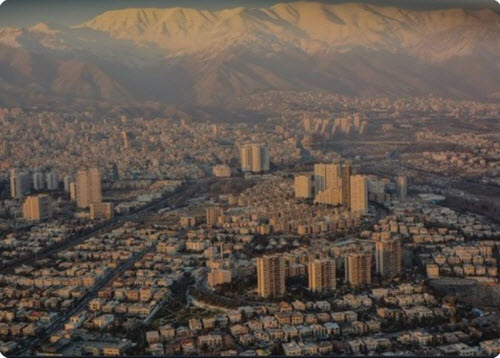
This is a picture of Tehran. For you uneducated, untraveled, never-served, warhawks licking your chops at the thought of bombing it. It's not some low population desert. There are families, children, family pets. Regular working class people with dreams. You're sick to want war.
Tehran is a city of nearly 10,000,000 people. Imagine nuking Washington, Berlin, Paris, London, or beyond, bombed with nuclear weapons.
I gave up my diplomatic career to leak this information. I suspended my duties so as not to be part of or a witness to this crime against humanity, in an attempt to prevent a nuclear winter before it is too late.
Yesterday, nearly ten million people protested “No Kings” in the United States. The possibility of the use of nuclear weapons must be taken very seriously. It's dangerous. Act now. Spread this message worldwide. Take the streets. Protest for our humanity and future. Only the people can stop it. History will remember us.
3:43 AM · Mar 29, 2026
https://x.com/mhdksafa/status/2037475557999280433
Mohamad Safa@mhdksafa
After much reflection, and after it became clear to me that some UN seniors are serving a powerful lobby and not the UN, I have decided to suspend all my duties as PVA Main Representative at the UN and from all UN committees/groups of which I am a member.
I cannot in good conscience be part of or witness to what is happening at a time when the UN is preparing for possible nuclear weapon use.
It has been an honor cooperating with the UN for nearly 12 years under different Secretaries-General and Human Rights Council Presidents, leading PVA delegation.
May God bless this world.
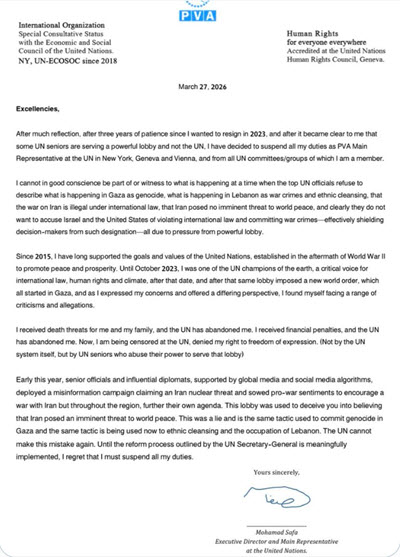
Mohamad Safa
@mhdksafa
We warned the world that Gaza is the testing ground for a lawless new world order.
What Israel is currently doing in southern Lebanon is clearly aimed at ethnic cleansing and colonization, using the same war crime tactics used in the ongoing genocide in Gaza.
Displaced over a million people. Wiping out entire villages. Control of the sea entrances in southern Lebanon. Separating the South from rest of Lebanon by bombing bridges and roads. Civilians can't flee. Ambulances cannot reach the wounded or the hospitals on the other side. Laying siege cruelly cut off all fuel from entering, with threats to bomb aid trucks and medical vehicles heading south. Power is out in hospitals and homes. Food is rotting. Water pumps stopped working. Entire communities are cut off from essential supplies.
Food, water, and medical supplies currently available in the south are sufficient for at least a month, after which we will see another Gaza in Lebanon.
They are literally repeating it all on Lebanon, with flagrant violations of international law and the international community remains silent.
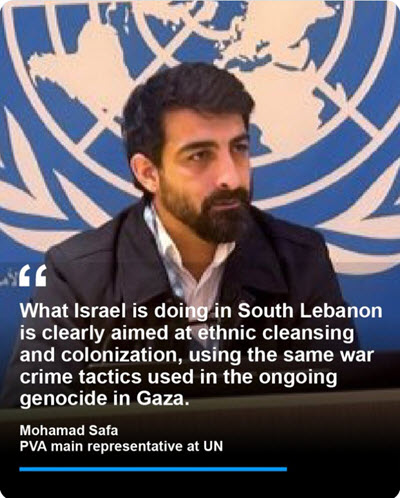
Mohamad Safa
@mhdksafa
Israel just passed death penalty law for ~10,000 Palestinian prisoners.
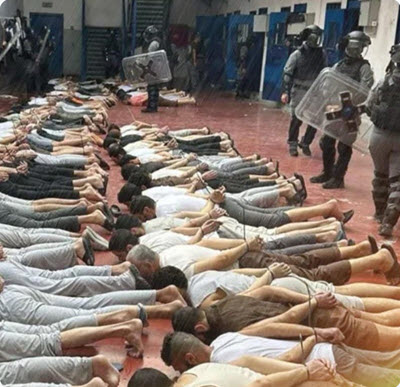
This violates the Common Article 3 applies to all four Geneva Conventions, but international law clearly doesn't apply to Israel.
2:16 PM · Mar 30, 2026
Mohamad Safa
@mhdksafa
Israel must understand that they can’t turn on and off the ceasefire whenever they want under international law.
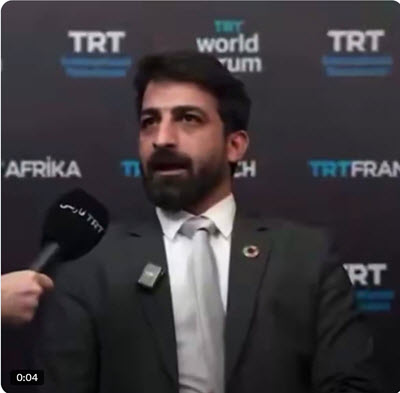
If Israel can turn the ceasefire on and off whenever it feels like bombing Gaza and Lebanon, it's not a ceasefire. It is: you cease, I fire.
11:29 AM · Mar 30, 2026
Mohamad Safa
@mhdksafa
Stop saying history will judge them, judge Israel now. With International Criminal Court judges.
5:54 AM · Mar 30, 2026
Mohamad Safa
@mhdksafa
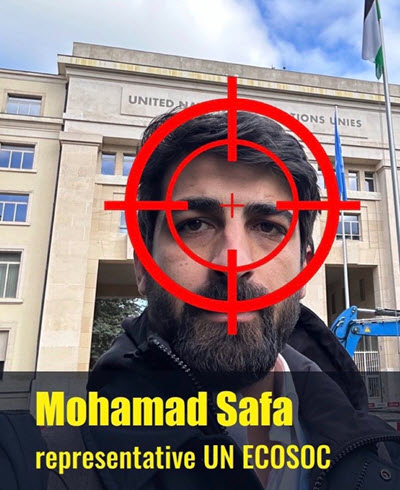
As far as I know! People are betting on my head on X “twitter” and other platforms!
I am making it publicly known that I am not suicidal.
If I die under mysterious circumstances, it means they failed to stop me, so they killed me, and you know who is behind it.
11:13 AM · Mar 28, 2026
Mohamad Safa
@mhdksafa
I am tired of trying to prove to the world that Palestinians are humans too. They are blowing up entire residential blocks killing countless women and children.
The world needs to see what Israel did to children in Gaza on Eid al-Fitr. Don't stop talking about Gaza
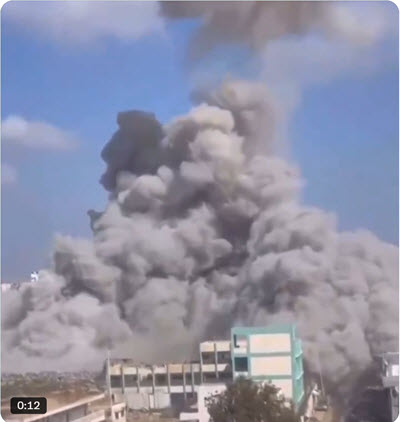
Mohamad Safa
@mhdksafa
I don't think people understand the gravity of the situation as the UN is preparing for possible nuclear weapon use in Iran.
This is a picture of Tehran. For you uneducated, untraveled, never-served, warhawks licking your chops at the thought of bombing it. It's not some low population desert. There are families, children, family pets. Regular working class people with dreams. You're sick to want war.
Tehran is a city of nearly 10,000,000 people. Imagine nuking Washington, Berlin, Paris, London, or beyond, bombed with nuclear weapons.
I gave up my diplomatic career to leak this information. I suspended my duties so as not to be part of or a witness to this crime against humanity, in an attempt to prevent a nuclear winter before it is too late.
Yesterday, nearly ten million people protested “No Kings” in the United States. The possibility of the use of nuclear weapons must be taken very seriously. It's dangerous. Act now. Spread this message worldwide. Take the streets. Protest for our humanity and future. Only the people can stop it. History will remember us.
3:43 AM · Mar 29, 2026
https://x.com/mhdksafa/status/2037475557999280433
Mohamad Safa@mhdksafa
After much reflection, and after it became clear to me that some UN seniors are serving a powerful lobby and not the UN, I have decided to suspend all my duties as PVA Main Representative at the UN and from all UN committees/groups of which I am a member.
I cannot in good conscience be part of or witness to what is happening at a time when the UN is preparing for possible nuclear weapon use.
It has been an honor cooperating with the UN for nearly 12 years under different Secretaries-General and Human Rights Council Presidents, leading PVA delegation.
May God bless this world.
Mohamad Safa
@mhdksafa
We warned the world that Gaza is the testing ground for a lawless new world order.
What Israel is currently doing in southern Lebanon is clearly aimed at ethnic cleansing and colonization, using the same war crime tactics used in the ongoing genocide in Gaza.
Displaced over a million people. Wiping out entire villages. Control of the sea entrances in southern Lebanon. Separating the South from rest of Lebanon by bombing bridges and roads. Civilians can't flee. Ambulances cannot reach the wounded or the hospitals on the other side. Laying siege cruelly cut off all fuel from entering, with threats to bomb aid trucks and medical vehicles heading south. Power is out in hospitals and homes. Food is rotting. Water pumps stopped working. Entire communities are cut off from essential supplies.
Food, water, and medical supplies currently available in the south are sufficient for at least a month, after which we will see another Gaza in Lebanon.
They are literally repeating it all on Lebanon, with flagrant violations of international law and the international community remains silent.
Mohamad Safa
@mhdksafa
Israel just passed death penalty law for ~10,000 Palestinian prisoners.
This violates the Common Article 3 applies to all four Geneva Conventions, but international law clearly doesn't apply to Israel.
2:16 PM · Mar 30, 2026
Mohamad Safa
@mhdksafa
Israel must understand that they can’t turn on and off the ceasefire whenever they want under international law.
If Israel can turn the ceasefire on and off whenever it feels like bombing Gaza and Lebanon, it's not a ceasefire. It is: you cease, I fire.
11:29 AM · Mar 30, 2026
Mohamad Safa
@mhdksafa
Stop saying history will judge them, judge Israel now. With International Criminal Court judges.
5:54 AM · Mar 30, 2026
Mohamad Safa
@mhdksafa
As far as I know! People are betting on my head on X “twitter” and other platforms!
I am making it publicly known that I am not suicidal.
If I die under mysterious circumstances, it means they failed to stop me, so they killed me, and you know who is behind it.
11:13 AM · Mar 28, 2026
Mohamad Safa
@mhdksafa
I am tired of trying to prove to the world that Palestinians are humans too. They are blowing up entire residential blocks killing countless women and children.
The world needs to see what Israel did to children in Gaza on Eid al-Fitr. Don't stop talking about Gaza
PVA
International Organization
Special Consultative Status
with the Economic and Social
Council of the United Nations.
NY, UN-ECOSOC since 2018
Human Rights
for everyone everywhere
Accredited at the United Nations
Human Rights Council, Geneva
March 27, 2026
Excellencies,
After much reflection, after three years of patience since I wanted to resign in 2023, and after it became clear to me that some UN seniors are serving a powerful lobby [Lib.Com. AIPAC] and not the UN, I have decided to suspend all my duties as PVA Main Representative at the UN in New York, Geneva and Vienna, and from all UN committees/groups of which I am a member.
I cannot in good conscience be part of or witness to what is happening at a time when the top UN officials refuse to describe what is happening in Gaza as genocide, what is happening in Lebanon as war crimes and ethnic cleansing, that the war on Iran is illegal under international law, that Iran poses no imminent threat to world peace, and clearly they do not want to accuse Israel and the United States of violating international law and committing war crimes -- effectively shielding decision-makes from such designation -- all due to pressure from powerful lobby.
Since 2015, I have long supported the goals and values of the United Nations, established in the aftermath of World War II to promote peace and prosperity. Until October 2023, I was one of the UN champions of the earth, a critical voice for international law, human rights and climate, after that date, and after that same lobby imposed a new world order, which all started in Gaza, and as I expressed my concerns and offered a differing perspective, I found myself facing a range of criticisms and allegations.
I received death threats for me and my family, and the UN has abandoned me. I received financial penalties, and the UN has abandoned me. Now, I am being censored at the UN, denied my right to freedom of expression. (Not by the UN system itself, but by UN seniors who abuse their power to serve that lobby)
Early this year, senior officials and influential diplomats, supported by global media and social media algorithms, deployed a misinformation campaign claiming an Iran nuclear threat and sowed pro-war sentiments to encourage a war with Iran but throughout the region, [to] further their own agenda. This lobby was used to deceive you into believing that Iran posed an imminent threat to world peace. This was a lie and is the same tactic used to commit genocide in Gaza and the same tactic is being used now to ethnic cleansing and the occupation of Lebanon. The UN cannot make this mistake again. Until the reform process outlined by the UN Secretary-General is meaningfully implemented, I regret that I must suspend all my duties.
Yours sincerely,
Mohamad Safa
Executive Director and Main Representative
at the United Nations.
- admin
- Site Admin
- Posts: 41470
- Joined: Thu Aug 01, 2013 5:21 am
Re: Part 2 Anti-Anti-Nazi Barbarian Hordes are Knocking Down
by admin » Tue Mar 31, 2026 1:22 am
Iran just did something so OUT OF THIS WORLD…US entire war plan obliterated - OPTM
OPTM
Mar 30, 2026
Transcript
Welcome. It is now becoming painfully clear to anyone with eyes to see, anyone willing to look beyond the carefully crafted headlines of Western corporate
media, that we are standing at the precipice of a cataclysm. And what we witness today is not merely a diplomatic
breakdown. It is a total unmitigated collapse of the facade that the United States ever wanted peace. All hell has
truly broken loose and the anchor that was holding the tattered remnants of international order together has just been severed.
Iran and the country says that it is reviewing its participation in the nuclear non proliferation treaty.
With war raging and bombs hitting its nuclear sites. Is tan seriously weighing an exit from the world's main nuclear pact right in the middle of the crisis?
The Iranian government insists that it does not seek to acquire nuclear weapons despite its intention to withdraw from the nuclear non-prololiferation treaty.
In a move that has sent shock waves through every capital from Washington to Islamabad, the Islamic Republic of Iran
has announced that it is formally withdrawing from the treaty on the non-proliferation of nuclear weapons,
the NPT. This is not a threat made in the heat of rhetoric. This is an agenda item now sitting before the Iranian
parliament with procedures being drafted as we speak. Simultaneously, Thrron has delivered a crushing blow to back
channel diplomacy, flatly rejecting a 15-point ceasefire proposal that was funneled through Pakistani intermediaries. The message from the
spokesman for the Iranian foreign ministry, Ezel Bagay, was as concise as it was devastating. Pakistan's forums are their own. We didn't participate.
We have had no direct negotiations with America so far.
Since the last round of negotiations until now, the US demands have been very excessive,
unrealistic and illogical.
The meetings that Pakistan has with neighboring countries are well a framework they themselves have
established. We have not participated in this framework.
Can it be allowed that Iran and Iranians be in a position of confronting the illegal aggression of America and the Zionist regime to use the available
capabilities on the soil of regional countries while our armed forces remain silent.
The duty of every authority demands that it respond to such cases with all its power.
Now,
let's pull back the curtain on the scam of the century and look at what is actually unfolding on the ground. So,
what actually happened? Let's break down this so-called -point ceasefire offer that Pakistan was supposedly mediating.
According to official statements released today by the consulate general of Iran in Mumbai and amplified by the foreign ministry in Thran, what was presented to Iran was not a negotiation.
It was a list of excessive, unrealistic and irrational demands delivered through an intermediary. The Iranian spokesman
was explicit. There are no direct talks with the United States. The phrasing used by the Iranian consulate is worth its weight in gold right now. They
stated that the US diplomacy flips constantly, but that Iran's stance is clear and that while regional calls to
end the war are welcome, remember who started it. Caroline Levit, White House press secretary, lost it and clowned after Iran rejected the deal.
Successfully and according to plan. With each passing day, the United States military is increasing its advantage over the terrorist Iranian regime. More
than enemy targets have been struck to date. Each strike further crippling the regime's offensive and
defensive capabilities and creating more leverage for the United States and our allies. Compared to the start of the
operation, Iran's ballistic missile and drone attacks are down by roughly %.
The United States is also decimating the Iranian regime's navy. We have destroyed more than of their naval vessels so
far, including % of their largest vessels. The Iranian Navy has no vessels operating in major regional water rays and no ability to project naval power,
which is why they've been assessed as combat ineffective. Our military continues to obliterate Iran's defense
industrial base with nearly % of their missile. This is where the story takes a turn from geopolitical crisis into the
realm of farce. If the stakes weren't so deadly, it appears that Donald Trump has been scammed. I mean that literally.
According to reports and the timeline of events, it seems that the American intelligence apparatus or perhaps freelance dealmakers operating with the
blessing of the White House were talking to someone. Secretary Rubio faced with the reality when full clown mood. Take a listen.
Iran can never the Iranian regime can never have nuclear weapons. And they need to stop sponsoring terrorism. And they need to stop building weapons that
can threaten their neighbors. These short-range missiles that they're launching, they only have one purpose,
and that is to attack Saudi Arabia and and the UAE and Qatar and Kuwait and Bahrain. That is the range of these weapons and and they have thousands of
them. They've built extraordinary numbers of them. and and not to mention,
you know, the the their desire to have this nuclear weapon to threaten and blackmail the world with. That will never be allowed to happen. It's too too great a risk.
Rubio and his team of criminal wararm mongers were receiving signals, getting assurances, and feeding Trump the narrative that there was a faction in
Thran ready to fold. They told him there was a top respected leader, not the Ayatollah, who was ready to negotiate.
They presented a -point plan that they claimed would end the war and open the straight of Hormuz. Trump bit. He
announced the pause on strikes. He took credit for the market surge. He bragged about his dealmaking prowess. But the people he was talking to, they weren't Iranian officials. They were scammers.
They were either foreign operatives positioned specifically to manipulate the oil markets for profit or they were agents of influence designed to create a
false sense of security while the United States and Israel repositioned their forces for a ground invasion of Iran's strategic islands in the Persian Gulf.
Think about the timing. While Trump was on truth social claiming victory, Iran's military was quietly preparing its response. The negotiations were a
smoke screen. They were a psychological operation aimed at paralyzing Iranian decision-making and lulling global energy markets into a
false sense of security. But Iran saw through it. The powerful parliament speaker Muhammad Bakr Kalibaf didn't
just deny the talks. He called them exactly what they were. fake news used to manipulate the financial and oil
markets and an attempt to escape the quagmire in which the US and Israel are trapped. He exposed the game before the
ink was dry on Trump's social media posts. And then to drive the point home,
Iran dropped a bombshell that reversed all the gains Trump thought he had made.
Let's talk about that bombshell because it is perhaps the most significant development in the nuclear non-proliferation regime since the
treaty was signed. Iran is withdrawing from the NPT. The official reasoning given by Iranian diplomats and lawmakers
is scathing and legally precise. They asked a very simple question. What is the point of participating in a treaty
when the other signitories, specifically the United States and its allies, not only refuse to allow Iran to enjoy the
benefits and rights provided for in the treaty, but actively use the treaty's institutions as cover for espionage and
military aggression. The Iranians point to the International Atomic Energy Agency, whose director, General, Rafael
Grossi, they accuse of secretly encouraging attacks on Iranian nuclear facilities by the US and Israel. They argue that while
they were engaged in goodfaith negotiations while they were upholding their end of the bargain under the NPT,
American and Israeli warplanes were bombing their energy infrastructure and assassinating their scientists. How can a nation be expected to remain in a
treaty that is supposed to guarantee its right to peaceful nuclear technology when the very agency tasked with
overseeing that treaty stands by silently as its facilities are bombed?
The hypocrisy is staggering even by the low standards of Western foreign policy.
The Iranian parliament is now saying enough. They are saying that remaining in the NPT offers Iran no protection only vulnerability.
This is not, as the warmongers in Washington will scream, a dash to a bomb. Iran has reiterated its religious
prohibition on nuclear weapons, but it is a declaration of sovereignty. It is Iran saying, "If you are going to attack
us, regardless of what agreements we sign, then we will no longer be bound by the restrictions that you use to spy on us." It is a direct consequence of the
United States tearing up the JCPOA and then bombing the country. Now, while all this diplomatic chaos was unfolding,
let's look at what was happening on the ground. Because the military reality is telling a story that the White House press corps is too cowardly to print. In
the past hours, Iran has struck back at the heart of the Zionist entity in a way that has left Israel rattled to its
core. Forget the talk of precision strikes and limited damage. Iranian missiles have hit the NeoAV industrial
zone near Beersa. For those who don't know, this is not just any industrial park. This is a sprawling complex of
chemical plants, facilities producing hazardous materials, and industrial infrastructure that is vital to the
Israeli war machine. But let's be honest about what this means. Iran has just demonstrated that it can hit strategic
industrial targets deep inside Israel and cause that kind of chaos. And this isn't a one-off. In the past hours
alone, Israel has reported multiple missile launches from Iranian territory.
This is the true promise doctrine in action. Iran is not fighting a proxy war anymore. It is fighting a direct war and
it is targeting the economic infrastructure of the occupying regime.
Let's not forget the destruction of the Haifa oil refinery today which was also struck by Iranian drones and missiles again early today. Israel is bleeding.
Its refineries are burning. Its petrochemical plants are under threat and its civilian population is being forced to confront the reality that their
invincible military cannot protect their industrial base. The strikes in Beeriba have sent a clear message. Iran can
reach you and Iran can hurt you. the fact that the Israeli government alongside the United States is now threatening to obliterate Iran's Car
Island, the terminal through which the vast majority of its oil exports flow only shows their desperation. They are
threatening to escalate because their strategy of bombing Iran from afar has failed to break the Iranian people. This is the pattern and the Iranians have
finally stopped playing the game. They have realized that every negotiation with the United States is just a delay
tactic used to reposition military assets. They have realized that the moderates the US claims to be talking to
don't exist. And now with the threat of a ground invasion looming with US troops amassing in the region and Trump talking openly about seizing Iranian territory,
Iran is hardening its defenses. They are not just rejecting a ceasefire. They are preparing for a long war. The parliament
is moving to expel IAEA inspectors, to remove the legal shackles that the NPT placed on their nuclear program, and to unify the nation behind the military.
The coming days are likely to see a massive escalation. With Trump humiliated by the collapse of his negotiation narrative, he may feel
compelled to lash out, to try to prove his strength by launching more strikes on Iranian infrastructure. But if he does, he should know that the
retaliation will be swift. It will be brutal and it will target the economic lifelines of the United States and its
allies in the region. The world is holding its breath, but in Tehran, the message is clear. The era of being deceived by American fake news is over.
The era of resistance is here. Subscribe and stay with us as we continue to monitor these developments.
We will be bringing you updates from the ground, from the diplomatic front, and from the financial markets as this story unfolds. For now, keep your eyes on the
straight of Hormuz, and keep your eyes on the Iranian parliament. The decisions made in the next hours will shape the
course of the st century. Thank you for trusting us to tell you the truth.
Stay safe, stay informed, and stand with the truth.
OPTM
Mar 30, 2026
Transcript
Welcome. It is now becoming painfully clear to anyone with eyes to see, anyone willing to look beyond the carefully crafted headlines of Western corporate
media, that we are standing at the precipice of a cataclysm. And what we witness today is not merely a diplomatic
breakdown. It is a total unmitigated collapse of the facade that the United States ever wanted peace. All hell has
truly broken loose and the anchor that was holding the tattered remnants of international order together has just been severed.
Iran and the country says that it is reviewing its participation in the nuclear non proliferation treaty.
With war raging and bombs hitting its nuclear sites. Is tan seriously weighing an exit from the world's main nuclear pact right in the middle of the crisis?
The Iranian government insists that it does not seek to acquire nuclear weapons despite its intention to withdraw from the nuclear non-prololiferation treaty.
In a move that has sent shock waves through every capital from Washington to Islamabad, the Islamic Republic of Iran
has announced that it is formally withdrawing from the treaty on the non-proliferation of nuclear weapons,
the NPT. This is not a threat made in the heat of rhetoric. This is an agenda item now sitting before the Iranian
parliament with procedures being drafted as we speak. Simultaneously, Thrron has delivered a crushing blow to back
channel diplomacy, flatly rejecting a 15-point ceasefire proposal that was funneled through Pakistani intermediaries. The message from the
spokesman for the Iranian foreign ministry, Ezel Bagay, was as concise as it was devastating. Pakistan's forums are their own. We didn't participate.
We have had no direct negotiations with America so far.
Since the last round of negotiations until now, the US demands have been very excessive,
unrealistic and illogical.
The meetings that Pakistan has with neighboring countries are well a framework they themselves have
established. We have not participated in this framework.
Can it be allowed that Iran and Iranians be in a position of confronting the illegal aggression of America and the Zionist regime to use the available
capabilities on the soil of regional countries while our armed forces remain silent.
The duty of every authority demands that it respond to such cases with all its power.
Now,
let's pull back the curtain on the scam of the century and look at what is actually unfolding on the ground. So,
what actually happened? Let's break down this so-called -point ceasefire offer that Pakistan was supposedly mediating.
According to official statements released today by the consulate general of Iran in Mumbai and amplified by the foreign ministry in Thran, what was presented to Iran was not a negotiation.
It was a list of excessive, unrealistic and irrational demands delivered through an intermediary. The Iranian spokesman
was explicit. There are no direct talks with the United States. The phrasing used by the Iranian consulate is worth its weight in gold right now. They
stated that the US diplomacy flips constantly, but that Iran's stance is clear and that while regional calls to
end the war are welcome, remember who started it. Caroline Levit, White House press secretary, lost it and clowned after Iran rejected the deal.
Successfully and according to plan. With each passing day, the United States military is increasing its advantage over the terrorist Iranian regime. More
than enemy targets have been struck to date. Each strike further crippling the regime's offensive and
defensive capabilities and creating more leverage for the United States and our allies. Compared to the start of the
operation, Iran's ballistic missile and drone attacks are down by roughly %.
The United States is also decimating the Iranian regime's navy. We have destroyed more than of their naval vessels so
far, including % of their largest vessels. The Iranian Navy has no vessels operating in major regional water rays and no ability to project naval power,
which is why they've been assessed as combat ineffective. Our military continues to obliterate Iran's defense
industrial base with nearly % of their missile. This is where the story takes a turn from geopolitical crisis into the
realm of farce. If the stakes weren't so deadly, it appears that Donald Trump has been scammed. I mean that literally.
According to reports and the timeline of events, it seems that the American intelligence apparatus or perhaps freelance dealmakers operating with the
blessing of the White House were talking to someone. Secretary Rubio faced with the reality when full clown mood. Take a listen.
Iran can never the Iranian regime can never have nuclear weapons. And they need to stop sponsoring terrorism. And they need to stop building weapons that
can threaten their neighbors. These short-range missiles that they're launching, they only have one purpose,
and that is to attack Saudi Arabia and and the UAE and Qatar and Kuwait and Bahrain. That is the range of these weapons and and they have thousands of
them. They've built extraordinary numbers of them. and and not to mention,
you know, the the their desire to have this nuclear weapon to threaten and blackmail the world with. That will never be allowed to happen. It's too too great a risk.
Rubio and his team of criminal wararm mongers were receiving signals, getting assurances, and feeding Trump the narrative that there was a faction in
Thran ready to fold. They told him there was a top respected leader, not the Ayatollah, who was ready to negotiate.
They presented a -point plan that they claimed would end the war and open the straight of Hormuz. Trump bit. He
announced the pause on strikes. He took credit for the market surge. He bragged about his dealmaking prowess. But the people he was talking to, they weren't Iranian officials. They were scammers.
They were either foreign operatives positioned specifically to manipulate the oil markets for profit or they were agents of influence designed to create a
false sense of security while the United States and Israel repositioned their forces for a ground invasion of Iran's strategic islands in the Persian Gulf.
Think about the timing. While Trump was on truth social claiming victory, Iran's military was quietly preparing its response. The negotiations were a
smoke screen. They were a psychological operation aimed at paralyzing Iranian decision-making and lulling global energy markets into a
false sense of security. But Iran saw through it. The powerful parliament speaker Muhammad Bakr Kalibaf didn't
just deny the talks. He called them exactly what they were. fake news used to manipulate the financial and oil
markets and an attempt to escape the quagmire in which the US and Israel are trapped. He exposed the game before the
ink was dry on Trump's social media posts. And then to drive the point home,
Iran dropped a bombshell that reversed all the gains Trump thought he had made.
Let's talk about that bombshell because it is perhaps the most significant development in the nuclear non-proliferation regime since the
treaty was signed. Iran is withdrawing from the NPT. The official reasoning given by Iranian diplomats and lawmakers
is scathing and legally precise. They asked a very simple question. What is the point of participating in a treaty
when the other signitories, specifically the United States and its allies, not only refuse to allow Iran to enjoy the
benefits and rights provided for in the treaty, but actively use the treaty's institutions as cover for espionage and
military aggression. The Iranians point to the International Atomic Energy Agency, whose director, General, Rafael
Grossi, they accuse of secretly encouraging attacks on Iranian nuclear facilities by the US and Israel. They argue that while
they were engaged in goodfaith negotiations while they were upholding their end of the bargain under the NPT,
American and Israeli warplanes were bombing their energy infrastructure and assassinating their scientists. How can a nation be expected to remain in a
treaty that is supposed to guarantee its right to peaceful nuclear technology when the very agency tasked with
overseeing that treaty stands by silently as its facilities are bombed?
The hypocrisy is staggering even by the low standards of Western foreign policy.
The Iranian parliament is now saying enough. They are saying that remaining in the NPT offers Iran no protection only vulnerability.
This is not, as the warmongers in Washington will scream, a dash to a bomb. Iran has reiterated its religious
prohibition on nuclear weapons, but it is a declaration of sovereignty. It is Iran saying, "If you are going to attack
us, regardless of what agreements we sign, then we will no longer be bound by the restrictions that you use to spy on us." It is a direct consequence of the
United States tearing up the JCPOA and then bombing the country. Now, while all this diplomatic chaos was unfolding,
let's look at what was happening on the ground. Because the military reality is telling a story that the White House press corps is too cowardly to print. In
the past hours, Iran has struck back at the heart of the Zionist entity in a way that has left Israel rattled to its
core. Forget the talk of precision strikes and limited damage. Iranian missiles have hit the NeoAV industrial
zone near Beersa. For those who don't know, this is not just any industrial park. This is a sprawling complex of
chemical plants, facilities producing hazardous materials, and industrial infrastructure that is vital to the
Israeli war machine. But let's be honest about what this means. Iran has just demonstrated that it can hit strategic
industrial targets deep inside Israel and cause that kind of chaos. And this isn't a one-off. In the past hours
alone, Israel has reported multiple missile launches from Iranian territory.
This is the true promise doctrine in action. Iran is not fighting a proxy war anymore. It is fighting a direct war and
it is targeting the economic infrastructure of the occupying regime.
Let's not forget the destruction of the Haifa oil refinery today which was also struck by Iranian drones and missiles again early today. Israel is bleeding.
Its refineries are burning. Its petrochemical plants are under threat and its civilian population is being forced to confront the reality that their
invincible military cannot protect their industrial base. The strikes in Beeriba have sent a clear message. Iran can
reach you and Iran can hurt you. the fact that the Israeli government alongside the United States is now threatening to obliterate Iran's Car
Island, the terminal through which the vast majority of its oil exports flow only shows their desperation. They are
threatening to escalate because their strategy of bombing Iran from afar has failed to break the Iranian people. This is the pattern and the Iranians have
finally stopped playing the game. They have realized that every negotiation with the United States is just a delay
tactic used to reposition military assets. They have realized that the moderates the US claims to be talking to
don't exist. And now with the threat of a ground invasion looming with US troops amassing in the region and Trump talking openly about seizing Iranian territory,
Iran is hardening its defenses. They are not just rejecting a ceasefire. They are preparing for a long war. The parliament
is moving to expel IAEA inspectors, to remove the legal shackles that the NPT placed on their nuclear program, and to unify the nation behind the military.
The coming days are likely to see a massive escalation. With Trump humiliated by the collapse of his negotiation narrative, he may feel
compelled to lash out, to try to prove his strength by launching more strikes on Iranian infrastructure. But if he does, he should know that the
retaliation will be swift. It will be brutal and it will target the economic lifelines of the United States and its
allies in the region. The world is holding its breath, but in Tehran, the message is clear. The era of being deceived by American fake news is over.
The era of resistance is here. Subscribe and stay with us as we continue to monitor these developments.
We will be bringing you updates from the ground, from the diplomatic front, and from the financial markets as this story unfolds. For now, keep your eyes on the
straight of Hormuz, and keep your eyes on the Iranian parliament. The decisions made in the next hours will shape the
course of the st century. Thank you for trusting us to tell you the truth.
Stay safe, stay informed, and stand with the truth.
- admin
- Site Admin
- Posts: 41470
- Joined: Thu Aug 01, 2013 5:21 am
Re: Part 2 Anti-Anti-Nazi Barbarian Hordes are Knocking Down
by admin » Tue Mar 31, 2026 1:24 am
Iran's envoy in Lebanon to remain in Beirut despite being declared 'persona non grata'
Lebanese Parliament Speaker Nabih Berri stressed the expulsion of Iran's envoy ‘will not pass’ and demanded Beirut cancel its decision
The Cradle
MAR 30, 2026
https://thecradle.co/articles/irans-env ... -non-grata
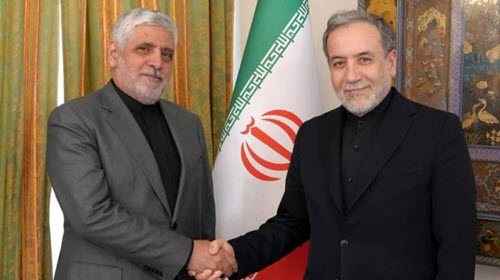
(Photo credit: X)
The Iranian Foreign Ministry announced in a statement on 30 March that its ambassador to Lebanon will remain at his post, several days after Beirut issued a decision to expel the envoy.
“Considering the discussions raised by the relevant Lebanese parties and the conclusions reached, the Iranian ambassador will continue his work as ambassador in Beirut and is still present there,” Iranian Foreign Ministry spokesman Esmail Baghaei said.
Diplomatic sources told AFP that the Iranian envoy “will not leave Lebanon, in accordance with the wishes of the speaker of parliament Nabih Berri and of Hezbollah.”
Hezbollah and the Lebanon's Speaker of Parliament Nabih Berri, who also serves as the head of the Amal Movement, rejected the Lebanese Foreign Ministry's decision to expel Iran’s ambassador.
Amal Movement and Hezbollah MPs boycotted parliamentary sessions last week when the decision was made. “This cannot pass,” Berri was quoted as saying by Al-Joumhouria newspaper, demanding “the cancellation of the decision to expel the ambassador and nothing less than that.”
“No one should talk to me, go and deal with the crisis, the solution is clear,” he added.
The Lebanese decision, which gave ambassador Mohammad Reza Sheibani until 29 March to leave the country, cited what Beirut claimed was a “violation of diplomatic norms and established practices between the two countries.”
The envoy was also declared “persona non grata.”
The decision will reportedly not materialize after Berri’s intervention. Lebanon has not issued another official statement since the deadline for the ambassador to leave expired on Sunday.
The Amal Movement reportedly told the Iranian ambassador to reject the Lebanese Foreign Ministry's decision.
Days before Lebanese Foreign Minister Youssef Rajji announced the move, Lebanon’s Prime Minister Nawaf Salam accused Iran's Islamic Revolutionary Guard Corps (IRGC) of “managing” Hezbollah’s military operations.
Over the past year and a half, Lebanon’s government has used increasingly charged rhetoric against the Islamic Republic, under heavy pressure on Beirut regarding Hezbollah and its weapons.
The Lebanese resistance and the IRGC have been carrying out joint rocket and missile operations since Hezbollah joined the war on 2 March, responding to over a year of Israeli ceasefire violations, following the assassination of Iranian supreme leader Ali Khamenei.
An industrial building and fuel tanker at the Bazan Oil Refinery in Haifa were struck during a joint rocket and missile attack launched by Hezbollah and the Islamic Republic on 30 March, resulting in a large blaze.
Lebanese Parliament Speaker Nabih Berri stressed the expulsion of Iran's envoy ‘will not pass’ and demanded Beirut cancel its decision
The Cradle
MAR 30, 2026
https://thecradle.co/articles/irans-env ... -non-grata
(Photo credit: X)
The Iranian Foreign Ministry announced in a statement on 30 March that its ambassador to Lebanon will remain at his post, several days after Beirut issued a decision to expel the envoy.
“Considering the discussions raised by the relevant Lebanese parties and the conclusions reached, the Iranian ambassador will continue his work as ambassador in Beirut and is still present there,” Iranian Foreign Ministry spokesman Esmail Baghaei said.
Diplomatic sources told AFP that the Iranian envoy “will not leave Lebanon, in accordance with the wishes of the speaker of parliament Nabih Berri and of Hezbollah.”
Hezbollah and the Lebanon's Speaker of Parliament Nabih Berri, who also serves as the head of the Amal Movement, rejected the Lebanese Foreign Ministry's decision to expel Iran’s ambassador.
Amal Movement and Hezbollah MPs boycotted parliamentary sessions last week when the decision was made. “This cannot pass,” Berri was quoted as saying by Al-Joumhouria newspaper, demanding “the cancellation of the decision to expel the ambassador and nothing less than that.”
“No one should talk to me, go and deal with the crisis, the solution is clear,” he added.
The Lebanese decision, which gave ambassador Mohammad Reza Sheibani until 29 March to leave the country, cited what Beirut claimed was a “violation of diplomatic norms and established practices between the two countries.”
The envoy was also declared “persona non grata.”
The decision will reportedly not materialize after Berri’s intervention. Lebanon has not issued another official statement since the deadline for the ambassador to leave expired on Sunday.
The Amal Movement reportedly told the Iranian ambassador to reject the Lebanese Foreign Ministry's decision.
Days before Lebanese Foreign Minister Youssef Rajji announced the move, Lebanon’s Prime Minister Nawaf Salam accused Iran's Islamic Revolutionary Guard Corps (IRGC) of “managing” Hezbollah’s military operations.
Over the past year and a half, Lebanon’s government has used increasingly charged rhetoric against the Islamic Republic, under heavy pressure on Beirut regarding Hezbollah and its weapons.
The Lebanese resistance and the IRGC have been carrying out joint rocket and missile operations since Hezbollah joined the war on 2 March, responding to over a year of Israeli ceasefire violations, following the assassination of Iranian supreme leader Ali Khamenei.
An industrial building and fuel tanker at the Bazan Oil Refinery in Haifa were struck during a joint rocket and missile attack launched by Hezbollah and the Islamic Republic on 30 March, resulting in a large blaze.
- admin
- Site Admin
- Posts: 41470
- Joined: Thu Aug 01, 2013 5:21 am
Re: Part 2 Anti-Anti-Nazi Barbarian Hordes are Knocking Down
by admin » Tue Mar 31, 2026 1:32 am
UAE jails dozens of UK citizens for posting footage of Iranian strikes. Emirati police have reportedly detained people for offences including receiving or forwarding images of the strikes
The Cradle
MAR 30, 2026
https://thecradle.co/articles/uae-jails ... an-strikes
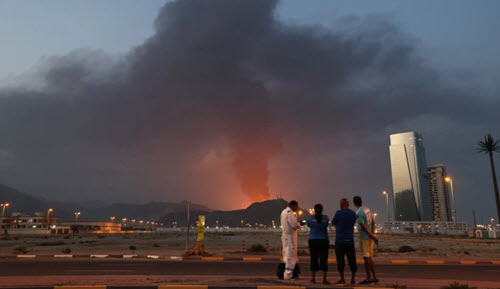
(Photo credit: AFP)
Dozens of British nationals have been detained in the UAE since the start of the US-Israeli war on Iran over social media activity linked to Iranian retaliatory strikes, according to a report released by advocacy group Detained in Dubai on 29 March.
The report detailed arrests tied to images, videos, and even private messages shared during the war.
The group documented “widespread arrests, detention, and prosecution of residents, tourists, workers, and students of multiple nationalities,” as authorities intensify restrictions on content showing missile and drone attacks.
At least 35 British citizens have been detained in Dubai, with a similar number reported in Abu Dhabi, according to Dubai Watch, which is representing eight of those arrested.
The grounds for detention are reportedly low, with the group saying that “Forwarding or interacting with content can result in detention, even where the individual did not create it,” adding that “simply receiving an image and failing to delete it has reportedly led to arrest.”
Authorities have enforced laws banning the sharing of material that could “disturb public security,” with police allegedly stopping individuals in public and demanding access to their phones.
Several individual cases have emerged. A British airline worker was detained after photographing damage near Dubai International Airport, while a tourist faces up to two years in prison and fines of up to £40,000 (around $52,744) for filming missile strikes despite deleting the footage.
Detained in Dubai also reported harsh conditions, stating that detainees are held in overcrowded cells, denied medication, and pressured into signing confessions without legal counsel.
“This is a serious failure of protection,” said Radha Stirling, calling for urgent diplomatic intervention.
The UAE Embassy in London defended the measures, warning that sharing such material can “incite public panic and create a false impression” of the country’s situation.
The crackdown comes as the UAE faces mounting economic strain, with over $120 billion erased from stock markets and real estate values falling sharply following sustained Iranian strikes.
The Cradle
MAR 30, 2026
https://thecradle.co/articles/uae-jails ... an-strikes
(Photo credit: AFP)
Dozens of British nationals have been detained in the UAE since the start of the US-Israeli war on Iran over social media activity linked to Iranian retaliatory strikes, according to a report released by advocacy group Detained in Dubai on 29 March.
The report detailed arrests tied to images, videos, and even private messages shared during the war.
The group documented “widespread arrests, detention, and prosecution of residents, tourists, workers, and students of multiple nationalities,” as authorities intensify restrictions on content showing missile and drone attacks.
At least 35 British citizens have been detained in Dubai, with a similar number reported in Abu Dhabi, according to Dubai Watch, which is representing eight of those arrested.
The grounds for detention are reportedly low, with the group saying that “Forwarding or interacting with content can result in detention, even where the individual did not create it,” adding that “simply receiving an image and failing to delete it has reportedly led to arrest.”
Authorities have enforced laws banning the sharing of material that could “disturb public security,” with police allegedly stopping individuals in public and demanding access to their phones.
Several individual cases have emerged. A British airline worker was detained after photographing damage near Dubai International Airport, while a tourist faces up to two years in prison and fines of up to £40,000 (around $52,744) for filming missile strikes despite deleting the footage.
Detained in Dubai also reported harsh conditions, stating that detainees are held in overcrowded cells, denied medication, and pressured into signing confessions without legal counsel.
“This is a serious failure of protection,” said Radha Stirling, calling for urgent diplomatic intervention.
The UAE Embassy in London defended the measures, warning that sharing such material can “incite public panic and create a false impression” of the country’s situation.
The crackdown comes as the UAE faces mounting economic strain, with over $120 billion erased from stock markets and real estate values falling sharply following sustained Iranian strikes.
- admin
- Site Admin
- Posts: 41470
- Joined: Thu Aug 01, 2013 5:21 am
Return to United States Government Crime
Who is online
Users browsing this forum: No registered users and 32 guests