A Saudi source has denied reports that Saudi Arabia intervened to halt a planned US military operation in the Strait of Hormuz, insisting that Washington continues to have regular access to Saudi airspace and military bases.
According to Agence France-Presse, the source rejected as “incorrect” an NBC News report claiming that Crown Prince Mohammed bin Salman had pressured US President Donald Trump to suspend the operation.
Trump announced on Tuesday that he was pausing Operation “Freedom”, one day after unveiling the plan, which aimed to escort commercial vessels through the Strait of Hormuz following restrictions imposed by Iran after the US-Israeli war launched in late February.
NBC reported that Riyadh had refused to allow US forces to use Saudi bases and airspace for the operation, prompting Trump’s reversal.
However, the Saudi source told AFP that the report was inaccurate, adding that the United States can still use Saudi bases and airspace “regularly”.
**********************************************
Epic nonsense: Trump shelves Project Freedom By Dr Binoy Kampmark [Dr. Binoy Kampmark was a Commonwealth Scholar at Selwyn College, Cambridge. He currently lectures at RMIT University. Email: [email protected]] May 8, 2026 at 11:55 am https://www.middleeastmonitor.com/20260 ... t-freedom/
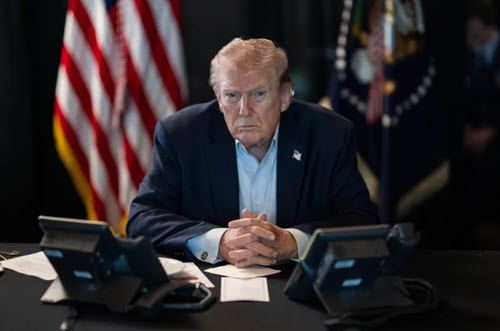
U.S. President Donald J. Trump sits at a table monitoring military operations during Operation Epic Fury against Iran, with U.S. flags visible behind him, in Washington, United States, on March 02, 2026. [The White House via X Account – Anadolu Agency]
The waxwork figures of the Pentagon recently glowed with excitement with the announcement that the US military would be finally called upon to reopen the Strait of Hormuz. With the ceasefire between Teheran and Washington barely holding, President Donald Trump, as far as his attention span would allow, gingerly put Operation Epic Fury to the side in favour of a new mission. The effort to protect and navigate stranded and blocked vessels with US armed might would be dubbed Project Freedom.
As with everything in this cerebrally cloudy and foolish conflict, descriptions and names are untethered to a discernible reality. Was Project Freedom separate from the blockade of Iran? Yes, said certain administration officials. Was it an annex to Operation Epic Fury? No one quite knew.
Some details were provided on May 5 by the US Secretary of War, Pete Hegseth, at a press briefing. “To be clear [Project Freedom] is separate and distinct from Operation Epic Fury. Project Freedom is defensive in nature, focused in scope and temporary in duration, with one mission: protecting innocent commercial shipping from Iranian aggression.” Iran had been “the clear aggressor” in the Strait, “harassing civilian vessels, threatening mariners from every nation indiscriminately and weaponizing a critical chokepoint for its own financial benefit, or at least trying to.” No mention, naturally, on why Iran had resorted to such measures in the first place.
Much of Hegseth’s press address was a bleat, a complaint that the Iranians had simply not played by the rules, rules happily broken by the Trump administration and their Israeli allies when they felt necessary.
Iran had attempted to “impose a tolling system”, using “a form of international extortion”. Project Freedom was the celebrated antidote. “Two US commercial ships, along with American destroyers, have already transited the strait, showing the lane is clear.”
The account untethered to reality followed on cue. Iran had been “embarrassed” by the successful transit of these two vessels. “They say they control the strait. They do not. So, American ships led the way, commercial and military shouldering the initial risk from the front, as Americans always do. And right now, hundreds more ships from nations around the world are lining up to transit.” With lavish immodesty, the Secretary noted that US Central Command (CENTCOM) had, along with partner nations, “been in active communication with hundreds of ships, shipping companies and insurers.” The US had provided a “direct gift” to the world in the form of “a powerful red, white and blue dome over the strait.”
With the counterfeit, grubby appeal of an advertiser’s pitch, Hegseth went on to declare Project Freedom “humanitarian” in nature. “By breaking Iran’s illegal stranglehold, we’re protecting the lives and livelihoods of sailors from dozens of countries, securing global energy routes and preventing shortages that hit the world’s poorest people the hardest.”
Chairman of the Joint Chiefs of Staff Gen. Dan Caine was also on hand to explain that CENTCOM had “established an enhanced security area on the southern side of the strait that is now protected by US land, naval and air assets to help defeat further Iranian aggression against commercial shipping.” He noted that Iranian fast boats and attack drones had been defeated. And how could they not be, given the presence of “more than 100 fighters, attack aircraft and other manned and unmanned aircraft, synchronized by the 82nd Airborne Division” engaged in the air for 24 hours a day guarding “the enhanced security area and its approaches”.
With twenty-four hours, this elaborate, exaggerated, purplish vision of American deliverance from Iranian control to an anxious world had collapsed.
On May 6, Trump announced that he would be halting Project Freedom. Another round of proposals had been placed on the carousel of confusing diplomacy that might negate the need to resume bombing under Operation Epic Fury.
Claiming that Pakistan and other specified countries had wished so, and given “the fact that Great Progress has been made toward a Complete and Final Agreement with the Representatives of Iran”, the blockade would remain in place but “Project Freedom (The Movement of Ships through the Strait of Hormuz) will be paused for a short period of time to see whether or not the Agreement can be finalized and signed.”
Later that day, Trump posted another message. “Assuming Iran agrees to give what has been agreed to, which is, perhaps, a big assumption,” he declared on Truth Social, “the already legendary Epic Fury will be at an end, and the highly effective Blockade will allow the Hormuz Strait to be OPEN TO ALL, including Iran.” The inevitable, clownish threat followed: “If they don’t agree, the bombing starts, and it will be, sadly, at a much higher level and intensity than it was before.”
The rapid demise of Project Freedom, more aborted than halted, had less to do with the emergence of a new desire to pursue negotiations so much as logistical inconvenience. The Gulf States, by and large, have not been impressed by the impulsive measure, given the potential resumption of hostilities.
Tehran was always going to blunt US efforts to break the blockade of the Strait, a point demonstrated by attacks on the United Arab Emirates on May 4 that left an oil refinery in the eastern emirate of Fujairah ablaze and three Indian nationals wounded.
According to a report from NBC News, the Kingdom of Saudi Arabia was disgruntled enough by the American initiative in the Strait to inform Washington that it would deny the US military any use of the Prince Sultan Airbase to enforce the mission or permit US aircraft to use Saudi airspace to that end. This was despite a call taking place between Trump and the Saudi Crown Prince Mohammed bin Salman.
An unnamed Saudi source was cited as saying that Saudi Arabia was “very supportive of the diplomatic efforts” led by Pakistan in aiding Iran and the US terminate the conflict, while a US official put it in simple terms as to why Project Freedom could only dissipate in impotence: “Because of geography, you need cooperation from regional partners to utilize their airspace along their borders.”
From the embers of the Trump administration’s latest bungle emerged a one-page memorandum of understanding Washington has reportedly drawn up for further discussions with Tehran. It reportedly contains 14 points, covering, for instance, a declaration ending the war and the commencement of a 30-day period of negotiations on a detailed agreement that would see Iran reopen the Strait over that duration. This would be complemented by the lifting of the US naval blockade. Restrictions on Iran’s nuclear program and the lifting of US sanctions also feature. Failing all that, the blockade or a resumption of military operations could take place. How chillingly close this is to those remarks of T. S. Eliot in the Four Quartets: “What we call the beginning is often the end/And to make an end is to make a beginning. The end is where we start from.” This war was a beginning, and an end, we never needed.
The UK Department for Business and Trade (DBT) has granted two new licences for the export of military equipment to Israel, including an £8.7 ($11.85) million licence covering “components and technology for targeting equipment”, the Campaign Against Arms Trade (CAAT) has revealed.
The licences were issued despite the British government’s September 2024 suspension of such exports over fears they would be used in Israel’s genocide in Gaza. CAAT’s analysis of UK export licensing statistics for the fourth quarter of 2025, published on 30 April, found that the UK issued export licences worth £20.5 ($27.9) million in total for transfers to Israel during the quarter.
The most significant of the new approvals was an Open Individual Export Licence for “components and technology for targeting equipment” — a category of export the UK government had publicly suspended eight months earlier, citing the risk of use in Israel’s genocide in Gaza. When questioned about the licence, DBT replied that it “covers items for re-export from Israel, and the Government of Israel is not an end-user or ultimate end-user. This is consistent with our suspension”.
CAAT said the defence rested on a legal fiction. The watchdog warned of the risk of “auto-diversion”: a process by which Israel can fail to retransfer military equipment to its declared destination and instead assign it to an unauthorised end-user, such as the Israel Defence Forces (IDF), for use in Gaza.
Such a move would constitute a breach of the export licence and a potential criminal offence under UK law. British ministers have previously said they would revoke any licence should “any evidence” emerge that exported equipment had not reached its declared destination, but CAAT noted that the UK government makes no known efforts to verify what happens to its military exports after they leave Britain.
The watchdog’s concerns are not theoretical. In March, an investigation revealed that an Elbit-owned subsidiary in the UK had shipped dozens of drone components, including Watchkeeper engines, to Israel over an 18-month period.
Israel had failed to retransfer the equipment to Romania as required by the licence, citing force majeure arising from its assault on Gaza. The contract with Romania has still not been fulfilled. Elbit announced it would start delivering the drones only two days after Romania threatened to cancel the contract.
A second new licence covers components for military training aircraft, and related technology, for transfer to France, Greece, Israel and Italy — likely supplied by the US aerospace firm Moog for the M-346 Lead-In Fighter Trainer produced by Italy’s Leonardo.
The M-346 is used in every phase of advanced and pre-operational training for Israeli pilots before they fly combat missions in Gaza, Iran and Lebanon using F-16 and F-35 jets. Israel has caused massive devastation with F-35 jets across Gaza, Iran and Lebanon. Similar components shipped by Moog from the UK were recently seized by authorities in Belgium, who have since opened a criminal investigation.
CAAT’s Research Coordinator Sam Perlo-Freeman said the new licences exposed the limits of the British government’s stated policy.
“These new export licenses show just how willing the UK is to continue enabling Israel’s genocidal assaults, while staying within the technical rule of a vastly insufficient and ineffective policy towards IDF war crimes,” he said.
“The targeting equipment for which DBT granted a license, for transfer to and re-export by Israel, could easily be used in Gaza. Given Israel’s history of weapons diversion and illicit transfers, and outstanding questions about Elbit drone components failing to arrive in Romania, there remains a grave risk that Israel will auto-divert the targeting equipment to the IDF for use in Palestine.”
Perlo-Freeman explained that the British government was leaning on a system of declarations it has no power to enforce. “DBT is relying on end-user undertakings that hold no legal force in Israel, which the UK government does not check up on and cannot enforce. The exporter is technically in-the-clear, so long as it can’t be shown they knew the end-user undertaking was false.”
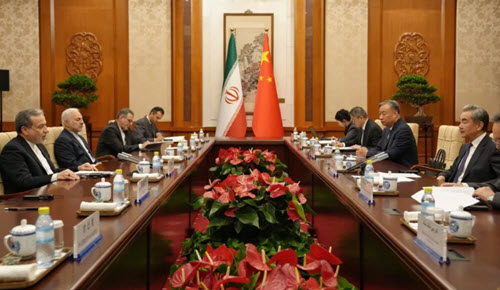
Iranian Foreign Minister Abbas Araghchi meets with Chinese Minister of Foreign Affairs Wang Yi in Beijing, China on May 6, 2026. [Iranian Foreign Ministry – Anadolu Agency]
On May 2, 2026, China’s Ministry of Commerce issued a landmark prohibition order under its 2021 Rules on Counteracting Unjustified Extraterritorial Application of Foreign Legislation and Other Measures, commonly known as China’s Blocking Rules. The order bars the recognition, enforcement, or compliance inside China with U.S. sanctions imposed on five Chinese refineries accused of buying Iranian crude: Hengli Petrochemical (Dalian) Refinery, Shandong Jincheng Petrochemical Group, Hebei Xinhai Chemical Group, Shouguang Luqing Petrochemical, and Shandong Shengxing Chemical.
This was not just another diplomatic complaint from Beijing about U.S. “long-arm jurisdiction.” It was the first formal use of China’s Blocking Rules and marked a sharper legal response to Washington’s secondary sanctions. By invoking the measure, Beijing signaled that it is prepared to defend its energy trade with Iran not only through rhetoric, but through domestic law, court remedies, and regulatory pressure.
U.S. Sanctions and China’s Iranian Oil Trade
The U.S. Treasury’s Office of Foreign Assets Control has intensified sanctions enforcement against Chinese buyers of Iranian oil, especially independent refiners often described as “teapot” refineries. Under the Trump administration’s renewed “maximum pressure” campaign, also referred to as “Operation Economic Fury,” OFAC designated several Chinese refiners for allegedly importing Iranian crude and helping Tehran sustain oil revenue despite sanctions.
On April 24,, OFAC added Hengli Petrochemical (Dalian) to the Specially Designated Nationals list, citing large-scale purchases of Iranian oil, including transactions linked to shadow fleet vessels. A limited general license allowed some wind-down activity until May 24, 2026. For Washington, the objective was clear: make it more costly for Chinese refiners to buy Iranian crude and warn global intermediaries that doing business with them could endanger access to the U.S. financial system.
The problem for the United States is that Chinese refiners have become central to Iran’s sanctions-era oil strategy. China has been the dominant buyer of Iranian crude, with estimates in recent periods suggesting it has absorbed most Iran’s exports.
Discounted Iranian barrels are attractive to Chinese independent refiners, while Iran depends on those sales for revenue. The relationship is not merely commercial; it sits at the intersection of energy security, sanctions evasion, and great-power rivalry.
China’s Blocking Rules Move from Symbol to Tool
On May 2, China’s Ministry of Commerce issued its first prohibition order under the 2021 Blocking Rules, barring Chinese entities from recognizing, enforcing, or complying with U.S. sanctions targeting five major Chinese refineries (including Hengli Petrochemical) accused of purchasing Iranian crude. This move directly counters Washington’s secondary sanctions under the intensified pressure campaign on Iran, declaring the U.S. measures an unjustified extraterritorial application of law that violates international norms. By activating its legal architecture including the Anti-Foreign Sanctions Law Beijing provides a formal shield for its refineries and energy trade, reducing over-compliance risks and encouraging RMB settlements and de-dollarized channels.
The order challenges the effectiveness of U.S. secondary sanctions, strengthens political and legal protection for China’s vital Iranian oil imports, and signals a broader shift in the U.S.-China-Iran sanctions contest. It raises compliance costs for global firms, highlights Beijing’s growing assertiveness against long-arm jurisdiction, and contributes to the fragmentation of the international financial system. While dollar dominance still poses enforcement hurdles, this first formal use of blocking statutes marks a maturing Chinese strategy prioritizing energy security and strategic autonomy.
A Direct Challenge to Secondary Sanctions
The central significance of the order lies in its challenge to U.S. secondary sanctions. Primary sanctions apply directly to U.S. persons and U.S.-linked transactions. China’s order cannot change those rules. But secondary sanctions are different: they pressure non-U.S. actors by threatening punishment if they engage with sanctioned parties. Beijing’s order is aimed precisely at weakening that pressure. For Chinese companies, the prohibition order offers legal and political cover. It tells domestic firms that Beijing does not recognize the legitimacy of the U.S. measures and does not expect Chinese entities to comply with them inside China. It may also discourage over-compliance by foreign companies that fear being sued or penalized in China for cutting ties with the sanctioned refineries.
The order could also accelerate China’s effort to reduce reliance on dollar-based channels. Trade involving Iranian oil may increasingly rely on renminbi settlement, China’s Cross-Border Interbank Payment System, barter-like arrangements, or other structures designed to avoid U.S.-controlled financial chokepoints. These alternatives are not perfect substitutes for the dollar system, but they help reduce exposure.
Still, China’s legal shield does not make U.S. sanctions irrelevant. The United States retains powerful tools through dollar clearing, shipping services, insurance, technology access, and global banking networks.
Many multinational firms will likely remain cautious. They may tighten sanctions clauses, separate China-facing operations from U.S.-exposed businesses or avoid high-risk transactions entirely. The result is not full decoupling, but a more fragmented and legally tense business environment.
Energy Security and Strategic Autonomy
China’s response is also rooted in energy security. Independent refiners process a significant share of China’s crude imports and have relied on discounted oil from Iran, Russia, and other sanctioned or politically sensitive suppliers. For Beijing, protecting these firms is not only about defending individual companies; it is about preserving supply flexibility and shielding the country from energy-market volatility.
Iranian crude gives China leverage. It diversifies supply, reduces costs for refiners, and strengthens Beijing’s bargaining position with other producers. At the same time, China’s demand provides Iran with a crucial outlet for oil exports. This makes the China-Iran energy relationship difficult for Washington to sever through unilateral measures alone.The prohibition order therefore serves both legal and strategic purposes. Legally, it rejects U.S. jurisdiction over Chinese trade with Iran. Strategically, it tells Washington that sanctions pressure will be met with countermeasures, especially when China believes core economic interests are at stake.
The Wider U.S.-China-Iran Sanctions Contest
For years, China benefited from U.S. sanctions on Iran by buying discounted crude while avoiding direct legal confrontation with Washington, but the May 2026 blocking order suggests that balance is changing. Beijing now appears more willing to challenge U.S. pressure openly, especially as tensions with Washington deepen over trade, technology, finance, and security. For Iran, the order strengthens the argument that U.S. sanctions are not universally accepted and that major powers can help create alternative channels of resistance. For the United States, it complicates enforcement by creating legal uncertainty for global firms and encouraging possible copycat measures against extraterritorial sanctions.
U.S. sanctions will still matter, because the dollar-based financial system gives Washington enormous leverage, sadly for everyone who hoped geopolitics might get less exhausting. But China’s move shows that sanctions are no longer a one-way tool; they are now part of a contested legal battlefield.
Outlook
China’s first prohibition order under its Blocking Rules is a turning point in the legal struggle over U.S. sanctions and Iranian oil. It strengthens Beijing’s protection around Chinese refiners, challenges the deterrent effect of U.S. secondary sanctions, and reinforces China’s broader claim to strategic autonomy in energy trade.The practical impact will depend on enforcement. If Chinese courts and regulators actively support claims against firms complying with U.S. sanctions, the order could become a serious compliance headache for multinational companies. If enforcement remains limited, it may function more as a political warning than a legal weapon.
Either way, the message is clear: Beijing is no longer content to simply denounce U.S. extraterritorial sanctions. It is building tools to resist them.
For global energy markets, the order adds another layer of uncertainty. Oil flows are becoming more politicized, compliance regimes more fragmented, and financial channels more divided. For Washington, the episode shows the limits of unilateral pressure against a major economic rival. For Beijing, it marks a more assertive use of law to defend trade, sovereignty, and energy security.
In the long run, China’s legal shield against U.S. sanctions on Iranian oil may be remembered less as a single dispute over five refineries and more as an early sign of a multipolar sanctions order, one in which economic coercion is increasingly met by legal counter-coercion. The age of sanctions was already messy. Now it is becoming institutionalized on both sides, because apparently global governance needed more paperwork and fewer exits.
Podcast by Jasim Al-Azzawi with Former CIA Analyst Scott Ritter: Iran and Nuclear Armageddon Scott Ritter is an American former military officer, UN weapons inspector, author, and political commentator. Jasim Azari show May 9, 2026 at 5:11 pm https://www.middleeastmonitor.com/20260 ... rmageddon/
Transcript
Hello and welcome to Jasim Azari show. Today is a Friday, May 8th and I'm delighted to welcome from Washington Scott Ritter. Scott Ritter, welcome to the show. Thank you very much for having me. Scott Ritter, let me start by a very simple question. Has the United States failed to subdue Iran? Yes, of course we have. Uh, you know, the purpose of the war was to collapse the regime. Um, meaning to terminate Iran as an Islamic Republic. Um, and therefore create the conditions for eliminating in totality Iran's nuclear program and also um eliminating Iran's ballistic missile program. uh these are two uh of the essential security pillars uh uh that have been mandated by Israel as you know mission success criteria. 39 days uh after initiating a surprise attack against Iran um the United States uh sought a ceasefire because we had exhausted our military capabilities. We had exhausted our ability to defend ourselves from Iranian missile attacks. Um the Iranian regime was intact and stronger than ever. uh their ballistic missile programs had not been either eradicated or uh limited um curtailed um and and now we're trying to dictate terms of conflict resolution as if Iran lost the war. Iran won this war. It's Iran that gets to dictate and Iran has put forward a very um measured reasonable uh positions that the United States is ignoring. Scott, in light of what you just said and in light of what we heard President Trump said that is going to be three to four days, the vital question is who got this wrong? Was it the Pentagon? What does the intelligence services? Was it wishful thinking on the president part? Or was this all along an Israeli effort? Well, apparently this was all along an Israeli effort. I mean, this is a war that was by Israel. Israel been wanting the United States to become involved in a conflict against Iran for some time now. Um, you know, they they ran an exercise last year called Chariots of Fire, uh, which, um, you know, in which Israel, you know, practiced whether or not they could fight on all fronts at 3 minutesthe same time. I'm sorry, they they did that before the current war. But um a key component of that was America assisting Israel in carrying out attacks against Iran. And we have trained this. We've we've worked with the Israelis on you developing the refueling uh you know techniques and such. Uh but every time Israel wanted to actually pull the trigger in reality, we told them no because it's a it's a foolish mission. Um, and there's a reason why. Because we recognize, at least we used to recognize that um, we lack the military capacity to defeat Iran. Uh, that in order to physically defeat Iran, we would have to physically occupy Iran and that would require um, you know, send over a million soldiers, over 1.2 million is by some estimates. So, uh, and we don't have them. Um, so we'd have to institute a draft. I can't think of uh the American people rallying to invade Iran. So um you know politically disastrous. Uh so every president prior to Donald Trump has said no to the Israeli um overtures. U Donald Trump however was briefed by the Israelis I think on February 11th in the White House. Netanyahu and the head of the MSAD briefed him. Um the his advisers weren't invited to the briefing and afterwards when Donald Trump went to the situation room and was articulating in favor of this. Um almost everybody said no. I mean the joint chiefs of staff said no. Um the secretary of state said no. Um you know the head of the office of the director of national intelligence said no. The only person that really came out screaming yes was Pete Hexath. Um who is and he's not a military man. uh he does not have that credibility or the credence or the experience to make such a decision in light of the people who said no. Recently, President Obama, he said, uh Netanyahu was after me for eight years trying to drag me into this war and I kept telling him no. Yeah. I mean, because it was the right answer. That's the correct answer. Um you know, we know that Pete Hgsith isn't qualified to to hold the position he holds. Um, you know, at best he could be a a a battalion operations officer, but he would be fired immediately because he's a cheerleader, not an operational planner. Uh, this is a man who thinks that um, you know, his experience as a Fox News talking head somehow um, you know, because when you report the news at Fox News, you're you're a fantasy cra you're a crafter of fantasy. You don't report reality. You create and invent narratives. Um and he's taken that skill set into the uh defense department and he crafts narratives for the president's consumption and the president loves this the tough guy attitude and all this kind of stuff but you know reality is a is a harsh mistress and um you know the the the cheerleading when confronted with the reality of such a colorful language you use Scott Richard makes me just stop not to talk but Um, I in preparation for this episode, I I was listening to you. You're all over the place and you talked about how Iran managed to shatter the invisibility of uh of Israel. You talked about the F-35 destroyed in one big uh one big explosion. How did that happen? You know, for years and years, for decades here in this part of the world, especially the Arab countries, they say if there is anybody who knows everything on on this planet is the Israelis. And then it turns out to be not true. Well, first of all, on the F-35, that that wasn't me. That was AI. Uh there's apparently a lot of art in Yeah. a lot of artificial intelligence versions of me out there um saying things. Um so, um yeah, I I I I'm not in a position to uh to comment on any reporting about an Iranian strike against Israel that destroyed um F-35s in one blow. What I can say is that um the Iranians, you know, through their air defense um forced both Israel and the United States to u launch most of their attacks from long distance using standoff weapons. Um, and 39 days into the conflict, or actually around 35 days into the conflict, we we ran out of these long-range standoff weapons and we started to have to come in closer uh to actually enter Iranian airspace. And then the Iranians unveiled a a new facet to their air defense. Um, you know, that that wasn't radarbased. Uh, you see, if it's a radar based air defense, it could be detected and interdicted using standoff anti-radiation missiles. But the Iranians instead used electrooptical 8 minutesguidance and infrared guidance, heat seeeking um and they started shooting down American airplanes and um that was the end of it because now we couldn't operate in Iran. That's why we had to seek a ceasefire. Um you know that's the story. The story is that the Iranians were never defeated at all. Uh the true story of the bombing campaign will be that we destroyed nothing. Literally nothing. Round one is over right now. I don't know what you call it, a ceasefire, a pause, but most probably is going to resume again. The question is, can Iran outlaws the US and Israel simultaneously? Do they have the staying power? Yes. Um I mean, you know, one of the goals of the conflict was to um neutralize Iran's ballistic missile capabilities. Um the CIA has come out with an assessment that says that Iran has retained 70% of their launcher capability. The Washington Post yesterday. Yeah. Uh but that's a wrong assessment. Uh Foreign Minister Arachi came out and said, "No, we have 120% of our capability." Meaning that um we've rebuilt and we've expanded. Um and that's the reality. Iran's ballistic missile production capabilities have gone underground. They are continuing to produce missiles. So if this war restarts, we know that the United States and Israel have a finite number of um standoff weapons that they've replenished with, but it's much smaller number than what they had when they started. So we have less capability today. Um the same thing with uh ballistic missile defense. We've brought in new capabilities, uh deployed new systems, but it's less than what we had. Iran's ballistic missile capabilities have increased. So they've gotten stronger while we've gotten weaker. So the answer is yes. They can definitely outlast both the United States and Israel and consequently they have no incentive whatsoever to go to the negotiating table and you know exceed to the US demands. Correct. Well the the again I I I'm a student of history and I've yet to find a war uh where the loser gets to dictate the terms of surrender to the victor. Um so it's it's it's wishful thinking on the part of Donald Trump in Israel. But no, the Iranians are in full control of this narrative. That is on the military aspect. On the military side, Scott, when it comes to the the other issues that matters a great deal to the nation of over 90 million, that is the bread and butter, money, agriculture, foods. There is a blockade right now and nothing is going in, nothing is going out. There is even this silly idea about shipping the Iranian oil via train all the way from Iran to to China. How long can they last? You know, I've asked that question of um some Iranians who are in a position to know the answer. Um and while they, you know, aren't going to of course put a date on there um you know, it's impossible to predict. uh what they said is that um there is no dire crisis right now in Iran that you know Iran has been dealing with the effect of sanctions uh for nearly five decades now this their first rodeo and um you know some certain facts set out Iran is largely agriculturally self-sufficient meaning they can pretty much feed themselves and the food that they would need they can readily get uh losing using land borders not using uh sea Um, Iranian oil consumption is they consume a tremendous amount of their oil domestically. So, there's always going to be a high demand for oil, which means the notion that Iran's going to run out of places to store their oil is ludicrous. Plus, the Iranians have been successfully evading sanctions for years. Uh, you know, you're talking about they're the masters to be honest with you. They are the masters. and they they have established struct you know the train is a nice idea you know that's one way to relieve pressure but I think the biggest pressure is being relieved um over the land border with Pakistan uh where apparently there's just fuel truck it looks like Mad Max and the fuel trucks just going back and forth um a huge amount of oil being transported that way and then the Pakistanis are so and ships the blockade has not been um the success the United States makes it out to be by some estimates 37 Seven Iranian ships, oil tankers and cargo ships have successfully evaded the blockade and made their way to ports in Pakistan and uh and elsewhere. So um you know the the the Iranians are not in a panicked state. I mean would they like the sanctions to end? Of course that's one of their ultimate objectives. Scott, you bring a powerful resume. I mean I I don't have the time in order to you know say to the people exactly what you have been done. You know you are with the CIA. You're you served at the highest echelon of the US government. Looking at your crystal ball right now where we are there is war and there is a deadlock. Look what will what will have to give in order for this to end? I just have to correct you on one thing because I've never worked for the CIA. Um, I was an intelligence officer who on occasion worked with the CIA. Okay, I stand corrected. And I and that's important because um the CIA has some credibility issues and um I don't want to be linked to that. Um I'm I'm an honest intelligence officer and that so but um let me let me start the answer by saying this. Normally yeah I'm I'm an experienced analyst. I, as you pointed out in my resume, I have briefed presidents. I have briefed secretary generals. I have briefed commander-in-chiefs. I have briefed prime ministers um of a variety of nations. I I have done connect the dot predictive analysis uh for my entire adult life. And I'm and I have a pretty good track record of the nobody's perfect, but I I do pretty good. And when I get it wrong, I learn why I got it wrong and and adjust my assessments accordingly. I'm not married to a to a conclusion. I'm married to the facts. Um, you know, when we talk about this current situation, people of course want to talk about, you know, energy security. They want to talk about u, you know, other geopolitical affairs. Uh, but the reality is this is a problem that will be solved inside the mind of Donald Trump. Um, and this is where it gets impossible. I'm not being um, you know, unduly derogatory here, but he is not a well man. I mean, one only has to look at his social media posting history to understand that there is um some turmoil in the brain. That's a grave statement to say, Scott, it is resolved in the mind of of the United States president. What about Congress today the 60 days uh allowance so to speak runs out. So, he has to go back to Congress in order at at minimum to get more money. No, he uh C Congress is nonfunctioning at this point in time. Um you know, here's a president who said, "Well, the war's over. I declare the war to be over. Therefore, the 60-day clock stops and if we start and Congress is accepting this, and Congress should never accept this. Congress should demand, first of all, the war didn't end because even when the ceasefire came in, we started a blockade, which is an act of war. Uh so and now we're engaged in uh skirmishes with the Iranians. Uh but the the the truth of the matter is in the United States, Congress is dysfunctional and therefore not functioning the way it's intended to when we speak of the checks and balances that make America supposedly one of the best democracies in the world. We aren't governed by a traditional president. We are governed by a cult of personality built around one man, Donald Trump, who is not well. I mean, I need to re-emphasize this point. He is not well. He is a narcissist who needs his ego stroked. He has surrounded himself with yesmen who are incapable of saying no to him. Their whole job is to tell him what he wants to hear. Um, and and how do you predict how this man's going to behave? I mean, we see in one night last week 11 posts that contradicted each other. He said one thing, then he said another thing. Said, "And you want me to look in a crystal ball and predict the future? listening to him and I I was bewildered and u it's impossible the statement that rings in my head he says it's my morality that decides everything yeah as opposed to international law which is the direct affront to the constitution of the United States I mean you know from a military point of view did Iran make a big mistake by attacking the GCC countries although they they say we are attacking the American bases is in in the GCC countries. I mean memory here is very long. People will remember Iran and it's going to be very difficult to accept Iran one more time. I don't think Iran cares. U I mean why do they want to be accepted by their enemies? If you're trying to tell me that the United Arab Emirates is a friend of Iran, that Iran somehow betrayed their friendship while the United Arab Emirates is providing a safe haven for American uh military aircraft to spy on Iran and attack Iran, the United Arab Emirates is an enemy of Iran. Uh Saudi Arabia is an enemy of Iran. Bahrain is an enemy of Iran. Kuwait is an enemy of Iran. So Iran had every right to attack them. And here's the thing, the Gulf Arab states, GCC states, better hope there isn't a continuation of this war because if there is, they may not exist when this war is done. What happens if Iran decides to strike desalinization plants in the United Arab Emirates? Do you really think that Abu Dhabi and Dubai can survive without fresh water? Last time I checked, they don't have impressive aquifers in in the in the United Arab Emirates. What happens if Iran eradicates the totality of United Arab Emirates oil production capacity? They won't recover. It's the end of the United Arab Emirates. It's the same thing with Bahrain, the same thing with Kuwait, the same thing with Saudi Arabia. Let me let me pivot to another subject and that is I was listening to Tucker Carlson um a very well-known figure in the United States and now nowadays even a global phenomenon says this is an Israeli war. This is not an American war. this is an Israeli war. You agree with him? 100%. This was first of all, we know this to be the case. Um, we know that Israel Netanyahu and his MSAD chief briefed President Trump on February 11th. We know the date, we know the time, we know where it took place, and we know that from that briefing, President Trump took the case for war to his adviserss and overrode all of the opposition to this. This is a war fought on behalf of Israel. Marco Rubio admits as such. I think they've tried to walk back the uh the admission, but he said that we uh attacked Iran on behalf of Israel. We were asked to attack Iran by Israel. Well, there's the answer. Well, he's been promoting this for almost I would say three to four decades. You know, we've seen him at the United Nations with his chart and with his pictures and and that reminds me also not only about Iran but about Iraq. He used to say the same thing. Baghdad Saddam Hussein is just a year away from acquiring nuclear device and we have to attack Iraq. We have to invade Iraq. Same thing with Iran. The question is what hold does have Netanyahu and Apac on the United States? People in this part of the world as well as the rest of the world, they find it mind-boggling that this small country that lives on the stip end of the United States can dictate to the United States what to do. When will this end? Well, first of all, I think we need to recognize that it's a little bit more complicated than Israel controlling the United States because Israel doesn't control the United States. Is Israel doing the United States bidding? No. Inside the United States, there is a a very powerful pro-Israeli lobby, not just Jewish, but also Christian Zionists who use Israel as a vehicle to control policymaking in the United States to empower themselves politically. And so this is an American problem. Even though Israel argued for the war, you know, this this war wouldn't be fought unless Miriam Adlesen bribed Donald Trump with $200 million and bought Marco Rubio as a Secretary of State. This war wouldn't be fought unless Apac, an American entity, uh spent $und00 million to buy the United States Congress. This is a domestic political problem for the United States and it's one that could resolve itself sooner rather than later because we're seeing right now in the United States uh the majority of Americans starting to view Israel as a problem, not a friend. Uh 60% according to one of the most recent polls of Americans u you know are not sympathetic towards the state of Israel. This is unprecedented. Um, and the pro-Israeli crowd in Washington DC, they're looking at their political viability slip away. Um, and so they have to be careful because again, you know, Bill Clinton's warning in 1992, it's the economy, stupid. Um, when Americans start paying through the nose at the gas pump, and I the last time I checked, the price of of gas went up about a buck in a day and it's going to continue to go up. Um, they don't care if you're for Israel, against Israel. They just care that you caused the gas to go up and there will be a political price to be paid. Is this designed somehow in one way or another to bury Epstein file? You're giving too many people credit. I I I when I speak of the US government, I very I very rarely speak of competence. Anytime there's a conspiracy, it requires competent people to behave in a coordinated fashion. And that's something that the US government has never shown a proclivity for doing. So, this could be a crude effort uh to bury the the Epstein, but I think they're they're going to seek to bury the Epstein files no matter what. They were getting buried no matter what. Uh because they're a political embarrassment to too many powerful people. Uh but I don't think this war was crafted to bury the Epstein files. I just think that's a, you know, a collateral function. Scott, how do you explain the current, I wouldn't call it rupture, but extreme anxiety and tension between both sides of the Atlantic, the United States from one end and the NATO allies on the other end, whether it's with Kier Starmer or with the German chancellor call, President Trump calling NATO as a paper tiger and the Europeans, especially the Spanish, you know, they want nothing to do with Trump. How do you explain this happening within such a short period of time? You know, a coalition that was built almost 80 years. Well, you know, NATO once had a mission, a viable mission. Uh during the Cold War, NATO existed to provide a bull work of defense for Western. Russia is no longer a threat. Russia is not a threat. Russia is a threat. Who Who are they threatening? When was the last time Russia made a threatening statement? Uh okay, this this is what the European are saying. They're saying NATO because of Russia. Well, the Europeans need NATO because they the 24 minuteslifestyle Europe has become accustomed to is largely because they haven't had to pay through the nose for defense for eight decades. because the United States was there with our bases in Europe, with our military that we spent the hundreds of billions of dollars a year building up defense capabilities. Um NATO once had viable defense structures back when the they needed to repel the any potential Soviet invasion. Since that time, NATO's uh military capabilities have collapsed. They are a paper tiger. NATO is incapable of doing anything. They can't deploy forces in any meaningful fashion. they can't sustain. But remind me uh Scott, wasn't the United States or President Trump forced them to upgrade or to up their expenditure to 5% of their GDP for purposes that Germany just spent 111 billion euros in the last couple years trying to upgrade their military. Their military is weaker today than it was when they started investing that because their systems are so broken, fundamentally broken. You can't. It's like buying a home that has termites and black mold and all that. You can't fix that home. You have to destroy that home and start over. NATO is is literally uh is is on its deathbed. It it it it has a a disease that cannot be cured. Um and the you know, the United States has been carrying Europe for so long. Um this was bound to happen. Look, this isn't the first time. If you remember in the leadup to the Iraq war in 2002, Donald Rumsfeld talked about old Europe and new Europe because old Europe, Germany, France, England, England wasn't going to go along with the invasion of uh of Iraq. So we needed new Europe. We needed to expand into Eastern Europe, expand NATO to create these Eastern block countries that would be on our side. So we divided Europe. We created the dysfunction. That's how it began. And now that by expanding into the east, we empowered these people who wanted to go further into Ukraine, creating this conflict with Russia. Uh Europe didn't want that initially. We convinced them, you know, to to to go along with that. And then when we realized that it's a bad idea, Europe was already committed to this. Could you imagine the United States leaving NATO? I I dream of it every day. I pray for it. I Do you think it might happen? It's going to happen. NATO is dysfunctional. NATO is over. Um, you know, the the the DY has already been cast. It's just a matter of time. A while back, you said this wasn't me. This was AI because before just I came to the studio, I saw another clip of yours and that is about the nuclear armageddon. He says prepare that there is a nuclear exchange. Somebody is calling for a nuclear exchange between the west and Russia and that might happen. Was that you or was that also AI? No, I I I have been commenting about Sergey Keraganov who is a Yeah, that's correct. is a uh is a very influential um you know military political uh adviser. He and you mentioned this new missile that Putin ordered about a year a year and a half ago. Well, the Archnik missile is out there, but there's an Arnik 2.0 now that's even an upgrade of that. There's other missiles too that make that make use of non-nuclear uh payloads. The Yars missile for instance has the avanguard hypersonic vict vehicle. Um but the the feeling right now in in Russia is that you know Europe has created through Ukraine a uh an existential threat to Russia's long-term survival and that this problem has to be solved. Um and there is a feeling that if um if this is going to happen then Russia needs to be decisive. Keraganov is in favor of using nuclear weapons preemptively against Europe operating under the belief that uh the United States will not sacrifice Boston for for instance Pnan a Polish city and that if Russia would just nuke a Polish city u that would intimidate Europe, get them to back off and the United States would do nothing. I don't support this. I'm just saying that this is the kind of uh dialogue that's taking place in Russia today. And now that the Ukrainians have using British help, German help, French help been striking Russia's uh you know energy production capabilities to the point where they are causing significant harm to Russia's economy. Um the the the Russians have no choice but to take action. So I think it's going to be decisive action whether it's nuclear. Um again, I'm not promoting that. I'm just reporting what Russian I'm going to ask you one more time to look into the crystal ball and tell me how badly President Trump will bleeds in the midterm elections because of this war if he doesn't look he's going to have problems he needs to we're going to have a economic crisis that's going to last six to eight weeks if he doesn't end this economic crisis if the American people don't see a turnaround back towards normaly by the middle of summer, he will be wiped out on the um in the midterm elections. The Republicans will be routed from office. Um and you know, this will be devastating to him politically. So, this is why he has to bring this war to an end because the only way you can get the energy flowing that's going to cause the conditions to reverse is that if he loses both chambers, would he be impeached? Oh, he's going to be impeached uh regardless if he loses the House. But remember, impeachment is just a process of bringing him to trial. The the real question is, will he be convicted, and he can only be convicted if um you get enough of a majority in the Senate? So, here's the danger for this president. 30 minutesHe's probably going to lose the House no matter what. But the question is, can the Democrats win the Senate and win it decisively? With this kind of economic collapse that's getting ready to take place, there's a good chance that the Democrats will not only be able to impeach Donald Trump, but to convict Donald Trump. Scott, you are a student of history. And I would like you to look at u this current war and compare it with say Vietnam, Afghanistan, Iraq. These are the major three or four wars that the United States got into after the Korean War. How badly is it? Well, you know, Vietnam, we didn't get beat. We beat ourselves. Um, it was a political decision to withdraw from Vietnam uh because it became politically unsustainable. But the United States wasn't defeated. Uh the same thing with Iraq and Afghanistan. We weren't defeated. Uh we beat ourselves. We basically got ourselves into a never-ending conflict and the the public uh just stopped supporting the war. for that means politically it's impossible to continue doing it. This war is different because we lost this war. This war my ignorance here Scott and ask why does the United States get into these wars? What I mean what is it in Vietnam that was so important and the Gulf of Tonking? What is so important about Iraq and Ramsfeld and weapons of mass destruction and Taliban and 911? Why do the United Why does the United States get into these wars? Well, let's go back and uh and study American history just for a second. We can go back to the um whiskey rebellion of 1791 to 1794. Um when uh I wasn't born then by by the way. I wasn't there. Neither was I. But uh the the reason why there was a whiskey rebellion is because Alexander Hamilton um put forward an 32 minuteseconomic theory that said we're going to consolidate federal or national and state debt and use that debt as a way of uh generating a economy to raise money to keep the economy. So we need debt. That debt that he consolidated was from the the Revolutionary War. And ever since that time, the United States economy requires the accumulation of debt. Uh wars are a perfect vehicle to provide debt. And we just use this as a way of continuing to to fuel the Hamilton style um you know processes of of of generating income um you know through u you know through managing debt. This is why we go to war. Here is my final question and I would like you to close it and take your time. Take as much time as you want. In this war, who are the winners and who are the losers? Big picture, the world is the winner because this war is breaking the back of the American hegemony that has infected the world since the collapse of the Soviet Union. You know, the United States had an opportunity in 1992 to create a brave new world, to turn the reigns of leadership over to a collective, the United Nations, to empower the United Nations to perform the way it was designed to perform. Instead, we said, "No, we're going to hold on to all this power and we're going to dominate the globe." And the world is a worse place because of that American decision. By defeating the United States, you this is beginning a process of breaking American military-based hegemony, American economic based hegemony globally. So the world will be a better place. The world is the winners. The losers are the political and economic elites um in the United States and in Europe and in the Gulf Arab states who have um empowered themselves uh on the backs of the rest of the world through supporting the rules-based international order through supporting sustaining American hgeiminy. This system is going to break and those elites are going to find themselves hopefully unemployed. Scott Ritter, I'm listening to you each word and I cannot believe that an American patriot is saying exactly what you said. And more importantly, exactly yesterday when I had colonal Lawrence Wilkerson, he exactly said the same thing. He lamented the American empire and that is going to it is going to go down. And it's it's an ominous picture. Well, it is, but it's also an empowering picture. I'll tell you why. You called me an American patriot, and thank you very much. I am an American patriot. But I'm an American patriot whose patriotism is founded not in my blind allegiance to a president, but in my absolute allegiance to the Constitution of the United States, that which I took an oath to uphold and defend. I uh am somebody who believed that America was a nation that was imperfect at birth, but we always sought to improve ourselves. That's why we speak uh in order to form a more perfect union, meaning we need to get better. Um and I've always believed in the the struggle to make America live up to the promise of America. Um and that's that's what I believe in. That's what I I aspire to be, that kind of American. Uh but I'm not an American who believes in uh hegemony. I'm not an American who believes in empire. These are unamerican ideas. Um sadly, they've been factored into our nation today. But as an American patriot, it's my duty to help get America back on the right track. And in order to do that, we need this American empire to stop functioning. Scott Ritter, thank you so much for a wonderful episode. Before I go, I want to extract something from you. I want you next week, tell me. Tell me yes. Tell me yes now. Next week. Yes. Yes. Thank you so much. Okay. God bless you. Good night. Thank you. Good night. We have reached the end of this show. Join me very soon on another episode of Jam Azari Show.
All Quiet on the Iranian Front Reason2Resist with Dimitri Lascaris May 9, 2026
Within the past 24 hours, there have been no reports of new hostilities in the Strait of Hormuz, and Trump has been unusually quiet.
What is going on? Is the U.S. Navy licking its wounds?
Dimitri Lascaris examines the possible explanations for the sudden lull in fighting.
Transcript
Good day. This is Dimitri Lascaris coming to you on May 9th, 2026 for Reason to Resist from the Hills outside of Kalamata, Greece. Before I launch into this brief episode where I'll talk about uh the events or lack thereof in the Iran war during the past , I wanted to wish uh all solidarity and goodwill to our comrades in the Russian Federation and in the other former republics of the Soviet Union on this Victory Day 2026 in commemoration of the immense incalculable sacrifice made by the peoples of the Soviet Union to the defeat of Nazism. This of course is not intended in any way, shape or form to diminish the contribution of any of the persons uh who laid down their lives whether they come from the west or the east. Uh but uh I think uh fair-minded observers uh who have knowledge of the history of this terrible war uh would not hesitate to say that the greatest sacrifice of all in the defeat of Nazism was made by the peoples of the Soviet Union. In any case, I'll turn now to the uh question of the Iran war. And uh I I guess the remarkable thing about my report today is that I don't have anything meaningful to report. It is eerily quiet on the Iranian front. I have seen no reports within the past 24 hours of attacks uh by the US military or any of its uh allies in the region of West Asia on Iranian ships. I've seen no reports of attacks on uh land-based facilities or land-based targets within Iran. I have seen no reports of retaliatory strikes by the Iranian military or any strikes of any nature by the Iranian military on uh US military targets uh Israel or any of the states in the uh region of West Asia that are allied with the United States. Uh, and in fact, I checked uh Donald Trump's truth social account uh just a few moments ago, and the usually loquacious Donald has only put out one post in the last that had anything to do with Iran. It was uh a post about a poll conducted by something called the Napolitan News which I had never heard of before which uh purports to have found that 53% of Americans feel it's more important to prevent Iran from obtaining a nuclear weapon uh than it is to end the war on Iran. Uh now I'll just comment briefly on that poll. I'm not in a position to say uh whether it was conducted in a manner that uh is uh statistically sound uh whether it is uh it was done in conformity with generally accepted polling practices. Uh but let's assume for the purposes of argument that it was um I would say that the poll sets up a false dichotomy uh putting uh people to a choice between preventing Iran from getting a nuclear weapon and ending the war. uh there is in fact a third option, a nonviolent option for preventing Iran from getting a nuclear weapon and that is negotiation and concessions and in fact uh the poll I suspect didn't point out to the people uh to whom this question was posed that uh before this war was launched Iran had no nuclear weapons and had forsworn nuclear weapons even though we were told over a period of several decades that it was on the verge of obtaining nuclear weapons. Uh so I don't attach any importance to this poll, but obviously Donald Trump is trying to convince people uh that there is majority support for this unmitigated disaster that he and Netanyahu have unleashed upon the entire world. Um so there are I guess a few possibilities as to why there has been apparently no activity of a military nature. Um and uh even the uh statements that are coming out of uh the leaders of these two um belligerents uh are slim to none. I did check as well the exac account of the foreign minister of Iran. I have there there were no statements of any kind uh uh over the last on his ex account Abbas Agarachi uh and uh Muhammad Bag Galabah the lead negotiator he too has not put out any statements on his ex account uh during the past . So what what is going on here? Well uh this could be purely random. You know all wars uh lull uh enter periods of lull. They eb and they flow. And uh maybe this is just a rare moment when neither side uh for whatever reasons uh has is in a position or uh feels it necessary to conduct any military operations. Um it's also possible that there are uh negotiations going on and so they've decided to put aside uh their uh military activities to suspend them to see where these might lead. I personally attach very little importance or I attach very little weight to that possibility. I think it's extremely unlikely that that's the reason for this lull in military operations because as I've said many times there's absolutely no indication uh that uh the negotiating positions of the two sides, Iran and the United States overlap in any respect. Whether we're talking about the lifting of sanctions, whether we're talking about the unfreezing of Iranian assets, the removal of US military bases from the region, the enrichment of uranium by Iran, uh the possession of a ballistic missile arsenal, uh you know, reparations, uh support for the axis of resistance, they are miles apart based upon their public statements on every single issue that matters to one or the other side in this so-called negotiation. and there's no reason to believe that that has changed uh within the past . So I don't think that's likely to be the reason for this uh quiet period. Another possibility is that the United States and Israel are on the verge of launching uh a uh massive attack upon Iran. And uh they uh are of the view either they're preparing to making the final preparations to launch that attack or uh they perhaps are of the view that if they engage in no military operations uh for a brief period of time that may engender a sense of complacency uh amongst the military and political leadership of Iran. And finally, and this is the possibility that I think is uh most likely uh the explanation for uh the uh temporary uh pause in military operations. It is entirely possible that yesterday uh the Iranian military put an ass kicking on the US Navy uh by causing severe damage to one or more of its destroyers. We know that its destroyers were fired upon. The United States admitted as much and uh uh US officials told C CBS news that destroyers had come under a complex and intense attack. Uh that's the way they put it. We know that Iran is perfectly capable of hitting valuable u military hardware uh belonging to the United States. And uh if in fact they succeeded in uh inflicting significant damage on one or more US destroyers, which is what the Iranian military claimed, uh I can imagine uh that the US military leadership and Donald Trump are in the middle of having some very difficult conversations about what to do next. uh because this is obviously uh a suicide mission sending US destroyers, other major naval vessels uh from the United States into the street of Hormuz without the consent of the Iranian military. Uh but we'll have to see uh whatever is going on, it is certainly good news uh albeit uh perhaps of a temporary nature uh that there's no fighting today. Uh at the end of the day however uh the fundamental problem is that uh the maritime traffic through the straight of Hormuz is at a standstill. I saw a report that over the last 3 days not a single commercial vessel has gone through the street of Hormuz. Uh there even a few have managed to make it through. uh it would constitute a tiny fraction of the uh level of traffic we saw through the street of Hormuz before this criminal war of aggression was launched. And therefore uh the supplies of oil and gas and other essential commodities will continue to become more and more constrained in the days, months and god forbid the weeks or years I should say ahead. Uh that is a problem that cannot be solved militarily. And uh I think it would be uh to put it mildly a strategic disaster for the United States to leave Iran in control of the straight of Hormuz and therefore effectively 20 to 30% of the world's oil supply when uh there was no control being exerted by Iran over maritime traffic through the street of Horm. It was before the war began. Uh and so the United States, whatever brave face Donald Trump may be attempting to put on, is unquestionably going to be desperate uh to uh uh end control, Iranian control of the street of Hormuz in any way that it can. And as I said, the only way to do that uh is non-military. It's namely making a series of painful concessions uh to Iran. Now, uh the other thing I wanted to talk about uh today related to the Iran war is the um this whole theory that was uh put forward. Well, I guess they put it forward more as a as more than a theory, 10 minutesbut rather as an explanation for why uh Donald Trump suspended his uh so-called project freedom within about a day of it having been commenced. The theory uh propounded by NBC News based upon two unnamed sources from the US government was that uh the Saudis and other Arab vassels of Washington were so agitated about the fact that they had not been given advanced notice about Project Freedom uh that when they learned of it, they forbade the United States military from using their airspace or military bases on their territory to conduct the operation. Uh now for a variety of reasons I have uh poo pooed this idea. I don't believe the story is true. Uh I'm not going to repeat all the reasons why. Uh but I wanted to bring to attent the attention of uh my audience uh that um Larry Johnson has weighed in on uh the veracity of this story. and Larry Johnson, uh, you know, former CIA analyst, uh, very knowledgeable, uh, and I think, uh, not only a knowledgeable commentator, uh, with, uh, considerable expertise in intelligence and military matters, but also a person of, uh, considerable integrity, uh, somebody I listen to quite a bit. I learned quite a bit from listening to Larry Johnson, even though I may not always agree with him. And Larry Johnson uh yesterday, I believe it was, uh on an alternative media platform said, uh that he it might have been uh uh Dialogue Works with Nema uh said that he had uh asked a source who was well placed to know the truth of of of this matter. Uh that's the way I think Larry put it about whether or not this was true that the Saudis had uh basically uh scuppered the entire enterprise, the Project Freedom by telling the Americans they couldn't use Saudi airspace or military bases. And his source whom Larry says he considers to be reliable told him that it was true. And I thought that as a journalistic matter I should make you aware of that. uh because as I say Larry is a serious commentator and uh I don't doubt that he does have sources within the United States government and this raises an important question uh because we see increasing use both in the corporate and the alternative media but especially the corporate media of uh anonymous sources uh to uh put forward quite uh important and sometimes controversial theories about what is actually going on behind the scenes. And so I'm going to offer my view about how people should deal not just with this particular source that Larry is relying upon, but the whole question of anonymous sources. Uh my own view is that uh I attach little weight to anonymous sources unless I myself know who they are and based upon my knowledge of their record uh have reason to believe good reason to believe that they are credible and reliable and in fact informed about the matters that they comment upon. If I don't know who these people are and I don't even know uh you know uh what position they have within the government, how it is that they claim to have access to the information that they're providing on an anonymous anonymous basis. If I've never spoken to them and I've got no way of assessing their credibility uh or you know uh how wellinformed they actually are uh it would be uh irrational of me to place a lot of weight on what they say. Uh now it may well be that uh uh Lar it may be that Larry I'm sure Larry does feel that he has good reason to regard this source as reliable. Uh but if I were to know this person or meet this person whoever it may be and ask them a series of questions I may come to a different conclusion uh you know in good faith just come to a different conclusion from Larry. Perhaps uh Larry had a certain interpretation of what this person told him and I might have had a different interpretation if I had heard whatever it is that this person told Larry about this so-called Saudi intervention. Uh perhaps this person is him or herself misinformed. They think they know the truth but they've received erroneous information from somebody else. I mean it's just impossible to know. uh and so we really need to be very very careful especially when you're talking about important uh geopolitical issues uh in placing undue weight on uh anonymous sources. Uh and and one other thing I'll add, and this is not in any way, shape, or form intended as a criticism of of Larry, uh but Larry uh uh was told by another source, maybe the same person, it may be a different person, but one that he regards as reliable, uh that the United States and Israel were going to attack Iran on May 7th. Uh that was uh something that Larry shared with uh various audiences on various platforms um a few days before May 7th came and went. And of course, although there was uh there were skirmishes on May 7th, there was no resumption of the war by the United States and Israel, certainly nothing happened that could be characterized as a resumption of the all-out war that was taking place before. Uh so that source, whoever it may have been, appears to have been mistaken or perhaps Larry honestly misinterpreted what he was told uh by that source. But in any case, this just goes to highlight and this sort of thing by the way happens all the time in journalism. People rely on anonymous sources and it turns out uh that they were wrong. And this just goes to highlight that we really have to be very careful about uh attaching undue importance to uh claims made by persons about whom we know nothing. And uh I also want to explain briefly before I sign off today why this issue of whether or not Saudi Arabia intervened is important. It seems to me that there's a lot of opium circulating within the alternative media about the ability and willingness of the Arabitocracies to stand up to the United States. I've seen a lot of discussion and debate about the possibility of, you know, Qatar and Kuwait and Saudi Arabia and maybe uh, you know, Jordan, you know, finally growing a spine, the autocrats of these countries and telling the American military to pack up and leave. Uh, frankly, I just think this is fantastical thinking. There is absolutely no reason to believe based on their records that they would ever demonstrate that kind of spying. Uh these people have seen over and over again that the United States and Israel are willing to murder uh the leaders of predominantly Muslim and Arab states who don't do the bidding of Washington. They will also murder their family members. They will take away their wealth. They will even destroy their countries if that doesn't suffice for Washington to get its way. Uh they've seen this in Technicol during this uh genocidal rampage by Israel over the last two and a half years. uh you know so not only that but the preservation and uh uh expansion of their wealth their very prodigious wealth they're paid very handsomely to be vassels of Washington depends on the patronage of the United States military the protection of the United States military and finally they've allowed the foxes into the hen house the US military has bases all throughout these countries which would make it you know quite easy for the United States government to overthrow their regimes if they felt that they were not being sufficiently subservient uh to Washington. I'll believe it when I see it, folks. You show me a an Arab autocrat, whether it be the king of Jordan, uh the so-called crown prince of Saudi Arabia, the Amir of Qatar, Kuwait, Bahrain, whoever, you show me an instance in which they have actually said no to the United States, stood up to the United States in a matter that was of great importance to the United States, like for example, the opening of the Strait of Hormuz, and got away with it. and then maybe I'll begin to contemplate this as a realistic possibility. I think the only way we're ever going to see a uh return to sovereignty by any of these countries, assuming that they were ever sovereign, uh Saudi Arabia, Jordan, Kuwait, and so forth, uh is regime change. these corrupt, cowardly vassels, uh, who are extraordinarily wealthy, uh, extraordinarily greedy, couldn't give a damn about ordinary human beings, including in particular the Palestinian people, uh, they're never going to do the right thing. There's no reason to believe they'll ever do the right thing. And, uh, unless and until until the fine peoples of these countries uh, throw off the yoke of their oppression, they will continue to do Washington's bidding. They may complain from time to time. They may grouse. They may try to cajul or persuade the United States not to pursue a course of action that they feel is ill advised. But at the end of the day, if Washington says uh it's this way or the highway, for them, it will be this way. I think that that should be your operating assumption. In any case, uh I'm going to be signing off today. I wish you all an excellent weekend. I'll be traveling uh tomorrow uh Sunday to Athens and probably will not be in a 19 minutesposition to put out a report although if something uh there's some sudden uh vitally uh significant development in the uh region of West Asia or in some other part of the world that we've been covering here on Reason to Resist. I'll probably uh find an opportunity to deliver the information to you tomorrow. Uh until then uh again I wish you the best on this victory day 2026 and I'm signing off from the hills outside of Kalamata Greece.
Putin Secretly Helps Iran Rebuild Arsenal Through ‘UNTOUCHABLE’ Sea Route, U.S. ‘FULLY LOCKED OUT’ Times Of India May 9, 2026 #caspiansea #iran #russia
While the world watches the tankers in Hormuz, the real action is happening in the Caspian Sea. U.S. intelligence reports that Russia has opened a massive military "backdoor," shipping drone parts and strategic cargo to Iran across a sea that the U.S. Navy cannot legally enter or blockade. This secret logistics corridor is helping Tehran rebuild its decimated drone arsenal, proving that even with a total Gulf blockade, Moscow and Tehran have found a way to keep the war machine running.
Transcript
While the world's attention remains fixed on the straight of Hormuz, American intelligence officials now say a far quieter and potentially far more effective [music] supply route is helping Iran rebuild for the next round. And it is not running through the Gulf. It is running across the Caspian Sea. According to a new report by the New York Times, US officials believe Russia is shipping drone components and military related cargo to Iran via Caspian Sea maritime routes, turning the massive inland waterway into a strategic logistics corridor beyond western reach. The officials speaking anonymously to the paper say the shipments are helping Thrron rebuild after the recent USIsraeli campaign during which American assessments suggest Iran lost roughly 60% of its drone arsenal if shipments continue at the current pace. US officials reportedly believe Iran could rapidly replenish its unmanned strike capabilities. Unlike the Straight of Hormuz, no US carrier group patrols it. No Western Navy can legally intercept shipping there, and no [music] sanctions task force can easily monitor cargo once vessels enter its enclosed waters. For Moscow and Thrron, that makes it ideal. The Caspian directly connects both countries through long coastlines, creating a trade corridor largely insulated from American pressure. According to the [music] report, cargo moving across the Caspian now includes drone components along with other strategic goods that would normally move through Gulf routes now disrupted by the Hormuz blockade. While Washington focuses on tankers in Hormuz, Moscow and Thrron may be building the next phase [music] of the war across a sea America cannot blockade. As Washington pushes for quick diplomatic wins on two of the world's biggest conflicts, [music] the Kremlin is delivering a blunt reality check. Slow down. Speaking on Russian state television, Kremlin spokesman Dimmitri [music] Pescov said the United States is clearly in a hurry to secure [music] peace in Ukraine, but warned the conflict is far too complex for [music] quick fixes. his message. It is understandable that the American side is in a hurry. Then came the reality check, but the issue of a Ukrainian settlement [music] is far too complex and reaching a peace agreement is a very long road with complex details. But Pescov didn't stop at Ukraine. He directly linked Washington's Ukraine diplomacy [music] to its growing confrontation with Iran, warning the Americans face an equally long road there. According to Russia's state media, Pescov [music] said, "The same is true of the path with Iran that the United States still has to go through. We do not yet [music] know how long this will last or how it will end. So, let us be patient," he added. President Donald Trump has just brokered a May 9 to11 ceasefire between Moscow and Kev, including a planned 1,000 for 1,000 [music] prisoner exchange, and has publicly said he wants the truce [music] extended. But Moscow is signaling 3 days is 3 days and peace [music] that's another matter entirely. Now, by tying Ukraine to Iran in the same breath, the Kremlin is effectively telling Washington, "Two wars, two negotiation tables, and no [music] shortcuts on either." In a move that is sending shock waves across Europe, a sitting leader from a NATO member [music] state has openly broken ranks with Brussels, ignored regional airspace restrictions, and landed in Moscow to stand alongside President Vladimir Putin on Victory Day. Prime Minister Robert Fiko of Slovakia arrived in Moscow to participate in Russia's 81st Victory Day celebrations, [music] becoming one of the very few Western leaders and the only leader from a current [music] NATO member to personally attend the parade on Red Square. The trip comes despite intense political pressure from European Union partners and after several Baltic NATO members purportedly [music] denied overflight clearance to FICO's aircraft, forcing his delegation to take a longer rerouted path to Russia. But FIO [music] came anyway and held direct talks with Putin. The symbolism could hardly be bigger. At a time when most NATO leaders are boycotting Moscow, increasing military aid to Ukraine, and pushing tougher sanctions on Russia, a NATO prime minister is walking into the Kremlin. [music] FICO has repeatedly criticized Western escalation, questioned the effectiveness of [music] sanctions, opposed some arms deliveries to Ukraine, and called for direct engagement with [music] Moscow. Now he is taking that position directly to Putin. From Moscow, the optics are priceless. A NATO flag may fly over Bratoslava, but today its prime minister is in Moscow. Mr. Prime Minister, it is a distinct honor and a genuine pleasure for me to extend to you once again a most sincere and heartfelt welcome to our capital city of Moscow. It was just last year that on this very same festive and celebratory day, we all gathered together in the city of Moscow to mark the solemn and grand occasion of the 80th anniversary of our historic great victory. Uh, and I would like to express my sincere gratitude to you for your decision to join us once again here today. I am aware that much like on the previous occasion, you encountered certain difficulties regarding your journey to Moscow. I have only just been informed in a brief manner that on this uh particular occasion uh things were once again a little bit a bit easier but that's not important. What matters is that you are here and we are very grateful to you for that. Your unwavering stance on preserving the historical truth about the events of the Second World War and the role of the Red Army in the liberation of Europe from Nazism commands respect. I would like to note that the Slovak fighters against the German fascist forces also made a contribution to the great victory. We selmly remember the historic events of the Slovak National Uprising of August 29th, 1944. We are deeply grateful to the leadership and the people of Slovakia for their respectful care of the monuments and burial sites of Soviet soldiers who fell in battles against the fascists on Slovak soil. in the very near future. As far as I know, the grand opening of the of the Red Army's central military memorial cemetery in the city of Michel is expected. Uh we are referring to Mikovia, aren't we? Machi, I would like to thank you for the very close attention you have been paying to this matter. For many years, the relations between Russia and Slovakia, including during your previous terms as prime minister, have been characterized by a high level of political dialogue and a very stable dynamic of cooperation. Of course, we understand that they are currently complicated by events by events related to to what is happening in Ukraine and by the confrontational foreign policy climate as we believe which is being imposed on all of us by both the EU and NATO. Uh at the same time, I note that uh your government remains firmly committed to pursuing a sovereign foreign policy and building a pragmatic course toward the Russian Federation. I welcome the ongoing gradual restoration of our bilateral cooperation which had been effectively frozen by by the deliberate efforts of the previous Slovak administration. Unfortunately, our trade turnover has declined both last year and this year. We are also aware of the reasons for this decline. Uh we sincerely trust that uh your visit here today will provide us with a much clearer understanding of what exactly can be done to restore our previous levels of trade turnover and how we might develop it further. We are also fully aware of your keen interest in collaborating on several on several spec specific uh areas of mutual benefit including of course the energy sector. We have just had the distinct pleasure and opportunity to speak with you privately one-on-one. However, I would like to reiterate here as well. We are fully committed to doing absolutely everything in our power to meet the Slovak Republic's critical energy requirements. Furthermore, we stand ready to cooperate extensively in various other areas of mutual interest. Thank you very much. Respected Mr. President, ladies and gentlemen, first of all, on behalf of the entire Slovak delegation, I would like to thank you for the welcome and hospitality of the classic style of traditional Russian hospitality. If you would please allow me to speak on behalf of I would like to extend my warmest congratulations to the government of the Slovak Republic and to the distinguished Slovak delegation present here today on the occasion of your most significant national holiday victory day. Furthermore, it is a profound honor and a privilege for me to be here in the Russian Federation to participate in the official celebrations of this truly significant and historic day. Mr. Mr. President, history binds us together in an extraordinary way and I must firmly reject the blatant distortion of our historical facts and I for one absolutely refuse to ever consider abandoning the fundamental idea of a truly sovereign and independent Slovak foreign policy that is actively oriented towards every single partner who is genuinely and sincerely interested in maintaining and fostering normal standard and mutually friendly relations with our own sovereign Slovak Republic. People in Slovakia are very well aware that it was not just direct assistance during the Slovak National Uprising in 1944. It is Kubui, but rather that it was in fact primarily the tens of thousands of Red Army soldiers who lost their lives and are currently buried to this very day across a wide variety of different locations throughout the country of Slovakia. It is precisely for this reason that I would like to reiterate the firm commitment of the government of the Slovak Republic that we will continue to care for these memorial sites with the utmost respect and profound reverence. Uh my visits to Moscow yesterday and today are first and foremost to express my deepest honor and respect for all those who perished in the Second World War. I also acknowledge the undeniable fact that the nations of the former Soviet Union bore the greatest burden in in the long aruous struggle u to achieve victory over uh over the forces of of fascism. I am genuinely and truly pleased Mr. President that you have specifically mentioned the city of Mikolof. However, it is not merely a matter concerning the city of Mikolov alone. Throughout Slovakia, we possess dozens of military cemeteries where not only, you know, the brave [clears throat] soldiers of the Red Army are laid to rest, but also those of the Romanian army who played a vital role in our liberation. Therefore, it is with the greatest pleasure that I inform you, Mr. President, that we have now fully fulfilled the solemn commitment we made regarding the complete reconstruction of the military cemetery in Mikallovche. and I will personally attend the official opening uh ceremony of uh uh the recon's uh structed cemetery in Mikalloche in the very near future. However, it is important to note that this applies to all sites in Slovakia where the victims of the Second World War are buried. And I truly believe that anyone from your country who visits Slovakia and takes the time to visit these memorial sites will naturally see this level of care. And so I would like to take this opportunity to extend my warmest congratulations to you once again on the occasion of this truly significant and important national holiday. And furthermore, I would very much like to utilize our upcoming bilateral discussion, Mr. President, to set to set aside some time so that we may address uh the core fundamental issues that define our Slovak Russian and Russian Slovak relations. I I have never been one to to say one thing in private and then say something entirely different in public. Even now while the media is still here, I want to state very clearly that I am fundamentally opposed to to the creation of any new iron curtain between Europe, the European Union and the Russian Federation. I personally advocate for uh the establishment of relations that are normal, standard, genuinely friendly and mutually beneficial for both of our nations. and I remain firmly convinced that both the Slovak Republic and the Russian Federation are capable of taking a series of concrete steps in the very near future that will ultimately lead us towards such a state of normaly. Mr. President, I must express uh my sincere regret regarding the unfortunate decline in our bilateral trade. However, we understandably continue to receive very significant energy supplies from your country. I refer specifically to the natural gas currently delivered to Slovakia via the Turk Stream pipeline. I am currently speaking about the the crude oil supplies flowing through the Dusba pipeline system. However, it would be insufficient to limit our mutual efforts solely to cooperation in this area. Therefore, Mr. President, I intend to provide you with a detailed update today regarding uh our uh current status concerning the intergovernmental commission for economic cooperation as well as the specific steps we have already taken. We have taken a number of concrete steps to restore the full presence of military attaches at our individual embassies. We are addressing the practical steps for both our embassy here in Moscow and the practical steps and issues faced by the embassy of the Russian Federation in Bratislava. Therefore, I greatly appreciate that we will be able to exchange very important information in such a broad format. Um, once again, thank you for your hospitality and once again, happy victory day. [music]
Mark Sleboda: The Blow That Broke Trump's Navy: Why the US Just Fled Iran's Waters Dialogue Works Streamed live 2 hours ago Interviews 02
Transcript
Hi everybody. Today is Saturday, May 9th, 2026 and our dear friend Mark Saboda is here with us. Welcome back Mark Nema. Thanks for having me. It's always an honor and a pleasure to be on Dialogue Works. And Mark, we know what is happening somehow in the last in the straight of foremost in the Persian Gulf. The two sides are fighting basically because of the blockade of the United States which is totally you know going against the ceasefire. Ceasefire there is no ceasefire. Some sort of pause is happening right now as we talk and the two sides know that each and you know they may have it in one hour in one day, two days, a week. Nobody knows when this going to all of this sort of situation going to break out in a new major war, a new round of war. But what is happening in the last ? It was some sort of confrontation between Iran and the United States because the United States attacked two of these tankers that were supposed to get to the Iranian ports. And we've learned from what we've learned from the Iranian side, they said they hit two of the three destroyers in the region close to the Persian Gulf. On the part of the United States, they said nothing of that sort happened. Donald Trump himself didn't mention that. He said they were you know nothing has happened to destroyers but they argued that they have hit seven speedboats in this rate of formos which I today I talked with professor Mandi said that no they didn't hit any of these speedboats they hit some of civilian boats because when you hit the speedboats you kill the military personnel and it's so difficult in Iran when they get killed their marts And you cannot hide it. It's not easy to hide it. The guy who was killed in operation in this sort of fight. And moments ago, we've seen this video coming out. And as you see one of these speedboats is following the destroyer, American destroyer getting out. And the guy who's talking on this video, he says, "Yeah, go ahead and flee. Here is the cradle of the earth and the land of Iranians. here is a piece of Islam and this is the reality of what's going on. You know the two sides are fighting each other. They have their own rhetorics. They you know deciding that I I want to but it seems that in a how do you see this blockade in a long run? We definitely are headed towards some sort of escalation. Your understanding your take what do you make of it? Okay. So I mean first let's uh go back big picture to to get some context and understand what's going on. So largely at least compared to the conflict before uh until two days of um naval skirmishes this week. the ceasefire uh at least between uh the US and Israel and Iran has largely held right certainly in comparison to the scale of the intensity of the conflict before. Now, that says nothing about what's been going on in Lebanon, uh, where Israel continues its genocidal war and ethnic cleansing of the Lebanese people, uh, of South Lebanon, the South Lebanon, of the Shia, uh, population of South Lebanon, literally and quite openly, and this has been even admitted on the pages of the New York Times, um, uh, raising all all of the cities, towns, villages uh, of southern Lebanon to the ground. There's nothing left. What what what the New York Times um refers to as the Gaza solution, which is yeah, genocide. Uh so uh that continues uh in uh Lebanon. The the so-called ceasefire that was agreed in Lebanon has nothing actually to do with Hezbollah. It is between the quizzling government of Joseph Faoon and the Israelis. And right now the Americans are doing everything they can along with the Israelis uh to push uh the uh Lebanese army which is shall we say not up to the task of confronting Hezbollah directly and essentially trying to reprovoke civil conflict civil war in Lebanon. Uh meanwhile, Hezbollah um is uh you know fighting a um guerilla essentially war of attrition uh in South Lebanon against uh Israel. uh and they're making very good uh very improved tactical use of drones of FPV drones in particular and even more particular they've been using fiber optic FPV drones uh which are immune to electronic warfare and have been pioneered and used extensively by Russia uh in the conflict in Ukraine and how Hezbollah acquired them you know I'll leave I'll I'll you know we we don't have any evidence to to uh you know uh say, but certainly the Russians have been providing drone assistance to the Iranians and have the Iranians provided some drone assistance of you know something that can actually be used on the the tactical battlefield on the ground to Hezbollah? That that seems a likely scenario to me without you know just speculating. So uh but uh the the the Telegram channels are full of hits on Marava tanks and and uh so forth. So, um, and the Israeli press is whining, uh, about it. Uh, there was a a lovely photo, uh, that I I put in my own, uh, uh, weekend review, uh, video on my own channel yesterday. Um, it is the last moment, the last sight of a uh Israeli bulldozer driver, an excavator who was busy at work leveling uh one of the uh Shia settlements uh in South Lebanon. and he happened to look up and there's this look of surprise and horror on his face that was taken by the kamicazi drone that was about to end his life. Uh and um uh when you are literally committing uh you know the material act of of genocide which is what leveling you know the all all of the uh uh buildings you know the homes the houses and everything of of the people of that land. Yeah. I no sympathy. No no not a bit. Um so that that goes on right that that situation hasn't changed in Lebanon but by and large the the greater ceasefire has held and so we entered a new phase of the USIsraeli war on Iran right the war isn't over but the kinetic aspect of it at least as far as Iran uh was concerned uh was put on hold and and we entered a geoeconomic phase days and people have termed it dueling blockades. Okay, that's that's that that is true. I prefer uh to think of it as a geoeconomic game of chicken. Are you are you familiar with chicken? [laughter] Yeah, this is an Americana thing, right? So imagine Iran and the US as two testosterone driven uh alked up teenagers, right? They're both in their their their sports cars, right? They're speedsters, right? and um at the drop of uh a flag or whatever, they both race forward towards a cliff overlooking the sea. And the game here is to see which of the two blinks and swerves his car to avoid hurtling off the cliff first, right? And that's essentially what's going on, right? Uh Iran of course is driving their own economy. Uh uh Trump is driving the global energy markets and the global economy because of Iran's uh strategic uh use of uh their control of the straight of Hormuz and economic damage against the uh uh Gulf uh uh US client states with US military bases. Uh and it is Iran has limited ability to hit the US back directly other than those military bases of course that it even the western media has now admitted thrashed all over the Middle East. So asymmetrically they're hitting the global economy right uh by going after uh this you know um straight of Hormuz through which so much of the energy traffic but also the fertilizer the helium the aluminum all these things flow uh through uh the straight of Hormuz or did uh and are now selectively blockaded uh by Iran. They let through who they want and they have established rules and tolls now and so forth. And it is important to know that the straight of hormuz is not is not international waters right uh under the UN convention of the law and the sea it's too close between Iran it's too narrow between Iran and Oman right Oman one side Iran the other but still there's no international waters so any statements by Rubio about international passage is kind of blurring words because under the UN convention of the law of the sea Admittedly, neither the US nor Iran are actual uh signitories of of the UN convention of the Salat and the Sea, but both of them have by and large abided by it so far. But under international law and the UN convention of law and sea, Iran argues that they are under attack and they therefore have the right to take that waterway which is you know within their own territorial uh boundaries um under their control for their own security. uh uh dear while they're under attack and that that actually seems pretty legally plausible to me. Uh but uh I'm not an international lawyer so uh anyway that's the argument they make. So you've got these two speedsters hurtling towards the cliff and the guess is which one who suffers the the most damage or who who who can endure damage also um uh due to the economic consequences of these blockades. again the straight of four moves versus the US attempt their blockade is a or counter blockade is nominally a blockade of Iranians ports but it's not being done from Iran's coast uh they're at least 350 kilometers just outside anti-ship uh missile range off the Iranian coast for the most part um and they're conduct ing their blockade from out in the sea of Oman or even further out out in the Indian Ocean, the straits of Malaa, you know, uh so forth. Um and so with Iran, the consideration primarily is uh because they've got so many countries that they trade with by land, right? uh uh Russia uh the north south corridor through the Caspian Sea. Uh Pakistan has opened up multiple um uh transit routes through Pakistan that then go on to China. And actually there are already Chinese uh Iranian railroads uh in existence, right? So it's not like they're going to starve to death. It's not that they can't get supplies. The big question is getting oil out, right? because that is a still a significant part of uh the Iranian uh economy, particularly the Iranian government budget. Um and up until now in the conflict because Iran was getting their own oil out and the Trump administration was desperate for any oil to get to the global market, they've actually been doing pretty well, right? they've they've been making uh pay uh while the Arab countries and Iraq uh which is just a victim of this uh caught in the middle uh their economies have have suffered uh greatly. Um so um but the question is how much oil is Iran getting out through the US blockade, right? How much are they domestically using? Right? Um, and Western analysts initially said all kinds of ridiculous things, uh, like, "Oh, Trump promising that in three days the Iranian economy was shut down, they wouldn't have any place to put their oil. They'd have to shut down all their oil wells and they'd all blow up because that's exactly [laughter] what happens, right? Yeah. Yeah. All right. So, two weeks later, here we are. And now finally the western mainstream media uh is starting to to change their tune which it must be fair uh not just me but pretty much everyone in the alt media was saying from the beginning that Iran can last a lot longer uh than than uh the western media was talking about. and Reuters uh put out an article just yesterday uh that cites US intelligence as anonymously saying the Iranians can last for months. They can outlast the US blockade. I don't I don't know that we need any greater. So whatever Trump says, right, we we we know we we we just just really look at that for the entertainment value. Um uh US intelligence is saying that the US blockade is useless. And then as far as ships getting through, according to independent tanker trackers and so forth, um tanker tracker, caplair, right, uh Iran has gotten uh quite a a number, dozens of vessels through the so-called, you know, poorest US blockade. Far more than have been intercepted. Far more, right? Maybe 10% have been intercepted. Uh and that's of ships going in and out. So Iran's uh economy, yeah, I mean they might be under uh a little more stress, but they've been under maximum pressure, sanctions, everything for years, right? They can they can take this stress. This is an existential fight for them. Trump has promised to destroy Iranian civilization. He has demanded regime change, unconditional surrender, bombing them back to the stone age so that they can never come back. Right? this is all this genocidal rhetoric uh that he has been using. So you know they have every interest of of enduring uh you know uh a little bit of economic damage um uh in order to to survive. Uh meanwhile the global economy is not looking so good. Um and uh Asia uh US uh allies in Asia like Japan and South Korea have already begun gasoline rationing. There's a jet fuel crisis around the world. Lufansza um um uh European airline cancelled 20,000 flights. The last I saw, Spirit Airlines went out of business. And all of this is actually only expected to start hitting Europe as seriously as it has Asia, which is a little more reliant on on uh oil coming out of the straight of four moves. Oil and and LNG. Um, uh, Europe is supposed to start getting hit in the next couple of weeks really bad and they're talking about it and they're, yeah, they're kind of afraid of it now. Uh, so, uh, that all said, uh, it is we're at the point where the status quo of this geoeconomic game of chicken, right, racing towards the precipice of this dueling blockades is unsustainable for the US, right? They know they're going to lose that that fight. So, they've got to do something. And that was at the beginning of the week, Operation Freedom. Exclamation mark trademark. Uh, trademark symbol, right? Freedom. Um, and this was an attempt by Project Freedom. Yeah, Project Freedom. Yeah, Project Freedom. Operation Fre, whatever. Uh, to um attempt to force open the Strait of Hormuz. not so much overtly militarily, but really more psychologically, right? That's what they were attempting to do. First, they announced that they were going to guide uh ships through uh the straight of four moves. What they said were innocent, neutral, third party uh ships stuck in the straight of four moves. They were just going to get them out. And they're sure that's fine with Iran. They're they're they're sure Iran's cool with that even though they're declaring it unilaterally. And uh just in case uh yeah, we're we're we're not actually going to send our navy in to escort you out. Uh we're going to be in the vicinity, right? You know, like like this hemisphere, I guess. [laughter] Um and um you you know, we're in the vicinity, so you don't have to be afraid. We're we're we're somewhere. Um and you uh you know the uh uh tankers and cargo ships in the straight of four moves. What you should do is just try to put the uh pedal to the metal. Put put it all the way to the floor and hug the coast of Iman and pray you don't get hit you don't hit any sea mines and you'll probably make it. That's that's what they told them. So uh initially they 19 minutessent some ships in the direction of the straight of war moves. Uh and at the same time uh there were two US um uh US flagged um transport ships already in the straight of Hormuz. These were a actually ships that you know they normally they conduct uh business uh but they're also part of the US naval transport reserve right which means that they can fall under military orders right so that in case the US needs to move stuff you know that that they have this excess capacity this reserve and so they they basically told them you you guys are going to be the guinea pigs you're going to run this uh and so um While that was happening, uh the US was sending uh a couple of warships as I understand it in the direction of the straight of horm while these two were trying to race skirting the Oman to get out and Iran started opening up fire on them. Um and um there was this oh sunk some speedboats, some fast attack boats. Um uh the Iranians said no they didn't. uh that uh it was some civilian ships. Okay. I I I don't know, right? I tend to tend to believe the Iranians in these situations. Not with I trust but verify, right? That's the way I look at it. Uh and with the US statements, it's don't believe, don't trust, and verified 10 times over. Um but I look for evidence. I haven't found anything terribly convincing either way, but ultimately doesn't make a difference. Six, seven fast attack boats. How many fast attack boats does Iran have? Something like 2500 of them. There's a reason why they call these the mosquito fleet, right? Because it's it's like mosquito season in Siberia, right? It's it's crazy. Um, so it on a strategic level, which is what I'm worried about, it doesn't make a difference, right? He said, she said about six, seven fast attack boats. They've got plenty of these. They've got plenty of these. They can load them up with anti-ship missiles, with sea mines, with drone, with with anything, right? They're extremely versatile. They're designed to dominate the straight of whoops. They're not designed to send ships to the other side of the world and project aircraft at someone's borders, right? They're designed for this fight. They're good. They're designed for it. And Iran also has many subs and underwater drones and surface drones and aerial drones and uh missiles and cruise missiles. I mean, they've got so many options that doesn't make any difference. So, the Americans quickly retreated out. They may have gotten those two transports out, but no one else followed suit. Well, a couple of ships tried to and got hit, right? Um and immediately after that uh on Monday Iran responded by hitting the UAE right uh now there was there's some some comments right uh trying to interpret Iranian officials events Iran saying uh oh no we didn't do that we don't know who did it the statements that I saw is the IRGC saying that they had no pre-meditated plan to attack the UAE and it is the fault of US adventurism, right? Which as far as I'm concerned, this is Iran saying, "Yeah, we hit them, but we only hit them in retaliation for the US trying this stunt, this this project freedom to open up uh the straight of four moves." And that's the way I read it. If someone else wants to read it a different way, that's fine because I think it's perfectly fine, right? The UAE house US military bases used to attack Iran. That makes them, you know, under international law a participant of this conflict and, you know, uh, thus culpable and and fine. So Iran, you know, said, "Damn you, Trump, bam, UAE, right? That's what they did. Um, because they regarded this attempt to force open the straight of four moves as a violation of the ceasefire, which you know seems perfectly legitimate again in my book. Moreover, what they hid in the UAE is the the pipeline and the port of Fuera. Am I am I pronouncing that correctly? Fujira. Fuera. Fuera. All right. So, um it is the UAE's bypass because that is a pipeline that actually goes around the straight of Hormuz, right? So where uh the IRGC has controlled the straight of Hormuz that port is outside of it. So the UAE is still able to get a significant amount of their oil out just like Saudi has been able to do some some extent through the east west pipeline across the Saudi desert to Yanbu to the Red Sea. Right? Saudi and the UAE have suffered less than the other Gulf Arab states because they had these bypasses around the straight of four moves. So Iran hit the bypass. They hit it several times and then they declared they were extending their control of the straight of war moves to also include that port of Fuja. Uh so um that that is their response to all of this and then there was a backing down for a few days. Right. And these these are two lines Mark that were defined by Iranians. Yes. by two two yellow lines. You see that? There was one on the on the left side on the right side of the straight of Hormuz. So essentially the US tried to force open the straight of Hormuz with a a stunt uh this project freedom and Iran uh punched back and the US gave up. And so it was taco Tuesday again as Trump put out another uh um uh statement saying that uh project freedom was on freedom exclamation point trademark uh was on hold because the Pakistanis asked him to right that's the mediators right because that's what happened okay buddy um I mean even the western media didn't believe that but um so um then we had kind of a pause until Friday and then the US escalated again. And while I said a majority of Iran's ships right in and out of Iran's ports have passed through this poor SUS blockade and they've only got 16 ships there. What are they going to do? They can't go run around chasing every tanker, cargo ship, and container coming in and out of Iranian ports. It's really was always unfeasible uh on on a a uh you know a naval uh uh parameter for that number of ships and so many of those ships. All right, obviously the two carriers can't participate. They're not going to go chasing cargo ships around the world. And then you need a certain number of destroyers always to provide air cover for the carriers. You can't ever let them because they provide a majority of the air cover. So you're actually talking about I don't know four, five, six disposable ships, right? including the marine expeditionaries, right, that are a little more designed for it, but still it's only a few ships. It's just impossible, right? They can make selective targeting, right? And they might have hoped that uh they um that that this selective targeting would would be like a insurance blockade like a lot of what Iran is doing on the Straight of Hormuz where insurance carriers say uh the risk is too great. we're not going to ensure you uh and um uh then no one goes anywhere because ultimately this you know the the transiting of supply you know of oil and and other you know cargo ships it's it's on a commercial basis right you do it for money you transport the A to B uh for money right and if you are not only going to not lose any money but possibly lose your cargo and your ship on top of it you're not you're not going to go except that Iran is mostly producing, as far as I understand it, their own flagship so they can order them to do it, right? And they're going in and out now. Obviously, not as many as were coming in and out of Iranian ports before, but enough of them. Well, the US decided that their next they're frustrated, right? Axios, i.e., Israeli intelligence, right? Let's be frank about that. Axio said Trump was frustrated, right? That he has to do something. He wants some action. uh he can't he he can't just take this because it you know there must be some understanding in his you know orange stained brain that you know this is is not and you know the the end point of this uh dueling blockades game of chicken is is not going to end well for him. So he tried to escalate again and they started firing again on uh two Iranian tankers, empty ones that were coming in, right? Uh to load up uh and they hit them um off the coast of Iran and then uh Iran started firing back um and uh there was an engagement with three US destroyers. The US says that they were in the straight of Hormuz. Iran says they were off the coast of the port city of Chabahara, which is quite a distance away from the straight of Hormuz. Even if we want to split the difference, that puts them quite far from the straight of Hormuz. But regardless, uh they were attacked by drones, by fast attack boats, uh by some missiles. Um it doesn't appear that any of them were sunk. They may or may not have been damaged. They may or may not have damaged some uh Iranian fast attack boats in the process. Right? We don't know. But what we do know is the Americans then got the hell out of dodge and that's where we are now. Right? So I'm not going to say this to me does not qualify as a full n you know naval conflict in that sense. Now, I certainly would consider it a violation of the ceasefire. And if Iran wanted to res, you know, to use this ceasefire is over, we're back to full-scale war, they certainly would have uh the legitimacy to do so. The US is not saying that. In fact, they're exactly saying the opposite. Um uh Trump even called it um a a skirmish, a a love tap, I think, was was the terminology that I saw in the Wall Street Journal. uh they're they're obviously they're still assessing what to do, right? Uh obvious we're we're told that the military has presented uh uh military options to uh Trump for trying to force open right with major military force to straight for moves and obviously they've probably given him you know percentages assessments of how what the likelihood of success and what casualties would be and everything and obviously he's not eager to go down that route. uh because he's been playing these small escalation games. Now, part of it may just be judging Iranian response too, right? That is a possibility that this is all just tests to gear up, but I I I mean, it can function that way and still be them flailing around not knowing really what to do as well, which I think ultimately is what the Trump administr geopolitical chess here. that that's not what h what's happening. Uh they they are flailing around. They don't know what to do. They can't walk away and take the L because they can't spin this as a victory as long as the straight of Hormuz remains controlled by Iran, which it wasn't before they launched uh their war on Iran. And Marco Rubio was quite uh he he openly admitted this week that the major goal right now is to get the situation back to where it was before they launched this war where where the straight of war moves is, you know, free passage, not controlled by the latoral state, uh Iran and Oman seems to be at least tacitly willing to to go along with whatever uh Iran does in in the aftermath, the endgame of all of this. Uh so we're we're we're back to uh can't can't agree to Iran's terms, right? Politically impossible in in the United States. Whatever even the most latest 14point plan, one-page memorandum, right? We don't have a full readout, but we have ideas, right? Still it's not acceptable to the US, right? It's basically Mark, it's basically 10-point plan together with some preconditions with some preconditions, right? And even if they're Iran is willing to forego nuclear enrichment for a period of time, it's not enough the Iranians are almost certainly not willing to agree to long enough uh to give uh because for them it is almost doesn't seem important. In fact, we had a um an advisor to the Supreme Leader who by the way uh the CNN has just in the most recent hours admitted that despite US talks of injuring him in a coma and he's dead and he's disfigured, CNN now says he's intimately involved in the military and strategic planning of what is going on now according to US intelligence assessments. So, um so much for him being dead. anyway um or in a Moscow hospital or you know some some other nonsense that has come out uh in the past few weeks uh from from the western media. Again, don't take anything they say as as you know without without an enormous truckload of salt. Uh so um the the US just doesn't have good options. uh they they don't they they can't accept Iranian demands and Iran's is not willing to surrender to US demands because as far as they're concerned they're winning. Uh Jeremy Scill did he's in he's talking to a lot of Iranian officials. He's a journalist at Drop Site News. Uh he's an invest he's a western journalist but he's an investigative journalist and has has been a very critical good journalist for a westerner as far as things go. for years. I've followed him. Uh, and he's done some excellent work on this and he's actually talking to Iranian officials and he says he sums it up very well. They believe that they're winning and that they have leverage in all of this and what he calls the three M uh munitions. All right. having an edge because of the shortage of US standoff munitions, tomahawk and jams and the air defense interceptors, the pack 3es, uh the THAAD missiles and so forth. And that Iran, they just admitted, again, CNN admitted that h they probably got 70% of their missile arsenal uh untouched now. So, we've gone from it's all destroyed to 70% of is intact. Maybe it'll even creep a little higher. Oh, and they're also admitting that they're building more of them. They're continually making more of them. So, um, but, uh, anyway, munitions, they they believe that that is that, you know, in a long range war, long range strike, war of attrition, time is on their side. Munitions, uh, they believe markets, right, this geoeconomic game of chicken is on their side, right? Time, the markets, time is on their side. and midterm elections coming up in the US with gas prices in in the US creeping up to $5 on average. I've seen I've seen a um a wonderful shot. I don't know if it's I I assume it's real. I I've definitely know that that gas prices in California are over $6 a gallon, right? And I saw an image of a uh supposedly a photograph of a um 711, which is a convenience store in the US. It's open 7 days a week, you know, uh whatever. Uh but they're open 24/7, right? 7-Eleven. um uh with gas outside and it's the sign 7-Eleven the store and underneath it is the price of gas $711 a gallon which is I don't know it's it's extremely amusing uh to Americans uh by the way I mean in a horrific sort of the price of gasoline way right and he Trump looks like he's just going to get mauled in the midterm elections right now not that the Democrats is any better for Iran But it's a question of of personal um elites, elite factions in the US, right? Trump doesn't want to face the rest of uh his next two years in office fighting off impeachment uh from from a hostile Democratcontrolled house. Uh so um the Iranians believe all that is on their side. They're not going to make concessions uh to the US, at least not anything significant, and anything at all they make is probably just pressure from China, right? Uh to to agree to something. Um but um and the military options are not good. And that's why Trump is hesitant because he's they've given him, you know, percentages of success. They've given him, you know, uh projected casualties and so forth. And he's saying, "I can't do that." Right? Um, so he's flailing around two different stunts inside of a week to try to break out of the status quo. And both of them have been failures, right? Without a doubt. They did they did not get anything other than possibly these two US controlled ships through the straight of Hormuz and it's still firmly under Iranian control. Um and um uh they're they're now even talking about uh taking control of the um uh the digital the internet cables that run underneath the straight of Hormuz as well and taxing uh internet traffic through it as well which I think that might be a step too far. But you know it's okay right to make maximalist demands and threats. I mean Trump is doing it all the time. So, you know, that's all fair and love and war and and here we're all about the war, not about the love. Well, I mean, we have love for Iran, right? But, you know, so so forth. Um, so, um, that's that's where we are. Trump is flailing around. They don't know what to do. They've got no good options. Everything is bad. Can't walk away. Can't agree to Iran's terms. Uh, and no good military escalation options, uh, either. they don't have enough munitions uh to destroy Iran no matter what they might say uh you know to make Iran glow I mean if yeah I mean I guess if they use nukes but I mean then it would be the end of the world right I mean let's be frank uh Russia and China meanwhile are giving increasingly signal that they've got Iran's back in more than just the political sense uh China has made statements that they're just going to start ignoring US sanctions um uh and that they will have their own companies back in this regard and which seems to 39 minutesindicate they're ready to go straight into the full-on trade war with the US again uh over this which has only been put on pause since last year anyway uh and uh there was conversations Arachi went uh first last week to Moscow and then this week he was in Beijing uh and you know um the two other great powers in the world have Iran's back in this and the and the US is sitting out there with not even the Europeans seriously willing to help just with Israel which you know is as much a liability as as it is an asset for them. It's a uh to use the chess terminology, it's a zigzwag, right? Uh anything they do will make their situation worse, but they've got to do something. So still a desperate US, right? When literally this the endgame to this conflict could do serious damage to their their attempt to maintain US-led uh western global hegemony. Right? This could be it's going to do it significant erosion damage. It could be a body blow to it. Right? That's this is a potentially global order changing conflict like the Ukraine conflict but perhaps even more so because global energy markets and the global economy uh is on the line and the US did this to themselves. Uh the the the U again the use of the dollar as uh the petro dollar the global reserve currency is also further put at risk in all of this. It's it's very very bad in Russia. I tell you, in the Kremlin, they're sitting there popcorn and champagne, right? In the short term, Russia benefits enormously from all of this in the short term, right? Uh oil prices go up, gas prices go up, ura fertilizer prices go up, agricultural prices go up, millions are going to start, right? uh as as a result of all of this because uh uh crops aren't being planted or they're being planted without fertilizer as a result of this aluminum prices which uh you know it's again a byproduct of the LNG process uh are going up uh helium vital for semiconductors uh again a byproduct of of uh uh natural gas uh production uh is going up Russia is the biggest provider or you know among the top providers for all of these. So cash is rolling into Russia. Uh now while China um you could make the argument uh that they're uh they import a lot of oil. Oil prices have gone up. So you know it's a stress on their economy. But on the other hand, I just saw an announcement today that Iran that China is cutting back on oil imports and even releasing some oil reserves onto the market, which seems to say that they're sitting pretty right that they're they're not too worried about all of this at this point. Um, so now Russia and China are concerned two things. One, that the Iranian government survives, right? They want to make sure that there's no regime change. that would be bad for them. Um, they also want to avoid a global depression because that would be bad for them at the end of the day too, right? Russia benefits economically in the short term, but if it goes on to the long term, then the whole global economy a tank and demand for everything is going to go down and that's not good for them either. Uh but the other advantage is is the US is wasting so many of its nearly bare cupboard of munitions both offensive standoff munitions and air defense interceptors that Russia and China no longer need to fear that the US is going to come picking a fight with them for like the next decade, right? because that's going to help how with the low production rate for the US, the Achilles heel of the production of these uh munitions. Uh it was openly discussed over the last week in the pages of of the New York Times, Washington Post, Financial Times that if China wanted to militarily retake Taiwan, they could do it now. And there's no question that the US I mean I don't think there already was any question. But now there's definitely no question that the US couldn't stop. Uh but China doesn't want to militarily retake Taiwan. They don't think they need to do that. They think time and economics uh will will uh do it for them unless there's some kind of provocation. But that tells you this is a this is a geopolitical hard limit on US power going forward for years. Russia no longer needs to fear that at the end of the Ukraine conflict maybe after a change of presidency or whatever that the US will enter it directly because they no longer have the bullets right the munitions to do it with. So the Kremlin must feel extremely comfortable right now. They must be thinking, well, we have some time to sit back and think what what how do we want this to end in Ukraine? What do we want? What do we not want? Because we have the ability now for years to take it. We don't Europe is is only a moderate, you know, uh threat. Certainly not like the United States and we can handle that. Uh China meanwhile the pressure is off right. The US is not going to provoke something in Taiwan or the South China Sea now uh because they they wouldn't have the ability to to uh you know even have a chance of winning against China off their own coast then. So China has two active front lines right now in Ukraine and in Iran. [laughter] Why do they need to get Yeah. do nothing uh and win. Right. the the Chinese strategic maxim strategic patience in spades. Um so this this is such terrible. Now it has to be said that the re part of the reason why Iran has been able to do so well is because US munition level was already so low back in 2025 again in 2026. Why? because the US wasted so many of them in Ukraine air defense interceptors, right? Uh so 46 minutesRussia bore the burden of U Western military pressure for years there. The Houthies in Yemen multiple times both the Blink and Sullivan administration and the Trump administration tried to play whack-a-ole against uh the Houthies, the the Ansar movement in the deserts of Yemen. All right. wasting tomahawks, right? Wasting those standoff munitions, wasting air defense interceptors against um uh Houthy drones and and uh cruise missiles and so forth. And that reduced their covenants further. So when they went to go to escalate war with Iran, which I I at the very beginning last year, I said they're not going to do this. They're not that stupid. They don't have enough munitions. And they were that stupid. and they didn't have enough munitions and they called it off last year and they started up again. Same thing, failed to get regime change quick, right? Uh with with color revolutions, insurgencies, decapitation strikes, and 47 minuteswe're right back into that war of attrition and the shortage of munitions again. So, this is going forward now. Iran is now bearing directly the brunt of US power. Uh but China and uh Russia are geopolitically the also the beneficiaries of all of this because all wars are one war. Yeah. And whatever the US weakens or they waste resources in one place, China, Russia and Iran are now so strategically, economically, politically, and militarily linked that wherever the US moves against one of the three, that's going to have consequences via v the strategic balance with the other two. And this was admitted to, right? Uh, first of all, you had Joe Biden back in the 1990s making this infamous video back when he was in the Senate Foreign Relations Committee and laughing at the Russians um being upset about the expansion of NATO and the Russians saying that uh if you keep doing this, well, then we're going to have to look to improve relations with China. And Biden thought that was hilarious. He's like, "Yeah, go ahead. And while you're at it, why don't you try to uh cozy up to Iran, too?" Ha ha. Yeah. Right. Uh the current day or more recently the former US um envoy babysitter for uh the Kiev regime in Ukraine, General Kellogg admitted that whereas previously the US was able to deal with Russia and China and Iran and also North Korea and other powers separately, it can't do that anymore. So it's got a problem. And the problem is strategically called simultane simultaneity. How do you deal with all of these countries at the same time? You can't. So the idea instead is strategic sequencing, picking the one to go after. But it's too late for divide and conquer. So there are consequences, right? You you go to war uh proxy war against Russia in Ukraine. You waste enormous resources there. Then you go to war in Iran and now you got nothing left. And where does that leave the US? It hasn't achieved any of its goals in Iran. It doesn't look set to achieve any of them. Strategically, Iran at least, right? Yes, Iran has taken a lot of damage and a lot of people have died. Thousands of people have died. We should never forget that. But strategically, on the strategic level, Iran is now in a better position than they were because they have exercised this nuclear option, the control of the straight of four moves. They've discovered it works. Oh, does it work? And we're not even going to give it back now, right? We're going to keep the vice on this. And why the hell shouldn't we? Um, and I don't know. Um, I I'm known as as the black pill, right? As as the cynic, as the fatalist, and bar the personal emotional level of uh all of the tragedy for Iran that has been involved in this at a strategic level, at a geopolitical level. Evil laugh. I'm I'm thrilled, Nema. I'm I I'm ecstatic because the end of US-led western hegemony is ever closer and they're flailing around like an orange chicken with its head cut off. Mark, I think the last point about the straight of formos, how do you see the straight of hormones helping to shape a new security architecture for the region? Because those countries who are using the straight of hormones, they're somehow yeah, they have to reach some sort of mutual understanding with Iran. I I think that in the aftermath of this I think it's going to be a mess, right? Uh we've already seen international insurance companies baking basically saying you have to work with the IRGC that is already formalizing this control to in the international energy markets which is fascinating. The Arab countries are very not happy with all of this. We've seen Saudi flip-flop in the last week over no operation freedom. You're going to make things worse. Oh, okay. Pressure. All right. So, you can do it again. Blah, blah, blah. But we're not thrilled about it. Uh Saudi and Kuwait, both the UAE, meanwhile, is rabid against Iran, right? They're they're they've pulled out of OPEC, OPEC plus, OAPC, you know, and and uh possibly others. Um there's no unity first of all among the Gulf Arab states on on all of this. As far as security in the post, they're all afraid of Iran. Uh I don't really think that many of them, right, Oman and Qatar, right, maybe might be willing to enter into formal agreements with Iran and talk things at least like security. I don't see the other states as going down that road. I think it will end up something much messier and much less formal where they grudgingly agree to pay uh for passage through the straight of Hormuz while doing everything possible to build and rebuild and expand other options than the straight of Hormuz and that there is no it's like Russia hopes for a security agreement coming out for Europe. Europe for the European Eur Asian continent coming out of Ukraine, not going to happen. I mean, just from a realistic level, the US, you're they're never going to agree to it, right? No matter how big things are. Same thing with an Arab uh security, they're they're not there yet. Um, you know, we might have believed they were willing. Saudi was giving signals for the last few years, some normalization, you know, and then all of this happened. And we again should we believe western reports that Saudi was encouraging Trump towards all of this or not I don't know right I don't really know. Uh but uh we do know that um now UAE is going off the farm. Uh they're all making big uh orders of Patriot interceptors for years into the future. Um which is an indication that they're not going to give up on the US as a security guarantor. Not because US air defense works. It obviously doesn't, as we've seen countless times, uh, and not because the US is a good security guarantor for them. Instead, it just made them targets by initiating this conflict. But because they've got nothing else, right? leaving them in the Middle East with a newly dynamic, energized, you know, beaten but ultimately strategically triumphant Iran. They're almost certainly going to fall back on the US as security guarantor because they've got nothing else. Now, they may look for multi- vector options moving forward, right? start talking to Russia and China about military supplies and agreements or everything. But I don't see any grand, you know, uh, postworld war yalta security framework settlement for the Middle East coming out of this. It's a lot more likely to just end it very muddy, very uh, with a lot of grumbles and acrimony and almost certainly to be reignited again in a couple years down the road. I know Iran doesn't want that, but there are no security guarantees that the US and Israel can give to Iran that it would abide to. Right? The US is agreement incapable. Right? We saw that with the JCPOA. One government agrees to it, another guy's elected, rips it up immediately, right? And then goes back to war with Iran. Same thing could happen again. There's no reason to believe that. And and I don't even know that this administration is diplomacy capable. All right. Iran still keeps talking about serious negotiations. Well, sending Trump's real estate slick buddy and his twink son-in-law around the world, both nonprofessional incompetence, is not serious negotiations, right? Uh they have no idea what they're doing. uh uh this cannot be settled with a a deal in a smoke filled room with a with a handshake. That's that that is the US is just led by incompetence uh buffoons uh and uh you know the the deep state is still trying to chart away through all of this. But um you know they they do have to filter everything they do at least through the the figurehead of Trump and he's creating a lot of problems for them. I don't I don't think there's any question about that. And all their plans have gone up in smoke. So I I don't I mean I would be happy to see otherwise. I would love to be wrong on this. Uh but I don't see the actually the security architecture that I was talking about is not between Iran and the United States. is between Iran and Saudi Arabia on I don't Saudi Arabia Qatar and Oman on the others you know Qatar and Oman maybe Qatar and Oman maybe Saudi Kuwait because I think Mark they were trying to UAE they were trying to make some sort since this war started they were trying they knew what's going on between Iran and Saudi that prop rush because China and Russia behind the scene made some sort a deal between Iran and because that was some sort of surprise for the United States in my opinion. It was a surprise for me. Yeah. The Yeah. But but it seems that they tried to, you know, to smear this the the picture of Saudi Arabia during this war. I I think that was a Zionist sort of agenda because they said every time they're talking about something against Iran, they put Saudi Arabia in that context. You know, they have a special place for Saudi Arabia in that context against Iran. I I think there is 58 minutesand there sometimes is a question of of what they call great men theory right of a personal element that does step in particularly when you're talking a country like Saudi Arabia though while it does have institutions and a foreign ministry and everything is still largely a dictatorship I mean a one manuh bin Salman hated Joe Biden right? Uh Joe Biden's corpse, Blinken Sullivan, however you want to call it, uh he hated him. And while he was in office, uh uh Saudi looked to other relations. They looked to normalize with Iran. They looked for other options. They started talking to Russia in broader ways. They talked to the Chinese and so forth. Then in comes Trump and MBS is like, "I've already talked to this guy. We know what he wants. we we we know how to manipulate him. It's a different situation. Uh and so there is the possibility that they completely really just changed uh you know the way they were looking at geopolitics in the region simply because uh and they may have jumped on board with this uh and not put all of their previous animosities with Iran behind them like we hope they could. That is at least a possibility. uh and uh now I don't whether Muhammad bin Salman is happy with those decisions now I very much doubt uh but uh it seems he was more willing to go along with Trump who was willing to go along with Israel you know I don't no one was bent to everything right they're all even you know the the pural unhinged manchild megalomaniac manchild that is Trump is still technically a grown man right they make their own decision isions and yes they influenced each other but um uh Israel uh the US and Saudi but you know ultimately they they made their own they made their own beds uh in this situation uh no one should take that agency away from can since Saudi pivot their way out of this in another direction I I just don't see it um but you know uh could be wrong definitely not the UAE they're they're so angry right now. Uh and there's a lot of bad blood that is all of course resurfaced over all of this. uh and um I don't think that's going to be quick to bury and and certainly not with any grand you know strategy that pushes the US out of the Middle East and then then the uh you know the Iranians and the Saudis and the Emiratis all sing kumbaya to get no that's that's unrealistic I think would like to be proven wrong but I I don't I don't think it's possible I think aam's rays are you know the most likely outcome of all of this is going to be a mess because things are always a mess and it's just managing the mess what you do that that you know uh how you uh move forward or not into the future. Yeah, here is let me just bring it up. Mark, thank you so much for being with us today. Please go to the boosty.totherealpolitic. You can find it right below his name on right, you know, to the to the right side of Mark. You can see it again. The real politic with Mark Leotaa. You see the link right to the right side of Mark. And you see the and and we have our friend putting it in the comment section. You can follow that. I'm going to put it in the description of this video right after this talk is over. And please go there and subscribe to Mark's, you know, page on boosty.to. Mark is using Boosty because he's in Russia. He's not in Substack is sanctioned. They sanctioned Russia or he's not access. Oh, yeah. Yeah. Sub. Yeah. Sub I mean I it's it's credit card companies, right? And everything. So, uh Patreon, uh Substack, YouTube, Buy Me a Coffee, what what none of that works for me. Booie, however, is sanctions proof. It works for you, it works for me. Uh, and uh, therefore, I put all of my stuff there. Anyone can follow me for free there. I put all of my interviews I do with everyone else. I co my my cross talk stuff. I put all of that there for everyone. But then I also have a subscription service there for those who are so uh, you know, um, uh, masochistically interested in in more cynicism and and and fatalism of my sort. uh you can support me and get access to hours and hours of uh exclusive material uh that I put a lot of work into every week and we have a private Discord uh channel as well. So uh that's that's where I've set up shop. Yeah. Thank you so much Mark for being with us today. Great pleasure as always. Thanks for having me.
Trump admits Iran war is "foolish" and ruining the economy The Grayzone May 9, 2026
The Grayzone's Max Blumenthal and Aaron Mate on a candid admission by Trump that his decision to attack Iran was "foolish," but that he would do it anyway even though it is wrecking the US economy.
Transcript
And if the US and Israel start um these decapitation strikes again, assassinations of Iranian leadership, what could Iran do then? Assassinate the monarchs. Muhammad bin Zed becomes a target. The Alhalifa family becomes becomes a target. Their defense ministries become targets. It's tit for tat. And it's not me saying this. It is a member of the Iranian negotiation delegation that was in Islamabad who's openly saying this is what will happen next. This is the price. Well, this is in Farsy Farsy speakers. This is how Muhammad Moran summarizes it. Iranian MP and member of the negotiation delegation, Mahmud Abazan, states that if Iranian leaders are assassinated in any attack, all of the complicit desperates in the Persian Gulf will be killed and their palaces destroyed. So I think there's more that Iran can do here and Trump doesn't seem to understand this. He also is avoiding democratic accountability in the US. Um after the Vietnam war, a new rule was imposed by Congress that the president after 60 days of conflict has to go back to Congress for authorization. And what is Trump is saying is project freedom is just a humanitarian gesture. Those are his words, a humanitarian gesture which means that the conflict has not restarted. He's using all kinds of deceptive language to avoid congressional authorization to avoid basically abiding by the constitution. It's a deeply undemocratic war that's being waged. And Pete Hegath said that uh after the ceasefire was signed after 39 days that put the war on pause. Yes. No. the US is still at war. So, they're violating the Constitution. They're violating a long-standing congressional rule in order to restart a conflict which they claim has not begun again. It's just a gigantic lie. Uh it's I've never seen someone make this argument before that because uh the war has been on pause and then therefore the war began more than 60 days ago, then that means like the clock resets and you don't have to go seek congressional authorization. Uh it's a it's a novel argument. Whoever came up with it deserves a creative writing award, not a legal one. But that's what they're going with. And but Trump has to deal with gas prices now at a four-year high. Uh you have more Republican lawmakers who are hearing from their constituents that this is not good. They're worried about their reelection. Trump has to listen to them as much as he tries to make everything about himself. He has to at least pay attention to the fact that, you know, members of his own caucus are now saying that this is threatening their their re-election. So, he's in a bind, but he doesn't have any answers because he's not willing to say to him that he lost, that he failed, and he's not willing to defy Israel yet, at least not publicly. So, he's just stalling for time and coming up with um new fake claims of this new operation to to free the street, even though he's not even do he's not even going to try to actually send in ships to fight Iran. So, he he's in a bind. And so now we're just in a waiting game to see how long he can stall for time stall for time for. And and these were such revealing comments by Trump about his priorities and how lost he is, how politically lost he is. I love I love the background here. Golden Years.
[Trump] Look at this. Hold on. Look at this. I'm talking about all these things you're getting and you stand up when I talk about you can't let Iran have a nuclear weapon. We can't. But I did something that was, I don't know, foolish, brave, but it was smart. I would do it again, but I thought the numbers would be much worse.
"I thought I thought it was foolish, brave, could have been could have been smart. I mean, who ever says I did something that was foolish and just launched this war? It shows how careless he is. Now, listen to what he says next.
[Trump] ... the stock market would go down much more. I thought the oil prices would go up much more. I said, "But we have no choice. Whether it does or doesn't, I have to do what's right."
Nonsense. Look at this. So oil prices when he said that were at the highest level since COVID were like 108 dollars a barrel. the uh you know inflation rates are surging stock mark stock market was it was another stock wipeout and he's saying that it he thought it would actually be worse but he would have done it anyway and that he did it just because it was the right thing to do but he never made the case to the American public before February 28th about why he had to attack Iran on the entire decision was made in a situation room meeting where Netanyahu sat at the head of the table and Trump sat to the side and Netanyahu and his Mossad director dictated to Trump and Trump followed their orders to stage a surprise decapitation attack and now he's saying well he thought it would actually be worse than it already is. That shows just how demented he is and you know his own base is getting hammered. The I think you know the key here is fertilizer costs are surging. So much fertilizer passes through the straight of Hormuz and the costs are surging so much that you know farmers in Asia, Africa, Europe are going to be hit extremely hard and will just some of them won't even have fertilizer. But in the US, I mean, this is eating into Trump's base in the heartland, the agricultural producer base that sent Trump back to office. My family's far long for 100 years. You don't want to be the one that that can't keep it going. You know, I am a Republican. I voted for this administration, but my patience is running thin. We're here in the heart of the Mississippi Delta to talk with farmers about how the war with Iran is impacting them. Oh, it's it's been awful. The closure of the straight of Hormoose is causing prices to skyrocket. Things like diesel fuel and fertilizer. We're buying a little bit at a time. And sometimes we we know that we've only got two weeks of fuel. So what has happened to us is not just the impact of one year. We have lost customers forever. They will never come back because we're deemed an unreliable supplier. I'm paying 60% more for diesel fuel than I would have been paying 45 days ago. You got to have diesel for everything. You got diesel to disc to plant to harvest. So diesel steadily going up like this, man. It affects us bad. You have no choice. You know, you've got to go ahead and buy it no matter what the price is. So they can't afford diesel. They can't afford fertilizer. They're completely screwed. And then we all pay the price in food prices at a time when inflation is surging. But Trump thought it would actually be worse. You know, I have the answer for these farmers. Let's just bring in the Israelis who made the desert bloom. Right. Right. the you know Israel like before Israel came into Palestine it was all just desert and then all the ingenious Israelis this is like the Israeli myth goes just made the desert bloom so to compensate for you know these farmers who just can't get by because they don't know how to uh you know work the land like the Israelis do let's just bring in the Israelis because after all this whole war is for them so the Israelis surely have the answer to the woes that they've caused for American farmers yeah what did the Israelis do oh yeah they took over all of the orange groves in Yafa and kicked the Palestinians out and made it bloom. That worked out well. Yeah. Yeah. Unfortunately, that that indigenous teaching is not really transferable transferable to the US because there's no more land to colonize here. So, I don't know. The Israelis have to come up with some other idea to fix the woes that they caused, the mess that they caused. But it's just Yeah. Um, Trump has to be getting this message despite the, you know, like insular shell he has around him. Some of this has to be sneaking through and he's got no answers whatsoever. Absolutely none. I mean, you know, he I actually think he's he is he believes his own If you judge from his late night AI slop binges, he really believes that he has all the cards. This is a I mean I feel like this is something like a late night like Jimmy Kimmel could do this. Like we don't need to do this at the gray zone. But it's gotten to the point where there's pretty much nothing else to say about Trump. He is a late night liberal blue anon punchline. Like Blue MAGA turns out to be kind of right. The Turbo Lib Boomers are basically right. Y uh except about the part uh that negotiating with Russia is wrong. Well, and they were even right that he's a foreign asset doing a foreign power. They just and doing the bidding of their oligarchs. Again, it's just the wrong passport. It's Israeli, not Russian.
Hassan Ahmadian: 'The US views Gulf states as nothing but proxies' | Ep. 22 The Cradle Apr 18, 2026
Dr. Hassan Ahmadian is an Assistant Professor at the University of Tehran specializing in Iran’s regional policy and political change in West Asia. He previously held research positions at Harvard University. Follow on X https://x.com/hasanahmadian
Transcript
Hello everybody and welcome to another episode of Rock the Cradle. Today we have the great privilege of having with us Dr. Hassan Ahmed. He is an associate professor of West Asian studies at the University of Tehran and has recently been catapulted into the limelight with his regular appearances on an Alazer Arabic program. The Arab world is calling him their Dr. Muhammad Mandi. They call you an Iranian missile in the heart of the Persian Gulf. Their program ratings have soared and Arabs are watching as an unflustered and unflinching Iranian academic takes on seven other Arab experts on a regular basis delivering facts and sound bites at hypersonic fee. I've been hearing about you, Hassan, because we don't hear from you in English very much. Um, through a lot of Arabic speaking friends of mine, and in six weeks, you've become essential viewing for much of the Arab world, and the Egyptians have fallen in love with you. It's a crazy time. Um, just to let our English viewers get an idea of the kind of dynamic that happens on the show, we're going to put a clip on, a very short clip, uh, that will give an example of how you spit facts. I mean, you've seen these clips go around. I'm sure you're a modest guy, but this is insane. We've never had an experience like this. What is it like sitting around the same people day in day out listening to these narratives about, you know, Iranian expansionism and aggression from people who've opened their entire countries to not just the US military but also to Israel's hegemonic aspirations. Thank you Charmine. It's good to be with you. Thanks for u your introduction. Uh I'm really humbled by what you said about people uh you know talking about what I did and what my appearances on Al Jazzer. Well, the setting in and of itself was quite revealing. There are clear uh you know narratives that are being circled around in Arab but also Western media about Iran. Now you know that I think they were expecting a a panic in Iranian on the show uh faced with many narratives uh that uh you know they don't see that panic they see a very strong narrative coming out of Iran I think and it's not only mine I think there were it's clear to everybody you know ordinary people who's the aggressor and who's the party that was attacked so I just you know talking about this the realities on the ground that bases were used on against Iran and uh it has been really a very new experience to me because many ordinary people would talk to me in hotel in you know outside would tell me we agree with you uh these bases were used we we know that they were used but still you you hear the other narrative on the on the TV saying no Iran is aggressive is attacking unprovokedly uh the Arab countries uh despite the official line in Iran uh you know clear with a clear distinction between US bases and assets and those relations that Iran has with Arab countries being important to Thran. Uh so I think you know uh the mere reality of uh uh the narrative being very much connected to what transpired the past uh you know one and a half month uh has g has gave this narrative more acceptance within the streets and those who basically pay attention to news. Well, because for the first time they're hearing the other narrative in, you know, presented in a very sane and coherent way. Um, you've also been praised highly for remaining calm under pressure. And one of my favorite clips of you, Hassan, is two of your the other Arab guests arguing with each other while you're in the middle and you're just watching like a tennis match, you know. So, you've been highly praised for that. One of the things I have watched the a few clips from the show in the last few days. I've seen them challenge you to provide proof that their countries have allowed USIsraeli attacks using their land, airspace or sea. They deny it. They flat out deny it and then um ask you for proof. We're just going to show you another clip in case you haven't seen this, which sounds like proof enough. And I want to thank, as the secretary did, our Gulf partners who fought alongside each and every one of us every day from the Kingdom of Saudi Arabia, the UAE, Baharrain, Qatar, Kuwait, and Jordan. All who joined us together to defend and protect our people and our assets. I mean, that's the US military's chairman of the Joint Chiefs of Staff. Um and and how do Arab states of the Persian Gulf keep denying their involvement in light of such adamant US declarations? And and why does their US ally continue to throw them under the bus in this way when they're clearly trying to hide their collusion? Is it deliberate? I think the Americans didn't pay attention to their uh uh you know uh GCC partners and includ uh you know preferences starting this aggression war of aggression. They uh didn't pay attention to them during the war. They did what they wanted to do uh no matter what their GCC friends were telling them. And then they got into a ceasefire without consulting GCC countries. To my understanding, that's a patron client relations, a proxy. They're looking at them as proxies. And as such, you deal with proxies the way you want. It doesn't matter what they say, doesn't matter if you're saying something that contradicts their narrative. uh and it doesn't matter to the United States eventually if they pose or really are on board uh of usage of the bases on their territories. It's America, it's the US uh you know call and they have to get in line. That's what I get out of this narrative that Americans are putting out. But uh to to listen to Americans uh US president himself name these countries three times that I followed maybe more I didn't see and I I'm yet to hear a single you know uh denial by a an official a high ranking official that the president is lying or General Kaine that you just uh uh you know played the video of u who's chiefs of staff. He's the man managing the war on the other side. He's saying saying it clearly and uh he's he's a serious person, not like Pete Hex. He usually focuses on facts on the ground, though of course in line with the president's US president's lines. He's he's naming these countries and yet we don't hear any denial. So there's no point really in denying this. uh but you know the mere fact that people come on the show and uh in different places to only deny no we don't we didn't that doesn't I mean that defies the logic of the military operation itself because there were two wars waged on Iran one from Israel and another from the sententcom enterprise the sentom enterprise the headquarter is in Tampa Florida but the the the infrastructure is in the southern countries uh to Iran that is the GCC countries. Now to say that uh we we have nothing to do with it doesn't doesn't rhyme with reality um we don't have to do anything with it but wherever an Iranian missile or a drone would hit this these bases uh Americans would get injured or killed or you know refueling t planes would burn on the ground uh uh fighter jets would be shot down uh incidentally because they thought they Iranian fighter jets. So, you know, facts on the ground show a totally different picture than the claim that we hear uh in the region. But unfortunately, it seems that uh they don't have any other narrative to to be to base their arguments on. Before we come back to the Gulf, I just want to bring you up to um you know the conversation of what's happening today because in the span of one day, the straight of Horm was was declared open to all commercial traffic within the scope of Iranian administration of the waterway. Then this morning, Tran declared it closed again and we've heard reportedly two vessels have come under fire and the Wall Street Journal um take it with a pinch of salt if you want says about 20 vessels have turned around. What happened overnight and why? Well, I think the what happened is that uh the Iranians just announced that in line with the Supreme National Security Council, any ship other than military ones, military vessels can cross the straight of hormones. Uh that is something that is not new. with the mere fact that President Trump took it and uh started calling victory and uh uh saying that Iran uh capitulated uh you know made the Iranians or forced the Iranians to come and clear the image that nothing changed. There is a an announcement by the Supreme National Security Council in Tehran uh after the ceasefire that is being observed that roads are to be observed by Iran's navy and no uh uh you know ships can cross but with the coordination or prior coordination with Iran and that statement also says that uh you know military and uh noncommercial vessels cannot cross and so we have nothing new. Maybe last night what was announced was that Iran said okay after the ceasefire in Lebanon the US also its commercial ships can cross and now with the President Trump announcement that uh um the siege will stay in place the Iranians are saying no then you can't cross again so that's the main change and the Iranians retal re reacted to what the US announced of uh the remaining of the siege which is uh you know problematic in and of itself to what extent the US can really pull this off as it claims to uh but any in in any case I think uh that was that was what happened and uh we didn't see really that much of change uh on the ground uh it's business as usual but some tankers and some commercial ships u hearing the news started moving towards this rate the Iranians told them no it's business as usual there is a line that we uh uh you have to coordinate with us to cross from and that's because the Iranians in accordance with international law are saying we are under attack by two adversaries that might use the trade of hormones and so we can't allow for military and other vessels cross without us observing what they are carrying and second uh uh basically Um, until and unless there's a deal between Iran and the United States that guarantees there won't be war, which is hard to achieve, I think the Iranians will keep managing shipments through the uh straight form. I agree with you. It doesn't seem altogether clear. I mean the Iranian deputy foreign minister or spokesman say Kativ Zad uh has addressed the Americans this morning saying if you're going to violate the terms of the ceasefire and if you do not respect your promises there will be consequences for you. Now people are speculating that uh the violation of the ceasefire was the non removal of the US siege right um but I'm I'm perplexed because obviously the Pakistanis or the intermediaries whatever is agreed upon is surely outlined in detail and and the does does Trump even know those details? He may just be talking. I mean, are we Do you think the Iranians visually confirm that the siege has not been removed? Because I don't I don't think Trump's words really hold much in all of this. He's going to continue to say, you know, nonsense to his domestic audiences. Well, that's uh really doesn't matter that much to Iran. What matters is what transpired on the ground. Yeah, I think from day two of the war, President Trump has been yearning trying to get an achievement and showcase that he won the war and he is uh denied time and time again now from you know collapsing the system and Iran all together and bringing it down uh and and uh you know occupying its oil fields and managing them on the behest of US companies. President Trump is now uh basically in essence begging the Iranians to go back to where the war started. Open the straight and let us do business as usual. The Iranians are telling him no, you imposed a war uh and you know between the lines. That's the the position. You imposed a war, you have to pay. You can't just, you know, impose a war and attack our infrastructure and then uh, you know, live with it without any repercussions. They're demanding uh, you know, sanctions relief and their main guarantee is not international law. You know, international law never uh, stopped aggression on Iran. Uh nine months ago the country was attacked despite UN Security Council position. A month ago, more than a month ago, the country was attacked despite UN Security Council position. UN Security Council position. And now there's no uh international law-based solution to stop the US. What is the guarantee? I think the main guarantee is the trade of Hormuz as the Iranians are viewing it. If you are to impose a war, there will be an an economic and energy war on you. If you impose death and destruction on our nation, there will be economic uh uh pressure on your nation as well. And so there's a an asymmetry. Of course, it's very much different from uh uh you know, conventional warfare, but it's still the same. Now, President Trump is preoccupied with prices of energy. Uh from the get-go after the ceasefire, uh he's uh he's basically he has been trying to keep markets calm and bring oil prices down because that gives him leverage. Whereas the Iranians have been trying to tell him, "No, you can't do that without a deal that can remedy what you did uh in attacking Iran." And so uh the the ceasefire was very clear in that there will be a regional ceasefire. They broke the Lebanon part of it. Uh there will be unfreezing of assets. They didn't do that. And thirdly, Iran would basically manage the stra of hormones and the Americans can use it. That was the essence of the agreement which is quite telling where the war went. There is no achievement for President Trump to impose his preconditions on Iran. And now with the with the ceasefire being broken by the United States, the Iranians also are telling him, if you want to play this the way you are doing, we can play it along. And so I think there's nothing agreed on. He has he spoke about Iran's nuclear program, Iran giving up its nuclear material, Iran agreeing to open this trade of forums, Iran agreeing to this and that. And we hear from many Iranian officials that is uh nothing not related to reality. He is basically piling these lies in his parallel war. There's nothing happening in that in the in the way that he described and there is no deal because the nuclear program was supposed to be discussed on the table. We are in the ceasefire phase. There's nothing agreed on the table. And so you can't really rely on on Trump at this point. You you have to take anything he said with a big load of salt. I almost feel like the Iranians are going to give uh Washington a lesson on how to conduct negotiations. You can't just skip the parts you don't want. You can't just cherrypick the essence of a deal or an agreement whether it's been signed or verbally agreed upon. Um tell us though Hassan your reading of the situation inside within the six members of the GCC. There has appeared to be a split for a good number of weeks in opinion within the GCC on how to move forward with or without the US to communicate with Iran or to um incite against Iran. And the way we've seen it at the cradle has basically been um the Almanis, you know, on on one clear side, uh dealing with the Iranians openly and uh saying absolutely they would not allow any US military activities from their soil, followed by Qatar who took um a handsoff position on this conflict. And then you have Kuwait and Bahrain and then of course the UAE inciting for more American strikes on Iran. And then largely other than for domestic consumption, the Saudis being quiet and maybe sitting on the fence to see the direction. Everyone has their own calculations both domestic and foreign policy um for for their stances. Uh would you say this is an accurate description or is it just a facade? I agree with you. I think the most hawkish stance we hear are from UAE mainly and then Bahrain against Iran. Uh they have been and there's no surprising that they are the countries that normalize with Israel. They have strong Israeli presence on their soil. uh in addition to US presence and its bases in in in those countries. Uh and so they these two are basically uh uh different from the rest of the GCC. Now, of course, there are two countries that are very much close to Iran despite being their the American bases and assets being attacked in Qatar. Katar took a different path or path to deal with Iran. And uh we've seen that attacks on on on bases in Qatar uh went down in the middle of the war because they uh basically tried to keep Americans away from using those assets in their countries during the war. And so uh the Iranians brought down the number of attacks on them. And Aman's position on the war was clear from the get-go. Uh there was an attack uh that the Iranians basically apologized to the Almanis for because was clear their land was not being used against Iran. Two Iranians it was clear but uh as we as you said there's a split a clear split. There are the two hawks. Uh of course basically the UAE is the main one and there are the two basically pushing and Oman pushing back against their narrative of a continuous war. Uh basically Haman and Bahrain are in line with Israel and trying to drag the US to into a uh conflict with Iran. Now you mean the UAE and Bahrain? Yeah. And uh yes, it's the UAE and Bahin and then you have Saudi Arabia staying uh aside. There are different reports on it, but I think it stance has been that uh let's wait and see. Kuwait is the exception that is fluctuating between the hawks and the doves in the GCC and I think uh its position put it under heavy fire. I think that that I think will have reverberations on its strategic decision making moving forward. I hope so. Um, look, one of the clear conditions for Iran for a binding conclusion to this war is the removal of all US military presence in its neighboring states. And uh, you know, obviously there's over a dozen US bases that have been taken online. Um, the US military has moved its troops uh, outside these areas or into different areas within the Gulf. Um there is a lot of talk about this whether this will uh you know whether they will return or not. I don't think we're at that conclusion yet. Um but there's this interesting track developing with um dialogue track with Turkey uh Saudi Arabia, Pakistan and Egypt. And I mean what interests me about this because Saudi Arabia has been so quiet in this and because the Saudis signed a mutual defense pact a few months before the war started um very likely also in reaction to a number of things aggressions that the UAE was conduct conducting and its foreign policy in the region. Um so in a sense the Saudis are the first to have a another um militaries security umbrella Pakistan um before the war even started right today has announced that they are on the verge of signing a strategic partnership with Pakistan which would bring it into this new sort of expanding um coordination body whatever it is Um, it seems to me that some of these Persian Gulf states are already envisioning a security umbrella that is not an American one. What is your reading of this new dialogue group and their activities? There's a lot to it. I think uh the mere fact that those bases uh used by the United States, many of them were rendered uh uh nonusable during the war uh puts pressure on the US itself. Uh we can't use them. Why uh you know have them uh and have this trouble with them? I think that is a strategic debate that I'm observing and I think it will grow harder on the American administration moving forward uh to keep those bases the way they were before because if you can't use them in a war, why why keep them there? Secondly, the Iranian position that well the US cannot have these bases that were proven to be used against itself and so uh any deal have to deal with that reality and I think uh Arab countries are trying to cope with this new reality. A lot has to do a lot of what you mentioned has to do with the outcomes of the war. Iran came out of the war with a strong hand. It was bombed like never before and stood its ground and increased its strategic points on top of them trade of hormones and the unity fronts. I think these two are the main uh achievements that you know strengthened Iran hands in the region and the movement in the region to move away from us a bit and be get closer to other regional prayers is a balancing efforts against this new reality in the region. uh that can help uh you know diffuse much of the tension because Iran is on on good terms with Pakistan as well and uh you know Pakistan was in really good in a really bad position when uh there was a possibility of Iran Saudi conflict during the war. uh they tried hard to keep that from away from happening but uh them being involved in security of the you know Arab Sea and also the Persian Gulf uh is is positive in one way or another uh but but it has to also include dialogue with Iran if that's to go uh the way the GCC is envisioning. You can't just I mean the mere fact that you have a GCC on one side and Iraq and Iran on the other outside this club tells us that security cannot be guaranteed. If if there's a you know common framework for security in this waterway uh then you don't need even to sign uh you know these kinds of packs with Pakistan or others. Now though though Pakistan would be welcomed by Iran as well into any any uh framework moving forward but I think uh you know it's like going around b you know beating around the bush without touching the main issue. you have a problem with the security. United States didn't remedy that problem and now you're going around the main problem that is you have to include everyone in the security in this region and you have to deal with the with the other party and it's worth mentioning that Iran proposed years ago a non-aggression non-aggression pact before the hope non-aggression pack to be signed between Iran and other GCC countries that your country won't be used against me Iranian were envisioning that these bases would be used against us and we will not attack you but they defied it now we know why they didn't listen to Iran secondly the hope initiative as you mentioned the third was regional d security dialogue forum an ongoing one according to the you know proposal by jawad zeriv the foreign minister back then none of them were was were accepted because there was the United States and its bases is and they thought they're immune to any attack if even if the United States attacks Iran. Now we have a different reality and they have to deal with it based on that on reality not some form of a facade uh you know continuation of the previous uh situation in the security of the Persian Gulf though moving from the US to other actors. the the Persian Gulf has neighbors and these have to be included for its security to be guaranteed. Do you think some or and or all of the GCC states have the freedom of action to actually um ask the Americans to leave the region? We have heard from some people in the Gulf that the Americans have simply ignored Gulf requests, Gulf individual Gulf countries requests to not use their airland and waterways um to to to you know launch their aggression against Iran. Uh do you think that's just, you know, a narrative trying to provide cover for Gulf countries for continuing to allow the Americans to use their territory? We're we are in a day and age that you can't cover that up. Uh you can cover it for one month, two months, a year, but you can't keep concealing such a big, you know, thing uh during the 12 days war the places and the radars that they were used. But the Iranians, it took time for the Iranians to realize that to get to the information they needed to see what transpired on the other side, right? And now it's the same story. You can't just hide the sun. The sun is there shining. You can't just tell the Iranians no and then just bring it bring in a facade picture of us not being present. The US of course looks at uh uh these clients as proxies. It can use them whenever it wants. But I think if the GCC's to be united in position in a position that we don't we no longer want US presence on our soil, it will be about time for the US to find a remedy for that. The Israelis are providing it with a solution asking it to move its bases to Israel because it needs them. Uh you know the war showed that Israel cannot defend itself. it can't basically shoulder the burden of its continue it of its existence uh without the United States and so they are basically talking about uh US uh I mean proposing US to move its bases to Israel the US itself seeing debates on why we have those bases if they are only to be targeted uh not being used uh after after you know uh u being attacked by Iran Uh the New York Times was report reported basically during the war that when Iran attacked those bases, they had to move their forces into hotels and office spaces and conduct the war from civilian areas. That is using Arab civilians as shields. That's what transpired. And I think that that has to tell many Arabs in the region uh you know uh rulers and uh ruling elites and uh and people that this is not security. This is not about their security. It's about the security of a single actor in the region that is Israel. So the Iranian initiative over years now has been to propose initiatives whereby all the latoral states of the Persian Gulf would collectively provide security for the waterways without the assistance of any foreign military um power. Now both the Chinese and Russians have proposed similar initiatives. Is this where we're heading in your view? And how intensively do you calculate that Moscow and Beijing may be acting to persuade its regional allies of this kind of scenario? Because we've seen a lot of shuttle diplomacy take place between um Arab countries and Beijing and Moscow. Uh recently the Emirati uh crown prince's trip to Beijing very notable as well. So do do you think this is where it's going and sort of having Pakistan on board as an interim solution will pave the way for security umbrella down the road entirely conducted by regional states. I mean the concept of umbrella I have a problem with. Umbrella means you can't hold it basically. is the another actor that can hold it for you. If if there is a there is to be a permanent security architecture in the Persian Gulf, it needs to be local. Can be helped by others, but it needs to be local. I think China and Russia have different readings. China is very much interested in a regional setting that uh prevents uh events like the war that happened just happened uh that has an effect on its energy supplies. Um, but the United States didn't care about that and they they are I think that we will see more of China's involvement in trying to persuade these regions as you said these countries as you said to to a common framework a comprehensive maybe framework for security in this region that is homegrown doesn't need to be uh imported but you know it's it's basically uh strategic conduct is based on accumulation of uh strategic thinking. If you basically subcontract your security for a lengthy period of time to other powers, you can't just u turn around and say no, I will do it. Uh it needs time. But we are on that track as I uh you know suspect and u you know the war showed the shortcomings uh both for GCC and for the United States but also on on for China. Uh and the Iranians showed that they uh can change the equilibrium if there's a war imposed on it. Now, if you want to stay away from this war or what transpired as attacks on their territory or the bases, American bases and assets, they need a new uh uh recipe for their security. And the more appealing or the more feasible I think that can push them away or put them aside of any conflict moving forward needs to be a local one, a homegrown one that is collective, real real collective framework, not like the GCC one that was enacted initially against Iran in the Iran Iraq war and then continued to be a club of six countries uh with an American umbrella. Now there are differences between them and I think that diff these differences are pu can can have the potential to push them towards a different direction. I'm going to um put up a map a cradle map uh for our viewers and sort of briefly describe a situation that I'd love you to comment on. Um before the war, Saudi Arabia was in an open diplomatic, economic, even proxy war confrontation with the the UAE. They became very concerned that the Amiratis and Israelis were trying to supplant Riad from its hegemonic role. And one way to do that was via roots. So if we look on this map um this is around the time that uh the Yemenes pushed hard through um against Saudibbacked components in in um sorry the UAE push back against Saudi backed components in the in Yemen. This is, you know, after some years of Yemen essentially, sorry, the UA essentially colonizing the south of Yemen and establishing control over vital ports. Now, for anyone who can see where the UAE is located on this, um, it doesn't have any land corridor to the Mediterranean, to Europe, to its markets, its westernbound markets. Um Saudi Arabia, however, is a massive country that spans, you know, from the Persian Gulf all the way to the Red Sea. And the UAE would need these Yemen ports to give it control over water routes, right? um up to the Babal Mandanda but into the Red Sea and this very close relationship between the Emiratis and the Israelis that had been developing since the Abraham Accords which the Emirati spearheaded um was now suddenly also seen through Israel's recognition of Somali land which lies right across from Yemen and the the um Baba Mandab and in this the the Saudis saw a sudden threat to any perception of roots. They would have um waterways or land routes because don't forget even if the Saudis were to create a land route or pipelines from the Persian Gulf through their territory into Jordan, Syria, Lebanon, Mediterranean, the Israelis had control over southern Syria. Um their destabilization in Lebanon and Syria were ongoing. Uh, and Israel of course views Jordan as a possible future Palestinian state. In a sense, the Saudis maybe had a wake-up call. So, I want to ask you now, uh, that development, the fiery confrontation that didn't stay behind closed doors of brotherly Arab nations, but spilled out widely throughout the region, even into the African continent. Um, that development has surely swayed Saudi sentiments against allowing Israeli hijgemony because the UAE is uncontestedly Israel's regional partner of choice. Um, so it, you know, the Saudis have a very keen eye on Israeli moves in this region because now of the close collaboration Tel Aviv has with Abu Dhabi. Um the Saudis have already rebuffed three attempts, US attempts at normalization agreement with Tel Aviv through three different administrations, right? But now there's a potentially a real test for the Saudis in Lebanon where the Lebanese government that was approved off by the Saudis and imposed by the Americans as well um is now talking directly with the Israelis ready to sell out the Lebanese resistance. I'm not sure the Saudi goals in Lebanon uh line up at all with US goals anymore. Do you do you see um that and tell me I mean tell me I'm wrong or you know tell me if you think the Saudi goals differ and how they differ now in Lebanon. Of course I think the Saudis have no interests in uh in normalizing with Israel. They have no interest in going along with what the UAE has been doing in its uh coalition and partnership with Israel. The UAE has its own agenda. It sees that moving or acting in accordance with Israeli regional policies would give it a bigger role in the region. Things have gone south for it during the past few months. firstly uh through the Saudis or against the Saudis and now against Iran. I think it will this will continue because uh the main variable it is Israel that was supposed to uh give it a bigger role in the region is being viewed more and more by the region as it as a hegeimmani seeking actor in the region uh with its talks of like greater Israel with its policies attacks left and right uh annexing territories occupying new territories in southern Syria and adding a protectorate in the Drews region uh its policy towards Lebanon. Basically, I don't I don't see the Saudis having any interest in agreeing to what the Israelis uh uh want in Lebanon go any normalization would be an added uh uh achievement to the Israelis in Lebanon or elsewhere in the region. And so I would suspect the Saudis to push back against it. They have influence in the states and in Lebanon to basically stop this process from happening though they are also against the resistance. So they don't have a clear stance and eventually they might be forced to choose between the two. But that also has a lot to do where to with where things go within Lebanon. I think the Israeli goal has moved from an, you know, attacking the resistance and trying to weaken it in southern Lebanon into uh provoking a conflict within Lebanon. Now, if the Saudis play their game, I think we will see a different scene in Lebanon, internal conflict. The Iranians are trying to push back against this policy and try to keep it calm. I think Hezbollah is doing its best not to get involved in any internal conflict. But the policies adopted by the government I think is quite problematic uh when it comes to meeting with Israelis in the in in the uh in the United States. That's that's against uh Lebanese law itself. And so you have a government that is basically taking a clear side against the resistance while being under fire. uh they wouldn't have talked to the Lebanese government without the resistance. There's no uh there's no nothing to be achieved if there is no resistance. And so they wouldn't talk to the Lebanese government. And so I think the way forward for Lebanon is a regional and also Lebanese uh more sort of coordinated stance because the the the the other side is quite clear. It wants to divide Lebanon. wants to keep the land it occupies. It wants to weaken the resistance. It wants to have the hijgemony over what Lebanon does and how it moves in the region and beyond. And so I think that in that Iran and Saudi Arabia have a common uh uh goal or common interest to push back against that. I agree with you and I'm feel like I'm going crazy because I increasingly feel that uh as things are developing um that the resistance axis rather Iran and the Saudis may find themselves having more in common than they ever would have suspected. But you know we have to see how things develop before we can write you know the final notes on that. I will note that the Saudis have entered the the Lebanese situation, you know, the ceasefire, etc. very heavily recently and continue to insist on Taif being the basis of everything moving forward and uh regional settlement, including a Palestinian one. That's also interesting. Um I I want to ask you really quickly, Trump is now threatening to bomb Iran again. It could have just been a statement. What is Iran's next move in light of the straight of hormones being um closed, relatively closed again? And is shuttering the Babal Mandanda part of its calculation? I kind of feel like the Yemeni resistance has been sitting on its hands, you know, in a very frantic way, wanting to to get involved um but waiting for the right time. Do you think if Trump blows up this deal by because of his own silly pronouncements and ego um and we go back to war that the Babu Manda will come into play? I think uh that's a possibility a serious possibility but Iranians have been talking about you know getting ready for both scenarios a negotiated settlement or a continue continuation of the war. I think in the second scenario that is the continuation of war the access of resistance is part of it because uh the access basically is based on three things one is common threat common interest the second and thirdly this uh uh valuebased framework they act upon that is pushing back against occupation and imposition by the United States and I think they have an interest to move to act together and this experience of the past two years showed them that the less coordinated they are the more vulnerable they will be alone and so we see we we see what we see during the Iran uh uh USIsraeli war uh that the axis of resistance was even in its attacks on Israel was very much coordinated uh very much different when it comes to uh its previous actorship in visa v Israel I think has been part of the war in a balancing position. That is if other countries get involved against Iran in this war, it will enter the fray. Uh they attacked a US presence in the Red Sea and also attacked Israel one time. But the main thing was the US uh new arrivals in the Red Sea. Uh the Iranians attacked them in the Persian Gulf, the Yemenes attacked them in the Red Sea. I think that is quite telling to the Americans where things can go if there's a resumption of conflict. Is it in Iran's interest for the war to stop now? Have they remotely achieved what they could if the war continues for another few months. Not to say that the Iranians should, you know, sacrifice themselves, their their land, their, you know, territory, their people for a war. Um but you know there was this view at the onset that Iran would never let a war like this happen again having experienced what happened last year and then this time as well that this had to be a final one. Has Iran gone the length to actually make the world understand entirely that this can't happen again? Um there is a split and I do hear this from Iranians um who are frustrated that it ended before they felt that conclusion had really arrived in the brains of you know the unipolar world. Um and uh I even hear criticism about uh Iranian foreign ministeri and Iran's uh parliamentary speaker. Are they moving too fast? Now one argument is that uh Iran will not turn down an opportunity to negotiate. It prefers to lead with soft power than hard power. But I think Iran is seeing for every step they take towards the Americans, the Americans then take two steps back. Is there a tension between the political um leadership now front and center at these negotiations and the military brass or no? These are merely tactical sort of test runs. Um, and the Iranians are on the same page overwhelmingly. I think that's uh been a wishful thinking on the part of the Americans from the get-go. They thought with the assassination of Iranian leaders and commanders, they can uh, you know, bring Iranians into a internal conflict on power. But there to their surprise the Iranians chose a new leader. They were very consistent in their messaging and their war effort. And this is continuing. I don't really buy the logic that Iran has divisions and its decisions are being made in different places. It's the Supreme National Security Council in which all stakeholders have a say that is making the calls and I don't see that changing. I never heard anything about it being changed. Of course, people inside that body who are the main stakeholders as you mentioned some of them uh have different different opinions but eventually the decision is made there and that is what is being implemented. Now whether or not Iran push back enough against a future attack on it remains to be seen. But I think if I was the US or Israel, I would think more than once before attacking Iran moving forward because they saw what what Iran can do uh not only to Israel but also to US bases, its forces and uh you know the red lines that Iran crossed during this war uh killing Americans became part of the policy, the war effort uh American forces of course and so they are screening for them trying to find where the forces are uh or the bases that were attacked that was unprecedented from from you know decades uh and so I think the Americans will think more than once before attacking Iran so Iran's deterrence has been strengthened I agree that it could have been strengthened even more but I think the decision was made based on realities on the ground because Iran also was paying a heavy price and they wanted to uh make sure that they deal a serious blow to the aggressors and then get out of the war and go for a negotiated settlement. Uh that I think I heard from the beginning of the war and uh that the you know the ceasefire came in accordance with that. I do think the realities on the ground will continue shifting as they seem to do day by day in this region. Dr. Hassan Ahmed, I cannot thank you enough. I'm also very excited that um we get a chance to bring you to um the attention of English viewers. You should do more English interviews so we can hear these wise thoughts and also the inner workings of what's going on um by the hour in this region. You will come back on our show, won't you? Sure. Sure. By all means. Okay. Well, stay safe there and um thank you once again. Uh and uh see you soon. Thank you. Thank you for having me on the show. It's a pleasure. Over four years in and despite all the censorship, website attacks, and war across West Asia, the cradle hit 1 million monthly readers in 2025. And we couldn't be more grateful. Up until this moment, you've had access to all our work for free. over 30,000 articles, including investigations, analysis, interviews, news content, videos, podcasts, and more. All of this without payoff, without harassing you and hunting you down for donations. But now it's do or die. December 31st, 2026 is the deadline for The Cradle to become completely reader funded because that's the model all media should have. When readers pay for your content, it means media outlets live or die based on whether they're producing reliable, intellectually stimulating information analyses that simply isn't available elsewhere.