The geometry of power: Trump’s repeated retreats prove US systemic paralysis, Iran’s strategic ascent by Press TV Strategic Analysis Desk Tuesday, 19 May 2026 3:47 PM [ Last Update: Tuesday, 19 May 2026 3:47 PM ] https://www.presstv.ir/Detail/2026/05/1 ... gic-ascent
For decades, the strategic imagination of the West – and particularly the United States – has been captive to a singular illusion: that military superiority automatically translates into political leverage.
Washington has long operated under the assumption that its carrier strike groups, B-52 bombers, and satellite-guided munitions could ultimately compel any country to submit and be subservient to the American war machine.
Iran, however, has systematically dismantled that illusion – not once, but twice in the past year. The latest sequence of events surrounding President Donald Trump’s multiple retreats from direct confrontation with Iran is not tactical hesitation but a structural revelation.
It shows, beyond any reasonable doubt, that the balance of power has shifted. Leverage is no longer an American monopoly. And on the other side of the table, or rather, the battlefield, Iran has emerged as the geometric center of gravity.
Anatomy of retreat: More than a pattern, a doctrine of failure
To understand the current strategic landscape, one must first catalogue what has actually occurred. Since the escalation of tensions, the world has witnessed a sequence of American withdrawals – both military and strategic.
Trump, a president who built his public persona on the rhetoric of decisive action and so-called “maximum pressure,” has now retreated from war against Iran not once, not twice, but on at least five occasions, and by some Western media counts, six, in less than three months.
Let us count them. First came the retreat from implementing the explicit and cowardly threat to destroy Iranian civilization and attack its national infrastructure. That threat was real, public, and absolute. Yet when met with Iran’s principled counter-proposal – a ten-point proposal grounded in logic and deterrence – Washington blinked.
Second came after the failure of the Islamabad talks when the United States unilaterally extended a ceasefire, a move that can only be interpreted as an admission that it could not dictate terms and had to come down the high horse.
Third was the much-hyped operation to forcibly open the Strait of Hormuz – dramatically code-named the “Freedom Project” – which was canceled less than forty-eight hours after its announcement in an equally dramatic fashion.
Fourth came following a direct clash between Iranian armed forces and three American warships in the strategic waterway, Washington again insisted on continuing the ceasefire, effectively absorbing a tactical blow without response.
The fifth retreat was most recently when Trump announced the cancellation of all planned military operations against Iran, cynically dressing the decision as a favor to the leaders of Saudi Arabia, Qatar, and the United Arab Emirates. In reality, it was a face-saving exit from a corner into which he had ensnared himself.
Western media sources, including some aligned with the transatlantic security establishment, have noted that even these five retreats undercount the full picture. They point to six distinct occasions on which Trump’s ultimatums were simply abandoned, left to expire like unenforced warrants. This is not a series of isolated hesitations but a behavioral signature.
But here is the crucial distinction: in previous instances, Trump at least staged a dramatic countdown. He issued time-bound threats. He created a theater of imminent war, only to flee at the last moment. This time, there was not even a credible ultimatum from which to retreat.
The very absence of a concrete deadline speaks volumes. Washington has internalized its own paralysis. The so-called “superpower” no longer bothers to pretend it is about to strike because it knows – and knows that Iran knows – that it cannot cross any more red lines.
Press TV @PressTV Analysis - Empire in freefall: Desperate sabre-rattling against Iran shows US has completely lost the plot
Hegemony meets reality: The collision of American myth and Iranian reality
What explains this repeated, almost ritualistic pattern of threat-and-retreat? The answer lies in a deeper structural contradiction.
Americans are habituated to coercion. For decades, they have extracted concessions from countries large and small through a predictable repertoire that includes economic pressure, military intervention, and the credible threat of regime change.
This habit is not merely strategic but cultural. American foreign policy suffers from an addiction to bullying and sabre-rattling. To abandon threats altogether would require a fundamental psychological and institutional shift that Washington has not yet undergone.
And yet, this time, the bully has encountered a reality it has never faced before. That reality is the absolute dead end of the war against Iran.Every war scenario that American war colleges have simulated – every kinetic, air-sea, cyber, or hybrid campaign – leads to the same conclusion: there is no clean victory, not even a dignified exit.
There is no swift capitulation. There is only a quagmire, and within that quagmire, the distinct possibility of catastrophic American loss.
Why? Because Iran’s military threats are not rhetorical. When Iranian armed forces warn that any aggression will be met with an overwhelming response, that warning is fully credible, operationally validated, and backed by demonstrated capability. The world has seen it twice in the past nine months with awe.
The US cannot dismiss it as bluster. Moreover, Iran’s resistance to any externally imposed model of “ending the war” is equally absolute. Tehran has made clear that it will not accept a ceasefire that leaves American sanctions intact, nor a negotiation that rewards aggression.
This dual resistance – military and political – is buttressed by something even more formidable: massive, sustained, and genuine popular support inside Iran. The Iranian streets are not clamoring for compromise. They are unified behind a posture of dignity and deterrence.
In this context, Trump’s threats produce no positive outcome. Worse, each repetition of the threat-and-retreat cycle further devalues the currency of American intimidation. The world watches, and the world learns: American threats are no longer a reliable signal of imminent action. They have become background noise.
Three high-risk options, all pointing to American indecisiveness
If one were to map the decision space now confronting Washington, three broad paths emerge. None of them is easy or comfortable. All of them are poisoned and doomed. And the fact that the United States has been unable to commit to any of them is itself the most damning indicator of its strategic defeat.
Path one is war. A renewed, full-scale military aggression is an extremely uncertain proposition. Iran has grown significantly more powerful in both offensive and defensive dimensions.
Its missile arsenal is larger, more accurate, and more survivable than ever. Its asymmetric naval capabilities in the Persian Gulf have been refined to a fine art. Its drone and cyber forces have demonstrated reach and sophistication.
Furthermore, Iran holds multiple unrevealed options – weapons and tactics that have not yet been shown to any adversary. And critically, the United States has already exhausted most of its plausible war scenarios in tabletop exercises and planning cells. They have all led to utter failure.
Therefore, a new war would either fail to achieve America’s stated objectives or, more likely, actively weaken the United States further, draining resources, eroding alliances, and triggering a regional conflagration.
Path two is accepting Iran’s conditions for ending the war. This would require Washington to acknowledge that the unprovoked military aggression was futile in the first place, that the blood and treasure expended produced nothing, and that Iran’s logic was superior from the start.
Politically, for any American president, this is radioactive. Accepting Iran’s terms means accepting responsibility for a mammoth strategic defeat. It means lifting sanctions, releasing frozen assets, paying war reparations, and ending support to military aggression in Lebanon – all while gaining nothing in return except an end to hostilities. For a political culture that cannot even admit tactical errors, this path is almost psychologically impossible.
Path three is to maintain the status quo. This is the current default and it is no less damaging.
Continuing the existing state of “no war, no peace” does not bring America closer to its goal of Iranian submission or retreat. Instead, it gives Iran sufficient time and space to further develop its economy, expand its diplomatic options, and perfect its sanctions-circumvention methods.
Meanwhile, global markets remain volatile, energy prices stay high, and America’s allies grow weary of the uncertainty. Every day the status quo persists, the relative cost to the United States rises, while Iran’s position stabilizes and its leverage increases in many ways.
Each of these three options carries severe risks. And the fact that Washington has been unable to choose decisively among them, veering instead into an incoherent pattern of threat, bluster, retreat, and silence, reveals the dark truth: the United States is paralyzed.
The American war machine has suffered a defeat not only in the field of battle but in the field of strategic imagination as well. Iran, by contrast, has shown no such paralysis or strategic weakness. Its position has been clear, consistent, and actionable from the beginning.
Strait and nuclear issue: Two pillars of a new superpower calculus
If one scratches beneath the surface of current tensions, two factors emerge as the true determinants of superpower status in this war and that’s the Strait of Hormuz and the nuclear issue. These are not peripheral talking points. They are the central pillars upon which the geometry of power rests.
The Strait of Hormuz is the maritime artery through which approximately one-fifth of the world’s oil passes. Iran’s ability to threaten, control, or deny passage through the strait is not just a military capability but a geopolitical veto.
And crucially, Iran’s firm and legitimate control over the strait is a direct result of the war that was imposed on the Iranian people on February 28 amid nuclear talks. It was gained through resistance, tested in combat, and maintained through credible resolve.
In the recent clash between Iranian forces and three American warships, the strait became a theater of direct proof: Iran’s local invincibility is undeniable.
The nuclear issue, by contrast, represents something different. It is the symbol of Iran’s ability to preserve its power despite war. While the Strait is offensive leverage, the nuclear program is defensive insurance. Together, they form a complete deterrent architecture.
Now consider the strategic implications. If the third imposed war were to end without Iran surrendering its genuine control, or the credible threat of control, over the Strait of Hormuz, then even nuclear negotiations would take place from a position of Iranian victory.
The implicit message would be unmistakable: war does not extract concessions from Iran but makes the country stronger. Conversely, if nuclear negotiations were to proceed without ending the futile and illegal war, that would sound serious alarm bells for Iran’s long-term security.
Because it would mean that war has become a credible tool to force Iran to the negotiating table. Once that precedent is set, future wars become more likely, not less.
Thus, both Iran and the US are engaged in a contest over the very definition of superpower status. For America, consolidating its claim means retaining the ability to threaten war credibly. For Iran, consolidating its control and power means making war so costly and futile that no future American administration will consider it.
This is the deeper struggle beneath the headlines.
Iran’s other logical conditions – lifting unlawful sanctions, releasing frozen assets, receiving war reparations, and ending the war on all fronts – all contribute to the same goal: consolidating Iranian superpower status alongside the end of war.
But they differ from the strait in one crucial respect. The Strait is a new card, won in this war, currently held by Iran, and fully and legally under Iranian control. Its resolution requires no American action; it is Iran’s to open or close. By contrast, sanctions relief, asset release, reparations, and Lebanon front all require some positive action from the adversary.
This asymmetry is critical. It means that Iran holds unilateral leverage on the strait, while other issues require bilateral or multilateral movement.
Beyond the false binary: Resistance as the alternative to hollow dialogue
This brings us to the final analytical axis: the nature of dialogue itself. In Western policy circles, the choice is often presented as a binary – either engage in negotiations with the US or face perpetual military and economic pressure.
That binary is not only simplistic but deliberately deceptive. It serves to foreclose the possibility of a third path: dignified and lawful resistance.
Dialogue, in principle, is necessary. No responsible nation seeks war for its own sake. But dialogue that is absolute – dialogue for its own sake, without guarantees of national interests – becomes counterproductive. It can even become a trap, in which the mere act of talking is mistaken for progress, while the underlying power asymmetry remains unchanged.
What Iran requires is dialogue that guarantees its interests and its very existence as a sovereign, independent power. Such dialogue is not only preferable to war but it is the definition of strategic wisdom. But dialogue that fails to secure Iran’s interests, one that merely opens the door to future threats, new ultimatums, and renewed wars, is not just useless. It is dangerous. It paves the way for the next military adventure. It becomes, in effect, the smooth road over which the next military aggression will travel.
If dialogue cannot guarantee Iran’s interests, then the alternative is not surrender. The alternative is resistance. And resistance, in the Iranian context, is not merely a slogan or rhetoric. It is a proven, operational doctrine. It has been tested in war, in sanctions, in assassinations, and in sabotage. It has consistently outperformed the predictions of Western analysts. It has turned strategic threats into strategic assets.
Therefore, the binary of “either dialogue or war” is fundamentally false. The true choice is between dialogue that serves Iran’s interests and resistance that protects those interests when dialogue does not. Iran has already demonstrated that it can maintain this posture indefinitely. The US, by contrast, has demonstrated that it cannot sustain a credible threat for even 48 hours.
When the history of this period is written, it will not record Trump’s series of retreats as tactical adjustments or presidential hesitations. It will record them as structural admissions.
Each retreat was a recognition, forced by the reality that Iran cannot be bombed into submission or retreat. Each canceled operation was a concession that American military power had met its geometric match. Each abandoned ultimatum was a quiet acknowledgment that the balance of power has decisively shifted, and that leverage now resides in Tehran, not Washington.
The US remains a formidable military power. It retains global reach, advanced technology, and immense economic weight. But none of those assets translates into political or strategic victory when faced with an adversary that has mastered the logic of asymmetric deterrence, popular resilience, and strategic patience.
Iran has not only survived the pressure campaign but has grown stronger through it.
The geometry of power is no longer a straight line from American carriers to Iranian capitulation. It is a complex, multi-polar field in which Iran occupies a position of irreducible strength.
Trump’s repeated retreats are signs of American defeat – quiet, unspoken, but absolutely real. And as long as Iran continues to hold the Strait, continues to develop its deterrent capabilities, and continues to reject false binaries, that geometry will remain in Iran’s favor.
The world is watching. And it now knows when the bluff is called, it is not Iran that blinks.
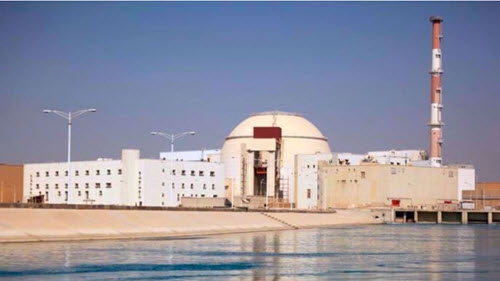
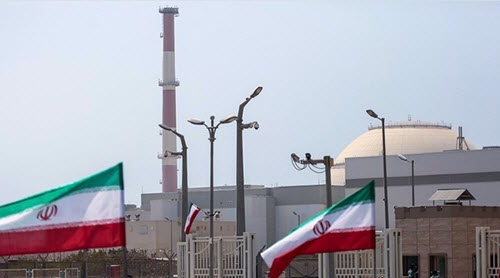
Russian staff of Bushehr nuclear plant to be reinstated in coming weeks: Rosatom chief Tuesday, 19 May 2026 2:28 PM [ Last Update: Tuesday, 19 May 2026 2:28 PM ] https://www.presstv.ir/Detail/2026/05/1 ... lear-plant
The head of Russia’s atomic agency says Russian staff of the Bushehr nuclear plant will return to Iran in the coming weeks.
Russia’s state-run nuclear company Rosatom plans to return its staff to the Bushehr nuclear power plant in southern Iran in the coming weeks, weeks after a ceasefire was announced to halt the US-Israeli aggression against the country.
Rosatom Director General Alexey Likhachev said on Tuesday that the company is confident it can execute a plan in the coming weeks for the return of Russian staff to the Bushehr nuclear power plant.
Speaking to reporters in Moscow, Likhachev said that some 20 experienced Rosatom staff are still working at the Bushehr plant despite the possibility of a resumption of US-Israeli aggression against Iran.
His remarks were carried by the state-run news agency RIA.
He said that US-Israeli attacks on areas near the Bushehr nuclear power plant during the aggression that began in late February were very dangerous, adding that the warring sides are supposed to distinguish between nuclear installations and military targets to avoid a crisis.
The comments come weeks after Rosatom decided to evacuate hundreds of staff from sites in Bushehr, where the company is building two new nuclear units.
The evacuation orders came after the US and Israel carried out at least four attacks on the premises of the Bushehr nuclear plant, an electricity station located on the coast of the Persian Gulf with a capacity to produce 1,000 megawatts (MW) of power.
Rosatom has expanded its cooperation with Iran’s atomic energy organization in recent years, with the two sides agreeing to build two new 1,000 MW units at Bushehr.
The agreement is in line with Iran’s efforts to expand its use of nuclear technology for peaceful purposes.
***************************************
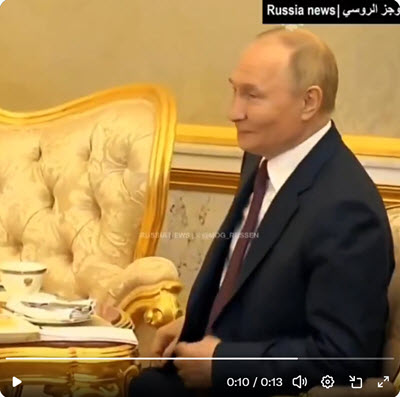
Russian Nuclear Forces In Iran? Putin's 'We're Coming' Message To Iran In Shock For Trump Times Of India May 19, 2026
Russia has just thrown down a massive nuclear challenge to the United States and Israel. Moscow's state energy giant Rosatom is officially returning hundreds of atomic specialists back to Iran's Bushehr Nuclear Power Plant. These experts were pulled out earlier this year when fears grew that the multi-billion dollar site would be flattened by Western air strikes. Russian Foreign Minister Sergei Lavrov just issued a blistering warning, stating that Russia-Iran nuclear cooperation "concerns no one else," while slamming US economic sanctions as illegal "neo-colonial" weapons. Watch how Vladimir Putin is building a strategic shield over Tehran.
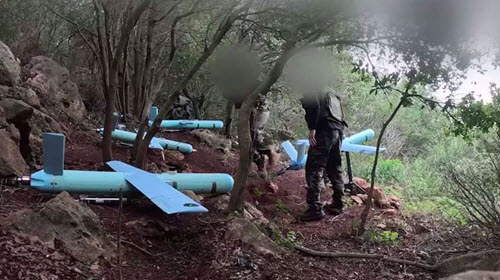
Israeli media reports say Hezbollah’s increasingly advanced drone operations have paralyzed up to 80 percent of the Israeli military’s planned assaults in southern Lebanon.
Israel’s Kan News agency reported on Wednesday that the regime’s military estimates Hezbollah’s explosive drones are severely limiting operational freedom inside the occupied areas of southern Lebanon.
According to the report, the military has been forced to postpone many of its troop movements and offensive operations until nighttime, or cancel them altogether, to avoid detection by Hezbollah drones during daylight hours.
Israeli military officials acknowledged that the resistance movement’s drones have also contributed to mounting casualties among occupation forces operating in the area.
Kan reported that the Israeli military is suffering from shortages of anti-drone equipment, while Hezbollah has approximately 100 drone operators deployed across southern Lebanon.
It added that the regime’s counter-drone systems are currently distributed to only a limited number of forces within each military company.
The latest assessment comes just days after Israeli officials publicly acknowledged that Hezbollah’s rapidly evolving drone capabilities had caught the regime’s military off guard.
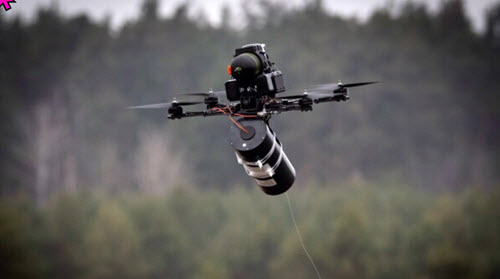
Israeli military officials and analysts admitted that Hezbollah has been deploying hard-to-detect fibre-optic drones capable of bypassing conventional jamming and electronic warfare systems.
The low-cost drones reportedly use ultra-thin optical fibre cables instead of radio signals, allowing them to evade interception and maintain secure communication with their operators.
Experts say the drones have almost no radar signature because they contain minimal metal components and rely on optical fibre cables rather than wireless transmissions.
This technology allows the drones to evade Israeli electronic warfare systems and bypass traditional jamming methods used by the Israeli military.
According to Gayil Talshir, a political scientist at the Hebrew University of al-Quds, Israeli troops were “sitting ducks” inside Lebanon while facing mounting resistance attacks.
Israeli prime minister Benjamin Netanyahu described Hezbollah’s drone capabilities as a “major threat” and called on the military to develop urgent countermeasures.
In response to Israel’s continued violations of the ceasefire in Lebanon, Hezbollah has launched around 230 projectiles and more than 100 explosive drones at the regime’s forces since April.
In recent years, the Islamic Republic of Iran has achieved remarkable progress in the agricultural sector and food security.
According to Minister of Agriculture Gholamreza Nouri, 85 percent of food and basic commodities are produced domestically, and Iran possesses relative self-sufficiency in meeting the food needs of its population of over 86 million people.
This success has been achieved in spite of the unjust American naval blockade which has been designed as part of the terrorist war with Israel to cut off Iran's access to essential goods and destabilize the country's economic stability.
According to various reports and real time field data, despite military aggressions and foreign sanctions, no shortages emerged in any part of the country, and the market for basic commodities was managed with calm and stability.
The achievement is remarkable given that in some regional countries, including neighboring nations and even some European countries, price increases and food shortages were widely observed.
Agriculture Minister Nouri, referring to measures taken to secure bread and flour in the country, stated that through prior planning, wheat deliveries to flour mills were scheduled earlier than usual to build reliable reserves across the country.
This intelligent measure ensured that at the height of war and blockade, bakeries continued their operations without any disruption, and bread as the people’s staple food remained consistently available.
Additionally, a portion of bakeries was equipped with alternative fuels so that in the event of disruptions to regular fuel supplies, their operations would not cease.
One of the important and intelligent initiatives of the Ministry of Agricultural Jihad, which has proven itself even more valuable under blockade conditions, is the development of overseas farming.
Under the five-year vision plan running through 2029, Iran has set a target of bringing two million hectares of overseas land under cultivation.
This means Iran has not limited itself to its geographical borders but, through international agreements, is securing its food security on the territory of other countries as well.
Under the national food security document, Iran is obligated to secure approximately 10 million tons of food imports through extraterritorial cultivation by 2031.
The figure is equivalent to normal food imports and demonstrates that Iran intends to reduce its import dependence to zero in the long term and meet all its food needs through domestic and overseas production.
After the Islamic Revolution, Iran has taken great strides in science and technology in all sectors, one of the most important national achievements of which have been in the agricultural sector.
Currently, Iran has secured rights to approximately 228,000 hectares of land for cultivation in other countries.
The lands are distributed across Brazil (50,000 hectares for corn cultivation), Kazakhstan (barley, oilseeds, and soybeans), Belarus and Russia (smaller projects), as well as Ghana, Armenia, and Pakistan (projects of Iranian private companies).
This geographical diversity spanning Latin America, Eurasia, Africa, and South Asia significantly reduces the risk of blockade, because even if one maritime route is closed, products can still enter through other routes.
Early this month, Minister of Agriculture Nouri announced that the first products from the overseas farming project including approximately 60,000 tons of barley and nearly 40,000 tons of cooking oil have been imported into the country via the northern route.
The achievement represents a turning point in Iran’s food security strategy and demonstrates that Iran is no longer dependent on just one or two routes for securing its food supplies.
The entry of the products through the northern route, which is not under the control of the American navy, proved that no matter how stringent the blockade of the Persian Gulf may be, it cannot deprive Iran of access to food.
Iran, in collaboration with the Food and Agriculture Organization (FAO), has also implemented a project to “improve agricultural monitoring systems through satellite imagery.”
The project, with a budget of $489,000 from the FAO’s technical cooperation program, is being piloted in the provinces of Mazandaran, Zanjan, and Kerman.
The main goal of the project is to develop an operational and innovative agricultural monitoring system at the national level.
The system provides multiple capabilities, including near-real-time field data collection, crop yield forecasting, cultivated area estimation, and crop condition monitoring throughout the growing season.
In other words, Iran today, through satellite technology and artificial intelligence, can know precisely the production status in every part of the country and how much product awaits harvest.
The capability, under conditions of war and blockade where access to external information is limited, represents a major strategic advantage.
These systems play an important role in market management, production and distribution tracking, transparency enhancement in the agricultural sector, and coordination of policy responses to market uncertainty.
In practice, they allow the government to make necessary decisions in real time and with high precision to regulate the market and prevent shortages.
Extensive measures have also been taken to combat pests, particularly wheat rust disease. The success in pest control is the result of years of investment in technical knowledge and modern equipment and demonstrates that Iran has approached self-sufficiency even in the specialized field of plant protection.
One of the important tools for supporting farmers is the policy of guaranteed prices and government purchase of strategic products, through which the government not only supports production but also guarantees that farmers can sell their harvests at fair prices.
According to a report by the Trade Promotion Organization of Iran, agricultural products account for approximately 12 percent of the country’s non-oil exports in the year ending March 2025.
Twelve percent in a sanctions environment is notable, meaning Iran’s agriculture has shifted from a political liability to a foreign currency earner, reducing dependency on oil exports.
Economic experts believe that even if the wars continue, Iran’s economy has the capacity to resist for up to one year and, given its strategic reserves and domestic production capacities, can continue on its path without a major crisis.
The blockade and war, although they have imposed heavy costs on Iran’s economy, have not been able to empty the tables of the Iranian people.
In strategic terms, a blockade that fails to produce shortages has failed entirely since its only metric of success is starvation, and by that measure, the blockade has collapsed.
Trump Orders Attack, PANIC ERUPTS as Iran HITS BACK | Larry Johnson & Col. Lawrence Wilkerson by Danny Haiphong May 19, 2026
Former CIA Analyst Larry Johnson and Col. Lawrence Wilkerson join the show to discuss the latest attack move on Iran ordered by Trump and how it has erupted in massive panic in a surprising way.
Transcript
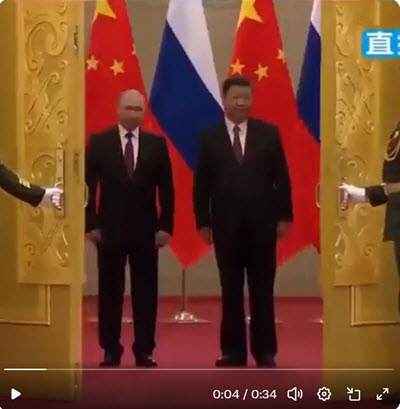
Welcome everyone. Welcome back to the show. It's your Danny Haiphong. I am joined by good friends of the show, Colonel Lawrence Wilkerson and Larry Johnson. Gentlemen, good to see you again. All right. Good to be with good good to be with you. Even if you are a hot buddy, good to be with you as well to both of you. Well, uh how about we get started with how the story is being written right now on the Iran front. So as the story goes from the US side, Donald Trump has had ordered an attack that was supposed to happen today or tomorrow. And as he ordered the attack, Donald Trump claims that Qatar, the UAE, and Saudi Arabia picked up their phones, told Donald Trump to wait just a minute. Do not attack because uh Iran is going to be ready to negotiate. you should uh delay this fact. And so uh uh New York Times wrote this. They said that Trump threatens Iran and then pulls back all on the same day. He was a little early to Taco Tuesday. And in this and I'll pull it up and I'll get your reaction to it, Larry. Sorry, wrong article. Uh wrong picture. I'll get to that later. I'll just preempt it and say it's a lie, but I'll explain why it's a lie. Yeah. Yeah. Yeah. So here's the article. says Trump threatens Iran and then pulls back all in the same day. And in this though, they they uh cite a US military official who actually says that uh rather than it being the Gulf uh uh convincing Donald Trump not to do this, it was actually Iran's military capabilities and the fact that they had been able to track uh US military operations, including their air operations, with more accuracy and thus more lethality, meaning fighter jets could be coming down. So Larry, how about you uh help us understand uh what exactly has happened here because it seems like there's just panic uh erupting on all fronts uh despite Trump's confidence that he can hit Iran any day, anytime. Well, you got to there couple of things have to be in place before there is any military action. Uh one the so over the weekend uh Pentagon issued the stop movement order. So that that is a precursor that okay there is going to be offensive action. But the one that that will trigger that you know that it's coming down the pike is when uh they issue the scentcom issues what's called a air tasking orders atto's when you start using the acronyms. Um there haven't been any attos issued yet. So that's why I said though this notion that he was ready to attack yesterday is complete nonsense. It's just a lie. Um, they weren't ready to attack. The the the the the determinant, the one country that will determine whether or not the United States carries out a military strike is Saudi Arabia. Saudi Arabia right now is hosting the KC135 air refuelers. They're based at Prince Prince air base uh just outside of Riad. And and why is that important? Well, most of the combat aircraft, the F-35s in particular, are based over in Jordan and Israel is my understanding. So, uh, they have a combat radius of 550 miles. Maybe if they got a light load, they can get 600 miles, but between 500 and 600 miles. Okay, guys, look at your map. Ladies and gentlemen, look at your maps. Look at Al Maf where Mwafak al-Santi air base is in Jordan, just outside of uh the capital. Uh and then go over to Riad. That's over 800 miles. Okay, that means those planes are going to have to be refueled even before they get within 300 miles of Riad. And then from there they fly, you know, they finished the other 300 miles to Riad and they can just pass Riad, they could launch a tomahawk or a JASM missile into Iran and then they've got to be immediately refueled. So these planes to operate each F-35 is going to need at least probably minimum of four air refuelings just to stay in the air and just and be able to get back to the home base. So this is why these air refuelers forward position there in Saudi Arabia are critical. Now we saw two weeks ago when Trump announced object project freedom that was going to also use combat aircraft to so-called open up the strait that got shut down within because the Saudis said nope not using our space. Kuwaiti said us too we're with them. and Trump gets on the phone with NBS and NBS basically tells him to go pound sand. So, I said, we'll see where we stand right now. Um, I do know that there are extensive efforts underway by the Chinese and the Russians in terms of trying to erect this new security architecture in the Persian Gulf involving Turkey, the Saudis, and Iran. Um I'm waiting to I've got I have a I have a a source who's uh able to provide information out of Pakistan uh from the from senior most senior levels. So the Pakistanis are very much in touch with both the Saudis and the Iranians particular with the Saudis. They've got a they have a mutual defense pack with them. Uh, so we'll get an idea if and if if in fact if the Saudis say no, you're not using our territory then Trump's Trump's options are really really limited at that point. Yeah, great points. And uh, Colonel Wilson, before I get your comments, I'll just read this short bit from uh, the New York Times talking about this uh, ordered attack pullback situation. Taco Tuesday. The official warned that the downing of the F-15E fighter jet last month and the ground fire that struck an F-35 revealed that American flight tactics had become too predictable in ways that allowed Iran to defend against them more capably. Perhaps most important, the US military officials said that while five weeks of intensive bombing may have killed several Iranian leaders and commanders, the war has left a more hardened hardened resilient adversary. Uh so your thoughts about what what's just gone on here? Uh Colonel Wilkerson? Well, this must be very embarrassing to an Air Force chairman of the Joint Chiefs of Staff. I can only imagine. Um, something I picked up on this morning. I think it's accurate and it it comes from a number of sources. One of them Reuters. Yesterday, Pakistan deployed 8,000 troops in a squadron of fighter jets to Saudi Arabia. As Larry was saying, the deployment uh was concern was confirmed this morning, at least as far as I could tell. And I'm asking myself, this is a squadron of 16 aircraft, mostly JF17 fighters. And I'm asking myself, are these deployed to protect Saudi Arabia from the United States? Or are these deployed in some way to change the balance with regard to the Iran US war? Iran Israel US war and if so, in what direction? especially with regard to Israel. And are the troops that are being deployed along with them according to the report for the same purpose? Are they for protecting the Saudis? And if they're for protecting the Saudis, and as Larry indicated, there is a growing relationship between both Turkey and Pakistan and Saudi Arabia against whom? Um, my guess would be you can flip a coin on that. the United States under certain circumstances where we barge in. Um, but I can't figure out any other reason than to honor their relationship with Saudi Arabia, which is new and growing. Uh, but also to send a signal perhaps like I'm describing. Um, whom are you defending against and who are you protecting the Saudis against? If I were Pakistan, I think I'd be very circumspect about the way I determine that. Um, I'm not so sure about Muhammad bin Salman because uh I think he's already made his decisions and maybe we'll see them here. As to the agreement, as such as it is, the word that came out this morning, early this morning, is that there is no agreement whatsoever in terms of the negotiations. The Iranians have claimed you wanted to talk about the nuclear. We refused to talk about the nuclear. We said, "Well, then that's tough. We'll talk about it with bombs." That's a direct quote from a senior official. Um, so where are we going to resume the war, but Trump doesn't know when and doesn't know how, and he doesn't really want to. And meanwhile, we've got the Israeli ambassador to the United States making such egregious statements as J Street is a cancer in the Jewish community in America. And we've got Tom Massie being absolutely floored with Jewish money. Millions and millions of dollars trying to defeat him. Uh man, where are we? Who's who's ma mounting the influence and in what direction and what's it going to produce? I have no idea at this point. I know I think that Trump doesn't want to go back to war, but I think he wants to go back to war. So Yeah, toss the coin. Yeah. And the Wall Street Journal reports, Larry, that uh I guess uh following on what Colonel Wilkerson was saying that these Gulf countries, the Qatar, Saudi Arabia, UAE, uh there the officials, anonymous officials within uh their regimes are saying they had no idea that Donald Trump was going to strike at the moment he said he was going to strike. So, it kind of throws hot water on this idea that uh they were the ones who pulled him back. Uh what's your comments on this? Because he's done this before, too. It wasn't too long ago where I feel like he was talking about delaying strikes because of the Gulf countries. Well, the the reality was in the initial strike on the 28th of February that the Saudis, despite claims, prior public claims to the contrary that they were opposed to this, they were absolutely supportive of it. So, they knew that was coming. They made the bet that the United States could deliver on its promise to protect them because the US had deployed Patriot missile batteries and well as some that to the area. So they were all operating on the the the assumption that the United States could deliver on its pro its promise to protect them. Well, that turned out to be [ __ ] Yeah. And as a result, Saudi Arabia suffered some fairly significant damage. Not as bad as what Qatar Qatar really took it in the shorts uh because the the destruction of that billion dollar plus radar at Aluded along with several other radar systems. And there was one other that's a billion dollar. And I don't know if that was in Kuwait or in Saudi Arabia, but that got taken out. One in Bahrain, too. It was it Bahrain? Yeah, there was one there. I don't know if it was additional to what you just said or Yeah. So, I mean, but there were there were there were at least five or six different radar systems that were all there integrated for air defense. And man, once those were wiped out, there there goes the air defense. And it got to the point where some of these radars would be just taken out by drones, you know, leisurely flying along and then boom. Um, so that was a bit of a wakeup call for the Saudis, which then, as I mentioned earlier, we saw two weeks ago when they put the kibos on Operation Project Freedom. So, what I don't know right now is whether the Saudis are going to hold firm to that and that they've made their decision. Okay, we're going to go we're now going forward going to put our trust and reliance on the Chinese and the Russians to asssure that we're not going to be attacked. uh and you know part of that assurance comes that they won't have to worry about the entire before the entire premise of having US troops forward deployed was to attack Iran and it was all all based upon a lie a false assumption that Iran was intending to attack those countries which it was not it never has. It was only after those countries allowed themselves to be used as a springboard for attacks in Iran that Iran turned around and said, "Okay, guys, you're going to pay the price." Now, the one again, the other outlier here is the United Arab Emirates. They're not I mean, they're really they're not critical. the the two countries that are responsible for most of the critical commodities. You know, we're talking oil, that's Saudi Arabia, they're the majority distributor of that. Liquid natural gas, that's Qatar, they're the major distributor of that. Sulfur, that's primarily the Saudis. And then uh helium and ura that comes out of Cutler. Uh so between those two countries in for in terms of the economic impact on the world they're critical now Qatar is hurting the most because it's some of its infrastructure is so damaged it it may be years before it recovers the ability to produce that which means the world is facing some global shortages for the foreseeable future. Yeah. But it looks like both the Saudis and Qataris have come to the point that you know what going with the United States that brings too much heat. They can't protect us. Yeah. You know, it's like the mafia shows up at your pizza parlor. Hey, you need to buy some insurance. So, your pizza parlor doesn't catch on fire. Capiche. So, you know, you pay the money. Next month your pizza parlor burns down and you go back to the guy say, "Hey, I you know, I paid you this money." and go, "Oh, our bad. We didn't have control over that." That's essentially what's happened here. The United States offered protection money. They paid up. They bought US weapons. They bought US Treasury bills. They let the US come base troops there. And bam, they got punched in the nose. They got a bloody nose. And they're saying, "Wait a second. This wasn't supposed to happen." So, I think there's a re-evaluation of the relationship with the United States underway right now. and the shameful I mean absolutely shameful behavior of the US military of uh running away to hotels in civilian areas uh in order to avoid uh the the very attack that it was the US that that ordered uh to avoid the retaliation for their own attack. Uh but uh you know uh Colonel Wilkerson, there's a mystery though that's been going on in the region that comment on. Well, every single day, have you noticed, and this goes to both of you, there have been reports by the UAE, there's been one by Saudi Arabia, but it seems like every day the UAE in particular, this is the Ministry of Defense, is talking about that there are drones, hostile drones being fired at them. Uh, this time six in the past 48 hours. And they site the nuclear energy plant on May 17th that was hit uh initially. um not a lot of damage being done by these drones. Uh but no word about who's firing them and um you know not not you it was when it first began blaming Iran. Okay, Iran is doing this but now the UAE has even backed off on that. They're just saying it's coming from the western border area and uh they don't know who did it. They're investigating who did it. So uh any idea about what's going on here? here. Is this a way to try to provoke the war to restart? It doesn't seem like it's doing a very good job, but uh Colonel Walkers send it to you and then Larry, if you have any thoughts. Well, my first guess would be Israel. Very first guess, second and third guest, too. Anything they can do to stir the pot. Meanwhile, there was a report in Harets this morning that the IDF was quoted. I don't know who it was. It sounded like it was a a more senior guy as uh let me see let me get this straight. Uh we are on risky pointless missions in broad daylight and shouldn't be here. This is the IDF senior officer leadership in Lebanon. And I don't blame him for saying that. I saw the stats yesterday on the uh well they had been Netanyahu put a clamp on because we could get into IDF itself and find out post-traumatic stress uh suicides desertions and absent without leave. We could find all of that out. But now as I understand why it's dried up, Netanyahu has said no more. You you can't reveal that data anymore. Well, we we were hearing yesterday that all of those categories are skyrocketing and that they have real problems in terms of keeping manning the forces that are in southern Lebanon. So, you got these kind of comments, you got those kinds of comments or re reality, I think, of the situation. In other words, you got another July 2006 or another 1982 in Lebanon for the IDF. They're getting won in short and you got all the rest of this going on. And so Netanyahu is getting a little bit desperate. I think he's doing all manner of things. And that's the reason I said what I said about the drones to stir the pot and to make sure that one Trump doesn't leave and continues this conflict and fulfills his ultimate dream and two that there's not an unourred political situation which looks like it might be building in Israel right now for himself personally. So look for anything coming out of Israel right now to exacerbate this situation in any way they possibly can. How about you, Colonel Wilson? I mean, Larry. Sorry about that. I got I got promoted to 06. Okay. No, let me make a commentary about the casualties from these kinds of wars that don't normally show up. So, uh, over over the weekend, I was I I I was serving as the chief range safety officer for, uh, a shooting event that was for veterans, and I had I had, uh, 10 assistant RSOs. Uh, one of them, guy named Tank. Uh, he was a Navy corman that served with the Marines. And, uh, he he's been one of my students. And another one of my students, a kid named Jaime Lee Scalad. He too was a Navy corman, but he was trained by the Marines as a sniper. And Jaime, you know, he wanted to become an NRA rifle instructor. And so to do that, he had to take the basic rifle course. And so that's where I first met him. And um uh you know, when I asked him about his experience, he just he downplayed it. He didn't he didn't say, "Oh, I was a Marine Corps sniper, and I don't know why I'm taking a course from you." which he would have been fully entitled to say. Uh but we went through the course and then at the end he revealed what his real experience was and I you know began you know he's 43 years old and as I as I tell these guys I said if you're under 45 you're one of my kids. Okay. Uh but uh you know I gave him a hard time but just just a you know a humble guy uh competent uh very you know very kind you know as a corman he spent he spent more time uh saving lives and taking lives. Uh anyway, so Tank and I were involved with this shooting event on Sunday and you know, we said goodbye to each other and I'm I'm in the car for like five minutes and all of a sudden my phone lights up and it's Tank and he's crying cuz we just learned Jamie committed suicide on Sunday. Now, as I started looking into this, we've had 147,000 soldiers, sailors, and marines kill themselves since the start of this global war on terror 25 years ago. Yeah, that that number is bigger. It's bigger than we only lost 110,000 Marines in World War II in the Pacific War. Marines and and army in the Pacific battles, Guadal Canal, Ewima. We got we got more than that that have died from suicide. And the deaths from suicide exceed those that have died since in Vietnam, in Iraq and two engagements in Afghanistan, in Syria, in Somalia. You know, we go down the list. All the damn wars we fought since 1960 haven't even matched up to the total of these casualties we continue to take because because of the emotional trauma inflicted on these soldiers. And it's a [ __ ] outrage. And it is the kind of thing that these people in political positions who issue these commands, they never pay the price. And I just I am furious about it. But but you know what? Same thing's happening in Israel. Their suicide rates going up because you still have people there with a conscience that realize they've killed, they've murdered women and children and they can't live with themselves because of that. Let me throw this on top of that, Danny. The number of homeless veterans is almost as high as the number that Larry's just suggested is the suicide rate. I mean, and we have a president who is commander-in-chief and who gives absolutely no regard to any of these things at all. Yeah. Well, he says it publicly twice, double down on it, that he doesn't take into consideration even the general population's uh financial situations when he's uh considering what he's going to do about war and particularly war uh with Iran. uh and it's uh certainly having massive costs and and certainly a major cost of these wars is the US can save off the massive casualties that it imposes on at least deaths that it imposes on other countries, but the costs uh are still incredibly high uh for those who come back who survive uh these wars of aggression that they're ordered to undertake. Uh definitely there's no doubt about this. And maybe I can get your guys' comment on this. You know, the New York Times, I don't know if you saw, Donald Trump said that it was treasonous for New York Times, CNN, anyone in the so-called fake news media now to talk about Iran being victorious. Um and uh meanwhile New York Times seems to not have gotten the memo because as this strike was being pulled back, they published uh this analysis about how Iran would respond to renewed strikes. And what they say is that Iran could continuously perhaps given what they've been able to do since the ceasefire as well, fire hundreds of missiles per day at Gulf Energy infrastructure, refineries, ports, water desalination plants, and uh including as well to shut down the Babel Mandub straht. And now all of this that the New York Times is reporting is simply uh coming from reports that they've read like like people just like us uh who go and read Iranian media and Iranian statements and what they say uh and that's basically what they're citing. So uh how much of this has to do with Trump's hesitation to go back into the war? not least also the additional factor of this burgeoning economic crisis. I've seen that some economists say we're about weeks away from a a global recession that uh some of our friends like President Randy is like could be a great depression. Whoever wants to jump in. I'll jump in and tell you that uh I think one of the reasons we're seeing great trepidation within the other Gulf countries is just what you pointed out. There are so many other ramifications, but that's one of them. The second tier, as I've called it, of targets that Iran has in its sights, if you will, and plenty of missiles to hit, fast ballistic missiles. plenty of other ordinance that they can expend in the wake of those missiles because they've been very good at coordinating the really modern high velocity stuff with the low velocity cheap stuff drones primarily and they could rip through the region hitting Rostanura Zia Ununice uh all those other places where it as Larry just pointed out it's absolutely critical for Saudi Arabia. I mean you could take down 7 to 20% of their oil capacity and it would be down for months. Um when we did that in China in the petroleum disruption exercise Rossur for example at the time which was much more productive then it is now but it was down for over six months. So you you took a huge capacity down and you don't really have the capacity to shift around like we did in that exercise other than from maybe Russia, maybe the United States, but why would they want to do that if they're making a big profit? Maybe eventually the global recession depression would force them into that sort of thing. But this would be really traumatic for the region and for the globe if Iran were forced by the circumstances it's in now um to hit this second tier of targets than if they hit it with the devastation that they hit the first tier. And I think they would I think they'd be just as accurate. They'd be just as devastating and they'd be 10 times more impactful on the world. And you threw the Babel Mandab in there that too. and the Houthis have already shown that they can close that for all practical purposes, which are the only ones that matter. So, we're looking at a real global problem unless Trump wakes up. And and when he wakes up, he's got to hit BB over the head and put him out. And I I don't see that happening. I just don't see that happening anymore than I see, though I hate to say it, Tom Massie beating this massive, massive Jewish Israeli combination of money pouring into his campaign that probably surpasses anything we've ever seen in a House of Representatives campaign in the history of the country. Yeah. Look, you know, the we're dealing with a real disconnect between the markets, commodity markets, oil markets, financial markets, and what's actually going on in the world. Um, you know, go back to the COVID epidemic and what happened to the price of oil during that period. The the the price of oil per barrel went up over $120. And and there wasn't there wasn't an actual shortage. I mean, the production the the oil wells were still pumping. The infrastructure of the oil wells was still intact. And yet the market reacted, oh my god. And they pretended like there was going to be this incredible shortage. And again, it didn't even that analysis didn't make sense because if people were staying at home and they weren't traveling to work, the demand for actual oil was going to go down, not up. So, you know, so the market should have behaved in a different way, and it didn't. Now, we're seeing actual shortages, I mean, disruption of at least 20%, if not higher, of the world's supply of oil. and that supply has been cut off. So, we're we're dealing now with a 20% reduction that is not you can't just turn it around in a day. If if oil production returns somehow magically to what it was on February 27th, you'd still be looking to six to eight weeks of shortages. And what's the price of oil doing? Ah, it's up a little bit. H $110. It's not accurately reflecting what should be out there. Then number one, then the combination of these commodities that have been disrupted out of the Persian Gulf. When you look at the combination of ura and sulfur, they are critical to for making fertilizer, critical. Helium critical for computer chips. 44% of the world's supply comes out of the Persian Gulf. is not coming out now. And and so what are they saying? Oh, there's a possibility of a recession. Horseshit. It's underway. I mean, for God's sake, we we sit here and deceive ourselves, lie to ourselves, that if we'll be lucky if we get away with a recession. Yeah. Because the recession is already underway. The real question is, is it going to be a depression? Yeah. Now, within this, the arguments made that, oh, well, the United States, you know, it's still it's our economy. We've got this strength and we can withstand some of this. Sorry, boys and girls. That's another lie. You're being sold. The the pillars of the US hegeimmani, his control, its ability to be the economic leader of the world, has hinged on two things. One is the pro dollar that everybody's going to buy oil, have to use dollars. And the second is everybody's got the the these foreign countries will buy our treasury bills so we can continue to spend like a drunken sailor at a wh house in Manila. And instead, what's actually going on? We're seeing that on the petro dollar front, China, Russia, Iran, major either buyers or suppliers of oil, they're selling now in alternative currencies, particularly the yuan. So if you're looking at it, the US market with petro dollars is shrinking. It's not increasing and it's not staying steady. It is shrinking. Maybe it's not as shrinking very fast, but it's still contracting. How about US treasuries? Ditto. The countries that used to buy, China, Japan, even Europe, they're now they're selling off their treasuries. They're not buying any new treasuries. And people say, "Well, this has happened in the past." Never in the past have you had the economy of the United States where it is dependent upon continuing to sell these treasuries to other people because our uh debt is now approaching $40 trillion and that's been accelerating over the last 16 months. When Donald Trump took office it was 37 trillion. Within the end of the year it was 38 trillion. Within another 77 days it ticked up to over 39.2 trillion. And I bet you by the end of June, we're going to be looking at $40 trillion. So when you when you put all that together, these are not happy notes for an economy that's oh, we're doing well. We're not doing well. And the the contractions is coming as this cascade of effects from the shortages not just of liquid natural gas and oil, but of the ura, of the sulfur, of the helium. I mean sulfur which goes to make so many different things is critical in so many different industrial processes that there's a holdup. So you know we we keep sitting around and deceiving ourselves pretending that never mind every remain calm all is good. No Larry SNP is doing very well. Yeah. Yeah. Just you know it's one lie after another. Meanwhile, Meanwhile, just to add to the gloom, the Putin Putin just announced or the Russian Ministry of Defense just announced that the armed forces will be engaged in a very largecale strategic nuclear exercise that runs through May the 21st. The drill involves the strategic missile forces, the northern and pacific fleets, the long range aviation command, and a part of the forces of the linenrad and central military districts. Fast down to another Reuters report, Lithuania wants to allow NATO nukes on its territory. Yeah. And then fast down to another one, you'll see that Kaine is over there telling the Poles that they're not going to get the troops that they were going to get. What the hell are we doing in Europe? I know what Putin's doing. I know what Putin's doing. Putin has decided, I think, and rightfully so, probably given the evidence he has, he's going to have to go to war with NATO. Yeah. And he's preparing for it. Yeah. I mean, just just to underscore that, we've had statements now in the last five days. Um, Dmitri Pansky, the former number two guy at the UN mission to the Russia's UN mission to the UN. And I know Dimmitri. Uh, he was very good friend. He's a very when I spoke to uh when I addressed the UN Security Council on the whole Nordstream pipeline issue, he was in my point of contact at the embassy. And so, you know, bought me a coffee at the UN and, you know, steered me around and we've been in touch ever since. So uh and then Sergey Rudipov uh the deputy foreign minister who I met first back in December of 2023 in Moscow. I was there with Pepe Escobar and Alistister Crook. Um both men have made very strong statements in the last five days about the need you know basically Russia is going to attack the the European if the Europeans continue to supply these missiles that are enabling attacks against Russia. Russia will retaliate. Now, for Dimmitri to say that, and I'm paraphrasing what he said, but uh it's the kind of thing that Dimmitri is not sitting there just offering his opinion and said, "No, I've been thinking about this. I'm just going to speak off the cuff." Oh, no, no, no, no, no. When he said that, he's delivering a message that's got signed, sealed, and delivered by Vladimir Putin as well as Sergey Lavough, the foreign minister. and the fact that they are now both they're delivering a coordinated message. The west better will pay the hell attention because uh I think the odds are within 3 months there will be a Russian strike on the production facilities of drone factories uh in Europe that are involved with supplying drones to uh Ukraine. You can probably confirm this or deny it, Larry, but I heard last night that the Duma actually voted and passed legislation allowing Putin to go to war with whomever he decided he needed to. Yeah, that No, I'd heard the same. Yes. And of course, it's referring to NATO. Yeah. Yeah. Yeah. you know, uh well th this leads us to many possible points of uh uh uh uh US I guess we could say US NATO chaos, but we could just really say US imperial chaos at this point with the US drive steering this ship however uh chaotically and uh haphazardly, but I don't know if you saw the reports Larry and Coworkers comment on this too that uh Politico is reporting this despite the fact that the US is very much still seemingly obsessed with trying to restart the war against Iran with the Israelis and Donald Trump. As Colonel Wilkerson, you said he wants to and he doesn't want to. But it seems like they also want to overthrow the Cuban government in a potential military operation. This is according to Politico that Trump and his adviser are frustrated that their pressure campaign like trying to blockade them, cut off their fuel, economic sanctions, etc. didn't cause regime change, which is interesting since Cuba's only been going through this uh for forever. But uh this is the political report. Yes, Trump might really attack Cuba that appeared in Politico. Larry, you know, how does even such a thing occur? Because there are a group of Republicans, prominent, influential ones inside of Washington, inside of Congress that are uh scared of what this might do to their political prospects in the midterm elections. Despite many people in who watch this program saying, "Oh, you know, politicians don't really care about their seats, etc., etc." Uh, people in actually Congress people do. They like to hold on to those seats unless they have a revolving door opportunity, but they want to hold on to their seats if they want to win, if they want to run again. Uh, and there are a few that do not see a war on Cuba as yielding uh results that would do anything good for them. But what do you make of this report that we could be looking at a war on Cuba with an ongoing war against Iran? Well, I want to introduce a concept that I'm sure Colonel Wilkerson's never heard of. It's called if if you break it, you own it. And we because and I'll let him talk at length about that. What you know, Colon Powell tried to tell George W. Bush about the dangers of going into Iraq. uh you know mil militarily yes we we've got a superior military to that of Cuba okay so we go in and remove the government then what then we own it and then whatever government that is installed is now seen as a US puppet and there are enough Cubans in Cuba and the terrain is sufficiently dense and robust enough that cor you know, Cuban guerilla operations will then continue and there'll be attacks upon the US and I mean, so the US is going to get itself into a miniature quagmire that it absolutely does not need instead of again, let's start by if you want to change the government in Cuba, lift the embargo. Let let actually allow economic activity to flow. And then what happens is the government no longer can blame failure in society on these external uh sanctions. They have to take responsibility themselves. But no, that's you know the United States is you know too stupid to do that. We've always made sure that we've kept an external enemy for Cuba to fight against. And so this is I I again I don't know what the plan is. Okay. Yeah, we can maybe insert some uh special operations forces to take out an existing government. Then what? Then what? Who's going to at that point? Then we got to supply the water. We got to supply the electricity. We got to supply the food. While we're a little distracted in West Asia, it just is insanity. Yeah. And uh I let me actually pull up this uh as a follow-up because I think this is what the US is going to look at if they go into Cuba because it I think it could be even worse than what you're saying, Larry, in the sense that you know we could see maybe a a second kind of Cuban revolution in Israel is saying that in a restart of war with against Iran. is from Wet saying, you know, 50/50 possibility of renewing the war. But an Israeli official told Wet that Iranians are euphoric and view themselves as big winners. Uh Trump is only threatening war and does not really want to become entangled in a renewed hostilities. Uh the Iranians are not prepared to give Trump anything they want. Their agenda is to humiliate Trump and show they defeated the world's greatest power. Uh I would say if you attack Cuba you would have a lot of young people who are frustrated with sanctions with uh you know the difficulty of economic development there dwindling if not completely diminished prospects. You have a lot of them wanting to fight against US invaders and those who are striking them giving them a similar kind of uh uh fervor to defeat the empire especially since it's 90 miles away and it's not like there isn't a history there. So, Colonel Wilkerson, how about your comments on this? Uh, there seems to be some parallels here. Uh, there could be euphoria all across the world going to Cuba, from Iran, uh, uh, one after another, the US putting itself in this position. I think you have to look at this as a an isolated case as well as as you're indicating a connected case. And the isolated case is what's happening around Trump right now. And what I mean by that is the same thing happened around George W. Bush when people in the Republican party mostly people out at AEI and other places like that discovered how inexperienced this president was and discovered how much Cheney was filling in for that inexperience in certain areas, but it didn't encompass the entire national security portfolio. So inflowed everyone that for example having followed Cuba for some 354 years that I thought was anathema. Absolutely unbelievable jerks. Otto Reich, Roger Nordie, people like that. They just flowed into the administration and began trying to assume second and tertiary secondary and tertiary spots. Powell got rid of several of them. He couldn't get rid of Roger Noriega. He stayed there. But that's what's happening now. And with regard to Cuba, you see the piece that just came out. And pure propaganda, but enough truth in it to essentially get people's eye up, if you will, and get it up in the right places, like in Las Vegas, in New Jersey, in Florida, and so forth, where the huge Cuban communities. And if you didn't see it, it's all about how the Cuban military is making all the money in Cuba. They're getting everything. And Raul Castro sits at the top of this. And the article actually included a network drawing with all the people, the Ramirezes, the Ferandes, and all the rest of the people that are making fortunes. No one in Cuba is making a fortune off of this circuit that's set up. So these people are now jumping into this vacuum that Trump has created and he's created it with this patina at the top of the vacuum and it says I'm willing to go to war with anybody cuz Danny, we're doing this with Greenland again. We're doing it with Cuba as you pointed out. We're doing it with Iraq Iran in your face. We might be doing it again with Iraq if Israel keeps building bases out there with our help. It's all these people who are jumping on the bandwagon and they want to get their pet peeve and they're going to get it. They're going to go after it and they're going to get it because this president does not know what he's doing. His secretary of defense does not know what he's doing. I'm convinced increasingly the chairman doesn't know what he's doing and nobody in the government Rubio whomever knows what they're doing. So all these villains are flowing into the cracks and crevices and going after their pet project. Cuba has been a pet project of certain Americans for a very long time. Yeah. Yeah. Including I mean Rubio is one of them. So one of those cracks and crevices could literally be right at I was laughing when he mentioned the name Otto Reich. So when I taught at American University back in 1981, we'd invite speakers to come in. You know, I it was the Washington semester program. So I' I'd line up speakers for three days a week and then the students would do internships and offices and one of my speakers back then was Otto Reich. So it's just like it was a blast from her past. That's I'm talking 45 years ago now. Yeah. You can't get rid of these people. Yeah. And Roger Noriega is his son. You know Ro Roger and I used to talk and I'd say you talk just like Otto. Well I am just like Otto. Yeah. Yeah. Well, we do have um something that's developing, gentlemen, and I I I would like your uh opinion on it, and that is the trip that Vladimir Putin is currently uh undergoing and participating in to China. He has just arrived uh uh in China. And uh I'm curious, you know, I'll show you uh the reception. This is uh the video of of how he was received very similar to Trump in many ways. But he was he was picked up by Wangi which is the foreign minister and uh unlike uh in many places in the world uh to be picked up by the foreign minister in China like Wangi is actually a higher honor than uh to be uh picked up by the vice president which is what happened uh with Donald Trump but very similar uh reception in many ways but at the same time lots on the table to discuss and lots on the table that's going to happen. Uh so maybe Larry and then Colonel Wilkerson what are your thoughts on the significance of this meeting especially the timing it's coming uh not days after Donald Trump uh returned from Beijing himself just a week you know is uh last Friday that Trump came back so less than a week u you know the key item I think the key item for the discussion is this new security architecture uh and the Persian Gulf because uh you know I think the Russian intelligence, Chinese intelligence, they're carefully monitoring what what the US is going to do. So they'll they'll have a good idea before the United before the attacks are launched when or if they're going to be launched. And and that's why again I come back to a lot of this hinges upon Saudi Arabia. Um uh I think the the Saudi Arabia, Kuwait, and Qatar, those those three right there can put a stop uh to this war if they refuse to go continue cooperating with the United States, which will enrage, infuriate Trump, but it puts the United States in a position of what else is it going to do? I mean, I know uh not through any classified information, just through the serendipity of having a neighbor, a friend of one of my neighbors up the street. He he's a he's a pilot for private pilot, but his son uh you I was talking to him the other day. I said, "Oh, man." He says, "My son is coming home next week uh from uh from uh the war in in the Middle East." I said, "Well, where's he where's he where's he at?" He says, "Oh, he's he's stationed to Prince Air Base." I said, "What does he do?" He says, "He flies KC135s, but he's he's getting home next week cuz his his wife is having a child via C-section." So, they got him out of there. And uh while the son has been circumspect with what he's told his father, the the essence of the message is man th this place is dangerous and it is not hospitable. Um so uh if if the Saudis basically start shutting down the US air operations there, you're not going to have a continu this war is going to be effectively forced uh into a diplomatic track. And that's what I anticipate that you know Putin and she are going to be talking about in depth. I mean economic cooperation that's you know there's nothing to be there's no disagreement there. there's no anything to argue or discuss. Um, you know, Russia and China are full full-fledged partners on that issue. Um, you know, immigration, uh, you know, labor, you know, again, that they they've gotten to the place, I think, now that you don't have to get a visa to travel from China to Russia and vice versa. So um you know I think I think the focus is going to be on them coordinating a strategy to deal with the United States because they recognize United States is not under the control of stable leadership. It's just the opposite. Yeah. I'll say uh Colonel Wilkerson your thoughts. I was just I was just going to add that they just released this. In the name of God, the official exac account of the Persian Gulf Strait Authority, PGSA, is now live. Follow us for real time updates on the Hornoo Strait and on operations and the latest developments. They wouldn't have done that probably without coordinating with both China and Russia. Yeah. So, they they've got their deal going in the strait as if we weren't there. Yeah. Well, I mean China I mean both China and Russia have not incurred I mean there are many elements to that too. China and Russia have not incurred the significant negative impact. I mean everyone has had to deal with the rising oil prices but uh Russia has profited a lot from rising oil prices and China has been able to stave off uh uh the the effect the worst effects of it. Um and uh then and loves the fact that Taiwan is affected majorly majorly and cannot do what China has done to save it off. Uh and uh to that point too, what Taiwan can't do because it's not an independent country is h work with Iran to ensure that its vessels get out of the strait of which is exactly what's been uh going on. But Colonel Wilkerson, you'll actually really like this. I've actually been here. But one of the ways that China uh has been able to stave off um the worst effects of or or the harshest effects of the ongoing strait or for moves crisis is through its renewable energy sector. And here you have ABC News. It's it's so funny because I've actually been to this exact place in Gansu province far west in China talking about this renewable energy boom in China. And here's just I'll play the video because I find it very interesting. It's very short.
China's been able to offset some of the energy shock from the Iran war and the strait of Hormuz being shut in part because of its commitment, its shift to renewable energy in recent years. Like here in northwestern Gansu province where this major solar thermal power plant rises out of the desert, you can see streams of light there beaming from these 12,000 mirrors which move with the sun, redirects that sunlight onto that central tower there, heating molten salt to extreme temperatures. Now, they say in just one hour altogether, they're able to generate enough energy for a family's regular use in China for about 40 years. In fact, they say the tower generates enough energy by itself to power the equivalent of Aspen, Colorado for a year.
So, that's the report uh there. I've actually been there. It's a cloudy day here, so I didn't get that nice sunny -- this is actually the Gobi Desert, so it's a very impressive feat. It's a massive solar farm.
If you've seen the ones that they're having a bit of a problem with in terms of the Tibetans, but nonetheless, they're there and they're growing. The solar arrays they're building up in the incredibly clean atmosphere of Tibet, where you get about four to five times the power from these panels, and the panels are better panels than we have anyway. The Chinese make the best solar panels in the world. And the fact that you can get it at that altitude, and they're building out more, I think I read in National Geographic that with that alone, they're going to get the equivalent of the Yellow River Dam. So in terms of hydropower versus solar power, they are way ahead of everybody else in the world on renewable.
Yeah, definitely. And I mean this is the future and this is kind of the f I think Russia and China uh you know Russia has a lot of oil so it doesn't ne have to shift in this way but we know that this cooperation between Russia and China is across the board uh and they share a very big border actually uh and actually across that border China China produces and China produces a lot of these things they produce a lot of trains they produce in the province that borders Russia uh trains and transportation and all kinds of infrastructure like this that Russia definitely benefits from uh So Larry, any comments that you have on this? Well, it's just as a reminder, you know, Pepe, if you saw the the documentary he made about his travel across the old new Silk Road and that uh the just again the remarkable technological advance of China. This this goes back to looking at that meeting with Trump and she she was very upfront about referring to the United States as a declining power. China is a rising power and Trump, you know, didn't get the message. He thought, "Oh yeah, he's talking about Biden." No, man. He's talking about you, too. and uh the the United States I have I fascinated by you know I'm in touch with or listen to several people who are quote Chinese experts and they're always talking about how much trouble China is in how fragile China is how on the oh my god they're they're living on the edge of disaster and oh that that all of this is just you know uh you know a fraud it's it's not real. And I'm thinking, guys, the Chinese have accomplished more technologically in the last 10 years than the United States has in the last 40 years. And the Yeah. Do they have some population challenges? Yes. Do they have some problems with their real estate market? Yes. But China is not sitting on a debt to GDP ratio of you know 130 million to one. No, they're their debt to GDP ratio is more like all of it combined is like 88. So they're they're not in the kind of extreme financial stress that we are. And yet the world is continues to move in its direction. They're building more electrical vehicles that aren't dependent upon oil. uh they have diversified their industry. They are advance they're well advanced in the area of robotics and drones, you know, not not us. And yet we we persist with this delusion that somehow we're we're more advanced, more on top of it. We're the you know, we're the old cat's pajamas. And uh it's not the case anymore. And so, you know, here was she basically acknowledging reality and Trump failing to grasp it. Yeah. Yeah. I mean, uh, one China doesn't have, uh, to your point, Larry. I mean, you mentioned earlier the 40 trillion US government debt, uh, many trillions too of corporate debt. And then we go down to the individual level, the credit card debt, auto loan debt, uh, mortgage debt. I mean it's it's astronomical. It's also in the trillions on each level. All of those things are bubbles uh at that level at at the ground level here. But no no problem. Uh the future is not Chinese. You know, according to Wall Street Journal, we have Apple, the NBA and Cindy Sweeney. So we must be uh on on the on the way up actually. But your thoughts? I think one of the things that both Wong Yi and Xi are concerned about and I put this in the think tank the central party school as a major concern too is that all of this is happening and it's happening a lot faster than even the Chinese thought it was going to happen and that at the end of the day what the empire will do when it realizes that it is in this sad shape is try to stop it and it'll try to stop it with nuclear weapons to level the playing field if you will. I think that's growing a growing concern in both Moscow and Beijing, other pe other places too, but principally there because they they're the ones that have to enter the arms race that we are starting uh in order to keep up and spend all the resources that they would have to they could spend otherwise. China doesn't want to spend all these resources on nuclear weapons, but it's made the decision to do so. And I I what I don't know is whether or not their decision was to match the world or just to match us. I think it's probably just to match us. Uh because if Russia and China stay as close as teeth as Ma said, then they don't need to match Russia and us combined. But still, we're talking about going back to something close to Cold War, 30,000 nuclear warheads levels. And maybe not quite that far because these damn warheads today are much more powerful, much more accurate and in most cases hooked up to much faster missiles than they were in the past. This is a very, very dangerous thing we're doing and they know it, but they don't know how to stop it. And I would say on on Xi Jinping and Wongi and Putin and others, Sergey Lavro's major list is what do we do about this? What do we do about this errant superpower declining and disappearing and yet still extremely dangerous? Well, uh this was a great show, gentlemen. Any any final thoughts? Larry? I'll go to you before we uh close up. No, just we we'll find out this I think this week will be as a watershed moment. We'll find out if Saudis going to play ball or not. If the Saudis play ball, then the war continues. If the Saudis don't, uh the war may be forced to an end that the United States is not happy with. Colonel work, any final thoughts? And BB won't be happy with it either. Yeah. God knows what he'll do. Yeah. I wish he'd run out in the street. I wish BB had run out in the street and say, "I have PTSD." It was Netanyahu. Everything we we would see. Yeah. Everything would be on fire. Uh all right, everybody. That was a great show today. I want to make sure that you hit the like button before you go. That helps boost the show. You can find Larry Johnson's blog, Sonar 21, in the video description below. All the place to support this show is also in the video description below. Patreon, substack, and much more. Tomorrow I'll be back 1 p.m. Eastern time. Same time with our friend Scott Ritter. All right, everybody. We're heading off together. See you tomorrow, May 20th, 1 p.m. Eastern. Bye-bye.
PGSA | نهاد مدیریت آبراه خلیج فارس @PGSA_IRAN May 18 In the Name of God
The official X account of the Persian Gulf Strait Authority (#PGSA) is now live. Follow us for real‑time updates on the #Hormuz_Strait operations and latest developments.
Recent Drone Attack on UAE Conducted by Israel: Military Source May, 19, 2026 - 18:03 Politics news Recent Drone Attack on UAE Conducted by Israel: Military Source May, 19, 2026 - 18:03 Politics news https://www.tasnimnews.ir/en/news/2026/ ... ary-source
TEHRAN (Tasnim) – An Iranian military source said the recent drone attack on the United Arab Emirates was carried out by the Zionist regime of Israel.
On May 17, the UAE Ministry of Defense claimed in a statement that its air defense systems intercepted three drones that had entered Emirati airspace from western borders.
The ministry also said that two drones were successfully intercepted and destroyed, but the third drone struck a power generator outside the inner perimeter of the Barakah nuclear power plant in the Al Dhafra region.
For the first time in several weeks, the UAE Defense Ministry did not claim that the drones had entered the country from Iran, although previous allegations had not been confirmed by Iran’s Armed Forces.
However, an informed military source told Tasnim that the drone attack on the UAE was carried out by Israelis, adding that the Zionist regime is seeking to push the UAE toward greater negative involvement in the region against Iran and other Islamic countries.
The source noted that the UAE had engaged in various “malicious actions” over the past three months, while Iran had clearly announced operations carried out against the UAE. He added that some of these attacks on the UAE were also conducted by the Israeli regime.
The source emphasized that the UAE should realize more than before that friendship with the “child-killing Israeli regime” would not bring security or economic benefit, but would instead severely damage the Arab country’s security, economy, and reputation. He said the UAE should therefore reconsider its policies.
The military source further stated that Iran has no hostility toward any country in the region, stressing that regional states should ensure the security of this strategic part of the world and utilize their abundant resources for the welfare of their peoples
TEHRAN (Tasnim) – Spokesperson for the Iranian Foreign Ministry Esmaeil Baqaei sharply criticized German Chancellor Friedrich Merz for his hypocrisy and double standards regarding attacks on Iran’s nuclear facilities and regional security issues.
In a message in German language posted on his X account, Baqaei said the German chancellor’s hypocrisy was evident because open attacks by the US and the Israeli regime against Iran’s safeguarded nuclear facilities were met not with condemnation, but with excuses and justifications.
The spokesman added that when an alleged “false-flag operation” occurred — whose responsibility even the United Arab Emirates had refused to officially attribute to Iran — the same voices suddenly invoked the solemn language of “international law” and “regional security.”
Baqaei stressed that if attacks on nuclear facilities threaten the people of the region, then the principle should apply equally to all countries and not only when it serves the West’s political expediency.
The Iranian spokesman further said that such selective notions of justice were reminiscent of Judge Adam in ‘The Broken Jug’ play by Heinrich von Kleist, describing him as a man whose own inexcusable misconduct itself warranted judgment, yet who arrogantly presumed to sit in judgment over others.
@n_alharbi112 9h Translated from Arabic The difference is very clear: Putin receives a precious golden award (the Order of Friendship) from Xi Jinping personally. While Trump visited China and didn't even get a proper welcome or farewell from Xi. The message is clear: In today's world, status is earned through mutual respect.. not flattery and pandering.
Putin & Xi Set to Ink Global-Shifting Pacts in Beijing!
- President Vladimir Putin lands in Beijing today, greeted by FM Wang Yi. Tomorrow, the real heavy lifting begins at the Great Hall of the People with restricted and expanded summits with Xi Jinping.
- 40 Strategic Pacts will be signed—21 of them directly in front of both leaders.
- High-level meetings locked in with Premier Li Qiang, capped off by a state banquet celebrating 25 years of the Friendship Treaty.
- Kremlin aide Yuri Ushakov dropped a massive hint: the closed-door "tea-time" session will decide everything. In Chinese diplomacy, tea equals absolute, unshakeable trust. The package deals cooked up on this table won't just be agreements—they are designed to permanently reshape the global order!