
June 14: Iran, US reach MoU to end imposed war, to be signed in Geneva on Friday
Sunday, 14 June 2026 10:29 PM [ Last Update: Sunday, 14 June 2026 10:29 PM ]
By Press TV Website Staff
https://www.presstv.ir/Detail/2026/06/1 ... eva-friday
Pakistani Prime Minister Shehbaz Sharif announced that a deal had been reached between Tehran and Washington to end the US-imposed war on the Islamic Republic.
Iranian officials also confirmed the development, saying a Memorandum of Understanding (MoU) will be signed in Geneva on Friday.
Earlier, the Israeli regime carried out fresh airstrikes on Beirut’s southern suburbs, prompting strong reactions from Iran, with officials stressing that attacks on Lebanon cross red lines.
The day also saw senior military commanders reaffirm the readiness of Iran’s armed forces to respond to any new act of aggression. At the same time, Hezbollah fighters continued to confront Israeli occupation forces attempting to advance in southern Lebanon.
Key developments on day 106 of the war, the 66th day of the ceasefire:
Pakistani Prime Minister Shehbaz Sharif claimed that a “peace deal” between the US and the Islamic Republic of Iran had been reached after intensive talks.
Sharif said that under the deal, both sides have declared the immediate and permanent termination of military operations on all fronts, including in Lebanon.
Iran’s Deputy Foreign Minister Kazem Gharibabadi also announced that the memorandum of understanding (MoU) between Iran and the US has been finalized and will be officially signed on Friday in Switzerland.
Gharibabadi also declared the immediate end of the US naval blockade and the permanent cessation of the US-Israeli war on all fronts.
Commander of Khatam al-Anbiya Central Headquarters Major General Ali Abdollahi said the armed forces have “finger on the trigger,” warning that any miscalculation will be met with a devastating strike “at the heart of the enemy.”
Israel carried out a new airstrike on Beirut’s southern suburbs, escalating tensions in Lebanon despite a ceasefire that Iran said remains a key condition for any broader agreement to end the war in the region.
Secretary of Iran’s Supreme National Security Council Mohammad Bagher Zolqadr warned that a response was “imminent” following an Israeli strike on Beirut’s southern suburbs. He said Lebanon and its resistance are the "very life" of Iran, adding that the Islamic Republic will consider attacks on Lebanon as a violation of its red lines.
Major General Yadollah Javani, deputy commander of the Islamic Revolution Guards Corps (IRGC) for political affairs, stated that Iran’s Armed Forces are fully prepared to confront any hostile action, warning the enemies that the country stands ready to deliver an immediate response to any aggression by its enemies.
Iran’s parliament speaker and top negotiator, Mohammad Bagher Qalibaf, issued a warning to the Israeli regime, declaring that the enemy will never be able to single out any part of the resistance, and that Iran’s powerful diplomacy alongside the bravery of Lebanese fighters will guarantee Lebanon’s sovereignty and dismantle Israeli warmongering.
Speaker Qalibaf said Israel’s attack on Lebanon's capital, Beirut, shows that the Trump administration lacks either the will or the ability to fulfil its commitments.
Iranian Foreign Minister Abbas Araghchi said any new security arrangement in the West Asia region that disregards the Islamic Republic is bound to fail, reiterating Tehran's call for an inclusive regional framework.
Gholamhossein Mohseni-Eje’i, Iran’s judiciary chief, said all state officials are united in resisting foreign pressure, stressing that there is no disagreement over standing firm against threats despite possible differences over methods.
Brigadier General Amir Alireza Elhami, commander of the Khatam al-Anbiya Joint Air Defence Headquarters, said the Islamic Republic will rapidly replace air defense systems and equipment damaged during the US-Israeli aggression, emphasizing the country's reliance on domestically developed military technology.
Deputy Foreign Minister for Legal and International Affairs, Kazem Gharibabadi, said the sacrifices of the country's martyrs and the leadership of the martyred Leader of the Islamic Revolution Ayatollah Seyyed Ali Khamenei have made the Islamic Republic "stronger, more aware, and more determined than before."
The Iranian intelligence ministry said it carried out successful anti-terrorism, espionage and sabotage operations in the country during the 40-day US-Israeli aggression. The ministry stated that it arrested four terrorists, one spy and dozens of members of sabotage networks seeking to foment riots on the streets during the days of the aggression on Iran.
At least 25 deer were confirmed dead on Iran’s southern Kharg Island following attacks during US-Israeli aggression against Iran, with environmental officials warning the actual toll is likely significantly higher.
Fighters from the Hezbollah resistance movement confronted Israeli forces as they were attempting to infiltrate into areas in southern Lebanon, targeting troop and vehicle concentrations with barrages of rockets and kamikaze drones.
Lebanon filed two separate complaints with the United Nations Security Council and the UN Secretary-General over Israeli attacks on its territory.
Former Israeli prime minister and current opposition politician Yair Lapid said a potential agreement between Iran and the United States would fail to achieve the Israeli regime's stated war objectives. He sharply criticized the truce, calling it a "political disaster" for Benjamin Netanyahu.
PART 3 ANTI-ANTI-NAZI BARBARIAN HORDES ARE KNOCKING DOWN THE
Re: PART 3 ANTI-ANTI-NAZI BARBARIAN HORDES ARE KNOCKING DOWN
 by admin » Mon Jun 15, 2026 5:03 am
- admin
- Site Admin
- Posts: 41470
- Joined: Thu Aug 01, 2013 5:21 am
Re: PART 3 ANTI-ANTI-NAZI BARBARIAN HORDES ARE KNOCKING DOWN
by admin » Mon Jun 15, 2026 4:47 pm
Hezbollah congratulates Iran on 'great achievement' of imposing end to aggression
Monday, 15 June 2026 2:52 PM [ Last Update: Monday, 15 June 2026 2:52 PM ]
https://www.presstv.ir/Detail/2026/06/1 ... n-end-deal
Lebanon’s Hezbollah says putting an end to aggression on all fronts was a great achievement for Iran.
The Lebanese resistance movement Hezbollah has congratulated Iran on the great achievement of reaching an agreement with the United States that imposed an end to the US-Israeli aggression on the country and its allies in the region.
In a statement issued on Monday, Hezbollah said that the memorandum of understanding reached between Iran and the US, which is planned to be signed in the coming days, is a major breakthrough which helps work out a “comprehensive ceasefire” on all fronts of the war of aggression, including in Lebanon, where Hezbollah has been responding to Israeli attacks since early March.
“This great achievement is the fruit of the legendary steadfastness, exceptional resilience, and immense sacrifices made by the dear Iranian people and their wise leadership,” said the statement.
Hezbollah also appreciated the Leader of the Islamic Revolution, Ayatollah Seyyed Mojtaba Khamenei, the Iranian government and military, especially the Islamic Revolution Guards Corps (IRGC), and the people of Iran for standing alongside Lebanon by insisting that any agreement to end the war of aggression must also cover Lebanon.
Hezbollah said, however, that the ceasefire deal reached between Iran and the US would be a prelude to the group’s efforts to completely liberate the Lebanese territory that was occupied by the Israeli regime since the beginning of the US-Israeli aggression on Iran in late February, when the Lebanese resistance group started fighting Israel in support of Iran.
Hezbollah warned Israel that there would be no return to the status quo that existed before March 2, when the Israeli escalation in Lebanon started.
It said that Israel must also release all prisoners, and allow hundreds of thousands who have been displaced by the war to return to their homes and villages near the Lebanese border with occupied Palestine.
The statement said that Hezbollah will remain “the vigilant guardian” of Lebanon and its people, and “will not accept any aggression that violates its sovereignty or sheds the blood of its citizens.”
Monday, 15 June 2026 2:52 PM [ Last Update: Monday, 15 June 2026 2:52 PM ]
https://www.presstv.ir/Detail/2026/06/1 ... n-end-deal
Lebanon’s Hezbollah says putting an end to aggression on all fronts was a great achievement for Iran.
The Lebanese resistance movement Hezbollah has congratulated Iran on the great achievement of reaching an agreement with the United States that imposed an end to the US-Israeli aggression on the country and its allies in the region.
In a statement issued on Monday, Hezbollah said that the memorandum of understanding reached between Iran and the US, which is planned to be signed in the coming days, is a major breakthrough which helps work out a “comprehensive ceasefire” on all fronts of the war of aggression, including in Lebanon, where Hezbollah has been responding to Israeli attacks since early March.
“This great achievement is the fruit of the legendary steadfastness, exceptional resilience, and immense sacrifices made by the dear Iranian people and their wise leadership,” said the statement.
Hezbollah also appreciated the Leader of the Islamic Revolution, Ayatollah Seyyed Mojtaba Khamenei, the Iranian government and military, especially the Islamic Revolution Guards Corps (IRGC), and the people of Iran for standing alongside Lebanon by insisting that any agreement to end the war of aggression must also cover Lebanon.
Hezbollah said, however, that the ceasefire deal reached between Iran and the US would be a prelude to the group’s efforts to completely liberate the Lebanese territory that was occupied by the Israeli regime since the beginning of the US-Israeli aggression on Iran in late February, when the Lebanese resistance group started fighting Israel in support of Iran.
https://www.presstv.ir/Detail/2026/06/15/770499/Baghaei-Lebanon-inseparable-Iran-US-deal
Iran says end of Israeli war on Lebanon ‘inseparable’ part of understanding with US
Iran says termination of the Israeli war on Lebanon is an “inseparable” part of an agreement between Tehran and Washington that brings a permanent end to the illegal US-Israeli aggression against the Islamic Republic.
Hezbollah warned Israel that there would be no return to the status quo that existed before March 2, when the Israeli escalation in Lebanon started.
It said that Israel must also release all prisoners, and allow hundreds of thousands who have been displaced by the war to return to their homes and villages near the Lebanese border with occupied Palestine.
The statement said that Hezbollah will remain “the vigilant guardian” of Lebanon and its people, and “will not accept any aggression that violates its sovereignty or sheds the blood of its citizens.”
- admin
- Site Admin
- Posts: 41470
- Joined: Thu Aug 01, 2013 5:21 am
Re: PART 3 ANTI-ANTI-NAZI BARBARIAN HORDES ARE KNOCKING DOWN
by admin » Mon Jun 15, 2026 5:37 pm
Larry Johnson: Israel’s Sabotage Backfires – Trump’s Last Move ENDS Israel's Agenda
Dialogue Works
Streamed live 2 hours ago Interviews 02
Transcript
Hi everybody. Today's Monday, June 15, 2026, and our dear friend Larry Johnson is here with us. Welcome back.
I'm putting in for a raise, man. You've been working me like a field mule. "Show up here. Show up there. Okay." Actually, it was fun having the chat with Professor Marandi, and I didn't have my shirt on, so he gave me a hard time.
Yeah, Larry, let's start with the new statement on the part of Hezbollah in Lebanon because last night when we were talking, many people were arguing what what was the main reason that Iran has decided not to retaliate against, you know, Israeli attack on Lebanon. And as professor Marandi last night said that there is some sort of concession in this new tax between Iran and the United States that may benefit Lebanon in a long run. Mhm. And the statement today by Hezbollah I think but before going to the statement we had Lebanese people going to the southern part of Lebanon. They're so happy right now because they're getting back to their homes. Israelis are still there but it seems that they cannot do much about it because huge you know crowd is going to to the southern part in those cities in Nebatayah, Tyre, and those cities in the southern part of Lebanon which were bombed by Israelis.
But the new statement of Hezbollah, I think what is so important, it says it welcomes the Iran US agreement and ceasefire. Hezbollah congratulates Iran for reaching a memorandum of understanding with the United States. It describes the agreement as a major achievement that has resulted in a comprehensive ceasefire across multiple fronts including Lebanon. It talks about the leadership in Iran, the people in Iran, how they sacrificed everything for the acts of resistance, how they helped Lebanon. And praised the Iranian supreme leader, former Iranian supreme leader and the new supreme leader. the Iranian president and Hezbollah expresses gratitude for Iran's political and strategic support to Lebanon and the resistance movement. It highlights that Lebanon's interest be included in any ceasefire agreement, that Iran is going to consider all the concerns on the part of the Hezbollah and Lebanese people
And the other point in this is the call for Lebanese unity, which is so important. Asbah argues that Lebanon should use the current international and regional support to strengthen its sovereignty. It urges the Lebanese government and political factions to adopt a unified national position.
I think what's important is with the new leadership in Syria, the the head of HTS is talking about their negotiations, their experience with Israel. We had the Syrian so-called president saying to the Lebanese prime minister that there is no point to negotiate with Israelis. They did that but nothing positive came out of those negotiations. On the other hand, we had the United States talking about maybe Syria can join Israel in that fight in the southern part of Lebanon, and the Syrian advisor to the president of Syria said no we're not going to be part of this. The different political factions in Lebanon are getting to the point to understand there is no way to negotiate with the occupier in Lebanon. Hezbollah is mentioning this and the other points and the goals of the future. He says the complete liberation of Lebanese territory, return of Lebanese prisoners, Lebanese prisoners in Israel, return of displaced residents to their homes in the southern part of Lebanon, reconstruction of areas damaged during the conflict, these are the goals of Hezbollah that were mentioned. And they're talking about the acts of resistance, how they have to bring everybody together to make a deal. They know that the conflict is not over, and they don't want to be too optimistic about what's going on, but this is the new reality, that there is some sort of MOU happening between the two sides which maybe Hezbollah and Lebanon would benefit from, and Iran and the United States would benefit from that. This is the understanding on the part of Hezbollah.
Larry, I think there is good coordination between Iran and Lebanon in terms of understanding what's at stake right now, and what would the future challenges are going to be, considering the Israeli occupation of Lebanon. What is your understanding of the position of Hezbollah?
[Larry] Well, look, think of it this way. When the Lebanese civil war started 51 years ago, the people who were the young activists in that war, they're 75, 80 years old now. Okay? So, they're really old people if they survived. And that means that people who are 55 years of age and younger, really, have no memory of that. All they've known is civil war. That's all they've known. The invasion of southern Lebanon in 1982, and you know initially the Shia welcomed the Israelis I'm told, and then the Israelis being the Israelis they quickly wore out their welcome. But the situation that has changed is during the 1970s into the early 1980s, Lebanon was very much a pawn. It was a pingpong ball. It was caught between Israeli efforts to control it. The Bashir Hafz al-Assad, the father of Bashir al-Assad, and his support for Amal, played an important role in meddling in the politics of of Lebanon. I think back then the tensions between the Sunnis and the Shia were higher because of the previous massacre that Hafz al-Assad had carried out. And Israel, I don't know if you want to say it was as strong back then, but Iran was new. It was barely getting on its feet, trying to figure out what what to do. It was not flush with resources. So where we are right now is really the first time since Iran's establishment in 79 it has committed to fighting on behalf and in coordination with Hezbollah. And the Lebanese government is too weak to take on Hezbollah. The Lebanese army, at least 40% of the soldiers are Shia Muslims, with relatives that are tied into Hezbollah. So, there's not a military solution in Lebanon. It's not a matter of, "Okay, we're going to restart the civil war, and expand that." So Israel is once again caught thinking it can militarily change Lebanon, and eliminate Hezbollah. That's not going to happen. And get control of the government of Lebanon. That's not going to happen.
And I did see a report before coming on with you that the Golani brigade is withdrawing. They're taking a break. They're going on RNR. But they're they're essentially withdrawing from Lebanon. So we're starting to see that maybe this MOU that is supposed to be signed on Friday may actually have some teeth to it. Because the Iranians affirm that it says immediate and permanent ceasefire, which effectively means Israel's got to pull out of southern Lebanon. And I think that's fully the expectation on the part of Iran and Hezbollah. So if that doesn't happen, then that unravels this agreement right off the start. It's stillborn. it's dead in the crib, so to speak.
So that's one thing we're monitoring this week, monitoring today, is is there any sign that the Israelis are moving out, or are they continuing to attack? And by tomorrow, they most definitely should be moving and disengaging.
But suspect that they won't do that, because there's no political support in Israel for that move. And unless Donald Trump really pulls the plug on support for Israel, which he has the power to do, but I don't know if he has the political will to do it. I doubt he has the political will to do it, so this is why I call this agreement the IOU.
We'll see. Because it's not guaranteed that it's going to be signed, and we don't even have clarity yet on what the document the United States has compared with the document Iran has. Let's see them both. Put them out there. Let's compare them side by side. Because we're hearing different things from the United States side. As you mentioned, JD Vance is saying something completely different than what the Iranian version says. Where US says Iran can't charge tolls, Iran says hell, yes, we're charging tolls. They just don't use the word toll. This withdrawal out of Lebanon is immediate and permanent from the Iranian standpoint. That's what their document says. The United States is supposed to give that $12 billion upfront. And the United States says, hell, no, they don't get that upfront. Immediate sanction relief? No. It's not immediate.
So, the two sides are just sort of engaged in self-delusion. They're telling themselves what they want to hear instead of stepping back and saying, "Okay, what does it actually say, and what's the other side actually doing?"
Yeah, we've learned from both sides, JD Vance today and the Iran's foreign ministry spokesman, said the same thing, that they're going to release the document on Friday as they sign it. They're going to release the document for everybody to see and to read the document. And here is what the Iranian side said today about Iran being responsible for managing passage through the strait in coordination with Oman. Iran is not seeking to impose tolls. However, in return for navigation services, environmental protection, insurance, and other maritime services, Iran will collect the necessary fees. It seems Larry, not only is it going to be in the hand of Iran and Oman, but they're willing to talk with other Arab nations, GCC countries in the region in order to calm down the situation, to reduce the friction that exists among these countries. And this is the agenda on their part. If I'm not mistaken, in the first 60 days of the agreement, there would be no fee, or there would be no toll, in the strait of hormuz.
Again that's confusing, because in the first 60 days they're not going to charge, but they say they are going to charge.
So again, I think frankly if Iran has agreed to not charge for the first 60 days, they're insane. They haven't learned a goddamn thing in the course of the last two years! You do not trust the United States. I mean, it's ridiculous. Make them pay! That is their leverage. That is Iran's leverage.
Still, I don't know. This is the rumor. I haven't heard it from the United States. I haven't heard it from the Iranian officials. None of them talk about it. The only thing that the Iranian side said today, was that they're going to charge the fee, and it's going to be decided between Iran and Oman. And there's not going to be any any other player. Let's see what is the outcome of that.
But Larry, JD Vance had an interview on MSNBC. He's talking the way that he's talking about the deal. He's so optimistic. I don't know where that comes from. He says we have the connection. We are talking to the reformists, to the hardliners, to the hardliners to the right, to the middle. They have connection with all parts of the government in Iran, and the negotiation are happening. And he says that he's not talking about the back channels. He's talking about direct talks, direct negotiations between the two sides. I haven't seen any sort of evidence to support that. I think she's making things up.
Yeah, I agree. If it's true, then that's a welcome development. But Iran's got to have some clear benchmarks of what is going to happen the minute they sign on Friday. Does Israel magically withdraw from Lebanon? No. They got to be on their way out before then. Frankly, looking at this deal, overall I think it's a terrible deal. It doesn't serve Iran's interests. I mean, it's frankly naive.
What did he say?
Well, he said the release of Iran's frozen assets and compensation for war damages are two key priorities. Of course they are. And that the United States is committed to implementing them. Excuse me, but fuck that! What's the date? Get specific. "By Friday, the United States is going to lift sanctions." But they don't do that. So it goes on to say Iran considers access to assets its legal right, and continues to firmly demand compensation for this unlawful war. "Demand"? No, put it in specifics that Iran is submitting a bill for say 300 billion dollars, and the United States agrees that that will be funded and paid. "The United States is obliged"! How are they obliged, for God's sake. Is the Iranian delegation really this damn naive? Oh, the United States promised they're obliged. They're not obliged by anything. They have no obligation. There's no legal obligation. You don't have their troops trapped where they're saying, "Okay, yeah, let our troops go and we'll give you these things." So the more these details come out, I think that that one conservative member of the Iranian parliament, I think he's exactly right. You know, frankly, Araghchi probably ought to be removed from office over this.
Yeah. We don't know exactly what's going on in that document, because if you look at the what JD Vance just moments ago said on on CNBC, he said that we don't give Iranians anything if they don't make the commitments that we want on their long-term nuclear program.
Yeah, that's what they're saying. So, I don't know what the issue is with the nuclear program. Iran has declared that they're not pursuing nuclear weapons, and they're not going to buy it from somewhere else. And that's the whole pointfpr the Iranians. So, what else do they want from the Iranian side?
Surrender. That's what they want. They want surrender. I guess the Iranian foreign minister is trying to accommodate the Pakistanis, who've been pushing for this broad agreement. He keeps saying the United States is obligated to do this, or it's obligated to do that, or it's committed to do this. Okay. How are they obligated? All they've got is their promise that they're going to do this, but they don't give a specific date and time for doing it. And it's like, didn't Iran learn anything under the JCPOA? They had all these promises and asurances there, and when it was convenient for Trump, he just tore it up, because it has no legal standing. This MOU has no legal standing! It's just two different groups giving assurances to the other side. "Oh yeah, we're serious about this."
Let me put it this way. One side is lying, and that's the United States. It seems upon signing the document on Friday, they're going to release half of Iranian frozen assets. No, they're not. That's what the Iranians think is going to happen. Because the United States has made it clear we're not releasing a goddamn thing.
I think there is a lot to be learned about this document. A lot of questions.
Yeah. That's why I say that the United States needs to release its document. Iran needs to release its document. Let's put them side by side, and see if they say the same thing. I bet you they don't.
I suppose that they have the same document. They don't need to release it separately.
No, my understanding is that if they sign it, it's going to be a unique document. It's not going to be different. Two versions of --
But you're not understanding me. What I'm telling you is right now they're claiming they have an agreement. Yeah. But they don't have the same documents. So each side thinks, "Oh, I got agreement on this." Iran thinks we're going to get $12 billion up front. And the United States is saying, "Hell no, they're not getting $12 billion. They can go pound sand. That's not going to happen." So, that's still being worked out. That's why I said I think this thing will be derailed by Friday.
Could be. Could be. Just moments ago Netanyahu said that they have never experienced such international pressure. And JD Vance in the interview said that Israel has to come to the table. I don't know how serious is that. Let's see what would happen. I think JD Vance's record is not positive. Look at what JD Vance said so far.
Yeah. But look, Donald Trump holds the power over Israel if he is willing to use it. And the big question is is he willing to use it. Israel depends right now on US air refuelers in order to carry out strikes on Iran. So if Israel wants to re-engage and attack Iran, they need US air refuelers. Without that they can't. So Trump has it in his power to say, "Okay, we're calling all those back. We're ordering all US assets to return immediately to the United States.? That would send one message to Israel.
Here is JD Vance. We are extending an open hand to Iran. If they want to change their relationship with us, we will change our relationship with Iran. And I think it's too far to say that because basically you are fighting each other right now. You have some sort of document, a new memorandum of understanding, where you're talking about understandings far away from the point we are at right now. And the other point is that JD Vance is saying that there are elements within Israel that like the deal quite a bit. I think this is a total lie. Have you seen anything coming out of Israel that there are some factions within the Israeli government or Israeli society, who are important among the decision makers, who are happy with the deal? AHave you seen any evidence whatsoever?
No, I haven't. There's nobody in Israel happy with this deal at all. And that raises the next question that if Israel can rely upon US support, it's going to do whatever it wants. But it looks like Trump was mad enough that he may have forced the issue. So, we'll see.
The Israelis do not have KC 135s. I checked that. I thought they did, and I started researching it last night. I was shocked to discover they don't. So they use an older variant. They do have air refuelers, but they don't have the fleet that the United States has. And frankly those planes had been based forward at Prince Sultan Air Base, which is one of the major refueling stops. But in the future, Israel is not going to have permission to overfly Saudi Arabia. So if they want to attack Iran, they're going to have to fly over Syria, and over Iraq, and over Jordan. If Iraq had air defense systems worth a damn, then Israel wouldn't be able to overfly Iraq. But Iraq doesn't. So, Israel just ignores them and keeps flying.
Yeah. I think the GCC countries are happy right now because if the strait is working, if there is no blockade in the strait of Hormuz, they're going to be able to export more oil, whatever they have. But you remember the damage that has been done during the war. It may take time for them to --
No, no, no, no, no, wait a second. Don't say "may take time. It is going to take time." There is physical damage to oil wells, and especially in the liquid natural gas facility that some say is going to take a year to repair. And if that takes a year to repair, that means the whole issue of helium production, man, that's out the door. So right away, you're 10% down in liquid natural gas, and 44% of the world's helium not coming out of the Gulf right now. So even if the Gulf is opened on Friday, number one, you've got all these ships that have been sitting there for 3 months. They've got barnacle buildup. They're not ready to go back to sea. They're going to have to be serviced. I've heard as high as a thousand ships, and some say there are just 200, but it's a large number of ships that are going to have to get serviced before they can even begin to go out back to sea. Then I don't think we've got a good accurate assessment of the damage to the oil wells. How much can actually be pumped? How much can actually be put on board ships? And then once you get it on the ship, you're looking at anywhere from, I guess the soonest it can get to a location might be a month, and in other cases it could be two to three months that those ships will be at sea heading for their destination. So all this euphoria about the economy is going to turn around like Trump says? It's not. In reality, it's going to hit at some point. They just keep pretending like, oh yeah, this is the relief; the oil shortage is gone. No, it's not. And I'm increasingly frustrated with what I see is just this insanity!
He was asked JD Wance was asked what is the Gulf Coalition saying about the Trump's peace deal? He said they love it
because they see it they see it as an opportunity to build or and create a new
Middle East. I think that that's totally dependent on what Israel is doing in Lebanon and in Gaza. You cannot ignore
what's going on. Do you think Larry, you've said you you've mentioned the limitations of the Israelis if they decide to attack Iran with the refueling
tankers all of that complexity not only the offensive part but in the in terms of their defensive their capability air
defense system they have their you know their sort of problems and what is the solution today I talk
with Colonel Jacqu Bu he says the only solution to what Israel is doing is a total defeat by Iranians.
Yeah, no, I' I'd agree with that. Yeah, there's no halfway mark. Israel is going
to have to lose and that's, you know, not going to make the Israelis happy, but uh their entire
uh ethnogenocidal project is going to have to come to an end. that uh you know
right now the the Ben Ben Gavver's Smootri U attitude to exterminate the
Palestinians and anybody else who's not Jewish.
You know, that's why they're threat threatening Turkey.
That's not that's not an idol threat either. And that's not coming from that's not coming from Ben Ben Gavir.
Good God. It came from uh the was it Napali the former is either Bennett or Napali one of those guys. So someone
considered somewhat mainstream threatening tur turkey.
Uh you know you can't this is just crazy talk. You can't make that up. Yeah.
JD Vance describes the agreement as he says it's fundamentally built around a
two-step verification process. We say to the Iranians, you are welcome to have access to an unsanctioned e economy.
You're welcome to be reinvited into the glo into the world economy, but if but
only if you honor the commitments that you make in this agreement. To be honest, I see no commitment in this
agreement for Iranians. I don't know other than Iranian nuclear program, what are the commitments and because in terms of the straight of
Hermos, it seems that the Israeli attack on Lebanon and the Iranian response, Iranian retaliation somehow forced the
Trump administration to put that line about the straight form.
Yeah. to that line about Lebanon in the MOU as it was mentioned last night by professor Mirandi. That's my
understanding. But the commitment that he's keep he keeps talking about it.
It's all about nuclear program. The enrichment it's I think zero enrichment is just not the case anymore. they're
not going to accept it and the United States has somehow agreed on and it's going to be
the level of enrichment and the nuclear program then the nuc the the production of nuclear bombs that's the whole
commitment on the part of Iranians what else do they want from Iran in terms of commitments yeah no well that's why I said we don't
know it's nothing spelled out again Iran has released a document saying, "Okay, this is what we've agreed
to." US hasn't. So, until the United States releases a document, all we're doing is, you know, wasting time
speculating. We don't know. All we can do is go off what have, you know, we got what JD Vance has said. We've got
anonymous US government officials saying the exact 180 degree opposite from what Iran is saying.
Someone's lying.
real real simple. Um and you know like Bay said you know the the release of
Iran's frozen assets and compensation for war damages are two key economic priorities
and that the US is committed to implementing them. Okay. When now immediately upfront 60 days from now 90 days from now.
Yeah. This is where the you're going to do this kind of agreement. Spell this stuff out specifically who does what and
when do they do it and and you get a clear benchmark. So um
you know the United States says okay we want uh you know we want you to sign this on Friday. And Iran should say
great let's see that 12 billion now now. not promise us, oh, we'll get we'll
get it to you sometime after they signed the agreement on Friday. No, no, no. That that's not how this works.
You know, you've now got to put money in upfront. And I think supposedly that was what uh Iran gained some concessions on
that front yesterday when after the Israeli attack on Dia, uh Iran was going to pull the plug on the negotiations.
The United States basically bribed him to stay on. Okay.
specifically what how much money when is the released etc and that that we don't know
today said that Israel will continue to act with every tool in its at its
disposal to overthrow the murderous regime in Iran. Do you think that the United States is still there with the with Israel in terms of regime change or
the United States has changed its mind about the regime change because of the outcome of the war?
Well, it it doesn't matter what what the US mentality is whether they change
their mind or not. The reality is the United States cannot change the regime in Iran.
So, you know, whether they believe and want to do it or not, you know, that could be a policy priority.
But um again, this is just this just highlights the u the uh I guess lack of
consensus between the United States and and Iran
that they we've got two different agreements, I think, and they haven't been reconciled yet.
Yeah.
Bengeir. Here is what Bengeir said moments ago. Larry, a sovereign state is not a subcontractor of any superpower.
It's not obliged to to agreements that shut down its ability to defend its people. In the face of existential
threats, we must act under external pressure, but according to our own conscience.
Just as a person is obliged to do what is necessary to protect his home, the state of Israel is obliged to do
everything necessary to protect its citizens. is that I think the whole concept of occupation right now is the
main issue with when it comes to Lebanon, to Gaza, and to Syria.
And do you think that the United States is putting pressure on Israel on that front?
Oh, they're they're they're trying to.
Um again look because they ly to be honest when they say a sovereign state I don't see Israel
is sovereign the way it behaves without the help of the United States they're not capable of doing any of these activities these occupations
well no that's look Israel is still very much in a let's call it a paternalistic relationship with the United States the
United States is is incon dominates Israel.
But the Israelis have managed to turn the tables because even though Israel is
dependent on US economic and military support in order to maintain its
independence, it has bought and paid for u
the political system in the United States that they essentially effectively control the Congress.
and they have exercise significant power and influence over Trump. Trump is not an independent actor.
So, um that's where you got the disconnect that I, as I've said all along, Trump has the power. He has the power. He can do this.
He can shut down Israel, but he does not have the will.
Whether it's because he's politically aligned with them or he's afraid of their political backlash, I don't know
what that is. I can't give you the full explanation, but all I can tell you is that he could stop this in a heartbeat and he has refused to do so.
Yeah.
Here is Larry what JD Vance said about 300 billion
dollars of reconstruction fund to Iran because as you know they were talking about this Iranian media was talking about this but we haven't heard that
much from the Trump administration about this money that they want to they want to send to Iran for
reconstruction or they want to give it to Iran. Here is what he said. The Iranians are saying that they're going to have access to a $300 billion reconstruction fund. True or false?
Well, Ed, that that's the sort of thing they could have access to funded by the Gulf Coast coalition so long as they honor their end of the obligation. I
think that one of the things you're going to see, Ed, and and people have to be skeptical of this, is that the hardliners in the Iranian system will
overemphasize the benefits that Iran gets while underemphasizing all the things that they have to concede and all the things they have to provide in order
to get these benefits. So we absolutely are open to the Gulf Coast countries investing in the reconstruction of Iran,
but only if Iran ends their nuclear program, ends their enriched stockpile of material, and is really open to an
inspections and enforcement regime that gives the American people confidence they're never going to have a nuclear weapon. So, I I think I think the dance you're going to see, Ed, which is going
to be interesting, is the Iranian media, especially the hardline media, they're going to talk a lot about what they get without talking about what they give.
It's important for all of us to correct that record. Yeah. Here is what JD Vance said.
What do you make of it?
I said this is the the US is going to portray this as an agreement that ends
Iran's nuclear program and Iran has not agreed to do that. Iran has agreed that it's not going to build a nuclear weapon
or uh previously agreed that they would not build a nuclear weapon but there you know Pakistani sources are telling
Pepesco army that uh the the Iran's prepared to issue this ultimatum to
produce a nuclear weapon now just to force the issue with the United States.
So I, you know, I fully believe what the Pakistanis are saying that they believe it's true. Whether or not that's what
Iran believes, that's a whole another issue. But uh they're not going to give up enrichment of uranium. Uh they will
probably allow the what the the you know the downloading or the degrading of the existing stock of 60%
in order to to get a deal. But uh there's still Iran's going to insist that hey, we're we're a sovereign country. We're signitories to the
non-prololiferation treaty. Uh and we've uh we've been frankly uh misused and
abused by the IAEA. So, you know, they're going to they're not going to surrender their sovereignty and that's
where, you know, Vance has it wrong. So, but I keep returning to we don't know what the agreement is.
We know what Iran thinks the agreement is and we it appears that the we know that
the United States has a different view from what Iran agrees that the what the agreement says, but we haven't seen the US draft yet.
Until we see that, we're not really going to be in a position to know what the hell they'd be signing on Friday.
I think my understanding, Larry, is that if they give the money to Iran, it's not going to be from the United States. It's
going to give it through the GCC countries. And Donald Trump can come out and say, "I didn't give anything to Iran." And this GCC countries that he's
paying all of this, the fund for reconstruction, you know, the frozen assets are coming are going from UAE or
from Qatar to Iran. I have nothing to do with all of that.
Right? That could be the argument on his part.
Sure. Sure. But um there's still the these are assets frozen in US accounts and they still have to be translate transferred out of US accounts.
Uh and is Iran going to accept the payment in dollars or in Chinese yuan?
No. I wouldn't be surprised to see him say we we got to you make the payment in yuan because they're going to keep the money in Chinese banks so it can't be touched by western sanctions.
And the reason I say this because I don't know how come all of a sudden we see going to Iran two times and talking
with because all of it was all about Pakistan doing everything negotiating sending messages coming back and forth and you see two times they're going
while the United was attacking Iran they were in Iran right denied that they have announced the agreement government you know the
delegation was in Iran this is the question I think what they're doing there.
Well, uh, Iran has had a good relationship with Qatar.
It goes back what, seven years, eight years when the Saudis and Amiradis tried to isolate and embargo Qatar and the one
country that provided humanitarian assistance and support was Iran during that time. So um and part of
Iran's motivation is that the Qataris were willing to provide support and and and be a a midstation for you getting
aid and and and armaments and other material aid to Hamas.
And here is what JD Van said about GCC countries investing in Iran's economy.
46 minutesAnd I think our here is what he said.
Are open to the Gulf Coast countries investing in the reconstruction of Iran, but only if Iran ends their nuclear
program, ends their enriched stockpile of material and is really open to an inspections and enforcement regime that
gives the American people confidence they're never going to have a nuclear weapon. So I I think I think the dance you're going to see, Ed, which is Yeah.
So trying to talking about trying to go back to the JCPOA that they tore up. Exactly. Yeah.
Exactly. I I think that's the outcome because they kept this argument if you you recall they kept it's all about
Iranian nuclear pro program. They have never accepted Donald Trump at least and his administration that they wanted to
do regime change. They said it but they officially they didn't say it is a regime change. It is some sort of regime change. We're going to change the leadership. We're going to do this.
We're going to do that. Nothing that of that sort has happened. But in whenever the mainstream media was asking
them what is the offramp? The only thing they were telling us they said nuclear program of Iran they have to say they're
not going to achieve they're not going to produce nuclear weapons and Iranian nuclear program. It seems that the United States backed down on its position. You know, no enrichment gone.
You know, that 60% enriched uranium that's going to go to the United States. That's gone. It's going to stay in Iran.
If they decide to down blend that enrich 4000 kgs of enrich uranium, it's going to be in Iran, not outside of Iran.
Right?
So, they have the offer. They have created the offer for themselves.
You mean the US has created the offramp or the the United States because they said it's all about the Iranian nuclear program.
Here here is JD Vance talking about if the GCC countries want to
invest in Iranian economy they you know the main problem would be Iranian nuclear program. I think there is no
problem with that. Iran has they had it as you mentioned in JCPOA and nothing has changed since then.
But let let's be clear. The whole focus on the Iranian nuclear program is just an excuse.
This was this was not about Iran getting a nuke. That was the excuse, the justification that was used for starting
this war because Iran had been very explicit in his public comments that it was not interested in a nuke and the
only reason it went to the 60% level was to try to compel the west to come back to the negotiating table that uh
ultimately the west walked away from and Donald Trump tears up the or the agreement and France, Germany and the UK they don't do what they promised to do.
And so Iran after having made a number of concessions and allowing all these AIAN inspectors in gets no con gets no sanction relief.
So this is uh like I said this is just an excuse.
Uh and that's where I think you know I think Iran needs to do a better job of defining its interest and just asserting and say hey this is this is our
interest. this is what we're going to do and we're not going to be held hostage by the rest of the world.
They've got the backing now of Russia and China and they should play that to the hilt. Uh they've got uh their their economy, I would argue, is more open
now. They've got better economic options now than they did 3 four months ago by virtue of these relationships with
now Russia and China and the fact that they're they've got trade routes open in the east. They're not dependent upon selling things out the Persian Gulf.
I think the outcome of this war is that all these GCC countries really want to improve their relationship with Iran.
Well, yeah. I I mean they've it depends on the deal.
Iran has had Iran has had diplomatic relations with the Saudis since 2023.
So, it's been more than 3 years. that was restored. Uh, and that's real. Uh, they've they've had a longer relationship with Qatar.
Uh, and they've even sent a, you know, they've had the delegation exchange with the United Arab Emirates. So I think the
Emiratis are starting to, you know, see the writing on the wall that uh there
may be a new sheriff in town that Iran's position is going to grow stronger and that that of the United States is going
to grow weaker. So they're not going to they're not going to tie themselves necessarily to the United States.
Lori, do you think that Saudi Arabia and Turkey with the problems that
they're facing in Syria, are they going to help the case of Lebanon and Gaza or they're going to stay in the same position that they were before? How the
outcome of this war for Israel going to change their mind toward Israel?
Well, um, rhetorically it's changed, but I haven't actually seen, you know, policy,
particularly a policy change from, uh, Turkey.
Um, you know, here's Erdogan allowing Israel to threaten him and he allows and he permits the oil to continue to flow to Israel.
He just, you know, sending the sign that he's just he's he's Israel's [ __ ] you know, he he's not a big leader. He
likes to think he is, but he's still just doing the bidding of Israel. So, you know, we're not we're not going to
see a change in this until uh these other the Gulf country, the the countries with oil stop supplying oil to
Israel and they put the pressure and say, "Hey, this is this genocide is going to stop or you're not going to get
a drop of oil, period." They haven't done that yet. They may be wanting they may be heading in that
direction. You know Pakistan is still busy working uh up uh this Gulf let's call it a new sort of Gulf cooperation
council but it extends beyond there a regional military alliance with Egypt, Turkey, Saudi Arabia, Pakistan and Iran.
That could be formidable.
Shifting the gear a little bit to Ukraine. We had a huge attack on Kief. Mhm.
60 missiles together with drones attacking Kief and destroying. H how how do you see the way that Russia is
redefining or reorganizing itself in Ukraine? I don't think it's reorganizing itself. It's just it's expanding the offensive.
You know the part of part of the constraints in the past were um they wanted they they were not sufficiently
built up in terms of their reserves to risk actions that would engage uh the
NATO countries bring the NATO countries in. I think now now Iran is at a stage where they say, "Okay, we gota if we
have to fight NATO, we can we got enough got enough personnel. We got enough um artillery shells. We have enough ballistic missiles. We have enough
cruise missiles. Yeah, we're we're we're we're prepared. We can take on the West if necessary." So that's where where it is.
Yeah.
I don't know if you see any sort of escalation between Russia and Europe happening while having these sort of,
you know, new attacks. I would say new escalations in the war in Ukraine because Russia, it seems that they're getting serious and putting an end to
the war as soon as possible militarily on the battlefield. and it and the calculation the the reason that I said
the reassessing reorganizing because I see these attacks in Kiev they we haven't seen these sort of attacks before this is something new that Russia
is doing and it has to be some sort of new messages from Russia to the west not only the United States but to Europeans
and how Europeans going to react to that are they going to escalate are they going to you know
try to fire back at Russia or they're going to back down on the case of Ukraine because they see how Kief is getting involved. This is not about the
55 minuteseastern part of Ukraine. It goes to Kiev. It goes to Lav maybe to the western part of Ukraine.
Okay. And so what's the question?
The question is Europe is going to back down or they're prepared to destroy all of Ukraine. Kiev go to the western part of Ukraine.
Oh yeah. No. No. I don't. Well, some of Europe is going to back down and some of Europe is going to, you know, the UK the
UK is the biggest offender. They're going to they're going to press and press and press to expand the conflict and they may very well get hit. Uh I think Germany's having second thoughts.
France appears to be also equally involved with the UK. So, you know, the the European the the war is probably
definitely going to spill over and involve these European countries and they're going to be hurt. Um, and Russia is, I think, preparing for that contingency.
Let's see what would happen. Let's see on Friday. I think that the situation on Friday would decide about it's related
to the case of Ukraine in my opinion and it's going to if they could achieve something on Friday as we're talking about it and nobody knows what's going
on. It's all dependent on Israelis behavior, right? Well, we're going to So, we'll be meeting Friday around 10:30 uh East
Coast time, 11:30 uh Brazil time. Uh and uh in in Europe, uh it'll be close to 4
late in the afternoon. So, the the meeting in Geneva should have already taken place by the time we're meeting Friday morning. We'll know.
Did it did it come off or not? Did JD Vance show up and was there a signing ceremony and did they, you know, shake
hands or exchange pleasantries or did they basically tell each other to go screw off?
Yeah. Yeah. Thank you. Thank you so much, Larry. All right, my friend.
Yeah. Let's see. Let's see how this uh this bit of chaos erupts this week. Exactly. Exactly.
All right. We may talk to you before Friday. Exactly. Sure. I'm sure about that. All right. All right, my friend. Bye-bye.
See you. Bye-bye.
Dialogue Works
Streamed live 2 hours ago Interviews 02
Transcript
Hi everybody. Today's Monday, June 15, 2026, and our dear friend Larry Johnson is here with us. Welcome back.
I'm putting in for a raise, man. You've been working me like a field mule. "Show up here. Show up there. Okay." Actually, it was fun having the chat with Professor Marandi, and I didn't have my shirt on, so he gave me a hard time.
Yeah, Larry, let's start with the new statement on the part of Hezbollah in Lebanon because last night when we were talking, many people were arguing what what was the main reason that Iran has decided not to retaliate against, you know, Israeli attack on Lebanon. And as professor Marandi last night said that there is some sort of concession in this new tax between Iran and the United States that may benefit Lebanon in a long run. Mhm. And the statement today by Hezbollah I think but before going to the statement we had Lebanese people going to the southern part of Lebanon. They're so happy right now because they're getting back to their homes. Israelis are still there but it seems that they cannot do much about it because huge you know crowd is going to to the southern part in those cities in Nebatayah, Tyre, and those cities in the southern part of Lebanon which were bombed by Israelis.
But the new statement of Hezbollah, I think what is so important, it says it welcomes the Iran US agreement and ceasefire. Hezbollah congratulates Iran for reaching a memorandum of understanding with the United States. It describes the agreement as a major achievement that has resulted in a comprehensive ceasefire across multiple fronts including Lebanon. It talks about the leadership in Iran, the people in Iran, how they sacrificed everything for the acts of resistance, how they helped Lebanon. And praised the Iranian supreme leader, former Iranian supreme leader and the new supreme leader. the Iranian president and Hezbollah expresses gratitude for Iran's political and strategic support to Lebanon and the resistance movement. It highlights that Lebanon's interest be included in any ceasefire agreement, that Iran is going to consider all the concerns on the part of the Hezbollah and Lebanese people
And the other point in this is the call for Lebanese unity, which is so important. Asbah argues that Lebanon should use the current international and regional support to strengthen its sovereignty. It urges the Lebanese government and political factions to adopt a unified national position.
I think what's important is with the new leadership in Syria, the the head of HTS is talking about their negotiations, their experience with Israel. We had the Syrian so-called president saying to the Lebanese prime minister that there is no point to negotiate with Israelis. They did that but nothing positive came out of those negotiations. On the other hand, we had the United States talking about maybe Syria can join Israel in that fight in the southern part of Lebanon, and the Syrian advisor to the president of Syria said no we're not going to be part of this. The different political factions in Lebanon are getting to the point to understand there is no way to negotiate with the occupier in Lebanon. Hezbollah is mentioning this and the other points and the goals of the future. He says the complete liberation of Lebanese territory, return of Lebanese prisoners, Lebanese prisoners in Israel, return of displaced residents to their homes in the southern part of Lebanon, reconstruction of areas damaged during the conflict, these are the goals of Hezbollah that were mentioned. And they're talking about the acts of resistance, how they have to bring everybody together to make a deal. They know that the conflict is not over, and they don't want to be too optimistic about what's going on, but this is the new reality, that there is some sort of MOU happening between the two sides which maybe Hezbollah and Lebanon would benefit from, and Iran and the United States would benefit from that. This is the understanding on the part of Hezbollah.
Larry, I think there is good coordination between Iran and Lebanon in terms of understanding what's at stake right now, and what would the future challenges are going to be, considering the Israeli occupation of Lebanon. What is your understanding of the position of Hezbollah?
[Larry] Well, look, think of it this way. When the Lebanese civil war started 51 years ago, the people who were the young activists in that war, they're 75, 80 years old now. Okay? So, they're really old people if they survived. And that means that people who are 55 years of age and younger, really, have no memory of that. All they've known is civil war. That's all they've known. The invasion of southern Lebanon in 1982, and you know initially the Shia welcomed the Israelis I'm told, and then the Israelis being the Israelis they quickly wore out their welcome. But the situation that has changed is during the 1970s into the early 1980s, Lebanon was very much a pawn. It was a pingpong ball. It was caught between Israeli efforts to control it. The Bashir Hafz al-Assad, the father of Bashir al-Assad, and his support for Amal, played an important role in meddling in the politics of of Lebanon. I think back then the tensions between the Sunnis and the Shia were higher because of the previous massacre that Hafz al-Assad had carried out. And Israel, I don't know if you want to say it was as strong back then, but Iran was new. It was barely getting on its feet, trying to figure out what what to do. It was not flush with resources. So where we are right now is really the first time since Iran's establishment in 79 it has committed to fighting on behalf and in coordination with Hezbollah. And the Lebanese government is too weak to take on Hezbollah. The Lebanese army, at least 40% of the soldiers are Shia Muslims, with relatives that are tied into Hezbollah. So, there's not a military solution in Lebanon. It's not a matter of, "Okay, we're going to restart the civil war, and expand that." So Israel is once again caught thinking it can militarily change Lebanon, and eliminate Hezbollah. That's not going to happen. And get control of the government of Lebanon. That's not going to happen.
And I did see a report before coming on with you that the Golani brigade is withdrawing. They're taking a break. They're going on RNR. But they're they're essentially withdrawing from Lebanon. So we're starting to see that maybe this MOU that is supposed to be signed on Friday may actually have some teeth to it. Because the Iranians affirm that it says immediate and permanent ceasefire, which effectively means Israel's got to pull out of southern Lebanon. And I think that's fully the expectation on the part of Iran and Hezbollah. So if that doesn't happen, then that unravels this agreement right off the start. It's stillborn. it's dead in the crib, so to speak.
So that's one thing we're monitoring this week, monitoring today, is is there any sign that the Israelis are moving out, or are they continuing to attack? And by tomorrow, they most definitely should be moving and disengaging.
But suspect that they won't do that, because there's no political support in Israel for that move. And unless Donald Trump really pulls the plug on support for Israel, which he has the power to do, but I don't know if he has the political will to do it. I doubt he has the political will to do it, so this is why I call this agreement the IOU.
We'll see. Because it's not guaranteed that it's going to be signed, and we don't even have clarity yet on what the document the United States has compared with the document Iran has. Let's see them both. Put them out there. Let's compare them side by side. Because we're hearing different things from the United States side. As you mentioned, JD Vance is saying something completely different than what the Iranian version says. Where US says Iran can't charge tolls, Iran says hell, yes, we're charging tolls. They just don't use the word toll. This withdrawal out of Lebanon is immediate and permanent from the Iranian standpoint. That's what their document says. The United States is supposed to give that $12 billion upfront. And the United States says, hell, no, they don't get that upfront. Immediate sanction relief? No. It's not immediate.
So, the two sides are just sort of engaged in self-delusion. They're telling themselves what they want to hear instead of stepping back and saying, "Okay, what does it actually say, and what's the other side actually doing?"
Yeah, we've learned from both sides, JD Vance today and the Iran's foreign ministry spokesman, said the same thing, that they're going to release the document on Friday as they sign it. They're going to release the document for everybody to see and to read the document. And here is what the Iranian side said today about Iran being responsible for managing passage through the strait in coordination with Oman. Iran is not seeking to impose tolls. However, in return for navigation services, environmental protection, insurance, and other maritime services, Iran will collect the necessary fees. It seems Larry, not only is it going to be in the hand of Iran and Oman, but they're willing to talk with other Arab nations, GCC countries in the region in order to calm down the situation, to reduce the friction that exists among these countries. And this is the agenda on their part. If I'm not mistaken, in the first 60 days of the agreement, there would be no fee, or there would be no toll, in the strait of hormuz.
Again that's confusing, because in the first 60 days they're not going to charge, but they say they are going to charge.
So again, I think frankly if Iran has agreed to not charge for the first 60 days, they're insane. They haven't learned a goddamn thing in the course of the last two years! You do not trust the United States. I mean, it's ridiculous. Make them pay! That is their leverage. That is Iran's leverage.
Still, I don't know. This is the rumor. I haven't heard it from the United States. I haven't heard it from the Iranian officials. None of them talk about it. The only thing that the Iranian side said today, was that they're going to charge the fee, and it's going to be decided between Iran and Oman. And there's not going to be any any other player. Let's see what is the outcome of that.
But Larry, JD Vance had an interview on MSNBC. He's talking the way that he's talking about the deal. He's so optimistic. I don't know where that comes from. He says we have the connection. We are talking to the reformists, to the hardliners, to the hardliners to the right, to the middle. They have connection with all parts of the government in Iran, and the negotiation are happening. And he says that he's not talking about the back channels. He's talking about direct talks, direct negotiations between the two sides. I haven't seen any sort of evidence to support that. I think she's making things up.
Yeah, I agree. If it's true, then that's a welcome development. But Iran's got to have some clear benchmarks of what is going to happen the minute they sign on Friday. Does Israel magically withdraw from Lebanon? No. They got to be on their way out before then. Frankly, looking at this deal, overall I think it's a terrible deal. It doesn't serve Iran's interests. I mean, it's frankly naive.
What did he say?
Well, he said the release of Iran's frozen assets and compensation for war damages are two key priorities. Of course they are. And that the United States is committed to implementing them. Excuse me, but fuck that! What's the date? Get specific. "By Friday, the United States is going to lift sanctions." But they don't do that. So it goes on to say Iran considers access to assets its legal right, and continues to firmly demand compensation for this unlawful war. "Demand"? No, put it in specifics that Iran is submitting a bill for say 300 billion dollars, and the United States agrees that that will be funded and paid. "The United States is obliged"! How are they obliged, for God's sake. Is the Iranian delegation really this damn naive? Oh, the United States promised they're obliged. They're not obliged by anything. They have no obligation. There's no legal obligation. You don't have their troops trapped where they're saying, "Okay, yeah, let our troops go and we'll give you these things." So the more these details come out, I think that that one conservative member of the Iranian parliament, I think he's exactly right. You know, frankly, Araghchi probably ought to be removed from office over this.
Yeah. We don't know exactly what's going on in that document, because if you look at the what JD Vance just moments ago said on on CNBC, he said that we don't give Iranians anything if they don't make the commitments that we want on their long-term nuclear program.
Yeah, that's what they're saying. So, I don't know what the issue is with the nuclear program. Iran has declared that they're not pursuing nuclear weapons, and they're not going to buy it from somewhere else. And that's the whole pointfpr the Iranians. So, what else do they want from the Iranian side?
Surrender. That's what they want. They want surrender. I guess the Iranian foreign minister is trying to accommodate the Pakistanis, who've been pushing for this broad agreement. He keeps saying the United States is obligated to do this, or it's obligated to do that, or it's committed to do this. Okay. How are they obligated? All they've got is their promise that they're going to do this, but they don't give a specific date and time for doing it. And it's like, didn't Iran learn anything under the JCPOA? They had all these promises and asurances there, and when it was convenient for Trump, he just tore it up, because it has no legal standing. This MOU has no legal standing! It's just two different groups giving assurances to the other side. "Oh yeah, we're serious about this."
Let me put it this way. One side is lying, and that's the United States. It seems upon signing the document on Friday, they're going to release half of Iranian frozen assets. No, they're not. That's what the Iranians think is going to happen. Because the United States has made it clear we're not releasing a goddamn thing.
I think there is a lot to be learned about this document. A lot of questions.
Yeah. That's why I say that the United States needs to release its document. Iran needs to release its document. Let's put them side by side, and see if they say the same thing. I bet you they don't.
I suppose that they have the same document. They don't need to release it separately.
No, my understanding is that if they sign it, it's going to be a unique document. It's not going to be different. Two versions of --
But you're not understanding me. What I'm telling you is right now they're claiming they have an agreement. Yeah. But they don't have the same documents. So each side thinks, "Oh, I got agreement on this." Iran thinks we're going to get $12 billion up front. And the United States is saying, "Hell no, they're not getting $12 billion. They can go pound sand. That's not going to happen." So, that's still being worked out. That's why I said I think this thing will be derailed by Friday.
Could be. Could be. Just moments ago Netanyahu said that they have never experienced such international pressure. And JD Vance in the interview said that Israel has to come to the table. I don't know how serious is that. Let's see what would happen. I think JD Vance's record is not positive. Look at what JD Vance said so far.
Yeah. But look, Donald Trump holds the power over Israel if he is willing to use it. And the big question is is he willing to use it. Israel depends right now on US air refuelers in order to carry out strikes on Iran. So if Israel wants to re-engage and attack Iran, they need US air refuelers. Without that they can't. So Trump has it in his power to say, "Okay, we're calling all those back. We're ordering all US assets to return immediately to the United States.? That would send one message to Israel.
Here is JD Vance. We are extending an open hand to Iran. If they want to change their relationship with us, we will change our relationship with Iran. And I think it's too far to say that because basically you are fighting each other right now. You have some sort of document, a new memorandum of understanding, where you're talking about understandings far away from the point we are at right now. And the other point is that JD Vance is saying that there are elements within Israel that like the deal quite a bit. I think this is a total lie. Have you seen anything coming out of Israel that there are some factions within the Israeli government or Israeli society, who are important among the decision makers, who are happy with the deal? AHave you seen any evidence whatsoever?
No, I haven't. There's nobody in Israel happy with this deal at all. And that raises the next question that if Israel can rely upon US support, it's going to do whatever it wants. But it looks like Trump was mad enough that he may have forced the issue. So, we'll see.
The Israelis do not have KC 135s. I checked that. I thought they did, and I started researching it last night. I was shocked to discover they don't. So they use an older variant. They do have air refuelers, but they don't have the fleet that the United States has. And frankly those planes had been based forward at Prince Sultan Air Base, which is one of the major refueling stops. But in the future, Israel is not going to have permission to overfly Saudi Arabia. So if they want to attack Iran, they're going to have to fly over Syria, and over Iraq, and over Jordan. If Iraq had air defense systems worth a damn, then Israel wouldn't be able to overfly Iraq. But Iraq doesn't. So, Israel just ignores them and keeps flying.
Yeah. I think the GCC countries are happy right now because if the strait is working, if there is no blockade in the strait of Hormuz, they're going to be able to export more oil, whatever they have. But you remember the damage that has been done during the war. It may take time for them to --
No, no, no, no, no, wait a second. Don't say "may take time. It is going to take time." There is physical damage to oil wells, and especially in the liquid natural gas facility that some say is going to take a year to repair. And if that takes a year to repair, that means the whole issue of helium production, man, that's out the door. So right away, you're 10% down in liquid natural gas, and 44% of the world's helium not coming out of the Gulf right now. So even if the Gulf is opened on Friday, number one, you've got all these ships that have been sitting there for 3 months. They've got barnacle buildup. They're not ready to go back to sea. They're going to have to be serviced. I've heard as high as a thousand ships, and some say there are just 200, but it's a large number of ships that are going to have to get serviced before they can even begin to go out back to sea. Then I don't think we've got a good accurate assessment of the damage to the oil wells. How much can actually be pumped? How much can actually be put on board ships? And then once you get it on the ship, you're looking at anywhere from, I guess the soonest it can get to a location might be a month, and in other cases it could be two to three months that those ships will be at sea heading for their destination. So all this euphoria about the economy is going to turn around like Trump says? It's not. In reality, it's going to hit at some point. They just keep pretending like, oh yeah, this is the relief; the oil shortage is gone. No, it's not. And I'm increasingly frustrated with what I see is just this insanity!
He was asked JD Wance was asked what is the Gulf Coalition saying about the Trump's peace deal? He said they love it
because they see it they see it as an opportunity to build or and create a new
Middle East. I think that that's totally dependent on what Israel is doing in Lebanon and in Gaza. You cannot ignore
what's going on. Do you think Larry, you've said you you've mentioned the limitations of the Israelis if they decide to attack Iran with the refueling
tankers all of that complexity not only the offensive part but in the in terms of their defensive their capability air
defense system they have their you know their sort of problems and what is the solution today I talk
with Colonel Jacqu Bu he says the only solution to what Israel is doing is a total defeat by Iranians.
Yeah, no, I' I'd agree with that. Yeah, there's no halfway mark. Israel is going
to have to lose and that's, you know, not going to make the Israelis happy, but uh their entire
uh ethnogenocidal project is going to have to come to an end. that uh you know
right now the the Ben Ben Gavver's Smootri U attitude to exterminate the
Palestinians and anybody else who's not Jewish.
You know, that's why they're threat threatening Turkey.
That's not that's not an idol threat either. And that's not coming from that's not coming from Ben Ben Gavir.
Good God. It came from uh the was it Napali the former is either Bennett or Napali one of those guys. So someone
considered somewhat mainstream threatening tur turkey.
Uh you know you can't this is just crazy talk. You can't make that up. Yeah.
JD Vance describes the agreement as he says it's fundamentally built around a
two-step verification process. We say to the Iranians, you are welcome to have access to an unsanctioned e economy.
You're welcome to be reinvited into the glo into the world economy, but if but
only if you honor the commitments that you make in this agreement. To be honest, I see no commitment in this
agreement for Iranians. I don't know other than Iranian nuclear program, what are the commitments and because in terms of the straight of
Hermos, it seems that the Israeli attack on Lebanon and the Iranian response, Iranian retaliation somehow forced the
Trump administration to put that line about the straight form.
Yeah. to that line about Lebanon in the MOU as it was mentioned last night by professor Mirandi. That's my
understanding. But the commitment that he's keep he keeps talking about it.
It's all about nuclear program. The enrichment it's I think zero enrichment is just not the case anymore. they're
not going to accept it and the United States has somehow agreed on and it's going to be
the level of enrichment and the nuclear program then the nuc the the production of nuclear bombs that's the whole
commitment on the part of Iranians what else do they want from Iran in terms of commitments yeah no well that's why I said we don't
know it's nothing spelled out again Iran has released a document saying, "Okay, this is what we've agreed
to." US hasn't. So, until the United States releases a document, all we're doing is, you know, wasting time
speculating. We don't know. All we can do is go off what have, you know, we got what JD Vance has said. We've got
anonymous US government officials saying the exact 180 degree opposite from what Iran is saying.
Someone's lying.
real real simple. Um and you know like Bay said you know the the release of
Iran's frozen assets and compensation for war damages are two key economic priorities
and that the US is committed to implementing them. Okay. When now immediately upfront 60 days from now 90 days from now.
Yeah. This is where the you're going to do this kind of agreement. Spell this stuff out specifically who does what and
when do they do it and and you get a clear benchmark. So um
you know the United States says okay we want uh you know we want you to sign this on Friday. And Iran should say
great let's see that 12 billion now now. not promise us, oh, we'll get we'll
get it to you sometime after they signed the agreement on Friday. No, no, no. That that's not how this works.
You know, you've now got to put money in upfront. And I think supposedly that was what uh Iran gained some concessions on
that front yesterday when after the Israeli attack on Dia, uh Iran was going to pull the plug on the negotiations.
The United States basically bribed him to stay on. Okay.
specifically what how much money when is the released etc and that that we don't know
today said that Israel will continue to act with every tool in its at its
disposal to overthrow the murderous regime in Iran. Do you think that the United States is still there with the with Israel in terms of regime change or
the United States has changed its mind about the regime change because of the outcome of the war?
Well, it it doesn't matter what what the US mentality is whether they change
their mind or not. The reality is the United States cannot change the regime in Iran.
So, you know, whether they believe and want to do it or not, you know, that could be a policy priority.
But um again, this is just this just highlights the u the uh I guess lack of
consensus between the United States and and Iran
that they we've got two different agreements, I think, and they haven't been reconciled yet.
Yeah.
Bengeir. Here is what Bengeir said moments ago. Larry, a sovereign state is not a subcontractor of any superpower.
It's not obliged to to agreements that shut down its ability to defend its people. In the face of existential
threats, we must act under external pressure, but according to our own conscience.
Just as a person is obliged to do what is necessary to protect his home, the state of Israel is obliged to do
everything necessary to protect its citizens. is that I think the whole concept of occupation right now is the
main issue with when it comes to Lebanon, to Gaza, and to Syria.
And do you think that the United States is putting pressure on Israel on that front?
Oh, they're they're they're trying to.
Um again look because they ly to be honest when they say a sovereign state I don't see Israel
is sovereign the way it behaves without the help of the United States they're not capable of doing any of these activities these occupations
well no that's look Israel is still very much in a let's call it a paternalistic relationship with the United States the
United States is is incon dominates Israel.
But the Israelis have managed to turn the tables because even though Israel is
dependent on US economic and military support in order to maintain its
independence, it has bought and paid for u
the political system in the United States that they essentially effectively control the Congress.
and they have exercise significant power and influence over Trump. Trump is not an independent actor.
So, um that's where you got the disconnect that I, as I've said all along, Trump has the power. He has the power. He can do this.
He can shut down Israel, but he does not have the will.
Whether it's because he's politically aligned with them or he's afraid of their political backlash, I don't know
what that is. I can't give you the full explanation, but all I can tell you is that he could stop this in a heartbeat and he has refused to do so.
Yeah.
Here is Larry what JD Vance said about 300 billion
dollars of reconstruction fund to Iran because as you know they were talking about this Iranian media was talking about this but we haven't heard that
much from the Trump administration about this money that they want to they want to send to Iran for
reconstruction or they want to give it to Iran. Here is what he said. The Iranians are saying that they're going to have access to a $300 billion reconstruction fund. True or false?
Well, Ed, that that's the sort of thing they could have access to funded by the Gulf Coast coalition so long as they honor their end of the obligation. I
think that one of the things you're going to see, Ed, and and people have to be skeptical of this, is that the hardliners in the Iranian system will
overemphasize the benefits that Iran gets while underemphasizing all the things that they have to concede and all the things they have to provide in order
to get these benefits. So we absolutely are open to the Gulf Coast countries investing in the reconstruction of Iran,
but only if Iran ends their nuclear program, ends their enriched stockpile of material, and is really open to an
inspections and enforcement regime that gives the American people confidence they're never going to have a nuclear weapon. So, I I think I think the dance you're going to see, Ed, which is going
to be interesting, is the Iranian media, especially the hardline media, they're going to talk a lot about what they get without talking about what they give.
It's important for all of us to correct that record. Yeah. Here is what JD Vance said.
What do you make of it?
I said this is the the US is going to portray this as an agreement that ends
Iran's nuclear program and Iran has not agreed to do that. Iran has agreed that it's not going to build a nuclear weapon
or uh previously agreed that they would not build a nuclear weapon but there you know Pakistani sources are telling
Pepesco army that uh the the Iran's prepared to issue this ultimatum to
produce a nuclear weapon now just to force the issue with the United States.
So I, you know, I fully believe what the Pakistanis are saying that they believe it's true. Whether or not that's what
Iran believes, that's a whole another issue. But uh they're not going to give up enrichment of uranium. Uh they will
probably allow the what the the you know the downloading or the degrading of the existing stock of 60%
in order to to get a deal. But uh there's still Iran's going to insist that hey, we're we're a sovereign country. We're signitories to the
non-prololiferation treaty. Uh and we've uh we've been frankly uh misused and
abused by the IAEA. So, you know, they're going to they're not going to surrender their sovereignty and that's
where, you know, Vance has it wrong. So, but I keep returning to we don't know what the agreement is.
We know what Iran thinks the agreement is and we it appears that the we know that
the United States has a different view from what Iran agrees that the what the agreement says, but we haven't seen the US draft yet.
Until we see that, we're not really going to be in a position to know what the hell they'd be signing on Friday.
I think my understanding, Larry, is that if they give the money to Iran, it's not going to be from the United States. It's
going to give it through the GCC countries. And Donald Trump can come out and say, "I didn't give anything to Iran." And this GCC countries that he's
paying all of this, the fund for reconstruction, you know, the frozen assets are coming are going from UAE or
from Qatar to Iran. I have nothing to do with all of that.
Right? That could be the argument on his part.
Sure. Sure. But um there's still the these are assets frozen in US accounts and they still have to be translate transferred out of US accounts.
Uh and is Iran going to accept the payment in dollars or in Chinese yuan?
No. I wouldn't be surprised to see him say we we got to you make the payment in yuan because they're going to keep the money in Chinese banks so it can't be touched by western sanctions.
And the reason I say this because I don't know how come all of a sudden we see going to Iran two times and talking
with because all of it was all about Pakistan doing everything negotiating sending messages coming back and forth and you see two times they're going
while the United was attacking Iran they were in Iran right denied that they have announced the agreement government you know the
delegation was in Iran this is the question I think what they're doing there.
Well, uh, Iran has had a good relationship with Qatar.
It goes back what, seven years, eight years when the Saudis and Amiradis tried to isolate and embargo Qatar and the one
country that provided humanitarian assistance and support was Iran during that time. So um and part of
Iran's motivation is that the Qataris were willing to provide support and and and be a a midstation for you getting
aid and and and armaments and other material aid to Hamas.
And here is what JD Van said about GCC countries investing in Iran's economy.
46 minutesAnd I think our here is what he said.
Are open to the Gulf Coast countries investing in the reconstruction of Iran, but only if Iran ends their nuclear
program, ends their enriched stockpile of material and is really open to an inspections and enforcement regime that
gives the American people confidence they're never going to have a nuclear weapon. So I I think I think the dance you're going to see, Ed, which is Yeah.
So trying to talking about trying to go back to the JCPOA that they tore up. Exactly. Yeah.
Exactly. I I think that's the outcome because they kept this argument if you you recall they kept it's all about
Iranian nuclear pro program. They have never accepted Donald Trump at least and his administration that they wanted to
do regime change. They said it but they officially they didn't say it is a regime change. It is some sort of regime change. We're going to change the leadership. We're going to do this.
We're going to do that. Nothing that of that sort has happened. But in whenever the mainstream media was asking
them what is the offramp? The only thing they were telling us they said nuclear program of Iran they have to say they're
not going to achieve they're not going to produce nuclear weapons and Iranian nuclear program. It seems that the United States backed down on its position. You know, no enrichment gone.
You know, that 60% enriched uranium that's going to go to the United States. That's gone. It's going to stay in Iran.
If they decide to down blend that enrich 4000 kgs of enrich uranium, it's going to be in Iran, not outside of Iran.
Right?
So, they have the offer. They have created the offer for themselves.
You mean the US has created the offramp or the the United States because they said it's all about the Iranian nuclear program.
Here here is JD Vance talking about if the GCC countries want to
invest in Iranian economy they you know the main problem would be Iranian nuclear program. I think there is no
problem with that. Iran has they had it as you mentioned in JCPOA and nothing has changed since then.
But let let's be clear. The whole focus on the Iranian nuclear program is just an excuse.
This was this was not about Iran getting a nuke. That was the excuse, the justification that was used for starting
this war because Iran had been very explicit in his public comments that it was not interested in a nuke and the
only reason it went to the 60% level was to try to compel the west to come back to the negotiating table that uh
ultimately the west walked away from and Donald Trump tears up the or the agreement and France, Germany and the UK they don't do what they promised to do.
And so Iran after having made a number of concessions and allowing all these AIAN inspectors in gets no con gets no sanction relief.
So this is uh like I said this is just an excuse.
Uh and that's where I think you know I think Iran needs to do a better job of defining its interest and just asserting and say hey this is this is our
interest. this is what we're going to do and we're not going to be held hostage by the rest of the world.
They've got the backing now of Russia and China and they should play that to the hilt. Uh they've got uh their their economy, I would argue, is more open
now. They've got better economic options now than they did 3 four months ago by virtue of these relationships with
now Russia and China and the fact that they're they've got trade routes open in the east. They're not dependent upon selling things out the Persian Gulf.
I think the outcome of this war is that all these GCC countries really want to improve their relationship with Iran.
Well, yeah. I I mean they've it depends on the deal.
Iran has had Iran has had diplomatic relations with the Saudis since 2023.
So, it's been more than 3 years. that was restored. Uh, and that's real. Uh, they've they've had a longer relationship with Qatar.
Uh, and they've even sent a, you know, they've had the delegation exchange with the United Arab Emirates. So I think the
Emiratis are starting to, you know, see the writing on the wall that uh there
may be a new sheriff in town that Iran's position is going to grow stronger and that that of the United States is going
to grow weaker. So they're not going to they're not going to tie themselves necessarily to the United States.
Lori, do you think that Saudi Arabia and Turkey with the problems that
they're facing in Syria, are they going to help the case of Lebanon and Gaza or they're going to stay in the same position that they were before? How the
outcome of this war for Israel going to change their mind toward Israel?
Well, um, rhetorically it's changed, but I haven't actually seen, you know, policy,
particularly a policy change from, uh, Turkey.
Um, you know, here's Erdogan allowing Israel to threaten him and he allows and he permits the oil to continue to flow to Israel.
He just, you know, sending the sign that he's just he's he's Israel's [ __ ] you know, he he's not a big leader. He
likes to think he is, but he's still just doing the bidding of Israel. So, you know, we're not we're not going to
see a change in this until uh these other the Gulf country, the the countries with oil stop supplying oil to
Israel and they put the pressure and say, "Hey, this is this genocide is going to stop or you're not going to get
a drop of oil, period." They haven't done that yet. They may be wanting they may be heading in that
direction. You know Pakistan is still busy working uh up uh this Gulf let's call it a new sort of Gulf cooperation
council but it extends beyond there a regional military alliance with Egypt, Turkey, Saudi Arabia, Pakistan and Iran.
That could be formidable.
Shifting the gear a little bit to Ukraine. We had a huge attack on Kief. Mhm.
60 missiles together with drones attacking Kief and destroying. H how how do you see the way that Russia is
redefining or reorganizing itself in Ukraine? I don't think it's reorganizing itself. It's just it's expanding the offensive.
You know the part of part of the constraints in the past were um they wanted they they were not sufficiently
built up in terms of their reserves to risk actions that would engage uh the
NATO countries bring the NATO countries in. I think now now Iran is at a stage where they say, "Okay, we gota if we
have to fight NATO, we can we got enough got enough personnel. We got enough um artillery shells. We have enough ballistic missiles. We have enough
cruise missiles. Yeah, we're we're we're we're prepared. We can take on the West if necessary." So that's where where it is.
Yeah.
I don't know if you see any sort of escalation between Russia and Europe happening while having these sort of,
you know, new attacks. I would say new escalations in the war in Ukraine because Russia, it seems that they're getting serious and putting an end to
the war as soon as possible militarily on the battlefield. and it and the calculation the the reason that I said
the reassessing reorganizing because I see these attacks in Kiev they we haven't seen these sort of attacks before this is something new that Russia
is doing and it has to be some sort of new messages from Russia to the west not only the United States but to Europeans
and how Europeans going to react to that are they going to escalate are they going to you know
try to fire back at Russia or they're going to back down on the case of Ukraine because they see how Kief is getting involved. This is not about the
55 minuteseastern part of Ukraine. It goes to Kiev. It goes to Lav maybe to the western part of Ukraine.
Okay. And so what's the question?
The question is Europe is going to back down or they're prepared to destroy all of Ukraine. Kiev go to the western part of Ukraine.
Oh yeah. No. No. I don't. Well, some of Europe is going to back down and some of Europe is going to, you know, the UK the
UK is the biggest offender. They're going to they're going to press and press and press to expand the conflict and they may very well get hit. Uh I think Germany's having second thoughts.
France appears to be also equally involved with the UK. So, you know, the the European the the war is probably
definitely going to spill over and involve these European countries and they're going to be hurt. Um, and Russia is, I think, preparing for that contingency.
Let's see what would happen. Let's see on Friday. I think that the situation on Friday would decide about it's related
to the case of Ukraine in my opinion and it's going to if they could achieve something on Friday as we're talking about it and nobody knows what's going
on. It's all dependent on Israelis behavior, right? Well, we're going to So, we'll be meeting Friday around 10:30 uh East
Coast time, 11:30 uh Brazil time. Uh and uh in in Europe, uh it'll be close to 4
late in the afternoon. So, the the meeting in Geneva should have already taken place by the time we're meeting Friday morning. We'll know.
Did it did it come off or not? Did JD Vance show up and was there a signing ceremony and did they, you know, shake
hands or exchange pleasantries or did they basically tell each other to go screw off?
Yeah. Yeah. Thank you. Thank you so much, Larry. All right, my friend.
Yeah. Let's see. Let's see how this uh this bit of chaos erupts this week. Exactly. Exactly.
All right. We may talk to you before Friday. Exactly. Sure. I'm sure about that. All right. All right, my friend. Bye-bye.
See you. Bye-bye.
- admin
- Site Admin
- Posts: 41470
- Joined: Thu Aug 01, 2013 5:21 am
Re: PART 3 ANTI-ANTI-NAZI BARBARIAN HORDES ARE KNOCKING DOWN
by admin » Mon Jun 15, 2026 8:55 pm
Pepe Escobar: Trump CAVES to Iran Strike Threat, Israel FURIOUS – Is War OVER?
by Danny Haiphong
Streamed live 2 hours ago
Geopolitical analyst and independent journalist Pepe Escobar joins the show to discuss the announcement by Trump & Iran that a deal to end the war, and the Iranian strike threat which accelerated Trump's desperation to seal it.
Transcript
Welcome everyone. Welcome back to the show. It's your host Danny Hiong. As you can see, I am joined by Pepe Escobar,
independent journalist and geopolitical analyst. Uh Pepe, good to see you again. How are you?
Good to see you again. Uh Danny, congratulations on everything. Greetings to our audience. And I am in hell at the moment because I am in Matoy.
Yeah.
Well, uh, thank you for joining us from Hell, Pepe. We do appreciate your time.
Let's get started with the big news which, uh, comes I I'll just outline the scenario, uh, that occurred yesterday.
Uh, we had a flurry of developments. We had Israel striking Beirut, uh, bombing Lebanon, still bombing Lebanon to be
quite honest. But, uh, in this strike on Lebanon, Iran said that it was going to retaliate Trump. it appears uh was very keen on not letting this happen.
Essentially was uh panic negotiating with Iran. Gave a lot of newer concessions for example lifting the
blockade immediately. Um and now we have the memorandum of understanding that was signed uh later in the evening
yesterday. Now Pepe, I know you have a column coming out on this. Maybe you can help us understand why it was now that
this strike that Israel conducted, of course, Iran has already struck Israel uh over its attacks on Lebanon. And now
it seems like this particular threat led to a uh an actual agreement. Again, the memorandum of understanding, not a peace
deal, but maybe you can help us understand what happened and why it happened.
Right. Uh this column uh is probably coming out what Tuesday
um I tried to detail uh and with background as well and information that we had from
our Iranian and Pakistani sources for the past almost three weeks. Uh it's an
there's an important um contextualization for you Danny and for our audience.
what is now uh it's uh the Iranians are billing as the uh Islamabad understandings or memorandum
it it was called the Islamabad accord by the Pakistanis themselves and we broke
the story of the Islamabad accord Larry Johnson and I in a previous channel it
was called powers shift and after we had two breaking news back to back. It was
simply cancelled by a direct order uh by the US government to Google, shut them
3 minutesdown with no warning, nothing, nothing whatsoever. We had had two shows, one on
a Tuesday, one on a Friday. And on the over the weekend, our channel was uh shut down. Last week, we came back with
a new channel. It's called transition protocol. And on Friday last week, Larry
and I in our new still small channel we have to start all over again.
We broke the story that uh it was the MO MOU was practically a done deal. And why
could we break that? Because our sources are directly from the table. They are Pakistani mediators.
And that's the reason why Larry and I are engaged in in this project because we are probably
there are very very few or practically none analysts anywhere who have directly
from the table by the Pakistanis. And of course this information can be later confronted and presented to the Iranians
and they say yes no comments etc. and that's why we are involved. So we knew
that uh an Islam islamabad accord was practically a done deal bearing lastm
minute alterations by the American side which is exactly what happened this weekend.
So this weekend Arai uh very few people know that he was on a secret mission uh in Pakistan.
Arra spent the weekend in Islamabad discussing with the mediators and basically telling once again the
Trump administration, look, we already we have already given you uh two two
very important demands uh two weeks ago at least. Uh, number one, we're not
going to discuss the Iranian nuclear dosier before any formal ending of the war, not
only the war against us, but the war of Israel against uh Lebanon.
And number two, if you insist on crossing thresholds and if you insist on imposing other red
lines on us, we're going to attack Israel directly.
and they were locked and loaded to attack Israel this weekend from Saturday to Sunday. They were about to do it. So
this was uh the straw that broke the cage match emperor of barbarious camels back.
he finally understood that the Iranians were very very very serious and they wouldn't wait for anything and they
would go for broke against Israel. So this was the main reason why we had
uh well they say there is an electronic signing. The the Iranians did not confirmed that there was an electronic
signing by Galibah especially the Americans are saying that Trump and Vance already signed it electronically.
The Iranians so far they left it hanging in the air. Basically they were saying h a very important statement by the
supreme national security council which I include in my column. They say that
they will uh sign only after the definitive order by leader Moshaba Kame.
So we may assume that this still this is still in the air right and it would happen let's say within the next 48
hours. So between today and maybe to tomorrow night, right? And of course this all relates to
what's going to be announced officially on the 19th, Friday in Geneva. So a lot
of stuff can happen from now to the 19th especially after uh especially uh
another uh derailment attempt by the desk in West Asia. And once again, the
Iranians told the Americans, "Look, uh, if you sign and if we sign the MOU with
us, we will deal with Israelis by ourselves." And the Americans more or less are
admitting that once theou is signed, Israel is on its own. If they want to
derail it, Iran is going to respond them. And the Americans don't do anything to prevent it. So that changes the equation completely.
But then this is all very much in the air, right? It's uh uh we are still in a
uh I said he said uh phase from now to to the next three four days. It's it's
very very tricky. Once we have this formal announcement on Friday, that changes the equation because then we're
going to have the full terms of the MOU and the Iranians are promising within the next to reveal all the all
the points because so far this is also important. Arashi has been taking
Himalayan amounts of flak in Iran because a lot of people are accusing him of of selling out. Of course, they still
don't know the full terms and the terms changed drastically this weekend. As you mentioned in the beginning, Trump made
extra concessions, but these were these are not extra concessions. This is something that he had agreed previously, but then he started to once again, okay,
extra demands and change the terms that were agreed over two weeks ago. So, it's back to to where we were in the
beginning when the Islamabad Accord as it was uh described was on the verge of
being signed. And we also had a confirmation that I discussed this with
Larry as well. Trump had six opportunities to sign this deal within
the ne the the last two to three weeks and at the last minute he came up with with something different. The whole
thing was already written just needed to be signed six times and this weekend probably we had the seventh and he
couldn't escape it anymore because Iranians said look that's it this is our deadline and uh among the deadline the Iranians
were saying look u the money you have to disperse the money that you owe was until the end of this month if you don't
you're going to be in trouble so that explains among other things why there was once again that famous Emirati
plane landing in Thran with lots of cash inside which was part of the um UAE
payment for Iran to please don't bomb us and once again the Pakistanis we we know this information we we got this information from the table the Pakistani
told us look we brokered this UAE flight to Thran to pay $2 billion in cash.
So the the thing was advancing and this weekend we had everything in place
for the signing of theou and at the last minute Trump tried to change it probably for the last time because now it's
theoretically a done deal but we still have all these days until Friday for the final confirmation right so it's a im
immensely fluid situation move every hour there's a big develop velment. But
from an Iranian point of view, if we look at the big picture, it's it's an stunning achievement. They
got almost everything that they wanted, at least in paper or electronically signed. Now, we don't know what's going
to happen next, but the but the the 14 points that they were, you know, pressing for two to three weeks, now they got practically everything.
Yeah. Uh and we saw Pepe and and this is I think going to be a big problem. I
mean, Israel is uh feigning this absolute rage, right? You have Smootri, you have Netanyahu, they're all saying
that Lebanon is not part of this deal and that they do not take orders from the United States. I mean, it's it's a huge performance right now. But
immediately after these strikes, Trump did something that he doesn't often do, which is say anything against what Israel does. But he said that those
attacks that happened, which led to this mad dash to get to this deal, u should not have happened. That these attacks
should not have happened. and that is that he said all sides need to stand down but he said separately in a phone call that the IDF should not be in
Lebanon at all and uh now we are hearing that JD Vance is saying the opposite of this there's a lot of uh games it seems
like and now JD Vance is saying well Israeli troops Lebanon it's not part of the deal this is uh this seems like a big mess
but I think what you just said there in terms of Iran really uh facilitating
even getting to this point is is really the story here that it was Iran saying, "Well, we're pointing our missiles at Israel. We're going to launch them uh
soon." Seemed to have generated a lot of activity right after that. But your thoughts?
Absolutely. And they stood firm all the way. They did not abdicate from of the
14 points. Maybe they relented a little bit on one or two. Uh but the most important the sequence of events the
sequencing was established by the Iranians. First you end of wars.
Then we start look talking about straight of hormuz. Okay. We are willing to to have the straight of our moves uh
totally free of any tolls or uh uh administration fees or whatever but for
30 days and then after that when we start phase two which which is to discuss the elements of a deal we can
impose everything that we want because we're already talking about your money about that.
And of course number three is um Lebanon which which is was the most important thing uh related to number one. Lebanon
is part of the whole MOU and the deal if the deal will be signed in the future.
Period. And that's exactly where Israel comes in because they are bomb they are bombing one of the key elements of the
MOU. Lebanon is a key element of the MOU and Iranas were fighting for Lebanon nonstop.
So this is the I would say margin that the death cult has for the moment. They will continue to punish Liban to attack Limb, harass Li, bomb Lebanon whatever.
And the Iranians are already already said to the Americans, "Look, it's part of the deal. As long as you don't do
anything about it. As long as you don't help Israel, okay, we will deal with Israel by ourselves, which is probably
what's going to happen, I would say, in the next few days or or weeks. If Israel doesn't stop, Iran will deal with them
directly, which was exactly what they were about to do this weekend.
And that's what's changed in the equations. So Tel Aviv, they have every reason to be terrified.
They are on their own essentially.
Pepe help clarify the straight of hormuz situation then when it comes to this uh memorandum of understanding because uh
on the one hand you know there's all this talk about okay the straight of hormuz is completely open for uh 30 days
and then under Iranian arrangements and then there's others uh who are saying like the US side well no it's just completely open and uh they don't
mention with no tolls but uh there seems to be an agreement that Iran will be charging these service fees and that
will be overlooked. But uh I guess I'm curious on what the actual situation is and um you know whether you believe Iran
will continue to exercise leverage over the trade of formoose should this agreement not uh be met up to this to
standards by the United States if the US does not meet up to the uh agreements or the conditions in it. Whatever happens
uh Denny and whatever is the American attitude, the legal uh status of the straight of Hormuz will be something completely
different uh compared to um uh before the war. They will uh organize
a system to u apply. they will probably illistically call them uh administrative
tax fees or whatever environmental fees uh uh security for freedom of navigation
etc. which they are already once again discussing all that with the Omanis. So this is inevitable
for the first 30 days and that of course uh assuming the Americas are going to uh
fulfill their end of the bargain which is to end their Trump ordered blockade.
The strait will be completely there will be no toes no fees etc for one month.
when they start the next phase which is to discuss the actual possible deal that's another story and then Iran and
it and this is part of theou uh let me see if I can find
let me see if I can find it here where they talk direct about the straight of hormus
security no I cannot find it at the moment But I remember very well that among the 14
points uh the straight of Hormuz will already be part of the
a provisional settlement already in the 60 days following the the first 30 days.
Ah yes you you got the whole thing. Fant within 30 days. Exact. Exactly. This is
the language under Iranian arrangements translation. Yes, they will have their uh administrative fees.
Absolutely. Absolutely. And of course this was agreed between both parties.
The Americans essentially agreed. They know that they cannot force Iran not to have control over the straight of
period. This is their great strategic victory.
Yeah. Of of the whole war. They will never abandon it. Never. Even under a total
19 minutesfire, maximum pressure, whatever, all that crap. Yeah. The thing is, the US agreement capable?
I posed this question in the column. Uh Danny, will the US for the first time in
in memory be agreement capable? None of us believe in that. Of course,
right. No. No. And uh now the question is uh uh Pepe you know you've called I
know that um in your upcoming column you are calling this a huge multipolar breakthrough. You talked about the role of Pakistan. It was actually the
Pakistani prime minister who uh first announced that this deal was done on X.
Uh now talk talk about this because uh you know there was a lot of moving pieces here and uh you know Iran and the
United States were certainly dealing with a multitude of mediators. We know the Gulf countries were very concerned
about what would happen if hostilities were to restart. Uh so talk about this as what you have termed like a
multipolar breakthrough. Absolutely. And this is what Larry and I were particularly interested from the
beginning that we would have access to what was being discussed at the table by
the Pakistani mediators unfiltered. So we were getting practically one briefing a day for the past few days. This is huge, enormous.
uh and of course they were not only mediating between uh Washington and
Thran directly. It was the only uh state that was conducting the
mediation at the highest level. They were getting help from a lot of players.
uh the most important one which is acknowledged a hu at this statement by the national uh the supreme national
security council of Iran Qatar they mentioned by name only two states Pakistan the main mediators and Qatar
and they expressed their appreciation to both but in the background we also
had Turkey Saudi especially Saudi Arabia and Egypt so everybody body was involved
and they were also involved into helping the Pakistanis to explain to the UAE
essentially to explain to MBZ look you bet on the wrong horse. You better try to find a uh an understanding with Iran
or you're going to be in deep deep trouble. And apparently MBZ got the message and that explains the famous
Emirati flight to Thran with two billion dollars. So Pakistan was coordinating all that which in itself is immensely
impressive. Uh a lot of people know that I have deep reservations concerning the Pakistani government. A lot of people
know that I was a huge supporter of Imrram Khan. But at the same time we as independent analysts we have to practice
real politic and of course uh recognize when there is a state that is doing an
outstanding mediation work which was the case with Pakistan so far and they uh
they were in a unique position because very close relations with Thran for
instance I I think I mentioned this in uh with you or any in other podcasts as well. When there was a key visit to talk
to Moshaba Kame face to face in Iran, the Iranian minister of interior, he
took a delegation of Pakistani Shiite scholars to meet with Moshtava and to
express uh basically demonstrate their respect and express their gratitude, talk about the assassination of his dad,
etc. The Iranians immensely appreciated that this is this is cultural and religious respect. Very very important.
So the Pakistanis they did all the right moves to okay uh we need a trust uh we
need you to trust us because we are talking directly to Trump. A simoneir picks up the telephone calls Trump
answers immediately. No, he doesn't do this with practically anybody apart from maybe Putin and she that's it. So the
Pakistanis played their hand very very well and of course they had excellent relations with all the Gulf Petra
monarchies and backtracking even more I'm sure many of you our audience will
24 minutesremember that the first meeting of Muslim nations even before the first
Islamabad meeting when Vance went to Islamabad and Galibah as well there were
four uh Sunni Muslim nations in this meeting. Pakistan the host, Saudi
Arabia, Turkey and Egypt. So these were the four uh let's say the four early
stage Sunnis that started the whole okay let's try to find something. So they debated, debated, debated. Not much
happened. And the next day the Pakistani foreign ministers I had to go to Beijing to meet Wii and explain to one, okay,
what did we? And one said, okay, what happened in Islamabad? He said, ah, not much. I said, well, you have to do better. But at the same time, the
Chinese were imprinting their full support to the Pakistani mediation. And that's one of
the key aspects of this whole kabuki. Let's once again let's put it this way. Very very complicated.
And of course the Chinese are masters at disguising their influence.
So what what did we have in practice in terms of trying to convince the Americans that this was the only off ramp in town for Trump?
It was this extremely discreet but very effective China Iran Pakistan alliance
and why China well all of you know very very well new silk roads which is one of
the key partners of the new silk roads all across Eurasia Iran which is the other one Pakistan China Pakistan
economic corridor from um h sorry singing jang from Qashqar crossing
Pakistan going all the way to Guada in the Arabian Sea.
o you put these two together once again China behind both uh who suggested to
the Pakistanis look you should open overland corridors with Iran to help them uh redirect their trade after this
stupid American blockade. So Pakistan opens six overland border crossings with Iran and a lot of
Iranian trade goes through Pakistan and vice versa. Why? Because the shortest way between Iran and China is not
through Central Asia, it's through their mutual neighbor Pakistan. So all all that is interconnected. The fascinating
aspect is if we're talking about the bigger picture of Eurasia integration, this is the perfect microcosm,
the integration between West Asia and South Asia to China. And this was the
geoeconomic trade uh mirror image of the geopolitical alliance between China, Pakistan and
Iran. So all that is totally interconnected. I wonder if anybody in the Trump administration know about
these details. Uh Danny, I wouldn't bet on it really. I I discussed this with Larry and with some other of of our
friends as they have no they don't even know where these places are. Can you imagine that?
Can you imagine that they are all interconnected?
So, uh, the Pakistanis managed to pull that off because they had this Chinese
solid backing all the way. And of course, once again, because they could
uh talk directly to the to Trump and to the highest levels of the Trump administration. That's why it worked.
And of course, uh, sending messages to Trump that they immediately got from the Iranians. For
28 minutesinstance, this weekend, the Pakistanis were telling Trump what Arashi told them in Islamabad
directly in a matter of minutes, you know, this was on Trump's table.
So, that helped. And of course, this uh I would say this amount of serious goodwill by all the Gulf Petro
monarchies which were terrified that the war would never end. All of them for different reasons. So they all told
Pakistan look we'll help you any anything you want we'll help you money okay we give them money whatever but
please try to convince the uh Trump not to restart the war so we put this all together that's why the Pakistanis in
the end they delivered so they have a reason to be proud in fact
yeah well uh did you hear about the Qatar I mean there was there was so much
I think desperation on all sides outside of Iran. Basically every side of this war, anyone who had been touched by this
war in the region um other than Iran and of course Israel which um is the the the great destroyer or as our friend Moham
destroy the great Satan. Um but uh there was a secret deal leaked supposedly Qatar was
offering something really um really interesting where it was saying that it would in the middle of this war that it
would uh halt liqufied natural gas production so Iran wouldn't target the uh gas the huge gas complex that eventually did actually uh get targeted.
Um and so and it seems like Qatar was also a big player in the memorandum of understanding talks that they might have
even I think they were in Iran at the time when Iran was preparing to strike Israel yesterday right before the
memorandum of understanding was uh uh uh agreed upon. So yeah there seems to be a
whole lot of interest for there to be a sessation of hostilities and eventually a complete end to the war. But will
Israel allow this Pepe? Because uh it seems like the United States for as much as Donald Trump said Netanyahu has no
effing judgment, all of this kind of bravado, seems like Israel just keeps going. Anyway, and I'm just curious if
you believe that in the coming days as Friday approaches, I've been saying this to people. I'm like, this is embarrassing. If Friday approaches and
Israel is continuing to uh essentially burn key pieces of thisou
uh what happens then because it's really embarrassing for the US to look like uh
a country that really depends so heavily on it militarily uh uh can this death cult can continue on without any um repercussions.
31 minutesWell, there is there is an email circulating uh among several of us. I cannot say uh who the source is, but it's uh all people that we know, right?
And none of us uh believe that uh Israel will respect the terms of theou.
So the problem is how is Iran going to react? They already said okay we'll deal with them directly but will the US
really adopt a handsoff approach if that hap if that happens not when that happens uh
extra bombings of dah for instance the the Israelis are already saying on the record that they will continue to bomb
dah and they will continue to occupy uh the villages in southern lim where they already are
and once again that will be an extra humili iliation for the empire of plunder and piracy. By the way,
if the minions in West Asia continue not to respect aou signed by
his master's voice and that's where we are at the moment.
So Trump, this proves once again that Trump is so desperate for his deal
that he's even willing to face extra humiliation.
But it's it's crazy uh Nema because we are dealing with you Nemo. Sorry.
I'm so I'm so sorry. You should see the state of my brain nowadays. No, to totally I'm really really sorry.
Um, we are dealing with a psychopathic sociopathic uh entity with no limits
literally and no limits to their uh demented vision of of power and
influence and everybody is inferior to them. their lousy book, their lousy prophet, you name it. It's it's
terrible. There's no way to teach these people a lesson unless you go for I won't pronounce the magic words
something really really radical and everybody that knows that has been there that has talked to them like our
friend Alistister Krook for instance they knew that it's impossible it's even impossible to start a dialogue with these people.
Yeah. Yes. Yeah. And uh Pepe, you know, there were some uh Iranian analysts like uh I believe his name is Fazadi who was
saying that he's very good. Fad is very serious.
Yes. I he was saying that part of the one of the uh the big concerns right now and I'm curious on how valid you feel
these concerns are is that uh you mentioned earlier that there were uh you know Iranians who are not happy with uh uh the agree coming to an agreement with
the United States at this stage um that there are many Iranians who are feeling that way. uh he said that even floating
uh the idea that the straight of hormuz uh would be open on the uh by the request of the United States is going
too far and that uh the United States has not provided sufficient security guarantees up until this point. Uh what
do you make of this and do you find that the US could you said we're going to find out if the US is agreement and capable uh security guarantees for uh
the empire of chaos? It's quite an ask given uh the way that it behaves around the world and we've seen it with Iran in
particular but so many other cases. So what do you make of this uh there I I feel like this is a very complex issue
and it has been since the very beginning this idea of Iran even taking part in negotiations at this stage with the US.
But what what do you what what are your thoughts on this?
uh uh which is the official position of uh
in fact uh something very important happened uh this pan within the past two weeks
uh basically he told the supreme national security council uh there if I'm not mistaken there are 13 members
of the supreme national security council 11 of them are deeply
let's say to put it diplomatically averse to any sort of uh understanding with the non-aggreement capable empire
of chaos and they are two let's put it this way reformists including the president Bzashkin
36 minutesbut Mavakar basically told the SN the supreme national security council Okay, look, I delegate the decision to you and
it has to be by a sizable majority. If you think that the terms of the MIU
are exactly what you have been um uh proposing and discussing so far okay with your decision.
This this is what we got from the best positioned people in Thran. For
instance, um when uh we first broke Larry and I the story that um Iran, if
the Americans were crossing every threshold, Iran might consider the
possibility of a North Korea style deterrence uh demonstration, which would
be to detonate a nuclear device on Iranian soil to prove once and for all
that. Okay, we have all the deterrence that we need. We got this information
based on what poses himself told uh Shebas Sharif on a phone call.
The Americans were pissed when this information was leaked because this influenced everything that happened afterwards.
and a copy of my column landed on the desk of one of the the guys part of the
very tight inner circle of uh leader Moshaba Kame via our friends uh at the
cradle in Beirut and we got an answer after a few days and his uh answer I'm
quoting him directly from Farsy to English I won't comment on this matter It's very important. He did not deny it.
This was nonresponse response, but it was no denial whatsoever. Of course, if he had deny it, he'll be saying that the
president of Iran is a liar because this is exactly what Pashkin told Shebas Sharif. And then Sharif
instructed everybody. Look, Trump has to know about this. This is an extra element. and they told us they told us
um in the first place we the Pakistani mediators. So this proves several things the degree of trust between the Iranians
and the Pakistanis uh the amount of sensitive information that they were passing u
to the Pakistanis and the fact that they knew that this information will be instantly related to the Americas and all the consequences in between and afterwards.
So uh all that once again illustrates and obviously behind that the Chinese
39 minutesagreeing with everything. So it's it's an extra illustration of how deep and complex this interaction was. But can we
uh assume that the Americans were understanding the breath, the scope
and the depth of uh this interaction and how they had virtually no margin of
maneuver except start dreaming of a land invasion, grab the island of Car and other crap like that. No, I'm not I'm not so sure they understood the game.
So I think they only understood again yesterday Danny when the Iranians said via the Pakistanis once again okay we're going
to bomb Israel to death then they understood yeah I I I mean in those events that
transpired we know that Iran can fire very quickly can respond very quickly saw
the delay and the various mixed me we saw the United States get out in front. It wasn't Iran getting out in front.
Then Israeli media tried to say that no, no, no, no, Iran is not going to be negotiated away from attacking us.
And then we saw ultimately what happened which was the agreement was uh was finalized or at least theou was
finalized and that is supposed to pepe include Lebanon in all fronts. Now there have been some people who are very
concerned of course about not just Lebanon but also Gaza and the rest of the fronts in which Israel is engaged in. Theou does say uh and all fronts.
I'm guessing that would include Iraq and perhaps even Gaza. But what do you but what do you make of this? Because it's a
it's definitely a point that I see heavily debated now on social media. Um there are some who are angry with Iran for coming to thisou
41 minutesuh without specifying more so that there needs to be a cessation everywhere and one that's enforced. But I'm curious on your thoughts on this.
This is uh I would say one of the key points of uh public opinion in Iran blaming Arashi and branding Arai as a traitor.
Arachi would never never go against what is what was decided by uh Moshava Kam
and the supreme uh council. Never. He doesn't have that kind of leeway. His
leeway is yes, you have the leeway to debate and to discuss as our number one.
And in fact, he was not even the number one um negotiator. The number one negotiator was Galibah,
but we had a rearrangement this past few weeks where Galibah uh he decided to uh be in the background
and he has a new post as as we commented before as well. He's in charge of not by accident strategic relations with China.
So, so you see how important Galibah is because the most important relationship for Iran is China. So, you need your top
guy to be in charge of that and Arai and Galibafi is not a diplomat by
profession. Arashi is. So the Iranians have these roles very well uh coordinated. So we get our top diplomat
to discuss a a diplomatic uh solution and we have our top parliamentarian and
former IRGC commander by the way Galibbah in charge of our most important strategic relationship with China.
Everything makes perfect but everything with the persons is logical. It's the absolute opposite of the west. You know there's nothing irrational about it. on
the contrary, but I was very struck by the degree of vitrial and uh and people
were really really pissed at our action because they still didn't know the exact terms of the 14 points and what was
agreed by the Americans. That's why Arashi kept saying even before this weekend, I think the last time he got
into detail about that was on from uh Friday to Saturday say look next week you're going to have all the detailed
points that will be part of theou and now that we have extra uh leaks on
Iranian media of the actual terms of theou Iran didn't concede practically anything.
So we will still need formal confirmation between today and tomorrow max of the you know the the full uh
terms the the 14 it's a short document apparently it's less than two pages the whole thing it's just literally a
memorandum of it's not a treaty it's not a deal no it's a memorandum of understanding okay we're going to start discussing following these points
and then it can go sideways you know you name But at least you have the main points itself. Oh, sorry. Continue.
No, no, go ahead. But but it's interesting uh Danny the degree of debate in Iranian public society is
quite something. You don't have this kind of debate in you in very very few western democracies you have this kind
of public debate over such a sensitive issue.
Hezbollah itself has come out and congratulated Iran and has thanked Iran for uh you know including and of course
fighting on the side of the resistance and this answers the question from someone a longtime viewer actually. Why didn't Iran retaliate against Israeli
bombing of Beirut last night? I I'll question you just I can see this question which is a very good question
because Trump at the last minute he he backed off. They were ready. They were they were the literally the famous uh um
fingers on the trigger that we keep hearing from some IRC commanders. You were on the trigger yesterday.
And this and as crazy as it seems, it was this
instance that actually saved theou because the Iranians made the point to
Trump, look, we are ready to bomb Israel now. That's it. And Trump at the last minute, okay, okay, okay, I'll sign it.
That's what that's what happened yesterday. By the way, uh his birthday, you know.
Yeah. That I mean that was another thing that I think maybe uh rubbed some people the wrong way is that it was his birthday and there were there were
rumblings that he really wanted to get it done for his birthday. It was like big birthday gift to him. It was going to be his and the greatest thing.
Yeah. Celebrating is Yeah. All of this.
But his birthday gift was offered by team Galibaf Arai. Yeah, that's the juiciest part of it all.
Yeah. Well, it's certainly quite something and I hope people can acknowledge this that um this 14point plan was none of those points you could
say uh have ever been produced by the United States. They're not ones that the US came to the table with at any point
since April and said this is what we want. Actually, all we've seen from the Trump administration is them uh
reinterpreting either the points or completely making up things alto together.
But the points all all together are basically Iran's points. And I guess that's where people are going to have to decide whether it's good enough or not.
I I think the big question is is how does such a thing get implemented uh under uh the just even Donald Trump as
president, his entire administration um the longstanding goal of ensuring Iran doesn't get stronger. I mean,
that's failed because of war. But, um, this must be a tough pill to swallow.
It's going to be a very interesting next several weeks and into this actual negotiations period if we if we get to it.
It's true, uh, Denny, because anybody in the US with their critical faculties
still relatively intact can see that this is a massive strategic
defeat. any way you look at it, how to swallow this pill.
Of course, the uh inside the US there's going to the backlash is going to be gigantic and they're going to go after
Trump after the Trump administration, you name it. It's going to be very very very tough.
And of course, when people start realizing the geopolitical consequences of what is
just unfolding in front of us, there are so many. The most obvious is that's the end of American supremacy in West Asia.
Period. It's not coming back.
and involves everything from never rebuilding those destroyed bases to basically a retreat and there's going to
be a new uh protection umbrella in West Asia and probably the main actor is going to be Pakistan nuclear power supported by China.
Maybe there's going to be some Russian participation later on. For the moment, the Russians are being very very quiet because of course they have they have
their war to deal with and now the whole ch the whole thing regarding the smo is
changing in front of us because of public pressure as Russians are fed up with the drone war the terrorist drone
war. So Putin and the Kremlin and the minister of defense they will have to adjust their tactics. But the Russians were behind all all the time just
looking and say, "Ho ho, we got a fabulous opening in West Asia." So, can you imagine having to deal with
all that uh especially along uh in the beltway and with the industrial military
complex? It's a major trauma and they inflict it on themselves. That's the craziest thing ever.
We're not talking about Brazilinsk's uh you you remember that blah blah Brazinski blah blah blah blah we need to
be ready against a peer competitor in region. No, this is the real And it didn't come from the peer
competitors. It came from a middle power under 47 years of sanctions able to inflict a strategic defeat on the greatest armada in the history of Star
Wars. How can you sell this uh inside the US? It's impossible. Absolutely impossible.
No, no. I I mean, it might be a huge gift, speaking of birthdays to Donald Trump, to get that Armada out and try to
erase, you know, like Men in Black, you know, just press that button. Everyone's memory of the of what just happened is gone because honestly, uh, it yeah, it
truly is, uh, a staggering failure on the part of the US. Some would argue that no, it's it's not because the US
wants to control the oil markets, but this doesn't feel like control of any oil markets right now. Uh essentially
what the United States is trying to agree to uh at least in rhetoric is uh they would like the straight of Hormuz
which was open before the war to reopen and they're okay with Iranian regulation of the straight of Hormuz as long as
they call it service fees or environmental protection fees you know as long as it's not called the toll fine but it seems like that and you know and
then to normalize to the rest of the world okay this is just how it is I think that's a much easier thing than to get the Empire of Chaos to uh agree. But
that seems to be where where things are at. And that's a that's a massive geopolitical
economic global geoeconomic shift that uh is feeling more and more permanent the the more we go down this road of talks between the two, US, Iran, etc.
And it is permanent uh Danny because now the big big power in West Asia is Iran
now and one of the big independent powers in the world as well on a second tier compared to the US, Russia and
China of course but a big big and rising regional power and respected all over
the world especially respected among the global south full member of bricks, full member of the Shanghai cooperation
organization with a partnership with the Eurasia Economic Union. Iran is at the center of the whole process of Eurasia
integration, strategic relationships with both Russia and China. Very very few nations are at
this level. Very few. So it's no wonder this um discussion already starting that Iran is the fourth big power.
Not at the same level, but yes, it's getting there. It's getting there. Abs. Absolutely. And in Eurasia, no question.
Iran is now uh and the way it's perceived all across the global south. Wow.
Iran is perceived as an global south example of resilience
uh strategic uh sovereignty, independence and especially once again something that
is very close to Putin NC exercising their sovereignty and resisting everything that the empire threw against them. Wow.
This is how uh important geopolitical u uh shifts in history. This is how how it
works. It's usually after a war and we are right in the middle of it. And there is really a winner in this war.
Maybe not so clearcut, but the strategic winner of this war is without a shadow of a doubt Iran.
Yeah. Yeah. I mean to expect Iran not to have taken any losses confronting two nuclear powers. I mean
if we we don't have to call Israel a power per se but given that Israel does have so much influence in the United States and its own body politic you
could call Israel a nuclear power but it has nuclear weapons. So Israel and the US uh to be able to yeah you take losses
but uh to be able to come out in a better position. Yeah, I would say that is the definition of victory in in a
war, especially a war of this of this nature. Um, which is still not it's still not symmetrical. It's not uh you
don't have it's not like it was where we're we're we're past the days of World War I, World War II, empires fighting each other. No, there's just one empire
now. That's there's just one really. Um, and that's uh so it's a huge reality. So Pepe, you know, in the last uh five
minutes or so that we have here, maybe you can help us understand what kind of reverberations
this uh phase of the war now uh will have on the rest of the world, maybe even some of the other fronts. Uh uh you
just said that Russians are sick of the drone terror of Ukrainians. That war seems to be in that phase. is the
battlefield feels uh almost I won't say static because I think the Russians are uh Russia is doing quite well on the
battlefield for the kind of war they're fighting but that uh it does appear that the US is trying to pivot back to a more
um uh maybe preferable kind of warfare which is by proxy
you know more yeah hybrid exactly that's the word I was looking for so your thoughts yes And um many of us are worried that
they will refocus once again in another adventure in Latin America. And the number one candidate is Cuba.
So and once again, Western Hemisphere, it's in the national security doctrine, our backyard.
Don't roll doctrine 2.0. That's it. And obviously uh they have to forget the humiliation in West Asia.
So the first candidates will be in Latin America unfortunately not to mention destabilization influencing they're
going to influence heavily in the elections in Brazil later this year.
They're going to put a lot of effort uh to get the Bosonaro family back in power. So this is what's going to happen unfor unfortunately.
And in terms of Eurasia, what is absolutely fascinating is something that many of us have been working on for decades. In fact, they
are being progressively, I would not say slowly, but certainly surely being expelled from Eurasia.
57 minutesThat's it. Eurasia integration is right in front of us in detail.
And another thing that we should be very should be paying very attention. It's a lot of attention. It's only three months from now. The bricks summit in uh India.
All right.
Will the bricks understand what is just taking place in front of all all of them and all of us? Right.
And it's the worst possible place to have a summit this year, but that's it.
You have to deal with it. So, we're going to have to rely once again on Lavrov and Wangi driving. Yeah, this
gigantic ship, the bricks ship. So, okay. Well, we're getting stronger by the day. Look what happened. One of our
full members basically they won against the empire.
instead of in one of our endless meetings with lots of suits or no no in the battlefield they went there and they and they got it.
So, so the lessons in uh in Delhi in three months from now this is going to be quite something.
It will give us a little bit of hope, right? Uh Danny.
Oh yeah. Oh no. I I definitely I I think you know some I think some could interpret these emerging problems within
bricks uh for example having of course having the great uh in Delhi in India uh
the great uh uh maybe I I mean call it betrayal but maybe the reveal of the you
know the Indian uh political elite constantly uh hedging bets and hedging
unfortunately maybe far too hard on the USIsraeli side. But uh then you have the UAE of course if Saudi still on the
fence but the UAE is a full member and the UAE was just a big party to this war. But you can see these divisions uh that are emerging. We could see them as
big problems. But also uh perhaps sometimes reality can actually help build something better if those
conflicts end up coming to some kind of resolution. Maybe not at a brick summit but outside of it. I mean, Iran is going
to be coming into a brick summit like this coming one as far stronger than before and that that is, I think, a plus
for any kind of multi-polar uh development project, including bricks. So, we'll we'll have to see how it goes.
But, um I think it's just very interesting that we are able to even talk about things like this. It wasn't
too long ago where when the US waged war, we would simply be talking about the massive casualties, the instability,
and all of that, which it sees. Now, we're talking about, I think, a far more level kind of uh uh field, and that's
that's different. That's that's a different um conversation. Any any closing thoughts before I hit endstream here, Pep?
Reminds me of something to illustrate what you just said. uh giving us a little bit of extra hope.
Uh the UAE, as we all know, for all practical purposes, they were at war against Iran. And now the Iranians have
evidence that the UAE was part of the USIsraeli uh war from the beginning.
Well, so uh a few weeks ago, I was talking to one of our connections to the Pakistani
mediators. I said, "Can you ask them what are they doing to with the UAE? Do they have a plan for the UAE?" And the
the guys at the table said, "Look, we are bringing the UAE to reason. It's going to take a while. Maybe it's going
to be a matter of u two or three months and it's already happening." The
Pakistanis explained to the UAE, look your position should be similar to Saudi
Arabia, Qatar, Egypt, Turkey. You are on, you know, the wrong side of history.
You still have time. With a few gestures, maybe the Iranians will decide to talk to you again. For the moment,
they are on the point of raising Abu Dhabi and Dubai to the ground. So, it's up to you. So it's amazing. In fact, it took a few weeks.
That's and nobody would bet on it that the UAE would finally try. Okay, let's try to find some understanding because
now they see who is the most powerful uh conglomerate in West Asia. It's not the Americans anymore. So they going to have
to deal with Iran, their neighbors. On top of it, they confiscated a lot of Iranian money which they're going to
have to give back. Dubai was always uh um an extension of Iran in terms of business.
So uh so this gives us and and so once again this is an internal bricks matter as well.
Obviously the Chinese and the uh the Russians hate the fact that two bricks members are at war against each other.
Yeah. So obviously uh they they helped the Pakistanis to instill some sense um into MBZ.
This this a few a few weeks ago if you talk about that you're a lunatic. No it's actually happened. Yeah.
So maybe uh something like this can be uh organized by Russia China visav India. Denny we should never Okay. We
should we should hope because it's for the good of bricks. In fact, they need to explain the facts of life to the Indian elites. They still don't get it.
Yeah. Well, uh Pepe, it was great uh having you on the program. We will uh head out together. I'm going to make
sure now uh that all Yes. Your now your Telegram and your X accounts are in the video description. So people should
check those out because your column should be coming out soon. Not only on this matter and uh you also post so many
other transition protocol. Let me get our new uh channel Larry and I.
Yes, transition protocol. We are starting from scratch and of course we're gonna need the help of all of you. All our
friends know about it as well. And we have something that very few people if uh if they have we have information
straight from the negotiating table and this means other negotiating tables because we confront what we get with the
Iranians and also of course with as much as we can with the Chinese.
We all know how uh extremely sophisticated and discreet they are. But with nuggets here and there, we can always get an answer.
Yeah. Well, uh, that is now also in the video description below. So, do subscribe. I'm a subscriber, so you all subscribe too. Um, be okay. So, other
than that, hit the like button because that will get more people watching. And then, of course, there are all the places to support this show in the video description below after you check out Pepe's work. Until next time, everyone.
I'll see you tomorrow. I will announce what's going on then. Take care. Bye-bye. Cheers. Thank you.
by Danny Haiphong
Streamed live 2 hours ago
Geopolitical analyst and independent journalist Pepe Escobar joins the show to discuss the announcement by Trump & Iran that a deal to end the war, and the Iranian strike threat which accelerated Trump's desperation to seal it.
Transcript
Welcome everyone. Welcome back to the show. It's your host Danny Hiong. As you can see, I am joined by Pepe Escobar,
independent journalist and geopolitical analyst. Uh Pepe, good to see you again. How are you?
Good to see you again. Uh Danny, congratulations on everything. Greetings to our audience. And I am in hell at the moment because I am in Matoy.
Yeah.
Well, uh, thank you for joining us from Hell, Pepe. We do appreciate your time.
Let's get started with the big news which, uh, comes I I'll just outline the scenario, uh, that occurred yesterday.
Uh, we had a flurry of developments. We had Israel striking Beirut, uh, bombing Lebanon, still bombing Lebanon to be
quite honest. But, uh, in this strike on Lebanon, Iran said that it was going to retaliate Trump. it appears uh was very keen on not letting this happen.
Essentially was uh panic negotiating with Iran. Gave a lot of newer concessions for example lifting the
blockade immediately. Um and now we have the memorandum of understanding that was signed uh later in the evening
yesterday. Now Pepe, I know you have a column coming out on this. Maybe you can help us understand why it was now that
this strike that Israel conducted, of course, Iran has already struck Israel uh over its attacks on Lebanon. And now
it seems like this particular threat led to a uh an actual agreement. Again, the memorandum of understanding, not a peace
deal, but maybe you can help us understand what happened and why it happened.
Right. Uh this column uh is probably coming out what Tuesday
um I tried to detail uh and with background as well and information that we had from
our Iranian and Pakistani sources for the past almost three weeks. Uh it's an
there's an important um contextualization for you Danny and for our audience.
what is now uh it's uh the Iranians are billing as the uh Islamabad understandings or memorandum
it it was called the Islamabad accord by the Pakistanis themselves and we broke
the story of the Islamabad accord Larry Johnson and I in a previous channel it
was called powers shift and after we had two breaking news back to back. It was
simply cancelled by a direct order uh by the US government to Google, shut them
3 minutesdown with no warning, nothing, nothing whatsoever. We had had two shows, one on
a Tuesday, one on a Friday. And on the over the weekend, our channel was uh shut down. Last week, we came back with
a new channel. It's called transition protocol. And on Friday last week, Larry
and I in our new still small channel we have to start all over again.
We broke the story that uh it was the MO MOU was practically a done deal. And why
could we break that? Because our sources are directly from the table. They are Pakistani mediators.
And that's the reason why Larry and I are engaged in in this project because we are probably
there are very very few or practically none analysts anywhere who have directly
from the table by the Pakistanis. And of course this information can be later confronted and presented to the Iranians
and they say yes no comments etc. and that's why we are involved. So we knew
that uh an Islam islamabad accord was practically a done deal bearing lastm
minute alterations by the American side which is exactly what happened this weekend.
So this weekend Arai uh very few people know that he was on a secret mission uh in Pakistan.
Arra spent the weekend in Islamabad discussing with the mediators and basically telling once again the
Trump administration, look, we already we have already given you uh two two
very important demands uh two weeks ago at least. Uh, number one, we're not
going to discuss the Iranian nuclear dosier before any formal ending of the war, not
only the war against us, but the war of Israel against uh Lebanon.
And number two, if you insist on crossing thresholds and if you insist on imposing other red
lines on us, we're going to attack Israel directly.
and they were locked and loaded to attack Israel this weekend from Saturday to Sunday. They were about to do it. So
this was uh the straw that broke the cage match emperor of barbarious camels back.
he finally understood that the Iranians were very very very serious and they wouldn't wait for anything and they
would go for broke against Israel. So this was the main reason why we had
uh well they say there is an electronic signing. The the Iranians did not confirmed that there was an electronic
signing by Galibah especially the Americans are saying that Trump and Vance already signed it electronically.
The Iranians so far they left it hanging in the air. Basically they were saying h a very important statement by the
supreme national security council which I include in my column. They say that
they will uh sign only after the definitive order by leader Moshaba Kame.
So we may assume that this still this is still in the air right and it would happen let's say within the next 48
hours. So between today and maybe to tomorrow night, right? And of course this all relates to
what's going to be announced officially on the 19th, Friday in Geneva. So a lot
of stuff can happen from now to the 19th especially after uh especially uh
another uh derailment attempt by the desk in West Asia. And once again, the
Iranians told the Americans, "Look, uh, if you sign and if we sign the MOU with
us, we will deal with Israelis by ourselves." And the Americans more or less are
admitting that once theou is signed, Israel is on its own. If they want to
derail it, Iran is going to respond them. And the Americans don't do anything to prevent it. So that changes the equation completely.
But then this is all very much in the air, right? It's uh uh we are still in a
uh I said he said uh phase from now to to the next three four days. It's it's
very very tricky. Once we have this formal announcement on Friday, that changes the equation because then we're
going to have the full terms of the MOU and the Iranians are promising within the next to reveal all the all
the points because so far this is also important. Arashi has been taking
Himalayan amounts of flak in Iran because a lot of people are accusing him of of selling out. Of course, they still
don't know the full terms and the terms changed drastically this weekend. As you mentioned in the beginning, Trump made
extra concessions, but these were these are not extra concessions. This is something that he had agreed previously, but then he started to once again, okay,
extra demands and change the terms that were agreed over two weeks ago. So, it's back to to where we were in the
beginning when the Islamabad Accord as it was uh described was on the verge of
being signed. And we also had a confirmation that I discussed this with
Larry as well. Trump had six opportunities to sign this deal within
the ne the the last two to three weeks and at the last minute he came up with with something different. The whole
thing was already written just needed to be signed six times and this weekend probably we had the seventh and he
couldn't escape it anymore because Iranians said look that's it this is our deadline and uh among the deadline the Iranians
were saying look u the money you have to disperse the money that you owe was until the end of this month if you don't
you're going to be in trouble so that explains among other things why there was once again that famous Emirati
plane landing in Thran with lots of cash inside which was part of the um UAE
payment for Iran to please don't bomb us and once again the Pakistanis we we know this information we we got this information from the table the Pakistani
told us look we brokered this UAE flight to Thran to pay $2 billion in cash.
So the the thing was advancing and this weekend we had everything in place
for the signing of theou and at the last minute Trump tried to change it probably for the last time because now it's
theoretically a done deal but we still have all these days until Friday for the final confirmation right so it's a im
immensely fluid situation move every hour there's a big develop velment. But
from an Iranian point of view, if we look at the big picture, it's it's an stunning achievement. They
got almost everything that they wanted, at least in paper or electronically signed. Now, we don't know what's going
to happen next, but the but the the 14 points that they were, you know, pressing for two to three weeks, now they got practically everything.
Yeah. Uh and we saw Pepe and and this is I think going to be a big problem. I
mean, Israel is uh feigning this absolute rage, right? You have Smootri, you have Netanyahu, they're all saying
that Lebanon is not part of this deal and that they do not take orders from the United States. I mean, it's it's a huge performance right now. But
immediately after these strikes, Trump did something that he doesn't often do, which is say anything against what Israel does. But he said that those
attacks that happened, which led to this mad dash to get to this deal, u should not have happened. That these attacks
should not have happened. and that is that he said all sides need to stand down but he said separately in a phone call that the IDF should not be in
Lebanon at all and uh now we are hearing that JD Vance is saying the opposite of this there's a lot of uh games it seems
like and now JD Vance is saying well Israeli troops Lebanon it's not part of the deal this is uh this seems like a big mess
but I think what you just said there in terms of Iran really uh facilitating
even getting to this point is is really the story here that it was Iran saying, "Well, we're pointing our missiles at Israel. We're going to launch them uh
soon." Seemed to have generated a lot of activity right after that. But your thoughts?
Absolutely. And they stood firm all the way. They did not abdicate from of the
14 points. Maybe they relented a little bit on one or two. Uh but the most important the sequence of events the
sequencing was established by the Iranians. First you end of wars.
Then we start look talking about straight of hormuz. Okay. We are willing to to have the straight of our moves uh
totally free of any tolls or uh uh administration fees or whatever but for
30 days and then after that when we start phase two which which is to discuss the elements of a deal we can
impose everything that we want because we're already talking about your money about that.
And of course number three is um Lebanon which which is was the most important thing uh related to number one. Lebanon
is part of the whole MOU and the deal if the deal will be signed in the future.
Period. And that's exactly where Israel comes in because they are bomb they are bombing one of the key elements of the
MOU. Lebanon is a key element of the MOU and Iranas were fighting for Lebanon nonstop.
So this is the I would say margin that the death cult has for the moment. They will continue to punish Liban to attack Limb, harass Li, bomb Lebanon whatever.
And the Iranians are already already said to the Americans, "Look, it's part of the deal. As long as you don't do
anything about it. As long as you don't help Israel, okay, we will deal with Israel by ourselves, which is probably
what's going to happen, I would say, in the next few days or or weeks. If Israel doesn't stop, Iran will deal with them
directly, which was exactly what they were about to do this weekend.
And that's what's changed in the equations. So Tel Aviv, they have every reason to be terrified.
They are on their own essentially.
Pepe help clarify the straight of hormuz situation then when it comes to this uh memorandum of understanding because uh
on the one hand you know there's all this talk about okay the straight of hormuz is completely open for uh 30 days
and then under Iranian arrangements and then there's others uh who are saying like the US side well no it's just completely open and uh they don't
mention with no tolls but uh there seems to be an agreement that Iran will be charging these service fees and that
will be overlooked. But uh I guess I'm curious on what the actual situation is and um you know whether you believe Iran
will continue to exercise leverage over the trade of formoose should this agreement not uh be met up to this to
standards by the United States if the US does not meet up to the uh agreements or the conditions in it. Whatever happens
uh Denny and whatever is the American attitude, the legal uh status of the straight of Hormuz will be something completely
different uh compared to um uh before the war. They will uh organize
a system to u apply. they will probably illistically call them uh administrative
tax fees or whatever environmental fees uh uh security for freedom of navigation
etc. which they are already once again discussing all that with the Omanis. So this is inevitable
for the first 30 days and that of course uh assuming the Americas are going to uh
fulfill their end of the bargain which is to end their Trump ordered blockade.
The strait will be completely there will be no toes no fees etc for one month.
when they start the next phase which is to discuss the actual possible deal that's another story and then Iran and
it and this is part of theou uh let me see if I can find
let me see if I can find it here where they talk direct about the straight of hormus
security no I cannot find it at the moment But I remember very well that among the 14
points uh the straight of Hormuz will already be part of the
a provisional settlement already in the 60 days following the the first 30 days.
Ah yes you you got the whole thing. Fant within 30 days. Exact. Exactly. This is
the language under Iranian arrangements translation. Yes, they will have their uh administrative fees.
Absolutely. Absolutely. And of course this was agreed between both parties.
The Americans essentially agreed. They know that they cannot force Iran not to have control over the straight of
period. This is their great strategic victory.
Yeah. Of of the whole war. They will never abandon it. Never. Even under a total
19 minutesfire, maximum pressure, whatever, all that crap. Yeah. The thing is, the US agreement capable?
I posed this question in the column. Uh Danny, will the US for the first time in
in memory be agreement capable? None of us believe in that. Of course,
right. No. No. And uh now the question is uh uh Pepe you know you've called I
know that um in your upcoming column you are calling this a huge multipolar breakthrough. You talked about the role of Pakistan. It was actually the
Pakistani prime minister who uh first announced that this deal was done on X.
Uh now talk talk about this because uh you know there was a lot of moving pieces here and uh you know Iran and the
United States were certainly dealing with a multitude of mediators. We know the Gulf countries were very concerned
about what would happen if hostilities were to restart. Uh so talk about this as what you have termed like a
multipolar breakthrough. Absolutely. And this is what Larry and I were particularly interested from the
beginning that we would have access to what was being discussed at the table by
the Pakistani mediators unfiltered. So we were getting practically one briefing a day for the past few days. This is huge, enormous.
uh and of course they were not only mediating between uh Washington and
Thran directly. It was the only uh state that was conducting the
mediation at the highest level. They were getting help from a lot of players.
uh the most important one which is acknowledged a hu at this statement by the national uh the supreme national
security council of Iran Qatar they mentioned by name only two states Pakistan the main mediators and Qatar
and they expressed their appreciation to both but in the background we also
had Turkey Saudi especially Saudi Arabia and Egypt so everybody body was involved
and they were also involved into helping the Pakistanis to explain to the UAE
essentially to explain to MBZ look you bet on the wrong horse. You better try to find a uh an understanding with Iran
or you're going to be in deep deep trouble. And apparently MBZ got the message and that explains the famous
Emirati flight to Thran with two billion dollars. So Pakistan was coordinating all that which in itself is immensely
impressive. Uh a lot of people know that I have deep reservations concerning the Pakistani government. A lot of people
know that I was a huge supporter of Imrram Khan. But at the same time we as independent analysts we have to practice
real politic and of course uh recognize when there is a state that is doing an
outstanding mediation work which was the case with Pakistan so far and they uh
they were in a unique position because very close relations with Thran for
instance I I think I mentioned this in uh with you or any in other podcasts as well. When there was a key visit to talk
to Moshaba Kame face to face in Iran, the Iranian minister of interior, he
took a delegation of Pakistani Shiite scholars to meet with Moshtava and to
express uh basically demonstrate their respect and express their gratitude, talk about the assassination of his dad,
etc. The Iranians immensely appreciated that this is this is cultural and religious respect. Very very important.
So the Pakistanis they did all the right moves to okay uh we need a trust uh we
need you to trust us because we are talking directly to Trump. A simoneir picks up the telephone calls Trump
answers immediately. No, he doesn't do this with practically anybody apart from maybe Putin and she that's it. So the
Pakistanis played their hand very very well and of course they had excellent relations with all the Gulf Petra
monarchies and backtracking even more I'm sure many of you our audience will
24 minutesremember that the first meeting of Muslim nations even before the first
Islamabad meeting when Vance went to Islamabad and Galibah as well there were
four uh Sunni Muslim nations in this meeting. Pakistan the host, Saudi
Arabia, Turkey and Egypt. So these were the four uh let's say the four early
stage Sunnis that started the whole okay let's try to find something. So they debated, debated, debated. Not much
happened. And the next day the Pakistani foreign ministers I had to go to Beijing to meet Wii and explain to one, okay,
what did we? And one said, okay, what happened in Islamabad? He said, ah, not much. I said, well, you have to do better. But at the same time, the
Chinese were imprinting their full support to the Pakistani mediation. And that's one of
the key aspects of this whole kabuki. Let's once again let's put it this way. Very very complicated.
And of course the Chinese are masters at disguising their influence.
So what what did we have in practice in terms of trying to convince the Americans that this was the only off ramp in town for Trump?
It was this extremely discreet but very effective China Iran Pakistan alliance
and why China well all of you know very very well new silk roads which is one of
the key partners of the new silk roads all across Eurasia Iran which is the other one Pakistan China Pakistan
economic corridor from um h sorry singing jang from Qashqar crossing
Pakistan going all the way to Guada in the Arabian Sea.
o you put these two together once again China behind both uh who suggested to
the Pakistanis look you should open overland corridors with Iran to help them uh redirect their trade after this
stupid American blockade. So Pakistan opens six overland border crossings with Iran and a lot of
Iranian trade goes through Pakistan and vice versa. Why? Because the shortest way between Iran and China is not
through Central Asia, it's through their mutual neighbor Pakistan. So all all that is interconnected. The fascinating
aspect is if we're talking about the bigger picture of Eurasia integration, this is the perfect microcosm,
the integration between West Asia and South Asia to China. And this was the
geoeconomic trade uh mirror image of the geopolitical alliance between China, Pakistan and
Iran. So all that is totally interconnected. I wonder if anybody in the Trump administration know about
these details. Uh Danny, I wouldn't bet on it really. I I discussed this with Larry and with some other of of our
friends as they have no they don't even know where these places are. Can you imagine that?
Can you imagine that they are all interconnected?
So, uh, the Pakistanis managed to pull that off because they had this Chinese
solid backing all the way. And of course, once again, because they could
uh talk directly to the to Trump and to the highest levels of the Trump administration. That's why it worked.
And of course, uh, sending messages to Trump that they immediately got from the Iranians. For
28 minutesinstance, this weekend, the Pakistanis were telling Trump what Arashi told them in Islamabad
directly in a matter of minutes, you know, this was on Trump's table.
So, that helped. And of course, this uh I would say this amount of serious goodwill by all the Gulf Petro
monarchies which were terrified that the war would never end. All of them for different reasons. So they all told
Pakistan look we'll help you any anything you want we'll help you money okay we give them money whatever but
please try to convince the uh Trump not to restart the war so we put this all together that's why the Pakistanis in
the end they delivered so they have a reason to be proud in fact
yeah well uh did you hear about the Qatar I mean there was there was so much
I think desperation on all sides outside of Iran. Basically every side of this war, anyone who had been touched by this
war in the region um other than Iran and of course Israel which um is the the the great destroyer or as our friend Moham
destroy the great Satan. Um but uh there was a secret deal leaked supposedly Qatar was
offering something really um really interesting where it was saying that it would in the middle of this war that it
would uh halt liqufied natural gas production so Iran wouldn't target the uh gas the huge gas complex that eventually did actually uh get targeted.
Um and so and it seems like Qatar was also a big player in the memorandum of understanding talks that they might have
even I think they were in Iran at the time when Iran was preparing to strike Israel yesterday right before the
memorandum of understanding was uh uh uh agreed upon. So yeah there seems to be a
whole lot of interest for there to be a sessation of hostilities and eventually a complete end to the war. But will
Israel allow this Pepe? Because uh it seems like the United States for as much as Donald Trump said Netanyahu has no
effing judgment, all of this kind of bravado, seems like Israel just keeps going. Anyway, and I'm just curious if
you believe that in the coming days as Friday approaches, I've been saying this to people. I'm like, this is embarrassing. If Friday approaches and
Israel is continuing to uh essentially burn key pieces of thisou
uh what happens then because it's really embarrassing for the US to look like uh
a country that really depends so heavily on it militarily uh uh can this death cult can continue on without any um repercussions.
31 minutesWell, there is there is an email circulating uh among several of us. I cannot say uh who the source is, but it's uh all people that we know, right?
And none of us uh believe that uh Israel will respect the terms of theou.
So the problem is how is Iran going to react? They already said okay we'll deal with them directly but will the US
really adopt a handsoff approach if that hap if that happens not when that happens uh
extra bombings of dah for instance the the Israelis are already saying on the record that they will continue to bomb
dah and they will continue to occupy uh the villages in southern lim where they already are
and once again that will be an extra humili iliation for the empire of plunder and piracy. By the way,
if the minions in West Asia continue not to respect aou signed by
his master's voice and that's where we are at the moment.
So Trump, this proves once again that Trump is so desperate for his deal
that he's even willing to face extra humiliation.
But it's it's crazy uh Nema because we are dealing with you Nemo. Sorry.
I'm so I'm so sorry. You should see the state of my brain nowadays. No, to totally I'm really really sorry.
Um, we are dealing with a psychopathic sociopathic uh entity with no limits
literally and no limits to their uh demented vision of of power and
influence and everybody is inferior to them. their lousy book, their lousy prophet, you name it. It's it's
terrible. There's no way to teach these people a lesson unless you go for I won't pronounce the magic words
something really really radical and everybody that knows that has been there that has talked to them like our
friend Alistister Krook for instance they knew that it's impossible it's even impossible to start a dialogue with these people.
Yeah. Yes. Yeah. And uh Pepe, you know, there were some uh Iranian analysts like uh I believe his name is Fazadi who was
saying that he's very good. Fad is very serious.
Yes. I he was saying that part of the one of the uh the big concerns right now and I'm curious on how valid you feel
these concerns are is that uh you mentioned earlier that there were uh you know Iranians who are not happy with uh uh the agree coming to an agreement with
the United States at this stage um that there are many Iranians who are feeling that way. uh he said that even floating
uh the idea that the straight of hormuz uh would be open on the uh by the request of the United States is going
too far and that uh the United States has not provided sufficient security guarantees up until this point. Uh what
do you make of this and do you find that the US could you said we're going to find out if the US is agreement and capable uh security guarantees for uh
the empire of chaos? It's quite an ask given uh the way that it behaves around the world and we've seen it with Iran in
particular but so many other cases. So what do you make of this uh there I I feel like this is a very complex issue
and it has been since the very beginning this idea of Iran even taking part in negotiations at this stage with the US.
But what what do you what what are your thoughts on this?
uh uh which is the official position of uh
in fact uh something very important happened uh this pan within the past two weeks
uh basically he told the supreme national security council uh there if I'm not mistaken there are 13 members
of the supreme national security council 11 of them are deeply
let's say to put it diplomatically averse to any sort of uh understanding with the non-aggreement capable empire
of chaos and they are two let's put it this way reformists including the president Bzashkin
36 minutesbut Mavakar basically told the SN the supreme national security council Okay, look, I delegate the decision to you and
it has to be by a sizable majority. If you think that the terms of the MIU
are exactly what you have been um uh proposing and discussing so far okay with your decision.
This this is what we got from the best positioned people in Thran. For
instance, um when uh we first broke Larry and I the story that um Iran, if
the Americans were crossing every threshold, Iran might consider the
possibility of a North Korea style deterrence uh demonstration, which would
be to detonate a nuclear device on Iranian soil to prove once and for all
that. Okay, we have all the deterrence that we need. We got this information
based on what poses himself told uh Shebas Sharif on a phone call.
The Americans were pissed when this information was leaked because this influenced everything that happened afterwards.
and a copy of my column landed on the desk of one of the the guys part of the
very tight inner circle of uh leader Moshaba Kame via our friends uh at the
cradle in Beirut and we got an answer after a few days and his uh answer I'm
quoting him directly from Farsy to English I won't comment on this matter It's very important. He did not deny it.
This was nonresponse response, but it was no denial whatsoever. Of course, if he had deny it, he'll be saying that the
president of Iran is a liar because this is exactly what Pashkin told Shebas Sharif. And then Sharif
instructed everybody. Look, Trump has to know about this. This is an extra element. and they told us they told us
um in the first place we the Pakistani mediators. So this proves several things the degree of trust between the Iranians
and the Pakistanis uh the amount of sensitive information that they were passing u
to the Pakistanis and the fact that they knew that this information will be instantly related to the Americas and all the consequences in between and afterwards.
So uh all that once again illustrates and obviously behind that the Chinese
39 minutesagreeing with everything. So it's it's an extra illustration of how deep and complex this interaction was. But can we
uh assume that the Americans were understanding the breath, the scope
and the depth of uh this interaction and how they had virtually no margin of
maneuver except start dreaming of a land invasion, grab the island of Car and other crap like that. No, I'm not I'm not so sure they understood the game.
So I think they only understood again yesterday Danny when the Iranians said via the Pakistanis once again okay we're going
to bomb Israel to death then they understood yeah I I I mean in those events that
transpired we know that Iran can fire very quickly can respond very quickly saw
the delay and the various mixed me we saw the United States get out in front. It wasn't Iran getting out in front.
Then Israeli media tried to say that no, no, no, no, Iran is not going to be negotiated away from attacking us.
And then we saw ultimately what happened which was the agreement was uh was finalized or at least theou was
finalized and that is supposed to pepe include Lebanon in all fronts. Now there have been some people who are very
concerned of course about not just Lebanon but also Gaza and the rest of the fronts in which Israel is engaged in. Theou does say uh and all fronts.
I'm guessing that would include Iraq and perhaps even Gaza. But what do you but what do you make of this? Because it's a
it's definitely a point that I see heavily debated now on social media. Um there are some who are angry with Iran for coming to thisou
41 minutesuh without specifying more so that there needs to be a cessation everywhere and one that's enforced. But I'm curious on your thoughts on this.
This is uh I would say one of the key points of uh public opinion in Iran blaming Arashi and branding Arai as a traitor.
Arachi would never never go against what is what was decided by uh Moshava Kam
and the supreme uh council. Never. He doesn't have that kind of leeway. His
leeway is yes, you have the leeway to debate and to discuss as our number one.
And in fact, he was not even the number one um negotiator. The number one negotiator was Galibah,
but we had a rearrangement this past few weeks where Galibah uh he decided to uh be in the background
and he has a new post as as we commented before as well. He's in charge of not by accident strategic relations with China.
So, so you see how important Galibah is because the most important relationship for Iran is China. So, you need your top
guy to be in charge of that and Arai and Galibafi is not a diplomat by
profession. Arashi is. So the Iranians have these roles very well uh coordinated. So we get our top diplomat
to discuss a a diplomatic uh solution and we have our top parliamentarian and
former IRGC commander by the way Galibbah in charge of our most important strategic relationship with China.
Everything makes perfect but everything with the persons is logical. It's the absolute opposite of the west. You know there's nothing irrational about it. on
the contrary, but I was very struck by the degree of vitrial and uh and people
were really really pissed at our action because they still didn't know the exact terms of the 14 points and what was
agreed by the Americans. That's why Arashi kept saying even before this weekend, I think the last time he got
into detail about that was on from uh Friday to Saturday say look next week you're going to have all the detailed
points that will be part of theou and now that we have extra uh leaks on
Iranian media of the actual terms of theou Iran didn't concede practically anything.
So we will still need formal confirmation between today and tomorrow max of the you know the the full uh
terms the the 14 it's a short document apparently it's less than two pages the whole thing it's just literally a
memorandum of it's not a treaty it's not a deal no it's a memorandum of understanding okay we're going to start discussing following these points
and then it can go sideways you know you name But at least you have the main points itself. Oh, sorry. Continue.
No, no, go ahead. But but it's interesting uh Danny the degree of debate in Iranian public society is
quite something. You don't have this kind of debate in you in very very few western democracies you have this kind
of public debate over such a sensitive issue.
Hezbollah itself has come out and congratulated Iran and has thanked Iran for uh you know including and of course
fighting on the side of the resistance and this answers the question from someone a longtime viewer actually. Why didn't Iran retaliate against Israeli
bombing of Beirut last night? I I'll question you just I can see this question which is a very good question
because Trump at the last minute he he backed off. They were ready. They were they were the literally the famous uh um
fingers on the trigger that we keep hearing from some IRC commanders. You were on the trigger yesterday.
And this and as crazy as it seems, it was this
instance that actually saved theou because the Iranians made the point to
Trump, look, we are ready to bomb Israel now. That's it. And Trump at the last minute, okay, okay, okay, I'll sign it.
That's what that's what happened yesterday. By the way, uh his birthday, you know.
Yeah. That I mean that was another thing that I think maybe uh rubbed some people the wrong way is that it was his birthday and there were there were
rumblings that he really wanted to get it done for his birthday. It was like big birthday gift to him. It was going to be his and the greatest thing.
Yeah. Celebrating is Yeah. All of this.
But his birthday gift was offered by team Galibaf Arai. Yeah, that's the juiciest part of it all.
Yeah. Well, it's certainly quite something and I hope people can acknowledge this that um this 14point plan was none of those points you could
say uh have ever been produced by the United States. They're not ones that the US came to the table with at any point
since April and said this is what we want. Actually, all we've seen from the Trump administration is them uh
reinterpreting either the points or completely making up things alto together.
But the points all all together are basically Iran's points. And I guess that's where people are going to have to decide whether it's good enough or not.
I I think the big question is is how does such a thing get implemented uh under uh the just even Donald Trump as
president, his entire administration um the longstanding goal of ensuring Iran doesn't get stronger. I mean,
that's failed because of war. But, um, this must be a tough pill to swallow.
It's going to be a very interesting next several weeks and into this actual negotiations period if we if we get to it.
It's true, uh, Denny, because anybody in the US with their critical faculties
still relatively intact can see that this is a massive strategic
defeat. any way you look at it, how to swallow this pill.
Of course, the uh inside the US there's going to the backlash is going to be gigantic and they're going to go after
Trump after the Trump administration, you name it. It's going to be very very very tough.
And of course, when people start realizing the geopolitical consequences of what is
just unfolding in front of us, there are so many. The most obvious is that's the end of American supremacy in West Asia.
Period. It's not coming back.
and involves everything from never rebuilding those destroyed bases to basically a retreat and there's going to
be a new uh protection umbrella in West Asia and probably the main actor is going to be Pakistan nuclear power supported by China.
Maybe there's going to be some Russian participation later on. For the moment, the Russians are being very very quiet because of course they have they have
their war to deal with and now the whole ch the whole thing regarding the smo is
changing in front of us because of public pressure as Russians are fed up with the drone war the terrorist drone
war. So Putin and the Kremlin and the minister of defense they will have to adjust their tactics. But the Russians were behind all all the time just
looking and say, "Ho ho, we got a fabulous opening in West Asia." So, can you imagine having to deal with
all that uh especially along uh in the beltway and with the industrial military
complex? It's a major trauma and they inflict it on themselves. That's the craziest thing ever.
We're not talking about Brazilinsk's uh you you remember that blah blah Brazinski blah blah blah blah we need to
be ready against a peer competitor in region. No, this is the real And it didn't come from the peer
competitors. It came from a middle power under 47 years of sanctions able to inflict a strategic defeat on the greatest armada in the history of Star
Wars. How can you sell this uh inside the US? It's impossible. Absolutely impossible.
No, no. I I mean, it might be a huge gift, speaking of birthdays to Donald Trump, to get that Armada out and try to
erase, you know, like Men in Black, you know, just press that button. Everyone's memory of the of what just happened is gone because honestly, uh, it yeah, it
truly is, uh, a staggering failure on the part of the US. Some would argue that no, it's it's not because the US
wants to control the oil markets, but this doesn't feel like control of any oil markets right now. Uh essentially
what the United States is trying to agree to uh at least in rhetoric is uh they would like the straight of Hormuz
which was open before the war to reopen and they're okay with Iranian regulation of the straight of Hormuz as long as
they call it service fees or environmental protection fees you know as long as it's not called the toll fine but it seems like that and you know and
then to normalize to the rest of the world okay this is just how it is I think that's a much easier thing than to get the Empire of Chaos to uh agree. But
that seems to be where where things are at. And that's a that's a massive geopolitical
economic global geoeconomic shift that uh is feeling more and more permanent the the more we go down this road of talks between the two, US, Iran, etc.
And it is permanent uh Danny because now the big big power in West Asia is Iran
now and one of the big independent powers in the world as well on a second tier compared to the US, Russia and
China of course but a big big and rising regional power and respected all over
the world especially respected among the global south full member of bricks, full member of the Shanghai cooperation
organization with a partnership with the Eurasia Economic Union. Iran is at the center of the whole process of Eurasia
integration, strategic relationships with both Russia and China. Very very few nations are at
this level. Very few. So it's no wonder this um discussion already starting that Iran is the fourth big power.
Not at the same level, but yes, it's getting there. It's getting there. Abs. Absolutely. And in Eurasia, no question.
Iran is now uh and the way it's perceived all across the global south. Wow.
Iran is perceived as an global south example of resilience
uh strategic uh sovereignty, independence and especially once again something that
is very close to Putin NC exercising their sovereignty and resisting everything that the empire threw against them. Wow.
This is how uh important geopolitical u uh shifts in history. This is how how it
works. It's usually after a war and we are right in the middle of it. And there is really a winner in this war.
Maybe not so clearcut, but the strategic winner of this war is without a shadow of a doubt Iran.
Yeah. Yeah. I mean to expect Iran not to have taken any losses confronting two nuclear powers. I mean
if we we don't have to call Israel a power per se but given that Israel does have so much influence in the United States and its own body politic you
could call Israel a nuclear power but it has nuclear weapons. So Israel and the US uh to be able to yeah you take losses
but uh to be able to come out in a better position. Yeah, I would say that is the definition of victory in in a
war, especially a war of this of this nature. Um, which is still not it's still not symmetrical. It's not uh you
don't have it's not like it was where we're we're we're past the days of World War I, World War II, empires fighting each other. No, there's just one empire
now. That's there's just one really. Um, and that's uh so it's a huge reality. So Pepe, you know, in the last uh five
minutes or so that we have here, maybe you can help us understand what kind of reverberations
this uh phase of the war now uh will have on the rest of the world, maybe even some of the other fronts. Uh uh you
just said that Russians are sick of the drone terror of Ukrainians. That war seems to be in that phase. is the
battlefield feels uh almost I won't say static because I think the Russians are uh Russia is doing quite well on the
battlefield for the kind of war they're fighting but that uh it does appear that the US is trying to pivot back to a more
um uh maybe preferable kind of warfare which is by proxy
you know more yeah hybrid exactly that's the word I was looking for so your thoughts yes And um many of us are worried that
they will refocus once again in another adventure in Latin America. And the number one candidate is Cuba.
So and once again, Western Hemisphere, it's in the national security doctrine, our backyard.
Don't roll doctrine 2.0. That's it. And obviously uh they have to forget the humiliation in West Asia.
So the first candidates will be in Latin America unfortunately not to mention destabilization influencing they're
going to influence heavily in the elections in Brazil later this year.
They're going to put a lot of effort uh to get the Bosonaro family back in power. So this is what's going to happen unfor unfortunately.
And in terms of Eurasia, what is absolutely fascinating is something that many of us have been working on for decades. In fact, they
are being progressively, I would not say slowly, but certainly surely being expelled from Eurasia.
57 minutesThat's it. Eurasia integration is right in front of us in detail.
And another thing that we should be very should be paying very attention. It's a lot of attention. It's only three months from now. The bricks summit in uh India.
All right.
Will the bricks understand what is just taking place in front of all all of them and all of us? Right.
And it's the worst possible place to have a summit this year, but that's it.
You have to deal with it. So, we're going to have to rely once again on Lavrov and Wangi driving. Yeah, this
gigantic ship, the bricks ship. So, okay. Well, we're getting stronger by the day. Look what happened. One of our
full members basically they won against the empire.
instead of in one of our endless meetings with lots of suits or no no in the battlefield they went there and they and they got it.
So, so the lessons in uh in Delhi in three months from now this is going to be quite something.
It will give us a little bit of hope, right? Uh Danny.
Oh yeah. Oh no. I I definitely I I think you know some I think some could interpret these emerging problems within
bricks uh for example having of course having the great uh in Delhi in India uh
the great uh uh maybe I I mean call it betrayal but maybe the reveal of the you
know the Indian uh political elite constantly uh hedging bets and hedging
unfortunately maybe far too hard on the USIsraeli side. But uh then you have the UAE of course if Saudi still on the
fence but the UAE is a full member and the UAE was just a big party to this war. But you can see these divisions uh that are emerging. We could see them as
big problems. But also uh perhaps sometimes reality can actually help build something better if those
conflicts end up coming to some kind of resolution. Maybe not at a brick summit but outside of it. I mean, Iran is going
to be coming into a brick summit like this coming one as far stronger than before and that that is, I think, a plus
for any kind of multi-polar uh development project, including bricks. So, we'll we'll have to see how it goes.
But, um I think it's just very interesting that we are able to even talk about things like this. It wasn't
too long ago where when the US waged war, we would simply be talking about the massive casualties, the instability,
and all of that, which it sees. Now, we're talking about, I think, a far more level kind of uh uh field, and that's
that's different. That's that's a different um conversation. Any any closing thoughts before I hit endstream here, Pep?
Reminds me of something to illustrate what you just said. uh giving us a little bit of extra hope.
Uh the UAE, as we all know, for all practical purposes, they were at war against Iran. And now the Iranians have
evidence that the UAE was part of the USIsraeli uh war from the beginning.
Well, so uh a few weeks ago, I was talking to one of our connections to the Pakistani
mediators. I said, "Can you ask them what are they doing to with the UAE? Do they have a plan for the UAE?" And the
the guys at the table said, "Look, we are bringing the UAE to reason. It's going to take a while. Maybe it's going
to be a matter of u two or three months and it's already happening." The
Pakistanis explained to the UAE, look your position should be similar to Saudi
Arabia, Qatar, Egypt, Turkey. You are on, you know, the wrong side of history.
You still have time. With a few gestures, maybe the Iranians will decide to talk to you again. For the moment,
they are on the point of raising Abu Dhabi and Dubai to the ground. So, it's up to you. So it's amazing. In fact, it took a few weeks.
That's and nobody would bet on it that the UAE would finally try. Okay, let's try to find some understanding because
now they see who is the most powerful uh conglomerate in West Asia. It's not the Americans anymore. So they going to have
to deal with Iran, their neighbors. On top of it, they confiscated a lot of Iranian money which they're going to
have to give back. Dubai was always uh um an extension of Iran in terms of business.
So uh so this gives us and and so once again this is an internal bricks matter as well.
Obviously the Chinese and the uh the Russians hate the fact that two bricks members are at war against each other.
Yeah. So obviously uh they they helped the Pakistanis to instill some sense um into MBZ.
This this a few a few weeks ago if you talk about that you're a lunatic. No it's actually happened. Yeah.
So maybe uh something like this can be uh organized by Russia China visav India. Denny we should never Okay. We
should we should hope because it's for the good of bricks. In fact, they need to explain the facts of life to the Indian elites. They still don't get it.
Yeah. Well, uh Pepe, it was great uh having you on the program. We will uh head out together. I'm going to make
sure now uh that all Yes. Your now your Telegram and your X accounts are in the video description. So people should
check those out because your column should be coming out soon. Not only on this matter and uh you also post so many
other transition protocol. Let me get our new uh channel Larry and I.
Yes, transition protocol. We are starting from scratch and of course we're gonna need the help of all of you. All our
friends know about it as well. And we have something that very few people if uh if they have we have information
straight from the negotiating table and this means other negotiating tables because we confront what we get with the
Iranians and also of course with as much as we can with the Chinese.
We all know how uh extremely sophisticated and discreet they are. But with nuggets here and there, we can always get an answer.
Yeah. Well, uh, that is now also in the video description below. So, do subscribe. I'm a subscriber, so you all subscribe too. Um, be okay. So, other
than that, hit the like button because that will get more people watching. And then, of course, there are all the places to support this show in the video description below after you check out Pepe's work. Until next time, everyone.
I'll see you tomorrow. I will announce what's going on then. Take care. Bye-bye. Cheers. Thank you.
- admin
- Site Admin
- Posts: 41470
- Joined: Thu Aug 01, 2013 5:21 am
Re: PART 3 ANTI-ANTI-NAZI BARBARIAN HORDES ARE KNOCKING DOWN
by admin » Tue Jun 16, 2026 4:16 am
There Is No 'Peace Deal' Between Iran and the Trump Regime
Reason2Resist with Dimitri Lascaris
Jun 15, 2026
On Sunday June 14, after Israel crossed Iran's red lines by bombing Beirut again, the Islamic Republic prepared a massive missile assault on Israel.
At that point, Trump appears to have panicked and to have offered to Iran major concessions with the aim of avoiding another devastating strike on Washington's proxy.
Is the resulting deal in the best interests of Iran? Will it lead to a just and lasting peace in West Asia?
Dimitri Lascaris takes a closer look at the reported terms of the agreement between the Islamic Republic and the Trump regime.
Transcript
Good morning friends. This is Demetri Lceris coming to you for reason to resist from Kalamata Greece on June 15, 2026.
And today I'm going to talk to you about the extraordinary dramatic developments over the past relating not only
to the war on Iran but also uh Israel's genocidal uh rampage in Lebanon. But
before I talk to you about what has happened and where I believe all of this is heading, I wanted to show you
something. This uh piece of ceramic tile, I collected this from the site of the
Minab School. Uh when I visited it in southern Iran in late March of this year, I did a lengthy report on what I
found there. Uh the 168 children and school teachers who were murdered in my judgment were intentionally massacred.
There could have been no doubt in the minds of those who ordered this attack that this was a school and that the
facility served no military purpose whatsoever. So from the rubble when I was conducting this investigation, I
took this uh piece of ceramic tile from what remained of that school to remind me to remind me of the depravity of
Western governments and particularly the Trump regime. Why am I showing this to you now? I've never shared this with
anybody. Uh, I've always kept it uh in my uh desk drawer uh to myself because
uh I believe that evidence of these monstrosities is what we ought to bear in mind when we consider how trustworthy
the Trump regime and the Netanyahu regime are when it comes to peace deals and ceasefires and how they're likely to
seek to exploit gaps and ambiguities in the deal that appears uh to be on the verge of signature this Friday in fact.
But uh we're going to get into that in some much greater detail, what exactly has transpired and what the terms of
this uh deal appear to be. Uh before I launch into that detail, I'd like to remind you to please like and share this
video if you find it being inform informative. And if you're not already a subscriber to Reason to Resist, please become one. help us achieve our goal of
200,000 subscribers uh by the end of this summer, which marks the 2-year anniversary of the founding of Reason to Resist. We just went over 181,000 and uh
our goal is definitely within striking distance. Thank you for all of your support. So, with that, let's get into
what has transpired uh in the past few days. The last time you heard from me and my colleague Ramy was last night.
And at that point it appeared as though uh Iran was going to launch a devastating series of missile strikes on
Israel because Israel during the day yesterday launched a uh lethal strike on
Beirut and the Iran had already made uh abundantly clear that striking Beirut was a red line for the Islamic Republic
and had already reacted uh to a strike on Beirut when we were in Lebanon. on a few days ago by attacking Israel and
whacking it pretty hard by all indications. Uh so when uh Iran bombed Israel u Lebanon or Beirut I should say
again yesterday and uh judging also from the statements that immediately began to come from senior officials civilian and
military in the Islamic Republic, it appeared very much that there was going to be a devastating series of strikes on
Israel and the uh memorandum memorandum of understanding as Iran refers to it even though it was very close to
completion indications uh had been thrown into doubt. And just up here on the screen, by the way, uh Ramy, we
published a report uh by Ramy, who's in Beirut uh and went to the site of the bombing yesterday within about an hour of it happening. Uh if you haven't seen
that report, we recommend it to you. I'm showing you also here uh a an account
from our comrade Hadi Hotate of Press TV uh who also went to the site of the
bombing yesterday. And uh according to Hadi uh the uh the strike killed a
father, a mother and a daughter. The uh man who was killed according to Hadi was head of the Lebanese resistance
communications unit in Beirut but not a military commander. He was responsible for liazing with the Lebanese state and on any agreements or negotiations. He
suggested Israel's bank of targets depleted have been reduced to killing such figures in their homes. This is what had reported. Now I have uh by the
way an important piece of news to share with you and that is I just learned from Ramy who continues to be in Beirut that
Hadi apparently has been injured. Uh he is in hospital receiving treatment. Uh Ramy assures me that he is in good
condition, but I don't have details as to what exactly happened. I would imagine uh that he was injured while in
the field reporting from South Lebanon uh because he does that almost every day and a great great risk to himself. Uh so we wish him uh the swiftest of
recoveries and send him our love and solidarity. Now, at the 11th hour
yesterday, uh when it appeared that uh Israel was going to get whacked and whacked hard again, uh the Donald
appears to have panicked and uh he reportedly made a series of 11th hour concessions to Iran which persuaded it
not to proceed with retaliatory strikes on Israel uh and also uh to uh agree to
the final form of this memorandum of understanding. And here up on the screen I have put a report from drop site news
published I believe it was earlier this morning. It's quite telling this report.
According to dos drop site Iranian officials are portraying Israel's Sunday escalation in Lebanon is the trigger that led Washington to accept several of
tan's key conditions for a US Iran memorandum of understanding. claiming that the threat of a wider regional war and a direct Iranian response shifted
the negotiations in Iran's favor. Uh the deputy foreign minister of Iran said some of Tan's proposed revisions to the texts were accepted after developments
in Lebanon and warnings from Iran's armed forces helped move the negotiations forward, saying the military pressure quote helped finalize
the text close quote and resolve outstanding issues. Vice President J. D.
Vance interestingly said the US officials aggressively interveneed to stop a major Iranian missile retaliation against Israel. Speaking to Fox News,
Vance said that after the Israeli military launched air strikes in Beirut, intelligence indicated Iran was heavily preparing a massive missile strike
against Israeli targets. One of the things that happened is that Iran cleared its airspace uh and uh uh you
couldn't see any uh commercial aircraft in the skies over Iran uh which was a strong indicator of where things were heading. Now uh through uh intense
lastminute diplomatic communications during the finalization of the US Iranou American negotiators says drop site successfully secured explicit assurances
from tan that they would hold back their military response.
Separately, the New York Times, citing three uh Iranian officials, reported that Thran had prepared but ultimately called off a planned retalitary strike
on Israel after President Trump through intermediaries urged restraint with Iranian officials believing an escalation could derail a peace agreement that was close to completion.
The claims have been echoed across multiple Iranian news sources says uh drop site uh and uh one of them uh
stated that commitments related to preserving Lebanon's territorial integrity were made at the 11th hour by
the Trump regime. Uh an Israeli withdrawal from Lebanese border areas and the immediate lifting of the naval blockade. These were commitments that
were secured by uh the Islamic Republic in exchange for its agreement to uh not
whack Israel again and uh to conclude the negotiations over the memorandum of understanding. Uh this is quite uh
dramatic. Whatever happens, I must say to this memorandum of understanding, which I'm going to describe to you in
greater detail in a moment, uh the fact that a threat of a military strike by
Iran, a state in West Asia that is opposed to US agy, a predominantly Muslim state, uh a threat of a missile
attack on Israel, secured panicked concessions from the president of the United States of America. Very
significant concessions, including apparently a commitment to oblige Israel's withdrawal of its military forces from
Lebanon. This is absolutely unprecedented and uh extremely significant in terms of the balance of
power in the region of West Asia. Even if the withdrawal does not actually happen, and there's good reason to doubt
that it will anytime soon, um, still the fact that this was done and done fairly publicly shows the degree to which the
United States has been weakened in this region, uh, primarily by Iran and, uh,
its extraordinarily, uh, courageous and determined people, but also by the other forces of resistance in the region, uh,
including including of course our brothers and sisters in Palestine, in Lebanon, Yemen and Iraq. Now um
following this uh these dramatic developments, these 11th hour concessions, Pakistan's prime minister
issued a statement. Uh this was uh I believe late last night my time in his
as you can see there if you don't know it already is Sharif. Let me just mention that this character uh in late
uh 2025 in Sham Elshik, Egypt uh gave Donald Trump a tongue bath in front of
the whole world when uh it was announced with great fanfare uh that the peace board had been established. So he is in
every sense of the word. I actually showed a clip from that video uh back in the last couple of months of 2025 on
reason to resist and it was a truly cringe-worthy moment. So he is a vassel in every sense of the word but I must
say his regime seems to have made a significant contribution to uh the conclusion of anou. He wrote, "Following
intensive talks, we are pleased to announce that the peace deal, notice the caps uh at the beginning of peace and
deal between the US of America and Islamic Republic of Iran has been reached all caps. Both sides have declared the immediate and permanent
termination of military operations on all fronts, including Lebanon. I repeat, the immediate and permanent termin
termination of military operations." You have it straight from the vassel's mouth.
Then he says the official signing ceremony will be on Friday 19th June in Switzerland and we would like to thank uh the US and so forth. This was quickly followed by a post from Dement.
Uh this was yesterday at 5:29 p.m. uh Washington time. The deal with the Islamic Republic of Iran is now
complete. Congratulations to all. I hereby fully authorize as if he is the person who has the final say on whether
or not traffic goes through the straight of Hormuz the tollfree opening of the straight of Hormuz and simultaneously herewith authorized the immediate
removal of the United States naval blockade notice the word immediate as you're going to see theou uh talked about the blockade being
lifted over a period of 30 days from the time of signing apparently this is one of the concessions that Iran obtained.
Instead of giving the United States 30 days to lift the blockade, uh it uh impressed upon demented Donald the uh
urgent uh necessity of lifting the blockade immediately. And then he wrote, "Chips of the world, start your engines,
let the oil flow." Now, um this uh caused some constrnation
uh because uh he said that the uh uh he indicated that the uh straight of Hormuz
was going to be opened immediately. Uh but uh not only the blockade would be lifted, but the straight would be opened immediately, but theou as I'm going to
show you apparently gives Iran up to 30 days uh to restore traffic to its pre-war level. So, an hour later or so,
uh, Trump put out this post. This is 6:27 p.m. The prior one was 5:29 p.m.
Says, "This great deal will bring peace and security to the whole region. He loves to capitalize peace, doesn't he?
Many presidents have tried to make peace with Iran, and all have failed before me. He's the only one who actually attacked Iran, and he's bragging about
being the only president who made peace with it. The leaders of the region have for the first time found a president who can help them achieve real peace with the opening of the strait upon the
signing of the deal on Friday. For purposes of mine removal, oil will flow on both ends again for the region and the world. So now he's saying uh that
the straight opening will begin on Friday. Whereas he indicated in his prior post it was going to start right away. So the subtle change here is that
he is signaling that uh the straight doesn't have to be open until the agreement is already signed. But he has
uh committed in writing to an immediate opening or lifting of the blockade.
Now before I get into the terms of the deal, we've learned more about this from Iranian media in the last . I
want to share with you a comment that I made uh over the weekend on X. This was in response to a June 12th post by Mario
Nafal uh on whose ex program I uh appear from time to time. And in his post, uh Nfal said, "Trump to Netanyahu on the
phone, this is the deal. It's an excellent deal. It's time to end this war." Netanyahu barely said a word. He knows the train has left the station and
so forth. So, my response to this, and I've uh posted similar comments like this on social media uh repeatedly over
the last uh several weeks and months, was this. There's no peace deal. There won't be a peace deal. Even if they sign
something, it won't be worth toilet paper because Trump and Netanyahu will both sabotage it. we should stop fixating on this absurd circus and focus
on what the child murdering Israelis are doing to Palestine and Lebanon.
Now this post uh which uh did get a significant degree of attention uh on
social media. Um you might say that uh my uh prediction has been proven wrong
because in fact uh they have according to uh the prime minister of Pakistan and
uh Trump himself entered into a peace deal. That's what they're calling they're calling a peace deal. Uh well uh
if I am wrong about that, let me be very clear about this folks. I'll be the first to cork open the champagne.
There's nothing I'd love to see more than a just and sustainable peace throughout the region. Above all, for those who have been most uh tormented,
persecuted, brutalized uh by these savages and uh those are the Palestinian people. but for all the peoples of the
region even and including peoples living in countries whose governments uh are vassels of Washington they all deserve a
just and lasting peace uh and we are far far away from one thus far which is why I say that uh it isn't actually a peace
deal uh we don't yet have peace as you're going to see and there are serious questions about whether or not
this uh memorandum of understanding will ultimately transform into something that can reasonably be described as a peace
deal. So with that, let's move on then to what the Iranian media said uh within the past about what is in this
uh agreement. And I'm putting up here a summary of uh uh the agreement which was
posted by the Iranian news agency Mayor News. Now I want to repeat this is a
summary. Okay. So, the exact language uh we don't know for sure what the exact language is. There may be significantly
more detail in the memorandum of understanding than we're getting here.
In a couple of places here in this summary, you do see uh words put in quotation marks and they're important words. Uh but uh we're missing
information and it's important to understand that. So, let's go through this in some detail. uh the immediate and clause number one, the permanent and
immediate halt of war on all fronts, including Lebanon. Uh let's just stop there. It doesn't say anything in this summary about the withdrawal of US troops. It talks about a halt of war.
That doesn't necessarily mean that troops from Israel will be withdrawn.
Now, the Iranians uh the indicated last night that uh in a panic Trump um said
that Israel would be obliged to withdraw its forces. And apparently the way they are dealing with this, although we'll
have to see what the finalou actually says, is by inserting into the agreement a reference to Lebanon's territorial
integrity. Of course, territorial integrity, its preservation would mean that hostile military forces from a
foreign country would no longer be occupying it. So, indirectly by invoking the principle of Lebanon's territorial
integrity, theou apparently endorses uh the commitment or embraces the commitment of Trump to ensure Israel's
Israel's withdrawal from Lebanon. But uh sure for one thing is for sure. The summary doesn't say anything explicitly
about the withdrawal of uh US of Israeli military forces from Lebanon. And it's not clear that there is an explicit requirement to that effect in the final
version either. Clause two, a US commitment not to interfere in Iran's internal affairs and to respect the sovereignty of the Islamic Republic of Iran. Clause three, the complete lifting
of the naval lockade within 30 days. As I said, it appears that in fact the lifting has been expedited uh and that
Trump committed to do this in order to uh assuage uh the anger of the Iranian civilian and military leadership after the strike on Beirut.
Clause four, a US commitment to withdraw its forces from the areas surrounding Iran. Now, uh, as you will know, if you
were watching our program this weekend, a the deputy chair of the Iranian Parliament National Security Committee
criticizes this provision because it doesn't actually uh specify what is meant by the areas surrounding Iran.
Does that mean the entire Persian Gulf?
20 minutesUh, does that mean ships that are within 100 kilometers of Iran's territorial waters? Does that mean uh military bases
that are further away for the US military bases from the Persian Gulf, for example, in Adabil in uh the north
of Iraq or in Jordan or in land away from the Persian G Gulf in Saudi Arabia?
Uh it's unclear what uh exactly all of this uh means. This is a very important detail. Clause five, the reopening of the street of Hormuz within 30 days
under Iranian arrangements. Here, Mayor News has put the word arrangements in quotation marks indicating that word is actually used in theouou. Uh, it's very
unclear what is meant by that. And as I argued in our live stream yesterday, when you're dealing with cheats and
liars and conmen like Donald Trump, you don't want to use ambiguous language because he will exploit those ambiguities to screw you over. Nor do
you want to have uh uh gaps in the agreement because he will exploit uh any in in respect of any issue that the
agreement is silent on. He will exploit that silence uh and uh to impose an interpretation on the agreement that is
nothing more than a bad faith uh fraudulent exercise in more uh wars of aggression. In any case, we go on here.
Clause six, the suspension of oil sanctions, petrochemical products, and derivatives in Iran's full access to the financial proceeds from them. This is very important because it means that
immediately upon uh uh the uh lifting of the blockade, which apparently has happened right now, it's already happened or is in the process of being
done. Uh Iran can begin to generate substantial revenues from the sale of oil. And the price of oil, even though
it came down significantly after thisou was said to be concluded, it's still significantly more elevated than it was
at the beginning of the year and it's not going to come down to the prior levels uh anytime soon, if ever, for a whole bunch of reasons we've discussed
previously. Iran therefore has the opportunity to bring in much needed revenue very rapidly uh in a world that is starve for oil. Uh so this is an
important benefit from this agreement that Iran can realize immediately.
Then it says clause 7, the requirement for the US and its allies to present reconstruction plans for Iran worth at least 300 billion. That's a lot of
dough. Uh and if in fact Iran does get uh 300 billion or more uh that would be
a stunning achievement for the Islamic Republic. Uh, clause 8, 60 days of negotiations to reach a final agreement based on the nuclear issues and the
complete lifting of primary and secondary US sanctions as well as a UN Security Council resolution and resolution of the IAEA Board of
Governors. Nine, Iran's reiteration of its commitment under the NPT not to produce nuclear weapons. It's interesting they use the word
reiteration. Uh, Iran has always said that it was not going to produce nuclear weapons and it hasn't, by all indications, produced nuclear weapons.
And yet Donald Trump is portraying this commitment not to produce nuclear weapons as something new and huge that only he, the great Donald, was able to
secure from Iran. Uh, clause 10, during the negoti negotiation period, the US has committed not to add to its forces
in the region. Uh, clause 11, the release of 24 billion of Iran's frozen funds during the 60-day period of final negotiations. Half of this amount must
be made available to Iran before the negotiations begin. Uh so again this too is a very important benefit for Iran
that u uh Iran uh stands to uh benefit from whatever happens in the subsequent
negotiations even if they break down and the war resumes once that $12 billion is handed over to Iran in effect the US
can't get it back and that's money that Iran undoubtedly uh could put to very good use. Now, uh, now, as I said in our
live stream yesterday, there is an Iranian parliamentarian who says that the $12 billion that's supposed to be given up front is not going to be in
cash, but in the form of goods. Uh, I think that's problematic for Iran. It's something. Uh, but uh, how do you value
uh, the goods that the United States is going to give? Is there a mechanism in there for ensuring that whatever the United States gives to Iran has a real
value of 12 billion? And furthermore, because it's good, not cash, it limits what Iran can do with those $12 billion.
Maybe it needs the money to rebuild its civilian infrastructure. For example, uh the water facilities that the criminal Trump regime destroyed a few days ago in
the south of Iran, uh but uh if you're getting, you know, medicines and food, as much as that may be beneficial to the
population, it ain't going to help you rebuild that uh critical infrastructure.
But we'll see. We don't know for sure whether that 12 billion upfront money is going to be in cash or in goods or some combination of that. Uh then uh clause
12 of theou the formation of a supervisory mechanism to implement the agreement. Uh that's very important although we'll have to see what that looks like. Clause 13 the final
agreement will be approved through a UN security council resolution. Clause 14 final negations negotiations will not begin before half of Iran's frozen funds
are released. Iran's oil sanctions are suspended and the naval blockade is lifted. The final agreement will be limited only to the fate of enriched
materials and enrichment, sanctions relief, and the program for rebuilding Iran's economy. Discussions about Iran's
missile program and support for resistance groups have been definitively removed from the agenda. That is a huge uh victory as well for Iran. Uh now, if
that if that uh is a clause that the US and Israel respect, it's a huge victory for Iran. But if in fact they decide uh
that they want to see an end to Iran's ballistic missile program and all of its support uh for resistance groups uh
somewhere down the road like in a few weeks time and that if Iran doesn't give them that it's going they're going to bomb Iran. Who's going to stop them?
Who's going to stop him? The thing for me that matters is that there are upfront benefits under this agreement that the United States and Israel can't
take away. Uh so that appears to be the case. Again, we'll have to see the final version, but uh if in fact uh that is
the case, uh this is a very important and beneficial development for Iran, whatever might happen in subsequent negotiations.
Now, let's turn uh to uh some other important news when it comes to the whole question of where we go from here.
In a uh report yesterday to the New York Times, uh Trump said the following.
He insisted that if Iran failed to reach a final nuclear accord with the United States, a process that is a his aids say uh they expect will begin on Friday in
Switzerland, he would restart military attacks on Iran tan or make the United States the guardian of the Middle East in return for 20% of the region's
revenue. So you see right there that there are a number of very key issues uh that haven't been resolved and he is threatening to launch yet another war of
aggression on Iran if the terms of the deal are not to his satisfaction. So just on that basis alone it is way too
early to say that there is a peace deal in place. uh uh absolutely uh it remains
to be seen whether or not uh this thing will one day be transformed into a peace deal. And in that regard, I want to
point out to you that there are at least five major issues that remain unresolved and that have been punted down the road.
Number one, what restrictions will Iran accept on its nuclear enrichment? Uh now Trump has made some noises in the last
couple of days which suggest he may be willing to accept uh some enrichment at a very low level
but uh and this actually emerges from uh his interview with the New York Times yesterday. Uh but you as you all know uh
Trump uh changes his tune uh consistently and radically and sometimes within the same the space of the same sentence. So who knows what he's going
to say and demand when they actually sit down at the table and start negotiating on this issue. In anya in any case it has not been resolved and it has been a
thorn in the side of US and Iran relations to put it mildly for decades.
The second issue that's been punted down the road over what time frame and how will Trump lift sanctions imposed by Congress. As Dr. Fouad Isadi of the
University of Tran has pointed out and he's been on our show before uh the sanctions imposed by Congress are the
most important sanctions for Iran. Trump would need congressional congressional approval for the sanctions to be lifted.
Will he get it? And he will he try really try to get it. That's also a question. A third issue that has not been resolved and punted down the road
for purposes of the withdrawal of US forces. What is meant by areas surrounding Iran? This is a very important question. Uh number four, who
will fund the 300 billion reconstruction of Iran? Trump can simply order uh cannot simply order that Trump's be paid
when you're talking about three uh that I'm sorry, these funds be paid to Iran.
In theory, Congress controls the purse of the government. Uh you want to give that kind of money, even if it's just partly coming from the US and the rest is coming from Gulf Arabitocracies.
Let's just say 50 billion is coming from the US, you're going to need congressional approval. Will Congress give him that approval? And if so, uh,
with what strings attached? And finally, will Iran maintain control over the Strait of Hormuz? And specifically, can
it charge fees? Uh, can it also block specific categories of ships from going through like military vessels or Israeli
uh vessels, Israeli linked commercial vessels. These are very, very meaty issues. any one of them could result in
a collapse of the deal of the negotiation and a return uh to hostilities. So with all due respect to
the prime minister of Pakistan and demented Donald uh this ain't nothing like a peace deal. It is at best a framework framework for further
negotiation with some important upfront benefits to uh Iran but also and this is
critically uh critical to the analysis of the wisdom of this deal. The opening
of the street of Hormuz is going to alleviate pressure on the global economy and the US economy uh quite quickly if
in fact pre-war levels of commercial uh transportation are uh restored within the next few weeks. And uh and that
means that uh Trump is going to head into the midterm elections with a lot less pressure on him economically speaking. Uh so Trump is getting
something extremely important out of all of this. His chances if this thing holds until at least the midterms, the
sessation of hostilities and unrestricted travel through the straight of Hormuz, Trump's chances of retraining
retaining control of the Senate and the Congress have gone up significantly if this holds. Uh and uh my concern, I'll
be very blunt about this, is that once Demented Donald uh retains control in the midterms of the House and the Senate
and therefore no longer has the threat of impeachment hanging over his dastardly head. He may be well tempted
at that stage to return to a hot war and say, "Look, the negotiations are going badly. The Iranians are being
unreasonable. Uh we've had it. We're throwing in the towel. we are going to have to bomb them into oblivion in order
to uh uh secure their obedience to our maximalist demands. Uh that is something
32 minutesthat may well happen and in the interim uh Trump you can be sure is going to be do doing whatever he can to replenish
the depleted oil the depleted heavily depleted oil inventories in the United States including the US strategic petroleum uh reserve and will be doing
whatever he can to uh rep replenish the highly depleted munition stocks of the United States and Israel. And one other
point, right now the weather is getting extremely hot in the Persian Gulf, but around the time that the midterms will end, we'll be entering into the winter
and weather conditions in the Persian Gulf will be more conducive to military operations. Right now, they're uh very
non-conducive to military operations and will be increasingly so in the next couple of months. So, this could all be a setup, folks. It could be a setup for
a return to war after Donald Trump goes through uh the midterms. Now, uh he's in serious trouble all the same. And even
with this deal, even if the straight of Hormuz remains opened, uh no significant restrictions uh for months to come, he
may be toast. Uh but uh he certainly his hopes of retaining control of the Congress and the Senate just went up significantly. Uh especially if this
holds. Uh and uh one other thing I want to point out by the way uh and this is something that we covered on the re
reason to resist a few weeks ago uh oil industry experts and one in particular by the name of uh Art Burman who was on
Daniel Davis's The Deep Dive a few weeks ago. We covered this in some detail. He uh argued that even if Iran suddenly uh
stops throwing in the way of commercial shipping any impediments in the straight of Horamuz, it's going to take uh weeks
and maybe up to a couple of months for uh the ships to start going through at the same level as before. Uh and that
initially there is going to be very little uh passage through the straight of Hormuz because people are going to be trying to figure out if in fact it's
safe. uh whether the deal is going to break down. They're going to want to be assured that there aren't mines in the straight of Hodus. They are going to uh
want to uh get their ducks in a row with their insurers. The insurers are going to need time to assess the situation before they figure out what appropriate
premiums are and whether they're willing to insure these vessels. So, this is going to take weeks, possibly months.
And interestingly, I saw a report today uh that even though in theory the straight of Hormuz has been opened, uh there were no commercial uh ships going
through the straight of Hormuz, there was only one little patrol ship that was going through. Uh which is consistent with what oil industry expert Art Burman
argued on uh Daniel Davis's deep dive a couple of weeks ago. Uh so uh whatever may happen with this agreement, even the
best case scenario, the global economy is not out of the woods yet. And I want to point out that uh Art Burman himself said that the price of oil is never
going to go back uh to where uh it was at the beginning of the year, which is around $61 a barrel. uh and that it may
stay well above $81 forever uh because of a whole host of factors including uh the loss of trust
in uh you know the safety of shipping through the region, the damage that has been done to oil infrastructure
uh and uh uh you know the uh re uh formulation of the balance of power and how that is going to affect economic activity in the area.
This brings me finally to the all-important question of why uh when the United States and uh Iran were on
the verge of concluding this memorandum of understanding uh Netanyahu ordered his military to
bomb Beirut, knowing full well that the Iranians regarded this as a red line.
Well, uh, the corporate media, uh, would have you believe, uh, that this was done contrary to the will of Donald Trump.
And this is certainly a narrative that Donald Trump has been aggressively promoting within the past .
uh he according to uh corporate media outlets in the west, particularly Axios,
blew up and became apoplelectic when he learned of the strike by uh the Israeli
genocide forces on Beirut on Sunday. And according to Axios and other corporate media outlets, Trump was so irate that
he used the f-bomb yet again in describing the war criminal Netanyahu and said that he has no
judgment. This is a report in the Times of Israel published yesterday.
US President Donald Trump lashed out at Israel on Sunday after the IDF struck a Hezbollah target in Beirut, angering tan and potentially risking the deal
Washington is trying to finalize with the Islamic Republic. reportedly accusing Prime Minister Netanyahu of having no judgment. The president also declared that the IDF
should be prevented from carrying out any more attacks on any part of Lebanon moving forward, not just Beirut. The suggestion was said to raise concerns
among Israeli officials that the prospective US Iran deal could sharply curb Israel's military freedom of action. Now, this is a theme that we
have been uh fed not just uh since Trump returned to the White House in January, but this goes back actually decades. And it was a
particularly prominent theme in the corporate media uh during the genocide in occupied Palestine when Joe Biden was in office over and over and over again.
Media outlets including Axios reported that uh Genocide Joe was irate with
Netanyahu even to the point of himself using the Fbomb once or twice to describe Netanyahu because he just
wouldn't uh enter into a ceasefire agreement and end the child murdering slaughter uh which uh Biden himself was
facilitating through the provision of massive amounts of weaponry to Israel.
Uh if you've been following uh my commentary on this issue, you will know uh that I don't buy this for one second.
And this past weekend uh for the first time, I learned that none other than Sed Hassan Nazala
himself expressed profound skepticism about this narrative. I'm going to share with you a clip of an interview that he
did later in life. Uh the secretary general of Hezbollah before he was murdered by Israel. And here's what he had to say in this regard.
American.
right now.
Now, for those who do not speak Arabic and who are unable to read the subtitles in this clip, I'm going to replay this
again uh this brief clip and read to you the subtitles.
So, if Israel targets Iran even by itself, America will be held accountable for this.
There is a misconception prevalent in the Arab world regarding USIsrael relations.
We keep repeating this lie about the Zionist lobby.
That the Jews rule America and are the real decision makers and so on.
No, America itself is the decision maker. In America, you have the major corporations. You have a trinity of the
oil companies, the weapons industry, and the so-called Christian Zionism. The decision-m is in the hands of this
alliance. Israel used to be a tool at the hands of the British and now it is a tool in the hands of America.
It was quite surprising for me to come across this clip uh at this stage in my uh thinking about these issues because this is uh pretty much exactly what I've
been arguing for some time. I myself used to adhere to what I think can fairly be described as the mainstream
view about the relationship between Israel and the United States. Uh but uh over time gradually I've come to
understand uh that uh the sentiments expressed in that clip by uh the former secretary general of Hezbollah are spoton.
It is in fact the United States that is driving the bus in uh uh foreign policy
matters in West Asia. Now if I'm right about that, it raises a question, a very good question.
If Trump uh is in fact uh the decision maker in this relationship with Netanyahu, then why did Trump allow Netanyahu to bomb Beirut on Sunday?
After all, he knew that this was a red line for Iran, at least that's what Iran had stated and had acted on it at least once. The last time Israel had bombed
Beirut, Iran reacted by attacking Israel. Um and uh it is also clear that
uh demented Donald was very anxious to get the straight of Hormuz opened again and that he wanted this memorandum of
understanding to be finalized on his birthday on Sunday uh before the markets opened on Monday. So it's a good
question and a fair question. Why in those circumstances would Donald Trump say uh to Netanyahu, yes uh we want you
to bomb Beirut, please do so. which is I think essentially what happened. Well, the reason uh I would suggest is this.
By the time we got to Sunday, the Iranian leadership was politically invested in getting a deal done. They
had gone out uh into the Iranian media, particularly the foreign minister of Iran, Abbas Adakshi, and had said not
only that they were closer than ever to a deal, but they had they not only the foreign minister, but other senior officials within the Iranian political
elite had uh started to make the case to the Iranian people about why this was a good deal for Iran and it should be
done. So when you get to Sunday, uh I think that Donald Trump was asking himself a question at this stage given that the Iranians are so politically
invested in a deal. Are they really going to be willing to jeopardize this deal which they've been telling their people is good for the country because
we attacked a city in another country, namely Lebanon. We are going to test the resolve of the Iranians and if they
allow us to get away with this uh so that the deal goes forward then we know that we basically have freedom of action in Lebanon going forward during the next
uh several weeks or months of negotiation.
On the other hand, if they react harshly and uh make clear uh through their response that they are willing to uh
jeopardize this deal, perhaps even trash it all together in order to defend Lebanon, then we will know that they are
serious and that they remain serious about defending the sovereignty of the Lebanese people. In other words, they
were testing Iran's resolve. That's what Netanyahu were doing on Sunday, in my view.
uh they around and they found out. What they found out is that yes indeed even though the Iranian political
leadership was invested to a considerable degree in getting this deal done had made the case that it was good for the country, they were nonetheless
willing to jeopardize the deal in order to stop the brutalization of Lebanon.
And when that became clear, Donald Trump decided uh to make uh urgent concessions to Iran to present a resumption of the
war to ensure that the straight of humus got opened. Uh this is something upon which his political uh survival is
based. He needs to get it open uh more than ever in order at least until the midterms in order to protect himself uh
from possible impeachment or worse. And so he made a series of concessions to prevent a resumption of the war. That's
what happened. And this is not something that is new. The uh Americans before Donald Trump engaged in this sorts of
behavior. They always are testing the boundaries of what they can get away with, testing the resolve of their enemies, even if it involves cheating,
even if it involves trickery, treachery, perity. Uh they don't care about any of that. What they want to know is how much freedom of action they have. what could
what can they get get away with? And they found out on this occasion, I think to their surprise, that even at that late hour, uh the Iranian leadership was
prepared uh to defend the sovereignty and dignity of Lebanon by attacking Israel.
Now, uh what is going to happen from here on in? Well, uh, we got a good indication of this, uh, this morning,
uh, when, uh, it was reported that, uh, the Israelis had struck a car in the
southern Lebanese town of Kafarnit, causing casualties while Israeli artillery shelled Kafarnit and Nabetia
al Fawaka. Lebanon's national news agency reported the strikes came just hours after Iran, the US and the mediator Pakistan announced a deal
declaring a quote immediate and permanent end uh to military operations on all fronts including Lebanon. So uh
yet again they are testing the resolve of the Iranians although they're doing it at a much lower level. They didn't attack Beirut. They didn't carpet bomb
the country in the south, but they are doing what I think could fairly be described as pin prick strikes. And from
here, if they get away with this, they will escalate them. And eventually, they will get around to bombing Beet again as we get deeper and deeper into these
negotiations. They will test the resolve of the Iranian uh military and political leadership at some point during the next
uh 60 days or so of negotiation. and uh they are going to have to decide uh the Iranian political and military
leadership whether they're going to put up with it. I think they will allow some uh of this uh treachery to occur. Uh but their patience for it is going to be
limited and uh I believe at this stage uh they will uh take whatever actions they deem necessary to put a stop to it.
But for the time being, all indications are that Israel is not going to respect uh this ceasefire and that the Americans
are not only going to allow Israel to violate the ceasefire as they have all other ceasefires, all of them, including
the uh laughable uh absurd and uh insulting to our intelligence ceasefire
in uh Gaza. And uh yet again uh the Americans and the Israelis are going to find out the hard way uh that there are
limits to the patience of the Islamic Republic and they will ultimately act to protect uh the sovereignty of their allies in the region. How do I know that
they are going to continue down this path? The Americans and the Israelis of provocation because uh the Israelis are
saying openly that they're going to do just that although they're not using the word provocation. Uh today uh Prime Minister Netanyahu reportedly told US
Trump, President Trump, that Israel does not consider itself bound by the Lebanon related provisions of the US Iran agreement and will not withdraw from
positions it currently occupies inside Lebanese territory. According to Israeli media outlets Yerioth Akronoth and Mariv
Netanyahu told Trump that Israeli forces will continue carrying out military operations in Lebanon Lebanon aimed at countering what Israel describes as
threats from Hezbollah regardless of any understandings reached between Washington and Tan. MV's report also said Trump has imposed restrictions on
Israel's freedom to operate inside Lebanon. Uh let's be very clear here. uh any restrictions that do not amount to a
total ban on uh military operations, in other words, terrorist activity of the Israeli genocide forces in Lebanon will
ultimately precipitate another crisis in the negotiating process and quite possibly its uh complete collapse. Now,
this brings me to um some commentary from a good friend of mine in Lebanon, one uh whom I've had the privilege to
interview here on Reason to Resist. Her name is Marwa Osman and she posted the following on X today.
I have been asked repeatedly this week whether Lebanon will actually be included in any potential memorandum of understanding between Iran and the United States. My answer remains the
same and it always will. Despite Iran's efforts and genuine intentions to see an end to Israeli terrorism on Lebanese soil, I am a southern Lebanese woman
from Hyam. I lived through the reality of occupation, aggression, and war firsthand. I have also spent years studying the history of an entity born
from supremacy, colonialism, dispossession, and theft. The more I witness and learn about its genocidal tendencies and terrorism, the less faith
I place in any signed document between any two governments that believe they can somehow restrain or control this
cancerous project of terrorism. I see no lasting peace emerging from pieces of paper. I see the same pattern that
history has shown us for decades. wars, massacres, invasions, and inevitably resistance. If history has taught us
anything, it is that no agreement, resolution, or signature ever stopped Zionists from killing, occupying, or stealing. What stopped them were the
costs imposed on them. What forced them to retreat was bullets, kushas, cornets, missiles, and FPVs, only resistance.
That is why my trust has never been in signed papers. My trust lies in the ability of people to defend themselves, their land and their dignity and that is where it will remain.
My friend Mara is a very very wise person and I urge you uh to heed her eloquent commentary.
Lastly, I'm going to conclude on this note. The Israeli media are apoplelectic.
uh they are openly acknowledging that this agreement uh should it be respected which remains a huge question is a
strategic disaster for Israel. I'm just going to show you one of many possible examples I could show you. This is a paragraph from an article published
yesterday by the Times of Israel and they said Israel was not included in the talks over the agreement whose
reported terms have caused profound concern among Israeli officials. The deal reportedly fails to achieve any of the goals of the war that were set out
by the US and Israel. Any of the goals, including eliminating Iran's nuclear weapons program. They don't have a nuclear weapons program, by the way.
Well, this is just a proxy when the Israeli media says this for the elimination of the entire nuclear
program. Even uh you know uh even taking into account that it's a purely peaceful purposes. uh it didn't achieve the
military operations, the war of aggression in depleting Iran's ballistic missile stockpile. It didn't end support
for what uh these terrorist supporters in the Times of Israel refer to as terror proxies.
And it didn't create the conditions for the fall of the regime. That's right.
It's a total failure on all fronts, not only for Israel, uh but also for the United States. So whatever happens from
here on in, I want to reiterate that this is a historic victory for the Iranian people, for the Iranian nation.
Although I don't believe that this war is over, not by a long shot. Uh and would very much like to be wrong about
that. Uh there is no doubt that the world has changed forever. And frankly, I feel privileged to have witnessed it.
This is Dimmitri Lceras coming to you from Kalamata, Greece on June 15th, 2026.
Reason2Resist with Dimitri Lascaris
Jun 15, 2026
On Sunday June 14, after Israel crossed Iran's red lines by bombing Beirut again, the Islamic Republic prepared a massive missile assault on Israel.
At that point, Trump appears to have panicked and to have offered to Iran major concessions with the aim of avoiding another devastating strike on Washington's proxy.
Is the resulting deal in the best interests of Iran? Will it lead to a just and lasting peace in West Asia?
Dimitri Lascaris takes a closer look at the reported terms of the agreement between the Islamic Republic and the Trump regime.
Transcript
Good morning friends. This is Demetri Lceris coming to you for reason to resist from Kalamata Greece on June 15, 2026.
And today I'm going to talk to you about the extraordinary dramatic developments over the past relating not only
to the war on Iran but also uh Israel's genocidal uh rampage in Lebanon. But
before I talk to you about what has happened and where I believe all of this is heading, I wanted to show you
something. This uh piece of ceramic tile, I collected this from the site of the
Minab School. Uh when I visited it in southern Iran in late March of this year, I did a lengthy report on what I
found there. Uh the 168 children and school teachers who were murdered in my judgment were intentionally massacred.
There could have been no doubt in the minds of those who ordered this attack that this was a school and that the
facility served no military purpose whatsoever. So from the rubble when I was conducting this investigation, I
took this uh piece of ceramic tile from what remained of that school to remind me to remind me of the depravity of
Western governments and particularly the Trump regime. Why am I showing this to you now? I've never shared this with
anybody. Uh, I've always kept it uh in my uh desk drawer uh to myself because
uh I believe that evidence of these monstrosities is what we ought to bear in mind when we consider how trustworthy
the Trump regime and the Netanyahu regime are when it comes to peace deals and ceasefires and how they're likely to
seek to exploit gaps and ambiguities in the deal that appears uh to be on the verge of signature this Friday in fact.
But uh we're going to get into that in some much greater detail, what exactly has transpired and what the terms of
this uh deal appear to be. Uh before I launch into that detail, I'd like to remind you to please like and share this
video if you find it being inform informative. And if you're not already a subscriber to Reason to Resist, please become one. help us achieve our goal of
200,000 subscribers uh by the end of this summer, which marks the 2-year anniversary of the founding of Reason to Resist. We just went over 181,000 and uh
our goal is definitely within striking distance. Thank you for all of your support. So, with that, let's get into
what has transpired uh in the past few days. The last time you heard from me and my colleague Ramy was last night.
And at that point it appeared as though uh Iran was going to launch a devastating series of missile strikes on
Israel because Israel during the day yesterday launched a uh lethal strike on
Beirut and the Iran had already made uh abundantly clear that striking Beirut was a red line for the Islamic Republic
and had already reacted uh to a strike on Beirut when we were in Lebanon. on a few days ago by attacking Israel and
whacking it pretty hard by all indications. Uh so when uh Iran bombed Israel u Lebanon or Beirut I should say
again yesterday and uh judging also from the statements that immediately began to come from senior officials civilian and
military in the Islamic Republic, it appeared very much that there was going to be a devastating series of strikes on
Israel and the uh memorandum memorandum of understanding as Iran refers to it even though it was very close to
completion indications uh had been thrown into doubt. And just up here on the screen, by the way, uh Ramy, we
published a report uh by Ramy, who's in Beirut uh and went to the site of the bombing yesterday within about an hour of it happening. Uh if you haven't seen
that report, we recommend it to you. I'm showing you also here uh a an account
from our comrade Hadi Hotate of Press TV uh who also went to the site of the
bombing yesterday. And uh according to Hadi uh the uh the strike killed a
father, a mother and a daughter. The uh man who was killed according to Hadi was head of the Lebanese resistance
communications unit in Beirut but not a military commander. He was responsible for liazing with the Lebanese state and on any agreements or negotiations. He
suggested Israel's bank of targets depleted have been reduced to killing such figures in their homes. This is what had reported. Now I have uh by the
way an important piece of news to share with you and that is I just learned from Ramy who continues to be in Beirut that
Hadi apparently has been injured. Uh he is in hospital receiving treatment. Uh Ramy assures me that he is in good
condition, but I don't have details as to what exactly happened. I would imagine uh that he was injured while in
the field reporting from South Lebanon uh because he does that almost every day and a great great risk to himself. Uh so we wish him uh the swiftest of
recoveries and send him our love and solidarity. Now, at the 11th hour
yesterday, uh when it appeared that uh Israel was going to get whacked and whacked hard again, uh the Donald
appears to have panicked and uh he reportedly made a series of 11th hour concessions to Iran which persuaded it
not to proceed with retaliatory strikes on Israel uh and also uh to uh agree to
the final form of this memorandum of understanding. And here up on the screen I have put a report from drop site news
published I believe it was earlier this morning. It's quite telling this report.
According to dos drop site Iranian officials are portraying Israel's Sunday escalation in Lebanon is the trigger that led Washington to accept several of
tan's key conditions for a US Iran memorandum of understanding. claiming that the threat of a wider regional war and a direct Iranian response shifted
the negotiations in Iran's favor. Uh the deputy foreign minister of Iran said some of Tan's proposed revisions to the texts were accepted after developments
in Lebanon and warnings from Iran's armed forces helped move the negotiations forward, saying the military pressure quote helped finalize
the text close quote and resolve outstanding issues. Vice President J. D.
Vance interestingly said the US officials aggressively interveneed to stop a major Iranian missile retaliation against Israel. Speaking to Fox News,
Vance said that after the Israeli military launched air strikes in Beirut, intelligence indicated Iran was heavily preparing a massive missile strike
against Israeli targets. One of the things that happened is that Iran cleared its airspace uh and uh uh you
couldn't see any uh commercial aircraft in the skies over Iran uh which was a strong indicator of where things were heading. Now uh through uh intense
lastminute diplomatic communications during the finalization of the US Iranou American negotiators says drop site successfully secured explicit assurances
from tan that they would hold back their military response.
Separately, the New York Times, citing three uh Iranian officials, reported that Thran had prepared but ultimately called off a planned retalitary strike
on Israel after President Trump through intermediaries urged restraint with Iranian officials believing an escalation could derail a peace agreement that was close to completion.
The claims have been echoed across multiple Iranian news sources says uh drop site uh and uh one of them uh
stated that commitments related to preserving Lebanon's territorial integrity were made at the 11th hour by
the Trump regime. Uh an Israeli withdrawal from Lebanese border areas and the immediate lifting of the naval blockade. These were commitments that
were secured by uh the Islamic Republic in exchange for its agreement to uh not
whack Israel again and uh to conclude the negotiations over the memorandum of understanding. Uh this is quite uh
dramatic. Whatever happens, I must say to this memorandum of understanding, which I'm going to describe to you in
greater detail in a moment, uh the fact that a threat of a military strike by
Iran, a state in West Asia that is opposed to US agy, a predominantly Muslim state, uh a threat of a missile
attack on Israel, secured panicked concessions from the president of the United States of America. Very
significant concessions, including apparently a commitment to oblige Israel's withdrawal of its military forces from
Lebanon. This is absolutely unprecedented and uh extremely significant in terms of the balance of
power in the region of West Asia. Even if the withdrawal does not actually happen, and there's good reason to doubt
that it will anytime soon, um, still the fact that this was done and done fairly publicly shows the degree to which the
United States has been weakened in this region, uh, primarily by Iran and, uh,
its extraordinarily, uh, courageous and determined people, but also by the other forces of resistance in the region, uh,
including including of course our brothers and sisters in Palestine, in Lebanon, Yemen and Iraq. Now um
following this uh these dramatic developments, these 11th hour concessions, Pakistan's prime minister
issued a statement. Uh this was uh I believe late last night my time in his
as you can see there if you don't know it already is Sharif. Let me just mention that this character uh in late
uh 2025 in Sham Elshik, Egypt uh gave Donald Trump a tongue bath in front of
the whole world when uh it was announced with great fanfare uh that the peace board had been established. So he is in
every sense of the word. I actually showed a clip from that video uh back in the last couple of months of 2025 on
reason to resist and it was a truly cringe-worthy moment. So he is a vassel in every sense of the word but I must
say his regime seems to have made a significant contribution to uh the conclusion of anou. He wrote, "Following
intensive talks, we are pleased to announce that the peace deal, notice the caps uh at the beginning of peace and
deal between the US of America and Islamic Republic of Iran has been reached all caps. Both sides have declared the immediate and permanent
termination of military operations on all fronts, including Lebanon. I repeat, the immediate and permanent termin
termination of military operations." You have it straight from the vassel's mouth.
Then he says the official signing ceremony will be on Friday 19th June in Switzerland and we would like to thank uh the US and so forth. This was quickly followed by a post from Dement.
Uh this was yesterday at 5:29 p.m. uh Washington time. The deal with the Islamic Republic of Iran is now
complete. Congratulations to all. I hereby fully authorize as if he is the person who has the final say on whether
or not traffic goes through the straight of Hormuz the tollfree opening of the straight of Hormuz and simultaneously herewith authorized the immediate
removal of the United States naval blockade notice the word immediate as you're going to see theou uh talked about the blockade being
lifted over a period of 30 days from the time of signing apparently this is one of the concessions that Iran obtained.
Instead of giving the United States 30 days to lift the blockade, uh it uh impressed upon demented Donald the uh
urgent uh necessity of lifting the blockade immediately. And then he wrote, "Chips of the world, start your engines,
let the oil flow." Now, um this uh caused some constrnation
uh because uh he said that the uh uh he indicated that the uh straight of Hormuz
was going to be opened immediately. Uh but uh not only the blockade would be lifted, but the straight would be opened immediately, but theou as I'm going to
show you apparently gives Iran up to 30 days uh to restore traffic to its pre-war level. So, an hour later or so,
uh, Trump put out this post. This is 6:27 p.m. The prior one was 5:29 p.m.
Says, "This great deal will bring peace and security to the whole region. He loves to capitalize peace, doesn't he?
Many presidents have tried to make peace with Iran, and all have failed before me. He's the only one who actually attacked Iran, and he's bragging about
being the only president who made peace with it. The leaders of the region have for the first time found a president who can help them achieve real peace with the opening of the strait upon the
signing of the deal on Friday. For purposes of mine removal, oil will flow on both ends again for the region and the world. So now he's saying uh that
the straight opening will begin on Friday. Whereas he indicated in his prior post it was going to start right away. So the subtle change here is that
he is signaling that uh the straight doesn't have to be open until the agreement is already signed. But he has
uh committed in writing to an immediate opening or lifting of the blockade.
Now before I get into the terms of the deal, we've learned more about this from Iranian media in the last . I
want to share with you a comment that I made uh over the weekend on X. This was in response to a June 12th post by Mario
Nafal uh on whose ex program I uh appear from time to time. And in his post, uh Nfal said, "Trump to Netanyahu on the
phone, this is the deal. It's an excellent deal. It's time to end this war." Netanyahu barely said a word. He knows the train has left the station and
so forth. So, my response to this, and I've uh posted similar comments like this on social media uh repeatedly over
the last uh several weeks and months, was this. There's no peace deal. There won't be a peace deal. Even if they sign
something, it won't be worth toilet paper because Trump and Netanyahu will both sabotage it. we should stop fixating on this absurd circus and focus
on what the child murdering Israelis are doing to Palestine and Lebanon.
Now this post uh which uh did get a significant degree of attention uh on
social media. Um you might say that uh my uh prediction has been proven wrong
because in fact uh they have according to uh the prime minister of Pakistan and
uh Trump himself entered into a peace deal. That's what they're calling they're calling a peace deal. Uh well uh
if I am wrong about that, let me be very clear about this folks. I'll be the first to cork open the champagne.
There's nothing I'd love to see more than a just and sustainable peace throughout the region. Above all, for those who have been most uh tormented,
persecuted, brutalized uh by these savages and uh those are the Palestinian people. but for all the peoples of the
region even and including peoples living in countries whose governments uh are vassels of Washington they all deserve a
just and lasting peace uh and we are far far away from one thus far which is why I say that uh it isn't actually a peace
deal uh we don't yet have peace as you're going to see and there are serious questions about whether or not
this uh memorandum of understanding will ultimately transform into something that can reasonably be described as a peace
deal. So with that, let's move on then to what the Iranian media said uh within the past about what is in this
uh agreement. And I'm putting up here a summary of uh uh the agreement which was
posted by the Iranian news agency Mayor News. Now I want to repeat this is a
summary. Okay. So, the exact language uh we don't know for sure what the exact language is. There may be significantly
more detail in the memorandum of understanding than we're getting here.
In a couple of places here in this summary, you do see uh words put in quotation marks and they're important words. Uh but uh we're missing
information and it's important to understand that. So, let's go through this in some detail. uh the immediate and clause number one, the permanent and
immediate halt of war on all fronts, including Lebanon. Uh let's just stop there. It doesn't say anything in this summary about the withdrawal of US troops. It talks about a halt of war.
That doesn't necessarily mean that troops from Israel will be withdrawn.
Now, the Iranians uh the indicated last night that uh in a panic Trump um said
that Israel would be obliged to withdraw its forces. And apparently the way they are dealing with this, although we'll
have to see what the finalou actually says, is by inserting into the agreement a reference to Lebanon's territorial
integrity. Of course, territorial integrity, its preservation would mean that hostile military forces from a
foreign country would no longer be occupying it. So, indirectly by invoking the principle of Lebanon's territorial
integrity, theou apparently endorses uh the commitment or embraces the commitment of Trump to ensure Israel's
Israel's withdrawal from Lebanon. But uh sure for one thing is for sure. The summary doesn't say anything explicitly
about the withdrawal of uh US of Israeli military forces from Lebanon. And it's not clear that there is an explicit requirement to that effect in the final
version either. Clause two, a US commitment not to interfere in Iran's internal affairs and to respect the sovereignty of the Islamic Republic of Iran. Clause three, the complete lifting
of the naval lockade within 30 days. As I said, it appears that in fact the lifting has been expedited uh and that
Trump committed to do this in order to uh assuage uh the anger of the Iranian civilian and military leadership after the strike on Beirut.
Clause four, a US commitment to withdraw its forces from the areas surrounding Iran. Now, uh, as you will know, if you
were watching our program this weekend, a the deputy chair of the Iranian Parliament National Security Committee
criticizes this provision because it doesn't actually uh specify what is meant by the areas surrounding Iran.
Does that mean the entire Persian Gulf?
20 minutesUh, does that mean ships that are within 100 kilometers of Iran's territorial waters? Does that mean uh military bases
that are further away for the US military bases from the Persian Gulf, for example, in Adabil in uh the north
of Iraq or in Jordan or in land away from the Persian G Gulf in Saudi Arabia?
Uh it's unclear what uh exactly all of this uh means. This is a very important detail. Clause five, the reopening of the street of Hormuz within 30 days
under Iranian arrangements. Here, Mayor News has put the word arrangements in quotation marks indicating that word is actually used in theouou. Uh, it's very
unclear what is meant by that. And as I argued in our live stream yesterday, when you're dealing with cheats and
liars and conmen like Donald Trump, you don't want to use ambiguous language because he will exploit those ambiguities to screw you over. Nor do
you want to have uh uh gaps in the agreement because he will exploit uh any in in respect of any issue that the
agreement is silent on. He will exploit that silence uh and uh to impose an interpretation on the agreement that is
nothing more than a bad faith uh fraudulent exercise in more uh wars of aggression. In any case, we go on here.
Clause six, the suspension of oil sanctions, petrochemical products, and derivatives in Iran's full access to the financial proceeds from them. This is very important because it means that
immediately upon uh uh the uh lifting of the blockade, which apparently has happened right now, it's already happened or is in the process of being
done. Uh Iran can begin to generate substantial revenues from the sale of oil. And the price of oil, even though
it came down significantly after thisou was said to be concluded, it's still significantly more elevated than it was
at the beginning of the year and it's not going to come down to the prior levels uh anytime soon, if ever, for a whole bunch of reasons we've discussed
previously. Iran therefore has the opportunity to bring in much needed revenue very rapidly uh in a world that is starve for oil. Uh so this is an
important benefit from this agreement that Iran can realize immediately.
Then it says clause 7, the requirement for the US and its allies to present reconstruction plans for Iran worth at least 300 billion. That's a lot of
dough. Uh and if in fact Iran does get uh 300 billion or more uh that would be
a stunning achievement for the Islamic Republic. Uh, clause 8, 60 days of negotiations to reach a final agreement based on the nuclear issues and the
complete lifting of primary and secondary US sanctions as well as a UN Security Council resolution and resolution of the IAEA Board of
Governors. Nine, Iran's reiteration of its commitment under the NPT not to produce nuclear weapons. It's interesting they use the word
reiteration. Uh, Iran has always said that it was not going to produce nuclear weapons and it hasn't, by all indications, produced nuclear weapons.
And yet Donald Trump is portraying this commitment not to produce nuclear weapons as something new and huge that only he, the great Donald, was able to
secure from Iran. Uh, clause 10, during the negoti negotiation period, the US has committed not to add to its forces
in the region. Uh, clause 11, the release of 24 billion of Iran's frozen funds during the 60-day period of final negotiations. Half of this amount must
be made available to Iran before the negotiations begin. Uh so again this too is a very important benefit for Iran
that u uh Iran uh stands to uh benefit from whatever happens in the subsequent
negotiations even if they break down and the war resumes once that $12 billion is handed over to Iran in effect the US
can't get it back and that's money that Iran undoubtedly uh could put to very good use. Now, uh, now, as I said in our
live stream yesterday, there is an Iranian parliamentarian who says that the $12 billion that's supposed to be given up front is not going to be in
cash, but in the form of goods. Uh, I think that's problematic for Iran. It's something. Uh, but uh, how do you value
uh, the goods that the United States is going to give? Is there a mechanism in there for ensuring that whatever the United States gives to Iran has a real
value of 12 billion? And furthermore, because it's good, not cash, it limits what Iran can do with those $12 billion.
Maybe it needs the money to rebuild its civilian infrastructure. For example, uh the water facilities that the criminal Trump regime destroyed a few days ago in
the south of Iran, uh but uh if you're getting, you know, medicines and food, as much as that may be beneficial to the
population, it ain't going to help you rebuild that uh critical infrastructure.
But we'll see. We don't know for sure whether that 12 billion upfront money is going to be in cash or in goods or some combination of that. Uh then uh clause
12 of theou the formation of a supervisory mechanism to implement the agreement. Uh that's very important although we'll have to see what that looks like. Clause 13 the final
agreement will be approved through a UN security council resolution. Clause 14 final negations negotiations will not begin before half of Iran's frozen funds
are released. Iran's oil sanctions are suspended and the naval blockade is lifted. The final agreement will be limited only to the fate of enriched
materials and enrichment, sanctions relief, and the program for rebuilding Iran's economy. Discussions about Iran's
missile program and support for resistance groups have been definitively removed from the agenda. That is a huge uh victory as well for Iran. Uh now, if
that if that uh is a clause that the US and Israel respect, it's a huge victory for Iran. But if in fact they decide uh
that they want to see an end to Iran's ballistic missile program and all of its support uh for resistance groups uh
somewhere down the road like in a few weeks time and that if Iran doesn't give them that it's going they're going to bomb Iran. Who's going to stop them?
Who's going to stop him? The thing for me that matters is that there are upfront benefits under this agreement that the United States and Israel can't
take away. Uh so that appears to be the case. Again, we'll have to see the final version, but uh if in fact uh that is
the case, uh this is a very important and beneficial development for Iran, whatever might happen in subsequent negotiations.
Now, let's turn uh to uh some other important news when it comes to the whole question of where we go from here.
In a uh report yesterday to the New York Times, uh Trump said the following.
He insisted that if Iran failed to reach a final nuclear accord with the United States, a process that is a his aids say uh they expect will begin on Friday in
Switzerland, he would restart military attacks on Iran tan or make the United States the guardian of the Middle East in return for 20% of the region's
revenue. So you see right there that there are a number of very key issues uh that haven't been resolved and he is threatening to launch yet another war of
aggression on Iran if the terms of the deal are not to his satisfaction. So just on that basis alone it is way too
early to say that there is a peace deal in place. uh uh absolutely uh it remains
to be seen whether or not uh this thing will one day be transformed into a peace deal. And in that regard, I want to
point out to you that there are at least five major issues that remain unresolved and that have been punted down the road.
Number one, what restrictions will Iran accept on its nuclear enrichment? Uh now Trump has made some noises in the last
couple of days which suggest he may be willing to accept uh some enrichment at a very low level
but uh and this actually emerges from uh his interview with the New York Times yesterday. Uh but you as you all know uh
Trump uh changes his tune uh consistently and radically and sometimes within the same the space of the same sentence. So who knows what he's going
to say and demand when they actually sit down at the table and start negotiating on this issue. In anya in any case it has not been resolved and it has been a
thorn in the side of US and Iran relations to put it mildly for decades.
The second issue that's been punted down the road over what time frame and how will Trump lift sanctions imposed by Congress. As Dr. Fouad Isadi of the
University of Tran has pointed out and he's been on our show before uh the sanctions imposed by Congress are the
most important sanctions for Iran. Trump would need congressional congressional approval for the sanctions to be lifted.
Will he get it? And he will he try really try to get it. That's also a question. A third issue that has not been resolved and punted down the road
for purposes of the withdrawal of US forces. What is meant by areas surrounding Iran? This is a very important question. Uh number four, who
will fund the 300 billion reconstruction of Iran? Trump can simply order uh cannot simply order that Trump's be paid
when you're talking about three uh that I'm sorry, these funds be paid to Iran.
In theory, Congress controls the purse of the government. Uh you want to give that kind of money, even if it's just partly coming from the US and the rest is coming from Gulf Arabitocracies.
Let's just say 50 billion is coming from the US, you're going to need congressional approval. Will Congress give him that approval? And if so, uh,
with what strings attached? And finally, will Iran maintain control over the Strait of Hormuz? And specifically, can
it charge fees? Uh, can it also block specific categories of ships from going through like military vessels or Israeli
uh vessels, Israeli linked commercial vessels. These are very, very meaty issues. any one of them could result in
a collapse of the deal of the negotiation and a return uh to hostilities. So with all due respect to
the prime minister of Pakistan and demented Donald uh this ain't nothing like a peace deal. It is at best a framework framework for further
negotiation with some important upfront benefits to uh Iran but also and this is
critically uh critical to the analysis of the wisdom of this deal. The opening
of the street of Hormuz is going to alleviate pressure on the global economy and the US economy uh quite quickly if
in fact pre-war levels of commercial uh transportation are uh restored within the next few weeks. And uh and that
means that uh Trump is going to head into the midterm elections with a lot less pressure on him economically speaking. Uh so Trump is getting
something extremely important out of all of this. His chances if this thing holds until at least the midterms, the
sessation of hostilities and unrestricted travel through the straight of Hormuz, Trump's chances of retraining
retaining control of the Senate and the Congress have gone up significantly if this holds. Uh and uh my concern, I'll
be very blunt about this, is that once Demented Donald uh retains control in the midterms of the House and the Senate
and therefore no longer has the threat of impeachment hanging over his dastardly head. He may be well tempted
at that stage to return to a hot war and say, "Look, the negotiations are going badly. The Iranians are being
unreasonable. Uh we've had it. We're throwing in the towel. we are going to have to bomb them into oblivion in order
to uh uh secure their obedience to our maximalist demands. Uh that is something
32 minutesthat may well happen and in the interim uh Trump you can be sure is going to be do doing whatever he can to replenish
the depleted oil the depleted heavily depleted oil inventories in the United States including the US strategic petroleum uh reserve and will be doing
whatever he can to uh rep replenish the highly depleted munition stocks of the United States and Israel. And one other
point, right now the weather is getting extremely hot in the Persian Gulf, but around the time that the midterms will end, we'll be entering into the winter
and weather conditions in the Persian Gulf will be more conducive to military operations. Right now, they're uh very
non-conducive to military operations and will be increasingly so in the next couple of months. So, this could all be a setup, folks. It could be a setup for
a return to war after Donald Trump goes through uh the midterms. Now, uh he's in serious trouble all the same. And even
with this deal, even if the straight of Hormuz remains opened, uh no significant restrictions uh for months to come, he
may be toast. Uh but uh he certainly his hopes of retaining control of the Congress and the Senate just went up significantly. Uh especially if this
holds. Uh and uh one other thing I want to point out by the way uh and this is something that we covered on the re
reason to resist a few weeks ago uh oil industry experts and one in particular by the name of uh Art Burman who was on
Daniel Davis's The Deep Dive a few weeks ago. We covered this in some detail. He uh argued that even if Iran suddenly uh
stops throwing in the way of commercial shipping any impediments in the straight of Horamuz, it's going to take uh weeks
and maybe up to a couple of months for uh the ships to start going through at the same level as before. Uh and that
initially there is going to be very little uh passage through the straight of Hormuz because people are going to be trying to figure out if in fact it's
safe. uh whether the deal is going to break down. They're going to want to be assured that there aren't mines in the straight of Hodus. They are going to uh
want to uh get their ducks in a row with their insurers. The insurers are going to need time to assess the situation before they figure out what appropriate
premiums are and whether they're willing to insure these vessels. So, this is going to take weeks, possibly months.
And interestingly, I saw a report today uh that even though in theory the straight of Hormuz has been opened, uh there were no commercial uh ships going
through the straight of Hormuz, there was only one little patrol ship that was going through. Uh which is consistent with what oil industry expert Art Burman
argued on uh Daniel Davis's deep dive a couple of weeks ago. Uh so uh whatever may happen with this agreement, even the
best case scenario, the global economy is not out of the woods yet. And I want to point out that uh Art Burman himself said that the price of oil is never
going to go back uh to where uh it was at the beginning of the year, which is around $61 a barrel. uh and that it may
stay well above $81 forever uh because of a whole host of factors including uh the loss of trust
in uh you know the safety of shipping through the region, the damage that has been done to oil infrastructure
uh and uh uh you know the uh re uh formulation of the balance of power and how that is going to affect economic activity in the area.
This brings me finally to the all-important question of why uh when the United States and uh Iran were on
the verge of concluding this memorandum of understanding uh Netanyahu ordered his military to
bomb Beirut, knowing full well that the Iranians regarded this as a red line.
Well, uh, the corporate media, uh, would have you believe, uh, that this was done contrary to the will of Donald Trump.
And this is certainly a narrative that Donald Trump has been aggressively promoting within the past .
uh he according to uh corporate media outlets in the west, particularly Axios,
blew up and became apoplelectic when he learned of the strike by uh the Israeli
genocide forces on Beirut on Sunday. And according to Axios and other corporate media outlets, Trump was so irate that
he used the f-bomb yet again in describing the war criminal Netanyahu and said that he has no
judgment. This is a report in the Times of Israel published yesterday.
US President Donald Trump lashed out at Israel on Sunday after the IDF struck a Hezbollah target in Beirut, angering tan and potentially risking the deal
Washington is trying to finalize with the Islamic Republic. reportedly accusing Prime Minister Netanyahu of having no judgment. The president also declared that the IDF
should be prevented from carrying out any more attacks on any part of Lebanon moving forward, not just Beirut. The suggestion was said to raise concerns
among Israeli officials that the prospective US Iran deal could sharply curb Israel's military freedom of action. Now, this is a theme that we
have been uh fed not just uh since Trump returned to the White House in January, but this goes back actually decades. And it was a
particularly prominent theme in the corporate media uh during the genocide in occupied Palestine when Joe Biden was in office over and over and over again.
Media outlets including Axios reported that uh Genocide Joe was irate with
Netanyahu even to the point of himself using the Fbomb once or twice to describe Netanyahu because he just
wouldn't uh enter into a ceasefire agreement and end the child murdering slaughter uh which uh Biden himself was
facilitating through the provision of massive amounts of weaponry to Israel.
Uh if you've been following uh my commentary on this issue, you will know uh that I don't buy this for one second.
And this past weekend uh for the first time, I learned that none other than Sed Hassan Nazala
himself expressed profound skepticism about this narrative. I'm going to share with you a clip of an interview that he
did later in life. Uh the secretary general of Hezbollah before he was murdered by Israel. And here's what he had to say in this regard.
American.
right now.
Now, for those who do not speak Arabic and who are unable to read the subtitles in this clip, I'm going to replay this
again uh this brief clip and read to you the subtitles.
So, if Israel targets Iran even by itself, America will be held accountable for this.
There is a misconception prevalent in the Arab world regarding USIsrael relations.
We keep repeating this lie about the Zionist lobby.
That the Jews rule America and are the real decision makers and so on.
No, America itself is the decision maker. In America, you have the major corporations. You have a trinity of the
oil companies, the weapons industry, and the so-called Christian Zionism. The decision-m is in the hands of this
alliance. Israel used to be a tool at the hands of the British and now it is a tool in the hands of America.
It was quite surprising for me to come across this clip uh at this stage in my uh thinking about these issues because this is uh pretty much exactly what I've
been arguing for some time. I myself used to adhere to what I think can fairly be described as the mainstream
view about the relationship between Israel and the United States. Uh but uh over time gradually I've come to
understand uh that uh the sentiments expressed in that clip by uh the former secretary general of Hezbollah are spoton.
It is in fact the United States that is driving the bus in uh uh foreign policy
matters in West Asia. Now if I'm right about that, it raises a question, a very good question.
If Trump uh is in fact uh the decision maker in this relationship with Netanyahu, then why did Trump allow Netanyahu to bomb Beirut on Sunday?
After all, he knew that this was a red line for Iran, at least that's what Iran had stated and had acted on it at least once. The last time Israel had bombed
Beirut, Iran reacted by attacking Israel. Um and uh it is also clear that
uh demented Donald was very anxious to get the straight of Hormuz opened again and that he wanted this memorandum of
understanding to be finalized on his birthday on Sunday uh before the markets opened on Monday. So it's a good
question and a fair question. Why in those circumstances would Donald Trump say uh to Netanyahu, yes uh we want you
to bomb Beirut, please do so. which is I think essentially what happened. Well, the reason uh I would suggest is this.
By the time we got to Sunday, the Iranian leadership was politically invested in getting a deal done. They
had gone out uh into the Iranian media, particularly the foreign minister of Iran, Abbas Adakshi, and had said not
only that they were closer than ever to a deal, but they had they not only the foreign minister, but other senior officials within the Iranian political
elite had uh started to make the case to the Iranian people about why this was a good deal for Iran and it should be
done. So when you get to Sunday, uh I think that Donald Trump was asking himself a question at this stage given that the Iranians are so politically
invested in a deal. Are they really going to be willing to jeopardize this deal which they've been telling their people is good for the country because
we attacked a city in another country, namely Lebanon. We are going to test the resolve of the Iranians and if they
allow us to get away with this uh so that the deal goes forward then we know that we basically have freedom of action in Lebanon going forward during the next
uh several weeks or months of negotiation.
On the other hand, if they react harshly and uh make clear uh through their response that they are willing to uh
jeopardize this deal, perhaps even trash it all together in order to defend Lebanon, then we will know that they are
serious and that they remain serious about defending the sovereignty of the Lebanese people. In other words, they
were testing Iran's resolve. That's what Netanyahu were doing on Sunday, in my view.
uh they around and they found out. What they found out is that yes indeed even though the Iranian political
leadership was invested to a considerable degree in getting this deal done had made the case that it was good for the country, they were nonetheless
willing to jeopardize the deal in order to stop the brutalization of Lebanon.
And when that became clear, Donald Trump decided uh to make uh urgent concessions to Iran to present a resumption of the
war to ensure that the straight of humus got opened. Uh this is something upon which his political uh survival is
based. He needs to get it open uh more than ever in order at least until the midterms in order to protect himself uh
from possible impeachment or worse. And so he made a series of concessions to prevent a resumption of the war. That's
what happened. And this is not something that is new. The uh Americans before Donald Trump engaged in this sorts of
behavior. They always are testing the boundaries of what they can get away with, testing the resolve of their enemies, even if it involves cheating,
even if it involves trickery, treachery, perity. Uh they don't care about any of that. What they want to know is how much freedom of action they have. what could
what can they get get away with? And they found out on this occasion, I think to their surprise, that even at that late hour, uh the Iranian leadership was
prepared uh to defend the sovereignty and dignity of Lebanon by attacking Israel.
Now, uh what is going to happen from here on in? Well, uh, we got a good indication of this, uh, this morning,
uh, when, uh, it was reported that, uh, the Israelis had struck a car in the
southern Lebanese town of Kafarnit, causing casualties while Israeli artillery shelled Kafarnit and Nabetia
al Fawaka. Lebanon's national news agency reported the strikes came just hours after Iran, the US and the mediator Pakistan announced a deal
declaring a quote immediate and permanent end uh to military operations on all fronts including Lebanon. So uh
yet again they are testing the resolve of the Iranians although they're doing it at a much lower level. They didn't attack Beirut. They didn't carpet bomb
the country in the south, but they are doing what I think could fairly be described as pin prick strikes. And from
here, if they get away with this, they will escalate them. And eventually, they will get around to bombing Beet again as we get deeper and deeper into these
negotiations. They will test the resolve of the Iranian uh military and political leadership at some point during the next
uh 60 days or so of negotiation. and uh they are going to have to decide uh the Iranian political and military
leadership whether they're going to put up with it. I think they will allow some uh of this uh treachery to occur. Uh but their patience for it is going to be
limited and uh I believe at this stage uh they will uh take whatever actions they deem necessary to put a stop to it.
But for the time being, all indications are that Israel is not going to respect uh this ceasefire and that the Americans
are not only going to allow Israel to violate the ceasefire as they have all other ceasefires, all of them, including
the uh laughable uh absurd and uh insulting to our intelligence ceasefire
in uh Gaza. And uh yet again uh the Americans and the Israelis are going to find out the hard way uh that there are
limits to the patience of the Islamic Republic and they will ultimately act to protect uh the sovereignty of their allies in the region. How do I know that
they are going to continue down this path? The Americans and the Israelis of provocation because uh the Israelis are
saying openly that they're going to do just that although they're not using the word provocation. Uh today uh Prime Minister Netanyahu reportedly told US
Trump, President Trump, that Israel does not consider itself bound by the Lebanon related provisions of the US Iran agreement and will not withdraw from
positions it currently occupies inside Lebanese territory. According to Israeli media outlets Yerioth Akronoth and Mariv
Netanyahu told Trump that Israeli forces will continue carrying out military operations in Lebanon Lebanon aimed at countering what Israel describes as
threats from Hezbollah regardless of any understandings reached between Washington and Tan. MV's report also said Trump has imposed restrictions on
Israel's freedom to operate inside Lebanon. Uh let's be very clear here. uh any restrictions that do not amount to a
total ban on uh military operations, in other words, terrorist activity of the Israeli genocide forces in Lebanon will
ultimately precipitate another crisis in the negotiating process and quite possibly its uh complete collapse. Now,
this brings me to um some commentary from a good friend of mine in Lebanon, one uh whom I've had the privilege to
interview here on Reason to Resist. Her name is Marwa Osman and she posted the following on X today.
I have been asked repeatedly this week whether Lebanon will actually be included in any potential memorandum of understanding between Iran and the United States. My answer remains the
same and it always will. Despite Iran's efforts and genuine intentions to see an end to Israeli terrorism on Lebanese soil, I am a southern Lebanese woman
from Hyam. I lived through the reality of occupation, aggression, and war firsthand. I have also spent years studying the history of an entity born
from supremacy, colonialism, dispossession, and theft. The more I witness and learn about its genocidal tendencies and terrorism, the less faith
I place in any signed document between any two governments that believe they can somehow restrain or control this
cancerous project of terrorism. I see no lasting peace emerging from pieces of paper. I see the same pattern that
history has shown us for decades. wars, massacres, invasions, and inevitably resistance. If history has taught us
anything, it is that no agreement, resolution, or signature ever stopped Zionists from killing, occupying, or stealing. What stopped them were the
costs imposed on them. What forced them to retreat was bullets, kushas, cornets, missiles, and FPVs, only resistance.
That is why my trust has never been in signed papers. My trust lies in the ability of people to defend themselves, their land and their dignity and that is where it will remain.
My friend Mara is a very very wise person and I urge you uh to heed her eloquent commentary.
Lastly, I'm going to conclude on this note. The Israeli media are apoplelectic.
uh they are openly acknowledging that this agreement uh should it be respected which remains a huge question is a
strategic disaster for Israel. I'm just going to show you one of many possible examples I could show you. This is a paragraph from an article published
yesterday by the Times of Israel and they said Israel was not included in the talks over the agreement whose
reported terms have caused profound concern among Israeli officials. The deal reportedly fails to achieve any of the goals of the war that were set out
by the US and Israel. Any of the goals, including eliminating Iran's nuclear weapons program. They don't have a nuclear weapons program, by the way.
Well, this is just a proxy when the Israeli media says this for the elimination of the entire nuclear
program. Even uh you know uh even taking into account that it's a purely peaceful purposes. uh it didn't achieve the
military operations, the war of aggression in depleting Iran's ballistic missile stockpile. It didn't end support
for what uh these terrorist supporters in the Times of Israel refer to as terror proxies.
And it didn't create the conditions for the fall of the regime. That's right.
It's a total failure on all fronts, not only for Israel, uh but also for the United States. So whatever happens from
here on in, I want to reiterate that this is a historic victory for the Iranian people, for the Iranian nation.
Although I don't believe that this war is over, not by a long shot. Uh and would very much like to be wrong about
that. Uh there is no doubt that the world has changed forever. And frankly, I feel privileged to have witnessed it.
This is Dimmitri Lceras coming to you from Kalamata, Greece on June 15th, 2026.
- admin
- Site Admin
- Posts: 41470
- Joined: Thu Aug 01, 2013 5:21 am
Re: PART 3 ANTI-ANTI-NAZI BARBARIAN HORDES ARE KNOCKING DOWN
by admin » Tue Jun 16, 2026 7:00 pm
With Israeli boots on the ground in Lebanon, Iran-US war-end deal remains fundamentally incomplete
by Press TV Strategic Analysis Desk
Tuesday, 16 June 2026 3:03 PM [ Last Update: Tuesday, 16 June 2026 3:09 PM ]
https://www.presstv.ir/Detail/2026/06/1 ... incomplete
A war-ending memorandum of understanding (MoU), set to be signed by Iran and the United States in Geneva on Friday, is only as meaningful as its enforcement on the ground.
What emerges from the outlined provisions is a conditional framework whose credibility hinges on whether the enemy’s hostilities truly cease across all fronts.
An imposed war of aggression cannot be deemed ended if unprovoked military aggression, illegal occupation, and coercive pressure continue on any front.
At its core, the memorandum constitutes a comprehensive ceasefire architecture, extending beyond a single battlefield to encompass multiple regional fronts, particularly Lebanon.
This is no symbolic gesture but the legal and political bedrock of the entire deal. By defining the end of war as an "immediate and permanent cessation of hostilities on all fronts," it insists that peace is validated not by signature alone, but by verified reality on the ground.
This distinction becomes critical when examining MoU provisions that anchor the legitimacy of "war termination" to Israeli military withdrawal from occupied Lebanese territory.
In other words, the agreement does not treat withdrawal as a post-war adjustment or secondary concern, but as a precondition for the war's definitive end. This framework now stands as the new center of gravity in Iran's national and regional security calculus.
A document that redefines rules of engagement
The MoU finalized on Sunday evening is no ordinary diplomatic instrument but a tectonic shift, a carefully calibrated mechanism that has fundamentally recalibrated the balance of obligation, leverage, and consequence.
It is, in essence, a strategic masterstroke, transforming ceasefire commitments by the enemies into a binding framework of accountability, enforcement, and deterrence.
What renders this memorandum extraordinary is not merely its substance but its architecture. Iran has interwoven military withdrawal from Lebanon, nuclear negotiations, economic relief, and enforcement mechanisms into an indivisible chain.
Each link depends on the other. No implementation means no talks. No withdrawal means no peace. No compliance means no relief. This is leverage-as-diplomacy – and the Islamic Republic of Iran, at this moment, holds all the procedural cards.
From this vantage point, the continued presence of Israeli occupation forces in southern Lebanon is not a residual complication but irrefutable proof that the war-ending condition remains unfulfilled. If occupation persists, then the war persists as well.
Withdrawal as the definition of peace
At its core, this memorandum establishes a clear premise: the cessation of hostilities is not synonymous with the end of war. According to Foreign Minister Abbas Araghchi, the war cannot be deemed concluded unless Israeli occupation forces withdraw from every Lebanese territory they have seized. This is not a negotiable point but a definitional red line.
By decoupling "ceasefire" from "peace," Iran has raised the threshold for what constitutes a genuine end to hostilities. Ceasefires can be temporary, fragile, and easily broken. But territorial withdrawal is tangible, verifiable, and irreversible. Iran has effectively declared: "You cannot claim to want peace while your boots remain on our ally's soil."
The reality on the ground at the moment, however, tells a troubling story. Since the MoU's finalization, Israeli regime forces have neither withdrawn nor abandoned their obstructionist tactics; they have maintained their occupation of southern Lebanon.
The clock is ticking toward a Friday deadline, when the MoU is set to be signed in Geneva by Iranian and American representatives. If evacuation has not commenced, or if no credible implementation plan and timetable are announced by then, Iran has made abundantly clear that there will be no negotiations and no signatures.
Through this, Iran signals to the international community that it will not be gaslit into celebrating incomplete or deceptive victories. The world must witness the physical and irrefutable reality of Israeli withdrawal before any diplomatic celebration can begin.
The nuclear connection – A prerequisite, not a prize
The most decisive move in Iran's strategic playbook is the explicit linkage between the war-ending memorandum and the nuclear negotiation track.
Iran has made the signing and verification of the memorandum's provisions a prerequisite for entering nuclear talks and pursuing sanctions relief. Until those provisions are implemented and independently verified, no subsequent phase of negotiations will commence.
This is a paradigm shift of historic proportions. For years, the nuclear file was portrayed as the primary pressure point against Iran – the axis around which illegal sanctions, unhinged threats, and international scrutiny revolved. Iran has now inverted that dynamic.
The nuclear negotiations are no longer the engine of pressure on the Islamic Republic.
The $12 billion asset accessibility clause reinforces this inversion. Economic relief is not a goodwill gesture to be dispensed at the whims of Western powers but a contractual obligation that must be audited and verified before Iran moves forward.
This transforms the economic dimension from a concession into a performance metric, a tangible benchmark that must be met before any further diplomatic engagement.
The message to Washington and its allies is simple: "You want to talk about uranium enrichment? You want to discuss inspections and sanctions relief? Then, first demonstrate that you can honor your ceasefire commitments. Show us that your signature means something. Prove that you can deliver on your promises before asking us to make ours."
The enforcement arsenal – From Strait of Hormuz to military deterrence
Where this memorandum truly distinguishes itself from the endless stream of broken agreements in the region is in its enforcement architecture.
Iran is not relying on good faith, international monitors, or the UN Security Council to ensure compliance. It is codifying its own deterrent capabilities as the guarantors of the agreement.
The Strait of Hormuz: The ultimate leverage point
The Strait of Hormuz is the "strongest enforcement mechanism" for ensuring US compliance with any agreement. This is a strategic capability Iran has demonstrated repeatedly.
In the event of incomplete implementation or failure to fulfill commitments, Iran reserves the right to impose restrictions on vessel transit – or, in its most severe form, temporarily close the strategic waterway altogether.
This is asymmetric leverage at its most potent. The Strait of Hormuz is not any other waterway but the jugular of global energy markets. Approximately 20 percent of the world's petroleum passes through its narrow confines.
A disruption, even for a short period, would send shockwaves through oil prices, global inflation, and the stability of energy-dependent economies.
By tying this capability to the enforcement of the memorandum, Iran has ensured that violations carry a cost extending far beyond the West Asia region – a cost that would be felt in boardrooms and households across the United States and Europe.
Military response: The credible deterrent
But Iran's enforcement tools are not limited to economic instruments. The memorandum explicitly reserves the right to a military response to any military violation.
This is a critical signal: Iran will not absorb strikes as "minor infractions" or "isolated incidents" like in the past. Any act of aggression now will be met with kinetic retaliation, escalating costs on the aggressors immediately and decisively.
This is a necessary deterrent in a region where adversaries have historically tested boundaries through incremental aggression. By establishing that any military violation triggers a military response, Iran removes ambiguity and raises the stakes.
The adversary must now calculate that even a limited strike could spiral into a wider confrontation – a calculus that has historically restrained reckless action.
Reconsidering nuclear negotiations: The soft power lever
Finally, Iran has retained the option to reconsider the manner in which nuclear negotiations continue – or whether they continue at all. This is the diplomatic equivalent of a nuclear option: the ability to walk away from the table entirely if commitments are not honored.
It transforms Iran from a supplicant seeking engagement into a partner who can choose engagement – or refuse it – based on the performance and behavior of the opposite side.
The deterrence imperative: Why firmness is not optional
Iran's strong stance and firmness are not about punishing the present but about preempting the future. Any perceived weakness – any signal that Iran needs negotiations more than it needs compliance – would invite renewed aggression.
This is rooted in historical realism. The adversary has consistently interpreted concessions as vulnerability and flexibility as desperation. If Iran were to proceed with negotiations despite the memorandum's provisions remaining unfulfilled, it would convey a catastrophic message: that Iran is so desperate for sanctions relief or diplomatic legitimacy that it will accept a one-sided arrangement where its own conditions are ignored.
Such a miscalculation would almost certainly encourage the adversary to contemplate renewed war. Why abide by a ceasefire if Iran will negotiate anyway? Why withdraw from the occupied territories if Iran will continue talking regardless? Why refrain from threats if there are no consequences for making them?
This is the crux of the strategic calculation. Firmness is not aggression but the path to survival. Enforcement is not escalation but a means of prevention.
By demonstrating that violations carry high costs and that commitments must be honored, Iran is averting any future military aggression. The memorandum, enforced with resolve, becomes a bulwark against future wars and hostilities. When ignored or compromised, it becomes an invitation to repeat the vicious cycle of violence
The fact sheet – Controlling the narrative
One of the most astute tactical moves is the imminent release of Iran's official "fact sheet" upon the formal announcement of the provisions. It is a preemptive strike in the information war that will inevitably follow.
By issuing its own interpretation of the other side's obligations – and its response to any violations – Iran ensures it controls the narrative from the outset. There will be no ambiguity, no reinterpretation, and no "alternative facts." The fact sheet will crystallize Iran's redlines, benchmarks, and enforcement mechanisms, leaving no room for semantic maneuvering.
This is particularly crucial given the ongoing violations by the United States. Trump and his vice president continue to issue daily threats against Iran, despite the very first clause of the memorandum committing both sides to refrain from threats or the use of force.
These threats constitute clear violations, and Iran's fact sheet will document them, expose them, and frame them as breaches that trigger consequences.
The fact sheet transforms the memorandum from a diplomatic document into a living instrument of accountability. It becomes a public ledger of compliance and violation, ensuring that the international community cannot look away or pretend that breaches are acceptable or somehow normal.
The naval blockade and Hormuz – Technical realities meet strategic resolve
The memorandum also addresses the naval blockade with clarity and realism. The document acknowledges that the blockade can be lifted through a simple decision by the US since it is a political choice, not a technical obstacle. However, reopening the Strait of Hormuz requires technical and security preparations; therefore, an immediate reopening is not feasible.
This distinction is crucial. It exposes the asymmetry of obligations: the US can end the blockade with a stroke of a pen, while Iran must undertake complex technical and security procedures to restore normal transit through the strait.
This is a simple logistical reality. By making this distinction explicit, Iran preempts any future accusations of bad faith or obstructionism.
Overall, this memorandum is not an endpoint but a testing ground for credibility – a crucible in which the intentions of the US will be examined.
The coming days, particularly the Friday deadline, will be determinative. Will the adversary demonstrate genuine commitment by beginning withdrawal and announcing a clear timetable? Or will it continue its obstruction, hoping that Iran will eventually relent?
One thing is certain: Iran has drawn a line in the sand, and it is fully prepared to defend it with every tool at its disposal – from the diplomatic to the military, from the economic to the strategic.
The question is no longer whether the war ends, but whether the other side is ready to prove that it truly wants peace – not just in words, but in verified, verifiable, and irreversible action.
by Press TV Strategic Analysis Desk
Tuesday, 16 June 2026 3:03 PM [ Last Update: Tuesday, 16 June 2026 3:09 PM ]
https://www.presstv.ir/Detail/2026/06/1 ... incomplete
A war-ending memorandum of understanding (MoU), set to be signed by Iran and the United States in Geneva on Friday, is only as meaningful as its enforcement on the ground.
What emerges from the outlined provisions is a conditional framework whose credibility hinges on whether the enemy’s hostilities truly cease across all fronts.
An imposed war of aggression cannot be deemed ended if unprovoked military aggression, illegal occupation, and coercive pressure continue on any front.
At its core, the memorandum constitutes a comprehensive ceasefire architecture, extending beyond a single battlefield to encompass multiple regional fronts, particularly Lebanon.
This is no symbolic gesture but the legal and political bedrock of the entire deal. By defining the end of war as an "immediate and permanent cessation of hostilities on all fronts," it insists that peace is validated not by signature alone, but by verified reality on the ground.
This distinction becomes critical when examining MoU provisions that anchor the legitimacy of "war termination" to Israeli military withdrawal from occupied Lebanese territory.
In other words, the agreement does not treat withdrawal as a post-war adjustment or secondary concern, but as a precondition for the war's definitive end. This framework now stands as the new center of gravity in Iran's national and regional security calculus.
A document that redefines rules of engagement
The MoU finalized on Sunday evening is no ordinary diplomatic instrument but a tectonic shift, a carefully calibrated mechanism that has fundamentally recalibrated the balance of obligation, leverage, and consequence.
It is, in essence, a strategic masterstroke, transforming ceasefire commitments by the enemies into a binding framework of accountability, enforcement, and deterrence.
What renders this memorandum extraordinary is not merely its substance but its architecture. Iran has interwoven military withdrawal from Lebanon, nuclear negotiations, economic relief, and enforcement mechanisms into an indivisible chain.
Each link depends on the other. No implementation means no talks. No withdrawal means no peace. No compliance means no relief. This is leverage-as-diplomacy – and the Islamic Republic of Iran, at this moment, holds all the procedural cards.
From this vantage point, the continued presence of Israeli occupation forces in southern Lebanon is not a residual complication but irrefutable proof that the war-ending condition remains unfulfilled. If occupation persists, then the war persists as well.
Press TV
@PressTV
https://x.com/PressTV/status/2066143327661998445/photo/1?ref_src=twsrc%5Etfw%7Ctwcamp%5Etweetembed%7Ctwterm%5E2066143327661998445%7Ctwgr%5Ef94f05ec29372add910f5d4fed47a8cf5bbe8a7e%7Ctwcon%5Es1_&ref_url=https%3A%2F%2Fwww.presstv.ir%2FDetail%2F2026%2F06%2F16%2F770571%2Fwithout-israeli-withdrawal-from-lebanon-iran-us-war-deal-remains-fundamentally-incomplete
Analysis - How Iran turned battlefield gains and regional power into strategic postwar leverage against US
By Press TV Strategic Analysis Desk
https://presstv.ir/Detail/2026/06/14/77 ... against-us
6:58 AM · Jun 14, 2026
Withdrawal as the definition of peace
At its core, this memorandum establishes a clear premise: the cessation of hostilities is not synonymous with the end of war. According to Foreign Minister Abbas Araghchi, the war cannot be deemed concluded unless Israeli occupation forces withdraw from every Lebanese territory they have seized. This is not a negotiable point but a definitional red line.
By decoupling "ceasefire" from "peace," Iran has raised the threshold for what constitutes a genuine end to hostilities. Ceasefires can be temporary, fragile, and easily broken. But territorial withdrawal is tangible, verifiable, and irreversible. Iran has effectively declared: "You cannot claim to want peace while your boots remain on our ally's soil."
The reality on the ground at the moment, however, tells a troubling story. Since the MoU's finalization, Israeli regime forces have neither withdrawn nor abandoned their obstructionist tactics; they have maintained their occupation of southern Lebanon.
The clock is ticking toward a Friday deadline, when the MoU is set to be signed in Geneva by Iranian and American representatives. If evacuation has not commenced, or if no credible implementation plan and timetable are announced by then, Iran has made abundantly clear that there will be no negotiations and no signatures.
Through this, Iran signals to the international community that it will not be gaslit into celebrating incomplete or deceptive victories. The world must witness the physical and irrefutable reality of Israeli withdrawal before any diplomatic celebration can begin.
The nuclear connection – A prerequisite, not a prize
The most decisive move in Iran's strategic playbook is the explicit linkage between the war-ending memorandum and the nuclear negotiation track.
Iran has made the signing and verification of the memorandum's provisions a prerequisite for entering nuclear talks and pursuing sanctions relief. Until those provisions are implemented and independently verified, no subsequent phase of negotiations will commence.
This is a paradigm shift of historic proportions. For years, the nuclear file was portrayed as the primary pressure point against Iran – the axis around which illegal sanctions, unhinged threats, and international scrutiny revolved. Iran has now inverted that dynamic.
The nuclear negotiations are no longer the engine of pressure on the Islamic Republic.
The $12 billion asset accessibility clause reinforces this inversion. Economic relief is not a goodwill gesture to be dispensed at the whims of Western powers but a contractual obligation that must be audited and verified before Iran moves forward.
This transforms the economic dimension from a concession into a performance metric, a tangible benchmark that must be met before any further diplomatic engagement.
The message to Washington and its allies is simple: "You want to talk about uranium enrichment? You want to discuss inspections and sanctions relief? Then, first demonstrate that you can honor your ceasefire commitments. Show us that your signature means something. Prove that you can deliver on your promises before asking us to make ours."
Press TV
@PressTV
Analysis - ‘Unified Resistance Front’: Iran recasts region’s balance of power and security paradigm with Operation Nasr
https://www.presstv.ir/Detail/2026/06/09/770133/unified-resistance-front-iran-recasts-region-balance-power-security-paradigm-operation-nasr
By Press TV Strategic Analysis Desk
presstv.ir
'Unified Resistance Front': Iran recasts region’s balance of power, security paradigm with Operat...
Iran
7:34 AM · Jun 9, 2026
The enforcement arsenal – From Strait of Hormuz to military deterrence
Where this memorandum truly distinguishes itself from the endless stream of broken agreements in the region is in its enforcement architecture.
Iran is not relying on good faith, international monitors, or the UN Security Council to ensure compliance. It is codifying its own deterrent capabilities as the guarantors of the agreement.
The Strait of Hormuz: The ultimate leverage point
The Strait of Hormuz is the "strongest enforcement mechanism" for ensuring US compliance with any agreement. This is a strategic capability Iran has demonstrated repeatedly.
In the event of incomplete implementation or failure to fulfill commitments, Iran reserves the right to impose restrictions on vessel transit – or, in its most severe form, temporarily close the strategic waterway altogether.
This is asymmetric leverage at its most potent. The Strait of Hormuz is not any other waterway but the jugular of global energy markets. Approximately 20 percent of the world's petroleum passes through its narrow confines.
A disruption, even for a short period, would send shockwaves through oil prices, global inflation, and the stability of energy-dependent economies.
By tying this capability to the enforcement of the memorandum, Iran has ensured that violations carry a cost extending far beyond the West Asia region – a cost that would be felt in boardrooms and households across the United States and Europe.
Military response: The credible deterrent
But Iran's enforcement tools are not limited to economic instruments. The memorandum explicitly reserves the right to a military response to any military violation.
This is a critical signal: Iran will not absorb strikes as "minor infractions" or "isolated incidents" like in the past. Any act of aggression now will be met with kinetic retaliation, escalating costs on the aggressors immediately and decisively.
This is a necessary deterrent in a region where adversaries have historically tested boundaries through incremental aggression. By establishing that any military violation triggers a military response, Iran removes ambiguity and raises the stakes.
The adversary must now calculate that even a limited strike could spiral into a wider confrontation – a calculus that has historically restrained reckless action.
Reconsidering nuclear negotiations: The soft power lever
Finally, Iran has retained the option to reconsider the manner in which nuclear negotiations continue – or whether they continue at all. This is the diplomatic equivalent of a nuclear option: the ability to walk away from the table entirely if commitments are not honored.
It transforms Iran from a supplicant seeking engagement into a partner who can choose engagement – or refuse it – based on the performance and behavior of the opposite side.
Press TV
@PressTV
Analysis - From battlefield superiority to strategic leverage: Iran’s new post-war doctrine takes shape
https://t.co/QHmgtsFazC
By Press TV Strategic Analysis Desk
presstv.ir
From battlefield superiority to strategic leverage: Iran’s new post-war doctrine takes shape
For Iran, the understanding to end the imposed military war marks the beginning of a political war, which is built on zero trust, unified fronts, and popular mobilization, turning the post-war phase...
9:19 AM · Jun 15, 2026
The deterrence imperative: Why firmness is not optional
Iran's strong stance and firmness are not about punishing the present but about preempting the future. Any perceived weakness – any signal that Iran needs negotiations more than it needs compliance – would invite renewed aggression.
This is rooted in historical realism. The adversary has consistently interpreted concessions as vulnerability and flexibility as desperation. If Iran were to proceed with negotiations despite the memorandum's provisions remaining unfulfilled, it would convey a catastrophic message: that Iran is so desperate for sanctions relief or diplomatic legitimacy that it will accept a one-sided arrangement where its own conditions are ignored.
Such a miscalculation would almost certainly encourage the adversary to contemplate renewed war. Why abide by a ceasefire if Iran will negotiate anyway? Why withdraw from the occupied territories if Iran will continue talking regardless? Why refrain from threats if there are no consequences for making them?
This is the crux of the strategic calculation. Firmness is not aggression but the path to survival. Enforcement is not escalation but a means of prevention.
By demonstrating that violations carry high costs and that commitments must be honored, Iran is averting any future military aggression. The memorandum, enforced with resolve, becomes a bulwark against future wars and hostilities. When ignored or compromised, it becomes an invitation to repeat the vicious cycle of violence
The fact sheet – Controlling the narrative
One of the most astute tactical moves is the imminent release of Iran's official "fact sheet" upon the formal announcement of the provisions. It is a preemptive strike in the information war that will inevitably follow.
By issuing its own interpretation of the other side's obligations – and its response to any violations – Iran ensures it controls the narrative from the outset. There will be no ambiguity, no reinterpretation, and no "alternative facts." The fact sheet will crystallize Iran's redlines, benchmarks, and enforcement mechanisms, leaving no room for semantic maneuvering.
This is particularly crucial given the ongoing violations by the United States. Trump and his vice president continue to issue daily threats against Iran, despite the very first clause of the memorandum committing both sides to refrain from threats or the use of force.
These threats constitute clear violations, and Iran's fact sheet will document them, expose them, and frame them as breaches that trigger consequences.
The fact sheet transforms the memorandum from a diplomatic document into a living instrument of accountability. It becomes a public ledger of compliance and violation, ensuring that the international community cannot look away or pretend that breaches are acceptable or somehow normal.
Press TV
@PressTV
Conversation - Iran-US MoU ‘great victory’ for Tehran as US failed to achieve war objectives: Former diplomat
presstv.ir
Iran-US MoU ‘great victory’ for Tehran as US failed to achieve war objectives: Former diplomat
A former Iranian diplomat says the finalized MoU reached between the United States and Iran is a “great victory” for Tehran as Washington failed to achieve its war aims.
3:11 PM · Jun 15, 2026
https://t.co/SKJB3kWulf
The naval blockade and Hormuz – Technical realities meet strategic resolve
The memorandum also addresses the naval blockade with clarity and realism. The document acknowledges that the blockade can be lifted through a simple decision by the US since it is a political choice, not a technical obstacle. However, reopening the Strait of Hormuz requires technical and security preparations; therefore, an immediate reopening is not feasible.
This distinction is crucial. It exposes the asymmetry of obligations: the US can end the blockade with a stroke of a pen, while Iran must undertake complex technical and security procedures to restore normal transit through the strait.
This is a simple logistical reality. By making this distinction explicit, Iran preempts any future accusations of bad faith or obstructionism.
Overall, this memorandum is not an endpoint but a testing ground for credibility – a crucible in which the intentions of the US will be examined.
The coming days, particularly the Friday deadline, will be determinative. Will the adversary demonstrate genuine commitment by beginning withdrawal and announcing a clear timetable? Or will it continue its obstruction, hoping that Iran will eventually relent?
One thing is certain: Iran has drawn a line in the sand, and it is fully prepared to defend it with every tool at its disposal – from the diplomatic to the military, from the economic to the strategic.
The question is no longer whether the war ends, but whether the other side is ready to prove that it truly wants peace – not just in words, but in verified, verifiable, and irreversible action.
- admin
- Site Admin
- Posts: 41470
- Joined: Thu Aug 01, 2013 5:21 am
Re: PART 3 ANTI-ANTI-NAZI BARBARIAN HORDES ARE KNOCKING DOWN
by admin » Wed Jun 17, 2026 6:32 pm
Exclusive: 11 Iranian vessels have broken through US naval blockade since MoU finalization
Wednesday, 17 June 2026 4:40 PM [ Last Update: Wednesday, 17 June 2026 5:56 PM ]
https://www.presstv.ir/Detail/2026/06/1 ... l-blockade
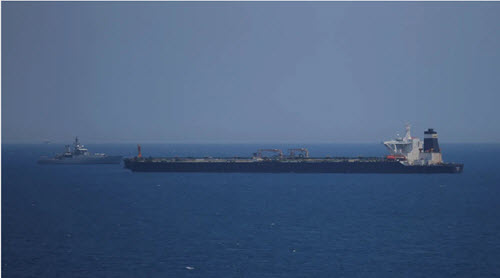
Iranian vessels crossed the US naval blockade line in the Gulf of Oman without incident. (File photo by Reuters)
Eleven Iranian ships have so far successfully broken through the US naval blockade, an informed source tells Press TV.
According to the source, 8 vessels have managed to sail through international waters from Iran’s territorial waters, and 3 others managed to enter Iranian waters after the US blockade was lifted under an agreement between Tehran and Washington.
The secretariat of Iran’s Supreme National Security Council (SNSC) early on Monday confirmed that Tehran and Washington have finalized the text of an MoU on ending the imposed war, bringing an immediate and permanent halt to US-Israeli hostilities on all fronts, including Lebanon, and terminating the US naval blockade against Iran.
The statement noted that the Islamic Republic, under the guidance of its martyred Leader Ayatollah Seyyed Ali Khamenei, the directives of the current Leader Ayatollah Seyyed Mojtaba Khamenei, the unwavering support of the Iranian people, and the tireless efforts of the country’s armed forces, has completed a period of difficult and intensive negotiations.
“Based on the approval of the Supreme National Security Council, the text of the memorandum of understanding regarding the end-of-war negotiations between Iran and the United States was finalized on the evening of June 15,” the statement read.
“Under the agreements reached, the war and military operations on all fronts, including Lebanon, are ended immediately and permanently. Furthermore, the naval blockade against Iran is terminated immediately and completely.”
The SNSC secretariat added that the MoU will be officially signed on Friday, June 19.
The US imposed its illegal blockade on Iran in April, after suffering defeat on the battlefield and failing to impose its terms during the Islamabad negotiations.
Yet, despite US warships engaging in blatant maritime banditry and piracy, intercepting and attacking tankers that attempted to break the blockade, Iran's crude continued to flow, at least to some extent, according to observers.
The MoU finalized in the Pakistan- and Qatar-mediated talks now means Iranian oil tankers and cargo vessels will be fully free to sail through both Iranian and international waters.
The US-Israeli coalition launched an unprovoked and illegal war against the Islamic Republic of Iran in late February, amid ongoing negotiations in Geneva. The aggression led to the assassination of the Leader of the Islamic Revolution, Ayatollah Seyyed Ali Khamenei, along with top-ranking commanders and senior government officials.
In response, Iran's armed forces carried out multiple waves of retaliatory operations against US and Israeli assets across the region and closed the Strait of Hormuz to hostile vessels.
Wednesday, 17 June 2026 4:40 PM [ Last Update: Wednesday, 17 June 2026 5:56 PM ]
https://www.presstv.ir/Detail/2026/06/1 ... l-blockade
Iranian vessels crossed the US naval blockade line in the Gulf of Oman without incident. (File photo by Reuters)
Eleven Iranian ships have so far successfully broken through the US naval blockade, an informed source tells Press TV.
According to the source, 8 vessels have managed to sail through international waters from Iran’s territorial waters, and 3 others managed to enter Iranian waters after the US blockade was lifted under an agreement between Tehran and Washington.
The secretariat of Iran’s Supreme National Security Council (SNSC) early on Monday confirmed that Tehran and Washington have finalized the text of an MoU on ending the imposed war, bringing an immediate and permanent halt to US-Israeli hostilities on all fronts, including Lebanon, and terminating the US naval blockade against Iran.
The statement noted that the Islamic Republic, under the guidance of its martyred Leader Ayatollah Seyyed Ali Khamenei, the directives of the current Leader Ayatollah Seyyed Mojtaba Khamenei, the unwavering support of the Iranian people, and the tireless efforts of the country’s armed forces, has completed a period of difficult and intensive negotiations.
“Based on the approval of the Supreme National Security Council, the text of the memorandum of understanding regarding the end-of-war negotiations between Iran and the United States was finalized on the evening of June 15,” the statement read.
“Under the agreements reached, the war and military operations on all fronts, including Lebanon, are ended immediately and permanently. Furthermore, the naval blockade against Iran is terminated immediately and completely.”
The SNSC secretariat added that the MoU will be officially signed on Friday, June 19.
The US imposed its illegal blockade on Iran in April, after suffering defeat on the battlefield and failing to impose its terms during the Islamabad negotiations.
Yet, despite US warships engaging in blatant maritime banditry and piracy, intercepting and attacking tankers that attempted to break the blockade, Iran's crude continued to flow, at least to some extent, according to observers.
https://www.presstv.ir/Detail/2026/06/15/770518/exclusive-iranian-oil-tankers-cargo-vessels-sail-through-us-naval-blockade-officially-lifted
Exclusive: Iranian oil tankers, cargo vessels sail through as US naval blockade officially lifted
At least three Iranian oil tankers and two cargo ships carrying essential goods have successfully broken through the US naval blockade, Press TV has learned from highly informed sources.
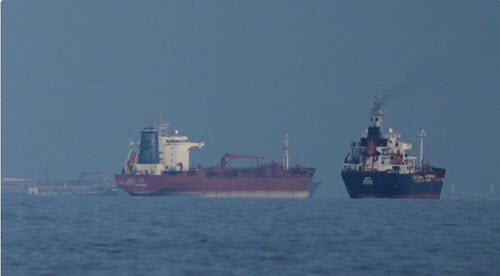
The MoU finalized in the Pakistan- and Qatar-mediated talks now means Iranian oil tankers and cargo vessels will be fully free to sail through both Iranian and international waters.
The US-Israeli coalition launched an unprovoked and illegal war against the Islamic Republic of Iran in late February, amid ongoing negotiations in Geneva. The aggression led to the assassination of the Leader of the Islamic Revolution, Ayatollah Seyyed Ali Khamenei, along with top-ranking commanders and senior government officials.
In response, Iran's armed forces carried out multiple waves of retaliatory operations against US and Israeli assets across the region and closed the Strait of Hormuz to hostile vessels.
- admin
- Site Admin
- Posts: 41470
- Joined: Thu Aug 01, 2013 5:21 am
Re: PART 3 ANTI-ANTI-NAZI BARBARIAN HORDES ARE KNOCKING DOWN
by admin » Wed Jun 17, 2026 6:43 pm
Part 1 of 2
Iran Issues FINAL WARNING, $300B Trap Ends Trump | Robert Pape & Patrick Henningsen
Danny Haiphong
Streamed live 82 minutes ago
Professor Robert Pape joins the show for the first time. Prof Robert Pape is a leading global expert on military strategy, international security, and geopolitical conflict. A Professor at the University of Chicago and Director of the Chicago Project on Security and Threats, he has spent over 40 years analyzing how bombing campaigns, air power, and foreign interventions shape international relations.
Transcript
Welcome everyone. Welcome back to the show. It's your host Danny Hong. As you can see, I'm joined by a new guest, a very special guest. I am very grateful
he took the time out today of his schedule. Professor Robert Pap. He is the author and writer of the escalation trap on Substack and he is a professor
at the University of Chicago and has been uh talking a lot about the war on Iran. Professor Pap, thanks so much for joining today.
Thanks for having me. Of course. So, how about we get right into it? There's been a lot of talk about the 14 points in the
memorandum of understanding. Bloomberg just released them. Iran says that a lot of these points may be distorted, may not be actually what is in it. Uh
there's also talks that this might just be private. There may actually not be a public uh a public document released to
anybody and we might be relying on these leaks for quite some time. But there is one part of it I wanted to ask you about because JD Vance just commented on it
1 minuteand I'll just put up what he said. I want to ask you about the $300 billion fund. This is subject to a lot
of scrutiny now uh in the mainstream media and I wanted your thoughts on what JD Vance had to say here and what it
means for what you've been saying which is Iran's leverage is only getting stronger. Here we go. You've seen the details in this memorandum of
understanding that still remains secret that both members, even if you're party, are saying, "Wait, I don't know the details yet." So, they're skeptical. So, let me ask you this. Can you confirm that it is going to end all sanctions
against Iran, that it will uh ensure a reconstruction finance financing of at least $300 billion for Iran, and that it
will release all frozen funds, which could be more than hundred billion dollar. Given that amount of money flowing into Iran, how does that amount
of money flowing into the chief exporter of terror make America safer? So none of those things flow to Iran unless Iran fundamentally changes how it behaves
with the world. If you look at the memorandum of understanding and again it's going to come out whether later today or on Friday. What it fundamentally says is Iran can have their economy with less sanctions on it
but only if they change the way that they they interact with the world. So let me just give you a very concrete example. So let's say the United Arab Emirates not a single penny of American money will flow to Iran. I want to be
clear about that. Even if the Iranians do everything that they're supposed to, if the Emiratis say wanted to invest in a power plant in Iran, they actually can't invest in a power plant in Iran so
long as Iran is under the current sanctions regime that the United States has. Now, we're not going to lift that sanctions regime unless Iran stops funding terrorism, unless Iran stops trying to rebuild their nuclear program.
So, so what the president is really saying is if Iran fundamentally transforms how it deals with the United States and the region, the rest of the world, then Iran can get them economic
benefits. So, Professor Pap, uh, this is the explanation coming out of the White House. What is the actual explanation,
your estimation of this, uh, $300 billion, uh, reconstruction fund and, uh, what does it say about Iran's actual
position? Because, uh, JD Vance is positioning the United States in the White House as being in the dictator position here.
Yeah. So let me just read what is in theou so that we can at least talk about the words that are here because this is
what we have to go on and nothing he um this this is really the key. This is 6
in theou and by the way CNN is is uh on this now you know putting this out and so are Saudi media. The United States
undertakes together with its regional partners to create a comprehensive plan
agreed upon by both parties for the rehabilitation and economic development of the Islamic Republic of Iran while
ensuring financing of at least 300 billion. The implementation mechanism of
this plan as part of the final agreement will be formulated within 60 days. So
4 minuteslet's just be clear about that. What Iran is expecting because this is not well this will
happen a year from now. What Iran is expecting those there'll be a signing ceremony and they will immediately begin
developing the comprehensive plan for the $300 billion which is going to then uh come into
being and then this is going to be something that it says the regional partners not the United States will necessarily pay into but the regional
partners will put into well this is important on a number of different levels it's important number one because of the the number $300 billion.
This is maybe the reason thisou is not being circulated. That number is in theou uh and it's uh it's being quite quite
clear. Number two, simply the idea that the United States is going to work on
the plan is already creating momentum for the Gulf States to move in the
direction of Iran because as every business person knows, you've got your antenna up because you want to be in
there. You want to be in early as these deals evolve, as things evolve, there will be money. There will be lots of
reasons to want to do this. So what this is doing is it's basically uh pushing
open a door that then pushes open more and more in this direction. Now it is
true as JD Van said that if America doesn't like whatever comes at the end of the 60 days that Iran uh this this
can be blunted. However, Iran has its own response to that shutting down the
straight of Horamoose. So, so this is the this is what JD Vance the vice president's leaving out here. So, and
this gets back to the bigger point I'd like to just explain which is in the next 60 days as my analysis and and I
have longer analysis on the escalation trap substack explaining this uh on Monday again today uh the leverage for
Iran we're it's about to reach its period of maximum leverage. It hasn't reached maximum leverage yet because
over the next 60 days, what's going to happen is there may be dribbles of of of ships coming out of the Gulf, but in the
next 60 days, none of those ships are going to hit the refineries. That oil isn't hitting refineries for 60, 90 days. So that means that you're going to
have to draw down the world's oil inventories to their rock bottoms as everybody has been explaining, the oil
industry experts have been explaining over the next 60 days. You you still got to run out the you have a spare gas tank
in your car and you're going to run that down to empty because you don't have anything else to put in your car. You see what I mean? So you're going to run
that down. Now what happens when you get to that 60-day window? Iran's leverage is even greater because now you have a
situation where if they disrupt the uh cut off Hormuz again, it has a more abrupt effect because there's no
cushion. You don't have the spare gas tank at all. And the world's oil inventory experts, this includes the
International Energy Agency, which has been dead on this, says none of those inventories could possibly rise until
next year. So this isn't like, oh man, sigh of relief. We're out of the woods.
No, we're in the period of Iran's maximum leverage growing. And that's going to continue through early next year, through the midterms next year.
And now does President Trump in middle of August then want to say, "Oh no, I'm going to go back to bombing." Well, that's not necessarily positive thing
for the midterms. So, what exactly is President Trump going to do here when Iran is expecting some big hunk of that
$300 billion dollar is coming? And then JD Vance, oh no, no, no. We're not going no. We're going to we're digging in our heels. Are they really going to dig in
their heels or not? This is the escalation trap. This is a trap. This is not out of the trap. JD Vance is not
getting out of the trap by what he's saying. So it's true the United States can pull back but from Iran's perspective they're welching on the deal
and then that means Hormuz shuts down again right and uh Iran has been professor pap
warning the United States about the Lebanon situation because Israel continues to attack Lebanon. Israel
multiple officials from Ben Gave to Netanyahu himself have said they will keep bombing Iran. They will keep IDF troops uh they will keep bombing Lebanon
and keep IDF troops in uh Lebanon as well uh which uh to Iran is a violation of theou and theou quite clearly says
Lebanon is part of this uh understanding.
Now, do you see this escalation trap around the state of Hormuz as uh the the uh leverage and the primary weapon that
Iran right now wields should this violation in Iran's eyes continue and US
intel just put out a report saying that this particular point of leverage is uh stronger than a nuclear bomb. What do you how do you react to that?
Yes, absolutely. So this is the the hormuz uh bombs were meant to the regime, topple the regime, failed.
The regime takes hormuz it actually gotten stronger. It takes hormuz. And now what you see is Iran is moving from
survival to ambition. And it's on a trajectory not just to cut a deal. Look at this in the rear view mirror the way
President Trump wants to do. It's on the trajectory to gain power. And it's using the negotiations to gain power. It's
using theou to gain power because theou has the clauses which are planting the stakes in the ground, the seeds if you
would of the future conflict and and what will be contentious over the next 60 days. What's going to be contentious
is number one, did Israel withdraw from southern Lebanon? Number two, um, is Iran going to get its unfrozen assets,
which is a completely separate clause, okay, that it's supposed to get during the 60 days, I might add. Is it going to get that unfrozen set of assets? Number
three, is it going to get any of the 300 billion that it's now uh clearly thinks it's going to get in 60 on day 61.
That's is when that's going to start. Um and this is uh uh and what you have here and and then we haven't even talked
about what's supposed to happen is that American forces are also supposed to leave. Uh now all of this can be
rejected by the United States but Iran for any one of these reasons can uh shut down the straight of form and you could
then on a just this this contentious 60 days or thereafter the war can restart at literally any moment as a result of
all these different seeds in which it can come undone. Now maybe none of these will happen. Maybe Israel will withdraw from southern Lebanon. um uh maybe the
United States is going to give uh you know all this money over the unfrozen assets and so forth. Well, we'll we'll see.
Yeah. Yeah. Yeah. We we will see. and uh talk about now if you can how this
changes uh the world situation uh because from the the point of view of JD
Vance even when he was describing that this is all going to be funded by the GCC and that these countries are going
to enter into arrangements with Iran if the US lets them. It almost hints that actually GCC countries uh really do need
or maybe would want Iranian investment or to invest in Iran. It kind of uh
gives a well why then why would the GCC uh be forced into uh any kind of 300
billion dollar arrangement without any US involvement other than the US telling them what to do? It's it's a it's a bit strange logically. I'm curious if you
have any thoughts on this. Yeah. So, so I've been warning for some time that there's the escalation trap. This
modeling that I'm talking about, it says once Iran takes Hormuz, gains power, we're at a fork in the road. either more
escalation or Iran as we capitulate to this will or acquies will become on a
trajectory to become more powerful a regional hegeimon and literally the fourth center of world power underneath
the United States, China and Russia. So this is uh I published this in the New York Times in early April. So this is
what this road thisou is. Theou is a roadmap to Iran becoming that fourth
center of world power, the regional hegeimon in the region. Now, not all at once, not overnight, but over a year or
two or so. Uh, and this is the road map for exactly how that's going to happen.
Well, once you see that road map, you can understand right away that the Gulf States are cowtowing to Iran's rising
power uh as as it still retains uh uh effective control over 20% of the world's oil because it can shut down or
moves at any literally any moment uh during this period of time. And that's going to go on for decades as US Intel is now saying or at least years as US
Intel is saying. And then as um uh if that's true, that's why then it makes sense for the um for the Gulf States to
essentially bandwagon. Why? Because who do they need for their security? America has shown it can't guarantee the Gulf
security. Uh who else are they going to get the security from? They're basically got to give protection money to Iran
because it's Iran that everybody's looking to. Who are the shippers looking to? How are we going to get this oil out? Who's going to carry the oil? Well, it's going to be shipping companies.
Who's going to guarantee the security of those ships? Not America. Those shipping companies have already been saying in the media, they're looking to Iran to
guarantee their security. That's where the future tolls and so forth their fees are going to come from, not because they're looking to America to guarantee the security. So, that's what this is.
It's a road mapap, thisou to Iran's rising power. That's why the Israelis are apoplelectic about this because
before the war they were the rising power. Now the tables have been turned and it's Iran the rising and Israel is a
declining power and Iran is spreading its wings. It's getting that sphere of influence here and this will probably
grow rather substantially over time. But as we go forward, the Israelis aren't going to like this. the Americans are
going to come under more and more pressure because they got to make more and more concessions as this goes on. Uh you're going to find that uh hurricane
season is going to come and so we're going to find that other things are going to disturb the price of oil. So so there's a lot of issues here that are um
already foreseeable and and notice and another thing your your listeners may not know we study political scientists ceasefires uh and so forth. There's
great study by the Notre Dame Croc Institute. your folks should go check out which has um analyzed virtually
every ceasefire from 1947 to 2016. It's a recent study. 80% of the time ceasefires break down. When don't they
break down? When you got gigantic third-party forces guaranteeing them. Well, there's nobody can guarantee this.
There's no bigger set. We're t this is way too big. So this is uh already on thin ice just to begin with. And the
problem here is Iran's trajectory of power is foreseeably rising and the details of it can even be seen.
And uh given those problems you just noted um despite you know as as you uh
indicated earlier it's it does seem like the United States and how the Trump administration is framing as they they say that this is a big victory but
really it's a big defeat that's being acknowledged now in the mainstream media. But given all the problems you just noted, do you see thisou then as a
very short-lived historical experience and one that will lead to a a restart of the war and and then how does that fit
into this escalation trap that you've been that you've talked about because it seems like there could be more war on the way. Yeah.
So this is what I call the middle game of the escalation trap and I'll be glad to explain what the endgame would look like and how you know you were there.
What I think when I look at thisou and I've studied it now in detail just for six hours before I put out the thing
this morning. So um it looks to me like this is again the road map for Iran to become the rising power and why is uh
Trump what's it what's it really look like from Trump's perspective for Trump it looks like a temporary off-ramp
between now and the elections. So the midterms are coming. Trump would like to get things calmed down. He'd like to get the public to focus on something else.
He'd like everybody to have the face of this with JD Vance. Uh he he basically wants to find a way to get from now to
the midterms here without this getting worse and worse and worse. Although Israel of course is a thorn in his side and that's why he's so upset about this
with Israel. However, once you get past the midterms here, there's a big problem, which is if Iran has not truly
surrendered all of its enriched uranium, what's it doing with that enriched uranium? And are we sure we know what's
going on? That's the whole problem we've had since we bombed Ford. We don't really know what's going on with that enriched uranium. Not for sure. We think
we do. We have satellites telling us, but we don't have those on the ground inspectors the way we did before. So now
this is going to be the problem for for Trump going forward because as Iran continues, there is a huge incentive for
Iran to have uh uh nuclear weapons and Ratcliffe is uh that is the CIA director. Uh we have another leak coming
out that he just showed all the eavesdropping we've been doing on the um Iranian military, the senior leaders,
and they're planning on um taking advantage of theou and then just doing whatever they want. They want get all the money they can get basically a big
squeeze here. What can they squeeze out of America in terms of dollars and then they're just going to go about their merry way and do whatever they're going to do. Well, part of that could well be nuclear weapons.
Oh, I think you're uh muted there.
Oh, yeah. Sorry about that. Well, in many respects from Iran's perspective, it would be that uh uh and they've made it quite clear that their selfdefense or
their defense is not really uh negotiable. And so, uh I guess I'm I'm wondering, you know, this was a very
curious time for the United States to enter into such a a major war. uh and now it's lasted months and months and
months. And from Ron's perspective, everything you just said would be uh uh reasonable given that uh they've been attacked twice in the last uh year
alone. So uh how much is it that that the US, you know, they talk a lot about Iran won't change its behavior or won't
change its behavior. they need to change their behavior. But how much of this falls on the US's the Trump administration's behavior to change in
order for any of these uh problems involved in this trap to uh be avoided or resolved? Well, the way you would
know you're at an endgame of this round of the escalation trap wouldn't be a permanent endgame, but the way you know
you're at it at the endame is when America pulls out all of the additional forces it's moved in since the first of
the year. So, um, we know and we've tracked and I've and this is one of the reasons I worried the war was going to start in the first place. Uh that's what
led me to start this thing called the escalation trap substack in February, days before the war started because I we saw this coming. So that giant military
buildup, all those naval forces, all the military aircraft, the tankers, uh, all of that, if you unwind that and you go
back to the December 2025 posture now, you could say you're you're really at the end game where it would take months
to recon reconfigure this. And that would be some uh that would be true. So then you would know you were at but from
Iran's perspective it would only be months to reconfigure it. It only took uh less than two months about six weeks
to go from January 15th to February 28 when that bombing started and then that was a much bigger campaign than just a
few days. So you have a situation where Iran's incentives for nuclear weapons are not going to go down over the next
year or two. They're going to they're they're going to just continue to be at a fever a very high rate. And the reason
is because America is going to even if it pulls out the forces I just explained, even if it shuts down all 13
of its military bases, Iran is is not going to be confident that they won't come back. And this would be like,
should America give up its nuclear weapons? Should China give up its nuclear weapons? Should Russia give up its should Israel give up its nuclear
weapons? Well, the answer of course is no for any of those states. So why exactly is Iran not going down this road
when the states who did go down that road, Ukraine, Libya, look what happened to them? And look what happened to Iran
when it doesn't have nuclear weapons. So how are you going to say to Iran, don't get nuclear weapons because we might kill your supreme leader.
What what exactly is the leverage here?
You see what I mean? And I think this is just what every realist is is saying.
I'm not unique in this. There's any realist worth their salt here. This is realism 101. You've just been through these wars with the United States and
Israel. And what exactly are you going to do to depend on them? You're going to depend on a piece of paper and a pinky
promise from Netanyah. I mean, seriously.
Yeah. Well, Donald Trump is already throwing water on the uh legal
uh binding character of this miou itself, saying no, there's nothing legally binding. If that's a shocker,
I know we could just bomb bomb bomb away.
Yeah, he's been such a dedicated international internationalist. I'm so surprised.
I'm sorry. It's just we have to have a little humor to allow the it's just been so tense here. And I'm sorry to say that
that's why we want to have a celebration. We want the relief to come.
We want this. And the truth is I was I was happy to have the moments when this could possibly I'm happy I'm not wanting
this to because I'm an American. I don't uh we we we're the ones I I pay the same prices as everybody else.
Right. Well, uh maybe in the last five minutes or so we have here uh we could end on uh Israel. What is your belief
that the the centrality of Israel when it comes to uh undermining even just this memorandum of understanding and why
do you believe in this framework that you've outlined of the United States doesn't Donald Trump the administration doesn't uh try harder to reign Israel in
all we've gotten are leaked paraphrase transcripts of what he's yelled at Netanyahu over the phone doesn't seem like it's changing Israel's behavior
though what are your thoughts on this and Uh, is it intentional? Is it they can't do anything? What's your what's your opinion?
Well, well, my thoughts are Israel is a spoiler of the first order for any reasonable policy for the United States
in the Middle East. Um, but Israel alone is not why the United States has been in the Middle East. Starting in the 1970s,
we have to roll back to the 1970s. uh the United States effectively took over the mission from Britain to guarantee
the flow of oil through the Persian Gulf. And that also meant then to prevent an oil hegeimon from arising in
the Gulf. There are four puddles of oil in the Gulf. Iran, Iraq, uh Kuwait, and Saudi Arabia and they're all within
about 150 mile cir um radius at least 90% of them is what so so having
establishing a true oil hegemony has always been a real issue. We worried about even the Soviet Union in the cold war here. And why would you worry about
that? It's because the United States economy can get hurt pretty badly with that one country with its fingers on
Hormuz, for example. Well, now that's happened. So, the problem here is that Israel didn't make it any better for us
to cut a reasonable security arrangement with uh Iran. In fact, it went the other way around because Israel wanted
hegemony. It wasn't satisfied just where it was say 10 years ago or 15 years ago.
It wants to be the dominant power in the Middle East. And the and the problem here is that what that's done is it's
upset any reasonable set of arrangements that the United States and and Iran could come to. Uh and this is uh this is
why we're at where we are today. Now, along the way, they're very specific things Israel has done. They've killed negotiators. Uh they've done that twice,
not just once. They've also uh I mean they've attacked during the actual period of negotiation. It was Israel who killed the supreme leader, not American
bombs here. So, it's it's it's not just the generalities, but the details follow exactly what I'm saying. And I won't be
surprised if it's Israel who upsets the apple cart of thisou. I mean, you know, just how secure do those Iranian
officials feel going to Switzerland here? Are they are they really going to be okay in those hotel rooms? Really?
Really? Are they going to be okay? I mean, this would be quite a thing.
you're you're telling your family, "Oh, sure. I'm I'm going to be I'm going to go." Um, but think about this. Israel is the number one assassination kingpin on
the planet. This is uh, you know, and they they don't need to have their fingerprints on what happens. They can go try to blame the Kurds or whole lot
of other folks. So, I'm not telling you I can predict that, but what I could say is that if I was heading to Switzerland here, I'd be definitely uh making sure
that I had seen everybody and talked to everybody.
Yeah. Yeah. No, no doubt. Uh there's definitely Israeli intel Mosad operatives in Switzerland. That's almost a that's almost a guarantee. So, it is a
risk. And uh I think that's a a good place, Professor Pap, to uh uh uh you know, let you go. I know you have a very
busy schedule. I want to make sure people know that your Substack, the escalation trap, is in the video description. We have another half hour here, but uh Professor Babe, any last words before I let you go?
Uh I just really appreciate this and one of the reasons I have so much confidence is what I can really see with the uh
with the way that uh the net the internet is evolving is we can just have much much much more substantive
discussions here. So this is not just X and it's not just the podcast. There's a whole world that's still expanding and
that is really going to work to our advantage over time because we have not been able to have a substantive informed
conversation here. I I think of this as changing from the '9s. So, it's been a long time before I've seen anything like
this truly happening. And I just think this is going to be our uh give us reason for optimism. We'll make it easy,
but we will navigate these waters better.
Thanks so much, Proer Pape. I'll be in touch. Hope to have you back again. Take care.
Okay. Glad to do it. Thanks for having me.
All right. Bye-bye. All right, everybody. We still have uh more show to come. Uh so, please do hit the like
button. That was Professor Robert Pap first time on the show and it was a great segment. Now, we have our next guest who's a returning guest. He's a
friend of the show. It is Patrick Henningson from 21st Century Wire.
Patrick, good to see you again, my friend. How are you?
Very good. Thank you, Danny. Good to be with you.
Of course. Uh good to be with you. Well, uh Patrick, how about we begin uh with
uh Donald Trump at the G7 and uh all the talk is on the memorandum of understanding, the US Iran so-called
deal. Everyone is talking about this massive $300 billion promise which the US is walking back after all of these
leaks. Just want to play you uh how Donald Trump behaved with uh Mr. Cece,
President Cece of Egypt at the G7, what he said about the validity of this memorandum he has been touting.
Well, it's not final. It's a memorandum of understanding. And if I don't like it, go back to shooting at them,
dropping in their head. If I don't like it, if they don't behave, we'll go right back to dropping bombs right smack in
the middle of their head. Okay? Because they've misbehaved for 47 years. All right?
But nobody could have made this deal. I mean the JCPOA done by Obama, he handed him a billion7 in cash, gave him
hundreds of millions of dollars, hundreds of gave them billions and billions of dollars, but he gave them
1.7 billion dollars in cash, green cash from banks into a Boeing 757 and flew it into Iran. And they stood at the plane.
I have pictures of it like, "Oh my, look at this money he's giving us." He tried to bribe his way out. I didn't do that.
Nobody mentions that. 1.7 billion and hundreds of millions of dollars. They tried to bribe their way out of it. And
you know what the Iranians did? They laughed at Obama and they said, "He's a stupid son of a bitch."
So, uh, this was Donald Trump at the G7, uh, essentially throwing, uh, a a lot of
water, uh, hot water on the deal that he himself has been touting. And now the reports are that hundred billion dollars
of this 300 billion reconstruction fund has already basically been uh, you know, in the works and implemented. in Iran.
There are some evidence that Iran has been working pretty closely with some of these GCC countries in getting some major projects going. Uh uh Patrick, your thoughts on all of this?
Danny and um I'm I'm quite frankly shocked, but it really goes to show
that, you know, here Trump is actually, you know, at at his kind of potential
peak and shedding some of his old baggage, you know, possibly charting a fresh path forward some positively. OB
you put put aside the Laura Loomers and the Mark Lavines and everybody sniping at him claiming that uh you know and the Israelis saying oh he's thrown us under
the bus and there you see that's the true Trump. I I he really I think there's a mental defect with this person
you know he's got a he's got a mental issue where he has to basically self-sabotage. He can't take the high
road. he can't take the the the the the good road, you know, for for for for the general welfare. He's it's he he he's
not capable of it. And so he's just gone back to square one there. So you can see he really is not interested in peace.
Iran Issues FINAL WARNING, $300B Trap Ends Trump | Robert Pape & Patrick Henningsen
Danny Haiphong
Streamed live 82 minutes ago
Professor Robert Pape joins the show for the first time. Prof Robert Pape is a leading global expert on military strategy, international security, and geopolitical conflict. A Professor at the University of Chicago and Director of the Chicago Project on Security and Threats, he has spent over 40 years analyzing how bombing campaigns, air power, and foreign interventions shape international relations.
Transcript
Welcome everyone. Welcome back to the show. It's your host Danny Hong. As you can see, I'm joined by a new guest, a very special guest. I am very grateful
he took the time out today of his schedule. Professor Robert Pap. He is the author and writer of the escalation trap on Substack and he is a professor
at the University of Chicago and has been uh talking a lot about the war on Iran. Professor Pap, thanks so much for joining today.
Thanks for having me. Of course. So, how about we get right into it? There's been a lot of talk about the 14 points in the
memorandum of understanding. Bloomberg just released them. Iran says that a lot of these points may be distorted, may not be actually what is in it. Uh
there's also talks that this might just be private. There may actually not be a public uh a public document released to
anybody and we might be relying on these leaks for quite some time. But there is one part of it I wanted to ask you about because JD Vance just commented on it
1 minuteand I'll just put up what he said. I want to ask you about the $300 billion fund. This is subject to a lot
of scrutiny now uh in the mainstream media and I wanted your thoughts on what JD Vance had to say here and what it
means for what you've been saying which is Iran's leverage is only getting stronger. Here we go. You've seen the details in this memorandum of
understanding that still remains secret that both members, even if you're party, are saying, "Wait, I don't know the details yet." So, they're skeptical. So, let me ask you this. Can you confirm that it is going to end all sanctions
against Iran, that it will uh ensure a reconstruction finance financing of at least $300 billion for Iran, and that it
will release all frozen funds, which could be more than hundred billion dollar. Given that amount of money flowing into Iran, how does that amount
of money flowing into the chief exporter of terror make America safer? So none of those things flow to Iran unless Iran fundamentally changes how it behaves
with the world. If you look at the memorandum of understanding and again it's going to come out whether later today or on Friday. What it fundamentally says is Iran can have their economy with less sanctions on it
but only if they change the way that they they interact with the world. So let me just give you a very concrete example. So let's say the United Arab Emirates not a single penny of American money will flow to Iran. I want to be
clear about that. Even if the Iranians do everything that they're supposed to, if the Emiratis say wanted to invest in a power plant in Iran, they actually can't invest in a power plant in Iran so
long as Iran is under the current sanctions regime that the United States has. Now, we're not going to lift that sanctions regime unless Iran stops funding terrorism, unless Iran stops trying to rebuild their nuclear program.
So, so what the president is really saying is if Iran fundamentally transforms how it deals with the United States and the region, the rest of the world, then Iran can get them economic
benefits. So, Professor Pap, uh, this is the explanation coming out of the White House. What is the actual explanation,
your estimation of this, uh, $300 billion, uh, reconstruction fund and, uh, what does it say about Iran's actual
position? Because, uh, JD Vance is positioning the United States in the White House as being in the dictator position here.
Yeah. So let me just read what is in theou so that we can at least talk about the words that are here because this is
what we have to go on and nothing he um this this is really the key. This is 6
in theou and by the way CNN is is uh on this now you know putting this out and so are Saudi media. The United States
undertakes together with its regional partners to create a comprehensive plan
agreed upon by both parties for the rehabilitation and economic development of the Islamic Republic of Iran while
ensuring financing of at least 300 billion. The implementation mechanism of
this plan as part of the final agreement will be formulated within 60 days. So
4 minuteslet's just be clear about that. What Iran is expecting because this is not well this will
happen a year from now. What Iran is expecting those there'll be a signing ceremony and they will immediately begin
developing the comprehensive plan for the $300 billion which is going to then uh come into
being and then this is going to be something that it says the regional partners not the United States will necessarily pay into but the regional
partners will put into well this is important on a number of different levels it's important number one because of the the number $300 billion.
This is maybe the reason thisou is not being circulated. That number is in theou uh and it's uh it's being quite quite
clear. Number two, simply the idea that the United States is going to work on
the plan is already creating momentum for the Gulf States to move in the
direction of Iran because as every business person knows, you've got your antenna up because you want to be in
there. You want to be in early as these deals evolve, as things evolve, there will be money. There will be lots of
reasons to want to do this. So what this is doing is it's basically uh pushing
open a door that then pushes open more and more in this direction. Now it is
true as JD Van said that if America doesn't like whatever comes at the end of the 60 days that Iran uh this this
can be blunted. However, Iran has its own response to that shutting down the
straight of Horamoose. So, so this is the this is what JD Vance the vice president's leaving out here. So, and
this gets back to the bigger point I'd like to just explain which is in the next 60 days as my analysis and and I
have longer analysis on the escalation trap substack explaining this uh on Monday again today uh the leverage for
Iran we're it's about to reach its period of maximum leverage. It hasn't reached maximum leverage yet because
over the next 60 days, what's going to happen is there may be dribbles of of of ships coming out of the Gulf, but in the
next 60 days, none of those ships are going to hit the refineries. That oil isn't hitting refineries for 60, 90 days. So that means that you're going to
have to draw down the world's oil inventories to their rock bottoms as everybody has been explaining, the oil
industry experts have been explaining over the next 60 days. You you still got to run out the you have a spare gas tank
in your car and you're going to run that down to empty because you don't have anything else to put in your car. You see what I mean? So you're going to run
that down. Now what happens when you get to that 60-day window? Iran's leverage is even greater because now you have a
situation where if they disrupt the uh cut off Hormuz again, it has a more abrupt effect because there's no
cushion. You don't have the spare gas tank at all. And the world's oil inventory experts, this includes the
International Energy Agency, which has been dead on this, says none of those inventories could possibly rise until
next year. So this isn't like, oh man, sigh of relief. We're out of the woods.
No, we're in the period of Iran's maximum leverage growing. And that's going to continue through early next year, through the midterms next year.
And now does President Trump in middle of August then want to say, "Oh no, I'm going to go back to bombing." Well, that's not necessarily positive thing
for the midterms. So, what exactly is President Trump going to do here when Iran is expecting some big hunk of that
$300 billion dollar is coming? And then JD Vance, oh no, no, no. We're not going no. We're going to we're digging in our heels. Are they really going to dig in
their heels or not? This is the escalation trap. This is a trap. This is not out of the trap. JD Vance is not
getting out of the trap by what he's saying. So it's true the United States can pull back but from Iran's perspective they're welching on the deal
and then that means Hormuz shuts down again right and uh Iran has been professor pap
warning the United States about the Lebanon situation because Israel continues to attack Lebanon. Israel
multiple officials from Ben Gave to Netanyahu himself have said they will keep bombing Iran. They will keep IDF troops uh they will keep bombing Lebanon
and keep IDF troops in uh Lebanon as well uh which uh to Iran is a violation of theou and theou quite clearly says
Lebanon is part of this uh understanding.
Now, do you see this escalation trap around the state of Hormuz as uh the the uh leverage and the primary weapon that
Iran right now wields should this violation in Iran's eyes continue and US
intel just put out a report saying that this particular point of leverage is uh stronger than a nuclear bomb. What do you how do you react to that?
Yes, absolutely. So this is the the hormuz uh bombs were meant to the regime, topple the regime, failed.
The regime takes hormuz it actually gotten stronger. It takes hormuz. And now what you see is Iran is moving from
survival to ambition. And it's on a trajectory not just to cut a deal. Look at this in the rear view mirror the way
President Trump wants to do. It's on the trajectory to gain power. And it's using the negotiations to gain power. It's
using theou to gain power because theou has the clauses which are planting the stakes in the ground, the seeds if you
would of the future conflict and and what will be contentious over the next 60 days. What's going to be contentious
is number one, did Israel withdraw from southern Lebanon? Number two, um, is Iran going to get its unfrozen assets,
which is a completely separate clause, okay, that it's supposed to get during the 60 days, I might add. Is it going to get that unfrozen set of assets? Number
three, is it going to get any of the 300 billion that it's now uh clearly thinks it's going to get in 60 on day 61.
That's is when that's going to start. Um and this is uh uh and what you have here and and then we haven't even talked
about what's supposed to happen is that American forces are also supposed to leave. Uh now all of this can be
rejected by the United States but Iran for any one of these reasons can uh shut down the straight of form and you could
then on a just this this contentious 60 days or thereafter the war can restart at literally any moment as a result of
all these different seeds in which it can come undone. Now maybe none of these will happen. Maybe Israel will withdraw from southern Lebanon. um uh maybe the
United States is going to give uh you know all this money over the unfrozen assets and so forth. Well, we'll we'll see.
Yeah. Yeah. Yeah. We we will see. and uh talk about now if you can how this
changes uh the world situation uh because from the the point of view of JD
Vance even when he was describing that this is all going to be funded by the GCC and that these countries are going
to enter into arrangements with Iran if the US lets them. It almost hints that actually GCC countries uh really do need
or maybe would want Iranian investment or to invest in Iran. It kind of uh
gives a well why then why would the GCC uh be forced into uh any kind of 300
billion dollar arrangement without any US involvement other than the US telling them what to do? It's it's a it's a bit strange logically. I'm curious if you
have any thoughts on this. Yeah. So, so I've been warning for some time that there's the escalation trap. This
modeling that I'm talking about, it says once Iran takes Hormuz, gains power, we're at a fork in the road. either more
escalation or Iran as we capitulate to this will or acquies will become on a
trajectory to become more powerful a regional hegeimon and literally the fourth center of world power underneath
the United States, China and Russia. So this is uh I published this in the New York Times in early April. So this is
what this road thisou is. Theou is a roadmap to Iran becoming that fourth
center of world power, the regional hegeimon in the region. Now, not all at once, not overnight, but over a year or
two or so. Uh, and this is the road map for exactly how that's going to happen.
Well, once you see that road map, you can understand right away that the Gulf States are cowtowing to Iran's rising
power uh as as it still retains uh uh effective control over 20% of the world's oil because it can shut down or
moves at any literally any moment uh during this period of time. And that's going to go on for decades as US Intel is now saying or at least years as US
Intel is saying. And then as um uh if that's true, that's why then it makes sense for the um for the Gulf States to
essentially bandwagon. Why? Because who do they need for their security? America has shown it can't guarantee the Gulf
security. Uh who else are they going to get the security from? They're basically got to give protection money to Iran
because it's Iran that everybody's looking to. Who are the shippers looking to? How are we going to get this oil out? Who's going to carry the oil? Well, it's going to be shipping companies.
Who's going to guarantee the security of those ships? Not America. Those shipping companies have already been saying in the media, they're looking to Iran to
guarantee their security. That's where the future tolls and so forth their fees are going to come from, not because they're looking to America to guarantee the security. So, that's what this is.
It's a road mapap, thisou to Iran's rising power. That's why the Israelis are apoplelectic about this because
before the war they were the rising power. Now the tables have been turned and it's Iran the rising and Israel is a
declining power and Iran is spreading its wings. It's getting that sphere of influence here and this will probably
grow rather substantially over time. But as we go forward, the Israelis aren't going to like this. the Americans are
going to come under more and more pressure because they got to make more and more concessions as this goes on. Uh you're going to find that uh hurricane
season is going to come and so we're going to find that other things are going to disturb the price of oil. So so there's a lot of issues here that are um
already foreseeable and and notice and another thing your your listeners may not know we study political scientists ceasefires uh and so forth. There's
great study by the Notre Dame Croc Institute. your folks should go check out which has um analyzed virtually
every ceasefire from 1947 to 2016. It's a recent study. 80% of the time ceasefires break down. When don't they
break down? When you got gigantic third-party forces guaranteeing them. Well, there's nobody can guarantee this.
There's no bigger set. We're t this is way too big. So this is uh already on thin ice just to begin with. And the
problem here is Iran's trajectory of power is foreseeably rising and the details of it can even be seen.
And uh given those problems you just noted um despite you know as as you uh
indicated earlier it's it does seem like the United States and how the Trump administration is framing as they they say that this is a big victory but
really it's a big defeat that's being acknowledged now in the mainstream media. But given all the problems you just noted, do you see thisou then as a
very short-lived historical experience and one that will lead to a a restart of the war and and then how does that fit
into this escalation trap that you've been that you've talked about because it seems like there could be more war on the way. Yeah.
So this is what I call the middle game of the escalation trap and I'll be glad to explain what the endgame would look like and how you know you were there.
What I think when I look at thisou and I've studied it now in detail just for six hours before I put out the thing
this morning. So um it looks to me like this is again the road map for Iran to become the rising power and why is uh
Trump what's it what's it really look like from Trump's perspective for Trump it looks like a temporary off-ramp
between now and the elections. So the midterms are coming. Trump would like to get things calmed down. He'd like to get the public to focus on something else.
He'd like everybody to have the face of this with JD Vance. Uh he he basically wants to find a way to get from now to
the midterms here without this getting worse and worse and worse. Although Israel of course is a thorn in his side and that's why he's so upset about this
with Israel. However, once you get past the midterms here, there's a big problem, which is if Iran has not truly
surrendered all of its enriched uranium, what's it doing with that enriched uranium? And are we sure we know what's
going on? That's the whole problem we've had since we bombed Ford. We don't really know what's going on with that enriched uranium. Not for sure. We think
we do. We have satellites telling us, but we don't have those on the ground inspectors the way we did before. So now
this is going to be the problem for for Trump going forward because as Iran continues, there is a huge incentive for
Iran to have uh uh nuclear weapons and Ratcliffe is uh that is the CIA director. Uh we have another leak coming
out that he just showed all the eavesdropping we've been doing on the um Iranian military, the senior leaders,
and they're planning on um taking advantage of theou and then just doing whatever they want. They want get all the money they can get basically a big
squeeze here. What can they squeeze out of America in terms of dollars and then they're just going to go about their merry way and do whatever they're going to do. Well, part of that could well be nuclear weapons.
Oh, I think you're uh muted there.
Oh, yeah. Sorry about that. Well, in many respects from Iran's perspective, it would be that uh uh and they've made it quite clear that their selfdefense or
their defense is not really uh negotiable. And so, uh I guess I'm I'm wondering, you know, this was a very
curious time for the United States to enter into such a a major war. uh and now it's lasted months and months and
months. And from Ron's perspective, everything you just said would be uh uh reasonable given that uh they've been attacked twice in the last uh year
alone. So uh how much is it that that the US, you know, they talk a lot about Iran won't change its behavior or won't
change its behavior. they need to change their behavior. But how much of this falls on the US's the Trump administration's behavior to change in
order for any of these uh problems involved in this trap to uh be avoided or resolved? Well, the way you would
know you're at an endgame of this round of the escalation trap wouldn't be a permanent endgame, but the way you know
you're at it at the endame is when America pulls out all of the additional forces it's moved in since the first of
the year. So, um, we know and we've tracked and I've and this is one of the reasons I worried the war was going to start in the first place. Uh that's what
led me to start this thing called the escalation trap substack in February, days before the war started because I we saw this coming. So that giant military
buildup, all those naval forces, all the military aircraft, the tankers, uh, all of that, if you unwind that and you go
back to the December 2025 posture now, you could say you're you're really at the end game where it would take months
to recon reconfigure this. And that would be some uh that would be true. So then you would know you were at but from
Iran's perspective it would only be months to reconfigure it. It only took uh less than two months about six weeks
to go from January 15th to February 28 when that bombing started and then that was a much bigger campaign than just a
few days. So you have a situation where Iran's incentives for nuclear weapons are not going to go down over the next
year or two. They're going to they're they're going to just continue to be at a fever a very high rate. And the reason
is because America is going to even if it pulls out the forces I just explained, even if it shuts down all 13
of its military bases, Iran is is not going to be confident that they won't come back. And this would be like,
should America give up its nuclear weapons? Should China give up its nuclear weapons? Should Russia give up its should Israel give up its nuclear
weapons? Well, the answer of course is no for any of those states. So why exactly is Iran not going down this road
when the states who did go down that road, Ukraine, Libya, look what happened to them? And look what happened to Iran
when it doesn't have nuclear weapons. So how are you going to say to Iran, don't get nuclear weapons because we might kill your supreme leader.
What what exactly is the leverage here?
You see what I mean? And I think this is just what every realist is is saying.
I'm not unique in this. There's any realist worth their salt here. This is realism 101. You've just been through these wars with the United States and
Israel. And what exactly are you going to do to depend on them? You're going to depend on a piece of paper and a pinky
promise from Netanyah. I mean, seriously.
Yeah. Well, Donald Trump is already throwing water on the uh legal
uh binding character of this miou itself, saying no, there's nothing legally binding. If that's a shocker,
I know we could just bomb bomb bomb away.
Yeah, he's been such a dedicated international internationalist. I'm so surprised.
I'm sorry. It's just we have to have a little humor to allow the it's just been so tense here. And I'm sorry to say that
that's why we want to have a celebration. We want the relief to come.
We want this. And the truth is I was I was happy to have the moments when this could possibly I'm happy I'm not wanting
this to because I'm an American. I don't uh we we we're the ones I I pay the same prices as everybody else.
Right. Well, uh maybe in the last five minutes or so we have here uh we could end on uh Israel. What is your belief
that the the centrality of Israel when it comes to uh undermining even just this memorandum of understanding and why
do you believe in this framework that you've outlined of the United States doesn't Donald Trump the administration doesn't uh try harder to reign Israel in
all we've gotten are leaked paraphrase transcripts of what he's yelled at Netanyahu over the phone doesn't seem like it's changing Israel's behavior
though what are your thoughts on this and Uh, is it intentional? Is it they can't do anything? What's your what's your opinion?
Well, well, my thoughts are Israel is a spoiler of the first order for any reasonable policy for the United States
in the Middle East. Um, but Israel alone is not why the United States has been in the Middle East. Starting in the 1970s,
we have to roll back to the 1970s. uh the United States effectively took over the mission from Britain to guarantee
the flow of oil through the Persian Gulf. And that also meant then to prevent an oil hegeimon from arising in
the Gulf. There are four puddles of oil in the Gulf. Iran, Iraq, uh Kuwait, and Saudi Arabia and they're all within
about 150 mile cir um radius at least 90% of them is what so so having
establishing a true oil hegemony has always been a real issue. We worried about even the Soviet Union in the cold war here. And why would you worry about
that? It's because the United States economy can get hurt pretty badly with that one country with its fingers on
Hormuz, for example. Well, now that's happened. So, the problem here is that Israel didn't make it any better for us
to cut a reasonable security arrangement with uh Iran. In fact, it went the other way around because Israel wanted
hegemony. It wasn't satisfied just where it was say 10 years ago or 15 years ago.
It wants to be the dominant power in the Middle East. And the and the problem here is that what that's done is it's
upset any reasonable set of arrangements that the United States and and Iran could come to. Uh and this is uh this is
why we're at where we are today. Now, along the way, they're very specific things Israel has done. They've killed negotiators. Uh they've done that twice,
not just once. They've also uh I mean they've attacked during the actual period of negotiation. It was Israel who killed the supreme leader, not American
bombs here. So, it's it's it's not just the generalities, but the details follow exactly what I'm saying. And I won't be
surprised if it's Israel who upsets the apple cart of thisou. I mean, you know, just how secure do those Iranian
officials feel going to Switzerland here? Are they are they really going to be okay in those hotel rooms? Really?
Really? Are they going to be okay? I mean, this would be quite a thing.
you're you're telling your family, "Oh, sure. I'm I'm going to be I'm going to go." Um, but think about this. Israel is the number one assassination kingpin on
the planet. This is uh, you know, and they they don't need to have their fingerprints on what happens. They can go try to blame the Kurds or whole lot
of other folks. So, I'm not telling you I can predict that, but what I could say is that if I was heading to Switzerland here, I'd be definitely uh making sure
that I had seen everybody and talked to everybody.
Yeah. Yeah. No, no doubt. Uh there's definitely Israeli intel Mosad operatives in Switzerland. That's almost a that's almost a guarantee. So, it is a
risk. And uh I think that's a a good place, Professor Pap, to uh uh uh you know, let you go. I know you have a very
busy schedule. I want to make sure people know that your Substack, the escalation trap, is in the video description. We have another half hour here, but uh Professor Babe, any last words before I let you go?
Uh I just really appreciate this and one of the reasons I have so much confidence is what I can really see with the uh
with the way that uh the net the internet is evolving is we can just have much much much more substantive
discussions here. So this is not just X and it's not just the podcast. There's a whole world that's still expanding and
that is really going to work to our advantage over time because we have not been able to have a substantive informed
conversation here. I I think of this as changing from the '9s. So, it's been a long time before I've seen anything like
this truly happening. And I just think this is going to be our uh give us reason for optimism. We'll make it easy,
but we will navigate these waters better.
Thanks so much, Proer Pape. I'll be in touch. Hope to have you back again. Take care.
Okay. Glad to do it. Thanks for having me.
All right. Bye-bye. All right, everybody. We still have uh more show to come. Uh so, please do hit the like
button. That was Professor Robert Pap first time on the show and it was a great segment. Now, we have our next guest who's a returning guest. He's a
friend of the show. It is Patrick Henningson from 21st Century Wire.
Patrick, good to see you again, my friend. How are you?
Very good. Thank you, Danny. Good to be with you.
Of course. Uh good to be with you. Well, uh Patrick, how about we begin uh with
uh Donald Trump at the G7 and uh all the talk is on the memorandum of understanding, the US Iran so-called
deal. Everyone is talking about this massive $300 billion promise which the US is walking back after all of these
leaks. Just want to play you uh how Donald Trump behaved with uh Mr. Cece,
President Cece of Egypt at the G7, what he said about the validity of this memorandum he has been touting.
Well, it's not final. It's a memorandum of understanding. And if I don't like it, go back to shooting at them,
dropping in their head. If I don't like it, if they don't behave, we'll go right back to dropping bombs right smack in
the middle of their head. Okay? Because they've misbehaved for 47 years. All right?
But nobody could have made this deal. I mean the JCPOA done by Obama, he handed him a billion7 in cash, gave him
hundreds of millions of dollars, hundreds of gave them billions and billions of dollars, but he gave them
1.7 billion dollars in cash, green cash from banks into a Boeing 757 and flew it into Iran. And they stood at the plane.
I have pictures of it like, "Oh my, look at this money he's giving us." He tried to bribe his way out. I didn't do that.
Nobody mentions that. 1.7 billion and hundreds of millions of dollars. They tried to bribe their way out of it. And
you know what the Iranians did? They laughed at Obama and they said, "He's a stupid son of a bitch."
So, uh, this was Donald Trump at the G7, uh, essentially throwing, uh, a a lot of
water, uh, hot water on the deal that he himself has been touting. And now the reports are that hundred billion dollars
of this 300 billion reconstruction fund has already basically been uh, you know, in the works and implemented. in Iran.
There are some evidence that Iran has been working pretty closely with some of these GCC countries in getting some major projects going. Uh uh Patrick, your thoughts on all of this?
Danny and um I'm I'm quite frankly shocked, but it really goes to show
that, you know, here Trump is actually, you know, at at his kind of potential
peak and shedding some of his old baggage, you know, possibly charting a fresh path forward some positively. OB
you put put aside the Laura Loomers and the Mark Lavines and everybody sniping at him claiming that uh you know and the Israelis saying oh he's thrown us under
the bus and there you see that's the true Trump. I I he really I think there's a mental defect with this person
you know he's got a he's got a mental issue where he has to basically self-sabotage. He can't take the high
road. he can't take the the the the the good road, you know, for for for for the general welfare. He's it's he he he's
not capable of it. And so he's just gone back to square one there. So you can see he really is not interested in peace.
- admin
- Site Admin
- Posts: 41470
- Joined: Thu Aug 01, 2013 5:21 am
Re: PART 3 ANTI-ANTI-NAZI BARBARIAN HORDES ARE KNOCKING DOWN
by admin » Wed Jun 17, 2026 8:42 pm
Page 2 of 2
He said, "Well, we're just going to drop bombs straight on their head if they don't behave and they're talking like you're dealing with school children."
And you know, that's the that's the true Trump right there. See, he hasn't abandoned the policy. Uh he hasn't
abandoned the hate for the Iranians, the disdain for Iranians and Arabs, and the
regime change is still uh a policy. The United States has not reputed its stated regime change policy. Neither is Israel.
So, that's still on the table. Let's not forget that. Until they come out and disavow that, it's still on the table.
But he said something there that is just patently false. And it's a lie that you hear a
lot on right-wing talk radio. Uh you hear it on Fox, which is that Iran sent pallets of cash. Oh, sorry. The US sent
pallets of cash. Obama Obama sent pallets of cash to the Iranians. They
bribed them. No. $1.7 billion dollars in
cash was sent to Tran and why that those were that was Iranian money that was
frozen and was part of the terms of the JCPOA that the US government organized and
agreed as well as uh uh six other countries or five other countries and the reason they didn't wire the money is
because all the banks because of sanctions the United there were still sanctions in place and the United States uh you
couldn't wire the money because sanctions hadn't been uh repealed so they had to they had to send it in cash
perfectly explainable and not like some kind of secret bribe or anything like that. I mean, it's just
Danny. I could use a lot of words right now to describe this person, uh, this president that he just makes things up.
He doesn't know what he's, he really doesn't know what he's talking about.
He's supposedly the most powerful, you know, man in the world or the leader of the free world. He is one of the most uninformed,
just unremarkable intellects of any world leader in history. It it's it's mindblowing.
And that that that's to say nothing about some of the other things he said.
I saw other outtakes from this uh this sort of side discussion, but you know,
and also it shows you his staff have no control over him. This isn't like uh a throwaway press opportunity in
Washington where you can just say anything and nobody cares if it's true or not. That's America. Uh but this is on the international stage. just at the
G7 and some of the things he's saying. I mean, it's just better if he just shut his mouth. You don't have to do those
types of media opportunities, but he doesn't know what he's talking about. And neither does JD Vance, by the way.
JD Vance has said some crazy things in the last couple of days. He keeps banging on about the the GF Coast
36 minutesCoalition on multiple interviews. I think he means the GCC.
Yes. But the to me the Gulf Coast is is is the Gulf of Mexico. I'm thinking Florida, Louisiana, Mississippi,
Alabama, Texas, maybe. Let's throw Bise uh in there with uh you know, Honduras and whatnot or Costa Rica. I mean, that's that to me that's the GF coast.
So, is he what what is this is the vice president?
I I mean, and then repeating it all day on all these media uh things. So the people managing Vance don't know what
he's saying either. So this is like just a gaggle of charlatans
in the White House. That's why they're messing up so badly and they continue to fail. They just they were it's it's one of the reasons and I don't I don't I
don't want to sound too blackish on this but I have really low confidence that this administration and the people in it
37 minutescan take the ball over the goal line on anything on anything. So that's why I never got excited about thisou
memorandum of understanding. Are you kidding me? Is it even worth the paper it's written on? I mean Iran has to play the hand certainly and the US has to has
to play the hand as well. Well, they and that's also part of the story. They don't have a whole lot of options. The United States doesn't have a whole lot
of options either, but there's lots of opportunities to sabotage this uh negotiation process going forward.
There's just there's so many uh checkpoints uh running into the future month by month that you know, Israel's just
basically sitting back taking a look at this. They've got their guys around the table that's like, "Yeah, we can get them to there and then we'll head them off there. We'll do this." And it's it's
it's fish in a barrel for Israel. It's it's so easy to upend this at any time. I mean, so and that's what Israel's very adept at.
People tend to forget uh history very quickly, but uh this memory of understanding has been literally batted
around since remember making a video on it in late May. So, we're nearly a month into even just this concept being um
thrown around and then of course we have those weeks of escalation where it looked like the well yeah exactly as you said Patrick United States can't take
anything over the goal line unless it's trying to drop bombs and then here we are and now you have Israel and and it
seems like the big sticking point that's going to actually uh derail even just a breather. And I
think I do believe that the United States wished it could get a breather or wants a breather. Even the Trump administration from war with Iran. Um it
seems like Israel is uh ready to continue bombing Lebanon. They're doing it as we speak. They're continuing to
quote unquote fight, which really is just uh killing civilians. And um Iran has said there is no deal.
There's not even theou isn't even relevant if this doesn't stop and that there could be a harsh response coming.
Iran may have to just strike Israel.
What do you what do you think of the overall situation? I mean this has been developing um for the last week plus since last time we spoke. What what So
give me your t thoughts on this overall uh scenario here. Well, if if uh if uh
the if the U if the US and Israel abide by the terms, then Iran wins.
If the US or Israel break the terms and Iran retaliates, then Iran wins.
So the the only scenario where Iran doesn't win is if the US and Israel break the terms and Iran does not retaliate.
40 minutesUm but what the what Iran can do also is extract concessions from the US almost like kind of blood money for everything
that Israel does to violate the terms and uh by doing that they can accumulate
resources capital extract concessions from the US in order to strengthen itself so that it can at some point you know it's building up credits basically
and then whenever it wants it can just hammer Israel.
And they've done that. They've done that already. Actually, they did that, you know, two weeks ago. And that's what started this latest round. So, but the
whole point of all that, Danny, is that uh Iran is 100% in control of escalation
and they are in control of the pace of events and they can control reactions and so forth. So, that's a very strong
position to be in. And you know, the amazing thing about that is there's no way in on earth Iran could possibly
match the United States and Israel combined in terms of conventional military might. You know, uh, you know,
they they don't have an air force like Turkey or the size of an army like Turkey or Israel for that matter or the
United States of America. But somehow they managed to use the tools that they have in such a way and the leverage that
they have not just the straight of form moose. So it's it's big leverage and then not just the GCC countries
that that are allied to the United States. They've used them as leverage as well. So global economy energy and and
flow as well. But they they've also managed to uh uh leverage uh Lebanon
and and maybe not so much in this particular context le leveraging uh Gaza
but it's still still very much there and that that to me is incredible. So that
that's the pressure they put by including Lebanon in this deal is just it's caused tension between the US and Israel.
That's half the job done, you know, and then they can sit back and they then are able to modulate
the pressure, you see. And so Iran can control pressure valves that which is
extraordinary for somebody that doesn't have these, you know, massive conventional militaries that these other uh countries
have. and and and that's to say nothing Danny because the diplomatic assistance and support is increasing
uh not just for Iran or say sympathetic to the Iranian position but because if they're steadfast on the principles
namely this the Lebanon the Lebanon issue then that creates uh pressure
coming from other countries in the world blaming Israel blaming Israel for holding up stability and peace. And then
the then that's where the sanctions come. That's when you start seeing European countries, the EU, and it's
happening already this week. You see you see uh the filing of various sanctions
actions against Israel. Uh there's there's two or three already in Europe, new ones uh in Europe this week. And I
predict the longer this problem of Israel uh uh interrupting uh undermining,
subverting uh this uh peace process, then you're going to see more and more and more sanctions. It's it's it's it's a shame
it's happened so slowly and it's a shame that people haven't got off their you know whats to make it happen quicker and to recognize the fact that you know to
try to avoid getting us to this position in the first place but it's happening but the the this also means that Israel
is going to be in a very desperate position and this is a cornered rat basically and a cornered animal when
they're in desperate straits they do they do extreme things and I would not put it past Israel. Um so you have two
things two things on the menu. Um and they've done this before. One is a false flag
attack. Um attacking a US asset personnel ship something or rather who knows that that that that's one of them.
Uh the other one is assassinating uh some kind of a sectarian leader in Lebanon, perhaps a politician.
And Israel is planning this as we speak.
I I I I would have 100% confidence that this is on the menu. So this brings us back to the 80s,
you know, the 80s and the 90s, uh, the 70s where this this type of a move was commonplace
in order to derail or to redirect the direction of tension or the conflict.
Um, there's a lot of questions around the assassination of Rafi Kreri, which the West always blame on Syria. But the evidence when you really look at that
case uh it it looks very clear that it was not Syria did not assassinate Rafi
Kari. Um who benefited from from that a lot of the fingers point logically at uh
the U you Israel possibly the US or a combination of both. But that that was
that was a type of gamecher event that uh changed the course of uh
you know the situation there for for a period of time anyway. Uh but it really
it was very it divided uh Lebanon um just as it was healing uh from this long
civil war. That event basically reignited the sectarian uh divisions uh
within Lebanon. um uh in certain ways especially between Sunnis and pro-Saudi
and pro-American Sunnis and Shiites and and a lot of hate for Syria and that really I think made a fertile ground for
the uh regime change dirty war against Syria uh in 2011. All these things are very well calculated. Uh and so I I I I
fear Danny that we're going to see something along those lines. if I I just cannot see from the current Israeli
policy and position and the current, you know, support it has from the US that it's going to be able to achieve its
goals with uh unless with with Iran just, you know, breathing over them on
this that it would require some other uh uh side of tiebreaker, if you will, uh
to create chaos and more confusion. Now, Trump said in one of those sitdowns, Danny, that well, you know, Hezbollah,
they've been fighting to I I honestly I can't stand when Trump talks about Hezbollah and Israel like like it's, you know, a separate fight over here and the
US has nothing to do with it. The US is central to that fight. that the US the reason Hezbollah is fighting uh Leban uh
Israel is because the United States government uh dictates that the Lebanese armed forces cannot have any aircraft,
air defense or any real weapons because is the Israeli lobby pressures the US government to make to enact that policy
on Lebanon. So that the influence comes from Israel to Washington then back to Beirut. And because of that there's nobody that can guard the southern
border. There's nobody that can protect those southern towns and cities except Hezbollah. So that's why they exist. The
United States guarantees that Hezbollah exists. That's the whole point. This is way over Trump's head, by the way. And then then he says, and uh you know,
Israel shouldn't be fighting them. And uh maybe we'll get Syria uh to come in.
Galani can al-Qaeda can do it. He'll do a much better job quite frankly. What?
You know, imagine that. So he Trump's basically saying uh we would like to see a bloody civil war in Lebanon because
that's exactly what that would mean. I don't know if that's practical with all these I mean some of Galani's crew are
the biggest bunch of just fumbling thugs you can imagine. You know it's Toyota
pickups firing guns in the air. Uh you know doing poggrams. That's all well and good in a collapsed failed state of
yria. They're not going to get away with that in Lebanon and they're going to but if if the US did push that that
that means that the Syria would then or what we call Syria which is a al-Qaeda regime they they would become a proxy of
the US and Israel because ultimately that's who's going to arm them, fund them, control them. It's going to be
Israeli intelligence and it's going to be the US. Turkey will not be involved.
I I I predict in that at all. Um the while while the Turkish intelligence and the MIT have played a central role in
supporting Golani uh in Idlib and preparing him to take Damascus, all sorts of support on every conceivable
level. um that that that's not there anymore because you're you're talking about Israel now and Turkey cannot get
its hands dirty that close uh to you know occupied Palestine uh for many many many good reasons. So Syria would become
50 minutesa proxy. Why? It seems remote and it seems outlandish, but if if they chose to do that, that would be a US stroke
Israeli proxy operating in Lebanon to to to seow chaos, division um and also to
pull Hezbollah's resources uh away from opposing Israeli invasion and occupation. Um, so where where Syria
would enter uh would would would be something that would benefit Israel in terms of what objectives it wanted to achieve on the ground, you know, in the
south and up to and me in past the Latani River quite frankly.
Yeah. the thought of uh these uh bandits that the US and uh so many other uh
states were uh vassel states and Israel were supporting. But uh to take over
this kind of opera, I mean it it it almost feels like gaslighting because the to believe that uh an unstable
regime uh that as you said is just made up of some of the most uh listless of of
thugs can uh uh take over this operation in Israel be able to just sit back and say, "Yeah, that's that's great. we can
we can stop our crusade against Hezbollah and the and the Lebanese people and our genocidal crusade against them and allow Golani who they also
state they don't like either would be a um would be a they you know uh would be a very difficult pill to swallow but uh
they say they don't like him Danny but he's he's partnering with Israel to allow Israel to occupy the Golden
Heights and Mount Herman uh and uh Quinetra and or no. Well, yeah, that th
those sort of areas. So, but the point is if if they pulled that trigger, that wouldn't just be Golani's thugs. It
would open the door for a jihadi uh waterfall coming from Central Asia.
You'd have weaggguers in there, oozebecks, the worst of the worst. They'd be coming as far as Indonesia.
And that cuz that's what happened in Syria. It was a free-for-all basically.
Anybody with a beard showed up with a gun and a handful of Capticon pills and
could fight round the clock 247. That's what that's the reality of the Syrian dirty war. So that's what you would get.
It would be a absolute blood bath in Lebanon. I I I still don't think it's going to be would be easy for them. Um they might be able to to invade and
occupy uh the Becca Valley, parts of the Becca Valley, and certainly they would move north to Tripoli. uh because that's
where the sympathetic uh sort of more um Salafist elements of the Sunni
population sympathizers of Galani and that that that's a big risk but I think for that the Lebanese armed forces are more would be more active in the north.
So that would create some kind of a potential obstacle for an invading al-Qaeda army. But in terms of uh the
south and disarming Hezbollah, I don't think so. I I really don't think so. It they might try a few things.
There might be some skirmishes, I'm sure. But in terms of a full-on operation like that, unless it's coordinated with Israel, now that's
problematic, right?
That's problematic. Israel acting as the air force to al-Qaeda, which they've done already uh in the Syrian in the Syrian war. So,
I mean, that's a pretty uh daunting scenario there, actually.
It is. It is. Uh I guess in my mind it's like 2026 is far different than 2011,
2012, 2013, 2014. uh the optics are really difficult to evade now that of
course the US and Israel have essentially uh created a a pretty historic uh major shift in the
geopolitical, political, economic and of course military um uh you know military development in
this region. It's uh it would be difficult but it would be it is something that I think you know Trump is like the id it he
can't control it's like these like impulses that can't be arrested when he talks but you know that when he says
something it exists within the minds not just of Donald Trump but of course uh the rest of the wararm mongers the
neocons and the elites. Um, the last thing, Danny, is that what's
dangerous is if if Trump is at a weak eb politically in America because when he's when he if he's at a weak eb in America,
he then becomes much more vulnerable to the deep state um extremist neocon elements like in his first term, you
know. So suddenly the John Boltons of the world and this type of ilk and uh all the dirty war architects they they
then become more prominent and uh become active uh in operations in the administration influencing what uh
policies the US is going to pursue and back and and that's that's very very dangerous. A weak Trump which it's
inevitable he he is and he will continue to be. Um, and that's that's something that uh certainly I'd
be very concerned about when we're talking about these dirty war scenarios, covert actions, all this other stuff.
Totally. And uh perhaps uh let's look at this as uh I wanted to uh bring up you
know oftentimes it feels like the United States under Trump but really any administration there's always different various forms of this but I think under
Trump it tends to be uh very much in your face how much gaslighting ends up uh happening each and every single day
about uh various developments that the United States finds itself entangled in especially a war. Um, I wanted to play
you this. He talks about what the potential economic consequences of continuing war with Iran would be without this memorandum of understanding
coming into play here and I want your reaction to it. It's in the low 70s, man. That's right.
That's amazing. So, that's what speaks that speaks louder than words. The alternative would be a worldwide depression. You know, the stupid people
want to have a worldwide depression and they're stupid people. So, you can only go so far. You drive somebody into the ground and a lot of bad things happen.
Number one, the straight would never open because uh they don't like floating billion dollar ships up and down a straight when their rockets flying over
them and mines all over the place. So, the straight would never be open. It wouldn't be open for a long time. So we have a we have a very hot stock market
and we have a very started to be a very low oil price and guess it's in the low.
So yeah the beginning there everyone if you didn't know he was referencing oil prices. Uh Patrick your thoughts. I I
mean he's literally saying there would have been a worldwide depression happening very soon if the war continued. war he and his administration
and every all those backing it uh including Israel wanted so badly and then and started and uh now he is taking
credit for uh being the smart guy and stupid people wanting to continue the war. Who are these stupid people Patrick and your thoughts just generally on
this? the stupidest person we just watched sit in that chair right there and try to push that one uphill. Uh is
58 minutespretty it's pretty hopeless. Trump is uh a tragic character. He's so weak and
deflated. You can see um you know again I I have I question his advisers allowing him to show himself like that.
I mean, you know, he he looks like he's he looks like an ogre all hunched back as he's getting off the plane and he's
very overweight right now. He's very heavy and he looks horrible, sounds horrible. And then he's just besides
that, he's just keeps spewing out the same just madness, just ridiculous. It's it's uh for the for the United States,
it's a real um humiliation to have a president like this and then parading
him around the world stage. I mean, it's it's it's doing America no favors. Uh
and I think it's um Trump Trump's legacy is is is is shot to bits. I don't think
59 minuteshe can recover. I don't think he has the ability to recover because he lacks the ability to self-examine uh and self-aware. I really think I'm
not sounding flippant or, you know, pretending to be a a a sort of sofa or sorry um armchair shrink, but I he's
there there's a mental defect there. And um it's and the pressure he's maybe this is his way of showing he can't handle the
pressure that he's just shortcircuiting all the time. it. I don't think he really understands what he's doing. He doesn't understand what's happened. He
has no way of of putting it into context of of of a world view or of of or of history. You're really dealing with
somebody there that's just really out of his depth. you know, he as president of the United States, Donald Trump is so
far out of his depth as a street hustler and uh you know, licensing his image on stakes and
golf tournaments and you know, Miss Miss World pageantss. It's it's really showing he he he is really showing that
uh you know gladiator fights on the White House lawn with evil conval motorcycles doing flips overhead. So
what what is this? I'm waiting for, you know, it's like the idiocracy, you know, where's where's Terry Cruz when you need him.
Oh yeah. Well, uh I I guess that gets into
maybe the final point we can hit on uh here is uh what is the you know because
Trump seems to be referring to uh Democrats and you know Democrats have
not been any stranger to wanting war with Iran but it's always been a kind of particular war because uh Democratic
party regimes have usually been tied up in other parts of the world or other conflicts in the same region uh where
they can't really pursue it and of course they are taking credit now for being the uh political force uh that
doesn't have decision-making capacity in the way that Trump does. So they're saying Trump lost, Trump lost, Trump lost. Uh but none of them are really at
this point championing that the war should continue because that would be political suicide. So, it's still I'm still curious on who these stupid people
are who wanted the war to continue. Uh uh most outside of the Trump
administration and Israel uh are either silent on this or would say maybe we
should do something different even if it's not, you know, peace. I don't think I've ever heard anything out of the establishment on any political side of the aisle saying we need peace with Iran
or we need peace in general. But there isn't a lot of enthusiasm about continuing. So why then is Trump lashing? It seems like a phantom stupid
people here unless he is telling us something we don't know. What's your uh or or indicating or hinting at people we just don't know who they are?
Yeah, I mean there's a there's a few genuine u dissident in in the Congress and Senate that are resolute anti-war.
Everyone else is is is really wishy-washy. They'll just go whichever way Israel tells them to go. They each have an IPAC handler, so they'll tell
them what to say and do. But um the if you really step back and and really that clip you you played of Trump where he's
talking about we're going to go bomb them if they're not behaving.
Essentially what you see there is he hasn't changed his position at all this whole time. This is just a little break.
His attitude is like we're if if they don't abide by our maximalist demands, you know, Trump has already gone 90% on
previous negotiations and then inserted some uh you know, new points in there that have caused the negotiations to hit the wall and then go back to zero again.
So, he's also famous for this and he will do this and this could be a problem. he'll insert he likes moving the goalpost and putting new terms in
and then that that brings the whole process back to to starting point again.
So he he has proven he has a track record for that and his attitude has not changed. He's disrespectful. Um he doesn't regard human life in Iran as
worth anything. Although they wax lyrical about the poor people of Iran deserve freedom and we're here we're here to free them and you know we're
bombing them but you know it's because we love them and we want to put pressure on the regime. Uh the same old sort of
nonsensical lines you get from uh the United States. Again I talking points uh fed into US politicians. So Danny, I
think I I'm not I'm not convinced that this is any I thought if this is a changed Trump, maybe there's a chance
for some progress, but I do not see a different Trump. I see the same ignorant
uh ill-informed and slightly mentally, you know, like not quite all there Trump. And it makes me really concerned
that little things could throw this into disarray at any point in the next 24 months. So again, if I had to bet money
on this, you know, going to plan or not, uh it's pretty I think you can figure out where I'm going to wager.
24 months. That is uh that's a long time. I I can't imagine. I mean, we do we have I sometimes like , but
do we have 24 days before this uh so-called deal uh just goes up in smoke?
because in large part I mean a large part it's the US's plausible deniability
Israel doing what it wants whenever it wants uh and uh that causing Iran Iran
you know this Lebanon situation feels very serious it doesn't get the kind of attention maybe it deserves but it is a
very serious uh issue for Iran and it doesn't seem like this deal will hold up at all unless Unless there really is a sessation of hostilities there.
One point, one one last point just people need to understand Israel I mean imagine Netanyahu and the Israelis listening to Trump in those clips.
They're laughing at him. They they're 100 times smarter than he is. So they're playing 5D chess. Trump is playing I
don't know what you know checkers or connect four. I think connect four is probably a better one. But so cuz what
happened this week, Danny, did you did people who paid attention? Trump was desperate to announce his deal, his
victory, his win at his 80th birthday party at the cage match on the White House lawn and then to go to the G7 uh
first to Paris and then to uh Geneva um and to arrive as a winner with with a
deal in hand. Israel knew this. That's why they struck Lebanon. That's why they hit the Hezbollah command. That's why
they attacked Beirut. Because they knew this is the one time they could do it without an Iranian retaliation. Because they knew that Trump would do anything
possible to prevent Iran from retaliating because it would throw his win into disarray. This was I I'm 100%
certain that Israel did that intentionally because they had objective they wanted to do, but they didn't want to pay the price of an Iranian
retaliation. That's how far ahead Israel is and how easy they can play Trump. Um,
and how weak Trump is a weak leader as a politician. He is so weak. Biden was, you know, if you had to compare the two
in terms of their sort of um stubbornness I in on on certain uh political issues,
Biden was uh much more firm on on on some fundamental issues. And Trump is extremely weak. He just folds with a
little bit of pressure from Lindsey Graham or uh or or or from Fox or who knows. He's extremely weak. This is probably the strongest front he's ever
thisou is is like his his Alamo. Uh but he'll fold by the end of the week with with enough pressure. But the Israelis
have playing the US like an absolute fiddle. They've been doing it and they they can continue. They've been playing
us, Danny, like a fiddle for 40 years, 50 years. Oslo peace process. Case in
point. So uh that that that's what you're up against. And if you don't have smart people that are independent and believe in US sovereignty uh in the
White House, then you're you're really you don't stand a chance against the Israelis. They can mobilize so many different ways uh to to head you off.
And you you really need I don't think they have the personnel or the people are independent enough to deal with that. So I don't I don't know. Trump's Trump's got his work cut out for him.
Yeah. Well, this is what Israel focuses on. I mean, a lot of people have this thing about Okay. is some people have even said Israel is going to be this grand power. I don't think so actually
because Israel focuses a lot on this kind of thing which keeps them yes very destructive very genocidal very um I
guess you could say effective at killing and and um but they they spend so much on moving political weight u so much
time effort resources on moving political weight especially on the U in the US side it kind of only can get you so far but it gets very far it gets much
farther when yes uh Donald Trump his his people they they don't have that kind of skill. They're not I mean this was the
whole thing from Trump as a historical phenomenon in the be from the very beginning, right? A lot of actual US leaders, they have very close relationships andor maybe have even some
I think Obama had some intelligence training to be on I think like literal training in how to behave um and how to
operate and how to be a real snake, not just a pretend one. And that's that's where I think Trump is having big big
big problems with uh especially with with Israel. And I think that's why he actually I think he has gotten a little angry at times, but doesn't change doesn't change the calculus at all.
Yeah.
Yeah. So Patrick, any final thoughts as we head out of here? Uh and then I'll uh you know end with the announcements and things like that.
No, I think uh well, I think we've covered a fair bit there. Um but uh
final summation the United States just accepted terms of surrender.
So it's pretty clear and Iran is in a position to enforce those and the US is not without going back to square one and
all the pain and turmoil that comes with that. So uh it's a massive win for Iran.
It's unbelievable. It's like a lightweight or sorry a middleweight coming into the ring with a with a he super heavyweight and coming out with a
you know on a on a decision a 10 round decision or even a TKO. It's unbelievable geopolitically.
Uh so it's elevated Iran to uh um regional superpower and then uh globally to I would say um lower tier superpower.
But they're on the superpower level globally. Not not not the upper echelon
perhaps, but regionally I don't see anyone else in the region that has the clout and the credibility and the street cred. The street cred.
Where's the Arab street? Unbelievably, they're behind Iran on this. So that's a big game changer.
Yeah, the Arab street. Unfortunately, the those governments, those who can call them governments, um they have no sovereignty. And then, of course, there
are some who who like to fan Israel's flames, but uh the credibility side of this, global credibility, zero. I I mean
the the the way that the world views Israel is not as a regional hegeimo but as a as some Robert P called them
spoiler uh we can call them a lot more mean things that meaner things than that uh when it comes to how they like to get
things done. So, um, yeah. No, it's just Iran sitting there with now bigger, you
know, just so much more credibility now, more power, more ability to throw weight around and of course to defend sovereignty, which I think is really the
name of the game. Um, anyway, for Iran and to uh be able to project any kind of deterrence for that. But Patrick, I want
to make sure everyone knows that your subsec is in the video description and your YouTube channel, 21st Century Wire, is in the video description. Everyone go to both of those. Support Patrick.
Subscribe to his YouTube. Um, everyone, thanks for giving super chat. Thanks.
Uh, I pulled you guys up. Thanks so much for that. Moderators, of course, as always, thanks for your help. Everyone who viewed today, of course. Uh, thank
you. And hit the like button. That helps boost the show after we are done here.
Uh, tomorrow I'll be on with Larry Johnson, 2 p.m. Eastern time, I think.
Uh, June 18th. So, be sure to tune in to that. Until next time, Patrick. Anything you want to say as we head out of here?
No, thank you. It's great to be with you, Danny.
All right. Well, we'll head out together. All right, everyone. Bye-bye.
Hit that like button and see you again tomorrow.
He said, "Well, we're just going to drop bombs straight on their head if they don't behave and they're talking like you're dealing with school children."
And you know, that's the that's the true Trump right there. See, he hasn't abandoned the policy. Uh he hasn't
abandoned the hate for the Iranians, the disdain for Iranians and Arabs, and the
regime change is still uh a policy. The United States has not reputed its stated regime change policy. Neither is Israel.
So, that's still on the table. Let's not forget that. Until they come out and disavow that, it's still on the table.
But he said something there that is just patently false. And it's a lie that you hear a
lot on right-wing talk radio. Uh you hear it on Fox, which is that Iran sent pallets of cash. Oh, sorry. The US sent
pallets of cash. Obama Obama sent pallets of cash to the Iranians. They
bribed them. No. $1.7 billion dollars in
cash was sent to Tran and why that those were that was Iranian money that was
frozen and was part of the terms of the JCPOA that the US government organized and
agreed as well as uh uh six other countries or five other countries and the reason they didn't wire the money is
because all the banks because of sanctions the United there were still sanctions in place and the United States uh you
couldn't wire the money because sanctions hadn't been uh repealed so they had to they had to send it in cash
perfectly explainable and not like some kind of secret bribe or anything like that. I mean, it's just
Danny. I could use a lot of words right now to describe this person, uh, this president that he just makes things up.
He doesn't know what he's, he really doesn't know what he's talking about.
He's supposedly the most powerful, you know, man in the world or the leader of the free world. He is one of the most uninformed,
just unremarkable intellects of any world leader in history. It it's it's mindblowing.
And that that that's to say nothing about some of the other things he said.
I saw other outtakes from this uh this sort of side discussion, but you know,
and also it shows you his staff have no control over him. This isn't like uh a throwaway press opportunity in
Washington where you can just say anything and nobody cares if it's true or not. That's America. Uh but this is on the international stage. just at the
G7 and some of the things he's saying. I mean, it's just better if he just shut his mouth. You don't have to do those
types of media opportunities, but he doesn't know what he's talking about. And neither does JD Vance, by the way.
JD Vance has said some crazy things in the last couple of days. He keeps banging on about the the GF Coast
36 minutesCoalition on multiple interviews. I think he means the GCC.
Yes. But the to me the Gulf Coast is is is the Gulf of Mexico. I'm thinking Florida, Louisiana, Mississippi,
Alabama, Texas, maybe. Let's throw Bise uh in there with uh you know, Honduras and whatnot or Costa Rica. I mean, that's that to me that's the GF coast.
So, is he what what is this is the vice president?
I I mean, and then repeating it all day on all these media uh things. So the people managing Vance don't know what
he's saying either. So this is like just a gaggle of charlatans
in the White House. That's why they're messing up so badly and they continue to fail. They just they were it's it's one of the reasons and I don't I don't I
don't want to sound too blackish on this but I have really low confidence that this administration and the people in it
37 minutescan take the ball over the goal line on anything on anything. So that's why I never got excited about thisou
memorandum of understanding. Are you kidding me? Is it even worth the paper it's written on? I mean Iran has to play the hand certainly and the US has to has
to play the hand as well. Well, they and that's also part of the story. They don't have a whole lot of options. The United States doesn't have a whole lot
of options either, but there's lots of opportunities to sabotage this uh negotiation process going forward.
There's just there's so many uh checkpoints uh running into the future month by month that you know, Israel's just
basically sitting back taking a look at this. They've got their guys around the table that's like, "Yeah, we can get them to there and then we'll head them off there. We'll do this." And it's it's
it's fish in a barrel for Israel. It's it's so easy to upend this at any time. I mean, so and that's what Israel's very adept at.
People tend to forget uh history very quickly, but uh this memory of understanding has been literally batted
around since remember making a video on it in late May. So, we're nearly a month into even just this concept being um
thrown around and then of course we have those weeks of escalation where it looked like the well yeah exactly as you said Patrick United States can't take
anything over the goal line unless it's trying to drop bombs and then here we are and now you have Israel and and it
seems like the big sticking point that's going to actually uh derail even just a breather. And I
think I do believe that the United States wished it could get a breather or wants a breather. Even the Trump administration from war with Iran. Um it
seems like Israel is uh ready to continue bombing Lebanon. They're doing it as we speak. They're continuing to
quote unquote fight, which really is just uh killing civilians. And um Iran has said there is no deal.
There's not even theou isn't even relevant if this doesn't stop and that there could be a harsh response coming.
Iran may have to just strike Israel.
What do you what do you think of the overall situation? I mean this has been developing um for the last week plus since last time we spoke. What what So
give me your t thoughts on this overall uh scenario here. Well, if if uh if uh
the if the U if the US and Israel abide by the terms, then Iran wins.
If the US or Israel break the terms and Iran retaliates, then Iran wins.
So the the only scenario where Iran doesn't win is if the US and Israel break the terms and Iran does not retaliate.
40 minutesUm but what the what Iran can do also is extract concessions from the US almost like kind of blood money for everything
that Israel does to violate the terms and uh by doing that they can accumulate
resources capital extract concessions from the US in order to strengthen itself so that it can at some point you know it's building up credits basically
and then whenever it wants it can just hammer Israel.
And they've done that. They've done that already. Actually, they did that, you know, two weeks ago. And that's what started this latest round. So, but the
whole point of all that, Danny, is that uh Iran is 100% in control of escalation
and they are in control of the pace of events and they can control reactions and so forth. So, that's a very strong
position to be in. And you know, the amazing thing about that is there's no way in on earth Iran could possibly
match the United States and Israel combined in terms of conventional military might. You know, uh, you know,
they they don't have an air force like Turkey or the size of an army like Turkey or Israel for that matter or the
United States of America. But somehow they managed to use the tools that they have in such a way and the leverage that
they have not just the straight of form moose. So it's it's big leverage and then not just the GCC countries
that that are allied to the United States. They've used them as leverage as well. So global economy energy and and
flow as well. But they they've also managed to uh uh leverage uh Lebanon
and and maybe not so much in this particular context le leveraging uh Gaza
but it's still still very much there and that that to me is incredible. So that
that's the pressure they put by including Lebanon in this deal is just it's caused tension between the US and Israel.
That's half the job done, you know, and then they can sit back and they then are able to modulate
the pressure, you see. And so Iran can control pressure valves that which is
extraordinary for somebody that doesn't have these, you know, massive conventional militaries that these other uh countries
have. and and and that's to say nothing Danny because the diplomatic assistance and support is increasing
uh not just for Iran or say sympathetic to the Iranian position but because if they're steadfast on the principles
namely this the Lebanon the Lebanon issue then that creates uh pressure
coming from other countries in the world blaming Israel blaming Israel for holding up stability and peace. And then
the then that's where the sanctions come. That's when you start seeing European countries, the EU, and it's
happening already this week. You see you see uh the filing of various sanctions
actions against Israel. Uh there's there's two or three already in Europe, new ones uh in Europe this week. And I
predict the longer this problem of Israel uh uh interrupting uh undermining,
subverting uh this uh peace process, then you're going to see more and more and more sanctions. It's it's it's it's a shame
it's happened so slowly and it's a shame that people haven't got off their you know whats to make it happen quicker and to recognize the fact that you know to
try to avoid getting us to this position in the first place but it's happening but the the this also means that Israel
is going to be in a very desperate position and this is a cornered rat basically and a cornered animal when
they're in desperate straits they do they do extreme things and I would not put it past Israel. Um so you have two
things two things on the menu. Um and they've done this before. One is a false flag
attack. Um attacking a US asset personnel ship something or rather who knows that that that that's one of them.
Uh the other one is assassinating uh some kind of a sectarian leader in Lebanon, perhaps a politician.
And Israel is planning this as we speak.
I I I I would have 100% confidence that this is on the menu. So this brings us back to the 80s,
you know, the 80s and the 90s, uh, the 70s where this this type of a move was commonplace
in order to derail or to redirect the direction of tension or the conflict.
Um, there's a lot of questions around the assassination of Rafi Kreri, which the West always blame on Syria. But the evidence when you really look at that
case uh it it looks very clear that it was not Syria did not assassinate Rafi
Kari. Um who benefited from from that a lot of the fingers point logically at uh
the U you Israel possibly the US or a combination of both. But that that was
that was a type of gamecher event that uh changed the course of uh
you know the situation there for for a period of time anyway. Uh but it really
it was very it divided uh Lebanon um just as it was healing uh from this long
civil war. That event basically reignited the sectarian uh divisions uh
within Lebanon. um uh in certain ways especially between Sunnis and pro-Saudi
and pro-American Sunnis and Shiites and and a lot of hate for Syria and that really I think made a fertile ground for
the uh regime change dirty war against Syria uh in 2011. All these things are very well calculated. Uh and so I I I I
fear Danny that we're going to see something along those lines. if I I just cannot see from the current Israeli
policy and position and the current, you know, support it has from the US that it's going to be able to achieve its
goals with uh unless with with Iran just, you know, breathing over them on
this that it would require some other uh uh side of tiebreaker, if you will, uh
to create chaos and more confusion. Now, Trump said in one of those sitdowns, Danny, that well, you know, Hezbollah,
they've been fighting to I I honestly I can't stand when Trump talks about Hezbollah and Israel like like it's, you know, a separate fight over here and the
US has nothing to do with it. The US is central to that fight. that the US the reason Hezbollah is fighting uh Leban uh
Israel is because the United States government uh dictates that the Lebanese armed forces cannot have any aircraft,
air defense or any real weapons because is the Israeli lobby pressures the US government to make to enact that policy
on Lebanon. So that the influence comes from Israel to Washington then back to Beirut. And because of that there's nobody that can guard the southern
border. There's nobody that can protect those southern towns and cities except Hezbollah. So that's why they exist. The
United States guarantees that Hezbollah exists. That's the whole point. This is way over Trump's head, by the way. And then then he says, and uh you know,
Israel shouldn't be fighting them. And uh maybe we'll get Syria uh to come in.
Galani can al-Qaeda can do it. He'll do a much better job quite frankly. What?
You know, imagine that. So he Trump's basically saying uh we would like to see a bloody civil war in Lebanon because
that's exactly what that would mean. I don't know if that's practical with all these I mean some of Galani's crew are
the biggest bunch of just fumbling thugs you can imagine. You know it's Toyota
pickups firing guns in the air. Uh you know doing poggrams. That's all well and good in a collapsed failed state of
yria. They're not going to get away with that in Lebanon and they're going to but if if the US did push that that
that means that the Syria would then or what we call Syria which is a al-Qaeda regime they they would become a proxy of
the US and Israel because ultimately that's who's going to arm them, fund them, control them. It's going to be
Israeli intelligence and it's going to be the US. Turkey will not be involved.
I I I predict in that at all. Um the while while the Turkish intelligence and the MIT have played a central role in
supporting Golani uh in Idlib and preparing him to take Damascus, all sorts of support on every conceivable
level. um that that that's not there anymore because you're you're talking about Israel now and Turkey cannot get
its hands dirty that close uh to you know occupied Palestine uh for many many many good reasons. So Syria would become
50 minutesa proxy. Why? It seems remote and it seems outlandish, but if if they chose to do that, that would be a US stroke
Israeli proxy operating in Lebanon to to to seow chaos, division um and also to
pull Hezbollah's resources uh away from opposing Israeli invasion and occupation. Um, so where where Syria
would enter uh would would would be something that would benefit Israel in terms of what objectives it wanted to achieve on the ground, you know, in the
south and up to and me in past the Latani River quite frankly.
Yeah. the thought of uh these uh bandits that the US and uh so many other uh
states were uh vassel states and Israel were supporting. But uh to take over
this kind of opera, I mean it it it almost feels like gaslighting because the to believe that uh an unstable
regime uh that as you said is just made up of some of the most uh listless of of
thugs can uh uh take over this operation in Israel be able to just sit back and say, "Yeah, that's that's great. we can
we can stop our crusade against Hezbollah and the and the Lebanese people and our genocidal crusade against them and allow Golani who they also
state they don't like either would be a um would be a they you know uh would be a very difficult pill to swallow but uh
they say they don't like him Danny but he's he's partnering with Israel to allow Israel to occupy the Golden
Heights and Mount Herman uh and uh Quinetra and or no. Well, yeah, that th
those sort of areas. So, but the point is if if they pulled that trigger, that wouldn't just be Golani's thugs. It
would open the door for a jihadi uh waterfall coming from Central Asia.
You'd have weaggguers in there, oozebecks, the worst of the worst. They'd be coming as far as Indonesia.
And that cuz that's what happened in Syria. It was a free-for-all basically.
Anybody with a beard showed up with a gun and a handful of Capticon pills and
could fight round the clock 247. That's what that's the reality of the Syrian dirty war. So that's what you would get.
It would be a absolute blood bath in Lebanon. I I I still don't think it's going to be would be easy for them. Um they might be able to to invade and
occupy uh the Becca Valley, parts of the Becca Valley, and certainly they would move north to Tripoli. uh because that's
where the sympathetic uh sort of more um Salafist elements of the Sunni
population sympathizers of Galani and that that that's a big risk but I think for that the Lebanese armed forces are more would be more active in the north.
So that would create some kind of a potential obstacle for an invading al-Qaeda army. But in terms of uh the
south and disarming Hezbollah, I don't think so. I I really don't think so. It they might try a few things.
There might be some skirmishes, I'm sure. But in terms of a full-on operation like that, unless it's coordinated with Israel, now that's
problematic, right?
That's problematic. Israel acting as the air force to al-Qaeda, which they've done already uh in the Syrian in the Syrian war. So,
I mean, that's a pretty uh daunting scenario there, actually.
It is. It is. Uh I guess in my mind it's like 2026 is far different than 2011,
2012, 2013, 2014. uh the optics are really difficult to evade now that of
course the US and Israel have essentially uh created a a pretty historic uh major shift in the
geopolitical, political, economic and of course military um uh you know military development in
this region. It's uh it would be difficult but it would be it is something that I think you know Trump is like the id it he
can't control it's like these like impulses that can't be arrested when he talks but you know that when he says
something it exists within the minds not just of Donald Trump but of course uh the rest of the wararm mongers the
neocons and the elites. Um, the last thing, Danny, is that what's
dangerous is if if Trump is at a weak eb politically in America because when he's when he if he's at a weak eb in America,
he then becomes much more vulnerable to the deep state um extremist neocon elements like in his first term, you
know. So suddenly the John Boltons of the world and this type of ilk and uh all the dirty war architects they they
then become more prominent and uh become active uh in operations in the administration influencing what uh
policies the US is going to pursue and back and and that's that's very very dangerous. A weak Trump which it's
inevitable he he is and he will continue to be. Um, and that's that's something that uh certainly I'd
be very concerned about when we're talking about these dirty war scenarios, covert actions, all this other stuff.
Totally. And uh perhaps uh let's look at this as uh I wanted to uh bring up you
know oftentimes it feels like the United States under Trump but really any administration there's always different various forms of this but I think under
Trump it tends to be uh very much in your face how much gaslighting ends up uh happening each and every single day
about uh various developments that the United States finds itself entangled in especially a war. Um, I wanted to play
you this. He talks about what the potential economic consequences of continuing war with Iran would be without this memorandum of understanding
coming into play here and I want your reaction to it. It's in the low 70s, man. That's right.
That's amazing. So, that's what speaks that speaks louder than words. The alternative would be a worldwide depression. You know, the stupid people
want to have a worldwide depression and they're stupid people. So, you can only go so far. You drive somebody into the ground and a lot of bad things happen.
Number one, the straight would never open because uh they don't like floating billion dollar ships up and down a straight when their rockets flying over
them and mines all over the place. So, the straight would never be open. It wouldn't be open for a long time. So we have a we have a very hot stock market
and we have a very started to be a very low oil price and guess it's in the low.
So yeah the beginning there everyone if you didn't know he was referencing oil prices. Uh Patrick your thoughts. I I
mean he's literally saying there would have been a worldwide depression happening very soon if the war continued. war he and his administration
and every all those backing it uh including Israel wanted so badly and then and started and uh now he is taking
credit for uh being the smart guy and stupid people wanting to continue the war. Who are these stupid people Patrick and your thoughts just generally on
this? the stupidest person we just watched sit in that chair right there and try to push that one uphill. Uh is
58 minutespretty it's pretty hopeless. Trump is uh a tragic character. He's so weak and
deflated. You can see um you know again I I have I question his advisers allowing him to show himself like that.
I mean, you know, he he looks like he's he looks like an ogre all hunched back as he's getting off the plane and he's
very overweight right now. He's very heavy and he looks horrible, sounds horrible. And then he's just besides
that, he's just keeps spewing out the same just madness, just ridiculous. It's it's uh for the for the United States,
it's a real um humiliation to have a president like this and then parading
him around the world stage. I mean, it's it's it's doing America no favors. Uh
and I think it's um Trump Trump's legacy is is is is shot to bits. I don't think
59 minuteshe can recover. I don't think he has the ability to recover because he lacks the ability to self-examine uh and self-aware. I really think I'm
not sounding flippant or, you know, pretending to be a a a sort of sofa or sorry um armchair shrink, but I he's
there there's a mental defect there. And um it's and the pressure he's maybe this is his way of showing he can't handle the
pressure that he's just shortcircuiting all the time. it. I don't think he really understands what he's doing. He doesn't understand what's happened. He
has no way of of putting it into context of of of a world view or of of or of history. You're really dealing with
somebody there that's just really out of his depth. you know, he as president of the United States, Donald Trump is so
far out of his depth as a street hustler and uh you know, licensing his image on stakes and
golf tournaments and you know, Miss Miss World pageantss. It's it's really showing he he he is really showing that
uh you know gladiator fights on the White House lawn with evil conval motorcycles doing flips overhead. So
what what is this? I'm waiting for, you know, it's like the idiocracy, you know, where's where's Terry Cruz when you need him.
Oh yeah. Well, uh I I guess that gets into
maybe the final point we can hit on uh here is uh what is the you know because
Trump seems to be referring to uh Democrats and you know Democrats have
not been any stranger to wanting war with Iran but it's always been a kind of particular war because uh Democratic
party regimes have usually been tied up in other parts of the world or other conflicts in the same region uh where
they can't really pursue it and of course they are taking credit now for being the uh political force uh that
doesn't have decision-making capacity in the way that Trump does. So they're saying Trump lost, Trump lost, Trump lost. Uh but none of them are really at
this point championing that the war should continue because that would be political suicide. So, it's still I'm still curious on who these stupid people
are who wanted the war to continue. Uh uh most outside of the Trump
administration and Israel uh are either silent on this or would say maybe we
should do something different even if it's not, you know, peace. I don't think I've ever heard anything out of the establishment on any political side of the aisle saying we need peace with Iran
or we need peace in general. But there isn't a lot of enthusiasm about continuing. So why then is Trump lashing? It seems like a phantom stupid
people here unless he is telling us something we don't know. What's your uh or or indicating or hinting at people we just don't know who they are?
Yeah, I mean there's a there's a few genuine u dissident in in the Congress and Senate that are resolute anti-war.
Everyone else is is is really wishy-washy. They'll just go whichever way Israel tells them to go. They each have an IPAC handler, so they'll tell
them what to say and do. But um the if you really step back and and really that clip you you played of Trump where he's
talking about we're going to go bomb them if they're not behaving.
Essentially what you see there is he hasn't changed his position at all this whole time. This is just a little break.
His attitude is like we're if if they don't abide by our maximalist demands, you know, Trump has already gone 90% on
previous negotiations and then inserted some uh you know, new points in there that have caused the negotiations to hit the wall and then go back to zero again.
So, he's also famous for this and he will do this and this could be a problem. he'll insert he likes moving the goalpost and putting new terms in
and then that that brings the whole process back to to starting point again.
So he he has proven he has a track record for that and his attitude has not changed. He's disrespectful. Um he doesn't regard human life in Iran as
worth anything. Although they wax lyrical about the poor people of Iran deserve freedom and we're here we're here to free them and you know we're
bombing them but you know it's because we love them and we want to put pressure on the regime. Uh the same old sort of
nonsensical lines you get from uh the United States. Again I talking points uh fed into US politicians. So Danny, I
think I I'm not I'm not convinced that this is any I thought if this is a changed Trump, maybe there's a chance
for some progress, but I do not see a different Trump. I see the same ignorant
uh ill-informed and slightly mentally, you know, like not quite all there Trump. And it makes me really concerned
that little things could throw this into disarray at any point in the next 24 months. So again, if I had to bet money
on this, you know, going to plan or not, uh it's pretty I think you can figure out where I'm going to wager.
24 months. That is uh that's a long time. I I can't imagine. I mean, we do we have I sometimes like , but
do we have 24 days before this uh so-called deal uh just goes up in smoke?
because in large part I mean a large part it's the US's plausible deniability
Israel doing what it wants whenever it wants uh and uh that causing Iran Iran
you know this Lebanon situation feels very serious it doesn't get the kind of attention maybe it deserves but it is a
very serious uh issue for Iran and it doesn't seem like this deal will hold up at all unless Unless there really is a sessation of hostilities there.
One point, one one last point just people need to understand Israel I mean imagine Netanyahu and the Israelis listening to Trump in those clips.
They're laughing at him. They they're 100 times smarter than he is. So they're playing 5D chess. Trump is playing I
don't know what you know checkers or connect four. I think connect four is probably a better one. But so cuz what
happened this week, Danny, did you did people who paid attention? Trump was desperate to announce his deal, his
victory, his win at his 80th birthday party at the cage match on the White House lawn and then to go to the G7 uh
first to Paris and then to uh Geneva um and to arrive as a winner with with a
deal in hand. Israel knew this. That's why they struck Lebanon. That's why they hit the Hezbollah command. That's why
they attacked Beirut. Because they knew this is the one time they could do it without an Iranian retaliation. Because they knew that Trump would do anything
possible to prevent Iran from retaliating because it would throw his win into disarray. This was I I'm 100%
certain that Israel did that intentionally because they had objective they wanted to do, but they didn't want to pay the price of an Iranian
retaliation. That's how far ahead Israel is and how easy they can play Trump. Um,
and how weak Trump is a weak leader as a politician. He is so weak. Biden was, you know, if you had to compare the two
in terms of their sort of um stubbornness I in on on certain uh political issues,
Biden was uh much more firm on on on some fundamental issues. And Trump is extremely weak. He just folds with a
little bit of pressure from Lindsey Graham or uh or or or from Fox or who knows. He's extremely weak. This is probably the strongest front he's ever
thisou is is like his his Alamo. Uh but he'll fold by the end of the week with with enough pressure. But the Israelis
have playing the US like an absolute fiddle. They've been doing it and they they can continue. They've been playing
us, Danny, like a fiddle for 40 years, 50 years. Oslo peace process. Case in
point. So uh that that that's what you're up against. And if you don't have smart people that are independent and believe in US sovereignty uh in the
White House, then you're you're really you don't stand a chance against the Israelis. They can mobilize so many different ways uh to to head you off.
And you you really need I don't think they have the personnel or the people are independent enough to deal with that. So I don't I don't know. Trump's Trump's got his work cut out for him.
Yeah. Well, this is what Israel focuses on. I mean, a lot of people have this thing about Okay. is some people have even said Israel is going to be this grand power. I don't think so actually
because Israel focuses a lot on this kind of thing which keeps them yes very destructive very genocidal very um I
guess you could say effective at killing and and um but they they spend so much on moving political weight u so much
time effort resources on moving political weight especially on the U in the US side it kind of only can get you so far but it gets very far it gets much
farther when yes uh Donald Trump his his people they they don't have that kind of skill. They're not I mean this was the
whole thing from Trump as a historical phenomenon in the be from the very beginning, right? A lot of actual US leaders, they have very close relationships andor maybe have even some
I think Obama had some intelligence training to be on I think like literal training in how to behave um and how to
operate and how to be a real snake, not just a pretend one. And that's that's where I think Trump is having big big
big problems with uh especially with with Israel. And I think that's why he actually I think he has gotten a little angry at times, but doesn't change doesn't change the calculus at all.
Yeah.
Yeah. So Patrick, any final thoughts as we head out of here? Uh and then I'll uh you know end with the announcements and things like that.
No, I think uh well, I think we've covered a fair bit there. Um but uh
final summation the United States just accepted terms of surrender.
So it's pretty clear and Iran is in a position to enforce those and the US is not without going back to square one and
all the pain and turmoil that comes with that. So uh it's a massive win for Iran.
It's unbelievable. It's like a lightweight or sorry a middleweight coming into the ring with a with a he super heavyweight and coming out with a
you know on a on a decision a 10 round decision or even a TKO. It's unbelievable geopolitically.
Uh so it's elevated Iran to uh um regional superpower and then uh globally to I would say um lower tier superpower.
But they're on the superpower level globally. Not not not the upper echelon
perhaps, but regionally I don't see anyone else in the region that has the clout and the credibility and the street cred. The street cred.
Where's the Arab street? Unbelievably, they're behind Iran on this. So that's a big game changer.
Yeah, the Arab street. Unfortunately, the those governments, those who can call them governments, um they have no sovereignty. And then, of course, there
are some who who like to fan Israel's flames, but uh the credibility side of this, global credibility, zero. I I mean
the the the way that the world views Israel is not as a regional hegeimo but as a as some Robert P called them
spoiler uh we can call them a lot more mean things that meaner things than that uh when it comes to how they like to get
things done. So, um, yeah. No, it's just Iran sitting there with now bigger, you
know, just so much more credibility now, more power, more ability to throw weight around and of course to defend sovereignty, which I think is really the
name of the game. Um, anyway, for Iran and to uh be able to project any kind of deterrence for that. But Patrick, I want
to make sure everyone knows that your subsec is in the video description and your YouTube channel, 21st Century Wire, is in the video description. Everyone go to both of those. Support Patrick.
Subscribe to his YouTube. Um, everyone, thanks for giving super chat. Thanks.
Uh, I pulled you guys up. Thanks so much for that. Moderators, of course, as always, thanks for your help. Everyone who viewed today, of course. Uh, thank
you. And hit the like button. That helps boost the show after we are done here.
Uh, tomorrow I'll be on with Larry Johnson, 2 p.m. Eastern time, I think.
Uh, June 18th. So, be sure to tune in to that. Until next time, Patrick. Anything you want to say as we head out of here?
No, thank you. It's great to be with you, Danny.
All right. Well, we'll head out together. All right, everyone. Bye-bye.
Hit that like button and see you again tomorrow.
- admin
- Site Admin
- Posts: 41470
- Joined: Thu Aug 01, 2013 5:21 am
Re: PART 3 ANTI-ANTI-NAZI BARBARIAN HORDES ARE KNOCKING DOWN
by admin » Thu Jun 18, 2026 2:28 am
Why Was the Venue Moved from Islamabad to Switzerland? Sources Warn!
by Pepe Escobar, Zulfiqar Ali, and Larry Johnson
Transition Protocol
Jun 17, 2026
Iran and the US are set to sign a memorandum of understanding this Friday, June 19, at Bürgenstock in Switzerland — and our sources say an Israeli plot to derail it may be hanging over the ceremony. In this episode, Pepe Escobar, Zulfiqar Ali, and Larry Johnson break down the breaking intel: the alleged assassination threat against an Iranian signatory, Pakistan's blunt warning to Tel Aviv ("you'll hear directly from us"), and why the venue was moved to a secure, Qatari-owned mountain site hosted by Pakistan.
We connect the dots the headlines are missing: the hidden oil clock and Strait of Hormuz reality (it won't fully reopen for months because of mines), the 60-day, 14-point MOU, Iran's strike threats that bent Donald Trump, and the deepening China–Russia–Iran alignment behind every mediated term. We also cover JD Vance and Ghalibaf as the Friday signatories, Bennett vs. Netanyahu, the $24bn in frozen Iranian assets, and the global recession/de-dollarization stakes for your wallet.
Guests: Pepe Escobar (veteran geopolitical correspondent), Larry Johnson (former CIA analyst), hosted by Zulfiqar Ali. Some claims in this episode are source-based and developing; we flag verification status on screen. Transition Protocol is a serious, source-driven geopolitical and economic analysis channel focused on evidence-based breakdowns of global power shifts.
Transcript
Chapter 1: Breaking: The Assassination Plot Over the Iran Signing
breaking news and it's uh farreaching and it goes as deep as possible. In
fact, we learned so now we learned that the signing ceremony of the memorandum
of understanding has been moved to a very secure location owned by the Qatari royal family. But the hosts gracially
will be Pakistan. After all, they were the mediators of the whole process. But there's more to that because the people
who are at the negotiation table, the Pakistani mediators, they received a piece of intel that is extremely
Chapter 2: Why the Deal Moved to a Secret Swiss Mountain (Bürgenstock)
compromising that the Israelis would be once again according to their typical modus
operandi considering the assassination of one of the Iranian protagonists.
Hey there. Welcome to the latest episode of uh Transition Protocols uh hosted by Zulfiar Ali and my dear
friend Pepe Escobar and I'm Larry Johnson. We bring together an interesting mix of journalism,
professional business, intelligence, and we try to bring you the latest, greatest breaking news, uh things that you're not
going to hear on regular shows. And so today's focus again is to keep uh keep pace with what's unfolding whether or
not there is actually going to be a signed memorandum of understanding whether it's actually lead to peace and
uh to to that extent we're going to have Zulfacar take over and lead the discussion. Z it's yours.
Thank you very much Larry. uh I am reporting from everything that I know and I know to be reliable and I know to
be trustworthy and so far it has proven to be so. My information is that uh uh
parties uh with a great deal of effort and as a result of certain intelligence that my partners will share with you
decided to move the venue to Bergentock in Switzerland. It is a site that is highly secure. It's in the mountains. It
is owned by the Qatari royal family and the Qataris have been extraordinarily extraordinarily gracious and allowing
Pakistanis to be the host of this entire ceremony.
Pakistanis will host the Americans uh JD Vance in particular and the Iranians.
And the first most important item of business in the peace process will be the signing of what is called the
memorandum of understanding that will trigger a 60-day process of negotiating
the peace. And there's a lot behind this. And I turn it over to my very dear friend and brother Pepe Escobar who
Chapter 3: Pakistan's Blunt Warning to Israel
travels all over the world and collects news that is beyond what it is that is reported by myself and others.
Well, thank you Z. Thank you Larry. And yes, we have breaking news and it's uh
farreaching and it goes as deep as possible. In fact, we learned. So now we
learned that the signing ceremony of the memorandum of understanding has been moved to a very secure location owned by
the Qatari royal family. But the hosts gracially will be Pakistan. After all, they were the mediators of the whole
process. But there's more to that because the people who are at the negotiation table, the Pakistani
mediators, they received a piece of intel that is extremely compromising
that the Israelis would be once again according to their typical modus operandi
considering the assassination of one of the Iranian protagonists of the signing of the memorandum. of
understanding. It could be for instance Galibah which is the number one Iranian operative which will be in in Geneva on
uh uh Friday or it could be another member of the Iranian uh delegation.
This is standard procedure in terms of how the Israelis operate. And after that we had a message delivered by a
Pakistani diplomatic sources to the Israelis basically telling them point
blank if you attempt to derail the signing or the after signing or if
you're going after the lives of Iranian protagonists of the signing which are
basically protected by us and our friends. you're going to hear directly from us and it's not going to be
pleasant. So, I'm trying to be as diplomatic as possible with that. So, Z uh confirm that this is the key
information that we received and then I'll pass it over to Larry so Larry can deconstruct this latest piece in the puzzle.
It is absolutely without a question information that was passed down to me so that I could share
it with you and with Larry specifically by name. So the people who are providing
this information know you and it was provided to me two days ago and it was provided again yesterday and it was
provided again today that this is the re reason why this particular site has been
Chapter 4: Inside the 14-Point MOU and the 60-Day Clock
chosen and Pakistan is completely vested behind this process completely vested
and Iranians have welcomed Pakistan's participation and in no
uncertain terms. Okay, I have asked this question repeatedly so that I I know and I can pass it on to you. No uncertain
terms, Iranians have been told, you mess with this, you'll hear from us, Larry, please.
So, um, we're at an interesting juncture here. So we when we started talking
earlier this week uh there still remains let's say skeptical that there will actually be a signing
ceremony because so far the uh public released versions of theou the one
released by Iran differs somewhat significantly from the one issued by the United States that was reported by
Bloomberg. Now, curiously, the one thing that both the United States and Iran
appear to agree on is that uh the there should be the language is the same in
both a permanent immediate and permanent ceasefire which includes Lebanon.
Uh and and to to that extent uh we have seen sort of a remarkable change in
Donald Trump's language. You always watch his language as we as we talked about three weeks ago, four weeks ago
where in the period from May 30th, you know, the day the day after the United States was told by the government of
Pakistan that Iran was prepared to detonate uh a nuclear device
as a demonstration if they if these talks, you know, if the United States didn't back away from the attacking Iran
and get serious about these talks In the aftermath of that, we saw a complete change in how Donald Trump talked about
Iran. It, you know, was it was uh almost collaborative. Uh he was not seeking to be confrontational.
And then uh in the immediate aftermath there was that dust up for a few for about a week uh where uh it was back to harsh
language uh you know starting last week and then all of a sudden as it came up on this last this past Sunday
and Sunday when Israel violated the ceasefire by and and the warning that
issued by Iran to not attack into southern the suburbs of Beirut or Beirut
that Iran uh when Iran was ready to retaliate again and that's what finally
brought Donald Trump around willing to make the concessions that Iran was demanding.
Chapter 5: How Iran's Strike Threat Bent Trump in Minutes
So still we're we're stuck with that to this point Donald Trump has not released the the the substance of that memorandum
to show that it in fact tracks with what Iran is saying. Uh so we will uh we'll have to have to wait and see. It could
be that the reason uh the Trump is not releasing it is wanting to not allow it to get into public so that it could
become a rallying point for the Zionists and the the folks who want to keep this war going on.
Of course my the synagogue part of me says even though Israel is reporting publicly that they asked Trump for a
copy and he wouldn't give it to him. Uh, I think the intelligence operatives that work for uh, Israel that are inside the the Trump administration probably
already have a copy and they know what's coming down, which goes back to explain why they're they're willing to try to kill uh, members of the Iranian
10 minutesdelegation as if killing is going to stop this peace process. all all it would do is accelerate Iran's desire to
retaliate even further against Israel and which uh you know ironically may actually help advance the peace process.
So, we're still at a we're at a very volatile time. And uh the the the other thing that's come out today, it sounds
like Trump is setting up JD Vance that that if this thing does doesn't go right, if it goes wrong, JD Vance gets the blame.
Well, uh, it's the modus operandi that was quite evident on Sunday when Israel
bombed Dahier and their original uh,
I would not even say in sight, their wishful think is that this would derail theou completely. But Iran and Arashi was in Islamabad when that happened.
Arai was discussing with the mediators in Islamabad the finer and final points of theou
so he could tell he was in communication with in tan obviously so he could tell the Pakistanis right away okay send a message to the Americans if they don't
stop Israel what they're doing in against dah against Lebanon we are ready to start bombing Israel now and our
finger is on the trigger and we have a list of targets few minutes later they got a response from the White House.
Okay, we're going to sign. So, this may happen all over again until Friday, until the signing ceremony in Geneva or
even afterwards because obviously the death cult in West Asia, they are relentless. They are worse than
Terminator. They will never stop. So, everybody knows it. GCC players, the
petrol monarchies, Turkey, Egypt, the Americans, the Iranians, the Pakistanis, the Russians, the Chinese, everybody
Chapter 6: Has Iran Actually Signed? The Internal Debate
knows that. So how to re in this people only what Iran already did on a Sunday
with a clear direct message first relay to the Americans and now what we're
discussing in the beginning of our talk today. This message relayed directly to the Israelis. If you try to do something
against the Iranian delegation you're going to hear directly from us Pakistan.
There's no other way to dissuade these people. They are immensely dangerous.
They are berserk with theou. Obviously, they have a copy. Come on. Everybody in the Arab world has a copy of theou. Not
to mention the copies in Arabic and Farsy have been translated into English all over the place. So, everybody has a
copy of theou and the terms are quite similar including the copy that is being circulating in the US. So everybody
what's in it the 14 points which were an Iranian staple from the beginning are there and at least three of these were agreed by Trump on Sunday night.
So like you know literally a few hours ago considering the the span of the whole
thing. So um the key point is that Iran played uh Trump to the point of total
exasperation for weeks. They were not in a hurry for for thisou to be uh approved and signed. They're still not in a
hurry. They are still debating before the signing because it's the Supreme National Security Council who
are debating among themselves, do we sign or not? And this and the this delegation order came straight from
leader Mustaba Kame Mustaba told the uh supreme council you guys decide for yourselves. If you have a solid majority
Chapter 7: Bennett vs. Netanyahu: Why Israel Still Wants War
you have my blessings. You can sign it otherwise nothing. Today is Wednesday and it has not been signed by Iran yet.
So they're still discussing it. So from today to Friday is like an eternity
really. And there will be challenges and there will be disruptions. There's no question about that. At least now we
have solid credible messages from Iran to the Americans via the Pakistanis and
from the Pakistanis to Israel. If you try anything funny, you will regret it.
Yeah. I I totally second that because I asked not once, three three different
times, three different days.
Same answer by a man who is physically there in Bergentop right now.
Exactly. And he is going to be at the table on uh uh Friday, right? Correct. He has always been at the table.
Yeah. Let me just make a couple other observations.
uh one uh this is we shouldn't m fall into the trap of believing that this is just a BBN Netanyahu
uh policy because if if you saw uh the appearance of Napali Bennett on the
Piers Morgan show I think it was yesterday or the day before uh he he was he was talking about uh Netanyahu as if
Netanyahu was a sellout and how tough he Natali Benn is going to be on Iran. So it's be your worst nightmare.
Yeah. The worst nightmare. Exact. Yeah.
Exactly. So this reflects the fact that within Israeli public opinion, the vast vast
majority um they're still keen on a conflict with Iran and on destroying Hezbollah if they can. That's that's
their dream. but their capability to do so is is limited as long as if the
Chapter 8: China's Hidden Hand and Live Missile "Field Research"
United States doesn't get on board with them. They they they really they don't have a good option. They don't really
have a military option, a viable military option. The the other thing though appears to have also played a factor in this is the influence that
China has exerted both over Pakistan and over Iran.
Uh, I think there there are some things in that 14-point plan that Iran submitted to the United States that
frankly I think u were a little squishy as far as Iran is concerned. Uh, that they could have been much tougher.
But uh the the reason the Iranians were willing to listen to the Chinese is through Pakistan is because China's
China has provided important economic support. they have provided important military support. Um, and and for China,
it's also been beneficial that they've been able to provide missiles that have
have been launched and and used against US targets as a way to do, if you call it, field research. It's one thing to
shoot things off on a range. Another thing to shoot it in real, you know, in in the real world environment to see
both how US air defense systems respond to it and how it performs in battle and
and to that extent in using those systems, it brought Pakistani uh technicians into the country into
Iran itself to to work with Iran in in those launches and those launches
Chapter 9: The 17-Day Oil Clock Forcing Trump to the Table
particularly the attacks that took place on the 9th and 10th of June a week ago were particularly devastating for the
United States because it destroyed a significant amount of aircraft but more importantly some very critical let's
call them radar uh tech uh you know technical monitoring systems that and
also had connections to satellites and so this was for the United States it
turned out Iran was actually inflicting more damage on the United States than the United States was inflicting on Iran. So all of these I think are in the
back the back of the mind of the United States is trying to explain why are they coming to the table now. But I'd say the
the final the final point to make on this is the the worsening economic situation for the world because right
now the the US strategic petroleum reserve which the US has been draining over the course of the last three months
it now they only have roughly 17 days left before they would run out if they're using it at 20 million barrels a
Chapter 10: Why the Strait of Hormuz Won't Fully Reopen
day which is the daily consumption in the United States. So once that's out, they can no longer pretend that there's
plenty of oil. There is not plenty of oil. And you know what? One of the curious things with this memorandum of
understanding is they're giving like a 60-day window to do do the negotiations and at which
point, you know, the blockade would be fully lifted or they they might have full operations. Again, that's one of the points still in dispute. But
according to the Department of War, formerly known as the Department of Defense, uh it's going to take up to 6 months to clear the Persian Gulf of
mines. Well, that's a lot longer. 60 days is two months. So, we got potentially four more months of the the
Persian Gulf not operating because of the mines. you know, they can operate through is through Iranian channels and
Iran again will be the beneficiary there, but as far as the rest of the Persian Gulf, the insurance companies, if nothing will not, they're not going
to certify ships to sail until they got a solid guarantee from the United States or say NATO that yes, the Persian Gulf
is free and safe and you're not going to run into a mine.
very very important point in terms of the China Pakistan Iran alignment and this has been uh it got deeper and
deeper these past few weeks everything that the Pakistanis on the table were discussing with Iran and then relaying
to the Americans had been pre-approved by China and this since the first that first meeting in Islamabad of the four
Sunnis Pakistan Saudi Arabia Egypt and Turkey Turkey and the next day the Pakistani foreign minister went to talk
to Wangi in Beijing. So obviously the Chinese were all over the place from the
beginning. So this is very very important because everything that is uh agreed with between the Pakistani
Chapter 11: Trump as "Messenger": The Real War on China–Russia–Iran
mediators and the Iranian negotiators is sanctioned by China. So there is a total alignment and of course in terms of what
Larry mentioned military straight military collaboration there's absolutely no question about that and it's not an accident on the contrary
that the top Iranian official now in charge of Iran strategic China relations is Galipath.
That tells you everything you need to know. the most able the most competent of them all now is dealing directly with
China and he proposed in fact not it's not a block but he's proposing a very
very tight relationship which will be almost like a block between Iran and China and of course this brings Russia
as well because they have three interlocking strategic partnerships and they're going to be much much closer
than they were uh only a few days ago and also a very important point in terms
of the big big picture. It's very clear for Thran, for Beijing and for Moscow
that the big war of the American, let's say, old elites and the putoaucracy who
actually runs the country. Donald Trump is just a messenger. It's not very important. But the people who actually
run the show, the war is against Russia, China, Iran, and it will not disappear.
It may go now into sort of slow motion, but dark ops, black ops, dirty ops,
attempts at regime change, this won't disappear. It will be back to hybrid war, not hot during the 40some days of
the war. it will continue. So now it's uh the US retreating. Uh it suits Trump
because he needs some breathing space before the midterms. He can proclaim mission accomplished and at least full
part of his supporters by saying look I got the street of Hermoose back to work again. So now oil can flow through
Hermus again just like he could three months ago. But he can sell that to people who have no idea how it was three months ago. The attention span as we
know is very very short. He can uh let's say in terms of the political capital
that he lost for this past three months considering again the attention span in the US which is very restricted in two
or three months people will forget about it and he may come up with some Roman Empire style uh divertisma for the
galleries. Okay, we have a new adventure. Cuba, Greenland, whatever.
Heiasau, whatever, whatever. But change the narrative, tweak the narrative so everybody will forget about Iran.
Meanwhile, the negotiations will continue. They're going to be very hard.
They're going to be acrimonious to death. And there's no guarantee, and Larry may confirm that that the US is
going to fulfill any of the 14 points in the MOU.
Yeah. No, I I agree. And the again the the uh other wild card here remains the
global economy. Uh I I I I continue to believe that the the full
effects of the supply disruption caused by you know losing 44% of the world's
Chapter 12: The Mid-August Economic Shock Warning
supply of helium which is essential for not only producing medical equipment like MI MRIs but also uh computer chips
the the the shortage of fertilizer caused by the the drop off of Korea and sulfur uh and then the disruption to the
oil markets. Th this has not yet been reflected with the raging inflation and
rising unemployment and declining economies. That's what's coming and it's not just for one country. It's for the world. the global effects of this have
have yet to be fully felt and it'll again get and when that hits it'll be against this backdrop that uh the uh the
war against Iran will have you know have even more more damaging repercussions than the west is prepared to absorb.
Absolutely. And there's something that unfortunately I received uh I was in the middle of a podcast another podcast
before talking to you guys. I received from one of my old school US sources. Mhm.
Now in Europe an extremely detailed report about what could happen in mid
August when the strategic petroleum reserves of the US will be going down the drain. As Larry mentioned, Trump has
these numbers and apparently he freaked out completely and this is possibly the
number one reason for we need our moose open now by all means necessary and
still like Larry mentioned because of the the mines it will not be enough to restore full circulation. Yeah. only
Chapter 13: Final Warning to the "Spoilers" and Wrap
only tankers who will go uh along Iranian territorial waters the 12 miles
near Kashm island in fact what they were doing before even during the American blockade that's it you cannot go through
uh the center of uh the street of Hormuz impossible because it's mined and it's
going to take at least six months so it won't be full restoration of of trade through It will be a palative let's put
it this way but the numbers what could happen starting uh mid August then it's the total collapse of the global economy
if that happens you simply cannot eliminate 1 billion barrels of oil with no consequences
it's absolutely out of the question and obviously uh so far Trump was not thinking about it apparently starts
thinking about it only a few days ago when he saw these numbers Well, I I want to uh add something to what Larry has been saying uh every time
we have had this conversation, which is that the spoiler in this is going to be the Zionist. But this time uh I am told
and this is the third time today that I was told again that well if the Zionist does what the Zionist does, the Zionist
is going to learn a lesson that he has not learned so far.
Mhm. from somebody who was capable of giving that lesson. Well, yes. Go ahead, Larry, please.
No. Well, I just gonna say at that point, what I think what we provided today for those of you who've taken time
to watch this and to listen is some insights into what is going to unfold in the next . Uh we we're we're not
Nostradamus. We we can simply tell you what the what the dynamics are, what what will possibly happen. But uh you
know I think at this point uh we will we will wrap up our discussion by asking you to hit the like and subscribe
button. Uh we do want to grow this audience. We do believe it's important that you uh tune in and you can get you
can get some content and some understanding that you're not going to get on some uh other platforms. Not that those other platforms are not valuable,
but as we as we try to build this particular channel up and to have it as a a fairly focused effort to give you
the best intelligence we have and the best analysis that we can and uh you know we certainly indebted to Zufiar for
making this happen and bringing it together. Well, I could not have done that without the two of you. And for the
first time, I should say that the source specifically asked for you. I did I did I I did not have his permission to say
that until just now. Uh of all the people uh the source the contact said these are the people I listen to. These
are people I respect. So if you can get them to join you, I will give you information that will not be available
anywhere else. And we have seen that happen.
And thanks everybody our audience. We are slowly but surely recovering the numbers that we had before we were
abruptly cancelled by orders of the US government. Yeah.
We recovered almost half of our initial audience which is in a matter of days is quite uh very it's very very impressive.
o thanks all of you all over the world and uh yes this is the home of fresh intel straight from the table straight
from the negotiating tables confirmed by other intels all around the world straight to you with no filters. Cheers.
And from the best analysts in the world, one of whom worked for the CIA and knows how the CIA works. And one of whom goes
all over the world to collect information from wrong. I was I was working for al-Qaeda all along.
Well, thank you very very much. Please hit the like button. Please hit the subscribe button and we shall be back on Monday again with latest information, intelligence and with the analysts.
Thank you very very much for being a part of this program and we hope that you remain with us. Bye-bye. Bye. Cheers. Thanks.
I will hit the stop button right now.
by Pepe Escobar, Zulfiqar Ali, and Larry Johnson
Transition Protocol
Jun 17, 2026
Iran and the US are set to sign a memorandum of understanding this Friday, June 19, at Bürgenstock in Switzerland — and our sources say an Israeli plot to derail it may be hanging over the ceremony. In this episode, Pepe Escobar, Zulfiqar Ali, and Larry Johnson break down the breaking intel: the alleged assassination threat against an Iranian signatory, Pakistan's blunt warning to Tel Aviv ("you'll hear directly from us"), and why the venue was moved to a secure, Qatari-owned mountain site hosted by Pakistan.
We connect the dots the headlines are missing: the hidden oil clock and Strait of Hormuz reality (it won't fully reopen for months because of mines), the 60-day, 14-point MOU, Iran's strike threats that bent Donald Trump, and the deepening China–Russia–Iran alignment behind every mediated term. We also cover JD Vance and Ghalibaf as the Friday signatories, Bennett vs. Netanyahu, the $24bn in frozen Iranian assets, and the global recession/de-dollarization stakes for your wallet.
Guests: Pepe Escobar (veteran geopolitical correspondent), Larry Johnson (former CIA analyst), hosted by Zulfiqar Ali. Some claims in this episode are source-based and developing; we flag verification status on screen. Transition Protocol is a serious, source-driven geopolitical and economic analysis channel focused on evidence-based breakdowns of global power shifts.
Transcript
Chapter 1: Breaking: The Assassination Plot Over the Iran Signing
breaking news and it's uh farreaching and it goes as deep as possible. In
fact, we learned so now we learned that the signing ceremony of the memorandum
of understanding has been moved to a very secure location owned by the Qatari royal family. But the hosts gracially
will be Pakistan. After all, they were the mediators of the whole process. But there's more to that because the people
who are at the negotiation table, the Pakistani mediators, they received a piece of intel that is extremely
Chapter 2: Why the Deal Moved to a Secret Swiss Mountain (Bürgenstock)
compromising that the Israelis would be once again according to their typical modus
operandi considering the assassination of one of the Iranian protagonists.
Hey there. Welcome to the latest episode of uh Transition Protocols uh hosted by Zulfiar Ali and my dear
friend Pepe Escobar and I'm Larry Johnson. We bring together an interesting mix of journalism,
professional business, intelligence, and we try to bring you the latest, greatest breaking news, uh things that you're not
going to hear on regular shows. And so today's focus again is to keep uh keep pace with what's unfolding whether or
not there is actually going to be a signed memorandum of understanding whether it's actually lead to peace and
uh to to that extent we're going to have Zulfacar take over and lead the discussion. Z it's yours.
Thank you very much Larry. uh I am reporting from everything that I know and I know to be reliable and I know to
be trustworthy and so far it has proven to be so. My information is that uh uh
parties uh with a great deal of effort and as a result of certain intelligence that my partners will share with you
decided to move the venue to Bergentock in Switzerland. It is a site that is highly secure. It's in the mountains. It
is owned by the Qatari royal family and the Qataris have been extraordinarily extraordinarily gracious and allowing
Pakistanis to be the host of this entire ceremony.
Pakistanis will host the Americans uh JD Vance in particular and the Iranians.
And the first most important item of business in the peace process will be the signing of what is called the
memorandum of understanding that will trigger a 60-day process of negotiating
the peace. And there's a lot behind this. And I turn it over to my very dear friend and brother Pepe Escobar who
Chapter 3: Pakistan's Blunt Warning to Israel
travels all over the world and collects news that is beyond what it is that is reported by myself and others.
Well, thank you Z. Thank you Larry. And yes, we have breaking news and it's uh
farreaching and it goes as deep as possible. In fact, we learned. So now we
learned that the signing ceremony of the memorandum of understanding has been moved to a very secure location owned by
the Qatari royal family. But the hosts gracially will be Pakistan. After all, they were the mediators of the whole
process. But there's more to that because the people who are at the negotiation table, the Pakistani
mediators, they received a piece of intel that is extremely compromising
that the Israelis would be once again according to their typical modus operandi
considering the assassination of one of the Iranian protagonists of the signing of the memorandum. of
understanding. It could be for instance Galibah which is the number one Iranian operative which will be in in Geneva on
uh uh Friday or it could be another member of the Iranian uh delegation.
This is standard procedure in terms of how the Israelis operate. And after that we had a message delivered by a
Pakistani diplomatic sources to the Israelis basically telling them point
blank if you attempt to derail the signing or the after signing or if
you're going after the lives of Iranian protagonists of the signing which are
basically protected by us and our friends. you're going to hear directly from us and it's not going to be
pleasant. So, I'm trying to be as diplomatic as possible with that. So, Z uh confirm that this is the key
information that we received and then I'll pass it over to Larry so Larry can deconstruct this latest piece in the puzzle.
It is absolutely without a question information that was passed down to me so that I could share
it with you and with Larry specifically by name. So the people who are providing
this information know you and it was provided to me two days ago and it was provided again yesterday and it was
provided again today that this is the re reason why this particular site has been
Chapter 4: Inside the 14-Point MOU and the 60-Day Clock
chosen and Pakistan is completely vested behind this process completely vested
and Iranians have welcomed Pakistan's participation and in no
uncertain terms. Okay, I have asked this question repeatedly so that I I know and I can pass it on to you. No uncertain
terms, Iranians have been told, you mess with this, you'll hear from us, Larry, please.
So, um, we're at an interesting juncture here. So we when we started talking
earlier this week uh there still remains let's say skeptical that there will actually be a signing
ceremony because so far the uh public released versions of theou the one
released by Iran differs somewhat significantly from the one issued by the United States that was reported by
Bloomberg. Now, curiously, the one thing that both the United States and Iran
appear to agree on is that uh the there should be the language is the same in
both a permanent immediate and permanent ceasefire which includes Lebanon.
Uh and and to to that extent uh we have seen sort of a remarkable change in
Donald Trump's language. You always watch his language as we as we talked about three weeks ago, four weeks ago
where in the period from May 30th, you know, the day the day after the United States was told by the government of
Pakistan that Iran was prepared to detonate uh a nuclear device
as a demonstration if they if these talks, you know, if the United States didn't back away from the attacking Iran
and get serious about these talks In the aftermath of that, we saw a complete change in how Donald Trump talked about
Iran. It, you know, was it was uh almost collaborative. Uh he was not seeking to be confrontational.
And then uh in the immediate aftermath there was that dust up for a few for about a week uh where uh it was back to harsh
language uh you know starting last week and then all of a sudden as it came up on this last this past Sunday
and Sunday when Israel violated the ceasefire by and and the warning that
issued by Iran to not attack into southern the suburbs of Beirut or Beirut
that Iran uh when Iran was ready to retaliate again and that's what finally
brought Donald Trump around willing to make the concessions that Iran was demanding.
Chapter 5: How Iran's Strike Threat Bent Trump in Minutes
So still we're we're stuck with that to this point Donald Trump has not released the the the substance of that memorandum
to show that it in fact tracks with what Iran is saying. Uh so we will uh we'll have to have to wait and see. It could
be that the reason uh the Trump is not releasing it is wanting to not allow it to get into public so that it could
become a rallying point for the Zionists and the the folks who want to keep this war going on.
Of course my the synagogue part of me says even though Israel is reporting publicly that they asked Trump for a
copy and he wouldn't give it to him. Uh, I think the intelligence operatives that work for uh, Israel that are inside the the Trump administration probably
already have a copy and they know what's coming down, which goes back to explain why they're they're willing to try to kill uh, members of the Iranian
10 minutesdelegation as if killing is going to stop this peace process. all all it would do is accelerate Iran's desire to
retaliate even further against Israel and which uh you know ironically may actually help advance the peace process.
So, we're still at a we're at a very volatile time. And uh the the the other thing that's come out today, it sounds
like Trump is setting up JD Vance that that if this thing does doesn't go right, if it goes wrong, JD Vance gets the blame.
Well, uh, it's the modus operandi that was quite evident on Sunday when Israel
bombed Dahier and their original uh,
I would not even say in sight, their wishful think is that this would derail theou completely. But Iran and Arashi was in Islamabad when that happened.
Arai was discussing with the mediators in Islamabad the finer and final points of theou
so he could tell he was in communication with in tan obviously so he could tell the Pakistanis right away okay send a message to the Americans if they don't
stop Israel what they're doing in against dah against Lebanon we are ready to start bombing Israel now and our
finger is on the trigger and we have a list of targets few minutes later they got a response from the White House.
Okay, we're going to sign. So, this may happen all over again until Friday, until the signing ceremony in Geneva or
even afterwards because obviously the death cult in West Asia, they are relentless. They are worse than
Terminator. They will never stop. So, everybody knows it. GCC players, the
petrol monarchies, Turkey, Egypt, the Americans, the Iranians, the Pakistanis, the Russians, the Chinese, everybody
Chapter 6: Has Iran Actually Signed? The Internal Debate
knows that. So how to re in this people only what Iran already did on a Sunday
with a clear direct message first relay to the Americans and now what we're
discussing in the beginning of our talk today. This message relayed directly to the Israelis. If you try to do something
against the Iranian delegation you're going to hear directly from us Pakistan.
There's no other way to dissuade these people. They are immensely dangerous.
They are berserk with theou. Obviously, they have a copy. Come on. Everybody in the Arab world has a copy of theou. Not
to mention the copies in Arabic and Farsy have been translated into English all over the place. So, everybody has a
copy of theou and the terms are quite similar including the copy that is being circulating in the US. So everybody
what's in it the 14 points which were an Iranian staple from the beginning are there and at least three of these were agreed by Trump on Sunday night.
So like you know literally a few hours ago considering the the span of the whole
thing. So um the key point is that Iran played uh Trump to the point of total
exasperation for weeks. They were not in a hurry for for thisou to be uh approved and signed. They're still not in a
hurry. They are still debating before the signing because it's the Supreme National Security Council who
are debating among themselves, do we sign or not? And this and the this delegation order came straight from
leader Mustaba Kame Mustaba told the uh supreme council you guys decide for yourselves. If you have a solid majority
Chapter 7: Bennett vs. Netanyahu: Why Israel Still Wants War
you have my blessings. You can sign it otherwise nothing. Today is Wednesday and it has not been signed by Iran yet.
So they're still discussing it. So from today to Friday is like an eternity
really. And there will be challenges and there will be disruptions. There's no question about that. At least now we
have solid credible messages from Iran to the Americans via the Pakistanis and
from the Pakistanis to Israel. If you try anything funny, you will regret it.
Yeah. I I totally second that because I asked not once, three three different
times, three different days.
Same answer by a man who is physically there in Bergentop right now.
Exactly. And he is going to be at the table on uh uh Friday, right? Correct. He has always been at the table.
Yeah. Let me just make a couple other observations.
uh one uh this is we shouldn't m fall into the trap of believing that this is just a BBN Netanyahu
uh policy because if if you saw uh the appearance of Napali Bennett on the
Piers Morgan show I think it was yesterday or the day before uh he he was he was talking about uh Netanyahu as if
Netanyahu was a sellout and how tough he Natali Benn is going to be on Iran. So it's be your worst nightmare.
Yeah. The worst nightmare. Exact. Yeah.
Exactly. So this reflects the fact that within Israeli public opinion, the vast vast
majority um they're still keen on a conflict with Iran and on destroying Hezbollah if they can. That's that's
their dream. but their capability to do so is is limited as long as if the
Chapter 8: China's Hidden Hand and Live Missile "Field Research"
United States doesn't get on board with them. They they they really they don't have a good option. They don't really
have a military option, a viable military option. The the other thing though appears to have also played a factor in this is the influence that
China has exerted both over Pakistan and over Iran.
Uh, I think there there are some things in that 14-point plan that Iran submitted to the United States that
frankly I think u were a little squishy as far as Iran is concerned. Uh, that they could have been much tougher.
But uh the the reason the Iranians were willing to listen to the Chinese is through Pakistan is because China's
China has provided important economic support. they have provided important military support. Um, and and for China,
it's also been beneficial that they've been able to provide missiles that have
have been launched and and used against US targets as a way to do, if you call it, field research. It's one thing to
shoot things off on a range. Another thing to shoot it in real, you know, in in the real world environment to see
both how US air defense systems respond to it and how it performs in battle and
and to that extent in using those systems, it brought Pakistani uh technicians into the country into
Iran itself to to work with Iran in in those launches and those launches
Chapter 9: The 17-Day Oil Clock Forcing Trump to the Table
particularly the attacks that took place on the 9th and 10th of June a week ago were particularly devastating for the
United States because it destroyed a significant amount of aircraft but more importantly some very critical let's
call them radar uh tech uh you know technical monitoring systems that and
also had connections to satellites and so this was for the United States it
turned out Iran was actually inflicting more damage on the United States than the United States was inflicting on Iran. So all of these I think are in the
back the back of the mind of the United States is trying to explain why are they coming to the table now. But I'd say the
the final the final point to make on this is the the worsening economic situation for the world because right
now the the US strategic petroleum reserve which the US has been draining over the course of the last three months
it now they only have roughly 17 days left before they would run out if they're using it at 20 million barrels a
Chapter 10: Why the Strait of Hormuz Won't Fully Reopen
day which is the daily consumption in the United States. So once that's out, they can no longer pretend that there's
plenty of oil. There is not plenty of oil. And you know what? One of the curious things with this memorandum of
understanding is they're giving like a 60-day window to do do the negotiations and at which
point, you know, the blockade would be fully lifted or they they might have full operations. Again, that's one of the points still in dispute. But
according to the Department of War, formerly known as the Department of Defense, uh it's going to take up to 6 months to clear the Persian Gulf of
mines. Well, that's a lot longer. 60 days is two months. So, we got potentially four more months of the the
Persian Gulf not operating because of the mines. you know, they can operate through is through Iranian channels and
Iran again will be the beneficiary there, but as far as the rest of the Persian Gulf, the insurance companies, if nothing will not, they're not going
to certify ships to sail until they got a solid guarantee from the United States or say NATO that yes, the Persian Gulf
is free and safe and you're not going to run into a mine.
very very important point in terms of the China Pakistan Iran alignment and this has been uh it got deeper and
deeper these past few weeks everything that the Pakistanis on the table were discussing with Iran and then relaying
to the Americans had been pre-approved by China and this since the first that first meeting in Islamabad of the four
Sunnis Pakistan Saudi Arabia Egypt and Turkey Turkey and the next day the Pakistani foreign minister went to talk
to Wangi in Beijing. So obviously the Chinese were all over the place from the
beginning. So this is very very important because everything that is uh agreed with between the Pakistani
Chapter 11: Trump as "Messenger": The Real War on China–Russia–Iran
mediators and the Iranian negotiators is sanctioned by China. So there is a total alignment and of course in terms of what
Larry mentioned military straight military collaboration there's absolutely no question about that and it's not an accident on the contrary
that the top Iranian official now in charge of Iran strategic China relations is Galipath.
That tells you everything you need to know. the most able the most competent of them all now is dealing directly with
China and he proposed in fact not it's not a block but he's proposing a very
very tight relationship which will be almost like a block between Iran and China and of course this brings Russia
as well because they have three interlocking strategic partnerships and they're going to be much much closer
than they were uh only a few days ago and also a very important point in terms
of the big big picture. It's very clear for Thran, for Beijing and for Moscow
that the big war of the American, let's say, old elites and the putoaucracy who
actually runs the country. Donald Trump is just a messenger. It's not very important. But the people who actually
run the show, the war is against Russia, China, Iran, and it will not disappear.
It may go now into sort of slow motion, but dark ops, black ops, dirty ops,
attempts at regime change, this won't disappear. It will be back to hybrid war, not hot during the 40some days of
the war. it will continue. So now it's uh the US retreating. Uh it suits Trump
because he needs some breathing space before the midterms. He can proclaim mission accomplished and at least full
part of his supporters by saying look I got the street of Hermoose back to work again. So now oil can flow through
Hermus again just like he could three months ago. But he can sell that to people who have no idea how it was three months ago. The attention span as we
know is very very short. He can uh let's say in terms of the political capital
that he lost for this past three months considering again the attention span in the US which is very restricted in two
or three months people will forget about it and he may come up with some Roman Empire style uh divertisma for the
galleries. Okay, we have a new adventure. Cuba, Greenland, whatever.
Heiasau, whatever, whatever. But change the narrative, tweak the narrative so everybody will forget about Iran.
Meanwhile, the negotiations will continue. They're going to be very hard.
They're going to be acrimonious to death. And there's no guarantee, and Larry may confirm that that the US is
going to fulfill any of the 14 points in the MOU.
Yeah. No, I I agree. And the again the the uh other wild card here remains the
global economy. Uh I I I I continue to believe that the the full
effects of the supply disruption caused by you know losing 44% of the world's
Chapter 12: The Mid-August Economic Shock Warning
supply of helium which is essential for not only producing medical equipment like MI MRIs but also uh computer chips
the the the shortage of fertilizer caused by the the drop off of Korea and sulfur uh and then the disruption to the
oil markets. Th this has not yet been reflected with the raging inflation and
rising unemployment and declining economies. That's what's coming and it's not just for one country. It's for the world. the global effects of this have
have yet to be fully felt and it'll again get and when that hits it'll be against this backdrop that uh the uh the
war against Iran will have you know have even more more damaging repercussions than the west is prepared to absorb.
Absolutely. And there's something that unfortunately I received uh I was in the middle of a podcast another podcast
before talking to you guys. I received from one of my old school US sources. Mhm.
Now in Europe an extremely detailed report about what could happen in mid
August when the strategic petroleum reserves of the US will be going down the drain. As Larry mentioned, Trump has
these numbers and apparently he freaked out completely and this is possibly the
number one reason for we need our moose open now by all means necessary and
still like Larry mentioned because of the the mines it will not be enough to restore full circulation. Yeah. only
Chapter 13: Final Warning to the "Spoilers" and Wrap
only tankers who will go uh along Iranian territorial waters the 12 miles
near Kashm island in fact what they were doing before even during the American blockade that's it you cannot go through
uh the center of uh the street of Hormuz impossible because it's mined and it's
going to take at least six months so it won't be full restoration of of trade through It will be a palative let's put
it this way but the numbers what could happen starting uh mid August then it's the total collapse of the global economy
if that happens you simply cannot eliminate 1 billion barrels of oil with no consequences
it's absolutely out of the question and obviously uh so far Trump was not thinking about it apparently starts
thinking about it only a few days ago when he saw these numbers Well, I I want to uh add something to what Larry has been saying uh every time
we have had this conversation, which is that the spoiler in this is going to be the Zionist. But this time uh I am told
and this is the third time today that I was told again that well if the Zionist does what the Zionist does, the Zionist
is going to learn a lesson that he has not learned so far.
Mhm. from somebody who was capable of giving that lesson. Well, yes. Go ahead, Larry, please.
No. Well, I just gonna say at that point, what I think what we provided today for those of you who've taken time
to watch this and to listen is some insights into what is going to unfold in the next . Uh we we're we're not
Nostradamus. We we can simply tell you what the what the dynamics are, what what will possibly happen. But uh you
know I think at this point uh we will we will wrap up our discussion by asking you to hit the like and subscribe
button. Uh we do want to grow this audience. We do believe it's important that you uh tune in and you can get you
can get some content and some understanding that you're not going to get on some uh other platforms. Not that those other platforms are not valuable,
but as we as we try to build this particular channel up and to have it as a a fairly focused effort to give you
the best intelligence we have and the best analysis that we can and uh you know we certainly indebted to Zufiar for
making this happen and bringing it together. Well, I could not have done that without the two of you. And for the
first time, I should say that the source specifically asked for you. I did I did I I did not have his permission to say
that until just now. Uh of all the people uh the source the contact said these are the people I listen to. These
are people I respect. So if you can get them to join you, I will give you information that will not be available
anywhere else. And we have seen that happen.
And thanks everybody our audience. We are slowly but surely recovering the numbers that we had before we were
abruptly cancelled by orders of the US government. Yeah.
We recovered almost half of our initial audience which is in a matter of days is quite uh very it's very very impressive.
o thanks all of you all over the world and uh yes this is the home of fresh intel straight from the table straight
from the negotiating tables confirmed by other intels all around the world straight to you with no filters. Cheers.
And from the best analysts in the world, one of whom worked for the CIA and knows how the CIA works. And one of whom goes
all over the world to collect information from wrong. I was I was working for al-Qaeda all along.
Well, thank you very very much. Please hit the like button. Please hit the subscribe button and we shall be back on Monday again with latest information, intelligence and with the analysts.
Thank you very very much for being a part of this program and we hope that you remain with us. Bye-bye. Bye. Cheers. Thanks.
I will hit the stop button right now.
- admin
- Site Admin
- Posts: 41470
- Joined: Thu Aug 01, 2013 5:21 am
Return to United States Government Crime
Who is online
Users browsing this forum: No registered users and 11 guests